Naar de inhoud

Romenu

Over literatuur, gedichten, kunst en cultuur
akke.beakke.be

Berichten van 6 maart 2015 tot 7 maart 2015

Bret Easton Ellis, Robert Harris, Jürgen Theobaldy, Georges Perec, Milo Dor, Abe Kōbō
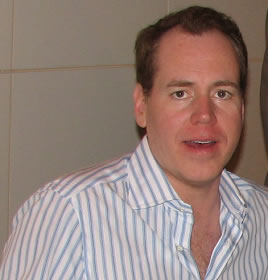
De Amerikaanse schrijver Bret Easton Ellis werd geboren op 7 maart 1964 in Los Angeles. Zie ook alle tags voor Bret Easton Ellis op dit blog.

Uit: Glamorama

“A black Jeep, its top up, its windows tinted, wheels in behind me on 23rd Street and as I zoom through the Park Avenue tunnel whoever's driving flips on his brights and closes in, the Jeep's fender grazing the back of the Vespa's wheel guard.
I swerve onto the dividing line, oncoming traffic racing toward me while I bypass the row of cabs on my side, heading toward the wraparound at Grand Central. I accelerate up the ramp, zoom around the curve, swerving to miss a limo idling in front of the Grand Hyatt, and then I'm back on Park without any hassles until I hit 48th Street, where I look over my shoulder and spot the Jeep a block behind me.
The instant the light on 47th turns green the Jeep bounds out of its lane and charges forward.
When my light turns I race up to 51st, where the oncoming traffic forces me to wait to turn left.
I look over my shoulder down Park but I can't see the Jeep anywhere.
When I turn back around, it's idling next to me.
I shout out and immediately slam into an oncoming cab moving slowly down Park, almost falling off the bike, and noise is a blur, all I can really hear is my own panting, and when I lift the bike up I veer onto 51st ahead of the Jeep.
Fifty-first is backed up with major gridlock and I maneuver the Vespa onto the sidewalk but the Jeep doesn't care and careens right behind me, halfway on the street, its two right wheels riding the curb, and I'm yelling at people to get out of the way, the bike's wheels kicking up bursts of the confetti that litters the sidewalk in layers, businessmen lashing out at me with briefcases, cabdrivers shouting obscenities, blaring their horns at me, a domino effect.
The next light, at Fifth, is yellow. I rev up the Vespa and fly off the curb just as the traffic barreling down the avenue is about to slam into me, the sky dark and rolling behind it, the black Jeep stuck on the far side of the light."


 1732844-00ebc67475f66357b38357658f4cf157.jpg
Bret Easton Ellis (Los Angeles, 7 maart 1964)


De Britse schrijver en journalist Robert Dennis Harris werd geboren op 7 maart 1957 in Nottingham. Zie ook alle tags voor Robert Harris op dit blog.

Uit: The Ghost

“THE MOMENT I HEARD how McAra died, I should have walked away. I can see that now. I should have said, "Rick, I'm sorry, this isn't for me, I don't like the sound of it," finished my drink, and left. But he was such a good storyteller, Rick -- I often thought he should have been the writer and I the literary agent -- that once he'd started talking there was never any question I wouldn't listen, and by the time he had finished, I was hooked.
The story, as Rick told it to me over lunch that day, went like this: McAra had caught the last ferry from Woods Hole, Massachusetts, to Martha's Vineyard two Sundays earlier. I worked out afterward it must have been January the twelfth.
It was touch-and-go whether the ferry would sail at all. A gale had been blowing since midafternoon and the last few crossings had been canceled. But toward nine o'clock the wind eased slightly, and at nine forty-five the master decided it was safe to cast off. The boat was crowded; McAra was lucky to get a space for his car. He parked belowdecks and then went upstairs to get some air.
No one saw him alive again.
The crossing to the island usually takes forty-five minutes, but on this particular night the weather slowed the voyage considerably: docking a two-hundred-foot vessel in a fifty-knot wind, said Rick, is nobody's idea of fun. It was nearly eleven when the ferry made land at Vineyard Haven and the cars started up -- all except one: a brandnew tan-colored Ford Escape SUV. The purser made a loudspeaker appeal for the owner to return to his vehicle, as he was blocking the drivers behind him. When he still didn't show, the crew tried the doors, which turned out to be unlocked, and freewheeled the big Ford down to the quayside. Afterward they searched the ship with care: stairwells, bar, toilets, even the lifeboats -- nothing. They called the terminal at Woods Hole to check if anyone had disembarked before the boat sailed or had perhaps been accidentally left behind -- again: nothing. That was when an official of the Massachusetts Steamship Authority finally contacted the Coast Guard station in Falmouth to report a possible man overboard. »


 1732844-f82a83a872f8071d15e6cb68474caa69.jpg
Robert Harris (Nottingham, 7 maart 1957)


De Duitse dichter en schrijver Jürgen Theobaldy werd geboren op 7 maart 1944 in Straatsburg. Zie ook alle tags voor Jürgen Theobaldy op dit blog


Die Bewohner

Nur die Bewohner machen
eine Wohnung fröhlich,
aber du bist nicht da,
die Heizung ist abgedreht
und kühl sickert die Luft
durch den Spalt im Fenster.
Ich will nicht sagen, daß ich
dich austauschen könnte
gegen irgend jemanden sonst,
ähnlich dir oder ganz
anders. Du bist eine
von Millionen, aber auch ich
bin einer von Millionen.
Wären wir soweit (du und ich
und alle, die wir nicht kennen),
die Türen nicht abzuschließen,
wenn wir wegfahren für länger,
wer weiß, ich wäre eingetreten
in einen fröhlichen Kreis.
So blicke ich auf den Teebeutel,
vertrocknet im Aschenbecher,
stehe im Mantel herum
und vermisse dich, die ich liebe,
vielleicht mehr
als uns lieb sein kann.


 1732844-5e13e6535176e38b7b9540ea80173904.jpg
Jürgen Theobaldy (Straatsburg, 7 maart 1944)


De Franse schrijver Georges Perec werd geboren op 7 maart 1936 in Parijs. Zie ook alle tags voor Georges Perec op dit blog.

Uit: Les choses

« Depuis plusieurs années déjà, les études de motivation avaient fait leur apparition en France. Cette année-là, elles étaient encore en pleine expansion. De nouvelles agences se créaient chaque mois, à partir de rien, ou presque. On y trouvait facilement du travail. Il s'agissait, la plupart du temps, d'aller dans les jardins publics, à la sortie des écoles, ou dans les H.L.M. de banlieue, demander à des mères de famille si elles avaient remarqué quelque publicité récente, et ce qu'elles en pensaient. Ces sondages-express, appelés testings ou enquêtes-minute, étaient payés cent francs. C'était peu, mais c'était mieux que le baby-sitting, que les gardes de nuit, que la plonge, que tous les emplois dérisoires - distribution de prospectus, écritures, minutage d'émissions publicitaires, vente à la sauvette, lumpen-tapirat - traditionnellement réservés aux étudiants. Et puis, la jeunesse même des agences, leur stade presque artisanal, la nouveauté des méthodes, la pénurie encore totale d'éléments qualifiés pouvaient laisser entrevoir l'espoir de promotions rapides, d'ascensions vertigineuses. » 

 1732844-108b1c5cbf8b776f3f2a071c12547e5e.jpg
Georges Perec (7 maart 1936 – 3 maart 1982)


De Oostenrijkse schrijver Milo Dor werd als Milutin Doroslovacgeboren op 7 maart 1923 in Boedapest. Zie ook alle tags voor Milo Dor op dit blog.

Uit: Das Pferd auf dem Balkon

„Ein Wiehern, das aus dem Hof zu ihm drang, holte Mika aus seiner Fantasiewelt zurück in die Realität. Er war fast schon eingeschlafen und nicht sicher, was er da gehört hatte. Mika richtete sich im Bett auf und horchte.
Nichts. Er wollte gerade wieder auf seine Polster sinken, da vernahm er das Wiehern erneut. Mika sprang aus dem Bett, öffnete das Fenster und sah hinaus. Im fahlen Licht der alten, schiefen Laterne schritt ein Pferd stolz über den Hof. Ohne lange zu überlegen, lief Mika ins Vorzimmer, schlüpfte barfuss in seine Schuhe, zog seine Jacke über den Pyjama und schlich leise aus der Wohnung. Hedi saß mit gesenktem Kopf im Wohnzimmersessel und schlief tief und fest. Im Fernsehen lief ein alter Schwarz-Weiß-Film.
Im Hof blickte sich Mika um. Es war niemand zu sehen. Er ging zur Laterne, die sich in der Mitte der Anlage befand, und sah in alle Ecken des Hofs. Keine Spur von einem Pferd. Als er schon zurück ins Haus gehen wollte, hörte er das Wiehern ganz aus der Nähe. Das\Pferd stand auf dem Balkon im ersten Stock. Es hatte jetzt eine rot karierte Decke auf dem Rücken. Als Mika näher kam, spitzte das Pferd die Ohren und blickte ihn mit seinen großen, dunklen Augen an. Mika war von dem edlen Tier fasziniert.
Hoch oben auf dem Balkon wirkte es noch mächtiger als vorhin, als er es vom Fenster aus gesehen hatte. Das Pferd schüttelte seine Mähne und schnaubte, als wollte es ihn begrüßen. Mika lächelte und winkte ungelenk. Das Pferd schnaubte erneut. Mika hätte es gerne länger beobachtet, aber ihm wurde kalt. Er winkte dem Pferd noch einmal zum Abschied und lief ins Haus.“


 1732844-2b3eaa62e083b75319decce598ad02e7.jpg
Milo Dor (7 maart 1923 – 5 december 2005)


De Japanse schrijver Abe Kōbō werd geboren op 7 maart 1924 in Tokyo. Zie ook alle tags voor Abe Kōbō op dit blog.

Uit: The ruined map (Vertaald door E. Dale Saunders)

“An unattended child swathed in blankets in a red baby carriage was crying shrilly. A young boy on a bicycle made of some light alloy, which had a glittering transmission, gave a deliberate, boisterous laugh as he sped by, his cheeks rosy with the cold. It was all ordinary enough at first glance, but when one focused on the distant landscape, people seemed like fanciful reflections. Of course, if one were used to living here, I should imagine the viewpoint would be quite the opposite. The view became fainter and fainter, transparent almost to the point of extinction, and only my face emerged like a picture printed from a negative. I had had enough of distinguishing myself. For this human filing cabinet with its endless filing-card apartments was merely the glass frame, each encasing its own family portraits.
12 East 3. East stands for the right side of the street, 3 for the third building from the front, facing the street, 12 for the second-floor apartment facing the landing at the left end. In the spaces between the blocks of lawn stood No Entry and No Parking signs, but cars were parked in front of the buildings. My luggage consisted of one small case containing a set of miniature equipment. The case was a foot and a half long, a foot wide, and something less than eight inches thick. The surface was flat and hard and served at times as a desk. In the end of the handle were hidden a mike and a switch with which one could start the tape recorder from the outside; other than that, it was a quite ordinary case. It was made of a nappy artificial leather that gave the feeling of being rather worn. Showy metal fittings had been added to the four corners. Anyway, it looked like nothing more than a traveling salesman's bag. Its appearance was useful for my purposes, but an inconvenience too. Suddenly the wind, like an icy dust, struck my face.“


 1732844-3db5dc0cfef5372f4c8450a88fc0b1b6.jpg
Abe Kōbō (7 maart 1924 – 22 januari 1993)


Zie voor nog meer schrijvers van de 7e maart ook mijn vorige blog van vandaag.

Geschreven door Romenu om 11:47 Reageer op dit bericht

Jan Frederik Helmers, Reinhard Kaiser, Manuel del Cabral, Manfred Gregor, Alessandro Manzoni

De Nederlandse dichter en schrijver Jan Frederik Helmers werd geboren op 7 maart 1767 in Amsterdam. Zie ook alle tags voor Jan Frederik Helmers op dit blog.


Aan mijne vriend Gerrit Joan Meijer

Bij al 't plundren, bij 't vernielen,
Bij het weiden van het zwaard,
Bij de duizenden die vielen
Door de dwingeland der aard',
Wiens gevloekte vuist niets spaart —

In dees hartverpletbre dagen,
Waar geen bloempje bloost aan 't blad,
En, in plaats der rozenvlagen,
Weemlend langs het bruiloftspad,
Merg en bloed de weg bespat —

Voegen zich bij éne stander,
In deez' algemene brand,
Alle braven bij elkander,
Vloekende d'uitheemse band
Op het puin van 't vaderland.

Die eenstemmigheid van denken
Hecht de zielen aan elkaar;
Kan in 't wee ons wellust schenken,
En verbindt een vriendenschaar
In de afgrond van 't gevaar.

Hechter wordt die band gesloten,
Als der wetenschappen gloed
Ombruist door 't ontvlamd gemoed,
Brave land- en kunstgenoten
Met dezelfde zielspijs voedt:
o! Die band verbindt als 't bloed!

Dierbre Meijer! deze banden
Strenglen zich om onze ziel;
Want gij brengt uwe offerhanden
(Wat 's lands dwingland ook verniel')
Aan de God, voor wie ik kniel.

Mocht ge, als ik niet meer zal wezen,
't Stille graf mijne as bewaart,
Eenmaal nog dees lettren lezen,
Zeggen: "Druk hem zacht, o aard'!
Helmers was mijn vriendschap waard'!"


 1732839-466370f4185ba4c7434f05ede889acf3.jpg
Jan Frederik Helmers (7 maart 1767 – 26 februari 1813)
Tweede Helmersstraat, Amsterdam


De Duitse schrijver Reinhard Kaiser werd geboren op 7 maart 1950 in Viersen. Zie ook alle tags voor Reinhard Kaiser op dit blog.

Uit: Der kalte Sommer des Doktor Polidori

»Monsieur, was kann ich für Sie tun?«
Polidori war erleichtert, daß der Buchhändler Französisch sprach.
»Ich suche Bücher«, begann er.
Der Buchhändler schob die gestreckten Finger beider Hände zusammen.
»Was für Bücher, wenn ich fragen darf?«
Polidori kümmerte sich nicht um das Fingerscharnier, das der Buchhändler mit gezwungenem Lächeln vor seiner Weste auf- und zuschnappen ließ. Polidori konzentrierte sich darauf, von seiner Stimme jegliche Verlegenheit fernzuhalten.
»Ich sammle lizenziöse Schriften.«
»Aha. Und in welcher Sprache?«
»Lizenziöse Schriften in allen Sprachen. In bekannten und entlegenen Zungen.«
»Verstehe ich recht? Auch in solchen Sprachen, die Sie selbst gar nicht sprechen?«
»Ja, gern, ich meine: durchaus.«
Endlich sah ihn der Buchhändler aufmerksam an. Er überlegte einen Augenblick.
»Etwas Russisches habe ich da, sogar in kyrillischer Schrift. Sehr umfangreich, allerdings nicht ganz billig. Wäre das etwas für Sie, oder sprechen Sie Russisch?«


 1732839-bbda17fc19cff5598a3ab10258560447.jpg
Reinhard Kaiser (Viersen, 7 maart 1950)


De Dominicaanse dichter en schrijver Manuel del Cabral werd geboren op 7 maart 1907 in Santiago de los Caballeros. Zie ook alle tags voor Manuel del Cabral op dit blog.


Like the Bull, Born to Sorrow

Like the bull, born to sorrow; like a brute;
born to pain, like the bull, I bear the signs
iron inscribed on my flank in burning lines,
and my male groin is burdened with a fruit.

Like the bull, my heart finds everything minute
because the heart lacks reason, and declines
to let your kiss rest where your love consigns
it — a right that, like a bull, I would dispute.

Like the bull, I am tormented by increasing,
my tongue steeped in my heart, from which it’s poured
into my throat a tempest loud and full.

Like the bull I pursue you with unceasing
desire that you have left pierced by a sword,
like the bull, made for mockery, the bull.


Vertaald door R. P. Espaillat


 1732839-0031c8b7247eec01afa04ca0877ceee0.jpg
Manuel del Cabral (7 maart 1907 – 14 mei 1999)


De Duitse schrijver Manfred Gregor (pseudoniem van Gregor Dorfmeister) werd geboren op 7 maart 1929 in Tailfingen. Zie ook alle tags voor Manfred Gregor op dit blog.

Uit: Die Brücke

Kein Mensch wusste, wer den Spitznamen erfunden hatte.
„Aber es hatte auch noch keiner danach gefragt. Es hieß, dass Schaubeck den widerspenstigsten Rekruten »fertigmachen« konnte, und keiner zweifelte daran. Er sah ganz harmlos aus, solange er nicht sprach. Aber in seiner Stimme lag Unheil.
Schon wenn er jovial, betont munter und immer ein bisschen spöttisch sein militärisches Wissen an den Mann brachte.
Noch deutlicher, wenn er brüllte, und erst recht, wenn er flüsterte. Jetzt flüsterte Schaubeck.
»Horber«, flüsterte er, »Sie Jammerlappen! Können Sie sich nicht einmal ordentlich waschen? Muss wohl erst die Frau Mama rufen, dass sie dem Herrn Horber den Hintern wäscht?«
Dann lauter: »Unter die Dusche, maaarsch!«
Horber stand bewegungslos unter der Dusche, Schaubeck drehte auf, riss den Hahn herum, so weit es ging, und schenkte dem sommersprossigen Häuflein Elend unter dem niederprasselnden Wasser nichts. Gar nichts. Und in diesem Augenblick ertönte es aus der Ecke, in die sich der »Verein« verzogen hatte (mäßig stramme Haltung), leise, aber nicht zu überhören: »Dreh zu, du Drecksack!«
Schaubeck brüllte: »Wer war das?«
Lauter: »Wer war das?«
Und dann Schaubeck, ganz leise: »Ich will wissen, wer das war, versteht ihr? Oder ich schleife euch, bis euch das Arschwasser kocht!«
Lähmende Stille beim Verein. Plötzlich die gleiche Stimme wie vorher: »Das kannst du gar nicht, du Drecksack!"


 1732839-4a37669ff0c7225a9b1ceb7144ee5620.jpg
Manfred Gregor (Tailfingen, 7 maart 1929)
Scene uit de film “Die Brücke” uit 1959


De Italiaanse schrijver Alessandro Francesco Tommaso Manzoni werd geboren op 7 maart 1785 in Milaan.Zie ook alle tags voor Alessandro Manzoni op dit blog.

Uit: The Betrothed (Vertaling in de reeks Harvard Classics)

“At the period of our story, this village was also fortified, and consequently had the honour to furnish quarters to a governor, and the advantage of possessing a permanent garrison of Spanish soldiers, who gave lessons in modesty to the wives and daughters of the neighbourhood, and toward the close of summer never failed to scatter themselves through the vineyards, in order to thin the grapes, and lighten for the rustics the labours of the vintage. From village to village, from the heights down to the margin of the lake, there are innumerable roads and paths: these vary in their character; at times precipitous, at others level; now sunk and buried between two ivy-clad walls, from whose depth you can behold nothing but the sky, or some lofty mountain peak; then crossing high and level tracts, around the edges of which they sometimes wind, occasionally projecting beyond the face of the mountain, supported by prominent masses resembling bastions, whence the eye wanders over the most varied and delicious landscape. On the one side you behold the blue lake, with its boundaries broken by various promontories and necks of land, and reflecting the inverted images of the objects on its banks; on the other, the Adda, which, flowing beneath the arches of the bridge, expands into a small lake, then contracts again, and holds on its clear serpentining course to the distant horizon: above, are the ponderous masses of the shapeless rocks; beneath, the richly cultivated acclivity, the fair landscape, the bridge; in front, the opposite shore of the lake, and beyond this, the mountain, which bounds the view.


 1732839-b7bfea2c8a49d01398035fb2b6b44a6f.jpg
Alessandro Manzoni (7 maart 1785 – 22 mei 1873)
Portret door Francesco Hayez, 1841

Geschreven door Romenu om 11:35 Reageer op dit bericht

Gabriel García Márquez, Marijke Hanegraaf, Günter Kunert, Clark Accord, Elizabeth Barrett Browning, Stéphane Hoffmann, Michelangelo, Teru Miyamoto

De Colombiaanse schrijver Gabriel García Márquez werd op 6 maart 1928 in de kustplaats Aracataca geboren. Zie ook alle tags voor Gabriel García Márquez op dit blog.

Uit: Honderd jaar eenzaamheid (Vertaald door C.A.G. van den Broek)

"Ze gaf opdracht tot de bouw van een salon voor de visite, een gerieflijker en koeler vertrek voor dagelijks gebruik, een eetzaal voor een tafel met twaalf plaatsen waaraan de familie met twaalf gasten kon aanzitten, negen slaapkamers met ramen die uitkwamen op de patio en een grote waranda die tegen de hitte van het middaguur beschermd moest worden door een rozentuin en voorzien moest zijn van een balustrade waarop potten met varens en vazen met begonia\'s konden worden geplaatst."
(…)

"En ze hoefde ook niet te kunnen kijken om te beseffen dat de bloemperken, die tijdens de eerste verbouwing met zoveel toewijding waren verzorgd, door de regen vernietigd en door Aureliano Segundo\'s graafwerk omgespit waren en dat de wanden en de cementen vloeren vol scheuren zaten, de meubels wankel en verschoten waren, de deuren uit hun hengsels hingen en de familie bedreigd werd door een gelaten, zwartgallige stemming die in haar tijd ondenkbaar zou zijn geweest." 
(…)

"Toen sloeg hij nog een stukje over om op de voorspellingen vooruit te lopen en de datum en de omstandigheden van zijn dood op te zoeken. Maar nog voordat hij bij het laatste vers was gekomen had hij al begrepen dat hij deze kamer nooit meer zou verlaten, want het stond geschreven dat de stad van de spiegels (of spiegelingen) door de wind weggevaagd en uit de herinnering der mensen weggewist zou worden zodra Aureliano Babilonia de perkamenten tot het einde toe ontcijferd had - en dat alles, wat daarin beschreven stond, voor altijd en eeuwig onherhaalbaar was, omdat de geslachten, die gedoemd zijn tot honderd jaar eenzaamheid, geen tweede kans krijgen op aarde."


 1732435-81bcae011feff7d0bbe8bbc98602881a.jpg
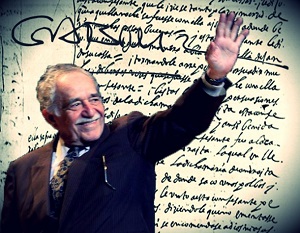
Gabriel García Márquez (6 maart 1928 - 17 april 2014)


De Nederlandse dichteres Marijke Hanegraaf werd op 6 maart 1946 geboren in Tilburg. Zie ook alle tags voor Marijke Hanegraaf op dit blog.


Mocht je me uitnodigen op je feestje 2

Mocht je me uitnodigen op je feestje
wat zal ik afwezig zijn.

Ik zal menen dat je me uitnodigt
omdat het hoort. Het zal me zo verwarren
dat ik niet mezelf ben en niet weet
wat ik moet zeggen, iets zeg dat niet ter zake doet

iets dat het gesprek opbreekt en waarvoor ik
me schaam. Noemt iemand dan mijn naam
dan zal het vreemd zijn dat ik dat ben.
Verlangend naar wat ik zou doen

als ik hier niet hoefde te zijn
lach ik mee zonder te weten waarom
en verstar ten slotte tot zwijgen
waarin ik meer en meer word

iemand die vol zit met overbodige belevenissen
iemand met een onnodig lichaam
iemand die er tussenuit wil knijpen
voordat de tijd toestemming geeft om te gaan.


De jongen, een schaduw

De violette lucht omsluit een jongen
die roerloos in het heden hurkt.
Af en toe gaat zijn arm omhoog

alsof hij zwaait. Naar niemand.
Nooit weggeweest, geen schoenen nodig.
Hij hurkt bij zonsondergang

in een portiek, neergelaten
op aarde als een spin aan een draad.
Ik zou een requiem willen inzetten.

Er zijn nooit uitspraken over hem gedaan:
hij is dit of hij heeft dat. Bestond hij niet -
toch stokt hij mijn bewegingen.


 1732435-e643e8e6a934265eed26bb1de19ad19a.jpg
Marijke Hanegraaf (Tilburg, 6 maart 1946)


De Duitse dichter en schrijver Günter Kunert werd geboren op 6 maart 1929 in Berlijn. Zie ook alle tags voor Günter Kunert op dit blog.


Schachtelhalm - Botschaft

Wie Schneegestöber Menschenmassen
die fallen über den Planeten her
und fressen seine Fülle leer
um Wüsten hinter sich zu lassen.

Hingegen er: Aus Zeitenferne.
Zu Stein geworden und uralt
als Ausdruck pflanzlicher Gestalt
und wie von einem fremden Sterne.

Beweisstück für die Flüchtigkeiten
der Wunder ungeheurer Zahl.
Durch die Äonen ein Signal:
Zu spät da wir uns schon entgleiten.


Verlegenheitsgedicht

Die Engel singen ihre Lieder droben,
wir andern aber haben unsre Stimmen
irdischerseits und leis erhoben,
damit sie keinen sonst ergrimmen.

Die Töne fliegen durch den tauben Äther,
auf daß sie irgendwo auf diesem Sterne
Gehör und Neigung finden. Wenig später
erklingt ihr Echo. Doch aus weiter Ferne.


 1732435-298ca62190ebb2f52a8b01c440da2351.jpg
Günter Kunert (Berlijn, 6 maart 1929)


De Surinaamse schrijver Clark Accord werd op 6 maart 1961 geboren in de Surinaamse hoofdstad Paramaribo. Zie ook alle tags voor Clark Accord op dit blog.

Uit: Plantage d’Amour

‘De vrouw grijpt mijn hand. Waaai! Mi masra! Mi Jezus Mijn Heer, mijn Jezus’!, gilt ze. Het toestel is terug in de normale stand. “Ik vlieg niet graag”, verontschuldigt ze zich. Snel keer ik mijn gezicht naar het raam. De aarde is nu angstaanjagend dichtbij. Inheemse dorpen liggen kriskras door elkaar alsof zij door een enorme hand zijn uitgestrooid. We vliegen rakelings over de daken van gedroogde palmbladeren op houten palen. Uit het niets doemt de grens tussen de natuur en maakbaarheid op: glooiend witte zandvlakte vloeit over in strak grijs asfalt. Fel licht markeert de landingsbaan. Ondanks het tijdstip lonken de lampen langs de baan uitnodigend naar de hemel.’  


 1732435-718c838e4798b6a15c14599f4c3651e3.jpg
Clark Accord (6 maart 1961 – 11 mei 2011)


De Engelse dichteres Elizabeth Barrett Browning werd op 6 maart 1806 geboren in Durham, Engeland. Zie ook alle tags voor Elizabeth Barrett Browning op dit blog.


Mother and Poet

I.
Dead ! One of them shot by the sea in the east,
And one of them shot in the west by the sea.
Dead ! both my boys ! When you sit at the feast
And are wanting a great song for Italy free,
Let none look at me !

II.
Yet I was a poetess only last year,
And good at my art, for a woman, men said ;
But this woman, this, who is agonized here,
-- The east sea and west sea rhyme on in her head
For ever instead.

III.
What art can a woman be good at ? Oh, vain !
What art is she good at, but hurting her breast
With the milk-teeth of babes, and a smile at the pain ?
Ah boys, how you hurt ! you were strong as you pressed,
And I proud, by that test.

IV.
What art's for a woman ? To hold on her knees
Both darlings ! to feel all their arms round her throat,
Cling, strangle a little ! to sew by degrees
And 'broider the long-clothes and neat little coat ;
To dream and to doat.


 1732435-9b67a3584ec7ddcfb794e73bf2b9b3a1.jpg
Elizabeth Barrett Browning (6 maart 1806 – 29 juni 1861)
Portret door Edmund Havell, 1847


De Franse schrijver Stéphane Hoffmann werd geboren op 6 maart 1958 in Saint-Nazaire. Zie ook alle tags voor Stéphane Hoffmann op dit blog.

Uit: Les autos tamponneuses

« 3
Quel job ?
Mariés par hasard, nous le sommes restés par égoïsme et comme par indolence. Pourquoi chercher chez autrui un bonheur qu'on ne trouve qu'en soi, dans une action qui corresponde à sa nature ? Depuis des années, Hélène reste alanguie dans notre maison du golfe du Morbihan à jouer du piano, lire et prendre des airs. Pendant ce temps, dans mes bureaux de la Défense je me voue, avec une passion discrète et tenace, aux affaires héritées de son père.
Nous nous entendons sur l'essentiel. Le mariage nous a toujours semblé être un tour en autos tamponneuses : c'est inconfortable, on prend des coups, on en donne, on tourne en rond, on ne va nulle part mais, au moins, on n'est pas seul. Ainsi avons-nous passé, dans ce voisinage absurde, bientôt quarante ans côte à côte. Les trois enfants - non, deux, depuis que nous avons eu la satisfaction d'en perdre un sans l'avoir fait exprès -, les deux enfants, donc, commis les rares fois où nous nous sommes trouvés face à face ont été nourris, blanchis et logés ; nous les avons peu aimés. Vite, nous les avons envoyés dans de lointains pensionnats d'où ils sont sortis sans qu'on les ait jamais revus. Hélène se souvient mieux de ses chiens que de ses enfants. »


 1732435-52e8789b76750b361c5f3905e6938d5c.jpg
Stéphane Hoffmann (Saint-Nazaire, 6 maart 1958)


De Italiaanse beeldhouwer, schilder, architect en dichter Michelangelo werd geboren op 6 maart 1475 in Caprese. Zie ook alle tags voor Michelangelo op dit blog.


Dante

WHAT should be said of him cannot be said;
By too great splendor is his name attended;
To blame is easier than those who him offended,
Than reach the faintest glory round him shed.
This man descended to the doomed and dead
For our instruction; then to God ascended;
Heaven opened wide to him its portals splendid,
Who from his country's, closed against him, fled.
Ungrateful land! To its own prejudice
Nurse of his fortunes; and this showeth well
That the most perfect most of grief shall see.
Among a thousand proofs let one suffice,
That as his exile hath no parallel,
Ne'er walked the earth a greater man than he.

 
Vertaald door H.W. Longfellow


 1732435-ff2dceb22c9fe5d1c0af62d4a742f8d6.jpg
Michelangelo (6 maart 1475 – 18 februari 1564)
Dante, standbeeld in Florence


De Japanse schrijver Teru Miyamoto werd geboren op 6 maart 1947 in Kobe. Zie ook alle tags voor Tery Miyamoto op dit blog.

Uit: Kinshu: Autumn Brocade (Vertaald door Roger K Thomas)

“How can I begin to express my astonishment? You were not yet aware of me and were gazing at the scenery with your chin buried in the upturned collar of your coat. While you were absently looking out of the window, I kept staring at your face, never blinking once. I had got on the gondola to see the beautiful autumn leaves, but I didn't give the trees a glance; I just fixed my eyes on the man in front of me. During those few minutes, the question kept racing through my mind whether or not this person could actually be Arima Yasuaki, my former husband. And if it was Arima Yasuaki, why was he riding this gondola on Mount Zaô in Yamagata? It wasn't just my surprise at this incredible coincidence; your face looked totally different from the one that was etched in my memory. Ten years ... I had been twenty-five years old then, and I'm thirty-five now, so you must be thirty-seven. Both of us have reached the stage when the effects of age begin to show on the face. Even so, the change in your appearance was severe, and I understood that you had definitely not had an easy time. Please don't take offense, I myself don't really understand why I'm writing a letter like this. I just want to put down my side of things-something I'll probably never do again-and describe exactly how I feel. Yet, in spite of my writing to you like this, I still haven't decided whether I'll actually post my letter or not.”


 1732435-5d7ba893e4c2a82cdeccdc92ed3859a1.jpg
Teru Miyamoto (Kobe, 6 maart 1947)


Zie voor nog meer schrijvers van de 6e maart ook mijn blog van 6 maart 2012 deel 2.


Geschreven door Romenu om 19:02 Reageer op dit bericht

Patrick deWitt

De Canadese schrijver en scenarist Patrick deWitt werd geboren op 6 maart 1975 op Hij werd geboren op Vancouver Island. Zijn eerste boek “Ablutions” (2009) werd uitgeroepen tot New York Times Editor’’s Choice boek. Zijn tweede boek,” The Sisters Brothers” (2011) werd genomineerd voor de Man Booker Prize 2011, de 2011 Scotiabank Giller Prize, de Rogers Writers' Trust Fiction Prize en de Governor General's Award for English language fiction. Patrick deWitt was één van de twee Canadese schrijvers, naast Esi Edugyan, die in 2011 de lijst van alle vier de orijzen haalde. In 2011 werd hij wel de winnaar van de Rogers Prize en de Governor General's Award for English language fiction. In 2012 kreeg hij voor “The Sisters Brothers” de Stephen Leacock Award. Zijn derde roman “Undermajordomo Minor” werd gepubliceerd in 2015. Patrick deWittwoont momenteel in Portland, Oregon.

Uit: The Sisters Brothers

“I was sitting outside the Commodore’s mansion, waiting for my brother Charlie to come out with news of the job. It was threatening to snow and I was cold and for want of something to do I studied Charlie’s new horse, Nimble. My new horse was called Tub. We did not believe in naming horses but they were given to us as partial payment for the last job with the names intact, so that was that. Our unnamed previous horses had been immolated, so it was not as though we did not need these new ones but I felt we should have been given money to purchase horses of our own choosing, horses without histories and habits and names they expected to be addressed by. I was very fond of my previous horse and lately had been experiencing visions while I slept of his death, his kicking, burning legs, his hot-popping eyeballs. He could cover sixty miles in a day like a gust of wind and I never laid a hand on him except to stroke him or clean him, and I tried not to think of him burning up in that barn but if the vision arrived uninvited how was I to guard against it? Tub was a healthy enough animal but would have been better suited to some other, less ambitious owner. He was portly and low-backed and could not travel more than fifty miles in a day. I was often forced to whip him, which some men do not mind doing and which in fact some enjoy doing, but which I did not like to do; and afterward he, Tub, believed me cruel and thought to himself, Sad life, sad life.
I felt a weight of eyes on me and looked away from Nimble. Charlie was gazing down from the upper-story window, holding up five fingers. I did not respond and he distorted his face to make me smile; when I did not smile his expression fell slack and he moved backward, out of view. He had seen me watching his horse, I knew. The morning before I had suggested we sell Tub and go halves on a new horse and he had agreed this was fair but then later, over lunch, he had said we should put it off until the new job was completed, which did not make sense because the problem with Tub was that he would impede the job, so would it not be best to replace him prior to? Charlie had a slick of food grease in his mustache and he said, ‘After the job is best, Eli.’ He had no complaints with Nimble, who was as good or better than his previous horse, unnamed, but then he had had first pick of the two while I lay in bed recovering from a leg wound received on the job. I did not like Tub but my brother was satisfied with Nimble. This was the trouble with the horses.”


 1882169-38917017bfde172be7ed98df709146b9.jpg
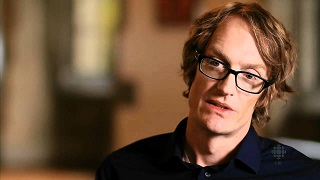
Patrick deWitt (Vancouver Island, 6 maart 1975)

Geschreven door Romenu om 00:00 Reageer op dit bericht

Jeremy Reed

De Engelse dichter en schrijver Jeremy Reed werd geboren op 6 maart 1951 op Jersey. Reed heeft vijftig werken gepubliceerd in 25 jaar. Hij heeft meer dan twee dozijn bundels poëzie, 12 romans, en boeken met literaire- en muziekkritiek geschreven. Hij heeft ook vertalingen van Montale, Cocteau, Nasrallah, Adonis, Bogart en Hölderlin gepubliceerd. Zijn eigen werk is in het buitenland vertaald in meer dan een dozijn talen. Hij heeft diverse onderscheidingen ontvangen en hij won de Poetry Society's European Translation Prize. Reed begon met het publiceren van gedichten in tijdschriften en kleine publicaties in de jaren 1970. Hij is beïnvloed door onder meer Rimbaud, Artaud, Jean Genet, JG Ballard, David Bowie en Iain Sinclair. Een selectie van zijn gedichten is uitgegeven door door Penguin Books. Zijn laatst gebubliceerde roman is “The Grid.” Reed heeft ook samengewerkt met de muzikant Itchy Ear. Zij treden live op onder de naam Ginger Light. Reed behaalde een doctoraat aan de universiteit van Essex en hij doceert af en toe aan die instelling en aan de Universiteit van Londen.


London Flowers

These oriental poppies earthed
as scattered outtakes, rough demos
lucked into NW3
shivery silk minis on runway pins —
pink, yellow, orange, blue and red,
they’re like randomised confetti
transient saucerians
an anthology of MAC eye colours
in nitrogen-depleted soil.
I give them names like Toyoko,
Masako, Yumiko, O,
Yuan Yuan, a garden harem
cooking Chinese opium.
Ixia and violet iris
lyricise intense moments,
so too explosive azaleas
and a libidinous steamy lily,
a transplant brain from Asia
with a bulb like a shaved cortex.
This marine blue hydrangea’s
the colour of the blue deodorant cube
floating in the Gatwick men’s toilet,
a sort of deep Atlantic blue
squirted with ultramarine.
Like everything I see they’re poetry,
poppies bringing a dusty frill
to capital affairs, a bright
liaison like a thought pattern;
immediate as light checked-in
8 mins travel time from the sun
to reach this wiry leggy cluster
that tomorrow will be gone.


Bloody Mary

Red icebergs shattered in a glass,
auroral tiara with cracked pepper
Tabasco in the undertow:

it tastes hot, but it’s really cold,
like feelings we can’t separate
from loving someone, all aspects

slippery as goldfish in a bowl.
A vodka in a scarlet dress
stagy as Ute Lemper,

its temper’s unpredictable
like Wasabi and Habanero
or Worcester sauce tangoing tomato

with a sharp taste of leather.
It’s not a gunshot to the throat,
more a slow burn that separates

into component tastes, the lime
gets tweaky if unmollified
by mid-ballast horseradish.

It’s a capricious, husky thing,
a ruminative, slow hand trick,
you get to know at gut level,

the vodka underpinning it
raised as raw firepower in the blood,
a CIA agent policing the cells

with a kick like a cobra’s hood.
An ex pat mixed it first at Harry’s Bar,
spiked the membrane with a celery stick,

got a red brick crust on the lip,
and knew he’d done it, felt the bite hit in
and raised an eyebrow in silent applause.


 1748325-0bd40c114be35239d36677435d299384.jpg
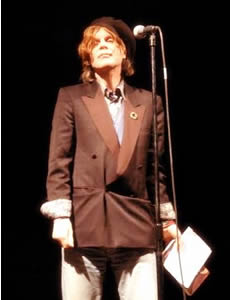
Jeremy Reed (Jersey, 6 maart 1951)

Geschreven door Romenu om 00:00 Reageer op dit bericht

Meer van Romenu

↑ Terug naar de berichten