Naar de inhoud

Romenu

Over literatuur, gedichten, kunst en cultuur
akke.beakke.be

Berichten van 14 maart 2015 tot 15 maart 2015

Louis Paul Boon, Ben Okri, David Albahari, Gerhard Seyfried, Kurt Drawert, Andreas Okopenko

De Vlaamse dichter, schrijver en kunstschilder Louis Paul Boon werd geboren in Aalst op 15 maart 1912. Zie ook alle tags voor Louis Paul Boon op dit blog.

Uit: Pieter Daens

“Veel meer hield ik ervan door de straatjes te dwalen, langs de kromming van de rivier de Dender te slenteren en de buitenwijken te verkennen. Ik zag de wijk Schaarbeek met haar weiden en velden, ik waagde me in de wijk Osbroeck met op haar moerasgrond dichte begroeiing van warrelhout, en aan de overkant van de Dender drong ik door tot de wijk Mijlbeek, wier bewoners men buitenlieden noemde, of zelfs minachtend ‘deze van over de Rijn’.
Maar wat me meest boeide was het leven en lawaai langs de Dender, waar steeds meer fabrieken oprezen. Aalst matigde zich de naam van Keizerlijke Stede aan, maar bleek voorbestemd om gewoon een fabriekstadje te worden. Naast de kerken en kloosters schoten als giftige paddestoelen deze fabrieken uit de grond op. In het begin waren zij maar een schuur of bergplaats, maar als knaap kon ik reeds vaststellen, dat het niet meer de kerktorens waren die het stadje domineerden, doch hún rokende schoorstenen. Ik kon horen hoe niet meer het geklingel van de beiaard en het kleppen der Sintmaartenskerk de dagtijd bepaalde, maar het loeien der fabrieksirenen. Vanaf vijf en zes uur in de kille en nog duistere ochtend hoorde ik dit haast dierlijke huilen. Ik werd erdoor gewekt, en over de hobbelige stenen in de smalle straatjes hoorde ik het klepperen der klompen van mannen, vrouwen en kinderen, die zich naar de fabrieken repten.
Zelf heb ik het niet meegemaakt, maar uit kleurrijke verhalen van vader vernam ik, hoe deze fabrieken waren ontstaan en hoe de eigenaars, weldra ‘de heren’, zich tot almachtige heersers ontpopten. Ik hoorde allerlei fantastisch over Eliaert-Cools, over Jan Baptist Jelie, over kapitein Van der Smissen, die allen uit armoede het naburige stadje Ninove verlieten en naar Aalst kwamen afzakken.
Zij hadden te Ninove gewerkt in primitieve huisbedrijfjes zonder toekomst, en snoven hier de geur van iets dat niet nader te bepalen was: een nieuwe economie, een nieuw politiek leven, een nieuwe tijd.
Vader vertelde ons over Eliaert-Cools, die als 20-jarige met zijn even jonge vrouwtje de stad kwam bewonen en op een verloren plekje grond, aan de kromming van de Dender, garen begon te spinnen, te bleken en te verven. Nog geen drie jaar later had hij reeds honderd arbeiders in zijn fabriek en haast evenveel thuisarbeiders die voor hem werkten. In 1850 – ik was toen acht jaar geworden – liet hij een stoommachine plaatsen, de allereerste in de stad, en werd alles mechanisch ingericht. Zijn fabriek besloeg toen reeds het hele blok tussen de Oude Dender, de Stoofstraat en de Voldersstraat, en een groot deel der Pontstraat.”


 1736938-754a1764d2869792e27bb4f44501b60b.jpg
Louis Paul Boon (15 maart 1912 - 10 mei 1979)


De Nigeriaanse dichter en romanschrijver Ben Okri werd geboren op 15 maart 1959 in Minna, Nigeria. Zie ook alle tags voor Ben Okri op dit blog.

Uit:The Famished Road

“Our king was a wonderful personage who sometimes appeared in the form of a great cat. He had a red beard and eyes of greenish sapphire. He had been born uncountable times and was a legend in all worlds, known by a hundred different names. It never mattered into what circumstances he was born. He always lived the most extraordinary of lives. One could pore over the great invisible books of lifetimes and recognise his genius through the recorded and unrecorded ages. Sometimes a man, sometimes a woman, he wrought incomparable achievements from every life. If there is anything common to all of his lives, the essence of his genius, it might well be the love of transformation, and the transformation of love into higher realities.
The happier we were, the closer was our birth. As we approached another incarnation we made pacts that we would return to the spirit world at the first opportunity. We made these vows in fields of intense flowers and in the sweet-tasting moonlight of that world. Those of us who made such vows were known among the Living as abiku, spirit-children. Not all people recognised us. We were the ones who kept coming and going, unwilling to come to terms with life. We had the ability to will our deaths. Our pacts were binding.
Those who broke their pacts were assailed by hallucinations and haunted by their companions.
They would only find consolation when they returned to the world of the Unborn, the place of fountains, where their loved ones would be waiting for them silently.”


 1736938-631ef8433ccced236d775dc33c8faed4.jpg
Ben Okri (Minna, 15 maart 1959)


De Servische schrijver David Albahari werd op 15 maart 1948 geboren in Pec in Sevie.Zie ook alle tags voor David Albahari op dit blog.

Uit: Words are something else (Vertaald door Ellen Elias-Bursac)

“Infectious jaundice had left tangible traces on him-I don't know what-but when he'd turn or look, mid-stride, twisted, over his shoulder, you could say: this man has been to the end and he's on his way back. Then we lived in C., a prominent doctor's family, in regular attendance at the movie theaters, residents of a prewar villa with a massive oak door above which someone had scribbled, among the many swallows' nests, a large red five-pointed star. Afterward, when he got better, my mother was left with the legacy of making fresh cheese, as prescribed by his diet, and he began to work, at first on a shorter schedule, then a full week, never quite making it to head of his department (if you don't count his position as director in Pec, in Kosovo immediately after the war-the sole physician in the only gynecological clinic in the entire region) in C., or in Zemun.
There were days when I didn't feel like going, but I started getting dressed as soon as he took off his slippers in the kitchen. By then he had stopped using the switch as an educational method, he no longer summoned me into the bathroom except in the most remarkable circumstances, but even when I was outside in the yard I would come in, change shoes, wash my hands and face, leaving black smudges on the towel when I dried off. He was ready, pristine in his one summer suit (he had only a single pair of trousers in Pec, and an adjusted suit jacket; Mother would get up before he did to dry them a bit more with the iron) and a carefully knotted tie. Sometimes he tidied the hastily and clumsily arranged part in my hair, and then mute, unaccustomed to talk, he'd be ready to retreat abruptly. We set out together-he and Mother exchanging kisses, she and I grins-right into the bright light of day, through the oval park, through the old lumberyard, to the shore of the river. Now there is no park.
"Civilization devoured it," Mother says, leaning on the windowsill. And the trolley bus stop has been moved. In general: we have lost that important, central position, but we haven't budged; it's the town that's been moving around us.”


 1736938-ac9e2e100289c980f97cc9b471c35a9b.jpg
David Albahari (Pec, 15 maart 1948)


De Duitse schrijver, tekenaar en karikaturist Gerhard Seyfried werd geboren op 15 maart 1948 in München. Zie ook alle tags voor Gerhard Seyfried op dit blog.

Uit: Verdammte Deutsche!

„Berlin, Hallesches Ufer, 29. Juni 1911, Donnerstag
Seit Wochen herrscht in Berlin drückende Hitze. Über dem Asphalt flimmert die Luft. Zur Mittagszeit sind nur wenige Fußgänger unterwegs, aber auf der Straße am Halleschen Ufer braust der Verkehr: Automobile, Omnibusse mit offenem Oberdeck, erschöpfte Pferde vor Droschken und Brauereiwagen.
Im Schatten der Kastanien am Landwehrkanal stehen zwei Männer und schauen einem qualmenden Schlepper nach, der mit Ziegelsteinen beladene Finowkähne zieht. Einer der beiden trägt die dunkelblaue Uniform eines Marineoffiziers im Kapitänsrang, goldene Knöpfe und Ärmelstreifen blitzen im Sonnenlicht, das durch das Laub spielt. Sein Begleiter ist ein Zivilist, ein stämmiger Mann mit Kaiser-Wilhelm-Schnurrbart, in einem etwas zerknitterten blaugrauen Sommeranzug, auf dem Kopf eine Kreissäge, wie die leichten Strohhüte genannt werden. Eben taucht der letzte Ziegelkahn in den Schatten der Großbeerenbrücke ein, und der Zivilist schnippt den Rest seiner Zigarre ins braungrüne Wasser des Kanals.
Der bärtige Offizier räuspert sich: »Sehen Sie, Steinhauer, das Problem ist, die Abteilung kann so gut wie keine Erfolge vorweisen. Existiert jetzt knapp zehn Jahre, mit nur drei Mann, von Ihnen mal abgesehen, und einem lächerlich geringen Budget. Wenn sich das nicht ändert, wird man uns früher oder später als überflüssig auflösen.«
Steinhauer nimmt den Strohhut ab und tupft sich mit einem Taschentuch den Schweiß von der Stirn.
»Das alte Lied«, seufzt er, »kein Geld. Ohne Geld keine Agenten. Jedenfalls keine guten.«


 1736938-cc4e99001b4516df1305081d0b3680ec.jpg
Gerhard Seyfried (München, 15 maart 1948)


De Duitse dichter en schrijver Kurt Drawert werd geboren op 15 maart 1956 in Henningsdorf. Zie ook alle tags voor Kurt Drawert op dit blog.

Uit: Ich hielt meinen Schatten für einen andern und grüßte

„Nun sehe ich in der Toilettenverpachtung sehr wohl eine Zukunftsaufgabe gemäß meiner Hochverschuldung bei der HypoVereinsbank. Sie wissen, sagte ich Feuerbach, der berufsbedingt schwieg, daß ich eine schreibende Persönlichkeit wurde und zu viele Tage und Nächte mit Lyrikstrapazen hingab für finanziell reinweg gar nichts. Doch haben vor allem die Damen der höheren Stände mich so stark bewundert, daß mir ganz blind vor Augen nie so recht klar werden konnte, wie wenig gut eßbar die Ehre ist. O ich hörte wohl ihre zarten, empfindsamen Herzen brechen, aber leider nie das Geräusch klimpernder Münzen. Also auf! auf!, zum Amtsbürgermeister von Okkerwalde und dann ganz persönlich gesprochen. Binder, sehr feiner Mann mit literarischer Bildung und einer Nase, wie ich sie schon einmal bei Diderot gesehen hatte, an einem Montag mit neutralem Wetter außerhalb der eigenen (?) vier Wände. Kein Regen oder Schnee, keine Sonne, aber sehr freier, weiter, tiefblauer Himmel, durchaus geeignet, keinen Anlaß für ein Gedicht herzugeben, komisch, komisch. Binders erste weil schönste Sekretärin Grete von Hering wollte gerade zur Mittagszeit die Abteilungstür schließen und war schon eben dabei, die Gardinen, roter Samt mit gelben sowjetischen (?) Sternen, im Beschwerdezimmer zuzuziehen, da stemmte ich noch schnell meinen Klumpfuß in die Angel und sagte, – bitte! Also, – bitte! sagte ich, mindestens zweimal, vielleicht auch dreimal hintereinander. O was für ein Mitleid sie hatte! Wie blaß sie wurde! Binder kam, sah mich und kotzte in eine eigens dafür auf seinem Schreibtisch stehenden Schale aus Kokosrinde mit Elfenbeinverzierung. – Entschuldigung, sagte er, aber. – Schon klar, sagte ich, ich kotze auch oft, wenn ich mich unverhofft sehe, und mit eben diesen Worten trug ich mich sofort ins Gästebuch ein.“


 1736938-0add9aa9b80138f35f54e597302cdbeb.JPG
Kurt Drawert (Henningsdorf, 15 maart 1956)


De Oostenrijkse dichter en schrijver Andreas Okopenko werd in Košice (Slowakije) geboren op 15 maart 1930. Zie ook alle tags voor Andreas Okopenko op dit blog.


Nachruf auf einen Künstler

1
Er unterhielt uns, weil sein Leben sinnvoll war.
Sein Leben war sinnvoll, weil er uns unterhielt.
2
Sein Leben war sinnvoll, weil er uns unterhielt?
Er unterhielt uns, weil sein Leben sinnvoll war.
3
(Die Reihung der Abschnitte ist umzukehren.)
4
(Die Zulässigkeit der Umkehr ist in Frage zu stellen.)


Uit: Lockergedichte


Altersweisheiten
1
Leichen säumen meinen Weg:
alten Mannes Privileg.
2
Man ist so jung, wie man sich fühlt,
wenn man mit seinem Schwänzchen spielt.


Angelika, Angelika,
ich weiß ein altes Lied:
Wer fremden Scheißdreck knetet
und dabei griechisch betet,
ist meistens schizoid.


 1736938-c68313ab0b1b362bc4c709fd95809152.jpg
Andreas Okopenko (15 maart 1930 – 27 juni 2010)


Zie voor nog meer schrijvers van de 15e maart ook mijn vorige blog van vandaag.

Geschreven door Romenu om 13:08 Reageer op dit bericht

An Rutgers van der Loeff, Franz Schuh, Lionel Johnson, Paul Heyse, Ángelos Sikeliános, Wolfgang Müller von Königswinter

De Nederlandse schrijfster An Rutgers van der Loeff werd geboren in Amsterdam op 15 maart 1910. Zie ook alle tags voor An Rutgers van der Loeff op dit blog.

Uit: De Elfstedentocht

“Met grote ogen staart hij naar de mannen die diep voorovergebogen komen aansuizen. Ze remmen af, steken groetend de handen op, slieren langs de controletafels, waar ze in grote haast hun kaart ter stempeling aan bieden. "Gauw, gauw!" Iedereen roept hun iets toe. "Hou vol! Goed zo! We zijn trots op jullie!" Anderen vragen hoe het ijs was.
En Tabe? Waar is Tabe? Ja - daar is hij! De achterste. Maar toch maar in de kopgroep. Tabe wordt extra toegejuicht. Tabe is hun man. "Zet 'm op, Tabe!" dat is Tjeerds hoge stem, bijna hees van opwinding. Maar hij wordt overschreeuwd door anderen. Het hele dorp leeft mee. Stel je voor dat uit hún midden de overwinnaar zou komen. Kijk die Tabe eens! Is hij niet geweldig? Daar spurt hij alweer weg, nadat hij haastig een kop warme melk met ei naar binnen geslurpt heeft. Hij is niet de achterste nu. Hij rijdt gelijk op met nummers zeven en acht, hij komt vóór. De juichende stemmen aan de kant geven hem reuzekracht. - Nu zijn ze weg - de hele groep.
Jelle heeft het hart in de schoenen voelen zinken. Hij is de enige die heeft uitgekeken naar die ander, die bij Tabe moest zijn. Maar die ander was er niet.
"Hee zeg." Iemand slaat hem op de schouder. "Waar is Auke toch? 'k Heb hem overal gezocht."
" 'k Weet niet," stamelt Jelle en hij maakt dat hij wegkomt. Verderop, waar niet zoveel mensen staan, dáár gaat hij heen.
"De volgenden! Daar heb je ze - de tweede groep!" hoort hij roepen. Opeens voelt hij zich koud worden. Daar rijdt midden in de tweede groep, onopvallend, een tamelijk tengere figuur. De ijsmuts diep over het hoofd getrokken. Beheerst rijdt hij tussen de anderen, die opeens extra spurten om vóór te zijn bij de controletafels.
Plotseling klinkt er een kreet: "Maar dat is Auke!"


 1736934-67a40b2b1de4d54656225fa5c0d26e60.jpg
An Rutgers van der Loeff (15 maart 1910 – 19 augustus 1990)
Amsterdam in de winter, Prinsengracht


De Oostenrijkse schrijver en essayist Franz Schuh werd geboren op 15 maart 1947 in Wenen. Zie ook alle tags voor Franz Schuh op dit blog.

Uit: Sämtliche Leidenschaften

„Ich glaube (sagte ich, auf dem Floß unruhig auf und ab gehend. Der Fluss dagegen war ruhig, nicht eine Welle war zu sehen. Es war ein heißer Sommertag, und auf der anderen Seite des Ufers war die Wiese von der Sonne grell beleuchtet. Auf das Floß fiel um diese Tageszeit noch der Schatten des Waldes) –, ich glaube, wer etwas von der Individualität hält, von der Individualität der Menschen (davon, dass Menschen dadurch wichtig sind, dass sie als Einzelne vorkommen), muss notgedrungenermaßen auch etwas vom Tod halten. Es gibt ja die Möglichkeit – diese Chance ist jedem Einzelnen eingeräumt –, den Tod zu hassen und zu sagen: Der Tod nimmt all diesen Versuchen, am Leben gewesen zu sein, die Kraft und am Ende auch den Sinn. Es ist... irgendwie... (ich setzte mich an den Rand des Floßes, die Füße baumelten im Wasser, das Wasser war eiskalt), durch den Tod, durch den Tod erfolgt eine Nichtigkeitserklärung an alle menschlichen, einzelnen Unternehmungen. Ja, die Gattung lebt weiter und ist anscheinend auf viele Individuen angewiesen, aber des Einzelnen bedarf die Gattung um ihrer selbst nicht (unbedingt). Vielleicht manche Einzelne, die der Gattung außerbiologisch einen historischen Sinn gegeben haben; sie existieren dann weiter im Gedächtnis, sie konstituieren zusammen mit einigen Lebenden einen menschlichen Zusammenhang ganz unsicherer Natur: die Menschheit, die Kultur.
Angesichts des Todes verschwindet der Einzelne auch aus dem Leben der Gattung – und die Gattung tut weiter wie bisher, als ob ich nicht gewesen wär. Die Frage nach dem Tod, vor allem die nach dem eigenen Tod, ist eine Variante der Eitelkeit oder, vielleicht besser, sie ist ein Endpunkt der Eitelkeit: Man ist unversöhnlich mit dem eigenen Nicht-Sein, das man gar nicht denken kann.“


 1736934-c5fff9d0b0ba64e84eb03081f915857d.jpg
Franz Schuh (Wenen, 15 maart 1947)


De Engelse dichter, essayist en criticus Lionel Pigot Johnson werd geboren op 15 maart 1867 in Broadstairs. Zie ook alle tags voor Lionel Johnson op dit blog.


Mystic and Cavalier

GO from me: I am one of those who fall.
What! hath no cold wind swept your heart at all,
In my sad company? Before the end,
Go from me, dear my friend!

Yours are the victories of light: your feet
Rest from good toil, where rest is brave and sweet:
But after warfare in a mourning gloom,
I rest in clouds of doom.

Have you not read so, looking in these eyes?
Is it the common light of the pure skies,
Lights up their shadowy depths? The end is set:
Though the end be not yet.

When gracious music stirs, and all is bright,
And beauty triumphs through a courtly night;
When I too joy, a man like other men:
Yet, am I like them, then?

And in the battle, when the horsemen sweep
Against a thousand deaths, and fall on sleep:
Who ever sought that sudden calm, if I
Sought not? yet could not die!

Seek with thine eyes to pierce this crystal sphere:
Canst read a fate there, prosperous and clear?
Only the mists, only the weeping clouds,
Dimness and airy shrouds.

Beneath, what angels are at work? What powers
Prepare the secret of the fatal hours?
See! the mists tremble, and the clouds are stirred:
When comes the calling word?

The clouds are breaking from the crystal ball,
Breaking and clearing: and I look to fall.
When the cold winds and airs of portent sweep,
My spirit may have sleep.

O rich and sounding voices of the air!
Interpreters and prophets of despair:
Priests of a fearful sacrament! I come,
To make with you mine home.


 1736934-39a8a7cacf7ebda445ab82d2f75e0e9b.jpg
Lionel Johnson (15 maart 1867 – 4 oktober 1902)


De Duitse dichter, schrijver en essayist Paul Heyse werd geboren in Berlijn op 15 maart 1830. Zie ook alle tags voor Paul Heyse op dit blog.


San Guiseppe

Warum so festliches Geläut?
Wem gilt der frohe Lärm? Ja so!
Sie feiern San Guiseppe heut
In allen Kirchen von Salò.

Man dankt es ihm, daß er nicht fern
Und schmollend bei der Krippe stand,
Als überm dürft'gen Stall der Stern
Den Kön'gen winkt aus Morgenland.

Nährvater sein dem Gottessohn -
Die Ehr' und Mühe war nicht klein,
Und er empfing als Himmelslohn
Den wohlverdienten Heil'genschein.

Drum macht er auch an seinem Fest
Zumal bei jungen Frauen Glück,
Und selbst im allerkleinsten Nest
Bleibt keine von der Kirch' zurück.

Zudem, in Welschland Sitte war's
Von je: geht einer ein und aus
Als Hausfreund eines Ehepaars,
Beschenkt er heut die Frau vom Haus.

Naive Theologen sind
Des Südens Kinder allzumal.
Auf der Mysterien Deutung sinnt
Ihr kecker Geist gar sehr real.

Und scheint, was sich hier unten schickt,
Uns Nordischen manchmal Blasphemie,
Die gute Mutter Kirche drückt
Eine Auge zu und duldet sie.


 1736934-29fee55f1e09c6f3635339bc55299b21.jpg
Paul Heyse (15 maart 1830 - 2 april 1914)
Rond 1885


De Griekse dichter Ángelos Sikeliános werd geboren op 15 maart 1884 op het eiland Lefkas. Zie ook alle tags voor Ángelos Sikeliános op dit blog.


Yannis Keats (Fragment)

And to spend all day in the talk that comes and goes,
Or silence, when no one spoke,
While we drove the horses who were always leaning one way
Or another against the yoke,

But most of all I wanted to see your eyes,
Your deer-like eyes, behold
The palace of Menelaus, and forget themselves
In bronze and the gleam of gold,

Unwavering gaze, sinking the sight so deep,
You’d never remember
The figured silver, the ivory, gilded or white,
The heavy amber,

And I thought that I would say in a hushed voice
Leaning close to your ear,
Watch out, my friend, because in a moment, soon,
Helen will appear

Before our very eyes, the one and only
Daughter of the Swan,
And then we will sink our eyelids in the river
Of Oblivion.

*

So brightly I saw you; but what grassy roads
Have led me to your tomb!
And the blazing roses with which I strew your grave
And make all Rome abloom,

Light the way unto your golden songs
As though they were the brave,
Armed bodies that turn to dust before one’s eyes
In an ancient, new-breached grave,

And all the worthy treasure of Mycenae,
The golden plunder
I thought to lay before you—goblet, sword,
And diadem—past wonder,

A mask on your dead beauty like the mask
That covered the face
Of the king of the Achaeans—all gold, all artifice,
Hammered upon Death’s trace.


 1736934-ef963edae48bc8c7bd1b614d72e21141.jpg
Ángelos Sikeliános (15 maart 1884 – 9 juni 1951)
Cover


De Duitse dichter, arts en politicus Wolfgang Müller von Königswinter (eig. Peter Wilhelm Karl Müller) werd geboren op 15 maart 1816 in Königswinter. Zie ook alle tags voor Wolfgang Müller von Königswinter op dit blog.


Geschieden

Im fernen Westen weilest du,
Und ich im Osten fern,
Ich finde weder Rast noch Ruh',
Bei dir fänd' ich sie gern.
Wir haben einst gelacht, gescherzt,
In stiller Seligkeit,
Wir haben uns geküßt, geherzt,
Wohl war es schöne Zeit!

Viel Berge stehn, viel Flüsse gehn,
Viel Monde sind bis hin;
Doch über Zeiten, Länder, Seen
Steht nur nach dir mein Sinn.
Ach über Tag, ach über Nacht
Ist schwer um dich die Brust,
Von dir geträumt, an dich gedacht
Hab' ich in Leid und Lust.

Und alles mahnet mich an dich,
Der Wald, der Strom, die Au:
Du schaust mich an so wonniglich
Aus Blumen und aus Thau,
Du singst mich an im Vogelsang,
Du hauchst mich an in Duft;
Wir schwärmten ja viel Tage lang
In milder Frühlingsluft.

Zur Wolke und zum Vogel blick'
Ich in die Lüfte hin,
Und tausend Liebesgrüße schick'
Ich dir aus treuem Sinn.
Ach, immer denk' ich nur zurück
An ferne Seligkeit:
Mein Stern, mein Himmel und mein Glück!
Wohl war es schöne Zeit!


 1736934-2995f6ef6e249ec50aaa48cec753a34f.jpg
Wolfgang Müller von Königswinter (15 maart 1816 – 29 juni 1873)
Königswinter, Drachenburg

Geschreven door Romenu om 12:58 Reageer op dit bericht

Pam Ayres, Jochen Schimmang, Horton Foote, Jochen Volker von Törne, Theodore de Banville

De Britse dichteres van humoristische poëzie Pam Ayres werd geboren op 14 maart 1947 in Stanford in the Vale in Berkshire (tegenwoordig Oxfordshire). Zie ook alle tags voor Pam Ayres op dit blog.


Background To My Life

Dad took me to our local pub in 1953,
They had a television set, the first I’d ever see,
To watch a Coronation! I knew it sounded grand,
Although at six years old, the word was hard to understand.

But little kids like me, and others all around the world,
We saw the magic crown; we saw magnificence unfurled,
A brand new Queen created, the emergence and the birth,
And the Abbey seemed a place between the Heavens and the Earth.

Certain pictures linger when considering the reign,
Hauntingly in black and white, a platform and a train,
The saddest thing I ever saw, more sharp than any other,
Prince Charles. The little boy who had to shake hands with his mother.

I will stand up and be counted; I am for the monarchy,
And if they make mistakes, well they are frail like you and me,
I would not choose a president to posture and to preen,
Live in a republic? I would rather have the Queen.

A thousand boats are sailing, little ships among the large,
Close beside the splendour that bedecks the Royal Barge,
And as the pageant passes, I can see an image clear
Of the Royal Yacht Britannia; she should surely have been here.

I wish our Queen a genuinely joyful Jubilee,
Secure in the affection of the mute majority,
I hope she hears our voices as we thank her now as one,
Sixty years a Queen. A job immaculately done.


Had a Little Work Done

O Botox, O Botox, I’m ever so keen,
To look as I looked at the age of sixteen,
Induce paralysis, do as I ask,
Give me, O give me a face like a mask.

O take up a surgical bicycle pump,
And give me some lips that are lovely and plump,
Young men will stagger and say ‘Oh my God!
Here comes Pam Ayres…and she looks like a cod!’


 1736482-169b1a9ee0d1d9422a3038e5ed0bddd0.jpg
Pam Ayres (Stanford in the Vale, 14 maart 1947)


De Duitse schrijver Jochen Schimmang werd geboren op 14 maart 1948 in Leer, Ostfriesland. Zie ook alle tags voor Jochen Schimmang op dit blog.

Uit: Grenzen Ränder Niemandsländer

„Noch immer bin ich heilfroh, dass wir rechtzeitig weggezogen sind. Natürlich wäre ich ohnehin mit 18, 19 aus dem Haus gewesen und damit auch aus der Stadt. Aber vielleicht hätte ich ab und zu Besuche machen müssen, und plötzlich wäre ich in der neuen Mitte gelandet dort, wo ich niemals hin wollte.
Meine Geburtsstadt lag bis 1989/90, bis zur sogenannten Wende, eher am Rand. Allerdings auch das nicht immer. Sie lag schon einmal mittendrin. Ihre große Zeit hatte sie so etwa ab 1933 gehabt, und diese große Zeit war ungefähr 1945 zu Ende gegangen. Dann entstand in der Nähe nach und nach eine immer undurchlässigere Grenze, und als ich geboren wurde und in ihr aufwuchs, lag meine Stadt schon eher am Rand. Wenn ich mich recht erinnere, schaffte sie es noch nicht ganz zum Zonenrandgebiet, womit ihr staatliche Fördermittel entgingen, aber sie lag unmittelbar davor. Für Leute, die nicht mehr wissen, woher der Name Zonenrandgebiet kommt, sei hier kurz erläutert, dass die DDR (von deren verblichener Existenz wird allerdings Kenntnis vorausgesetzt) damals auch gern Ostzone hies oder Sowjetisch besetzte Zone (SBZ). Alle Städte und Gemeinden, die nicht weiter als etwa 40 km von der Zone (und in Bayern auch von der Tschechoslowakei) entfernt lagen, waren Zonenrandgebiet und bekamen Kohle aus Bonn.“


 1736482-837a91bc1b3b801d9c50e5c3c95aed26.JPG
Jochen Schimmang (Leer, 14 maart 1948)


De Amerikaanse schrijver en draaiboekauteur Horton Foote werd geboren op 14 maart 1916 in Wharton, Texas. Zie ook alle tags voor Horton Foote op dit blog.

Uit: Courtship

“LAURA: Oh, my God! That worries me so. Suppose I think I’m in love with a man and I marry him and it turns out I’m not in love with him. (A pause.) What does being in love mean? I wish I didn’t think so much. I wish to heaven I didn’t. Everything bad that happens to a girl I begin to worry it will happen to me. All night I’ve been worrying. Part of the time I’ve been worrying that I’d end an old maid like Aunt Sarah, and part of the time I worry that I’ll fall in love with someone like Syd and defy Papa and run off with him and then realize I made a mistake and part of the time I worry.. (A pause.) that what happened to Sibyl Thomas will happen to me and.. (A pause.) could what happened to Sibyl Thomas ever happen to you? I don’t mean the dying part. I know we all have to die. I mean the other part having a baby before she was married. How do you think it happened to her? Do you think he loved her? Do you think it was the only time she did? You know.. (A pause.) Old, common, Anna Landry said in the girls room at school, she did it whenever she wanted to, with whomever she wanted to and nothing ever happened to her. And if it did she would get rid of it. How do women do that? I guess we’ll never know. I don’t trust Anna Landry and I don’t know who else to ask. Can you imagine the expression on Mama’s face, or Aunt Lucy’s or Mrs. Cookenboo’s if I asked them something like that? (A pause.) Anyway, even if I knew I would be afraid to do something like that before I got married for fear God would strike me dead. (A pause.) Aunt Sarah said that Sibyl’s baby dying was God’s punishment of her sin. Aunt Lucy said if God punished sinners that way there would be a lot of dead babies.”


 1736482-baf56355be9e04629d9380b3e46ca40d.jpg
Horton Foote (14 maart 1916 – 4 maart 2009)
Cover DVD


De Duitse dichter Volker von Törne werd geboren op 14 maart 1934 in Quedlinburg. Zie ook alle tags voor Volker von Törne op dit blog.


PASTORALE
 

1
O Morgen, birkengrün und duftend
Nach frischem Brot
Aprilregenkühl
Deine Küsse

2
Staubfahnen entfaltet der Sommer
Über den Wegen, es welken
Im Kornfeld die Wurzeln
Des Windes

3
Am Wegrand ein Kind, im Haar
Kornblumen und Mohn, schärfer
Werden die Schatten
Im Licht

4
Durch die Wälder singen
Die Sägen, kopflos
Flattern die Hühner
Im Hof

5
nichts weiß ich über den Anfang
nichts weiß ich über das Ende
ich bewege, was mich
Bewegt


 1736482-65d538f6f7dc6ba0ec9f0db0def3c9b7.jpg
Volker von Törne ( 14 maart 1934 – 30 december 1980)
Quedlinburg


De Franse dichter Theodore Faullain de Banville werd geboren op 14 maart 1823 in Moulins in de Auvergne. Zie ook alle tags voor Theodore de Banville op dit blog


À ma mère
Madame Élisabeth-Zélie de Banville

Ô ma mère, ce sont nos mères
Dont les sourires triomphants
Bercent nos premières chimères
Dans nos premiers berceaux d’enfants.

Donc reçois, comme une promesse,
Ce livre où coulent de mes vers
Tous les espoirs de ma jeunesse,
Comme l’eau des lys entr’ouverts !

Reçois ce livre, qui peut-être
Sera muet pour l’avenir,
Mais où tu verras apparaître
Le vague et lointain souvenir

De mon enfance dépensée
Dans un rêve triste ou moqueur,
Fou, car il contient ma pensée,
Chaste, car il contient mon cœur.


Conseil

Eh bien ! mêle ta vie à la verte forêt !
Escalade la roche aux nobles altitudes.
Respire, et libre enfin des vieilles servitudes,
Fuis les regrets amers que ton cœur savourait.

Dès l’heure éblouissante où le matin paraît,
Marche au hasard ; gravis les sentiers les plus rudes.
Va devant toi, baisé par l’air des solitudes,
Comme une biche en pleurs qu’on effaroucherait.

Cueille la fleur agreste au bord du précipice.
Regarde l’antre affreux que le lierre tapisse
Et le vol des oiseaux dans les chênes touffus.

Marche et prête l’oreille en tes sauvages courses ;
Car tout le bois frémit, plein de rhythmes confus,
Et la Muse aux beaux yeux chante dans l’eau des sources.


 1736482-aa700bde7e1d6e0e4e48f1340513ef87.JPG
Theodore de Banville (14 maart 1823 – 15 maart 1891)
Portret door Bénédict Masson, 1862


Zie voor nog meer schrijvers van de 14e maart ook mijn vorige blog van vandaag.

Geschreven door Romenu om 13:06 Reageer op dit bericht

Olivier Delorme, Albert Robida, Alexandru Macedonski, Algernon Blackwood, Paul Ilg

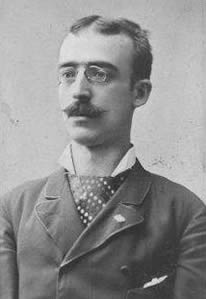
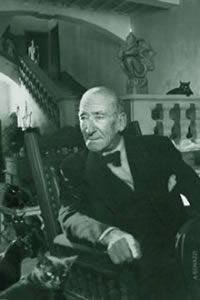
De Franse schrijver Olivier Delorme werd geboren op 14 maart 1958 in Chalon-sur-Saône. Zie ook alle tags voor Olivier Delorme op dit blog.

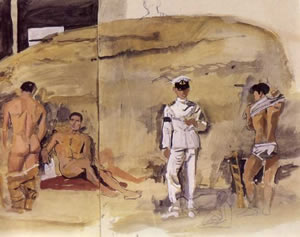
Uit: Yannis Tsarouchis, ou l’Éros en maillot de corps

« Comment ce double dialogue s’est-il construit ? Yannis Tsarouchis naît dans une famille bourgeoise où toutes les références sont françaises. On a peine à imaginer aujourd’hui, alors que le français, en Grèce, est en passe de disparaître non seulement derrière l’anglais mais aussi derrière l’allemand et l’italien, après que nos gouvernants ont saigné à blanc l’Institut français, en attendant de l’achever (tout en chantant les gloires de la francophonie !), ce que fut la place de la culture française – hégémonique – dans la société grecque jusqu’aux années 1970-80. C’est donc du côté de la France que le jeune Yannis, passionné par la peinture depuis son enfance, va tourner son regard.
À l’École supérieure des Beaux-Arts d’Athènes (1928-1934), il travaille notamment dans la classe de Konstantinos Parthénis, pourfendeur de l’académisme qui règne alors sur la peinture grecque, familier de toutes les avant-gardes européennes, et qui décerne à Tsarouchis la mention « Excellent !! » pour une étude de nu masculin (déjà !) de dos (encore), où se voit ce « style pseudo-cubiste » qu’il pratique depuis 1926, dans le « désir d’éviter le style académique.
Le jeune Yannis tâte aussi du surréalisme ; il s’en détourne rapidement. Car son premier voyage à Paris, en 1935, fait « surgir » en lui « des doutes sérieux (…) quant à la valeur de la modernité."


 1736481-d2c1c8f53504c905eb9cf67b5e993282.jpg
Olivier Delorme (Chalon-sur-Saône, 14 maart 1958)
Het grote strand door Yannis Tsarouchis, 1962


De Franse schrijver, tekenaar, schilder, karikaturist en journalist Albert Robida werd geboren op 14 maart 1848 in Compiègne.Zie ook alle tags voor Albert Robida op dit blog.

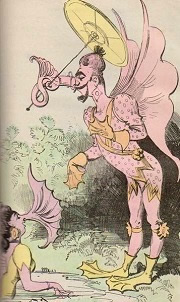
Uit: The Monkey King (Fragment uit:Voyages très extraordinaires de Saturnin Farandoul,vertaald door Brian Stableford)

“The she-monkey understood the reason for these cries. Passing her nursling to the father, she took hold of the infant’s head and generously offered her maternal bounty to the child.
What joy for the little castaway! For many hours he had wandered without nourishment on the crests of the waves, tormented by a hunger he could at last appease! He drank so much that, having suddenly become comfortable again, he ended up falling asleep on the breast of his exotic nurse.
Meanwhile, the little monkeys had been rummaging around in the cradle, to make sure that it did not contain a second example of this peculiar species. They had found nothing there but a kind of bag sealed by a leather thong. This bag intrigued them enormously at first sight, but their perplexity was even further increased by the sight of the piece of paper that the eldest of the little monkeys took from it. They turned it over and over without result, then passed it to their father in the hope that he might explain it. After examining it for a quarter of an hour, he too could make nothing of the bizarre symbols with which it was covered.
The thing was very simple, though; let us admit right away that the bag found in the cradle was a tobacco-pouch–probably the paternal tobacco-pouch, which the unhappy parents had confided to the hazards of the tempest along with their child, at the moment when their ship sank. As for the paper covered with hieroglyphs that had so intrigued the naïve orangs, it will clarify for us the status of the young castaway, for it was nothing other than his duly-registered birth certificate.”


 1736481-b0635af5821987f7a07a3fab2488966a.jpg
Albert Robida (14 maart 1848 – 11 oktober 1926)
Illustratie uit “Voyages très-extraordinaires de Saturnin Farandoul »


De Roemeense dichter Alexandru Macedonski werd geboren op 14 maart 1854 in Craiova.  Zie ook alle tags voor Alexandru Macedonski op dit blog.


Nuit de Décembre (Fragment)

Déserte et blanche, la chambre est pareille à un mort…
Le feu dans l’âtre s’éteint, réduit en cendres… -
Le poète reste tout près, foudroyé par le sort,
Et nulle flamme à ses yeux ne vient se suspendre…
Et son grand génie, au mythe paraît atteindre…

Aucune lueur à ses yeux ne veut se rendre.

Déserte et blanche est la vaste étendue du champ…
Sous la tourmente, il geint à faire pitié…
En bête sauvage, la tristesse le mord à belles dents,
Et la lune le regarde d’un œil d’acier… -
Un blanc monolithe, flou, dans l’obscurité…

Et la lune le regarde d’un œil d’acier.

Autour s’entassent des ombres, par masses, et l’importunent…
Depuis longtemps, l’être d’argile a péri,
Mais son front, toujours altier, reste dans la lune –
Même la blanche pièce est morte dans la nuit…

Depuis longtemps, l’être d’argile a péri.

Bien morte la pièce, bien mort le Poète… -
Au loin, d’horribles loups s’entendent, éraillés,
Qui aboient, qui hurlent, qui montent à l’aveuglette
Un sinistre trémolo de vent étouffé…
La tempête crie… - elle, quel sera son péché ?

Vers le chaos, la tourmente monte à l’aveuglette. 


Vertaald door Constantin Frosin


 1736481-fb978cc6992cec2a66038e1a74e7ce38.jpg
Alexandru Macedonski (14 maart 1854 – 24 november 1920)
In 1878


De Engelse schrijver Algernon Blackwood werd geboren op 14 maart 1869 in Shooter's Hill, Kent. Zie ook alle tags voor Algernon Blackwood op dit blog.

Uit: The Garden of Survival

“It will surprise and at the same time possibly amuse you to know that I had the instinct to tell what follows to a Priest, and might have done so had not the Man of the World in me whispered that from professional Believers I should get little sympathy, and probably less credence still. For to have my experience disbelieved, or attributed to hallucination, would be intolerable to me. Psychical investigators, I am told, prefer a Medium who takes no cash recompense for his performance, a Healer who gives of his strange powers without reward. There are, however, natural-born priests who yet wear no uniform other than upon their face and heart, but since I know of none I fall back upon yourself, my other half, for in writing this adventure to you I almost feel that I am writing it to myself.
The desire for confession is upon me: this thing must out. It is a story, though an unfinished one. I mention this at once lest, frightened by the thickness of the many pages, you lay them aside against another time, and so perhaps neglect them altogether. A story, however, will invite your interest, and when I add that it is true, I feel that you will bring sympathy to that interest: these together, I hope, may win your attention, and hold it, until you shall have read the final word.
That I should use this form in telling it will offend your literary taste—you who have made your name both as critic and creative writer—for you said once, I remember, that to tell a story in epistolary form is a subterfuge, an attempt to evade the difficult matters of construction and delineation of character. My story, however, is so slight, so subtle, so delicately intimate too, that a letter to some one in closest sympathy with myself seems the only form that offers.
It is, as I said, a confession, but a very dear confession: I burn to tell it honestly, yet know not how. To withhold it from you would be to admit a secretiveness that our relationship has never known—out it must, and to you. I may, perhaps, borrow—who can limit the sharing powers of twin brothers like ourselves?—some of the skill your own work spills so prodigally, crumbs from your writing-table, so to speak; and you will forgive the robbery, if successful, as you will accept lie love behind the confession as your due."


 1736481-3ed1b4856fe497a0ea93fa822eda7010.jpg
Algernon Blackwood (14 maart 1869 – 10 december 1951)


De Zwitserse dichter en schrijver Paul Ilg werd geboren op 14 maart 1875 in Salenstein (Thurgau). Zie ook alle tags voor Paul Ilg op dit blog.


Nachtwandlerin

Grollend noch, doch schon des Haders müde,
Arg ein Wort — das letzte Blatt im Sturme ~
Und dann sinkt dein Blondkopf in die Kissen,
Schließen sich die trostverwaisten Augen . . .
Wohl dir, Seele, die so leicht entschlummert!
Dumpf und drohend liegt vor mir die Nacht,
Soll ich wieder alle Stunden zählen,
Grimmig, wie der blinde Maulwurf graben?
Aufgewühlter Schmerzen Dornenkrone,
Zum Ersticken eine Glut im Halse —
Ach die Qual der sieben teuern Jahre —
Und die Furcht vor Nimmerbesserwerden.
Schlaf, wo bleibst du, himmlischer Erlöser?
Mir nicht minder mangeln deine Gnaden.

Da — was regt sich, tastet mir entgegen?
Sehen kann ich's nicht, nur spüren, greifen —
(Oh vor Glück krampft sich die Brust zusammen!)
Deine Hand, wie nach Versöhnung schmachtend,
Nach der meinen traumhaft innig suchend —
Sei willkommen mir, Nachtwandlerin !
Alsbald ist der zarte Bund geschlossen,
Ruhen Schwester, Bruder ineinander.
Still, kein Wort! Ich lausche deinem Atem . . .
Unverändert schlagen noch die Pulse,
Lippen, Wimpern wie zuvor geschlossen —
Und doch blüht ein Heil in deinen Zügen.

Welche Sendung ! Balsam meinen Wunden . . .
Warm ein Strom von grundauf mir ins Auge
Tropfen all die Bitternisse nieder.
Wie vom Blumenkelch in Regenschauern
Fällt der Staub des Tages von mir ab.
Dass ich jubeln dürfte, beten, lachen!
Doch, als war's ein goldbetupfter Flügel,
Bett ich sanft das Kleinod, den Gespielen
Trauter Stunden, mir ans heiße Herz.

Habe Dank denn, Herrin meines Lebens!
Selig hiss ich noch das grüne Fähnlein
Unsrer Hoffnung. Und in Morgenfrühe
Wird sein Flattern deine Seele wecken.


 1736481-52b8a70ad607cf0e8f0fd130b5f9ebf1.jpg
Paul Ilg (14 maart 1875 – 15 juni 1957)

Geschreven door Romenu om 12:58 Reageer op dit bericht

Meer van Romenu

↑ Terug naar de berichten