Naar de inhoud

Romenu

Over literatuur, gedichten, kunst en cultuur
akke.beakke.be

Berichten van 7 april 2015 tot 8 april 2015

Herinnering aan Gerard Reve, Hanz Mirck, Christoph Hein, Judith Koelemeijer, Nnedi Okorafor, Barbara Kingsolver, John Fante
 

Herinnering aan Gerard Reve

Vandaag is het precies 9 jaar geleden dat de Nederlandse dichter en schrijver Gerard Reve overleed. Zie ook alle tags voor Gerard Reve op dit blog en eveneens mijn blog van 14 december 2006. en mijn blog van 9 april 2006.


15 augustus 1970

Eens zal ik gaan
tot waar de Ongeschonden Roos voor eeuwig bloeit,
en schouwen in Haar hart, tot waar de zee van bloed
zwart wordt van diepte: Mysterie, van Zichzelf gedragen,
dat uit Zichzelf geboren wordt.


 1748495-b6cb6c6669770238cc74f92951eab605.jpg
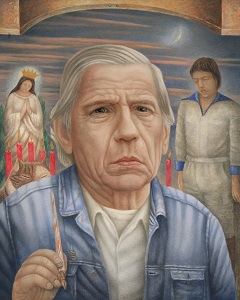
Gerard Reve (14 december 1923 - 8 april 2006)
Portret door Anneke van Brussel, 2010


De Nederlandse dichter Hanz Mirck werd geboren op 8 april 1970 te Zutphen. Zie ook alle tags voor Hanz Mirck op dit blog.


April in Paris

Op een dag schrijf je jezelf een brief
namens een gemeente
Een brief om verder te komen
je legt hem op de hoek van je bureau:

weg met het oude, ruimte voor het nieuwe
Geen donker gewelf met gebrandschilderd glas
maar ruimte waar het licht kan spelen
Later kijk je uit over het Raadhuisplein

Nu schrijven een man en een vrouw elkaar
een brief over vooruitgang (ze leggen hem op de bar)
veeg op de koude wind, vergunning voor gastvrijheid

Hoe breder het terras, des te warmer het wordt,
des te eerder de ober ons Parijs kan brengen
op één hand in de zon


Stille getuige

Die dag trok ik mijn pak aan. Mijn beste. Het enige
Niet langer kon ik zwijgen. Ik nam de beste woorden
Mijn enige. Mijn wapens een monddood pistool met
knaldemper en de meervoudsvorm van elk werkwoord

De portier was net zo nerveus als ik, precies op tijd
tussen de reclames in zou ik het nieuws zelf lezen, na
renteloze leningen, vervuilende schoonmaakmiddelen,
de verzekeringen die de regisseur me deed –

Iedereen kan me nu zien wachten, niemand weet
wat ik heb gezien, de dode decors, hoe murw de wereld
er van mijn kant uitzag. Ik hield me aan mijn dunne
stropdas overeind. Mijn beste. De enige

Toen draaiden ze mijn armen op mijn rug
Mijn toespraak verkreukeld in de kranten, ongehoord
op de grond. Banger voor mijn valse wapen
dan voor mijn waarheid. Mijn enige. De beste


 1748495-bc29680d91d732114371cdad254afddc.jpg
Hanz Mirck (Zutphen, 8 april 1970)


De Duitse schrijver, essayist en vertaler Christoph Hein werd geboren op 8 april 1944 in Heinzendorf in Silezié. Zie ook alle tags voor Christian Hein op dit blog.

Uit: Das Wildpferd unterm Kachelofen

„Er pflückte sich rechts und links die schönsten und schwärzesten Brombeeren ab, steckte sie allerdings nicht in das Kochgeschirr, sondern aß sie gleich. Er hatte immer Hunger. Er konnte sich nicht erinnern, jemals richtig satt gewesen zu sein. Das jedenfalls war seine Ansicht darüber. Tatsächlich würde er auch nach der ausgiebigsten Mahlzeit nie eine angebotene Schokoladenwaffel oder gar einen Karamellpudding ausschlagen. Nur dass es ihm keiner anbot. So naschte er an den Büschen und versuchte, nicht immerzu an seinen knurrenden Magen zu denken. Und ab und zu, wenn er zu weit zurückgeblieben war, galoppierte er auf allen vieren den Freunden hinterher. Dabei warf er wehmütige Blicke auf die vielen Brombeeren, an denen er vorbeieilen musste. Jakob Borg stampfte mit kurzen, energischen Schritten immer weiter, wobei er laut vor sich hin redete. Er war an diesem Nachmittag sehr wütend. "Fünfmal Ärger an einem Tag, das ist zu viel. Erst haben mich die Großen an die Wand geschubst. Und dann hat mich der Hausmeister angeschnauzt, als ob ich daran schuld wäre. Und dann hat mich die Lehrerin und die ganze Klasse ausgelacht, weil ich mich nicht traute, über so einen dummen, dummen Balken zu laufen. Und in der Pause hat mich ein Mädchen ,Brillenschlange' genannt. Und zu Hause hat Papa gleich gesagt, ich soll bloß ruhig sein und ihn nur nicht stören. Fünfmal Ärger an einem einzigen Tag, stell dir das einmal vor, Falscher Prinz!" Er drehte sich um und funkelte den Falschen Prinzen so wütend an, dass dieser vor Schreck kein Wort herausbrachte. "Sei froh", schimpfte Jakob, "dass du nicht in diese dämliche Schule gehen musst!" Der Falsche Prinz beeilte sich, zustimmend zu nicken. In Wahrheit wäre er sehr gern in die Schule gegangen. Er träumte oft, für eine Woche oder auch nur für einen Tag die Schule zu besuchen. Er dachte an Katinka, die zu Hause geblieben war. Katinka hatte ihm gesagt: "Die Schule, mein Lieber, ist das Schönste auf der Welt. Am liebsten würde ich mein ganzes Leben lang in die Schule gehen."


 1748495-c6b122dfb2fcd2e6b8f34704ec186909.gif
Christoph Hein (Heinzendorf, 8 april 1944)


De Nederlandse schrijfster en journaliste Judith Koelemeijer werd geboren in Zaandam op 8 april 1967. Zie ook alle tags voor Judith Koelemeijer op dit blog.

Uit: Hemelvaart

“Ik weet niet of ik ooit zal begrijpen wat er die nacht is gebeurd. Hoe het zo onherroepelijk mis kon gaan. Eén ding weet ik wel. Mijn leven was anders verlopen als Annette er nog was geweest. Het is allemaal lang geleden, al meer dan vijfentwintig jaar. Ik durf niet te zeggen dat mijn herinneringen betrouwbaar zijn. We maken ons eigen verhaal van het verleden; een versie die aanvaardbaar lijkt, met een duidelijk begin, midden en einde. Alsof het zo moest zijn en niet anders. We willen liever niet weten hoeveel er wordt bepaald door stom toeval of het lot. Ze was mijn vriendin, Annette, Nu ik weer veel aan haar denk. Verbaast het me hoe ze nog leeft in mijn gedachten. Soms lijkt het of ik haar kan aanraken. Haar magere schouders, haar smalle, warme rug. Kunnen handen herinneringen bewaren? Ik geloof dat we elkaar veel omhelsden. Toen ik nog jong was, kon ook mijn vriendschap met een meisje de intensiteit hebben van een verliefdheid. Annette had groene ogen die licht leken te geven, als van een kat in het donker. Met die ogen verleidde ze, sleurde ze mee, ook tijdens onze laatste nacht op Paros. Lang heb ik gedacht dat ik haar goed kende. Als je onzeker bent en naar bevestiging zoekt, denk je al snel dat de ander net zo is als jij. Pas de laatste tijd besef ik hoe weinig ik van haar weet. De vriendschap was voorbij voordat zij werkelijk was begonnen. We hebben gedanst, gezopen, flink gezopen, geflirt en gelachen samen.
Maar er was nog zoveel niet gezegd. Annette zal altijd twintig blijven. Elk jaar voert me verder weg van wie zij was, van wie wij toen waren. Toch keer ik telkens bij haar terug. Er is die nacht iets kapotgegaan wat ik nooit heb kunnen helen, al zou ik nog steeds niet kunnen zeggen wat er precies verloren ging, In al die tijd zijn er geen antwoorden gekomen, alleen maar meer vragen.”


 1748495-235469d696c90e21bf3ed2bbb0750dc0.jpg
Judith Koelemeijer (Zaandam, 8 april 1967)
Cover


De Afrikaanse-Amerikaanse schrijfster Nnedi Okorafor werd geboren op 8 april 1974 in Cincinnati, Ohio. Zie ook alle tags voor Nnedi Okorafor op dit blog.

Uit: Zahrah the Windseeker

“Thankfully, when I was born, my parents were open-minded, well educated, and familiar with some of the older stories about dada people. These stories said that the dada-born were destined to be wise beings, not necessarily rebels. As a result, my parents didn"t cut my hair, and they weren"t scaredby it either. Instead they let it grow and, as I got older, made sure I understood that being dada was not a curse. In fact, it was a blessing, because it was a part of me, they said. Of course I didn"t feel this way when I was old enough to go to school and my classmates called me names. Now I"m fourteen and my dada hair has grown way down my back. Also, thevines inside are thicker and dark green. Sometimes all this hair is heavy, but
I"m used to it. My mother says it forces me to hold my head up higher.
A large part of the culture in the northern Ooni Kingdom where I live is to look "civilized." That"s northern slang for stylish. There"s no way the typical northerner would go outside without wearing his or her most civilized clothes and looking clean and nice. Not even for a second.
We all carry mirrors in our pockets, and we take them out every so often to inspect our reflection and make sure we look good. On top of that, our clothes click with tiny style mirrors embedded into the collars and hems.
They"re really lovely. I have a dress with style mirrors sewn all over it.
Sometimes when I"m alone I like to put it on and dance in the sunlight. The reflections from the little mirrors look like white insects dancing along with me.”


 1748495-bb2a0a08dbfeadb2b41455a4f1953c2a.jpg
Nnedi Okorafor (Cincinnati, 8 april 1974)


De Amerikaanse schrijfster Barbara Kingsolver werd geboren op 8 april 1955 in Annapolis, Maryland. Zie ook alle tags voor Barbara Kingsolver op dit blog.

Uit:The Poisonwood Bible

“In the year of our Lord 1960 a monkey barreled through space in an American rocket; a Kennedy boy took the chair out from under a fatherly general named Ike; and the whole world turned on an axis called the Congo. The monkey sailed right overhead, and on a more earthly plane men in locked rooms bargained for the Congo’s treasure. But I was there. Right on the head of that pin.
I had washed up there on the riptide of my husband’s confidence and the undertow of my children’s needs. That’s my excuse, yet none of them really needed me all that much. My firstborn and my baby both tried to shed me like a husk from the start, and the twins came with a fine interior sight with which they could simply look past me at everything more interesting. And my husband, why, hell hath no fury like a Baptist preacher. I married a man who could never love me, probably. It would have trespassed on his devotion to all mankind. I remained his wife because it was one thing I was able to do each day. My daughters would say: You see, Mother, you had no life of your own.
They have no idea. One has only a life of one’s own.
I’ve seen things they’ll never know about. I saw a family of weaver birds work together for months on a nest that became such a monstrous lump of sticks and progeny and nonsense that finally it brought their whole tree thundering down. I didn’t speak of it to my husband or children, not ever. So you see. I have my own story, and increasingly in my old age it weighs on me. Now that every turn in the weather whistles an ache through my bones, I stir in bed and the memories rise out of me like a buzz of flies from a carcass. I crave to be rid of them, but find myself being careful, too, choosing which ones to let out into the light. I want you to find me innocent. As much as I’ve craved your lost, small body, I want you now to stop stroking my inner arms at night with your fingertips. Stop whispering. I’ll live or die on the strength of your judgment, but first let me say who I am. Let me claim that Africa and I kept company for a while and then parted ways, as if we were both party to relations with a failed outcome. Or say I was afflicted with Africa like a bout of a rare disease, from which I have not managed a full recovery. Maybe I’ll even confess the truth, that I rode in with the horsemen and beheld the apocalypse, but still I’ll insist I was only a captive witness.”

 1748495-e66568847fd4f34b84fd49221b929408.jpg
Barbara Kingsolver (Annapolis, 8 april 1955)


De Amerikaanse schrijver John Fante werd geboren in Colorado op 8 april 1909. Zie ook alle tags voor John Fante op dit blog.

Uit: The Road to Los Angeles

« I checked his figures carefully three times. The ten was indeed missing. We examined the floor, kicking sawdust around. Then we looked through the cash drawer again, finally taking it out and looking inside the shaft. We couldn't find it. I told him maybe he had given it to somebody by mistake. He was certain he hadn't. He ran his fingers in and out the pockets of his shirt. They were like frankfurters. He patted his pockets. "Gimme a cigarette."
I pulled a pack from my back pocket, and with it came the ten dollar bill. I had wadded it inside the cigarette pack, but it had worked itself loose. It fell on the floor between us. Tony crushed his pencil until it splintered. His face purpled, his cheeks puffed in and out. He drew back his neck and spat in my face.
"You dirty rat! Get out!"
"Okay," I said. "Suit yourself about that."
I got my Nietzsche book from under the counter and started for the door, Nietzsche! What did he know about Friedrich Nietzsche? He wadded the ten dollar bill and threw it at me. "Your wages for three days, you thief!" I shrugged. Nietzsche in a place like this!
"I'm leaving," I said. "Don't get excited." "Get out of here!" He was a good fifty feet away.
"Listen," I said. "I'm tickled to be leaving. I'm sick of your drooling, elephantine hypocrisy. I've been wanting to abandon this preposterous job for a week. So go straight to hell, you Dago fraud!"
I stopped running when I reached the library. It was a branch of the Los Angeles Public Library. Miss Hopkins was on duty. Her blonde hair was long and combed tightly. I always thought of putting my face in it for the scent. I wanted to feel it in my fists. But she was so beautiful I could hardly talk to her. She smiled. I was out of breath and I glanced at the clock. "I didn't think I'd make it," I said.”


 1748495-f5e81cce6707f1b307d9397d00da94c7.jpg
John Fante (8 april 1909 – 8 mei 1983)
Cover


Zie voor nog meer schrijvers van de 8e april ook mijn blog van 8 april 2012 en ook mijn blog van 8 april 2011 deel 2.
Geschreven door Romenu om 18:39 Reageer op dit bericht

William Wordsworth, Gabriela Mistral, Henk Fedder, Johannes Mario Simmel, Donald Barthelme, Jens Peter Jacobsen

De Engelse dichter William Wordsworth werd geboren op 7 april 1770 in Cockermouth, Cumberland. Zie ook alle tags voor William Wordsworth op dit blog.


The world is too much with us; late and soon

The world is too much with us; late and soon,
Getting and spending, we lay waste our powers:
Little we see in Nature that is ours;
We have given our hearts away, a sordid boon!
This Sea that bares her bosom to the moon;
The winds that will be howling at all hours,
And are up-gathered now like sleeping flowers;
For this, for everything, we are out of tune,
It moves us not.--Great God! I'd rather be
A Pagan suckled in a creed outworn;
So might I, standing on this pleasant lea,
Have glimpses that would make me less forlorn;
Have sight of Proteus rising from the sea;
Or hear old Triton blow his wreathed horn.


With ships the sea was sprinkled far and nigh

With ships the sea was sprinkled far and nigh,
Like stars in heaven, and joyously it showed;
Some lying fast at anchor in the road,
Some veering up and down, one knew not why.
A goodly vessel did I then espy
Come like a giant from a haven broad;
And lustily along the bay she strode,
Her tackling rich, and of apparel high.
The ship was nought to me, nor I to her,
Yet I pursued her with a lover's look;
This ship to all the rest did I prefer:
When will she turn, and whither? She will brook
No tarrying; where she comes the winds must stir:
On went she, and due north her journey took.


To A Butterfly

STAY near me---do not take thy flight!
A little longer stay in sight!
Much converse do I find I thee,
Historian of my infancy !
Float near me; do not yet depart!
Dead times revive in thee:
Thou bring'st, gay creature as thou art!
A solemn image to my heart,
My father's family!

Oh! pleasant, pleasant were the days,
The time, when, in our childish plays,
My sister Emmeline and I
Together chased the butterfly!
A very hunter did I rush
Upon the prey:---with leaps and spring
I followed on from brake to bush;
But she, God love her, feared to brush
The dust from off its wings.


 1748000-82ad1692be86aed5fbdff27c11c7249c.jpg
William Wordsworth (7 april 1770 – 23 april 1850)
Wordsworth House in Cockermouth


De Chileense dichteres en diplomate Gabriela Mistral werd geboren in Vicuña, Chili op 7 april 1889. Zie ook alle tags voor Gabriela Mistral op dit blog.


Death Sonnet I

From the icy niche where men placed you
I lower your body to the sunny, poor earth.
They didn't know I too must sleep in it
and dream on the same pillow.

I place you in the sunny ground, with a
mother's sweet care for her napping child,
and the earth will be a soft cradle
when it receives your hurt childlike body.

I scatter bits of earth and rose dust,
and in the moon's airy and blue powder
what is left of you is a prisoner.

I leave singing my lovely revenge.
No hand will reach into the obscure depth
to argue with me over your handful of bones.


Creed

I believe in my heart that when
The wounded heart sunk within the depth of God sings
It rises from the pond alive
As if new-born.
 
I believe in my heart that what I wring from myself
To tinge life’s canvas
With red of pallid hue, thus cloaking it
In luminous garb.


 1748000-bdca0a3e6722560f9e24bc740377e6ff.jpg
Gabriela Mistral (7 april 1889 – 10 januari 1957)
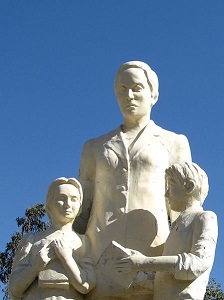
Monument in Montegrande 


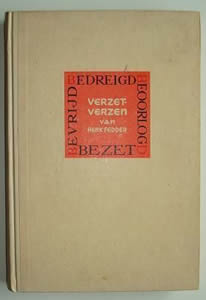
De Nederlandse dichter en schrijver Henk Fedder werd op 7 april 1890 te Amsterdam geboren. Zie ook alle tags voor Henk Fedder op dit blog.


Honger

Alweer gedroomd van wittebrood met ham,
De honger maakt de wildste dieren tam,
Maar Holland is door niets kapot te krijgen
'k Wou, dat er 'n postpakket met bruine boonen kwam.


Verkeersbureau

Vóór het verkeersbureau hangt een reclameplaat:
Arosa. Sneeuw. Een berg, die tot Gods hemel gaat.
En ik, in het bezet gebied gevangen,
sta platgeslagen in een nauwe straat.


 1748000-7cbe8fcfbc3c058dc911a887496584e6.jpg
Henk Fedder (7 april 1890 – 29 mei 1979)
Cover


De Oostenrijkse schrijver Johannes Mario Simmel werd op 7 april 1924 in Wenen geboren. Zie ook alle tags voor Johannes Mario Simmel op dit blog.

Uit: Affäre Nina B.

„Er hatte viele Feinde. Ich war sein größter. Es gab viele Menschen, die ihn haßten. Niemand haßte ihn mehr als ich. Viele Menschen wünschten ihm den Tod. Ich war entschlossen, ihn herbeizuführen, den Tod des Mannes, den ich über alle Maßen haßte.
An diesem Tage war es soweit. Ich hatte lange gewartet. Nun hatte das Warten ein Ende. Ich hatte lange gezögert. Nun war es mit dem Zögern vorbei. Nun ging es um mein Leben - und um seines.
Es war schon sehr warm in Baden-Baden an diesem 7. April. Der sanfte, bewaldete Talkessel, auf dessen Grund die Stadt errichtet stand, fing die Kraft der jungen Sonne ein und hielt sie in seiner dunklen, fruchtbaren Erde fest. Viele Blumen blühten in Baden-Baden, gelbe, blaue und weiße. Ich sah Primeln und Himmelschlüssel, Krokusse und Veilchen an den Ufern der schläfrig murmelnden Oos, als ich den schweren Wagen durch die Lichtentaler Allee lenkte. Es war sein Wagen, einer von den dreien, die erbesaß, und er paßte zu ihm: ein protziger, riesenhafter Cadillac mit weißen Reifen, rot und schwarz lackiert.
Alle Menschen auf den Straßen hatten freundliche Gesichter. Die Frauen lächelten mysteriös. Sie trugen bunte, leichte Kleider. Viele trugen verwegene Hüte. Ich sah eine Menge von verwegenen Hüten an diesem Morgen, als ich zum Polizeipräsidium führ, um eine Anzeige zu erstatten. Dies schien ein Frühling der Hüte zu werden, dachte ich.
Die Männer trugen graue, hellbraune, hellblaue oder dunkelblaue Anzüge, viele hatten bereits ihre Mäntel zu Hause gelassen. Die Männer sahen die Frauen an und ließen sich. Zeit dabei. Sie hatten keine Eile. Niemand hatte an diesem Frühlingstag Eile in Baden-Baden, niemand außer mir. Mich hetzte mein Haß, mich hetzte ein unsichtbares, unhörbares Uhrwerk, das ich selbst in Gang gesetzt hatte und vor dessen Stunde Null es kein Entrinnen gab - für ihn und mich.“


 1748000-5838763699ca2544d1f2c41210ae3df6.jpg
Johannes Mario Simmel (7 april 1924 – 1 januari 2009)


De Amerikaanse schrijver Donald Barthelme werd geboren op 7 april 1931 in Philadelphia. Zie ook alle tags voor Donald Barthelme op dit blog.

Uit: The Balloon

“The balloon, beginning at a point on Fourteenth Street, the exact location of which I cannot reveal, expanded northward all one night, while people were sleeping, until it reached the Park. There, I stopped it; at dawn the northernmost edges lay over the Plaza; the free-hanging motion was frivolous and gentle. But experiencing a faint irritation at stopping, even to protect the trees, and seeing no reason the balloon should be allowed to expand upward, over the parts of the city it was already covering, into the "air space" to be found there, I asked the engineers to see to it. This expansion took place throughout the morning, soft imperceptible sighing of gas through the valves. The balloon then covered forty-five blocks north-south and an irregular area east-west, as many as six crosstown blocks on either side of the Avenue in some places. This was the situation, then.
But it is wrong to speak of "situations," implying sets of circumstances leading to some resolution, some escape of tension; there were no situations, simply the balloon hanging there -- muted heavy grays and browns for the most part, contrasting with the walnut and soft yellows. A deliberate lack of finish, enhanced by skillful installation, gave the surface a rough, forgotten quality; sliding weights on the inside, carefully adjusted, anchored the great, vari-shaped mass at a number of points. Now we have had a flood of original ideas in all media, works ofsingular beauty as well as significant milestones in the history of inflation, but at that moment, there was only this balloon, concrete particular, hanging there.
There were reactions. Some people found the balloon "interesting." As a response, this seemed inadequate to the immensity of the balloon, the suddenness of its appearance over the city; on the other hand, in the absence of hysteria or other societally-induced anxiety, it must be judged a calm, "mature" one. There was a certain amount of initial argumentation about the "meaning" of the balloon; this subsided, because we have learned not to insist on meanings, and they are rarely even looked for now, except in cases involving the simplest, safest phenomena.”


 1748000-e7b62108d95ddb973aeb2d90b84cd4eb.jpg
Donald Barthelme (7 april 1931 – 23 juli 1989)


De Deense dichter en schrijver Jens Peter Jacobsen werd geboren op 7 april 1847 in Thisted. Zie ook alle tags voor Jens Peter Jacobsen op dit blog.

Uit: There should have been roses (Vertaald door Anna Grabow)

„There should have been roses
Of the large, pale yellow ones.
And they should hang in abundant clusters over the garden-wall, scattering their tender leaves carelessly down into the wagon-tracks on the road: a distinguished glimmer of all the exuberant wealth of flowers within.
And they should have the delicate, fleeting fragrance of roses, which cannot be seized and is like that of unknown fruits of which the senses tell legends in their dreams.
Or should they have been red, the roses?
Perhaps.
They might be of the small, round, hardy roses, and they would have to hang down in slender twining branches with smooth leaves, red and fresh, and like a salutation or a kiss thrown to the wanderer, who is walking, tired and dusty, in the middle of the road, glad that he now is only half a mile from Rome.
Of what may he be thinking? What may be his life?
And now the houses hide him, they hide everything on that side. They hide one another and the road and the city, but on the other side there is still a distant view. There the road swings in an indolent, slow curve down toward the river, down toward the mournful bridge. And behind this lies the immense Campagna. The gray and the green of such large plains.... It is as if the weariness of many tedious miles rose out of them and settled with a heavy weight upon one, and made one feel lonely and forsaken, and filled one with desires and yearning.“

 1748000-0fa666b146ed60a66d3a0f0165c7124e.jpg
Jens Peter Jacobsen (7 april 1847 – 30 april 1885)


Zie voor nog meer schrijvers van de 7e april ook mijn blog van 7 april 2014 en ook mijn blog van 7 april 2013 deel 1 en eveneens deel 2.

Geschreven door Romenu om 18:37 Reageer op dit bericht

Özcan Akyol

De Nederlandse schrijver en columnist Özcan Akyol werd geboren in Deventer op 7 april 1984. Zie ook alle tags voor Özcan Akyol op dit blog.

Uit: Eus

“Vreemd genoeg waren we niet de enigen. De meeste batsen arriveerden veel te vroeg op Schiphol. Blijkbaar waren ze heel bang hun vlucht te missen, zo graag wilden ze terug naar hun eigen land. De meeste mensen hadden zwaarbepakte vuilniszakken bij zich, misschien waren het kadootjes voor de familie in het thuisland. Zenuwachtig ijsbeerden ze door de hal.
Boven Duitsland bleek mijn maag niet bestand tegen vliegen. Ik kotste de hele boel onder, niet zuinig ook; alsof er een leiding in mijn maag knapte spoot
de viezigheid eruit. Mijn ouders sliepen op dat moment al.
Van mijn gegorgel werd moeder het eerst wakker. Met een platte hand streelde ze m’n achterhoofd en ze vroeg de bekakte stewardess om een kotszak.
De smurrie lag echter al op de grond. Een paar reizigers jammerden hardop, boos vanwege de zure lucht. Vader werd wakker, keek monkelend opzij en haalde zijn neus op.
‘Moet je die baby zien, zijn maagje kan niet tegen het vliegtuig.’ Daarna sliep hij weer.
In Turkije kwamen we moeiteloos langs de douane, alleen nog de koffers en de teevee ophalen en we konden door naar ons zomerhuis. We stelden ons strategisch op langs de band, alleen moeder bleef verderop wachten, naast de kar voor de bagage.
De meeste mensen raapten binnen het kwartier hun spullen op, maar wij moesten heel lang wachten. Ik zag hoe het volk buiten elkaar in de armen viel.
Sommige gasten vervolgden hun reis met de taxi, anderen lieten een dolmus stoppen.
Het was heel warm. We waren nog gekleed op de koude van Nederland.”
Af en toe huppelde ik richting moeder. Ze bette haar bezwete voorhoofd met een zakdoek en tuurde gespannen naar de traag draaiende carrousel, steeds op haar tenen, zodat ze over mensen heen kon kijken. ‘De koffers zijn compleet, toch?’
Ik knikte. ‘Alleen die teevee nog.’
Maar het toestel kwam niet.
Anderhalf uur later verscheen een douanier aan de band."


 1879038-5f30b52454a1307de1bbed4e8b921cdf.jpg
Özcan Akyol (Deventer, 7 april 1984)

Geschreven door Romenu om 00:00 Reageer op dit bericht

Meer van Romenu

↑ Terug naar de berichten