Naar de inhoud

Romenu

Over literatuur, gedichten, kunst en cultuur
akke.beakke.be

Berichten van 24 april 2015 tot 25 april 2015

Erik Menkveld, Ted Kooser, James Fenton, Walter de la Mare, Ross Franklin Lockridge Jr.,

De Nederlandse dichter Erik Menkveld werd geboren op 25 april 1959 in Eindhoven. Zie ook alle tags voor Erik Menkveld op dit blog.


Te Emmen

Evenzeer als wij het nauwgezette
zwemmen en metallic blauwe
van een kleine Afrikaanse vis
te Emmen vanmiddag, waterlelieblad
dat zich met rode kop optrekt
tot waterschildpadschild,
een dagpauwoog in de vlindertuin
die mijn hand voor wilde orchis
aanziet en heel Drenthe buiten
evenzeer.


Boerenbui

Hevige aandrang te eggen of te gieren?
Een tractor te kopen? Nuchtere
kalveren voor de mesterij?

Red één ongeschoren schaap
bij nacht en ontij uit de sloot, bekijk
het liefste varken op worstkwaliteit, eet

twaalf sneeën zelfverbouwd roggebrood.
En vergeet niet bij rooien of poten
op klompen te lopen en overal bij.

Meestal waait het dan wel over.
En anders ben je onherroepelijk
geboren voor de boerderij.


 1755650-3b2c8706d129721faf20ccdd173af942.jpg
Erik Menkveld (25 april 1959 - 30 maart 2014)


De Amerikaanse dichter Ted Kooser werd geboren op 25 april 1939 in Ames, Iowa. Zie ook alle tags voor Ted Kooser op dit blog.


A Room in the Past

It’s a kitchen. Its curtains fill
with a morning light so bright  
you can’t see beyond its windows  
into the afternoon. A kitchen  
falling through time with its things  
in their places, the dishes jingling  
up in the cupboard, the bucket  
of drinking water rippled as if
a truck had just gone past, but that truck  
was thirty years. No one’s at home  
in this room. Its counter is wiped,  
and the dishrag hangs from its nail,  
a dry leaf. In housedresses of mist,  
blue aprons of rain, my grandmother  
moved through this life like a ghost,  
and when she had finished her years,  
she put them all back in their places
and wiped out the sink, turning her back  
on the rest of us, forever.


Pocket Poem

If this comes creased and creased again and soiled
as if I'd opened it a thousand times
to see if what I'd written here was right,
it's all because I looked too long for you
to put in your pocket. Midnight says
the little gifts of loneliness come wrapped
by nervous fingers. What I wanted this
to say was that I want to be so close
that when you find it, it is warm from me.


 1755650-ffcec97a97b2cb264fda7f34fd709c03.jpg
Ted Kooser (Ames, 25 april 1939)


De Engelse dichter, schrijver, criticus en letterkundige James Fenton werd geboren op 25 april 1949 in Lincoln. Zie ook alle tags voor James Fenton op dit blog.


At the Kerb

Grief to bestow, where once they bestowed their beauty,
Who are these mourners processing to the grave,
Each bearing a history like a precious ointment
And tender on their sleeves the wounds of love?

Brutal disease has numbered him a victim,
As if some unmarked car had appeared one day
And snatched him off to torture and confinement,
Then dumped him by the kerbside and sped away;

As if they stooped now at the kerb to lift the body,
As if they broke the jars and the unguent flowed,
Flowed down the sleeves and wounds, ran down the kerbstones,
Grief to bestow what beauty once bestowed.


Yellow Tulips

Looking into the vase, into the calyx, into the water drop,
Looking into the throat of the flower at the pollen stain,
I can see the ambush love sprung once in the summery wood,
I can see the casualties where they lay, till they set forth again.

I can see the lips, parted first in surprise, parted in desire,
Smile now as the silence falls on the yellow-dappled ride
For each thinks the other can hear each receding thought
On each receding tide.

They have come out of the wood now. They are skirting the fields
Between the tall wheat and the hedge, on the unploughed strips,
And they believe anyone who saw them would know
Every secret of their limbs and of their lips,

As if, like creatures of legend, they had come down out of the mist
Back to their native city and stood in the square,
And they were seen to be marked at the throat with a certain sign
Whose meaning all could share.

These flowers came from a shop. Really they looked nothing much
Till they opened as if in surprise at the heat of this hotel.
Then the surprise turned to a shout, and the girl said, ‘Shall I chuck them now
Or give them one more day? They’ve not lasted so well.’

‘Oh give them one more day. They’ve lasted well enough.
They’ve lasted as love lasts, which is longer than most maintain.
Look at the sign it has left here at the throat of the flower
And on your tablecloth - look at the pollen stain.’


 1755650-a514ed2e321ae84c5d1ce9f866e50655.jpg
James Fenton (Lincoln, 25 april 1949)


De Engelse dichter Walter John de la Mare werd geboren op 25 april 1873 in Charlton, Kent. Zie ook alle tags voor Walter John de la Mare op dit blog.


The Corner Stone

Sterile these stones
By time in ruin laid.
Yet many a creeping thing
Its haven has made
In these least crannies, where falls
Dark's dew, and noonday shade.

The claw of the tender bird
Finds lodgment here;
Dye-winged butterflies poise;
Emmet and beetle steer
Their busy course; the bee
Drones, laden, near.

Their myriad-mirrored eyes
Great day reflect.
By their exquisite farings
Is this granite specked;
Is trodden to infinite dust;
By gnawing lichens decked.

Toward what eventual dream
Sleeps its cold on,
When into ultimate dark
These lives shall be gone,
And even of man not a shadow remain
Of all he has done?


 1755650-83c0123e8ce05a869ffe8bd0cca3f04f.jpg
Walter John de la Mare (25 april 1873 – 22 juni 1956)
In 1924


De Amerikaanse schrijver Ross Franklin Lockridge Jr. werd geboren op 25 april 1914 in Bloomington, Indiana. Zie ook alle tags voor Ross Franklin Lockridge Jr.op dit blog.

Uit: Raintree County

“Then there was the MGM movie that appeared in 1957 with the billing that here was an epic to out do Gone with the Wind. The novel had won an enormous prize given by Loew's Incorporated in 1947 but was shelved in 1949. With the advent of TV and other problems, the company went into a disastrous slump in 1947-48. They were also having trouble coming up with a script, and the young author's suicide may have been a damper of sorts. In 1954 it was dusted off and the task of writing the script was given to Millard Kaufman, creator of the cartoon character Mr. Magoo.
In late August of 1956 my mother invited herself and the kids down to Danville, Kentucky, where an army of movie staffers was encamped for a summer of shooting. Indiana no longer looked enough like itself and to its dismay had been passed over in the location search. Montgomery Clift was still recovering from an automobile accident in May that interrupted shooting for six weeks. Leaving a party at Elizabeth Taylor's home in the Benedict Canyon hills, he had driven into a telephone pole, losing two front teeth, cutting a hole through his upper lip, and breaking his nose and jaw. He refused to drop out of the film, and, in constant pain, kept a gray satchel full of pills by his side. He stumbled through the rest of the film mostly in right profile; the left was lumpy and inert. In his off-camera life in recent weeks he had faked his own bloody death, run naked into the streets of Danville after a nightmare, broken a toe, and badly burned two fingers with a cigarette while out cold from an accidental overdose of sleeping pills.
Enter the Lockridge family hopeful of finding in Clift someone capable of playing John Shawnessy, who in many ways resembles his creator. I shook the hand of someone bent over, fidgety, gaunt, bloodshot, and much older than his thirty-five years. His efforts were heroic, but still the great actor mumbled, moved his wired jaw with difficulty, forgot his lines, and seemed by turns manic and drugged. The crew was shooting a scene that featured Shawnessy and Susanna Drake, the neurotic heroine played by Elizabeth Taylor. Both were lying drunk on the banks of the Shawmucky River following Shawnessy's great victory in the Raintree County footrace.”


 1755650-c7b73dc2387067a43643890063737d39.jpg
Ross Franklin Lockridge Jr. (25 april 1914 – 6 maart 1948)
Hier met echtgenote Vernice en zoontje Larry in 1943


Zie voor nog meer schrijvers van de 25e april mijn vorige blog van vandaag.
Geschreven door Romenu om 14:36 Reageer op dit bericht

Julius Grosse, Richard Anders, Leopoldo Alas, Sigmund von Birken, Jindrich Horejsi, William Temple

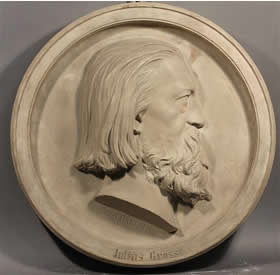
De Duitse dichter en schrijver Julius Waldemar Grosse werd geboren op 25 april 1828 in ErfurtZie ook alle tags voor Julius Grosse op dit blog.


Armut der Weisheit

Ihr alten Bücher, glänzend noch bei Nacht
In Gold und Leder und voll weiser Lehren –
Ihr redet mir von einst’ger Kaiserpracht,
Bringt Platon, Sirach, Epikur zu Ehren.
Ihr baut mir eine Welt aus euren Blättern,
Und Geister steigen auf aus euren Lettern.

Ach, ich ersehne nur im Mondenschein
Ein lebend Herz, und eure Geister machen
Mich bitter fühlen, daß ich bin allein,
Fern der Geliebten, fern dem holden Lachen
Des Mädchenmunds – o Plato, Epikur,
Dagegen seid ihr arme Schelme nur.


Ewige Jugend

Wohl alle Tage, wenn ich bei dir bin,
Umschleiert mich ein Frühling ew'gen Lebens
Und ewiger Jugend. Jahre fließen hin;
Dein Zaubertrank, ich trank ihn nicht vergebens.

Und wenn du morgen welktest bleich und krank,
Die schöne Stirn gefurcht von Gram und Sorgen,
Mein Auge ist gefeit von jenem Trank,
Das Leben mir ein ew'ger Hochzeitmorgen.

Und wandelst du dereinst mit greisen Frau'n,
Müd' und gebeugt in silberweißem Haare;
Ich bin geweiht, dich stets als Braut zu schau'n,
Ohnmächtig überfluten uns die Jahre. -

Ja, wie der Wein, der alt an Glut gewann,
So glüht der Zauber mächt'ger mit den Zeiten.
Du kannst nicht altern. Was ein Gott begann,
Wird göttlich dauern in die Ewigkeiten.


 1755646-086feaee948b2cbe503ec3913506f123.jpg
Julius Grosse (25 april 1828 – 9 mei 1902)
Portret op een medaillon door Ernst Julius Hähnel, 1879


De Duitse dichter en schrijver Richard Anders werd geboren op 25 april 1928 in Ortelsburg, tegenwoordig Szczytno, Polen. Zie ook alle tags voor Richard Anders op dit blog.


Verschwunden

Mal bist du dir voraus – mal rennst du hinter dir her und siehst deinen
mit jeder Sekunde kleiner werdenden Rücken. Die Straße führt zum
Horizont, wo die Häuser nur Punkte sind. Plötzlich bist du verschwunden,
bist unerreichbar geworden. Du drehst dich um. Jemand läuft auf dich zu.
Du! Du fliehst. Erst jetzt läufst du mit der Geschwindigkeit, mit der du dich,
als du hinter dir her warst, hättest erreichen können. Doch diesmal ist es
nicht Spiel oder Ernst. Den Augen deines Verfolgers entronnen, bist du
auch – bis auf diese lesbare heiße Spur – dir selbst abhanden gekommen.


Sturz

Du öffnest das Fenster. Obwohl es heller Tag ist, siehst du in tiefe
Schwärze. Dennoch springst du, wie du es dir vorgenommen hast.
Ein Blitz erschreckt dich: Hinter deinem Rücken zerflammt dein Haus.
Die Schwärze scheint sich im Sturz zu verdichten, bis sie dich schwerelos
wie eine Mauer umschließt. Stand dein Haus in den Sternen? Gäbe es noch
Dämmerung, dämmerte es dir, daß springend du deinen Kopf nicht verlassen hast.
Und du wirst ihn nie verlassen wegen deiner, im Vergleich zum Kopf
unendlichen Kleinheit, die dich zu Lebzeiten nicht den furchtbaren Aufschlag,
das Zersplittern aller Knochen erleben läßt.


 1755646-dd8d99ca100960ef5d8bbb245fa3d9a3.jpg
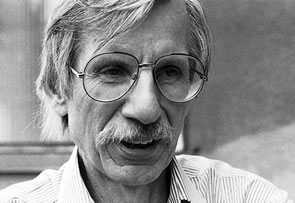
Richard Anders (Ortelsburg, 25 april 1928)


De Spaanse schrijver Leopoldo Alas (wereldwijd bekend als ‘Clarín’) werd geboren op 25 april 1852 in Zamora. Zie ook alle tags voor Leopoldo Alas op dit blog.

Uit: La Regenta (Vertaald door Robert M. Fedorchek)

“This did not prevent him from sighing when he noticed that Diego [the son] had adopted ideas, habits, and tendencies that were a far cry from the Castilian simplicity that for Don Juan constituted good manners and character. Their son looked more like the duchess than the duke, and the education that he called rigid, proper, and cold accentuated the differences between them, differences that Don Juan sincerely regretted. But the duke did not complain. To each his own, he believed. Neither Diego nor anyone else would change his ways now, but his successor, well…let him become what God had ordained. Don Juan had demanded freedom for himself, and he allowed others to live as they wished. One thing, however, was clear: while the old duke was alive, his house, no matter how annoyed the young master appeared to be, would bend to his will.
Diego, as a matter of fact, felt an insuperable repugnance for his father’s ways. He, who had had student servants, who from his time at the boarding school had learned to measure the distances that reality out of necessity establishes between different classes, even saw a kind of hypocrisy, or at least a ridiculous illusion, in bad taste, in this apparent equality of treatment which did not go beyond the surface, which could only be skin-deep. All of this, he thought, is a grotesque comedy that annoys the rest of us and would humiliate the poor peasants themselves if they were more sensitive. »


 1755646-57c4add55a335fe4a17fbc4931c713c1.jpg
Leopoldo Alas (25 april 1852 – 13 juni 1901)
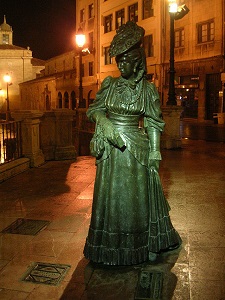
Standbeeld van La Regenta in Oviedo


De Duitse dichter en schrijver Sigmund von Birken werd geboren op 25 april 1626 in Wildstein nabij Eger. Zie ook alle tags voor Sigmund von Birken op dit blog.


Sonntags-Abend-Lied
Nach der Singweise: Die helle Sonn ist nun dahin usw.

1.
Die liebe Sonne weicht von hier,
Der Tag verjagt die Nacht.
Hirt Israels! du bist bey mir,
Ich traue deiner Wacht.

2.
Gehst du mir auf, du ewigs Liecht,
So hab ich Sonnenschein.
Bist du bey mir, so werd ich nicht
Im Hertzen finster seyn.

3.
Fürcht, meine Seele! nur kein Leid:
Dein Liecht schon tritt herzu.
Bey dir die Sonn einkehret heut,
Ist deiner Ruhe Ruh.

4.
Nacht, gute Nacht, mach dich davon!
Mein Tag mich dannoch grüst.
Ja, meine Sonn ist Gottes Sohn,
Mein Liecht heist Jesus Christ.

5.
Ob Sünden-Nacht dazwischen steht,
Raubt mir den Sonnenschein:
Durch seines Blutes Morgenröth
Soll sie zertrieben seyn.

6.
Geh schlaffen, Leib, und ruhe wol,
Dich schutzt der Engel wacht.
Die Sonn gesund dich wecken soll,
Wol sag ich: gute Nacht!


 1755646-f4b22917420b77b13cf2af95b9f4503b.jpg
Sigmund von Birken (25 april 1626 – 21 juni 1681)
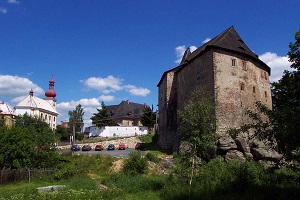
Wildstein met burcht 


De Tsjechische dichter en vertaler Jindřich Hořejší werd geboren op 25 april 1886 in Praag. Zie ook alle tags voor Jindřich Hořejší op dit blog.

Uit:Jaroslav Hasek, le brave soldat Chvéïk (vertaling Jindřich Hořejší)

« — Mais, M’sieur le patron, c’est l’archiduc Ferdinand, celui de Konopiste, le gros calotin, vous savez bien ?
— Jésus-Marie, n’en v’là d’une nouvelle ! s’écria Chvéïk. Et où est-ce que ça lui est arrivé, à l’archiduc, voyons ?
— À Saraïévo. Des coups de revolver. Il y était allé avec son archiduchesse en auto.
— Ça, par exemple ! Ben oui, en auto… Vous voyez ce qu‘c’est, M’ame Muller, on s’achète une auto et on ne pense pas à la fin… Un déplacement, ça peut toujours mal finir, même pour un seigneur comme l’archiduc… Et surtout à Saraïévo ! C’est en Bosnie, vous savez, M’ame Muller, et il n’y a que les Turcs qui sont capables de faire un sale coup pareil. On n’aurait pas dû leur prendre la Bosnie et l’Herzégovine, voilà tout. Ils se vengent à présent. Alors, notre bon archiduc est monté au ciel, M’ame Muller ? Ça n’a pas traîné, vrai ! Et a-t-il rendu son âme en tout repos, ou bien a-t-il beaucoup souffert à sa dernière heure ?
— Il a été fait en cinq sec, M’sieur le patron. Pensez donc, un revolver, ce n’est pas un jouet d’enfant. Il y a pas longtemps, chez nous, à Nusle, un monsieur a joué avec un revolver et il a tué toute sa famille, y compris le concierge qui est monté au troisième pour voir ce qui se passait."


 1755646-b8c9d30eb74674878eb0fbabe4750470.jpg
Jindřich Hořejší (25 april 1886 – 30 mei 1941)
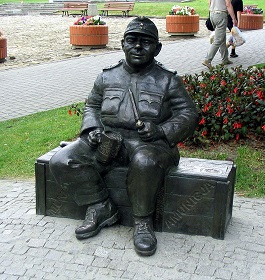
Standbeeld van de brave soldaat Švejk in Przemyśl, Polen


De Engelse essayist en diplomaat Sir William Temple werd geboren in Londen op 25 april 1628. Zie ook alle tags voor Willam Temple op dit blog.

Uit: Observations upon the United Provinces of the Netherlands

“Upon these Foundations was this State first establisht, and by these Orders maintained, till the death of the last Prince of Orange; When by the great influence of the Province of Holland amongst the rest, the Authority of the Princes came to be shared among the several Magistracies of the State; Those of the Cities assumed the last nomination of their several Magistrates;
The States-Provincial, the disposal of all Military Commands in those Troops which their share was to pay; And the StatesGeneral, the Command of the Armies, by Officers of their own appointment, substituted and changed at their will. No power remain'd to pardon what was once condemned by rigor of Law; Nor any person to represent the Port and Dignity of a Soveraign · State; Both which could not fail of being sensibly missed by the people, since no man in particular can be secure of offending, or would therefore absolutely despair of impunity himself, though he would have others do so; And men are generally pleased with the Pomp and Splendor of a Government, not only as it is an amusement for idle people, but as it is a mark of the Greatness, Honour and Riches of their Countrey.
However these Defects were for near Twenty years supplied in some measure, and this Frame supported by the great Authority and Riches of the Province of Holland, which drew a sort of dependance from the other Six; and by the great Sufficiency, Integrity and Constancy of their chief Minister, and by the effect of both in the prosperous Successes of their Affairs:
Yet having a Constitution strained against the current vein and humour of the people, It was always evident, that upon the growth of this young Prince, The great Virtues and Qualities he derived from the mixture of such Royal and such Princely Blood, could not fail in time of raising His Authority to equal at least, if not to surpass that of his glorious Ancestors.”


 1755646-a8795c9e4add3028a3b3af333a01ebc4.jpg
William Temple (25 april 1628 – 27 januari 1699)
Portret door Gaspar Netscher, 1675

Geschreven door Romenu om 14:21 Reageer op dit bericht

Frans Coenen, Eric Bogosian, Robert Penn Warren, Carl Spitteler, Anthony Trollope, Michael Schaefer

De Nederlandse schrijver, essayist en criticus Frans Coenen werd in Amsterdam geboren op 24 april 1866. Zie ook alle tags voor Frans Coenen op dit blog.

Uit: Bleeke levens

“In den vroegen ochtend, met een treintje, dat aansloot aan een van die groote, stormende internationale treinen zouden wij gaan.
Den avond tevoren, na het souper, werd het eenigermate duidelijk in welke verhouding de oude heer en de jonge vrouw tot elkaar stonden, de twee menschen, waarin deze kleine maatschappij het meest belangstelde. Iemand had hun vier schoenen voor een kamerdeur zier staan en den volgenden dag, toen de kamer open stond ter schoonmaak, even naar binnen gekeken. En het was maar één kamer en er was maar één ledikant! Een ander had bij den hôtelhouder geinformeerd en er was nog iemand die hen zeide te kennen en uit hetgeen zij gezamenlijk er van wisten, moest het nu blijken dat de oude heer een ‘vieux farceur’ was en de jonge vrouw zijn maîtres.
Wij, alle logeergasten, hadden de hoofden bij elkaar gestoken en bespraken het geval met een aangename geheimzinnigheid. Nog altijd had de meneer niets in het boek geschreven, maar dat zou nu toch wel moeten, dacht men. En wat hij er dan van maken zou! En zij met haar mooi engelengezichtje en schuchtere manieren! Het was een curieus geval, een verzamelpunt voor de leege nieuwsgierigheid en het wekte alle gedachten, die zulk een verhouding van een ouden verliefden rijkaard en een arm, mooi meisje, dat zich prostitueert, pleegt te wekken bij de menschen, die de wereld meer uit boeken, dan uit eigen aanzien kennen.
Den volgenden ochtend, toen wij vroeg beneden kwamen in de nog druilige gang en doffe eetzaal, zat het paar daar al te ontbijten. Zij wilden blijkbaar met denzelfden trein als wij afreizen. Er was den vorigen avond niets van bekend geweest onder de andere gasten en het geleek wel iets naar een overhaaste vlucht. Terwijl, in de stille kamer, wij te ontbijten zaten, kwamen onze blikken telkens naar het zonderlinge paar terug. Zij zagen echter nooit naar ons, maar hielden hun oogen voor zich, alsof zij wel wisten, dat zij altijd bekeken werden.
Hij had een lichtbruinen slappen hoed op, te jeugdig voor zijn leeftijd, en was overigens in dezelfde sjofele kleeding der vorige dagen. Zij zat weer met hoed en voile en een vellerig-dun, grijs stofmanteltje omhing haar schouders. Geen woord spraken ze tot elkaar.”


 1755315-6f5efd8740d29dfc13b85f7b6a91f564.jpg
Frans Coenen (24 april 1866 - 23 juni 1936)
Hier in het midden met zijn vader Frans Coenen Sr. (rechts) en een onbekende.


De Amerikaanse schrijver en acteur Eric Bogosian werd geboren op 24 april 1953 in Woburn, Massachusetts. Zie ook alle tags voor Eric Bogosian op dit blog.

Uit: Operation Nemesis

“When I was a little kid, there was nothing I loved better than hanging out at my grandparents’ house. In her sunny kitchen, my Grandma Lucy would fashion honey- drenched Armenian pastries, while out in the backyard Grampa Megerdich roasted lamb shish kebab under the apple trees. After dessert, Grampa might knock back a tiny glass of arak and tell me stories. I was held rapt by the horrific narratives he dredged up from his faraway past. In his sweetly accented English, Megerdich would describe burning churches and sadistic horsemen. The sto-ries would always end the same way. My grandfather would instruct me, “If you ever meet a Turk, kill him.”I was no more than four years old when I first heard those words.My grandfather had spent his boyhood in the troubled eastern frontier of the Ottoman Empire more than a century ago. He had plenty of reason to hate the Turks, who had killed his father and almost killed him. In 1915, when he was barely twenty- one years old, Megerdich escaped the genocide that would exterminate hun-dreds of thousands of his fellow Armenians. More than once he told me the story of how his village burned while he and his mother crouched down in the middle of a wheat field, hiding from the zapiteh.
Under darkness of night they fled, managed to find passage to France, and in 1916 Megerdich and my great- grandmother immigrated to the United States from Le Havre. My grandfather claimed that he had survived because he was smarter than the rest. That’s why I was such a smart little boy. But perhaps it was just luck.Megerdich’s own father was not so lucky. Ovygin Jamgochian, after successfully immigrating to the United States in the 1890s, had gained American citizenship. But he made the mistake of returning to “the old country” to find his wife and teenage son. The Young Turk government didn’t recognize his American citi-zenship, and he was swept up with hundreds of thousands of other able- bodied men and drafted into the army.“


 1755315-f4d56334329540988bee124cea8497bb.jpg
Eric Bogosian (Woburn, 24 april 1953)


De Amerikaanse dichter en schrijver Robert Penn Warren werd geboren op 24 april 1905 in Guthrie, Kentucky. Zie ook alle tags voor Robert Penn Warren op dit blog.


Revelation

Because he had spoken harshly to his mother,
The day became astonishingly bright,
The enormity of distance crept to him like a dog now,
And earth's own luminescence seemed to repel the night.

Roof was rent like loud paper tearing to admit
Sun-sulphurous splendor where had been before
But the submarine glimmer by kindly countenances lit.
As slow, phosphorescent dignities light the ocean floor.

By walls, by walks, chrysanthemum and aster,
All hairy, fat-petalled species, lean, confer,
And his ears, and heart, should burn at that insidious whisper
Which concerns him so, he knows; but he cannot make out the
words.

The peacock screamed, and his feathered fury made
Legend shake, all day, while the sky ran pale as milk;
That night, all night, the buck rabbit stamped in the moonlit glade,
And the owl's brain glowed like a coal in the grove's combustible
dark.

When Sulla smote and Rome was rent, Augustine
Recalled how Nature, shuddering, tore her gown,
And kind changed kind, and the blunt herbivorous tooth dripped
blood;
At Duncan's death, at Dunsinane, chimneys blew down.

But, oh! his mother was kinder than ever Rome,
Dearer than Duncan -- no wonder, then, Nature's frame
Thrilled in voluptuous hemispheres far off from his home;
But not in terror: only as the bride, as the bride.

In separateness only does love learn definition,
Though Brahma smiles beneath the dappled shade,
Though tears, that night, wet pillow where the boy's head was
laid
Dreamless of splendid antipodal agitation;

And though across what tide and tooth Time is,
He was to lean back toward that recalcitrant face,
He would think, than Sulla more fortunate, how once he had
learned
Something important about love, and about love's grace.


 1755315-971afbca3d15bd5000c8ebff1b11446e.jpeg
Robert Penn Warren (24 april 1905 – 15 september 1989)


De Zwitser dichter, schrijver, essayist en criticus Carl Friedrich Georg Spitteler (eig. Carl Felix Tandem) werd geboren op 24 april 1845 in Liestal bij Basel. Zie ook alle tags voor Carl Spitteler op dit blog.


Hildebrand

Because he had spoken harshly to his mother,
The day became astonishingly bright,
The enormity of distance crept to him like a dog now,
And earth's own luminescence seemed to repel the night.

Roof was rent like loud paper tearing to admit
Sun-sulphurous splendor where had been before
But the submarine glimmer by kindly countenances lit.
As slow, phosphorescent dignities light the ocean floor.

By walls, by walks, chrysanthemum and aster,
All hairy, fat-petalled species, lean, confer,
And his ears, and heart, should burn at that insidious whisper
Which concerns him so, he knows; but he cannot make out the
words.

The peacock screamed, and his feathered fury made
Legend shake, all day, while the sky ran pale as milk;
That night, all night, the buck rabbit stamped in the moonlit glade,
And the owl's brain glowed like a coal in the grove's combustible
dark.

When Sulla smote and Rome was rent, Augustine
Recalled how Nature, shuddering, tore her gown,
And kind changed kind, and the blunt herbivorous tooth dripped
blood;
At Duncan's death, at Dunsinane, chimneys blew down.

But, oh! his mother was kinder than ever Rome,
Dearer than Duncan -- no wonder, then, Nature's frame
Thrilled in voluptuous hemispheres far off from his home;
But not in terror: only as the bride, as the bride.

In separateness only does love learn definition,
Though Brahma smiles beneath the dappled shade,
Though tears, that night, wet pillow where the boy's head was
laid
Dreamless of splendid antipodal agitation;

And though across what tide and tooth Time is,
He was to lean back toward that recalcitrant face,
He would think, than Sulla more fortunate, how once he had
learned
Something important about love, and about love's grace.


 1755315-d4244e470e56d54a2b9db07509a14a74.jpg
Carl Spitteler (24 april 1845 – 29 december 1924)


De Engelse schrijver Anthony Trollope werd geboren in Londen op 24 april 1815. Zie ook alle tags voor Anthony Trollope op dit blog.

Uit: The Genius of Nathaniel Hawthorne

“Even with the broad humor of Bret Harte, even with the broader humor of Artemus Ward and Mark Twain, there is generally present an undercurrent of melancholy, in which pathos and satire are intermingled. There was a touch of it even with the simple-going Cooper and the kindly Washington Irving. Melancholy and pathos, without the humor, are the springs on which all Longfellow's lines are set moving. But in no American writer is to be found the same predominance of weird imagination as in Hawthorne. There was something of it in M. G. Lewis--our Monk Lewis as he came to be called, from the name of a tale which he wrote; but with him, as with many others, we feel that they have been weird because they have desired to be so. They have struggled to achieve the tone with which their works are pervaded. With Hawthorne we are made to think that he could not have been anything else if he would. It is as though he could certainly have been nothing else in his own inner life. We know that such was not actually the case. Though a man singularly reticent,--what we generally call shy,--he could, when things went well with him, be argumentative, social, and cheery. I have seen him very happy over canvas-back ducks, and have heard him discuss, almost with violence, the superiority of American vegetables. Indeed, he once withered me with a scorn which was anything but mystic or melancholy because I expressed a patriotic preference for English peas. And yet his imagination was such that the creations of his brain could not have been other than such as I have described. Oliver Wendell Holmes has written a well-known story, weird and witch-like also, and has displayed much genius in the picture which he has given us of Elsie Venner. But the reader is at once aware that Holmes compelled himself to the construction of Elsie Venner, and feels equally sure that Hawthorne wrote The Marble Faun because he could not help himself.“


 1755315-46889bb0abd54c30d7d5faf0e3766179.jpg
Anthony Trollope (24 april 1815 - 6 december 1882)


De Duitse schrijver Michael Schaefer werd geboren op 24 april 1976 in Bielefeld. Zie ook alle tags voor Michael Schaefer op dit blog.

Uit: Liebe auf Raten

„Steve war völlig überrascht, dass sein Freund Tom so offen über dieses „verbotene“ Thema sprach. Seine Eltern hatten dieses Thema nie angesprochen und auch in der Schule wurde es eher vermieden und nur ganz schnell auf biologischer Ebene mit einem Xebensatz darauf eingegangen. Steve hatte bisher noch nicht darüber nachgedacht, er würde ohnehin joumalist und in der großen Stadt eine Frau finden. Auch wenn er es nicht wahrhaben wollte, die Eintnchterungen seiner Eltern trugen ihre Früchte. Deshalb lehnte er zunächst einmal ab. Es war unnatürlich und ein Schimpfwort in der Schule. Er war aber kein oberflächlicher Mensch, schon damals nicht.
Deshalb beließ er es bei der Ablehnung und zog ’l'om damit nicht auch im nachhinein auf, wie es vermutlich 80% seiner Kollegen gemacht hatten. Tom und Steve hatten schon als kleine Kinder ein gutes Verhältnis und Steve wollte das nicht aufs Spiel setzen. Und es kam nicht von irgendwoher, dass ’l'om gerade ihn danach fragte. Für Tom war dieses Thema aber dadurch nicht beendet. Wenn er sich mal was in den Kopf gesetzt hatte, dium zog er das durch, auch wenn es jahre dauern würde. Tom war duldsam. Wenn er Steve immer wieder ab und an diesbezüglich ansprach oder kleine Seitenhiebe verteilte, würde auch Steve irgendwann mal weich werden. Denn wenn er das ausprobieren will, dann nur mit Steve, alle anderen kamen für ihn nicht in Betracht. Seine Strategie klappte bisher immer bei Steve Glowing. Und auch diesmal sollte Tom recht behalten und das schneller als erwartet.“


 1755315-df0517778271e9a386d642a9b4c5f2b1.jpg
Michael Schaefer (Bielefeld, 24 april 1976)
Cover


Zie voor nog meer schrijvers van de 24e april ook mijn blog van 24 april 2012 deel 2 en ook deel 3.

Geschreven door Romenu om 18:26 Reageer op dit bericht

George Oppen

De Amerikaanse dichter George Oppen (eig. George Oppenheimer) werd geboren op 24 april 1908 in New Rochelle, New York. Oppen was een kind van een rijke Joodse familie en groeide op ten noorden van New York City. Zijn moeder stierf toen hij vier jaar oud was. Met zijn stiefmoeder had hij geen goede verstandhouding. Een huishoudelijke hulp bracht hem vaardigheden in het timmeren bij, zodat hij later in zijn leven als timmerman en schrijnwerker in zijn levensonderhoud kon voorzien. In 1917 verhuisde het gezin naar San Francisco, waar Oppen een high school bezocht die georiënteerd was op het leger. Na een ernstig auto-ongeluk dat hij als bestuurder overleefde, was hij getraumatiseerd. Dit betekende dat hij in 1925 van school moest zonder eindexamen. In 1925 begon hij zijn studie aan de Oregon State Agricultural College in Corvallis, nu Oregon State University. Daar ontmoette hij zijn toekomstige vrouw Mary Colby. Het jonge paar overtrad echter de huisregels, Maria werd weggestuurd en hij werd geschorst. In 1927 veranderde hij zijn achternaam van Oppenheimer in Oppen. Het paar trok liftend door de Verenigde Staten, trouwde en leefde van allerlei klussen. Oppen begon zijn eerste gedichten te schrijven die af en toe werden gedrukt in lokale kranten. In 1929 kreeg Oppen een kleine erfenis die een zelfstandig leven mogelijk maakte, eerst in 1930 in Californië en daarna in Frankrijk. In Frankrijk richtte hij en Louis Zukofsky het tijdschrift To Publishers op, waarin werk van Ezra Pound en William Carlos Williams werd gepubliceerd. Gedurende deze tijd publiceerde Oppen zijn eerste dichtbundel “Discrete Series”. De Oppens keerde in 1933 terug naar New York City en richtten met Williams, Zukofsky en Reznikoff de uitgeverij Objectivist Press op. Oppen werd een lid van de Communistische Partij en in 1936 hun campagnleider in Brooklyn. Bij het uitbreken van WO II werd hij vrijgesteld van militaire dienst, maar hij verliet zijn werkgever en meldde zich als vrijwilliger voor het front. Hij raakte gewond tijdens de oorlog en In 1945 werd hem het Purple Heart verleend.
Oppen en zijn vrouw ging na de oorlog naar Mexico, omdat ze er zeker van waren dat ze vervolgd zouden worden omwille van hun communistische verleden. In Mexico begonnen de Oppens een klein bedrijf voor de productie van meubels, voortdurend gadegeslagen door de Mexicaanse politie en de FBI. Het paar kon niet naar huis terug te keren, omdat hun paspoorten ongeldig waren. Pas in 1958 waren ze in staat om een ​​aanvraag voor nieuwe paspoorten in te dienen. In 1960 vestigde ze zich in Brooklyn en Oppen begon weer gedichten te schrijven en te publiceren.

And Their Winter and Night in Disguise

The sea and a crescent strip of beach
Show between the service station and a deserted shack

A creek drains thru the beach
Forming a ditch
There is a discarded super-market cart in the ditch  
That beach is the edge of a nation

There is something like shouting along the highway  
A California shouting
On the long fast highway over the California mountains

Point Pedro  
Its distant life

It is impossible the world should be either good or bad  
If its colors are beautiful or if they are not beautiful  
If parts of it taste good or if no parts of it taste good  
It is as remarkable in one case as the other
                                           As against this

We have suffered fear, we know something of fear  
And of humiliation mounting to horror

The world above the edge of the foxhole belongs to the flying bullets, leaden superbeings
For the men grovelling in the foxhole danger, danger in being drawn to them

These little dumps
The poem is about them

Our hearts are twisted  
In dead men’s pride

Dead men crowd us  
Lean over us

In the emplacements

The skull spins  
Empty of subject

The hollow ego

Flinching from the war’s huge air

Tho we are delivery boys and bartenders  

We will choke on each other

Minds may crack

But not for what is discovered

Unless that everyone knew  
And kept silent

Our minds are split
To seek the danger out

From among the miserable soldiers


 1899532-5c4e8402774340cfb32f3fd1b378f666.jpg
George Oppen (24 april 1908 - 7 juli 1984)


Geschreven door Romenu om 00:00 Reageer op dit bericht

Meer van Romenu

↑ Terug naar de berichten