Naar de inhoud

Romenu

Over literatuur, gedichten, kunst en cultuur
akke.beakke.be

Berichten van 17 mei 2015 tot 18 mei 2015

Yi Mun-yol, Markus Breidenich, W.G. Sebald, François Nourissier, Gunnar Gunnarsson, Omar Khayyam
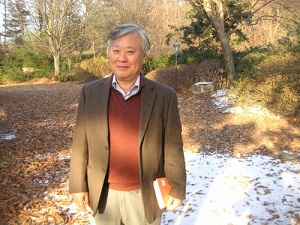
De Zuidkoreaanse schrijver Yi Mun-yol werd geboren op 18 mei 1948 in Yongyang. Zie ook alle tags voor Yi Mun-yol op dit blog.

Uit: Our Twisted Hero (Vertaald door Kevin O'Rourke)

« Disappointingly, the boys were just like the teacher. In Seoul when a new transfer student arrived, the other children took advantage of the first break in class to surround him and ask all sorts of questions: Are you good at school? Are you strong? Are you well off? They asked questions like these to gather the basic materials for establishing a relationship later on. But my new classmates, like my new teacher, had little interest in this. At the break they stood at a distance stealing quick glances across. And when finally at lunchtime a few boys did gather around, it was only to ask whether I had been on a tram, had seen South Gate, and other questions of this sort. In fact, the only things they seemed envious of, or impressed by, were my school supplies. These were of high quality and I was the only one who had them.
But to this day, nearly thirty years later, what makes the memory of that first day so vivid in my mind was my meeting with Om Sokdae.
"Get out of the way, all of you!"
The few children were ringed around me in the classroom asking their questions when suddenly a low voice sounded softly from behind them. It was a grown-up voice, sufficiently so for me to wonder if the teacher had come back. The children flinched and stepped back abruptly. I was taken by surprise, too. I turned around in my chair and saw a boy sitting at a desk at the back of the middle row; he was solidly planked down there and he looked at us with a certain air of resignation.
We had only been in class together for an hour, but I knew this fellow. From the way he shouted "Attention! Salute!" when the teacher came in, I presumed he was the class monitor. The other reason I could distinguish him immediately among the nearly sixty students in the class, all of whom were much the same size, was that sitting down he seemed a head taller than any of the other boys -- and his eyes seemed to burn into me.
"Han Pyongt'ae, you said, right? Come here."


 1765947-46e8f1b7ff40eb29681c7ed38c336532.jpg
Yi Mun-yol (Yongyang, 18 mei 1948)


De Duitse dichter en schrijver Markus Breidenich werd geboren in Düren op 18 mei 1972. Zie ook alle tags voor Markus Breidenich op dit blog.


Nachtlied
 
Ich sah den farbigen Ausdruck in deinem Gesicht.
Die Augen gelasert. Wie echt. Auf Fotopapier deine
hochaufgelösten Lider. Beim Einschlafen abends.
Ein schönes Motiv. Digital überarbeitet. Müde.


Cold Play

Manchmal kann man

dieser Lagebesprechung im Schnee ein
Knirschen entnehmen.

Als sei es der Tonfall von Flocken, der hier
die Stimmung diktiert.

Den gedämpften Anflug einer Krähe
auf Blautannenzweige.

Oder das Abklingen von Verwehungen
nebenan.

In die präparierten Rillen könnte man
die Nadel einer Kiefer fallen hören

zum Abtasten aufgezeichneter Spuren.
Wie sie

das Knistern des Eises wiedergibt.
Unter den Füßen.


 1765947-c731b30147cc6e79a9ca4b49d40bd143.jpg
Markus Breidenich (Düren, 18 mei 1972)


De Duitse schrijver W.G. Sebald werd geboren in Wertach (Allgäu) op 18 mei 1944. Zie ook alle tags voor W. G. Sebald op dit blog.

Uit:The Rings of Saturn (Vertaald door Michael Hulse)

“In August 1992, when the dog days were drawing to an end, I set off to walk the county of Suffolk, in the hope of dispelling the emptiness that takes hold of me whenever I have completed a long stint of work. And in fact my hope was realized, up to a point; for I have seldom felt so carefree as I did then, walking for hours in the day through the thinly populated countryside, which stretches inland from the coast. I wonder now, however, whether there might be something in the old superstition that certain ailments of the spirit and of the body are particularly likely to beset us under the sign of the Dog Star. At all events, in retrospect I became preoccupied not only with the unaccustomed sense of freedom but also with the paralysing horror that had come over me at various times when confronted with the traces of destruction, reaching far back into the past, that were evident even in that remote place. Perhaps it was because of this that, a year to the day after I began my tour, I was taken into hospital in Norwich in a state of almost total immobility. It was then that I began in my thoughts to write these pages. I can remember precisely how, upon being admitted to that room on the eighth floor, I became overwhelmed by the feeling that the Suffolk expanses I had walked the previous summer had now shrunk once and for all to a single, blind, insensate spot. Indeed, all that could be seen of the world from my bed was the colourless patch of sky framed in the window. Several times during the day I felt a desire to assure myself of a reality I feared had vanished forever by looking out of that hospital window, which, for some strange reason, was draped with black netting, and as dusk fell the wish became so strong that, contriving to slip over the edge of the bed to the floor, half on my belly and half sideways, and then to reach the wall on all fours, I dragged myself, despite the pain, up to the window sill. In the tortured posture of a creature that has raised itself erect for the first time I stood leaning against the glass. I could not help thinking of the scene in which poor Gregor Samsa, his little legs trembling, climbs the armchair and looks out of his room, no longer remembering (so Kafka's narrative goes) the sense of liberation that gazing out of the window had formerly given him.”


 1765947-1f588f0e34ac32de132d902631150b49.jpg
W.G. Sebald (18 mei 1944 – 14 december 2001)


De Franse schrijver François Nourissier werd geboren op 18 mei 1927 in Parijs. Zie ook alle tags voor François Nourissier op dit blog.

Uit:Eau-de-feu

"Depuis quatre ans, la bataille où se débat Reine m'a laissé le loisir de me poser des questions. Je pense avoir compris combien j'avais laissé Reine s'appauvrir. Un homme brillant (…). Reine m'a vu tout au long des années m'user, m'exploiter, me mettre en montre, me polir. Brillant ? Oui, comme l'est un vieux veston aux coudes. Et le temps ! Voûté, le bréchet avantageux ou le bidon en oeuf, les pudeurs naturelles cédant la place aux négligences familières, à la fois avachi et crêté: ainsi m'a t-elle vu évoluer, insensiblement [...], cesser d'être l'homme qu'elle aimait pour en devenir un autre, parfois ressemblant au premier, parfois désobligeant jusqu'à son souvenir."
(…)

"Je me suis cru longtemps intouchable. Dans un mariage, une longue liaison, il arrive que l'homme devienne un fonctionnaire de l'amour: l'irrévocable. Epoux et amant, il s'endort dans la sécurité de l'emploi. Il ne sait même pas qu'il manque à la vigilance apprise pendant les premiers mois d'un amour. Il a basculé - quand? - dans l'insouciance et la paresse, qu'il baptise bonheur, parfois légèreté."


 1765947-04509c62b1b39cde53f7ca55c8e59d62.jpg
François Nourissier (18 mei 1927 – 15 februari 2011)


De IJslandse dichter en schrijver Gunnar Gunnarsson werd geboren op 18 mei 1889 in Fljótsdalur. Zie ook alle tags voor Gunnar Gunnarsson op dit blog.

Uit: Vikivaki (Vertaald door Helmut de Boor)

“Jaki Sonarsons Hinterlassene Papiere

1
Was ich in den ersten Wochen dieses unseligen Jahres durchgemacht habe und noch immer durchmache, ohne heute, im Februar, einen Ausweg aus den Schwierigkeiten zu sehen, kann sich ein Mensch kaum vorstellen. Zudem liegt mein Erlebnis der Silvesternacht auf diesem einsamen Hof und alles, was sich daran knüpft, zu weit von der breiten Straße des Lebens und unseren täglichen, allgemeinen Erfahrungen ab. Ich habe eigentlich keine große Hoffnung, daß es mir gelingen wird, meine Seelennot zu erklären und ganz ins rechte Licht zu rücken. Wie sollte man auch das in Worte fassen können, was hier auf dem Fokstadhof geschehen ist und noch geschieht? Wer würde mir glauben? Es sei denn, daß mich der unbarmherzige Lauf der Dinge zwingt »abzudanken«, wie so
mancher Große unserer Zeit; mich zwingt, von meiner unfreiwilligen, nur mit äußerster Anstrengung aufrechterhaltenen »Göttlichkeit« abzustehen und meine armen »Auserwählten« nicht – wie es mein Wunsch und Wille und einziges Bestreben ist – Gott zu übergeben, sondern Menschen, und dadurch vielleicht ewiges Leben mit zeitlichem zu vermischen, samt aller Verwirrung, die daraus entspringen müßte.“


 1765947-35899d821824188ae930ae6c3ee4b119.jpg
Gunnar Gunnarsson (18 mei 1889 – 21 november 1975)
In 1970


De Perzische dichter Omar Khayyám, of zoals zijn arabische naam luidt, al-Imâm Abu Hafs 'Omar ebn Ebrâhim al-Khayyâmi, werd geboren op 18 mei 1048 te Nishapur. Zie ook alle tags voor Omar Khayyám op dit blog.


Kwatrijnen

Een wijnnap leek de hemel mij bij tijden.
Zijn mond komt tot ons lippen nederglijden.
O, zie de vriendschap tussen kruik en beker.
Mond ligt aan mond en bloed vloeit tusschen beiden.


Verliefd en dronken zijn wij, groot en klein.
De kroeg vereent wat hoog is en gemeen.
Vorder daarom geen rekenschap van ons,
Die allen drinken en bedronken zijn.


Jawel, in wijn en roes ik mij verloor.
Maar waarom schimpt en schampert men daarvoor?
Wanneer een roes op andre zonden volgde,
Vond men van trouw en waarheid zelft geen spoor.


Ik heb nog niemand om zijn slaap gebracht.
Geen hitst God tegen mij te middernacht.
En toch bezit ge uw schat en schoon niet eeuwig.
‘t Is u ontgrist, ‘s nachts, eer gij het verwacht.


Vertaald door Willem de Mérode


 1765947-4ec0c9aaba8e9bb4887265bf2cefcfd9.jpg
Omar Khayyam (18 mei 1048 - 4 december 1131)
Bruno Lastra als de dichter Khayyam in “The Legend Of Omar Khayyam” uit 2005


Zie voor nog meer schrijvers van de 17e mei ook mijn vorige blog van vandaag.
Geschreven door Romenu om 21:28 Reageer op dit bericht

Lars Gustafsson, Peter Høeg, Gary Paulsen, Henri Barbusse, Virginie Loveling, Mischa Andriessen

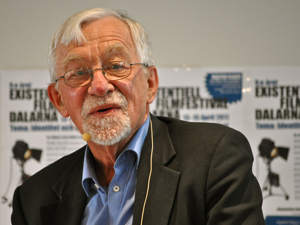
De Zweedse dichter en schrijver Lars Gustafsson werd geboren in Västeras, op 17 mei 1936. Zie ook alle tags voor Lars Gustafsson op dit blog.


Priemgetallen

De eersten zijn
donkere vestingen

opgetrokken door vorsten
in een lang vervlogen tijd.

Ze liggen dicht opeen
en werpen lange schaduwen,

het land rondom een vlak
en zwaar verdedigd moerasgebied.

Ze zijn gebouwd van een steensoort
door geen tijd aan te tasten

en alle andere zijn dorpen
hurkend daar omheen.

Daarna worden zij steeds zeldzamer:

je moet lang over weidse vlaktes rijden
om er nog een aan de horizon te ontwaren.

De waarheid is dat zij steeds zeldzamer worden
op hun weg naar de onvoorstelbare diepten.

En dokter Riemanns schaduw tekent zich
onnatuurlijk hoog en dreigend af
tegen een oneindige zonsondergang.


Vertaald door J. Bernlef


Hamlet Prince Of Denmark

Prince Hamlet of Denmark
but now without his fatal wound
and dressed in a good suit from Savile Row
but the tie most certainly
from the rowing club at the University of Wittenberg
came out of the night’s shadows and said
You see, Professor. It is not quite so easy
to come back home
and see that everything is changed
and no one, not even Mama
understands a single word.
About what one says.

But in the event that
a little ugly dwarf
with cheeks painted red
appears just around the corner
then we are dreaming the same dream.


Paradise

The swamp, forbidden to enter
Dangerous depths with purple loosestrife and bitter clover.
The salamanders that we caught
and called ‘water lizards’.

They were supposed to cause warts on fingers
Because they themselves had warts.

Surely extinct now. Who needs them?
Suddenly the boy was twenty years old.

Ahead of him, life,
extending endlessly like the plains of Kurland.

The creeks. The salamanders.
We took it all away.

No one else.


Vertaald door Susan W. Howard


 1765504-55253282ac76d9ed4cd5134ba880e970.jpg
Lars Gustafsson (Västeras, 17 mei 1936)


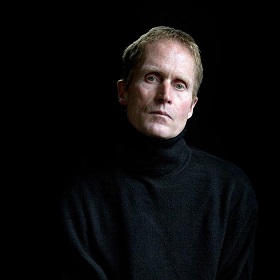
De Deense schrijver Peter Høeg werd geboren in Kopenhagen op 17 mei 1957. Zie ook alle tags voor Peter Høeg op dit blog.

Uit: The Elephant Keepers’ Children (Vertaald door Martin Aitken)

“It’s not like we have never seen my father cry before. When you’re married to someone like my mother, who very often forgets everything around her, including her husband and her children and her dog, because she has become obsessed by the idea of making her own mechanical wristwatch and works twenty-four hours in one stretch to center the axles of the wheels while we children and our father go hungry—when you’re married to a woman like that you will have need to weep on the shoulders of close friends at least once a fortnight, which Father almost certainly has done in the company of Bent Piglet or John the Savior.
   But he has never done it at home. On such occasions as we have seen Father weep, it has always been in church and on account of him saying something especially beautiful that makes him cry because he is moved and grateful for the Lord having provided Finø with such a magnificent pastor as himself. Or else he cries at a funeral in sympathy with the bereaved, and one must reluctantly admit that Father’s sympathy is almost as great as his satisfaction at putting it on display.
   Though his complacency and sympathy both may be great, they have never been so great as what we now witness in the kitchen of our rectory home. What we see is something that has always been contained inside our father, but which only now is released, and to begin with we have no words for it.
But Father leaves the kitchen and Mother goes after him, and Tilte and Hans and Basker and I remain behind and look at each other. We sit for a moment in silence, and then Tilte suddenly says: “They’re elephant keepers. That’s Mother’s and Father’s problem. They’re elephant keepers without knowing.”


 1765504-159f0bb6d749ca388204239830f8df19.jpg
Peter Høeg (Kopenhagen, 17 mei 1957)


De Amerikaanse schrijver Gary Paulsen werd geboren op 17 mei 1939 in Minneapolis, Minnesota. Zie ook alle tags voor Gary Paulsen op dit blog.

Uit: Hatchet

“What had he read or seen that told him about food in the wilderness? Hadn't there been something? A show, yes, a show on television about air force pilots and some kind of course they took. A survival course. All right, he had the show coming into his thoughts now. The pilots had to live in the desert. They put them in the desert down in Arizona or someplace and they had to live for a week. They had to find food and water for a week.
For water they had made a sheet of plastic into a dew gathering device and for food they ate lizards. That was it. Of course Brian had lots of water and there weren't too many lizards in the Canadian woods, that he knew. One of the pilots had used a watch crystal as a magnifying glass to focus the sun and start a fire so they didn't have to eat the lizards raw. But Brian had a digital watch, without a crystal, broken at that. So the show didn't help him much.
Wait, there was one thing. One of the pilots, a woman, had found some kind of beans on a bush and she had used them with her lizard meat to make a little stew in a tin can she had found. Bean lizard stew. There weren't any beans here, but there must be berries. There had to be berry bushes around. Sure, the woods were full of berry bushes. That's what everybody always said. Well, he'd actually never heard anybody say it. But he felt that it should be true.
There must be berry bushes.“


 1765504-d292541243388f950ae30273d68903e2.jpg
Gary Paulsen (Minneapolis, 17 mei 1939)


De Franse dichter en schrijver Henri Barbusse werd geboren op 17 mei 1873 in Asnières-sur-Seine. Zie ook alle tags voor Henri Barbusse op dit blog.

Uit: Le Feu

« Ayant suivi le boulevard de la République puis l’avenue Gambetta, nous débouchons sur la place du Commerce. Les clous de nos souliers cirés sonnent sur les pavés de la ville. Il fait beau. Le ciel ensoleillé miroite et brille comme à travers les verrières d’une serre, et fait étinceler les devantures de la place. Nos capotes bien brossées ont leurs pans abaissés et, comme ils sont relevés d’habitude, on voit se dessiner, sur ces pans flottants, deux carrés, où le drap est plus bleu.
Notre bande flâneuse s’arrête un instant, et hésite, devant le café de la Sous-Préfecture, appelé aussi le Grand-Café.
-On a le droit d’entrer! dit Volpatte.
-Il y a trop d’officiers là-dedans, repartit Blaire qui, haussant sa figure pardessus le rideau de guipure qui habille l’établissement, a risqué un coup d’oeil dans la glace, entre les lettres d’or.
-Et pis, dit Paradis, on n’a pas encore assez vu.
On se remet en marche et les simples soldats que nous sommes passent en revue les riches boutiques qui font cercle sur la place: les magasins de nouveautés, les papeteries, les pharmacies, et, tel un uniforme constellé de général, la vitrine du bijoutier. On a sorti ses sourires comme un ornement. On est exempts de tout travail jusqu’au soir, on est libres, on est propriétaires de son temps.
Les jambes font un pas doux et reposant; les mains, vides, ballantes, se promènent, elles aussi, de long en large."


 1765504-857f61cafd8347765caab55602ea8c62.jpg
Henri Barbusse (17 mei 1873 –30 augustus 1936)
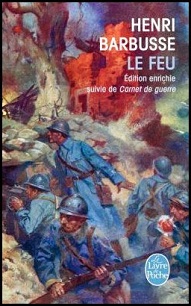
Cover


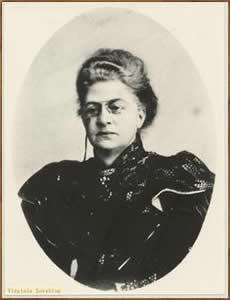
De Vlaamse dichteres en schrijfster Virginie Loveling werd geboren in Nevele op 17 mei 1836. Zie ook alle tags voor Virginie Loveling op dit blog.


De zucht naar ’t eindeloze

Als 't maantje in mijn venster schijnt,
Dan kan ik niet meer slapen;
Dan komt de vraag: Waar is die God,
Die alles heeft geschapen?

De stille nacht, het eenzaam uur,
Het suizlen door de linden;
Dan denk ik aan de dood en 't graf
En aan verloren vrinden.

Dan wordt de geest zo onrustvol,
En haakt naar 't onbekende,
Als ik in 's hemels sterrenveld
De wakende ogen wende.

Dan schijnt de wereld mij zo klein :
Mij lokt die hemelverte.
0 kon ik vliegen! doch waarheen,
Waarheen, gij kloppend herte?


Haar laatste wandeling

Zij wandelde in de zonne -
Het loof ruiste over 't pad.
Ik ben het afgevallen,
Het vroeg verwelkte blad.

De zwaal'wen trekken henen,
Ik staar hen na en peis:
Ik ben een arme zwaluw,
Ik moet alleen op reis.

Zij trekken naar het zuiden,
Zij weten waar zij gaan,
Zij zullen wederkeren
Met loof en lenteblaân.

Het woud zal weer herleven
In warme zonneschijn,
De nachtegaal zal zingen -
En ik, waar zal ik zijn?...


 1765504-107c740b157d3a51d3793d172399727a.jpg
Virginie Loveling (17 mei 1836 – 1 december 1923)


Onafhankelijk van geboortedata:

De Nederlandse dichter Mischa Andriessen werd geboren in Apeldoorn in 1970. Zie ook alle tags voor Mischa Andriessen op dit blog.


Wallenberg

Jullie stonden al klaar,
jassen aan, elkaar los
gelaten, twee dingen maar
mochten mee; je broer
een pot jam en een beer,
jij een beer en een boek.
Dadelijk zou het anders zijn,
het nieuwe huis een haven.
Ze zouden jullie komen halen,
niet schreeuwen; ze kwamen,
schreeuwden: ’opschieten,
opschieten nou.’ Hun gezichten
grauw als vuilgelopen sneeuw.
Je omklemde de laadklep
met beide handen, je broer de jam.
Jullie keken de verte van de straat in
waarin alles wat jullie kenden verdween.
Je broer huilde. ‘Niet bang zijn,’
huilde je, ‘Ik ben niet bang.’


 1765504-876dd29202235c701ddecfa4258c5bae.jpg
Mischa Andriessen (Apeldoorn, 1970)


Zie voor nog meer schrijvers van de 17e mei ook mijn vorige blog van vandaag.
Geschreven door Romenu om 11:52 Reageer op dit bericht

Dennis Potter, Cor Bruijn, Dorothy Richardson, Jacint Verdaguer, Eva Schmidt

De Britse schrijver Dennis Potter werd geboren op 17 mei 1935 in Forest of Dean, Gloucestershire. Zie ook alle tags voor Dennis Potter op dit blog.

Uit: Stand up, Nigel Barton

““Nigel Barton: No, Miss!
Miss Tillings: Then what do you know about it?
Nigel Barton: I think - I think I might have had the daffodil, Miss—
Miss Tillings: You might have had it? What do you mean, boy? Speak up!
Nigel Barton: The stem was all broke and somebody gave it to me, Miss.
Miss Tillings: Who gave it to you?
Nigel Barton: Ooh, I don't like to say, Miss.
Miss Tillings: You better had, Barton, and quick about it.
Nigel Barton: Georgie Pringle, Miss.
Barton incriminates Pringle, who has bullied him, in the crime of destroying the class's daffodil; the daffodil was actually destroyed by Barton himself.
Nigel Barton (On TV): I feel I don't belong here, that's my trouble.
Interviewer (on TV): Well, where do you belong? At home?
Harry Barton: Of course!
Nigel Barton (on TV): No, I'm afraid I don't. Now it hurts to say this, of course, but it's the truth. Back at home, in the village, in the workingmen's club, with people I went to school with, I'm so much on the defensive, you see. They suspect me of making qualitative judgments about their environment, you understand, but it's not that I wish to do so. Yet I even find my own father looking at me oddly some times, waiting to pounce on some remark, some expression in my face, watching me like a hawk. I don't feel at home in either place. I don't belong. It's a tightrope between two different worlds, and I'm walking it.
Harry Barton: You're a bloody liar, Nigel!"


 1765501-b4cb375da337e6e2e16823a053870b6c.jpg
Dennis Potter (17 mei 1935 – 7 juni 1994)
Scene uit de tv-film “Stand up, Nigel Barton”, uit 1965


De Nederlandse schrijver Cor Bruijn werd geboren in Wormerveer op 17 mei 1883. Zie ook alle tags voor Cor Bruijn op dit blog.

Uit: Sil de strandjutter

“Lobke... is dat nu een famke, dat je 's nachts naar de buren moet laten vluchten? Nee nee, Sil, laat me nu eens even uitpraten. Ik dacht vannacht zo, Sil bedoelt het goed, maar hij is te bazig. Daar heb je nu dat met dominee vroeger, heb je daar wat mee gewonnen? Verloren heb je ermee, Sil, ja, ja, verloren! En je kinderen het meeste! Nee, stil nou, je gelooft toch zeker niet, dat ik voor mijn plezier die dingen ophaal? Lobke ging uit haar ... naar de lering, maar Wietse? Maar Jelle? Jaakje laat je al die jaren alleen naar de kerk gaan. Enkel omdat je je nu eenmaal schrap gezet hebt; enkel omdat dominee niet dadelijk naar jouw pijpen wou dansen! En dan heb je Wietse!... Een eigenwijze stijfkop? Ja, een eigenwijze stijfkop. De appel valt niet ver van de boom af, want de grootste stijfkop staat hier voor me. Als je Wietse anders aangepakt had, dan had je het misschien een eerste kracht aan hem, dan zwiert hij nu niet rond over de zeeën... Kan het je niet verdeien! Het kan je alles verdeien! Man, je stikt immers van de zorg om je kinderen! Je doet niet anders dan denken aan je kinderen. Maar het is alleen maar, dat je wilt, dat ze precies lopen zoals jij loopt, dat ze lachen, zoals jij lacht, dat ze doen zoals jij meent, dat ze doen moeten. En we zijn een vrij volk, Sil van Piet, wij van de eilanden. Kijk maar naar je zelf! Ze moeten je met bevelen van je lijf blijven. De man, die jou kan draaien, zoals hij wil, zal wel nooit geboren worden, denk ik.”


 1765501-e0ac9e39b44b0b6fd0fc53c97ed2ab4f.jpg
Cor Bruijn (17 mei 1883 - 6 november 1978)
Scene uit de televisieserie “Sil de strandjutter” uit 1976


De Engelse schrijfster Dorothy Miller Richardson werd geboren op 17 mei 1873 in Abington, Oxfordshire. Zie ook alle tags voor Dorothy Richardson op dit

Uit: Pointed Roofs

“Miriam left the gaslit hall and went slowly upstairs. The March twilight lay upon the landings, but the staircase was almost dark. The top landing was quite dark and silent. There was no one about. It would be quiet in her room. She could sit by the fire and be quiet and think things over until Eve and Harriett came back with the parcels. She would have time to think about the journey and decide what she was going to say to the Fraulein.
Her new Saratoga trunk stood solid and gleaming in the firelight. To-morrow it would be taken away and she would be gone. The room would be altogether Harriett's. It would never have its old look again. She evaded the thought and moved clumsily to the nearest window. The outline of the round bed and the shapes of the may-trees on either side of the bend of the drive were just visible. There was no escape for her thoughts in this direction. The sense of all she was leaving stirred uncontrollably as she stood looking down into the well-known garden.
Out in the road beyond the invisible lime-trees came the rumble of wheels. The gate creaked and the wheels crunched up the drive, slurring and stopping under the dining-room window.
It was the Thursday afternoon piano-organ, the one that was always in tune. It was early to-day.
She drew back from the window as the bass chords began thumping gently in the darkness. It was better that it should come now than later on, at dinnertime. She could get over it alone up here.
She went down the length of the room and knelt by the fireside with one hand on the mantel-shelf so that she could get up noiselessly and be lighting the gas if anyone came in.
The organ was playing "The Wearin' o' the Green."
It had begun that tune during the last term at school, in the summer. It made her think of rounders in the hot school garden, singing-classes in the large green room, all the class shouting "Gather roses while ye may," hot afternoons in the shady north room, the sound of turning pages, the hum of the garden beyond the sun-blinds, meetings in the sixth form study.... Lilla, with her black hair and the specks of bright amber in the brown of her eyes, talking about free-will.”


 1765501-bb1757864b0234b9bea22a67d2e3592b.jpg
Dorothy Richardson (17 mei 1873 - 17 juni 1957) 
Cover 


De Catalaanse dichter en schrijver Jacint Verdaguer i Santaló werd geboren op 17 mei 1845 in Folgueroles. Zie ook alle tags voor Jacint Verdaguer op dit blog.

Uit:L’Atlàntida

Aquí estengué sos marges lo continent hesperí;
quins mars o terres foren ses fites, ningú no sap;
lo sol, però, que mida d’un colp d’ull l’hemisferi
era petit per veure’l a pler de cap a cap.

Era el jou d’or que unia les terres ponentines
i, cor de totes elles, com font del paradís,
los dava clares aigües a beure i argentines.
i en sos immensos braços dormia el món feliç.

*********

Here the Hesperian continent flung wide its shores;
what seas or countries bounded it no man can tell.
The sun, however, which measures hemispheres at a glance,
had too cramped a view to encompass it whole.

It was a golden yoke, drawing together all western lands
and, heart of them all, like a fountain of paradise,
it gave them clear waters and silvery to drink,
in its mighty arms the world slept in peace.


 1765501-2ced3a94f19562c0fbe0bf43d92e6c33.jpg
Jacint Verdaguer (17 mei 1845 – 10 juni 1902)
Portret door Ramon Casas, z.j.


De Oostenrijkse schrijfster Eva Schmidt werd geboren op 17 mei 1952 in Lustenau / Vorarlberg. Zie ook alle tags voor Eva Schmidt op dit blog.

Uit: Ein Vergleich mit dem Leben

„Da sitzen wir dann, und finden begütigend und beschwichtigend Gründe, die unser Nichtstun nicht nur verlockend, sondern auch plausibel erscheinen lassen. Ich spüre, wie ich mich ausbreite in diesen Stunden, es geschieht nichts Bedeutendes, nichts Wichtiges wird gesagt. Eine richtige Gier nach Belanglosigkeit, allem Übermaß, allen Ansprüchen zum Trotz, abgetrotzt dem plötzlich, von einer Sekunde zur anderen lächerlich anmutenden Wunsch nach einem sinnvollen Leben.“


 1765501-fe7ecdc8d3229c1a4aca14af18e7ff55.jpg
Eva Schmidt (Lustenau, 17 mei 1952)
Lustenau

Geschreven door Romenu om 11:42 Reageer op dit bericht

Meer van Romenu

↑ Terug naar de berichten