Naar de inhoud

Romenu

Over literatuur, gedichten, kunst en cultuur
akke.beakke.be

Berichten van 19 juni 2015 tot 20 juni 2015

Vikram Seth, Paul Muldoon, Kurt Schwitters, Jean-Claude Izzo, Silke Andrea Schuemmer, Carel van Nievelt

De Indische schrijver Vikram Seth werd geboren op 20 juni 1952 in Kolkata. Zie ook alle tags voor Vikram Seth op dit blog.

Uit: An Equal Music

“The Tononi seems to purr at the suggestion. Something happy, something happy, surely:

In a clear brook
With joyful haste
The whimsical trout
Shot past me like an arrow.

I play the line of the song, I play the leaps and plunges of the right hand of the piano, I am the trout, the angler, the brook, the observer. I sing the words, bobbing my constricted chin. The Tononi does not object; it resounds. I play it in B, in A, in E flat. Schubert does not object. I am not transposing his string quartets.
Where a piano note is too low for the violin, it leaps into a higher octave.
As it is, it is playing the songline an octave above its script. Now, if it were a viola . . . but it has been years since I played the viola.
The last time was when I was a student in Vienna ten years ago. I return there again and again and think: was I in error? Was I unseeing? Where was the balance of pain between the two of us? What I lost there I have never come near to retrieving.
What happened to me so many years ago? Love or no love, I could not continue in that city. I stumbled, my mind jammed, I felt the pressure of every breath. I told her I was going, and went. For two months I could do nothing, not even write to her.
I came to London. The smog dispersed but too late. Where are you now, Julia, and am I not forgiven?“


 1779714-03eec2e32509b6bc6bacf94e96c1f34f.jpg
Vikram Seth (Kolkata, 20 juni 1952)


De Ierse dichter en schrijver Paul Muldoon werd geboren in Portadown, County Armagh, in Noord-Ierland op 20 juni 1951, Zie ook alle tags voor Paul Muldoon op dit blog.


Cuba

In her white muslin evening dress.
`Who the hell do you think you are
Running out to dances in next to nothing?
As though we hadn't enough bother
With the world at war, if not at an end.'
My father was pounding the breakfast-table.

`Those Yankees were touch and go as it was —
If you'd heard Patton in Armagh —
But this Kennedy's nearly an Irishman
So he's not much better than ourselves.
And him with only to say the word.
If you've got anything on your mind
Maybe you should make your peace with God.'

I could hear May from beyond the curtain.
`Bless me, Father, for I have sinned.
I told a lie once, I was disobedient once.
And, Father, a boy touched me once.'
`Tell me, child. Was this touch immodest?
Did he touch your breasts, for example?'
`He brushed against me, Father. Very gently.'


Holy Thursday

They're kindly here, to let us linger so late,
Long after the shutters are up.
A waiter glides from the kitchen with a plate
Of stew, or some thick soup,

And settles himself at the next table but one.
We know, you and I, that it's over,
That something or other has come between
Us, whatever we are, or were.

The waiter swabs his plate with bread
And drains what's left of his wine,
Then rearranges, one by one,
The knife, the fork, the spoon, the napkin,
The table itself, the chair he's simply borrowed,
And smiles, and bows to his own absence.


 1779714-551ada35903351b2075ff0b5cf386bcd.jpg
Paul Muldoon (Portadown, 20 juni 1951)


De Duitse schrijver, dichter en kunstenaar Kurt Schwitters werd geboren op 20 juni 1887 in Hannover. Zie ook alle tags voor Kurt Schwitters op dit blog.


Ich sing mein Lied

Ich sing mein Lied in tiefen Raum,  man hört es kaum,
Es dringt hervor aus tiefer Brust,  mir unbewußt,
Es singt Dir eine Melodie,  jetzt oder nie,
Hast Du mich nun noch nicht erhört,  bin ich empört,
Und trinke Lindenblütentee,  der mildert Weh,
Und frage mich: "Was bist denn Du,  Du alte Kuh?"


Da sprach der Herr

Da sprach der Herr: Wieso
Ich bin von Herzen froh,
Daß ich die Dame nicht
Geküßt hab' ins Gesicht,
Denn hätt' ich sie geküßt,
Dann hätte ich gewußt,
Daß mich die Dame liebt,
Was meistens Unglück gibt.


 1779714-ffed4ee281ca8040b90075909c49ccb8.jpg
Kurt Schwitters (20 juni 1887 – 8 januari 1948) 
Kurt Schwitters, Gallery 4


De Franse dichter en schrijver Jean-Claude Izzo werd geboren op 20 juni 1945 in Marseille. Zie ook alle tags voor Jean-Claude Izzo op dit blog.

Uit: Total Khéops

«- Et  maintenant,  j’ai  droit  au  petit  sucre  d’orge?   dit  Babette,  en  passant  sa langue sur ses lèvres.
- Tu crois pas qu’on a passé l’âge?
- Y a pas d’âge pour les gâteries, mon chou!
J’avais envie de réfléchir à tout ce qu’elle venait de me raconter sur le Milieu.
Une sacrée leçon. Et à Batisti. Ça me brûlait d’aller le voir. Mais ça pouvait attendre jusqu’à demain. On était dimanche, et pour moi ce n’était pas tous les jours dimanche.
Babette dut lire dans mes pensées.
- Cool, Fabio. Laisse aller, c’est dimanche. Elle se leva, me prit la main. On va se baigner? Ça apaisera tes ardeurs!
On  nagea à se faire  éclater les poumons. J’aimais ça. Elle aussi.  Elle avait voulu que je sorte le bateau et qu’on aille au large de la Baie des Singes. J’avais dû résister. C’était une règle, sur le bateau je n’emmenais personne. C’était mon île. Elle avait gueulé, m’avait traité de connard, de pauvre mec, puis s’était jetée à l’eau. Elle était fraîche à souhait. À bout de souffle, les bras un peu cassés, on se laissa flotter en faisant la planche.
- Qu’est-ce que tu veux, avec Ugo?
- Comprendre. Après je verrai.
Pour  la première  fois,  j’envisageai  que  comprendre  ne  me  suffirait  peut-être pas.   Comprendre  est  une  porte  qu’on  ouvre,  mais  on  sait  rarement  ce  qu’il  y  a derrière.
- Fais gaffe où tu mets les pieds.
Et elle plongea. Direction chez moi."


 1779714-23e4d417cf30f5f94f9e20ae49a78c3b.jpg
Jean-Claude Izzo (20 juni 1945 – 26 januari 2000)


De Duitse dichteres, schrijfster en kunsthistorica Silke Andrea Schuemmer werd geboren op 20 juni 1973 in Aken. Zie ook alle tags voor Silke Andrea Schuemmer op dit blog.

Uit: Kellergänge

„Ihr erinnert euch gut. Zu gut manchmal, das macht euch unbequem für das Personal. Und das gibt sich Mühe. Immerhin. Gar keine Rede von „Pfötchenhotel". Auch wenn du das ständig gesagt hast, als meine Eltern dich herbrachten. „Bindet mich doch irgendwo an einer Autobahnraststätte an" zum Beispiel oder „Bekomme ich auch die große letzte Spritze, wenn ihr mich nicht pünktlich abholt?"
Meine Eltern waren fertig, leer, alle mit den Nerven, das konnte man sehen. Als wären Falten, Tränensäcke und Furchen auf der Stirn ansteckend. Früher hatte man irgendwann die eigenen Jahre auf dem Buckel, heute sind es die eigenen und auch noch die der vorigen Generation, die einfach ihren Platz nicht räumt, die niemanden nachrücken lässt, sondern rüstig ihr Leben und ihr Terrotorium verteidigt. Früher waren die, die ihre Alten pflegten, wenigstens jung. Heute sind sie selbst Rentner, tragen Einlagen in den Hausschuhen und verbringen mehr Zeit miteinander beim Orthopäden als beim gemeinsamen Essen. Das weißt du auch alles, liebe Tante Magda, ich nehme es zumindest an, ich hoffe es, ich bestehe darauf, dass du es weißt und mir nicht wieder erzählst, dass das hier ein Zwinger sei, ein Tierheim, eine Abdeckerei. Es ist eine ganz besondere Station, ich habe mich informiert, davon gibt es noch nicht viele, und wir müssen dankbar sein für den großen Zufall, nein, den Glücksfall, dass sie dich aufnehmen, obwohl du erstens noch gar nicht richtig krank bist, nur ein bisschen tüdelig, und der Laden zweitens nicht ausgerichtet ist auf Kurzzeitpflege. Und Tante Magda bitte, es dauert nicht lange, wirklich, nur drei Wochen. Komm schon, gönn ihnen den Urlaub und ruf sie nicht wieder im Hotel an, dass du in einer Urne noch praktischer verwahrt wärst und bequem in einem Schließfach auf sie warten könntest. Und auch der nachfolgende Anruf, aus deiner Asche könnte man ja Magda-Kaba machen und dich bei Bedarf mit heißer Milch aufgießen, oder sie als Dünger über die Beete streuen, war ganz und gar unpassend.“


 1779714-808b3fbfafc19283ff4d91be09678570.jpg
Silke Andrea Schuemmer (Aken, 20 juni 1973)


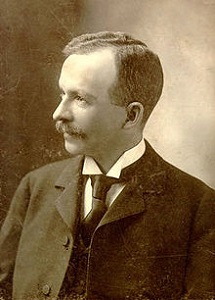
De Nederlandse schrijver Carel van Nievelt werd op 20 juni 1843 geboren in Delfshaven, als zoon van een boekhandelaar. Zie ook mijn blog van 20 juni 2007.

Uit: Mijn Angelo. Herinneringen van het Garda-meer

“Het is hetzelfde kenteeken van hopeloos cynisme en reddelooze vervuildheid, dat gij opmerkt bij de bevolking der ellendigste Londensche sloppen. Dáár begrijpt gij dien wezenstrek. Maar hier, te midden van een land waarover Natuur haren hoorn des overvloeds heeft uitgestort - hier zoekt gij vergeefs hem u te verklaren.
Welk een verschil roet de dorpen en het landvolk in Duitsch Tirol, in Zwitserland, in geheel het Germaansche Noorden! Ook dáár is het landleven voorwaar geene idylle; ook dáár vinden de verfijnde zintuigen van den stedeling niet alles ooglijk en welriekend. Maar de armste dorper heeft er toch een hutje dat hij zijn eigen noemt, en voor de deur van zijne stulp wat schaduw en wat bloemen, en onder zijn rieten dak het een en ander dat hem zich tehuis doet gevoelen in zijn huis: iets dat, voor hemzelven zichtbaar en tastbaar, zijn bestaan verheft en veraangenaamt boven het bestaan van zijne koe of zijn varken. Hier, daarentegen, aan de inrichting eener menschelijke woning blijkbaar geen hoogere eischen gesteld dan aan die van eenen stal. Noch haardstee, noch tuintje, ofschoon de winter hier kil is, en de zomer tropisch; noch prenten aan den wand, noch bloemen aan het venster. Een duister hol tusschen vier naakte muren, om beschut te zijn tegen den regen, een gore vloer om op te eten en te slapen - méér schijnt er voor deze lieden niet begeerlijk. Helderheid, behaaglijkheid, huislijkheid, zijn woorden die buiten hun begripskriiig liggen. Daarginds in het Noorden, alle hoogten ruig van woud en ruischend van water; - hier, de eertijds dicht bewassen bergen veelal in dorre steenklompen verkeerd, wijl hersenlooze gelddorst wél rooien kon, maar onverschilligheid en gemis aan natuurzin het weder aanplanten verzuimden. Ginds de kerkhoven overdekt met crucifixen, bloembedden en gedenkteekenen; - hier, onder den invloed van eenzelfden eeredienst, geen houten kruisje zelfs dat den verwaarloosden akker tooit, op welken het onkruid te weliger omhoog schiet boven het overschot der dooden.”


 1779714-6dea7e4153d81d865e6ae7ab9abe318f.jpeg
Carel van Nievelt (20 juni 1843 – 2 augustus 1913)
Het Gardameer


Zie voor nog meer schrijvers van de 20e juni ook mijn vorige blog van vandaag.
Geschreven door Romenu om 13:10 Reageer op dit bericht

Robert Rozhdestvensky, Laure Wyss, Lillian Hellman, Nicholas Rowe, Charles W. Chesnutt, Marceline Desbordes-Valmore, Joseph Autran

De Russische dichter en schrijver Robert Ivanovich Rozhdestvensky werd geboren op 20 juni 1932 in Kosikha in het district Altai Krai. Zie ook alle tags voor Robert Rozhdestvensky op dit blog.


Instants

Do not look down on the seconds. Why?
The time will come and you will see
the reasons:
like bullets at the temple they flow by,
the instants
the instants
the instants

Each instant has its own cause and aim,
its own bells and marks,
its own colours,
the instants give some people painful shame
disgrace immortality to others

The instants are well pressed into the years,
they are compressed and pressed into the centuries
I cannot understand where
the first
and where on earth the final instant is.

The momentary instants weave the rain,
and water falls from heaven in a torrent.
At times for many years you have
to wait
to see your very last and final moment.
It will arrive as big as gulp some day
in summer when your thirst is so insistent..
And yet we should remember
anyway
our duty from the first to final instant

Do not look down on the seconds. Why?
The time will come and you will see, as imminence, -
Like bullets at the temple they flow by,
the instants
the instants
the instants

Vertaald door Alec Vagapov


 1779712-81664367d6b0fd8aa89759c7eaad1d04.jpg
Robert Rozhdestvensky (20 juni 1932 – 19 augustus 1994)


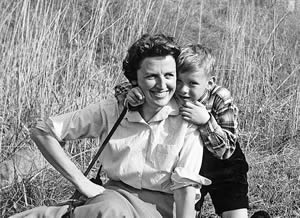
De Zwitserse schrijfster Laure Wyss werd geboren op 20 juni 1913 in Biel/Bienne. Zie ook alle tags voor Laure Wyss op dit blog.

Uit: Wahrnehmungen

«Darauf gebe ich dir gern Antwort, lieber Josy. Deine Mutter kam in mein Leben, als sie dich bei uns oben in den Bergen besuchte. Sie war, als Flüchtlingsfrau, in einem schweizerischen Lager eingesperrt, es war noch während des Krieges, 1943 denke ich, während du aus dem Lager in eine Pflegefamilie kamst, ins Bergdorf, in meine kinderlose Ehe. Durch welche Vermittlung, das weiss ich nicht mehr. Es wurden Plätze für Flüchtlingskinder gesucht. Die Mädchen, die herzigen, fanden leicht Unterkunft, aber so ein dreizehnjähriger Bub, ein jüdischer Bub zudem, da wurde gezögert. Ich selber habe dich aber als Demonstration gewünscht, im Bergort war meine Umgebung sehr deutschfreundlich, also auch aus egoistischen Gründen nahm ich dich auf, mein lieber Josy, daran würde man meine Einstellung zur Kriegssituation erkennen. Es gelang ja dann auch, denn einige Leute im Bergort kamen nicht mehr zu uns zu Besuch, und das freute mich sehr. Aber ich glaube, ich habe dich ausgenützt, das musste ich dir einmal gestehen.»
«Aber nun über meine Mutter, bitte», so Josy.
«Für mich war sie eine demütige Frau, eine Frau, die nicht klagte, nicht über die Leiden der Verfolgung redete. Eine Frau, die ein schweres Schicksal ertrug. Sie war glücklich, dass ihr Sohn vom Lager befreit war und dass sie selber, einmal im Monat, frei bekam und zusammen mit ihrem zweiten Mann dich besuchen durfte.“


 1779712-ed228c440b2ce58f9fa25f72db6bc79b.jpg
Laure Wyss (20 juni 1913 – 21 augustus 2002)
Hier met haar zoontje, eind jaren 1950 


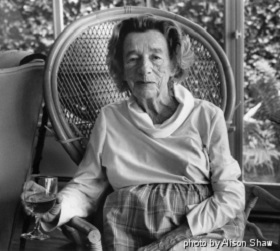
De Amerikaanse schrijfster en vertaalster Lillian Hellman werd geboren op 20 juni 1905 in New Orleans. Zie ook alle tags voor Lillian Hellman op dit blog.

Uit: Eating Together (Samen met Peter Feibleman)

““We can’t have mussels and spaghetti with basil.  That’s two first courses.”
“So have the mussels,” I said.
“Don’t answer before you think,” Lillian said.  “If we have mussels, what am I going to do about all the basil in the garden?—what about that?”
I swallowed another half cup of coffee and said she could have them both if she put them together.
“You see?” Lilly said, brightening, “if you’d just try thinking once in a while your whole life would be different.”
[…] When Saturday came she sat down in the same chair at five o’clock, dressed for the party, and said: “I don’t see why all those people are coming to my house expecting me to feed them.  It’s your fault,” she said to Mike, who was coming downstairs with Annabel.  “I’m only doing this for you.”
“I didn’t want a party,” Mike said gently; “I came to rest.”
“That’s no excuse and you know it,” Lillian said […]
“They should all be honored you invited them,” Annabel said loyally.
“Fuck all of them,” Lillian said, “except the Herseys.  Let’s have a drink.”


 1779712-a31877b6885f6500dafa0fc34f9f61e1.jpg
Lillian Hellman (20 juni 1905 – 30 juni 1984)


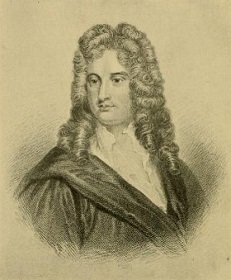
De Engelse dichter en toneelschrijver Nicholas Rowe werd geboren in Little Barford, Bedfordshire, op 20 juni 1674. Zie ook alle tags voor Nicholas Rowe op dit blog.

Uit: Some Account of the Life of Mr. William Shakespear

“He had bred him, 'tis true, for some time at a Free-School, where 'tis probable he aquir'd that little Latin he was Master of: But the narrowness of his Circumstances, and the want of his assistance at Home, forc'd his Father to withdraw him from thence, and unhappily prevented his further Proficiency in that Language. It is without Controversie, that he had no knowledge of the Writings of the Antient Poets, not only from this Reason, but from his Works themselves, where we find no traces of any thing that looks like an Imitation of 'em; the Delicacy of his Taste, and the natural Bent of his own Great Genius, equal, if not superior to some of the best of theirs, would certainly have led him to Read and Study 'em with so much Pleasure, that some of their fine Images would naturally have insinuated themselves into, and been mix'd with his own Writings; so that his not copying at least something from them, may be an Argument of his never having read 'em. Whether his Ignorance of the Antients were a disadvantage to him or no, may admit of a Dispute: For tho' the knowledge of 'em might have made him more Correct, yet it is not improbable but that the Regularity and Deference for them, which would have attended that Correctness, might have restrain'd some of that Fire, Impetuosity, and even beautiful Extravagance which we admire in Shakespear: And I believe we are better pleas'd with those Thoughts, altogether New and Uncommon, which his own Imagination supply'd him so abundantly with, than if he had given us the most beautiful Passages out of the Greek and Latin Poets, and that in the most agreeable manner that it was possible for a Master of the English Language to deliver 'em. (note 3) Some Latin without question he did know, and one may see up and down in his Plays how far his Reading that way went: In Love's Labour lost, the Pedant comes out with a Verse of Mantuan; and in Titus Andronicus, one of the Gothick Princes, upon reading

Integer vitæ scelerisque purus

Non eget Mauri jaculis nec arcu-

says, 'Tis a Verse in Horace, but he remembers it out of his Grammar: Which, I suppose, was the Author's Case. »


 1779712-44cce804eb9ebcc56eb09f10ef2b180d.jpg
Nicholas Rowe (20 juni 1674 - 6 december 1718)


De Afrikaans-Amerikaanse schrijver en essayist Charles Waddell Chesnutt werd geboren op 20 juni 1858 in Cleveland, Ohio. Zie ook alle tags voor Charles W. Chesnutt op dit blog.

Uit: The Colonel's Dream

“Mr. French sat on one side, Mr. Kirby on the other, of a handsome, broad-topped mahogany desk, equipped with telephones and push buttons, and piled with papers, account books and letter files in orderly array. In marked contrast to his partner's nervousness, Mr. French scarcely moved a muscle, except now and then to take the cigar from his lips and knock the ashes from the end.
"Nine fifty!" ejaculated Mr. Kirby, comparing the clock with his watch. "Only ten minutes more."
Mr. French nodded mechanically. Outside, in the main office, the same air of tense expectancy prevailed. For two weeks the office force had been busily at work, preparing inventories and balance sheets. The firm of French and Company, Limited, manufacturers of crashes and burlaps and kindred stuffs, with extensive mills in Connecticut, and central offices in New York, having for a long time resisted the siren voice of the promoter, had finally faced the alternative of selling out, at a sacrifice, to the recently organised bagging trust, or of meeting a disastrous competition. Expecting to yield in the end, they had fought for position--with brilliant results. Negotiations for a sale, upon terms highly favourable to the firm, had been in progress for several weeks; and the two partners were awaiting, in their private office, the final word. Should the sale be completed, they were richer men than they could have hoped to be after ten years more of business stress and struggle; should it fail, they were heavy losers, for their fight had been expensive. They were in much the same position as the player who had staked the bulk of his fortune on the cast of a die. Not meaning to risk so much, they had been drawn into it; but the game was worth the candle.”


 1779712-937083f3b70759fe60d36736b770a5f3.jpg
Charles W. Chesnutt (20 juni 1858 – 15 november 1932)


De Franse dichteres Marceline Desbordes-Valmore werd geboren op 20 juni 1786 in Douai. Zie ook alle tags voor Marceline Desbordes-Valmore op dit blog.


Jeune homme irrité

Jeune homme irrité sur un banc d'école,
Dont le coeur encor n'a chaud qu'au soleil,
Vous refusez donc l'encre et la parole
À celles qui font le foyer vermeil ?
Savant, mais aigri par vos lassitudes,
Un peu furieux de nos chants d'oiseaux,
Vous nous couronnez de railleurs roseaux !
Vous serez plus jeune après vos études :
Quand vous sourirez,
Vous nous comprendrez.

Vous portez si haut la férule altière,
Qu'un géant plîrait sous son docte poids.
Vous faites baisser notre humble paupière,
Et nous flagellez à briser nos doigts.
Où prenez-vous donc de si dures armes ?
Qu'ils étaient méchants vos maîtres latins !
Mais l'amour viendra : roi de vos destins,
Il vous changera par beaucoup de larmes :
Quand vous pleurerez,
Vous nous comprendrez !

Ce beau rêve à deux, vous voudrez l'écrire.
On est éloquent dès qu'on aime bien ;
Mais si vous aimez qui ne sait pas lire,
L'amante à l'amant ne répondra rien.
Laissez donc grandir quelque jeune flamme
Allumant pour vous ses vagues rayons ;
Laissez-lui toucher plumes et crayons ;
L'esprit, vous verrez, fait du jour à l'âme :
Quand vous aimerez,
Vous nous comprendrez !


 1779712-dbd058b489c692ff24ea5bdd42522c2b.jpeg
Marceline Desbordes-Valmore (20 juni 1786 – 23 juli 1859)


De Franse dichter en schrijver Joseph Antoine Autran werd geboren op 20 juni 1813 in Marseille. Zie ook alle tags voor Joseph Autran op dit blog.


Chansons du soir

Après un jour d'été, quand la ville s'endort,
Qu'elle étouffe l'écho de ses rumeurs dernières ;
Quand les lampes du soir dans les maisons du port
S'allument, et sur l'eau projettent leurs lumières ;

Le long des quais obscurs, il est doux d'écouter,
Dans cet apaisement des heures recueillies,
Les airs que les marins se prennent à chanter
D'une âme enfin rendue à ses mélancolies.

Préludant au sommeil qui va bientôt venir,
Ce chant, dont la tristesse à temps égaux s'exhale,
Pour chaque matelot est comme un souvenir,
Comme une vision de la terre natale.

Marqué de son accent chaque peuple a le sien :
L'Anglais un rythme dur, mêlé de quelque ivresse,
L'Espagnol un refrain pieux, l'Italien
Des couplets que l'amour emmielle de tendresse.

Mais, entre ces accords, à mon gré le plus doux,
C'est l'air vague et plaintif, la sourde cantilène
Que les matelots grecs, hôtes fréquents chez nous,
Chantent sur leur navire, assis vers la poulaine.

Sans varier d'un son, d'où viens-tu, chant si vieux,
Héritage flottant qu'un siècle à l'autre envoie ?
Est-il vrai, matelots, que, parmi vos aïeux,
On le chantait aux jours de la guerre de Troie ?...


 1779712-48ef3689e22cb5c0edf02f02894606a4.jpg
Joseph Autran (20 juni 1813 – 6 maart 1877)

Geschreven door Romenu om 12:57 Reageer op dit bericht

In Memoriam James Salter

In Memoriam James Salter

De Amerikaanse schrijver James Salter is op 90-jarige leeftijd overleden. Amerikaanse media schrijven dat zijn vrouw zijn overlijden bekend heeft gemaakt. James Salter werd op 10 juni 1925 in New York geboren. Zie ook alle tags voor James Salter op dit blog.

Uit: Light Years

“Their life is mysterious, it is like a forest; from far off it seems a unity, it can be comprehended, described, but closer it begins to separate, to break into light and shadow, the density blinds one. Within there is no form, only prodigious detail that reaches everywhere: exotic sounds, spills of sunlight, foliage, fallen trees, small beasts that flee at the sound of a twig-snap, insects, silence, flowers.
And all of this, dependent, closely woven, all of it is deceiving. There are really two kinds of life. There is, as Viri says, the one people believe you are living, and there is the other. It is this other which causes the trouble, this other we long to see.”
(…)

“He had his life—it was not worth much—not like a life that, though ended, had truly been something. If I had had courage, he thought, if I had had faith. We preserve ourselves as if that were important, and always at the expense of others. We hoard ourselves. We succeed if they fail, we are wise if they are foolish, and we go onward, clutching, until there is no one—we are left with no companion save God. In whom we do not believe. Who we know does not exist.”
(…)

“He was reaching that age, he was at the edge of it, when the world becomes suddenly more beautiful, when it reveals itself in a special way, in every detail, roof and wall, in the leaves of trees fluttering faintly before the rain. The world was opening itself, as if to allow, now that life was shortening, one long, passionate look, and all that had been withheld would finally be given.”


 1779640-46652a2ed1d922ba1c0138a5082d2186.jpg
James Salter (10 juni 1925 – 19 juni 2015)

Geschreven door Romenu om 09:41 Reageer op dit bericht

Salman Rushdie, Sybren Polet, Josef Nesvadba, Osamu Dazai, José Rizal, Friedrich Huch, Gustav Schwab, Claudia Gabler

De Indisch-Britse schrijver en essayist Salman Rushdie werd geboren in Bombay op 19 juni 1947. Zie ook alle tags voor Salman Rushdie op dit blog.

Uit:Luka and the Fire of Life

“There was once, in the city of Kahani in the land of Alifbay, a boy named Luka who had two pets, a bear named Dog and a dog named Bear, which meant that whenever he called out "Dog!" the bear waddled up amiably on his hind legs, and when he shouted "Bear!" the dog bounded towards him wagging his tail. Dog the brown bear could be a little gruff and bearish at times, but he was an expert dancer, able to get up on to his hind legs and perform with subtlety and grace the waltz, the polka, the rhumba, the wah-watusi and the twist, as well as dances from nearer home, the pounding bhangra, the twirling ghoomar (for which he wore a wide mirrorworked skirt), the warrior dances known as the spaw and the thang-ta, and the pea cock dance of the south. Bear the dog was a chocolate Labrador, and a gentle, friendly dog, though sometimes a bit excitable and nervous; he absolutely could not dance, having, as the saying goes, four left feet, but to make up for his clumsiness he possessed the gift of perfect pitch, so he could sing up a storm, howling out the melodies of the most popular songs of the day, and never going out of tune. Bear the dog and Dog the bear quickly became much more than Luka's pets. They turned into his closest allies and most loyal protectors, so fierce in his defence that nobody would ever have dreamed of bullying him when they were nearby, not even his appalling classmate Ratshit, whose behaviour was usually out of control.
This is how Luka came to have such unusual companions. One fine day when he was twelve years old, the circus came to town - and not just any circus, but the GROF or Great Rings of Fire itself, the most celebrated circus in all of Alifbay, "featuring the Famous Incredible Fire Illusion." So Luka was at first bitterly disappointed when his father the storyteller Rashid Khalifa told him they would not be going to the show. "Unkind to animals," Rashid explained.
"Once it may have had its glory days but these days the GROF has fallen far from Grace." The Lioness had tooth decay, Rashid told Luka, and the Tigress was blind and the Elephants were hungry and the rest of the circus menagerie was just plain miserable."


 1779355-3583029bf484cfebbd20fce29330eecd.jpg
Salman Rushdie (Bombay, 19 juni 1947)


De Nederlandse dichter en schrijver Sybren Polet (pseudoniem van Sybe Minnema) werd geboren in Kampen op 19 juni 1924. Zie ook alle tags voor Sybren Polet op dit blog.


De man van 40+

Op zijn hoofd heeft hij ongeveer
100.000 haren. Zijn bloedvaten zijn 20.000
meter lang en er stroomt
6 liter bloed door.
Hij beschikt over 750 spieren en 222
botten. In zijn lichaam zit genoeg fosfor
om 60.000 lucifers mee te maken, vet
voor 50 kaarsjes, ijzer voor 10 duim-
spijkers en 20 volle lepels keukenzout.
Naast sporen goud en zilver
bevat hij voorts voldoende glycerine
om 15 kilo springstof van te maken.
Totaalwaarde anno 1969 van Mr.X,
volgens de amerikaanse biochemicus Donald Forman:
f 12,67 (Sinds zijn jeugd ruim 9 gulden
in waarde gestegen)
Toch zal er,
aldus de Volkskrant, eerst een forse goudader
in zijn lichaam ontdekt moeten worden
voordat er wat minder lichtzinnig
met zijn leven zal worden omgesprongen.

P.S. De conclusie van de Volkskrant is onjuist:
Wanneer er een forse goudader in zijn lichaam
ontdekt zou worden, zou zijn leven
geen ogenblik veilig zijn.


 1779355-1b8179433a2cd825f1e1e936a029c4ad.jpg
Sybren Polet (Kampen, 19 juni 1924)


De Tsjechische schrijver Josef Nesvadba werd geboren op 19 juni 1926 in Praag. Zie ook alle tags voor Josef Nesvadba op dit blog.

Uit: Horribly Beautiful, Beautifully Horrible

“When I approached the queue it became clear that the guards were doing their job mechanically, without paying much attention. Now and then they would examine a bag or reach into a pocket if something aroused their suspicions, but their efficiency was limited by the fact that each of them had only one arm. At first, I thought they must be casualties of the recent war of destruction. I selected out an old man who was riding on a donkey, and tried to slip into the town with him, half-hidden by the animal, but it didn't work:
"Stop!"
I felt the edge of a blade upon my neck. The guard who had stopped me was about 50 years old. His left eye was twice as big as the right, and he had a wooden leg. He limped with me to a nearby guardroom. I noticed a big drum and trumpet near the entrance, apparently for summoning help in emergencies. How could such primitive equipment exist alongside the holorays of the Curtain? Had they lost the expertise which had produced the Curtain so soon?
The guard shoved me forwards. I tried to limp the way he did, hoping to attract sympathy by the ploy -- and also to conceal from him the fact that I could run away any time I wanted. When we entered the guardroom he locked the door through which we had come and indicated that I should wait. His manner wasn't at all menacing. He behaved like someone who was thoroughly bored by his job. He slowly detached his armour, having first laid down his sword and shield in a corner. Then he opened another door, which led to an inner room.
The room was all white. Lots of sharp instruments hung on the walls, some of which were utterly unfamiliar to me. I felt someone touch my neck, tenderly, on the same spot where the blade had touched me before. I had to turn around. Evidently there was a tiny would on my neck, and the woman who had touched me was a nurse. She was horrible; I had never seen anyone so horrible in my entire life. I suppressed a cry of disgust.”


 1779355-7466bc6a5a8636212d6e0e7bae0d2ca8.jpg
Josef Nesvadba (19 juni 1926 – 26 april 2005)


De Japanse schrijver Osamu Dazai (eig.Shūji Tsushima) werd geboren op 19 juni 1909 in Tsugaru. Zie ook alle tags voor Osamu Dazai op dit blog.

Uit: No Longer Human (Vertaald door Donald Keene)

“What, I wondered, did he mean by “society”? The plural of human beings? Where was the substance of this thing called “society”? I had spent my whole life thinkng that society must certainly be something powerful, harsh and severe, but to hear Horiki talk made the words “Don’t you mean yourself?” come to the tip of my tongue. But I held the words back, reluctant to anger him.
‘Society won’t stand for it.’
‘It’s not society. You’re the one who won’t stand for it - right?’
‘If you do such a thing society will make you suffer for it’
‘It’s not society. It’s you, isn’t it?’
‘Before you know it, you’ll be ostracized by society.’
‘It’s not society. You’re going to do the ostracizing, aren’t you?’
Words, words of every kind went flitting through my head. “Know thy particular fearsomeness, thy knavery, cunning and witchcraft!” What I said, however, as I wiped the perspiration from my face with a handkerchief was merely, “You’ve put me in a cold sweat!”
I smiled.
From then on, however, I came to hold, almost as a philosophical conviction, the belief: What is society but an individual?”

(…)

“I also have the impression that many women have been able, instinctively, to sniff out this loneliness of mine, which I confided to no one, and this in later years was to become one of the causes of my being taken advantage of.”


 1779355-be5465d2ffd313bb72158a7524ec7d75.jpg
Osamu Dazai (19 juni 1909 – 13 juni 1948)


De Filippijnse dichter en schrijver José Rizal (eig. José Protacio Rizal Mercado y Alonso Realonda) werd geboren op 19 juni 1861 in Calamba. Zie ook alle tags voor José Rizal op dit blog.


Hymn to Labor

For the Motherland in war,
For the Motherland in peace,
Will the Filipino keep watch,
He will live until life will cease!

MEN:
Now the East is glowing with light,
Go! To the field to till the land,
For the labour of man sustains
Fam'ly, home and Motherland.
Hard the land may turn to be,
Scorching the rays of the sun above...
For the country, wife and children
All will be easy to our love.

(Chorus)
WIVES:
Go to work with spirits high,
For the wife keeps home faithfully,
Inculcates love in her children
For virtue, knowledge and country.
When the evening brings repose,
On returning joy awaits you,
And if fate is adverse, the wife,
Shall know the task to continue.

(Chorus)
MAIDENS :
Hail! Hail! Praise to labour,
Of the country wealth and vigor!
For it brow serene's exalted,
It's her blood, life, and ardor.
If some youth would show his love
Labor his faith will sustain :
Only a man who struggles and works
Will his offspring know to maintain.

(Chorus)
CHILDREN:
Teach, us ye the laborious work
To pursue your footsteps we wish,
For tomorrow when country calls us
We may be able your task to finish.
And on seeing us the elders will say :
"Look, they're worthy 'f their sires of yore!"
Incense does not honor the dead
As does a son with glory and valor.


 1779355-4d2e29600dee13545e9487077aa556fe.jpg
José Rizal (19 juni 1861 - 30 december 1896)
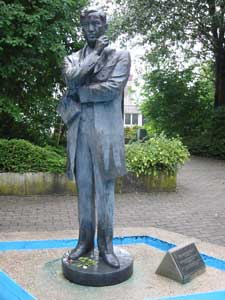
Standbeeld in het Rizal Park in Wilhelmsfeld, Duitsland


De Duitse dichter en schrijver Friedrich Huch werd geboren op 19 juni 1873 in Braunschweig. Zie ook alle tags voor Friedrich Huch op dit blog.

Uit: Peter Michel

„Herr Michel übernahm alles mit der größten Ausdauer und sagte nur manchmal: »Aber nein! Wirklich? Was doch alles in der Welt vorgeht!« Dann steckte er die Enden seines spärlichen Schnurrbartes in die Mundwinkel und sah nachdenklich vor sich hin. Peterchen schwieg dann erschüttert mit, blickte auf seinen Vater – und dessen gesicherte Unangreiflichkeit gab ihm selbst eine innere Festigkeit und Ruhe: Er fühlte sich geborgen. Solche Szenen ereigneten sich übrigens niemals im Beisein der Mutter oder des Großvaters. Frau Michel besaß einen sicheren Instinkt, Betrügereien zu durchschauen, nachdem sie sich im ersten Augenblick hatte verblüffen lassen. Und der Großvater – Frau Michels Vater – genoß bei dem Pastor und dem Schulzen noch dieselbe Ehrfurcht wie vor Jahren, als er den Rohrstock über ihnen schwang.
Die Erziehung des Kindes Peter lag fast ausschließlich in den Händen der Mutter. Herr Michel war ein reines Kind, wo es sich um Lebensfragen handelte. – Eine Eigenschaft war beiden Eltern ihrem Sohne gegenüber gemeinsam: die der vollständigen Ehrlichkeit. Frau Michel log bloß manchmal heimlich ein wenig, wenn sie genau wußte, daß es niemand merken konnte, und wenn sie einen nicht schlimmen Zweck damit verband. Herr Michel, welcher keine Zwecke kannte, log nie. So wuchs das Kind im felsenfesten Zutrauen auf die Welt heran.
Mit aller natürlichen, hausbackenen Aufgewecktheit verband Frau Michel aber eine Eigenschaft, die ihr oft schadete: ihre verwundbare Stelle war die Eitelkeit. Durch Schmeicheln konnte man alles von ihr erlangen. Merkte sie dann aber einmal, daß man sie ausgebeutet hatte, so ging ihr Temperament vollkommen mit ihr durch. In ihrer Kleidung war sie etwas auffallend und nicht sehr geschmackvoll. Das eigentliche Zartgefühl ging ihr ab, und auch von Gemüt hatte sie soviel wie nichts. Peter, der in beidem mehr dem Vater nachschlug, fand in ihm eine verwandtere Natur und schloß sich ihm mehr an als seiner Mutter.“


 1779355-51ebef968fe7ff7df9d8b9920fc4a847.jpg
Friedrich Huch (19 juni 1873 – 12 mei 1913)
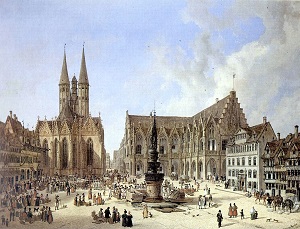
Braunschweig,“ Altstadtmarkt von Osten“ door Domenico Quaglio, 1834


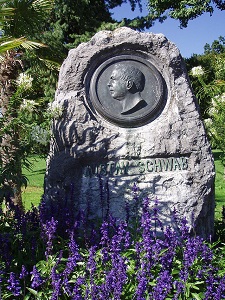
De Duitse dichter, schrijver en pastor Gustav Schwab werd geboren op 19 juni 1792 in Stuttgart. Zie ook alle tags voor Gustav Schwab op dit blog.

Uit:Schiller's Leben

„So kühne Hoffnung dürfen wir von Erforschung des Geschlechtes schwäbischer Dichter freilich nicht hegen. Die Kirchenbücher der württembergischen Dörfer namentlich gehen wohl insgesamt nicht bis zur Reformation herab, sehr viele sind nach der Nördlinger Schlacht von den Kaiserlichen zerstört worden. Doch ist es dem Verfasser dieser Lebensbeschreibung durch die Gefälligkeit zweier Pfarrämter gelungen, den Mannsstamm Schillers mit ziemlicher Wahrscheinlichkeit bis ins siebente Glied rückwärts und in die Mitte des sechzehnten Jahrhunderts zu verfolgen.
Schillers Vater, Johann Kaspar Schiller, ist zwei Stunden nördlich von der Ghibellinenstadt Waiblingen und in ihrem Oberamte, zu Bittenfeld (nicht Bitterfeld) einem altwürttembergischen Pfarrdorfe von etwa tausend Einwohnern am 27. Oktober des Jahres 1723 geboren: dessen Vater, der Großvater des Dichters, hieß Johannes Schiller, war Schultheiß des Dorfes und Bäcker, und am 20. Oktober 1682 zu Bittenfeld geboren; heirathete am 30. Oktober 1708 eine Bewohnerin des Dorfes Altdorf, Eva Margaretha Schatzin, und starb am 11. Juni 1733. Der Vater des Johannes, der Urgroßvater des Dichters, hieß, wie der Enkel, Johann Kaspar Schiller, war Mitglied des Gerichts und, wie sein Sohn, ein Bäcker. Seine Gattin hieß Anna Katharina. Er starb 37 Jahre 8 Monate alt am 4. September 1687. Dieser ist im Tauf- und Kopulationsbuche Bittenfelds nicht zu finden, und er soll von Großheppach nach Bittenfeld gezogen seyn.
Wir wenden uns also nach diesem stattlichen Dorfe des weinreichen Remsthals, das gleichfalls im Waiblinger Oberamte und eine kleine Meile südöstlich von der Stadt Waiblingen gelegen, etwa 1400 Einwohner zählt und durch die Zusammenkunft der Helden Marlborough, Prinz Eugen und Markgraf Ludwig von Baden im dortigen Wirthshause zum Lamm am 9. Junius des Jahrs 1704 eine geschichtliche Illustration erhalten hat.”


 1779355-f2b3eb5960c5df5eb7484161ba288074.jpg
Gustav Schwab (19 juni 1792 – 4 november 1850)
Gedenksteen in Friedrichshafen


Onafhankelijk van geboortedata:


De Duitse dichteres Claudia Gabler werd in 1970 geboren in Lörrach. Zie ook alle tags voor Claudia Gabler op dit blog.


Pioniere der Reprogrammierung als Fremdbild
 

Pioniere der Reprogrammierung als Fremdbild.
die eilig herbeigerufenen Abteilungen machten Differenzen

für uns. zwischen gefühlter und gelebter Stadt lagen
ihre temporären Gebäude. Abwanderung galt also als Geschäft,

aber man untersuchte trotzdem das Kranke dieser Klischees.
ein riesiges Spektakel nahm seinen Lauf, meine wilden Haare

waren dahin (verloren zwischen den Bezügen). Epochenwechsel
im Gespräch wurde zu meinem ganz persönlichen Crossover,

der Kaffee auf den Laken war dann schon wieder lustig.
aber wir sehen natürlich die Fähnchen flattern am Stadtrand.

wir streuen Zucker in den Kakao und unsere Flächennutzung
wird augenblicklich revitalisiert. die Thermohose

und ihr positives Verhältnis zu Feuchtigkeit. um die Hüften
herum graduelle Verdichtung wie liest man

wie liest man die Wolken nochmal in der Urbanität?


 1779355-e955fa0e11066ed718312fa8f080a9df.jpg
Claudia Gabler (Lörrach, 1970)

Geschreven door Romenu om 17:56 Reageer op dit bericht

Meer van Romenu

↑ Terug naar de berichten