Naar de inhoud

Romenu

Over literatuur, gedichten, kunst en cultuur
akke.beakke.be

Berichten van 24 juni 2015 tot 25 juni 2015

Rob van Essen, Yann Martel, Michel Tremblay, Nicholas Mosley, Ingeborg Bachmann, Arseny Tarkovsky, George Orwell, Claude Seignolle
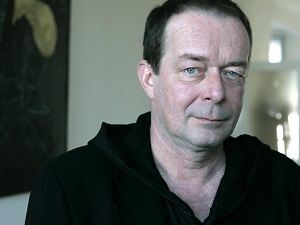
De Nederlandse schrijver en vertaler Rob van Essen werd op 25 juni 1963 geboren in Amstelveen. Zie ook alle tags voor Rob van Essen op dit blog.

Uit: Hier wonen ook mensen

“Walter had deze mensen zelf bij elkaar gezocht. Soms vroeg hij zich af waar ze over spraken tijdens de lange rit, of ze elkaar in de loop der tijd beter hadden leren kennen, of ze informeerden naar elkaars gezondheid, of ze bij elkaar over de vloer kwamen. Wanneer ze aan het werk waren, sprak hij nauwelijks met hen. Meestal stond hij uren voor het raam en keek toe hoe de monnik het grind harkte. Elk jaar kocht hij een nieuw busje voor ze.
Ze spraken ook nauwelijks met hem. Blijkbaar wisten ze wel wie hij was, want de Mexicaanse vrouw had ooit een poster van de Frutzles voor hem uitgerold en gevraagd of hij die wilde signeren. Hij deed dat, achteloos, alsof hij het elke dag deed. Hij vroeg zich af of ze de volgende keer met ander materiaal (bekers, t-shirts, schoolspullen) zou komen, maar ze hield het bij die poster, die blijkbaar voor gebruik in eigen kring was. In ieder geval dook er op internet nergens een aanbieding op van een door de maker zelf gesigneerde Frutzlesposter.
Veel andere mensen kwamen niet langs. Walter haalde zelf zijn post op in de dichtstbijzijnde nederzetting. Verzoeken voor interviews wimpelde hij af. De enige andere vaste gast was de Finse architect die dit huis had ontworpen en bedongen had dat hij één keer per jaar met een groepje studenten mocht langskomen. De studenten luisterden bedachtzaam knikkend naar de uitleg van de architect, namen zo nu en dan een foto en glimlachten bescheiden wanneer ze Walters blik vingen. De architect was telkens weer een jaar ouder, maar de studenten zagen er ongeacht hun herkomst elk jaar hetzelfde uit en goten hun bewondering voor het huis in exact dezelfde termen als hun voorgangers.”


 1782345-6b0755346b95bf3337cb86e074472aab.jpg
Rob van Essen (Amstelveen, 25 juni 1963)


De Canadese schrijver Yann Martel werd op 25 juni 1963 geboren in Salamanca. Zie ook alle tags voor Yann Martel op dit blog.

Uit: Life of Pi

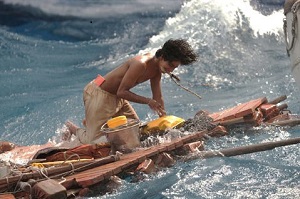
“The doctors and nurses at the hospital in Mexico were incredibly kind to me. And the patients, too. Victims of cancer or car accidents, once they heard my story, they hobbled and wheeled over to see me, they and their families, though none of them spoke English and I spoke no Spanish. They smiled at me, shook my hand, patted me on the head, left gifts of food and clothing on my bed. They moved me to uncontrollable fits of laughing and crying.”
 

 1782345-d9283d9bfd8fb88e5f966776ae7ec33d.jpg
Scene uit de film “Life of Pi” uit 2012


Within a couple of days I could stand, even make two, three steps, despite nausea, dizziness and general weakness. Blood tests revealed that I was anemic, and that my level of sodium was very high and my potassium low. My body retained fluids and my legs swelled up tremendously. I looked as if I had been grafted with a pair of elephant legs. My urine was a deep, dark yellow going on to brown. After a week or so, I could walk just about normally and I could wear shoes if I didn't lace them up. My skin healed, though I still have scars on my shoulders and back.
The first time I turned a tap on, its noisy, wasteful, superabundant gush was such a shock that I became incoherent and my legs collapsed beneath me and I fainted in the arms of a nurse.”
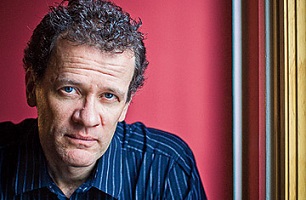
 

 1782345-bfe2cbd1b77b30511583b7d01b72fe6f.jpg
Yann Martel (Salamanca, 25 juni 1963)


De Canadese schrijver Michel Tremblay werd geboren in Quebec op 25 juni 1942. Zie ook alle tags voor Michel Tremblay op dit blog.

Uit: Crossing the Continent (Vertaald door Sheila Fischman)

“Before she gave in to her sorrow, but she couldn’t help it, she didn’t want to go away, to cross Canada or visit her two aunts and her second cousin, then lose her way in the big city, Montreal, with the mother she had stopped loving so long ago. She wanted to stop everything — the train that was picking up speed, the course of her life that was branching off in a direction she hadn’t chosen, the nightmare that was starting here, this morning, that perhaps would never end. She thought about jumping off the train, at the risk of breaking her neck, or pulling the alarm bell to stop it. Or throwing herself at the tall, moustached man, who was looking at her wide-eyed, to punch him and beg him to give her back her family. She thought about dying or, rather, that’s what death was: a definitive departure for an unknown destination. Alone. In a moving prison. With no hope of a change.
This time it’s the entire village of Maria that seems to be swalllowed up by the fields of wheat. And rye. And oats. And corn. The steeple of the church of Sainte- Maria-de-Saskatchewan floats for a moment above a square that’s greener than the rest, of wheat that’s not yet fully mature though it will soon be haying time, then it, too, will drown in the waves of grain and disappear for good. Never again will she see that either. She will talk about it all her life, she will describe the colours, the smells, the horror of bushhfires like the one last summer, the beauty of summer sunsets and the northern lights in winter over the vast plains, the tears that will come to her eyes whenever she imagines her grandmother bending over her wood stove where a pot of beef and vegetables is simmering, or her grandfather rocking on his veranda and smoking his smelly pipe, or Devil chewing diligently on a juicy red apple.”
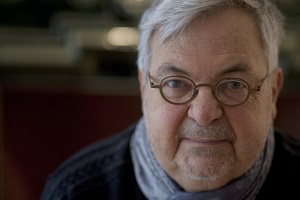
 

 1782345-13ea5899a423199529c5a577c308905e.jpg
Michel Tremblay (Quebec, 25 juni 1942)


De Engelse schrijver Nicholas Mosley werd geboren op 25 juni 1923 geboren in Londen. Zie ook alle tags voor Nicholas Mosley op dit blog.

Uit:Hopeful Monsters

“My mother had gone to argue with Magda in the kitchen. Helga was banging plates down on the sideboard in the dining-room. My father had said to the girl, who was quite pretty, ‘What is your subject?’ The girl had said ‘Physics.’ My father had said ‘Then we will have a lot to talk about!’ And I wondered why my father was not talking more to me.
My father said to the young man ‘What do you do?’
The young man said ‘My subject is philosophy but at the moment I am occupied in politics.’
My father said, as he so often said ‘Ah.’
During supper my father sat at the head of the table: I sat on one side of him and the young man on the other: the girl sat next to the young man. I remember the atmosphere, the style, of this supper quite well – perhaps because it was almost the first time I had been allowed up so late; out of deference, I suppose, to the tensions of the evening. Whoever remembers the exact words of conversations? but I imagine I can recreate the style, the attitudes of my father.
He said to the girl ‘What do you know of the theories of Professor Einstein?’
The girl, who had a scraping voice that did not go with her soft squashed face, said ‘I understand they have not been verified.’
My father said ‘What do you think might count as verification?’
The girl said ‘I understand verification is unlikely.’
My father turned to the young man who had small steel pince-nez from which a black ribbon hung down. My father said ‘And what is the opinion of a philosopher or a politician on these matters?’
The young man said ‘I think these are matters for scientists and mathematicians.’
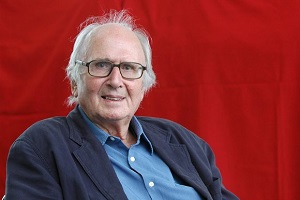
 

1782345-aa7b597ca2991f3ab1e4099294b3a5d4.jpg
Nicholas Mosley (Londen, 25 juni 1923)


De Oostenrijkse dichteres Ingeborg Bachmann werd geboren op 25 juni 1926 in Klagenfurt. Zie ook mijn blog van 25 juni 2010 en eveneens alle tags voor Ingeborg Bachmann op dit blog.


Die Häfen waren geöffnet

Die Häfen waren geöffnet. Wir schifften uns ein,
die Segel voraus, den Traum über Bord,
Stahl an den Knien und Lachen um unsere Haare,
denn unsere Ruder trafen ins Meer, schneller als Gott.

Unsere Ruder schlugen die Schaufeln Gottes und teilten die Flut;
vorne war Tag, und hinten blieben die Nächte,
oben war unser Stern, und unten versanken die andern,
draußen verstummte der Sturm, und drinnen wuchs unsre Faust.

Erst als ein Regen entbrannte, lauschten wir wieder;
Speere stürzten herab und Engel traten hervor,
hefteten schwärzere Augen in unsere schwarzen.
Vernichtet standen wir da. Unser Wappen flog auf:

Ein Kreuz im Blut und ein größeres Schiff überm Herzen.


De havens waren geopend

De havens waren geopend. We scheepten ons in,
de zeilen voor de wind, de droom overboord,
staal aan de knieën en lachen rond onze haren,
Want onze riemen kliefden de zee, sneller dan God.

Onze riemen versloegen de spanen van God en deelden de vloed;
vóór was het dag, en achter bleven de nachten,
boven was onze ster, en onder verzonken de anderen,
buiten verstomde de storm, en binnen groeide onze vuist.

Pas toen een regen ontbrandde, luisterden we weer;
speren vielen neer en engelen traden te voorschijn,
richtten zwartere ogen op ónze zwarte ogen.
Vernietigd stonden we daar. Ons blazoen vloog omhoog;

Een kruis in het bloed en een groter schip boven het hart.


Vertaald door Paul Beers & Isolde Quadflieg


Hôtel de la Paix

Die Rosenlast stürzt lautlos von den Wänden,
und durch den Teppich scheinen Grund und Boden.
Das Lichtherz bricht der Lampe.
Dunkel. Schritte.
Der Riegel hat sich vor den Tod geschoben.
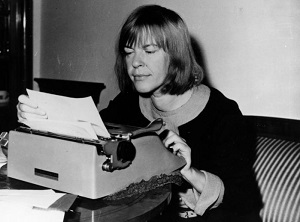


 1782345-80488f5f8c677aae8ca26feb5f8348be.jpg
Ingeborg Bachmann (25 juni 1926 – 17 oktober 1973)


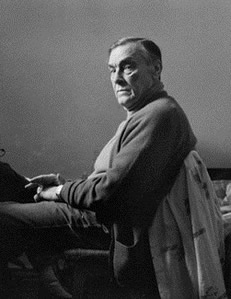
De Russische dichter en vertaler Arseny Alexandrovich Tarkovsky werd geboren op 25 juni 1907 in Elisavetgrad. Zie ook alle tags voor Arseny Tarkovsky op dit blog.


A blind man was riding an unheated train

A blind man was riding an unheated train,
From Bryansk he was traveling home with his fate.

Fate whispered to him so the whole car could hear:
And why should you care about blindness and war?

It’s good, she was saying, you’re sightless and poor.
If you were not blind, you’d never survive.

The Germans won’t kill you, you’re nothing to them.
Allow me to lift that bag on your shoulder—

The one with the holes, the empty torn one.
Let me just raise your eyelids wide open.

The blind man was traveling home with his fate,
Now thankful for blindness. Happy about it.


Vertaald door Philip Metres en Dimitri Psurtsev
 

 1782345-4e281cd524677bc0acd41a71ebf30163.jpg
Arseny Tarkovsky (25 juni 1907 – 27 mei 1989)


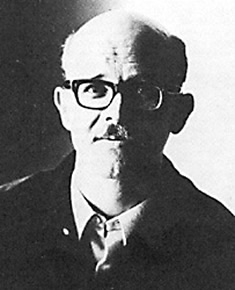
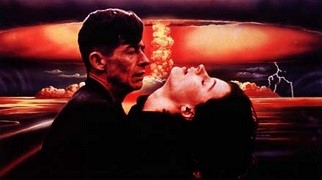
De Britse schrijver George Orwell (pseudoniem van Eric Arthur Blair) werd op 25 juni 1903 geboren in Motihari, India. Zie ook mijn blog van 25 juni 2010 en eveneens alle tags voor George Orwell op dit blog.

Uit: 1984

“And this hall, with its fifty workers or thereabouts, was only one sub-section, a single cell, as it were, in the huge complexity of the Records Department. Beyond, above, below, were other swarms of workers engaged in an unimaginable multitude of jobs. There were the huge printing-shops with their sub-editors, their typography experts, and their elaborately equipped studios for the faking of photographs. There was the tele-programmes section with its engineers, its producers, and its teams of actors specially chosen for their skill in imitating voices. There were the armies of reference clerks whose job was simply to draw up lists of books and periodicals which were due for recall. There were the vast repositories where the corrected documents were stored, and the hidden furnaces where the original copies were destroyed. And somewhere or other, quite anonymous, there were the directing brains who co-ordinated the whole effort and laid down the lines of policy which made it necessary that this fragment of the past should be preserved, that one falsified, and the other rubbed out of existence.”
 

 1782345-fb5155846b495d7c42483898c1d392b4.jpg
George Orwell (25 juni 1903 – 21 januari 1950)
Scene uit de film “1984” uit 1984


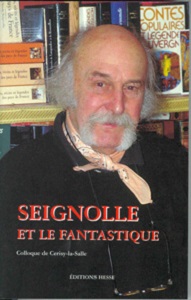
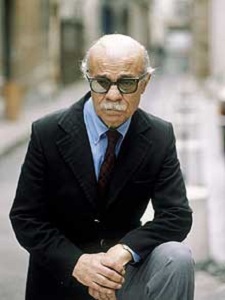
De Franse schrijver Claude Seignolle werd geboren op 25 juni 1917 in Périgueux. Zie ook alle tags voor Claude Seignrolle op dit blog.

Uit: Le meneur de loups

« La locature des Bâtards ne vit, dans son aspect extérieur, que par la fumée de son tas de fumier recroquevillé contre la porcherie. Une neige brillante uniformise la cour et les toits. En étanchant sa soif, le froid a changé la mare vaseuse en un bloc de glace sombre. Pris au piège, un vieux seau dort paisiblement, l'anse repliée sur ses flancs fatigués. Un long trait de glissades sur la glace apprend au passant que le fermier a des enfants jeunes et vigoureux. Face à la porcherie, faisant bande à part, sont les bâtiments plus nobles : la grange vaste et pleine d'herbe de vie, garde-manger aux effluves grisants : puis, tout contre, l'étable avec ses lents bruits de chaînes et ses meuglements sourds. Les bâtiments où logent Ribaud et sa famille dominent les dépendances et en sont séparés par une courette où la niche du chien voisine avec deux marmites ébréchées, remplies de ferrailles mariées entre elles par la rouille cupide.
Sans le souffle blanchâtre de la cheminée, l'haleine brumeuse du fumier et les geignements du bétail, on eût pu croire la ferme abandonnée."
 

 1782345-5ca0cbb23a2d03a2a410cf976439854c.jpeg
Claude Seignolle (Périgueux, 25 juni 1917)
Cover


Zie voor nog meer schrijvers van de 25e juni ook mijn blog van 25 juni 2012 deel 1 en eveneens deel 2 en ook ook mijn blog van 25 juni 2011 deel 2 en eveneens deel 3.
Geschreven door Romenu om 18:41 Reageer op dit bericht

Ernesto Sabato, Yves Bonnefoy, Scott Oden, Matthijs Kleyn, Madelon Székely-Lulofs, Josse Kok

De Argentijnse schrijver Ernesto Sabato werd op 24 juni 1911 geboren in Rojas, een dorp in de provincie Buenos Aires. Zie ook alle tags voor Ernesto Sabato op dit blog.

Uit: Before the End (Vertaald door Marina Harss))

„My father was the absolute authority in my family; power diminished hierarchically from the eldest brother to the youngest. I still remember looking with fear upon his face, marked simultaneously by candor and hardness. His incontestable decisions were the basis of an ironclad system of commands and punishments that regulated all of us, including my mother. Reserved and stoic, she surely suffered from the effects of that energetic and severe character, but I never heard her complain, and she managed to raise eleven sons under these trying circumstances.
The education we received left deep, unhappy marks on my spirit. But this often harsh upbringing taught us to fulfill our duties, to be consistent, and to finish every task we had begun. And if we have accomplished something in life, it has been as a result of these attributes that we were so brutally forced to acquire.
My father's severity, which could be terrible, formed my character, which tends toward sadness and melancholy. And it was the main cause of the rebellion of two of my brothers, who ran away from home: Humberto and Pepe, who was known in our town as "that crazy Sábato," and who ended up running off with the circus, to the great shame of my bourgeois family. This decision greatly upset my mother, but she bore it with the stoicism she displayed throughout her long life; after a protracted illness, she died serenely in her bed in Matilde's arms at the age of ninety.
My brother Pepe was passionate about the theatre, and he used to act in the town shows, which were known as "Thirty Friends United." When on occasion they put on criollo4 farces at the Perla movie theater, he always played a part, no matter how small. In his room he had the complete collection of Bambalinas, edited in Buenos Aires, with colorful covers; in addition to these farces, the series included works by Ibsen, and on one memorable occasion, by Tolstoy. I had read the entire collection before turning twelve, and it marked my life deeply; I have always been passionate about the theater, and though I have written several plays, they have never seen the light of day."


1781946-622febeb48bbe604ae09901d2f0309e4.jpg
Ernesto Sabato (24 juni 1911 – 30 april 2011)


De Franse dichter, schrijver en vertaler Yves Bonnefoy werd in Tours geboren op 24 juni 1923. Zie ook alle tags voor Yves Bonnefoy op dit blog.


Le livre, pour vieillir

Étoiles transhurnantes; et le berger
Voûté sur le bonheur terrestre; et tant de paix
Comme ce cri d'insecte, irrégulier,
Qu'un dieu pauvre façonne. Le silence
Est monté de ton livre vers ton coeur.
Un vent bouge sans bruit dans les bruits du monde.
Le temps sourit au loin, de cesser d'être.
Simples dans le verger sont les fruits mûrs.

Tu vieilliras
Et, te décolorant dans la couleur des arbres,
Faisant ombre plus lente sur le mur,
Etant, et d'âme en fin, la terre menacée,
Tu reprendras le livre à la page laissée,
Tu diras, C'étaient done les derniers mots obscures.


Le soir

Rayures bleues et noires.
Un labour qui dévie vers le bas du ciel.
Le lit, vaste et brisé comme le fleuve en crue.
- Vois, c'est deja le soir,
Et le feu parle auprès de nous dans l'éternité de la sauge.


Les chemins

Chemins, parmi
La matiére des arbres. Dieux, parmi
Les touffes de ce chant inlassable d'oiseaux.
Et tout ton sang voúté sous une main rêveuse,
O proche, ô tout mon jour.

Qui ramassa le fer
Rouillé, parmi les hautes herbes, n'oublie plus
Qu'aux grumeaux du métal la lumière peut prendre
Et consumer le sel du doute et de la mort,


 1781946-4833c42ae54b6f3b2261732ebf157fd8.jpg
Yves Bonnefoy (Tours, 24 juni 1923)


De Amerikaanse schrijver Scott Oden werd geboren op 24 juni 1967 in Columbus, Indiana. Zie ook alle tags voor Scott Oden op dit blog.

Uit: The Lion of Cairo

“The Assassin staggered, clutching his bloodied visage. More than pain lanced through his skull. A crawling sensation shivered across his scalp and down his spine—a thousand tentacles of ice seeking to pry their way into his soul. His ears rang with phantasmal sound, with voices not his own—howling, gibbering, cursing, screaming; voices filled with rage, with terror, with purpose . . . cold, murderous purpose. His jaw champed, teeth grinding as his own fury blossomed. Did he sur­vive the fearsome siege of Ascalon, the initiations of al- Hashishiyya, and the grinding hunt through the Afghan mountains to bring the death his master decreed for the Afridis only to fall prey to a poisoned blade? Not poison, a voice mocked, stronger than the others; an ancient voice tinged with madness. No, not poison.
The Assassin’s wrath cut through the agony, granting him a moment of absolute clarity. Rumors he had heard of Baber Khan’s cruelty, of his insane recklessness, of a pact between the chiefs of his clan and the djinn of the mountains, suddenly made sense. It must be the salawar. By what deviltry he could not imagine, but its touch filled his head with visions, ancient and bloody scenes of carnage, of slaughter, and of betrayal. It called to him . . . the Assassin’s body spasmed; he took a step toward Baber Khan then fell to his knees, glaring up at him through a haze of blood and fury. “That . . .  that b-blade!”
“Yes! You feel it, do you not?” Baber Khan replied; he ran a thumb and forefinger along the edge of his salawar, collecting the Assassin’s blood. His grim smile widened as he licked his fingers clean. “It is the Hammer of the Infidel, and none can stand before it! What is your name, dog?”


 1781946-9ccaa74d6ddf14b07e31063be6e58970.jpg
Scott Oden (Columbus, 24 juni 1967)
Cover


De Amerikaanse dichter, vertaler en etymoloog John Anthony Ciardi werd geboren op 24 juni 1916 in Boston. Zie ook alle tags voor John Ciardi op dit blog.


Why Nobody Pets The Lion At The Zoo

The morning that the world began
The Lion growled a growl at Man.

And I suspect the Lion might
(If he'd been closer) have tried a bite.

I think that's as it ought to be
And not as it was taught to me.

I think the Lion has a right
To growl a growl and bite a bite.

And if the Lion bothered Adam,
He should have growled right back at 'im.

The way to treat a Lion right
Is growl for growl and bite for bite.

True, the Lion is better fit
For biting than for being bit.

But if you look him in the eye
You'll find the Lion's rather shy.

He really wants someone to pet him.
The trouble is: his teeth won't let him.

He has a heart of gold beneath
But the Lion just can't trust his teeth.


 1781946-b1269cbca9c879a15abafa6f57f10ffe.jpg
John Ciardi (24 juni 1916 – 30 maart 1986)


De Nederlandse schrijver en televisiemaker Matthijs Leonard Kleyn werd geboren in Leiden op 24 juni 1979. Zie ook alle tags voor Matthijs Kleyn op dit blog.

Uit: Vita

“lk weet het wel, maar ik snap het niet. lk begrijp het niet, ik wil het weten, maar ik ben er ook als de dood voor. Ik neem mezef voor dat ik het tot op de bodem zal uitzoeken, dat we er samen achter gaan komen, dat we het kunnen veranderen. Nooit zal ik haar alleen laten. Of Vita nou een fascinatie of een obsessie voor me is, doet er niet toe. Ik hou gewoon van haar. Ik hou zo ontzettend veel van haar.
Als Vita begint te gapen, vraag ik of ze naar bed wil. Dat wil ze. Ik vraag of ik weg moet. Nee. Ik moet bij haar blijven liggen en doorpraten tot ze in slaap valt. Dat doe ik en ondertussen geef ik haar overal kusjes. Haar wang, haar oor, haar haren. Met haar linkerarm omklemt ze de mijne en dan valt ze in slaap. Korte schokjes kondigen het aan. Eentje is zo heftig dat ze er zelf wakker van schrikt.
‘O, sorry,’ ze doet haar ogen weer dicht.
‘Geeft niks, liefje. Ga maar Iekker slapen.’
‘Wat fijn dat je er bent,’ fluistert ze in haar halfslaap, ‘ik hou van jou.’
1k word warm vanbinnen en doe geen oog dicht. De hele nacht blijf ik over haar waken.
Rond acht uur wordt Vita uit zichzelf wakker. We liggen nog steeds in dezelfde positie: mijn arm in de hare Eeklemd, haar wang tegen de mijne. Ze kijkt me kort aan en werpt een blik op e klok.”


 1781946-651c06f2ba83a081ff03775519bfe0e3.jpg
Matthijs Kleyn (Leiden, 24 juni 1979)


De Nederlandse schrijfster en journaliste Magdalena Hermina Székely-Lulofs werd geboren in Soerabaja op 24 juni 1899. Zie ook alle tags voor Madelon Székely-Lulofs op dit blog.

Uit: Rubber

‘Hé!!.... Waar is je man?’....
De vrouw keerde zich om, keek verward en verwonderd naar John.
‘Hóór je me niet?.... Ik vraag je waar je man is!’.....
‘Daar!’.... Ze wees met een langzame beweging naar den overkant van de rivier. John zuchtte geïrriteerd. Altijd deze tergende langzaamheid! Altijd deze tartende sloomheid!
‘Daar is hij,’ zei de vrouw. Uit het kreupelhout aan den overkant was een man te voorschijn gekomen en maakte een prauw los, die aan een uitstekenden tak was vastgebonden geweest. Met een paar langzame slagen van zijn pagaai roeide hij een eindje de rivier op en kwam dan in den stroom, die hem vanzelf tot vlak vóór den weg overdreef.
John keek toe, hoe hij dit alles deed, handig en practisch als een oermensch, die de elementen kent; maar doodbedaard en zonder het minste besef van haast. Ook de chauffeur zag toe, berustend onverschillig. De man bond de prauw weer vast, kwam op de auto toe.
‘De toewan heeft je geroepen,’ meldde de vrouw geheel overbodig. De man keerde niet eens zijn hoofd naar haar om.
‘Ajo!!’.... bromde John ‘....vlug een beetje! De toewan besar wacht op me!’
‘Ik kom toch al,’ zei de man en wendde zich dan naar den chauffeur.
‘Heb je Pâ Karmo niet gezien?’
De chauffeur schudde zijn hoofd, nam een bedachtzamen haal van zijn strootje, dat hij dan weggooide; daarna stond hij op, rekte zich uit, gaapte, zette zijn fluweelen hoofddeksel schuin en krabde zich behagelijk tusschen zijn dikke, krullende, zwarte haren. John trachtte geduld te oefenen, wetend, dat het tòch niet hielp of je je opwond. Dit was nu eenmaal de traagheid van het Oosten, ergerlijk en onbegrijpelijk voor den Westerling. De veerman stapte met groote stappen in de struikenwildernis om zijn hut en riep een paar maal:
‘Pâ Karmo!.... Pâ Karmo!!.... Er is een auto!’...."


 1781946-e3de83d0453784301e28cdbb5a45497a.jpg
Madelon Székely-Lulofs (24 juni 1899 – 22 mei 1958)
Scene uit de film “Rubber” uit 1931


Onafhankelijk van geboortedata

De Nederlandse dichter Josse Kok werd geboren in Zeist in 1983.Kok woont in Dordrecht en werkt in een staalmagazijn. Zie ook alle tags voor Josse Kok op dit blog.


Nachtbraker

Toch weer de kroeg, dat donker hol.
Die drang naar kolkend vrouwenbloed.
Je hangt over een houten klaagbank
waarin je slechts de dwaas ontmoet.

Je giet iets weg en pist iets uit.
Je luistert naar de achterklap.
Er fluisteren wat meisjes naar
de dode puntjes van je haar.

Je zal wel nooit meer nuchter zijn.
Je houdt jezelf gedeisd en lacht.
Je kokhalst tegen sluitingstijd.

De ochtend treitert, spot met licht.
Wanneer de zon haar schedel splijt,
ontwaakt in jou de nacht.


 1781946-828069bfa24fe97c27fdccee03ce2981.jpg
Josse Kok (Zeist, 1983)


Zie voor nog meer schrijvers van de 24e juni ook mijn blog van 24 juni 2013 en ook mijn blog van 24 juni 2011 deel 2.

Geschreven door Romenu om 20:09 Reageer op dit bericht

In MemoriamThé Lau

In Memoriam Thé Lau

De Nederlandse zanger, muzikant, componist en schrijver Thé Lau is gisteravond thuis in Amsterdam overleden. Dit meldt zijn management woensdag.Thé (Matheus Josephus) Lau werd geboren in Bergen op 17 juli 1952. Zie ook alle tags voor Thé Lau op dit blog.

Uit: Juliette, een liefde in snapshots

“Maar makkelijke score of niet, Robbie was voor het eerst met een vrouw naar bed geweest en teder betastte hij de plek waar Elsa had gelegen. Toen zijn vingertoppen in de plooien van het laken niets meer van haar voelden klom hij uit het bed, kleedde zich aan en liep naar de tafel bij het raam van het tuinhuisje. Ze had een bordje en een mok voor hem klaargezet. Op het bord lag een briefje:
‘Ik ben naar het paviljoen om schoon te maken. In de keuken is brood, en koffie en filters, als je wilt. Kijk maar. Kus. Elsa.’
Ze had een krullerig meisjeshandschrift, en onder haar naam had ze een hartje getekend. Het was aandoenlijk, en in strijd met haar nymfomane reputatie. Robbie tekende er een hartje naast en liep naar buiten.
Hij keek nieuwsgierig om zich heen. Wat vannacht in duisternis gehuld was geweest bleek een groot, met hoge bomen en krakkemikkige bouwsels bezaaid terrein. Drie schuren stonden her en der verspreid rond een grote boerderij met een aangevreten rieten dak. Van een ervan hingen de deuren in hun hengsels. In hun schaduw was een roestige tractor te zien, en eromheen slingerde gereedschap. Naast Elsa’s huisje stond een half ingestort kippenhok. Het geheel maakte de indruk van een machine die krakend en piepend tot stilstand was gekomen.
Robbie stak het erf over en opende het hek. Hij keek naar zijn witte Puch, die ertegenaan stond, en dacht aan zijn vader. Wat zou hij van deze eerste verovering hebben gevonden? Het antwoord zou Robbie nooit krijgen. Zijn vader had vorig jaar een beroerte gekregen en was zittend aan de schildersezel overleden. Robbie stapte op en startte de brommer.”


 1781943-e8b586211b0848f157c537d28a4282e8.jpg
Thé Lau (17 juli 1952 – 23 juni 2015)

Geschreven door Romenu om 19:51 Reageer op dit bericht

Wilfred Smit

De Nederlandse dichter Wilfred Smit werd geboren in Soerabaja (Java, Nederlands Indië) op 24 juni 1933. Wilfred Smit bracht zijn jeugd grotendeels door op Nederlands-Indië. In 1948 verhuisde hij met zijn ouders naar Nederland om daar de rest van zijn leven te blijven. Hij studeerde vanaf 1953 Slavische taal- en letterkunde in Leiden. Smit voelde zich in het bijzonder aangetrokken tot het werk van Simon Vestdijk; toen hij zelf begon te dichten was het dan ook deze gevierde auteur aan wie hij vanaf april 1953 advies vroeg. Vestdijk moedigde hem aan ander werk op te sturen. Ze zouden daarna blijven corresponderen met elkaar. In 1959 bracht Smit zijn eerste bundel gedichten uit, te weten “Een harp op wielen”. Nog vóór de publicatie ervan schreef Vestdijk voor het tijdschrift De Gids een lang artikel over de poëzie van de debutant, onder de titel 'Meesterlijk maniërisme'. Toch bleef zijn lezerspubliek beperkt. Ook zijn tweede bundel, “Franje” uit 1963, werd weliswaar welwillend en door sommigen zelfs geestdriftig begroet, maar kreeg alweer niet het onthaal waarop Smit had gehoopt. Hij zou daarna nog slechts sporadisch, alleen in tijdschriften publiceren. Zonder een doctoraalexamen te hebben afgelegd, werd hij in 1969 door de UvA aangesteld als docent in de geschiedenis van de Russische letterkunde. In 1972 stierf Smit op negenendertigjarige leeftijd aan een hersentumor. Elf jaar na zijn overlijden verscheen een uitgave met verzameld werk.


Sweet bahnhof

Drijft men dan steeds verder
uit elkaar? het afscheid schuift
een opdringerige oom tussen ons in.
sluit de ogen af - ja dit is vlucht,
een handvol kaarten laten vallen
omdat men in onze vingers knipt.
wurg alle lichten - rasse schreden
maakt mijn vertrek, reusachtig,
als op stelten wadend door de mist.
adieu adieu sweet bahnhof -
een convooi melaatsen wacht
in alle stilte de nalaatste trein.’


Afscheid
 
Er staat een plant begonia vaarwellis
in het venster; hij zal niet omkijken
niet zien - ik plant een hagepreek
van lieve woorden om hem heen;
hij wil wel luisteren maar voor 't laatst.
zo ga ik langzaam over in een oude vrouw,
een oudere zuster der vitrages,
met plotseling een zoon maar hij is weg,
en met een kat imaginair, niet te verjagen.


 1816506-5cbfaf4a3ef8c7413ae9b8f9c82ae1ef.jpg
Wilfred Smit (24 juni 1933 -13 augustus 1972)

Geschreven door Romenu om 00:00 Reageer op dit bericht

Meer van Romenu

↑ Terug naar de berichten