Naar de inhoud

Romenu

Over literatuur, gedichten, kunst en cultuur
akke.beakke.be

Berichten van 25 juni 2015 tot 26 juni 2015

Aimé Césaire, Jacqueline van der Waals, Yves Beauchemin, Elisabeth Büchle, Laurie Lee, Pearl S. Buck, Branwell Brontë
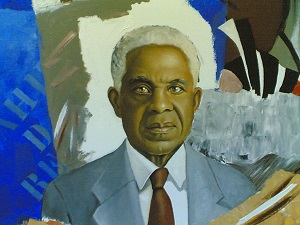
De Afrocaraïbische schrijver en politicus Aimé Césaire werd geboren op 26 juni 1913 in Basse-Pointe, Martinique. Zie ook alle tags voor Aimé Césaire op dit blog.


Notebook of a Return to the Native Land (Fragment)

   At the end of daybreak. . .
   Beat it, I said to him, you cop, you lousy pig, beat it,
I detest the flunkies of order and the cockchafers of hope.
Beat it, evil grigri, you bedbug of a petty monk. Then I turned
toward paradises lost for him and his kin, calmer than the face
of a woman telling lies, and there, rocked by the flux of a
never exhausted thought I nourished the wind, I unlaced the
monsters and heard rise, from the other side of disaster, a
river of turtledoves and savanna clover which I carry forever
in my depths height-deep as the twentieth floor of the most
arrogant houses and as a guard against the putrefying force
of crepuscular surroundings, surveyed night and day by a cursed
venereal sun.

   At the end of daybreak burgeoning with frail coves, the hungry
Antilles, the Antilles pitted with smallpox, the Antilles dyn-
amited by alcohol, stranded in the mud of this bay, in the dust
of this town sinisterly stranded.

   At the end of daybreak, the extreme, deceptive desolate eschar
on the wound of the waters; the martyrs who do not bear witness;
the flowers of blood that fade and scatter in the empty wind
like the screeches of babbling parrots; an aged life mendacious-
ly smiling, its lips opened by vacated agonies; an aged poverty
rotting under the sun, silently; an aged silence bursting with
tepid pustules,
   the awful futility of our raison d’être.

   At the end of daybreak, on this very fragile earth thickness
exceeded in a humiliating way by its grandiose future—the vol-
canoes will explode, the naked water will bear away the ripe
sun stains and nothing will be left but a tepid bubbling pecked
at by sea birds—the beach of dreams and the insane awakening.

   At the end of daybreak, this town sprawled-flat, toppled from
its common sense, inert, winded under its geometric weight of
an eternally renewed cross, indocile to its fate, mute, vexed
no matter what, incapable of growing with the juice of this
earth, self-conscious, clipped, reduced, in breach of fauna
and flora.

Vertaald door Clayton Eshleman


 1782744-3ecc7aa4f293fd32c3e4c1cd9909ad48.jpg
Aimé Césaire (26 juni 1913 – 17 april 2008)


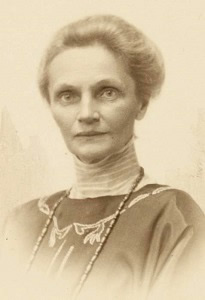
De Nederlandse dichteres Jacqueline Elisabeth van der Waals werd geboren op 26 juni 1868 in Den Haag. Zie ook alle tags voor Jacqueline van der Waals op dit blog.


Oktober

De blaadjes waaiden
Langs alle wegen,
De blaadjes draaiden
In kringen rond -
Ik liep te drentelen
En kwam ze tegen,
Ik zag ze wentelen
Over de grond.

Het was oktober,
Wanneer de blaren,
Rood als rood koper,
Of geel van kleur,
In dichte scharen
Neer komen strijken -
Ik liep te kijken
En snoof de geur.


Wintermorgen

Week op het wit van het wazige land,
Week door het grijs van de wolken daarachter,
schemert de schijn van de zon, die met zachte
goudglans de zomen omrandt.

Blank als de glans op het wazig verschiet,
week als de schemer van de zon door het grijze,
weifelt het licht door mijn stille gepeinzen,
schemert de vreugde door mijn lied.


Kinderogen

Steeds zien uit een kindergezichtje
Twee droevige ogen mij aan,
Heel stil en geduldig. Ze vragen,
Een vraag, die ik niet kan verstaan.

Waarom, o kinderogen!
Waarom uit dat bleke gezicht,
Dat bleek en onschuldig gezichtje,
Die blik op mij gericht?

Ik kan u geen antwoord geven.
Ach zie mij zo vragend niet aan!
Gij wekt in mijn harte een onrust,
Een smart, die ik niet kan verstaan.
 

 1782744-3d5d3a688d02239c87fa670e447b81f8.jpg
Jacqueline van der Waals (26 juni 1868 – 29 april 1922)


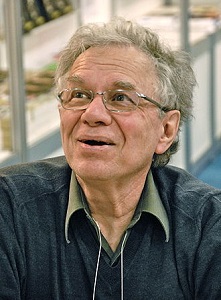
De Canadese schrijver Yves Beauchemin werd geboren op 26 juni 1941 in Rouyn-Noranda, Quebec. Zie ook alle tags voor Yves Beauchemin op dit blog.

Uit : Juliette Pomerleau

« Ma tante,
Je sais que vous aller me juger très sévèrement. Je sais que j'agis très mal et que je mérite les plus grand blâmes. Vous êtes la seule personne qui pouvez m aidez, voilà pourquoi je me suis adressé à vous. L'enfant que vous avez devant vous, c'est le mien. Il est né à Chicoutimi le 8 mai de l'an passé; c'est un garçon, il s'appelle Denis et je l'ai fait baptisé dans la paroisse de la Cathédrale. je ne suis pas sûre qui est son père (oui, je sais bien ce que vous êtes en train de penser de moi, mais je n'y peux rien). De toutes façons, avec les hommes que j'ai connu, il est mieux sans père.
J'ai essayée jusqu'ici de m'en occuper de mon mieux, mais là, je n'en ai plus la force. Avant de devenir une mauvaise mère, je préfère le confier à quelqu'un d'autre. J'espère que se sera vous qui en prendrez soin (car je connais votre bon cœur depuis longtemps), sinon, je vous demanderais de surveiller la personne qui en aura soin.
Je vous laisse deux boites qui contiennent tout son linge. Dans la boite la plus grosse (dans un petit gilet de laine bleu), vous trouverez 205 $ c'est tout l'argent que je possède actuellement. je vous en enverrai d'autre aussitôt que possible. N'essayez pas de me rejoindre, vous ne pourrez pas. De toute façon, ma décision est prise, je ne reviendrai pas là-dessus, on ne peut pas refaire sa vie, pas moi, en tout cas.
Je sais, vous devez vous dire, elle aurait pu venir me le remettre elle-même dans mes bras, la sans cœur. Mais justement, je sais que vous ne me croirez pas, mais j'ai du cœur, trop de cœur. J'avais trop honte de vous voir, ce qui fait que j'ai mieux aimé vous parlé par lettre. Et je me suis dit que c'était mieux aussi que de laisser mon enfant à la police. Pardonnez-moi. Faite que mon enfant soit heureux, moi, je n'y arrivais pas.
Pardonnez moi encore une fois.
Adèle”
 

 1782744-012b3eaa4c98c004ba7312b1fb8c84f7.jpg
Yves Beauchemin (Rouyn-Noranda, 26 juni 1941)


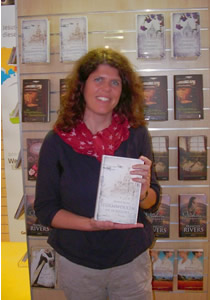
De Duitse schrijfster Elisabeth Büchle werd geboren op 26 juni 1969 in Trossingen, Baden-Württemberg. Zie ook alle tags voor Elisabeth Büchle op dit blog.

Uit: Wohin der Wind uns trägt

“Aber er könnte annehmen, ich hätte es dir gleichgetan.“
„Das ist unmöglich. Simon weiß sehr wohl, was für eine gesittete und wohlerzogene Dame du im Gegensatz zu mir bist“, spottete Joanna und verschnürte den zweiten Schuh. Eilig zupfte sie die verschiedenen Schichten weißer Unterröcke und schließlich das blaue Organdykleid zurecht.
„Er ist da!“, zischte die aufgeregte Linda und Joanna wandte sich mit einem fröhlichen Lächeln nach ihrem Nachbarn um.
„Guten Abend, Simon Bryant. Haben sie dich aus den ehrwürdigen Mauern von
West Point hinausgeworfen?“
„Jo, du weißt sehr genau, dass Mr Bryant einen hervorragenden Abschluss errungen hat!“, begehrte Linda auf. Sie warf der Freundin einen vorwurfsvollen Blick zu, ehe sie ebenfalls,
mit tiefrotem Gesicht, zu dem schlanken, uniformierten jungen Mann aufsah.
„Danke für die Ehrenrettung, Miss Fowler. Aber Olivers Schwester hat selten einmal ein freundliches Wort für mich übrig.
Seit sie und ihre große Familie auf der Green-Crystal-Plantage leben, hatte ich Zeit, mich an ihre spitze Zunge zu gewöhnen.“
Joanna lächelte dem Freund ihres ältesten Bruders Oliver zu und wandte sich dann wieder in Richtung des Bachbettes um. Sie beobachtete scheinbar interessiert ein Libellenpärchen, das sich in wilden Schleifen über das von der Sonne silbern angestrahlte Wasser bewegte, während Simon Linda höflich begrüßte. „Darf ich den Damen ein Glas Bowle bringen?“, fragte er schließlich.”
 

1782744-b0ff77140ebf71c9162e92f335965ed5.jpg
Elisabeth Büchle (Trossingen, 26 juni 1969)


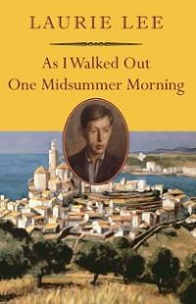
De Engelse dichter en schrijver Laurence Edward Alan "Laurie" Lee werd geboren in Stroud, Gloucestershire op 26 juni 1914. Zie ook alle tags voor Laurie Lee op dit blog.

Uit: As I Walked Out One Midsummer Morning

"The violence of the heat seemed to bruise the whole earth and turn its crust into one huge scar. One's blood dried up and all juices vanished; the sun struck upwards, sideways, and down, while the wheat went buckling across the fields like a solid sheet of copper. I kept on walking because there was no shade to hide in, and because it seemed the only way to agitate the air around me...I walked on as though keeping a vow, till I was conscious only of the hot red dust grinding like pepper between my toes."
(…)

“I remember the beggars as something special to Valladolid, something it had nursed to a peak of malformation and horror. One saw them little by day; they seemed to be let out only at night, surreptitiously, like mad relations..Young and old were like emanations of the stifling medievalism of this pious and cloistered city; infected by its stones, like the pock-marked effigies of its churches, and part of one of the more general blasphemies of Spain."
(…)

“But I think my most lasting impression was still the unhurried dignity and noblesse with which the Spaniard handled his drink. He never gulped, panicked, pleaded with the barman, or let himself be shouted into the street. Drink, for him, was one of the natural privileges of living, rather than the temporary suicide it so often is for others. But then it was lightly taxed here, and there were no licensing laws; and under such conditions one could take one's time.”
 

 1782744-22436cccc02f189a122dd320860f26fa.jpg
Laurie Lee (26 juni 1914 – 13 mei 1997)


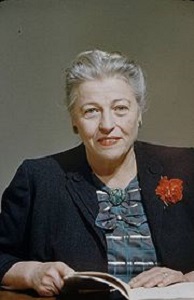
De Amerikaanse schrijfster Pearl S. Buck werd geboren in Hillsboro West-Virginia, op 26 juni 1892. Zie ook mijn blog van 26 juni 2010 en eveneens alle tags voor Pearl S. Buck op dit blog.

Uit: Pavilion of Women

“Yet there were times when he did love her with all the kindness she demanded, and how was she to know what were those times? Alone she raged against his cheerfulness and put herself at the mercy of her own love and longed to be free of it because it made her less than he and dependent on him. But how could she be free of chains she had put upon herself? Her soul was all tempest. The dreams she had once had of her life were dead. She was in prison in the house. And yet who was her jailer except herself?”
(…)

“Had she not created even him? Perhaps for that he never forgave her, but hated her and fought her secretly, and dominated her and oppressed her and kept her locked in houses and her feet bound and her waist tied, and forbade her wages and skills and learning, and widowed her when she was dead, and burned her sometimes to ashes, pretending that it was her faithfulness that did it.”
(…)

“Know thy neighbor as thyself. That is, comprehend his hardships and understand his position, deal with his faults as gently as with your own. Do not judge him where you do not judge yourself...this is the meaning of the word LOVE.”
 

 1782744-008b5a0eaa2ef79899d0f13c41cff0cd.jpg
Pearl S. Buck (26 juni 1892 – 6 maart 1973) 


De Engelse dichter en schilder Branwell Brontë werd op 26 juni 1817 geboren in Thornton, Yorkshire. Zie ook alle tags voor Branwell Brontë op dit blog.


Epistle To The Labouring Poor (Fragment)

All you who turn the sturdy soil,
Or ply the loom with daily toil,
And lowly on through life turmoil
For scanty fare,
Attend, and gather richest spoil
To soothe your care.

I write with tender, feeling heart,
Then kindly read what I impart;
'Tis freely penned, devoid of art,
In homely style,
'Tis meant to ward off Satan's dart,
And show his guile.

I write to ope your sin-closed eyes,
And make you great, and rich, and wise,
And give you peace when trials rise,
And sorrows gloom;
I write to fit you for the skies
On Day of Doom.

What, though you dwell in lowly cot,
And share through life a humble lot?
Some thousands wealth and fame have got,
Yet know no rest:
They build, pull down, and scheme and plot,
And die unblest.
 

 1782744-5d350f79692871652a7e965a616074b0.jpg
Branwell Brontë (26 juni 1817 – 24 september 1848)
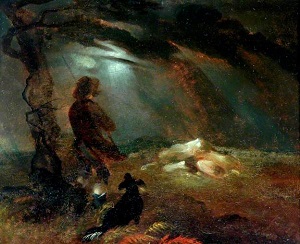
The Lonely Shepherd door Branwell Brontë, 1838-1839


Zie voor nog meer schrijvers van de 26e juni ook mijn blog van 26 juni 2011 deel 1 en eveneens deel 2.
Geschreven door Romenu om 18:20 Reageer op dit bericht

Rob van Essen, Yann Martel, Michel Tremblay, Nicholas Mosley, Ingeborg Bachmann, Arseny Tarkovsky, George Orwell, Claude Seignolle

De Nederlandse schrijver en vertaler Rob van Essen werd op 25 juni 1963 geboren in Amstelveen. Zie ook alle tags voor Rob van Essen op dit blog.

Uit: Hier wonen ook mensen

“Walter had deze mensen zelf bij elkaar gezocht. Soms vroeg hij zich af waar ze over spraken tijdens de lange rit, of ze elkaar in de loop der tijd beter hadden leren kennen, of ze informeerden naar elkaars gezondheid, of ze bij elkaar over de vloer kwamen. Wanneer ze aan het werk waren, sprak hij nauwelijks met hen. Meestal stond hij uren voor het raam en keek toe hoe de monnik het grind harkte. Elk jaar kocht hij een nieuw busje voor ze.
Ze spraken ook nauwelijks met hem. Blijkbaar wisten ze wel wie hij was, want de Mexicaanse vrouw had ooit een poster van de Frutzles voor hem uitgerold en gevraagd of hij die wilde signeren. Hij deed dat, achteloos, alsof hij het elke dag deed. Hij vroeg zich af of ze de volgende keer met ander materiaal (bekers, t-shirts, schoolspullen) zou komen, maar ze hield het bij die poster, die blijkbaar voor gebruik in eigen kring was. In ieder geval dook er op internet nergens een aanbieding op van een door de maker zelf gesigneerde Frutzlesposter.
Veel andere mensen kwamen niet langs. Walter haalde zelf zijn post op in de dichtstbijzijnde nederzetting. Verzoeken voor interviews wimpelde hij af. De enige andere vaste gast was de Finse architect die dit huis had ontworpen en bedongen had dat hij één keer per jaar met een groepje studenten mocht langskomen. De studenten luisterden bedachtzaam knikkend naar de uitleg van de architect, namen zo nu en dan een foto en glimlachten bescheiden wanneer ze Walters blik vingen. De architect was telkens weer een jaar ouder, maar de studenten zagen er ongeacht hun herkomst elk jaar hetzelfde uit en goten hun bewondering voor het huis in exact dezelfde termen als hun voorgangers.”


 1782345-6b0755346b95bf3337cb86e074472aab.jpg
Rob van Essen (Amstelveen, 25 juni 1963)


De Canadese schrijver Yann Martel werd op 25 juni 1963 geboren in Salamanca. Zie ook alle tags voor Yann Martel op dit blog.

Uit: Life of Pi

“The doctors and nurses at the hospital in Mexico were incredibly kind to me. And the patients, too. Victims of cancer or car accidents, once they heard my story, they hobbled and wheeled over to see me, they and their families, though none of them spoke English and I spoke no Spanish. They smiled at me, shook my hand, patted me on the head, left gifts of food and clothing on my bed. They moved me to uncontrollable fits of laughing and crying.”


 1782345-d9283d9bfd8fb88e5f966776ae7ec33d.jpg
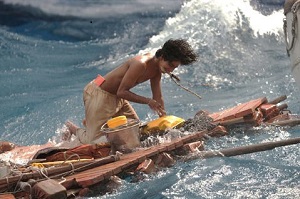
Scene uit de film “Life of Pi” uit 2012


Within a couple of days I could stand, even make two, three steps, despite nausea, dizziness and general weakness. Blood tests revealed that I was anemic, and that my level of sodium was very high and my potassium low. My body retained fluids and my legs swelled up tremendously. I looked as if I had been grafted with a pair of elephant legs. My urine was a deep, dark yellow going on to brown. After a week or so, I could walk just about normally and I could wear shoes if I didn't lace them up. My skin healed, though I still have scars on my shoulders and back.
The first time I turned a tap on, its noisy, wasteful, superabundant gush was such a shock that I became incoherent and my legs collapsed beneath me and I fainted in the arms of a nurse.”


 1782345-bfe2cbd1b77b30511583b7d01b72fe6f.jpg
Yann Martel (Salamanca, 25 juni 1963)


De Canadese schrijver Michel Tremblay werd geboren in Quebec op 25 juni 1942. Zie ook alle tags voor Michel Tremblay op dit blog.

Uit: Crossing the Continent (Vertaald door Sheila Fischman)

“Before she gave in to her sorrow, but she couldn’t help it, she didn’t want to go away, to cross Canada or visit her two aunts and her second cousin, then lose her way in the big city, Montreal, with the mother she had stopped loving so long ago. She wanted to stop everything — the train that was picking up speed, the course of her life that was branching off in a direction she hadn’t chosen, the nightmare that was starting here, this morning, that perhaps would never end. She thought about jumping off the train, at the risk of breaking her neck, or pulling the alarm bell to stop it. Or throwing herself at the tall, moustached man, who was looking at her wide-eyed, to punch him and beg him to give her back her family. She thought about dying or, rather, that’s what death was: a definitive departure for an unknown destination. Alone. In a moving prison. With no hope of a change.
This time it’s the entire village of Maria that seems to be swalllowed up by the fields of wheat. And rye. And oats. And corn. The steeple of the church of Sainte- Maria-de-Saskatchewan floats for a moment above a square that’s greener than the rest, of wheat that’s not yet fully mature though it will soon be haying time, then it, too, will drown in the waves of grain and disappear for good. Never again will she see that either. She will talk about it all her life, she will describe the colours, the smells, the horror of bushhfires like the one last summer, the beauty of summer sunsets and the northern lights in winter over the vast plains, the tears that will come to her eyes whenever she imagines her grandmother bending over her wood stove where a pot of beef and vegetables is simmering, or her grandfather rocking on his veranda and smoking his smelly pipe, or Devil chewing diligently on a juicy red apple.”


 1782345-13ea5899a423199529c5a577c308905e.jpg
Michel Tremblay (Quebec, 25 juni 1942)


De Engelse schrijver Nicholas Mosley werd geboren op 25 juni 1923 geboren in Londen. Zie ook alle tags voor Nicholas Mosley op dit blog.

Uit:Hopeful Monsters

“My mother had gone to argue with Magda in the kitchen. Helga was banging plates down on the sideboard in the dining-room. My father had said to the girl, who was quite pretty, ‘What is your subject?’ The girl had said ‘Physics.’ My father had said ‘Then we will have a lot to talk about!’ And I wondered why my father was not talking more to me.
My father said to the young man ‘What do you do?’
The young man said ‘My subject is philosophy but at the moment I am occupied in politics.’
My father said, as he so often said ‘Ah.’
During supper my father sat at the head of the table: I sat on one side of him and the young man on the other: the girl sat next to the young man. I remember the atmosphere, the style, of this supper quite well – perhaps because it was almost the first time I had been allowed up so late; out of deference, I suppose, to the tensions of the evening. Whoever remembers the exact words of conversations? but I imagine I can recreate the style, the attitudes of my father.
He said to the girl ‘What do you know of the theories of Professor Einstein?’
The girl, who had a scraping voice that did not go with her soft squashed face, said ‘I understand they have not been verified.’
My father said ‘What do you think might count as verification?’
The girl said ‘I understand verification is unlikely.’
My father turned to the young man who had small steel pince-nez from which a black ribbon hung down. My father said ‘And what is the opinion of a philosopher or a politician on these matters?’
The young man said ‘I think these are matters for scientists and mathematicians.’


1782345-aa7b597ca2991f3ab1e4099294b3a5d4.jpg
Nicholas Mosley (Londen, 25 juni 1923)


De Oostenrijkse dichteres Ingeborg Bachmann werd geboren op 25 juni 1926 in Klagenfurt. Zie ook mijn blog van 25 juni 2010 en eveneens alle tags voor Ingeborg Bachmann op dit blog.


Die Häfen waren geöffnet

Die Häfen waren geöffnet. Wir schifften uns ein,
die Segel voraus, den Traum über Bord,
Stahl an den Knien und Lachen um unsere Haare,
denn unsere Ruder trafen ins Meer, schneller als Gott.

Unsere Ruder schlugen die Schaufeln Gottes und teilten die Flut;
vorne war Tag, und hinten blieben die Nächte,
oben war unser Stern, und unten versanken die andern,
draußen verstummte der Sturm, und drinnen wuchs unsre Faust.

Erst als ein Regen entbrannte, lauschten wir wieder;
Speere stürzten herab und Engel traten hervor,
hefteten schwärzere Augen in unsere schwarzen.
Vernichtet standen wir da. Unser Wappen flog auf:

Ein Kreuz im Blut und ein größeres Schiff überm Herzen.


De havens waren geopend

De havens waren geopend. We scheepten ons in,
de zeilen voor de wind, de droom overboord,
staal aan de knieën en lachen rond onze haren,
Want onze riemen kliefden de zee, sneller dan God.

Onze riemen versloegen de spanen van God en deelden de vloed;
vóór was het dag, en achter bleven de nachten,
boven was onze ster, en onder verzonken de anderen,
buiten verstomde de storm, en binnen groeide onze vuist.

Pas toen een regen ontbrandde, luisterden we weer;
speren vielen neer en engelen traden te voorschijn,
richtten zwartere ogen op ónze zwarte ogen.
Vernietigd stonden we daar. Ons blazoen vloog omhoog;

Een kruis in het bloed en een groter schip boven het hart.


Vertaald door Paul Beers & Isolde Quadflieg


Hôtel de la Paix

Die Rosenlast stürzt lautlos von den Wänden,
und durch den Teppich scheinen Grund und Boden.
Das Lichtherz bricht der Lampe.
Dunkel. Schritte.
Der Riegel hat sich vor den Tod geschoben.


 1782345-80488f5f8c677aae8ca26feb5f8348be.jpg
Ingeborg Bachmann (25 juni 1926 – 17 oktober 1973)


De Russische dichter en vertaler Arseny Alexandrovich Tarkovsky werd geboren op 25 juni 1907 in Elisavetgrad. Zie ook alle tags voor Arseny Tarkovsky op dit blog.


A blind man was riding an unheated train

A blind man was riding an unheated train,
From Bryansk he was traveling home with his fate.

Fate whispered to him so the whole car could hear:
And why should you care about blindness and war?

It’s good, she was saying, you’re sightless and poor.
If you were not blind, you’d never survive.

The Germans won’t kill you, you’re nothing to them.
Allow me to lift that bag on your shoulder—

The one with the holes, the empty torn one.
Let me just raise your eyelids wide open.

The blind man was traveling home with his fate,
Now thankful for blindness. Happy about it.


Vertaald door Philip Metres en Dimitri Psurtsev


 1782345-4e281cd524677bc0acd41a71ebf30163.jpg
Arseny Tarkovsky (25 juni 1907 – 27 mei 1989)


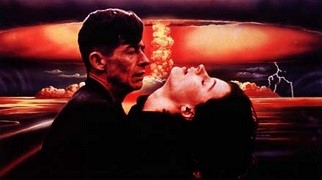
De Britse schrijver George Orwell (pseudoniem van Eric Arthur Blair) werd op 25 juni 1903 geboren in Motihari, India. Zie ook mijn blog van 25 juni 2010 en eveneens alle tags voor George Orwell op dit blog.

Uit: 1984

“And this hall, with its fifty workers or thereabouts, was only one sub-section, a single cell, as it were, in the huge complexity of the Records Department. Beyond, above, below, were other swarms of workers engaged in an unimaginable multitude of jobs. There were the huge printing-shops with their sub-editors, their typography experts, and their elaborately equipped studios for the faking of photographs. There was the tele-programmes section with its engineers, its producers, and its teams of actors specially chosen for their skill in imitating voices. There were the armies of reference clerks whose job was simply to draw up lists of books and periodicals which were due for recall. There were the vast repositories where the corrected documents were stored, and the hidden furnaces where the original copies were destroyed. And somewhere or other, quite anonymous, there were the directing brains who co-ordinated the whole effort and laid down the lines of policy which made it necessary that this fragment of the past should be preserved, that one falsified, and the other rubbed out of existence.”


 1782345-fb5155846b495d7c42483898c1d392b4.jpg
George Orwell (25 juni 1903 – 21 januari 1950)
Scene uit de film “1984” uit 1984


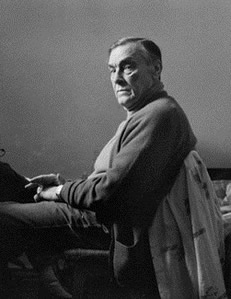
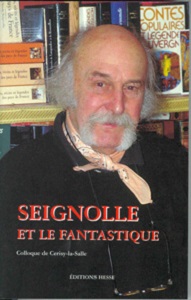
De Franse schrijver Claude Seignolle werd geboren op 25 juni 1917 in Périgueux. Zie ook alle tags voor Claude Seignrolle op dit blog.

Uit: Le meneur de loups

« La locature des Bâtards ne vit, dans son aspect extérieur, que par la fumée de son tas de fumier recroquevillé contre la porcherie. Une neige brillante uniformise la cour et les toits. En étanchant sa soif, le froid a changé la mare vaseuse en un bloc de glace sombre. Pris au piège, un vieux seau dort paisiblement, l'anse repliée sur ses flancs fatigués. Un long trait de glissades sur la glace apprend au passant que le fermier a des enfants jeunes et vigoureux. Face à la porcherie, faisant bande à part, sont les bâtiments plus nobles : la grange vaste et pleine d'herbe de vie, garde-manger aux effluves grisants : puis, tout contre, l'étable avec ses lents bruits de chaînes et ses meuglements sourds. Les bâtiments où logent Ribaud et sa famille dominent les dépendances et en sont séparés par une courette où la niche du chien voisine avec deux marmites ébréchées, remplies de ferrailles mariées entre elles par la rouille cupide.
Sans le souffle blanchâtre de la cheminée, l'haleine brumeuse du fumier et les geignements du bétail, on eût pu croire la ferme abandonnée."


 1782345-5ca0cbb23a2d03a2a410cf976439854c.jpeg
Claude Seignolle (Périgueux, 25 juni 1917)
Cover


Zie voor nog meer schrijvers van de 25e juni ook mijn blog van 25 juni 2012 deel 1 en eveneens deel 2 en ook ook mijn blog van 25 juni 2011 deel 2 en eveneens deel 3.

Geschreven door Romenu om 18:41 Reageer op dit bericht

Meer van Romenu

↑ Terug naar de berichten