Naar de inhoud

Romenu

Over literatuur, gedichten, kunst en cultuur
akke.beakke.be

Berichten van 8 augustus 2015 tot 9 augustus 2015

Luuk Gruwez, Philip Larkin, Gerrit Kouwenaar, Henk Romijn Meijer, Linn Ullmann

De Vlaamse dichter, prozaïst en essayist Luuk Gruwez werd geboren op 9 augustus 1953 te Kortrijk. Zie ook alle tags voor Luuk Gruwez op dit blog.


De feestelijke verliezer

Ik had het fijnste gaas van het verlangen lief
zoals een zachte bries het lichaam van de baadster
en waar ik mij begaf, omgaf er mij een waas
van angstaanjagend aangenaam verwelken.
En een seizoen lang werd het avond.

En toen - het hart hoog op de wind -
verlangen zich bezeerde aan begeerte,
hoe lief had ik dan niet dat feestelijk verlies,
alsof een hartstocht mij verloren blies,
al werd ternauwernood gezoend

de monstrans van één enkele mond.
En elke avond werd het herfst.

En telkens als de sierlijkste der herfsten
mij in de wind een onderkomen bood,
vond ik in ruisen en in beven
een huis om dakloos in te zijn.


Oma's memo

zij ruimt de rommel op die niet meer dient:
een fotolijst, een hoornen bril,
verlovingsjurk van anno dertig,
de prullenkraam van een bestaan
dat eens vol meesterwerken was.

haar mooiste meesterwerk ben ik,
haar mausoleum voor een dochter,
de hare, die mij baarde en toch stierf,
de missing link die ons verbindt,
gemis dat vlees werd, stof en as.

uit alles blijkt dat zij zich traint in blijven,
in voortbestaan, inpakken van wat was.
en met een stem vol moederschap
laat zij een opdracht aan de planten na:
wees daar, eis water, als ik niet meer ben.

alles wat weerloos is en eindigt
verdient een voortbestaan. geen ding.
zo eindigt ook haar kunstgebit
met gouden stift, dat nu nog elke avond
in een glaasje gaat, straks in een kist.


Kanker I

God, herstel deze vrouw. zij is nog niet
voltooid. zij moet mij nog ten grave dragen.
o, leg haar straks, al stijf van ouderdom,
met beide borsten in een kist.

ik weet dat u soms voorkomt in het wild
naast aasgier, lynx en tijgerkat:
fouileer haar niet tot op het bot
of daar nog ergens kanker zat.

ook ik lijd honger aan haar lijf.
wees niet bekommerd om uw maal:
ik wil een ander kwijt in ruil voor haar.
ik wil een ander kwijt, of minstens mij.


 1799978-ce27606908acb8db74e9ddd22ed28c3f.jpg
Luuk Gruwez (Kortrijk, 9 augustus 1953)


De Engelse dichter Philip Larkin werd op 9 augustus 1922 geboren in Coventry. Zie ook mijn blog van 9 augustus 2010 en eveneens alle tags voor Philip Larkin op dit blog


Mr. Bleaney

This was Mr Bleaney's room. He stayed
The whole time he was at the Bodies, till
They moved him.‘ Flowered curtains, thin and frayed,
Fall to within five inches of the sill,

Whose window shows a strip of building land,
Tussocky, littered. 'Mr Bleaney took
My bit of garden properly in hand.‘
Bed, upright chair, sixty-watt bulb, no hook

Behind the door, no room for books or bags
l'll take it.‘ So it happens that I lie
Where Mr Bleaney lay, and stub my fags
On the same saucer-souvenir, and try

Stuffing my ears with cotton-wool, to drown
The jabbering set he egged her on to buy.
I know his habits - what time he came down,
His preference for sauce to gravy, why

He kept on plugging at the four aways
Likewise their yearly frame: the Frinton folk
Who put him up for summer holidays,
And Christmas at his sisters house in Stoke.

But if he stood and watched the frigid wind
Tousling the clouds, lay on the fusty bed
Telling himself that this was home, and grinned,
And shivered, without shaking off the dread

That how we live measures our own nature,
And at his age having no more to show
Than one hired box should make him pretty sure
He warranted no better, I don't know.


 1799978-4dd91fb6cde09f58ab1b3bb64da18517.jpg
Philip Larkin (9 augustus 1922 – 2 december 1985)


De Nederlandse dichter Gerrit Kouwenaar werd op 9 augustus 1923 in Amsterdam geboren. Hij is vandaag dus 85 jaar geworden. Zie ook mijn blog van 9 augustus 2010 en eveneens alle tags voor Gerrit Kouwenaar op dit blog.


De taal

De taal behoort aan de vogels
ik ben te mens om te vliegen
ik sta als een huis op de wereld
gebouwd en dik uit aarde

ik ben ongeveer degene
die schuilgaat binnen de muren
en uitvloeit achter de ramen
van de blauwe achterkamer

het geurt er naar mest en naar liefde
er staat een plant in een kooi
de taal behoort aan de vogels
de mens schuilt weg in het woord -


A happy childhood

Vergeet je wel eens je vaders klok op te winden?
Ja, ik vergeet wel eens mijn vaders tijd te vergeten

draag je wel eens een strohoed een ooglap een vadermoorder?
nee, ik draag een gedicht op, een zomer van bladgoud

schrijf je wel eens de laatste lippen om te verwoorden?
ja, ik ontcijfer een kus van bemodderde rozen

loop je wel eens door gras dat nodig gemaaid moet?
nee, ik sta stil in gras dat niemand gezaaid heeft –


Een Herfst

Men is vandaag ontzettend onsterfelijk
het is eindelijk de echte heldere herfst
die er haast nog niet is

de bladeren vergelen, nog betrekkelijk groen
de wind is nog blauw, wijst geen enkele richting
de grond ligt nog onder het gras

men rookt de zwarte sigaar van de dokter
men raakt bezweet door het werpen met darts
men drinkt zijn zevende glas

in een ligstoel later men stippelt
onder het genot van dit tijdstip
een reis uit

de reis voor de komende heldere winter
en men vindt met de pink weer die heldere weg
naar dat denkbeeldige eindpunt -


 1799978-3147f3e3656a9708318f566aad96618e.jpg
Gerrit Kouwenaar (9 augustus 1923 - 4 september 2014)


De Nederlandse schrijver en taalkundige Henk Romijn Meijer werd geboren in Zwolle op 9 augustus 1929. Zie ook alle tags voor Henk Romijn Meijer op dit blog.

Uit: Toen Reve nog Van het Reve was

“Er zijn waarschijnlijk weinig schrijvers die in hun werk zo gul omspringen met ontboezemingen over hun persoonlijke situatie als Gerard Reve. Zijn ‘geliefd publiek’ komt niet alleen aan de weet hoe hij denkt over religie, erotiek, politiek en veel wat daarmee verband houdt, maar ook met wie hij zijn leven deelt, hoe hij zijn dagen doorbrengt, welke mensen hij ontmoet en wat hij van hen vindt, welk voedsel zijn voorkeur heeft en door welke herinneringen hij wordt bezocht (in beide betekenissen van het woord). Wie daar nog niet genoeg aan heeft, kan terecht bij de ontelbare interviews waaraan hij zich met verbazingwekkende bereidwilligheid blijft onderwerpen. Op grond daarvan zou men zich kunnen afvragen of het zin heeft dat een ander het allemaal nog eens dunnetjes komt overdoen. Eerlijk gezegd denk ik om allerlei redenen van wel.
Ten eerste hoeft de voorstelling die iemand van zichzelf heeft of aan de buitenwereld toont, lang niet altijd samen te vallen met de indruk die hij op anderen maakt. Dat geldt eens te meer voor een schrijver als Reve die er, aangespoord door een barokke fantasie en een niet minder barok gevoel voor humor, een bijna satanisch behagen in schept, mensen op een dwaalspoor te brengen door zich te omspinnen met een web waarin feiten en verzinsels kunstig zijn verweven tot een moeilijk te ontraadselen geheel.
Ten tweede betreft het in dit geval geen willekeurige babbelkous die zich interessant probeert te maken op rekening van andermans roem, maar een schrijver van naam met een solide literaire reputatie.
Daaruit vloeit onmiddellijk de derde reden voort: de lezers worden niet onthaald op een ratjetoe van leutige voorvallen en dubieuze achterklap noch op de aan blinde bewondering ontlokte lofzangen die even welgemeend als dodelijk vervelend zijn. Ze maken daarentegen kennis met een heldere en in veel opzichten verhelderende visie op Reve als mens en schrijver.”


 1799978-83e57c4352815c1ccc3f45690a9ad137.jpg
Henk Romijn Meijer (9 augustus 1929 – 23 februari 2008)
Cover


De Noorse schrijfster Linn Karin Beate Ullmann werd geboren op 9 augustus 1966 in Oslo. Zie ook alle tags voor Linn Ullmann op dit blog.

Uit: A Blessed Child

“He wanted to leave it to grow. There was no one to cut it for, he said, but in order to restore the mutually preferred silence between them, they reached a compromise. In summer, the crown of Isak's head was blank and glossy and as blue as the globes he had presented to each of his three daughters, Erika, Laura, and Molly, on her fifth birthday; in the winter, he let his hair grow free, giving him an aspect of towering grayish white, which in combination with his handsomely lined, aging face suggested the beginnings of a rauk, one of those four-hundred-million-year-old island outcrops in the sea, so characteristic of Hammarsö.
Erika seldom saw her father after he had moved to the island, but Simona had sent her two photographs. One of a long-haired Isak and one of the almost bald Isak. Erika liked the long-haired one better. She ran her finger over the picture and kissed it. She imagined him on the stony beach on Hammarsö with arms stretched aloft, hair streaming out, and that long, fake beard he would wear when rehearsing his lines as Wise Old Man for the 1979 Hammarsö Pageant.
Rosa — Isak's second wife and Laura's mother — died of a degenerative muscle-wasting disease in the early 1990s. It was Rosa's death that prompted Isak's return to Hammarsö. In the twelve years the house had stood empty, there had been only occasional visits from Simona. She had swept up the insect life that forced its way in every summer and lay dead on the windowsills all winter; she had the locks changed after a minor break-in and mopped up when the pipes burst and water leaked all over the floor. But she could do nothing about the water damage and rot if Isak was not prepared to pay for workmen to come in and fix them.
"It's going to get run-down whatever I do," she said in one of their brief telephone conversations. "You'll either have to sell it, do it up, or start living in it again."
"Not yet. I'm not making any decisions yet," Isak said.
But then Rosa's body let her down, and though her heart was strong and wouldn't stop beating, Isak and a colleague agreed in the end that Rosa should be spared. After the funeral, Isak made it plain to Erika, Laura, and Molly that he intended to kill himself. The pills had been procured, the deed carefully planned. And yet, he moved back to the house.”


 1799978-02ddd4b9ef83dbd2bd324c08dcadb99a.jpg
Linn Ullmann (Oslo, 9 augustus 1966)


Zie voor nog meer schrijvers van de 9e augustus ook mijn vorige blog van vandaag.
Geschreven door Romenu om 11:44 Reageer op dit bericht

P. L. Travers, Pierre Klossowski, Daniel Keyes, Leonid Andreyev, John Oldham, Izaak Walton

De Australische schrijfster Pamela Lyndon Travers werd als Helen Lyndon Goff op 9 augustus 1899 geboren in Maryborough in Australië. Zie ook alle tags voor P. L. Travers op dit blog en eveneens mijn blog van 9 augustus 2009 en ook mijn blog van 9 augustus 2010

Uit: Mary Poppins

“And she led the way towards the staircase, talking all the time, without stopping once. And because she was doing that Mrs Banks did not notice what was happening behind her, but Jane and Michael, watching from the top landing, had an excellent view of the extraordinary thing the visitor now did.
Certainly she followed Mrs Banks upstairs, but not in the usual way. With her large bag in her hands she slid gracefully up the banisters, and arrived at the landing at the same time as Mrs Banks. Such a thing, Jane and Michael knew, had never been done before. Down, of course, for they had often done it themselves. But up — never! They gazed curiously at the strange new visitor.
“Well, that’s all settled, then.” A sigh of relief came from the children’s Mother.
“Quite. As long as I’m satisfied,” said the other, wiping her nose with a large red and white bandanna handkerchief.
“Why, children,” said Mrs Banks, noticing them suddenly, “what are you doing there? This is your new nurse, Mary Poppins. Jane, Michael, say how do you do! And these”—she waved her hand at the babies in their cots—“are the Twins.”
Mary Poppins regarded them steadily, looking from one to the other as though she were making up her mind whether she liked them or not."


 1799975-ecc56ef89b813c1f8d71b6986357f2a6.jpg
P. L. Travers (9 augustus 1899 – 23 april 1996)
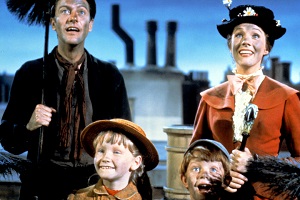
Scene uit de film uit 1964 met o.a. Dick Van Dyke en Julie Andrews


De Franse schrijver, vertaler en schilder Pierre Klossowski werd geboren op 9 augustus 1905 in Parijs. Zie ook alle tags voor Pierre Klossowski op dit blog en eveneens mijn blog van 9 augustus 2009 en ook mijn blog van 9 augustus 2010

Uit: La Monnaie vivante

« Depuis le milieu du siècle dernier, les anathèmes ont été lancés au nom de la vie affective contre les ravages de la civilisation industrielle.
Imputer aux moyens de production de l'industrie une action pernicieuse sur les affects, c'est, sous prétexte de dénoncer son emprise démoralisante, lui reconnaître une puissance morale considérable. D'où lui vient cette puissance ?
Du seul fait que l'acte même de fabriquer des objets remet en question sa finalité propre : en quoi donc l'usage des objets ustensilaires diffère-t-il de l'usage de ceux que produit l'art, «inutiles» à la subsistance ?
Nul ne songerait à confondre un ustensile avec un simulacre. A moins que ce ne soit qu'en tant que simulacre qu'un objet en est un d'usage nécessaire. »
(…)

Que l'on imagine une régression apparemment impossible : soit une phase industrielle où les producteurs ont le moyen d'exiger, à titre de paiement, des objets de sensation de la part des consommateurs. Ces objets sont des êtres vivants.”


 1799975-2e6a3686e7cd304c13f8c08ffbd675b9.jpg
Pierre Klossowski (9 augustus 1905 – 12 augustus 2001)


De Amerikaanse schrijver Daniel Keyes werd geboren in Brooklyn, New York op 9 augustus 1927. Zie ook alle tasgs voor Daniel Keyes op dit blog en ook mijn blog van 9 augustus 2009 en ook mijn blog van 9 augustus 2010.

Uit: Flowers for Algernon

“April 6—Today, I learned, the comma, this is, a, comma (,) a period, with, a tail, Miss Kinnian, says its, importent, because, it makes writing, better, she said, somebody, could lose, a lot, of money, if a comma, isnt in, the right, place, I got, some money, that I, saved from, my job, and what, the foundation, pays me, but not, much and, I dont see how, a comma, keeps, you from, losing it,
But, she says, everybody, uses commas, so Ill, use them, too,,,,

April 7—I used the comma wrong. Its punctuation…Miss Kinnian says a period is punctuation too, and there are lots of other marks to learn.
She said; You, got. to-mix?them!up: She showd? me” how, to mix! them; up, and now! I can. mix (up all? kinds of punctuation— in, my. writing! There” are lots, of rules; to learn? but. Im’ get’ting them in my head:
One thing? I, like: about, Dear Miss Kinnian: (thats, the way? it goes; in a business letter (if I ever go! into business?) is that, she: always; gives me’ a reason” when—I ask. She”s a gen’ius! I wish? I could be smart-like-her;
Punctuation, is? fun!”


 1799975-612b232035679aa255e153e215c3039b.jpg
Daniel Keyes (New York, 9 augustus 1927)
Scene uit een toneelopvoering in Sherman Oaks.2010


De Russische schrijver Leonid Andreyev werd geboren op 9 augustus 1871 in Orjol. Zie ook alle tags voor Leonid Andreyev op dit blog en eveneens mijn blog van 9 augustus 2010 en eveneens mijn blog van 9 augustus 2009.

Uit: Lazarus (Vertaald door Abraham Yarmolinsky)

“Not merely Lazarus' face, but his very character, it seemed, had changed; though it astonished no one and did not attract the attention it deserved. Before his death Lazarus had been cheerful and careless, a lover of laughter and harmless jest. It was because of his good humour, pleasant and equable, his freedom from meanness and gloom, that he had been so beloved by the Master. Now he was grave and silent; neither he himself jested nor did he laugh at the jests of others; and the words he spoke occasionally were simple, ordinary and necessary words--words as much devoid of sense and depth as are the sounds with which an animal expresses pain and pleasure, thirst and hunger. Such words a man may speak all his life and no one would ever know the sorrows and joys that dwelt within him.
Thus it was that Lazarus sat at the festive table among his friends and relatives--his face the face of a corpse over which, for three days, death had reigned in darkness, his garments gorgeous and festive, glittering with gold, bloody-red and purple; his mien heavy and silent. He was horribly changed and strange, but as yet undiscovered. In high waves, now mild, now stormy, the festivities went on around him. Warm glances of love caressed his face, still cold with the touch of the grave; and a friend's warm hand patted his bluish, heavy hand. And the music played joyous tunes mingled of the sounds of the tympanum, the pipe, the zither and the dulcimer. It was as if bees were humming, locusts buzzing and birds singing over the happy home of Mary and Martha.”


 1799975-5db5208bb0acf69318e1834065430cc6.jpg
Leonid Andreyev (9 augustus 1871 – 12 september 1919)
Zelfportret 


De Engelse dichter en vertaler John Oldham werd geboren in Shipton Moyne (Gloucestershire) op 9 augustus 1653. Zie ook alle tags voor John Oldham op dit blog en eveneens mijn blog van 9 augustus 2010 en eveneens mijn blog van 9 augustus 2009.


A Satire, In Imitation Of The Third Of Juvenal (Fragment)

Though much concern'd to leave my dear old friend,
I must however his design commend
Of fixing in the country: for were I
As free to choose my residence, as he;
The Peak, the Fens, the Hundreds, or Land's End,
I would prefer to Fleet Street, or the Strand.
What place so desert, and so wild is there
Whose inconveniences one would not bear,
Rather than the alarms of midnight fire,
The falls of houses, knavery of cits,
The plots of factions, and the noise of wits,
And thousand other plagues, which up and down
Each day and hour infest the cursed town?
As fate would hav't, on the appointed day
Of parting hence, I met him on the way,
Hard by Mile End, the place so fam'd of late,
In prose, and verse for the great faction's treat;
Here we stood still, and after compliments
Of course, and wishing his good journey hence
I ask'd what sudden causes made him fly
The once lov'd town, and his dear company:
When, on the hated prospect looking back,
Thus with just rage the good old Timon spake.


 1799975-f99e8e180b46ebe18832410157f8bbe3.jpg
John Oldham (9 augustus 1653 - 9 december 1683)
St. John the Baptist's Church, Shipton Moyne


De Engelse schrijver Izaak Walton werd geboren in Stafford op 9 augustus 1593. Zie ook alle tags voor Izaak Walton op dit blog en eveneens mijn blog van 9 augustus 2010 en eveneens mijn blog van 9 augustus 2009.


An Elegie upon Dr. Donne (Fragment)

Did his youth scatter _Poetry, wherein
Was all Philosophy? was every sinne,
Character'd in his _Satyrs? Made so foule
That some have fear'd their shapes, and kept their soule
Safer by reading verse? Did he give dayes_
Past marble monuments, to those, whose praise
He would perpetuate? Did he (I feare
The dull will doubt these at his twentieth year?
But, more matur'd; Did his full soule conceive,
And in harmonious-holy-numbers weave
A Crown of sacred sonnets, fit to adorne
A dying Martyrs brow: or, to be worne
On that blest head of Mary Magdalen,
After she wip'd Christs feet, but not till then?
Did hee (fit for such penitents as shee
And he to use) leave us a Litany,
Which all devout men love, and sure, it shall,
As times grow better, grow more classicall?
Did he write Hymnes, for piety, for wit,
Equall to those, great grave Prudentius writ?
Spake he all Languages? knew he all Lawes?
The grounds and use of _Physick; but because
'Twas mercenary, wav'd it? Went to see
That blessed place of Christs nativity?
Did he returne and preach him? preach him so
As since S. Paul none did, none could? Those know,
(Such as were blest to heare him) this is truth.
Did he confirm thy aged? convert thy youth?


 1799975-2ed7deabb3df68a3488b4f7dec2a7ff9.jpg
Izaak Walton (9 augustus 1593 - 15 december 1683)
Portret door George Perfect Harding, ca. 1800 

Geschreven door Romenu om 11:42 Reageer op dit bericht

Nina Berberova, Marjorie Kinnan Rawlings, Zofia Kossak-Szczucka, Hitomi Kanehara, Flavia Bujor, Franco Biondi, Reinhold Hauschka

De Russische schrijfster Nina Nikolaevna Berberova werd geboren op 8 augustus 1901 in Sint Petersburg. Zie ook alle tags voor Nina Berberova op dit blog en ook mijn blog van 8 augustus 2010

Uit: The Resurrection of Mozart (Vertaald door Marian Schwarz)

“Yes, it was exactly a year ago today that Nevelsky dies. He knew a lot of this was coming. He predicted so much of it.”
“Well, he couldn’t have picked a better time to die. At least he doesn’t have to see what we see. If he were resurrected he’d either spit in disgust or break down and cry.”
Facing the hostess, at the opposite end of the table, sat a Frenchman brought along by Chabarov but whom no one else really knew. Simply, and without any fussy apology, he asked them to translate what they were all saying.
“Monsieur Daunou, we were talking about the dead, and what they would say if they were resurrected and saw what’s going on now,” replied Maria Leonidovna Sushkova.
Daunou took his black pipe out of his mouth, furrowed his brow, and smiled.
“Is it worth waking the dead?” he said, looking his hostess straight in the eye. “I suppose I might well invite Napoleon to come and have a look at our times, but I’d certainly spare my parents the pleasure.”


 1799678-aef16fcb33e23738aadfdf9ea9e1ae47.JPG
Nina Berberova (8 augustus 1901 – 26 september 1993)


De Amerikaanse schrijfster Marjorie Kinnan Rawlings werd geboren op 8 augustus 1896 in Washington. Zie ook alle tags voor Marjorie Kinnan Rawlings op dit blog en ook mijn blog van 8 augustus 2010

Uit: The Yearling

"There'll come a little old drizzly rain before night-fall," he thought.
The down grade tempted him to a lope. He reached the thick-bedded sand of the Silver Glen road. The tar-flower was in bloom, and fetter-bush and sparkleberry. He slowed to a walk, so that he might pass the changing vegetation tree by tree, bush by bush, each one unique and familiar. He reached the magnolia tree where he had carved the wildcat's face. The growth was a sign that there was water nearby. It seemed a strange thing to him, when earth was earth and rain was rain, that scrawny pines should grow in the scrub, while by every branch and lake and river there grew magnolias. Dogs were the same everywhere, and oxen and mules and horses. But trees were different in different places.
"Reckon it's because they can't move none," he decided. They took what food was in the soil under them.
The east bank of the road shelved suddenly. It dropped below him twenty feet to a spring. The bank was dense with magnolia and loblolly bay, sweet gum and gray-barked ash. He went down to the spring in the cool darkness of their shadows. A sharp pleasure came over him. This was a secret and a lovely place.
A spring as clear as well water bubbled up from nowhere in the sand. It was as though the banks cupped green leafy hands to hold it. There was a whirlpool where the water rose from the earth. Grains of sand boiled in it. Beyond the bank, the parent spring bubbled up at a higher level, cut itself a channel through white limestone and began to run rapidly down-hill to make a creek. The creek joined Lake George, Lake George was a part of the St. John's River, the great river flowed northward and into the sea. It excited Jody to watch the beginning of the ocean. There were other beginnings, true, but this one was his own. He liked to think that no one came here but himself and the wild animals and the thirsty birds.”


 1799678-0122b53c1c5f4ca2b8a8ae36b9e6a484.jpg
Marjorie Kinnan Rawlings (8 augustus 1896 – 14 december 1953)
Cover 


De Poolse schrijfster Zofia Kossak-Szczucka werd geboren op 8 augustus 1890 in Kośmin.  Zie ook alle tags voor Zofia Kossak-Szczucka op dit blog en ook mijn blog van 8 augustus 2010

Uit: Protest

„Confronted with such suffering, quick death seems to be an answer. The executioners have foreseen it. All the drugstores in the ghetto have been closed, to avoid supplying with a poison. There are no guns. The only solution is to jump down out of the window to the street. Therefore a lot of convicts choose to "escape" their executioners in this way.
The same that is happening in the Warsaw Ghetto, has been happening for half a year in hundreds of smaller or larger Polish towns and cities. The total number of murdered has already exceeded one million and the number grows each day. All perish. Poor and rich, old, women, men, youngsters, infants, Catholics dying with the name of Jesus and Mary together with Jews. Their only guilt is that they were born to the Jewish nation condemned to extermination by Hitler.
The world is looking at these atrocities, the most horrible throughout the whole history of mankind, and is silent. Slaughter of the millions of people is happening in ominous silence.”


 1799678-526d85a1696dbd12943d48968bfffad1.jpg
Zofia Kossak-Szczucka (8 augustus 1890 – 9 april 1968)


De Japanse schrijfster Hitomi Kanehara werd geboren op 8 augustus 1983 in Tokyo. Zie ook alle tags voor Hitomi Kamehara op dit blog en ook mijn blog van 8 augustus 2010

Uit: Snakes and Earrings

“My thing until now has been earrings. And to describe my earrings, I guess I should begin by telling you how they're measured. The thickness of body jewelry is generally measured in gauges; the lower the number, the larger the hole. Starter earrings are usually either 16g or 14g, which is about 1.5mm wide. After 0g comes 00g, which is about 9.5mm wide. Anything over a centimeter wide is measured in fractions of gauges. But to be honest, once you go over 00 you look like a member of some kind of tribe and it's no longer really a question of looking good or not. As for me, I have two 0g earrings in my right ear, and my left ear is lined with 0g, 2g, and 4g earrings from the bottom up. As you can imagine, it was painful enough stretching the holes in my ears; I couldn't begin to imagine how much it would hurt to do the same to my tongue.
I used to wear 16g earrings until I met a girl two years older than me named Eri at a club one night and I fell in love with her 00g earrings. When I told her how cool her earrings looked, she gave me dozens of her old ones, ranging from 12g to 0g, saying, 'Once you go this far, you can't wear smaller ones anymore.' Going from 16 to 6 was easy, but going from 4 to 2 and then 2 to 0 was a real stretch. Blood oozed from the hole and my earlobes became swollen and red. The constant, thumping pain lasted for two or three days. I also inherited Eri's philosophy of not using expanders, so it took me three months to get down to a 0g. I was just thinking of moving on to 00g the night I met the guy with the forked tongue. I was addicted to stretching, and I guess that fueled my interest in his talk of tongue splitting. I noticed that he seemed to be enjoying himself too.”


1799678-db356b91707d90b77b379f1c9003df60.jpg
Hitomi Kanehara (Tokyo, 8 augustus 1983)


De Franse schrijfster Flavia Bujor werd geboren op 8 augustus 1988 in Roemenië. Zie ook alle tags voor Flavia Bujor op dit blog.

Uit: The Prophecy of the Stones

"Fourteen years have passed much too quickly," murmured the duke in weary resignation. Then he left the room.
The old man stared at the flames blazing in the hearth. The Prophecy would he fulfilled. Now it was only a matter of days. He had waited for this moment, had longed for it impatiently. Soon all his questions would be answered. He shivered. It was foolish of him to have become attached to the child; he shouldn't have done that. The Prophecy had taken on another meaning: in those obscure pages where he had tried so hard to read the future and to understand the upheaval that was to come, he no longer saw anything except the fate of a girl named Jade.
That same girl was lying sprawled across her bed. She was feeling much too restless to read the book in her hands, and there was a faraway look in her eyes. Roused from her reverie by a sudden knock at the door, she leaped to her feet, calling, "Come in!"
A servant opened the door a crack, and said, "Your father wishes to speak to you. Will you receive him now?"
Surprised that her father was not busy at that hour, Jade gave her consent, and the servant retired.
Jade smoothed down her long black hair, then tossed it over her shoulders. She looked in the mirror and approved of what she saw. True, her smile revealed teeth with slight gaps between them; her eyelashes were perhaps a bit too thick; and she was constantly brushing back a few rebellious stray locks. Whenever she became irritated (which happened often), her cheeks grew red and she lost the self-conscious expression she usually wore. However, she knew she was tall, slender, and beautiful, and she always dressed with care. She was sure of herself. She knew that whatever she wanted, she could get.”


 1799678-04719d7edac17bc323443ee459e32654.jpeg
Flavia Bujor (Roemenië, 8 augustus 1988)


De Duitstalige schrijver Franco Biondi werd geboren op 8 augustus 1947 in Forli in Italië. Zie ook alle tags voor Franco Biondi op dit blog.

Uit: Karussellkinder

„Auf dem Weg zum Dodge beklagte Moro die Trockenheit seiner Kehle. Er schob das Zeug zum Dodgeeingang und sagte: Eigentlich müsste ich dich ins Bett verfrachten, aber ich muss meinen Schlund unbedingt anfeuchten, sonst wird mir die Nacht zur Hölle. Und wenn ich ehrlich bin, mag ich auch nicht alleine in der Osteria sitzen. Ja, Dario, ich vermisse meine Freunde. Schaffst du es noch, kurz mit mir in die Osteria zu gehen? Oder soll ich dich ins Bett begleiten und gehe alleine fort? Ich will mitgehen!
Ich sehe, du schaffst es nicht, aber doch, gehe mit! Es war ein erfolgreicher Abend, heute! Wir haben so viel einkassiert wie drei Tage Piantachiodi! Schade nur, dass der Platzverwalter einer Beschwerde nachgehen musste! Dario blickte Babbo verständnislos an. Babbo fuhr fort. Du weißt ja, wie das mit den Karten ist. Mit den Dreihütchen
ist es auch so. Hasardspiele sind nicht erlaubt, und das mit dem Würfelspiel ist ein Grenzfall, das geht nur mit Sondergenehmigung. Weißt du, wir haben Glück gehabt, jemand von den Carabinieri hat uns gesehen und ist zum Platzverwalter gerannt, der Carabinieri hat Mitleid mit dem Kind gehabt, das die Würfel so leidenschaftlich geschüttelt hat, und wollte die Sondergenehmigung sehen. Der Verwalter wusste von der Sondergenehmigung nichts, daraufhin hat der Carabiniere mit der Hand abgewinkt und ist gegangen.
Erzählend betraten Vater und Sohn die Osteria. Als der Mezzolitro für Moro und die Limonade für seinen Sohn an den Tisch gebracht wurden, schlief Dario längst, das Gesicht auf die Tischplatte gelegt.“


 1799678-1d25655297dae0c910fbae48b2772296.jpg
Franco Biondi (Forli, 8 augustus 1947)


De Duitse dichter en schrijver Reinhold Hauschka werd geboren op 8 augustus 1926 in Aussig in Bohemen. Zie ook alle tags voor Reinhold Hauschka op dit blog.

Uit: Aphorismen


„Wer im Geld schwimmt, hält einen Rettungsring für eine Zumutung.“


’’ Wir hoffen immer auf den nächsten Tag, wahrscheinlich erhofft sich der nächste Tag einiges von uns.“


„Die kalte Schnauze eines Hundes ist erfreulich warm gegen die Kaltschnäuzigkeit mancher Mitmenschen.“


 1799678-485852c413e815efb995f41ae3e7f8ef.jpg
Reinhold Hauschka (8 augustus 1926 – 29 mei 2012)

Geschreven door Romenu om 13:27 Reageer op dit bericht

Jostein Gaarder, Klaus Ebner, Birgit Vanderbeke, Gernot Wolfram, Sara Teasdale, Donald Davidson, Hieronymus van Alphen

De Noorse schrijver Jostein Gaarder werd geboren op 8 augustus 1952 in Oslo. Zie ook alle tags voor Jostein Gaarder op dit blog.

Uit: The Orange Girl (Vertaald door James Anderson)

“Imagine that you were on the threshold of this fairytale, sometime billions of years ago when everything was created. And you were able to choose whether you wanted to be born to a life on this planet at some point. You wouldn’t know when you were going to be born, nor how long you’d live for, but at any event it wouldn’t be more than a few years. All you’d know was that, if you chose to come into the world at some point, you’d also have to leave it again one day and go away from everything. This might cause you a good deal of grief, as lots of people think that life in the great fairytale is so wonderful that the mere thought of it ending can bring tears to their eyes. Things can be so nice here that it’s terribly painful to think that at some point the days will run out. What would you have chosen, if there had been some higher power that had gave you the choice? Perhaps we can imagine some sort of cosmic fairy in this great, strange fairytale. What you have chosen to live a life on earth at some point, whether short or long, in a hundred thousand or a hundred million years? Or would you have refused to join in the game because you didn’t like the rules? (...) I asked myself the same question maybe times during the past few weeks. Would I have elected to live a life on earth in the firm knowledge that I’d suddenly be torn away from it, and perhaps in the middle of intoxicating happiness? (...) Well, I wasn’t sure what I would have chosen. (...) If I’d chosen never to the foot inside the great fairytale, I’d never have known what I’ve lost. Do you see what I’m getting at? Sometimes it’s worse for us human beings to lose something dear to us than never to have had it at all.”


 1799687-324125d77fa657c896fa06a873ca32d1.jpg
Jostein Gaarder (Oslo, 8 augustus 1952)


De Oostenrijkse schrijver Klaus Ebner werd geboren op 8 augustus 1964 in Wenen. Zie ook alle tags voor Klaus Ebner op dit blog.

Uit: Der Trinker

„Mit den härteren Geschäften, wie er es nannte, hatte er begonnen, als ihm der Konsum dieser doch weichen und sehr saftreichen Lebensmittel allmählich billig erschien und eine Stillung seines immer unersättlicher fordernden Durstes nicht in Sicht war. Es ging das Gerücht, dass eine Buche, an deren Stamm er sich gelehnt hatte, um etwas auszuruhen, den Anfang machte. Eher spielerisch denn überzeugt hatte er den Halm an die Rinde gelegt und daran gezogen, weil ihm eben nichts Besseres in den Sinn kam. Etwas erstaunt über den unerwartet süßen Geschmack hatte er schließlich so lange daran gesaugt, bis von der Buche nichts mehr übrig war und er dem Besitzer jenes Fleckens zwei Tage später verlegen erklären musste, was aus seinem fünfzigjährigen Baum geworden war, der noch dazu, inzwischen in mehr als zwei Metern Höhe, ein Herzchen und die geritzten Namen des Besitzers selbst und dessen erster Liebe getragen hatte.
Danach entstanden jene Geschichten, die sich mit der Zeit zu den Mythen unseres Dorfes entwickelten. Laternen am Beginn der Dämmerung zu trinken zählte noch zu den einfachen Übungen, denn viel lieber machte er sich an den Dachziegeln der Häuser zu schaffen, schlürfte gerade so viel weg, dass er mit einem Auge in die Schlafzimmer lugen und das mitunter bunte Treiben darin beobachten konnte, so lange, bis die Hausbewohner ihm auf die Schliche kamen und ihn unter Androhung schwerer Prügel vertrieben und nur dann, wenn dies nicht gelang, einfach keinen Sex mehr miteinander hatten. Mit besonders dreistem Spaß trank er die Mützen und Hüte seiner Mitmenschen, wenn diese ihm Ärger bereitet hatten oder auch völlig überraschend seinen Weg kreuzten. Als von einem der Höfe nächtens ein Kettenhund verschwand, sprachen viele sich dafür aus, ihn für immer aus unserer Gegend zu vertreiben, doch soweit ich mich erinnere, konnte niemals bewiesen werden, dass tatsächlich der Trinker hinter dem Verschwinden des Tieres stand.
Während seiner allabendlichen Auftritte in der Weinstube gefiel es ihm, vom Genuss zahlreicher exotischer Getränke zu berichten, angefangen vom Rohrspatzenteich im benachbarten und längst leer stehenden Herrenschloss über elektrische Weidenbegrenzungsdrähte und modrige Bootskiele hin zur stolzen Lokomotive des Heimatmuseums, deren tiefatmiges Schnaufen den meisten der Bauern noch aus der Kindheit in guter Erinnerung war.“


 1799687-991374a169a6517ff5ad7c1e7a4d52c3.jpg
Klaus Ebner (Wenen, 8 augustus 1964)


De Duitse schrijfster Birgit Vanderbeke werd geboren op 8 augustus 1956 in Dahme. Zie ook alle tags voor Birgit Vanderbeke op dit blog.

Uit: Abgehägt

„Ich nahm das Buch über Ingrid Bergman und ging damit in die Küche, um es wegzuwerfen. Ich hatte wegen der Nazis noch nie ein Buch weggeworfen, obwohl ich schon manchmal Lust gehabt hatte, aber ich hatte es nie getan, nicht einmal die Unmengen Bücher, die mir Vira vor Jahren geschenkt hat, als sie beschlossen hatte, nicht mehr Christine zu heißen, sondern Vira, weil eine indische Göttin ihr im Traum erschienen war und ihr diesen neuen Namen gegeben hatte, und Vira gab mir anschließend alle Bücher, die sie auf Geheiß der indischen Göttin anschaffte und verbreitete und in denen stand, wie man an Körper und Seele ganzheitlich heilen und gesund werden kann, wenn man es macht, wie die Göttin es einem erklärt. Nicht einmal die hatte ich weggeworfen, obwohl es nichts gewesen wäre, was die Nazis verbrannt hätten, und jetzt finge ich damit an: Das Buch über Ingrid Bergman würde jetzt gleich in den Abfall wandern, und es wäre nicht das letzte, weil schließlich kein Mißverständnis und kein Irrtum und auch nicht die Nazis uns zwingen könnten, unsere Wohnung in ein Bücherlager voller goldener Kühe und Schweine verwandeln zu lassen.
Das Buch war schon im Müll, da erinnerte ich mich, daß es zwei seltene Fotos enthielt, die ich noch nicht gekannt hatte, eines zeigt Ingrid Bergman bei ihrer Ankunft in Rom '49 und eines sie und die Zwillingsbabies drei Jahre später. An den Fotos hatte mich gerührt, daß sie glücklich aussah, viel glücklicher als je in einem Film und viel glücklicher, als die Autorin des Buches je würde aussehen können, von der auch ein Foto hinten drin war, und ich überlegte, was wohl im Abfall wäre und ob die Chance bestünde, das Buch einigermaßen unbesudelt herauszuholen, um die Fotos retten zu können.
Das Telefon traf mich in den Rücken. Es war der Apparat im Flur, und ich dachte zum hundertsten Mal, man sollte den Flurapparat wenigstens nicht so nah an Simmys Zimmer hängen haben. Wenn überhaupt. Für den Fall, daß Simmy schon schliefe, ging ich ran.“


 1799687-b6fcc30f82e3736d0c087263b87095c6.jpg
Birgit Vanderbeke (Dahme, 8 augustus 1956)


De Duitse schrijver en journalist Gernot Wolfram werd geboren op 8 augustus 1975 in Zittau. Zie ook alle tags voor Gernot Wolfram op dit blog.

Uit: Der Fremdländer

„L. setzte sich gegen neun Uhr aufs Bett, hörte einige Minuten die Nachrichten im Deutschlandfunk und begann dann zu suchen. In dem Heft, das in der Nachttischschublade lag, hatte er sich wie in einem akustischen Herbarium die Frequenzen der bereits aufgestöberten Sender notiert. Schwedische, finnische, polnische, griechische, rätoromanische Sender waren seine Lieblinge aus der Anfangszeit. Später kamen die Stimmen der baltischen Radiostationen dazu, ein bretonischer Folklorekanal, eine spanische Nachrichtenstation, eine ungarische Ökonomiebasis. Manchmal wechselte er schnell von einem zum anderen Sender, weil ihm die Vorstellung gefiel, dass er in so kurzer Zeit ganze Kulturkreise durchqueren und nur durch die Kraft seines Zuhörens verbinden konnte.
Der Radiohörende, glaubte er, obgleich er zweifellos ein Reisender ist, darf sich nicht bewegen. Er darf, wenn er es mit seiner Beschäftigung ernst meint, nichts anderes tun als still dasitzen, sich konzentrieren und wach sein. Er muss sich gegen alles wenden, was ihn stören könnte. Die Fenster müssen geschlossen sein, kein Wasserhahn darf tropfen, das Telefon muss für einige Stunden ausgesteckt werden. L. war überzeugt, dass eine wirkliche Passion, auch wenn sie alltäglich ist und im Grunde nichts bedeutet, die Notwendigkeiten des religiösen Rituals enthalten müsse.
Besonders aufschlussreich fand er bei seinen Radio-expeditionen das Musikprogramm eines korsischen Senders, das ihm schon nicht mehr zu Europa zu gehören schien.“


 1799687-8fbd0984fc3ace4f5e355a9a73098e6b.jpg
Gernot Wolfram (Zittau, 8 augustus 1975)


De Amerikaanse dichteres Sara Teasdale werd geboren op 8 augustus 1884 in St. Louis. Zie ook alle tags voor Sara Teasdale op dit blog.


Advice To A Girl

No one worth possessing
Can be quite possessed;
Lay that on your heart,
My young angry dear;
This truth, this hard and precious stone,
Lay it on your hot cheek,
Let it hide your tear.
Hold it like a crystal
When you are alone
And gaze in the depths of the icy stone.
Long, look long and you will be blessed:
No one worth possessing
Can be quite possessed.


There Will Come Soft Rain

There will come soft rain and the smell of the ground,
And swallows circling with their shimmering sound;

And frogs in the pools singing at night,
And wild plum trees in tremulous white;

Robins will wear their feathery fire,
Whistling their whims on a low fence-wire;

And not one will know of the war, not one
Will care at last when it is done.

Not one would mind, neither bird nor tree,
If mankind perished utterly;

And Spring herself, when she woke at dawn
Would scarcely know that we were gone.


Barter

Life has loveliness to sell,
All beautiful and splendid things,
Blue waves whitened on a cliff,
Soaring fire that sways and sings,
And children's faces looking up,
Holding wonder like a cup.

Life has loveliness to sell,
Music like the curve of gold,
Scent of pine trees in the rain,
Eyes that love you, arms that hold,
And for your spirit's still delight,
Holy thoughts that star the night.

Spend all you have for loveliness,
Buy it and never count the cost;
For one white singing hour of peace
Count many a year of strife well lost,
And for a breath of ecstasy
Give all you have been, or could be.


 1799687-98b4a4040114ecb7e2fd11db45b18217.jpg
Sara Teasdale (8 augustus 1884 – 29 januari 1933)


De Amerikaanse dichter, essayist en literair criticus Donald Davidson werd geboren 8 augustus 1893 in Campbellsville, Giles County, Tennessee. Zie ook alle tags voor Donald Davidson op dit blog.


Censored

Into a crock of gold he’d set some weeds,
Behold swart devils in the sunniest weather;
He would lump the saint and the courtesan together,
Most miserably jangling all the creeds.

The prurient multitude heard he was mad,
Yet nosed his books for some pornography.
The censors doubted his virginity,
And secretly conned the works that they forbade.

Reporters found this dangerous oddity
In rusty pantaloons, mowing the green,
And wondered how so dull a wretch could have seen
A naked Venus disturbing an alien sea.

He watched their backs receding down the street,
Raked up the grass, and suddenly had a vision
Of how Venus, bathing, saw with amused derision
Behind the bushes peeping satyrs’ feet.


 Donald_Davidson_1956.jpg
Donald Davidson (8 augustus 1893 - 25 april 1968)


De Nederlandse dichter en schrijver Hieronymus van Alphen werd op 8 augustus 1746 geboren te Gouda. Zie ook alle tags voorHieronymus van Alphen op dit blog.


Het hondje

Hoe dankbaar is mijn kleine hond
Voor beentjes en wat brood!
Hij kwispelstaart, hij loopt in 't rond,
En springt op mijnen schoot.
 
Mij geeft men vleesch, en brood, en wijn,
En dikwijls lekkernij;
Maar, kan een beest zoo dankbaar zijn,
Wat wacht men niet van mij!


De haas
 
Kijk, pietje! kijk, een haas! o, die zoo gauw kon loopen!
Neen, zei de slimme piet,
Wilt gij een haasje zijn, ik niet:
'k Wil liever langzaam gaan,dan 't met den dood bekoopen.
 
***
 
Hij, die altoos weltevreden
Met vermogens die hij heeft,
Vergenoegd en dankbaar leeft,
Kan zijn gaven wel besteden,
Maar dat hij, die altoos kniest
En wat and'ren zijn wil wezen,
Zelfs hetgeen hij heeft, verliest,
Heb ik meer dan eens gelezen.


 1799687-25dd4f64d10ce592bf9ded959047b795.jpg
Hieronymus van Alphen (8 augustus 1746 – 2 april 1803)
Illustratie bij De haas


Zie voor meer schrijvers van de 8e augustus ook mijn vorige blog van vandaag.

Geschreven door Romenu om 00:00 Reageer op dit bericht

Meer van Romenu

↑ Terug naar de berichten