Naar de inhoud

Romenu

Over literatuur, gedichten, kunst en cultuur
akke.beakke.be

Berichten van 9 augustus 2015 tot 10 augustus 2015

Kees van Kooten, Alfred Döblin, Moses Isegawa, Mark Doty, Jerzy Pilch
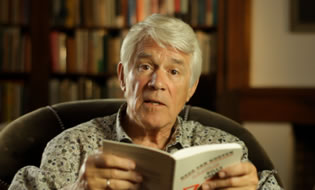
De Nederlandse schrijver en cabaretier Kees van Kooten werd geboren op 10 augustus 1941 in Den Haag. Zie ook mijn blog van 10 augustus 2010 en eveneens alle tags voor Kees van Kooten op dit blog.

Uit: Droomvakantie (Het groot bescheurboek)

“Onze stewardess was alleraardigst (we kregen de man twee snoepjes voor het opstijgen), alle koffers kwamen onbeschadigd uit het vliegtuig, we mochten zondermeer doorlopen van de douane, de taxichauffeur was een schat die een schijntje rekende en zo'n mooi hotel hadden we nog nooit gezien.
De bedden waren om nooit meer uit op te staan, alles dééd het in de badkamer en het ontbijt leek wel een diner!
Het hotelpersoneel weigerde fooien aan te nemen, het gebruik van de overdreven gevulde 300 liter-koelkast op de kamer was gratis en als je 's avonds je zwemvliezen voor de deur zette, bleken ze 's ochtends gepoetst!
Wij waren drie weken lang de enigen op het zes kilometer lange, goudgele zandstrand; de ligstoelen, parasols, waterfietsen en sorbets waren gratis; terwijl de zeeëgels een stukje opzij zwommen als ze je zagen aankomen, zodat je niet in ze zou trappen.
Als je terugkwam op je kamer lag het verschoonde bed al opengeslagen, met een bos rozen op je kussen. Er hingen nieuwe schilderijen en op de televisie kon je de hele wereld ontvangen.
We hebben elkaar wel tot zes uur 's ochtens stomdronken op de hotelgang achterna gezeten, zonder dat iemand er iets van zei; de receptionist aan de balie schreef desgewenst de ansichtkaarten naar huis en in het verwarmde zwembad mocht je gewoon dwars door je badpak heen plassen.
's Avonds aan het diner kwam er een gitarist met gewoon zijn gitaar nog in het foudraal langs alle tafeltjes, om te zeggen dat hij, gratis, niet zou spelen.
Autochtoon dansen deden ze daar niet, dus kwam er niemand vragen of je mee wilde doen en daar werden ook nog eens geen foto 's van genomen, die de volgende dag niet voor tien gulden te verkrijgen waren.
Op zondag waren alle winkels, café's, postkantoren, banken en doktoren open. Alleen de begrafenisondernemers waren dicht, dus dan sloegen we die gewoon een dagje over.
Ze hebben daar af en toe een wind die omgevallen glazen weer overeind zet en kranten precies op de goede pagina's openblaast. Drie keer woei er zomaar een prachtig hoedje op mijn hoofd!”


 1800446-2d581d767c9bb40c14dbdf9193b2e444.jpg
Kees van Kooten (Den Haag, 10 augustus 1941)


De Duitse schrijver Alfred Döblin werd op 10 augustus 1878 geboren in Stettin. Zie ook alle tags voor Alfred Döblin op dit blog en ook mijn blog van 10 augustus 2010

Uit: Berlin Alexanderplatz

“Da war ein Haus, er nahm den Blick weg von dem Pflaster, eine Haustür stieß er auf, und aus seiner Brust kam ein trauriges brummendes oh, oh. Er schlug die Arme umeinander, so mein Junge, hier frierst du nicht. Die Hoftür öffnete sich, einer schlürfte an ihm vorbei, stellte sich hinter ihn. Er ächzte jetzt, ihm tat wohl zu ächzen. Er hatte in der ersten Einzelhaft immer so geächzt und sich gefreut, daß er seine Stimme hörte, da hat man was, es ist noch nicht alles vorbei. Das taten viele in den Zellen, einige am Anfang, andere später, wenn sie sich einsam fühlten. Dann fingen sie damit an, das war noch was Menschliches, es tröstete sie. So stand der Mann in dem Hausflur, hörte das schreckliche Lärmen von der Straße nicht, die irrsinnigen Häuser waren nicht da. Mit gespitztem Munde grunzte er und ermutigte sich, die Hände in den Taschen geballt. Seine Schultern im gelben Sommermantel waren zusammengezogen zur Abwehr.
Ein Fremder hatte sich neben den entlassenen Sträfling gestellt, sah ihm zu. Er fragte: »Ist Euch was, ist Euch nicht gut, habt Ihr Schmerzen?«, bis der ihn bemerkte, sofort mit dem Grunzen aufhörte. »Ist Euch schlecht, wohnt Ihr hier im Haus?« Es war ein Jude mit rotem Vollbart, ein kleiner Mann im Mantel, einen schwarzen Velourshut auf, einen Stock in der Hand. »Ne, hier wohn ich nich.« Er mußte aus dem Flur, der Flur war schon gut gewesen. Und nun fing die Straße wieder an, die Häuserfronten, die Schaufenster, die eiligen Figuren mit Hosen oder hellen Strümpfen, alle so rasch, so fix, jeden Augenblick eine andere.
Und da er entschlossen war, trat er wieder in einen Hausflur, wo man aber die Tore aufriß, um einen Wagen durchzulassen. Dann rasch ins Nachbarhaus in einen engen Flur neben dem Treppenaufgang. Hier konnte kein Wagen kommen. Er hielt den Geländerpfosten fest. Und während er ihn hielt, wußte er, er wollte sich der Strafe entziehen (o Franz, was willst du tun, du wirst es nicht können), bestimmt würde er es tun, er wußte schon, wo ein Ausweg war.”
 

 1800446-bcdc158657fd45cbe0b31f7e1940fffc.jpg
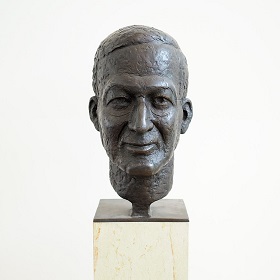
Alfred Döblin (10 augustus 1878 – 26 juni 1957)
Borstbeeld door Siegfried Wehrmeister, 1992


De Oegandese schrijver Moses Isegawa (pseudoniem van Sey Wava)werd geboren op 10 augustus 1963 in Kawempe in Oeganda. Zie ook alle tags voor Moses Isegawa op dit blog en ook mijn blog van 10 augustus 2010.

Uit: Abyssinian Chronicles

“The exodus of wives, relatives, friends and hangers-on had left a big howling lacuna which wrapped the homestead in webs of glorious nostalgia. The fifties and sixties were spanned by that nostalgia and provided us with stories pickled, polished and garnished by memory. Every migrant soul was now a compact little ghost captured in words, invoked from the lacuna by the oracle of Grandpa and Grandma and made to inject doses of old life into our present truncated existence. The hegemony of lacuna'd ghosts in their stories was broken only when the characters, like resurrected souls, braved the dangerous slopes of Mpande Hill and the treacherous papyrus swamps to come and state their case in person. The Fiddler never returned, but was most prevalent because he was immortalized by the poor rendition of his songs Grandpa showered on his homestead as he shaved, as he toured his coffee plantation—the shamba—to supervise work, as he reminisced in the shade and as he wondered how to get a young girl with an old soul to see him through his last days.
Late in the sixties, no one ’5 visit was awaited more eagerly than Uncle Kawayida’s: the man was a wizard, a gold mine full of fascinating and sometimes horrifying tales, a fantastic storyteller endowed with a rare patience who answered my often tedious questions with a cheerful, reassuring face. When he stayed away too long, I became restless and worked out the days and months he was most likely to come. On such days I would climb into the branches of my favorite tree, the tallest jackfruit in the three homesteads, and fix my eyes on the distant Mpande (“Manhood”) Hill. If I was lucky, I would see his motorbike, a blue-bellied eagle encased in silver flashes, glide down the notoriously steep slope and disappear into the umbrella-shaped greenery of the papyrus swamp below. With “ Uncle Kawayida, Uncle Kawayida!” on my tongue, I would speed down the tree-dry, sharp sticks pricking my skin, the sweet hypnotic smell of jackfruit in my nose-and rush into Grandma’s courtyard to break the good news.”
 

 1800446-890d3be56458b53906876ae79308a083.jpg
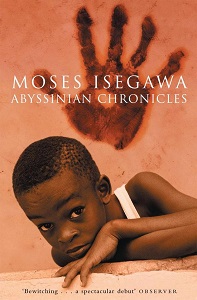
Moses Isegawa (Kawempe, 10 augustus 1963)
Cover 


De Amerikaanse dichter en schrijver Mark Doty werd geboren op 10 augustus 1953 in Maryville, Tennessee. Zie ook alle tags voor Mark Doty op dit blog en ook mijn blog van 10 augustus 2010.


Atlantis

2. REPRIEVE

I woke in the night
and thought, It was a dream,

nothing has torn the future apart,
we have not lived years

in dread, it never happened,
I dreamed it all. And then

there was this sensation of terrific pressure
lifting, as if I were rising

in one of those old diving bells,
lightening, unburdening. I didn’t know

how heavy my life had become—so much fear,
so little knowledge. It was like

being young again, but I understood
how light I was, how without encumbrance,—

and so I felt both young and awake,
which I never felt

when I was young. The curtains moved
—it was still summer, all the windows open—

and I thought, I can move that easily.
I thought my dream had lasted for years,

a decade, a dream can seem like that,
I thought, There’s so much more time ...

And then of course the truth
came floating back to me.

You know how children
love to end stories they tell

by saying, It was all a dream? Years ago,
when I taught kids to write,

I used to tell them this ending spoiled things,
explaining and dismissing

what had come before. Now I know
how wise they were, to prefer

that gesture of closure,
their stories rounded not with a sleep

but a waking. What other gift
comes close to a reprieve?

This was the dream that Wally told me:
I was in the tunnel, he said,

and there really was a light at the end,
and a great being standing in the light.

His arms were full of people, men and women,
but his proportions were all just right—I mean

he was the size of you or me.
And the people said, Come with us,

we’re going dancing. And they seemed so glad
to be going, and so glad to have me

join them, but I said,
I’m not ready yet. I didn’t know what to do,

when he finished,
except hold the relentless

weight of him, I didn’t know
what to say except, It was a dream,

nothing’s wrong now,
it was only a dream.
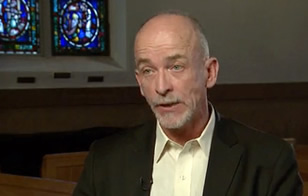
 

 1800446-ea4d93a073007616191ab909adb7ec31.jpg
Mark Doty (Maryville, 10 augustus 1953)


De Poolse schrijver Jerzy Pilch werd geboren op 10 augustus 1952 in Wisla. Zie ook alle tags voor Jerzy Pilch op dit blog en ook mijn blog van 10 augustus 2010.

Uit: His Current Woman (Vertaald door Bill Johnston)

“Or at the very least I should have a serious heart-to-heart with her. I mean, during these few weeks we’ve never really had a decent talk. I told one lie afier another and shewent on and on about literature, Kohoutek admits to himself.
What’s to be done? Where can I put her? A hotel is out of the question, since everyone would know all about it at once. The entire town, inhabited as it is exclusively by adherents of the Lutheran faith, would know the whole story immediately. Maybe- the glimmer of a vague notion brightens Kohoutek’s mind-maybe she could be passed off as a vacationer, and maybe they could be persuaded to rent out a room to her? After all, for years there’s beenm talk of the money to be made from renting out rooms; every year hundreds of summer visitors ask if there are rooms to rent and are met with a sneering rebuff. Every time there’s someone who won’t agree to it, either Kohoutek’s folks, or Oma, or Miss Wandzia’s mother-though she rents a room herself, she’s opposed to the other rooms being rented. But no one will agree, thinks Kohoutek, to my current woman.When they see her in that little curio of a hat, as one man they’ll all be opposed to her renting a room even for an hour. What’s to be done? thinks Kohoutek feverishly. Howlong will she be staying in the attic? I mean, she needs certain comforts; she has to wash, use the bathroom. How will I be able to handle all that? How could she do this to me?
All at once the floor creaked and Kohoutek sat bolt upright, because he thought he saw his current woman standing at the foot of his bed.“
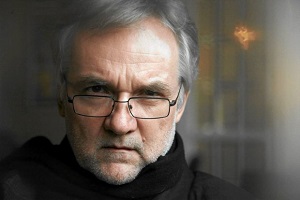
 

 1800446-bda85d3c51ebcbbc20ee88b5c33b037c.jpg
Jerzy Pilch (Wisla, 10 augustus 1952)


Zie voor nog meer schrijvers van de 10e augustus ook mijn blog van 10 augustus 2014 deel 2 en eveneens deel 3.

Geschreven door Romenu om 18:35 Reageer op dit bericht

Luuk Gruwez, Philip Larkin, Gerrit Kouwenaar, Henk Romijn Meijer, Linn Ullmann

De Vlaamse dichter, prozaïst en essayist Luuk Gruwez werd geboren op 9 augustus 1953 te Kortrijk. Zie ook alle tags voor Luuk Gruwez op dit blog.


De feestelijke verliezer

Ik had het fijnste gaas van het verlangen lief
zoals een zachte bries het lichaam van de baadster
en waar ik mij begaf, omgaf er mij een waas
van angstaanjagend aangenaam verwelken.
En een seizoen lang werd het avond.

En toen - het hart hoog op de wind -
verlangen zich bezeerde aan begeerte,
hoe lief had ik dan niet dat feestelijk verlies,
alsof een hartstocht mij verloren blies,
al werd ternauwernood gezoend

de monstrans van één enkele mond.
En elke avond werd het herfst.

En telkens als de sierlijkste der herfsten
mij in de wind een onderkomen bood,
vond ik in ruisen en in beven
een huis om dakloos in te zijn.


Oma's memo

zij ruimt de rommel op die niet meer dient:
een fotolijst, een hoornen bril,
verlovingsjurk van anno dertig,
de prullenkraam van een bestaan
dat eens vol meesterwerken was.

haar mooiste meesterwerk ben ik,
haar mausoleum voor een dochter,
de hare, die mij baarde en toch stierf,
de missing link die ons verbindt,
gemis dat vlees werd, stof en as.

uit alles blijkt dat zij zich traint in blijven,
in voortbestaan, inpakken van wat was.
en met een stem vol moederschap
laat zij een opdracht aan de planten na:
wees daar, eis water, als ik niet meer ben.

alles wat weerloos is en eindigt
verdient een voortbestaan. geen ding.
zo eindigt ook haar kunstgebit
met gouden stift, dat nu nog elke avond
in een glaasje gaat, straks in een kist.


Kanker I

God, herstel deze vrouw. zij is nog niet
voltooid. zij moet mij nog ten grave dragen.
o, leg haar straks, al stijf van ouderdom,
met beide borsten in een kist.

ik weet dat u soms voorkomt in het wild
naast aasgier, lynx en tijgerkat:
fouileer haar niet tot op het bot
of daar nog ergens kanker zat.

ook ik lijd honger aan haar lijf.
wees niet bekommerd om uw maal:
ik wil een ander kwijt in ruil voor haar.
ik wil een ander kwijt, of minstens mij.


 1799978-ce27606908acb8db74e9ddd22ed28c3f.jpg
Luuk Gruwez (Kortrijk, 9 augustus 1953)


De Engelse dichter Philip Larkin werd op 9 augustus 1922 geboren in Coventry. Zie ook mijn blog van 9 augustus 2010 en eveneens alle tags voor Philip Larkin op dit blog


Mr. Bleaney

This was Mr Bleaney's room. He stayed
The whole time he was at the Bodies, till
They moved him.‘ Flowered curtains, thin and frayed,
Fall to within five inches of the sill,

Whose window shows a strip of building land,
Tussocky, littered. 'Mr Bleaney took
My bit of garden properly in hand.‘
Bed, upright chair, sixty-watt bulb, no hook

Behind the door, no room for books or bags
l'll take it.‘ So it happens that I lie
Where Mr Bleaney lay, and stub my fags
On the same saucer-souvenir, and try

Stuffing my ears with cotton-wool, to drown
The jabbering set he egged her on to buy.
I know his habits - what time he came down,
His preference for sauce to gravy, why

He kept on plugging at the four aways
Likewise their yearly frame: the Frinton folk
Who put him up for summer holidays,
And Christmas at his sisters house in Stoke.

But if he stood and watched the frigid wind
Tousling the clouds, lay on the fusty bed
Telling himself that this was home, and grinned,
And shivered, without shaking off the dread

That how we live measures our own nature,
And at his age having no more to show
Than one hired box should make him pretty sure
He warranted no better, I don't know.


 1799978-4dd91fb6cde09f58ab1b3bb64da18517.jpg
Philip Larkin (9 augustus 1922 – 2 december 1985)


De Nederlandse dichter Gerrit Kouwenaar werd op 9 augustus 1923 in Amsterdam geboren. Hij is vandaag dus 85 jaar geworden. Zie ook mijn blog van 9 augustus 2010 en eveneens alle tags voor Gerrit Kouwenaar op dit blog.


De taal

De taal behoort aan de vogels
ik ben te mens om te vliegen
ik sta als een huis op de wereld
gebouwd en dik uit aarde

ik ben ongeveer degene
die schuilgaat binnen de muren
en uitvloeit achter de ramen
van de blauwe achterkamer

het geurt er naar mest en naar liefde
er staat een plant in een kooi
de taal behoort aan de vogels
de mens schuilt weg in het woord -


A happy childhood

Vergeet je wel eens je vaders klok op te winden?
Ja, ik vergeet wel eens mijn vaders tijd te vergeten

draag je wel eens een strohoed een ooglap een vadermoorder?
nee, ik draag een gedicht op, een zomer van bladgoud

schrijf je wel eens de laatste lippen om te verwoorden?
ja, ik ontcijfer een kus van bemodderde rozen

loop je wel eens door gras dat nodig gemaaid moet?
nee, ik sta stil in gras dat niemand gezaaid heeft –


Een Herfst

Men is vandaag ontzettend onsterfelijk
het is eindelijk de echte heldere herfst
die er haast nog niet is

de bladeren vergelen, nog betrekkelijk groen
de wind is nog blauw, wijst geen enkele richting
de grond ligt nog onder het gras

men rookt de zwarte sigaar van de dokter
men raakt bezweet door het werpen met darts
men drinkt zijn zevende glas

in een ligstoel later men stippelt
onder het genot van dit tijdstip
een reis uit

de reis voor de komende heldere winter
en men vindt met de pink weer die heldere weg
naar dat denkbeeldige eindpunt -


 1799978-3147f3e3656a9708318f566aad96618e.jpg
Gerrit Kouwenaar (9 augustus 1923 - 4 september 2014)


De Nederlandse schrijver en taalkundige Henk Romijn Meijer werd geboren in Zwolle op 9 augustus 1929. Zie ook alle tags voor Henk Romijn Meijer op dit blog.

Uit: Toen Reve nog Van het Reve was

“Er zijn waarschijnlijk weinig schrijvers die in hun werk zo gul omspringen met ontboezemingen over hun persoonlijke situatie als Gerard Reve. Zijn ‘geliefd publiek’ komt niet alleen aan de weet hoe hij denkt over religie, erotiek, politiek en veel wat daarmee verband houdt, maar ook met wie hij zijn leven deelt, hoe hij zijn dagen doorbrengt, welke mensen hij ontmoet en wat hij van hen vindt, welk voedsel zijn voorkeur heeft en door welke herinneringen hij wordt bezocht (in beide betekenissen van het woord). Wie daar nog niet genoeg aan heeft, kan terecht bij de ontelbare interviews waaraan hij zich met verbazingwekkende bereidwilligheid blijft onderwerpen. Op grond daarvan zou men zich kunnen afvragen of het zin heeft dat een ander het allemaal nog eens dunnetjes komt overdoen. Eerlijk gezegd denk ik om allerlei redenen van wel.
Ten eerste hoeft de voorstelling die iemand van zichzelf heeft of aan de buitenwereld toont, lang niet altijd samen te vallen met de indruk die hij op anderen maakt. Dat geldt eens te meer voor een schrijver als Reve die er, aangespoord door een barokke fantasie en een niet minder barok gevoel voor humor, een bijna satanisch behagen in schept, mensen op een dwaalspoor te brengen door zich te omspinnen met een web waarin feiten en verzinsels kunstig zijn verweven tot een moeilijk te ontraadselen geheel.
Ten tweede betreft het in dit geval geen willekeurige babbelkous die zich interessant probeert te maken op rekening van andermans roem, maar een schrijver van naam met een solide literaire reputatie.
Daaruit vloeit onmiddellijk de derde reden voort: de lezers worden niet onthaald op een ratjetoe van leutige voorvallen en dubieuze achterklap noch op de aan blinde bewondering ontlokte lofzangen die even welgemeend als dodelijk vervelend zijn. Ze maken daarentegen kennis met een heldere en in veel opzichten verhelderende visie op Reve als mens en schrijver.”


 1799978-83e57c4352815c1ccc3f45690a9ad137.jpg
Henk Romijn Meijer (9 augustus 1929 – 23 februari 2008)
Cover


De Noorse schrijfster Linn Karin Beate Ullmann werd geboren op 9 augustus 1966 in Oslo. Zie ook alle tags voor Linn Ullmann op dit blog.

Uit: A Blessed Child

“He wanted to leave it to grow. There was no one to cut it for, he said, but in order to restore the mutually preferred silence between them, they reached a compromise. In summer, the crown of Isak's head was blank and glossy and as blue as the globes he had presented to each of his three daughters, Erika, Laura, and Molly, on her fifth birthday; in the winter, he let his hair grow free, giving him an aspect of towering grayish white, which in combination with his handsomely lined, aging face suggested the beginnings of a rauk, one of those four-hundred-million-year-old island outcrops in the sea, so characteristic of Hammarsö.
Erika seldom saw her father after he had moved to the island, but Simona had sent her two photographs. One of a long-haired Isak and one of the almost bald Isak. Erika liked the long-haired one better. She ran her finger over the picture and kissed it. She imagined him on the stony beach on Hammarsö with arms stretched aloft, hair streaming out, and that long, fake beard he would wear when rehearsing his lines as Wise Old Man for the 1979 Hammarsö Pageant.
Rosa — Isak's second wife and Laura's mother — died of a degenerative muscle-wasting disease in the early 1990s. It was Rosa's death that prompted Isak's return to Hammarsö. In the twelve years the house had stood empty, there had been only occasional visits from Simona. She had swept up the insect life that forced its way in every summer and lay dead on the windowsills all winter; she had the locks changed after a minor break-in and mopped up when the pipes burst and water leaked all over the floor. But she could do nothing about the water damage and rot if Isak was not prepared to pay for workmen to come in and fix them.
"It's going to get run-down whatever I do," she said in one of their brief telephone conversations. "You'll either have to sell it, do it up, or start living in it again."
"Not yet. I'm not making any decisions yet," Isak said.
But then Rosa's body let her down, and though her heart was strong and wouldn't stop beating, Isak and a colleague agreed in the end that Rosa should be spared. After the funeral, Isak made it plain to Erika, Laura, and Molly that he intended to kill himself. The pills had been procured, the deed carefully planned. And yet, he moved back to the house.”


 1799978-02ddd4b9ef83dbd2bd324c08dcadb99a.jpg
Linn Ullmann (Oslo, 9 augustus 1966)


Zie voor nog meer schrijvers van de 9e augustus ook mijn vorige blog van vandaag.

Geschreven door Romenu om 11:44 Reageer op dit bericht

P. L. Travers, Pierre Klossowski, Daniel Keyes, Leonid Andreyev, John Oldham, Izaak Walton

De Australische schrijfster Pamela Lyndon Travers werd als Helen Lyndon Goff op 9 augustus 1899 geboren in Maryborough in Australië. Zie ook alle tags voor P. L. Travers op dit blog en eveneens mijn blog van 9 augustus 2009 en ook mijn blog van 9 augustus 2010

Uit: Mary Poppins

“And she led the way towards the staircase, talking all the time, without stopping once. And because she was doing that Mrs Banks did not notice what was happening behind her, but Jane and Michael, watching from the top landing, had an excellent view of the extraordinary thing the visitor now did.
Certainly she followed Mrs Banks upstairs, but not in the usual way. With her large bag in her hands she slid gracefully up the banisters, and arrived at the landing at the same time as Mrs Banks. Such a thing, Jane and Michael knew, had never been done before. Down, of course, for they had often done it themselves. But up — never! They gazed curiously at the strange new visitor.
“Well, that’s all settled, then.” A sigh of relief came from the children’s Mother.
“Quite. As long as I’m satisfied,” said the other, wiping her nose with a large red and white bandanna handkerchief.
“Why, children,” said Mrs Banks, noticing them suddenly, “what are you doing there? This is your new nurse, Mary Poppins. Jane, Michael, say how do you do! And these”—she waved her hand at the babies in their cots—“are the Twins.”
Mary Poppins regarded them steadily, looking from one to the other as though she were making up her mind whether she liked them or not."


 1799975-ecc56ef89b813c1f8d71b6986357f2a6.jpg
P. L. Travers (9 augustus 1899 – 23 april 1996)
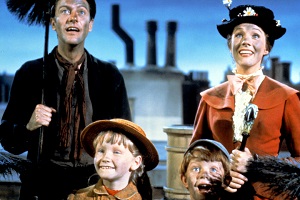
Scene uit de film uit 1964 met o.a. Dick Van Dyke en Julie Andrews


De Franse schrijver, vertaler en schilder Pierre Klossowski werd geboren op 9 augustus 1905 in Parijs. Zie ook alle tags voor Pierre Klossowski op dit blog en eveneens mijn blog van 9 augustus 2009 en ook mijn blog van 9 augustus 2010

Uit: La Monnaie vivante

« Depuis le milieu du siècle dernier, les anathèmes ont été lancés au nom de la vie affective contre les ravages de la civilisation industrielle.
Imputer aux moyens de production de l'industrie une action pernicieuse sur les affects, c'est, sous prétexte de dénoncer son emprise démoralisante, lui reconnaître une puissance morale considérable. D'où lui vient cette puissance ?
Du seul fait que l'acte même de fabriquer des objets remet en question sa finalité propre : en quoi donc l'usage des objets ustensilaires diffère-t-il de l'usage de ceux que produit l'art, «inutiles» à la subsistance ?
Nul ne songerait à confondre un ustensile avec un simulacre. A moins que ce ne soit qu'en tant que simulacre qu'un objet en est un d'usage nécessaire. »
(…)

Que l'on imagine une régression apparemment impossible : soit une phase industrielle où les producteurs ont le moyen d'exiger, à titre de paiement, des objets de sensation de la part des consommateurs. Ces objets sont des êtres vivants.”


 1799975-2e6a3686e7cd304c13f8c08ffbd675b9.jpg
Pierre Klossowski (9 augustus 1905 – 12 augustus 2001)


De Amerikaanse schrijver Daniel Keyes werd geboren in Brooklyn, New York op 9 augustus 1927. Zie ook alle tasgs voor Daniel Keyes op dit blog en ook mijn blog van 9 augustus 2009 en ook mijn blog van 9 augustus 2010.

Uit: Flowers for Algernon

“April 6—Today, I learned, the comma, this is, a, comma (,) a period, with, a tail, Miss Kinnian, says its, importent, because, it makes writing, better, she said, somebody, could lose, a lot, of money, if a comma, isnt in, the right, place, I got, some money, that I, saved from, my job, and what, the foundation, pays me, but not, much and, I dont see how, a comma, keeps, you from, losing it,
But, she says, everybody, uses commas, so Ill, use them, too,,,,

April 7—I used the comma wrong. Its punctuation…Miss Kinnian says a period is punctuation too, and there are lots of other marks to learn.
She said; You, got. to-mix?them!up: She showd? me” how, to mix! them; up, and now! I can. mix (up all? kinds of punctuation— in, my. writing! There” are lots, of rules; to learn? but. Im’ get’ting them in my head:
One thing? I, like: about, Dear Miss Kinnian: (thats, the way? it goes; in a business letter (if I ever go! into business?) is that, she: always; gives me’ a reason” when—I ask. She”s a gen’ius! I wish? I could be smart-like-her;
Punctuation, is? fun!”


 1799975-612b232035679aa255e153e215c3039b.jpg
Daniel Keyes (New York, 9 augustus 1927)
Scene uit een toneelopvoering in Sherman Oaks.2010


De Russische schrijver Leonid Andreyev werd geboren op 9 augustus 1871 in Orjol. Zie ook alle tags voor Leonid Andreyev op dit blog en eveneens mijn blog van 9 augustus 2010 en eveneens mijn blog van 9 augustus 2009.

Uit: Lazarus (Vertaald door Abraham Yarmolinsky)

“Not merely Lazarus' face, but his very character, it seemed, had changed; though it astonished no one and did not attract the attention it deserved. Before his death Lazarus had been cheerful and careless, a lover of laughter and harmless jest. It was because of his good humour, pleasant and equable, his freedom from meanness and gloom, that he had been so beloved by the Master. Now he was grave and silent; neither he himself jested nor did he laugh at the jests of others; and the words he spoke occasionally were simple, ordinary and necessary words--words as much devoid of sense and depth as are the sounds with which an animal expresses pain and pleasure, thirst and hunger. Such words a man may speak all his life and no one would ever know the sorrows and joys that dwelt within him.
Thus it was that Lazarus sat at the festive table among his friends and relatives--his face the face of a corpse over which, for three days, death had reigned in darkness, his garments gorgeous and festive, glittering with gold, bloody-red and purple; his mien heavy and silent. He was horribly changed and strange, but as yet undiscovered. In high waves, now mild, now stormy, the festivities went on around him. Warm glances of love caressed his face, still cold with the touch of the grave; and a friend's warm hand patted his bluish, heavy hand. And the music played joyous tunes mingled of the sounds of the tympanum, the pipe, the zither and the dulcimer. It was as if bees were humming, locusts buzzing and birds singing over the happy home of Mary and Martha.”


 1799975-5db5208bb0acf69318e1834065430cc6.jpg
Leonid Andreyev (9 augustus 1871 – 12 september 1919)
Zelfportret 


De Engelse dichter en vertaler John Oldham werd geboren in Shipton Moyne (Gloucestershire) op 9 augustus 1653. Zie ook alle tags voor John Oldham op dit blog en eveneens mijn blog van 9 augustus 2010 en eveneens mijn blog van 9 augustus 2009.


A Satire, In Imitation Of The Third Of Juvenal (Fragment)

Though much concern'd to leave my dear old friend,
I must however his design commend
Of fixing in the country: for were I
As free to choose my residence, as he;
The Peak, the Fens, the Hundreds, or Land's End,
I would prefer to Fleet Street, or the Strand.
What place so desert, and so wild is there
Whose inconveniences one would not bear,
Rather than the alarms of midnight fire,
The falls of houses, knavery of cits,
The plots of factions, and the noise of wits,
And thousand other plagues, which up and down
Each day and hour infest the cursed town?
As fate would hav't, on the appointed day
Of parting hence, I met him on the way,
Hard by Mile End, the place so fam'd of late,
In prose, and verse for the great faction's treat;
Here we stood still, and after compliments
Of course, and wishing his good journey hence
I ask'd what sudden causes made him fly
The once lov'd town, and his dear company:
When, on the hated prospect looking back,
Thus with just rage the good old Timon spake.


 1799975-f99e8e180b46ebe18832410157f8bbe3.jpg
John Oldham (9 augustus 1653 - 9 december 1683)
St. John the Baptist's Church, Shipton Moyne


De Engelse schrijver Izaak Walton werd geboren in Stafford op 9 augustus 1593. Zie ook alle tags voor Izaak Walton op dit blog en eveneens mijn blog van 9 augustus 2010 en eveneens mijn blog van 9 augustus 2009.


An Elegie upon Dr. Donne (Fragment)

Did his youth scatter _Poetry, wherein
Was all Philosophy? was every sinne,
Character'd in his _Satyrs? Made so foule
That some have fear'd their shapes, and kept their soule
Safer by reading verse? Did he give dayes_
Past marble monuments, to those, whose praise
He would perpetuate? Did he (I feare
The dull will doubt these at his twentieth year?
But, more matur'd; Did his full soule conceive,
And in harmonious-holy-numbers weave
A Crown of sacred sonnets, fit to adorne
A dying Martyrs brow: or, to be worne
On that blest head of Mary Magdalen,
After she wip'd Christs feet, but not till then?
Did hee (fit for such penitents as shee
And he to use) leave us a Litany,
Which all devout men love, and sure, it shall,
As times grow better, grow more classicall?
Did he write Hymnes, for piety, for wit,
Equall to those, great grave Prudentius writ?
Spake he all Languages? knew he all Lawes?
The grounds and use of _Physick; but because
'Twas mercenary, wav'd it? Went to see
That blessed place of Christs nativity?
Did he returne and preach him? preach him so
As since S. Paul none did, none could? Those know,
(Such as were blest to heare him) this is truth.
Did he confirm thy aged? convert thy youth?


 1799975-2ed7deabb3df68a3488b4f7dec2a7ff9.jpg
Izaak Walton (9 augustus 1593 - 15 december 1683)
Portret door George Perfect Harding, ca. 1800 

Geschreven door Romenu om 11:42 Reageer op dit bericht

Meer van Romenu

↑ Terug naar de berichten