Naar de inhoud

Romenu

Over literatuur, gedichten, kunst en cultuur
akke.beakke.be

Berichten van 25 november 2015 tot 26 november 2015

Luisa Valenzuela, Eugène Ionesco, Marilynne Robinson, Louis Verbeeck, William Cowper, Theophilus Cibber
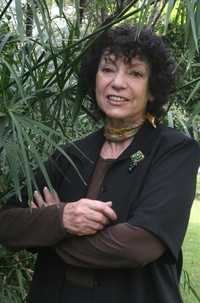
De Argentijnse schrijfster Luisa Valenzuela werd geboren op 26 november 1938 in Buenos Aires. Zie ook alle tags voor Luisa Valenzuela op dit blog.

Uit: I'm your horse in the night (Vertaald door Deborah Bonner)

« Cachaca's good drink. It goes down and up and down all the right tracks, and then stops to warm up the corners that need it most. Gal Costa's voice is hot, she envelops us in its sound and half-dancing, half floating, we reach the bed. We lie down and keep on staring deep into each other's eyes, continue caressing each other without allowing ourselves to give into the pure senses just yet. We continue recognizing, rediscovering each other.
Beto, I say, looking at him. I know that isn't his real name, but it's the only one I can call him out loud. He replied:
"We'll make it some day, Chiquita, but let's not talk now."
It's better that way. Better if he doesn't start talking about how we'll make it someday and ruin the wonder of what we're about to attain right now, the two of us, all alone.
"A noite eu so teu cavala," Gal Costa suddenly sings from the record player.
"I'm your horse in the night," I translate slowly. And so to bind him in a spell and stop him from thinking about other things:
"It's a saint's song, like in the macumba. Someone who's in a trance says she's the horse of the spirit who's riding her, she's his mount."
"Chiquita, you're always getting carried away with esoteric meanings and witchcraft. You know perfectly well that she isn't talking about spirits. If you're my horse in the night it's because I ride you, like this, see? …"


 1843901-b69a6bb0986f914307b3c1c1bed3c336.jpg
Luisa Valenzuela (Buenos Aires, 26 november 1938)


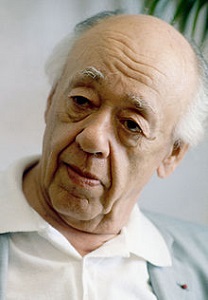
De Frans-Roemeense schrijver Eugène Ionesco werd geboren op 26 november 1912 in Slatina, Roemenië. Zie ook alle tags voor Eugène Ionesco op dit blog.

Uit: Fragments of a Journal Vertaald door Jean Stewart)

“Nothing is mightier than our why, nothing stands above it, because in the end there is a why to which no answer is possible. In fact, from why to why, from one step to the next, you get to the end of things. And it is only by travelling from one why to the next, as far as the why that is unanswerable, that man attains the level of the creative principle, facing the infinite, equal to the infinite maybe. So long as he can answer the why he gets lost, he loses his way among things. 'Why this?' I answer, 'because that," and from one explanation to the next I reach the point where no explanation is satisfying, from one explanation to the next I reach zero, the absolute, where truth and falsehood are equivalent, become equal to one another, are identified with one another, cancel each other out in face of the absolute nothing. And so we can understand how all action, all choice, all history is justified, at the end of time, by a final cancelling-out. The why goes beyond everything. Nothing goes beyond the why, not even the nothing, because the nothing is not the explanation; when silence confronts us, the question to which there is no answer rings out in the silence. That ultimate why, that great why is like a light that blots out everything, but a blinding light; nothing more can be made out, there is nothing more to make out.”
(…)

“If I tell these private thoughts of mine, it is because I know they are not mine alone, and that practically everyone is trying to say the same things and that the writer is only a man who says out loud what other people think or whisper.”
 

 1843901-5690a77ebf008e980141ba03ecb8e43f.jpg
Eugène Ionesco (26 november 1912 – 28 maart 1994)


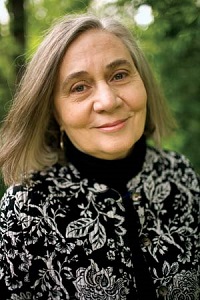
De Amerikaanse schrijfster Marilynne Robinson werd geboren in Sandpoint, Idaho op 26 november 1943. Zie ook alle tags voor Marilynne Robonson op dit blog.

Uit:Gilead

“I felt like telling them, I appreciate a joke as much as anybody. There have been many occasions in my life when I have wanted to say that. But it’s not a thing people are willing to accept. They want you to be a little bit apart. I felt like saying, I’m a dying man, and I won’t have so many more occasions to laugh, in this world, at least. But that would just make them serious and polite, I suppose. I’m keeping my condition a secret as long as I can. For a dying man I feel pretty good, and that is a blessing. Of course your mother knows about it. She said if I feel good maybe the doctor is wrong. But at my age there’s a limit to how wrong he can be.
And what else should I tell you? I’ll tell you about my grandfather. He was a chaplain in the Union Army. He lost an eye at the battle of Wilson’s Creek, on the day of the death of General Lyon. I do wish you could have known him. It was as if that one good eye of his were somehow ten times an eye. He could make me feel as though he had poked me with a stick, just by looking at me. Not that he meant any harm to speak of. He was just afire with old certainties, and he couldn’t bear all the patience that was required of him by the peace and by the aging of his body and the forgetfulness that had settled over everything. He thought we should all be living at a dead run. I don’t say he was wrong. That would be like contradicting John the Baptist. There is a photograph of my grandfather around the house somewhere. It is a good likeness. It shows a wild-haired, one-eyed, scrawny old fellow with a crooked beard, like a paintbrush left to dry with lacquer in it, staring down the camera as if it had accused him of something terrible, very suddenly, and he is still thinking how to reply, and keeping the question at bay with the sheer ferocity of that stare. Of course there is guilt enough in the best life to account for a look like that.”
 

 1843901-ecfc3d54d305d975bc2288906a11ed16.jpg
Marilynne Robinson (Sandpoint, 26 november 1943)


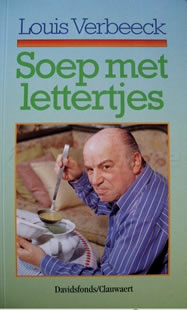
De Vlaamse dichter en schrijver Louis Verbeeck werd geboren in Tessenderlo op 26 november 1932. Zie ook alle tags voor Louis Verbeeck op dit blog.


Zenobia
Voor Jan Engelman
 
Zenobia, gij loeit mij aan.
Ik zie u in de weide staan
van liefde rood te blozen.
 
Gij staart mistroostig in het rond
en traag beweegt uw moedermond.
Er is nu melk in dozen.
 
De boter wijkt voor margarien.
Gij hangt niet meer in de vitrien.
Men maalt u tot konserven.
 
Gedaan met alle tederheid
Men melkt met electriciteit.
Uw koedom ligt aan scherven.
 
Daarom zijt gij zo droef van zin
en blinkt er bleke weemoed in
de toendra's van uw ogen.
 
O kijk, een gouden tranendreef.
Kom, dat ik u mijn zakdoek geef
om ze wat af te drogen.
 

 1843901-141fa0373350004d6c7c1640b87eb41e.jpg
Louis Verbeeck (Tessenderlo, 26 november 1932)
Cover 


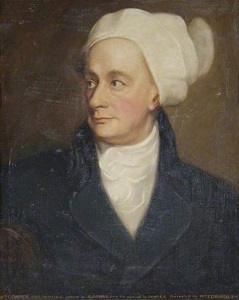
De Engelse dichter William Cowper werd geboren op 26 november 1731 in Berkhamstead, Herford. Zie ook alle tags voor William Cowper op dit blog.


Abuse Of The Gospel

Too many, Lord, abuse Thy grace
In this licentious day,
And while they boast they see Thy face,
They turn their own away.

Thy book displays a gracious light
That can the blind restore;
But these are dazzled by the sight,
And blinded still the more.

The pardon such presume upon,
They do not beg but steal;
And when they plead it at Thy throne,
Oh! where's the Spirit's seal?

Was it for this, ye lawless tribe,
The dear Redeemer bled?
Is this the grace the saints imbibe
From Christ the living head?

Ah, Lord, we know Thy chosen few
Are fed with heavenly fare;
But these, -- the wretched husks they chew,
Proclaim them what they are.

The liberty our hearts implore
Is not to live in sin;
But still to wait at Wisdom's door,
Till Mercy calls us in.
 

 1843901-80b089659ed94e6eed1983506e844301.jpg
William Cowper (26 november 1731 – 25 april 1800)
Portret door Robert John Swan, 1900


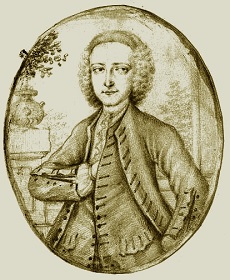
De Engelse schrijver en acteur Theophilus Cibber werd geboren op 26 november 1703 in Londen. Zie ook alle tags voor Theophilus Cibber op dit blog.

Uit: The Lives of the Poets of Great Britain and Ireland (William Shakespeare)

“There have been some ages in which providence seemed pleased in a most remarkable manner to display it self, in giving to the world the finest genius's to illuminate a people formerly barbarous. After a long night of Gothic ignorance, after many ages of priestcraft and superstition, learning and genius visited our Island in the days of the renowned Queen Elizabeth. It was then that liberty began to dawn, and the people having shook off the restraints of priestly austerity, presumed to think for themselves. At an Æra so remarkable as this, so famous in history, it seems no wonder that the nation would be blessed with those immortal ornaments of wit and learning, who all conspired at once to make it famous.----This astonishing genius, seemed to be commissioned from above, to deliver us not only from the ignorance under which we laboured as to poetry, but to carry poetry almost to its perfection. But to write a panegyric on Shakespear appears as unnecessary, as the attempt would be vain; for whoever has any taste for what is great, terrible, or tender, may meet with the amplest gratification in Shakespear; as may those also have a taste for drollery and true humour. His genius was almost boundless, and he succeeded alike in every part of writing. I cannot forbear giving the character of Shakespear in the words of a great genius, in a prologue spoken by Mr. Garrick when he first opened Drury-lane house as Manager.”
 

 1843901-646e9c203b13221489b2d55401e5093a.jpg
Theophilus Cibber (26 november 1703 - oktober 1758)


Zie voor nog meer schrijvers van de 26e november ook mijn blog van 26 november 2011.
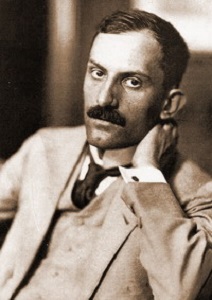
Geschreven door Romenu om 18:23 Reageer op dit bericht

Mihály Babits

De Hongaarse dichter, schrijver en vertaler Mihály Babits werd geboren op 26 november 1883 in Szekszárd. Hij studeerde Franse en Latijnse filologie aan de Loránd Eötvös-universiteit te Boedapest van 1901 tot 1905, waar hij Dezső Kosztolányi en Gyula Juhász ontmoette. Hij werd leraar en gaf les aan scholen in Baja (1905-1906), Szeged (1906–1908), Fogaras (1908 -1911), Újpest (1911) en Boedapest (1912 -1918).In 1908 verwief hij met zijn gedichten bekendheid. In datzelfde jaar reisde hij naar Italië, wat zijn interesse voor Dante Alighieri verklaart; later bezocht hij het land nog meerdere malen. Met zijn verworven kennis vertaalde hij Dantes Divina Commedia (Inferno, 1913, Purgatorium, 1920, en Paradiso, 1923).Kort na de Hongaarse Revolutie van 1919 werd hij professor Buitenlandse Literatuur en Moderne Hongaarse Literatuur aan de Eötvös Loránd Universiteit te Boedapest, maar hij werd er bedankt voor zijn diensten na de val van de revolutionaire regering vanwege zijn pacifisme.In 1911 werd hij redacteur van het literaire magazine Nyugat.In 1921 huwde hij Ilona Tanner. Zij publiceerde later gedichten onder de naam 'Sophie Török.Twee jaar later trok hij naar Esztergom. In 1927 werd hij lid van het Kisfaludy Társaság (Kisfaludy Gezelschap) In 1929 werd hij hoofdredacteur bij het tijdschrift “Nyugat”, een taak die hij deelde met Zsigmond Móricz. Babits is het meest bekend om zijn lyrische poëzie met invloeden van klassieke poëzie en Engelse rijmkunst. Behalve gedichten schreef hij ook essays en hij vertaalde veel werken uit het Engels, het Frans, het Duits, het Grieks, het Italiaans en het Latijn.


Jonah’s Prayer

Words have become unfaithful things to me,
or else am I an overflowing sea,
goalless and hesitant, without a shore.
Vain words, articulated once before,
I carry like dikes, or signposts made of wood,
torn hedges carried by a straying flood.
Oh if the Master only would provide
a bed for my brook’s current and thus guide
my steps on sheltered pathways toward the sea;
if only He would carve a rhyme for me,
a ready-made rhyme, I would avail myself,
for prosody, of the Bible on my shelf,
so that like Jonah, lazy servitor
of God, we hid from Him and later bore
not three brief days or months of agonies,
but three long years of even centuries,
when he went down into the living Fish,
in dark hot torments more than he would wish,
I too, before I disappear, might find
in an eternal Whale whose eyes are blind
my old accustomed voice, my words arrayed
in faultless battle order; as He made
His whispers clear, with all my poor throat’s might
I could speak out, unwearied till the night,
so long as Heaven and Nineveh comply
with my desire to speak and not to die.


The Lyric Poet’s Epilogue

I am the only hero of my verses,
the first and last in every line to dwell:
my poems hope to sing of Universes,
but never reach beyond my lonely cell.

Are others there outside, to bear the curses
of being born? If God would only tell.
A blind nut in the nutshell's dark traverses,
I loathe to wait for Him to break the spell.

A magic circle binds me like a chain,
and yet, my soaring dreams defy the weight -
but wishful dreams, I know, may tell a lie.

A prison for myself I must remain,
the subject and the object. Heavy fate:
the alpha and the omega am I.


 1979707-69a5293b0382c90a33f8ff2667708119.jpg
Mihály Babits (26 november 1883 - 4 augustus 1941)

Geschreven door Romenu om 00:00 Reageer op dit bericht

Alyosha Brell


Onafhankelijk van geboortedata

De Duitse schrijver Alyosha Brell werd geboren in 1980 in Wesel als zoon van een balletleraar en een operazangeres. De eerste 18 jaar van zijn leven bracht hij door op een boerderij in de buurt van Goch. Na zijn eindexamen verhuisde hij naar Berlijn om filosofie en Duitse literatuur te studeren, wat hij echter al snel voor gezien hield. In plaats daarvan werkte hij meer dan tien jaar in een in Berlijn gevestigd IT-bedrijf, waar hij leiding gaf aan een team van concept ontwikkelaars, grafisch ontwerpers en webprogrammeurs. In 2008 kreeg hij een beurs van de schrijverswerkplaats Proza van het Literaire Colloquium Berlin. In 2009 ontving hij de Alfred Döblin beurs van de Berliner Akademie der Künste. Zijn debuutroman 'Kress' verscheen in 2015 in de Ullstein Verlag.

Uit: Kress

„Als Kress an diesem Abend nach Hause kam, war ihm mächtig feierlich zumute. Auf dem Heimweg hatte er sich hinreißen lassen, in einem türkischen Imbiss eine Fanta zu ordern. Fanta war sein Lieblingsgetränk, aber weil schöne Dinge schwach machten, gab es Fanta nur in besonderen Momenten. Jetzt, noch während er die Tür abschloss, schüttelte er sich den letzten Tropfen in den Rachen, und weil er noch nicht genug hatte von dem herrlichen Süß, stapfte er in die Küche und suchte aus einem der Kartons das Brotmesser hervor. So ausgerüstet begab er sich an den Schreibtisch und machte sich daran, mit kleinen Sägebewegungen die Aluminuiumdose zu enthaupten, um auch an die in der Dose verbliebene Fantafeuchtigkeit zu gelangen. Er bog den Dosenkopf zur Seite, wischte mit dem Zeigefinger entlang der Innenwände und steckte sich den Finger gedankenvoll in den Mund. Die kleine blonde Person ging ihm nicht aus dem Sinn. Er fragte sich, wie er vernünftigerweise den Erstkontakt herstellte, wenn er sie denn aufgespürt hatte, und weil ihm nichts Besseres einfiel, stand er auf und wanderte hinüber zu seinen Umzugskartons, wo er aus seiner Ausgabe von Goethes Werken Band 3 hervor suchte (Dramatische Dichtungen I) und im Faust die Stelle aufschlug, wo Faust das Gretchen erstmalig anspricht, um ihm seinen Arm und Geleit anzutragen. Das Ganze erschien ihm nicht sonderlich überzeugend, trotzdem legte er einen Zettel zwischen die Seiten, um sie am Morgen noch einmal genau zu studieren. Er trat zurück an den Schreibtisch und streckte neuerlich den Finger zur Dose — ratsch, ärgerlich: Da hatte ihm der gesägte Dosenrand einen halben Quadratzentimeter Fingerkuppe abrasiert. Einen Moment lang war Kress sehr zufrieden mit sich, weil es gar nicht blutete; dann aber füllte sich der Schnitt mit dunklem Rot, und mürrisch latschte er ins Bad, um die Wunde mit Klopapier zu verbinden.“


 1886946-b5ca244a3976c7d863610fb4ac22e94a.jpg
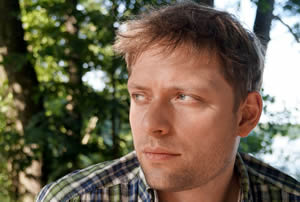
Alyosha Brell (Wesel, 1980)


Geschreven door Romenu om 00:00 Reageer op dit bericht

Mohamed Al-Harthy

Onafhankelijk van geboortedata

De Omaanse dichter Mohamed Al-Harthy werd geboren in al-Mudhayrib, Oman, in 1962. Mohamed Al-Harthy studeerde geologie en maritieme wetenschappen en begon een loopbaan die daarop aansloot, maar na korte tijd nam hij ontslag om te reizen en te schrijven. Zijn eerste gedichtenbundel werd in 1992 onder de titel “Ogen zolang het dag is" in Casablanca gepubliceerd. Zijn bundel “Terug naar het schrijven met potlood” verscheen in 2013 en bevat gedichten die hij tussen 2005 en 2012 schreef. Een bijzondere uitgave van Al-Harthy is zijn reisboek “Oog en vleugel” waarin hij over zijn reizen naar Thailand, Vietnam, Andalusië en het lege kwartier van Arabië schrijft. Voor dit boek kreeg hij de Ibn Battuta Award voor Geografische literatuur in 2005.


THE BOAT OF WORDS CASTS ANCHOR

Remarkable, the three of them together:
the mouse,
the keyboard
and the word processor
that fails to process them, but rather
does quite the contrary
and makes me forget
to save them in the proper file.
And so the icon of accusation
appears on the screen
before I can even accuse myself
or the word processor
or the playful mouse
after the disappearance of many a poem
about nights and morning suns . . . 
 
The icon’s accusation wore me out
so I thought of looking for a typewriter
(like the one Virginia Woolf used),
one that would not weary
of tapping out its symphony
with speedy slowness
or slowing speed.
But these enchanting instruments
have fallen out of use these days
and no one pays them any heed:
under heavy guard they bemoan their fate
in museum kingdoms
that no one ever visits.
 
I almost raised the flag, I almost surrendered,
but I opted to follow Hemingway’s advice
and go back to writing with a pencil.
I traversed page after page with that sharpened oar
so that the boat of words might finally cast anchor
on arrival’s coast. But I went too far
in my emulation, and started
scrawling on the walls
like him,
and so I failed to master
his short sentences.


Vertaald door Kareem James Abu-Zeid


 1844132-d1bd55c03f91ceaca263d0fc31b23024.jpg
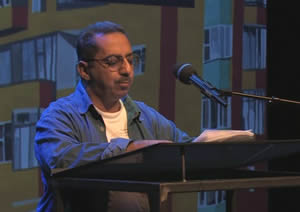
Mohamed Al-Harthy (al-Mudhayrib, 1962)

Geschreven door Romenu om 00:00 Reageer op dit bericht

Maarten ’t Hart, Connie Palmen, Arturo Pérez-Reverte, Alexis Wright, Ba Jin, Augusta de Wit

De Nederlandse schrijver Maarten 't Hart werd geboren op 25 november 1944 in Maassluis. Zie ook alle tags voor Maarten ’t Hart op dit blog evenals mijn blogs van 25 november 2010 en eerder.

Uit:Stenen voor een Ransuil

"Als ik de kerk verlaat, zie ik dat de jongen de deur naar de hal heeft laten openstaan. Hij heeft de lamp in de hal laten branden. Door de deuropening straalt het licht de kerk binnen, een smalle lichtstreep. Ik duw de deur zacht heen en weer. De lichtstreep verschuift over de banken. Aan het uiteinde verbreedt de lichtstreep zich. Ik voel een eigenaardige beklemming bij dit licht. Ik kijk naar de hoge ramen, die van buiten verlicht worden door straatlantaarns. In het glas zijn voorstellingen aangebracht. Hoe goed ken ik die voorstellingen! Ik voel me verdrietig als ik naar de voorstellingen kijk. Hetzelfde verdriet als bij het maken van de preek voor mijn vader. Die voorstellingen en die preek hadden vroeger een bijzondere inhoud, die in de loop der jaren vervaagd is. Ik zou nu andere voorstellingen willen zien en niet over de geboorte van Christus een preek willen maken maar over David en Jonathan, Saul te Endor. Door het verlies van mijn geloof hebben de zo vertrouwde voorstellingen een andere inhoud gekregen. Maar de herinnering aan het vertrouwd zijn met de beelden blijft en door mijn ongeloof voel ik mij ontrouw tegenover mijn herinneringen. Dat besef van ontrouw is pijnlijk.
Ik kijk naar de voorstelling van de wederkomst van Christus. De rivier van het water des levens, helder als kristal, ontspringend uit de troon van het Lam. Het geboomte des levens, dat twaalf maal vrucht draagt. Nog altijd hebben die woorden hun klank niet verloren, hun mysterieuze klank, die mij zulke weidse en vreemde gevoelens gaf. De weemoed omdat de gevoelens geen reële basis hebben. Christus en Paulus serieus nemen is een hoge prijs, te hoge prijs, betalen om het water des levens te doen ontspringen. Ondanks dat blijf ik een soort hoop koesteren dat ergens het water des levens stroomt, vloeit.
Vreemd, dat ik juist dit niet opgeven kan, evenals de geest van God, die over de wateren zweeft, alsof dit altijd het belangrijkste is geweest, belangrijker dan die schimmige Jezus. Maar het water des levens stroomt niet. Ook het geboomte des levens bloeit niet en draagt geen vruchten, want waar Christus verschijnt, verdorren de vijgebomen."


 1843544-57a9e943b83ae380bcfb6e7732acb795.jpg
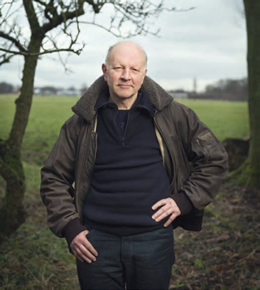
Maarten ’t Hart (Maassluis, 25 november 1944)


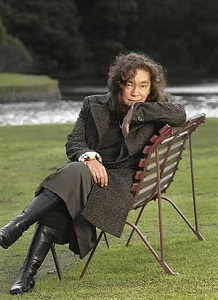
De Nederlandse schrijfster Connie Palmen werd op 25 november 1955 geboren in Sint Odiliënberg. Zie ook alle tags voor Connie Palmen op dit blog.

Uit:Jij zegt het

"Voor de meeste mensen bestaan wij alleen in een boek, mijn bruid en ik. De afgelopen vijfendertig jaar heb ik met een machteloos afgrijzen moeten aanzien hoe onze echte levens bedolven raakten onder een modderstroom van apocriefe verhalen, valse getuigenissen, roddels, verzinsels, mythen, hoe onze ware, complexe persoonlijkheden werden vervangen door clichématige personages, vernauwd tot simpele imago´s, op maat gesneden voor een sensatiebelust lezerspubliek.
En dan was zij de broze heilige, ik de brute verrader.
Ik heb gezwegen.
Tot nu."
(…)

“Alles aan mijn bruid ontroerde me, maar dit onvermogen zichzelf te zijn, de panische zoektocht naar een oprechte stem, greep me het meest aan. Ze was afgesneden van het puurste deel van haar zelf, daar waar haar creativiteit en genie zetelden, vastgehecht aan de wond, de woede en de wreedheid. Dat afgesneden zijn was de bron van haar frustratie en wanhoop. De rationalisaties van het brave, ambitieuze meisje hielden haar weg van wat dubbelzinnig, complex, obscuur en gewelddadig is, van haar ware natuur.”
(…)

‘Vanaf het moment dat ik roem verwierf als dichter heb ik het publieke leven dat daar als een duivelsstaart aan vastzit, gehaat. Waarom ze het een leven noemen is mij een raadsel, het is de diefstal van je leven."


 1843544-cd10878f63d182bb3fa4a78b6b15986c.jpg
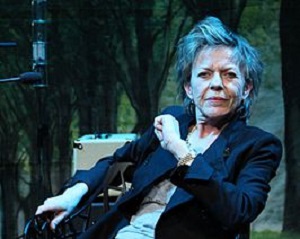
Connie Palmen (Sint Odiliënberg, 25 november 1955)


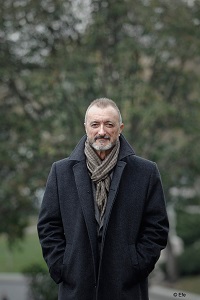
De Spaanse schrijver Arturo Pérez-Reverte werd geboren op 25 november 1951 in Cartagena. Zie ook alle tags voor Arturo Pérez-Reverte op dit blog.

Uit: The Painter of Battles (Vertaald door Margaret Sayers Peden)

“At any rate, Faulques thought, the season was almost over; with every trip there were fewer tourists on board the tender, and soon those daily visits would become weekly, until they were interrupted by the harsh gray mistrals that blew in the winter, funneling in through the straits called Bocas de Poniente, darkening sea and sky.
He turned his attention back to the painting, where new cracks had appeared. The large circular panorama was not as yet continuous; some zones were blank except for strokes of charcoal, simple black lines sketched on the white primer of the wall. The whole formed an immense and disquieting landscape, no title, no specific time, where the shield half buried in the sand, the medieval helmet splashed with blood, the shadow of an assault rifle falling over a forest of wood crosses, the ancient walled city and modern concrete-and-glass towers coexisted less as anachronisms than as evidence.
Faulques went back to his painting, laboriously, patiently. Although the technical execution was correct, it was not an outstanding work, and he knew it. He had a good hand for drawing, but he was a mediocre painter. He knew that as well. In truth, he had always known it; however, the mural was not destined to be seen by anyone but him. That had little to do with artistic ability and much to do with his memory. With an eye guided by thirty years of hearing the sound of a camera shutter. Hence the framing—that was as good a name to give it as any other—of all those straight lines and angles traced with a singular, vaguely Cubist severity that lent beings and objects contours as impossible to breach as barbed wire or moats. The mural took up the wall of the ground floor of the watchtower in a continuous panorama twenty-five meters in circumference and almost three meters in height, interrupted only by the openings of two narrow, facing windows, the door that led outside, and the spiral staircase that led to the upper floor that Faulques had arranged as his living quarters: a gas ring, a small refrigerator, a canvas cot, a table and chairs, a rug, and a trunk. He had lived there for seven months, and had spent the first two making it habitable: a temporary waterproof wood roof for the tower, concrete beams to reinforce the walls, shutters at the windows, and the drain that emptied out over the cliff from the small lower-level latrine carved out of the rock. He also had an outdoor water tank installed atop a board-and-tile shed that served both as a shower and as a garage for the motorcycle he rode down to the village each week to buy food.”


 1843544-bb2b123a843043bef6866ee2eda5e38e.jpg
Arturo Pérez-Reverte (Cartagena, 25 november 1951)


De Australische (Aboriginal) schrijfster Alexis Wright werd geboren op 25 November 1950 in de Gulf of Carpentaria. Zie ook alle tags voor Alexis Wright op dit blog.

Uit: Carpentaria

„The screaming, uncooperative animals didn’t comprehend English, or barbarism either. After being hounded for several hours by their pursuers on foot and horseback, and stoned and whipped, the camels were eventually moved out over the claypans and shot. In the archival records written with a thick nib by a heavy-handed municipal clerk it is recorded, Camels removed. The first entry of work completed by the Town’s Municipal Council.
In the old camel-drivers’ camps the seeds of mimosa embedded in camel dung sprouted their hard little shoots in the Wet season. Thousands of seeds spread along every track and gully, flooding with sheetwater from the rain to regenerate in shallow mud pools. The shoots sent down their fat roots to take a steely grip on the claypans, holding the land together in a mirage that looked like it might last forever without water. In this mirage the cattle properties prospered on traditional lands taken but never ceded. Today, herds of Brahman-cross cattle leave their tracks crisscrossing the landscape in the dry season, as they search for stubbly patches of bluegrass and grind the top layers of soil to powdered bulldust.”


 1843544-a68d166ddbf1f2c0a735688d3836f0eb.jpg
Alexis Wright (Gulf of Carpentaria, 25 November 1950)


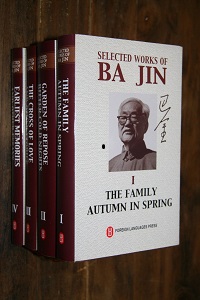
De Chinese schrijver Ba Jin werd op 25 november 1904 geboren in Chengdu. Zie ook alle tags voor Ba Jin op dit blog.

Uit: When the Snow Melted (Vertaald door Tang Sheng)

“You mustn't take this too seriously, Jingfang. I'm afraid there's some misunderstanding. Bohe isn't that kind of man at all. You know how it is, husband and wife always quarrel over trifles. I'm sure you'll make it up again after a while."
"Zisheng, you don't know how good he used to be, how considerate and loving. He respected and anticipated my every wish. That was why, for love of him, I was willing to leave my family and cross the wide ocean with him. But now . . . now I'm sure I have very little place in his heart." She went on complaining, paying no attention to my arguments. But that was not surprising, seeing I had used them half a dozen times already.
"You don't know, Zisheng, you just don't know. I can't bear to think of the past." She was growing more agitated, letting her feelings run away with her. Her voice broke and she dabbed at her eyes with a handkerchief.
I was feeling more embarrassed every second. I could find no words to comfort her and her distress went to my heart. Red and blue flames were leaping from the fire blazing in the grate. Golden sunlight slanting in through the windows made a bright patch on my desk. I sat half in the sun. But the room's warm comfort was quite wasted on me. I longed for Bohe's arrival to rescue me from a difficult position. I knew too that there was every hope of his coming.”


1843544-c9250bac621f0a57afc668110a529141.jpg
Ba Jin (25 november 1904 – 17 oktober 2005) 
Keuze uit zijn werk


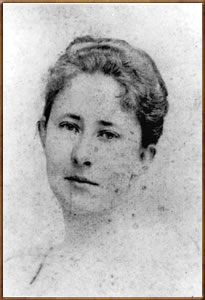
De Nederlandse schrijfster Augusta de Wit werd geboren in Sibolga (Sumatra) op 25 november 1864. Zie ook alle tags voor Augusta de Wit op dit blog.

Uit:Orpheus in de dessa

“Er was hier geen pad. Tot over de enkels wegzakkend in den drassigen grond wrong hij zich door het dichte groeisel heen. Tusschen de slank opgeschoten stammen van palmen en breedbladerige wilde pisang-boomen was het een taai, langstrengelig warsel van opschietend en afhangend gebladerte, rankende kruiden, als netten over den grond gespreid, en kronkelig saamgeweven slingerplanten. Er hing een groene half-duisternis, als ware het de zichtbaar geworden adem van dat millioenentallig plantenvolk. En de koele lucht van het water en van de natte steenen in de beek vermengde zich met duffige aarddampen en met den reuk van het groen, tot een wadem die tegelijk prikkelend was en zwaar. Terwijl Bake voortworstelde, zwiepende takken op zij slaande, en zijn kleeren losrukkend uit de slingerlissen der doornige rottan, zweefden hem telkens opgejaagde zwermen muskieten in 't gezicht. Hij sloeg waar ze hem staken, en voelde zijn handen nat van bloed. Hijgend en overstroomd van zweet bereikte hij den zoom van het bosch.
De vallei lag voor hem. De plas schitterde, overgloord van den afschijn der avondwolken. Het riet aan de kanten scheen op te sprieten uit een vloed van vuur. Hij baadde zijn heet geschramd gezicht en handen koel, en uit een pisang-blad een stuk van, het zijde-achtig piepende weefsel scheurend, draaide hij er een drinkkelk van op de wijze zooals hij het Inlanders had zien doen, en dronk met lange teugen het water dat als kwikzilver in den groenen beker glansde, rijen schitterpuntjes aanzettend langs de bladnerven."


 1843544-c16e410c7664b038681cf5bad402a1a1.jpg
Augusta de Wit (25 november 1864 - 9 februari 1939)
Jeugdfoto


Zie voor nog meer schrijvers van de 25e november ook mijn blog van 25 november 2012 deel 2.

Geschreven door Romenu om 18:24 Reageer op dit bericht

Abdelkader Benali

De Nederlandse schrijver en tv-presentator Abdelkader Benali werd geboren in Ighazzazen, Marokko, op 25 november 1975. Benali kwam op vierjarige leeftijd naar Rotterdam. Later verhuisde hij naar Amsterdam. Benali schrijft behalve romans en toneel ook artikelen en recensies voor onder meer Algemeen Dagblad, de Groene Amsterdammer, Esquire, de Volkskrant en Vrij Nederland. Voor zijn romandebuut Bruiloft aan zee werd hij in 1997 genomineerd voor de Libris Literatuur Prijs, die hij in 2003 kreeg voor zijn tweede roman, “De langverwachte”. Tijdens de Israëlisch-Libanese Oorlog in 2006 verzorgde Benali voor Vrij Nederland een weblog vanuit Libanon, waar hij bij het uitbreken van de oorlog toevallig verbleef. In 2010 trok hij met Jan Mulder in het programma Wereldkampioen van Afrika door Afrika in aanloop naar het wereldkampioenschap in Zuid-Afrika. Benali presenteerde in het voorjaar van 2010 het NPS-programma De schrijver en de stad. In 2011 volgde een zesdelige serie Benali Boekt waarin Abdelkader Benali bekende Nederlandse schrijvers interviewde: Ramsey Nasr, Leon de Winter, Doeschka Meijsing, Tommy Wieringa, Thomas Rosenboom, Connie Palmen. In het tweede seizoen van Benali Boekt (2012) stonden centraal: Jan Wolkers, Maarten 't Hart, Tim Krabbé, Tessa de Loo, Anna Blaman en J. Bernlef. In 2016 trad Benali samen met zijn vrouw en dochter op in de TV-serie Chez Benali. De serie werd gebracht als een culinair-historische ontdekkingsreis door het geboortland van Benali. Zie ook alle tags voor Abdelkader Benali op dit blog.

Uit: De eeuwigheidskunstenaar

‘Diezelfde Renaissance, die niet alleen onze Europese cultuur het elan en het vooruitgangsdenken heeft gegeven die ze in de koude Middeleeuwen ontbeerde. Voorloper daarvan was uw Federico II, op Sicilië, waar hij met Arabieren en joden de wereld in kaart bracht en mooier maakte, een waarlijke voorloper, die een onuitputtelijke voorraad aan kunstschatten voortbracht welke in uw kerken en paleizen liggen opgeborgen en waarvan we nog niet alle geheimen kennen. Uw meesters hebben me altijd geïntrigeerd en me ook geïnspireerd. Wat ik daarmee wil zeggen: mijn oeuvre hoort u toe. Pico della Mirandola is mijn kijkmeester, zoals Dante mijn schrijfmeester is. De Alpen scheiden ons van u, leren we op de lagere school, maar dat is geografische nonsens voor kinderen. In de toekenning van deze prijs geeft u te kennen de lagere school allang te zijn ontgroeid. Niet alleen om die reden beschouw ik deze prijs als de meest eervolle die ik heb gekregen, al was het maar omdat hiermee bewezen is dat er leven is voor mensen die geen ideale leerlingen waren. Het is een van de redenen, maar die reden alleen is genoeg om alle andere argumenten te laten voor wat ze zijn. Op de Renaissance, op u!’
(…)

Verbeelding zorgde ervoor dat de wereld zich in jou kon verplaatsen. Hoe dat in elkaar zat, daar was hij als kind achter gekomen. Hij wist het nog precies. Terwijl zijn moeder zich achter hem voorbereidde op een soiree – zo noemde het – buiten de deur, was hij gegrepen door de voor hem magische verschijning van de flikkerende vuurvlam in de open haard. Zij hadden een open haard en van tijd tot tijd liet zijn moeder er wat hout in gooien. Ze zat nooit bij de open haard. Niet alleen was hij stomverbaasd dat zijn moeder geen oog had voor het dartele spel van een chemische Prometheus, nog vreemder vond hij de sensatie van het vuur dat in hem bewoog. Hij was dat vuur geworden enkel en alleen door zich ervoor te openen. De wereld verplaatste zich in jou.”


 1943403-2deb589196ac409614f6bb8c9f0b6bf7.jpg
Abdelkader Benali (Ighazzazen, 25 november 1975)

Geschreven door Romenu om 00:00 Reageer op dit bericht

Meer van Romenu

↑ Terug naar de berichten