

Naar de inhoud

Romenu

Over literatuur, gedichten, kunst en cultuur
akke.beakke.be

Berichten van 29 februari 2016 tot 1 maart 2016

Jan Eijkelboom, Jim Crace, Franz Hohler, Lytton Strachey, Robert Lowell, Myrthe van der Meer
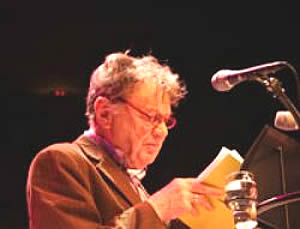
De Nederlandse dichter, vertaler en journalist Jan Eijkelboom werd op 1 maart 1926 in Ridderkerk geboren. Zie ook alle tags voor Jan Eijkelboom op dit blog.


De kunst

In die tijd trokken amateurs
met zwarte kastjes er op uit
om in een poortdoorgang
het tegenlicht te vangen

dat door de lindeblaadjes scheen.
Of ze betraden gretig het park
op de dag van de eerste sneeuw.
Vanaf meegenomen keukentrapjes

legden zij vast hoe ijzel of rijp
van takjes toverstokjes maakte.
Ook ik verbalisant betrapte

dat voortvluchtig licht en
sloot het op in een sonnet
waaruit het ijlings is ontsnapt.


Hij had geen talent

Hij had geen talent voor tragiek,
verdonkeremaande rampspoed
bij het leven, meanderde
door een landschap tot aan
een toevallige stad
waar hij plotseling zag:
hier kom ik vandaan.

Af en toe viel hem in
dat hij misschien wel bestond.
Ook zag hij een vrouw
van wie het bestaan
met geen pen
te ontkennen.

Ze paarden en hadden geluk.
Toen hij later tot zijn verbazing
het leven moest laten
liet hij één boodschap na:
als jullie mij gaan verstrooien
ga dan met je rug naar de wind toe staan.


Vox humana

In een klein dijkhuis staat,
ziet hij door ’t uitvergrote raam,
het oude orgel bijna naakt.
Over de toetsen ligt een loper.
Tussen de twee koop’ren kandelaars
staat een gezangboek open.
Hij hoort weer het asmatisch steunen:
loflied of klaagzang – eender zeurt
deze muziek, tot hij die deur
snel weer vergrendelt. En toch,
o mocht hij nog een keer,
geknield voor ’t orgelfront,
de trappers voor de vrouw bewegen
die boven hem haar psalmen zong.


 1884378-423c06d11283272eb70d783dc69351c9.jpg
Jan Eijkelboom (1 maart 1926 – 28 februari 2008)


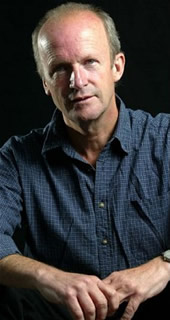
De Engelse schrijver Jim Crace werd geboren op 1 maart 1946 in St. Albans, Hertfordshire. Zie ook alle tags voor Jim Crace op dit blog.

Uit: The Devil's Larder

“Grandma said I wouldn’t catch him eating the dough. ‘That’s only greedy birds,’ she explained. ‘The angel comes to kiss it, that’s all, otherwise my bread won’t rise.’ And, sure enough, I often saw the birds come down to peck at our strip of dough. And, sure enough, my grandma’s bread would nearly always rise. When it didn’t she would say the birds had eaten the strip of dough before the angel had had a chance to prove it with his kisses.
But I never saw an angel on the windowsill. Not even once.
The thought of angels in the yard terrified my girls and so, when we made bread — in that same house, but thirty years along the line and Grandma long since gone to kiss the angels herself — I used to say, ‘To make good bread I need an angel in the kitchen. Who’ll be the angel today and kiss the dough?’ My girls would race to kiss the dough. I’ll not forget the smudge of flour on their lips. Or how, when I had taken the scarred and toppling loaves of bread out of the oven, they’d demand a strip of hot crust to dip into the honey pot or wipe around the corners of the pâté jar. This was their angel pay. This was their reward for kissing.
Now there are no angels in the kitchen. I’m the grandma and the girls are living far too far away to visit me more than once or twice a year. I’m too stiff and out of sorts to visit them myself unless I’m taken in a car, but I don’t like to ask. I stay in touch with everyone by phone. I keep as busy as I can. I clean, although the house is far too large for me. I walk, when it is warm and dry, down to the port and to the shops and take a taxi back. I keep plants in the yard in pots and on the windowsills. I eat mostly out of a can or frozen meals or packet soups.
This afternoon, I thought I’d fill my time by making bread. My old wrists ache with tugging at the dough of what, I think, will have to be my final loaves. I tore a strip off for good luck, kissed it, put it on the window-sill. I warmed the oven, greased the tins, and put the dough to cook on the highest shelf. Now I’m waiting at the window, with a smudge of flour on my lips and with the smell of baking bread rising through the house, for the yard to fill and darken with the shadows and the wings.”
 

1884378-8754248bd37dad2a2674fbc22bb0196f.jpg
Jim Crace (St. Albans, 1 maart 1946)


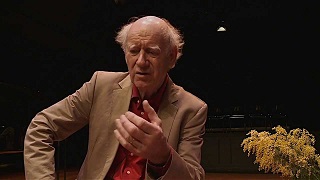
De Zwitserse dichter, schrijver, cabaretier en liedjesmaker Franz Hohler werd geboren op 1 maart 1943 in Biel. Zie ook alle tags voor Franz Hohler op dit blog.

Uit: Der Langläufer

“Er versuchte noch etwas zu beschleunigen. Er hatte geglaubt, als er gegen Abend aus der Waldroute abbog, er sei der großen Masse der Läufer entronnen, aber jetzt, da er ins Tal kam, hörte er wieder das bekannte Knirschen hinter sich, zusammen mit dem leicht klingelnden Geräusch der einsetzenden Stockspitzen. Es ärgerte ihn,daß um diese Zeit, wo die meisten den Sammel- und Ausgangsplätzen zuliefen, noch jemand die Idee hatte, ins Tal hinauf zu gehen, es war schon schattig und die Loipe stieg an, man brauchte Ausdauer, wenn man in dem Tempo weitergehen wollte, das er jetzt angeschlagen hatte. Er wollte in dem Tempo weitergehen, er wollte sich nicht überholen lassen, er wollte die Loipe so frei vor sich sehen wie jetzt, er hatte begonnen, Langlauf zu machen, weil er menschenleere Flächen durcheilen wollte, und war erschrocken gewesen über die Menschenmassen, die sich auf den zwei Spuren ausbreiteten, wo das Überholen fast in gleich wenigen Momenten möglich war wie auf der Autostraße.
Vor allem hatte ihn die eigentlich erfreuliche Tatsache, daß diese Sportart auch für alte Leute möglich war, mit einem eigenartigen Widerwillen erfüllt, wenn er sah, wie viele halb mumifizierte Kolonnen sich hier mühsam von einem Hügelchen zum nächsten schoben, oder wenn er, die talwärts führende Spur hinunterfahrend, die ältlichen Schweißschwaden der Hinaufkeuchenden durchpflügte.
Deshalb wohl war er jetzt abgebogen, und deshalb wollte er sich auf keinen Fall überholen lassen, auch wenn das Knirschen hinter ihm näherkam. Er konnte mit den Beinen nicht mehr wesentlich schneller laufen, eigentlich war es ihm immer rätselhaft, wie jemand schneller sein konnte als er.
Er gab noch mehr Druck auf die Stöcke, was ihn zwar am linken Ellbogen ziemlich schmerzte und auch an der Hand, er war gestern hingefallen, aber er wollte niemanden vor sich sehen, es war schön hier, der Bach links war fast zugefroren, und auf den Bäumen des Waldes lag frischgefallener Schnee.“
 

1884378-f5f98a8a77822c35121eeca7a5fb8f59.jpg
Franz Hohler (Biel, 1 maart 1943)


De Britse schrijver Giles Lytton Strachey werd geboren op 1 maart 1880 in Londen. Zie ook alle tags voor Lytton Strachey op dit blog. 

Uit: The Letters of Lytton Strachey

“To Leonard Woolf
Hotel d'Angleterre St Jean de Luz Basse Pyrénées France December 21st 1900

Dear Woolf,
I got your kind letter with much joy. The sunny south is at present not quite so sunny as it ought to be, but it has been charming - blue sea, and hills and fresh air and heat enough for anyone. The country is Basque and rather strange, with bullock-carts and things at every turn - flooded with English of course, which makes it more or less unpleasant. The only man of any amusement (barring a decayed millionaire and a gouty Baron) is an Oxford person, who teaches little boys, and in the intervals writes poems for the Spectator. You can imagine the sort of Oxford Schoolmaster poetical absurd sort of person. I go and listen to him and laugh for evenings at a time. He gives me his poems to read (bad enough) and good advice (rather worse) and his views on Shakespeare (quite ridiculous). We talked the other day of people we should like to meet. I mentioned Cleopatra. He said: `I should rather see Our Lord than anyone else.' I had to reply 'Oh, I put him on one side as inhuman.' And so we were embarked on the Grand Controversy. He was silly enough but not so silly (I should think) as the Junior Dean, and allowed me to laugh as much as I liked, even going so far as to admit that the divinity has its ludicrous side. I said that purely as a matter of taste four in one pleased me rather more than three in one, and seven in one most of all - but he wouldn't follow up this line of argument. [...]
your loving GLS”
 

 1884378-4307c8f142b6b18b39915f85ae702ffc.jpg
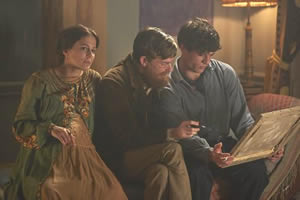
Lytton Strachey (1 maart 1880 – 21 januari 1932)
Ed Birch als Lytton tussen Phoebe Fox (Vanessa Bell) en James Norton (Duncan Grant)

in de BBC miniserie “Life in Squares” uit 2015


De Amerikaanse dichter Robert Traill Spence Lowell werd geboren op 1 maart 1917 in Boston. Zie ook alle tags voor Robert Lowell op dit blog.


July In Washington

The stiff spokes of this wheel
touch the sore spots of the earth.

On the Potomac, swan-white
power launches keep breasting the sulphurous wave.

Otters slide and dive and slick back their hair,
raccoons clean their meat in the creek.

On the circles, green statues ride like South American
liberators above the breeding vegetation—

prongs and spearheads of some equatorial
backland that will inherit the globe.

The elect, the elected . . . they come here bright as dimes,
and die dishevelled and soft.

We cannot name their names, or number their dates-
circle on circle, like rings on a tree—

but we wish the river had another shore,
some further range of delectable mountains,

distant hills powdered blue as a girl's eyelid.
It seems the least little shove would land us there,

that only the slightest repugnance of our bodies
we no longer control could drag us back.


To Speak of Woe That Is in Marriage

“It is the future generation that presses into being by means of
these exuberant feelings and supersensible soap bubbles of ours.”
—Schopenhauer

“The hot night makes us keep our bedroom windows open.
Our magnolia blossoms.  Life begins to happen.
My hopped up husband drops his home disputes,
and hits the streets to cruise for prostitutes,
free-lancing out along the razor’s edge.
This screwball might kill his wife, then take the pledge.
Oh the monotonous meanness of his lust. . .
It’s the injustice . . . he is so unjust—
whiskey-blind, swaggering home at five.
My only thought is how to keep alive.
What makes him tick?  Each night now I tie
ten dollars and his car key to my thigh. . . .
Gored by the climacteric of his want,
he stalls above me like an elephant.”
 

 1884378-0ee9b587d97f9998afa35f2ba4c6ce96.jpg
Robert Lowell (1 maart 1917 - 12 September 1977)
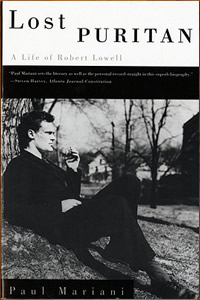
Cover biografie


De Nederlandse schrijfster Myrthe van der Meer (pseudoniem) werd geboren op 1 maart 1983 in Den Bosch. Zie ook alle tags voor Myrthe van der Meer op dit blog.

Uit: PAAZ

"Als Felix de hoorn op de haak legt, kijkt hij me argwanend aan.
‘Wat kwam Simon doen?'
‘Gewoon.’ antwoord ik nonchalant, ‘Even vragen of ik een mailtje kan sturen. Ik ben al bijna klaar.’
‘Jij mocht toch niets nuttigs meer doen? Het enige wat jij nog zou doen is daar zitten en mij vervelen. Jij moet op vakantie.’
Ik kijk hem lachend aan. ‘Felix. Ie kunt nu wel een beetje autoritair gaan doen, maar we weten allebei dat niemand daarin deze kamer ook maar iets van gelooft.’
‘Dat bedoel ik,’ zegt hij. ‘Kind, ik ga je missen. Straks zit ik de hele tijd tegen jouw lege bureaustoel aan te kijken.’
‘Dat kan alleen maar een verbetering zijn,’ mompel ik, maar als ik zijn blik opvang, duik ik snel achter mijn computer. Geen cynische opmerkingen meer maken. Zodra ik mijn inbox aanklik, springt er een nieuw bericht open.
‘Moet je horen,’ zeg ik spottend. ‘Mailtje van de bedrijfsarts: als ik niet nu op vakantie zou gaan, dan had hij me per direct naar huis gestuurd!’
‘Ja,’ zegt Felix. ‘Daar ben ik het wel mee eens.’
Ik schud mijn hoofd en gooi de e-mail weg. Ik werk, dus ik leef. Volgende taak. Hoe mail je iemand op een positieve en opbouwende manier dat iedereen helemaal gestoord wordt doordat hij zijn werk niet doet?”
 

 1884378-c3bfa88358f1f2b06bd489fe09a3e453.jpg
Myrthe van der Meer (Den Bosch, 1 maart 1983)


Zie voor nog meer schrijvers van de 1e maart ook mijn blog van 1 maart 2015 deel 1 en ook deel 2 en eveneens deel 3.


Geschreven door Romenu om 18:47 Reageer op dit bericht

Delphine de Vigan

De Franse schrijfster en filmmaakster Delphine de Vigan werd geboren op 1 maart 1966 in Boulogne-Billancourt. Na haar studie letterkunde en toepaste wetenschappen werd ze directrice studies aan een instituut voor enquêtes. Onder het pseudoniem Lou Delvig, schreef ze haar eerste autobiografisch geïnspireerde “Jours sans faim” (2001), waarin de strijd van een jonge vrouw tegen anorexia vertelt wordt. Een verhalenbundel en een tweede roman volgden in 2005, gepubliceerd onder haar echte naam. In augustus 2007 publiceerde de Vigan “No et moi” waarvoor zij de Prix des Libraires en de Prix du Rotary kreeg en die bewerkt werd voor de film door Zabou Breitman. In “Les heures souterraines”, genomineerd voor de Goncourt, hekelt zij de intimidatie op de werkplek. In 2011 verscheen “Rien ne s’oppose à la nuit“, waarin zij vertelt over haar moeders lijden aan een bipolaire stoornis. Daarmee won zij de Prix du Roman Fnac, de Prix des lectrices de Elle, de Prix Roman France Télévisions en de Prix Renaudot des lycéens. In hetzelfde jaar schreef zij samen met Gilles Legrand het scenario voor “Tu seras mon fils”. In 2013 regisseerde Delphine de Vigan haar eerste film “A coup sûr”,waarvoor zij samen met Chris Esquerre het scenario schreef. In 2015 won ze de Prix Renaudot en de Prix Goncourt des lycéens voor haar roman « D'après une histoire vraie".

Uit : D'après une histoire vraie

"Quelqucs mois après la parution de mon dernier roman, j’ai cessé d’écrire. Pendant presque trois années, je n'ai pas écrit une ligne. Les expressions figées doivent parfois s’entendre au pied de la lettre : je n’ai pas écrit une lettre administrative, pas un carton de remerciement, pas une carte postale de vacances, pas une liste de courses. Rien qui demande un quelconque effort de rédaction, qui obéisse à quelque préoccupation de forme. Pas une ligne, pas un mot. La vue d’un bloc, d'un carnet, d’une fiche bristol me donnait mal au cœur.
Peu à peu, le geste lui-même est devenu occasionnel, hésitant, ne s’exécutait plus sans appréhension. Le simple fait de tenir un stylo m’est apparu de plus en plus difficile.
Plus tard, j’ai été prise de panique dès que j’ouvmis un document Word.
Je cherchais la bonne position, l'orientation optimale de l’écran, i'e‘tirais mes jambes sous la table.
Et puis je restais là, immobile, des heures durant, les yeux rivés sur l'écran.
Plus tard encore, mes mains se sont mises à trembler dès que je les approchais du clavier.
J'ai refusé sans distinction toutes les propositions qui m’ont été adressées : articles, nouvelles de l’été, préfaces et autres participations à des ouvrages collectifs. Le simple mot écrire dans une lettre ou un message suffisait à me nouer l‘estomac.
Écrire, je ne pouvais plus.
Écrire, c'était non.
Je sais aujourd’hui que différentes rumeurs ont circulé dans mon entourage, dans le milieu littéraire et sur les réseaux sociaux. Je sais qu‘il a été dit que je n’écrirais plus, que j’étais parvenue au bout de quelque chose, que les feux de paille, ou de papier, toujours, finissent par s’éteindre. L‘homme que j’aime s’est imaginé qu'à son contact j’avais perdu l'élan, ou bien la faille nourricière. et que par conséquent je ne tarderais pas à le quitter.
Lorsque des amis, des relations, et parfois même des journalisres se sont aventurés à me poser des questions sur ce silence, j’ai évoqué différents motifs ou cmpêchements parmi lesquels figuraient la fatigue, les déplacements à l’étranger, la pression liée au succès, ou même la fin d’un cycle littéraire."


 1969135-8c6cb78b324ad6333372dc7754d9ab97.jpeg
Delphine de Vigan (Boulogne-Billancourt, 1 maart 1966)

Geschreven door Romenu om 00:00 Reageer op dit bericht

Martin Suter, Yórgos Seféris, Marin Sorescu, Howard Nemerov, Saul Williams, John Byrom

De Zwitserse schrijver Martin Suter werd geboren op 29 februari 1948 in Zürich. Zie ook alle tags voor Martin Suter op dit blog.

Uit: Lila, Lila

“Marie hatte Weihnachten nicht immer gehast. Als ganz kleines Madchen hatte sie es fast nicht erwarten konnen, das nachste Fensterchen im Adventskalender öffnen zu durfen. Und am Abend, an dem dann endlich, endlich das Christkind kam, sas sie stumm vor Ergriffenheit unter dem Christbaum und muste von ihren Eltern dazu aufgefordert werden, die Geschenke zu öffnen.
Aber nach der Scheidung war Weihnachten nur noch dazu da, sie daran zu erinnern, das ihre Eltern nicht mehr zusammenwaren.
Sie muste jetzt zweimal feiern, einmal mit Myrtha und ihrem jeweiligen Freund, einmal mit ihrem Vater und seiner furchtbaren neuen Frau.
Mit zwolf gab sie bekannt, das sie nicht mehr Weihnachten feiern wolle. Bei ihrem Vater sties sie dabei auf keinerlei Widerstand. Bei Myrtha war es komplizierter. Wenn sie von ihrer Weihnachtsdepression heimgesucht wurde, was, je alter sie wurde, desto o∫er eintraf, brachte Marie es nicht ubers Herz, Weihnachten zu ignorieren.
Aber jetzt, wo Myrtha in Crans Montana war und Marie unbeschwerte Weihnachten mit ein paar Videos und Fertigpizzas verbringen konnte, hatte sie plotzlich das Bedürfnis nach Gesellschaft.. Deshalb verbrachte sie die letzten Abende des Weihnachts-Countdowns zu ihrer eigenen Verwunderung mit ihrer neuen Ersatzfamilie im Esquina. Und selbst in den Nachten blieb sie nicht immer allein.
Zwei davon verbrachte sie mit Ralph, auf den sie sich doch eigentlich gar nicht hatte einlassen wollen.
Fur jeden Abend nahm sie sich vor, nur kurz auf ein Glas hereinzuschauen und vor zwolf zu Hause zu sein. Aber jedesmal blieb sie hangen. Nicht, weil das Gesprach gerade so interessant war oder die Gesellscha∫ so angenehm oder die Nacht so schon. Es war die Vorstellung, allein in der Wohnung ihrer Mutter vor dem Fernseher zu sitzen, die sie im Esquina hielt.“


 1883862-755d8a5410ed1fa20c26a647511f62ef.jpg
Martin Suter (Zürich 29 februari 1948)


De Griekse dichter Yórgos Seféris werd geboren in Smyrna (nu Izmir, in Turkije) op 29 februari 1900. Zie ook alle tags voor Yórgos Seféris op dit blog.


In The Goddess' Name I Summon You

Oil on limbs,
maybe a rancid smell
as on the chapel's
oil-press here,
as on the rough pores
of the unturning stone.

Oil on hair
wreathed in rope
and maybe other scents
unknown to us
poor and rich
and statuettes offering
small breasts with their fingers.

Oil in the sun
the leaves shuddered
when the stranger stopped
and the silence weighed
between the knees.
The coins fell:
‘In the goddess's name I summon you...'

Oil on the shoulders
and the flexing waist
legs grass-dappled,
and that wound in the sun
as the bell rang for vespers
as I spoke in the churchyard
with a crippled man.


Flowers of the rock

Flowers of the rock facing the green sea
with veins that reminded me of other loves
glowing in the slow fine rain,
flowers of the rock, figures
that came when no one spoke and spoke to me
that let me touch them after the silence
among pine-trees, oleanders, and plane-trees.


 1883862-48f03fed46ca7516207455fab22349bb.jpg
Yórgos Seféris (29 februari 1900 - 20 september 1971)


De Roemeense dichter Marin Sorescu werd geboren op 29 februari 1936 in Bulzeşti. Zie ook alle tags voor Marin Sorescu op dit blog.


Carbon Paper

Someone overnight sticks a gigantic
piece of carbon paper on my door.
Everything I am thinking immediately
comes through on the Other side of the wall.

Inquisitive people from all over the place
come in throngs, I hear the soles of their shoes
lift up the stairs to my apartment
and. leaving,
put them down again.

They are birds of every species,
moon farm dogs,
transitions, forest aisles and
old acacias that
suffer from insomnia.

They put on spectacles and
read me, are moved or
threaten me with their fists, it
depends, for I have a
clear idea of it all.

Only about my soul
I know nothing.
About my soul that perpetually
slides away from me between days,
like a cake of soap
in the bath.


Vertaald door Irina Livezeanu


 1883862-abc7813c4a2bbd52e8d317a3939b6eaf.jpg
Marin Sorescu (29 februari 1936 – 8 december 1996)
Affiche voor een expositie van zijn schilderijen, 2012


De Amerikaanse dichter en literatuurdocent Howard Nemerov werd geboren op 29 februari 1920 in New York. Zie ook alle tags voor Howard Nemerov op dit blog.


The View From An Attic Window

Among the high-branching, leafless boughs
Above the roof-peaks of the town,
Snowflakes unnumberably come down.

I watched out of the attic window
The laced sway of family trees,
Intricate genealogies

Whose strict, reserved gentility,
Trembling, impossible to bow,
Received the appalling fall of snow.

All during Sunday afternoon,
Not storming, but befittingly,
Out of a still, grey, devout sky,

The snowflakes fell, until all shapes
Went under, and thickening, drunken lines
Cobwebbed the sleep of solemn pines.

Up in the attic, among many things
Inherited and out of style,
I cried, then fell asleep awhile,

Waking at night now, as the snow-
flakes from darkness to darkness go
Past yellow lights in the street below.


2
I cried because life is hopeless and beautiful.
And like a child I cried myself to sleep
High in the head of the house, feeling the hull
Beneath me pitch and roll among the steep
Mountains and valleys of the many years
That brought me to tears.

Down in the cellar, furnace and washing machine,
Pump, fuse-box, water heater, work their hearts
Out at my life, which narrowly runs between
Them and this cemetery of spare parts
For discontinued men, whose hats and canes
Are my rich remains.

And women, their portraits and wedding gowns
Stacked in the corners, brooding in wooden trunks;
And children’s rattles, books about lions and clowns;
And headless, hanging dresses swayed like drunks
Whenever a living footstep shakes the floor;
I mention no more;

But what I thought today, that made me cry,
Is this, that we live in two kinds of thing:
The powerful trees, thrusting into the sky
Their black patience, are one, and that branching
Relation teaches how we endure and grow;
The other is the snow,

Falling in a white chaos from the sky,
As many as the sands of all the seas,
As all the men who died or who will die,
As stars in heaven, as leaves of all the trees;
As Abraham was promised of his seed;
Generations bleed,

Till I, high in the tower of my time
Among familiar ruins, began to cry
For accident, sickness, justice, war and crime,
Because all died, because I had to die.
The snow fell, the trees stood, the promise kept,
And a child I slept.


 1883862-cf1bb10fe9297298e5599dcd4647fa82.jpg
Howard Nemerov (29 februari 1920 – 5 juli 1991)
Cover 


De Amerikaanse dichter, schrijver, acteur, rapper en musicus Saul Stacey Williams werd geboren in Newburgh, New York op 29 februari 1972. Zie ook alle tags voor Saul Williams op dit blog.


Untimely Meditations

CHAPTER 1
Time is money. Money is time.
So, I keep seven o’clock in the
bank and gain interest in the
hour of God.  I’m saving to buy
my freedom. God grant me wings.
I’m too fly not to fly. Eye sore
to look at humans without wings.
So, I soar. And find tickle in the
feather of my wings. Flying
hysterically over land. Numerically,
I am seven mountains higher than
the valley of death, seven dimensions
deeper than dimensions of breath.


CHAPTER 2
The fiery sun of my passions
evaporates the love lakes of my
soul, clouds my thoughts and
rains you into existence. As I take
flights on bolts of lightening.
Claiming chaos as my concubine
and you as my me. I of the storm.
You of the sea. We of the moon.
Land of the free. What have I done
to deserve this? Am I happy?


 1883865-578e18921bfced5a9513f436191ffe49.jpg
Saul Williams (Newburgh, 29 februari 1972)


De Engelse dichter John Byrom werd geboren op 29 februari 1692 in Manchester. Zie ook alle tags voor John Byrom op dit blog.


The Three Black Crows

Two honest tradesmen meeting in the Strand,
One took the other briskly by the hand;
"Hark ye," said he, "'tis an odd story this
About the crows!" — "I don't know what it is,"
Replied his friend. — "No! I'm surprised at that;
Where I come from, it is the common chat;
But you shall hear an odd affair indeed!
And that it happen'd they are all agreed;
Not to detain you from a thing so strange,
A gentleman, who lives not far from 'Change,
This week, in short, as all the Alley knows,
Taking a vomit, threw up Three Black Crows!"
  "Impossible!" —— "Nay, but 'tis really true;
I had it from good hands, and so may you." ——
"From whose I pray?" —— So, having named the man,
Straight to enquire, his curious comrade ran.
"Sir did you tell?" —— relating the affair.
"Yes sir, I did; and, if 'tis worth your care,
'Twas Mr." — such a one — "who told it me;
But, by the bye, 'twas Two black crows, not Three!"
  Resolved to trace so wondrous an event,
Quick to the third the virtuoso went.
"Sir," — and so forth. — "Why, yes; the thing is fact,
Though in regard to number not exact.
It was not Two black crows, 'twas only One;
The truth of that you may depend upon;
The gentleman himself told me the case."—
"Where may I find him?" — "Why in" — such a place.
  Away he went, and having found him out,
"Sir, be so good as to resolve a doubt."——
Then to his last informant he referr'd,
And begg'd to know, if true what he had heard:
"Did you, sir, throw up a black crow?" — "Not I!"—
"Bless me! — how people propagate a lie!
Black crows have been thrown up, Three, Two, and One:
And here, I find, all comes at last to None!
Did you say nothing of a crow at all?"——
"Crow — crow — perhaps I might; now I recall
The matter over." — "And pray, sir, what was't?"
"Why, I was horrid sick, and at the last
I did throw up, and told my neighbour so,
Something that was —— as black sir, as a crow."


 1883862-9573284683524f4e9c0fe3f6eeed4040.jpg
John Byrom (29 februari 1692 – 26 september 1763)
Cover

Geschreven door Romenu om 18:31 Reageer op dit bericht

Meer van Romenu

↑ Terug naar de berichten