

Naar de inhoud

Romenu

Over literatuur, gedichten, kunst en cultuur
akke.beakke.be

Berichten van 18 maart 2016 tot 19 maart 2016

Hans Mayer, Philip Roth, Mano Bouzamour, Kirsten Boie, Lynne Sharon Schwartz, Lina Kostenko, Petar Preradović
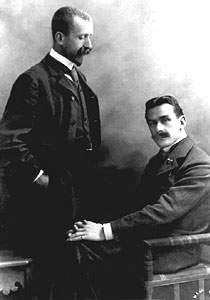
De Duitse literatuurwetenschapper, schrijver, criticus, jurist en socioloog Hans Mayer werd geboren op 19 maart 1907 in Keulen. Zie ook alle tags voor Hans Mayer op dit blog.

Uit: Du störst mich nicht (Über Thomas und Heinrich Mann: Briefwechsel 1900-1949)

„Thomas dagegen schreibt am 31. Juli, auch aus Kalifornien und nachKalifornien: „Wir haben große Personalnot, unsere Dunklen verlassen uns und neue sind teils unerschwinglich, teils unerträglich. Aber einmal werden wir ja wieder in Ordnung kommen und hoffen, dann Nelly und Dich recht bald einen Abend bei uns zu haben.“ Dieser Briefwechsel macht es Verehrern Thomas Manns nicht leicht.
Da ist noch mehr. Für den biographischen und auch literarischen Hintergrund des Frühwerks von Thomas Mann nämlich sind seine Briefe an Heinrich von einzigartiger Bedeutung.
Den ersten der erhaltenen Briefe schreibt der 25jährige Thomas Mann nach Abschluß von „Buddenbrooks“; das Manuskript liegt nun beim Verleger Samuel Fischer, aber noch hat der Autor über sein Werk „nichts Neues“ gehört; gleichzeitig gratuliert er ein bißchen säuerlich zur Verleger-Reklame für Heinrichs Roman „Im Schlaraf-fehlend“. Man lebt in einem Zeitalter der Migränen, ästhetischen Ressentimente und Nervenkrisrm, und der junge Thomas Mann, arg auf Modernität erpicht, läßt es sich gesagt sein. Leidenschaften werden .durchlitten‚ genossen und literarisch filtriert, was Schmerzhaftes nicht ausschließt.
Als .‚Buddenbrooks“ endlich angenommen ist, teilt der Verfasser dem älteren Bruder etwas ironisch mit: „Ich werde mich photographieren lassen, die Rechte in der Frackweste und die Linke auf die drei Bände gestützt; dann kann ich eigentlich getrost in die Grube fahren.“ Im selben Brief aber (13. Februar 1901} hieß es Vorher: „Depressionen wirklich arger Art mit vollkommen ernst gemeinten Selbstabschaffungsplänen haben mit einem unbeschreiblichen, reinen und unverhoftten Herzensglück gewechselt‚ mit Erlebnissen, die sich nicht erzählen lassen, und deren Andeutung natürlich wie Renommage wirkt.“ Es ist schwer, hier vom Bericht. über ein .,ernstes Leben“ zu sprechen.“


 1891736-001a962317606cc09f19869e4c1642cb.jpg
Hans Mayer (19 maart 1907 – 19 mei 2001)
Heinrich en Thomas Mann rond 1902


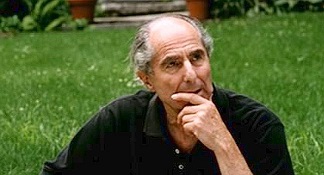
De Amerikaanse schrijver Philip Roth werd geboren op 19 maart 1933 in Newark. Zie ook alle tags voor Philip Roth op dit blog.

Uit: Nemesis 

“What people did know was that the disease was highly contagious and might be passed to the healthy by mere physical proximity to those already infected. For this reason, as the number of cases steadily mounted in the city — and communal fear with it — many children in our neighborhood found themselves prohibited by their parents from using the big public pool at Olympic Park in nearby Irvington, forbidden to go to the local “air-cooled” movie theaters, and forbidden to take the bus downtown or to travel Down Neck to Wilson Avenue to see our minor league team, the Newark Bears, play baseball at Ruppert Stadium. We were warned not to use public toilets or public drinking fountains or to swig a drink out of someone else’s soda-pop bottle or to get a chill or to play with strangers or to borrow books from the public library or to talk on a public pay phone or to buy food from a street vendor or to eat until we had cleaned our hands thoroughly with soap and water. We were to wash all fruit and vegetables before we ate them, and we were to keep our distance from anyone who looked sick or complained of any of polio’s telltale symptoms.
Escaping the city’s heat entirely and being sent off to a summer camp in the mountains or the countryside was considered a child’s best protection against catching polio. So too was spending the summer some sixty miles away at the Jersey Shore. A family who could afford it rented a bedroom with kitchen privileges in a rooming house in Bradley Beach, a strip of sand, boardwalk, and cottages a mile long that had already been popular for several decades among North Jersey Jews. There the mother and the children would go to the beach to breathe in the fresh, fortifying ocean air all week long and be joined on weekends and vacations by the father. Of course, cases of polio were known to crop up in summer camps as they did in the shore’s seaside towns, but because they were nothing like as numerous as those reported back in Newark, it was widely believed that, whereas city surroundings, with their unclean pavements and stagnant air, facilitated contagion, settling within sight or sound of the sea or off in the country or up in the mountains afforded as good a guarantee as there was of evading the disease.“
 

 1891736-0c71b4c1b4486ea5a351723f416e6bc0.jpg
Philip Roth (Newark, 19 maart 1933)


De Nederlandse schrijver Mano Bouzamour werd geboren op 19 maart 1991 in Amsterdam. Zie ook alle tags voor Mano Bouzamour op dit blog.

Uit: De belofte van Pisa

"Ik hurkte neer en strikte mijn veters, toen het me opviel dat er al geruime tijd geen verkeer meer over de weg suisde, als een afvoer die verstopt zat een geen water door liet stromen. (…) Voordat tot me doordrong wat ik zag, ontvouwde zich een onwerkelijk schouwspel. Het werd aangekondigd door zwaar accelererende geluiden, als het gegrom van leeuwen, die uit omliggende straten kwamen en steeds luider werden. Mensen op terrasjes en bij het ijstentje keken verbaasd op om vast te stellen wat er gaande was. Donkerkleurige sportauto’s vlogen uit alle denkbare richtingen over de weg, met gierende banden die grip op het asfalt probeerden te houden maar doorschoten, als de remmende klauwen van een snellende kat op een houten vloer. Ze stopten voor ons in een ondoordringbare verweerlinie. Mannen sprongen uit de sportauto’s, als slierten strijdbare soldaatmieren. Ze brachten een symfonie ten gehore van openslaande autodeuren, rappe voetstappen en ladende machinegeweren.’
(…)

“‘Wat kijk je?!’ ‘Mag ik niet kijken?’
‘Kijk weg voordat ik je ga beuken, blonde bitch.’
‘Mij beuken? Kom dan als je lef hebt, kut-Marokkaantje.’
We stapten van de Vespa’s en veinsden een vuistgevecht. Automobilisten stapten uit en voetgangers snelden schreeuwend op ons af.
En dan lachten we ze ineens uit.
En gaven elkaar een high five.
De gezichten van die lui.
Ze begrepen het niet.
Sommigen lachten.
Anderen niet.
Sukkels."

 

 1891736-3d7c09f2d18be6ad98224ced9a0565fd.jpg
Mano Bouzamour (Amsterdam, 19 maart 1991)


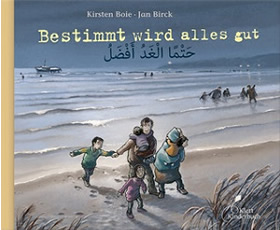
De Duitse schrijfster Kirsten Boie werd geboren op 19 maart 1950 in Hamburg. Zie ook alle tags voor Kirsten Boie op dit blog.

Uit: Bestimmt wird alles gut

„Dies ist die wahre Geschichte von Rahaf, die ist jetzt zehn Jahre alt. Und von ihrem Bruder Hassan, der ist jetzt neun.
Rahaf und Hassan wohnen mit Mama und Papa in einem kleinen deutschen Ort. Und natürlich wohnen auch ihre beiden kleinen Schwestern da, Amal und Haia. Die sind aber erst drei und vier. Mit Amal und Haia kann man nicht gut spielen.
Früher haben Rahaf und Hassan in einer anderen Stadt gewohnt. Die Stadt heißt Homs und liegt in einem anderen Land. Das Land heißt Syrien.
In Homs fanden Rahaf und Hassan es schön. Sie haben in einem großen Haus gewohnt, mit vier Stockwerken. Ganz unten haben Oma und Opa gewohnt. Im ersten Stock haben Onkel Ahmed und Tante Jinin gewohnt, mit ihren fünf Kindern. Im zweiten Stock haben Onkel Ziad und Tante Marwa gewohnt, die hatten drei Kinder. Da hatten Rahaf und Hassan acht Cousins und Cousinen, das war gut zum Spielen. Rahaf und Hassan haben mit Mama und Papa und Amal und Haia ganz oben im Haus gewohnt, im dritten Stock.
Rahaf hat am liebsten mit ihrer Cousine Aycha gespielt. Aycha war genauso alt wie Rahaf. Darum sind sie sogar zusammen in die Schule gegangen, in dieselbe Klasse. Manchmal haben Rahaf und Aycha mit ihren Puppen gespielt.“
 

 1891736-a67a5473bc9667f4bd45dd969d3843f1.jpg
Kirsten Boie (Hamburg, 19 maart 1950)
Cover


De Amerikaanse schrijfster Lynne Sharon Schwartz werd geboren op 19 maart 1939 in New York. Zie ook alle tags voor Lynne Sharon Schwartz op dit blog.

Uit: Leaving Brooklyn

“He looked at me in startled, confused pleasure, as if I had cunningly put my finger on one of the profound and inexplicable contradictions at the heart of things, as if I had asked why is there suffering in the world or why do men constantly make war if they say they want peace. He tousled my hair and had no answer, which surprised me because he usually did.
I minded the mystery of the eye more than the eye itself. I craved an exotic story to tell, a label by which I might be known. At school there was Carlotta Kaplowitz, famed for her dark beauty and wondrous name - one of the few girls not named Barbara or Susan or Carol or Judy - who contracted polio. When she returned months later on crutches, scattering true medical tales like favors, she was lionized in the playground. Polio was dramatic, though Carlotta’s case, like Hans Castorp’s tuberculosis, was mild - she would walk again. Another girl, one of the Carols, stayed home for a whole term with an unnamed ailment. I brought her the class assignments. How enviously I breathed the musty, invalid air of the shaded room where she sat propped up on pillows, her every need attended to by her scurrying mother, like a Victorian heroine enervated by vocation, like Elizabeth Barrett before she met Browning.
The iris of my right eye was smaller than that of the left. And at the top of the sphere, the part you couldn’t see unless the lid was raised, was a milky, blurry patch, a scar. It was as if someone had painted an eye and smudged the upper rim, giving it an unfinished look, then was called away from the easel - an emergency, a long trip - and never came back.
The smudging was not all. Because of a weak muscle, the iris, of its own volition and at unpredictable times, would drift from its resting place to float - I almost wrote “flee” - beneath the upper lid for a few seconds, leaving blank white space. A wandering eye, it is aptly called. Restless, bored with the banality of what is presented, it escapes to the private darkness beneath the lid, with the wild dancing colors. Soon it drifts back and attends to its duties, not being totally irresponsible. Much of the time no one would know about its little trip, just as no one knows about the secret journeys or aberrations of anyone else.”

 

 1891736-15cb02c78567ff0c82f85f99c1e4a5e9.jpg
Lynne Sharon Schwartz (New York, 19 maart 1939)
Brooklyn, New York


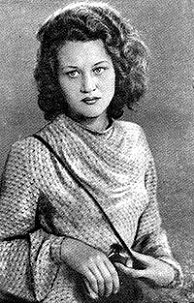
De Oekraïense schrijfster en dichteres Lina Kostenko werd op 19 maart 1930 geboren in Rzhyshchiv. Zie ook alle tags voor Lina Kostenko op dit blog.


Destin

J'ai rêvé une nuit d'un étrange bazar
En plein air, en plaine campagne
On vendait des destins de toutes sortes
Pour des généreux, pour des avares
Et pour des clients de toutes sortes.

Il y en avait pour pas moins que des fils de roi
D'autres n'étaient faits que pour des pauvres mignons
On pouvait acheter un destin à un sou
D'autres en achetaient qui valaient des millions.

Certains payaient avec leur chance
D'autres payaient de leur conscience
Certains payaient de tout leur or
Et d'autres s'embarrassaient fort.

Les diseuses de bonne aventure comme des cartes
Tassaient les jours et se massaient près des clients
Les destins eux-mêmes pour moi s'assemblaient
Et parmi eux un seul se détourna.

Je regardai celui-là dans son visage clair
Et du fond de moi-même j'appelai son regard
— Qu'importe, me dit-il, tu ne me prendras pas
Mais de le dire, lui faisait mal au cœur.

— Je te prendrai peut-être
           — Non, tu sais bien
Dit-il d'un ton sévère
Pour moi il faudrait que tu donnes ta vie
Et moi en échange t'apporterais le chagrin.

— Mais alors, qui es-tu ?
           Et ton nom quel est-il ?
Pour être digne de me coûter si cher ?
— Poésie est ma sœur
           Et l'humaine vérité notre mère.
Je l'ai reçu et j'en ai fait ma loi.
Alors, grande merveille se fit :
La nuit passa, le songe finit
Mais le destin est resté avec moi.

J'ai un destin que j'ai choisi moi-même
Et qu'il m'arrive n'importe quoi
De rien ne demanderai compte
A mon destin, c'est moi qui l'ai choisi.


Vertaald door Marie-France Jacamon
 

 1891736-c28779cc4d2ddecac9c23a24f2436c58.jpg
Lina Kostenko (Rzhyshchiv, 19 maart 1930)


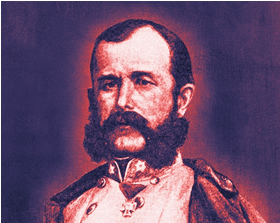
De Kroatische dichter en schrijver Petar Preradović werd geboren op 19 maart 1818 in het dorp Grabrovnica bij Virovitica. Zie ook alle tags voor Petar Preradović op dit blog.


Traveller (Putnik, fragment)

Where am I? Where have I come?
Trapped by night in this foreign land.
I don’t know what track to follow,
On naked rocks I just wallow,
Weary legs in this wilderness!”
 
What other shelter can I find?
The North wind blows on snowy peaks
While this poor wayfaring stranger
Finds in darkness darkest danger
As this cold earth with hardness speaks.”
 
All around the fog has fallen,
And well concealed now is the moon
Star tracks have disappeared and yes,
Mother dearest,
Take under your roof a foreign son!”
 
She said:“I’d take you in with pleasure,
But look; see how they are sleeping –
Three sons three daughters, a full house,
Which fills this mothers heart of course
To the brim – it’s overflowing.”
 

 1891736-6c3e9669643ed74d6a950774f89bd9f7.jpg
Petar Preradović (19 maart 1818 – 18 augustus 1872)


Zie voor nog meer schrijvers van de 19e maart ook mijn vorige blog van vandaag.
Geschreven door Romenu om 10:32 Reageer op dit bericht

William Allingham, Ion Barbu, Rosalie Loveling, Tobias Smollett, Irving Wallace, Peter Abrahams

De Ierse dichter William Allingham werd geboren op 19 maart 1824 in Ballyshannon, Donegal. Zie ook alle tags voor William Allingham op dit blog.


A Seed

See how a Seed, which Autumn flung down,
And through the Winter neglected lay,
Uncoils two little green leaves and two brown,
With tiny root taking hold on the clay
As, lifting and strengthening day by day,
It pushes red branchless, sprouts new leaves,
And cell after cell the Power in it weaves
Out of the storehouse of soil and clime,
To fashion a Tree in due course of time;
Tree with rough bark and boughs' expansion,
Where the Crow can build his mansion,
Or a Man, in some new May,
Lie under whispering leaves and say,
"Are the ills of one's life so very bad
When a Green Tree makes me deliciously glad?"
As I do now. But where shall I be
When this little Seed is a tall green Tree?


In A Spring Grove

Here the white-ray'd anemone is born,
Wood-sorrel, and the varnish'd buttercup;
And primrose in its purfled green swathed up,
Pallid and sweet round every budding thorn,
Gray ash, and beech with rusty leaves outworn.
Here, too the darting linnet hath her nest
In the blue-lustred holly, never shorn,
Whose partner cheers her little brooding breast,
Piping from some near bough. O simple song!
O cistern deep of that harmonious rillet,
And these fair juicy stems that climb and throng
The vernal world, and unexhausted seas
Of flowing life, and soul that asks to fill it,
Each and all of these,--and more, and more than these!


 1891731-02e1c865574c47b8ef2ad5b595018000.jpg
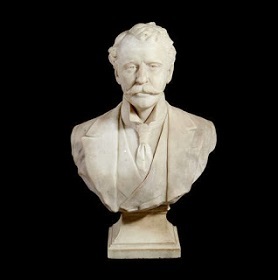
William Allingham (19 maart 1824 – 18 november 1889)
Borstbeeld door Albert Toft


De Roemeense dichter en wiskundige Ion Barbu (eig. Dan Barbilian) werd geboren op 19 maart 1895 in Câmpulung. Zie ook alle tags voor Ion Barbu op dit blog.


Le Paon

Il faisait des courbettes serviles et, mollement,
Voulait du maïs dans ta paume picorer,
Tremblait tout bleu et chaud, de la tête aux pans
Comme on voit dans une tasse l’alcool ondoyer.

Sur une souche, une coiffe portant, ton drôle de singe
Des yeux inégaux, terriblement tristes, roulait.
Ta main démancha, comme on enssore un linge
Et rompit le cou de l’oiseau, qui criait. 


Vertaald door Constantin Frosin


Out of an hour glass, inferred,

Out of an hour glass, inferred, the depth of this calm highpoint
Seeped through a mirror inside redeemed azure
Cuts out from groups of water, through drowned celestial herds, 
A secondary game, more pure yet.

Latent nadir! The poet raises the sum of
Scattered harps, lost in inverted flights,
And songs subside: secretive, as only seas can be,
Floating off jelly fish beneath green bells.


 1891731-45783cab833e13eabceb9791b7e2ff07.jpg
Ion Barbu (19 maart 1895 – 11 augustus 1961)


De Vlaamse schrijfster en dichteres Rosalie Loveling werd geboren op 19 maart 1834. Zie ook alle tags voor Rosalie Hoveling op dit blog.


Moederangst

Zij zag het wiegje op de stroom,
Gelijk een schuitje drijven;
Dat zag zij in een nare droom,
Het hart vol schroom,
Zij voelt haar bloed verstijven!

Waar of ze 't nu nog wedervindt,
Haar zo op eens ontnomen?
Een prooi aan 't water en de wind,
Hoe kan het kind
Aan zulk gevaar ontkomen?

Maar zie, ze ontwaakt en 't lacht haar aan,
Zij is nog diep bewogen,
En voelt het hart nu dankbaar slaan,
Terwijl een traan
Komt schittren in hare ogen.

De nacht is stil, en kalm en klaar;
Haar bange droom is henen;
Maar is voor 't rustend kindje daar,
Ook al 't gevaar,
En alle leed verdwenen?

Ach neen; zij 't wiegje nog zo zacht,
't Moet toch langs wilde baren,
Gelijk een scheepje met zijn vracht,
Bij mist en nacht,
De levensstroom bevaren.


 1891731-b581b6bd0b1c99215db7ac6790f98b88.jpg
Rosalie Loveling (19 maart 1834 – 4 mei 1875)
Pauline (de moeder van Cyriel Buysse), Rosalie en Virginie Loveling, ca. 1850


De Schotse romanschrijver Tobias George Smollett werd geboren op 19 maart 1721 in Dalquhurn in het tegenwoordige West Dunbartonshire. Zie ook alle tags voor Tobias Smolett op dit blog.

Uit: The Adventures of Roderick Random

“I was born in the northern part of this united kingdom, in the house of my grandfather, a gentleman of considerable fortune and influence, who had on many occasions signalised himself in behalf of his country; and was remarkable for his abilities in the law, which he exercised with great success in the station of a judge, particularly against beggars, for whom he had a singular aversion.
My father (his youngest son) falling in love with a poor relation, who lived with the old gentleman in quality of a housekeeper, espoused her privately; and I was the first fruit of that marriage. During her pregnancy, a dream discomposed my mother so much that her husband, tired with her importunity, at last consulted a highland seer, whose favourable interpretation he would have secured beforehand by a bribe, but found him incorruptible. She dreamed she was delivered of a tennis-ball, which the devil (who, to her great surprise, acted the part of a midwife) struck so forcibly with a racket that it disappeared in an instant; and she was for some time inconsolable for the lost of her offspring; when, all on a sudden, she beheld it return with equal violence, and enter the earth, beneath her feet, whence immediately sprang up a goodly tree covered with blossoms, the scent of which operated so strongly on her nerves that she awoke. The attentive sage, after some deliberation, assured my parents, that their firstborn would be a great traveller; that he would undergo many dangers and difficulties, and at last return to his native land, where he would flourish in happiness and reputation. How truly this was foretold will appear in the sequel. It was not long before some officious person informed my grandfather of certain familiarities that passed between his son and housekeeper which alarmed him so much that, a few days after, he told my father it was high time for him to think of settling; and that he had provided a match for him, to which he could in justice have no objections.“


 1891731-30fc143bb4b1e0435046546d5d985c17.jpg
Tobias Smollett (19 maart 1721  - 17 september 1771)
Portret door  Nathaniel Dance-Holland, rond 1764


De Amerikaanse schrijver Irving Wallace werd geboren op 19 maart 1916 in Chicago, Illinois. Zie ook alle tags voor Irving Wallace op dit blog.

Uit: The Fan Club

“Her green eyes still betrayed nothing of her inner feelings, revealed only gracious interest, as they scanned the dramatis personae readying to exit from the stage. Her gaze froze each in a frame for an instant, while her mind added a caption, then photographed and categorized the next.
Hank Lenhardt, the most successful publicist in town, with his boring and stupid anecdotes and endless pitch and slick gossip. Justin Rhodes, the producer of her current film, a gentleman from the legitimate theatre, but another phony on the make, not for her (he was surely a fag or a neuter) but on the make for her dependence upon him and for her name to use as another steppingstone on his non-stop power trip. Tina Alpert, the widely syndicated movie columnist, a smiler with a knife, a twenty four hour bitch you never turned your back on or ignored or ever forgot to woo with expensive birthday or Christmas presents.
Sy Yaeger, the hot new filmmaker, euphemism for director, who rewrote writers on the set and had the arrogance to make a cult of the kitsch peddlers of the past like Busby Berkeley, Preston Sturges, Raoul Walsh. Sky Hubbard, the radio and television network news commentator, a dumb lip reader and foghorn, a face out of a shirt ad, whom that idiot Lenhardt had insisted that she invite as an investment in goodwill. Nadine Robertson, whose only claim to fame was that she had once played opposite Charles Chaplin (no small thing) and who was now a silicone smooth old socialite and giver of charity balls, a grand dame who whined clichés and somehow had escaped interment in the Movie land Wax Museum.”


 1891731-d8284a4891efb80272be1da6cc747f34.jpg
Irving Wallace (19 maart 1916 – 29 juni 1990)


De Zuid-Afrikaanse schrijver Peter Abrahams werd op 19 maart 1919 geboren in Vrededorp bij Johannesburg. Zie ook alle tags voor Peter Abrahams op dit blog.

Uit: Mine Boy

„But as fast as they moved the sand so fast did the pile grow. A truck load would go and another would come from the bowels of the earth. And another would go and another would come. So it went on all day long. On and on and on and on.
But the sand remained the same. A truck would come from the heart of the earth. A truck would go up to build the mine-dump. Another would come. Another would go. . - All day long...
And for all their sweating and hard breathing and for the redness of their eyes and the emptiness of their stare there would be nothing to show. In the morning the pile had been so big. Now it was the same.
And the mine-dump did not seem to grow either.
It was this that frightened Xuma. This seeing of nothing for a man’s work.’ This mocking of a man by the sand that was always wet and warm; by the mine-dump that would not grow; by the hard eyes of the white man who told them to hurry up.
It made him feel desperate and anxious. He worked feverishly.
Straining his strength behind the loaded truck and running behind the empty truck and looking carefully to see if the dump had grown any bigger, and watching the sand from the earth to see if it had grown less. But it was the same. The same all the time. No change.
Only the startling and terrifying noises around. And the whistles blowing. And the hissing and the explosions from the bowels of the earth. And these things beat against his brain till his eyes reddened like the eyes of the other men.”


 1891731-064b6475d5f2ce81596031860bf08dbf.jpg
Peter Abrahams (Vrededorp, 19 maart 1919)

Geschreven door Romenu om 10:31 Reageer op dit bericht

Christa Wolf, Charlotte Roche, John Updike, Wilfred Owen, Stéphane Mallarmé, Héctor Bianciotti, Hellema, Friedrich Hebbel

De Duitse schrijfster Christa Wolf werd geboren op 18 maart 1929 in het huidige Poolse Gorzów WielkopolskiZie ook alle tags voor Christa Wolf op dit blog.

Uit: Kassandra

„Marpessa, sah ich, die, wie einmal schon, mit mir nicht sprechen wollte, war besser vorbereitet, auf was wir nun erfahren, als ich, die Seherin; denn ich zog Lust aus allem, was ich sah – Lust; Hoffnung nicht! – und lebte weiter, um zu sehn.
Merkwürdig, wie eines jeden Menschen Waffen – Marpessas Schweigen, Agamemnons Toben – stets die gleichen bleiben mssen. Ich freilich hab allmählich meine Waffen abgelegt, das wars, was an Veränderung mir möglich war.
Warum wollte ich die Sehergabe unbedingt? Mit meiner Stimme sprechen: das äußerste. Mehr, andres hab ich nicht gewollt. Zur Not könnt ich es beweisen, doch wem? Dem fremden Volk, das, frech und scheu zugleich, den Wagen umsteht? Ein Grund zu lachen, gäbe es den noch: Mein Hang, mich zu rechtfertigen, sollte sich, so kurz vor mir selbst, erledigt haben.
Marpessa schweigt. Die Kinder will ich nicht mehr sehn. Sie hlt sie unter dem Tuch vor mir versteckt.
Der gleiche Himmel über Mykenae wie über Troia, nur leer. Emailleschimmernd, unzugänglich, blankgefegt. Etwas in mir entspricht der Himmelsleere über dem feindlichen Land. Noch alles,was mir widerfahren ist, hat in mir seine Entsprechung gefunden. Es ist das Geheimnis, das mich umklammert und zusammenhält, mit keinem Menschen habe ich darber reden können.
Hier erst, am äußersten Rand meines Lebens, kann ich es bei mir selber benennen: Da von jedem etwas in mir ist, habe ich zu keinem ganz gehçrt, und noch ihren Haß auf mich hab ich verstanden. Einmal, »früher«, ja, das ist das Zauberwort, hab ich in Andeutungen und halben Sätzen mit Myrine darüber sprechen wollen – nicht, um mir Erleichterung zu verschaffen, die gab es nicht. Sondern weil ich es ihr schuldig zu sein glaubte. Troias Ende war abzusehen, wir waren verloren. Aineias mit seinen Leuten hatte sich abgesetzt. Myrine verachtete ihn. Und ich versuchte ihr zu sagen, daß ich Aineias – nein, nicht nur verstand: erkannte. Als sei ich er. Als kauerte ich in ihm, speiste mit meinen Gedanken seine verräterischen Entschlüsse.“


 1891565-23196b3152cf024b999aeb0149c06c0e.jpg
Christa Wolf (18 maart 1929 – 1 december 2011) 
Cover 


De Duitse schrijfser, televisiepresentatrice, actrice en zangeres Charlotte Roche werd geboren in High Wycombe, Engeland, op 18 maart 1978. Zie ook alle tags voor Charlotte Roche op dit blog.

Uit: Mädchen für alles

„Jetzt gehen die wieder an meinen Kühlschrank! Die sind wie eine Meute hungriger Wölfe. Oder sagt man Rudel? Egal. Alle haben sich in unserem Haus verteilt. Manche sitzen sogar auf unserem Bett und quatschen schön ein bisschen. Hoffentlich bleibt’s dabei. Ey, wehe! In der Küche findet so was wie eine Stehparty im Sitzen statt. Auf der Arbeitsfläche. Ein Rock sitzt fast im Käse.
Ich schaue mich um und sehe nur hässliche junge Menschen und die buckelige Verwandtschaft meines Mannes. Ist das schon ein Grund für eine Scheidung? Dass mein Mann seinem kleinen Bruder erlaubt hat, in unserem Haus seine Hochzeit zu feiern? Sein Bruder ist wirklich viel jünger als er, irgend so eine Art ­Unfall, oder wie nennt man das? Nachzügler? Nesthäkchen? Weil er im Vergleich zu meinem Mann so jung ist, ist es eher keine Bruder­beziehung, sondern eine Vater-Kind-Beziehung. Jörg stimmt oft irgendwelchen absurden Dingen zu, die der kleine Bruder, Arne, anfragt. Diesmal ist es, wie so oft, falsch rum gelaufen. Mein Mann hat mich gefragt, ob sein kleiner Bruder in unserem Haus seine Hochzeit feiern darf, ich habe Nein gesagt, da musste mein Mann mir gestehen, dass er aber leider die Üblichkeiten nicht eingehalten hat, seinem Bruder das schon erlaubt hatte, bevor er mich gefragt hat, und jetzt wegen mir und meiner Absage in der Zwickmühle sitzt.
So wie ich die Situation beurteile, sitzt er nicht in der Zwickmühle wegen meiner Absage, sondern wegen seinem voreiligen Erlauben. Aber egal. Es ist jetzt, wie es ist. Arne feiert seine meiner Meinung nach viel zu frühe Hochzeit jetzt gegen meinen Willen in unserem Haus. Hat das schon mal jemand gehört? Wie wär’s, er arbeitet erst hart, hat dann ein Haus und heiratet dann da drin? Oder wie wär’s mit Hotel oder Kneipe?“
 

 1891565-b24c8f37e31985096ba8efc50cb0a8c5.jpg
Charlotte Roche (High Wycombe, 18 maart 1978)


De Amerikaanse dichter en schrijver John Updike werd geboren in Shillington, Pennsylvania, op 18 maart 1932. Zie ook alle tags voor John Updike op dit blog.

Uit: Rabbit, Run 

“Nelson! Stop that this minute!" She turns rigid in the glider but does not rise to see what is making the boy cry. Eccles, sitting by the screen, can see. The Fosnacht boy stands by the swing, holding two red plastic trucks. Angstrom's son, some inches shorter, is batting with an open hand toward the bigger boy's chest, but does not quite dare to move forward a step and actually strike him...Nelson's face turns up toward the porch and he tries to explain, "Pilly have - Pilly -" But just trying to describe the injustice gives it unbearable force, and as if struck from behind he totters forward and slaps the thief's chest and receives a mild shove that makes him sit on the ground. He rolls on his stomach and spins in the grass, revolved by his own incoherent kicking. Eccles' heart seems to twist with the child's body; he knows so well the propulsive power of a wrong, the way the mind batters against it and each futile blow sucks the air emptier until it seems the whole frame of blood and bone must burst in a universe that can be such a vacuum.”
(…)

“Dabbling in the sandbox gives Rabbit a small headache. Over at the pavilion the rubber thump of Roofball and the click of checkers call to his memory, and the forgotten smell of that narrow plastic ribbon you braid bracelets and whistlechains out of and of glue and of the sweat on the handles on athletic equipment is blown down by a breeze laced with children's murmuring. He feels the truth: the thing that has left his life has left irrevocably; no search would recover it. No flight would reach it. It was here, beneath the town, in these smells and these voices, forever behind him. The fullness ends when we give Nature her ransom, when we make children for her. Then she is through with us, and we become, first inside, and then outside, junk. Flower stalks.”


 1891565-de698b1ee19d460d2af44ac38c3879bd.jpg
John Updike (18 maart 1932 – 27 januari 2009)


De Engelse dichter en schrijver Wilfred Owen werd op 18 maart 1893 geboren in Oswestry in Shropshire. Zie ook alle tags voor Wilfred Owen op dit blog.


Conscious

His fingers wake, and flutter up the bed.
His eyes come open with a pull of will,
Helped by the yellow may-flowers by his head.
A blind-cord drawls across the window-sill . . .
How smooth the floor of the ward is! what a rug!
And who's that talking, somewhere out of sight?
Why are they laughing? What's inside that jug?
"Nurse! Doctor!" "Yes; all right, all right."

But sudden dusk bewilders all the air --
There seems no time to want a drink of water.
Nurse looks so far away. And everywhere
Music and roses burnt through crimson slaughter.
Cold; cold; he's cold; and yet so hot:
And there's no light to see the voices by --
No time to dream, and ask -- he knows not what.


Hospital Barge

Budging the sluggard ripples of the Somme,
A barge round old Cérisy slowly slewed.
Softly her engines down the current screwed,
And chuckled softly with contented hum,
Till fairy tinklings struck their croonings dumb.
The waters rumpling at the stern subdued;
The lock-gate took her bulging amplitude;
Gently from out the gurgling lock she swum.

One reading by that calm bank shaded eyes
To watch her lessening westward quietly.
Then, as she neared the bend, her funnel screamed.
And that long lamentation made him wise
How unto Avalon, in agony,
Kings passed in the dark barge, which Merlin dreamed.


 1891565-cdcf129c5ab75c2b28fb5b9c429c14ea.jpg
Wilfred Owen (18 maart 1893 – 4 november 1918)
Portret door Anthony Brown, 2011


De Franse dichter Stéphane Mallarmé werd geboren in Parijs op 18 maart 1842. Zie ook alle tags voor Stéphane Mallarmé op dit blog.


Don du poème

Je t'apporte l'enfant d'une nuit d'Idumée !
Noire, à l'aile saignante et pâle, déplumée,
Par le verre brûlé d'aromates et d'or,
Par les carreaux glacés, hélas ! mornes encor
L'aurore se jeta sur la lampe angélique,
Palmes ! et quand elle a montré cette relique
A ce père essayant un sourire ennemi,
La solitude bleue et stérile a frémi.

Ô la berceuse, avec ta fille et l'innocence
De vos pieds froids, accueille une horrible naissance
Et ta voix rappelant viole et clavecin,
Avec le doigt fané presseras-tu le sein
Par qui coule en blancheur sibylline la femme
Pour des lèvres que l'air du vierge azur affame ?


Victorieusement fui ...

Victorieusement fui le suicide beau
Tison de gloire, sang par écume, or, tempête !
Ô rire si là-bas une pourpre s'apprête
A ne tendre royal que mon absent tombeau.

Quoi ! de tout cet éclat pas même le lambeau
S'attarde, il est minuit, à l'ombre qui nous fête
Excepté qu'un trésor présomptueux de tête
Verse son caressé nonchaloir sans flambeau,

La tienne si toujours le délice ! la tienne
Oui seule qui du ciel évanoui retienne
Un peu de puéril triomphe en t'en coiffant

Avec clarté quand sur les coussins tu la poses
Comme un casque guerrier d'impératrice enfant
Dont pour te figurer il tomberait des roses.


 1891565-93ed5ccdc78db46313b8b92a2f983bdb.jpg
Stéphane Mallarmé (18 maart 1842 - 9 september 1898)
Portret naar een foto uit 1862


De Argentijnse schrijver Héctor Bianciotti werd geboren op 18 maart 1930 in Córdoba. Zie ook alle tags voor Héctor Bianciotti op dit blog.

Uit: The Death of Borges

“He was animated by this conversation, and Maria Kodama and I asked him if he would get up and walk with us in the corridor. Not without some fears, he accepted. At first trembling, he finished by holding himself straight and firm. He smiled, and in a voice that was weak but that became heavy and jarring and strong when he recited Anglo-Saxon or Icelandic texts, he chanted—one might say “intoned”—the last verse of the ballad of Maldon, just as we were leaving the corridor.

He released his beloved falcon into the forest
and entered the battle.

Two weeks later, he was back at his hotel. He could have returned to his house in Buenos Aires. He had reasons to do so; he feared what would happen to his old editions of Anglo-Saxon sagas. He decided to stay in Geneva, the city of his youth; he wanted to be near the lake. He worked to the end on a scenario for a film on Venice. He was glad to have visitors, always happy to talk to people capable of carrying on a dialogue with his vast memory and of contributing something unexpected to it.”


 1891565-7c0d4ba1b95751e5eb11c8125e850847.jpg
Héctor Bianciotti (18 maart 1930 – 11 juni 2012)
Héctor Bianciotti en Jorge Luis Borges 


De Nederlandse schrijver Hellema (pseudoniem voor Alexander Bernard (Lex) van Praag) werd geboren in Amsterdam op 18 maart 1921. Zie ook alle tags voor Hellema op dit blog.

Uit: Kimberley

“Hij kan dus ook nooit te kort schieten en dan zijn tekortkomingen op mij projecteren. Hij verwijt mij niets. Ik hoef niet beter te zijn dan ik ben. Ik hoef niet te liegen om geloofwaardig te zijn. Hij aanvaardt mij. En zolang ik hem niet ontken, dat wil zeggen hem op een of andere manier kwel, voelt hij zich door mij aanvaard. Hij mist de ijdelheid om behaagd te willen worden. Het behaagd willen worden waarmee mensen aandacht trekken, wat een manier van zeuren is. Maar zeuren betekent iets anders dan waarover gezeurd wordt en wat dat is, moet je raden; dat is het spel waarvan je niet moe mag worden en god-bewaar dat je een fout maakt, dan kun je beter het veld ruimen. En een aap kopen.”
(…)

De naam is voor ieder in de diamanthandel geïnteresseerde een toverwoord. Kimberley levert de wereld aardse schatten van fabelachtige waarde. Hier werd de Cullinan gevonden van meer dan drieduizend karaat, die nog bij Asscher in Amsterdam geslepen is. Maar wie dat allemaal niet weet, zou menen in een verarmd stadje te zijn dat een kwijnend bestaan lijdt."


1891565-d97c24c55084966ea8463a6a2bcf1786.jpg
Hellema (18 maart 1921 – 19 maart 2005)
Cover 


De Duitse schrijver Christian Friedrich Hebbel werd geboren in Wesselburen op 18 maart 1813. Zie ook alle tags voor Friedrich Hebbel op dit blog.


Das letzte Glas

Das letzte Glas! Wer mag es denken!
Und dennoch muß ein letztes sein!
Mich drängt’s, es hastig einzuschenken,
Fällt auch die Träne mit hinein.
Stoß an! Du stießest gar zu heftig!
In tausend Scherben liegt das Glas.
Ein neues bringt mir schon geschäftig
Der Kellner; nochmals füll ich das.

Das letzte Glas! Wer mag es schauen!
Und dennoch muß ein letztes sein!
Du ziehst nun bald in ferne Gauen:
Denkst du im fremden Land noch mein?
Stoß an! Ich zittre gar zu heftig!
In tausend Scherben liegt das Glas.
Ein neues bringt mir schon geschäftig
Der Kellner; nochmals füll ich das.

Das letzte Glas! Wer mag es trinken!
Und dennoch muß ein letztes sein!
Dir werden neue Freunde winken,
Ich aber bleib hier ganz allein!
Stoß an! Zu Boden werf ich’s heftig!
Warum schon jetzt das letzte Glas!
Ein neues bringt mir schon geschäftig
Der Kellner; nochmals füll ich das.

Das letzte Glas! Wir lassen’s stehen!
Versiegle und verschließ den Wein!
Wenn wir dereinst uns wieder sehen,
So soll es unser erstes sein!
Komm, an den Mund preß ich dich heftig,
Als wärst du selbst mein letztes Glas!
Was wir uns sind, das fühl ich kräftig,
Jetzt geh mit Gott! Wir bleiben das!


 1891565-812a3275e6558b07f44884290d18ed84.jpg
Friedrich Hebbel (18 maart 1813 - 13 december 1863)
Monument in Wesselburen


Zie voor nog meer schrijvers van de 18e maart ook mijn blog van 18 maart 2011 deel 2.

Geschreven door Romenu om 22:30 Reageer op dit bericht

Prijs van de Leipziger Buchmesse voor Guntram Vesper

De Prijs van de Leipziger Buchmesse 2016 gaat naar de Duitse schrijver Guntram Vesper Hij ontvangt de prijs, waaraan een geldbedrag van € 15.000 verbonden is in de categorie fictie voor zijn roman “Frohburg”. In de meer dan duizend pagina’s tellende roman vertelt Vesper gaat over zijn geboorteplaats Frohburg: een kleine stad ten zuiden van Leipzig, waar hij zijn kindertijd en jeugd doorgebracht, voordat de familie in 1957 vluchtte naar de Bondsrepubliek. Zie ook alle tags voor Guntram Vesper op dit blog.

Uit: Frohburg

„Unsere uneigene Sache, unser eigentliches Ding: die endlos langen Sommerabende. Fußball. Räuber und Gendann, Versteckspiel, renn ums Leben. Sonst abgeschlagen, ausgeschieden, ausgenommen. zu den Toten. In den Auguststaub klopfende lgelitsandalen, hallende Rufe, spitze Schreie. Grölen. Quieken. zurückgeworfen vom dämmergrauen Geviert der Häuserreihen, Geschiebe‚ Gesehubse, Gezerre, Gerangel, bei zunehmender Dunkelheit,  gemeint die Mädchen, wer sonst.
Brückengasse Wyhrabrücke Gußleisenkonstruktion aus Cainsdorf, Königin-Marien-l-lütte. Unter jedem Laster Zittern, Beben. Schwingen. Auch bei Hochwasser und Eisgang: Treibgut Balken, Schollenstoß,
Töpferplatz. Die Maulbeerhecke. Eßbar oder. Drei Trittstufen zur Schöpfe. Der alte Bürstenrnacher Prause bis zum Knie im seichten Fluß: Auf Wiedersehn, du schöne Welt. Von der Tochter zurückgesehleppt ins Haus und eingeschlossen. Warum auch nicht. muß sein. Lindenreihe. In den Hundstagswochen, vor Gewittern schwarzrotes Gewimmel der Franzosenkäfer.
Greifenhainer Straße.
Die Großeltern. Nach dem großen Brand am Markt das Haus am Fluß gekauft. Dort ich geboren.
(…)

Meine ersten Jahre, die ersten anderthalb Jahrzehnte, dort drüben, da hinten, in Frohburg. Als hätte man sie im Hinterzimmer einer riesengroßen, rastlos stampfenden Mühle verbracht, die Ideen und Gefühle und noch die leisesten Regungen zerschrotete und Menschen verbrauchte, in maßloser Menge, ganze Städte, Landstriche, Provinzen und Länder wurden zu Schutt und Erinnerung, während man selber Lesen und Schreiben lernte und die Sonne aufgehen und hinter dem Horizont wieder versinken sah. Zitternde Bilder, zitternder Boden. Wirkt und wühlt in uns weiter, wirst sehen.
Kindheit ohne Ziel, ohne Mitte. Musik war Kirchengesang oder FDJ-Lied, Wörter wie Oper, Sinfonie, Streichquartett hast du kaum oder gar nicht gehört, sie kamen, wenn du genau überlegst, einfach nicht vor, einfach, das sagt sich so leicht, von Mozart, Beethoven, von Hans Pfitzner, sein Vater in Frohburg geboren, und Schönberg keine Spur. Rückschritt, den man Fortschritt nannte. Fortschritt, der Rückschritt hieß. Dazu die Lehrer, Uniformfotos von gestern bestens versteckt, wenn nicht verbrannt, was sie als junge Offiziere und Unteroffiziere an der Ostfront oder im Hinterland getrieben hatten, darüber kein Wort, sie lobten Johannes R. Becher und Kuba über alles und beteten jede Eloge der Zeitungen auf Aschajew und Babajewski nach, Fern von Moskau, Ritter des goldenen Sterns, was sie wirklich dachten, behielten sie lieber für sich.“


 1891407-5b478704f8427769cad5066e7d04e772.jpg
Guntram Vesper (Frohburg, 28 mei 1941)

Geschreven door Romenu om 11:11 Reageer op dit bericht

Meer van Romenu

↑ Terug naar de berichten