Naar de inhoud

Romenu

Over literatuur, gedichten, kunst en cultuur
akke.beakke.be

Berichten van 19 maart 2016 tot 20 maart 2016

Palmpasen (Bertus Aafjes)


Bij Palmzondag


 1892184-037eeab95de0215fe175803908ddefb7.jpg
De intocht van Jezus in Jeruzalem door Pedro Orrente, 1620


Palmpasen

Het is Palmpasen en ik zie de bomen,
De palmen weer met kinderogen aan:
Hun blaadren die als vogelveren stromen
En in de top der stam gestoken staan.

En alles is bereid Hem te ontvangen,
En de verwachting vlamt op elk gelaat:
De kreupelen die aan hun krukken hangen,
De honden en de blinden van de straat.

Er draaft een ezeltje met rechte oren
Als aan de witte klasmuur van mijn jeugd;
Al heeft het Jezus van zijn rug verloren,
Ik zie Hem in mijn kinderlijke vreugd,
En zachtjens juicht het kind in mij verblijd:
Hosannah die de Zoon van David zijt.


 1892184-8e5c4e3f73a9135a0d0e81cf79c8bcbb.jpg
Bertus Aafjes (12 mei 1914 - 22 april 1993)
Amsterdam, Tulpendag 2013. Bertus Aafjes werd geboren in Amsterdam


Zie voor de schrijvers van de 20e maart ook mijn drie vorige blogs van vandaag.

Geschreven door Romenu om 12:43 Reageer op dit bericht

Friedrich Hölderlin, Katharina Hartwell, Jens Petersen, Ralph Giordano, Henning Heske, Josef Reding

De Duitse dichter en schrijver Johann Christian Friedrich Hölderlin werd geboren op 20 maart 1770 in Lauffen am Neckar in het Hertogdom Württemberg. Zie ook alle tags voor Friedrich Hölderlin op dit blog.


Hälfte des Lebens

Mit gelben Birnen hänget
Und voll mit wilden Rosen
Das Land in den See,
Ihr holden Schwäne,
Und trunken von Küssen
Tunkt ihr das Haupt
Ins heilignüchterne Wasser.

Weh mir, wo nehm ich, wenn
Es Winter ist, die Blumen, und wo
Den Sonnenschein,
Und Schatten der Erde?
Die Mauern stehn
Sprachlos und kalt, im Winde
Klirren die Fahnen.


Ganymed

Was schläfst du, Bergsohn, liegest in Unmut, schief,
Und frierst am kahlen Ufer, Geduldiger!
Denkst nicht der Gnade du, wenns an den
Tischen die Himmlischen sonst gedürstet?

Kennst drunten du vom Vater die Boten nicht,
Nicht in der Kluft der Lüfte geschärfter Spiel?
Trifft nicht das Wort dich, das voll alten
Geists ein gewanderter Mann dir sendet?

Schon tönets aber ihm in der Brust. Tief quillts,
Wie damals, als hoch oben im Fels er schlief,
Ihm auf. Im Zorne reinigt aber
Sich der Gefesselte nun, nun eilt er,

Der Linkische; der spottet der Schlacken nun,
Und nimmt und bricht und wirft die Zerbrochenen
Zorntrunken, spielend, dort und da zum
Schauenden Ufer, und bei des Fremdlings

Besondrer Stimme stehen die Herden auf,
Es regen sich die Wälder, es hört tief Land
Den Stromgeist fern, und schaudernd regt im
Nabel der Erde der Geist sich wieder.

Der Frühling kömmt. Und jedes, in seiner Art,
Blüht. Der ist aber ferne; nicht mehr dabei.
Irr ging er nun; denn allzugut sind
Genien; himmlisch Gespräch ist sein nun.


Abbitte

Heilig Wesen! gestört hab ich die goldene
Götterruhe dir oft, und der geheimeren,
Tiefern Schmerzen des Lebens
Hast du manche gelernt von mir.

O vergiß es, vergib! gleich dem Gewölke dort
Vor dem friedlichen Mond, geh ich dahin, und du
Ruhst und glänzest in deiner
Schöne wieder, du süßes Licht!


 1892178-6bc14b15971c27e3d7b4cb872215f097.jpg
Friedrich Hölderlin (20 maart 1770 – 7 juni 1843)
Portret door Franz Karl Hiemer, 1792


De Duitse schrijfster Katharina Hartwell werd geboren op 20 maart 1984 in Keulen. Zie ook alle tags voor Katharina Hartwell op dit blog.

Uit: Der Dieb in der Nacht

„Als es klingelt, hat sie bereits geschlafen. Sie setzt sich auf, sieht sich um; ein Teil von ihr hängt noch in einem Traum, der bereits in die Dunkelheit zurückfällt, aus der er zu ihr gekommen ist.
Sie stellt die Füße auf den Teppich, steht auf, läuft los, sucht nach dem Telefon, folgt dem Klingelton wie einer Spur. Bis auf das Schrillen ist es still in der Wohnung; und die Stille ist ein Rauschen, ein dunkles Klopfen tief in den Schläfen. Ihr Kopf ist so leer, dass ihr schlecht wird vor Leichtigkeit.
Sie findet das Telefon auf dem blauen Holztisch in der Küche; an der Nummer auf dem Display glaubt sie zu erkennen, dass es sich um eine Prager Vorwahl handelt.
Gut zwei Wochen sind vergangen, seit sie das letzte Mal von Paul gehört hat. Anfang September schrieb sie ihm eine Postkarte; sie sei unglücklich, schrieb sie ihm. Er sei es auch, schrieb er zurück. Und dass es kein Zufall sein könne, dass Prag beinahe ein Anagramm von Grab sei.
»Hallo«, sagt sie, nachdem sie auf den grünen Hörer gedrückt hat.
Es klickt, es rauscht, aber niemand antwortet.
»Hallo, hier ist Louise«, sagt sie.
Vielleicht hat nicht Paul angerufen, sondern jemand, der Paul kennt, der ihr mitteilen will, dass Paul etwas zugestoßen ist. Louise greift den Hörer fester. Seitdem sie denken kann, galoppieren ihr die Gedanken davon, reißen sie mit sich, hinaus aus der tatsächlichen Welt. Alles ist möglich in Louises Gedanken. Geister und Außerirdische und plötzliche, unerklärliche Todesfälle sind möglich. So lange, bis sich die Welt wieder zwischen sie und die Möglichkeiten schiebt. Sie ist gerade zu dem Schluss gekommen, dass der einzige Grund, aus dem sie jemand nachts anruft, nur Pauls Tod sein kann, als sie seine Stimme hört.
»Louise«, sagt Paul.
Louise starrt das Bild einer tanzenden Katze an, das auf Augenhöhe an der Wand hängt, und versucht, sich zu konzentrieren. Noch ist die Welt nicht ganz angekommen. Noch sind es vor allem Louise und Louises Gedanken; und ihre Stimme zittert, als sie fragt: »Paul, was ist passiert?«
Sie hört ihn atmen, und in dem Lufteinholen und Freigeben baut sich etwas auf, eine Druckwelle, die durch das Telefon von einem Land in das andere schwappt, auf Louise zurollt, schwer auf ihrem Brustkorb aufschlägt, noch bevor sie Paul sagen hört:
»Louise, ich habe Felix gefunden.«


 1892178-cb6ff98dbac823bf3b82669ed9c74ee1.jpg
Katharina Hartwell (Keulen, 20 maart 1984)


De Duitse schrijver en arts Jens Petersen werd geboren op 20 maart 1976 in Pinneberg. Zie alle tags voor Jens Petersen op dit blog.

Uit: Bis dass der Tod

„Nana kauert auf der Matratze und starrt an die nackte Wand. Sie klopft mit dem Zeigefinger gegen den Rahmen des alten Bettes, ein Metronom aus Adern und Sehnen, hautbespannt.
Hier ist Kaffee.
Ein schwaches Blinzeln.
Ich tu dir Zucker rein.
Er setzt sich auf den Rand der Matratze und betrachtet sie, wischt ihr schließlich mit dem Zipfel der Bettdecke über den Mund und legte ihr die Tabletten nacheinander auf die Zunge. Er beugt sich ein Stück vor und küsst ihre matten Augenlider. Sie blinzelt und schmatzt; er führt die schmutzige Tasse an ihre Lippen und sieht zu, wie ihr der Kaffee übers Kinn rinnt und auf der Decke fein verästelte Flecken hinterlässt. Die Musik spielt weiter; Mendelssohn-Bartholdy, denkt Alex. Früher mochte er Mendelssohn nicht. Heute ist er froh, dass Mendelssohn diese Leere füllt.
Draußen ist wieder der Hund.
Ein Blinzeln.
Ich glaube nicht, sagt er, dass er jemandem gehört. Ich glaube, der Hund ist allein.
Ein dreifaches Blinzeln.
Ist gut, sagt Alex. Wenn er irgendwann wiederkommt, holen wir ihn rein.
Auf dem Tisch steht noch der Teller von ihrem Geburtstag, Weißbrot mit geräuchertem Fisch und ein paar Blättern Kopfsalat. Alex will nichts mehr davon essen. Nana kann nicht. Für den Hund, denkt Alex; wenn er bloß nicht vergisst, den Teller später, bevor sie fahren, vor die Tür zu stellen. Er sieht einen Fleck auf der Wand und wischt mit seinem Ärmel drüber. Er rückt die Tassen im Schrank zurecht, putzt sich die Nase und nimmt schließlich das zerknüllte Geschenkpapier vom Tisch. Er hat ihr einen Ring geschenkt, wie immer in den vergangenen Jahren. Nana trägt dreizehn Ringe an einem Bindfaden um den Hals, da ihre Finger angeschwollen und entzündet sind. Alex hat Gitarre gespielt, eine Kerze angezündet, sich schließlich ans Schachbrett gesetzt und jeden Zug kommentiert; Nana hat ihm mit geöffnetem Mund dabei zugesehen. Später hat er ihr aus seinem Tagebuch vorgelesen und ihr mit einem warmen Handschuh Schulter und Rücken massiert.“


 1892178-8297a9c21f0f363f6ec18a293319abb9.jpg
Jens Petersen (Pinneberg, 20 maart 1976)


De Duitse schrijver en journalist Ralph Giordano werd op 20 maart 1923 in Hamburg geboren. Zie ook alle tags voor Ralph Giordano op dit blog.

Uit: Die Bertinis

„Giacomo Bertini war fiinf Jahre alt, als er beschloß, sein erbärmliches Geburtsnest Riesi im sizilianischen Regierungsbezirk Caltanisetta auf dem Rücken eines nachbarlichen Esels unabgemeldet zu verlassen – das Meer, Palermo. Musik! Aber er kam nur knapp auf den Weg. Noch im Weichbild der Ortschaft bockte das Tier, warf den jugendlichen Reiter ab und schmetterte ihm den rechten Hinterlauf so nachdrücklich ins Gesicht, daß das Blut spritzte - spitz durchstieß das Nasenbein die Haut.
Giacomo wendete.
Fortan sah man ihn häufig in die Olivenhaine verschwinden. Mit dem Rücken gegen einen Stamm gelehnt, wußte er einer primitiven, selbstgebastelten Flöte helle, überirdische Töne zu entlocken. Acht Jahre später, mit dreizehn, verließ er sich nicht mehr auf fremder Leute Esel. Nachts riß er aus, wanderte, wanderte gewaltig über die sizilianische Erde und erreichte, halbverhungert, auf der Höhe von Palermo das gläserne, vom Horizont violett gesäumte Meer. Betrat die Stadt. Stand staunend vor der Martorana des Georg von Antiochien, in Ehrfurcht gebeugt unter dem Portal der Politeana Garibaldi und weinte vor den rötlichen Rundkuppeln des San Giovanni degli Eremiti. Zitternd betastete er die Rosen an den Säulen. Wie immer, wenn er erregt war, schimmerte die Narbe an seiner Nase ganz weiß.
Giacomo ging bei einem Schneider in die Lehre, um des Brotes willen. Mühelos und genial beherrschte er mit fünfzehn ein halbes Dutzend Instrumente, allen voran die Trompete.“


 1892178-e7f99eab9aac2d63c2082573459bccbb.jpg
Ralph Giordano (20 maart 1923 – 10 december 2014)


De Duitse dichter en essayist Henning Heske werd geboren op 20 maart 1960 in Düsseldorf. Zie ook alle tags voor Henning Heske op dit blog.


IKONOGRAFIE VIII

Asphaltvogel. Druidisches Messgerät.
Erdhorcher – Substanzumwandlung.
Goldstaub im Palazzo Regale.

Nichts Retinales. Wechselbeziehungen
von Organischem und Anorganischem.
Das Zusammenbringen von Elementen.

Gegen die Diktatur des rechten Winkels:
die Ecke bekommt ihr Fett weg,
Chaotisches von plastischer Kraft.

Geburtsstein mit Bruchkanten
und Glättungen, ein Ovaloid,

ein Feuerstein der Transformation.


 Zeitbogen

 In unserem abgeschlossenen System
 nimmt die Unordnung niemals ab.
 Die Zeit ist unnatürlich asymmetrisch –
 ein hoch geordneter Anfangszustand,
 das Prinzip Ei.
 Der Zeitpfeil zeigt in die Richtung           
 des natürlichen Endzustandes:
 der leere Raum.
 Da bleibt nur die große Unbekannte,
 die dunkle Mademoiselle.
 Alles doch nur eine Chronologie
 zufälliger Ereignisse? Wir werden keine
 Erinnerungen an die Zukunft
 verlieren.


 1892178-f5ff3cf16d0bc178f54511945b771016.jpg
Henning Heske (Düsseldorf,  20 maart 1960)


De Duitse schrijver Josef Reding werd geboren op 20 maart 1929 in Castrop-Rauxe. Zie ook alle tags voor Josef Reding op dit blog.


Meine Stadt

Meine Stadt ist oft schmutzig;
aber mein kleiner Bruder ist es auch,
und ich mag ihn.
Meine Stadt ist oft laut;
aber meine große Schwester ist es auch,
und ich mag sie.

Meine Stadt ist dunkel
wie die Stimme meines Vaters
und hell wie die Augen meiner Mutter.
Meine Stadt und ich sind Freunde,
die sich kennen;
nicht flüchtig kennen
wie die von ferne her,
die der Bürgermeister
manchmal über die Hauptstraße führt.

Er zeigt
ihnen nicht
die Schutthalden.
Zu Hause führen wir auch
unseren Besuch in das
Wohnzimmer und lassen ihn
mit unserem Mülleimer in Ruhe.

Aber manchmal, bevor ich
zur Schule gehe,
klopfe ich dem braven grauen Müllkasten
auf den Deckel,
dass er fröhlich klappert,
und am Schuttfeld werfe
ich grüßend einen
Stein auf die blitzende
Konservendose dahinten,
dass sie tanzt.


 1892178-688b771f1acc71a117f87b68cca187e4.jpg
Josef Reding (Castrop-Rauxe, 20 maart 1929)


Zie voor nog meer schrijvers van de 20e maart ook mijn vorige twee blogs van vandaag.

Geschreven door Romenu om 12:42 Reageer op dit bericht

Peter Berling, David Malouf, Benoît Duteurtre, Touré, Gerard Malanga, Andrée Chedid

De Duitse schrijver, filmproducent en acteur Peter Berling werd geboren op 20 maart 1934 in Meseritz-Obrawalde. Zie ook alle tags voor Peter Berling op dit blog.

Uit: Ritter zum Heiligen Grab

»Gestattet mir eine letzte Kontrolle des Kontrahenten!«, sagte er zu Astair, er hatte den auffordernden Blick Yussufs aufgefangen, der seinem zierlichen Dolch galt. Die ziselierte Silberscheide ragte aus der Schärpe seines Hosenbundes. Wie um den rechten Sitz der Stricke noch einmal zu überprüfen, umrundete Bert el-Caz den Pfosten. Yussuf spürte deutlich, wie sich der Dolch zwischen seine Handgelenke schob, seine Finger konnten die Scheide ertasten. Der Schwarzbart schmunzelte zufrieden.
Astair gab das Zeichen zum Beginn des Wettstreits. Sofort begannen beide, die schmächtige Elgaine und der massige Ziride, an ihren Fesseln zu rucken. Die Menge begleitete ihre Anstrengungen mit anfeuernden Rufen, verfiel in rhythmisches Klatschen.
»Ich halt das nicht aus!«, stöhnte Astair.
»Dann wartet den Ausgang in der Taverne ab!« Der kleine Bert el-Caz lachte ihn aus. »Bei einem Schluck stärkenden Weines!« Er zerrte den Waffenmeister mit sich zum gegenüberliegenden ›Letzten Anker‹. Von dort aus, wo auch viele aus der Mannschaft des Ziriden völlig betrunken herumhingen, konnten sie den Schauplatz des Geschehens bestens einsehen. Yussuf rüttelte, bäumte sich auf wie ein tobender Stier, doch die Stricke gaben nicht nach, im Gegenteil, sie zogen sich immer fester zu.
Elgaine hingegen bewegte sich nur wenig, wie ein Grashalm im Winde. Sie lächelte still vor sich hin.
In der Taverne hatte Bert el-Caz noch nicht zum Becher gegriffen, als Astair ihn an seiner Hosenschärpe zu sich heranzog.
»Ich hab’s genau gesehen«, fauchte er den Kleinen zornig an, »wie Ihr den Dolch –«
Bert el-Caz grinste breit. »Scheide! Nur die Scheide!« Flink fasste er sich an seinen grünen Turban und zog die blanke Klinge wie eine Ziernadel aus dem Stoff. Sie tranken sich zu. »Hoffentlich habt Ihr die Prinzessin nicht zu fest –« Astair sah sich nicht gern düpiert, doch ein weiteres Mal musste er ein Feixen des Kleinen hinnehmen.“


 1892172-d6c3162d8288c213221740d8588bbab0.jpg
Peter Berling (Meseritz-Obrawalde, 20 maart 1934)


De Australische schrijver David Malouf werd geboren op 20 maart 1934 in Brisbane. Zie alle tags voor David Malouf op dit blog.


Toccata II

A man sits pen in hand, paper
before him. What is on his mind
he will set down now, the word not to be spoken

lightly. As if of all
his words this was the one that touched the heart
of things and made touch

the last sense of all as it was the first, and the word
that speaks it loaded
with all that came strongest, a planet's-worth

of sunlight, cooling green, the close comfort
of kind. It is the world he must set down
now, also lightly, each thing

changed yet as it was: in so many fumblings traced back
to the print of his fingertips still warm upon it, the warmth
that came when he was touched.

The last, as he sets it down, no more than
a breath, though much
that is still to be grasped may turn upon it.


Shy Gifts

Shy gifts that come to us from a world that may not
even know we’re here. Windfalls, scantlings.

Breaking a bough like breathy flute-notes, a row
of puffed white almond-blossom, the word in hiding

among newsprint that has other news to tell.
In a packed aisle at the supermarket, I catch

the eye of a wordless one-year-old, whale-blue,
unblinking. It looks right through me, recognising

what? Wisely mistrustful but unwisely
impulsive as we are, we take these givings

as ours and meant for us — why else so leap
to receive them? — and go home lighter

of step to the table set, the bed turned down, the book
laid open under the desk-lamp, pages astream

with light like angels' wings, arched for take-off.


 1892172-17ccfc57e7d1b326b7fe125d0051934c.jpg
David Malouf (Brisbane, 20 maart 1934)


De Franse schrijver Benoît Duteurtre werd geboren op 20 maart 1960 in Saint-Adresse nabij le Havre. Zie alle tags voor Benoît Duteurtre op dit blog.

Uit: Just like in the movies (Drôle de temps, vertaald door Ophelia Fadullon Lizot en Luis Antonio Maneru)

“Lionel multiplied the real amount several times and announced the sum of eighty thousand francs. To confuse Fabrice, he embarked on a long account of the production's financial mechanisms, the advance payment schemes and the millions at stake on his next project. He added that he paid too much in taxes and perceived a feeling of solidarity in Fabrice's eyes. The negative impression evaporated. Fabrice believed in Lionel's tax burden; hence in his success.
In truth, Lionel earned his living respectably, thanks to his photography for public schools in Paris. Every year, in the preparatory and primary grades, he would take portraits of several thousand children but he hardly spoke about it and cultivated an image as a promising director.
Going deeper into the conversation, he addressed Fabrice's wife, already a mother of two who was interestod in the movies.
Lionel felt she would soon invite him to dinner. The courses followed slowly one after another. Salmon. Beef with sauce. The marriageable lady to his left silently chowed her food with shy smiles. Facing him was the young priest who had officiated at the wedding. On the other side were a couple of young doctors. The newlyweds made a point of setting a table for 30-year-olds. However, Lionel found his age immaterial. As far from true youth as from the nobility of old age. They were just at the main course. Some guests were for Europe, while others were against. He tried to come up with original ideas that ended up as shallow as the opposing theories. The doctor belonged to the left; the others sympathized with the right. The topics included the recession, the crisis, unemployment, Chirac, Rocard, Jospin, Juppé . . .
Between the salad and the cheese, the young priest asked Lionel what he thougEt about the (Cannes festiva} and French films in general. Talking in an informed professional tone, the young director felt tired inside. He sudenly excused himself, stood up and left the dining room to walk outside. He needed to be alone, to do something meaningful: get some fresh air and light a cigarette.”


 1892172-b25a416cc2b1f5b718bd728d4c0f7f1a.jpg
Benoît Duteurtre (Saint-Adresse, 20 maart 1960)


De Afrikaans-Amerikaanse schrijver, journalist en cultuurcriticus Touré werd geboren op 20 maart 1971 in Milton, Massachusetts. Zie alle tags voor Touré op dit blog.

Uit: The Portable Promised Land: Stories

“The streets were more crowded than normal because the Soul City Summertime Fair was on. There was free food, step shows, dominoes, spades, and a shit-talkin clown with a small pillow for a nose who walked up and dissed you, playfully but pointedly, persistently talking about your clothes, your ears, and your momma until you buried a stiff fist right in that big old honker. Then he laughed and thanked you and walked away. And then there were the contests everyone loved. The Neck- Rolling Contest in which contestants were judged on how fast they could whip their head around, how wide of a circle they could make, and how many consecutive 360s they could pull off. Contests for sexiest lip-licker, most ornate Jesus piece, best pimp stroll, who could keep a hat on their head while cocked at the sharpest angle, and everyone's favorite, the Nut-Grabbing Contest, a slow-motion Negrified marathon really, wherein contestants simply hold their nuts as long as possible. The city record holder, Emperor Jones, had stood there holding his nuts for six days, fourteen hours, and twenty-eight minutes straight. He slept standing up, his right hand securely gripping his nuts. Incredible. Sadly, this was the first year in many that there would be no CPT Contest because the Summertime Fair organizers had finally given in to reason: despite immense anticipation each year, the contest never ever really got off the ground because none of the contestants ever arrived before the contest was canceled.
Huggy Bear finally found his crew hanging out in front of Peppermint Frazier, the twenty-four-hour ice-cream and hotwing spot, talking to a few guys from an underground Tupac cult. Mojo, Boozoo, and Groovy Lou jumped in their rides, calibrated their stereos to today's sermon, Songs in the Key of Life, and set their cruise control to eighteen miles an hour. Then all four of them turtled down Freedom Ave parade style, a small cruising cumulus cloud of sound, boombapping the block with a quadruply quadraphonic Soul City Sunday afternoon blast of the master blaster.”


 1892172-8b0159f9cc68922212012c17d654cb89.jpg
Touré (Milton, 20 maart 1971)
Cover 


De Amerikaanse dichter en fotograaf Gerard Joseph Malanga werd geboren op 20 maart 1943 in New York.Zie alle tags voor Gerard Malanga op dit blog.


Human Sunlight: A Sonnet
For Daniel Pattie}: Cassidy, jr.

We are read to by someone
Beyond our sensation, reading
Something into the sensation we believe;
Receiving the flash
Light in the air
Shaft of those dreams
That cannot protect us.

We walk miles out
Side of the “exclusive" town
Ship, leading
Up through the snow
Bank to some thing
Hidden for what is ours,
Not turning to anything else.


 1892172-af48b870d894653dc02c8354c7f94b7c.jpg
Gerard Malanga (New York, 20 maart 1943)


De Frans-Libanese dichteres en schrijfster Andrée Chedid werd geboren op 20 maart 1920 in Caïro. Zie ook alle tags voor Andrée Chedid op dit blog.


L’Autre
« Je est un autre. » Arthur R.

À force de m’écrire
Je me découvre un peu
Je recherche l’Autre

J’aperçois au loin
La femme que j’ai été
Je discerne ses gestes
Je glisse sur ses défauts
Je pénètre à l’intérieur
D’une conscience évanouie
J’explore son regard
Comme ses nuits

Je dépiste et dénude un ciel
Sans réponse et sans voix
Je parcours d’autres domaines
J’invente mon langage
Et m’évade en Poésie

Retombée sur ma Terre
J’y répète à voix basse
Inventions et souvenirs

À force de m’écrire
Je me découvre un peu
Et je retrouve l’Autre.


Le Chant des ville

Je m’attache aux pulsations des villes
A leur existence mouvementée
Je respire dans leurs espaces verts
Je me glisse dans leurs ruelles
J’écoute leurs peuples de partout
J’ai aimé les cités Le Caire ou bien Paris
Elles retentissent dans mes veines
Me collent à la peau

Je ne pourrai me passer
D’être foncièrement :
Urbaine.


 1892172-e9565fbd43354d5dae3bb956836ac047.jpg
Andrée Chedid (20 maart 1920 – 6 februari 2011)


Zie voor nog meer schrijvers van de 20e maart ook mijn vorige blog van vandaag.


Geschreven door Romenu om 12:41 Reageer op dit bericht

Ricus van de Coevering, Ovidius, Christoph Ransmayr, Henrik Ibsen, Alicia Kozameh

De Nederlandse schrijver Ricus van de Coevering werd op 20 maart 1974 in Asten geboren. Zie ook alle tags voor Ricus van de Coevering op dit blog.

Uit: Noordgeest

"Het schip helde naar bakboord, voelde Willem, en iets dat onder zijn bed lag, schoof over de vloer; zijn agenda misschien, die hij al dagen kwijt was.
Zijn rug was klam van het zweet, voelde hij toen hij  geschrokken  overeind  kwam.  Hij  vroeg zich af waarom het schip zo overhelde. In de decennia dat hij op zee geweest was, had hij dit nog nooit meegemaakt. Toen hij het alarm in de gang hoorde  huilen,  voelde  hij  de  sensatie  van  angst  en opwinding weer, die hij ook gevoeld had toen hij ’s avonds naar het dreigende kielzog getuurd had en overwogen had om te springen. Een ramp, schoot door zijn hoofd – een prachtige ramp zal me bevrijden.
[...]

Er klonk schreeuwen op de gangen. Hij schreeuwde terug en reikte naar de klink, maar kon er niet bij, omdat zijn rechterknie tussen de stalen spijlen van zijn  nest  klemde.  Hij  trok  aan  zijn  been, steeds harder, totdat er een felle pijn door zijn knie sneed, alsof iemand er een mes in stak. Alles begon te trillen en te schudden. De containers beginnen te schuiven, schoot door zijn hoofd. Maar dan was er geen houden meer aan. Toen hoorde hij lucht door de gangen suizen en glas uiteenspatten en ging zelfs het noodlicht uit.
Al  snel  kwam  het  koude  water, van zijn tenen naar zijn enkels en hoger. Dit was het dan, dacht hij, dit is het einde – en hij werd overrompeld door herinneringen. De keuzes die zijn brein met hinkstapsprongen door de tijd heen scheen te maken, verraste hem. Hoe een Dakota laag over de kerktoren scheerde en de mensen uit de buurt van blijdschap de straten op renden en elkaar in de armen vlogen. Zijn joodse buurmeisje dat hij jaren niet gezien had, was ook naar buiten gekomen. Ze lachte naar hem met een bleek en mager gezicht. Hoe hij de kades afspeurde op zoek naar moois voor zijn museumpje thuis. Hoe zijn vader een krijsende big slachtte. Het hulpeloos trappelen van het beest. De dompige lokalen van de scheepvaartschool, zijn eerste vaart over het kanaal naar de sluizen.”


 1892148-98c55f96a44fdf68ff13415dfc0234c9.jpg
Ricus van de Coevering (Asten, 20 maart, 1974)


De Romeinse dichter Publius Ovidius Naso werd geboren op 20 maart 43 v. Chr. uit een welgestelde ridderfamilie te Sulmo, nu het stadje Sulmona. Zie ook alle tags voor Ovidius op dit blog.

Uit: Metamorphoses

Daedalus en Icarus

- Daedalus intussen, zijn lange ballingschap op Kreta meer dan zat en
geplaagd door heimwee naar Athene, riep uit:
'Laat Minos de aarde en de zee versperren,
het luchtruim ligt dan toch open: daar ligt onze weg:
hij mag dan alles bezitten, de lucht bezit hij niet!'
Na deze woorden wijdde hij zich aan een onbekend ambacht
en gaf de natuur een nieuw gezicht; want hij legde veren op volgorde neer
te beginnen met de kleinste zodat een lange de korte volgde
en je zou menen dat ze langs een helling gegroeid waren: zo wordt ook
een panfluit met ongelijke rietstengels allengs breder.
Dan verbindt hij hun midden met draad en de uiteinden met was
en zo vastgemaakt buigt hij ze met een lichte welving,
zodat hij echte vogels nabootst. Zijn zoontje Icarus stond er bij en,
niet begrijpend dat hij zijn met eigen gevaren speelde, pakte hij
met stralend gezicht nu eens de veren die opwaaien in een windvlaag,
weer op; dan weer drukte hij met zijn duim in de gele was
en hinderde met zijn spel het wonderwerk van zijn vader.
Nadat hij de laatste hand had gelegd aan zijn onderneming
hield de maker zich met beide vleugels in evenwicht
en liet eerst zichzelf in de luchtstroom hangen en
gaf toen ook zijn zoontje instructies: 'Denk erom dat je halfhoog vliegt,
Icarus zodat niet, als je te laag vliegt, het zeevocht
je veren verzwaart of, te hoog, de hitte ze roostert:


 1892148-22c3515e42160564bd269a9990ce1bd5.jpg
Ovidius (20 maart 43 v. Chr. - 17 na Chr.)
De val van Icarus door Jacob Peter Gowy, tussen 1635 and 1637


De Oostenrijkse dichter en schrijver Christoph Christoph Ransmayer werd geboren op 20 maart 1954 in Wels. Zie ook alle tags voor Christoph Ransmayer op dit blog.

Uit: Der Weg nach Surabay

„Als bloße Karikatur einer Katastrophe eignete er sich vielleicht auch wie kaum ein anderes Bild zur Illustration jener verborgenen Angst, die dem Anblick von Staudämmen als Makel anhaftet --der Angst vor der Flutwelle, die nach dem Bersten der Limbergsperre hoch wie ein Dom die langen Stufen des Kapruner Tales hinabspringen würde. Innerhalb von zwanzig Minuten - man hat auch das »Undenkbare« längst an Modellen im Maßstab eins zu hundert geprobt - würde die ungeheure Welle das am Talausgang liegende Dorf erreichen, darüber hinwegrasen, dann in das Salzachtal hinausfluten und nichts hinter sich lassen als Schutt und einen großen Morast.
Aber in Kaprun, heißt es, fürchte sich schon lange keiner mehr. In den drei Jahrzehnten, die seit der Krönung der Kapruner Talsperren vergangen sind - der 120 Meter hohen und 357 Meter langen Limbergsperre, die den Stausee am Wasserfallboden hält, und der ähnlich mächtigen Drossen- und Moosersperre, zwei durch einen Felskegel voneinander getrennte Mauern, die den im höchsten und letzten Ausläufer des Tales auf zweitausend Meter gelegenen Stausee Mooserboden dicht unter die Gletscher zwingen -, in diesen drei Jahrzehnten also haben die Inklinatoren, die Teleformeter, Sammelglocken, Klinometer, Pegel und Pendel, haben Hunderte in die Dämme eingemauerte Kontrollvorrichtungen keinen Wert angezeigt, der Furcht bestätigt oder gar einen Alarm ausgelöst hätte. Daß für die Stunde des Undenkbaren nach wie vor acht Sirenenwagen bereitstehen, daß auf einer Almwiese im Ortsteil Lehen, unerreichbar für die Flutwelle, nach wie vor ein weißgekalktes Häuschen instand gehalten wird, das dem Bürgermeister und der Exekutive in dieser Stunde als Kommandostand dienen soll, und daß schließlich auch der Flutwellenalarm nach wie vor und regelmäßig geübt wird, ist bloß Vorschrift und Routine. Im Kapruner Tal ist das Vertrauen in die Technik groß wie die Staumauern selbst: Die Alarmübungen bleiben stets auf wenige Eingeweihte beschränkt, von den Sirenen wird auch probeweise kein Gebrauch gemacht, kein Laut soll die Touristen beunruhigen, und die Hinweistafeln für das Verhalten im Ernstfall sind längst aus dem Ortsbild verschwunden. Alle nötigen Anweisungen wurden auf diskrete Flugblätter gedruckt und an die Kapruner Haushalte verschickt. Dort vergilben sie jetzt. Das ist alles. Es herrscht Ruhe im Tal.“


 1892148-7127a792c8cc72928bde3a8a8a9f56d5.jpg
Christoph Ransmayr (Wels, 20 maart 1954)


De Noorse toneelschrijver en dichter Henrik Johan Ibsen werd geboren op 20 maart 1828. Zie ook alle tags voor Henrik Ibsen op dit blog.

Uit: Hedda Gabler

“MISS JULIANA TESMAN, with her bonnet on a carrying a parasol, comes in from the hall, followed by BERTA, who carries a bouquet wrapped in paper. MISS TESMAN is a comely and pleasant- looking lady of about sixty-five. She is nicely but simply dressed in a grey walking-costume. BERTA is a middle-aged woman of plain and rather countrified appearance.
MISS TESMAN.
[Stops close to the door, listens, and says softly:] Upon my word, I don't believe they are stirring yet!
BERTA.
[Also softly.] I told you so, Miss. Remember how late the steamboat got in last night. And then, when they got home!--good Lord, what a lot the young mistress had to unpack before she could get to bed.
MISS TESMAN.
Well well--let them have their sleep out. But let us see that they get a good breath of the fresh morning air when they do appear.
[She goes to the glass door and throws it open.
BERTA.
[Beside the table, at a loss what to do with the bouquet in her hand.]
I declare there isn't a bit of room left. I think I'll put it down here, Miss.
[She places it on the piano.
MISS TESMAN.
So you've got a new mistress now, my dear Berta. Heaven knows it was a wrench to me to part with you.
BERTA.
[On the point of weeping.] And do you think it wasn't hard for me, too, Miss? After all the blessed years I've been with you and Miss Rina.(1)
MISS TESMAN.
We must make the best of it, Berta. There was nothing else to be done. George can't do without you, you see-he absolutely can't. He has had you to look after him ever since he was a little boy.
BERTA.
Ah but, Miss Julia, I can't help thinking of Miss Rina lying helpless at home there, poor thing. And with only that new girl too! She'll never learn to take proper care of an invalid.”


 1892148-3bf69c5fcb2ee7bd85fb26546bc5c336.jpg
Henrik Johan Ibsen (20 maart 1828 – 23 mei 1906)


De Argentijnse schrijfster Alicia Kozameh werd geboren op 20 maart 1953 in Rosario. Zie ook alle tags voor Alicia Kozameh op dit blog.

Uit: Alcira in Yellows (Vertaald door David E. Davis)

“Alcira looks. She looks for moments, situations in her neighborhood sky, moments that might bear some resemblance to the words she hears everyday: from her father’s mouth, her mother’s eyes. From the food she eats and the meals she loves. From her cousins’ seemingly always round faces. From the mother’s insistence on drowning her meat with several ladlings of curdled milk and under her father’s satisfied eyes, while her grandmother’s pupils lower and tense, flickering down to neutralize confrontation, to distance effects, to alter the train of thought, during the long dinner at the long diningroom table in their home.
Alcira looks between her two feet pressed against the grooves of the wide pavement, which stretches into the shadows cast by the tall trees that flare out, she looks for why, why did grandma sink her finger of rings into my tummy, by my bellybutton, and she told me part in Spanish, part in her Aleppo Arabic, and part in Yiddish: “Now you listen good, Alcira, don’t you go concerning yourself with your father’s ridiculous notions, he’s a meshuggene. His ideas don’t have anything to do with you. You have to marry a Jew, you understand? A Jew.
Alcira, no answer. Marshaling a little effort, she studied the eyes of the old lady, and with more of an effort she followed the movements of the old ringheavy finger to make sure that it wasn’t going to poke through her empty, defenseless tummy again, and she hurried off to the table already set with food.
And on the following day she made the mistake of those who have the words and who use them: she went up to her mother and asked her the meaning of the episode and why her grandmother took such a spirited interest in her. Alcira’s mother, Raquel, every bit of her Raquel and fearful, planted upon Alcira a dry and concerned look, like somebody who has words but who doesn’t always use them, and with a measured slowness she approached the father. And after mulling it over for a few minutes, she decided to be straight with him, choosing not to keep her daughter’s cleverness from him, nor her mother’s wishes (although she kept them hidden, tucked away among the walls of her most personal openings, her secret but never forgotten feelings), and she related to him the whole story, not sparing any of the details.”


 1892148-7dc8a2e007fd0ca02bffe4609318d705.jpg
Alicia Kozameh (Rosario, 20 maart 1953)

Geschreven door Romenu om 12:40 Reageer op dit bericht

Hans Mayer, Philip Roth, Mano Bouzamour, Kirsten Boie, Lynne Sharon Schwartz, Lina Kostenko, Petar Preradović

De Duitse literatuurwetenschapper, schrijver, criticus, jurist en socioloog Hans Mayer werd geboren op 19 maart 1907 in Keulen. Zie ook alle tags voor Hans Mayer op dit blog.

Uit: Du störst mich nicht (Über Thomas und Heinrich Mann: Briefwechsel 1900-1949)

„Thomas dagegen schreibt am 31. Juli, auch aus Kalifornien und nachKalifornien: „Wir haben große Personalnot, unsere Dunklen verlassen uns und neue sind teils unerschwinglich, teils unerträglich. Aber einmal werden wir ja wieder in Ordnung kommen und hoffen, dann Nelly und Dich recht bald einen Abend bei uns zu haben.“ Dieser Briefwechsel macht es Verehrern Thomas Manns nicht leicht.
Da ist noch mehr. Für den biographischen und auch literarischen Hintergrund des Frühwerks von Thomas Mann nämlich sind seine Briefe an Heinrich von einzigartiger Bedeutung.
Den ersten der erhaltenen Briefe schreibt der 25jährige Thomas Mann nach Abschluß von „Buddenbrooks“; das Manuskript liegt nun beim Verleger Samuel Fischer, aber noch hat der Autor über sein Werk „nichts Neues“ gehört; gleichzeitig gratuliert er ein bißchen säuerlich zur Verleger-Reklame für Heinrichs Roman „Im Schlaraf-fehlend“. Man lebt in einem Zeitalter der Migränen, ästhetischen Ressentimente und Nervenkrisrm, und der junge Thomas Mann, arg auf Modernität erpicht, läßt es sich gesagt sein. Leidenschaften werden .durchlitten‚ genossen und literarisch filtriert, was Schmerzhaftes nicht ausschließt.
Als .‚Buddenbrooks“ endlich angenommen ist, teilt der Verfasser dem älteren Bruder etwas ironisch mit: „Ich werde mich photographieren lassen, die Rechte in der Frackweste und die Linke auf die drei Bände gestützt; dann kann ich eigentlich getrost in die Grube fahren.“ Im selben Brief aber (13. Februar 1901} hieß es Vorher: „Depressionen wirklich arger Art mit vollkommen ernst gemeinten Selbstabschaffungsplänen haben mit einem unbeschreiblichen, reinen und unverhoftten Herzensglück gewechselt‚ mit Erlebnissen, die sich nicht erzählen lassen, und deren Andeutung natürlich wie Renommage wirkt.“ Es ist schwer, hier vom Bericht. über ein .,ernstes Leben“ zu sprechen.“


 1891736-001a962317606cc09f19869e4c1642cb.jpg
Hans Mayer (19 maart 1907 – 19 mei 2001)
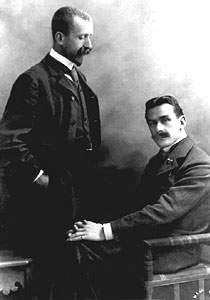
Heinrich en Thomas Mann rond 1902


De Amerikaanse schrijver Philip Roth werd geboren op 19 maart 1933 in Newark. Zie ook alle tags voor Philip Roth op dit blog.

Uit: Nemesis 

“What people did know was that the disease was highly contagious and might be passed to the healthy by mere physical proximity to those already infected. For this reason, as the number of cases steadily mounted in the city — and communal fear with it — many children in our neighborhood found themselves prohibited by their parents from using the big public pool at Olympic Park in nearby Irvington, forbidden to go to the local “air-cooled” movie theaters, and forbidden to take the bus downtown or to travel Down Neck to Wilson Avenue to see our minor league team, the Newark Bears, play baseball at Ruppert Stadium. We were warned not to use public toilets or public drinking fountains or to swig a drink out of someone else’s soda-pop bottle or to get a chill or to play with strangers or to borrow books from the public library or to talk on a public pay phone or to buy food from a street vendor or to eat until we had cleaned our hands thoroughly with soap and water. We were to wash all fruit and vegetables before we ate them, and we were to keep our distance from anyone who looked sick or complained of any of polio’s telltale symptoms.
Escaping the city’s heat entirely and being sent off to a summer camp in the mountains or the countryside was considered a child’s best protection against catching polio. So too was spending the summer some sixty miles away at the Jersey Shore. A family who could afford it rented a bedroom with kitchen privileges in a rooming house in Bradley Beach, a strip of sand, boardwalk, and cottages a mile long that had already been popular for several decades among North Jersey Jews. There the mother and the children would go to the beach to breathe in the fresh, fortifying ocean air all week long and be joined on weekends and vacations by the father. Of course, cases of polio were known to crop up in summer camps as they did in the shore’s seaside towns, but because they were nothing like as numerous as those reported back in Newark, it was widely believed that, whereas city surroundings, with their unclean pavements and stagnant air, facilitated contagion, settling within sight or sound of the sea or off in the country or up in the mountains afforded as good a guarantee as there was of evading the disease.“


 1891736-0c71b4c1b4486ea5a351723f416e6bc0.jpg
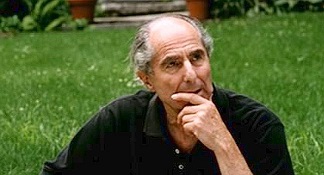
Philip Roth (Newark, 19 maart 1933)


De Nederlandse schrijver Mano Bouzamour werd geboren op 19 maart 1991 in Amsterdam. Zie ook alle tags voor Mano Bouzamour op dit blog.

Uit: De belofte van Pisa

"Ik hurkte neer en strikte mijn veters, toen het me opviel dat er al geruime tijd geen verkeer meer over de weg suisde, als een afvoer die verstopt zat een geen water door liet stromen. (…) Voordat tot me doordrong wat ik zag, ontvouwde zich een onwerkelijk schouwspel. Het werd aangekondigd door zwaar accelererende geluiden, als het gegrom van leeuwen, die uit omliggende straten kwamen en steeds luider werden. Mensen op terrasjes en bij het ijstentje keken verbaasd op om vast te stellen wat er gaande was. Donkerkleurige sportauto’s vlogen uit alle denkbare richtingen over de weg, met gierende banden die grip op het asfalt probeerden te houden maar doorschoten, als de remmende klauwen van een snellende kat op een houten vloer. Ze stopten voor ons in een ondoordringbare verweerlinie. Mannen sprongen uit de sportauto’s, als slierten strijdbare soldaatmieren. Ze brachten een symfonie ten gehore van openslaande autodeuren, rappe voetstappen en ladende machinegeweren.’
(…)

“‘Wat kijk je?!’ ‘Mag ik niet kijken?’
‘Kijk weg voordat ik je ga beuken, blonde bitch.’
‘Mij beuken? Kom dan als je lef hebt, kut-Marokkaantje.’
We stapten van de Vespa’s en veinsden een vuistgevecht. Automobilisten stapten uit en voetgangers snelden schreeuwend op ons af.
En dan lachten we ze ineens uit.
En gaven elkaar een high five.
De gezichten van die lui.
Ze begrepen het niet.
Sommigen lachten.
Anderen niet.
Sukkels."


 1891736-3d7c09f2d18be6ad98224ced9a0565fd.jpg
Mano Bouzamour (Amsterdam, 19 maart 1991)


De Duitse schrijfster Kirsten Boie werd geboren op 19 maart 1950 in Hamburg. Zie ook alle tags voor Kirsten Boie op dit blog.

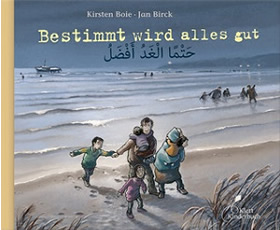
Uit: Bestimmt wird alles gut

„Dies ist die wahre Geschichte von Rahaf, die ist jetzt zehn Jahre alt. Und von ihrem Bruder Hassan, der ist jetzt neun.
Rahaf und Hassan wohnen mit Mama und Papa in einem kleinen deutschen Ort. Und natürlich wohnen auch ihre beiden kleinen Schwestern da, Amal und Haia. Die sind aber erst drei und vier. Mit Amal und Haia kann man nicht gut spielen.
Früher haben Rahaf und Hassan in einer anderen Stadt gewohnt. Die Stadt heißt Homs und liegt in einem anderen Land. Das Land heißt Syrien.
In Homs fanden Rahaf und Hassan es schön. Sie haben in einem großen Haus gewohnt, mit vier Stockwerken. Ganz unten haben Oma und Opa gewohnt. Im ersten Stock haben Onkel Ahmed und Tante Jinin gewohnt, mit ihren fünf Kindern. Im zweiten Stock haben Onkel Ziad und Tante Marwa gewohnt, die hatten drei Kinder. Da hatten Rahaf und Hassan acht Cousins und Cousinen, das war gut zum Spielen. Rahaf und Hassan haben mit Mama und Papa und Amal und Haia ganz oben im Haus gewohnt, im dritten Stock.
Rahaf hat am liebsten mit ihrer Cousine Aycha gespielt. Aycha war genauso alt wie Rahaf. Darum sind sie sogar zusammen in die Schule gegangen, in dieselbe Klasse. Manchmal haben Rahaf und Aycha mit ihren Puppen gespielt.“


 1891736-a67a5473bc9667f4bd45dd969d3843f1.jpg
Kirsten Boie (Hamburg, 19 maart 1950)
Cover


De Amerikaanse schrijfster Lynne Sharon Schwartz werd geboren op 19 maart 1939 in New York. Zie ook alle tags voor Lynne Sharon Schwartz op dit blog.

Uit: Leaving Brooklyn

“He looked at me in startled, confused pleasure, as if I had cunningly put my finger on one of the profound and inexplicable contradictions at the heart of things, as if I had asked why is there suffering in the world or why do men constantly make war if they say they want peace. He tousled my hair and had no answer, which surprised me because he usually did.
I minded the mystery of the eye more than the eye itself. I craved an exotic story to tell, a label by which I might be known. At school there was Carlotta Kaplowitz, famed for her dark beauty and wondrous name - one of the few girls not named Barbara or Susan or Carol or Judy - who contracted polio. When she returned months later on crutches, scattering true medical tales like favors, she was lionized in the playground. Polio was dramatic, though Carlotta’s case, like Hans Castorp’s tuberculosis, was mild - she would walk again. Another girl, one of the Carols, stayed home for a whole term with an unnamed ailment. I brought her the class assignments. How enviously I breathed the musty, invalid air of the shaded room where she sat propped up on pillows, her every need attended to by her scurrying mother, like a Victorian heroine enervated by vocation, like Elizabeth Barrett before she met Browning.
The iris of my right eye was smaller than that of the left. And at the top of the sphere, the part you couldn’t see unless the lid was raised, was a milky, blurry patch, a scar. It was as if someone had painted an eye and smudged the upper rim, giving it an unfinished look, then was called away from the easel - an emergency, a long trip - and never came back.
The smudging was not all. Because of a weak muscle, the iris, of its own volition and at unpredictable times, would drift from its resting place to float - I almost wrote “flee” - beneath the upper lid for a few seconds, leaving blank white space. A wandering eye, it is aptly called. Restless, bored with the banality of what is presented, it escapes to the private darkness beneath the lid, with the wild dancing colors. Soon it drifts back and attends to its duties, not being totally irresponsible. Much of the time no one would know about its little trip, just as no one knows about the secret journeys or aberrations of anyone else.”


 1891736-15cb02c78567ff0c82f85f99c1e4a5e9.jpg
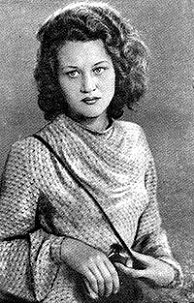
Lynne Sharon Schwartz (New York, 19 maart 1939)
Brooklyn, New York


De Oekraïense schrijfster en dichteres Lina Kostenko werd op 19 maart 1930 geboren in Rzhyshchiv. Zie ook alle tags voor Lina Kostenko op dit blog.


Destin

J'ai rêvé une nuit d'un étrange bazar
En plein air, en plaine campagne
On vendait des destins de toutes sortes
Pour des généreux, pour des avares
Et pour des clients de toutes sortes.

Il y en avait pour pas moins que des fils de roi
D'autres n'étaient faits que pour des pauvres mignons
On pouvait acheter un destin à un sou
D'autres en achetaient qui valaient des millions.

Certains payaient avec leur chance
D'autres payaient de leur conscience
Certains payaient de tout leur or
Et d'autres s'embarrassaient fort.

Les diseuses de bonne aventure comme des cartes
Tassaient les jours et se massaient près des clients
Les destins eux-mêmes pour moi s'assemblaient
Et parmi eux un seul se détourna.

Je regardai celui-là dans son visage clair
Et du fond de moi-même j'appelai son regard
— Qu'importe, me dit-il, tu ne me prendras pas
Mais de le dire, lui faisait mal au cœur.

— Je te prendrai peut-être
           — Non, tu sais bien
Dit-il d'un ton sévère
Pour moi il faudrait que tu donnes ta vie
Et moi en échange t'apporterais le chagrin.

— Mais alors, qui es-tu ?
           Et ton nom quel est-il ?
Pour être digne de me coûter si cher ?
— Poésie est ma sœur
           Et l'humaine vérité notre mère.
Je l'ai reçu et j'en ai fait ma loi.
Alors, grande merveille se fit :
La nuit passa, le songe finit
Mais le destin est resté avec moi.

J'ai un destin que j'ai choisi moi-même
Et qu'il m'arrive n'importe quoi
De rien ne demanderai compte
A mon destin, c'est moi qui l'ai choisi.


Vertaald door Marie-France Jacamon


 1891736-c28779cc4d2ddecac9c23a24f2436c58.jpg
Lina Kostenko (Rzhyshchiv, 19 maart 1930)


De Kroatische dichter en schrijver Petar Preradović werd geboren op 19 maart 1818 in het dorp Grabrovnica bij Virovitica. Zie ook alle tags voor Petar Preradović op dit blog.


Traveller (Putnik, fragment)

Where am I? Where have I come?
Trapped by night in this foreign land.
I don’t know what track to follow,
On naked rocks I just wallow,
Weary legs in this wilderness!”
 
What other shelter can I find?
The North wind blows on snowy peaks
While this poor wayfaring stranger
Finds in darkness darkest danger
As this cold earth with hardness speaks.”
 
All around the fog has fallen,
And well concealed now is the moon
Star tracks have disappeared and yes,
Mother dearest,
Take under your roof a foreign son!”
 
She said:“I’d take you in with pleasure,
But look; see how they are sleeping –
Three sons three daughters, a full house,
Which fills this mothers heart of course
To the brim – it’s overflowing.”


 1891736-6c3e9669643ed74d6a950774f89bd9f7.jpg
Petar Preradović (19 maart 1818 – 18 augustus 1872)


Zie voor nog meer schrijvers van de 19e maart ook mijn vorige blog van vandaag.

Geschreven door Romenu om 10:32 Reageer op dit bericht

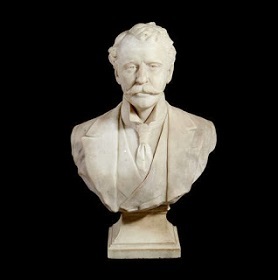
William Allingham, Ion Barbu, Rosalie Loveling, Tobias Smollett, Irving Wallace, Peter Abrahams

De Ierse dichter William Allingham werd geboren op 19 maart 1824 in Ballyshannon, Donegal. Zie ook alle tags voor William Allingham op dit blog.


A Seed

See how a Seed, which Autumn flung down,
And through the Winter neglected lay,
Uncoils two little green leaves and two brown,
With tiny root taking hold on the clay
As, lifting and strengthening day by day,
It pushes red branchless, sprouts new leaves,
And cell after cell the Power in it weaves
Out of the storehouse of soil and clime,
To fashion a Tree in due course of time;
Tree with rough bark and boughs' expansion,
Where the Crow can build his mansion,
Or a Man, in some new May,
Lie under whispering leaves and say,
"Are the ills of one's life so very bad
When a Green Tree makes me deliciously glad?"
As I do now. But where shall I be
When this little Seed is a tall green Tree?


In A Spring Grove

Here the white-ray'd anemone is born,
Wood-sorrel, and the varnish'd buttercup;
And primrose in its purfled green swathed up,
Pallid and sweet round every budding thorn,
Gray ash, and beech with rusty leaves outworn.
Here, too the darting linnet hath her nest
In the blue-lustred holly, never shorn,
Whose partner cheers her little brooding breast,
Piping from some near bough. O simple song!
O cistern deep of that harmonious rillet,
And these fair juicy stems that climb and throng
The vernal world, and unexhausted seas
Of flowing life, and soul that asks to fill it,
Each and all of these,--and more, and more than these!


 1891731-02e1c865574c47b8ef2ad5b595018000.jpg
William Allingham (19 maart 1824 – 18 november 1889)
Borstbeeld door Albert Toft


De Roemeense dichter en wiskundige Ion Barbu (eig. Dan Barbilian) werd geboren op 19 maart 1895 in Câmpulung. Zie ook alle tags voor Ion Barbu op dit blog.


Le Paon

Il faisait des courbettes serviles et, mollement,
Voulait du maïs dans ta paume picorer,
Tremblait tout bleu et chaud, de la tête aux pans
Comme on voit dans une tasse l’alcool ondoyer.

Sur une souche, une coiffe portant, ton drôle de singe
Des yeux inégaux, terriblement tristes, roulait.
Ta main démancha, comme on enssore un linge
Et rompit le cou de l’oiseau, qui criait. 


Vertaald door Constantin Frosin


Out of an hour glass, inferred,

Out of an hour glass, inferred, the depth of this calm highpoint
Seeped through a mirror inside redeemed azure
Cuts out from groups of water, through drowned celestial herds, 
A secondary game, more pure yet.

Latent nadir! The poet raises the sum of
Scattered harps, lost in inverted flights,
And songs subside: secretive, as only seas can be,
Floating off jelly fish beneath green bells.


 1891731-45783cab833e13eabceb9791b7e2ff07.jpg
Ion Barbu (19 maart 1895 – 11 augustus 1961)


De Vlaamse schrijfster en dichteres Rosalie Loveling werd geboren op 19 maart 1834. Zie ook alle tags voor Rosalie Hoveling op dit blog.


Moederangst

Zij zag het wiegje op de stroom,
Gelijk een schuitje drijven;
Dat zag zij in een nare droom,
Het hart vol schroom,
Zij voelt haar bloed verstijven!

Waar of ze 't nu nog wedervindt,
Haar zo op eens ontnomen?
Een prooi aan 't water en de wind,
Hoe kan het kind
Aan zulk gevaar ontkomen?

Maar zie, ze ontwaakt en 't lacht haar aan,
Zij is nog diep bewogen,
En voelt het hart nu dankbaar slaan,
Terwijl een traan
Komt schittren in hare ogen.

De nacht is stil, en kalm en klaar;
Haar bange droom is henen;
Maar is voor 't rustend kindje daar,
Ook al 't gevaar,
En alle leed verdwenen?

Ach neen; zij 't wiegje nog zo zacht,
't Moet toch langs wilde baren,
Gelijk een scheepje met zijn vracht,
Bij mist en nacht,
De levensstroom bevaren.


 1891731-b581b6bd0b1c99215db7ac6790f98b88.jpg
Rosalie Loveling (19 maart 1834 – 4 mei 1875)
Pauline (de moeder van Cyriel Buysse), Rosalie en Virginie Loveling, ca. 1850


De Schotse romanschrijver Tobias George Smollett werd geboren op 19 maart 1721 in Dalquhurn in het tegenwoordige West Dunbartonshire. Zie ook alle tags voor Tobias Smolett op dit blog.

Uit: The Adventures of Roderick Random

“I was born in the northern part of this united kingdom, in the house of my grandfather, a gentleman of considerable fortune and influence, who had on many occasions signalised himself in behalf of his country; and was remarkable for his abilities in the law, which he exercised with great success in the station of a judge, particularly against beggars, for whom he had a singular aversion.
My father (his youngest son) falling in love with a poor relation, who lived with the old gentleman in quality of a housekeeper, espoused her privately; and I was the first fruit of that marriage. During her pregnancy, a dream discomposed my mother so much that her husband, tired with her importunity, at last consulted a highland seer, whose favourable interpretation he would have secured beforehand by a bribe, but found him incorruptible. She dreamed she was delivered of a tennis-ball, which the devil (who, to her great surprise, acted the part of a midwife) struck so forcibly with a racket that it disappeared in an instant; and she was for some time inconsolable for the lost of her offspring; when, all on a sudden, she beheld it return with equal violence, and enter the earth, beneath her feet, whence immediately sprang up a goodly tree covered with blossoms, the scent of which operated so strongly on her nerves that she awoke. The attentive sage, after some deliberation, assured my parents, that their firstborn would be a great traveller; that he would undergo many dangers and difficulties, and at last return to his native land, where he would flourish in happiness and reputation. How truly this was foretold will appear in the sequel. It was not long before some officious person informed my grandfather of certain familiarities that passed between his son and housekeeper which alarmed him so much that, a few days after, he told my father it was high time for him to think of settling; and that he had provided a match for him, to which he could in justice have no objections.“


 1891731-30fc143bb4b1e0435046546d5d985c17.jpg
Tobias Smollett (19 maart 1721  - 17 september 1771)
Portret door  Nathaniel Dance-Holland, rond 1764


De Amerikaanse schrijver Irving Wallace werd geboren op 19 maart 1916 in Chicago, Illinois. Zie ook alle tags voor Irving Wallace op dit blog.

Uit: The Fan Club

“Her green eyes still betrayed nothing of her inner feelings, revealed only gracious interest, as they scanned the dramatis personae readying to exit from the stage. Her gaze froze each in a frame for an instant, while her mind added a caption, then photographed and categorized the next.
Hank Lenhardt, the most successful publicist in town, with his boring and stupid anecdotes and endless pitch and slick gossip. Justin Rhodes, the producer of her current film, a gentleman from the legitimate theatre, but another phony on the make, not for her (he was surely a fag or a neuter) but on the make for her dependence upon him and for her name to use as another steppingstone on his non-stop power trip. Tina Alpert, the widely syndicated movie columnist, a smiler with a knife, a twenty four hour bitch you never turned your back on or ignored or ever forgot to woo with expensive birthday or Christmas presents.
Sy Yaeger, the hot new filmmaker, euphemism for director, who rewrote writers on the set and had the arrogance to make a cult of the kitsch peddlers of the past like Busby Berkeley, Preston Sturges, Raoul Walsh. Sky Hubbard, the radio and television network news commentator, a dumb lip reader and foghorn, a face out of a shirt ad, whom that idiot Lenhardt had insisted that she invite as an investment in goodwill. Nadine Robertson, whose only claim to fame was that she had once played opposite Charles Chaplin (no small thing) and who was now a silicone smooth old socialite and giver of charity balls, a grand dame who whined clichés and somehow had escaped interment in the Movie land Wax Museum.”


 1891731-d8284a4891efb80272be1da6cc747f34.jpg
Irving Wallace (19 maart 1916 – 29 juni 1990)


De Zuid-Afrikaanse schrijver Peter Abrahams werd op 19 maart 1919 geboren in Vrededorp bij Johannesburg. Zie ook alle tags voor Peter Abrahams op dit blog.

Uit: Mine Boy

„But as fast as they moved the sand so fast did the pile grow. A truck load would go and another would come from the bowels of the earth. And another would go and another would come. So it went on all day long. On and on and on and on.
But the sand remained the same. A truck would come from the heart of the earth. A truck would go up to build the mine-dump. Another would come. Another would go. . - All day long...
And for all their sweating and hard breathing and for the redness of their eyes and the emptiness of their stare there would be nothing to show. In the morning the pile had been so big. Now it was the same.
And the mine-dump did not seem to grow either.
It was this that frightened Xuma. This seeing of nothing for a man’s work.’ This mocking of a man by the sand that was always wet and warm; by the mine-dump that would not grow; by the hard eyes of the white man who told them to hurry up.
It made him feel desperate and anxious. He worked feverishly.
Straining his strength behind the loaded truck and running behind the empty truck and looking carefully to see if the dump had grown any bigger, and watching the sand from the earth to see if it had grown less. But it was the same. The same all the time. No change.
Only the startling and terrifying noises around. And the whistles blowing. And the hissing and the explosions from the bowels of the earth. And these things beat against his brain till his eyes reddened like the eyes of the other men.”


 1891731-064b6475d5f2ce81596031860bf08dbf.jpg
Peter Abrahams (Vrededorp, 19 maart 1919)

Geschreven door Romenu om 10:31 Reageer op dit bericht

Meer van Romenu

↑ Terug naar de berichten