Naar de inhoud

Romenu

Over literatuur, gedichten, kunst en cultuur
akke.beakke.be

Berichten van 10 juni 2016 tot 11 juni 2016

William Styron, Sophie van der Stap, N. P. van Wyk Louw, Renée Vivien, Jean-Pierre Chabrol, Ben Jonson, Yasunari Kawabata
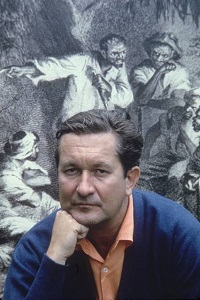
De Amerikaanse schrijver William Styron werd op 11 juni 1925 in Newport News in de staat Virginia geboren. Zie ook alle tags voor William Styron op dit blog.

Uit: The Confessions of Nat Turner

“I suppose the truth is simply that it was possible for benefits like these to accrue only to a Negro lucky enough to remain in the poor but relatively benign atmosphere of Virginia. For here in this worn-out country with its decrepit little farms there was still an ebb and flow of human sympathy—no matter how strained and imperfect—between slave and master, even an understanding (if sometimes prickly) intimacy; and in this climate a black man had not yet become the cipher he would become in the steaming fastnesses of the far South but could get off in the woods by himself or with a friend, scratch his balls and relax and roast a stolen chicken over an open fire and brood upon women and the joys of the belly or the possibility of getting hold of a jug of brandy, or pleasure himself with thoughts of any of the countless tolerable features of human existence.”
(…)

“I reckon even you didn’t know the actual statistics, hiding out until now like you done. But in the three days and nights that your campaign lasted you managed to hasten fifty-five white people into early graves, not counting a score or so more fearfully wounded or disabled—hors de combat, as the Frenchies say, for the rest of their natural lives. And only God knows how many poor souls will be scarred in their minds by grief and by terrible memories until the day they part this life. No,” he went on, breaking off a black wad from a plug of chewing tobacco, “no, I’ll have to hand it to you, in many respects you was pretty thorough. By sword and ax and gun you run a swath through this county that will be long remembered. You did, as you say, come damn near to taking your army into this town. And in addition, as I think I told you before, you scared the entire South into a condition that may be described as well-nigh shitless. No niggers ever done anything like this.”


 1924247-223d789a795ab12fff16d1ee44777ce2.jpg
William Styron (11 juni 1925 – 1 november 2006)
In 1967


De Nederlandse schrijfster Sophie van der Stap werd geboren in Amsterdam op 11 juni 1983. Zie ook alle tags voor Sophie van der Stap op dit blog.

Uit: The Girl With Nine Wigs (Vertaald door Charlotte Caroline Jongejan)

“Before, my daily routine was to wake up at eight for a long run in the park, then have my coffee while rushing off to class. Now I wake up with a cough, and I'm lucky if I can run half the distance in double the time. Lately I need three coffees just to get going, and I'm still late to class every day.
Visiting the hospital is a thrilling part of my new routine. After numerous appointments with multiple doctors in various hospitals and two visits to the emergency room, I now find myself in yet another antiseptic hospital lounge with stale magazines, waiting to see a new doctor with a new diagnosis and a new file.
At this point, I know this hospital like the back of my hand. I've spent the past two months wandering from one department to the next, from the top floor to the bottom, from the front to the back. Over and over and over again. I've seen eight interns, two gynecologists-why do doctors always assume you're pregnant when they can't figure out what's wrong?-a pulmonary specialist, and two ER teams, and have been prescribed three courses of antibiotics. All to no avail. Between all these doctors, no diagnosis but plenty of symptoms and a lost tampon. Ick. It gave the doctors and my father, who was waiting in the hallway, a big laugh but left me mortified.
My symptoms-a strange jabbing here and there, shortness of breath, the loss of a few kilos (which I'm definitely not complaining about), and a pale face that no amount of blush can mask-don't seem to bring me to a diagnosis. So here I am in the waiting room. Again. A door opens and I see him-the one hundredth white coat to examine me and try to figure out what is causing all these seemingly unrelated symptoms. He approaches the reception desk, picks up my file, and calls out "Miss van der Stap" while randomly scanning the waiting room to see which of the rumpled contestants has just won a spot in his examination room.”

 

 1924247-87dee3b5d8f8d989dd03c7a31fee53d5.jpg
Sophie van der Stap (Amsterdam, 11 juni 1983)


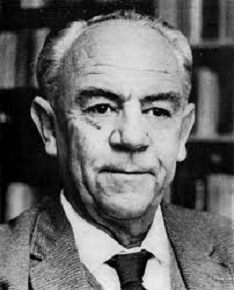
De Zuid-Afrikaans schrijver en dichter Nicolaas Petrus van Wyk Louw werd geboren in Sutherland op 11 juni 1906. Zie ook alle tags voor N. P. van Wyk Louw op dit blog.


Vroegherfs

Die jaar word ryp in goue akkerblare,
in wingerd wat verbruin, en witter lug
wat daglank van die nuwe wind en klare
son deurspoel word; elke blom word vrug,
tot selfs die traagstes; en die eerste blare val
so stilweg in die rook-vaal bos en laan,
dat die takke van die lang populiere al
teen elke ligte môre witter staan.
O Heer, laat hierdie dae heilig word:
laat alles val wat pronk en sieraad was
of enkel jeug, en vér was van die pyn;
laat ryp word, Heer, laat U wind waai, laat stort
my waan, tot al die hoogheid eindelik vas
en nakend uit my teerder jeug verskyn.


Early Autumn

The year matures in golden oak-leaves, in the dun
of darkening vineyards, and, paler at all hours
air washed by fresh winds and the pellucid sun.
Fruits fulfil the individual flowers.
even the slowest, and the first leaves fall
so silently in smoke-dimmed wood and lane
that the slender branches of the poplars tall
lift wither silhouettes each radiant dawn.
Dear Lord, may all these days be sanctified:
let all things fall that were showy and vain
or merely young and far removed from tears;
make riper, Lord, let your wind blow; my pride
strip off, till all that's great at last shows plain
naked and firm above my greener years.


Vertaald door Guy Butler
 

 1924247-e6792a1f045270c293011da785c3500a.jpg
N. P. van Wyk Louw (11 juni 1906 – 18 juni 1970)


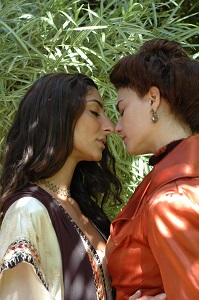
De Britse dichteres en schrijfster Renée Vivien (eig. Pauline Mary Tarn) werd geboren op 11 juni 1877 in Londen. Zie ook alle tags voor Renée Vivien op dit blog.


Night

The light, in throes of agony, dies at your knee,
Come, o you whose guarded face, so lovely to see,
Carries dejection from years heavy and jaded:
Come, with your deadly welts turning pale, in distress,
With no other scent in the long folds of your dress
Than the breath of flowers which have long since faded.

Come, with your unrouged lips that ignite my desires,
Without rings, - neither rubies, opals, nor sapphires
Dishonoring your fingers, milky as the moon, -
And from your eyes put mirrored reflections to flight...
For it is here: the simple, chaste hour of the night
When hues can oppress, and luxury importune.

Yield up all your chagrin to eternal delight,
Exhale in a profound cry your suffering blight,
All those events of the past, so cruel and senseless,
Leave them to death, to the distance and to silence...
In the dream which to strife gives such sweet condolence;
To the ancient fever of speech: forgetfulness.

I will kiss your hands and your divine naked feet;
Our hearts will cry out for the neglect that they meet,
Will decry the vile words and base gestures anew...
These flights will linger in peaceful security....
You will join your hands in their mystic purity,
And, in the soul-filled shadows, I will adore you.
 

 1924247-ac686128573019fdf04f540617760e5a.jpg
Renée Vivien (11 juni 1877 – 10 november 1909)
Necar Zadegan (Kerime) en Traci Dinwiddie (Renée) in de film “The Touch” uit 2007


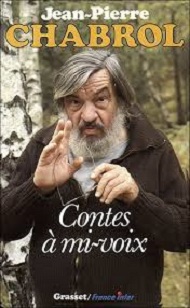
De Franse schrijver Jean-Pierre Chabrol werd geboren op 11 juni 1925 in Chamborigaud. Zie ook alle tags voor Jean-Pierre Chabrol op dit blog.

Uit: Contes à mi-voix

“Chaque matin, je lui apporte son petit déjeuner au lit, puis je le laisse. Un moment après, j'entends sa guitare. C'est un joli moment pour notre maisonnée ...
L'été, sa fenêtre reste ouverte. Les passants ralentissent et s'arrêtent de parler dès qu'ils perçoivent les premières notes, puis ils étouffent leurs pas, puis ils retiennent leur respiration. Sous la fenêtre, les plus hardis s'arrêtent un peu, puis ils repartent comme des voleurs avec ce petit morceau de guitare qui ne leur a rien coûté. Ils ne reprennent un pas normal, ils ne recommencent la conversation que longtemps après avoir dépassé la maison. »
(…)

« Ces casse-pieds pouvaient tout se permettre. Le cousin Palamède par exemple. Un vieux célibataire exigeant. La famille ne pouvait l'abandonner à lui-même, alors, elle se l'était réparti : trois mois chez l'un, trois mois chez l'autre. Il fallait voir le Palamède s'asseoir à table, jamais content. Quand la soupe était trop épaisse, il grognait : "Béton ! Béton !" Quand elle était trop claire, il grinçait : "La Garonne ..." Après le café, Palamède regardait le cousin quitter la cuisine pour aller donner aux bêtes, la cousine faire la vaisselle, il réclamait sa pipe et son tabac, s'étalait, soupirait béatement : "On est bien, quand on est célibataire, je ne comprends pas que vous vous mariiez, vous autres ..."
 

 1924247-e9c9f90608cbbdc85add84fee61793a1.jpg
Jean-Pierre Chabrol (11 juni 1925 – 1 december 2001)


De Engelse dichter en schrijver Ben Jonson werd geboren rond 11 juni 1572 in Westminster, Londen. Zie ook alle tags voor Ben Jonson op dit blog.


The Noble Nature

It is not growing like a tree
in bulk, doth make Man better be;
or standing long an oak three hundred year,
to fall a log at last, dry, bald, and sere;

A lily of a day
is fairer in May,
although it fall and die that night-
It was the plant and flower of Light.
In small proportions we just beauties see:
and in short measures life may perfect be.


Porth Ceiriad Bay

Descended to the shore, odd how we left
the young girl with us to herself, and went
straight to examine the stratified cliffs,
forgot her entirely in our interest.

You marvelled at the shapes the clockwork sea
had worn the stone, talking keenly, until
the pace of this random sculpture recalled
your age to you, and then its anodynes.

And so you turned, pretending youth, courting
the girl as if you were a boy again,
leaving the wry cliffs to their erosion
and me to my observant solitude.

 

 1924247-ddd57f7245bd4538de96e8e71982e1bd.jpg
Ben Jonson (ca. 11 juni 1572 – 6 augustus 1637) 
Sebastian Armesto als Ben Jonson in de film “Anonymous”, 2011 


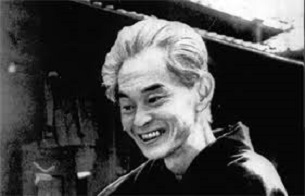
De Japanse schrijver Yasunari Kawabata werd geboren op 11 juni 1899 in Osaka. Zie ook alle tags voor Yasunari Kawabata op dit blog.

Uit: Snow Country (Vertaald door Edward Seidensticker)

“Her talk of novels seemed to have little to do with “literature” in the everyday sense of the word.
The only friendly ties she had with the people of this village had come from exchanging women’s
magazines, and afterwards she had gone on with her reading by herself. She was quite indiscriminate and had little understanding of literature, and she borrowed even the novels and magazines she found
lying in the guests’ rooms at the inn. Not a few of the new novelists whose names came to her meant
nothing to Shimamura. Her manner was as though she were talking of a distant foreign literature.
There was something lonely, something sad in it, something that rather suggested a beggar who has
lost all desire. It occurred to Shimamura that his own distant fantasy on the occidental ballet, built
up from words and photographs in foreign books, was not in its way dissimilar.
She talked on happily too of movies and plays she had never seen. She had no doubt been starved
all these months for someone who would listen to her.
Had she forgotten that a hundred and ninetynine days earlier exactly this sort of conversation had set off the impulse to throw herself at Shimamura? Again she lost herself in the talk, and again her words seemed to be warming her whole body.
But her longing for the city had become an undemanding dream, wrapped in simple resignation,
and the note of wasted effort was much stronger in it than any suggestion of the exile’s lofty dissatis-
faction. She did not seem to find herself especially sad, but in Shimamura’s eyes there was something
strangely touching about her. Were he to give himself quite up to that consciousness of wasred effort,
Shimamura felt, he would be drawn into a remote emotionalism that would make his own life a waste.
But before him was the quick, live face of the woman, ruddy from the mountain air.”
 

 1924247-5078746edc22f16c2ee7db9b9e61aea8.jpg
Yasunari Kawabata (11 juni 1899 — 16 april 1972)


Zie voor nog meer schrijvers van de 11e juni ook mijn vorige blog van vandaag.
Geschreven door Romenu om 12:51 Reageer op dit bericht

Athol Fugard, Nnimmo Bassey, Jules Vallès, George Wither, Barnabe Googe

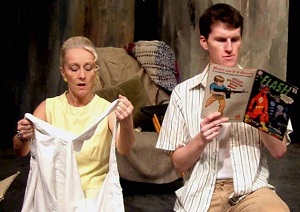
De Zuidafrikaanse schrijver Harold Athol Lannigan Fugard werd geboren op 11 juni 1932 in Middelburg, Kaapprovincie. Zie ook alle tags voor Athol Fugard op dit blog.

Uit: Hello And Goodbye

““OHNNIE. What did you want to do?
HESTER. Nothing. [Loo/ting a! the certificate in her hand.] Johannes Cornelius Smit-Anna Van Rooyen. Biggest mistake she ever made!
JOHNNIE. You don’t know what you’re saying.
HESTrER. Yes, I do! I’m saying this was the biggest mistake she ever made. Marriage! One man’s slave all your life, slog away until you’re in your grave. For what? Happiness in Heaven? I seen them- Ma and the others like her, with more kids than they can count, and no money; bruises every pay-
day because he comes home drunk or anOIher one in the belly because he was so drunk he didn’t know it was his old wife and got into bed!
JOHNNIE. Daddy never beat Mommie. He was never drunk.
HESTER. Because he couldn’t. He was a crock. But he did it other ways. She fell into her grave the way they all do- tired, maeg. Frightened! I saw her.
JOHNNIE. This is terrible, Hester.
HESTER. You’re damned right it is. It’s hell. They live in hell, but they’re too frightened to do anything about it because there’s always somebody around shouting God and Judgement. Mommie should have taken what she wanted and then
kicked him out.
JOHNNlE. And the children.
HESTER. So what! If you get them you get them and if you don’t want them there’s ways.
JOHNNlE. Hester! Hester!
HESTER. Hester, Hester what? Hester who? Hester Smit! That‘s me. I’ve done it. And I don‘t care a damn. Two months old and I got rid of it.”


 1924243-d41d7b307ac5c3650558883ad087db5d.jpg
Athol Fugard (Middelburg (ZA), 11 juni 1932)
Scene uit een opvoering in het Abbey Theatre, St Albans, 2011


De Nigeriaanse dichter, schrijver, architect, en milieuactivist Nnimmo Bassey werd geboren in Akwa Ibom op 11 juni 1958. Zie ook alle tags voor Nnimmo Bassey op dit blog.

Uit:To cook a continent

“There are some in Africa who argue that having a valuable resource is not necessarily a curse. They say that nature’s wealth is a blessing and that the curse happens only in relation to how resources are grabbed, owned, extracted and utilised. In other words, the curse is located firmly in the social structure of the world.
Let us start with a caveat about the word ‘resource’, which implies that nature’s wealth is a bounty, ready for corporate robbery. But we as humans frame this dilemma of extraction incorrectly if we don’t point out the intrinsic right of nature to survive on its own terms. Most importantly, we are part of Mother Earth, not apart from her. Her rights to exist and reproduce the conditions for all species’ existence are not to be violated.
That said, everyone acknowledges that Africa is resource rich. That the continent has been a net supplier of energy and raw materials to the North is not in doubt. That the climate crisis confronting the world today is mainly rooted in the wealthy economies’ abuse of fossil fuels, indigenous forests and global commercial agriculture is not in doubt. What has been obfuscated is how to respond to this reality. Indeed, the question peddled in policy circles is often what can be done about Africa. And, in moments of generosity, the question moves to what can be done for Africa.“
This book looks at what has been done to Africa and how Africans and peoples of the world should respond for the collective good of all. The resource conflicts in Africa have been orchestrated by a history of greed and rapacious consumption. We ask the question: must these conflicts remain intractable? We will connect the drive for mindless extraction to the tightening noose of odious debt repayment and we will demand a fresh look at the accounting books, asking when environmental costs and other externalities are included: who really owes what to whom? Isn’t Africa the creditor of the world, if we take seriously the North’s ‘ecological debt’ to the South?”


 1924243-8d1b60f39b26e69a143c31c7f23be8d0.jpg
Nnimmo Bassey (Akwa Ibom, 11 juni 1958)


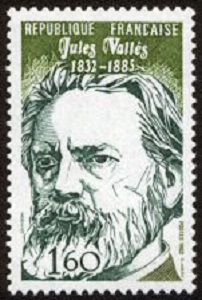
De Franse schrijver Jules Vallès werd geboren op 11 juni 1832 in Puy-en-Velay, Haute-Loire. Zie ook alle tags voor Jules Vallès op dit blog.

Uit: L’Enfant

« La maison que nous habitons est dans une rue sale, pénible à gravir, du haut de laquelle on embrasse tout le pays, mais où les voitures ne passent pas. Il n'y a que les charrettes de bois qui y arrivent, traînées par des boeufs qu'on pique avec un aiguillon. Ils vont, le cou tendu, le pied glissant; leur langue pend et leur peau fume. Je m'arrête toujours à les voir, quand ils portent des fagots et de la farine chez le boulanger qui est à mi-côte; je regarde en même temps les mitrons tout blancs et le grand four tout rouge, - on enfourne avec de grandes pelles, et ça sent la croûte et la braise!
La prison est au bout de la rue, et les gendarmes conduisent souvent des prisonniers qui ont les menottes, et qui marchent sans regarder ni à droite ni à gauche, l'oeil fixe, l'air malade.
Des femmes leur donnent des sous qu'ils serrent dans leurs mains en inclinant la tête pour remercier.
Ils n'ont pas du tout l'air méchant.
Un jour on en a emmené un sur une civière, avec un drap blanc qui le couvrait tout entier; il s'était mis le poignet sous une scie, après avoir volé; il avait coulé tant de sang qu'on croyait qu'il allait mourir.
Le geôlier, en sa qualité de voisin, est un ami de la maison; il vient de temps en temps manger la soupe chez les gens d'en bas, et nous sommes camarades, son fils et moi. Il m'emmène quelquefois à la prison, parce que c'est plus gai. C'est plein d'arbres; on joue, on rit, et il y en a un, tout vieux, qui vient du bagne et qui fait des cathédrales avec des bouchons et des coquilles de noix.
À la maison, l'on ne rit jamais; ma mère bougonne toujours. - Oh! comme je m'amuse davantage avec ce vieux là et le grand qu'on appelle le braconnier, qui a tué le gendarme à la foire du Vivarais!."


 1924243-361ce88342cc5d37f50620aeecf18f52.jpg
Jules Vallès (11 juni 1832 – 14 februari 1885)


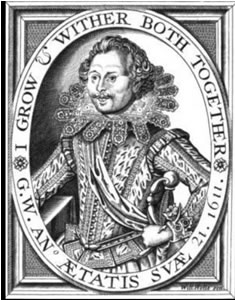
De Engelse dichter en satiricus George Wither werd geboren op 11 juni 1588 in Bentworth. Zie ook alle tags voor George Wither op dit blog.


Shall I Wasting In Despair

Shall I wasting in despair
Die because a woman's fair?
Or make pale my cheeks with care
'Cause another's rosy are?
Be she fairer than the day,
Or the flow'ry meads in May,
If she be not so to me,
What care I how fair she be?

Shall my heart be griev'd or pin'd
'Cause I see a woman kind?
Or a well-disposed nature
Joined with a lovely feature?
Be she meeker, kinder, than
Turtle dove or pelican,
If she be not so to me,
What care I how kind she be?

Shall a woman's virtues move
Me to perish for her love?
Or her well-deserving known
Make me quite forget mine own?
Be she with that goodness blest
Which may gain her name of best
If she be not such to me,
What care I, how good she be?

'Cause her fortune seems too high
Shall I play the fool and die?
Those that bear a noble mind,
Where they want of riches find,
Think what with them they would
That without them dare to woo;
And unless that mind I see,
What care I how great she be?

Great, or good, or kind, or fair,
I will ne'er the more despair;
If she love me, this believe,
I will die ere she shall grieve;
If she slight me when I woo,
I can scorn and let her go;
For if she be not for me,
What care I for whom she be?


 1924243-865342cf1507b8b276ed2801e8c8f351.jpg
George Wither (11 juni 1588 – 2 mei 1667)


De Engelse dichter en vertaler Barnabe Googe werd geboren op 11 juni 1540 in Londen of Kent. Zie ook alle tags voor Barnabe Googe op dit blog.


Once Musing As I Sat

Once musing as I sat,
And candle burning by,
When all were hushed, I might discern
A simple silly fly,
That flew before mine eyes
With free rejoicing heart,
And here and there with wings did play,
As void of pain and smart.
Sometime by me she sat,
When she had played her fill,
And ever when she rested had,
About she flittered still.
When I perceived her well,
Rejoicing in her place,
O happy fly, quoth I, and eke
O worm in happy case,
Which two of us is best?
I that have reason? No;
But thou that reason art without
And therewith void of woe.
I live, and so dost thou,
But I live all in pain,
And subject am to her, alas,
That makes my grief her gain.
Thou livset, but feelst no grief,
No love doth thee torment;
A happy thing for me it were,
If God were so content,
That thou with pen wert placed here
And I sat in thy place,
Then I should joy, as thou dost now,
And thou shouldst wail thy case.


 1924243-5bac1f96b25a54b72b59426b27d488a9.JPG
Barnabe Googe (11 juni 1540 – 1594)
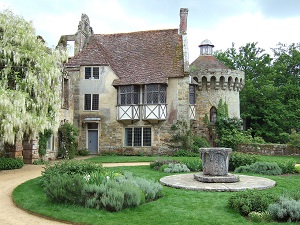
Huis in Tudor stijl bij Scotney Castle in Kent, waar Googe onderdak bood aan Jezuïeten

Geschreven door Romenu om 12:50 Reageer op dit bericht

Louis Couperus, Jacques Perk, James Salter, Mensje van Keulen, Jan Brokken, Saul Bellow, Ion Creanga

De Nederlandse schrijver Louis Couperus werd op 10 juni 1863 geboren in Den Haag. Zie ook alle tags voor Louis Couperus op dit blog.

Uit: Van oude menschen, de dingen, die voorbijgaan...

“Hij vond zich geen man om te trouwen. Hij was nog wel jong, acht-en-dertig; hij zag er zelfs véel jonger uit; hij verdiende geld genoeg met zijn artikels, om, met wat Elly meêkreeg van grootpapa Takma, het er zuinigjes op te wagen, maar hij vond zich toch volstrekt geen type om te trouwen. Zijn vrijheid, zijn onafhankelijkheid, zijn egoïste bewegelijkheid, die waren hem het liefst; en trouwen, dat was zich met gebonden handen en voeten overgeven aan een vrouw. Hartstochtelijk verliefd was hij niet op Elly - hij vond haar een intelligent en artistiek vrouwtje; om wat zij van grootpapa Takma zoû erven, deed hij het heùsch niet. Waaròm deed hij het dan - vroeg hij zich af, als hij zich reeds had afgevraagd, dag aan dag, gedurende die week, die gevolgd was op zijn aanzoek.
- Mama... kan jij me ook zeggen... waarom ik Elly gevraagd heb?
Mama Ottilie zag op. Ze was wel gewend aan zonderlinge en geestige vragen van Lot, en dan antwoordde ze hem in dien toon, voor zoo ver zij vermocht, maar deze vraag deed haar een stekel voelen van jaloezie, een stekel, die héel erg pijn deed, als een doorn, fyziek, in vleesch.
- Waarom je Elly gevraagd hebt? Ik weet het niet... We doen altijd dingen, en weten niet waarom...
Zoo zacht treurigjes klonk hare stem, boudeerend na de stoute-kindstem van zoo even. Had zij niet àlles verloren, wat zij ooit had gehad? Zoû zij Lot niet verliezen, hem moeten afstaan aan Elly... zoo als zij alles had moeten afstaan...
- U antwoordt zoo ernstig, mama. Dat ben ik niet van u gewoon.
- Mag ik dan alléen niet eens ernstig zijn...
- Waarom de laatste dagen, zoo ernstig, en treurig, en prikkelbaar... Is het omdat ik trouwen ga...
- Misschien is het wel daarom...
- U houdt toch wel van Elly...
- Ja wel, ze is lief...
- We moesten maar samen blijven wonen; Elly houdt ook van u; met Steyn heb ik er over gesproken...
Want zijn stiefvader, zijn twéeden stiefvader noemde Lot Steyn, kort-weg, nadat hij zijn eersten genoemd had, - hij toen een jongen, - ‘meneer’ Trevelley. Mama Ottilie was driemaal getrouwd geweest.”


 1923912-2ae7920f1eb34e86895595272910878c.jpg
Louis Couperus (10 juni 1863 – 16 juli 1923)
Scene uit de tv-serie met o.a. Caro van Eyck, Joan Remmelts en Paul Steenbergen, 1975-1976


De Nederlandse dichter Jacques Fabrice Herman Perk werd geboren in Dordrecht op 10 juni 1859. Zie ook alle tags voor Jacques Perk op dit blog.


Een luwtje

Nu voelt men warme geuren om zich walmen,
En warmte door de koele bomen wuiven, -
De snelle vliet schijnt moede voort te schuiven,
En in het matte schuiven nog te talmen;

Op de' akker buigen zich de blonde halmen
Ontzenuwd, en beschutten met haar kuiven
't Viooltje, dat geen vlinder komt bestuiven,
En dat de hette tussen 't graan voelt dwalmen;

De mens, in 't mals en mollig mos gezonken,
Trekt uit de zwarte schaduw niets dan zwoelte,
Hij hijgt naar koeler adem, droomt van koelte....

Daar doet een bries de abele-loovren trillen.
De lauwe vliet en 't riet van weelde rillen....
Natuur heeft leven uit de lucht gedronken!


De kluizenaar

Hoog, op de bergtop, rijst de kleine kluis,
Uit groenend hout en mossig riet geboren;
Door spar en lork vaart een zacht gedruis,
En wie daar zingen, doen een loflied horen;

Vrij dartelt om de hut de vale muis, -
Het dal ligt in de gloed der zon te gloren,
Maar in de grauwe pij, voor 't houten kruis,
Ligt de eenzame, in geprevel als verloren:

De grijze zoekt de vrede in eigen-kwellen,
En wil zich martlen tot een heilig man,
En schijnt geen traan van 't zinkend oog te tellen, -

Doch zon en bloem en vogel gruwt er van:
Hij zoekt het leed, dat zij verblijd ontsnellen, -
En vrede heeft, wie vreugde vinden kan....


Bij ’t graf

Men droeg de grijze plechtig naar het graf,
En toen hij langzaam nederzonk in de aarde
Brak uit het oog, van wie hij 't aanschijn gaf,
Een vloed van tranen, dat naar 't zinken staarde;

En allen wendden 't wenend aanschijn af,
Gelovend dat hun God een weerzien spaarde,
Omdat ze 't innig wensten, en zó straf
Een God, die scheidt, zich hén niet openbaarde:

De grijze, die zijn dorpje nooit verliet,
Had daar gezwoegd, bemind en liet er 't leven;
Waarom hij leven moest, dat wist hij niet:

Gij waant u, zwerver, boven hem verheven...
Wat deed gij, zo de dood ù nederstiet,
Dan leven, laten leven, leven geven?


 1923912-914c901c200253b3971d5949fff50c97.jpg
Jacques Perk (10 juni 1859 - 1 november 1881)
Reliëf bij Perks graf op begraafplaats De Nieuwe Ooster, Amsterdam


De Amerikaanse schrijver James Salter werd op 10 juni 1925 in New York geboren. Zie ook alle tags voor James Salter op dit blog.

Uit:All That Is

"Do you live in Athens?" he asked.
"No," she said easily, "I was taking my daughter to visit her father."
"I've never been to Greece."
"That's a pity. It's a marvelous country. When you go, go to the islands."
"Any one in particular?"
"There are so many," she said.
"Yes."
"There are places that time seems never to have touched, absolutely unspoiled."
They looked at one another without speaking. He did not know what she might be seeing. She had clear, smooth features.
"The people have something you don't find here," she said. "They have a joy of life."
"That's nonsense," he said.
She ignored it.
"Were you in London on business?"
"Yes, business. The London Book Fair."
"Are you a publisher?"
"Not really. I'm an editor. A publisher has different responsibilities."
"What sort of books do you edit?"
"Mainly novels," he said.
"The friend I'm staying with was in a novel. She's rather proud of it. Eve was her name in the book. That's not her name."
"Which book is that?"
"You know, I forget the title. I only read the parts about her. She knew the author. So, tell me your name," she said after a pause.
Her own name was Christine, Christine Vassilaros. She was not Greek, she was married to a Greek man, a businessman, from whom she had separated. Her friend, Kennedy, the one who'd been written about, was also separated and living in a rent-controlled apartment that was a grand relic of life before the two World Wars and the time between them. I'm not giving up the apartment, she had said. It was like an apartment in Havana, bygone and only sparsely furnished, on Eighty-Fifth Street.”


 1923912-0bf2ac9174e67f1d54312a6479fe7a5b.jpg
James Salter (10 juni 1925 – 19 juni 2015)


De Nederlandse schrijfster Mensje van Keulen werd op 10 juni 1946 geboren in Den Haag. Zie ook alle tags voor Mensje van Keulen op dit blog.

Uit: Schoppenvrouw

“Het leek een van die vele avonden te worden die ik me de volgende dag al niet meer zou herinneren. Tot Oscar thuiskwam, zijn gezicht koel van de vochtige buitenlucht.
Hij was naar een afscheidsborrel van een collega geweest en hij zei dat de wijn er smerig was en dat hij zich had verveeld zonder mij. Hij zette teletekst aan, iets wat hij bij binnenkomst vaker doet. Ik warmde de minestrone op die ik voor hem had bewaard. Hij sloeg zijn servet open en legde het hoog op zijn schoot, een gewoonte die hij nergens nalaat, zelfs niet als er alleen een dun papieren servetje voorhanden is. Voor zijn doen at hij snel, maar wel beschaafd, zoals hij alles beschaafd doet. Toen hij opstond om in de woonkamer zijn krant te lezen, prees hij de minestrone en gaf me een vluchtige kus, maar ik zal deze soep niet meer bereiden.
Op de televisie lette ik niet echt. Zoals gewoonlijk stond hij aan om de grote, stille keuken wat leven te geven. Ik snoepte nog wat van de parmezaan, ruimde de tafel af, schoof de stoelen aan. Achter mijn rug hoorde ik een presentator zeggen: ‘Een zwart pak en een witte trui of bloes. Opvallend was dat de revers en zakken van het jasje wit zijn afgebiesd.’ Ik dacht aan een jasje met dezelfde details, dat ik zeker een jaar of twee niet had gedragen. ‘Verder viel de zwarte schoudertas op, een model dat leek op een aktentas, met aan de voorzijde een blauwe klep.’
Ik draaide me naar het scherm, dat alles om zich heen liet verdwijnen. Een schets van een meisje met blond, volgens de presentator opgestoken haar, waardoor de lengte van het haar niet duidelijk was. Een jonge vrouw van ongeveer een meter zeventig, zei hij, die accentloos Nederlands sprak. Er bestaan honderden van die blonde meisjes met een smal gezicht die keurig spreken, maar ik wist dat het Emmy was.
Het ging om een zaak waaraan eerder aandacht was besteed. Omdat het slachtoffer afgelopen zondag was overleden, werd opnieuw een beroep gedaan op de kijkers. Ik was een van die kijkers, ik was dé kijker, die uit een immens oog bestond. En terwijl dat oog de beelden opzoog, sprong uit een duistere nis in mijn geheugen Adami tevoorschijn. Dokter Adami, de heler, de ziener, de man die leefde van wat hij en zijn klanten zijn gave noemden. Zijn hand met de ringen aan pink en wijsvinger komt omhoog van de speelkaarten die voor hem liggen, en hij wijst naar me en zegt: ‘Neem nooit kinderen, het zou je slecht bekomen…’


 1923912-55ce9eda8008d32ed7dc6c186e1a3935.jpg
Mensje van Keulen (Den Haag, 10 juni 1946)


De Nederlandse schrijver Jan Brokken werd geboren op 10 juni 1949 in Leiden. Zie ook alle tags voor Jan Brokken op dit blog.

Uit: De Kozakkentuin

“Het vuurpeloton legde aan. De commandant hief de sabel. De zon prikte door het wolkendek en deed in de verte de koepel van een kerk blinken. Ik herinner me vooral de zon, die een verkeerd moment leek te kiezen om te schijnen.
Toen ontstond verwarring. De drie mannen die als eerste zouden sterven, werden van de palen losgemaakt en kregen een mantel toegeworpen. Een paar postkoetsen reden het terrein op, gevolgd door de sleekoetsjes die ik op de Litejny Prospekt had gezien. Een order klonk, nog een order. Vergiste ik me of werd er weer een vonnis voorgelezen? Nee, het werd ons plotseling duidelijk dat de tsaar op het laatste moment inderdaad overstag was gegaan en dat het door hem getekende gratiebesluit werd voorgelezen.
Ik haalde diep adem. Het was alsof ikzelf aan de dood was ontsnapt. Ik voelde ook iets van woede opkomen. Hoe kon men zo met het lot van mensen sollen? Was dit recht?
Het exercitieveld liep snel leeg. Het volk dwaalde uiteen, terwijl het kruisen sloeg en de genade van de tsaar zegende.
Met Dostojevski, die mijn vriend werd, heb ik in Siberië over van alles gesproken, maar bijna nooit over de terechtstelling waarvan ik getuige was geweest. Hij wilde niet herinnerd worden aan de vreselijke minuten die hij had doorstaan. Hij zou er later over schrijven, ofschoon nog geen bladzij in De idioot, maar het kostte hem de grootste moeite om erover te praten.
Eén keer zei hij me in een paar zinnen dat hij zich, omdat hij zelfs niet het geringste gerucht had opgevangen over de ophanden zijnde gratie, helemaal had voorbereid op de dood. Terwijl hij in doodshemd stond te wachten tot hij vastgebonden zou worden aan de paal, naar de drie mannen keek die hem voor zouden gaan en het fatale commando 'vuur!' afwachtte, leek de tijd hem oneindig lang te duren en nam hij in gedachten met heel zijn hart afscheid van zijn geliefden. Zijn hele leven trok aan zijn geest voorbij als in een caleidoscoop, snel als bliksem en in beelden.”


 1923912-76b05575914d3bcfa32efb5e1337acf8.jpg
Jan Brokken (Leiden, 10 juni 1949)


De joods-Amerikaanse schrijver Saul Bellow werd geboren op 10 juni 1915 te Lachine, een voorstad van Montreal. Zie ook alle tags voor Saul Bellow op dit blog.

Uit:Dangling Man

“There is nothing to do but wait, or dangle, and grow more and more dispirited. It is perfectly clear to me that I am deteriorating, storing bitterness and spite which eat like acids at my endowment of generosity and good will. But the seven months' delay is only one of the sources of my harassment. Again, I sometimes think of it as the backdrop against which I can be seen swinging. It is still more. Before I can properly estimate the damage it has done me I shall have to be cut down.”
(…)

All comfort in life is based upon a regular occurrence of external phenomena. The changes of the day and night, of the seasons, of flowers and fruits, and all other recurring pleasures that come to us, that we may and should enjoy them -- these are the mainsprings of our earthly life. The more open we are to these enjoyments, the happier we are; but if these changing phenomena unforld themselves and we take no interest in them, if we are insensible to such fair solicitations, then comes on the sorest evil, the heaviest disease -- we regard life as a loathsome burden. It is said of an Englishman that he hanged himself that he might no longer have to dress and undress himself every day.”


 1923912-1649e1007b0c41580d6fa647ac26241a.jpg
Saul Bellow (10 juni 1915 - 5 april 2005)


De Roemeense schrijver Ion Creanga werd geboren op 10 juni 1839 in Humuleşti. Zie ook alle tags voor Ion Creanga op dit blog.

Uit: Memories of My Boyhood (Vertaald door Ana Cartianu en R.C. Johnston)

“Upon which the priest's daughter, being giddy, thoughtless and full of whims and fancies, suddenly burst out laughing. So much the worse for her, poor thing! "Just come out here, young lady, and mount Dapple-Grey," said the priest now quite sternly, "and let us put St. Nicholas, who's hanging from the nail up there, to his proper business!" In spite of old Fotea's pleading and that of Master Vasile, little Smaranda got a good hiding and afterwards sat crying into her cupped hands like a bride, so that the very blouse shook on her back. When we saw this, we were quite dumbfounded.
Meanwhile, from time to time, the priest would bring small coins and cakes from the church offerings and give each his share, so that he tamed us, and the work went ahead like wildfire. The boys set up a fresh blackboard each day, and on Saturdays there was revision.
We still went our own ways occasionally, there's no doubt about that! Starting with the sheet of paper stuck into a wooden holder, a sheet bearing the sign of the Blessed Cross and the letters of the alphabet, written out by Master Vasile for each one of us, we passed on to the shorter catechism and from thence to the breviary, and from then on we were well away! When priest and teacher were absent, we would go into the churchyard, keeping the prayerbook open; as the leaves were somewhat greasy, the flies and the bumblebees would come to them in swarms, and when we suddenly clapped the book shut, we killed off ten or twenty of them at one blow. What wholesale destruction we wrought upon the race of flies!“


 1923912-d11a86cb9cb695d02ab59ee3c14b475c.jpg
Ion Creanga (10 juni 1839 – 31 december 1889)


Zie voor nog meer schrijvers van de 10e juni ook mijn blog van 10 juni 2015 en ook mijn blog van 10 juni 2011 deel 2.

Geschreven door Romenu om 15:59 Reageer op dit bericht

C. Buddingh'-Prijs voor Marieke Rijneveld


C. Buddingh'-Prijs voor Marieke Rijneveld

Het beste Nederlandstalige poëziedebuut van het afgelopen jaar is geschreven door de Nederlandse dichteres en schrijfster Marieke Rijneveld. Voor haar bundel Kalfsvlies kreeg ze donderdag de C. Buddingh'-Prijs. Rijneveld nam de prijs in ontvangst op het Poetry International Festival in Rotterdam. Marieke Rijneveld werd geboren in Nieuwendijk in 1991. Zie ook alle tags voor Marieke Rijneveld op dit blog.


Hol genoeg om een echo te verbergen

We mochten geen vragen stellen maar wel antwoorden bedenken, mama huilde
veel in de tijd dat we nog geen meter waren en ze ons leerde dat de dood een echo
had die nasuisde tot ver in je trommelvliezen, vergat steeds om mijn koude
handen in mijn broekzakken te steken, ze niet tot vuist te maken maar plat

zoals ik ze op de glasplaat van de kist van mijn broer liet vallen als twee
vochtige zeesterren, de zee zich ineens boven onze hoofden bevond
iemand had de vloer weggeschoven en niet meer teruggelegd zei opa die
mijn angsten tot duiven vormde: om ze tam te maken

moest ik ze van kop naar staart aaien en één keer in de week loslaten in
het weiland achter de stal, toekijken hoe ze wegvlogen maar in de nacht tikten ze
weer met hun snavels tegen het slaapkamerraam, belde hij in paniek de loodgieter
uit de straat omdat er gaten in zijn kleinkinderen zaten, ze lekten liters tranen.

Troosten was toen nog als inparkeren, het is meten en weten en toch schat je het
vaak te krap in, blijf je zoeken naar de juiste plaats, een omhelzing heeft soms
ook meerdere rondjes om elkaar heen nodig. Op tafel stonden theeglazen
gevuld met jenever, vreemde wijsvingers roerden door de ijsklontjes er klonk vrolijk

gerinkel terwijl de dood nog een klap moest maken zoals antwoorden een paar
seconden de tijd nodig hebben om te landen in hoofden van publiek, waren
wij hier het publiek of hadden we andermans broekzakken nodig om de warmte van
een lichaam te voelen, ik pakte een wijsvinger en opende mijn mond, roer maar dacht

ik nog laten we doen alsof we elkaar beet willen pakken maar we steeds van elkaar
wegglippen, terugtrekken betekende dat de klap niet bij iedereen hetzelfde
binnenkwam, zij niet hol genoeg waren om de echo te verbergen.

Naast de dominee stond de tandarts, de enige man in ons leven die oog had
voor alles wat we voor onze kiezen kregen en begreep dat ‘s nachts onze oren in
zeeschelpen veranderden waarin we niet de zee hoorden suizen maar de dood
broer steeds weer in ons hart naar boven kwam gedreven.


 1923854-6e296c830eb306c9244387e2f1143394.jpg
Marieke Rijneveld  (Nieuwendijk, 1991)

Geschreven door Romenu om 09:03 Reageer op dit bericht

Meer van Romenu

↑ Terug naar de berichten