Naar de inhoud

Romenu

Over literatuur, gedichten, kunst en cultuur
akke.beakke.be

Berichten van 27 juli 2016 tot 28 juli 2016

Dolce far niente, Hermann Hesse, Remco Campert, Malcolm Lowry, Gerard Manley Hopkins, Stephan Sanders


Dolce far niente


 1940035-146b71682bd0f81669e6979d856bcc5f.jpg
Het Damrak te Amsterdam door George Hendrik Breitner, ca. 1903


Regen

Lauer Regen, Sommerregen
Rauscht von Büschen, rauscht von Bäumen.
O wie gut und voller Segen,
Einmal wieder satt zu träumen!

War so lang im Hellen draussen,
Ungewohnt ist mir dies Wogen:
In der eignen Seele hausen,
Nirgends fremdwärts hingezogen.

Nichts begehr ich, nichts verlang ich,
Summe leise Kindertöne,
Und verwundert heim gelang ich
In der Träume warme Schöne.

Herz, wie bist du wund gerissen
Und wie selig, blind zu wühlen,
Nichts zu denken, nichts zu wissen,
Nur zu atmen und zu fühlen!


 1940035-2f78a1a51ca0eb6e452e25ac838abe3e.JPG
Hermann Hesse (2 juli 1877 – 9 augustus 1962)
Nikolausbrücke in Calw. Hermann Hesse werd in Calw geboren.


De Nederlandse dichter schrijver Remco Campert werd op 28 juli 1929 in Den Haag geboren. Zie ook alle tags voor Remco Campert op dit blog.


Nogmaals ik zie wat ik zie

Nogmaals
ik zie wat ik zie.

nee dat is niet veel.
Elke dag vraag i me af of het wel genoeg is
maar ook dat hoort bij het zien
vermoed ik.

Tastbaarheden als een huis
een vuilnisbak schoorstenen boom
bakfiets een boot een spinneweb

Letters op papier
en wat ik zie als ik mijn ogen dichtknijp
de vlammen die mij inslaan.

Meer dingen tussen hemel en aarde dan ik zie
zijn er niet
anders zou ik ze wel zien.

Kom nu jongen
niet zo simpel.


Zeemansliedje

Toen ik klein was
droeg ik een matrozenpakje
mijn moeder nam me mee
naar de vijver in het bos
daar aan een touwtje
liet ik mijn zeilboot varen
de bomen ruisten
de wind kwam van zee

nu is het vele havens later
en mijn moeder dood
nooit vond ik meer
zo'n veilige ree


De witte roos

Het was laat in het jaar
ach eigenlijk bedoel ik eind november
de negenentwintigste als ik het wel heb
zo om een uur of vier in de middag
(op de minuut af weten is moeilijk
zowel van tevoren als achteraf
slechts tijdens had het gekund
maar ik lette niet op de tijd)
toen van de witte roos
het laatste blaadje losliet
en neerwaarts warrelde
donkerende grond tegemoet


 1940035-0c79b613daaa252a6f00cd18eef279a0.jpg
Remco Campert (Den Haag, 28 juli 1929)
Affiche


De Engelse dichter, verhalen- en romanschrijver Malcolm Lowry werd geboren 28 juli 1909 in Birkenhead Merseyside. Zie ook alle tags voor Malcolm Lowry op dit blog.

Uit: Under the Volcano

« Careless of his tennis clothes, M. Laruelle climbed the embankment. Yet he was right, he told himself, as reaching the top he paused for breath, right, after the Consul had been "discovered" (though meantime the grotesquely pathetic situation had developed where there was not, on probably the first occasion when one had been so urgently needed, a British Consul in Quauhnahuac to appeal to), right in insisting Hugh should waive all conventional scruples and take every advantage of the curious reluctance of the "police" to hold him--their anxiety, it all but appeared, to be rid of him just when it seemed highly logical they should detain him as a witness, at least in one aspect of what now at a distance one could almost refer to as the "case"--and at the earliest possible moment join that ship providentially awaiting him at Vera Cruz. M. Laruelle looked back at the station; Hugh left a gap. In a sense he had decamped with the last of his illusions. For Hugh, at twenty-nine, still dreamed, even then, of changing the world (there was no other way of saying this) through his actions--just as Laruelle, at forty-two, had still then not quite given up hope of changing it through the great films he proposed somehow to make. But today these dreams seemed absurd and presumptuous. After all he had made great films as great films went in the past. And so far as he knew they had not changed the world in the slightest. However he had acquired a certain identity with Hugh. Like Hugh he was going to Vera Cruz; and like Hugh too, he did not know if his ship would ever reach port...
M. Laruelle's way led through half-cultivated fields bordered by narrow grass paths, trodden by cactus farmers coming home from work. It was thus far a favourite walk, though not taken since before the rains. The leaves of cacti attracted with their freshness; green trees shot by evening sunlight might have been weeping willows tossing in the gusty wind which had sprung up; a lake of yellow sunlight appeared in the distance below pretty hills like loaves. But there was something baleful now about the evening. Black clouds plunged up to the south.”


 1940035-1ff0822d7e3f551d53167deade17478b.jpg
Malcolm Lowry (28 juli 1909 - 26 juni 1957)
Scene uit de film van John Huston (1984) met Jacqueline Bisset (Yvonne) en Anthony Andrews (Hugh)


De Engelse dichter en Jezuïet Gerard Manley Hopkins werd geboren op 28 juli 1844 in Stratford, Essex. Zie ook alle tags voor Gerard Manley Hopkins op dit blog.


For a Picture of St. Dorothea

I BEAR a basket lined with grass; 
I am so light, I am so fair, 
That men must wonder as I pass 
And at the basket that I bear, 
Where in a newly-drawn green litter        
Sweet flowers I carry,—sweets for bitter. 
 
Lilies I shew you, lilies none, 
None in Caesar’s gardens blow,— 
And a quince in hand,—not one 
Is set upon your boughs below;        
Not set, because their buds not spring; 
Spring not, ’cause world is wintering. 
 
But these were found in the East and South 
Where Winter is the clime forgot.— 
The dewdrop on the larkspur’s mouth        
O should it then be quench`d not? 
In starry water-meads they drew 
These drops: which be they? stars or dew? 
 
Had she a quince in hand? Yet gaze: 
Rather it is the sizing moon.        
Lo, linkèd heavens with milky ways! 
That was her larkspur row.—So soon? 
Sphered so fast, sweet soul?—We see 
Nor fruit, nor flowers, nor Dorothy.


The Lantern out of Doors

SOMETIMES a lantern moves along the night,
That interests our eyes. And who goes there?
I think; where from and bound, I wonder, where,
With, all down darkness wide, his wading light?

Men go by me whom either beauty bright
In mould or mind or what not else makes rare:
They rain against our much-thick and marsh air
Rich beams, till death or distance buys them quite.

Death or distance soon consumes them: wind
What most I may eye after, be in at the end
I cannot, and out of sight is out of mind.

Christ minds: Christ’s interest, what to avow or amend
There, éyes them, heart wánts, care haúnts, foot fóllows kínd,
Their ránsom, théir rescue, ánd first, fást, last friénd.


 1940035-bfadb8b1077994e6c662b93ce7318d49.jpg
Gerard Manley Hopkins (28 juli 1844 – 8 juni 1889) 
Cover


De Nederlandse schrijver, columnist, presentator en essayist Stephan Sanders werd geboren in Haarlem op 28 juli 1961. Zie ook alle tags voor Stephan Sanders op dit blog.

Uit:Crisis van links: wij zijn nu allemaal een minderheid (Column)

“Laat ik een voorbeeld geven van zo’n revolutietje dat zich pas geleden nog afspeelde in Amsterdam. Op de late ochtend van 23 maart liep ik even het bezette Maagdenhuis binnen. Ik werd begroet door drie gekleurde baliemedewerkers, alle drie in dienst, niet van de revolutie maar van de Universiteit van Amsterdam. Zij zorgden ervoor dat op dat moment zo’n dertig studenten, blank, zich redelijk onbezorgd-revolutionair konden ophouden in het bestuurscentrum.
De sfeer was vriendelijk, welwillend, een beetje slaperig nog. Ik zag dat er in ‘kleine groepjes uiteen was gegaan’ naar verschillende kamers, en realiseerde me toen pas dat de groep actievoerders een zeer miniem deel uitmaakt van de hele Amsterdamse studentenpopulatie. Een minderheid die sprak namens zwijgende meerderheden? Of toch: een minderheid die vooral zichzelf vertegenwoordigt? Wie ijvert voor democratisering, kan moeilijk al die saaie, niet-activistische studenten afdoen als onbelangrijke ballast.
In de hal had een jongeman geprobeerd zich zo comfortabel mogelijk te nestelen in een niet zo comfortabele kantoorstoel, zijn benen rustten op een toegeschoven bierkratje. Hij keek niet op of om want hij las een boek van de Sloveense filosoof Slavoj Zizek. Dat vond ik grappig, want kennelijk was de theorie van de revolutie voor hem belangrijker dan de revolutie zelf, die daar en toen aan de gang was. Even verderop kwam ik twee jonge studentes tegen, ze zaten op een matras als vluchtelingen op een vlot. Ze vertelden dat ze hier al die tijd gelegen, gezeten en geslapen hadden en alleen met grote tegenzin dit beschermde gebied van vier vierkante meter kapok verlieten.”


 1940035-c386c225ba17f5ede6f9e6174e993e36.jpg
Stephan Sanders (Haarlem, 28 juli 1961)


Zie voor nog meer schrijvers van de 28e juli ook mijn blog van 28 juli 2013 en ook mijn blog van 28 juli 2011 deel 2.


Geschreven door Romenu om 16:46 Reageer op dit bericht

Herman Stevens

De Nederlandse schrijver, literair criticus en columnist Herman Stevens werd geboren in Rotterdam op 28 juli 1955. In de jaren tachtig studeerde hij klassieke talen in Leiden, waar hij met een studiegenoot tussen 1983 en 1986 het literaire tijdschriftje “Wildgroei“ leidde, waarin onder meer vroege gedichten van Joost Zwagerman en Piet Gerbrandy verschenen. Vanaf 1985 schreef Herman Stevens in De Revisor en Maatstaf. De dag na zijn afstuderen begon Stevens aan zijn debuutroman “Mindere goden” die in april 1990 door De Arbeiderspers werd uitgegeven. Aan het eind van het jaar werd “Mindere goden” bekroond met de Anton Wachterprijs. Toen Stevens’ tweede roman “Een schone slaap” in oktober 1991 uitkwam, zat de schrijver in Amerika, als writer-in-residence aan de universiteit van Michigan. Tot eind 1996 zou hij veel tijd in Amerika doorbrengen. In 1997 verscheen bij Prometheus Stevens’ afscheid van Amerika, de roman “Het vrouwelijk halfrond”. Intussen schreef Stevens geregeld over Engelstalige literatuur in Het Parool en HP De Tijd. In NRC Handelsblad en De Volkskrant schreef Stevens columns over de toenemende vercommercialisering van de Nederlandse literatuur, lang voor het woord 'bestselleritis' gemeengoed was geworden. In 2001 verscheen Stevens' Rotterdamse roman “Gouden bergen”, waarin de desillusie met het materialisme van de jaren negentig wordt belichaamd in de cynische loner Leo Donker. In 2004 herzag Stevens zijn debuutroman “Mindere goden”. In januari 2007 verscheen “Moederziel”, een roman die zich opnieuw grotendeels in Rotterdam afspeelt, beginnend in het revoltejaar 1968. In mei 2010 verscheen “Vaderland”, een roman over een wijnschrijver die rond zijn vijftigste nog vader wordt, waarna zijn huwelijk strandt. In deze roman keren twee vrouwelijke personages uit eerder werk van Stevens terug, vele jaren ouder. In september 2012 verscheen Stevens' zevende roman “Gloriejaren”, een literaire avonturenroman over een groepje jongeren dat eind jaren zeventig van school komt. Opnieuw is het thema verloren illusies, maar ditmaal is de helft van het boek geschreven vanuit het oogpunt van een jonge vrouw.

Uit: Gloriejaren

“Tegen middernacht klom Erik op een tafel om een speech te houden, net als de vorige avond, en de avond daarvoor. Het was elke keer dezelfde speech, hij werd alleen steeds langer, en als Erik iets vergat, was er wel iemand die hem hielp. In de krant had een artikel gestaan over de generatie die nu van school kwam. Een generatie zonder toekomst. De economie was ingezakt, het ging nog jaren duren voor er weer banen waren en de wereld werd nooit meer hetzelfde. Een uitkering was eigenlijk het beste waar een achttienjarige op kon hopen. Of een studiebeurs. Het hoogtepunt van de speech was iedere keer hetzelfde. Erik vouwde het krantenknipsel open, met een foto van een verregende fietsenstalling die het lot van hun generatie moest verbeelden. Wilden zij een toekomst? Iedereen riep hard van nee. Alleen sukkels waren met hun toekomst bezig. Wat Erik wilde was een verleden. Dat waren de gloriejaren. “
(…)

“De volgende ochtend werd hij leeg wakker. Hij had onder water kunnen liggen en het had niets uitgemaakt. Niemand zat op hem te wachten. zijn leven was leeg. Zijn werk was leeg. Het was een trucje. Hij moest zo langzamerhand voor klanten bedanken omdat er te veel waren. Iedereen moest op het internet. Anders bestond je niet. Alleen daaraan zag je al dat het niets voorstelde. Het was allemaal namaak. Hij was namaak. Zelfs zakkenrollers maakten hun handen niet aan hem vuil. Nog even en er zaten drie nullen in het jaar en ging het hele internet onderuit, hackers namen het universum over en als het ooit nog goed kwam, was het tijd voor een nieuwe generatie. Wiels dagen waren geteld.”


 1963391-dabd8e17d59a2a70adc96d66207196c7.jpg
Herman Stevens (Rotterdam, 28 juli 1955)

Geschreven door Romenu om 00:00 Reageer op dit bericht

Dolce far niente, F. Starik, Michael Longley, Theodore Dreiser, Graeme C. Simsion


Dolce far niente


 1939735-88d4df841bc14737cb6e1bd826430cf1.jpg
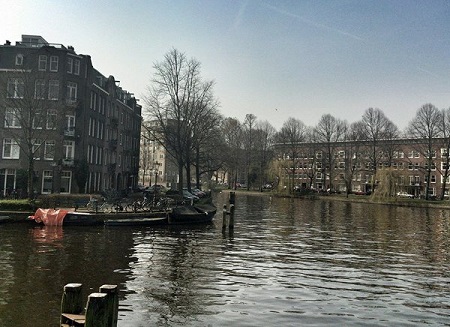
Amsterdam, Kostverlorenvaart


Kleine vooruitzichten 4

Ik fiets nog altijd naar huis.
Langs de Kostverlorenvaart zie ik
het schip Ambitie varen. Diepliggend,
als gevuld met slap zand.

De gangboorden maken veel water.
Zijdelings weggewerkt, terug in de gracht.
Rondpompen is het devies. Niks geen verlies.
Minder is later. En later weer minder.

Ik dacht aan Jan Kostwinder,
die ons kort geleden heeft verlaten.
Hij hield tenminste echt van veel praten.
Veel van echt praten.

Het onstuitbare praten
dat de eenzame doet. Hij wil niet, hij moet.
Ik niet, ik niet, dat zeg ik. Ik groei een baard.
Dat ziet. Men moet zich nuttig maken.


 1939735-96d46b4448549f9560b684ee6470b14b.jpg
F. Starik (Apeldoorn, 1 juli 1958)


De Ierse dichter Michael Longley werd geboren op 27 juli 1939 in Belfast. Zie ook alle tags voor Michael Longley op dit blog en ook mijn blog van 27 juli 2010.


THE QUILT
For Peggy O’Brien

I come here in the dark, I shall leave here in the dark-
No time to look around Amherst and your little house,
To talk of your ill father, my daughter’s broken-no,
There isn’t time-tears in the quilt, patterns repeating.

And yet as antique orphan and girlish granny we
Stitch a square of colour on the darkness, needle-
Work, material and words, Emily’s bedroom window
With a bowl of flowers we pick out through the glass.

The old iron bed you brought over from Tralee fills up
The box-room where I snooze, as though I have become
For these few hours in February your father, your son,

While in your neighbourhood instead of snow the bushes
Wear quilts left out all night to dry, like one enormous
Patchwork spring-cleaned, well-aired, mended by morning.


 1939735-fb39ac961076c32b20d13a489dcd7f6c.jpg
Michael Longley (Belfast, 27 juli 1939)


De Amerikaanse schrijver Theodore Herman Albert Dreiser werd geboren op 27 juli 1871 in Sullivan, Indiana. Zie ook alle tags voor Theodore Dreiser op dit blog en ook mijn blog van 27 juli 2010.

Uit: An American Tragedy

“The man — the father, as he chanced to be — looked about him with seeming wide- eyed assurance, and announced, without appearing to care whether he had any auditors or not:
“We will first sing a hymn of praise, so that any who may wish to acknowledge the Lord may join us. Will you oblige, Hester?”
At this the eldest girl, who until now had attempted to appear as unconscious and unaffected as possible, bestowed her rather slim and as yet undeveloped figure upon the camp chair and turned the leaves of the hymn book, pumping the organ while her mother observed:
“I should think it might be nice to sing twenty-seven tonight —‘How Sweet the Balm of Jesus’ Love.’”
By this time various homeward-bound individuals of diverse grades and walks of life, noticing the small group disposing itself in this fashion, hesitated for a moment to eye them askance or paused to ascertain the character of their work. This hesitancy, construed by the man apparently to constitute attention, however mobile, was seized upon by him and he began addressing them as though they were specifically here to hear him.
“Let us all sing twenty-seven, then —‘How Sweet the Balm of Jesus’ Love.’”
At this the young girl began to interpret the melody upon the organ, emitting a thin though correct strain, at the same time joining her rather high soprano with that of her mother, together with the rather dubious baritone of the father. The other children piped weakly along, the boy and girl having taken hymn books from the small pile stacked upon the organ. As they sang, this nondescript and indifferent street audience gazed, held by the peculiarity of such an unimportant-looking family publicly raising its collective voice against the vast skepticism and apathy of life. Some were interested or moved sympathetically by the rather tame and inadequate figure of the girl at the organ, others by the impractical and materially inefficient texture of the father, whose weak blue eyes and rather flabby but poorly-clothed figure bespoke more of failure than anything else.”


 1939735-f43e90d551bfeaeea0005011eae25da7.jpg
Theodore Dreiser (27 juli 1871 – 28 december 1945)
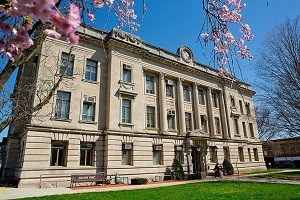
Sullivan, Indiana, Courthouse


Onafhankelijk van geboortedata

De Nieuw-Zeelandse schrijver Graeme C. Simsion werd geboren in in Auckland, Australië, in 1956. Zie ook alle tags voor Graeme C. Simsion op dit blog.

Uit: The Rosie Project

“Claudia had introduced me to one of her many friends. Elizabeth was a highly intelligent computer scientist, with a vision problem that had been corrected with glasses. I mention the glasses because Claudia showed me a photograph, and asked me if I was okay with them. An incredible question! From a psychologist! In evaluating Elizabeth’s suitability as a potential partner—someone to provide intellectual stimulation, to share activities with, perhaps even to breed with—Claudia’s first concern was my reaction to her choice of glasses frames, which was probably not even her own but the result of advice from an optometrist. This is the world I have to live in. Then Claudia told me, as though it was a problem: ‘She has very firm ideas.’
‘Are they evidence-based?’
‘I guess so,’ Claudia said.
Perfect. She could have been describing me.
We met at a Thai restaurant. Restaurants are minefields for the socially inept, and I was nervous as always in these situations. But we got off to an excellent start when we both arrived at exactly 7.00 p.m. as arranged. Poor synchronisation is a huge waste of time. We survived the meal without her criticising me for any social errors. It is difficult to conduct a conversation while wondering whether you are looking at the correct body part but I locked on to her bespectacled eyes, as recommended by Gene. This resulted in some inaccuracy in the eating process, which she did not seem to notice. On the contrary, we had a highly productive discussion about simulation algorithms. She was so interesting! I could already see the possibility of a permanent relationship.
The waiter brought the dessert menus and Elizabeth said, ‘I don’t like Asian desserts.’


 1939735-e0da9db594591cd34830705f6e22db1d.jpg
Graeme C. Simsion (Auckland in 1956)


Zie voor de schrijvers van de 27e juli ook mijn blog van 27 juli 2015 en ook mijn blog van 27 juli 2011 deel 1 en eveneens deel 2.

Geschreven door Romenu om 15:40 Reageer op dit bericht

Eimear McBride

Onafhankelijk van geboortedata

De Iers-Britse schrijfster Eimear McBride werd geboren in 1976 in Liverpool en groeide op in Tubbercurry, County Sligo en in Castlebar, County Mayo. Op 17-jarige leeftijd verhuisde zij naar Londen, waar zij drie jaar aan de toneelschool The Drama Centre studeerde. Als 27-jarige probeerde zij haar in slechts zes maanden geschreven romanmanuscript “A Girl Is a Half-formed Thing” aan diverse uitgevers te slijten. Jarenlang was dit geen succes, want hoewel de redacties de krachtige taal en inhoudelijke kwaliteiten prezen durfden zij het commerciële risico met een dergelijk grensoverschrijdend werk niet aan. De onafhankelijke, kleine uitgeverij Galley Beggar Press uit Norwich bracht in juni 2013 het boek wel op de markt. Het bestseller succes oversteeg echter de capaciteiten van de kleine uitgeverij, zodat reeds in april 2014 een paperback editie bij de grote Londense uitgeverij Faber & Faber verscheen. McBride ontving voor het boek o.a. de Geoffrey Faber Memorial Prize en de Baileys Women’s Prize for Fiction. Het beschrijft de ontwikkeling van een broer en een zus vanaf de arme kindertijd naar volwassenheid. De broer van de vertelster lijdt al op jonge leeftijd aan een hersentumor en zij probeert om hem te beschermen. De ouders zijn gewelddadig tegen hun kinderen. Er werd al snel een toneelstuk van het boek gemaakt. Dit werd zowel in 2014 uitgevoerd in het Dublin Theatre Festival als bij het het Edinburgh Fringe in 2015.

Uit:  A Girl is a Half-Formed Thing

“See here this party. It’s a mad. I had never been. I have only seen and thought films were like that. Music hurting on the innards. Door. Lungs. People pouring noise out front back of this old house. Some glasses beakers. I have cans. In my bag. Where do I? Out them there no don’t put down or they’ll go you’ll be sorry. Money spent. I trup trup off behind her. Think I’m new and white. In the garden. In the wet. For grass still sucks it up all day. Where’s this? Just some fella I know she says. He said come and bring a friend. Him and other lads have this band. Oh. Brilliant. Good too. They squat here. Christ. What do I know? What do I know? People living mad life but I’m around it now. I can be in. I’m. What I’d say to those girls in school if. No. I won’t. Won’t be going back in there. I’m going just to say hello she says you stay here. And I sit under this tree while. What type’s it? Apple. Mortified at being alone. Drink up. Watch. She seeing them. Says I’m black now am I? Well then give us a kiss. She slather their hands on. Blankets wet full mouth smirking aren’t you pleased to see me? She knows all the right stuff. Right things done said brings the. Going house in. What is perfect on this lawn, there is no shame. She. Looking over her shoulder. Roll her eyes. You know what it means. I’m going. Off. Nod. Laughing me and she’ll tell later on whatever he has done.
I am fine sit and drink and watch. All this harlotting go full on. Twist to look like I’m in here not just sitting by myself. Lay in the grass. Foots trodding dance around. See up skirts. In trousers. Music pumping ground under my head. I think some poems I’ll write. About. Sights. Remember. This wood smell of. Damp and. Dandelions stain on my bare leg. Sip up my. Sip and slurp it drink. Think of being by myself. Here. In this stranger’s downstairs flat. That. Whirl. Some fella coming up. Do you mind if I sit he and who are you then? Who are you? Do I know you no I do not. I turn my head is very slow and. Some strange man he is to me. Some man with black hair combed strange like balding but not. It seems. Will I talk at all I will. He chatting my name and all those things. I falling into that. Suppose I am here on my own. Will you another? Thanks for that. Will hear him tell me he’s how old a lot oh God lotter than me. I am addling but good to be seen. It’s very good to be seen.
Hello there and one of these. You want some? Smoke. Never do. But will. It’s something else. No I don’t know how. But. Go on lassy you inhale and hold. That’ll do. That Jesus rips the tender throat out. Jesus give the eyes a very stream. He is laughing with at me but about my whirring head. I don’t like. Do. He lie beside. Stick his fingers in my hair. Aren’t you a lovely lovely thing. And talking to he’s talking still. I curling poems cannot listen. Smoke in again and in again. Feels hours and hours him and me. Our heads on a root. Benutted tree I see London. I see France. I can see your underpants. I hear him singing put his hand between my knees. Go way think I’m laughing. Spin the brain away from here. Ha you’re tickling. Don’t do please. Come on says he come on time to go to bed. Time for us to be out of this fet air. Where we going? Come on o human child. I singing oky ho-ky do-ky. Ha ha help me down from this wet earth. I’ll come. I’ll. Now I’ll come with you.”


 1976582-7460ecd6c87c61d5a8dc6f39e5aa8da5.jpg
Eimear McBride (Liverpool, 1976)

Geschreven door Romenu om 00:00 Reageer op dit bericht

Meer van Romenu

↑ Terug naar de berichten