Naar de inhoud

Romenu

Over literatuur, gedichten, kunst en cultuur
akke.beakke.be

Berichten van 30 juli 2016 tot 31 juli 2016

Cees Nooteboom, Wouter Godijn, Grand Corps Malade, Joanne Rowling, Alain Nadaud, Primo Levi, Daniel Bielenstein

De Nederlandse dichter en schrijver Cees Nooteboom werd geboren in Den Haag op 31 juli 1933. Zie ook alle tags voor Cees Nooteboom op dit blog.

Uit: Roads to Santiago (Vertaald door Ina Rilke)

“The television screen in the lounge is showing blurred, shadowy images from the real world, but hardly anyone is watching. The passengers are postponing the moment of going to sleep, they hang around on the decks, drink until the bars shut. Then the very last, carousing song dies away and all you can hear is the slap of the waves against the hull.
The lone traveller goes to his cabin and lies down on the small iron bunk. He wakes up a few times in the night and looks out through the porthole. The vast surface of water sways in a slow, glistening dance. There is mystery and danger in the immense and silent element as it lies there with only the sluggish undertow disclosing that so much goes on hidden in the deep. The ivory chip of moon appears and disappears in the satin waves, it is at the same time sensual and frightening. The traveller is a city-dweller, unaccustomed to that vast and speechless sea of which his world now suddenly consists. He draws the skimpy curtain across the porthole and switches on a toy lamp by the bed. A wardrobe, a chair, a table. A water carafe in a nickel bracket attached to the steel bulkhead, a glass upturned over the neck. A towel marked Compania Mediterranea which he will take with him tomorrow, along with the tumbler decorated with the flag of the shipping company. He already has quite a number of these towels and glasses, for he has made many such crossings.
Gradually he surrenders to the roll of the ship, pitching in her mighty mother's dance and he knows what it will be like. In the course of the night he will really fall asleep at last, then the first light of day will stream in through the unavailing curtain, he will go up on deck and stand with the other bleary-eyed passengers to see the city slowly approaching--looking improbably lovely in the early sun which will cast a light, golden, impressionistic veil over the horror of gasworks and smog, so that it will seem for a moment as if we are heading towards a hazy, gilded paradise instead of the uncharitable buffers of an industrial metropolis.
The ship glides into the stone welcome of the harbour. She is dwarfed by the towering cranes. The swell has ceased, this water is no longer part of the sea, and on board too the communal spirit has gone. Everyone is wrapped up in his own affairs, in the expectation of what is to come. Down in the cabins the stewards are stripping the bunks and counting the number of towels missing. On the dockside it is already hot.“


 1940940-9c6b5550fa28913705829d1a00c956ec.jpg
Cees Nooteboom (Den Haag, 31 juli 1933)


De Nederlandse dichter en schrijver Wouter Godijn werd geboren in Amsterdam op 31 juli 1955. Zie ook alle tags voor Wouter Godijn op dit blog.


Dat ik nog steeds niet geloof...

12.

'...dat ik in de deuropening van de keuken stond,

dat mijn langzaam weglopende, bijna gestorven vader
zich in de tuin omdraaide om naar me te kijken
en dat ik, terwijl ze van alle kanten op me af kwamen
en ik ze -uit alle macht- van me afsloeg,
tegen hem riep: "Gá nou - ze pakken mij ook!"
(ik tegelijk van buitenaf, als naar een film, kijkend naar mij en mijn vader).'

'...en dat ik nog steeds niet geloof - niet
in staat ben om te geloven
dat het een droom was.'


Eilanden

Vrouwen die schreeuwend als pauwen
doe-het-zelfkasten in elkaar kleunen
terwijl huishoudelijke apparaten met een geraas of er een
lawine naar beneden komt
schoon wasgoed de kamer in katapulteren:

dat alles is niet prettig.

Liever zanderige eilanden, geel oplichtend in de zon,
waarboven meeuwen uitwaaieren als een weerspiegeling van de school vissen in de baai
en waarop diezelfde vrouwen, glimmend van de
zonnebrandolie, uitnodigend liggen uit te rusten;
hun doe-het-zelfkasten hebben ze diep begraven in het zand
zoals honden hun kluif.


 1940940-f5da67a42c6293980b44a4b3f97bcac0.jpg
Wouter Godijn (Amsterdam, 31 juli 1955)


De Franse Poetry Slam kunstenaar Grand Corps Malade (eig. Fabien Marsaud) werd geboren op 31 juli 1977 in Le Blanc-Mesnil, Seine-Saint-Denis. Zie ook alle tags voor Grand Corps Malade op dit blog.


JeSuisCharlie

7 janvier 2015, j'ai pas envie d'aller au lit
Je préfère prendre un stylo car ce soir #JeSuisCharlie
Nos artisans de la liberté ont rencontré leur destinée
Ce soir j'écris pour eux parce que je sais pas dessiner
Soyons 66 millions à avoir la même idée
Pour que leur cartouche d'encre à eux ne soit plus jamais vidée
Laissons des traces indélébiles pour que l'avenir puisse savoir
Que leur talent et leur courage ne vivent pas que dans nos mémoires
Ecrivain, paroliers, dessinateurs, grapheurs
Musiciens, poètes, peintres et sculpteurs
Célébrités, anonymes, professionnels et amateurs
Faisons en sorte que cet élan s'affiche plus loin que sur Twitter
Des hommes sont morts pour défendre la liberté d'expression
Mais leurs idées doivent rayonner et ne subir aucune pression
Contre l'obscurantisme, avec honneur et insolence
A nous de prendre les crayons pour que leur combat ait un sens
J'ai mal à l'être humain, comment en est-on arrivé là ?
Perdue dans ce vacarme, la fraternité chante a cappella
La barbarie grandit sans aucune trace de dignité
En 2015 le monde a perdu toute humanité
 
Si seulement les mois qui viennent pouvaient me faire mentir
Si seulement ce drame abjecte pouvait nous faire grandir
Puissions-nous nous réunir pour croire ensemble à l'embellie
Quoiqu'il advienne j'ai un stylo car ce soir
JeSuisCharlie


 1940940-d9f8c4b8339bfb8c1a7ab30d9abac19a.jpg
Grand Corps Malade (Le Blanc-Mesnil, 31 juli 1977)


De Britse schrijfster Joanne Rowling werd geboren in Chipping Sodbury bij Bristol op 31 juli 1965. Zie ook alle tags voor Joanne Rowling op dit blog.

Uit: Harry Potter & The Goblet of Fire

“There was a rush to buy the cook drinks and hear more details.

"Always thought he was odd," she told the eagerly listening villagers, after her fourth sherry. "Unfriendly, like. I'm sure if I've offered him a cuppa once, I've offered it a hundred times. Never wanted to mix, he didn't."
"Ah, now," said a woman at the bar, "he had a hard war, Frank. He likes the quiet life. That's no reason to -"
"Who else had a key to the back door, then?" barked the cook. "There's been a spare key hanging in the gardener's cottage far back as I can remember! Nobody forced the door last night! No broken windows! All Frank had to do was creep up to the big house while we was all sleeping…"
The villagers exchanged dark looks.
"I always thought that he had a nasty look about him, right enough," grunted a man at the bar.
"War turned him funny, if you ask me," said the landlord.
"Told you I wouldn't like to get on the wrong side of Frank, didn't I, Dot?" said an excited woman in the corner.
"Horrible temper," said Dot, nodding fervently. "I remember, when he was a kid…"
By the following morning, hardly anyone in Little Hangleton doubted that Frank Bryce had killed the Riddles.
But over in the neighboring town of Great Hangleton, in the dark and dingy police station, Frank was stubbornly repeating, again and again, that he was innocent, and that the only person he had seen near the house on the day of the Riddles' deaths had been a teenage boy, a stranger, dark-haired and pale. Nobody else in the village had seen any such boy, and the police were quite sure Frank had invented him.”


 1940940-35372ddc0c5661f043c518979980d655.jpg
Joanne Rowling (Chipping Sodbury, 31 juli 1965)
Scene uit de film uit 2005, met o.a. Daniel Radcliffe als Harry


De Franse schrijver Alain Nadaud werd geboren op 31 juli 1948 in Parijs. Zie ook alle tags voor Alain Nadaud op dit blog en ook mijn blog van 31 juli 2010

Uit: Auguste Fulminant

“Quand bien même, en ses douze chants, son épopée paraît sur le point d'être terminée, il refuse de la donner à lire à quiconque qu'il ne l'ait auparavant mise à l'épreuve de la réalité ! Sa nouvelle idée ? Il tient à visiter les lieux qu'il évoque sans les avoir jamais connus, à arpenter les champs de bataille où, côte à côte avec les dieux, s'illustrèrent les héros des légendes de jadis. Tu sais pourtant avec quelle vigueur il a décrit les sites abordés par Enée au long de son périple... Eh bien non, cela ne suffit pas ! Voilà qu'il a pris le parti de se mettre en route pour aller contrôler sur place si tout est bien conforme à la vision qu'il en donne. Quand je pense aux innombrables comptes rendus que nous avons collationnés exprès pour lui - il n'y en avait jamais assez ! Rapports de marins, perspicaces dans l'art de se repérer à l'estime en vue d'une côte ou d'un amer, de chefs militaires, prompts à juger du point faible d'une défense ou experts dans l'art de produire un relevé de terrain. Sans oublier les innombrables recoupements que nous avons effectués pour mettre ces témoignages en conformité avec le texte d'Homère. hélas, tout ce travail en vain ! »


 1940940-779bb84a7e0a1102dd5176d42f08f587.jpg
Alain Nadaud (31 juli 1948 – 12 juni 2015)


De Italiaanse schrijver Primo Levi werd geboren op 31 juli 1919 in Turijn. Zie ook alle tags voor Primo Levi op dit blog.


Is dit een mens

Gij die veilig leeft
In uw beschutte huizen,
Gij die ’s avonds thuiskomt
Bij warme spijs en dierbare gezichten:
Bedenkt of dit een man is
Die werkt in de modder
Die geen vrede kent
Die vecht om een stuk brood
Die sterft om een ja of een nee.
Bedenkt of dit een vrouw is
Zonder haar en zonder naam
Zonder herinnering aan wat was
Met lege ogen en koude schoot
Als een kikvors in de winter.
Bedenkt dat dit geweest is:
Ik beveel u deze woorden.
Grift ze in uw hart
Waar ge gaat waar ge staat
Bij het opstaan bij het slapen gaan:
Zegt ze voort aan uw kinderen.
Of uw huis begeve u,
Ziekte verlamme u,
Uw nageslacht wende zich van u.


Vertaald Frida De Matteis-Vogels


 1940940-51d12f4fdf39180113450f3d62bc4f81.jpg
Primo Levi (31 juli 1919 – 11 april 1987)
Cover


De Duitse schrijver Daniel Bielenstein werd geboren op 31 juli 1967 in Bonn. Zie ook alle tags voor Daniel Bielenstein op dit blog en ook mijn blog van 31 juli 2010

Uit: Die Frau fürs Leben

„Ich habe überhaupt nichts dagegen, samstags nachts im Bett zu liegen. Das kann viel angenehmer sein, als in irgendeiner angesagten Bar zu stehen und smarte Gespräche über neue Autos, neue Zeitschriften und neue Frauen zu führen. Ich'habe allerdings sehr viel dagegen, samstags nachts ALLEIN im Bett zu liegen. Und das ist leider gerade der Fall.
Ich muss mir also etwas einfallen lassen. Um mich abzulenken. Und da kenne ich keine Skrupel.
Ich stelle den Fernseher an und sehe mir auf DSF eine Weile die Lumberjack World Championship in Ottawa an. Robust gebaute Kerle in hochgekrempelten Karohemden balancieren über mächtige Baumstämme, um diese dann in Rekordzeit mit ihren Motorsägen in feine Scheiben zu zerlegen. Auf einer Zuschauertribüne, die in etwa so groß ist wie ein Schlauchboot, sitzen prallbusige Schönheiten in Bikinis und kreischen, sobald Jack Martin, der Vorjahressieger, seine Motorsäge aufheulen lässt.
Ich habe bisher noch nicht herausgefunden, ob es Wettkämpfe dieser Art wirklich gibt oder ob sie von einem Computerprogramm künstlich animiert werden. Um einsamen Männern wie mir über die Samstagnacht hinwegzuhelfen. Von dem Moderator ist in dieser Frage wohl keine Hilfe zu erwarten. Er erklärt gerade begeistert, dass Jack-die-Motorsäge-Martin neuerdings auch beim Strongest-Truckdriver-of-the-World-Contest einen vorderen Platz belegt hat. Dafür hat er einen dreihundert Kilo schweren Traktormotor an einem Lederriemen zwanzig Meter über einen Parkplatz irgendwo im Mittleren Westen gezogen – eine Leistung, auf die Jack wirklich stolz sein kann.
Ich trotte zum Kühlschrank, hole mir ein Bier und nehme einen tiefen Schluck – das ist fast so gut wie eine erotische Massage oder ein langes und intensives Gespräch mit einem Freund.
Natürlich halte ich Kerle wie Jack Martin für minderbemittelte Schwachmaten, auch wenn sie zwanzig verschiedene Motorsägen allein an ihrem Geräusch erkennen können. Wahrscheinlich ist Jack schon von der Grundschule geflogen, weil er sein Pult mit einer Laubsäge in kleine Teile zerlegt hat und dann bei einer Mitschülerin weitermachen wollte.“


 1940940-6d56a26e10c16d5a518be5bc85af9388.jpg
Daniel Bielenstein (Bonn, 31 juli 1967)


Zie voor nog meer schrijvers van de 1e juli ook mijn vorige blog van vandaag.
Geschreven door Romenu om 14:05 Reageer op dit bericht

Hans-Eckardt Wenzel, Ahmed Zitouni, Munshi Premchand, Peter Rosegger, Ahmad Akbarpour, Triztán Vindtorn

De Duitse dichter, singer-songwriter en muzikant Hans-Eckardt Wenzel werd geboren op 31 juli 1955 in Kropstädt bij Wittenberg. Zie ook alle tags voor Hans-Eckardt Wenzel op dit blog enook mijn blog van 31 juli 2010


August

Das war ein Sommer, wie ich lange ihn nicht kannte.
Das Land lag faul und ward am Spieß gedreht,
Da war die Sonne, die auf unsre Rücken brannte
Und auf den Feldern wurde schon das Korn gemäht.

Wie Katzen, die sich in der Sonne sielen,
So lagen wir, fast fiebertrunken, hinterm Haus
Und als die ersten Tropfen Regen niederfielen
Da wars, als zögen wir uns, nackt, noch einmal aus.

Und als der Regen blieb bis übern Nachmittag
Und schlug mit seinen Fingerkuppen auf das Dach
Da wars, als ich in deinen Armen lag,
Als würden wir zum ersten Male wach.


Dezember

Sich umzudrehn, ein letzter Aufenthalt.
Der Weg, das Dorf, Minuten, die Epochen.
Nun wird es spät und klar und kalt.
Die Linden klappern laut mit ihren Knochen.

Der Wind dreht weg und wieder fällt kein Schnee,
Und schon beginnt die Ferne neu zu flimmern.
Ein harter Strich durchs Land ist die Allee.
Die Menschen sitzen in den guten Zimmern.

Zwölf Monde sind verbraucht, das Jahr ist leer,
Von Sommern fern, so fern von Paradiesen.
Der Abend kommt, das Land steigt in das Meer,
Und Sterne stürzen in die Wiesen.


 1940938-9051499e75997da3e970da9bc3df8b50.jpg
Hans-Eckardt Wenzel (Kropstädt, 31 juli 1955)


Volgens de Franse Wikipedia is de Algerijnse, Franstalige schrijver Ahmed Zitouni geboren op 31 juli 1949 in Saïda, Algerije. Zie ook alle tags voor Ahmed Zitouni op dit blog en ook mijn blog van 31 juli 2010

Uit: Amours sévices & Morgue

„Pourquoi, en guise de bonne année, occire son beau-père, puis sa belle-soeur ?
Et pourquoi épargner sa femme et sa belle-mère ?
Et pourquoi avoir zigouillé cet oesophage en déliquescence, ainsi qu'une innocente au corsage fleuri à ras bord ?
Longtemps, je me suis torturé la cervelle. J'ai soupesé nombre d'hypothèses et incarné mille et mille rôles droit sortis des plus échevelés registres d'horreur. J'improvisais en pensée, en folie douce, en abjection domestiquée. J'improvisais. Revenais. M'attardais. Jouissance et dégoût. Aucune honte. J'improvisais. Entrais en interdit. Me mettais à sa place, pour de faux, pour en rire. Tenter de le comprendre... sans vraiment y croire. Espérer... et encore, faute de mieux. M'aventurer dans un inconnu si particulier, dans ces friches humaines où il avait fini, me terrifiait. Monstruosité singulière. Un diamant noir d'humanité sans limites. Des années, des angoisses plus tard, j'habite encore un vivre fait de suaves répulsions, d'inavouables plaisirs. Mes sommeils sont souvent déchirés de cris et de mains fouettant le vide. Les blessures sont amour. Le sourire de Malik continue de clignoter derrière des voiles de néant. Je grelotte de temps à autre, ouvre les yeux ou feins de me rendormir. À quoi bon le traquer encore. Me penser dépositaire de je ne sais quelle occulte procuration. Ridicule ! Même pas l'illusion d'un tardif témoignage. Et pourtant la certitude de l'existence de liens étranges, d'une mission extraordinaire, des ondes et des appels entre une fosse commune et ma table de travail, l'encre noire de ma plume et ses ongles évaporés en boussoles errantes. Un contrat d'horreur et d'exaspération. Pendu à son bon vouloir.
Il me hante et je le renie.
Je le hais et il me réveille."


 1940938-a66dedb8386f080d4c7ee75130d7ecb4.jpg
Ahmed Zitouni (Saïda, 31 juli 1949)


De Indische (Hindi en Urdu) schrijver Munshi Premchand werd geboren in Lamhi op 31 juli 1880. Zie ook alle tags voor ook Munshi Premchand op dit blog en ook mijn blog van 31 juli 2010

Uit: The Gift of a Cow (Godan, vertaald door Gordon C. Roadarmel)

“Horiram served fodder to his two cows and addressed his wife, Dhania - Send Gobar to plough the sugarcane fields. I may return late. Hand me my lathi quickly.
Dhania had both her hands soiled with cow-dung. She had just returned after making cakes out of cow-dung. She said - What is the hurry? Have some drink or light food.
Hori frowned and all the wrinkles of his forehead creased together when he retorted - Here you are bothered about eating and I am worried that if there is a delay, I will not be able to meet the Master. If he starts his schedule of bathing and daily oblations and prayers, I will have to wait for hours together.
That is why I want you to take some food before you go.
Besides, what loss will you incur if you don’t go today? It’s just the day before yesterday that you had been there.
Why do you always meddle in affairs which you don’t understand? Give me my lathi and see to your chores. It is the fruit of these good relations that we are living in peace. Otherwise no one would have known where we have disappeared. There are so many people in the village who have faced Eviction Orders and Attachment. When our necks are shoved and throttled under someone else’s feet, it is rather better to tickle his heel.
Dhania was not all that diplomatic. She was of the opinion that since they had also tilled the fields of the zamindar, he could at the most claim taxes. Then why should they flatter him or be a toady to him? In these twenty years of her married life, she had realised one thing for sure, she may scrimp or scourge every penny, live a niggardly life without proper food or clothes, collect every elusive penny, it was impossible to square up the taxes of the zamindar. Yet she never conceded defeat and there was a debate between the husband and the wife every second day on this issue. Out of her six children only three survived. The eldest was the son, Gobar, who was eighteen years of age followed by Sona, who was twelve and the youngest was Rupa, who was eight years old. Her other three sons had died in their early childhood. Even today, she felt that had they received proper medical care, they would have survived but she had not been able to nurse them with medicines.”


 1940938-225799c73136f2bbfcc26c61aa1d9d77.jpg
Munshi Premchand (31 juli 1880 –8 oktober 1936)
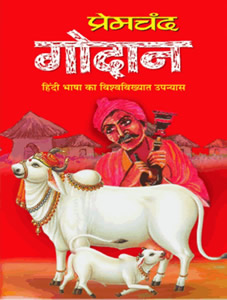
Cover van een uitgave in Hindi


De Oostenrijkse dichter en schrijver Peter Rosegger werd geboren op 31 juli 1843 in Alpl, Steiermark. Zie ook alle tags voor Peter Rosegger op dit blog en ook mijn blog van 31 juli 2010


Ein bißchen mehr…

Ein bißchen mehr Friede
und weniger Streit,
ein bißchen mehr Güte
und weniger Neid,
ein bißchen mehr Liebe
und weniger Haß,
ein bißchen mehr Wahrheit,
das wär doch schon was.
 
Statt soviel Hast
ein bißchen mehr Ruh’.
Statt immer nur ich
ein bißchen mehr Du!
Statt Angst und Hemmungen
ein bißchen mehr Mut
und Kraft zum Handeln,
das wäre gut.

Kein Trübsinn und Dunkel,
mehr Freude und Licht.
Kein quälend Verlangen,
ein froher Verzicht
und viel mehr Blumen
so lange es geht,
nicht erst auf Gräbern,
da blühn sie zu spät!


Unser Herz ist eine Harfe

Unser Herz ist eine Harfe,
Eine Harfe mit zwei Saiten;
In der einen jauchzt die Freude
Und der Schmerz weint in der zweiten.
Und des Schicksals Finger spielen
Kundig drauf die ewigen Klänge,
Heute frohe Hochzeitslieder,
Morgen dumpfe Grabgesänge.


 1940938-bfb69e36cb8e4d4de78dbfa355c1a570.jpg
Peter Rosegger (31 juli 1843 – 26 juni 1918)


De Iraanse dichter en schrijver Ahmad Akbarpour werd geboren op 31 juli 1970 in Lamerd, Shiraz. Zie ook alle tags voor Ahmad Akbarpour op dit blog ern ook mijn blog van 31 juli 2010.

Uit: That Night’s Train (Vertaald door Majid Saghafi)

“The train went clickety-click, clickety-clack and came out of the darkness.
The young woman opened her book again. Just before she turned the page, she turned to the little girl and smiled.
“If my mother were alive, she would be reading me a story now,” Banafsheh said.”
(…)

“The children listening to this story were in the fifth grade. The last bits of winter snow were falling. The children’s eyes were glued to the lips of the teacher, who was warming her hands over the classroom heater.
‘Excuse me, miss, but what happened next?’ one student asked.”
(…)

“What is important to her is that she finds a clue in some conversation or between the lines of all these various tales that could explain why she is feeling so strange. Even more important, she must be able to carry on with her story.”


 1940938-d436494c4bd2a1401cba3d8e70d1336b.jpg
Ahmad Akbarpour (Lamerd, 31 juli 1970)


De Noorse dichter Triztán Vindtorn werd geboren als Kjell Erik Vindtorn in Drammen op 31 juli 1942. Zie ook alle tags voor Triztán Vindtorn op dit blog en ook mijn blog van 31 juli 2010.


The world’s a beautiful blue lemon

The world’s a beautiful blue lemon
as weightless as all words are
when seeking to describe it...
what’s liberated also bears with it the longings
and anxiety about the goal not being reached
up till now you can count your beloved’s fingers
and tiptoe out of sleep as from a forest
up till now you can hear the front door creak...

fire will shortly thunder through
all your rooms and annihilate your house...
all language parasites will explode
and shatter our fabricated image of happiness
you half-smothered in colours’ relentless night
you among the foam-head of words and sentences
you alone on the shore with an overturned sea
as the only visible neighbour.


Vertaald door John Irons


 1940938-ce1f3e3558beed470a9081fd7ee631d0.jpg
Triztán Vindtorn (31 juli 1942 - 4 maart 2009)

Geschreven door Romenu om 14:04 Reageer op dit bericht

Patrick Modiano, Emily Brontë, Cherie Priest, Pauline van der Lans, Salvador Novo

De Franse schrijver Patrick Modiano werd geboren in Boulogne-Billancourt op 30 juli 1945. Zie ook alle tags voor Patrick Mondiano op dit blog.

Uit: De horizon (Vertaald door Maarten Elzinga)

“Achter de bekende gebeurtenissen en de vertrouwde gezichten voelde hij alles wat tot donkere materie was geworden: kortstondige ontmoetingen, gemiste afspraken, verloren brieven, de vergeten voornamen en telefoonnummers in een oude agenda, en al die mensen die je ooit bent tegengekomen zonder het zelfs maar te beseffen. Net als in de astronomie was deze donkere materie omvangrijker dan het zichtbare deel van je leven. Ze was oneindig. En in zijn boekje inventariseerde Bosmans de paar zwakke flonkeringen op de bodem van die duisternis. Hun schijnsel was zo zwak dat hij zijn ogen sloot en zich concentreerde, op zoek naar een veelzeggend detail waarmee hij het geheel zou kunnen reconstrueren, maar er was geen geheel, alleen fragmenten, deeltjes, sterrenstof.”
(…)

Hij was aan het begin van de middag op weg gegaan vanuit Prenzlauer Berg, met een plattegrond van Berlijn in zijn jaszak. Hij had zijn route met een rode pen gemarkeerd. Af en toe verdwaalde hij. In de Prenzlauer Allee had hij bedacht dat hij een straat naar links zou kunnen volgen en zo een stuk afsnijden. Hij was uitgekomen op een bebost terrein dat bezaaid was met grafstenen. In de centrale laan van dit boomrijke kerkhof kwam een meisje op de fiets voorbij, met een kind op de bagagedrager. Langs de Karl-Marx-Allee voelde hij zich niet echt verloren, ook al was die straat veel te breed en zagen de betonnen gebouwen eruit als gigantische kazernes. Deze stad is even oud als ik. Ook ik heb de afgelopen tientallen jaren geprobeerd kaarsrechte avenues aan te leggen, straten die loodrecht op elkaar staan, rijen strakke façaden en een dergelijk bewegwijzering om zo de ellende en de chaos waar we vandaan komen, de verkeerde ouders en de dwalingen van onze jeugd te verbergen. En toch beland ik zo nu en dan op een braakliggend terrein dat me iemands afgewezigheid laat voelen, of ik stuit op een rij gebouwen waarvan de gevels de wonden van de oorlog vertonen, als een schuldgevoel. Hij hoefde niet meer op de plattegrond te kijken. Hij liep gewoon rechtdoor, stak de spoorbrug over en daarna een andere brug over de Spree. Misschien was het een omweg, maar dat deed er niets toe.”


 1940602-c24f7d7ac88ce53e95c2f1f68dfb3c8a.jpeg
Patrick Modiano (Boulogne-Billancourt, 30 juli 1945)


De Engelse dichteres en schrijfster Emily Brontë werd geboren in Thornton in Yorkshire op 30 juli 1818. Zie ook alle tags voor Emily Brontë op dit blog.

Uit: Wuthering Heights

“I took a seat at the end of the hearthstone opposite that towards which my landlord advanced, and filled up an interval of silence by attempting to caress the canine mother, who had left her nursery, and was sneaking wolfishly to the back of my legs, her lip curled up, and her white teeth watering for a snatch. My caress provoked a long, guttural gnarl.
'You'd better let the dog alone,' growled Mr. Heathcliff in unison, checking fiercer demonstrations with a punch of his foot. 'She's not accustomed to be spoiled - not kept for a pet.' Then, striding to a side door, he shouted again, 'Joseph!'
Tired of reading? Add this page to your Bookmarks or Favorites and finish it later.
Joseph mumbled indistinctly in the depths of the cellar, but gave no intimation of ascending; so his master dived down to him, leaving me VIS-A-VIS the ruffianly bitch and a pair of grim shaggy sheep-dogs, who shared with her a jealous guardianship over all my movements. Not anxious to come in contact with their fangs, I sat still; but, imagining they would scarcely understand tacit insults, I unfortunately indulged in winking and making faces at the trio, and some turn of my physiognomy so irritated madam, that she suddenly broke into a fury and leapt on my knees. I flung her back, and hastened to interpose the table between us. This proceeding aroused the whole hive: half-a-dozen four-footed fiends, of various sizes and ages, issued from hidden dens to the common centre. I felt my heels and coat-laps peculiar subjects of assault; and parrying off the larger combatants as effectually as I could with the poker, I was constrained to demand, aloud, assistance from some of the household in re-establishing peace.
Mr. Heathcliff and his man climbed the cellar steps with vexatious phlegm: I don't think they moved one second faster than usual, though the hearth was an absolute tempest of worrying and yelping. Happily, an inhabitant of the kitchen made more despatch: a lusty dame, with tucked-up gown, bare arms, and fire-flushed cheeks, rushed into the midst of us flourishing a frying-pan: and used that weapon, and her tongue, to such purpose, that the storm subsided magically, and she only remained, heaving like a sea after a high wind, when her master entered on the scene.“


 1940602-5d350f79692871652a7e965a616074b0.jpg
Emily Brontë (30 juli 1818 - 19 december 1848)
Scene uit de gelijknamige film met Juliette Binoche and Ralph Fiennes uit 1992


De Amerikaanse schrijfster Cherie Priest werd geboren in Tampa op 30 juli 1975. Zie ook alle tags voor Cherie Priest op dit blog.

Uit: Dreadnought

“And downstairs, in the hospital basement, Vinita Lynch took a very deep breath and let it out slowly, between her teeth.
“Mercy! Mercy, come up here, please!”
Because that’s what they’d taken to calling her, through some error of hearing or paperwork, or because it was easier for a room full of bed-bound men to remember a common word than call her by her given name.
“Mercy!”
It was louder this time, and insistent, and bellowed by Captain Sally herself somewhere up on the first floor. Captain Sally sounded like she meant business; but then again, Captain Sally always meant business, and that was why she was the captain.
The nurse angled her head to cast her voice up the stairs and shouted, “Coming!” though she continued to rifle through the laundry, because something sharp had tapped against the nail of her thumb. And if she could just snare one long finger around the smooth metal plate of the watch’s back—yes, that had to be it—then she’d be only a moment longer. “I’m coming!” she said even more loudly, to stall for those extra seconds, even though the summons hadn’t come again.
She had it. Her fist closed around it and wrested the palm-sized device, ticking and intact, up through the folds of cotton bedding and out of the vat. The watch was cool in her hand, and heavier than it appeared—not an expensive piece, but one with thumb-spots worn into its finish from a lifetime of use and appreciation.
“Found it,” she said to herself, and she shoved it into her apron’s pocket for temporary safekeeping.
“Mercy!” Again from upstairs, and impatient.
“I said I was coming!” she responded as she hiked the hem of her skirts and bolted up the stairs, less ladylike than swiftly, back into the hall behind the kitchen. Moving sideways, she squeezed past the orderlies, one of the doctors, and three of the elderly women who were hired to perform mending but mostly bickered amongst themselves. Her way was briefly blocked by one of the retained men who was carrying a basket full of bandages and wraps; they did a brief and awkward dance, back and forth, each trying to let the other pass, until she finally dashed by with an apology—but if he replied, she didn’t hear him, because the main ward was now immediately before her."


 1940602-8480c3f75e08950a796884eb0bc59d64.jpg
Cherie Priest (Tampa, 30 juli 1975)


De Nederlandse schrijfster Pauline van der Lans werd geboren op 30 juli 1963 in Den Haag. Zie ook alle tags voor Pauline van der Lans op dit blog.

Uit: Orlando

‘Jij moet Carina zijn,’ zei hij en hij liep op haar af en hurkte. Zijn uniform was smetteloos wit met scherpe vouwen in de pantalon. De knopen van zijn jasje glommen en er waren tekens op de mouwen genaaid die stonden voor een bepaalde legerrang, al wist ze niet welke.
Ze knikte en zag zichzelf weerspiegeld in de glazen van zijn zonnebril.
Hij zette zijn pet af, streek zijn haren glad naar achteren en zette zijn pet weer op. Nog nooit had ze zulk blond haar gezien.
‘Ik ben je neef,’ zei hij. ‘Zijn je ouders ook thuis?’
Ze wist dat ze nu zou moeten zeggen dat haar ouders sliepen, en dat ze dat elke dag deden tussen drie en vier. Dan was de school uit en gingen alle kinderen naar huis. Dan zou ze hem vragen binnen te komen en op de veranda plaats te nemen. Wilde hij soms iets drinken? Ze opende de koelkast. Citroenlimonade misschien, of ijsthee met verse munt? Een onderhoudend gesprek volgde. Of dronk hij iets sterkers? Whisky met ijs, of cognac. Ze wist heus wel hoeveel er in zo’n glas moest. Hij was vast moe. Had ver gereisd. Als hij zich even op wilde frissen? Ze zou voor hem uit lopen, zich bewust van haar lange benen in haar shorts en de vlechten dansend op haar rug. Rechtop liep ze. Hier is het en daar liggen de handdoeken.
Maar ze pakte Mrs. Robinson op en drukte het warme lijfje tegen haar borst. Denkend: hij lijkt wel een filmster.
Met het hondje in haar armen rende ze de veranda over, de woonkamer in, naar de slaapkamer om haar ouders wakker te maken.
Ze lag op haar buik op het bed dat nog warm was van ouderlijke middagslaap, en keek toe hoe haar moeder haar lippen stiftte voor de kaptafelspiegel. Uit de woonkamer klonken mannenstemmen. Op doorreis. Cruiseschip. Bevoorrading. Lang niet op Curaçao geweest. Inderdaad, ja, ik heb toen twee jaar bij tante An in de klas gezeten. Voortrekken? Nee, juist niet. Ha ha, ze moest juist altijd mij hebben.
De plafondventilator draaide slome luchtverplaatsende rondjes. Ze hoorde krekels rondom het huis. Krekels en fluitkikkers.”


 1940602-5a66e9b54e84efb1ece0297b2ef66865.jpg
Pauline van der Lans (Den Haag, 30 juli 1963)


De Mexicaanse dichter, schrijver, vertaler, televisiepresentator en ondernemer Salvador Novo werd geboren op 30 juli 1904 in Mexico City. Zie ook alle tags voor Salvador Novo op dit blog.


Sonnet

I
Why not write just to see if perhaps
there comes a sonnet worth more than a dime;
Why not write just to kill time, to cross paths
along the way with an obligatory rhyme.

For I was a writer, and it can’t be denied
I was lean as a greyhound bitch;
my jowls have grown fat as my buttocks,
my flesh is fat, my talent bollocks.

What can we do! We must get rich
others should mind their own business
why shouldn’t we sell our own hides.

A writer of brilliance, a poet who merits ovation,
from the times of Mister Madero
the very idea is masturbation.


X

I think, in these hours, of you, my love,
burning as I do in merciless insomnia;
wanting your eyes, seeking the curve of your hip,
I feel the promises impressed by your lips.

I repeat the ringing syllables of your name,
hear the martial accent of your step;
I open my chest, I bare my heart—this
weepy embrace is but lying art.

My bed is languid and lugubrious,
for you, sun of my craving, angel of kisses,
are gone, and I am alone and delirious.

I look at life with mortal rue;
all this, my lord, is due to you,
for it’s a week since I have screwed.


Vertaald door Marguerite Feitlowitz


 1940602-f86f5e808ba68bda193eccf793d0f0d0.jpg
Salvador Novo (30 juli 1904 – 13 januari 1974)
Portret door Manuel Rodriguez Lozano, 1924


Zie voor nog meer schrijvers van de 30e juli ook mijn vorige blog van vandaag.


Geschreven door Romenu om 13:11 Reageer op dit bericht

Alexander Trocchi, Jacques de Kadt, Christopher Nolan, Martijn Simons

De Schotse schrijver Alexander Trocchi werd geboren op 30 juli 1925 in Glasgow. Zie ook alle tags voor Alexander Trocchi op dit blog en ook mijn blog van 30 juli 2010.

Uit: Young Adam

“A moment later she looked round. Her curiosity had got too much for her, and she caught me looking at her. Her look was uncertain.
She flushed slightly, maybe remembering the egg, and then, very quickly, she returned to her chore.
The police sergeant was making notes in a little black notebook, occasionally licking the stub of his pencil, and the other cop was standing with his mouth open watching the stretcher-bearers who seemed to be taking their time. They had laid down the stretcher on the quay and were looking enquiringly at the police sergeant, who went over and looked under the sheet which they had thrown over her when they put her on the stretcher. One of them spat. I glanced away again.
Out of the corner of my eye I saw Ella’s legs move.
Four kids from somewhere or other, the kind of kids who hang about vacant lots, funeral processions, or street accidents, stood about five yards away and gaped. They had been there almost since the beginning. Now the other policeman went over to them and told them to go away.
Reluctantly, they moved farther away and lingered. They grinned and whispered to each other. Then they whooped at the gesticulating cop and ran away. But they didn’t go far, just round the corner of the shed across the quay, and I could see them poking their heads out round the corner, climbing over each other into sight. I remember one of them had flaming red hair.
The ambulance men had lifted the stretcher again but one of them stumbled. A very naked white leg slipped from under the sheet and trailed along the ground like a parsnip. I glanced at Ella."


 1940599-85ce4f31930a0e44cc4ede88092be3b0.jpg
Alexander Trocchi (30 juli 1925 – 15 april 1984)
In 1971


De Nederlandse publicist, journalist en politicus Jacques de Kadt werd geboren op 30 juli 1897 in Oss. Zie ook alle tags voor Jacques de Kadt op dit blog en ook mijn blog van 30 juli 2010.

Uit: Het fascisme en de nieuwe vrijheid.

“In het fascistische Italië heeft het corporatisme geen andere betekenis, dan dat het de heerschappij van een ‘derde macht’, (het staats-apparaat, beheerst door de fascistische partij), zowel over, als in, de corporaties, tot uitdrukking brengt. Het fascistische Duitsland, dat een betere staats-machine bezit (en van de aanvang af bezat) dan het achterlijke Italië, heeft de omweg via de corporaties niet nodig gehad en het heeft dus van het begin af aan de regeling van de economie door de staat aan de orde gesteld. Het corporatisme blijkt dus te zijn: ‘staats-economie voor achterlijke landen’. De hele rest is litteratuur!
Kenners van het bolsjewisme zullen in dit geval direct een analogie ontdekken met het ‘raden-stelsel’, waarover in de beginperiode van het bolsjewisme ook geweldig veel gesproken en geschreven werd, en dat een ‘nieuw beginsel’ zou zijn voor de politieke, economische en zelfs culturele leiding van de maatschappij. Van de ‘raden’ verwachtte men allerlei wonderen, het scheppen van een nieuwe gemeenschap en van nieuwe mensen. In werkelijkheid bleken de raden geïmproviseerde en zeer slecht werkende bestuursorganen te zijn, die verdwenen, toen de staatsmachine (beheerst door de bolsjewistische partij) een zekere mate van stevigheid had gekregen. Ook daarna bleef de raden-mystiek nog een tijdlang een ‘litterair’ leven voeren, om op den duur zelfs uit de propaganda te verdwijnen. Op het ogenblik heet Rusland nog steeds een ‘Raden-Republiek’ (Sowjet-Unie) ofschoon er geen ‘raden’ meer zijn. Op dezelfde wijze zijn de fascistische staten, ‘corporatieve staten’, ofschoon de corporaties, de bonden van ondernemers en arbeiders, geen spoor van zelfstandigheid en eigen functionneren hebben en het, voor zover het de arbeiders betreft, zelfs geen moment gehad hebben. Niettemin kan over dit schijn-corporatisme nog steeds aandoenlijke en diepzinnige welsprekendheid gedistribueerd worden. En het werkelijke probleem, dat van de leiding der politiek, der economie en der cultuur, wordt door zulke schijn-oplossingen als raden en corporaties slechts verdoezeld.”


 1940599-ad8eb764bf03e967f08d743ebafd8e3e.jpg
Jacques de Kadt (30 juli 1897 – 16 april 1988)
In 1980


De Ierse dichter en schrijver Christopher Nolan werd geboren in Dublin op 30 juli 1965 – Dublin. Zie ook alle tags voor Christopher Nolan op dit blog en ook mijn blog van 30 juli 2010.

Uit: The Banyan Tree

“Nursing still their helium harvest the cataracted crocks waited, still playing their stoic games, but the moment they were lifted they yielded up their booty, listening in awe as their clotted cream dropped ploppingly down into the cold, damp coffin of dankness. There it lay fooling itself that it might yet escape, but then down slapped the lid, snap went the clamps, and up the churn was hoisted onto its stand. There in total darkness the cream lay while the churn hung where it swung, while Minnie geared herself up for the imponderables ahead.
Eventually, her state of play ready, her sleeves pushed up to her elbows, her feet planted firmly, her children somewhere within earshot, she gripped hold of that handle and sent the engine of the churn Sundaying into life.
Plumbing its cargo the churn end-over-ended, the billygoat of its sum slopping and slapping against either end. Twisting the handle to the rhythm of an old O'Brien chant the churn and churner gradually built up speed until the ginseng was singing:

`Going to Connecticut,
Going to Connecticut,
Going to Connecticut.'

There was, she knew, no great need for any member of the O'Brien family to emigrate, but with her hand still holding a loose grip of the handle, Ireland's long-ago potato famine but a memory, she activated the humbug until she had the rhythm reduced to:

`Conn-ect-i-cut,
Conn-ect-i-cut,
Conn-ect-i-cut.»


 1940599-f6c6cfdc2d22644324eca916aa9f8ad5.jpg
Christopher Nolan (30 juli 1965 - 20 februari 2009)


Onafhankelijk van geboortedata

De Nederlandse schrijver Martijn Simons werd geboren in 1985 en groeide op in Woerden. Zie ook alle tags voor Martijn Simons op dit blog.

Uit: Zomerslaap

“Vanuit een hoek van het restaurant zag ik hoe twee jongens in zwarte kleding met veel kabaal een paar kisten de molen in duwden, de ene jongen droeg een pet, achterstevoren, de andere had een rooie kop en veegde met de rug van zijn hand over zijn voorhoofd. Hij groette en vroeg waar-ie moest wezen. De jongen met de pet bleef over een kist Ieunen en hijgde.
‘Vraag maar aan haar,’ zei ik. Ik wees naar mijn moeder, die bij de koffiekopjes stond en een hoek van het Iaken rechttrok.
‘Wat spelen jullie?’ vroeg ik nog.
‘Jazz, standards vooral, dingen die de mensen graag willen horen. Je kent ’t wel.’
Ik knikte alsof ik er alles van wist en zei dat ik ernaar uitkeek.
De jongen knikte terug en Iiep richting mijn moeder. Hij wuifde zichzelf koelte toe, zijn haar plakte aan zijn voorhoofd.
Een band kon nog, vond ik, als er maar niet gezongen hoefde te worden. Aan dansen zou wel niet te ontsnappen zijn, ik had me al neergelegd bij de domme rondjes die ik zou draaien met tantes die op je tenen gingen staan. Niet dat ik het wel kon. lk had amper een jaar dansles gehad, in de derde klas, en het was niet zo dat ik heel veel zin had, maar Lisa had meegedaan, en ik probeerde overal te gaan waar zij ook ging.
Toen ik het aan mijn ouders vertelde, zei mijn moeder dat ze het geweldig vond. Haar ogen Iichtten op. ‘Mijn kleine heertje,’ zei ze. Mijn broertje zei dat hij 0ok op dansles wilde. ‘Volgend jaar mag jij,’ zei mijn moeder. ‘Dan kunnen we samen,’ zei mijn broertje tegen mij. lk zei niks terug.”


1940599-070ca3777db4fe6c7782e3827d3854e4.jpg
Martijn Simons (Woerden, 1985)

Geschreven door Romenu om 13:10 Reageer op dit bericht

Maja Lunde

De Noorse schrijfster en scenariste Maja Lunde werd geboren in Oslo op 30 juli 1975. Zij behaalde een Masters degree in Media en Communicatie van de Universiteit van Oslo en schreef een proefschrift over de regisseur Nils R. Müller. In 2003 en 2004 werkte zij voor Amandusfestivalen, Noorse filmfestival voor jongeren onder de 20 jaar en ook was zij werkzaam als communicatieadviseur. Lunde maakte haar literaire debuut in 2012 met de roman voor kinderen “Over Grensen”, een thriller die speelt in 1942, waarin de hoofdpersonen proberen om aan vervolging door de nazi's tijdens de Duitse bezetting van Noorwegen te ontkomen, en naar het neutrale Zweden vluchten. Zij ontving in 2015 de Noorse Prijs van Boekverkopers in 2015 voor haar eerste roman voor volwassenen “De geschiedenis van de bijen”. De rechten werden nog voor verschijnen aan diverse grote internationale uitgeverijen verkocht. Het boek werd een grote bestseller in haar thuisland Noorwegen en bekroond met de Noorse Boekhandelsprijs. Als scenariste ze heeft bijgedragen aan diverse tv-series in Noorwegen.

Uit: The History of Bees (Vertaald door Diane Oatley)

“Like overgrown birds, we balanced on our respective branches, each of us with a plastic container in one hand and a feather brush in the other.
I climbed upwards, very slowly, as carefully as I could. I was not cut out for this, wasn’t like many of the other women on the crew, my movements were often too heavy-handed. I lacked the subtle motor skills and precision required. This wasn’t what I was made for, but all the same I had to be here, every single day, 12 hours a day.
The trees were as old as a lifetime. The branches were as fragile as thin glass, they cracked beneath our weight. I twisted myself carefully, mustn’t damage the tree. I placed my right foot on a branch even further up, and carefully pulled the left up behind it. And finally I found a secure working position, uncomfortable, but stable. From here I could reach the uppermost flowers.
The little plastic container was full of the gossamer gold, carefully weighed out. I tried to transfer invisible portions lightly out of the container and over into the trees. Each individual blossom was to be dusted with the tiny brush of hen feathers, from hens scientifically cultivated for precisely this purpose. No feathers of artificial fibres had proven nearly as effective. It had been tested, and then tested again, because we had had plenty of time, in my district the tradition of hand pollination was more than a hundred years old. The bees here had disappeared back in the 1980s, long before The Collapse, pesticides had done away with them. A few years later, when the pesticides were no longer in use, the bees returned, but by then hand pollination had already been implemented. The results were better, even though an incredible number of people, an incredible number of hands were required. And so, when The Collapse came, my district had a competitive edge. It had paid off to be the ones who polluted the most. We were a pioneer nation in pollution and so we became a pioneer nation in pollination. A paradox had saved us.
I stretched as far as I could, but couldn’t quite reach the blossom at the very top. I was about to give up, but knew I might be punished, so I tried once more. Our pay was docked if we used up the pollen too quickly. And our pay was docked if we used too little. The work was invisible. When at the end of the day we climbed down from the trees, there was no evidence of our work except for the red chalk X’s on the tree trunks, ideally up to 40 trees each day. It wasn’t until autumn came and the trees were laden with fruit that we would know who among us had actually succeeded in their work. And by then we had usually forgotten which trees had been dusted by whom.”


 2023189-ef943bb5d4cc918f0006395a855cc748.jpg
Maja Lunde (Oslo, 30 juli 1975)

Geschreven door Romenu om 00:00 Reageer op dit bericht

Meer van Romenu

↑ Terug naar de berichten