Naar de inhoud

Romenu

Over literatuur, gedichten, kunst en cultuur
akke.beakke.be

Berichten van 10 augustus 2016 tot 11 augustus 2016

Dolce far niente, Max Dauthendey, Hugh MacDiarmid, Ernst Stadler, Yoshikawa Eiji, Fernando Arrabal, Andre Dubus, Alex Haley


Dolce far niente


 1944827-bb933a3a0520cdc55efbca78cb5b4a60.jpg
Regenstimmung door Otto Modersohn, 1884


Regen

Da draußen regnet es weit und breit.
Es regnet graugraue Verlassenheit.
Es plaudern tausend flüsternde Zungen.
Es regnet tausend Erinnerungen.
Der Regen Geschichten ums Fenster rauscht.
Die Seele gern dem Regen lauscht.

Der Regen hält dich im Haus gefangen.
Die Seele ist hinter ihm hergegangen.
Die Insichgekehrte ist still erwacht,
Im Regen sie weiteste Wege macht.
Du sitzt mit stummem Gesicht am Fenster,
Empfängst den Besuch der Regengespenster.


 1944827-3d0380c46c3a7fca147601101497f938.jpg
Max Dauthendey (25 juli 1867 – 29 augustus 1918)
Würzburg. De Alte Mainbrücke in de regen. Max Dauthendey werd geboren in Würzburg.


De Schotse dichter Hugh MacDiarmid werd geboren op 11 augustus 1892 als Christopher Marray Grieve in Langholm. Zie ook alle tags voor Hugh MacDiarmid op dit blog.


Stony Limits (Fragment)
(In Memoriam: Charles Doughty, 1843-1926)

How should we have anything to give you
In death who had nothing in life,
Attempting in our sand-riddles to sieve you
Who were with nothing, but the sheer elements rife?
Anchor of truth, facile as granite you lie,
A plug suspended in England's false dreams.
Your worth will be seen by and by,
Like God's purpose in what men deem their schemes,
Nothing ephemeral can seek what lies in this ground
Since nothing can be sought but the found.

The poem that would praise you must be
Like the glass of some rock, sleek brown, crowded
With dark incipient crystal growths, we see;
Or a glimpse of Petavius may have endowed it
With the tubular and dumb-bell-shaped inclusions surrounded
By the broad reaction rims it needs.
I have seen it in dreams and know how it abounded
—Ah! would I could find in me like seeds!—
As the north-easterly garden in the lunation grows,
A spectacle not one man in ten millions knows.

I belong to a different country than yours
And none of my travels have been in the same lands
Save where Arzachel or Langrenus allures
Such spirits as ours, and the Straight Wall stands,
But crossing shear planes extruded in long lines of ridges,
Torsion cylinders, crater rings, and circular seas
And ultra-basic xenoliths that make men look midges
Belong to my quarter as well, and with ease
I too can work in bright green and all the curious interference
Colours that under crossed nicols have a mottled appearance.
Let my first offering be these few pyroxenes twinned
On the orthopinacoid and hour-glass scheme,
Fine striae, microline cross-hatchings, and this wind
Blowing plumes of vapour forever it would seem
From cone after cone diminishing sterile and grey
In the distance; dun sands in ever-changing squalls;
Crush breccias and overthrusts; and such little array
Of Geology's favourite fal-de-lals
And demolitions and entrenchments of weather
As any turn of my eyes brings together.


 1944827-cc76d55d3cc860eedc707207ea17f758.jpg
Hugh MacDiarmid (11 augustus 1892 – 9 september 1978)
Portret door Robert Heriot Westwater, 1962


De Duitse dichter Ernst Stadler werd geboren op 11 augustus 1883 in Colmar (Kolmar). Zie ook alle tags voor Ernst Stadler op dit blog.


Im Treibhaus

Gefleckte Moose· bunte Flechten schwanken
um hoher Palmen fächerstarre Fahnen·
und zwischen glatten Taxusstauden ranken
sich bleich und lüstern zitternde Lianen.

Gleich seltnen Faltern schaukeln Orchideen·
und krause Farren ringeln ihr Gefieder·
glitzernd von überwachsnen Wänden wehn
in Flocken wilde Blütenbüschel nieder.

Und kranke Triebe züngeln auf und leuchten
aus jäh gespaltner Kelche wirrem Meer·
und langsam trägt die laue Luft den feuchten
traumschlaffen Duft der Palmen drüberher.

Und schattenhaft beglänzt im weichen
gedämpften Feuer strahlt der Raum·
und ahnend dämmern Bild und Zeichen
für seltne Wollust· frevlen Traum.


Evokation

O Trieb zum Grenzenlosen, abendselige Stunde,
Aufblühend über den entleerten Wolkenhülsen, die in violetter Glut zersprangen,
Und Schaukeln gelber Bogenlampen, hoch im Bunde
Mit lauem Flimmer sommerlicher Sterne. Wie ein Liebesgarten nackt und weit
Ist nun die Erde aufgetan . . o, all die kleinen kupplerischen Lichter in der Runde . .
Und alle Himmel haben blaugemaschte Netze ausgehangen –
O wunderbarer Fischzug der Unendlichkeit!
Glück des Gefangenseins, sich selig, selig hinzugeben,
Am Kiel der Dämmerung hangend mastlos durch die Purpurhimmel schleifen,
Tief in den warmen Schatten ihres Fleisches sich verschmiegen,
Hinströmen, über sich den Himmel, weit, ganz weit das Leben,
Auf hohen Wellenkämmen treiben, nur sich wiegen, wiegen –
O Glück des Grenzenlosen, abendseliges Schweifen!


 1944827-ee13b93675f74a020fccda937ffb315b.jpg
Ernst Stadler (11 augustus 1883 – 30 oktober 1914)
Cover 


De Japanse schrijver Yoshikawa Eiji werd geboren op 11 augustus 1892 in de prefectuur Kanagawa. Zie ook alle tags voor Yoshikawa Eiji op dit blog.

Uit: Musashi

“The summit is believed to be the object of the climb. But its true object—the joy of living—is not in the peak itself, but in the adversities encountered on the way up. There are valleys, cliffs, streams, precipices, and slides, and as he walks these steep paths, the climber may think he cannot go any farther, or even that dying would be better than going on. But then he resumes fighting the difficulties directly in front of him, and when he is finally able to turn and look back at what he has overcome, he finds he has truly experienced the joy of living while on life's very road.”
(…)

“Fighting isn’t all there is to the Art of War. The men who think that way, and are satisfied to have food to eat and a place to sleep, are mere vagabonds. A serious student is much more concerned with training his mind and disciplining his spirit than with developing martial skills. He has to learn about all sorts of things—geography, irrigation, the people’s feelings, their manners and customs, their relationship with the lord of their territory. He wants to know what goes on inside the castle, not just what goes on outside it. He wants, essentially, to go everywhere he can and learn everything he can.”


 1944827-b5f9efc2b811f9f1dd10b1a3a33a33e1.jpg
Yoshikawa Eiji (11 augustus 1892 – 7 september 1962)
Cover


De Spaanse schrijver, dichter, dramaturg en cineast Fernando Arrabal werd geboren in Melila, Spaans Marokko op 11 augustus 1932. Zie ook alle tags voor Fernando Arrabal op dit blog.

Uit: The Burial of the Sardine (Vertaald door Patrick Bowles)

XL

« Lis came alone. She brought me a dish of lentils. I sat down and ate them. I think she was watching me. As for me, I stared at my plate. Then I wiped my lips with a paper serviette. Lis gave me a glass of water and asked me to rinse my mouth.
Then I heard a voice coming from I don't know where. It sounded like Altagora's voice. It was murmuring, 'Excite him, excite him.'
And then Lis came over to me and put my sex in her mouth. And she touched it with her tongue.
And once again I heard the voice coming from outside and saying, 'Tie him up so he can't finish.'
Lis moved away from me. I felt very hot and I begged her to go on. It was then that she handcuffed my hands behind my back and danced in front of me. I felt hotter and hotter. Outside I heard the sound of a woman's laughter. It sounded like Altagora.”


 1944827-a8b939926735804d9306af0598f6e99e.jpg
Fernando Arrabal (Melila, 11 augustus 1932)


De Amerikaanse schrijver en essayist Andre Dubus werd geboren op 11 augustus 1936 in Lake Charles, Louisiana. Zie ook alle tags voor Andre Dubus op dit blog.

Uit: Dancing After Hours

“As a young man, in his first marriage, he had done some erotic dabbling: one-night stands whose causes, he now knew, were alcohol, night, and vanity. This had only scratched his marriage: a little blood showed, nothing more; for his wife had also fallen from grace, and in the same way. Theirs was a confessional marriage, and the purging of one and forgiving by the other deepened their love. The marriage ended much later, when their sexual mischief was far behind them, and Lee would never understand all of ist ending any more than he could explain why, on their first date in college, there was already enough love between them to engender the years it would take to have three children and let their love die. He learned how quickly love died when you weren’t looking; if you weren't looking.
At the restaurant a flaxen-haired young waitress flirted with him as a matter of course. This was Doreen Brodie. She was tall, and her limbs looked stronger than his. Some nights he had an afterhours drink with her, sitting at the bar, and her blue eyes and thin red lips aroused his passion and, more tempting, swelled his loneliness till it nearly brimmed over, nearly moved his arms to hold her. He did not touch her. She was younger than his children, he was old, a marital leftover wearing a jacket and tie.
He had come to believe that only young women still trusted love, believed in it. He knew this could not be true, that it was the inductive reasoning of his bad luck, that he simply had not met resilient older women because they lived someplace else, or lived here in this little town but somehow had not crossed his path. Yet even if he met such a woman, wasn’t he the common denominator in three divorces? Perhaps he was a sleeping snake.”


 1944827-c0545efb715d01c3abad583c7b1a2c2f.jpg
Andre Dubus (11 augustus 1936 -  24 februari 1999)
Hier met zijn zoon


De Amerikaanse schrijver Alexander Palmer Haley werd geboren in Ithaca (New York) op 11 augustus 1921. Zie ook alle tags voor Alex Haley op dit blog en ook mijn blog van 11 augustus 2010.

Uit: The Shadowland of Dreams

“Next time I make a sale.”

“I have a better idea,” he said, “We need a new public information assistant out here, and we’re paying $6000 a year. If you want it, you can have it.”
Six thousand a year! That was real money in 1960. I could get a nice apartment, a used car, pay off some debts, and maybe save a little something. What’s more, I could write on the side.
As the dollars were dancing in my head, something cleared my senses. From deep inside a bullheaded resolution went up. I had dreamed of being a writer—full time. And that’s what I was going to be. “Thanks, but no.” I heard myself saying, “I’m going to stick it out and write.”
Afterwards, as I paced around my little room, I started to feel like a fool. Reaching into my cupboard—an orange crate nailed to the wall—I pulled out all that was there: two cans of sardines. Plunging my hands in my pockets, I came up with 18 cents. I took the cans and the coins and jammed them into a paper bag. There, Alex, I said to myself. There’s everything you’ve made of yourself so far. I’m not sure I’ve ever felt so low.
I wish I could say things started getting better right away. But they didn’t. Thank goodness I had George to help me over the rough spots.
Through him I met other struggling artists like Joe Delaney, a veteran painter from Knoxville, Tenn. Often Joe lacked food money, so he’d visit a neighborhood butcher who would hand him some wilted vegetables. That’s all Joe needed to make down-home soup.”


 1944827-3b3e8159585bc6f9829a2c447ab46694.jpg
Alex Haley (11 augustus 1921 - 10 februari 1992)


Zie voor nog meer schrijvers ook mijn blog van 11 augustus 2011 deel 2.
Geschreven door Romenu om 18:28 Reageer op dit bericht

Dolce far niente, Guus Luijters, Kees van Kooten, Alfred Döblin, Moses Isegawa, Mark Doty, Jerzy Pilch


Dolce far niente


 1944537-ceaefe4cb5a80511f44b549ca6bd8d20.jpg
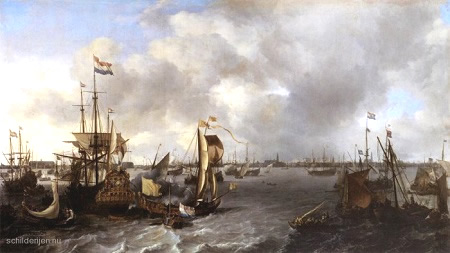
Gezicht op Amsterdam met schepen op het IJ door Ludolf Backhuysen, 1666


En ‘s avonds namen we de pont

En ‘s avonds namen we de pont
over het IJ en keken naar
de sterren in het water
naar de schepen in de nacht
met hun kajuit van licht waar
gezongen werd misschien een psalm
we voeren heen en weer van onze
naar de overkant waar wij
niet wilden zijn het IJ gleed
ons voorbij een schip gelijk
maar als van donker glas met
huiverende rimpelingen
zou het vanzelf weer ochtend
worden en waren wij erbij
voor een morgen aan het IJ


 1944537-7ea3b3fa98a91113d3ed9f590ebb4042.jpg
Guus Luijters (Amsterdam, 3 november 1943)
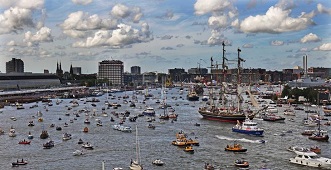
Het IJ tijdens Sail 2010


De Nederlandse schrijver en cabaretier Kees van Kooten werd geboren op 10 augustus 1941 in Den Haag. Zie ook mijn blog van 10 augustus 2010 en eveneens alle tags voor Kees van Kooten op dit blog.

Uit: Dagboek van een werkloze optimist (Het groot bescheurboek)

“Maandag

Fantastisch geslapen. Wat was het weer een gezellig weekend. Wat kan Lea's vader toch kostelijk vertellen. Vooral als hij begint over dat trappetje, vroeger op de zaak. Kan ik honderd keer horen.
En wat ziet Lea's moeder er toch fantastisch uit, voor haar leeftijd. Als Lea er later ook zo uit gaat zien...nou, ik teken er voor.
Nee, ik mag mijn handen dichtknijpen met zulke schoonouders. Trouwens ook met de buren en helemaal de hele straat. Leuk gelukt is dat met die bloembakken. Het lijkt soms wel of ons straatje bewoond wordt door alleen maar leuke mensen met een meer dan gemiddelde fantasie: als je alleen al al die verschillende huisnummers ziet!
Mijn nieuwe sokken zitten precies goed. Blij dat ik die kleur heb genomen.
Lea vindt ze ook het einde. Na de douche (zalig!), heerlijke koffie (Goudmerk) gedronken en onze kopjes niet afgewassen, maar gewoon de boel de boel gelaten.
Ergens zijn we wel artiesten.
Handig dat het ochtendblad in twee delen komt, dan kunnen Lea en ik na verloop van tijd oversteken. Tegen twaalven zalig gewandeld met de hond en op de terugweg twee warme lekkerbekjes gehaald bij die romantische viskar op de Macayweg.
Gelukkig niet in poep getrapt, zodat ze thuis nog warm waren. 's Middags eindelijk heerlijk oude kranten gelezen. BrWrr! Blij dat het niet het nieuws van vandaag was. Half uurtje geknutseld (Taj Mahal uit kroonkurken).
Zo lekker als Lea vandaag de bloemkool had gemaakt (kaassausje!), proefde ik haar nog nooit.
's Avonds samen stiekem meegekwist met de televisie. Samen bed verschoond, waar vervolgens als blokken in geslapen.”


 1944537-14bf42cb89ece50c6cdb1734858fc222.jpg
Kees van Kooten (Den Haag, 10 augustus 1941)


De Duitse schrijver Alfred Döblin werd op 10 augustus 1878 geboren in Stettin. Zie ook alle tags voor Alfred Döblin op dit blog en ook mijn blog van 10 augustus 2010

Uit: Berlin Alexanderplatz

„Und leise fing er wieder seine Musik an, das Grunzen und Brummen, und ich geh nich wieder auf die Straße.
Der rote Jude trat wieder in das Haus, entdeckte den andern am Geländer zuerst nicht. Er hörte ihn summen. «Nun sagt, was macht Ihr hier? Ist Euch nicht gut?» Er machte sich vom Pfosten los, ging nach dem Hof zu. Wie er den Torflügel anfaßte, sah er, es war der Jude von dem andern Haus. « Gehn Sie doch los! Was wolln Sie denn von einem?» «Nun nun., nichts. Ihr ächzt und stöhnt so, wird man doch fragen können, wie Euch ist.» Und durch den Türspalt drüben schon wieder die ollen Häuser, die wimmelnden Menschen, die rutschenden Dächer. Der Strafentlassene zog die Hoftür auf, der Jude hinter ihm: «Nun nun, was soll geschehn, wird doch nicht so schlimm sein. Man wird schon nicht verkommen. Berlin ist groß. Wo tausend leben, wird noch einer leben.»
Ein hoher finsterer Hof war da. Neben dem Müllkasten stand er. Und plötzlich sang er schallend los, sang die Wände an. Den Hut nahm er vom Kopf wie ein Leierkastenmann. Von den Wän den kam der Ton wieder. Das war gut. Seine Stimme erfüllte seine Ohren. Er sang mit so lauter Stimme, wie er im Gefängnis nie hätte singen dürfen. Und was er sang, daß es von den Wänden widertönte? «Es braust ein Ruf wie Donnerhall.» Kriegerisch fest und markig. Und dann: «Juvivallerallera» mitten aus einem Lied. Es beachtete ihn keiner. Der Jude nahm ihn am Tor in Empfang: «Ihr habt schön gesungen.
Ihr habt wirklich schön gesungen. Ihr könntet Gold mit einer Stimme verdienen, wie Ihr habt.» Der Jude folgte ihm auf der Straße, nahm ihn beim Arm, zog ihn unter unendlichem Gespräch weiter, bis sie in die Gormannstraße einbogen, der Jude und der starkknochige, große Kerl im Sommermantel, der den Mund zusammenpreßte, als wenn er Galle spucken müßte.“


 1944537-072b40c26957f91c73213355574bb4a8.jpg
Alfred Döblin (10 augustus 1878 – 26 juni 1957)
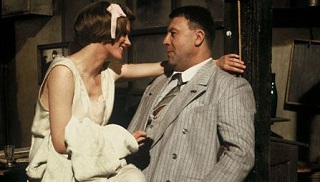
Barbara Sukowa (Mieze) en Günter Lamprecht (Franz Biberkopf) in de tv-serie van Rainer Werner Fassbinder uit 1980


De Oegandese schrijver Moses Isegawa (pseudoniem van Sey Wava) werd geboren op 10 augustus 1963 in Kawempe in Oeganda. Zie ook alle tags voor MosesIsegawa op dit blog en ook mijn blog van 10 augustus 2010.

Uit: Abyssinian Chronicles

“Uncle Kawayida was a meter reader for the Ugandan National Energy Board. His job was to visit people’s homes and take readings used to calculate the monthly energy bills customers had to pay. Courtesy of his travels and, I believe, of his large imagination, he told stories of women who used sugared promises to try to bribe him into under-reading their meters, and of men who tried to impede his work by accusing him of flirting with their wives. He amazed us with stories of people living in congested urban squalor, ten to a little house, with parents fucking in the vicinity of children who cleverly feigned sleep. He spoke of women who committed garage abortions by slipping stiff leaf stalks or bike spokes up the condemned birth canals of unfaithful wives or sneaky daughters, an occasional fatal or near-fatal hemorrhage the price for puncturing the wrong things. He told tales of men who beat their wives with electric cables, sticks, boots or fists and afterward ordered them to serve their dinner or to fuck them, and of women who drank and fought like men, cracked open men’s heads with beer bottles and subsequently emptied their pockets. In those places were wild children who did not go to school and got into a life of crime: stealing, robbing, mugging, sometimes even killing people. In the same places lived rich people’s children who went to school in big cars, laughed at teachers and wrote love letters in class. There were also people who could hardly make ends meet, who ate one meager meal a day after doing backbreaking work. In that world roamed fantastic football hooligans who fought their rivals in epic battles in which rocks, piss bottles, shit parcels, clubs and even bullets were exchanged to the point where police had to intervene with tear gas or bullets. There were men and women, devout churchgoing Catholics and Protestants, who worshipped the Devil and offered blood sacrifices during nocturnal orgies; and people of different religious denominations who deposited featherless, headless hens, dead lizards, frog entrails and other ritual garbage in other people’s yards, outside shopfronts or at road junctions.”


 1944537-890d3be56458b53906876ae79308a083.jpg
Moses Isegawa (Kawempe, 10 augustus 1963)


De Amerikaanse dichter en schrijver Mark Doty werd geboren op 10 augustus 1953 in Maryville, Tennessee. Zie ook alle tags voor Mark Doty op dit blog en ook mijn blog van 10 augustus 2010.


Long Point Light

Long Pont's apparitional
this warm spring morning,
the strand a blur of sandy light,

and the square white
of the lighthouse-separated from us
by the bay's ultramarine

as if it were nowhere
we could ever go-gleams
like a tower's ghost, hazing

into the rinsed blue of March,
our last outpost in the huge
indetermination of sea.

It seems cheerful enough,
in the strengthening sunlight,
fixed point accompanying our walk

along the shore. Sometimes I think
it's the where-we-will be,
only not yet, like some visible outcropping

of the afterlife. In the dark
its deeper invitations emerge:
green witness at night's end,

flickering margin of horizon,
marker of safety and limit.
but limitless, the way it calls us,

and where it seems to want us
to come, And so I invite it
into the poem, to speak,

and the lighthouse says:
Here is the world you asked for,
gorgeous and opportune,

here is nine o'clock, harbor-wide,
and a glinting code: promise and warning.
The morning's the size of heaven.

What will you do with it?


 1944537-af2fc26c1d3849c63ce5894ef245abe6.jpg
Mark Doty (Maryville, 10 augustus 1953)


De Poolse schrijver Jerzy Pilch werd geboren op 10 augustus 1952 in Wisla. Zie ook alle tags voor Jerzy Pilch op dit blog en ook mijn blog van 10 augustus 2010.

Uit: His Current Woman (Vertaald door Bill Johnston)

“Come here,” he said with that particular sort of tenderness which human fury can sometimes turn into in the space of a few seconds.The specter standing at the foot of the bed vanished, but the tenderness remained.
Dear Lord, thought Kohoutek, dear Lord, it’s not that I’m taking Your name in vain, but when all’s said and done, my current woman is sleeping in the attic of a prewar slaughterhouse, separated from outer space by no more than a layer of crumbling roof tiles and a piece of cardboard. I mean, it’s ridiculous.
At this point, in Pawel Kohoutek’s soul and body deadly fear gave way to stupendous audacity. Since I was capable of concealing her; since I was able to take her bread, sausage, lemonade, and three blankets from the stove room; since I managed to accomplish all that, I’ll accomplish even more: Unnoticed by anyone, I will go to her and I will make love to her, said Kohoutek almost aloud, and he rose from his bed. Incidentally, his thoughts continued, what is it that she sees in me? She’s just like all the others; she’s attracted by that damned veterinary medicine, he answered himself. In the silence and the darkness he set about getting dressed. He put on pants and a sweater, pulled his shoes on his bare feet, threw his trench coat around his shoulders, and moved off with extreme caution down the long hallway toward the front door.As he was passing the room in which his wife slept, he paused for a moment to assure himself he was safe. He placed an ear to her door and listened to her peaceful breathing. The poor thing’s asleep, he thought, and he was suddenly overcome by another wave of emotion.This time it was an emotion connected strictly with the matter of marital fidelity.
The poor thing, she’s sleeping peacefully, and I’m up to all this.
I mean, I’ve been with this woman for so many years, whispered   Kohoutek to himself, so many years, and what I’m doing is so immoral. And upon a sudden impulse Kohoutek opened the door and, still dressed in his clothes, climbed onto her bed and began to shower her with passionate kisses. Kohoutek’s wife, who was in a deep sleep, didn’t immediately realize what was going on.”


 1944537-238256d19ee724d744a0923c3c780107.jpg
Jerzy Pilch (Wisla, 10 augustus 1952)


Zie voor nog meer schrijvers van de 10e augustus ook mijn blog van 10 augustus 2014 deel 2 en eveneens deel 3.

Geschreven door Romenu om 17:18 Reageer op dit bericht

Elvis Peeters

De Vlaamse schrijver en musicus Elvis Peeters werd geboren op 10 augustus 1957 in Grimbergen. In 1982 stond Peeters met zijn Nederlandstalige punkgroep Aroma di Amore in de finale van de Rock Rally. Vanaf eind jaren tachtig is Peeters ook actief in andere muzikale projecten o.a. ‘Peeters en Angst’(1988), ‘De Legende’(1992) en ‘Schmoll’(2004). Sinds begin jaren negentig legt Elvis Peeters zich voornamelijk toe op het schrijven van theaterstukken, hoorspelen, verhalen en romans. Het werd de start van een duurzame, literaire samenwerking met co-auteur Nicole Van Bael. Hun eerste theatertekst ‘Het uur van de aap’ kreeg in 1990 meteen een eervolle vermelding in het juryrapport van de Nederlandse Toneelschrijfprijs. In 1992 verscheen de eerste verhalenbundel. In 1998 publiceerden Peeters en Van Bael een eerste roman ‘Spa’. In 2000 haalde de verhalenbundel ‘Brancusi’ de long list voor de Gouden Uil. In 2001 volgde het eerste kinderboek ‘Meneer Papier gaat uit wandelen’ met tekeningen van Gerda Dendooven. In 2005 verscheen een tweede roman ’De Ontelbaren’. Het boek stond op de shortlist voor de Libris Literatuurprijs 2006 en de longlist voor de Gouden Uil 2006. In 2008 verscheen Peeters eerste dichtbundel ’Dichter’. De roman “WIJ”werd in 2009 met applaus onthaald en zorgde voor flink wat discussie. Van dit snoeiharde verhaal over acht adolescenten werden meer dan 10.000 exemplaren verkocht. De roman 'Dinsdag' uit 2012 werd genomineerd voor de AKO-literatuurprijs en de Libris-literatuurprijs.

Uit: WIJ

“De dag daarop namen we hetzelfde viaduct. Dat waren we niet van plan geweest, we bleken te lui om een ander te kiezen.
We kropen niet terug in de berm. We gingen bij Karl en zijn brommer staan, een eind van de meisjes verwijderd. Boven de andere rijrichting van de snelweg, waar het viaduct al bijna weer begon te dalen.
Over het viaduct kwam weinig verkeer. Af en toe een tractor, soms een auto, soms een fietser. We zagen ze van ver komen. We waren gewoon twee groepjes jongeren, een paar meisjes, en paar jongens, die uit verveling naar de auto’s op de snelweg keken die onder het viaduct door raasden. Vrachtwagenchauffeurs, zakenlui, koeriers, families die op vakantie vertrokken. Het kon iedereen overkomen. Achter het stuur moet je oplettend zijn. Hoe graag worden mensen niet afgeleid? We vroegen ons af of het mogelijk was. De meisjes stonden op een rij, hun voeten uit elkaar. Ze wuifden naar de auto’s. Met één hand, de andere arm lag met de elleboog op de brugleuning en met die hand hielden ze hun rokjes omhoog. Hun kruis paste precies tussen twee spijlen van de reling. Vier jonge kutten. Wie wil dat niet zien?
’s Ochtends om half elf. De zon brandde al. Plots zagen we de auto van zijn lijn afwijken, een grijze Peugeot. Hij raakte maar heel even de auto die hem net inhaalde, een groene Nissan. Hun snelheid lag hoog. Ik meen zelfs dat Liesl met haar slipje zwaaide in plaats van met een witte zakdoek. We hoorden de klap onder het viaduct. Jens rende met zijn camera naar de reling aan de overzijde. De auto’s schoten dwars over de rijstroken.
De Nissan sloeg over de kop en belandde in de middenberm, die geel zag van de brem. De Peugeot tolde tegen de vangrail, werd opnieuw de weg op gekatapulteerd. Femke filmde het met haar gsm, ze moet bliksemsnel zijn geweest. Als bij wonder raakte de Peugeot geen andere wagens meer. We konden de adrenaline ruiken. We hoorden tientallen auto’s, vrachtwagens krijsend remmen. Een blauwe Audi met een caravan die te snel reed, ramde een bestelbus. De Peugeot sloeg tegen de berm, bijna op de plek waar wij de dag daarvoor hadden gezeten. Toen klonk een luide knal. De Nissan vloog in brand tussen de bremstruiken, met zijn vier wielen omhoog. We hoorden het loeien en het ratelend knetteren van de vlammen. Karl startte de brommer, hij nam Liesl mee, de andere meisjes holden naar hun fietsen. Het was warm, we hadden dorst. Wellicht haalde het voorval de kranten en wisten we morgen wie de slachtoffers waren. Het mooiste op de beelden van Jens zijn de vlammen en het verzengen van de brem. Femke legde alleen de smerige zwarte rookwalm vast.”


 1962632-1f57d5bf944e7aebcde76eb7cf93c70f.jpg
Elvis Peeters (Grimbergen, 10 augustus 1957)

Geschreven door Romenu om 00:00 Reageer op dit bericht

Meer van Romenu

↑ Terug naar de berichten