

Naar de inhoud

Romenu

Over literatuur, gedichten, kunst en cultuur
akke.beakke.be

Berichten van 3 september 2016 tot 4 september 2016

Helga Ruebsamen, Antonin Artaud, René de Chateaubriand, Constantijn Huygens, Richard Wright, Mary Renault
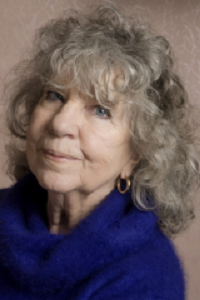
De Nederlandse schrijfster Helga Ruebsamen is op 4 september 1934 geboren in Batavia, in Nederlands lndië. Zie ook mijn blog van 4 september 2010 en eveneens alle tags voor Helga Ruebsamen op dit blog.

Uit: The Song and the Truth (Vertaald door Paul Vincent)

“Every day, as soon as the sun went down, tiny lizards climbed up the walls of our veranda.
"Look, the tjitjaks are here."
The night people lit the lamps, in the rooms and on the veranda. The ladies who'd come to tea took their leave and went home. The day was over, and night was beginning.
My mother accompanied her guests as far as the waringin tree and waved to the visitors and their children as they left. I stood on the veranda listening to the sounds coming from the Lembang road. I could hear the cars driving uphill, up the mountain, where the sun was already asleep in the volcano. Or hear them driving downhill, to Bandung, the town where the zoo was and my father's clinic. There were often parties in town, and the cars drove faster then.
My mother came back; I could hear her singing before I saw her. She didn't hurry, she sauntered along, stopping now and then, so that the bright spot she formed in the darkness grew larger only very slowly. When it reached the point where I could make out more than the color of her dress, I could also see her platinum blond curls and even her bright eyes. By then she was so close that she could touch me.
"Well, we've got the veranda to ourselves again," said Mummy. She stretched out on the settee and beckoned to me. "All those visitors," she sighed, "and never anyone you can talk to."
The tjitjaks had found their places. On the ceiling they had frozen into wooden ornaments, but they pounced like greased lightning on any insects that strayed close to them.
The lamps burned in the rooms and on the veranda, so that night could not descend on us.
The night abolished the distinction between inside and outside. At night it was cool and dark everywhere. Everything was safe--people, animals, and plants--beneath a dark dome as large as the world.
When the sky, the earth, and the water had attained the same dark hue, the toké arrived. I waited for the toké every night. He was the big brother of the tjitjaks. I did not need to go to bed before the first toké had called.
By that time all the other nocturnal creatures were there: flying foxes, crickets, bullfrogs. Their noisy concert was in full swing.”


 1952233-a527155ebb7091fef9149f1b1e98fd8e.png
Helga Ruebsamen (Batavia, 4 september 1934)


De Franse dichter en schrijver Antonin Artaud werd geboren op 4 september 1896 in Marseille. Zie ook mijn blog van 4 september 2010 en eveneens alle tags voor Antonin Artaud op dit blog.


Chanson secrète enfantine des rose-croix

Héliogabale et Spinoza sont une seule en même chose
Vive la rose
Héliogabale et Spinoza font un seul et meme choix
Vive la croix
Le chaste philosophe sans besoin le cruel empereur qui
Partout chie
Ont le même sens de la cité
Mettant l’anarchique en Unité et l’Un dans l’anarchie
Multiplicité
Pédé castré sado maso travestiste
Panthé modo nature substantialiste
Tous deux n’ont qu’un corps sans organes
Et sur ce corps de vibrations qui en émanent
Pitié pour qui signait César-Crucifié
ar celui-là on ne peut pas s’y fier
Puisque’il n’osa
Pas s’appeler Héliogabale-et-Spinoza


L'amour sans trêve

Ce triangle d’eau qui a soif
cette route sans écriture
Madame, et le signe de vos mâtures
sur cette mer où je me noie

Les messages de vos cheveux
le coup de fusil de vos lèvres
cet orage qui m’enlève
dans le sillage de vos yeux.

Cette ombre enfin, sur le rivage
où la vie fait trêve, et le vent,
et l’horrible piétinement
de la foule sur mon passage.

Quand je lève les yeux vers vous
on dirait que le monde tremble,
et les feux de l’amour ressemblent
aux caresses de votre époux.


 1952233-bffa4c92c64de1908be207ed5ebfa501.jpg
Antonin Artaud (4 september 1896 - 4 maart 1948)
Portret door Arthur Hunter-Blair, 2005


De Franse schrijver François René de Chateaubriand werd geboren op 4 september 1768 in Saint Malo. Zie ook mijn blog van 4 september 2010 en eveneens alle tags voor René de Chateaubriand op dit blog.

Uit:René (Vertaald door A. S. Kline)

“Once among the Natchez, René was obliged to take a wife, to conform to the ways of that American Indian people; but chose not to live with her. A tendency to melancholy drew him into the woods; he spent whole days there alone, and seemed a savage among the savages. Except for Chactas, his adopted father, and Père Souël, the missionary at Fort-Rosalie he renounced all relations with mankind. These two elderly men had won much influence over his feelings: the former by his friendly indulgence, the latter, in contrast, by his unrelenting severity. Since the beaver-hunt, during which the blind Sachem had told his story to René, the latter had not wished to speak of his own. However Chactas and the missionary had a strong desire to know by what misfortune a European nobleman had been led to the strange resolution of burying himself in the wilds of Louisiana. René had always given as justification for his refusal, the limited interest to be found in his history which was confined, he said, to that of his thoughts and feelings. ‘As for the events which led me to sail for America’, he added, ‘I would wish to bury them in eternal oblivion.’
Some years passed by in this regard, without the two old men being able to wrest his secret from him. A letter he received from Europe, through the Society of Foreign Missions, added to his sadness to such a degree that he fled to his two old friends. They were only the more eager in exhorting him to open his heart to them. They showed so much discretion, tenderness and authority, that he was forced in the end to satisfy their desire. He therefore spent time with them, not in recounting the story of his life, since he had experienced little, but the secret sentiments of his soul.
On the twenty-first of that month, which the Savages call the moon of flowers (May), René took himself to Chactas’s hut. He gave his arm to the Sachem, and led him beneath a sassafras tree on the banks of the Mississippi. Père Souël was not long in arriving at the rendezvous. Dawn was breaking: some distance away in the plain, the village of the Natchez could be seen, with its grove of mulberries and its huts resembling bee-hives. The French colony and Fort-Rosalie were visible to the right, along the river-banks.


 1952233-6e9688f5e134a9def36ee405c32a81ad.jpg
René de Chateaubriand (4 september 1768 – 4 juli 1848)
De stormscène uit Chateaubriand's "René" door Franz Ludwig Catel, 1820


De Nederlandse dichter en schrijver Constantijn Huygens werd geboren op 4 september 1596 in Den Haag. Zie ook mijn blog van 4 september 2010 en eveneens alle tags voor Constantijn Huygens op dit blog.


Dromen

Twee werre-werelden bewoon ik overhands:
Een die 't volkomen is, een andere bijkans.
's Daags vind ik mij in d' een, 's nachts dunk ik mij in d'ander.
In arbeid en in ernst gelijken zij malkander.
Dit scheelt het: deze zie 'k, die dróóm ik dat ik zie,
Of is deez' mogelijk zo wel een droom als die?


Reken maar

Men lacht om een ruiter met één spoor aan zijn voet.
Hij lacht terug en zegt: het is zo ook wel goed,
Als ik de ene kant van het paard aan zal sporen,
Ik wed, dan gaat de andere vanzelf naar voren.


’s-Gravenhage

Het hele land in 't klein, de weegschaal van de staat,
De schave van de jeugd, de schole van de daad,
Het dorp der dorpen geen, waar ieder' steeg een pad is,
Maar dorp der dorpen een, waar ieder' straat een stad is.
De rondom groene buurt, het rondom stenen Hout,
Des boers verwondering, al komt hij uit het woud,
Des steêmans steeds vermaak, al komt hij uit de muren,
Der vijanden ontzag, de vrijster van de buren,
Des werelds lekkernij, des hemels welgeval.
Is 't daarmee al gezegd, zo ben ik meer dan al.


 1952233-6fe93cd20af28a9dd183cdeea8d922ac.jpg
Constantijn Huygens (4 september 1596 — 28 maart 1687)
Varkenmarkt in Den Haag door Sybrand van Beest, 1650


De Amerikaanse schrijver Richard Nathaniel Wright werd geboren in Roxie, Mississippi op 4 september 1908. Zie ook mijn blog van 4 september 2010 en eveneens alle tags voor Richard Wright op dit blog.

Uit: Black Boy

"One winter morning in the long-ago, four-year-old days of my life I found myself standing before a fireplace, warming my hands over a mound of glowing coals, listening to the wind whistle past the house outside. All morning my mother had been scolding me, telling me to keep still, warning me that I must make no noise. And I was angry, fretful, and impatient. In the next room Granny lay ill and under the day and night care of a doctor and I knew that I would be punished if I did not obey. I crossed restlessly to the window and pushed back the long fluffy white curtains— which I had been forbidden to touch— and looked yearningly out into the empty street. I was dreaming of running and playing and shouting, but the vivid image of Granny’s old, white, wrinkled, grim face, framed by a halo of tumbling black hair, lying upon a huge feather pillow, made me afraid.
The house was quiet. Behind me my brother— a year younger than I— was playing placidly upon the floor with a toy. A bird wheeled past the window and I greeted it with a glad shout.
“You better hush,” my brother said.
“You shut up,” I said.
My mother stepped briskly into the room and closed the door behind her. She came to me and shook her finger in my face.
“You stop that yelling, you hear?” she whispered. “You know Granny’s sick and you better keep quiet!"
I hung my head and sulked. She left and I ached with boredom.
“I told you so,” my brother gloated.
“You shut up,” I told him again.
I wandered listlessly about the room, trying to think of something to do, dreading the return of my mother, resentful of being neglected. The room held nothing of interest except the fire and finally I stood before the shimmering embers, fascinated by the quivering coals. An idea of a new kind of game grew and took root in my mind. Why not throw something into the fire and watch it burn? I looked about. There was only my picture book and my mother would beat me if I burned that. Then what? I hunted around until I saw the broom leaning in a closet. That’s it… “


 1952233-97c495975da026c15b503307502fbd63.jpg
Richard Wright  (4 september 1908 – 28 november 1960)
Cover


De Engelse schrijfster Mary Renault werd op 4 september 1905 geboren als Mary Challans in Forest Gate in Essex. Zie ook alle tags voor Mary Renault op dit blog en ook mijn blog van 4 september 2010.

Uit: The Persian Boy

“I doubt he’d ever in his life lain down with anyone for whom he had not felt some kind of fondness. He needed love as a palm tree needs water, all his life long: from armies, from cities, from conquered enemies, nothing was enough. It laid him open to false friends, as anyone will tell you. Well, for all that, no man is made a god when he is dead and can do no harm, without love. He needed love and never forgave its betrayal, which he had no understanding of. For he himself, if it was given him with a whole heart, never misused it, nor despised the giver. He took it gratefully, and felt bound by it.”
(…)

“You may keep your ten thousand talents; I am not in want of money, I have taken enough. Why only the half of your kingdom to the Euphrates? You offer me the part in exchange for the whole. Your daughter whom you speak of, I shall marry if I choose, whether given by you or not. Your family is safe; no ransom is required of you; come here yourself and make your suit to me, you shall have them free. If you desire our friendship, you have only to ask.”
(…)

“It is better to believe in men too rashly, and regret, than believe too meanly. Men could be more than they are, if they would try for it. He has shown them that. How many have tried, because of him? Not only those I have seen; there will be men to come. Those who look in mankind only for their own littleness, and make them believe in that, kill more than he ever will in all his wars.”


 1952233-4b5ebc9ed4089276f3caffc5628655c2.jpg
Mary Renault (4 september 1905 - 13 december 1983)
Francisco Bosch als Bagoas en Colin Farrell als Alexander in de film Alexander uit 2004

Geschreven door Romenu om 10:48 Reageer op dit bericht

Jacq Firmin Vogelaar, Fritz J. Raddatz, Eduardo Galeano, Alison Lurie, Sergej Dovlatov, Kiran Desai, Ernst Meister, Lino Wirag

De Nederlandse dichter, schrijver en literatuurcriticus Jacq Firmin Vogelaar (pseudoniem van Franciscus Wilhelmus Maria (Frans) Broers) werd geboren in Tilburg op 3 september 1944. Zie ook alle tags voorJacq Firmin Vogelaar op dit blog.

Uit: Het dubbelleven van een evenwichtskunstenaar. Kafka's dagboeken en zijn schrijverschap

“Max Brod heeft als eerste Kafka's schrijftalent herkend en gestimuleerd. Ook is hij degene geweest die voor publikatiemogelijkheden heeft gezorgd en uiteindelijk de drie romans, de overgebleven verhalen, dagboeken en brieven voor vernietiging heeft behoed, tegen de al tussen 1919 en 1922 in de onvruchtbare periode vóór Der Prozess neergeschreven wilsbeschikking van Kafka in, dat alle nietgepubliceerde geschriften ongelezen verbrand moesten worden. Zonder Brod zouden we nu hoogstwaarschijnlijk geen Kafka lezen. Dit neemt niet weg dat hij het werk belast heeft met een zware hypotheek aan interpretaties. Waarom de ene interpretatie beter en langer beklijft dan de andere zal altijd een vraag blijven, met overtuigingskracht heeft het weinig te maken. Wanneer de inhoud van een literair werk tot herkenbare termen kan worden herleid, zal dat veel lezers meer houvast bieden dan een benadering via de literaire techniek. Er is zelfs een karakterisering van Kafka's werk die van de plicht tot lezen ontslaat; het is dan voldoende te weten dat hij een voorspelling heeft geschreven van de wereld waarin wij nu leven.
Het werk van Kafka is alleen in existentiële termen te vertalen via het bijwerk van dagboeken, brieven en getuigenissen van anderen. De literaire teksten, toch overwegend grotesk en fantastisch, geven daartoe weinig gelegenheid. Brief an den Vater bijvoorbeeld (vreemd genoeg vertaald als Brief aan zijn vader) is nooit bedoeld geweest als literaire tekst. Het ironische gevolg hiervan is dan dat uitgerekend de man die vooral of zelfs uitsluitend schrijver wilde zijn, zoals de dagboeken overduidelijk aantonen, in de eerste plaats als persoon beoordeeld wordt. Hoe discreet hij ook was inzake zijn eigen persoon, hoezeer hij er zelfs naar gestreefd heeft als persoon te verdwijnen en in het schrijven op te gaan, juist die omzichtigheid heeft alle aandacht op het persoonlijk leven gevestigd. Over een aantal zaken wenste Kafka niet te schrijven - om wat voor reden dan ook. Niet de minste reden is geweest dat gevoelens volgens hem alleen dan schriftelijk mochten worden vastgelegd wanneer dat ‘met de grootste volledigheid tot in alle incidentele consequenties, evenals met absolute waarachtigheid, kan geschieden’ (Tagebücher, 12.1. 1911). Het niet-spreken is vaak voor verzwijgen aangezien. Datgene wat hij wel schreef is daarom als een soort geheimschrift uitgelegd dat de oplossing van de vermeende raadsels zou bevatten.”


 1951909-ad7e326dcddbd8317fad7d3ee0d8168d.jpg
Jacq Firmin Vogelaar (3 september 1944 — 9 december 2013)
Portret door Opland, 2014


De Duitse schrijver, criticus, columnist, essayist en biograaf Fritz J. Raddatz werd geboren op 3 september 1931 in Berlijn. Zie ook alle tags voor Fritz J. Raddatz op dit blog.

Uit: Rilke

„War er eine Rose, die eine Rose im Knopfloch trug, ein «poetischer Kunstglasbläser und Zierathämmerer» (wie ein Kritiker ihn nannte) – oder ein strenger Wortmeißler, der seinem Credo «Dinge machen aus Angst» folgte? War er ein «überschminktes Frauenzimmer», wie sein Kollege Georg Heym ihn verspottete, und «ein bißchen dumm», was Gottfried Benn argwöhnte – oder war er ein formsüchtiger Kunstkenner, der ganz früh die Bedeutung von Thomas Mann, das Genie der Picasso und Cézanne erkannte, in Worten geradezu demütiger Ergriffenheit sich dem Schönen als Geschmackskategorie verweigerte, um das Gran Wahnsinn im Kunstwerk zu preisen? War er eine «mit großem Aufwand rotierende Bedeutsamkeitsmaschine», haltlos, beliebig, aus deren absichtlich Ungefährem «die großen Formeln herausrauschen» – oder ein sich Leben und Liebe Versagender, um jene Gedichte zu schaffen, deren bohrender Schmerz uns noch heute frieren macht? War er ein Feintäschler, wie das französische Wort Portefeuilleur eingedeutscht wurde; also ein Preziosenfabrikant, der seine kostbar zurechtgeschliffenen Diamanten in mit edlem Samt ausgeschlagenen Saffianschatullen feilbot – oder ein Sternenfänger, dessen unermeßlicher Hunger nach Licht eine in Finsternis darbende Welt heller machte? Selbst Lobpreisende wie Stefan Zweig sprachen von «erlauchter Goldschmiedekunst», und er selber erläuterte gelegentlich erlesene Begriffe wie «Rauten» mit dem Hinweis auf prachtprachtvoll angeordnete Brillanten, Perlen und Rubine.
Zeitgenossen priesen und höhnten ihn. Willy Haas, der eine Generation jüngere Prager, erzählt, weder er noch irgend jemand seiner Umgebung habe auch nur den geringsten Berührungspunkt mit Rilke gehabt, und alles, «was Rilke in seinem Werk und in seinem Leben getan hat, um irgendwelche uradelige Abstammung anzudeuten oder dem Leser zu suggerieren, ist etwas, was mir, und ich glaube uns allen, furchtbar auf die Nerven gegangen ist».
Der Schriftsteller Hans Egon Holthusen dagegen zählt die Duineser Elegien und die Sonette an Orpheus neben Valérys Charmes und dem Ulysses von James Joyce zu den maßgeblichen und horizontbildenden Meisterwerken der modernen Literatur; während eine seiner vertrauten Damen, die Fürstin Marie von Thurn und Taxis, Lyrikgeschenke mit einem «es ist Entzückendes darunter und alles ist reizend» wie Konfektpräsente quittiert – zum Hauptwerk der Elegien heißt es: «Das entzückende kleine Buch kommt zu Ihren anderen Manuscripten in dem kleinen chinesischen Möbel in der Bibliothek; eine Sienesische Madonna süß und verträumt hält darüber Wache.»


 1951909-77035bf2ec7fa015ac009cc8f59697a8.jpg
Fritz J. Raddatz (3 september 1931 - 26 februari 2015)
Cover 


De Uruguayaanse schrijver, essayist en journalist Eduardo Hughes Galeano werd geboren op 3 september 1940 in Montevideo. Zie ook mijn blog van 3 september 2010 en eveneens alle tags voor Eduardo Galeano op dit blog.

Uit: Open Veins of Latin America: Five Centuries of the Pillage of a Continent


The Nobodies

Fleas dream of buying themselves a dog, and nobodies dream of escaping
poverty: that one magical day good luck will suddenly rain down on
them---will rain down in buckets. But good luck doesn't rain down
yesterday, today, tomorrow, or ever. Good luck doesn't even fall in a
fine drizzle, no matter how hard the nobodies summon it, even if their
left hand is tickling, or if they begin the new day with their right
foot, or start the new year with a change of brooms.

The nobodies: nobody's children, owners of nothing. The nobodies: the
no ones, the nobodied, running like rabbits, dying through life,
screwed every which way.

Who are not, but could be.
Who don't speak languages, but dialects.
Who don't have religions, but superstitions.
Who don't create art, but handicrafts.
Who don't have culture, but folklore.
Who are not human beings, but human resources.
Who do not have faces, but arms.
Who do not have names, but numbers.
Who do not appear in the history of the world, but in the police
blotter of the local paper.
The nobodies, who are not worth the bullet that kills them.


 1951909-89e41c7e72b6b0f99a230c877b5c74f5.jpg
Eduardo Galeano (3 september 1940 – 13 april 2015)


De Amerikaanse schrijfster en literatuurwetenschapster Alison Lurie werd geboren op 3 september 1926 in Chicago, Illinois. Zie ook mijn blog van 3 september 2010 en eveneens alle tags voor Alison Lurie op dit blog.

Uit:The Last Resort

“At three A.M. on a windy late-November night, Jenny Walker woke in her historic house in an historic New England town, and sensed from the slope of the mattress and the chill of the flowered percale sheets that Wilkie Walker, the world-famous writer and naturalist, was not in bed beside her.
Often now Jenny woke to this absence. The first time, after lying half awake for twenty minutes, she tiptoed downstairs and found her husband sitting in the kitchen with a mug of tea. Wilkie smiled briefly and replied to her questions that of course he was all right, that everything was all right. "Go back to bed, darling," he told her, and Jenny followed his instructions, just as she had done for a quarter century.
After that night she didn't go to look for him, but now and then she would mention his absence the next morning. Wilkie would say that he'd had a little indigestion and needed a glass of soda water, or wanted to write down an idea. There was no reason to be concerned about him, his tone implied. Indeed her concern was unwelcome, possibly even irritating.
But since the day they met, Jenny had been more concerned about Wilkie Walker than anyone or anything in the world. He had come into the University Housing Office at UCLA where she was working after graduation while she waited to see what would happen next in her life. It was a misty, hot summer morning when Wilkie appeared: the most interesting-looking older man Jenny had ever seen, with his broad height, his full explorer's mustache; his shock of blond-brown hair, steel-blue eyes, and sudden dazzling smile. Dazzled, she heard him ask about sabbatical sublets for the fall. He wanted somewhere quiet with a garden--he liked to work out of doors if he could, he explained--but he also hoped to be within a half-hour's walk of the university. Which no doubt wasn't possible, he added with another radiant smile.
But Jenny was able to assure him that she knew just the place. And two days later, while she was still dreaming of Wilkie's visit and wondering if she could get leave to audit his lectures, he reappeared to thank her and ask her to have lunch with him.”


 1951909-117b3415df052faa78caeac3c69d4df8.jpg
Alison Lurie (Chigaco, 3 september 1926) Cover


De Russische schrijver Sergej Dovlatov werd geboren op 3 september 1941 in Ufa, in het zuiden van Rusland. Zie ook mijn blog van 3 september 2010 en eveneens alle tags voor Sergej Dovlatov op dit blog.

Uit: Pushkin Hills (Vertaald door Katherine Dovlatov)

“No, really, are you unwell?”
“I drink too much... Would you like a beer?”
“Why do you drink?” she asked.
What could I say?
“It’s a secret,” I said, “a little mystery...”
“So you’ve decided to work at the museum?”
“Exactly.”
“I knew it right away.”
“Do I look like the literary type?”
“Mitrofanov was seeing you off. He’s an extremely learned
Pushkin scholar. Are you good friends?”
“I’m good friends,” I said, “with his bad side...”
“How do you mean?”
“Never mind.”
“You should read Gordin, Shchegolev,Tsyavlovskaya... Kern’s memoirs...” and one of the popular brochures on the dangers of alcohol.”
“You know, I’ve read so much about the dangers of alcohol that I decided to give it up... reading, that is.”
“You’re impossible to talk to.”


 1951909-e48e2cacbcf8a0cda93a7ce7c2770107.jpg
Sergej Dovlatov (3 september 1941 - 24 augustus 1990)


De Indische schrijfster Kiran Desai werd geboren op 3 september 1971 in New Dehli. Zie ook mijn blog van 3 september 2010 en eveneens alle tags voor Kiran Desai op dit blog.

Uit: Hullabaloo In The Guava Orchard

„But Kulfi was not thinking of the baby in her belly like a little fish. She was thinking of fish themselves. Of fish in many forms. Of fish big enough and good enough to feed the hunger that had overtaken her in the past months like a wave. She thought of fish curries and fish kebabs. Of pomfret, bekti, ruhi. Of shoals of whiskered shrimp. Of chewy mussels. She thought of food abundant in all its many incarnations. Of fenugreek and camel milk, yam and corn. Mangoes and coconuts and custard apples. Mushrooms sprouting like umbrellas in the monsoon season. Nuts, wrinkled in their shells, brown-skinned, milky-fleshed.
The house was small for her big desire. She walked from the tiny blue bedroom to the kitchen thick with the smell of kerosene, around the table and chairs, up and down the balcony, down the stairs past the rooms of neighbors who shook their heads over her, then around the jamun tree in the middle of the courtyard.
'Oh dear, what is going to become of this woman?' said Lakshmiji, the Raipurs, the Bengali teacher, and all of the others when they looked out of their windows, when they gossiped at the tea stall or sat in each other's houses eating peanuts together. 'There was always something odd about her,' they said. 'You could tell this from the minute she entered Shahkot.'
Meal after meal of just rice and lentils could not begin to satisfy the hunger that grew inside Kulfi; she bribed the vegetable sellers and the fruit sellers and the butcher with squares of silk, with embroidery, a satin petticoat, an earring set in gold, a silver nutcracker, bits of her dowry that had not yet been pawned. She bribed them until they had nothing left to give her anyway. By then, her hunger was so fierce, it was like a big, prowling animal. In her mind, aubergines grew large and purple and crisp, and then, in a pan, turned tender and melting. Ladyfingers were flavored with tamarind and coriander. Chicken was stewed with cloves and cardomon. She thought of chopping and bubbling, of frying, slicing, stirring, grating.”


 1951909-9ee48167686e869ae3cac02f96ab7fca.jpg
Kiran Desai (New Dehli, 3 september 1971)


De Duitse dichter en schrijver Ernst Meister werd geboren op 3 september 1911 in Haspe. Zie ook alle tags voor Ernst Meister op dit blog.

Uit: Wandloser Raum


Und was
will diese Sonne
uns, was

Springt
aus enger Pforte
jener großen Glut?

Ich weiß
nichts Dunkleres
denn das Licht.


Spät in der Zeit
wirst du sagen,
du seist

ein Mensch gewesen.

Du sagst es nicht,
kannst es nicht sagen –
du sagst es jetzt.


O BLUMEN!
Hier auf dem
Balkon
seh ich euch stehen
im Sonnenlicht
das lösliche
Gewölbe.
Ihr andern auch
seid gegenwärtig.


 1951909-e711e9413dd1d53bc1b417ab6e51a5fa.jpg
Ernst Meister (3 september 1911 - 15 juni 1979)
Zelfportret, z.j.


Onafhankelijk van geboortedata:

De Duitse dichter, schrijver en striptekenaar Lino Wirag werd geboren in 1983 in Pforzheim. Zie ook mijn blog van 3 september 2010 en eveneens alle tags voor Lino Wirag op dit blog.

Uit: Vom Verschwinden der Satire im Literaturbetrieb

„Am 20.10.06 verkündete die taz dann das »Satirewunder«: »In fast allen Tageszeitungen gibt es eine satirische Ecke, ursprünglich mal als Ausgleich und Ausklang zu den harten aktuellen Meldungen gedacht, mittlerweile mehr oder weniger gediegen und entwickelt.« Doch nicht nur das. Zwar schimpfte Jenni Zylka über den unkomischen »satirischen Monatsrückblick Ultimo« auf n-tv, pries dann aber die Sendung Extra 3 (NDR) und die Rubrik Toll! in Frontal 21 (ZDF) als herzeigbare Formate – unerwähnt blieben die Beiträge von Polylux (ARD).
Satirisches Fernsehen arbeitet mit den gleichen Mitteln wie die Printverwandtschaft – Übertreibung, Verzerrung, Umkehrung etc. –, vor allem aber mit dem Kontrast zwischen Bild- und Tonebene. Entweder setzt ein mokanter Off-Sprecher die gezeigten Bilder in einen neuen Zusammenhang, oder die Fernsehauftritte von Politikern werden neu »synchronisiert«. Auch die »Zuschauerverarsche« aus Verstehen Sie Spaß?-Zeiten erlebt neue Formen: In Polylux traktiert Carsten van Ryssen arglose Berliner mit kaum richtig zu beantwortenden Fragen (»Gehören Sie auch zum Prekariat?«)“.


 1951909-bcbf835fa33c865be188112b73f5741c.jpg
Lino Wirag (Pforzheim, 1983)

Geschreven door Romenu om 11:32 Reageer op dit bericht

Meer van Romenu

↑ Terug naar de berichten