Naar de inhoud

Romenu

Over literatuur, gedichten, kunst en cultuur
akke.beakke.be

Berichten van 15 september 2016 tot 16 september 2016

Dolce far niente, P. C. Boutens, Breyten Breytenbach, Alfred Schaffer, Frans Kusters, Michael Nava, Justin Haythe, James Alan McPherson, Hans Arp
 

Dolce far niente


 1956253-a0ba72affd7e8f0fe059814a0818b370.jpg
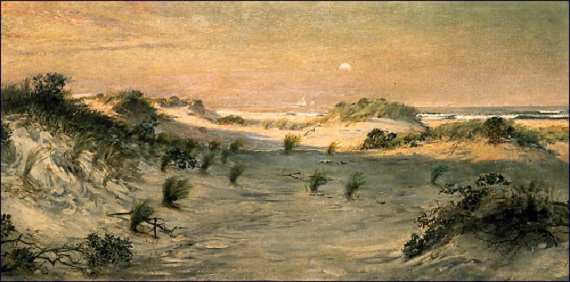
Sand Dunes at Sunset door Henry Ossawa Tanner, ca 1885
Dit schilderij hangt in de Green Room van het Witte Huis


Laatste zomerdag

Al de gouden middaguren
Van de zonnen die verzonken,
Stralen door dit blankdoorblonken
Blindend dak van blauwe muren
Op den stervensstillen lach
Van den laatsten zomerdag.

In de dalen van de duinen
Huivren wondre schemeringen
Om de helderheid der dingen;
En geen aêm vleugt langs de kruinen;
Dieper dan de middagvreê
Hijgt de stilte van de zee.

Als verwaasde glanzen dalen
Door de sidderende luchten
Vlakker al de breede vluchten
Van verzilverd gouden stralen,
Tot de glans in gloed ontblaakt
Waar hij Zomers peluw raakt. . .

Mogen liefdes gouden uren
Die uw oogen zijn vergeten
Tot éen glans van hemelsch weten,
Zóo uw witte peluw vuren,
Ziel mijn ziel, waar uw gezicht
In zijn laatsten glimlach ligt!
 

 1956253-dd931a7096e319e9d37a10ccb8a572c1.jpg
Pieter Cornelis Boutens (20 februari 1870 – 14 maart 1943)
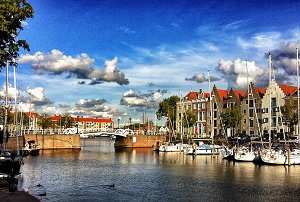
Middelburg, haven. Boutens werd geboren in Middelburg.


De Zuid-Afrikaanse schrijver en dichter Breyten Breytenbach werd geboren op 16 september 1936 in Bonnievale. Zie ook mijn blog van 16 september 2010 en eveneens alle tags voor Breyten Breytenbach op dit blog.


Een wind stilte waait

Waarom schrijf je altijd over de dood?
Omdat ik een vriend zoek die de moeite loont
om voor te sterven. – Daigu

een wind stilte waait om het huis
de vrouw zegt dat ze kruimels strooit
op het balkon voor de mussen
en later is alles opgevreten
maar je hebt nooit een vogel gezien
pa is dood

wolken strooien een vlucht schaduwen voor de zon
je zusters gebroken stem
overbrugt een afstand van vele jaren:
‘huil maar
zodat het binnenste ook weer kan genezen'
de stadsklokken gal men opeens
een ijskoud blauw gebeier
dat slechts dood eeuwig is

hoe schrijf je een afwezigheid vast in het vers?
mijn vader is vandaag overleden
zaterdag negen december 1989
Johannes Stephanus Breytenbach
om halftien 's morgens
ik breek mijn woorden als kruimels
om te vluchten of te begrijpen

witte vriessuiker over de blaren in het park
onverwachts een snik in de borst opgeschrikt
als een vogel gewekt uit zijn winterslaap
hij was toch zo’n trotse man
niemand tot overlast al die jaren
geruïneerd grijs lichaam
in een zaal vol oude grijze gedoofde lichte lijven

gisteren besefte hij pas goed
dat zijn koudvuurbeen was afgezet
en vanmorgen was hij nog kwaad
want gebit en bril waren kwijt
en toen draaide hij zijn hoofd weg van het licht en zuchtte
en was hij dood en nu wacht de aarde

toch een verleden opengerukt
zo oud als klokken die voor de dood zingen
ik zit op mijn vaders schouders
onder de koepel van een zoele nacht
oud van sterren
we gaan naar huis

vaarwel mijn haan mijn luipaard
mijn gewroet in de bomen
mijn trotse lichtwaaier over de kuif van de berg:
en nu plukken we de sterren
en zo begint mijn sterven
 

 1956253-131212e87e535820cc5ea7240beec3b2.jpeg
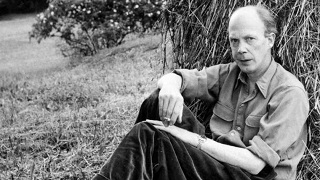
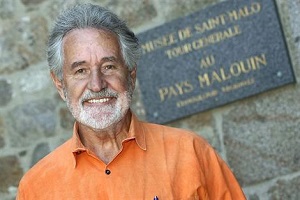
Breyten Breytenbach (Bonnievale, 16 september 1936)


De Nederlandse dichter Alfred Schaffer werd geboren in Leidschendam op 16 september 1973. Zie ook alle tags voor Alfred Schaffer op dit blog.


Verdiepingen

Babygekrijs, dat de haren overeind laat staan.
Daar weer bovenop de trage voetstappen
die steeds luider klinken, een toilet
dat alles schoonspoelt, met een reuzevaart,
bij wijze van een geurig intermezzo.
En op de achtergrond een prettig
kwetterkoor van vogeltjes, de naklank
van een schot, midden in de roos (of kraakbeen
van een vluchtend dier), een juichend stadion
plus het voortdurend beuken van de golven
op de rotsen. Pak aan hier is je partituur,
begin maar waar je in kunt vallen.


Een traditioneel gedicht

Het braakland in de verte. Een woord oud als de weg naar Rome,
we hebben de verleiding niet weerstaan. Lijnen en plannen maken
dit uitdijende weiland. We zijn aangekondigd - houd je mond toch,
je ziet ons spoken, zoek een betrouwbare bron, huiverig voor iets

dat maar voorbij blijft gaan. Dan sta je recht en grijpt me beet. Nee,
het was andersom, je viel zelfs in het slootje. ‘Klaar,’ sta je te gapen
naderhand - je sopt terug je kleren in en niets en alles is veranderd,
om vrolijk van te worden. We haperen, het lange gras gesmolten,

we konden erop wachten: een van ons raakt achterop. Jij was er al,
jij ploetert voort. Tot uit het zicht. Wind. Een formatie trekvogels.
Was dit volgens afspraak, dan hebben we elkaar niet goed begrepen,
we zouden voor het donker thuis. Ik roep nog iets, en haak dan af.
 

 1956253-a801c85481e63156aaa4b0d9c5b35475.jpg
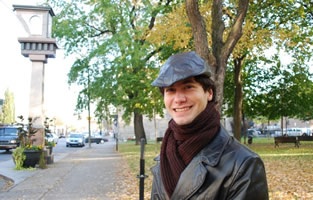
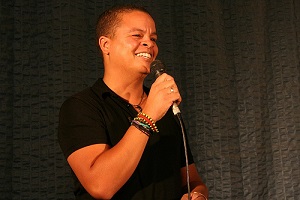
Alfred Schaffer (Leidschendam, 16 september 1973)


De Nederlandse schrijver Frans Kusters werd geboren in Nijmegen op 16 september 1949. Zie ook alle tags voor Frans Kusters op dit blog en ook mijn blog van 16 september 2010.

Uit: Het schaamtesyndicaat

“En de mensen - dat was afschuwelijk - hadden het niet eens in de gaten of het zou hun een rotzorg wezen. Zolang ze de metalen karretjes in de supermarkt konden volstouwen en het beeldscherm voldoende lolbroekerij van eigen bodem en de nieuwste ontwikkelingen in Peyton Place vertoonde, en doelpunten, niet te vergeten, zou alles hun een rotzorg wezen en hadden ze niets in de gaten. Ja, tenzij de buren gebeitste schrootjes achter het wandmeubel hadden en zij niet, of wanneer de voor duur geld gekochte kleren niet zo strak om het lichaam bleken te sluiten als de advertentie had beloofd. En wie de leeftijd van Cliff Richard had geraden kreeg van de omroeper een lichtgevende wekkerradio ten geschenke en na een goed antwoord op de vraag waar De Nachtwacht hing een zindelijke bak- en braadgrill daarbij. (Wij konden bewijzen dat Cliff Richard in het geheel niet bestond). En de gediplomeerde kenners van mens en maatschappij kweekten in de vrije tijd radijs, radijs en vleestomaten, volgden metselcursussen, bladerden fotoboeken over verantwoord bedgedrag door en verkondigden tijdens kantooruren dat die bezigheden eigenlijk veel meer waarachtigheid bezaten dan het werk waarvoor zij werden betaald. Maar misschien viel dat deze welvaartstelgen niet eens kwalijk te nemen en moest je de fout bij hun leermeesters zoeken, de heersers van de deelterreinen, die het samenvatten van uittreksels hoe langer hoe vaker onderbraken om zich de orang-oetan-roffel op het borstbeen toe te dienen, liefst op commando van een of andere waan van de dag, want dan bestond de kans dat ze de krant haalden en, wie weet, het televisiescherm.
Op aandringen van Bertels waren wij naar het zolderzaaltje van ‘Huize Ditsel’ gegaan, de dansschool aan de Van der Brugghenstraat, waar de toenmalige rectormagnificus alsnog in eigen persoon zijn duit zou laten rinkelen in het zakje gekrakeel dat de aan de overzijde van de oceaan geslaakte kreet ‘God is dood’ in theologische kringen ooit had weten te wekken. De plaatselijke afdeling van het Thijmgenootschap organiseerde de avond, maar omdat wij van de veertien belangstellenden die de klim tot een goed einde hadden gebracht de enige mannen waren, had het er veel van weg dat we bij de V.V.A.O. op bezoek waren, de Vereniging van Vrouwen met Academische Opleiding, wier lezingen we eveneens slechts bij uitzondering oversloegen.”
 

 1956253-82c7457f97728b4e9f721c601b6a5581.jpg
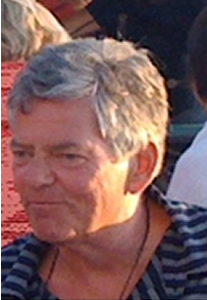
Frans Kusters (16 september 1949 - 20 november 2012)


De Amerikaanse schrijver Michael Nava werd geboren op 16 september 1954 in Stockton, Calefornië. Zie ook mijn blog van 16 september 2010 en eveneens alle tags voor Michael Nava op dit blog.

Uit:The Little Death

“He was arrested for being under the influence of PCP, possession of PCP, resisting arrest and battery on an officer. Geez, did the arresting officer go through the penal code at random? Novack scowled at me. Was anyone hurt?
Just scuff marks, counsel.
Was he examined by a doctor to determine whether he was under the influence?
Did you ask him to submit to a urine test?
Then all you can really prove against him is drug possession.
Well, Novack said, I guess thats a matter of interpretation between you and the D.A. Are you going to want to see the guy?
I'll talk to him, I replied, but first Ill want to interview these two, and I read him the names of the burglars.
I interviewed the burglary suspects separately. They were bored but cooperative. They knew the system as well as I did. They had nothing by way of defense so the best I could do for them was try to plead them to something less serious than burglary. Id observed that repeat offenders were the easiest to deal with, treating their lawyers with something akin to professional courtesy. All they wanted was a deal. It was only the first timers who bothered to tell you they were innocent. After the interviews ended, I walked back to the booking office and poured myself a cup of Novacks coffee. I flipped him a quarter and asked to see Hugh Paris.
They brought him in in handcuffs and a pair of jail blues so big that they fell from his shoulders and nearly covered his bare feet. His eyes were focused but he still looked disheveled. I thought, irrelevantly, of a picture of a saint I had seen as a boy, as he was being led off to his martyrdom. There was a glint of purity in Hugh Pariss eyes completely at odds with everything that was happening around him. The guard sat him down in the chair across from mine. I took out a legal pad and set it down on the table between us. I introduced myself as Henry Rios, from the public defenders office“.
 

 1956253-d2c05ac7a2e1afe8591fa88387462fb6.jpg
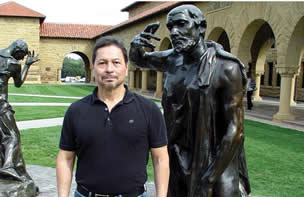
Michael Nava (Stockton, 16 september 1954)


De Amerikaanse schrijver Justin Haythe werd geboren op 16 september 1973 in Londen. Zie ook mijn blog van 16 september 2008 en ook mijn blog van 16 september 2010

Uit:The Honeymoon

“A moment later, Maureen appeared in the hallway behind her. She held a pen in one hand, a cigarette in the other. 'Claudia,' she said. 'I didn't hear you come in.' Claudia turned and faced Maureen. 'You're still in your pyjamas,' Maureen laughed. 'It's the middle of the afternoon!'
Claudia looked down at herself thoughtfully.
'Are you just getting up?' asked Maureen. 'I don't blame you with this never-ending rain ... Have you heard from your father? I have some mail. The envelopes look important. You can take them.' She turned away. 'I was going to make tea,' she said, and disappeared into the kitchen.
Claudia stepped out of her shoes, leaned over and arranged them neatly against the wall. We did not say anything to one another, which was not unusual. I believed that we had an understanding.
One night, when I was almost asleep, I had heard her on the phone, weeping instead of laughing. Street light came through the piece of coloured glass she had hung at the window of her old bedroom. Claudia came into the room without turning on the lights. After a moment's hesitation, she lay down on top of the covers beside me. I felt her legs and her breathing, the weight of her grown body. I watched her face soften into sleep. I reached out my hand and laid it over hers. I thought that one of us should stay awake in case my mother returned and discovered us there together, but soon I fell asleep as well. To my great relief when I awoke the next morning she had gone.
Maureen came back with a small pitcher of milk in one hand and a plate of inexpensive petits fours in the other. She put them down on the table and switched on a lamp. The light made the sky seem darker still. 'Perhaps you can tell me if we should send any mail on to him directly ... How do you feel? You look pale.' She put her hand to Claudia's cheek. 'Petal,' she said. Claudia leaned forward and gave Maureen a kiss.
'Oh,' said Maureen, obviously surprised. 'Thank you.' Maureen looked old beside Claudia for the first time. Petal was my mother's name for me and Claudia was, in my eyes, a grown woman.
Maureen returned to the kitchen for the tea tray. Claudia crossed the room and stood beside me, looking out. She opened the French doors and went out onto the patio as if she wanted a closer look. She stepped over the potted plants and from the railing she stepped into the sky. She had come to us for the height.“
 

 1956253-41aad3d1dfef675328963cbe1d67b332.jpg
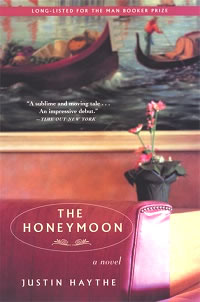
Justin Haythe (Londen, 16 september 1973)
Cover


De Amerikaanse schrijver James Alan McPherson werd geboren op 16 september 1943 in Savannah, Georgia. Zie ook mijn blog van 16 september 2010 en eveneens alle tags voor James Alan McPherson op dit blog.

Uit: Elbow Room

“I went to the territory to renew my supply of stories. There were no new ones in the East at the time I left. Ideas and manners had coalesced into old and cobwebbed conventions. The old stories were still being told, but their tellers seemed to lack confidence in them. Words seemed to have become detached from emotion and no longer flowed on the rhythm of passion. Even the great myths floated apart from their rituals. Cynical salesmen hawked them as folklore. There was no more bite in humor. And language, mother language, was being whored by her best sons to suit the appetites of wealthy patrons. The were no new stories. Great energy was spent describing the technology of fucking. Black folk were back into entertaining with time-tested acts. Maupassant's whores bristled wtih the muscle of union organizers. The life-affirming peasants of Chekov and Babel sat wasted and listless on their porches, oblivious to the beats in their own blood. Even Pushkin's firebrands and noble brigands seemed content with the lackluster: mugging old ladies, killing themselves, snatching small change from dollar-and-dime grocers. During this time little men became afflicted with spells of swaggering. Men with greatness in them spoke on the telephone, and in private, as if bouncing safe clichés off the ear of a listener into an expectant and proprietary tape recorder. Everywhere there was this feeling of grotesque sadness, far, far past honest tears.”

 

 1956253-d677b67636b1fb26d83375c2b43de36b.jpg
James Alan McPherson (Savannah, 16 september 1943)
Cover 


De Frans-Zwitserse kunstenaar, dichter en schrijver Hans (Jean) Arp werd geboren op 16 september 1886 in Straatsburg. Zie ook mijn blog van 16 september 2010 en eveneens alle tags voor Hans Arp op dit blog.


Die Herzen sind Sterne (Fragment)

Wir zogen hell
durch Glanz und Duft.
Nun tut das Licht mir weh
und niemand ruft
und zeigt mir eine Blume
oder einen Stern.

Es blüht im Himmelsgrund
zwischen Dunkelheit und Licht
strahlend wie ein Stern
dein gütiges Gesicht.

Du bist ein Stern
und träumst in Gottes lichter Blume.
Ich mag nicht weitergehen.
Ich will auch schlafen.
So wie du schläfst
in Gold und tiefer Ferne
in einem reinen Wiegen.

Verloren wie der alte Mond,
der schon viel tausend Jahre stirbt,
ist dieser arme Tränenmensch,
der um die tote Rose wirbt.
 

 1956253-77056407832a8056840422ba87e9f50b.jpg
Hans Arp (16 september 1886 - 7 juni 1966)
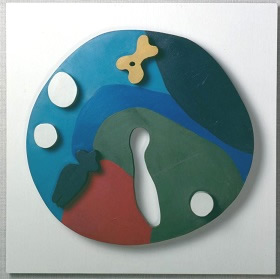
Hans Arp: Horloge, 1924 


Zie voor nog meer schrijvers van de 16e september ook mijn blog van 16 september 2011 deel 2.
 

Geschreven door Romenu om 18:24 Reageer op dit bericht

Dolce far niente, Alfred Tomlinson, Lucebert, Jan Slauerhoff, Chimamanda Ngozi Adichie, Agatha Christie, Orhan Kemal, Gunnar Ekelöf


Dolce far niente


 1955900-ea67d71ee61d31d939498a44e4a27369.jpg
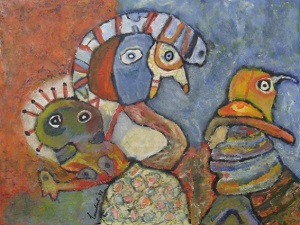
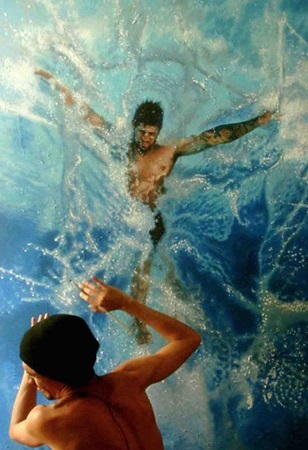
Gustavo Silva Nuñez poseert voor een door hem geschilderde zwemmer, 2015.


Swimming Chenango Lake

Winter will bar the swimmer soon.
   He reads the water’s autumnal hestitations
A wealth of ways: it is jarred,
    It is astir already despite its steadiness,
Where the first leaves at the first
    Tremor of the morning air have dropped
Anticipating him, launching their imprints
    Outwards in eccentric, overlapping circles.
There is a geometry of water, for this
    Squares off the clouds’ redundances
And sets them floating in a nether atmosphere
    All angles and elongations: every tree
Appears a cypress as it stretches there
    And every bush that shows the season,
A shaft of fire. It is a geometry and not
    A fantasia of distorting forms, but each
Liquid variation answerable to the theme
    It makes away from, plays before:
It is a consistency, the grain of the pulsating flow.
    But he has looked long enough, and now
Body must recall the eye to its dependence
    As he scissors the waterscape apart
And sways it to tatters. Its coldness
    Holding him to itself, he grants the grasp,
For to swim is also to take hold
    On water’s meaning, to move in its embrace
And to be, between grasp and grasping, free.
    He reaches in-and-through to that space
The body is heir to, making a where
    In water, a possession to be relinquished
Willingly at each stroke. The image he has torn
    Flows-to behind him, healing itself,
Lifting and lengthening, splayed like the feathers
    Down an immense wing whose darkening spread
Shadows his solitariness: alone, he is unnamed
    By this baptism, where only Chenango bears a name
In a lost language he begins to construe —
    A speech of densities and derisions, of half-
Replies to the questions his body must frame
    Frogwise across the all but penetrable element.
Human, he fronts it and, human, he draws back
    From the interior cold, the mercilessness
That yet shows a kind of mercy sustaining him.
    The last sun of the year is drying his skin
Above a surface a mere mosaic of tiny shatterings,
    Where a wind is unscaping all images in the flowing obsidian,
The going-elsewhere of ripples incessantly shaping.


 1955900-6ba402f3f9df82d662733e72446b56ba.jpg
Alfred Tomlinson (8 januari 1927 – 22 augustus 2015)
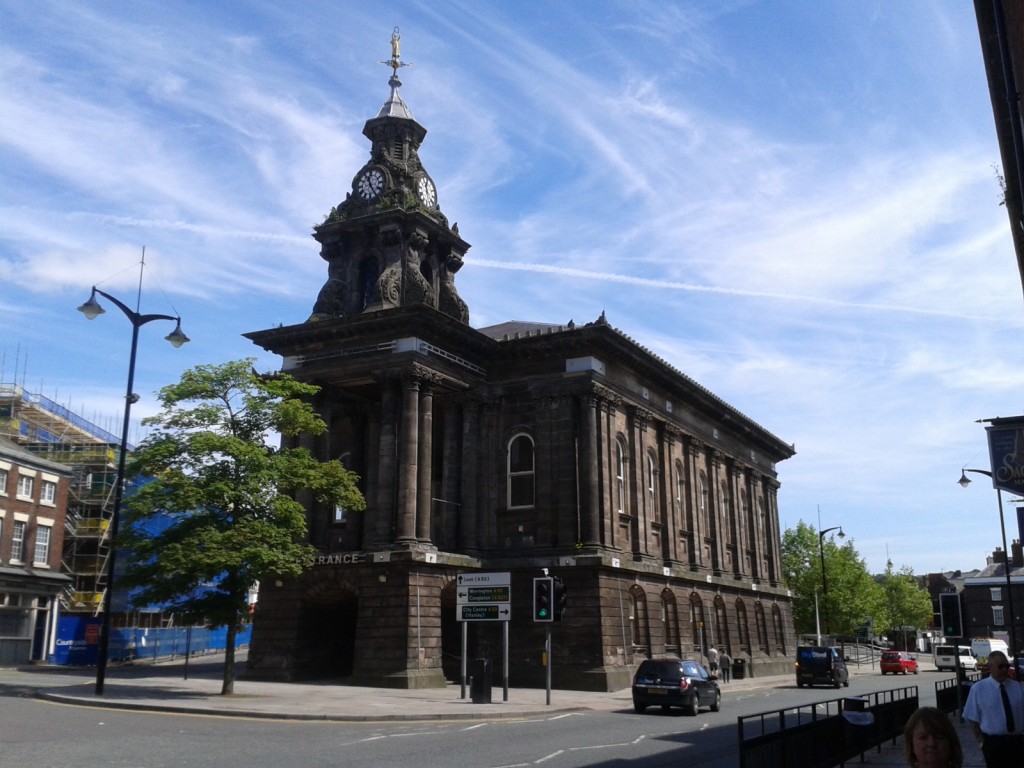
Stoke-on-Trent, Old Town Hall. Alfred Tomlinson werd geboren in Stoke-on-Trent.


De Nederlandse dichter Lucebert werd in Amsterdam geboren op 15 september 1924 onder de naam Lubertus Swaanswijk. Zie ook mijn blog van 15 september 2010 en eveneens alle tags voor Lucebert op dit blog.


Pastorale

noodweer
weerlicht
de noodklep open
het sluimerraam dicht
dromen dromen zich dood
dodekop tooit zich

in het zwarte zwerk
vlekken bleekmiddel
het skelet kraakt
een aangebrande wolk
een blaar een sudderlap
aan de slapen
druif van droefenis

de versteende vissen
beitel die uit de bedding
terwijl gier fluistert
blaas op de holle blik
met het laatste zoeklicht
de stilte stilt het tempeesten


1955900-59ad0739a923ca935346f1eb5dacecb3.jpg
Lucebert: Hond & Kat III, 1988


arp

tegen de polsslag van het steen
klopt de gedachte van de hand
ritselt de rokzoom van trottoirs
ademen rotsen over mij heen
staat de oxyde der zee
op de brandbreekbare ogen der aarde
 
dwars door mijn mond door
breekt het harde gat van gebaar
en mijn stem wenkt
stilte galoppeer maar
geen gewicht dat meer denkt
 
zo
ben ik tot over mijn oren verloofd met het licht
het licht koopt mij op
loopt op mijn tred mijn hals mijn haar
een mars van mens
de echte mens die wenst
 
stilte galoppeer maar
door de verstilde galoppade


 1955900-d24c0ff00b487b5f59709f99c5001c4b.jpg
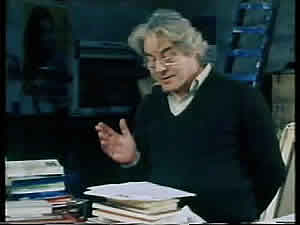
Lucebert (15 september 1924 - 10 mei 1994)


De Nederlandse dichter en schrijver Jan Jacob Slauerhoff werd geboren in Leeuwarden op 15 september 1898. Zie ook mijn blog van 15 september 2010 en eveneens alle tags voor Jan Slauerhoff op dit blog.


De Vluchtelinge

Soms weent zij uit: dat zij niet meer kan blijven
Onbevlekte in verblijven, waar bedreigen
Haar offerpijn en floers, waaronder lijven
Den Dienst der wrede liefkozing bedrijven.

'k Geloof haar niet, maar neem haar lijfsgewaden.
Nog naakt vernederd, smeekt zij de genade
Te mogen gaan. Ik spot: ‘Ga zo, mijn gade!’
En sliep in zekerheid... Zij is gaan waden

Door diepe sneeuw en zich aan kuis ijs wonden.
Zij dacht rechtuit te vluchten, liep een ronde:
Des morgens aan een muur is zij gevonden,

Teruggedragen binnen mijn verblijven,
Waar maagden haar bevrozen leden wrijven,
Hervoorbereiden voor het feest der lijven.


De dagen gaan

De dagen gaan langs de aarde, lange horden -
Nooit is de zon 't vermeêren moe geworden.
Een koning sterft, godslasterend, meinedig -
Nooit bleef een onbezette zetel ledig.
Volksplantingen geraken in versterf -
Reeds bloeien schonere uit hun bederf,
Weer ondergaand met zinkende getijen.
Nu is de tijd voor oude heerschappijen;
Vermolmde staten wanklen - de Commune
Zal rustig rijzen uit de roeste ruïne
En zal een rijk zijn van de ganse aarde:
Herberg voor volkeren, verlost van wallen,
Bewoners van de veilge hemelhallen
En in de ogen Gods gelijk van waarde.


Herfstwind

Herfstwind verdrijft de witte wolken,
Ganzen trekken langs het lege zwerk,
Nog geuren chrysanten en bloeien orchideeën,
Kon ik mijn vroeger lief nu vergeten,
Bijna was ik gelukkig,
Met mijn bloemenboot op de Fen-rivier,
Wit schuimt de stroom langs de boeg,
Fluit en trom houden maat met de riemslag,
Onder 't rumoer broeden sombre gedachten,
Jeugd jaagt voorbij, dood staat onwrikbaar.


 1955900-5c49a2b3b6d72aa035ad47079e9bcd9d.jpg
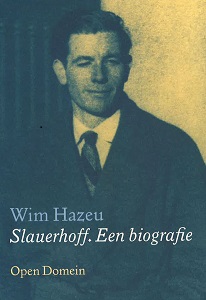
Jan Slauerhoff (15 september 1898 – 5 oktober 1936) 
Cover biografie


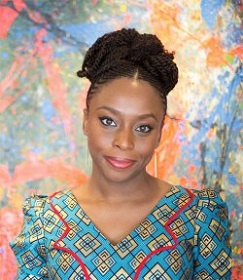
De Nigeriaanse schrijfster Chimamanda Ngozi Adichie werd geboren op 15 september 1977 in Enugu. Zie ook mijn blog van 15 september 2010 en eveneens alle tags voor Chimamanda Ngozi Adichie op dit blog.

Uit: Americanah

“It’s too tight,” Ifemelu said. “Don’t make it tight.” Because Aisha kept twisting to the end, Ifemelu thought that perhaps she had not understood, and so Ifemelu touched the offending braid and said, “Tight, tight.”
Aisha pushed her hand away. “No. No. Leave it. It good.”
“It’s tight!” Ifemelu said. “Please loosen it.”
Mariama was watching them. A flow of French came from her. Aisha loosened the braid.
“Sorry,” Mariama said. “She doesn’t understand very well.”
But Ifemelu could see, from Aisha’s face, that she understood very well. Aisha was simply a true market woman, immune to the cosmetic niceties of American customer service. Ifemelu imagined her working in a market in Dakar, like the braiders in Lagos who would blow their noses and wipe their hands on their wrappers, roughly jerk their customers’ heads to position them better, complain about how full or how hard or how short the hair was, shout out to passing women, while all the time conversing too loudly and braiding too tightly.
“You know her?” Aisha asked, glancing at the television screen.
“What?”
Aisha repeated herself, and pointed at the actress on the screen.
“No,” Ifemelu said.
“But you Nigerian.”
“Yes, but I don’t know her.”
Aisha gestured to the pile of DVDs on the table. “Before, too much voodoo. Very bad.
Now Nigeria film is very good. Big nice house!”
Ifemelu thought little of Nollywood ɹlms, with their exaggerated histrionics and their improbable plots, but she nodded in agreement because to hear “Nigeria” and “good” in the same sentence was a luxury, even coming from this strange Senegalese woman, and she chose to see in this an augury of her return home.”


 1955900-77ddeb8ab46003d71b59dcbda47d253c.jpg
Chimamanda Ngozi Adichi (Enugu, 15 september 1977)


De Britse schrijfster Agatha Christie werd geboren in Torquay (Devon) op 15 september 1890. Zie ook mijn blog van 15 september 2010 en eveneens alle tags voor Agatha Christie op dit blog.

Uit: The Tuesday Night Club

'Unsolved mysteries.'
Raymond West repeated the words with a kind of deliberate self-conscious pleasure.
'Unsolved mysteries.'
He looked round him with satisfaction. The room was an old one with broad black beams across the ceiling and it was furnished with good old furniture that belonged to it. Hence Raymond West's approving glance. By profession he was a writer and he liked the atmosphere to be flawless. His Aunt Jane's house always pleased him as the right setting for her personality. He looked across the hearth to where she sat erect in the big grandfather chair.
'That's not what I mean. I was not talking philosophy,' Raymond said. 'I was thinking of actual bare prosaic facts, things that have happened and that no one has ever explained.'
'I know just the sort of thing you mean, dear,' said Miss Marple. 'For instance, Mrs. Carruthers had a very strange experience yesterday morning. She bought two gills of pickled shrimps at Elliot's. She called at two other shops and when she got home she found she had not got the shrimps with her. She went back to the two shops she had visited but these shrimps had completely disappeared. Now that seems to me very remarkable.'
'My dear Aunt,' said Raymond West with some amusement, 'I didn't mean that sort of village incident. I was thinking of murders and disappearances - the kind of thing that Sir Henry could tell us about by the hour if he liked.'


 1955900-9b0ab6b9859392cf9ff79a1f0608bc41.jpg
Agatha Christie (15 september 1890 – 12 januari 1976)
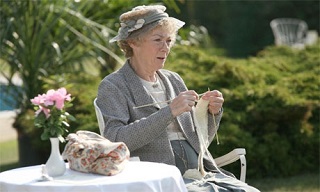
Geraldine McEwan als Miss Marple in de serie “Agatha Christie’s Marple”, 2007 - 2009


De Turkse schrijver Orhan Kemal (eig. Mehmet Raşit Öğütçü) werd geboren op 15 september 1914 in Ceyhan. Zie ook mijn blog van 15 september 2010 en eveneens alle tags voor Orhan Kemal op dit blog.

Uit: The Idle Years (Vertaald door Cengiz Lugal)

“I thought they were wonderful people, particularly the father. He talked about various matters, smoothed his thick moustache in an authoritative manner and swore frequently. Meanwhile Nejip’s sister laid out a dining-cloth across the floor, laid a chopping-board down on it, set down little flannels we would be using as napkins and brought in the bread-box. She did all this as if playing a little game, smiling now and then and revealing a sparkling gold tooth whenever she did so. I wondered who she
was smiling for: me or Gazi?
After we had eaten our meal, drunk our coffees and chatted about things of no consequence, we retired to the beds Nejip’s sister had made up for us. Our beds had been laid out side by side. All the bedding was spotlessly clean, expertly patched here and there and smelling of soap.
We climbed into our beds.
‘Ahhh…’ I sighed. ‘This is great!’
Gazi lifted his head up. ‘What? You mean the girl? I could get engaged to her immediately!’
I got very cross with him. ‘You unscrupulous…’
‘No, that’s what you are! Now, I know that if I don’t beat you to it…’
‘What?’
‘Come on, I saw you. Giving her all those leery looks.’
The next morning we had a marvellous breakfast and wandered down to Galata. The day passed.
‘Once the money from your aunt comes through,’ said Gazi the next day, ‘we can invite Nejip out.’
‘Yes, that’ll be good. We can take him out for a meal.’
‘To a decent place. With raki and proper meze.’
‘We’ll pay back Nevzat, too.’


 1955900-4e66ce4837d1398deba5e0ecbd502f22.jpg
Orhan Kemal (15 september 1914 – 2 juni 1970)
Cover Turkse uitgave


De Zweedse dichter en schrijver Bengt Gunnar Ekelöf werd geboren op 15 september 1907 in Stockholm. Zie ook mijn blog van 15 september 2010 en eveneens alle tags voor Gunnar Ekelöf op dit blog.


Everyone is a world

Everyone is a world, peopled
by blind beings in dark commotion
against the self the king who rules them.
In every soul thousands of souls are trapped,
in every world thousands of worlds are hidden
and these blind, these underworlds
are real and living, though incomplete,
as true as I am real. And we kings
and princes of the thousand possibilities in us
are ourselves servants, trapped
in some greater creature, whose self and being
we grasp as little as our own superior
his superior. Our own feelings have taken
the color of their love and death.
 
As when a mighty steamship passes
far out, under the horizon, lying
in the evening glitter- - And we don’t know about it
until the swell reaches us on the shore,
first one, then another, and then many
which strike and boom until everything has become
as before. – Yet everything is different.
 
So we shades are troubled by a strange unease
When something tells us that others have gone ahead,
That some of the possibilities have been released.


Vertaald door L. Nathan en J. Larson


 1955900-ad7dfef80958e1af1b6a36b86cd45180.jpg
Gunnar Ekelöf (15 september 1907 – 16 maart 1968)


Zie voor nog meer schrijvers van de 15e september ook mijn blog van 15 september 2015 en ook mijn blog van 15 september 2013 deel 2.


Geschreven door Romenu om 18:08 Reageer op dit bericht

Sergio Esteban Vélez

De Colombiaanse dichter, schrijver, hoogleraar en journalist Sergio Esteban Vélez Peláez werd geboren op 15 september 1983 in Medellín. Hij publiceerde zijn eerste gedichtenbundel, "Destellos nocturnos" in 1996, toen hij 12 jaar oud was. Vélez studeerde rechten en politieke wetenschappen aan de Bolivariaanse Pontificale Universiteit en studeerde moderne talen aan Sherbrooke University, Hij is wekelijkse columnist voor de krant El Mundo. Hij was de oprichter van de Academia Antioqueña de Letras, samen met Octavio Arizmendi Posada, voormalig minister van Onderwijs van Colombia. In 2002 werd Vélez aangesteld als cultuurdirecteur van de Colegio Altos Estudios de Quirama. Hij won de Premio Nacional de Periodismo Simón Bolívar 2010 (de nationale journalistiekprijs Simon Bolivar), de Premio Internacional de Periodismo José María Heredia 2010 (Internationale prijs voor journalistiek Jose Maria Heredia 2010).) en de Premio Cipa a La Excelencia Periodística 2012. De dichter Olga Elena Mattei zegt dat Vélez het Andes-aspect van de huidige Colombiaanse poëzie vertegenwoordigt. Vélez werkt aan de Universiteit van Antioquia, Colombia.


Interior Orbit

In the center of the sacred enclosure,
the genius,
imprisoned in the orbit of himself,
was lost in the night of time
and insisted on seeking the theory
of the liquid abysses
immense
in the confusing layers
of the intimate nature
of his ego


Theology Of Man

Image and likeness
of God
say
the Scriptures
that we were made.
And I wonder
if we have,
the radiance of the divinity,
the universal rhythm
of balance,
the existential transparency,
the perfect metaphysical calligraphy,
the rational power,
the dimensional knowledge,
in the theological
measure
of God


 2044855-45c8008d50b1742574f5448eb6a0e067.jpg
Sergio Vélez (Medellín,15 september 1983)

Geschreven door Romenu om 00:00 Reageer op dit bericht

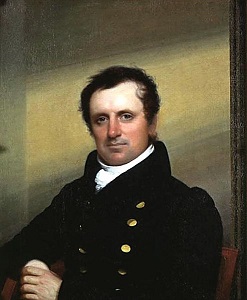
James Fenimore Cooper

De Amerikaanse schrijver James Fenimore Cooper werd geboren in Burlington, New Jersey op 15 september 1789 als zoon van een Congreslid van de Verenigde Staten. Nog voor zijn eerste verjaardag verhuisde het gezin naar Westchester County, New York. Reeds op veertienjarige leeftijd vatte hij zijn studies aan op Yale, maar behaalde daar uiteindelijk geen universitaire graad. Hij werd matroos op de koopvaardij en ging op negentienjarige leeftijd bij de marine. Daar behaalde hij de graad van adelborst nog voor zijn vertrek in 1811. Toen hij 22 was huwde hij met Susan DeLancey. Samen hadden ze 7 kinderen. Zijn eerste boek “Precaution” (1820) publiceerde hij anoniem, daarop verschenen er verschillende andere van zijn hand. In 1823 publiceerde hij “The Pioneers”, de eerste uit de Leatherstocking-reeks met de woudloper Natty Bumppo (deze figuur is gebaseerd op het leven en de avonturen van Daniel Boone) in de hoofdrol, waarin hij deze volgt in zijn vriendschap met de Delaware indianen en opperhoofd Chingachgook. Coopers beroemdste roman zou echter “The Last of the Mohicans” (1826) worden, een van de meest gelezen boeken uit de 19e eeuw. In 1826 verhuisde Cooper met zijn gezin naar Europa, om daar als vertegenwoordiger van de regering van de Verenigde Staten te gaan werken. Tijdens zijn verblijf daar schreef hij het in Parijs gepubliceerde “The Red Rover”, “The Waterwitch—one” en andere zeeverhalen. Hij raakte ook erg betrokken in politieke discussies over de Verenigde Staten en publiceerde daarover onder meer in Le National. In zijn drie volgende romans “The Bravo” (1831), “The Heidenmauer” (1832) en “The Headsman: or the Abbaye of Vigneron” (1833) verwerkte hij ook zijn republikeinse overtuigingen. In 1833 keerde hij terug naar Amerika, waar hij onmiddellijk “A Letter to My Countrymen” publiceerde, waarin hij scherp uithaalde naar de betrokkenheid van de Verenigde Staten in een aantal controversiële zaken waar hij in Europa mee te maken had gekregen.

Uit: The Last of the Mohicans

“It was a feature peculiar to the colonial wars of North America, that the toils and dangers of the wilderness were to be encountered before the adverse hosts could meet. A wide and apparently an impervious boundary of forests severed the possessions of the hostile provinces of France and England. The hardy colonist, and the trained European who fought at his side, frequently expended months in struggling against the rapids of the streams, or in effecting the rugged passes of the mountains, in quest of an opportunity to exhibit their courage in a more martial conflict. But, emulating the patience and self-denial of the practiced native warriors, they learned to overcome every difficulty; and it would seem that, in time, there was no recess of the woods so dark, nor any secret place so lovely, that it might claim exemption from the inroads of those who had pledged their blood to satiate their vengeance, or to uphold the cold and selfish policy of the distant monarchs of Europe.
Perhaps no district throughout the wide extent of the intermediate frontiers can furnish a livelier picture of the cruelty and fierceness of the savage warfare of those periods than the country which lies between the head waters of the Hudson and the adjacent lakes.
The facilities which nature had there offered to the march of the combatants were too obvious to be neglected. The lengthened sheet of the Champlain stretched from the frontiers of Canada, deep within the borders of the neighboring province of New York, forming a natural passage across half the distance that the French were compelled to master in order to strike their enemies. Near its southern termination, it received the contributions of another lake, whose waters were so limpid as to have been exclusively selected by the Jesuit missionaries to perform the typical purification of baptism, and to obtain for it the title of lake “du Saint Sacrement.” The less zealous English thought they conferred a sufficient honor on its unsullied fountains, when they bestowed the name of their reigning prince, the second of the house of Hanover. The two united to rob the untutored possessors of its wooded scenery of their native right to perpetuate its original appellation of “Horican.”
Winding its way among countless islands, and imbedded in mountains, the “holy lake” extended a dozen leagues still further to the south. With the high plain that there interposed itself to the further passage of the water, commenced a portage of as many miles, which conducted the adventurer to the banks of the Hudson, at a point where, with the usual obstructions of the rapids, or rifts, as they were then termed in the language of the country, the river became navigable to the tide.”


 1974464-529373f146b737355075f624f25ff00b.jpg
James Fenimore Cooper (15 september 1789 - 14 september 1851)
Portret door John Wesley Jarvis, 1822

Geschreven door Romenu om 00:00 Reageer op dit bericht

Meer van Romenu

↑ Terug naar de berichten