Naar de inhoud

Romenu

Over literatuur, gedichten, kunst en cultuur
akke.beakke.be

Berichten van 7 oktober 2016 tot 8 oktober 2016

Alexis de Roode, Martin van Amerongen, Benjamin Cheever, Jakob Arjouni, John Cowper Powys, Sergei Efron, André Theuriet, Nikolaus Becker, Atticus Lish
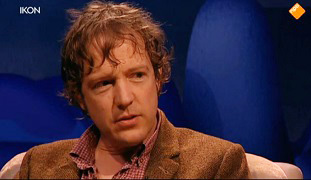
De Nederlandse dichter Alexis de Roode werd geboren op 8 oktober 1970 in Hulst. Zie ook mijn blog van 8 oktober 2010 en eveneens alle tags voor Alexis de Roode op dit blog.


Dag liefje

Dit gedicht is andersom,
want alles is voorbij.
Het wordt al lente en
ik moet weg van hier.

Het mooie van de tijd is
dat hij doorgaat, trouwer dan mensen.
Zo verdwijnt ook alle pijn.
Zing maar met de vogels
die slecht weinig jaren hebben.

Dag liefje,
Sommige dingen heb ik nooit
gezegd, maar wel altijd gedacht.

Ik weet nog dat ik je zag
voor het eerst, in een zweefmolen,
je had een potlood in je haar.


Uit: Gratis tijd voor iedereen.

Elf witte gedaanten / in duisternis
Adem en ruis / onder zware gewelven

Diep in de zalen / flakkerend rood
Achter de stilte / één kleine vlam

Stenen plavuizen / glanzend van leegte
Roerloos rechtop / monnik en touw

Dunne witte armen / glijden uit plooien
Traag als gebeden /  omhoog langs het koord

Een knallende slag / wordt ronde galm
Sterft eenzaam uit / in zuigende stilte

De ruimte staat op / dan nogmaals een dag
Tien witte gestalten / schuifelden weg

Alleen blijft de monnik / met dreunend lawaai
In de doodstille kerk / absoluut silhouet


 1964070-0c3d1bc4c5e15ee7e946c6eb11dde993.jpg
Alexis de Roode (Hulst, 8 oktober 1970)


De Nederlandse schrijver en journalist Martin van Amerongen werd geboren op 8 oktober 1941 in Amsterdam. Zie ook mijn blog van 8 oktober 2010 en eveneens alle tags voor Martin van Amerongen op dit blog.

Uit: Heeft een jood geen ogen. Het karakter Shylock…

“Hij is op zijn eigen wijze een man van eer. Jarenlang is hij door het locale patriciaat vernederd, inwoners van een stad waarin niet toevallig het getto is uitgevonden. «Signor Antonio», zegt hij, «hoe menigmaal hebt u op de Rialto mij gehoond, gelachen om mijn centen en mijn rente. U schold me uit voor heiden en voor bloedhond en spuwde op mijn joodse opperkleed. Wat zal ik zeggen? Heeft een hond geld? Heeft zo'n verachtelijk creatuur drieduizend dukaten in zijn poten?»
Hij krijgt eindelijk, na al die vernederingen, de kans iets terug te doen. Andermaal toont hij karakter. Niets wil hij weten van het honingzoete, nieuwtestamentische voorschrift de tegenstander zowel de linker- als de rechterwang toe te keren. Hij, de vrome jood, zweert bij het sympathieke, overzichtelijke, oudtestamentische oog om oog, tand om tand.
Natuurlijk is Shylock kansloos. Heinrich Heine, Shakespeare-kenner van enig formaat, zag deze bittere komedie in het Londense Drury Lane. Acher hem in de loge bevond zich een Britse schone die tijdens de beruchte rechtbankscène bittere tranen schreide onder de verzuchting: «But the poor man is wronged!» Nee, wij weten al voordat het doek is opgegaan: Shylock zal zijn pond vlees niet krijgen. «De jood had immers altijd ongelijk en stond nooit in zijn recht», constateert de antisemitismespecialist Hans Jansen.
De wet wordt met grote, Venetiaanse platvoeten getreden. Via een juridisch foefje wordt de schuldeiser, dwars tegen alle jurisprudentie in, zijn pond vlees subsidiair zijn drieduizend dukaten onthouden, vervolgens pakt men hem zijn vermogen af en ten slotte wordt hij op straffe des doods gedwongen de godsdienst van zijn vervolgers aan te nemen. «Nu, ongedoopte hond, nu hebben we je!» triomferen de antisemieten en in hun ogen vlamt reeds het onheilig vuur van de nationaal-socialistische crematoria.”
 

 1964070-9df5257cd987c0b9787fd096e95c5723.jpg
Martin van Amerongen (8 oktober 1941 – 11 mei 2002)
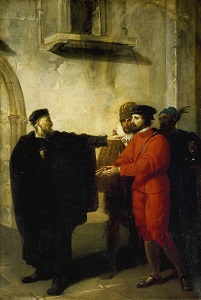
Shylock Rebuffing Antonio door Richard Westall, 1795.


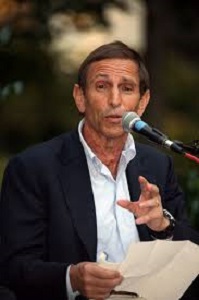
De Amerikaanse schrijver Benjamin Cheever werd geboren op 8 oktober 1948 in New York. Zie ook mijn blog van 8 oktober 2010 en eveneens alle tags voor Benjamin Cheever op dit blog.

Uit: Strides

„It’s odd that I like marathons so much. Ordinarily, I don’t fit in at staged gatherings. The bigger the ceremony, the less festive I feel.
Crammed in with a hundred strangers who are probably as similar to me as other peas in my pod, I feel alienated, unique, and alone. Nor do I have the sort of attitude that leads to lasting connections. Soon, I’m criticizing the filet mignon, speculating out loud about how much they paid the keynote speaker. “And didn’t he already publish this in a column?” A tuxedo brings out the Hamlet in me. There’s something rotten in the state of Denmark.
Set this same cynic down at Fort Wadsworth on line for a toilet that really does smell rotten, and he’s a believer. Suddenly, I respect authority. It was raining the year I saw Mayor Koch striding through a clot of runners at the start of the New York City Marathon, waving his arms above his head as if he’d just won a heavyweight bout. Nobody was cheering.Nobody. I liked him, though. I thought he looked a little silly, but also statesmanlike. This was a man who would not be ruled by the crowd. Seemed he didn’t need us at all.
I like the people at a marathon. Maybe this is because as a species, we’re so good at concealing ourselves. And the signals we give one another are like the feints a ball carrier might use to outwit a tackler. We hate or loveour jobs, depending entirely on who’s listening. We didn’t mean to buy this car. “After circling the globe, I never thought I’d Wind up in this town.”
“I didn’t mean to marry him.”
When you run a marathon, you mean it. We’re built for running. We dream of flying. For now, though, we’re built to run.”
 

 1964070-c9b35f4581dc61d39c74bf779fbd0661.jpg
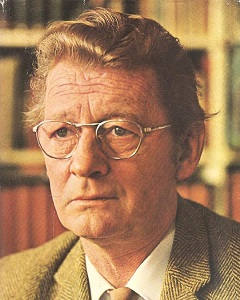
Benjamin Cheever (New York, 8 oktober 1948)


De Duitse schrijver Jakob Arjouni (pseudoniem vanJakob Bothe) werd geboren op 8 oktober 1964 in Frankfurt am Main. Zie ook mijn blog van 8 oktober 2010 en eveneens alle tags voor Jakob Arjouni op dit blog.

Uit:Happy Birthday, Türke!

»’n Abend, Herr Maier-Dietrich. Wie wärs mit ’ner [6] Stunde unter Männern, im Beisein einer Flasche Feuerwasser?«
Er willigte ein, und wir verabredeten uns für später.
»Passen Sie auf, daß niemand aus Versehen auf den Hund tritt«, rief ich ihm hinterher, aber er hatte es wahrscheinlich nicht mehr gehört.
Ich schaute mir ein Dutzend Tote im Fernsehen an und goß das erste Glas Chivas in die Leber. Dann klingelte Maier-Dietrich und hinkte in die Wohnung. Der Russe habe ihm das Bein gemopst, erzählt er mir oft, nicht ohne Witz.
Der Abend war verlaufen wie erwartet. Wir sprachen über Autos, die wir nicht bezahlen, und Frauen, die wir nicht beschlafen konnten. Er sowieso nicht mehr. Später klauten wir dem Gemüsehändler im Erdgeschoß noch zwei Flaschen Mariacron aus dem Keller und waren irgendwann danach bewußtlos in die Betten gefallen.
Ich schlürfte meinen Kaffee und starrte die leere Flasche an. Geburtstag. ›Na ja‹, dachte ich mir, ›wär schon schön, wenn irgend jemand mit Geschenk und Kuchen reinplatzen würde.‹ Mir fiel allerdings niemand ein. Herr Maier-Dietrich konnte aufgrund der letzten Nacht nur schlafen oder tot sein. Im übrigen kann er nicht backen und würde, die gemeinsame Nacht vergessend, mir wahrscheinlich die angebrochene Flasche Mariacron schenken.
Ich holte eine offene Büchse Heringssalat aus dem Kühlschrank und stocherte mißmutig drin herum. Die blaugrau schillernde Haut der Fischstücke glänzte im Sonnenlicht. Eine halbe Flosse lugte zwischen zwei Gurkenstückchen hervor.
Ich schmiß die Büchse in den Abfall, machte eine Flasche Bier auf und zündete mir eine Zigarette an. [7] Irgendwo pfiff ein Wasserkessel, und der Ton schnitt mein Hirn in Scheiben.
Dann klingelte das Telefon. Ich kroch hin und nahm ab.
»Heinzi, bist du es?« kreischte die Muschel. Ich heiße nicht Heinzi, möchte auch nicht so heißen, flötete aber ein fröhliches »Ja«.
»Heinzi, mein Heinzi, ich bin so wahnsinnig glücklich, deine Stimme zu hören. Ich habe gestern den ganzen Abend versucht, dich zu erreichen, aber du warst nicht zu Hause. Weißt du, was passiert ist?«
Ich wußte es nicht.
»Ich war beim Arzt, du weißt schon, und was glaubst du, hat er gesagt, Heinzi?
Heinzi?!«
 

 1964070-c4f91b4b104e1c4f5b259e893f0aefc2.jpg
Jakob Arjouni (8 oktober 1964 – 17 januari 2013)
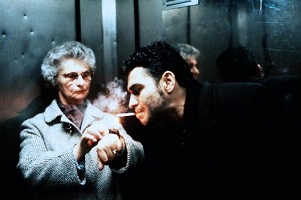
Scene uit de gelijknamige film uit 1992 


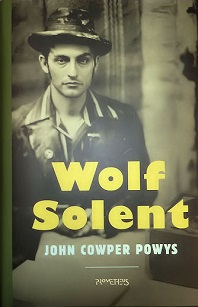
De Welshe dichter en schrijver John Cowper Powys werd geboren op 8 oktober 1872 in Shirley, Derbyshire. Zie ook alle tags voor John Cowper Powys op dit blog.

Uit: Wolf Solent

“From Waterloo Station tot he small country town of Ramsgard in Dorset is a journey of not more than three or four hours, but having by good luck found a compartment to himself, Wolf Solent was able to indulge in such an orgy of concentrated thought, that these three or four hours lengthened themselves out into something beyond all human measurement.
A bluebottle fly buzzed up and down above his head, every now and then settling on one of the coloured advertisements of seaside resorts-Weymouth, Swanage, Lulworth, and Poole-cleaning its front legs upon the masts of painted ships or upon the sands of impossibly cerulean waters.
Through the open window near which he sat, facing the engine, the sweet airs of an unusually relaxed March morning visited his nostrils, carrying fragrances of young green shoots, of wet muddy ditches, of hazel-copses full of damp moss, and of primroses on warm grassy
Solent was not an ilLfavoured man; but on the other hand he was not a preposssssing one. His short stubbly hair was of a bleached tow-colour. His forehead as well as his rather shapeless chin had a tendency to slope backward, a peculiarity which had the effect of throwing the weight of his character upon the curve of his hooked nose and upon the rough, thick eyebrows that overarched his deeply sunken grey eyes.
He was tall and lean; and as be stretched out his legs and clasped his hands in front of him and bowed his head over his bony wrists, it would have been difiicult to tell whether the goblinish grimaces that occasionally wrinkled his physiognomy were fits of sardonic chuckling or spasms of reckless desperation.
His mood, whatever its elements may have been, was obviously connected with a crumpled letter which he more than once drew forth from his side-pocket, rapidly glanced over, and replaced, only to relapse into the same pose as before.”
 

 1964070-f3fd19b93820219774de70aca6241250.jpg
John Cowper Powys (8 oktober 1872 - 17 juni 1963)
Cover


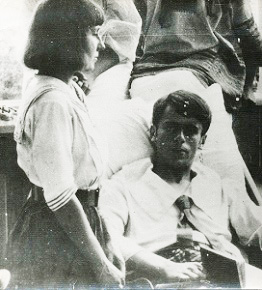
De Russische dichter Sergei Yakovlevich Efron werd geboren op 8 oktober 1893 in Moskou. Zie ook alle tags voor Sergei Efron op dit blog.


On Parting

Mein Herz tragt schwere Ketten.
Die Du mir angelegt.
Ich mocht mein Leben wetten
Dass Keine schwerer tragt

Frankfurt song

Teasing and tempting and playing
We loved like children, us both
But somebody, hiding a smile,
Set up the ungentle nets -
And here we are at the harbor,
Not seeing the wished-for abodes,
But knowing that I will be yours
In the heart, without words, until death.

You told me of all things - so early!
I guessed them so late! In our hearts
A wound is eternal, a silent
Question exists in our eyes,
The desert on earth is so endless,
The heaven, so high, has no stars,
Revealed is the tender secret,
And frost rules for centuries.

I will talk to shades! O my dear,
To forget you I do not have might,
Your visage can't move under shadow
Of eyelids gone over my eyes...
It's darkening... Shutters have closed,
On all things descending is night...
I love you, one ghostly-eternal,
And only you - and always!


Marína Tsvetájeva (Vertaald door Ilya Shambat)
 

 1964070-86c44831d1eb1db03086b80a42c53a89.jpg
Sergei Efron (8 oktober 1893 – 16 oktober 1941)
Sergei Efron en Marína Tsvetájeva op de Krim


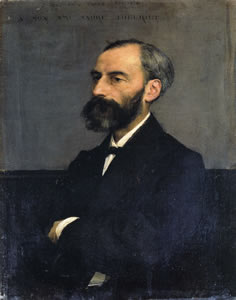
De Franse schrijver en dichter André Theuriet werd geboren op 8 oktober 1833 in Marly-le-Roi. Zie ook mijn blog van 8 oktober 2010 en eveneens alle tags voor André Theuriet op dit blog.


Le Tisserand (Fragment)

Si la navette hésite ou s’arrête en chemin,
La famille n’aura rien à manger demain.
Ô maigre tisserand, ô chétive araignée,
Vous avez même peine et même destinée,

Et dans le même cercle aride votre sort,
Pénible et résigné, tourne jusqu’à la mort.
De l’aube au crépuscule il faut tisser sans cesse ;
Il faut tisser pour vivre, et si la faim vous presse,

Si le besoin roidit vos bras endoloris,
Le travail chôme.. Adieu le réseau de fils gris,
Et la trame légère et souple comme un voile !
Sans toile plus de pain, et sans pain plus de toile..

Votre vie a le même horizon désolant,
Ô chétive araignée, ô maigre tisserand !
À l’approche du soir, l’homme un instant s’arrête.
Il a les reins rompus, sa main tremble, et sa tête

Est lourde. Son regard anxieux et troublé
Contemple le châssis où l’insecte a filé.
Le soleil qui s’éteint dans la brume rougie
Empourpre les carreaux de la vitre ternie..

Au long des grands bois verts et baignés de clarté,
Qu’il serait bon d’errer ce soir en liberté !..
Par l’étroit soupirail, le vent du sud apporte
Des sons lointains de cloche et l’odeur saine et forte

De la terre attiédie et des foins mûrissants..
Qu’il ferait bon dehors ! Heureux les lis des champs !
Leurs fleurs « emmi les prés ne filent ni ne tissent »,
Et toujours leurs soyeux vêtements resplendissent,

Et toujours sans compter Dieu leur donne au réveil
Ses perles de rosée et ses flots de soleil.
Heureux les lis des champs !.. L’homme se décourage
Et n’ose même plus regarder son ouvrage.

L’insecte, sur ses fils immobile, inquiet,
Comme une sentinelle épie et fait le guet.
Jouant dans un rayon, bourdonnante, étourdie,
Dans la toile flexible et savamment ourdie

Une mouche soudain s’enlace et se débat.
Alerte, l’araignée accourt, et le combat
S’engage. La captive est brave et bien armée ;
L’araignée est ardente, implacable, affamée.


 1964070-8975de152f32440373c5a9bd03540e82.jpg
André Theuriet (8 oktober 1833 – 23 april 1907)
Portret door Jules Bastien-Lepage, 1878


De Duitse schrijver Nikolaus Becker werd geboren op 8 oktober 1809 in Bonn. Zie ook mijn blog van 8 oktober 2010 en eveneens alle tags voor Nikolaus Becker op dit blog.


Abschied und Wiedersehem

l.
Noch einen vollen Becher
Reich’ mir zur guten Nacht,
Es gelte frohem Siege
Auf morgen in der Schlacht-:

Die schöne Maid behende
Credenzt den dunkeln Wein;
Sie scheint ihn an so freudig,
Wie er ihn schlürft hinein.

Und ist aus blut‘gem Kampfe
Der Feind geflohen weit,
Dein eigen dann, schön Liebchen,
Bin ich für alle Zeit.«

Er zog mit starkem Arme
Sie an die Kriegerbrustz
Es küßt die bärt’ge Lippe
Den rothen Mund mit Lust.

Und hohe Freudenröthe
Der Jungfrau Wange malt,
Wie wenn auf reine Lilie
Der Sonne Frühroths strahlt.

 

 1964070-28a1fe717d67c669ff32061d6ee8e815.jpg
Nikolaus Becker (8 oktober 1809 – 28 augustus 1845)
Bonn


Onafhankelijk van geboortedata

De Amerikaanse schrijver Atticus Lish werd geboren in 1972 in New York. Zie ook alle tags voor Atticus Lish op dit blog.

Uit: Preparation For The Next Life

“I’m comforting you! he yelled, but she shook her head and he let his hand drop.
We’re still crazy, he said. I know we’re crazy.
I cannot hear.
I know, it’s nuts.
There were rainbow lights flowing around the jukebox, which had the image of a saint in the center of the songs.
You love music?
He was looking around them in the loud dark. At the sound of her voice, he looked in her eyes and said oh yeah.
He got her attention and pointed at the high-definition TV over the bar, which was showing a professional boxing match between Mexican fighters in tasseled shorts and boots. He watched her face in profile watching the match.
Nice TV, he yelled.
She nodded seriously, the blue of the ring reflected on her face.
Skinner noticed a man wearing a bandana staring at him. The bartender set another round in front of them.
Hey, let’s see how fast we can drink these. Hey, look!
He drank his beer straight down while she watched.
Now you.
He watched her lean her head back and her throat working as she swallowed the contents of the entire bottle, then she set her empty bottle on the bar next to his.
I don’t drunk.
But you’re getting there.
They had created a little forest of clear glass bottles on the bar.
In the China, the beer is much bigger—this big, big one! She held her hands apart to show their size. I cannot drink them. Here, this small one it’s nothing.”

 

 1964070-7358c9033e4578c2ce18261b51c7190f.jpg
Atticus Lish (New York, 1972)

Geschreven door Romenu om 09:56 Reageer op dit bericht

Simon Carmiggelt, Rachel Kushner, James Whitcomb Riley, Thomas Keneally, Dirkje Kuik, Steven Erikson, Wilhelm Müller, Sohrab Sepehri, Chigozie Obioma

De Nederlandse schrijver en dichter Simon Carmiggelt werd geboren op 7 oktober 1913 in Den Haag. Zie ook mijn blog van 7 oktober 2010 en eveneens alle tags voor Simon Carmiggelt op dit blog.


Louter droefheid

Ik voel mij somber. Ei, wat zal ik doen?
Een platte geest dronk nu een glaasje.
Maar ik ben een poëtisch baasje
en ga mijn weemoed in een versje doen.

Dat is het voordeel van mijn gave.
De burger kan zijn ei niet kwijt,
terwijl ik, rustig mijn neerslachtigheid
gelijk een paardje voor mijn kar laat draven.

Is het volbracht, dan ben ik opgelucht.
'k Heb schoonheid uit mijn pijn gewrongen.
Mijn lieve pen heeft mooi gezongen.
Ik stap in bed. Ik geeuw en zucht.

En staan mijn verzen later soms te kijk
in 'Gouden Aren' of in 'Dichterschat',
dan zegt de leraar bij deez' pennespat:
'Kijk jongens, hier had hij het moejelijk.'


In de trein

Bij Vught dacht ik: 'Hier is broer Jan gestorven.'
En 'k zag mijn vader, met zijn oud gezicht
rood opgezwollen, toen het doodsbericht
zijn late leven toch nog had bedorven.

Voor moeder kwam een eind aan haar pakketten.
Zij streed, zolang Jan zat, met eigen wapen,
stond aan 't fornuis haar moed bijeen te rapen,
zond zeven broden, zeven tegenzetten.

En ook het reizen was achter de rug.
Ze gingen met de trein. Daar ligt het kamp.
Daar zit hij in. Daar woont die ramp.
Dan zuchtten ze en gingen maar weer terug.

Ziet ge de boer de vredesakker ploegen?
Mijn moeder heeft Jans foto op de kast gezet.
Mijn vader geeft in 't graf 'n antwoord aan die vroegen:
'En de oude man, hoe draagt hij het?'


De vader

Dit kleine prinsje, kraaiend, blij en rap,
is 't enig wezen in het aardse tranendal
voor wie hij in een afgrond springen zal.
Nu ja, maar stellig van een hoge trap.

Van vadertrots zwelt hem de weke krop,
want dit is nu toch 's levens suikerstang.
Hij sabbelt, maar het duurt niet lang.
Het zoet slinkt weg, de knaap groeit op.

En geen notaris wordt er uit die stek.
Daaraan werd vaders geld bepaald vermorst.
Toch is de jongen wel een flinke borst.
Als krachtig fietsenmaker lang niet gek.

Maar vrolijk kraaien valt hem niet meer in
wanneer hij, eens per jaar, pa's krot betreedt.
De oude kijkt hem aan. Als jongeling gekleed,
staat hij daar zelve, doch met Anna's kin.


 1963922-08e0c7c30c9e75e0720950e604caae16.jpg
Simon Carmiggelt (7 oktober 1913 – 30 november 1987)


De Amerikaanse schrijfster Rachel Kushner werd geboren op 7 oktober 1968 in Eugene, Oregon en verhuisde naar San Francisco in 1979. Zie ook alle tags voor Rachel Kushner op dit blog.

Uit: The Flamethrowers

“My uncle Bobby, who hauled dirt for a living, spent his final moments oflife jerking his leg to depress the clutch while lying in a hospital, his body determined to operate his dump truck, clutching and shifting gears as he Sped toward death on a hospital gurney. “He died on the job,” his two sons said, unmoved. Bobby was too mean for them to love. Scott and Andy had been forced to oil Bobby’s truck every Sunday and now he was dead and they had Sundays to themselves, to oil their own trucks. Bobby was my mother’s brother. Growing up, we’d all lived together. My mother worked nights, and Bobby was what we had as a parent. Done driving his dump truck, he sat inexplicably nude watching TV and made us operate the dial for him, so he wouldn’t have to get up. He’d fix himselfa big Steak and give us inStant noodles.
Sometimes he’d take us to a casino, leave us in the parking 1ot with bottle rockets. Or play chicken with the other cars on 1-80, with me and Scott and Andy in the backseat covering our eyes. I come from reckless,unsentimental people. Sandro used this againSt me on occasion. Hepretended I was placed in his life to torture him, when it was really the other way around. He acted smitten but I was the smitten one. Sandro held all the power. He was older by fourteen years and a successful artist, tall and good-looking in his work clothes and Steel-toed boots-the same kinds of clothes that Bobby and Scott and Andy wore, but on Sandro they added up to something else: a guy with a family inheritance who could use a nail gun, a drill press, a person not made effete by money, who dressed like a worker or sometimes a burn but was elegant in those clothes, and never hampered by the queStion of whether he belonged in a given situation (the queStion itselfwas evidence ofnot belonging).
Sandro kept a photo above the desk in his loft, him posing on a couch next to Morton Feldman in his Coke-bottle glasses, Sandro looking cool and aloof, holding a raised, loaded shotgun, its barrel one long half of the letter X crossing the photograph diagonally.”


 1963922-4ac761e80066cfb72d31e230c6450b0f.jpg
Rachel Kushner (Eugene, 7 oktober 1968)


De Amerikaanse dichter en schrijver James Whitcomb Riley werd geboren op 7 oktober 1849 in Greenfield, Indiana. Zie ook mijn blog van 7 oktober 2010 en eveneens alle tags voor James Whitcomb Riley op dit blog.


September Dark

1
The air falls chill;
The whippoorwill
Pipes lonesomely behind the Hill:
The dusk grows dense,
The silence tense;
And lo, the katydids commence.

2
Through shadowy rifts
Of woodland lifts
The low, slow moon, and upward drifts,
While left and right
The fireflies' light
Swirls eddying in the skirts of Night.

3
O Cloudland gray
And level lay
Thy mists across the face of Day!
At foot and head,
Above the dead
O Dews, weep on uncomforted!


 1963922-e6dadbe7d11a8d36b1d6ac1a869e21c2.JPG
James Whitcomb Riley (7 oktober 1849 – 22 juli 1916)
Standbeeld in Greenfield, Indiana


De Australische schrijver Thomas Keneally werd geboren op 7 oktober 1935 in Sydney. Zie ook mijn blog van 7 oktober 2010 en eveneens alle tags voor Thomas Keneally op dit blog.

Uit: Schindler's List

“Emilie, on the other hand, was delighted to leave her small village and her father’s old-fashioned household, where she had to act as hostess to him and his boring friends. She was enthusiastic about moving into an apartment in Zwittau with her tall, handsome young husband. However, Emilies dream of a happy marriage did not last long. Oskar followed his father’s example and forgot about his wife in the evenings, staying in cafes like a single man, talking to girls who were neither religious nor quiet.
Hans Schindler’s business went bankrupt in 1935, and soon afterwards he left his wife and found an apartment on his own.
Oskar hated his father for abandoning his mother and refused to speak to him. The son seemed blind to the fact that his treatment of Emilie was already following the same pattern.
Meanwhile, even though the world’s economy was suffering, Oskar managed to get a good job. He had good business contacts, he had a background in engineering and he was good company. These qualities made him the perfect man to become the sales manager of Moravian Electrotechnic. He began travelling a lot, which reminded him of his time as a motorbike racer, and which gave him an excuse to stay away from his responsibilities in Zwittau.
By the time of his mother’s funeral in the late 1930s, Oskar, like many young Czech Germans, was wearing a swastika, the badge of the Nazi Party, on the collar of his suit. He was still not interested in politics, but Oskar was a salesman. W hen he went into the office of a German company manager wearing the swastika, he got the orders that he wanted.
Oskar was a busy, successful salesman, but he could feel something even more exciting than money in the air. In 1938, in the month before the German army entered Sudetenland and made it part of the Third Reich,* Oskar sensed that history was being made, and he wanted to be part of the action.”


1963922-f2b975ff42634075b923f468348a58fd.jpg
Thomas Keneally (Sydney, 7 oktober 1935)
Scene uit de film van Steven Spielberg uit 1993


De Nederlandse schrijfster en beeldend kunstenares Dirkje Kuik werd geboren in Utrecht op 7 oktober 1929. Zie ook mijn blog van 7 oktober 2010 en eveneens alle tags voor Dirkje Kuik op dit blog.

Uit: De ideale stad

“Ik graaf de grond weg onder de rijtjeshuizen en de torenflats al zou het een gifbelt betreffen. Pas wanneer de laag bereikt wordt waarin sporen voorkomen van kloostermoppen, pestputten en buurtkerkhoven houd ik op met mijn graafwerkzaamheden en ga opnieuw aan het bouwen.
Ja, één modern gebouw spaar ik, het Muziekcentrum. Deze muizenholenachtige schepping kan uitgebrand tot een geblakerde ruïne omgetoverd worden, geplakt tegen het totaal vervallen Hoog-Catharijne, een met graafmachines en bulldozers gesloopt complex, overwoekerd door hoog opgeschoten gras, onkruid, verwilderd struikgewas (…).”


1963922-fecaebbfe24bc990e78553483c907598.jpg
Dirkje Kuik (7 oktober 1929 – 18 maart 2008)
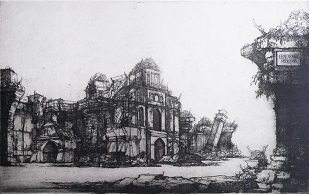
Dirkje Kuik, Gezicht op de Buurkerk en de wallen, ets, 1983


De Canadese schrijver, archeoloog, antropoloog Steven Erikson (pseudoniem van Steve Rune Lundin) werd geboren in Toronto op 7 oktober 1959. Zie ook mijn blog van 7 oktober 2010 en eveneens alle tags voor Steven Erikson op dit blog.

Uit: Fall of Light

“Barely a smudge against the gloom, the sun was fading in the sky over the city of Kharkanas. The two lieutenants from the Houseblades of Lord Anomander, Prazek and Dathenar, met on the outer bridge and stood leaning on one of its walls, forearms on the stone. Like children, their upper bodies were tilted forward as they looked down upon the waters of the Dorssan Ryl. To their right, the Citadel stood like a fortress of night, defying the day. To the left, the city’s jumbled buildings crowded up against the flood wall as if caught in the act of marching over the edge.
Below the two men, the river’s surface was black, twisting with thick currents. Even now, the occasional charred tree trunk slid past, like the swollen limb of a dismembered giant. Ash-grey mud crusted the sheer walls that made up the banks. The boats moored to iron rings in the walls, near the stone steps that reached down into the water at intervals, looked neglected, home to dead leaves and murky pools of rainwater.
‘There is discipline lacking,’ murmured Prazek, ‘in our sordid post upon this bridge.’
‘We are looked down upon,’ Dathenar replied. ‘See us from atop the tower. We are small things upon this frail span. Witness as we betray errant curiosity, not suited to sentries at all, and in our pose you will find, with dismay, civilization’s slouching departure from the world.’
‘I too saw the historian at his lofty perch,’ Prazek said, nodding. ‘Or rather, his hooded regard. Did it track us out here? Does it fix still upon us?’
‘I would think so, as I feel a weight upon me. At least an executioner’s shroud offers mercy in hiding the face above the axe. We might splinter here under Rise Herat’s judgement, bearing as it does no less sharp an edge."


1963922-db3e390a79ac05a7269e81f723dbb293.jpg
Steven Erikson (Toronto, 7 oktober 1959)


De Duitse, romantische dichter Wilhelm Müller werd geboren op 7 oktober 1794 in Dessau. Zie ook mijn blog van 7 oktober 2010 en eveneens alle tags voor Wilhelm Müller op dit blog.


Rückblick

Es brennt mir unter beiden Sohlen,
Tret' ich auch schon auf Eis und Schnee.
Ich möcht' nicht wieder Atem holen,
Bis ich nicht mehr die Türme seh'.

Hab' mich an jedem Stein gestoßen,
So eilt' ich zu der Stadt hinaus;
Die Krähen warfen Bäll' und Schloßen
Auf meinen Hut von jedem Haus.

Wie anders hast du mich empfangen,
Du Stadt der Unbeständigkeit!
An deinen blanken Fenstern sangen
Die Lerch' und Nachtigall im Streit.

Die runden Lindenbäume blühten,
Die klaren Rinnen rauschten hell,
Und ach, zwei Mädchenaugen glühten!
Da war's geschehn um dich, Gesell!

Kömmt mir der Tag in die Gedanken,
Möcht' ich noch einmal rückwärts sehn,
Möcht' ich zurücke wieder wanken,
Vor ihrem Hause stille stehn.


 1963922-4926047b153727a7838a5083aabad7b0.jpg
Wilhelm Müller (7 oktober 1794 – 1 oktober 1827)
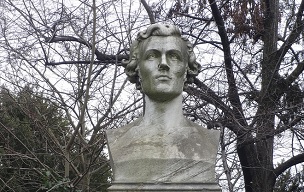
Borstbeeld in Dessau


De Iraanse dichter en schilder Sohrab Sepehri werd geboren op 7 oktober 1928 in Kashan. Zie ook alle tags voor Sohrab Sepehri op dit blog.


The Flow Of Water

When knowledge
Still nestled by springs,
Man
Indulged himself in his azure philosophy
In the delicate indolence of a meadow.
His thoughts flew with the bird.
He breathed with trees.
He was submissive to the poppy's conditions.
Intrepid meanings of the waters
Roared in the depths of his speech.
Man
Slept
In the text of the elements
And woke up
In dawning fear.

But sometimes
The strange music of growth
Echoed
In the frail joints of his joys
And dust settled
On his struggling knees.
Then
His creative fingers,
Idled and got lost
In precise geometrical grief.


Vertaald door Ismail Salami


 1963922-bc438d47333ce7623249ffbe5577dcd5.jpg
Sohrab Sepehri (7 oktober 1928 - 21 april 1980)


Onafhankelijk van geboortedata

De Nigeriaanse schrijver Chigozie Obioma werd geboren in 1986 in Akure. Zie ook alle tags voor Chigozie Obioma op dit blog.

Uit: The Fishermen

“Before we slept that night, Ikenna, who was nearly fifteen and on whom we relied for the interpretation of most things, had suggested Father was being transferred. Boja, a year his junior, who would have felt unwise if he didn’t appear to have any idea about the situation, had said it must be that Father was travelling abroad to a “Western world” just as we often feared he someday would. Obembe who, at eleven, was two years my senior, did not have an opinion. Me neither. But we did not have to wait much longer.
The answer came the following morning when Father suddenly appeared in the room I shared with Obembe. He was dressed in a brown T-shirt. He placed his spectacles on the table, a gesture requesting our attention. “I will start living in Yola from today onwards, and I don’t want you boys to give your mother any troubles.” His face contorted when he said this, the way it did whenever he wanted to drive the hounds of fear into us. He spoke slowly, his voice deeper and louder, every word tacked nine-inches deep into the beams of our minds. So that, if we went ahead and disobeyed, he would make us conjure the exact moment he gave us the instruction in its complete detail with the simple phrase “I told you.”
“I will call her regularly, and if I hear any bad news”—he struck his forefinger aloft to fortify his words—“I mean, any funny acts at all, I’ll give you the Guerdon for them.”
He’d said the word “Guerdon”—a word with which he emphasized a warning or highlighted the retribution for a wrong act—with so much vigour that veins bulged at both sides of his face.”


1963922-3f84e376ae634d4206821436cf153957.jpg
Chigozie Obioma (Akure, 1986)

Geschreven door Romenu om 18:17 Reageer op dit bericht

Georg Hermann

De Duitse schrijver Georg Hermann (oorspronkelijk Georg Hermann Borchardt) werd op 7 oktober 1871 in Berlijn als de jongste van zes kinderen in een oude gevestigde Joods-Berlijnse familie geboren. De gekozen naam Hermann was de voornaam van zijn vader, "wiens leven en dood het harde leven en de bittere dood was van de hopeloze." De naam van zijn vader moest weer worden geëerd - zo Georg Hermann over de keuze van zijn pseudoniem. Georg Hermann werkte als koopman- leerling en bezocht van 1896 tot 1899 literatuur-, kunst- en filosofische lezingen aan de universiteit van Berlijn. Later was hij werkzaam bij het Berlijnse Statistische Bureau en schreef voor veertig kranten en tijdschriften, hoofdzakelijk uitgegeven door Ullstein. In de eerste drie decennia van de twintigste eeuw was Georg Hermann een bekende schrijver. Zijn literaire model was Theodor Fontane, waardoor hij zelf ook wel “de Joodse Fontane” werd genoemd. De romans “Jettchen Geberts Geschichte” en “Henriette Jacoby”, die in het Berlijn van de 1840's spelen en een beeld schetsen van de liberale geest van deze tijd in een Joodse familie, waren bestsellers met meer dan 260 oplagen. Zijn andere romans hebben niet dezelfde populariteit bereikt. Georg Hermann was in 1909 medeoprichter en eerste voorzitter van de Schutzverband Deutscher Schriftsteller (1910-1913), waarbij al snel bijna alle prominente Duitse schrijvers waren aangesloten. Voortdurend bedreigd door de Nationaalsocialisten besloot Hermann om Duitsland na de Reichstagsbrand in 1933 te verlaten. Met zijn twee jongste dochters en zijn gescheiden vrouw ging hij naar Nederland in ballingschap. Hermann's werken stonden op de zwarte lijst en werden in mei 1933 verbrand. In ballingschap schreef Hermann onder moeilijke economische omstandigheden “Eine Zeit stirbt” evenals drie andere romans. Na de bezetting door het Duitse leger was hij in het begin van 1943 verplicht zijn woonplaats Hilversum te verlaten en naar Amsterdam te gaan. Vanuit Amsterdam werd Hermann eerstsamen met zijn dochter uit het tweede huwelijk Ursula en haar zoon Michael naar Westerbork en op 16 november 1943 zonder dochter en kleinzoon naar het concentratiekamp Auschwitzgedeporteerd .Als datum van overlijden geldt 19 november 1943.

Uit:Eine Zeit stirbt

“Alle sind damit – mit Unrecht, vielleicht mit Recht, je nach dem, wie man das ansehen will – unzufrieden. Denn ihr Stück Gemüseland, und das gehört zu jeder Wohnung, wäre, so meinen sie, sicher viel ertragreicher geworden, und so bekäme man ja gar nichts raus, kaum ein Bund Radieschen und einen halben Zentner grüner Bohnen, ... also – viel ertragreicher wäre es geworden, wenn man nicht damals hier erst mal unnötigerweise den Boden planiert hätte, und dabei die alte Humusdecke abgestochen und untergegraben hätte. Und den dicken, rotgelben, schlechten Lehm, den von ganz unten, dafür hochgeworfen hätte. – Damals nämlich, als man die Absicht auszuführen begann, dieses Dutzend Wohnkästen hier – und warum eigentlich auf der Winterseite des Tals? – hinzustellen. Und außerdem noch gerade neben den Friedhof. Ja, da gehört doch gleich mit Eisenbahnschienen 'neigeschlagen! meinen sie.
Außerdem hatten die Erdarbeiten, die so unnütz wie ein Kropf waren, denn das Stückchen Gartenland hätte ebenso ruhig etwas mehr hügelan laufen können ... oder man hätte es überhaupt ganz so lassen sollen, wie es war, und die Häuser einfach mitten in die Margeriten- und Salbeiwiesen zwischen die alten Birnbäume stellen sollen, statt diese abzutragen und umzuhauen ... die Erdarbeiten hatten so viel verschlungen, immer neue Tausender, Hundertausender und Millionenscheine, die stets nach acht Tagen wieder so wertlos waren, daß es sich nicht mal lohnte, sie als Makulatur unter die Tapete zu kleben ... derartige Packen von Scheinen hatten die Erdarbeiten gefressen, daß die Häuser deshalb nachher kaum zu Ende gebaut werden konnten. Das Geld, das dafür bestimmt war, rutschte immer wieder unter dem Bau fort, wie Schwimmsand unter dem Fundament.
Sagte ich eben ein Dutzend?! Es sind ja nicht mal ganz ein Dutzend von diesen großen, gelben, langgezogenen Kästen mit je vier Parteien. Aber das ist wirklich nicht so wichtig. Das müßte man erst nachzählen. Und außerdem geht uns das gar nichts an. Vielleicht später mal. Genug, die Siedlung ist in der allerunsichersten Zeit errichtet worden. Heute macht man sowas besser! Kurz nach dem Krieg, als man noch nicht ahnte, was alles los war und werden würde, und nun meinte: jetzt ist der Krieg zu Ende, also ist deshalb doch Frieden. Wieder Frieden. Und alles wird ungefähr so werden, wie es vorher war. Nur die Briefmarken werden wir ändern. Die Menschen aber werden doch wieder wohnen müssen. Nicht wahr? Und sie werden essen müssen. Nicht wahr? Und sie werden Geld verdienen. Nicht wahr? Und sie werden Geld ausgeben. (Das haben sie immer getan.) Alles wird zwar etwas bescheidener sein als vorher, – dafür war eben Krieg! – aber doch ungefähr ebenso. Nicht wahr? Also: Geld wird wieder Geld sein. Und Ware Ware. Und die Menschen werden eben wieder Menschen sein.”


 2075963-9362a53bd5168189e45133d85b041d1f.jpg
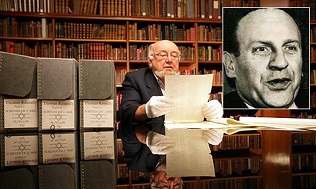
Georg Hermann (7 oktober 1871 - 19 november 1943)

Geschreven door Romenu om 00:00 Reageer op dit bericht

Meer van Romenu

↑ Terug naar de berichten