Naar de inhoud

Romenu

Over literatuur, gedichten, kunst en cultuur
akke.beakke.be

Berichten van 26 oktober 2016 tot 27 oktober 2016

Sylvia Plath, Dylan Thomas, Zadie Smith, Nawal el Saadawi, Albrecht Rodenbach, Jamie McKendrick, Fran Lebowitz
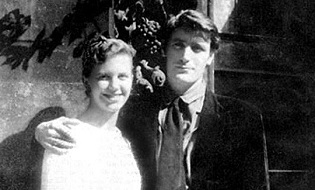
De Amerikaanse dichteres en schrijfster Sylvia Plath werd geboren op 27 oktober 1932 in Jamaica Plain, een buitenwijk van Boston. Zie ook mijn blog van 27 oktober 2010 en eveneens alle tags voor Sylvia Plath op dit blog.


All Appearance

The smile of iceboxes annihilates me.
Such blue currents in the veins of my loved one!
I hear her great heart purr.

From her lips ampersands and percent signs
Exit like kisses.
It is Monday in her mind: morals

Launder and present themselves.
What am I to make of these contradictions?
I wear white cuffs, I bow.

Is this love then, this red material
Issuing from the steele needle that flies so blindingly?
It will make little dresses and coats,

It will cover a dynasty.
How her body opens and shuts-
A Swiss watch, jeweled in the hinges!

O heart, such disorganization!
The stars are flashing like terrible numerals.
ABC, her eyelids say.


Incommunicado

The groundhog on the mountain did not run
But fatly scuttled into the splayed fern
And faced me, back to a ledge of dirt, to rattle
Her sallow rodent teeth like castanets
Against my leaning down, would not exchange
For that wary clatter sound or gesture
Of love : claws braced, at bay, my currency not hers.

Such meetings never occur in marchen
Where love-met groundhogs love one in return,
Where straight talk is the rule, whether warm or hostile,
Which no gruff animal misinterprets.
From what grace am I fallen. Tongues are strange,
Signs say nothing. The falcon who spoke clear
To Canacee cries gibberish to coarsened ears.


Dirge for a Joker

Always in the middle of a kiss
Came the profane stimulus to cough;
Always from teh pulpit during service
Leaned the devil prompting you to laugh.

Behind mock-ceremony of your grief
Lurked the burlesque instinct of the ham;
You never altered your amused belief
That life was a mere monumental sham.

From the comic accident of birth
To the final grotesque joke of death
Your malady of sacrilegious mirth
Spread gay contagion with each clever breath.

Now you must play the straight man for a term
And tolerate the humor of the worm.


 1970363-6f1a41da29839163cb397b3f7c8a6f97.jpg
Sylvia Plath (27 oktober 1932 – 11 februari 1963)
Hier met dichter en echtgenoot Ted Hughes


De Engelse dichter Dylan Thomas werd geboren op 27 oktober 1914 in Swansea in Wales. Zie ook mijn blog van 27 oktober 2010 en eveneens alle tags voor Dylan Thomas op dit blog.


Why East Wind Chills

Why east wind chills and south wind cools
Shall not be known till windwell dries
And west's no longer drowned
In winds that bring the fruit and rind
Of many a hundred falls;
Why silk is soft and the stone wounds
The child shall question all his days,
Why night-time rain and the breast's blood
Both quench his thirst he'll have a black reply.

When cometh Jack Frost? the children ask.
Shall they clasp a comet in their fists?
Not till, from high and low, their dust
Sprinkles in children's eyes a long-last sleep
And dusk is crowded with the children's ghosts,
Shall a white answer echo from the rooftops.

All things are known: the stars' advice
Calls some content to travel with the winds,
Though what the stars ask as they round
Time upon time the towers of the skies
Is heard but little till the stars go out.
I hear content, and 'Be Content'
Ring like a handbell through the corridors,
And 'Know no answer,' and I know
No answer to the children's cry
Of echo's answer and the man of frost
And ghostly comets over the raised fists.


To Others Than You

Friend by enemy I call you out.
You with a bad coin in your socket,
You my friend there with a winning air
Who palmed the lie on me when you looked
Brassily at my shyest secret,
Enticed with twinkling bits of the eye
Till the sweet tooth of my love bit dry,
Rasped at last, and I stumbled and sucked,
Whom now I conjure to stand as thief
In the memory worked by mirrors,
With unforgettably smiling act,
Quickness of hand in the velvet glove
And my whole heart under your hammer,
Were once such a creature, so gay and frank
A desireless familiar
I never thought to utter or think
While you displaced a truth in the air,

That though I loved them for their faults
As much as for their good,
My friends were enemies on stilts
With their heads in a cunning cloud.


Vision And Prayer

Who
Are you
Who is born
In the next room
So loud to my own
That I can hear the womb
Opening and the dark run
Over the ghost and the dropped son
Behind the wall thin as a wren's bone?
In the birth bloody room unknown
To the burn and turn of time
And the heart print of man
Bows no baptism
But dark alone
Blessing on
The wild
Child.

 1970363-fcfee0af188ca6af29eb3c2758c44fb8.jpg
Dylan Thomas (27 oktober 1914 – 9 november 1953)
Portret door Peter Ross, z.j.


De Engelse schrijfster Zadie Smith werd geboren op 27 oktober 1975 in Londen. Zie ook alle tags voor Zadie Smith op dit blog en eveneens mijn blog van 27 oktober 2010

Uit: NW

“The cap, the hooded top, the low jeans, it's a uniform — they look the same. From where Leah stands anyway it is still all dumb show, hand gestures and primal frowns, and of course some awful potential news story that explains everything except the misery and the particulars: one youth knifed another youth, on Kilburn High Road. They had names and ages and it's terribly sad, an indictment of something or another and also not good for house prices. Leah cannot breathe for fear. She is running to catch up, Olive clattering along beside her, and while she runs she finds herself noticing something that should not matter: she looks older than both of them. The boy is a boy and Michel is a man but they look the same age.
— I don't know what you're chattin about bruv but you BEST NOT STEP TO ME.
— Michel — please. Leave it, please.
— Tell your mans to step back off me.
— Don't call my house again, OK? Leave my wife alone! You understand me?
— What the fuck are you chattin' about? You want some?
They bump chests like primates; Michel is knocked back in an ignoble stumble to the pavement, landing next to his ridiculous dog, who licks him in his ear. Now his opponent towers over him and draws his foot back, preparing for a penalty kick. Leah inserts herself between the two of them, stretching out her hands to separate them, an imploring woman in an ancient story.
— Michel! Stop it! It's not him. Please — this is my husband, he's confused, please don't hurt him, please leave us alone, please.
The foot, indifferent, draws further back, for greater range. Leah begins to cry. In the corner of her eye she observes a young white couple in suits crossing the road to avoid them. No one will help. She puts her hands together in prayer.
— Please leave him alone, please. I'm pregnant — please leave us alone.
The foot retreats. A hand looms over Michel as he struggles to his feet, a hand in the shape of a gun, pointed at his head.
— Step to me again — brrp brrp! — you'll be gone.”

 1970363-d08d40ce735b6f1458c98fd7f9e08fd4.jpg
Zadie Smith (Londen, 27 oktober 1975)


De Egyptische schrijfster, gynaecologe, moslimfeministe en politiek activiste Nawal el Saadawi werd geboren in Kafr Tahla op 27 oktober 1931. Zie ook alle tags voor Nawal el Saadawi op dit blog en ook mijn blog van 27 oktober 2010

Uit: Memoirs of a Woman Doctor (Vertaald door Fedwa Malti-Douglas)

“Why did my mother place these enormous differences between me and my brother and make of man a deity for whom I had to spend all my life cooking food?
Why is society always trying to persuade me that masculinity is a distinction and an honor and femininity a disgrace and weakness?
Is it possible for my mother to believe that I am standing with a naked man in front of me and with a scalpel in my hand with which I will open his stomach and his head?
Is it possible for society to believe that I am contemplating a man’s body and dissecting it and cutting it up without feeling that it is a man?
And who is society? Is it not men like my brother whose mother raised him since his childhood as a god? Is it not women like my mother who are weak and useless?
How is it possible for these people to believe that there is a woman who knows nothing about man except that he is muscles, arteries, nerves, and bones?”
(…)

Man’s body! That dreadful thing with which mothers frighten their young daughters, so they are consumed by the fire of the kitchen for the sake of his satiation and they dream of his spectral figure night and day! There he is, man, thrown in front of me, naked, ugly, torn to pieces…
I did not imagine that life would disprove my mother to me so quickly…Or would avenge me of man in this way…That dejected man who looked at my breasts one day and saw nothing of my body but them…
There I am returning his arrow back to his chest…
There I am looking at his naked body and feeling nauseated…
There I am bending over with my scalpel and tearing him to pieces…
Is this man’s body?


 1970363-79cdd8b808d0cc2e4ca2739e06cf813b.jpg
Nawal el Saadawi (Kafr Tahla, 27 oktober 1931)


De Belgische dichter en schrijver Albrecht Rodenbach werd geboren te Roeselare op 27 oktober 1856. Zie ook mijn blog van 27 oktober 2010 en eveneens alle tags voor Albrecht Rodenbach op dit blog.


Op het slagveld

Door de kruitwolk en des slagvelds gruwelen,
zoekend stapt de Non waar hulp en troost biên.
Bloedig stort alom de krijgsman neder.

Lijk een engel komt zij toegevlogen,
knielt, verzorgt hem, biddend of met zoete
woorden hem vertroostend, helpt hem sterven...

Ginter verre donderen de kanonnen,
spuigend. - Stervend stort de maged neder. -
Ruiters stormen henen, lijken trappelend. -

Meer dan ene name zal men roemen,
meer dan ene held na 't bloedig kampen;
U niet, Vrouwe, groter dan de krijgsheld!

Och, 't is waar, wie kent uw name, Nonne,
en of gij eens arme werkmans kind waart
of der ridders die ter kruisvaart togen?


Duitsch beleg

De nacht ligt over veld en steê,
ter wallen waken wachten,
doch zien die stille werkers niet
die wrostelen in die grachten.

De zonne schingt op veld en steê,
ter wallen waken wachten:
des vijands kamp ligt stil. Wat wroet
die manschap in die grachten?

De nacht ligt over veld en steê,
ter wallen waken wachten...
Alarm! het weêrlicht over 't veld,
het dondert uit die grachten.

En brandend spuwen ze op de steê
die bofte met haar machten.
Zij stort, bezwijkt. -- Dat is het werk
dier manschap in die grachten.


 1970363-12176d37ffd10feb1b40236f59792223.jpg
Albrecht Rodenbach (27 oktober 1856 – 23 juni 1880)
Standbeeld in Hingene


De Engelse dichter en vertaler Jamie McKendrick werd op 27 oktober 1955 in Liverpool geboren. Zie ook alle tags voor Jamie McKendrick op dit blog.


Under the Volcano

Between the Devil’s Viaduct and the deep blue sea,
any darkened patch or nook will do,
they gather for the rites of youth
a soluble nectar that arrives
from nowhere, like a boat in the port.

Incendi dolosi. A bronze light worries
the night sky where the hillside
consumes itself. Those
wanting compensation tie
a burning brand to a trapped bird’s foot

so where the bird alights in terror
flames spread. No one’s
the wiser as when the camorra
firebomb a discotheque or bar.
You sense the sulphur under the earth’s crust

The cortege follows the boy
they found in the Park of Springtime,
his forearm dandling a syringe.
Between the Viaduct and the seafront
you crush the brittle flowers underfoot.

Incendi dolosi: arson


The Earth’ s Rind
after Eugenio Montale

The Earth’s rind is finer, more close-grained
than an apple’s skin - if we assume
the material world is not
just an illusion. Nonetheless
we’re stuck in this nothing, if such
we admit it is, up to our necks.
The pessimists say that what sticks
us here is everything we’ve made
to replace the gods. But the old God’s
still faithful followers assert
this substitution didn’t take.
Perhaps He’ll come, they say, in person
to prize us from the magma limb
by limb. So we live and are
a double life, even if the self-
adoring would choose only one.
0 mother Earth, 0 Heaven
of celestial beings - it’s this
that’s the problem,
that makes us mad and shriller than
a bird in lime.


 1970363-237e9f1486412330409ce38341452598.jpg
Jamie McKendrick (Liverpool, 27 oktober 1955)


De Amerikaanse schrijfster Frances Ann "Fran" Lebowitz werd geboren op 27 oktober 1950 in Morristown, New Jersey. Zie ook alle tags voor Frans Lebowitz op dit blog en ook mijn blog van 27 oktober 2010

Uit:Metropolitan Life

“I love sleep because it is both pleasant and safe to use. Pleasant because one is in the best possible company and safe because sleep is the consummate protection against the unseemliness that is the invariable consequence of being awake. What you don't know won't hurt you. Sleep is death without the responsibility.”
(…)

“Presently it appears that people are mainly concerned with being well rested. Those capable of uninterrupted sleep are much admired. Unconsciousness is in great demand. This is the day of the milligram.
(…)

The rigors of learning how to do long division have been a traditional part of childhood, just like learning to smoke. In fact, as far as I am concerned, the two go hand in hand. Any child who cannot do long division by himself does not deserve to smoke. ”
(…)

'If you are of the opinion that the contemplation of suicide is sufficient evidence of a poetic nature, do not forget that actions speak louder than words.''
(...)

''There is no such thing as inner peace. There is only nervousness or death. Any attempt to prove otherwise constitutes unacceptable behavior.''


 1970363-d9a21abaf968b232f58db5319436b6a3.jpg
Fran Lebowitz (Morristown, 27 oktober 1950)


Zie voor nog meer schrijvers van de 27 oktober ook mijn blog van 27 oktober 2013 deel 1 en eveneens deel 2. 


Zie voor onderstaande schrijver ook mijn blog van 27 oktober 2008.

De Iraanse schrijver en filmmaker Reza Allamehzadeh werd geboren op 27 oktober 1943 in Sari, Mazandaran.
 

Geschreven door Romenu om 18:28 Reageer op dit bericht

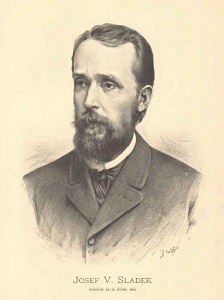
Josef Václav Sládek

De Tsjechische schrijver, dichter, journalist en vertaler Josef Václav Sládek werd geboren op 27 oktober 1845 in Zbiroh. De zoon van een metselaar studeerde aan het academische gymnasium in Praag. Hier raakte hij bevriend met Jaromír Čelakovský en met de vrijdenkende graaf Wenzel Koinic. Hoewel de ouders wilden dat hij priester zou worden ging Sládek natuurkunde en wiskunde studeren. Na de scheiding van zijn ouders kwam hij in financiële moeilijkheden. In 1868 onderbrak hij zijn studie en bezocht hij op uitnodiging van een zakenman uit Chicago, wiens zoon de Tsjechische taal moest leren, de Verenigde Staten. Hij werkte als redacteur van Tsjechische kranten, gaf les aan kinderen van Poolse immigranten, verdiende zijn geld op boerderijen en als arbeider in de spoorwegbouw. Dit tweejarige verblijf beïnvloedde zijn latere leven. Hij was, niet alleen in het lot van de zwarten en de Indianen, maar ook in de Anglo-Amerikaanse literatuur geïnteresseerd Bij zijn terugkeer onderwees hij Engels aan de Handelsacademie en de Technische Universiteit en werkte later als docent aan de Karelsuniversiteit in Praag en van 1870-1875 als redacteur bij de krant Národní listy. In 1873 trouwde hij met Emilie Nedvídková die een jaar later overleed. Sládek nam deel aan de uitgave van het tijdschrift Lumír, waarvoor hij ook vanaf 1977 als redacteur en tot 1898 als hoofdredacteur werkte en was lid van de kunstenaarsgroep Lumírovci. In 1900 ging hij met pensioen. Hij verbleef meer en meer in zijn geboorteplaats, waar hij ook de meeste werken van Shakespeare vertaalde.


At The Gates Of Fortune

At Fortuna’s gates I hammered,
as do all when sentimental; –
opening, it reached out, led me
in with hand kind, warm and gentle.

Fortune smiled. – I stood encircled
by the happy. – “Light-hearts may”,
quoth she, “through my portals enter.
You seek joy?“
I said: “No way”.


The Crystal Spring

I know a glade, spring crystal clear,
in deepest woodland, crowned
by shady ferns in silhouettes,
red heather all around.

There thirsty hinds and songbirds sip,
by the old sycamore,
the birds by blazing light of day,
the hinds by night, no more.

Once the deep woods to dreams succumb,
everything hushed and still,
the heaven’s dome and woodland spring
with golden starlight fill.


Vertaald door Václav Z J Pinkava


Mir ist ein Quell ganz von Kristall

Mir ist ein Quell ganz von Kristall
Im tiefsten Wald vertraut.
Rings wachsen dunkle Fame dort
Und rotes Heidekraut.

Zur Tränke unterm Ahornstamm
Führt einer Hindin Spur.
Der Vogelschwarm kommt untertags.
Die Hindin nächtens nur.

Legt sich zum Schlaf der tiefe Wald,
Von Stille rings umhüllt,
Dann ist der Himmel wie der Quell
Von Sternengold erfüllt.


 2015371-b50ef625e4f4df6e94d4970b2686ea97.jpg
Josef Václav Sládek (27 oktober 1845 - 28 juni 1912)
Portret door Jan Vilímek

Geschreven door Romenu om 00:00 Reageer op dit bericht

Jan Wolkers, Marja Pruis, Andrew Motion, Maartje Wortel, Stephen L. Carter, Karin Boye, Trevor Joyce, Pat Conroy

De Nederlandse dichter, schrijver en beeldend kunstenaar Jan Wolkers werd geboren in Oegstgeest op 26 oktober 1925. Zie ook mijn blog van 26 oktober 2010 en eveneens alle tags voor Jan Wolkers op dit blog.

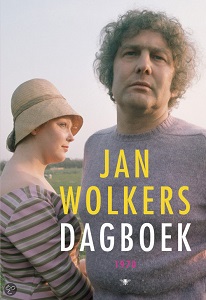
Uit: Dagboek 1970

“VRIJDAG 2 JANUARI 1970
Een halve celestone.
Om negen uur op met het bevrijdende gevoel dat we weer met zijn drieën zijn. Kachel opgerakeld, thee gezet. Dan gaat Jeroen zijn kamerdeur open en zien we zijn slaperige hoofd. Thee met cake naast dat hoofd op de grond en het is weer even rustig. Het vriesweer is voorbij.
Het is vochtig. Ik had het vannacht al horen regenen op het dak. Ik zet, op verzoek van Jeroen, de eerste plaat van Fats Waller op. ‘Ain’t Misbehavin”. Voor de katten een blik haring in tomatensaus uit de supermarkt opengemaakt dat kennelijk al jaren oud is. De inhoud ziet eruit als een slijmerig beschimmelde sok in baksteengruis. Na het koffie drinken en het hapje groene kool met fricandeau gaan we rondrijden.
Het is voorjaarsachtig zacht. We gaan de Waddenkant langs. Bij de schorren staan duizenden scholeksters allemaal dezelfde kant op. Indrukwekkend. We kijken er lang naar door de kijker. Even voor Oost zien we een wulp vliegen. Heilige ibis van het noorden. Op de Waddenzee eilanden van ijs waar honderden vogels op zitten. Meeuwen en eenden. We doen even boodschappen in Den Burg. Zie verschrikkelijk lekkere donkere meid met brede dijen onder minirok. Ik zou wel met één duik van mijn kop onder die rok mijn tong willen doorhalen. Kopen vis (tong nota bene) en rum. Rijden via Oudeschild verder langs de Waddenkant. Dan gaan we naar Den Hoorn. Stoppen bij de kerk en lopen over het kerkhof. Drijver ligt er begraven. De kerk is uit 1646. Ik zeg tegen Jeroen dat hij vier jaar na ‘De Nachtwacht’ is gebouwd en Karina zegt twee jaar voor het Verdrag van Münster. Het einde van de Tachtigjarige Oorlog. Bij de Mokbaai ligt er gewoon een vrouw aan de kant van de weg met een rood-wit gestreepte ijsmuts op naar de lucht te kijken. Bij De Koog lopen we even naar zee. Er liggen verbruikte rotjes en vuurpijlen op het strand.
Thuis thee met rum. Jeroen en Karina spelen uit het Teleac- schaakboek de wedstrijd tussen Euwe en Aljechin na uit 1934 in Zürich.
(Kende de naam Aljechin van Wim de Kler uit 1942. Zijn broer, die op de hertog van Windsor leek, schaakte.) Wit won gemakkelijk door zijn pluspion,’ herhaalt Jeroen steeds. Dat is gewoon te gek. ‘Hulde aan het loperpaar.’ Het klinkt echt een beetje lullig. Tak!!”


 1969979-2b6e63eda67c7e5d530071667ab4ef1e.jpg
Jan Wolkers (26 oktober 1925 – 19 oktober 2007)
Cover


De Nederlandse schrijfster en journaliste Marja Pruis werd geboren in Amsterdam op 26 oktober 1959. Zie ook alle tags voor Marja Pruis op dit blog.

Uit: Wandelaar en zwartziener Het debuut van Martinus Nijhoff

“Feit is dat dat Nijhoff een klassiek dichter werd door zijn regels, en niet door zijn bedoelingen, zoals Gerrit Komrij opmerkte in een lezing over Nijhoff als erflater van de twintigste eeuw, in 1989. Feit is echter ook dat de spanning tussen het desolate van ‘De wandelaar’ en het zachte van ‘Het licht’, als je daar eenmaal oog voor hebt, ieder vers afzonderlijk in de bundel zijn dynamiek geeft. In de wisselende gedaantes van danser, clown, troubadour en alchemist wordt telkens een conflict opgevoerd tussen daadkracht en dadenloosheid, muziek en stilte, bloei en ondergang, soms binnen een enkele strofe: ‘Ieder mensch is een hovenier,/ Ieder mensch is een graver:/ En zacht en diep graven we hier/ Een kuil voor ons cadaver.’ (‘De tuinman’).
Met De wandelaar bracht Martinus Nijhoff onder woorden dat poëzie eerder beperkt is dan almachtig, maar wel bestaat bij gratie van die almacht. Een moderne opvatting die, strak en in heldere taal getoonzet, klassieke gedichten voortbracht. Nijhoff wordt nog steeds gelezen, ook door nieuwe wandelaars. Zo klinkt bijvoorbeeld in ‘Ik wil wel’ van de 26-jarige Remco Campert (uit de bundel Met man en muis, 1955) een echo door van de jonge Nijhoff. Opnieuw modern - minder fatalistisch (‘Ik wil wel’) en meer ironisch (‘Daar staan mijn handen nu eenmaal naar’) - maar net zo beweeglijk tussen hemel en aarde: ‘hoe ik dichter ben/ bij de gratie van aardoppervlak/ hemelbodem ook/ wel genoemd.’ Lees maar.

Ik wil wel

Ik wil wel graven
naar poëzie, maar niet
te diep. Je weet
hoe ik dichter ben
bij de gratie van
aardoppervlak

hemelbodem ook
wel genoemd. Daar
staan mijn handen
nu eenmaal naar. Dus
wandelaar en zwartziener,
geen delver

maar werper
van stenen, laatste
en eerste. Scherend
over aarde, daar
nesten mij bouwend
als zwaluw.”


 1969979-b17e2bf7570f9f55d3e42f03272c083a.jpg
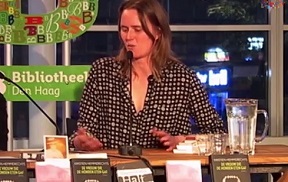
Marja Pruis (Amsterdam, 26 oktober 1959)
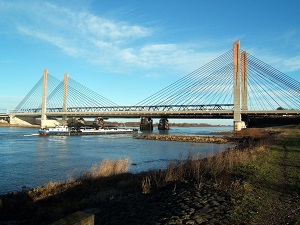
De Martinus Nijhoffbrug in Zaltbommel


De Engelse dichter, schrijver en biograaf Andrew Motion werd geboren op 26 oktober 1952 in Braintree in Essex. Zie ook alle tags voor Andrew Motion op dit blog en ook mijn blog van 26 oktober 2010

Uit: Better life (Fragment)

I am Richard and I am perfectly able-bodied thank you
and also of perfectly sound mind.
What can I do for you?
The chances are I know more than you about most things.
I landed on Gold Beach on D-Day then worked as a brewer.
It was a useful life. Defending the realm, than making beer.
Now I am waiting for my telephone to ring. It never does ring.

If you were looking this way you would see my right hand
stretching towards you with something I have to pass over.
When I open my fingers you must look at the gift carefully.
You may well not recognise it to start with although soon
you will see it is the very thing you can never do without.

Who are we talking about? My name is Peter and in one way
or another I was married to Steve for 57 years. Today I am alone.
The pain is very strong because nobody would miss me if I died.
It would affect nobody. I am Simon, aged 67. I am Liz, aged 82.
I am Helen, aged 72 and I do tatting and keep fit on Wednesdays.
I am Ali and I am a widow and I think if you don't do anything
then God won't do anything. This is Mehmet. And this here Geti.
I am Ron, and I enjoy a few boiled potatoes and a drop of broth.
I am not a lover of sweet things. I like simple bread and butter
and a bit of fish. My friend Rowena likes a slice of sponge cake.

Open the window and let me hear the geese flying across.
Can you hear what I am saying? Are you paying attention?
I love to hear the geese flying and know their ways home.

As for me, I was born in 1939 and all our people came down
from Staffordshire and Cheshire; I class myself a Traveller
not a Gypsy. When I was a boy we had a horse and wagon.
I had to make a fire and put the horses out to graze at dawn
then I had to bring them back close beside the wagon at dusk.
When dad bought a bus, which we called a freezer box, he sold
the horses. I stood and cried. I was a big lad. It was not the same.
You couldn't smell the horses. Our people are in Magna Carta.

I had the life of Reilly. Now I have a serious illness and won't last
but when I count my blessings at night I have a load of blessings.
I love God and want to die. What better thing is there to live for?

Is that you leaving now? Very well. As for me I have not done.
I am still the child that loves to arrive by night in a new place
then wakes early to pull the curtains back on sunlight pouring
into a bay I had never seen before where big pelts of seaweed
left to dry by the retreating tide and the dainty orange crabs
crawling across them and the pebbles are everything I need.


 1969979-524b334874af00306a5628f79bce77c6.jpg
Andrew Motion (Braintree, 26 oktober 1952)


De Nederlandse schrijfster Maartje Wortel werd geboren in Eemnes op 26 oktober 1982. Zie ook alle tags voor Maartje Wortel op dit blog.

Uit: Goudvissen en beton

“Hij reed de stad binnen langs een moskee, een paar woonflats, een museum en het Wilhelminapark. Daar heeft hij zijn auto geparkeerd. In het park is hij op zijn rug in het gras gaan liggen om naar de boomtoppen te kijken en te luisteren naar het gefluit van de vogels. Hij dacht: hier hebben andere mensen gelegen en gelachen, gehuild, gevreeën, gedroomd, gedronken, gerookt, gesport, nagedacht. Hier zijn relaties verbroken of begonnen, eenden gevoerd, onuitgesproken woorden in dagboeken geschreven, mensen hebben hier elkaars had vastgepakt, geheimen gedeeld, bloemen geplukt, ze zijn hier gevallen, opgestaan, vreemdgegaan, ze hebben gras uit de grond getrokken, in de bosjes geplast, spullen verstopt, ze zijn hier geld kwijtgeraakt, ziek geweest, ze hebben op de grond gespuugd, gitaar gespeeld, gestampt, gedanst. Zij zijn hier geweest. Mijn vader wilde niet aan dit moment in de tijd voorbijgaan zoals hij tot nu toe aan zoveel dingen voorbij was gegaan. Hij herkende het en deed een belofte aan zichzelf: ik ga hier niet weg voordat ik al deze dingen gedaan heb.’
(…)

‘Ik dacht: hoe kan iets dat dood is toch verdriet hebben? Ik hoopte niet dat mijn moeder verdriet had. Dat leek me nou het enige positieve van de dood ten opzichte van het leven: je kwam voortaan onder al het verdriet uit. Om iets aardigs te horen kocht ik een pak fortune cookies. Op het eerste briefje dat ik las stond: ‘Dit wordt een jaar van voorspoed. /Cette année sera une année de prospérité. /Dieses Jahr wird ein gutes Jahr.’ Ik at alle koekjes op en las alle boodschappen; wat een dom idee was want niet alle voorspellingen konden tegelijkertijd waar zijn, al stond het er in drie talen. Als je moeder net dood is moet je normale koekjes eten.’


 1969979-f386d01c2ba13655fb42886c64cc1299.jpg
Maartje Wortel (Eemnes, 26 oktober 1982)


De Amerikaanse schrijver Stephen L. Carter werd geboren op 26 oktober 1954 in Washington, D.C. Zie ook alle tags voor Stephen L. Carter op dit en ook mijn blog van 26 oktober 2010

Uit: The Emperor of Ocean Park

“And yet, amidst all the clamor, the Vineyard house is a small marvel. I loved it as a child and love it more now. Every room, every dark wooden stair, every window whispers its secret share of memories. As a child, I broke an ankle and a wrist in a fall from the gabled roof outside the master bedroom; now, more than thirty years after, I no longer recall why I thought it would be fun to climb there. Two summers later, as I wandered the house in post-midnight darkness, searching for a drink of water, an odd mewling sound dropped me into a crouch on the landing, whence, a week or so shy of my tenth birthday, I peered through the balustrade and thus caught my first stimulating glimpse of the primal mystery of the adult world. I saw my brother, Addison, four years older than I, tussling with our cousin Sally, a dark beauty of fifteen, on the threadbare burgundy sofa opposite the television down in the shadowy nook of the stairwell, neither of them quite fully dressed, although I was somehow unable to figure out precisely what articles of clothing were missing. My instinct was to flee. Instead, seized by a weirdly thrilling lethargy, I watched them roll about, their arms and legs intertwined in seemingly random postures--making out, we called it in those simpler days, a phrase pregnant with purposeful ambiguity, perhaps as a protection against the burden of specificity.
My own teen years, like my adulthood dreary and overlong, brought no similar adventures, least of all on the Vineyard; the highlight, I suppose, came near the end of our last summer sojourn as a full family, when I was about thirteen, and Mariah, a rather pudgy fifteen and angry at me for some smart-mouthed crack about her weight, borrowed a box of kitchen matches, then stole a Topps Willie Mays baseball card that I treasured and climbed the dangerous pull-down ladder to the attic, eight rickety wooden slats, most of them loose. When I caught up with her, my sister burned the card before my eyes as I wept helplessly, falling to my knees in the wretched afternoon heat of the dusty, low-ceilinged loft--the two of us already set in our lifelong pattern of animosity. That same summer, my sister Abigail, in those days still known as the baby, even though just a bit more than a year younger than I, made the local paper, the Vineyard Gazette, when she won something like eight different prizes at the county fair on a muggy August night by throwing darts at balloons and baseballs at milk bottles, and so solidified her position as the family's only potential athlete--none of the rest of us dared try, for our parents always preached brains over brawn.”


 1969979-ba9b95ae25768bf3dd29ee3af0ce5869.jpg
Stephen L. Carter (Washington, 26 oktober 1954)


De Zweedse dichteres en schrijfster Karin Maria Boye werd geboren op 26 oktober 1900 in Göteborg. Zie ook alle tags voor Karin Boye op dit en ook mijn blog van 26 oktober 2010


Clouds

Look at the towering clouds, whose high distant cloudtops
proudly, shimmeringly rear up, white as white snow!
How calmly they glide forward, how calmly in the end to die
by soft dissolution into a shower of cool raindrops.

The majestic clouds – whether living or dying
they move forward smiling under the brilliance of the sun,
with no furrowing unease, in ether so openly clean,
they move with a stately, silent disdain for their undoing.

If only I too, with all that pomp of festivals,
might lift myself up to where the world’s bustle is gone
and no matter how furiously round me the storm howls on
might bear the gold garland of sunshine on my temples.


A Buddhist Fantasy

Unhasped is the world’s copper gate.
High in its gatevault, there I sat
and what I saw was infinitely vast;
there is nothing so infinite.

Searchingly and long I gazed.
My eye found not the least relief.
There what I knew did not exist;
not great, not small – not life, not death.

Just one step on that markless way
and all return for me is past.
Why are you trembling? Up, follow me!
For nature’s copper gate is forced!


 1969979-4e7c9bd9b54ea5dd6f43371e8fcf98ab.jpg
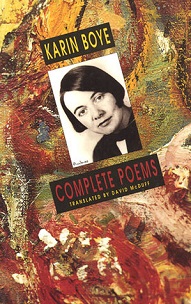
Karin Boye (26 oktober 1900 – 24 april 1941)
Cover


De Ierse dichter Trevor Joyce werd geboren op 26 oktober 1947 in Dublin. Zie ook alle tags voor Trevor Joyce  op dit blog en ook mijn blog van 26 oktober 2010


VERSES WITH A REFRAIN FROM A SOLICITOR’S LETTER (Fragment)

for George Hitching

As when a faded lock of woman’s hair shall cause a man to cut his throat in a bedroom at five o’clock in the morning; or when Albany resounds with legislation, but a little henpecked judge in a dusty office at Herkimer or Johnstown sadly writes across the page the word ‘unconstitutional’ – the glory of the Capitol has faded. — Benj. Paul Blood

Dear Sir, I was this morning straight
after the news and forecast
hanging from an old appletree in my garden
a small Japanese bell
when I received through the post your importunate
and quite misguided threats
 
and in this regard time shall be made of the essence
 
An injunction, you say. An obstruction,
you say. You’ve a lot of chat for someone
that’s not even clear who he’s talking to.
Does this help: not only have I
not erected any obstruction
in the form of a barbed wire fence or otherwise
 
and in this regard time shall be made of the essence
 
but I’m attempting today to rest and recover
from the effects of an obstruction in my own passages?
I have, it pains me to have to spit it out, a strangury,
and you’ve got the wrong man, chief,
I’ve better blockages to worry about
than the one at the back of some godforsaken hotel in Midleton

and in this regard time shall be made of the essence


 1969979-033b89bb3494fafc312c703700d7d5df.jpg
Trevor Joyce (Dublin, 26 oktober 1947)


De Amerikaanse schrijver Pat Conroy werd geboren op 26 oktober 1945 in Atlanta, Georgia. Zie ook alle tags voor Pat Conroy op dit blog en ook mijn blog van 26 oktober 2010

Uit: My Reading Life

“Between the ages of six and nine, I was a native son of the marine bases of Cherry Point and Camp Lejeune in the eastern coastal regions of North Carolina. My father flew in squadrons of slant-winged Corsairs, which I still think of as the most beautiful warplanes that ever took to the sky. For a year Dad flew with the great Boston hitter and left fielder Ted Williams, and family lore has it that my mother and Mrs. Williams used to bathe my sister and me along with Ted Williams's daughter. That still remains the most distinguished moment of my commonplace career as an athlete. I followed Ted Williams's pursuit of greatness, reveling in my father's insider knowledge that "Ted [has] the best reflexes of any marine pilot who ever flew Corsairs." I read every book about baseball in the library of each base and town we entered, hoping for any information about "the Kid" or "the Splendid Splinter." When the movie of The Great Santini came out starring Robert Duvall, Ted Williams told a sportswriter that he'd once flown with Santini. My whole writing career was affirmed with that single, transcendent moment.
The forests around Cherry Point and Camp Lejeune were vast to the imagination of a boy. Once I climbed an oak tree as high as I could go in Camp Lejeune, then watched a battalion of marines with their weapons locked and loaded slip in wordless silence beneath me as they approached enemy territory. When I built a bridge near "B" building in Cherry Point, I invited the comely Kathleen McCadden to witness my first crossing. I had painted my face like a Lumbee Indian and wielded a Cherokee tomahawk I had fashioned to earn a silver arrow point as a Cub Scout. My bridge collapsed in a heap around me and I fell into the middle of a shallow creek as poor Kathleen screamed with laughter on the bank.”


 1969979-b12ed6286ba495259de0e337a35f9f3b.jpg
Pat Conroy (26 oktober 1945 – 4 maart 2016)


Zie voor nog meer schrijvers van de 26e oktober ook mijn blog van 26 oktober 2014 deel 2.

Geschreven door Romenu om 18:09 Reageer op dit bericht

Man Booker Prize 2016 voor Paul Beatty

Man Booker Prize 2016 voor Paul Beatty

De Amerikaanse schrijver Paul Beatty heeft de Man Booker Prize 2016 gewonnen met zijn roman “The Sellout”. Beatty is de eerste Amerikaan die de prijs ontvangt. Zie ook alle tags voor Paul Beatty op dit blog.

Uit: The Sellout

“For the twenty years I knew him, Dad had been the interim dean of the department of psychology at West Riverside Community College. For him, having grown up as a stable manager's son on a small horse ranch in Lexington, Kentucky, farming was nostalgic. And when he came out west with a teaching position, the opportunity to live in a black community and breed horses was too good to pass up, even if he'd never really been able to afford the mortgage and the upkeep.
Maybe if he'd been a comparative psychologist, some of the horses and cows would've lived past the age of three and the tomatoes would've had fewer worms, but in his heart he was more interested in black liberty than in pest management and the well-being of the animal kingdom. And in his quest to unlock the keys to mental freedom, I was his Anna Freud, his little case study, and when he wasn't teaching me how to ride, he was replicating famous social science experiments with me as both the control and the experimental group. Like any "primitive" Negro child lucky enough to reach the formal operational stage, I've come to realize that I had a shitty upbringing that I'll never be able to live down.
I suppose if one takes into account the lack of an ethics committee to oversee my dad's childrearing methodologies, the experiments started innocently enough. In the early part of the twentieth century, the behaviorists Watson and Rayner, in an attempt to prove that fear was a learned behavior, exposed nine-month-old "Little Albert" to neutral stimuli like white rats, monkeys, and sheaves of burned newsprint. Initially, the baby test subject was unperturbed by the series of simians, rodents, and flames, but after Watson repeatedly paired the rats with unconscionably loud noises, over time "Little Albert" developed a fear not only of white rats but of all things furry. When I was seven months, Pops placed objects like toy police cars, cold cans of Pabst Blue Ribbon, Richard Nixon campaign buttons, and a copy of The Economist in my bassinet, but instead of conditioning me with a deafening clang, I learned to be afraid of the presented stimuli because they were accompanied by him taking out the family .38 Special and firing several window-rattling rounds into the ceiling, while shouting, "Nigger, go back to Africa!" loud enough to make himself heard over the quadraphonic console stereo blasting "Sweet Home Alabama" in the living room. To this day I've never been able to sit through even the most mundane TV crime drama, I have a strange affinity for Neil Young, and whenever I have trouble sleeping, I don't listen to recorded rainstorms or crashing waves but to the Watergate tapes.”


 1969836-6e2da57b249ae4b379a142429678640c.jpeg
Paul Beatty (Los Angeles, 9 juni 1962)

Geschreven door Romenu om 07:25 Reageer op dit bericht

Harry M.P. van de Vijfeijke

De Nederlandse dichter Harry M.P. van de Vijfeijke werd geboren op 26 oktober 1946 in Waalre. In 1965 deed hij eindexamen gymnasium B in Stevensbeek, om vervolgens in Nijmegen psychlogie te studeren. In 1973 studeerde hij af. Vervolgens werkte hij o.a. als sociotherapeut in Overwaal in Lent, als titelbeschrijver in de Koninklijke Bibliotheek ’s-Gravenhage en als docent psychologie aan de Hogeschool Arnhem en Nijmegen. Van de Vijfeijke speelde ook toneel. in 1984 resp. 1985 speelde hij met de Nijmeegse Theatergroep Kadans de voorstellingen: “De Goede mens van Sezuan” van Bertolt Brecht en “De Fysici” van Friedrich Dürrenmatt. Hij verfilmde mede de novelle “Veertig” van Kees van Kooten. In 1985 begon hij met het schrijven en publiceren van gedichten. Hij debuteerde in “Nijmeegse Inkt III” in 1986. Vervolgens publiceerde hij regelmatig in het tijdschrift Jambe en in bloemlezingen van het tijdschrift Jambe. In 1995 rondde hij de postdoctorale opleiding tot gedragstherapeut af in 1995 en in 2010 voltooide hij de studie filosofie (Bachelor of Arts).Momenteel verzorgt hij o.a. columns/lezersreacties voor de website van Boekhandel Roelants/vh de Oude Mol over de onderwerpen Psychologie, Filosofie, Beeldende Kunst en Literatuur.


Te laat voor alles

Te laat voor alles, op tijd slik ik
de duivel in. Er moet een taal die redt
te spreken zijn. Ik zoek op mijn taalplein
klein gewin.

In het met kracht van opwekken spreken.
In het richten van de blik op dingen die opblinken.
Meisjes, glans, en jongens, bal,
twee goedgebekte lijsters die wat drinken.

In het vinden van de zin
die in een adem, gaaf en glijdend,
meesluipt met de opening.

Ik reik naar een gedicht,
mijn tong beweegt licht golvend,
iets luider en ik zing.


Stedeling

Geen stad die op mij let,
ik kan er sluipen. Geen schijnvertrek
dat mij naar binnen trekt. Ik weet van de schijn
en ken de luiken. Geen stedeling die mij belet,
ik schep meer dan voorheen, nood aan de ruimte.

Men zal hebben gezegd:met een glimlach
groette hij, stelde belang.
Op eigen wijze deed hij dat,
waar hij ging, ging hij rechtop, oprecht zijn gang.

Hij liep wat rond, een spel, wisselde hier
en daar wat woorden tot gedicht.
Men zal hebben gezegd:
in samenhang met wie hij was.


 2077537-c008e3250e6cb95c2df914a56e80bb66.jpg
Harry M.P. van de Vijfeijke (Waalre, 26 oktober 1946)

Geschreven door Romenu om 00:00 Reageer op dit bericht

Meer van Romenu

↑ Terug naar de berichten