

Naar de inhoud

Romenu

Over literatuur, gedichten, kunst en cultuur
akke.beakke.be

Berichten van 21 november 2016 tot 22 november 2016

André Gide, George Eliot, Dirk van Weelden, Christian Filips, Suresh en Jyoti Guptara, Viktor Pelevin, Endre Ady, William Kotzwinkle
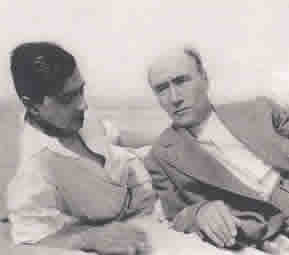
De Franse schrijver André Gide werd geboren op 22 november 1869 in Parijs. Zie ook alle tags voor André Gide op dit blog.

Uit: Les Faux-monnayeurs

"Mais si cela voulait dire quelque chose, tu ne comprendrais tout de même pas.
Quand on parle, c'est pour se faire comprendre.
Veux-tu, nous allons jouer à faire des mots pour nous deux seulement les comprendre.
Tâche d'abord de bien parler français.
Ma maman, elle, parle le français, l'anglais, le romain, le russe, le turc, le polonais, l'italoscope, l'espagnol, le perruquoi et le xixitou.
Tout ceci dit très vite, dans une sorte de fureur lyrique.
Bronja se mit à rire.
Boris, pourquoi est-ce que tu me racontes tout le temps des choses qui ne sont pas vraies ?
Pourquoi est-ce que tu ne crois jamais ce que je te raconte ?
Je crois ce que tu me dis, quand c'est vrai.
(...)

Oui. Non ; écoute : on va prendre un bâton ; tu tiendras un bout et moi l'autre. Je vais fermer les yeux et je te promets de ne les rouvrir que quand nous serons arrivés là-bas.
Ils s'éloignèrent un peu ; et, tandis qu'ils descendaient les marches de la terrasse, j'entendis encore Boris :
Oui, non, pas ce bout-là. Attends que je l'essuie.
Pourquoi ?
J'y ai touché.”


 1979516-12fc66f02e0eeb57ea67fc8aaca2fa69.jpg
André Gide (22 november 1869 – 19 februari 1951)
Hier met zijn jonge geliefde Marc Allégret (links) in 1926


De Engelse dichteres en schrijfster George Eliot werd geboren op 22 november 1819 in Nuneaton in Warwickshire. Zie ook alle tags voor George Eliot op dit blog.

Uit: Silas Marner

“To them pain and mishap present a far wider range of possibilities than gladness and enjoyment: their imagination is almost barren of the images that feed desire and hope, but is all overgrown by recollections that are a perpetual pasture to fear. "Is there anything you can fancy that you would like to eat?" I once said to an old labouring man, who was in his last illness, and who had refused all the food his wife had offered him. "No," he answered, "I've never been used to nothing but common victual, and I can't eat that." Experience had bred no fancies in him that could raise the phantasm of appetite.
And Raveloe was a village where many of the old echoes lingered, undrowned by new voices. Not that it was one of those barren parishes lying on the outskirts of civilization--inhabited by meagre sheep and thinly-scattered shepherds: on the contrary, it lay in the rich central plain of what we are pleased to call Merry England, and held farms which, speaking from a spiritual point of view, paid highly-desirable tithes. But it was nestled in a snug well-wooded hollow, quite an hour's journey on horseback from any turnpike, where it was never reached by the vibrations of the coach-horn, or of public opinion. It was an important-looking village, with a fine old church and large churchyard in the heart of it, and two or three large brick-and-stone homesteads, with well-walled orchards and ornamental weathercocks, standing close upon the road, and lifting more imposing fronts than the rectory, which peeped from among the trees on the other side of the churchyard:--a village which showed at once the summits of its social life, and told the practised eye that there was no great park and manor-house in the vicinity, but that there were several chiefs in Raveloe who could farm badly quite at their ease, drawing enough money from their bad farming, in those war times, to live in a rollicking fashion, and keep a jolly Christmas, Whitsun, and Easter tide.”

 

 1979516-0e74973fae56396b47b5a575990de444.jpg
George Eliot (22 november 1819 – 22 december 1880)
Cover


De Nederlandse schrijver Dirk van Weelden werd geboren in Zeist op 22 november 1957. Zie ook alle tags voor Dirk van Weelden op dit blog.

Uit: Verdwijnen en einde

“Het was niet moeilijk om ons met Rigaut te vereenzelvigen. Ook wij waren enigzins stuurloze jonge mannen die op het dode punt tussen jeugd en een eigen leven balanceerden. Ook wij hadden weinig fiducie in een normale maatschappelijke loopbaan en ook wij onderhielden een ambivalente relatie tot het idee dat we ons in de kunsten moesten ontplooien. Mede onder invloed van de penibele economische toestand en de sfeer van vervallen modernisme, politieke ongeloofwaardigheid en culturele verwarring, voelden ook wij het monster van het cynisme op onze zielen loeren. De nihilistische dada dandy die zo helder en intens over een spiegel, een lamp, een overhemd, een geeuw, de morele juistheid van het lege leven der rijken kon schrijven, dat was een aantrekkelijke verschijning. De uiterst consequente verbeelding van het ‘beginnersnihilisme’ dat aan de grote levenskeuzes vooraf gaat.
Waar we heel zelden en dan maar vluchtig over praatten met elkaar was Rigauts zelfmoord en de daarmee opgeroepen vraag naar de afstand die wijzelf tot die logische optie innamen. Bijna een half jaar zaten we bijna dagelijks gebogen over Rigauts teksten en vermaakten we ons met zijn overgevoelige ‘cool’, zijn laconieke fijnzinnigheid en die directe maar onthechte toon. Wat mij naast het proza hypnotiseerde was iets dat ik nu als huiver zou omschrijven. Er was ook iets griezeligs aan Rigaut. Iets confronterends. Zijn werk kwam voort uit een een overmatige reflexiviteit, een gekmakende bespionering van zichzelf en een genadeloze blik in de spiegel. Dat kwam mij maar al te bekend voor. Ook de ontdekking van het niets in de eigen ledematen en het eigen bewustzijn, herkende ik.
Het punt was dat Rigaut veel extremere conclusies uit die ervaringen trok dan ik. Hij zocht naar iets dat hem op waardige wijze kon helpen het illusoire karakter van kennis, liefde, schoonheid, rechtvaardigheid, wijsheid te overleven. Daarom noemde hij zichzelf een moreel personage en iemand die vooral probeerde niet te sterven. In zijn ogen was er niets dat hem van de weerzin kon genezen die hij voelde door een menselijk persoon te zijn, met een lichaam, een identiteit, een geschiedenis, een leven. Zelfs zijn zintuigen noemde hij onrechtmatig. Daarom restte hem niets anders dan ‘zijn eigen zeep te zijn’ oftewel zichzelf uit te wissen. Eigenlijk ging zijn logica nog verder. Hij schreef dat er helemaal niets mogelijks was, ook geen zelfmoord. Er school geen wijsheid, schoonheid of gelijk in de zelfgekozen dood.”
 

 1979516-69eb98671aa57436589d90a8fd30d00b.jpg
Dirk van Weelden (Zeist, 22 november 1957) 
In 1992


De Duitse dichter, schrijver, acteur en regisseur Christian Filips werd geboren op 22 november 1981 in Osthofen. Zie ook alle tags voor Christian Filips op dit blog.


Exultate, jubilate!

Weg Libido! Weg, Bücher! Körper, weg!
Ihr wollt mir alle doch nur an die Leber.
Weg, Liebes-Hudelei! Lass keinen ran.
Und wenn Ihr mir mit Kränen auf den Leib rückt:
Geht besser nach Kamtschatka oder Leipzig,
Baut Euch im Umkreis Kolonien, benennt sie
Nach mir (So: Filips-Kongo. Oder: Christograd),
Errichtet Zoos, Gedächtnisorte, Nightclubs,
Schreibt Hausarbeiten zu meinen Gedichten,
Bringt mich ins Ungarische, pflegt mich, fleht nur –
Das alles lässt mich kalt. Ich, die Grandezza,
Bin schnellen Herzens, geh zu Bett um neun.
Verlier mich nicht im Denken, spekulier
auch jetzt nicht länger mehr auf Euren Anruf
- Ob jemand etwa grad bereit zu teilen
Mit mir sein bisschen Leben, Arbeit, Triebstruktur -
Ich leg mich einfach schlafen. Sage laut:
Legenden wachsen weiter. Bis sie wahr sind.
Der Teufel prahlte mit dem Glauben fauchend.
Ward zur Substanz. Und gab sich hin: dem Geist.


Heiße Fusion mit Aurora

Surplus, Surplus, reinster Überschuss.
Sperma von Giraffen. Rassenhunden.
Artischockenherzen. Liebe, unverlangt.
So viel, das uns umgibt. Mir träumte eben
leer und weiß vom Dung, vom Dunst von Schafen.
Inmitten der Herde, der heiligsten Wolken-Kommune
erschienst auch Du mir, wollte bei Dir schlafen,
aber im Fell meiner Beine warst Du bald nicht mehr zu sehen,
verschwunden aus Angst vor dem Schwanz, Dein extravagantes
tönendes Blöken, das mähte uns hin
alle die schöne Aurora-Kosmologie!
 

 1979516-cd4666cc3dfe609a894eace1ce80f5b9.jpg
Christian Filips (Osthofen 22 november 1981)


De Brits-Indische schrijverstweeling Suresh en Jyoti Guptara werd geboren op 22 november 1988 in Frimley, Hants in het zuidoosten van Engeland. Zie ook alle tags voor Suresh en Jyoti Guptara op dit blog.

Uit: Conspiracy of Calaspia

'He heard the Ostentum have returned.' The voice was impossibly deep, and earthy, the very voice of the mountain, it appeared. It reverberated around the cavern, the bass vibrating inside the man's chest.
'Yes, Master.'
'Has he seen evidence?'
The man worded his response carefully, suppressing his confusion. Only the Master understood all aspects of the plan, even if they did seem self-contradictory to lesser beings. 'Not yet, Master.' 'Very well.'
The room was dark and damp, cave-like. In truth they were hundreds of feet above the ground. The figure looked out through a slit in the stone wall into blinding sunlight, although the room remained dark, as if the shadows here were resistant to being penetrated by the sun's rays.
The Master turned to face him, and the man immediately hugged the ground.
The thundering voice spoke again. 'You have done well, Apostate. Arise.' Breathing a sigh of relief, the man, who looked so small, thin and pathetic in the shadow of his demonic master, stood. He quickly walked to a marble basin at the far end of the room and proceeded to wash. The Master did not move, but watched impassively as his servant cleaned off the signs of battle: grime, sand, blood Ð and even the wounds themselves.”

 1979516-4f5c7b45691c53373623a5eec4376a2d.jpg
Suresh en Jyoti Guptara (Frimley, 22 november 1988)


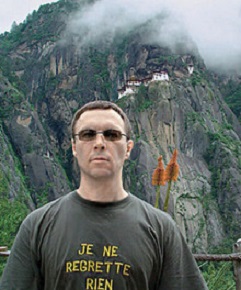
De Russische schrijver Viktor Pelevin werd geboren op 22 november 1962 in Moskou. Zie ook alle tags voor Viktor Pelevin op dit blog.

Uit: Buddha's Little Finger (Vertaald door Andrew Bromfield)

`How are things in Petersburg?' asked Vorblei.
`As if you didn't know.'
`That's right,' agreed Vorblei, suddenly seeming to lose interest. `I do know.'
We turned off the boulevard, crossed the roadway and found ourselves in front of a seven-storey apartment house. It was directly opposite the Palace Hotel, in front of which two machine-gun installations were visible; they were manned by sailors smoking cigarettes, and a red flag flapped in the wind at the end of a long stick.
Vorblei tugged at my sleeve. `Look over there,' he said.
I turned my head. On the street outside the entrance to the house stood a black limousine with a tiny cabin for passengers and open front seats, on which the snow had piled up.
`What?' I asked.
`It's mine,' said Vorblei. `It goes with the job.'
`Ah,' I said, `congratulations.'
We entered the apartment building. The lift was not working and we had to make our way up a dark staircase, from which the carpet runner had not yet been ripped away.
`What is it that you do?' I asked.
`Oh,' said Vorblei, `it's not something I can explain in a few words. There's really a lot of work — too much, in fact. First one thing, then another, and then something else, and all the time you have to try to keep up. First one place, then another. Someone has to do it all.'
`In the cultural line, is it?'
He inclined his head to one side in a rather indefinite fashion. I did not try to ask any more questions.
When we reached the fifth floor we approached a tall door on which there was a clearly defined lighter coloured rectangular area which showed where a name plaque had once been. He opened the door, and we went into a dark hallway when a telephone on the wall immediately began to jangle."
 

 1979516-a80c0fbf941106fd2395eea440cb6d6c.jpg
Viktor Pelevin (Moskou, 22 november 1962)


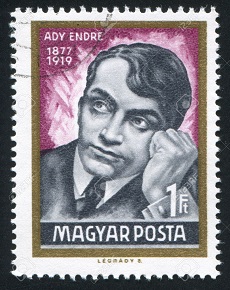
De Hongaarse dichter Endre Ady werd geboren op 22 november 1877 in het huidige Adyfalva. Zie ook alle tags voor Endre Ady op dit blog en ook mijn blog van 22 november 2010.


In Front Of Good Prince Silence

I walk the forest in the moonlight
Whistle through my chattery teeth
Stalking behind me ten feet tall
Good Prince Silence
Mercy, I tremble, dare not turn.

Mercy, I tremble, dare not turn,
And dare not gaze up, up to the moon:
One false movement, one needless sound
Good Prince Silence
Would step on me and tread me down.


Who Come From Far Away

We are the men who are always late,
we are the men who come from far away.
Our walk is always weary and sad,
we are the men who are always late.
We do not even know how to die in peace.
When the face of distant death appears,
our souls splash into a tam tam of flame.
We do not even know how to die in peace.
We are the men who are always late.
We are never on time with our success,
our dreams, our heaven, or our embrace.
We are the men who are always late.


 1979516-b22b6364a8829af9a4831a6949c2b352.jpg
Endre Ady (22 november 1877 – 27 januari 1919)
Op een Hongaarse postzegel uit 1969


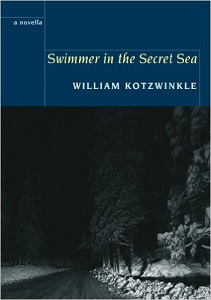
De Amerikaanse schrijver William Kotzwinkle werd geboren op 22 november 1943 in Scranton, Pennsylvania. Zie ook alle tags voor William Kotzwinkle op dit blog.

Uit: Swimmer in the Secret Sea

“The wave came again and carried them out onto the sea of pain, where he wondered again why life ever came into the world...The tide that drew them out into the troubled waters once again spent itself, and they floated slowly back, resting for a minute or so, only to be dragged out again. He held her up while she contracted and pushed inside herself, trying to open the petals of her flowering body...He lifted her, trying to free the load she was struggling with, but she was straining against the traces, getting nowhere, her eyes like those of a draft horse...Who would choose this, thought Laski, this work, this woe? Life enslaves us, makes us want children, gives us a thousand illusions about love, and all so that it can go forward.”
(…)

“Hardly had they rested when the waves carried them out again, like a nightmare that repeats itself over and over through the night, and over and over again through the years. Back and forth they went and he feared that her strength could not hold. He had no confidence, not in himself, nor in her. He felt like a helpless child, and Diane seemed helpless too, their long struggle getting them nowhere, only repeating itself--contraction, release, contraction again.”
 

 1979516-7680a4f5f21bdbc9eb656e390ba9892b.jpg
William Kotzwinkle (Scranton, 22 november 1943)
Cover


Zie voor nog meer schrijvers van de 22e november ook mijn blog van 22 november 2015 deel 2.
Geschreven door Romenu om 18:37 Reageer op dit bericht

In Memoriam William Trevor


In Memoriam William Trevor

De Ierse schrijver William Trevor is afgelopen zondag op 88-jarige leeftijd overleden. William Trevor werd geboren op 24 mei 1928 in Mitchelstown, County Cork. Zie ook alle tags voor William Trevor op dit blog.

Uit: After Rain

“Owen Dromgould had run his fingers over the bark of trees. He could tell the difference in the outline of their leaves; he could tell the thorns of gorse and bramble. He knew birds from their song, dogs from their bark, cats from the touch of them on his legs. There were the letters on the gravestones, the stops of the organ, his violin. He could see red, berries on holly and cotoneaster. He could smell lavender and thyme.
All that could not be taken from him. And it didn’t matter if, overnight, the colour had worn off the kitchen knobs. It didn’t matter if the china light-shade in the kitchen had a crack he hadn’t heard about before. What mattered was damage done to something as fragile as a dream.
The wife he had first chosen had dressed drably: from silence and inflexions – more than from words – he learned that now. Her grey hair straggled to her shoulders, her back was a little humped. He poked his way about, and they were two old people when they went out on their rounds, older than they were in their ageless happiness. She wouldn’t have hurt a fly, she wasn’t a person you could be jealous of, yet of course it was hard on a new wife to be haunted by happiness, to be challenged by the simplicities there had been. He had given himself to two women; he hadn’t withdrawn himself from the first, he didn’t from the second.
Each house that contained a piano brought forth its contradictions. The pearls old Mrs Purtill wore were opals, the pallid skin of the stationer in Kiliath was freckled, the two lines of oaks above Oghill were surely beeches? ‘Of course, of course,’ Owen Dromgould agreed, since it was fair that he should do so. Belle could not be blamed for making her claim, and claims could not be made without damage or destruction. Belle would win in the end because the living always do. And that seemed fair also, since Violet had won in the beginning and had had the better years.”


 1979434-d64fc9ffd2ce5263bb348f8c4ec60143.jpg
William Trevor (24 mei 1928 – 20 november 2016)


Geschreven door Romenu om 14:40 Reageer op dit bericht

Margriet de Moor, Gerard Koolschijn, Isaac Bashevis Singer, Wouter Steyaert, Marilyn French, Freya North, Carl-Henning Wijkmark, Voltaire

De Nederlandse schrijfster Margriet de Moor werd als Margaretha Maria Antonetta Neefjes op 21 november 1941 in Noordwijk geboren. Zie ook alle tags voor Margriet de Moor op dit blog.

Uit:De schilder en het meisje

“Daarop had de schilder gevoeld hoe ze ontspanden. Hoe de anderen begrepen dat ze het dus goed hadden gezien. Alle vier keken nu van het schilderij naar hem, maar hij zei niets, knikte alleen vaagjes. De vernedering kwam eraan, maar was nog abstract. Had nog niet de gedaante aangenomen van een brik, normaal in gebmik voor biertransport, die met een hoop lawaai de Rozengracht op komt rollen en stilhoudt voor nummer 184. Dat zou pas over een paar dagen gebeuren.
Nog voordat er zou worden geklopt zou zijn vrouw opendoen.
‘Lieve help! Ze hebben het al gebracht!’
Hij en zij zouden elkaar halverwege de trap tegemoet zijn gebold, hij vanaf de eerste verdieping waar hij aan het werk was, zij vanuit de open voordeur waardoorheen je op straat het paard kon zien, de lege bok en een stuk van de gênante, tot aan de dissel naar voren geschoven lading, een slordige grijsgrauwe rol, dubbelgeklapt tot een paar meter doorsnee.
Nog niet. Geen sprake van zelfs. De grijsgrauwe rol hing op dit moment nog magnifiek uitgespreid, al zijn kleuren naar buiten, op een van de eervolste plekken waar hij maar hangen kon. Eigenlijk tweede
keus, zeker, maar niettemin. Intussen kwam de commissie met kritische opmerkingen over de woeste stijl van het werk, argumenten die zonder meer relevant waren, maar die de maker ervan een lachje ontlokten – dit is verdorie mijn beste groep, beter nog dan die schutters die nu toch al zo’n jaar of twintig zonder noemenswaardig gezeur in De Doelen hangen!
Zijn lachje kwam irritant over.
‘Een penseel is geen hakbijl,’ klonk het kwaad.
‘Soms wel,’ zei de schilder.
‘U rotzooit maar wat aan.’
De schilder boog.
Een van de burgemeesters opende nu een bleekgroene map, haalde er een tekening uit en wilde hem die toesteken. Maar de schilder verroerde geen vin.”


 1979200-ba1d770c25042ecf81de06a652dda77c.png
Margriet de Moor (Noordwijk, 21 november 1941)


De Nederlandse schrijver en vertaler Gerard Koolschijn werd op 21 november 1945 in Den Haag geboren. Zie ook alle tags voor Gerard Koolschijn op dit blog.

Uit: Geen sterveling weet

“Herfst. Bijna zestig en nog op de vlucht. Mijn knie is kapot, het be-gin van het eind.
Vroeg in de ochtend las ik op een Beierse parkeerplaats voor, tot de winkel met haar indianenlaarsjes openging, uit Hamsun, Hoe het groeide. ’s Middags haastten we ons in Mantova over de hertogelijke gangen en trappen naar de fresco’s van Mantegna. De avond viel in een armoedig Apennijnendorp, waar een manke herbergierster en ik haar schaamteloze rekening over de tafel heen en weer schoven. Door het lawaai van de donderdagnacht gewekt, schoot ik in m’n blootje over de gang naar een raam. Gelukkig, de auto glom nog in lantarenlicht.
Vrijdag naar Perugia, weerzinwekkend rijk en druk, om vanaf de hoge balustrade een blik op Assisi te werpen. Dat marmeren beeld-houwwerk in de zon aan de overkant van de vallei was van dichtbij een pandemonium van winkels, zwaarlijvigheid en rondstuivend gruis. ’s Avonds eindelijk rust in een bos boven Spoleto, waar ons tentje uitkeek op de verlichte muren in de nacht.
Zaterdagmorgen voerden onder Ovidius’ standbeeld de heren van Sulmona hun gesprekken, terwijl een aanwakkerende wind aan de marktzeilen rukte boven de warme ham. Langs de snelweg schudden de palmen. Vento forte tussen Poggio Imperiale en Taranto Nord. In Bari maakte de zee tot in de haven witte koppen, wind-kracht zeven. Toch maar gaan.
Zonder hut was er aan boord de schrale slaap die je soms van een uur verlost. Ik miste de besneeuwde bergen van Albanië en werd wakker van het plotselinge gelijkmatige glijden in de baai van Igoumenitsa. Het was nog nacht, te koud om naar de railing te gaan en de lichten op Corfu te duiden.”


 1979200-9c3fcd23a2f0d761f3b8e3a323d53f81.jpg
Gerard Koolschijn (Den Haag, 21 november 1945)


De Amerikaans-Poolse schrijver Isaac Bashevis Singer werd geboren op 21 november 1904 als Isaac Hertz Singer in Radzymin, Polen. Zie ook alle tags voor Isaac Bashevis Singer op dit blog.

Uit: The Slave

“Jacob was continually astonished at how many Jews obeyed only one half of the Torah. The very same people, who strictly observed the minor rituals and customs which were not even rooted in the Talmud, broke without thinking twice the most sacred laws, even the Ten Commandments. They wanted to be kind to God and not to man; but what did God need of man and his favors? What does a father want from his children but that they should not do injustice to each other?”
(…)

“But now he at least understood his religion: its essence was the relation between man and his fellows. Man’s obligations toward God were easy to perform. Didn’t Gershon have two kitchens, one for milk, and one for meat? Men like Gershon cheated, but they ate matzoth prepared according to the strictest requirements. They slandered their fellow men, but demanded meat doubly kosher. They envied, fought, hated their fellow Jews, yet still put on a second pair of phylacteries. Rather than troubling himself to induce a few to eat pork or kindle a fire on the Sabbath, Satan did easier and more important work, advocating those sins deeply rooted in human nature.”


 1979200-9905f0703930270e1a51bf64e9c8400a.jpg
Isaac Bashevis Singer (21 november 1904 – 24 juli 1991)
Cover Spaanse uitgave


De Vlaamse dichter Wouter Steyaert werd geboren in Gent op 21 november 1982. Zie ook alle tags voor Wouter Steyaert op dit blog.


Er staat een praatpaal op mijn hoofd

Er staat een praatpaal op mijn hoofd.
Het is niet evident
om bijv. door de deuropening te raken.
Ik moet me diep bukken
en als een kuikentje het huis binnengaan.

Een geluk dat door één of ander toeval
het plafond te hoog werd gelegd,
en ik zomaar kan wandelen
in mijn woonst. Ook   
headbangen is een mogelijkheid.

Het ontspant me meer en meer.
De dokter zegde enkel dat ik voorzichtig moet zijn,
hersenbloedingen zijn nooit ver weg moet je weten.
Zonde dat die hoorn steeds
tegen dat schoon stuk oranje slaat. 

Op straat staren de mensen me na
alsof het zo ongewoon is
een praatpaal op je hoofd te hebben.
Misschien zijn ze enkel verbaasd
omdat ik er steeds in slaag het evenwicht te bewaren.

Er zijn ook mensen die me opbellen, vraag me
niet hoe, want ik dacht
dat het onmogelijk geworden was.
Ik neem dan heel beleefd op, en zeg
dat het met de Belgische staat is.

Mensen stellen me de allergekste vragen.
Of ze wat reclame mogen maken langs het luidsprekertje.
Waar hun auto precies staat geparkeerd, wanneer
hun slee nog eens in panne zal staan. Of er ergens
een spookrijder is gesignaleerd, …

Soms belt er een pienter meisje
met de stem van Ayco Duyster.
Ze vindt me aardig denk ik, en noemt me ‘Belgische’.
Ze vraagt vaak hoe het gaat met mij,
en dat roert me wel.


 1979200-f6bb2ade4bc71ce73361c74ee7b82e20.jpg
Wouter Steyaert (Gent, 21 november 1982)
Gent


De Amerikaanse schrijfster en literatuurwetenschapster Marilyn French werd geboren op 21 november 1929 in New York. Zie ook alle tags voor Marilyn French op dit blog.

Uit:A Season in Hell: A Memoir

“Saturday morning, March 7, 1992, was bright and sunny on the east coast of Florida. It would be hot, I thought, but I dressed formally in a pantsuit and heels, because I was scheduled to address a local chapter of NOW that day. I live alone, so did not talk to anyone until I reached the restaurant where I was to speak and was greeted by the NOW people. Then I was startled to hear a thin, reedy sound emerge from my throat. It was not my voice at all. I was puzzled; my daughter, Jamie, had returned to New York the day before, after a week's visit. Although I had had what I thought was laryngitis while she was with me, my voice had been normal. Now it was not.
Mike Edmondson, a friend, came up to greet me. I was surprised to see him--few men attend NOW events. But Mike is political and a feminist. I recalled that we had been supposed to see a movie together some weeks earlier but somehow had not done so.
"Wonderful to see you, Mike! How have you been?"
"Not too good, Marilyn. That's why I never called. The Monday after you came for dinner, I was diagnosed with cancer."
I felt myself pale.
"Testicular cancer. They operated. It's gone. I'm fine."
It was almost inconceivable that he could be diagnosed and cured within so brief a time. "It seems miraculous," I said.
"That's how they treat it now." He smiled. Mike is a good-looking man in his thirties, and he shone with health. It was equally shocking that he should develop cancer and that he had been cured of it in the few weeks since I'd seen him.”


 1979200-419601e8f8c5c11ae924a176dca36733.jpg
Marilyn French (21 november 1929 – 2 mei 2009)


De Britse schrijfster Freya North werd geboren op 21 november 1967 in Londen. Zie ook alle tags voor Freya North op dit blog en ook mijn blog van 21 november 2010.

Uit: Pillow Talk

“Something isn't quite right-I have a hunch about this. But I think I'll just tuck it into the back of my mind while I tuck my feet into my wellington boots. Now I'll open my front door and step out into the night.
I'm ready. Where is it I'm meant to be going?
I can't quite remember. It'll come back to me in a moment. I'll just put one foot in front of the other and trust myself. I am turning left. If I am automatically taking this direction to Wherever, this must mean it is the right way to go.
Now where am I? I'm glad I'm wearing my gumboots. That was a good idea. I had to rummage for them as I can't remember when I last wore them. I can't remember when I last had a weekend away from the city. No one has ever whisked me away. Not that I've ever asked-that wouldn't be me. That's not to say I haven't daydreamed of it, though.
But enough of this mental meandering, I must walk on. This way. That way. I don't feel very comfortable. I'm rather cold and my feet feel-strange.
I'm hoping for the landmark to loom, to say to me that I've arrived at my destination. I know metaphysics would say that it's not the arriving but the journey that's the point-but I'm going to have to have a sit-down and a rethink if I don't get there soon. Perhaps I've gone the wrong way. I don't want to admit to myself that I don't really know the route because that would call into question the destination which, actually, I can't remember at all.
Well, I'll keep on walking this way. My feet are really sore. I'd love a bar of chocolate. I'm quite tired now. Sleepy, in fact. Something will jog my memory. It was not Petra Flint's memory that was jogged. It was her slumber. By the police. She woke with a start and in a panic; for a split second she thought she was blind. Actually it was very dark and she was lying face down on the ground. Earthy, itchy ground, and wet.
"Are you OK?"
Petra lifted her head a little and glanced up: two police officers were looming over her.
The sudden beam from a torch scorched her eye so she dropped her gaze and put her face back to the ground. She was wearing her nightshirt and her wellington boots, which were on the wrong feet, and she felt mortified.“


 1979200-5b4de2ae1a769bfc74b38b3b8b44a842.jpg
Freya North (Londen, 21 november 1967)


De Zweedse schrijver Carl-Henning Wijkmark werd geboren op 21 november 1934 in Stockholm. Zie ook alle tags voor Carl-Henning Wijkmark op dit blog.

Uit: Nahende Nacht (Vertaald door Paul Berf)

„Er brachte sie ganz ungezwungen vor, aber ich merkte schon bald, dass es untergründig eine ernsthafte Rivalität gab, und zwar nicht nur um die Lebensdauer, sondern auch um das Wohlwollen der Krankenschwestern; Gunst wäre angesichts des Zustands, in dem wir uns befanden, zu viel gesagt. Wie dem auch sei, Börje forderte jedenfalls unsere Einsätze auf "den zähesten alten Knacker" und bot uns darüber hinaus an, auch auf Platz zu setzen. Taktvoll setzten Harry und ich auf unseren Buchmacher als Gewinner, er war immerhin der jüngste von uns und hatte Familie (was ich allerdings erst später erfuhr). Wir verzichteten darauf, um den zweiten Platz zu spielen. Die Frage des Gewinns führte zu einigem Murmeln über die Testamente, was Börje mit großer Geste beiseite wischte. Das Spiel selbst war wichtig.
Dann war da noch der vierte Mann im Raum, der stumme und unsichtbare. Wir verzichteten zwar darauf, auf ihn zu setzen, aber ansonsten war an ihm nichts Okkultes, er war aus Fleisch und Blut. Sein Bett stand links von meinem, an der Fensterwand, aber als Lebenden sahen wir ihn nie, ein grüner Vorhang, der in einer Deckenschiene lief, entzog ihn unseren Blicken. Börje, der ihm gegenüber lag, behauptete, flüchtig Teile von ihm gesehen zu haben, einen Fuß, der gegen den Vorhang trat,einen Arm, der über die Bettkante gestreckt wurde, aber den ganzen Menschen sahen wir erst, als er tot und zugedeckt war und zu seinen Ahnen gerollt wurde, die ihn auf der andere Seite des Erdballs erwarteten. Das Personal hüllte sich zu seiner Person in Schweigen, so lauteten offensichtlich die Anweisungen, und wir erfuhren lediglich, dass er aus einem anderen Erdteil stammte (oder einem anderen "Kulturkreis", wie man heute sagt).“


 1979200-a06171298c296d20134d2fe63e76c16e.jpg
Carl-Henning Wijkmark (Stockholm, 21 november 1934)


De Franse schrijver Voltaire, (pseudoniem van François-Marie Arouet)werd werd op 21 november 1694 geboren in Parijs. Zie ook alle tags voor Voltaire op dit blog.

Uit: Candide ou l'Optimiste

« Candide, plus ému encore de compassion que d'horreur, donna à cet épouvantable gueux les deux florins qu'il avait reçus de son honnête anabaptiste Jacques. Le fantôme le regarda fixement, versa des larmes, et sauta à son cou. Candide, effrayé, recule. « Hélas ! dit le misérable à l'autre misérable, ne reconnaissez-vous plus votre cher Pangloss ? -- Qu'entends-je ? Vous, mon cher maître ! vous, dans cet état horrible ! Quel malheur vous est-il donc arrivé ? Pourquoi n'êtes-vous plus dans le plus beau des châteaux ? Qu'est devenue Mlle Cunégonde, la perle des filles, le chef d'oeuvre de la nature ? -- Je n'en peux plus », dit Pangloss. Aussitôt Candide le mena dans l'étable de l'anabaptiste, où il lui fit manger un peu de pain ; et quand Pangloss fut refait : « Eh bien ! lui dit-il, Cunégonde ? -- Elle est morte », reprit l'autre. Candide s'évanouit à ce mot ; son ami rappela ses sens avec un peu de mauvais vinaigre qui se trouva par hasard dans l'étable. Candide rouvre les yeux. « Cunégonde est morte ! Ah ! meilleur des mondes, où êtes-vous ? Mais de quelle maladie est-elle morte ? ne serait-ce point de m'avoir vu chasser du beau château de monsieur son père à grands coups de pied ? -- Non, dit Pangloss ; elle a été éventrée par des soldats bulgares, après avoir été violée autant qu'on peut l'être ; ils ont cassé la tête à monsieur le baron qui voulait la défendre ; madame la baronne a été coupée en morceaux ; mon pauvre pupille, traité précisément comme sa soeur ; et quant au château, il n'est pas resté pierre sur pierre, pas une grange, pas un mouton, pas un canard, pas un arbre ; mais nous avons été bien vengés, car les Abares en ont fait autant dans une baronnie voisine qui appartenait à un seigneur bulgare. »
A ce discours, Candide s'évanouit encore ; mais revenu à soi, et ayant dit tout ce qu'il devait dire, il s'enquit de la cause et de l'effet, et de la raison suffisante qui avait mis Pangloss dans un si piteux état. « Hélas ! dit l'autre, c'est l'amour ; l'amour, le consolateur du genre humain, le conservateur de l'univers, l'âme de tous les êtres sensibles, le tendre amour. -- Hélas ! dit Candide, je l'ai connu, cet amour, ce souverain des coeurs, cette âme de notre âme ; il ne m'a jamais valu qu'un baiser et vingt coups de pied au cul. Comment cette belle cause a-t-elle pu produire en vous un effet si abominable ? "


 1979200-6fa1635ed936a0531ffd428c7ae62d29.JPG
Voltaire (21 november 1694 – 30 mei 1778)
Les démêlés de Voltaire avec Frédéric II door Charles Fichot (1817-1903)


Zie voor nog meer schrijvers van de 21e november ook mijn blog van 21 november 2015 deel 2.

Geschreven door Romenu om 18:37 Reageer op dit bericht

Garth Risk Hallberg


Onafhankelijk van geboortedata

De Amerikaanse schrijver Garth Risk Hallberg werd geboren in Louisiana in november 1978 en groeide op in Noord-Carolina. Zie ook alle tags voor Garth Risk Hallberg op dit blog.

Uit: City on Fire

“It was connected with the doctor’s studious skirting of the word “father” and its equivalents, which of course kept the person they referred to at the very front of Charlie’s mind. But suppose they were right: the school guidance counselor, his mom. Suppose the dead father lodged in his skull was making him sick, and suppose Dr. Altschul could pry Dad out, like a bad tooth. What, then, would be left of Charlie? So he talked instead about school and pee-wee league, about the Sullivans and Ziggy Stardust. When given a “homework” assignment—think about a moment he’d been scared—he talked about the terrifying dentist his mom used to make him go see on the thirty-eighth floor of the Hamilton-Sweeney Building; how old Dr. DeMoto once scraped his plaque onto a saltine and made him eat it; and how the window, inches away from his chair, gave onto a sheer drop of six hundred feet. Mom had this idea that for the finest care, you had to go to Manhattan. In fact, maybe ponying up for a fancy headshrinker now was contrition for Dad; maybe she thought if he’d been rushed after the second heart attack to a hospital in the City, he’d still be alive. “Heights—that’s what scares me,” Charlie said. “And fires. And snakes.” One of these wasn’t even true. He’d put it in to test Dr. Altschul, or throw him off the trail.
Then one Friday, a month before school ended, he found himself holding forth with unexpected vehemence about Rabbi Lidner. This had been another of his “homework” assignments, to “recover” his feelings about his adoption. “Abe and Izz will do fine with the Torah study, it’s in their blood, but honestly, sometimes I feel sorry for them. They don’t know what they’re in for.”
There was a twitch, a resettling of fingers on the cardigan, like a cellist’s on his instrument, a movement at the corner of the therapeutic mouth too quick for the beard to camouflage. “What is it you feel they’re in for, Charlie?”
“All this stuff about being shepherded, watched over…You and I both know it’s bullshit, Doc. If I was any kind of brother, I’d take them aside and tell them.”
“Tell them what? Shall we role-play?”
Charlie let his gaze rest on Dr. Altschul’s pantheistic tchotchkes. “You know. You are alone, you were alone, you will be alone.”
“This is a worldview you have.”
“I’ve only been saying this for like two months now. What I feel is, basically, you’re an alien dropped on a hostile planet, whose inhabitants are constantly trying to tempt you into depending on them. Have you seen The Man Who Fell to Earth?” Charlie’s face was hot, his asthma tightening his throat. “I realize that maybe sounds like a metaphor, but you listen to David Bowie, he’s thinking about what people will face in the future. I guess I’m trying to, too. Because there’s two ways of taking off a band-aid.”


 1987408-c2de0d8cdfd1764e3ebe1e5a667a7741.jpg
Garth Risk Hallberg (Louisiana, november 1978)

Geschreven door Romenu om 00:00 Reageer op dit bericht

Meer van Romenu

↑ Terug naar de berichten