

Naar de inhoud

Romenu

Over literatuur, gedichten, kunst en cultuur
akke.beakke.be

Berichten van 7 december 2016 tot 8 december 2016

Jamal Ouariachi, Louis de Bernières, Bill Bryson, Mary Gordon, Delmore Schwartz, Jim Morrison, Georges Feydeau, Horatius
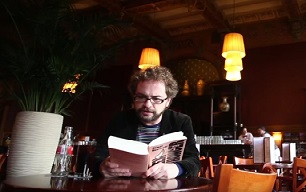
De Nederlandse schrijver Jamal Ouariachi werd geboren in Amsterdam op 8 december 1978. Zie ook alle tags voor Jamal Ouariachi op dit blog.

Uit: Een honger

“Vier porties, minstens.
Dat is de gedachte, terwijl ze de pan rijst leegkiepert boven de vuilnisbak. Aan elkaar geklonterde korrels, te klef gekookt. Nu ze er met gestilde honger naar kijkt: de aanblik van een madenfamilie. Toch vonkt een luciferstreekje geluk door haar borstkas. Luxe schuilt niet in het noodzakelijke, maar in het overtollige. Doffe gong van houten lepel die laatste restjes uit pan dirigeert. Nee, het is iets anders. Plezier in de kommerloosheid waarmee ze dit klusje uitvoert. Lekker, eten weggooien. Denk aan De Kindertjes In... – Nee, ze denkt nu eens even niet aan De Kindertjes In. Met De Kindertjes In heeft ze niets te maken.
Er is maar één kindertje waarvoor Aurélie zich verantwoordelijk voelt, en dat ligt momenteel boven te slapen.
Als dat kindertje vroeg in de avond gevoederd wordt, waarbij ze steeds vaker zelf het bestek mag hanteren, dan kliedert ze de helft van het maal op slab, tafelkleed of grond, nog los van de klodders die ergens, willekeurig, op het kindergezicht blijven plakken. Het gaat niet om wat er vermorst wordt, het gaat om wat er in dat mondje verdwijnt. Denkt het kindertje aan De Kindertjes In? Nee. Het knoeit schuldeloos.
Een halve kip tuimelt de rijst achterna, evenals de inhoud van een steelpan vol satésaus en een kom gekruide sperziebonen. De vuilniszak zucht, het plastic herschikt zich, het eten zakt wat verder weg in de pedaalemmer nu er weer lucht ontsnapt is en daarmee ruimte vrijgekomen. ‘Je hebt weer veels te veel gemaakt,’ roept ze tegen Philip, die in de huiskamer naar een documentaire over waar-ging-het-ook-alweer-over zit te kijken. De mild-verwijtende toon meent ze niet. Juist charmant, zijn klungeligheid: wie een oog groter dan de maag heeft, is een optimist. Maar ze moet het van zichzelf toch even melden.
Vanuit de huiskamer klinkt een mompelbrom waaruit ze opmaakt dat hij haar maar half verstaan heeft. Of even geen zin in een discussie over zijn kookkwaliteiten. Kan ook. Korte blik op haar telefoon. Geen berichten. Zondagavond. Rust.
Ze maakt de keuken schoon omdat de schoonmaakster morgenochtend komt. Zodra de afwasmachine draait, spoedt ze zich naar boven om te kijken hoe Lydia erbij ligt.Lydia slaapt. Knuffel in knuist: een pluchen fantasiebeest met uitpuilende ogen. Rood met knalgeel haar. Het Rooie Koontje noemen ze hem. Woje Kootje, in het idioom van Lydia.”


 1984892-28f38b87134488a010791ec15358d8fa.jpg
Jamal Ouariachi (Amsterdam, 8 december 1978)


De Britse dichter en schrijver Louis de Bernières werd geboren in Londen op 8 december 1954. Zie ook alle tags voor Louis de Bernières op dit blog.

Uit:The Dust That Falls from Dreams

“This was the day that Daniel vaulted the wall.
 Not many weeks previously the tiny Queen had begun to lose her appetite. In Marseilles, President Kruger of South Africa, fleeing into exile laden with wealth stolen from his own people, raised the rabble to new frenzies of anti-Britishness, and hotels where British travellers were thought to be staying were besieged.
The Queen grew drowsy. She had never before shown any lapse of energy or attention, but now she nodded off even at crucial moments. She received a letter from a boy bugler in the Devons, telling her how he had been the one to sound the charge at Waggon Hill, and she managed to reply to it.
The Queen travelled from London to Osborne House, on the Isle of Wight. She loved it there, and had long considered it to be her real family home. She had her own little beach with a bathing hut, and there was a miniature house where her children, now scattered across Europe, used to play when Albert was still alive. Across the Solent she could visit the vast military hospital that she had set up at Netley, bringing the scarves that she liked to knit for the wounded soldiers.
The Queen found that she could not speak when the Brazilian ambassador came to present his credentials. She was forgetting how to talk. She failed to recognise Lord Roberts when he returned in triumph from South Africa in order to become the new Commander-in-Chief. He was bewildered and grief-stricken.
The Queen performed her last great imperial act, and proclaimed the establishment of the Commonwealth of Australia. Her visit to the Riviera was cancelled, and the Keeper of the Privy Purse was obliged to pay out £800 in compensation to the Hotel Cimiez.”
 

 1984892-03901be348079e23aa3297f3a627279e.jpg
Louis de Bernières (Londen, 8 december 1954)


De Amerikaanse schrijfster Mary Catherine Gordon werd geboren op 8 december 1949 in Far Rockaway, New York. Zie ook alle tags voor Mary Gordon op dit blog.

Uit: The Love of My Youth

„She stands before the spotted mirror. A dime-sized pool of expensive moisturizer — rose scented, ordered especially from a Romanian cosmetician in New York — spreads in the heat of her palm. Miranda wonders what Adam looks like. She tries on a long black skirt, throws it impatiently on the bed, then Nile green silk pants with wide legs. She tries on the black skirt again. Then a violet knit top, which she rejects because it emphasizes her breasts. Once a vexation to her on account of their smallness, her breasts had done all right with age. She’s glad he won’t be seeing her naked. Or in a bathing suit. Well, she is nearly sixty now, and her body shows the marks of bearing two strong healthy sons. Her legs, which, he had said, caused him a desire that was painful in its intensity when he saw them in her first miniskirt — September 1965 — but which she’d always thought too thick, too straight, these had gone flabby. She’s tried — swimming, running, yoga — but nothing really helps. Most of the time she doesn’t think of it, she doesn’t really care. It’s one of the benefits of age: such things have lost their power to scald.
She’s blonde now; he would not be accustomed to thinking of her as a blonde, and her hair is short, boyish. In the time they knew each other her hair had hung down her back at one point almost to her waist. Her hair was brown then, a light brown; he’d called it honey colored. She’d parted it in the middle or braided it into a single plait. Then she remembers: he did see her, briefly, with boyish hair. She doesn’t like to think about that time.
She looks at the lines around her eyes, her mouth. Her face has not ceased to please her, but it could never be the face that he had loved.
He has read about her. An article he found in a doctor’s office. “Does Your Office Make You Sick?” Sick buildings. She is an epidemiologist specializing in environmental threats. Her subspecialty: molds.
He thought that such work seemed ill suited to her. Quiet, painstaking work. Requiring patience, which she’d always lacked. But then he remembered: it was only with people that she was impatient. With the physical world, she held her quickness in check; she could spend hours looking, sorting.”


 1984892-64ff20c50d00e22b830e951af8759674.jpg
Mary Gordon (Far Rockaway, 8 december 1949)
Cover


De Amerikaanse schrijver Bill Bryson werd geboren in Des Moines (Iowa) op 8 december 1951. Zie ook alle tags voor Bill Bryson op dit blog.

Uit: African Diary

“I knew that we would probably visit a clinic from time to time and that someone in the party might occasionally have to shoot a charging animal, but I hadn't imagined anything shooting at me in return.
"So how dangerous is Kenya then?" I asked in a small controlled squeak.
"Oh, not at all," they responded in unison.
"Well, hardly," Will added.
"It depends on what you mean by dangerous, of course," said Dan.
"Like bleeding and not getting up again," I suggested. "Being shot and stabbed and so forth," I added.
They assured me that that only very rarely happened, and that it was nearly always one or the other. You had to be very unlucky to be shot and stabbed, they said.
"It's mostly diseases you have to worry about," Nick went on. "Malaria, schistosomiasis, trypanosomiasis."
"Rift Valley fever, blackwater fever, yellow fever," said Dan.
"Dengue fever, bilharzia--the usual tropical stuff," added Will.
But they pointed out that you can be inoculated against many of those and for the rest most people manage a more or less complete recovery, given time and a considered programme of physiotherapy. Many even walk again. I asked if there was anything else I should know.
"Well, the roads are a little dangerous--there are some crazy drivers out there," Will said, chuckling.
"But apart from that and the diseases and the bandits and the railway from Nairobi to Mombasa, there's absolutely nothing to worry about," Nick added.
"What's wrong with the railway?"
"Oh, nothing really. It's just the rolling stock is a little antiquated and sometimes the brakes give out coming down out of the mountains--but, hey, if you worried about all the things that might happen you wouldn't go anywhere, would you?"


 1984892-40131b5e864ccbcd74b6ba1b55d4cbf1.jpg
Bill Bryson (Des Moines, 8 december 1951)


De Amerikaanse dichter en schrijver Delmore Schwartz werd geboren op 8 december 1913 in New York. Zie ook alle tags voor Delmore Schwarz op dit blog.


The Heavy Bear Who Goes With Me
'the withness of the body' --Whitehead

The heavy bear who goes with me,
A manifold honey to smear his face,
Clumsy and lumbering here and there,
The central ton of every place,
The hungry beating brutish one
In love with candy, anger, and sleep,
Crazy factotum, dishevelling all,
Climbs the building, kicks the football,
Boxes his brother in the hate-ridden city.

Breathing at my side, that heavy animal,
That heavy bear who sleeps with me,
Howls in his sleep for a world of sugar,
A sweetness intimate as the water's clasp,
Howls in his sleep because the tight-rope
Trembles and shows the darkness beneath.
--The strutting show-off is terrified,
Dressed in his dress-suit, bulging his pants,
Trembles to think that his quivering meat
Must finally wince to nothing at all.

That inescapable animal walks with me,
Has followed me since the black womb held,
Moves where I move, distorting my gesture,
A caricature, a swollen shadow,
A stupid clown of the spirit's motive,
Perplexes and affronts with his own darkness,
The secret life of belly and bone,
Opaque, too near, my private, yet unknown,
Stretches to embrace the very dear
With whom I would walk without him near,
Touches her grossly, although a word
Would bare my heart and make me clear,
Stumbles, flounders, and strives to be fed
Dragging me with him in his mouthing care,
Amid the hundred million of his kind,
the scrimmage of appetite everywhere.


 1984892-15cb02c78567ff0c82f85f99c1e4a5e9.jpg
Delmore Schwartz (8 december 1913 – 11 juli 1966)
Cover


De Amerikaanse zanger, dichter en tekstschrijver James Douglas (Jim) Morrison werd geboren in Melbourne (Florida) op 8 december 1943.Zie ook alle tags voor Jim Morrison op dit blog.


Awake

Shake dreams from your hair
My pretty child, my sweet one.
Choose the day and
choose the sign of your day
The day’s divinity
First thing you see.
A vast radiant beach
in a cool jeweled moon
Couples naked race down by it’s quiet side
And we laugh like soft, mad children
Smug in the woolly cotton brains of infancy
The music and voices are all around us.
Choose, they croon, the Ancient Ones
The time has come again
Choose now, they croon,
Beneath the moon
Beside an ancient lake
Enter again the sweet forest
Enter the hot dream
Come with us
Everything is broken up and dances.


 1984892-9fe2daa8e35c637a0c11faa0dd943449.png
Jim Morrison (8 december 1943 – 3 juli 1971)


De Franse theaterauteur Georges Feydeau werd geboren op 8 december 1862 in Parijs. Zie ook alle tags voor George Feydeau op dit blog.

Uit: Un fil à la patte

"Au lever du rideau, Marceline est debout, à la cheminée sur laquelle elle s’appuie de son bras droit, en tambourinant du bout des doigts comme une personne qui s’agace d’attendre ; pendant ce temps, dans le fond, Firmin, qui a achevé de mettre le couvert, regarde l’heure à sa montre et a un geste qui signifie : « Il serait pourtant bien temps de se mettre à table. »

Marceline, allant s’asseoir sur le canapé.
Non, écoutez, Firmin, si vous ne servez pas, moi je tombe !
Firmin, descendant à elle.
Mais, Mademoiselle, je ne peux pas servir tant que madame n’est pas sortie de sa chambre.
Marceline, maussade.
Oh ! bien, elle est ennuyeuse, ma sœur ! vraiment, moi qui la félicitais hier,… qui lui disais : « Enfin, ma pauvre Lucette, si ton amant t’a quittée… si ça t’a fait beaucoup de chagrin, au moins, depuis ce temps-là, tu te lèves de bonne heure, et on peut déjeuner à midi ! » c’était bien la peine de la complimenter.
Firmin.
Qui sait ! madame a peut-être trouvé un successeur à M. de Bois-d’Enghien ?
Marceline, avec conviction.
Ma sœur !… Oh ! non ! elle n’est pas capable de faire ça !… Elle a la nature de mon père ! c’est une femme de principes ! si elle avait dû le faire, (changeant de ton) je le saurais au moins depuis deux jours.
Firmin, persuadé par cet argument.
Ah ? alors !…
Marceline, se levant.
Et puis, quand cela serait ! ce ne serait pas encore une raison pour ne pas être debout à midi et quart !… Je comprends très bien que l’amour vous fasse oublier l’heure !… (Minaudant.) je ne sais pas… je ne connais pas la chose ! "


1984892-14511cb1e20b353bb8ff3abdf46c3827.jpg
Georges Feydeau (8 december 1862 - 5 juni 1921)
Scene uit de gelijknamige film uit 2004


De Romeinse dichter en schrijver Quintus Horatius Flaccus werd geboren op 8 december 65 v. Chr. Zie ook alle tags voor Horatius op dit blog.

Oden I.10

O Hermes, Maja's welbespraakte zoon,
die 't jonge menschdom uit zijn wilden staat
hebt opgeheven door de macht der taal
en 't worstelperk!

U geldt mijn zang, bode van 't hemelrijk,
aan wien de lier haar tooverklanken dankt,
die guitig alles wat het hart behaagt,
te stelen weet.

Apollo raasde dreigend om de koeien,
die hem zijn kleine broer had weggekaapt,
maar zocht zijn pijlen tevergeefs en barstte
in lachen uit.

Veilig hebt gij den ouden Priamus
met rijken losprijs uit benarde veste
tot midden in des vijands kamp gebracht
en weer terug.

De lichte schaar der zaligen geleidt
uw gulden staf naar betere gewesten,
beminde deelgenoot van eeuw'gen dag
en eeuw'gen nacht.


Vertaald door Dr. A. Rutgers van der Loeff.


 1984892-fa3d9448ebe52d0a9194a87e4a73c01f.jpg
Horatius (8 december 65 v. Chr. - 27 november 8 v. Chr.)
Horatius door Adalbert von Roessler, ca. 1922


Zie voor nog meer schrijvers van de 8e december ook mijn blog van 8 december 2014 en ook mijn blog van 8 december 2013 deel 1 en ook deel 2.
Geschreven door Romenu om 18:23 Reageer op dit bericht

Tatamkhulu Afrika, Dirk Sterman, Johann Nestroy, Joyce Cary, Gabriel Marcel, Willa Cather, Noam Chomsky

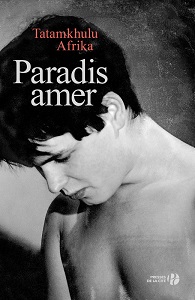
De Zuid-Afrikaanse dichter en schrijver Tatamkhulu Afrika werd geboren op 7 december 1920 in Egypte. Zie ook alle tags voor Tatamkhulu Afrika op dit blog.

Uit: Bitter Eden

“I am lying on the only patch of improbable grass in a corner of the camp. Balding in parts, overgrown in others, generally neglected and forlorn, it is none the less grass, gentle to the touch, sweet on the tongue. The odd wild flower glows like a light left on under the alien sun.
I am not alone. Bodies, ranging from teak to white-worm, lie scattered at angles as though a bomb had flung them there. As at a signal, conversations swell to a low, communal hum hardly distinguishable from that of the darting bees, dwindle away into a silence in which I hear a plane droning somewhere high up, frustratingly free.
I am back in the narrow wadi sneaking down to the sea. I shelter under a rock's overhang, clutching the recently shunted-off-on-to-me Hotchkiss machine gun that I still do not fully understand. Peculiarly, I am alone but I know that in the wadis paralleling mine there is a bristling like cockroaches packing a crack in a wall of thousands of others who wait for the jesus of the ships that will never come. I have stared at the grain of the rock for so long that it has become a grain on the inside of my skull.
A bomber, pregnantly not ours, lumbers over the wadi on its way to the sea, its shadow huge on the ground, its belly seeming to skim rock, scrub, sand. I dutifully pump the gun's last exotic rounds at it, marvelling that, for once, the gun does not jam. But there is no flowering of the plane into flame, no gratifying hurtling of it into the glittering enamel of the sea, and I stare after it as it rises into higher flight and am drained as one who has milked his seed into his hand.
Later, a shell explodes near the sea, the sand and the windless air deadening it into the slow-motion of a dream, and the sun sets into the usual heedless blood-hush of the sky.
I squat down beside the now useless gun, resting my back against its stand, thinking I will not sleep, staring into the heart of darkness that is a night that may not attain to any dawn. But I am wrong. There are muted thunderings, stuttering rushes of nearer sound, an occasional screaming of men or some persisting gull, but I strangely sleep, as strangely do not dream, and am woken – not by any uproar but a silence – to a sun still far from where I have slumped down into the foetal coil. I do not need any loudhailer to tell me that the lines are breached, that the sand is as ash under my feet.
Dully, I struggle up, still tripping over trailing sleep, slop petrol over the gun and the truck of anti-gas equipment deeper in under the rock, curse all the courses at Helwan that readied frightened men for the nightmare that never was. The synthetics of the suits, gloves, boots, intolerably flare.”


 1984521-43c45be3b150132a30c00f7d78ffc0f3.jpg
Tatamkhulu Afrika (7 december 1920 – 23 december 2002)
Cover Franse uitgave


De Duits-Oostenrijkse schrijver, presentator en cabaretier Dirk Sterman werd geboren op 7 december 1965 in Duisburg. Zie ook alle tags voor Dirk Sterman op dit blog.

Uit: Der Junge bekommt das Gute zuletzt

«Mein Vater, dein Großvater. Er hat bei einem Arbeitsunfall ein Bein verloren. Also wirklich verloren. Es sollte ihm im Spital angenäht werden, man konnte es aber nicht finden. Sie hatten es in den Kofferraum geschmissen, hieß es. Aber im Kofferraum war nur eine alte, rostfleckige
Decke. Und ein Wagenheber. Das Bein deines Großvaters nicht. Weinst du?»
«Komm zur Sache, Papa.»
«Deshalb schaute er sich später immer um. Er hat sein Bein gesucht. Jemand hatte es verlegt, ein Kollege. Wir wissen es nicht. Irgendwo liegt das Bein deines Großvaters. Das linke. Du kennst die Maschinen, die Pappkartons zerkleinern? Da war er hineingeraten. In Rohrbach. Bei uns in Hühnergeschrei gab es so was nicht. Das waren Schmerzen! Obwohl, der Körper sendet da Hilfe aus, irgendeine Chemie, die dich das alles aushalten lässt.»
«Meinst du mich? Willst du mich trösten, Papa?»
«Dich? Nein, glaube ich nicht. Da geht’s ja um richtigen körperlichen Schmerz. Bei dir, das ist ja nur Trauer, also, nur. Ich weiß schon, gut, du bist sehr traurig. Das Bein deines Großvaters war mein Lehrer.»
«Das hast du uns schon erzählt, Papa, mehr als ein Mal. Opa hat Akkordeon gespielt und beim Spielen deinen Oberschenkel an seinen gebunden. So hast du Rhythmus gelernt.»
«Richtig, Claude. So hab ich Rhythmus gelernt. Weißt du, wie merkwürdig das war, als im Hausflur nur mehr fünf Schuhe standen? Meine, Omas und seiner.»
Papa biss in das Mohnweckerl. An seinen Lippen klebten Mohnsamen und Eigelb.
«Um was geht’s, Papa?»
«Ich musste so lachen, als dein Großvater danach das erste Mal mit uns schwimmen war. Mit der fleischfarbenen Prothese. Das war zu komisch. Er stieg die Leiter aus dem Schwimmbad hinauf, und das Wasser schoss links und rechts aus seiner Prothese. Wie bei einem Auto, das man aus einem Fluss zieht, wo es dann aus den Fenstern und dem Motor rausläuft. Als er starb, hat deine Großmutter den Bestatter gefragt, ob es einen günstigeren Sarg für Einbeinige gäbe. Gab es aber nicht.»


 1984521-b56bff8396145cdf6d0992ab36e2da06.jpg
Dirk Sterman (Duisburg, 7 december 1965)


De Oostenrijkse schrijver Johann Nepomuk Eduard Ambrosius Nestroy werd geboren in Wenen op 7 december 1801. Zie ook alle tags voor Johann Nestroy op dit blog.

Uit: Der Zerrissene

„STIFLER (zu Lips) Aber, Herr Bruder, sag' doch, was ist's mit dir? Die Gesellschaft wird immer lauter, du wirst immer stiller, alle Gesichter verklären sich, das deine verdüstert sich, endlich lassest du uns ganz in Stich –
WIXER Sein auch richtig alle ang'stochen!
Stifler (zu Lips) Es herrscht eine allgemeine Bestürzung unter den Gästen, weil sie dich nicht sehn.
LIPS Sie sollen sich trösten, früher haben s' mich alle doppelt g'sehn, also gleicht sich das wieder aus.
Wixer Wenn s' sehn, du kommst nicht, so verlier'n sie sich halt schön stad, die Anhänglichkeit, die wir haben, die kann man nicht prätendieren von so gewöhnliche Tischfreund'.
LIPS Freilich!
WIXER Bist du lustig, ist's recht, bist du traurig, sind wir auch da und essen stumm in uns hinein, das heißt Ausdauer im Unglück!
STIFLER Sporner Auf uns kannst du zählen!
LIPS An euch drei hab' ich wirklich einen Terno g'macht.
STIFLER Komm, trink noch ein Glas Champagner mit uns!
LIPS Ich hab' keine Freud' mehr dran. Wie ich noch zwanzig Jahr' alt war, damals ja – aber jetzt!
STIFLER Ich finde jetzt alles am schönsten.
LIPS Ja, wenn man so jung is als wie du!
STIFLER Nu, gar so jung – ich bin wohl erst im Vierundfünfzigsten.
LIPS Ich aber schon im Achtunddreißigsten!
STIFLER Das schmeckt ja noch nach dem Flügelkleide!
LIPS Und doch schon Matthäi am letzten!
STIFLER Laß dir nichts träumen!“


 1984521-3ee48c0aa6ea21363a5cef0a183f6ebc.jpg
Johann Nestroy (7 december 1801 - 25 mei 1862) 
Scene uit een opvoering in Salzburg, 2010


De Brits - Ierse schrijver Arthur Joyce Lunel Cary werd geboren op 7 december 1888 in Derry, Ierland. Zie ook alle tags voor Joyce Cary op dit blog.

Uit:Mr. Johnson

“Mr. Johnson is a young clerk who turns his life into a romance, he is a poet who creates for himself a glorious destiny. I have been asked if he is from life. None of my characters is from life, but all of them are derived from some intuition of a person, often somebody I do not know, a man seen in a bus, a woman on a railway platform gathering her family for the train. And I remember the letters of some unknown African clerk, which passed through my hands for censorship during the war, and which were full of the most wonderful yarns for his people on the coast. He was always in danger from the Germans (who were at that moment two hundred miles away); he was pursued by wild elephants (who were even further away from our station); he subdued raging mobs of 'this savage people' with a word. In his letters he was a hero on the frontier; actually he was a junior clerk in one of the most peaceful and sleepy stations to be found in the whole country. That was one recollection. Another was of a clerk sent to me in a station in remote Borgu who once spent all night copying a report, which he had done so badly in the first place that it could not go with the mail. I had not asked him to do the work again, for I saw that it was beyond him. I meant to do my own corrections. But at six o'clock in the morning, as I sat down to the letters, he appeared suddenly and uncalled (much to the indignation of the sleepy orderly at the door) and offered me the sheaf of papers, written in[Pg 6] his school copperplate (we did not own a typewriter) which looked so reassuringly firm, and was so delusive. I saw at once that this second copy was worse even than the first. A whole line was missing on the first page; whole paragraphs were repeated.
This clerk had been a disappointment; he was stupid, and he could not be trusted with the files. He seemed also, a rare thing in an African, unapproachable. He did not always respond even to good morning. His shyness had a sullen grieved air. What he now suddenly and unexpectedly disclosed was not only a power of devotion but the imaginative enterprise to show it.”


 1984521-28b4c4fb64bbd2a32c724b496537edf0.jpg
Joyce Cary (7 december 1888 - 29 maart 1957)
Cover


De Franse filosoof en toneelauteur Gabriel Marcel werd geboren op 7 december 1889 in Parijs. Zie ook alle tags voor Gabriel Marcel op dit blog.

Uit:The mystery of being

“The metaphor is open to objections of two sorts.
It might be said in the first place that a road implies space; and that the notion of space is something from which a meta physical investigation, as such, must abstract. One must make the simple answer that if my metaphor must be rejected on this count, so must every kind of discursive thinking; for it is all too evident that the notion of discursiveness implies, and rests on, a simple physical image like that of walking along a road. Moreover, we shall later on have occasion to recognize the existence and philosophical rights of a sort of spatiality which might be called the spatiality of inner experience ; and it may be that this spatiality of inner experience is coextensive with the whole spiritual life.
But the objection may be put in another way, which has a dangerous look of being much more genuinely awkward. To lay down a road in a place where at first there were only tracks, is that not equivalent to fixing in advance a certain destination at which one intends to arrive, and must not that destination, itself, be very exactly located? The underlying image would be that of a grotto, a mine, or a sanctuary whose whereabouts one knew in advance. It would be a matter of showing the way there to those who for one reason or another wanted to have a look at the place, no doubt in order to profit from its riches. But does not this presuppose that the result we are working for has already been achieved, even before we start working for it : does it not presuppose a preliminary or original discovery of the grotto or the sanctuary? Well, looking at the matter in my own way, I must ask whether, in the realm of philosophy, we can really talk about results? Is not all such talk based on a misunderstanding; of the specific character of a philosophical investigation, as such? The question raised here at least obliges us to come to much closer grips \vith the very notion of a result.”


 1984521-2df984edd4cb51a4ca2a87670df1e1a3.jpg
Gabriel Marcel (7 december 1889 - 8 oktober 1973)


De Amerikaanse schrijfster Willa Cather werd geboren op 7 december 1873 in de buurt van Winchester, Virginia. Zie ook alle tags voor Willa Cather op dit blog en ook mijn blog van 7 december 2010.

Uit: The Professor's House

“The moving was over and done. Professor St. Peter was alone in the dismantled house where he had lived ever since his marriage, where he had worked out his career and brought up his two daughters. It was almost as ugly as it is possible for a house to be; square, three stories in height, painted the colour of ashes--the front porch just too narrow for comfort, with a slanting floor and sagging steps. As he walked slowly about the empty, echoing rooms on that bright September morning, the Professor regarded thoughtfully the needless inconveniences he had put up with for so long; the stairs that were too steep, the halls that were too cramped, the awkward oak mantles with thick round posts crowned by bumptious wooden balls, over green-tiled fire-places.
Certain wobbly stair treads, certain creaky boards in the upstairs hall, had made him wince many times a day for twenty-odd years--and they still creaked and wobbled. He had a deft hand with tools, he could easily have fixed them, but there were always so many things to fix, and there was not time enough to go round. He went into the kitchen, where he had carpentered under a succession of cooks, went up to the bath-room on the second floor, where there was only a painted tin tub; the taps were so old that no plumber could ever screw them tight enough to stop the drip, the window could only be coaxed up and down by wriggling, and the doors of the linen closet didn't fit. He had sympathized with his daughters' dissatisfaction, though he could never quite agree with them that the bath should be the most attractive room in the house. He had spent the happiest years of his youth in a house at Versailles where it distinctly was not, and he had known many charming people who had no bath at all. However, as his wife said: "If your country has contributed one thing, at least, to civilization, why not have it?" Many a night, after blowing out his study lamp, he had leaped into that tub, clad in his pyjamas, to give it another coat of some one of the many paints that were advertised to behave like porcelain, and didn't.”


 1984521-ba9b95ae25768bf3dd29ee3af0ce5869.jpg
Willa Cather (7 december 1873 – 24 april 1947)
Cover


De Amerikaanse taalkundige, mediacriticus en anarchistisch denker Noam Chomsky werd geboren in Philadelphia op 7 december 1928. Zie ook alle tags voor Noam Chomsky op dit blog en ook mijn blog van 7 december 2010.

Uit: De vernietiging van de 'commons’

“In zijn jaarlijkse toespraak tot de leden van het Amerikaanse Congres (State of the Union) prees President Obama de goede vooruitzichten op een eeuw van energie-zelfredzaamheid, dankzij nieuwe technieken die het mogelijk maken om koolwaterstoffen te onttrekken aan Canadees teerzand, schalie, en andere voorheen ontoegankelijke bronnen. Hij staat niet alleen. The Financial Times voorspelt een eeuw van energie-onafhankelijkheid voor de VS. Het verslag maakt melding van de destructieve lokale gevolgen van de nieuwe methoden. In deze optimistische voorspellingen komt niet ter sprake wat voor wereld deze roofzuchtige verwoestingen zal achterlaten.
Vooraan in de strijd om deze crisis een halt toe te roepen staan over de hele wereld de inheemse bevolkingen, zij die altijd het Handvest van het Woud hebben gehandhaafd. De sterkste positie wordt ingenomen door het enige land dat zij besturen, Bolivia, het armste land van Zuid-Amerika en al eeuwen het slachtoffer van westerse plundering van de overvloedige grondstoffen, in pre-Columbiaanse tijden ooit een van de meest vooruitstrevende van de ontwikkelde samenlevingen van de hemisfeer.
Na de schandelijke mislukking van de wereld-klimaatveranderingstop in Kopenhagen in 2009, organiseerde Bolivia een Top van de Volkeren met 35.000 deelnemers uit 140 landen – niet alleen maar vertegenwoordigers van regeringen, maar ook het maatschappelijk middenveld en activisten. Zij produceerden een Verdrag van de Volkeren, waarin werd opgeroepen tot zeer scherpe vermindering van uitstoot, en een Universele Verklaring van de Rechten van Moeder Aarde. Dat is de belangrijkste eis van de inheemse gemeenschappen in de hele wereld. Het wordt belachelijk gemaakt door ontwikkelde westerlingen, maar tot we in staat zijn om enkele van hun zorgen over te nemen, is het aannemelijk dat zij het laatst zullen lachen – een lach van grimmige wanhoop.”


 1984521-9b6fbfed76e289c14421651ce7820a31.jpg
Noam Chomsky (Philadelphia, 7 december 1928)


Zie voor nog meer schrijvers van de 7e december ook mijn blog van 7 december 2014 deel 2.

Geschreven door Romenu om 18:04 Reageer op dit bericht

Meer van Romenu

↑ Terug naar de berichten