Naar de inhoud

Romenu

Over literatuur, gedichten, kunst en cultuur
akke.beakke.be

Berichten van 11 januari 2017 tot 12 januari 2017

Cees van der Pluijm, David Mitchell, Jacques Hamelink, Haruki Murakami, Kamiel Verwer, Jakob Lenz, Fatos Kongoli, Jack London, Ferenc Molnár
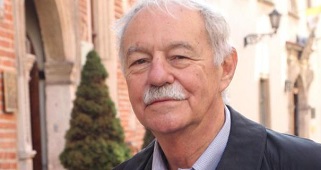
De Nederlandse dichter, schrijver en columnist Cees van der Pluijm werd geboren op 12 januari 1954 te Radio Kootwijk (Gld.). Cees van der Pluijm overleed op 14 december jongstleden op 60-jarige leeftijd. Zie ook alle tags voor Cees van der Pluijm op dit blog.


Winterpark

Je ademt witte wolken uit
Het park spreidt als een winterbruid
Nog blinkend, haast onaangeraakt

Een wereld van gedempt geluid
Waarin je voetstap knisperkraakt
Waarin je kinderziel ontwaakt

Je weet dat het niet duren zal:
(Als al het ongerepte schoons)
Straks vliedt als water naar het dal
Wat uit de lucht viel als kristal

De wereld kreeg iets ongewoons
De vaders werden weer als zoons
Dit moest de sneeuw zijn van hun jeugd
O winterpark, o kindervreugd...


De cederallee

Zo moet het zijn: het tedere geweld
Van ceders in september, kopergroen
Als wachters in gelid, die heel het bos
Behoeden voor wat schuilt en spiedt en dreigt

Maar beuken zijn het: neigend naar het veld
En reikend naar de lucht, een legioen
Van overmoed dat zonder blik of blos
Ons voorhoudt dat het eeuwen overstijgt

En in oktobers late middagzon
Valt stofgoud van de droge bladerdos

November waait de eerste takken los
Het leven wijkt nu met de lichtval mee

Dan wordt voltooid wat eens als feest begon
Verloochend in een herfstige allee


Uit: Momenten

1957

Vijfhonderd meter was het hemelsbreed
Een handkar was voldoende voor het huisraad
En jij mocht zittend mee, wat zat je plat

Fijn bonkend op de bodem met je gat
Een kind van drie dat naar een ander huis gaat
En de gemeentegrens zelfs overschreed

't Was net iets groter; 't lag er bijna naast
't Was meer verplaatsen dan verhuizen haast

Maar Barneveld werd Apeldoorn die zomer
Je weet nog dat het warm was: almaar lomer
Werd ieder ritje hotsend uitgezeten

Ook wees men naar de hemel, stomverbaasd
Om wat je later nooit meer zou vergeten:
Zo'n Sputnik was wel kostje voor een dromer...


 1996938-e216935667c4a2f4739cb9b391f6b2c8.jpg
Cees van der Pluijm (12 januari 1954 – 14 december 2014)


De Britse schrijver David Mitchell werd geboren in Southport op 12 januari 1969. Zie ook alle tags voor David Mitchell op dit blog.

Uit: The Bone Clocks

"Well, perhaps your little walk took you up Peacock Street, to a certain someone called Vincent Costello?" The kitchen sort of swirls, and through the window, on the Essex shore of the river, a tiny stick-man's lifting his bike off the ferry. "Lost for words all of a sudden? Let me jog your memory: ten o'clock last night, closing the blinds, front window, wearing a T-shirt and not a lot else."
Yes, I did go downstairs to get Vinny a lager. Yes, I did lower the blind in the front room. Yes, someone did walk by. Relax, I'd told myself. What's the chances of one stranger recognizing me? Mam's expecting me to crumple, but I don't. "You're wasted as a barmaid, Mam. You ought to be handling supergrasses for MI5."
Mam gives me the Kath Sykes Filthy Glare. "How old is he?"
Now I fold my arms. "None of your business."
Mam's eyes go slitty. "Twenty-four, apparently."
"If you already know, why're you asking?"
"Because a twenty-four-year-old man interfering with a fifteen-year-old schoolgirl is illegal. He could go to prison."
"I'll be sixteen in September, and I reckon the Kent police have bigger fish to fry. I'm old enough to make up my own mind about my relationships."        
Mam lights one of her Marlboro Reds. I'd kill for one. "When I tell your father, he'll flay this Costello fella alive."
Sure, Dad has to persuade piss-artists off the premises from time to time, all landlords do, but he's not the flaying-anyone-alive type. "Brendan was fifteen when he was going out with Mandy Fry, and if you think they were just holding hands on the swings, they weren't. Don't recall him getting the 'You could go to prison' treatment."
She spells it out like I'm a moron: "It's—different—for—boys."
 

 1996938-0b913c7584f4d16932666a38bc2aadba.jpg
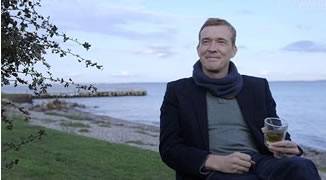
David Mitchell (Southport, 12 januari 1969)


De Nederlandse dichter en schrijver Jacques Hamelink werd geboren op 12 januari 1939 in Driewegen, bij Terneuzen. Zie ook alle tags voor Jacques Hamelink op dit blog.


Proefpatroon

In de rietlaagte waar kapotte petroleumstellen eindigen
hebben boerenturven de beige koffers ammunitie uitgekipt.

Licht vastgezogen in de eendemodder en amper onder water
lokken, half doorgeroest, de diverse soorten belemnieten er.

In het geheim aan de schaafbank wrijf ik schoon wat ik kan. Zet
in de bankschroef puntvast de scherpe patroon, slaghoedje boven.

Hamertje-tik geeft de vlam in de pan, helse oorpijn. Geen hulsflinter
is over, zo waar als ik ongedeerd de dreun van de god geïncasseerd heb.


Baadster

Ze zit op haar hurken overdwars
in de badkuip Evavoorbeeldig
rechtop onder de douchesproeier

die ze als een föhn boven haar
hoofd hanteert, die haar volmaakt,
die haar de bloeddichtbije huid

bekleedt met het continu gruis-
glasscherp verglaasselglanzend
zich vergietend warmwatervlies,

het klaterjuweel dat ze geniet,
met de vrije hand haar haar
achter haar oren vastklevend,

de ogen toe, voor de nacht toilet
makend in de badkuiphurkzit, haar
van het badwater luxurieus gezalfd

schijnende borsten zich zeer groot tonend.


Albaanse grens

De tankkolonne in de zode terzijdegeschoven. De mededood-
groene kolonne met de lanceerinstallaties vordert voorrang.

Over verrotgereden landweg zwermen naar de strijdvehikels
de gehuchtkrijgertjes uit, in frank plezante geestdrift als

hanen kraaiend, opvliegbewegingen makend, om hun iele spil
zich draaiend ter verwelkoming van NATO en hun extase speelt

en het elan van Cantecleer fier op zijn mestvaalt voor elkaar
dat het verbeterd bombardement en de tankslag gelijk aanvangen.

 1996938-1d898a58c86c8fe201c41ade391e9787.jpg
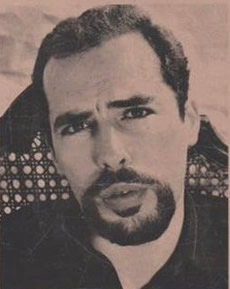
Jacques Hamelink (Terneuzen, 12 januari 1939)


De Japanse schrijver en vertaler Haruki Murakami werd geboren op 12 januari 1949 in Kyoto. Zie ook alle tags voor Haruki Murakami op dit blog.

Uit: What I Talk About When I Talk About Running

“I’m on Kauai, in Hawaii, today, Friday, August 5, 2005. It’s unbelievably clear and sunny, not a cloud in the sky. As if the concept clouds doesn’t even exist. I came here at the end of July and, as always, we rented a condo. During the mornings, when it’s cool, I sit at my desk, writing all sorts of things. Like now: I’m writing this, a piece on running that I can pretty much compose as I wish. It’s summer, so naturally it’s hot. Hawaii’s been called the island of eternal summer, but since it’s in the Northern Hemisphere there are, arguably, four seasons of a sort. Summer is somewhat hotter than winter. I spend a lot of time in Cambridge, Massachusetts, and compared to Cambridge—so muggy and hot with all its bricks and concrete it’s like a form of torture—summer in Hawaii is a veritable paradise. No need for an air conditioner here—just leave the window open, and a refreshing breeze blows in. People in Cambridge are always surprised when they hear I’m spending August in Hawaii. “Why would you want to spend summer in a hot place like that?” they invariably ask. But they don’t know what it’s like. How the constant trade winds from the northeast make summers cool. How happy life is here, where we can enjoy lounging around, reading a book in the shade of trees, or, if the notion strikes us, go down, just as we are, for a dip in the inlet.
Since I arrived in Hawaii I’ve run about an hour every day, six days a week. It’s two and a half months now since I resumed my old lifestyle in which, unless it’s totally unavoidable, I run every single day. Today I ran for an hour and ten minutes, listening on my Walkman to two albums by the Lovin’ Spoonful—Daydream and Hums of the Lovin’ Spoonful—which I’d recorded on an MD disc.
Right now I’m aiming at increasing the distance I run, so speed is less of an issue. As long as I can run a certain distance, that’s all I care about. Sometimes I run fast when I feel like it, but if I increase the pace I shorten the amount of time I run, the point being to let the exhilaration I feel at the end of each run carry over to the next day. This is the same sort of tack I find necessary when writing a novel. I stop every day right at the point where I feel I can write more.”

 

 1996938-2530bcf0502d5f4ceca7b25476874247.jpg
Haruki Murakami (Kioto, 12 januari 1949)


De Nederlandse dichter en schrijver Kamiel Verwer werd op 12 januari 1979 in Tilburg geboren. Zie ook alle tags voor Kamiel Verwer op dit blog.


Humaan

twee transhumanisten uit Leiden
wilden het leed van de mensheid vermijden
ze programmeerden hun brein
en wat hadden ze het fijn
tot ze zich van het silicium wilden bevrijden 


Kwamrij

je bleef een dapper en verliefd estheet
die scherp en galant zijn kruit verschoot
je bracht leven in de bliksemse keet
Gerrit, waarom verdomme ben je nu al dood

 

 1996938-ccdd2cc5b5f28c5121fd1da178a6c65e.jpeg
Kamiel Verwer (Tilburg, 12 januari 1979)


De Duitse dichter en schrijver Jakob Michael Reinho;d Lenz werd geboren op 12 januari 1751 in Seßwegen. Zie ook alle tags voor Jakob Lenz en eveneens alle tags voor Jakob Michael Reinhold Lenz op dit blog.


Bebe, beb´ihr auf zu Füßen

Bebe, beb´ihr auf zu Füßen,
Frühlingserde, und ein Flor,
junger Veilchen, sie zu grüßen,
keim aus deinem Schoß hervor.

Sagt, ihr Veilchen, eure Wonne,
daß ihr sie zu sehn gekriegt,
sagt ihr, daß in eurer Sonne,
fern von ihr, ein Bruder liegt.


An die Sonne

Seele der Welt, unermüdete Sonne!
Mutter der Liebe, der Freuden, des Weins!
Ach ohne dich erstarret die Erde
Und die Geschöpfe in Traurigkeit.
Und wie kann ich von deinem Einfluß
Hier allein beseelt und beseligt
Ach wie kann ich den Rücken dir wenden?

Wärme, Milde! Mein Vaterland
Mit deinem süßesten Strahl, nur laß mich,
Ach ich flehe, hier dir näher,
Nah wie der Adler dir bleiben.


 1996938-45cfbde9ab3226ed64a21a3d1b3874e9.jpg
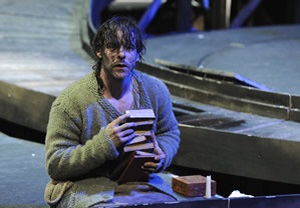
Jakob Michael Reinhold Lenz (12 januari 1751- 24 mei 1792)
Markus Meyer als Lenz in een uitvoering van het gelijknamige toneelstuk van Georg Büchner, Salzburg 2012.


De Albanese schrijver Fatos Kongoli werd geboren op 12 januari 1944 in Elbasan. Zie ook alle tags voor Fatos Kongoli op dit blog.

Uit: The Loser (Vertaald door Robert Elsie en Janice Mathie-Heck)

“Nevertheless, there I was.The next day, my feet carried me out to the cemetery. You might have assumed that it was the grave of some loved one or some sort of nostalgic contemplation which had prevented my departure. This isn’t true, though I have a lot of respect for graves and for nostalgia. In fact, I’m envious of people who feel that those kinds of notions are important and provide stability, like the force of gravity, as a basis for action. For myself, I feel I’m somewhere beyond gravity, cast off and abandoned in a black hole of disdain. Nostalgia was a fleeting luxury for me. Those weren’t the motives behind my aborted departure or behind my visit the following day – for the first time in my life – to the cemetery. For everyone and from every point of view, I was and am a loser.
Grey clouds hovered over the town the next morning. My thoughts were with the refugees at sea. My parents – I live with my mother and father in a two-room apartment plus kitchen – didn’t even bother to ask where I’d been the day before. They were used to my absences and had stopped asking me a long time ago where I was going and what I was doing. My coming home at night was enough for them to get a good night’s sleep. So my thoughts were with the refugees. I was worried about them because of the bad weather, yet there are certain biological processes inside the human body that take place independent of your emotions. I was starving. I dressed and after a quick and muffled ‘morning!’ from the doorway, I left my parents to their coffee in the kitchen, and went out.
I don’t think there’s anywhere on earth quite as dusty as the place I live. There’s dust all over, on the flat cement roofs of apartment buildings, on the tiled roofs of private houses, on the pavements and on the flowers poking up in the only park in the centre of town. It sticks to everything, like icing sugar sprinkled on a layer cake in the baker’s showcase window.”
 

 1996938-7227f5c68edd99271d38d117069d1007.jpg
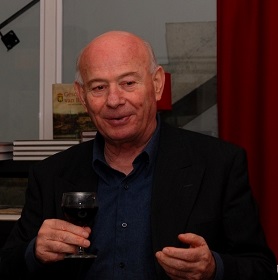
Fatos Kongoli (Elbasan, 12 januari 1944)


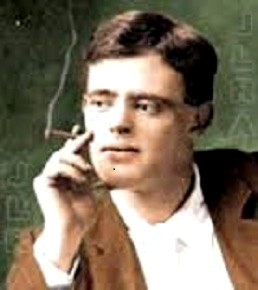
De Amerikaanse schrijver Jack London (eig. John Griffith Chaney) werd geboren op 12 januari 1876 in San Francisco, Californië. Zie ook alle tags voor Jack London op dit blog.

Uit: To Build a Fire

“Day had broken cold and grey, exceedingly cold and grey, when the man turned aside from the main Yukon trail and climbed the high earth-bank, where a dim and little travelled trail led eastward through the fat spruce timberland. It was a steep bank, and he paused for breath at the top, excusing the act to himself by looking at his watch. It was nine o'clock. There was no sun nor hint of sun, though there was not a cloud in the sky. It was a clear day, and yet there seemed an intangible pall over the face of things, a subtle gloom that made the day dark, and that was due to the absence of sun. This fact did not worry the man. He was used to the lack of sun. It had been days since he had seen the sun, and he knew that a few more-days must pass before that cheerful orb, due south, would just peep above the sky-line and dip immediately from view.
The man flung a look back along the way he had come. The Yukon lay a mile wide and hidden under three feet of ice. On top of this ice were as many feet of snow. It was all pure white, rolling in gentle, undulations where the ice jams of the freeze-up had formed. North and south, as far as his eye could see, it was unbroken white, save for a dark hairline that curved and twisted from around the spruce-covered island to the south, and that curved and twisted away into the north, where it disappeared behind another spruce-covered island. This dark hair-line was the trail - the main trail - that led south five hundred miles to the Chilcoot Pass, Dyea, and salt water; and that led north seventy miles to Dawson, and still on to the north a thousand miles to Nulato, and finally to St. Michael on Bering Sea, a thousand miles and half a thousand more.
But all this - the mysterious, far-reaching hair-line trail. the absence of sun from the sky, the tremendous cold, and the strangeness and weirdness of it all - made no impression on the man. It was not because he was long used to it. He was a newcomer! in the land, a chechaquo, and this was his first winter. The trouble with him was that he was without imagination. He was quick and alert in the things of life, but only in the things, and not in the significances.“
 

 1996938-e3ffad0ecf8313440f121b34089b5e11.jpg
Jack London (12 januari 1876 - 22 november 1916)


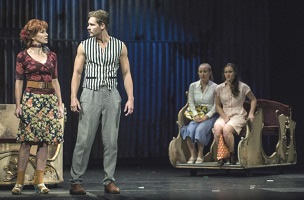
De Hongaarse schrijver Ferenc Molnár werd op 12 januari 1878 in een burgerlijk-joods gezin van Duitse afkomst geboren. Zie ook alle tags voor Ferenc Molnár op dit blog.

Uit: Liliom

“JULIE Are you talking to me?
MRS. MUSKAT Yes, you! You - chamber-maid, you! In my carousel - -
JULIE Who did anything in your old carousel? I paid my fare and took my seat and never said a word, except to my friend here.
MARIE No, she never opened her mouth. Liliom came over to her of his own accord.
MRS. MUSKAT It's all the same. I'm not going to get in trouble with the police, and lose my license on account of you - you shabby kitchen maid!
JULIE Shabby yourself.
MRS. MUSKAT You stay out of my carousel! Letting my barker fool with you! Aren't you ashamed of yourself?
JULIE What? What did you say?
MRS. MUSKAT I suppose you think I have no eyes in my head. I see everything that goes on in my carousel. During the whole ride she let Liliom fool with her - the shameless hussy!
JULIE He did not fool with me! I don't let any man fool with me!
MRS. MUSKAT He leaned against you all through the ride!
JULIE He leaned against the panther. He always leans against something, doesn't he? Everybody leans where he wants. I couldn't tell him not to lean, if he always leans, could I? But he didn't lay a hand on me. »
MRS. MUSKAT Oh, didn't he? And I suppose he didn't put his hand around your waist, either?
MARIE And if he did? What of it?
MRS. MUSKAT You hold your tongue! No one's asking you - just you keep out of it.”
 

 1996938-a996bf50aabfd7de4968850302c01e62.jpg
Ferenc Molnár (12 januari 1878 – 1 april 1952)
Scene uit een opvoering in Kecskemét, Hongarije, 2014


Zie voor nog meer schrijvers van de 12e januari ook mijn blog van 12 januari 2015 en ook mijn blog van 12 januari 2014 deel 2.
Geschreven door Romenu om 17:47 Reageer op dit bericht

Frans Kellendonk-prijs 2017 voor Hanna Bervoets


Frans Kellendonk-prijs 2017 voor Hanna Bervoets

De Nederlandse schrijfster Hanna Bervoets heeft de Frans Kellendonk-prijs 2017 gewonnen, de driejaarlijkse literatuurprijs voor een auteur met originele kijk op maatschappelijke of existentiële problematiek. De Kellendonk-prijs is vernoemd naar de in Nijmegen geboren schrijver en vertaler Frans Kellendonk (1951-1990). Hanna Bervoets werd geboren in Amsterdam op 14 februari 1984. Zie ook alle tags voor Hanna Bervoets op dit blog.

Uit:  Ivanov

“Geheimen willen we altijd kwijt. Ja, uiteindelijk vertelt iedereen elkaar altijd alles. Ik heb me vaak afgevraagd waarom. Waarschijnlijk is het omdat juist dat wat anderen niet van ons weten, ons maakt tot wie we zijn; onze uitzonderlijkheid bewijst. Zo dragen we onze geheimen mee als een zak glimmende edelstenen. Het is een onopvallende zak, die we bewaren op een onopvallende plek. Tot er per ongeluk iemand over struikelt, de zak opent, nog net iets ziet blinken voor we zijn hand wegduwen – nee, dit mag jij niet weten. Maar wanneer de fonkeling eenmaal ontsnapt is, wordt de verleiding groot; willen we pochen met wat we bij ons dragen en zullen we de zak alsnog opentrekken: kijk dan, hier zijn ze, mijn edelstenen, edelstenen die alleen ík heb, die maken dat ik ben geworden wie ik nu ben. Het snelst trekken we de zak open voor de mensen om wie we geven, want nog meer dan de ander willen zien, betekent liefde dat je jezelf aan de ander wilt laten zien, is het niet? 
En toch.
De eerste keer dat ik Jonas over Helena vertelde, was ook meteen de laatste keer.
We kenden elkaar nog maar een paar weken. Het was een warme, droge zomer. Jonas zou met vrienden naar Italië gaan maar had die vakantie één dag voor vertrek afgezegd. Omdat hij geen zin had, beweerde hij. Omdat hij mij had leren kennen, wist ik. Vanaf dat moment zagen we elkaar dagelijks. We spraken af in parken en op stadse terrassen, tot we de ogen van anderen niet meer nodig hadden om onze afspraakjes een zekere ongedwongenheid te verschaffen. Daarna zaten we vooral op mijn balkon. Wanneer de onderburen niet thuis waren dronken we bier en mojito’s tot laat in de avond, en vertelden we elkaar onze levensverhalen; telkens opnieuw, steeds andere details, alsof onze levens routes op een landkaart waren die we nauwkeurig moesten volgen met onze wijsvingers, omdat iedere afslag een nieuwe karaktertrek, een nieuw geheim zou kunnen prijsgeven.
Zijn jeugd in Brabant: vader kweker, moeder huisvrouw, één zus, twee broers, een warm gezin (‘maar ook beklemmend’), met neefjes de maïsvelden in om elkaar af te trekken, als tiener het dorp uit, Architectuur in Antwerpen (‘eigenlijk begon mijn leven daar pas’).
Mijn jeugd in Rotterdam: enig kind van alleenstaande moeder, vaak op straat, voetballen, skateboarden en schuimblokken stelen uit de supermarkt, duistere puber met paars haar, drie studies begonnen, drie studies niet afgemaakt.”


 1996801-c2897130c2434ae7ccf643359e713eee.png
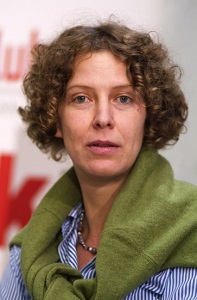
Hanna Bervoets (Amsterdam, 14 februari 1984)

Geschreven door Romenu om 07:48 Reageer op dit bericht

Jasper Fforde, Katharina Hacker, Nikos Kavvadias, Marc Acito, Mart Smeets, Oswald de Andrade, Eduardo Mendoza, Gustav Falke, Diana Gabaldon

De Britse schrijver en cameraman Jasper Fforde werd geboren op 11 januari 1961 in Londen. Zie ook alle tags voor Jasper Fforde op dit blog.

Uit: The Eye of Zoltar

“The first thing we had to do was catch the Tralfamo-saur. The obvious question, other than “What’s a Tralfa-mosaur?” was “Why us?” The answer to the first question was that this was a magical beast, created by some long-forgotten wizard when conjuring up weird and exotic creatures had been briefly fashionable. The Tralfamosaur is about the size and weight of an elephant, has a brain no bigger than a Ping-Pong ball, and can outrun a human. More relevant to anyone trying to catch one, Tralfamo-saurs aren’t particularly fussy about what they eat. And when they are hungry — which is much of the time — they are even less fussy. A sheep, cow, rubber tire, garden shed, antelope, smallish automobile, or human would go down equally well. In short, the Tralfamosaur is a lot like a Tyrannosaurus rex, but without the sunny disposition. And we had to capture it. Oh, and the answer to the “Why us?” question was that it was our fault the rotten thing had escaped. In case you’re new to my life, I’m sixteen, a girl, and an orphan — hey, no biggie; lots of kids don’t have par-ents here in the Ununited Kingdoms, because so many people have been lost in the endless Troll Wars these past sixty years. With lots of orphans around, there’s plenty of cheap labor. I got lucky. Instead of being sold into the garment, fast food, or hotel industry, I get to spend my six years of indentured servitude at Kazam Mystical Arts Management, a registered House of Enchantment run by the Great Zambini. Kazam does what all Houses of En-chantment used to do: rent out wizards to perform magi-cal feats. The problem is that in the past half century, magic has faded, so we are really down to finding lost shoes, rewiring houses, unblocking drains, and getting cats out of trees. It’s a bit demeaning for the once-mighty sorcerers who work for us, but at least it’s paid work. At Kazam I found out that magic has not much to do with black cats, cauldrons, wands, pointy hats, and broomsticks. No, those are only in the movies. Real magic is weird and mysterious, a fusion between science and faith.”


 1996655-15b6f67dca539f9df55fe329a9889d5d.JPG
Jasper Fforde (Londen, 11 januari 1961)


De Duitse dichteres en schrijfster Katharina Hacker werd geboren op 11 januari 1967 in Frankfurt am Main. Zie ook alle tags voor Katharina Hacker op dit blog.

Uit:Die Erdbeeren von Antons Mutter

“Der kleine Garten, ein Acker eigentlich, der früher, in Antons Kindheit, ringsum an Felder gegrenzt hatte, jetzt an weitere Vorgärten stieß, nur an seiner Rückseite ins Freie überging, war umgegraben, die Erde sah frisch aus, vereinzelt stakten Gräser hervor, an einer Stelle war ein großer Löwenzahn gewachsen und nahe am Zaun drängten sich die weichen Blätter von Beinwell.
Muß raus, brummte Helmer, der Bauer, der inzwischen eine kleine Gärtnerei betrieb. Das wächst, da haben Sie keine Vorstellung von! Er bückte sich, grub mit den Fingern, riß drei der langen Wurzeln aus. Immer das gleiche, wird man nie wieder los.
Anton stand neben ihm und blinzelte in das diffuse Licht.
Wie alt sind Sie jetzt eigentlich? fragte Helmer. Dreiundvierzig, antwortete Anton.
Na auch schon. Und keine Kinder, und die Schwester immer noch in Amerika?
Immer noch, sagte Anton.
Da haben Sie für Ihre Eltern ja Zeit.
Ich bin Arzt, wandte Anton ein.
Paßt doch. Helmer schaute zu ihm, in seinen Augen mischten sich Kummer und ein freundlicher Spott.
Erst die Erdbeeren, sagte Anton.
An den Sträuchern, die in kleinen, schwarzen Töpfchen darauf warteten, wieder eingesetzt zu werden in die Erde, hingen schon grüne Früchte. Helmer schüttelte den Kopf.
Anton wollte in zwei Wochen wiederkommen, und dann wieder zur Ernte.
Wässern kann ich sie Ihnen, heute und morgen, daß ein paar angehen. Stroh können Sie hintun nächstes Mal, sagte Helmer. Ist gut gegen die Fäule. Und gegen Schnecken. Viel werden wird das aber trotzdem nicht.“


 1996655-c0f3a7b14bb609a556f067775e3adab8.jpg
Katharina Hacker (Frankfurt am Main, 11 januari 1967)


De Griekse dichter, schrijver en zeeman Nikos Kavvadias werd geboren op 11 januari 1910 in Nikolski Ousouriski. Zie ook alle tags voor Nikos Kavvadias op dit blog..


A Black Stoker From Djibouti

I will commune with salty sea water
gathered from your body drop by drop,
in an ancient Algerian copper cup,
like the one pirates drunk from, before the fight.

Where do you come from? Babylon
Where are you going? To the eye of the storm
Whom do you love? A Gypsy girl
What is her name? Fata Morgana

A ship sail made of leather,all smeared with wax,
the smell of cedar-wood, of incense and varnish,
like the scent of an ageing vessel's hold
built long ago in Euphrates or Phoenicia.

Flame-hued rust from the mine tunnels in Sinai
the mining docks in Gerakini and Stratoni
this thin coating, this sacred rust gives birth to us,
it nurtures us, it feeds on us and then kills us

Where do you come from? Babylon
Where are you going? To the eye of the storm
Whom do you love? A Gypsy girl
What is her name? Fata Morgana


 1996655-737ebc7c94bcd4c47fc288831a07897f.jpg
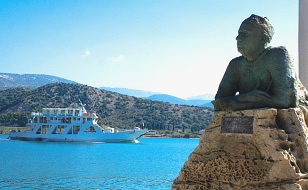
Nikos Kavvadias (11 januari 1910 – 10 februari 1975)
Standbeeld bij de haven van Argostoli


De Amerikaanse schrijver en columnist Marc Acito werd geboren op 11 januari 1966 in Bayonne, New Jersey. Zie ook alle tags voor Marc Acito op dit blog.

Uit: How I Paid for College

"Oh, baby doll, these poor, poor people," Aunt Glo says, ironing and crying, crying and ironing. (Aunt Glo calls everybody baby doll, partly out of affection, but mostly because she can't remember jack shit.) "I just thank the Virgin Mother that my Benny is dead, God rest his soul, so I'll never have to know the pain of divorce."
Even before her stroke, Aunt Glo operated according to a logic all her own. She is, after all, the woman who named her only son Angelo D'Angelo.
Sweat and tears mix on Aunt Glo's pudgy face and her crepe-y arm jiggles as she irons back and forth. Behind her, Angelo's collars hang clipped to a clothesline like severed doves' wings. "It's just so sad for the children," she sighs.
Oh, please, not this.
I know that sad-clown-in-a-black-velvet-painting look, that sympathetic tone, that warm washcloth of pity that grown-ups are always trying to wipe all over me. What she really means, what they all really mean is, "I'm sure your mom had her reasons, Edward, but what kind of mother leaves her own children?"
I'm fine, I want to say, I'm fine. I have my career ahead of me. My art. My friends. Besides, it's not like I don't ever see my mom. True, I never know when she's going to show up, but that's part of what makes her so cool: she's a Free Spirit. Our bond is more spiritual than temporal. But still everyone treats me like I'm Oliver fucking Twist. “


 1996655-58b974cbd0d256ff4c48e51ed50d3603.jpg
Marc Acito (Bayonne, 11 januari 1966) 


De Nederlandse (sport)journalist, schrijver en radio- en televisiepresentator Martinus Jan (Mart) Smeets werd geboren in Arnhem op 11 januari 1947. Zie ook alle tags voor Mart Smeets op dit blog.

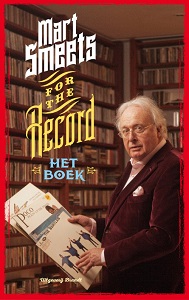
Uit:For the record - Het boek

“Het is de 35ste studioplaat van Neil Young en de echte fans hebben de schij { al ettelijke keren gedraaid. of ze allen blij zijn met het resultaat? Ik denk het niet, want Young is geheel zichzelf als hij weer eens een experiment voor ons neerzet waar sommigen erg van zullen genieten, maar de meeste muziekliefhebbers toch vraagtekens bij zullen zetten.
De snelle uitleg: de plaat heet A Letter Home en dat is een sympathieke en warme titel. Hij 'schrijft’ een spreekwoordelijke brief aan zijn (reeds lang geleden) overleden moeder en stuurt haar twee knuisten met opvallende liedjes uit het nabije verleden toe. Liedjes die Young, in zijn lange reis door de muzikale wereld, ooit aardig of goed of intrigerend vond. Songs van andere mastodonten uit de singer-songwriterwereld zoals zijn landgenoot Cordon Lightfoot, zijn muzikale vriend-op-afstand Bob Dylan, of grootmeesters als Phil Ochs, The Everly Brothers, Tim Hardin, Bert Jansch en Bruce Springsteen (opvallend: alleen maar mannen) speelt en zingt Young in met een overgave die er wezen mag.
Hij had al eerder aangekondigd dat hij met een soort ‘kunstwerk’ zou komen en dat is dus ook weer gebeurd.
Young trok naar Nashville om daar in de privéstudio van Jack White (die zelf op twee nummers te horen is) zijn nieuwste plaat te maken. Young verbaast altijd weer. De vraag luid echter: waarom deze plaat?
Omdat Neil dat zo wil. Waar hij, eeuwen geleden lijkt het bijna, iedereen in de muzikale wereld blij maakte met lp's als After The Cold Rush of Harvest heeft hij door de jaren heen steeds weer een koerswijziging voor ons neergezet. Dat hij deze liedjes mooi vindt, is bijna begrijpelijk. Het zijn allen leeftijdgenoten die uit de hoek van de folkrock komen. Mannen van eer en geweten die liedjes van importantie schreven en die Young nu, als een vorm van eer, aan zijn moeder opstuurt.”


 1996655-88600090f8021529aea103e4926df102.jpg
Mart Smeets (Arnhem, 11 januari 1947) 
Cover


De Braziliaanse schrijver Oswald de Andrade werd geboren op 11 januari 1890 in São Paulo. Zie ook alle tags voor Oswald de Andrade op dit blog.


Babbling (Fragment)

Against cahinetism, the tramping of the climates.

The language without urchuisms. \-\’ithout erudilion.
Natural and nee-logic. The: millionaire contribution of all
Of the mistakes.

From naturalism one had passed to domestic
pyrography and to the excursionist kodak.

All the girls talented. Virtuosos of the player piano.
The processions went out of the bulge of the factories.
It was neceaeary to un-do. Deformation through
impressionism and the symbol. The lyricism brand~new.
The presentation of the materials.

The coincidence: of the first Brazilian construction in
the movement of general reconstrucuction. Brazilwood
poetry.

Against the naturalistic subtlety, the synthesis.
Against the copy, the invention and the surprise.

A perspective of an order other than visual. The
correspondent to the physical miracle in art. Closed stars
in the photographic negatives.

And the wise solar laziness. The prayer. The silent
energy. The hospitality.

Barbaric, picturesque and credulous. Brazilwood.
The forest and the school. The food, the minerals and the
dance. The vegetation. Brazilwood.


Vertaald door Flavia Vidal


 1996655-f157923f440437f001b96ce70fa61e42.jpg
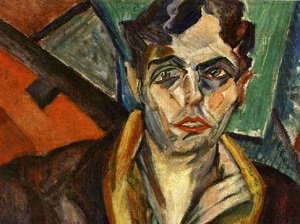
Oswald de Andrade (11 januari 1890 – 22 oktober 1954)
Portret door Anita Malfatti, 1925


De Spaanse schrijver Eduardo Mendoza werd geboren in Barcelona op 11 januari 1943. Zie ook alle tags voor Eduardo de Mendoza op dit blog.

Uit: Katzenkrieg (Vertaald door Peter Schwaar)

„Der ist vor einer Weile abgegeben worden.»
Der Umschlag war verschlossen und trug weder Absender noch Empfänger.
«Wer hat ihn gebracht? Der, der gestern nach mir gefragt hat?»
«Nein. Der da war ein junger, kesser Typ, sah aus wie ein Zigeuner. Er hat seinen Namen nicht genannt und nichts hinterlassen. Nur, ich soll Ihnen den Brief persönlich geben, sobald ich Sie sehe. Es sei wichtig. Das hat er gesagt.»
«In Ordnung», sagte Whitelands und steckte das Kuvert ein.
«Ich werde den Koffer packen. Bereiten Sie die Rechnung vor. Ich habe keine Zeit zu verlieren.»
Er ging in sein Zimmer hinauf, legte den Koffer aufs Bett und öffnete den Schrank, so dass seine wenigen Habseligkeiten zum Vorschein kamen. Bevor er sie in den Koffer verfrachtete, zog er den Umschlag aus der Tasche, ging damit zum Fenster, riss ihn auf und entfaltete ein mit großer, sauberer weiblicher Schrift beschriebenes Blatt. Der Text lautete:
Werter Anthony,
ich weiß, dass mein Vater und Sie heute Vormittag ein Treffen vereinbart haben, aber der vornehme Charakter,den mir unser kurzer Umgang an Ihnen festzustellen erlaubt hat, lässt mich befürchten, dass Sie nicht erscheinen werden. Bitte tun Sie es doch, es ist unbedingt nötig, dass wir uns noch einmal sehen. Nötig für mich, und wenn mich mein Instinkt und mein Verstand nicht trügen, auch für Sie.
Aus diesem gewichtigen Grund erlaube ich mir, Ihnen zu schreiben. Unser Butler, den Sie ja kennen, wird Ihnen meinen Brief zukommen lassen, von dessen Inhalt er nichts weiß, er weiß nicht einmal, wer ihn geschrieben hat. Falls Sie ihn sehen, lesen Sie den Brief nicht in seiner Gegenwart, und fragen Sie ihn nichts. Zerreißen Sie ihn nach der Lektüre.
Wenn Sie zu uns kommen, klingeln Sie nicht an der Eingangstür. Gehen Sie die Mauer entlang, bis Sie in der Seitenstraße zu einer schmalen Eisenpforte gelangen, die in den Garten führt. Klopfen Sie Punkt zwölf Uhr dreimal, und ich werde Ihnen öffnen. Wenn Sie kommen, versichern Sie sich, dass Ihnen niemand gefolgt ist oder Sie beobachtet. Zu gegebener Zeit werde ich Ihnen den Grund für all diese Vorsichtsmaßnahmen nennen.
Immer voller Vertrauen in Sie,
Paquita
Er las den Brief, ohne seine Bedeutung zu verstehen.“


 1996655-d53c7eb12f750ab539d938e202d6d047.jpg
Eduardo Mendoza (Barcelona, 11 januari 1943)


De Duitse dichter en schrijver Gustav Falke werd geboren op 11 januari 1853 in Lübeck. Zie ook alle tags voor Gustav Falke op dit blog.


Das Licht

Ein Traum nur war es, ein Gesicht,
Aus Dämmerung geboren:
Es kam des Wegs ein kleines Licht,
Als hätt's den Weg verloren.

Es zitterte und schwankte sacht
Und flackerte im Winde;
Getragen ward es durch die Nacht
Von einem zarten Kinde.

Das schützte mit der rechten Hand
Das Flämmchen, mit der feinen,
Es glänzte durch die Fingerwand
Ein rosenrotes Scheinen.

Was bist du für ein Seelchen, Kind?
Sprach ich aus meinem Traume.
Sogleich erlosch das Licht im Wind,
Und dunkel war's im Raume.


Der Tulpenbaum

Der Tulpenbaum hat über Nacht
All seine Blumen aufgemacht,
Die weißen Sterne leuchten weit
In ihrer keuschen Herrlichkeit.

Es ist, als hätts die Nacht bedacht,
Was Liebes sie dem Tag vermacht,
Damit von ihrem Märchenglanz
Ein Schimmer leb in seinem Kranz.

Er aber, überreich an Licht,
Bedarf der fremden Sterne nicht,
Und bald entblättert, schnell und sacht,
Das liebliche Geschenk der Nacht.


 1996655-95e39befc88fb38ea9697edf96d02941.jpg
Gustav Falke (11 januari 1853 - 8 februari 1916)


De Amerikaanse schrijfster Diana Gabaldon werd op 11 januari 1952 geboren in Williams, Arizona. Zie ook alle tags voor Diana Gabaldon op dit blog.

Uit: A Breath of Snow and Ashes (Outlander 6)

“Yes, ma’am, I’ll do that.” She didn’t turn and go, though, but lingered, her gaze flickering over the mounds of drying herbs on the gauze racks and the implements of my surgery.
“Do you need something else, dear? Or did you have a question?” She’d seemed to understand my instructions perfectly well—but perhaps she wanted to ask something more personal. After all, she had no mother . .
“Well, aye,” she said, and nodded at the table. “I only wondered—what is it that ye write in yon black book, ma’am?”
“This? Oh. It’s my surgical notes, and recipes . . . er . . . receipts, I mean, for medicines. See?” I turned the book round and opened it so that she could see the page where I had drawn a sketch of the damage to Miss Mouse’s teeth.
Malva’s gray eyes were bright with curiosity, and she leaned forward to read, hands carefully folded behind her back as though afraid she might touch the book by accident.
“It’s all right,” I said, a little amused by her caution. “You can look through it, if you like.” I pushed it toward her, and she stepped back, startled. She glanced up at me, a look of doubt wrinkling her brow, but when I smiled at her, she took a tiny, excited breath, and reached out to turn a page.
“Oh, look!” The page she’d turned to wasn’t one of mine, but one of Daniel Rawlings’s—it showed the removal of a dead child from the uterus, via the use of assorted tools of dilatation and curettage. I glanced at the page, and hastily away. Rawlings hadn’t been an artist, but he had had a brutal knack for rendering the reality of a situation.”


 1996655-b0128c3e2ef319de6b160ed78e11f821.jpg
Diana Gabaldon (Williams,11 januari 1952)


Zie voor nog meer schrijvers van de 11e januari ook mijn blog van 11 januari 2015 en ook mijn blog van 11 januari 2016 deel 2.

Geschreven door Romenu om 18:14 Reageer op dit bericht

W. C. Heinz

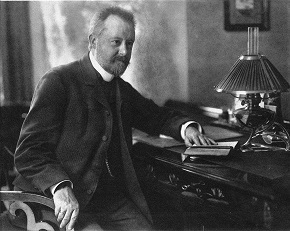
De Amerikaanse schrijver, sportjournalist en oorlogscorrespondent W. C. Heinz werd geboren op 11 januari 1915 in Mount Vernon, New York. Na zijn afstuderen aan het Middlebury College in 1937 trad hij toe tot de redactie van de New York Sun. Na voor de krant gewerkt te hebben als oorlogscorrespondent in Europa tijdens WO II keerde Heinz terug naar de VS en kreeg zijn eigen sportcolumn genaamd "De Sport Scene". Een van zijn stukken van rond deze tijd - Death of a Racehorse, geschreven in 1949 - werd beroemd om zijn beknoptheid (minder dan 1.000 woorden) en de kwaliteit ervan, en werd vegeleken met de Gettysburg Address en de werken van Ernest Hemingway. Toen The Sun ophield te verschijnen werd Heinz in 1950 freelance schrijver. Hij leverde regelmatig bijdragen aan tijdschriften zoals SPORT magazine, Life, The Saturday Evening Post, Esquire, True, Collier's, en Look. De beste stukken zijn gepubliceerd “American Mirror”, “What A Time It Was: The Best of W.C. Heinz on Sports” en “The Top of His Game: The Best Sportswriting of W. C. Heinz. Hij publiceerde zijn eerste boek, een roman genaamd “The Professional” in 1958. Ernest Hemingway noemde het boek "the only good novel I've ever read about a fighter, and an excellent novel in its own right." Andere boeken van Heinz zijn: “Run to Daylight”, “The Surgeon”, “Emergency” en “Once They Heard the Cheers”. In de late jaren 1960 werkte Heinz (onder het pseudoniem Richard Hooker) samen met Dr. H. Richard Hornberger aan de roman “MASH”. Het boek was de voorloper van de film MASH, die de prijs voor beste film van het Cannes Film Festival won in 1970 en een Academy Award voor beste scenario op basis van een ander medium in 1971. Het boek diende ook als uitgangspunt voor de lang lopende tv-serie. Heinz ontving veel onderscheidingen en prijzen, waaronder vijf keer de E. P. Dutton Award voor beste tijdschriftverhaal van het jaar.

Uit: Death of a Racehorse

„They were going to the post for the sixth race at Jamaica, two year olds, some making their first starts, to go five and a half furlongs for a purse of four thousand dollars. They were moving slowly down the backstretch toward the gate, some of them cantering, others walking, and in the press box they had stopped their working or their kidding to watch, most of them interested in one horse.
"Air Lift," Jim Roach said. "Full brother of Assault."
Assault, who won the triple crown ... making this one too, by Bold Venture, himself a Derby winner, out of Igual, herself by the great Equipoise ... Great names in the breeding line ... and now the little guy making his first start, perhaps the start of another great career.
They were off well, although Air Lift was fifth. They were moving toward the first turn, and now Air Lift was fourth. They were going into the turn, and now Air Lift was starting to go, third perhaps, when suddenly he slowed, a horse stopping, and below in the stands you could hear a sudden cry, as the rest left him, still trying to run but limping, his jockey -- Dave Gorman -- half falling, half sliding off.
"He broke a leg!" somebody, holding binoculars to his eyes, shouted in the press box. "He broke a leg!"
Down below they were roaring for the rest, coming down the stretch now , but in the infield men were running toward the turn, running toward the colt and the boy standing beside him, alone. There was a station wagon moving around the track toward them, and then, in a moment, the big green van that they call the horse ambulance.
"Gorman was crying like a baby," one of them, coming out of the jockey room, said. "He said he must have stepped in a hole, but you should have seen him crying."
"It's his left front ankle," Dr. J.G. Catlett, the veterinarian, was saying. "It's a compound fracture; and I'm waiting for confirmation from Mr. Hirsch to destroy him."
He was standing outside one of the stables beyond the backstretch, and he had just put in a call to Kentucky where Max Hirsch, the trainer, and Robert Kleber, the owner, are attending the yearling sales."


 2011312-ec1cd40f96fbb19d03fd917af49e7622.jpg
W. C. Heinz (11 januari 1915 - 27 februari 2008)

Geschreven door Romenu om 00:00 Reageer op dit bericht

Meer van Romenu

↑ Terug naar de berichten