Naar de inhoud

Romenu

Over literatuur, gedichten, kunst en cultuur
akke.beakke.be

Berichten van 16 januari 2017 tot 17 januari 2017

Nanne Tepper, Tom Dolby, Ilja Leonard Pfeijffer, David Ebershoff, Gavin Extence, Ib Michael, Anton Valens, Roel Houwink, Raoul Schrott
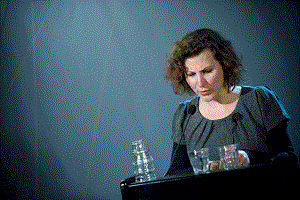
De Nederlandse schrijver, popjournalist en muzikant Nanne Tepper werd geboren in Hoogezand op 17 januari 1962. Zie ook alle tags voor Nanne Tepper op dit blog.

Uit:De kunst is mijn slagveld

“Groningen 6 april 1993
Beste Marc,
Ben weer eens in een periode van zware neuralgie geraakt. Bezocht voor het eerst in tien jaar een dokter en die gaf mij pilletjes tegen ‘overgevoeligheid’, slappe hemelsblauwe tabletjes die nog het beste werken als men ze inneemt met een dubbele borrel. Morgen ga ik naar mijn oude zielenknijper, om te voorkomen dat ik straks weer rijp ben voor het gesticht. De oorzaak van dit alles? Geluk, en een overdosis aan inspiratie; nu ja, sta je ervoor, dan moet je erdoor, zegt Ome Gerard. Heb ondertussen wel twee prachtverzen geschreven en deze hedenochtend naar Tirade gestuurd, dit blad had ik nog niet eerder met mijn geloei bestookt. Baat het niet dan schaadt het zeker.
Bright Lights, Big City vind ik ook maar een matig boekje, wat dat betreft is Gimmick! even mank: het blijft in goede bedoelingen steken. Neen, dan de laatste van de Ier, Brightness Falls, dat is andere oude wijven, wel een totale rip-off van Tender is the Night van Scott Fitz., maar de eerste helft is magistraal, ondanks de rommelige stijl, op de helft echter – typisch Amerikaans – klaart de stijl op en stort het boek ineen. Toch een diepe buiging voor Jay M. Word strontjaloers van zulke prestaties. Wat echter naar mijn onbescheiden mening Het Meesterwerk
tot dusverre is is Less Than Zero. Dat boek grijpt je bij je kloten en laat je een jaar lang krom lopen van de pijn. Heb nu American Psycho liggen, vertaald door een zeer zachtaardige Limburger, die hier in mijn geboortedorp Hoogezand is ondergedoken, en met wie ik wel
eens in de kroeg zat toen hij deze klus aan het klaren was. Hij werd er op zijn minst zo af en toe een beetje misselijk van. Ik moet nog zien of ik dit boek wel aandurf, gezien mijn huidige staat van ontbinding.
Gaat Zwagerman zich op de Bijlmer werpen? Na een Boeing nu een zweefvliegtuigje. Engagement, tja, kom d’r maar ’s om. Toch is het een aardige jongen. Toen ik hem eens een schop onder zijn kloten verkocht, op papier dan, kreeg ik een uiterst correct briefje terug, dat
vind ik wel van ballen getuigen. Maar mijn proza dat ik naar de Belt stuurde heb ik nooit weer gezien; taal noch teken. Tijdens Herfstschrift, enkele jaren terug, mocht Zwagerman tegen Reugenbrink cq aanzeiken, en omgekeerd. (Met Reugenbrinkcq heb ik schoolgegaan,
hierzo, en zelfs nog toneelgespeeld (Borak valt, van Lodewijk de Boer) – wij waren in die tijd geen liefhebbers van elkander maar die wolkenlucht is later redelijk opgeklaard, zo meen ik althans te moeten denken – zijn redacteurschap bij De eenentwintigste Geeuw heeft me er wel altijd van weerhouden iets naar dat blad te sturen, dom natuurlijk, maar daar zat ook de slechtste schrijver van Nederland, Joost N. en die ging over het proza.”


 1998650-398ef792b0f354a69fd4cf18994c17a1.jpg
Nanne Tepper (17 januari 1962 - 10 november 2012)


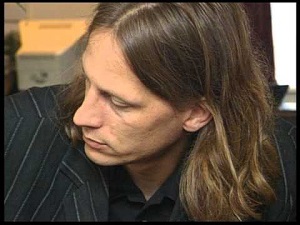
De Amerikaanse schrijver, filmmaker, essayist, journalist en redacteur Tom Dolby werd geboren op 17 januari 1975 in Londen. Hij groeide op in San Francisco, Californië als zoon van de Amerikaanse zakenman en ingenieur Ray Dolby en NARAL activist en fundraiser Dagmar Dolby. Hij studeerde af aan de Hotchkiss School in 1994 en aan Yale University. Tom Dolby’s debuutroman “The Trouble Boy” gaat over betreft een jonge homoseksuele freelance schrijver in Manhattan. Het werd gevolgd door de kostschool roman “The Sixth Form” (2008) die speeltop een eliteschool in Massachusetts. Dolby’s eerste roman voor jonge volwassenen “Secret Society” werd gepubliceerd in oktober 2009 De follow-up “The Trust: A Secret Society Novel” werd uitgebracht in februari 2011.Dolby was samen met schrijfster Melissa de la Cruz co-editor van de bloemlezing essays van “Girls Who Like Boys Who Like Boys: True Tales of Love, Lust, and Friendship Between Straight Women and Gay Men” (2007). In 2012 schreef Dolby de film “Last weekend”die hij samen met Tom Williams regisseerde. Dolby’s werk verscheen in The New York Times, The Village Voice, de San Francisco Chronicle en Out. Een persoonlijk essay van zijn hand werd opgenomen in de bloemlezing “From Boys to Men: Gay Men Write About Growing Up” (2006). Dolby trouwde met zijn partner Andrew Frist in Connecticut in april 2009. Zij zijn de ouders van een meisjestweeling.

Uit:The Trouble Boy

“Two weeks after I moved to New York, I met Jamie Weissman at one of those parties where people don't talk to anyone they don't know already. The living room of the Chelsea apartment was packed with girls in headbands and guys with banker butt, a condition that afflicts first-year investment analysts who spend too much time at their desks and too little time at the gym. We were in the gayest neighborhood on earth, but it wasn't that kind of party.
I knew I had worn the wrong thing when my plaid clam-diggers, perfect for the early September heat, were met with sneers from a group standing in the hallway. Most people were wearing khakis and I looked like I was ready for the beach.
In the kitchen, I poured myself several fingers of vodka and mixed in some off-brand cranberry juice. A guy in a pink Polo shirt and glasses with tortoise shell frames came up to me.
"Ever get the feeling you're at the wrong party?"
I looked down at him quizzically. His curly chestnut hair was receding, more like a thirty year-old's than someone who was probably twenty-two, twenty-three tops.
"Oh, never mind," he continued. "Sometimes I just say whatever comes into my head. I'm sort of ADD that way. I take Ritalin for it."
I never understood people who bragged about the meds they were on. I had been taking sixty milligrams of Paxil every day for the past four years to combat my depression, but I didn't go around telling people about it.
"Hey, can you pour me some of that?" he asked.
I poured him some vodka, and he dropped in a few ice cubes.
"You want a mixer?" I held up a bottle of tonic water. I thought it was obnoxious when people drank booze straight to show off.
"Naw, it's a taste I acquired at prep school. Gets you drunk faster."
"Where'd you go?" I asked. I had gone to a small boarding school in Connecticut, the kind whose glossy catalogs were featured in The Preppy Handbook.
"Oh, it was in Jersey. I was a day student. Actually, most people were day students. But we played all the other prep schools." He sipped his drink. "You're not part of this Princeton crowd, are you? 'Cause I've never seen you before."
 

 1998650-9b052632b6dcbb00a236c7417e3fa29d.jpg
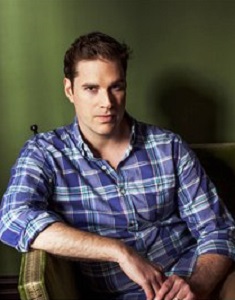
Tom Dolby (Londen, 17 januari 1975)


De Nederlandse dichter en schrijver Ilja Leonard Pfeijffer werd geboren op 17 janauari 1968 in Rijswijk. Zie ook alle tags voor Ilja Leonard Pfeijffer op dit blog.

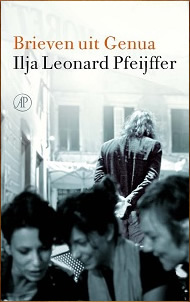
Uit: Brieven uit Genua

“Ze waren zonder waarden. Niets was waardevol voor hen. Het ontbrak zelfs aan bijtend cynisme. Dat zou nog iets stijlvols of strijdvaardigs kunnen hebben. Toen Tommy, Dimitri en ik voor de grap moralistisch gingen zitten doen over die twee Roemeense hoertjes, was hun gezamenlijke verweer niet meer dan wat betekenisloos gesputter. Daan barstte in de hotellobby zelfs in tranen uit omdat hij bang was dat zijn vriendin erachter zou komen. Nou. Bij dezen. Wat ben je nou voor bohemien met je gegrien achter de cocktail die wij voor jou hebben betaald?
Maar zo waren ze alle drie. Dat was het erge. Een en al existentiële twijfels, jeugdtrauma’s en opkomende depressies. De bloem der natie zat met geknakte nekjes in het duurste hotel van Antwerpen sip aan rietjes te sabbelen van hun majestueuze cocktails. En ze koketteerden met hun zwakte als te vroeg oud geworden decadente dichters uit de vorige eeuw, maar zonder de klasse en met slechts de bleke, improductieve, grauwe teint van een zorgvuldig gecultiveerde vermoeidheid.”
(…)

“Ik wil niet meer leven op papier zoals in deze brieven. Ik wil ja zeggen tegen het leven dat een lichaam heeft en dat oprecht is voor een ander. Daarom is dit mijn laatste brief. Het enige wat ik hierna nog wil schrijven, zal ik schrijven op mijn huid in plaats van op papier, dat ik te lang met mijn huid heb verward, en het zal een enkel woord zijn en het zal het enige woord zijn dat belangrijk is en waar, en het woord zal zijn: sì.”
 

 1998650-7bd4d48f381f08bc0b4ddc8f73cf1e85.jpg
Ilja Leonard Pfeijffer (Rijswijk, 17 janauari 1968)
Cover


De Amerikaanse schrijver David Ebershoff werd geboren op 17 januari 1969 in Pasadena, Californië. Zie ook alle tags voor David Ebershoff op dit blog.

Uit: The Danish Girl

« His wife knew first. “Do me a small favor?” Greta called from the bedroom that first afternoon. “Just help me with something for a little bit?”
“Of course,” Einar said, his eyes on the canvas. “Anything at all.”
The day was cool, the chill blowing in from the Baltic. They were in their apartment in the Widow House, Einar, small and not yet thirty-five, painting from memory a winter scene of the Kattegat Sea. The black water was white-capped and cruel, the grave of hundreds of fishermen returning to Copenhagen with their salted catch. The neighbor below was a sailor, a man with a bullet-shaped head who cursed his wife. When Einar painted the gray curl of each wave, he imagined the sailor drowning, a desperate hand raised, his potato-vodka voice still calling his wife a port whore. It was how Einar knew just how dark to mix his paints: gray enough to swallow a man like that, to fold over like batter his sinking growl.
“I’ll be out in a minute,” said Greta, younger than her husband and handsome with a wide flat face. “Then we can start.”
In this way as well Einar was different from his wife. He painted the land and the sea—small rectangles lit by June’s angled light, or dimmed by the dull January sun. Greta painted portraits, often to full scale, of mildly important people with pink lips and shine in the grain of their hair. Herr I. Glückstadt, the financier behind the Copenhagen Free Harbor. Christian Dahlgaard, furrier to the king. Ivar Knudsen, member of the shipbuilding firm Burmeister and Wain. Today was to have been Anna Fonsmark, mezzo-soprano from the Royal Danish Opera. Managing directors and industry titans commissioned Greta to paint portraits that hung in offices, above a filing cabinet, or along a corridor nicked by a worker’s cart.
Greta appeared in the door frame. “You sure you won’t mind stopping for a bit to help me out?” she said, her hair pulled back. “I wouldn’t have asked if it weren’t important. It’s just that Anna’s canceled again. So would you mind trying on her stockings?” Greta asked. “And her shoes?”
The April sun was behind Greta, filtering through the silk hanging limply in her hand. Through the window, Einar could see the tower of the Rundetårn, like an enormous brick chimney, and above it the Deutscher Aero-Lloyd puttering out on its daily return to Berlin.“

 

 1998650-c556168c221388991283759a05e10595.jpg
David Ebershoff (Pasadena, 17 januari 1969)
Hier met collega Tom Dolby (rechts) 


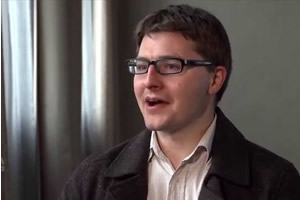
De Engelse schrijver Gavin Extence werd geboren op 17 januari 1982 in Swineshead, Lincolnshire. Zie ook alle tags voor Gavin Extence op dit blog.

Uit: The Mirror World Of Melody Black

“I don’t know how long I hesitated in the doonNay. In my memory, the moment seems to go on and on - an insect caught in amber - but I’m sure that’s just an effect of hindsight, of knowing what was to follow. The door to the kitchen-Iiving-dining room was ajar and the television was turned up loud. This, I reasoned, was why he hadn’t responded to my knocks. I knocked louder, on the inside of the door, then called his name, but there was still no response. Just the ongoing babble of the television.
Go on or turn back? Curiosity and caution fought a short, bloody battle (more of a bludgeoning, truth be told) and then four and a half steps took me to the half-open interior door, where I stopped mid-stride, left arm aloft and knuckles poised.
Simon was dead. I didn’t need to get any closer to satisfy myself of this fact. He was sitting in an armchair on the far side of the room (about eight feet away), his eyes wide and his back preternaturally straight. But really, it was nothing to do with his posture; it wasn’t even the glazed, vacant stare as the television continued to flicker in his irises. More than this, it was just a feeling of absence, the certainty that I was the only person in that flat. I was a person, and Simon was a body.
My immediate thought was that I needed a smoke, which seemed to arrive simultaneously with the realizations that I’d left my cigarettes in my shoulder bag and there was a pack of twenty Marlboro on the coffee table. And, after all, why not?
Beck hated me smoking in our flat, no matter how far I poked my head out of the window. But it wasn’t as if Simon could have any such qualms. This was a completely reasonable response to the situation in which I found myself. I stepped into the room, removed a Marlboro from the pack - there were seven left – and looked around for a lighter. Since there wasn’t one by the ashtray, the next logical place to check would be Simon’s front trouser pockets. That, however, seemed a step too far. Instead, I lit the cigarette from the gas hob in the kitchen area, taking care to keep my hair away from the naked flame, and then leaned against the counter and started to think."
 

 1998650-74ab7c9f8af203e4b70fd24293fb8823.jpg
Gavin Extence (Swineshead, 17 januari 1982)


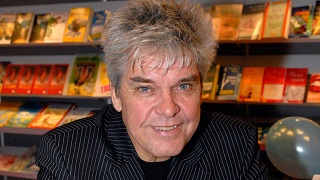
De Deense schrijver Ib Michael (eig. Ib Michael Rasmussen) werd geboren op 17 januari 1945 in Roskilde. Zie ook alle tags voor Ib Michael op dit blog.

Uit: Prince (Vertaald door Barbara Haveland) 

“I see a boy. Hard to say how old he is, I'm no expert on children; but he is at the age when the wonder is great and the grief, when something breaks, devastating. The beach is fraught with wind and the world cuts right through him as he comes tearing around the bend, all dog roses, sandy track, and farmsteads, and suddenly finds himself, out of breath, by the sea. It is the best bend in the world and he flies around it with his arms spread into wings.
Farther on, beyond the cliff that rears up, crowned by windblown tufts of sedge and lyme grass, stands the lighthouse. The lighthouse at the end of the world. A delft-blue cap is all that can be seen, sticking up above the cliff side with its drifting sands and foxes' lairs; spy holes in the whitewashed tower and glass all the way around carry the light across white nights in which birds never cease to sing, while the day hovers and grows thin on the horizon.
The sea holds him transfixed. It knocks the feet from under him, whether it is stretching glassy calm as far as the eye can see or thundering against cliff faces and stone dikes that shatter its teeth. A sea that devours sailors and crushes their spirits like eggshells. He can hear it—even when he is asleep in his berth with the timbered walls and the window that lets in the white sky. Distant thunder murmurs when he puts his ear to the wall. He lives in a conch of a house, and the windowsill is spread with his collection of seashells and pebbles.
Nor do I know what place this is, though I have—in my time—seen many like it. A fishing village, with boats on the beach, stones, rollers, and a winch for hauling the boats out of the water. The winch is turned by a fishing stake that has been washed ashore, scoured white, and saturated with saltwater that lends its weight to the wood. It takes one man to brace his chest against the stake, another to keep the dinghy on an even keel as it runs up onto the rollers. Fishing nets are hung out to dry and when the sun hits the live-boxes the airholes shine like silver coins.”
 

 1998650-f955e0e7327c1a931f0ebe1281a3db4c.jpg
Ib Michael (Roskilde, 17 januari 1945)


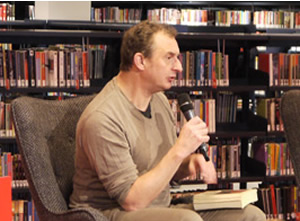
De Nederlandse schrijver en schilder Anton Valens werd geboren op 17 januari 1964 in Paterswolde. Zie ook alle tags voor Anton Valens op dit blog.

Uit: Het Boek Ont

“Soms had hij niets bij zich, soms een waszak vol. Hij reed motor, een vervoermiddel dat vreemd contrasteerde met zijn chronische traagheid, die zodra je hem wat beter leerde kennen vlot aan de oppervlakte kwam. Niemand tergde de tijdmeting als Boudewijn. Ook nu weer begon hij een te breed opgezet verhaal over een zeker bezoek aan een ambtelijke instantie en was, toen de minuut ruimschoots verstreken was, vrijwel niet af te stoppen. Je had geen bal aan Boudewijn. Een van de bedoelingen van Man&Post was dat de mannen elkaar zouden helpen met moeilijke formulieren en instantiekwesties, maar Boudewijn was uitsluitend met zichzelf bezig. Hij wist niets en was niemand tot steun.
Toen het met hulp van de anderen toch gelukt was Boudewijn het zwijgen op te leggen, was aan hemzelf de beurt. Sylvio nam de rol van interviewer over en vroeg: ‘Isebrand, hoe zit je erbij?’
‘Goed. Redelijk, dank je, ik sta een beetje strak nu en dan, maar niks abnormaals. Alleen het geld... Als het zo doorgaat, ga ik binnenkort failliet. Ik moet weg, naar de Randstad. Hier is het hopeloos. Maar hoe kom ik hier weg? Daarom val ik soms wat moeilijk in slaap...’
Hij werd onderbroken door de voordeurbel, die tweemaal achtereen hard en schril schelde en zo de fragiele sfeer van vertrouwen en veiligheid schond.
Met de beduimelde hallofoon aan het l-oor herkende Isebrand de gebarsten bas van Cornelis Meckering. Na hun eerste kennismaking had hij niet veel meer aan de organisatieadviseur uit Nieuw-Buinen gedacht, maar hij was hem ook niet helemaal vergeten.
Meckering stapte de woning in, gekleed in zijn wollen mantel, met in zijn tegen zijn borst aan gedrukte handen een dubbele stapel post van angstwekkende omvang, een zware boezem van bankafschriften.”
 

 1998650-8e7afdf56f3e0b730f84d43094e7b194.jpg
Anton Valens (Paterswolde, 17 januari 1964)


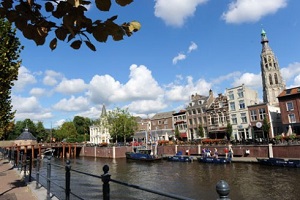
De Nederlandse dichter en schrijver Roel Houwink werd geboren op 17 januari 1899 in Breda. Zie ook alle tags voor Roel Houwink op dit blog.


Erfhuis

In de beslotenheid der oude wanden
hangt zorgeloos uw eenzaam beeld,
boven den vastberaden greep der handen:
een glimlach, beuzel en verveeld.

Uw blik, die eens een vorst ontmande,
is in het bleeke licht vergeeld,
het keurs, dat sluw uw leest omspande,
beurtlings door vocht en zon bespeeld.

Zij laten u in deze schande:
een veil, versleten vrouwebeeld...
En verder grijpen hunne handen
naar wat hun baatzucht reeds verdeelt.


 1998650-fc71fba077c0408b919e5981ebc63ae0.jpg
Roel Houwink (17 januari 1899 – 3 juni 1987)
Breda, haven


De Oostenrijkse dichter schrijver Raoul Schrott werd op 17 januari 1964 geboren in Landeck, Tirol (en volgens andere bronnen op een schip „São Paulo“ dat van Brazilië onderweg was naar Europa). Zie ook alle tags voor Raoul Schrott op dit blog.

Uit: Das schweigende Kind

„Erzählenswert ist wohl nur Wirkliches. Um dir jedoch die Wahrheit sagen zu können, muss ich Zeugnis alles Falschen ablegen.
Durch das Rundglas schaute ich zu, wie deine Mutter hin eingerollt, an Maschinen und Schläuche angeschlossen wurde. Die Gesichter der Ärzte bis auf die Augen von Gazemasken verhüllt, breitete man ein grünes Tuch über sie, sodass vom prallen Bauch unten bloß ein Rechteck blieb. In diesem abgemessenen Ope rationsfeld fing dein Leben an, einem keimfreien gefliesten Raum, in dem deine Mutter ihren Körper taub werden spürte.
Drinnen nahm ich ihre Hand; sie ließ los: bleib weg, bleib weg, du bist schuld, die Schmerzen haben einen halben Menschen aus mir gemacht, das wolltest du doch, gib’s zu, murmelte sie. Stattdessen hielt mich der Anästhesist an der Schulter, um mich am Blick über die Schirmwand zu hindern. Ich entwand mich schließlich seinem Griff, um sehen zu können, wie sie dich mit den Füßen voran aus dem Leib zogen.
Eine Steißgeburt warst du, dein Körper voll weißem Schmer, dein Haar kohlig schwarz dagegen. Blut troff von deinem Gesicht, du warst von der Stirn ab darin getaucht, mit der verschmierten Schnauze eines jungen Polarbären, der sich in einer Robbe festgebissen hat, um sie hin und her zu schütteln und auf die Scholle zu zerren, deine Zehen breit gespreizt, als wolltest du mit talgverklebtem Fell gleich davon stapfen, einen Fleischbrocken im Maul, Blut auf den Tatzen und der dahinter in den Harsch gezogenen Spur.
Ein Schwall dunklen Meeres stieg derweil in deiner Mutter auf und nahm ihr die Luft; sie würgte, die Narkose lähmte ihre Lungenflügel: erst da habe ich dich schreien gehört. Zwei Krankenschwestern brachten deine Mutter weg und legten dich mir in die Arme. Du wolltest dich festbeißen, deine Schnauze erneut unter das Eis stecken, dich an meiner Brust festsaugen, bist dabei aber mit deinen Pfoten abgerutscht in meine Achsel, die Armbeuge. So erlagst du zum ersten Mal in deinem Leben einer Täuschung, einem leeren Versprechen.“

 

 1998650-61845c464980d9364529c8e16c0d2532.jpg
Raoul Schrott (Landeck, 17 januari 1964)


Zie voor nog meer schrijvers van de 17e januari ook mijn blog van 17 januari 2016 deel 1 en ook deel 2 en eveneens deel 3.

Geschreven door Romenu om 18:44 Reageer op dit bericht

Jaap van den Born

De Nederlandse dichter, kunstenaar en illustrator Jaap van den Born werd geboren in Nijmegen op 17 januari 1951. Van den Born werd opgeleid tot onderwijzer en tekenleraar. Hij is beëdigd grafoloog. Van den Born was o.a. werkzaam als matroos, sergeant bij de luchtmacht, arbeider, barkeeper, wietknipper, nachtportier en postbezorger. In 1988 maakte hij met Peter Coret (alias Cees van der Pluijm) en Wilbert Friederichs de expositie en voorstelling 'Poëzie aan de muur' in het Steigertheater te Nijmegen. In 2011 schreef hij het libretto voor het oratorium 'Kiek duir'...De Broerstraat, voor het Colourful Citykoor, dirigent Johnny Rahaket, een muziekspektakel met teksten over de vreemdelingen die door de eeuwen Nijmegen bevolkten, met muzikanten uit vele werelddelen, dat opgevoerd werd in de Stadsschouwburg. Als dichter debuteerde Van den Born in 2005 met de bundel “2000 jaren Nijmegenaren”, gevolgd door “Drs. P révisé”, die hij samen met Drs. P schreef. Hierna volgden nog een groot aantal bundels en publicaties in literaire tijdschriften. Zijn werk kenmerkt zich door de toepassing van strakke vormen als het sonnet, het ollekebolleke en het elftal. Zijn werk is humoristisch maar ook kritisch van aard. Filosofie, wetenschap en geschiedenis zijn belangrijke thema’s in zijn werk. In 2012 werd Van den Born door literair tijdschrift De Tweede Ronde (later: KortVerhaal) de Kees Stip Prijs toegekend voor zijn gehele oeuvre op het gebied van light verse.


Hemels Tafereel

Ach, kijk ze nou toch vrolijk staan te springen!
De witte veren vliegen in het rond
Ook cherubijntjes in hun blote kont
Staan stralend van Gods lof en eer te zingen

Eén loopt zich door de menigte te wringen
Verbeten trek rond de wat weke mond
Ondanks zijn blos oogt hij wat ongezond
Normaal bij pas gestorven stervelingen

Hij spreidt een zelfverzekerdheid ten toon
Ondanks zijn nu gestaakte ambtstermijn
Alsof zijn sterven hem pas echt een doel gaf

Hij stevent recht op God af op Zijn troon
En zegt met lijzig, achteloos venijn:
‘Ga als de sodemieter van mijn stoel af!’


Een ster uit het oosten

We joelden en we gilden in het bad
Toen kregen we opeens een grote schok
Daar kwam, gewoon in badpak, Ciska Peters!

Die zomaar in óns bad een baantje trok
Gescheiden door wat chloordoorwalmde meters
Zwom daar een Ster, bekend van de Teevee!

Na afloop knoopten wij gehaast de veters
En zagen hoe Zij, zwevend als een fee
Per fiets vertrok, de blonde haren nat

Ons jongenshart bleef smeulend weken gloeien
(Daarna kwam Frank, maar die kon me niet boeien)


 2077198-c0010a8c41fb759ff918f15ed5ad08ae.jpg
Jaap van den Born (Nijmegen, 17 januari 1951)

Geschreven door Romenu om 00:00 Reageer op dit bericht

Diana van Hal

De Nederlandse schrijfster Diana van Hal (pseudoniem van Diana Ruwaard) werd op 17 januari 1980 geboren in Amsterdam. Zij studeerde medische microbiologie, maar veranderde halverwege het derde leerjaar naar klinische chemie. Na de HBO studie ging zij als medisch klinisch analist werken. In haar tienerjaren wilde ze al schrijfster worden. In november 2015 presenteerde zij haar debuut “De verzamelaar”.

Uit: De verzamelaar

“Katie Caudill veegt een verdwaalde traan van haar wang.
Hoe vaak is ze nu al naar bodycombat les geweest? Brian vindt het heerlijk om met de kleine Max alleen te zijn. Mannen onder elkaar, noemt hij het gekscherend. Voor de zoveelste keer draait Katie haar hoofd naar hun huis. Er brandt licht in de badkamer. Brian zal Max nu wel in zijn badje zetten. In gedachten ziet ze voor zich hoe Max met zijn mollige handjes in het water spettert. Om de opkomende tranen terug te dringen wendt ze haar hoofd af richting de straat, waar het opvallend rustig is op die ene auto na. Katie staart naar het bord boven de bushalte. Nog tien minuten voor de bus komt. Gedachten buitelen over elkaar heen. Zal ik wel gaan? Zal ik niet gaan? Het zou oneerlijk zijn om terug naar binnen te gaan om vervolgens weer te klagen over haar lichaam. Waarom is het
toch zo moeilijk om die twee uurtjes van huis te zijn?
Voor een klein moment is Katie afgeleid. Vreemd, de auto staat nu stil met de lichten nog aan. Staat vast op iemand te wachten. Een blik op haar horloge vertelt haar dat het nog zeker vijf minuten duurt voordat de bus komt. Zal ik dan toch?
Een geluid vlak achter haar maakt dat ze zich omdraait. Verdorie, door de bewolking is het al donker aan het worden. Wat verwacht je anders in oktober. Het gaat nog regenen ook en ze trekt de capuchon van haar jas over haar rode, lange haar. Twijfel, altijd weer die onrustige twijfel.
Voor een tweede keer wordt Katie afgeleid door een geluid. Nog een blik achterom. Zal wel een diertje zijn dat schuilt voor de regen. Katie trekt de capuchon verder over haar hoofd, draait zich om. De net nog geparkeerde auto komt haar kant op. Dit gaat volledig aan Katie voorbij. Pas op het moment dat de auto de busbaan oprijdt, rinkelen alarmbellen in haar. Te laat!”


 2000646-d8386a34190c95396362062c3c3b4297.jpg
Diana van Hal (Amsterdam, 17 januari 1980)

Geschreven door Romenu om 00:00 Reageer op dit bericht

Ester Naomi Perquin, Inger Christensen, Susan Sontag, Reinhard Jirgl, Anthony Hecht, Brian Castro, José Soares, Robert W. Service, Tino Hanekamp

De Nederlandse dichteres Ester Naomi Perquin werd geboren in Utrecht op 16 januari 1980. Zie ook alle tags voor Ester Naomi Perquin op dit blog.


Kortom

ik herinner me wel de sneeuw,
de Karelsbrug in Praag, hoe jij -
hoe jij tot op vandaag lacht om
iets dat ik niet zag, wat vlokken
van mijn schouder slaat.

Hoe ieder zinloos ingewikkeld
sneeuwkristal op kinderkoppen
achterblijft en erger:
dat het ons niet daarom gaat.

Maar of er een moment zal zijn
waarop wij wezenlijker samen
- ik weet niet eens of wij
dat toen wel waren, wat jij
voorbij mijn blikveld ziet.

Taal valt armoedig in een zin als:
weet je nog we gingen
met de eerste sneeuw naar Praag
om samen op de brug te staan
en smelt al bij; we gingen niet.


Vreemden

Zoals je jezelf op een foto waarop je ruggelings staat afgebeeld
herkent maar omdat het onnatuurlijk blijft
liever niet meer bent – zo is de ander

precies zoals je zelf al denkt: het is niet goed teveel te weten,
geheimen tekenen verstand, geven iets om handen

leg tussen jezelf / de ander een diepe zee en verf je haren,
hou je onhoorbaar voor elke poging tot elkaar, verzet je
tegen nadering met rotsvast uitgesproken namen.

geef volle ruchtbaarheid en ga een oorlog aan, wees
te allen tijde onveranderbaar. Val met niemand samen.


 1998329-ba66c7b09b6d9070e6f010d5e410343f.gif
Ester Naomi Perquin (Utrecht, 16 januari 1980)


De Deense dichteres, schrijfster en essayiste Inger Christensen werd geboren op 16 januari 1935 in de stad Vejle aan de oostkust van Jutland. Zie ook alle tags voor Inger Christensen op dit blog.

Uit:Alphabet (fragment)

the earth that Jayadeva sings in his mystic
12 century poem; the earth with its coastline
of conscience, blue and with nests
where the large heron exists, with its neck curved
blue-gray , or the small heron exists, mysterious
and shy, or the night heron, the ash-colored heron exist
and the degrees of wing beats of sparrows, of cranes
and pigeons; the earth with Jullundur, Jabalpur and
Jungfrau exists, with Jotunheim and the Jura
exists, with Jabron and Jambo, Jogkarta
exists, with earth-swirls and earth-smoke exists
with water masses, landmasses, earthquakes exists,
with Judenburg, Johannesburg and the Jerusalem of Jerusalems

*
atombombs exist

Hiroshima, Nagasaki

Hiroshima 6
august 1945

Nagasaki 9
august 1945

140.000 dead and
wounded in Hiroshima

about 60.000 dead and
wounded in Nagasaki

frozen numbers
somewhere in a distant
and ordinary summer

since then the wounded
have died, many at first, indeed
most, then fewer, but in the end


 1998329-973bb0b4eef0f25655ffb1e6631f0345.jpg
Inger Christensen (16 januari 1935 – 2 januari 2009)


De Amerikaanse schrijfster en essayiste Susan Sontag werd geboren op 16 januari 1933 in New York. Zie ook alle tags voor Susan Sontag op dit blog.

Uit: Against interpretation

“The story of the exodus from Egypt, the wandering in the desert for forty years, and the entry into the promisedland, said Philo, was really an allegory of the individual soul’s emancipation, tribulations, and final deliverance. Interpretation thus presupposes a discrepancy between the clear meaning of the text and the demands of (later) readers. It seeks to resolve that discrepancy. The situation is that for some reason a text has become unacceptable; yet it cannot be discarded. Interpretation is a radical strategy for conserving an old text, which is thought too precious to repudiate, by revamping it. The interpreter, without actually erasing or rewriting the text, is altering it. But he can’t admit to doing this. He claims to be only making it intelligible, by disclosing its true meaning. However far the interpreters alter the text (another notorious example is the Rabbinic and Christian “spiritual” interpretations of the clearly erotic Song of Songs), they must claim to be reading off a sense that is already there.
Interpretation in our own time, however, is even more complex. For the contemporary zeal for the project of interpretation is often prompted not by piety toward the troublesome text (which may conceal an aggression), but by an open aggressiveness, an overt contempt for appearances. The old style of interpretation was insistent, but respectful; it erected another meaning on top of the literal one. The modern style of interpretation excavates, and as it excavates, destroys; it digs “behind” the text, to find a sub-text which is the true one. The most celebrated and influential modern doctrines, those of Marx and Freud, actually amount to elaborate systems of hermeneutics, aggressive and impious theories of interpretation.“


 1998329-637dd4edf84dfa41ed11ba38da39ea56.jpg
Susan Sontag (16 januari 1933 – 28 december 2004)


De Duitse schrijver Reinhard Jirgl werd op 16 januari 1953 in Oost-Berlijn geboren. Zie ook alle tags voor Reinhard Jirgl op dit blog.

Uit: Nichts von euch auf Erden

„Sie dienen auch zur Abschirmung gegen unerwünschte Satellitensignale; die elektronische Detektion der Kontinente ist somit weitgehend ausgeschlossen. Wälder, Gewässer (Seen und Flüsse) sowie landwirtschaftlich genutzte Flächen sind ebenfalls von dieser Imagosphäre überwölbt; so erhalten sich unterhalb dieser Membran stabile, von äußeren Klimaten weitgehend unabhängige Witterungsverhältnisse. Einige schmale, mit Lichtsignalen und Funkfeuern markierte >Schleusentore< bieten zu Land, zu Wasser und aus der Luft sowie den vom All herkommenden Flugkörpern Gelegenheit, unter die Imagosphären zu gelangen. Diese Schleusen sind zu jeder Zeit fest verschließbar.
Das Portal zum europäischen Kontinent befindet sich über dem nördlichen Atlantik, über dem Eis des Nordpols; der Landeanflug in etwa 45 Grad zum Nullmeridian erfolgt zunächst über die britischen Inseln, dann über Nordostfrankreich hin zum europäischen Kernland, denn in diesen Teilen Europas finden sich besonders viele Imagosphären verstreut. – Die Einlassschleusen für Nordamerika befinden sich ebenfalls über dem Nordpol, der Landeanflug führt sodann über die Nordregionen Kanadas hinweg auf das nordamerikanische Festland (Hauptlande- und Startplatz seit jeher in Florida). Mittelamerika weist seinen Zugang von den Bahamas her, Südamerika von der Antarktischen Halbinsel des Erdsüdpols über Feuerland. Asien hat seinen Zugang vom Indischen Ozean über Sri Lanka, wahrend Afrika, ebenfalls über den Erdsüdpol, vom Königin-Maud-Land erreichbar ist, hingegen Australien und Neuseeland ihre Einflugschleusen über Victorialand offen halten. Andere Zugänge oder transkontinentale Verbindungen existieren keine mehr.”


 1998329-485dc3a4cbda01e721f46a19e876ba67.png
Reinhard Jirgl (Oost-Berlijn, 16 januari 1953)


De Amerikaanse dichter Anthony Hecht werd geboren op 16 januari 1923 in New York. Zie ook alle tags voor Anthony Hecht op dit blog.


The Feast Of Stephen

1
The coltish horseplay of the locker room,
Moist with the steam of the tiled shower stalls,
With shameless blends of civet, musk and sweat,
Loud with the cap-gun snapping of wet towels
Under the steel-ribbed cages of bare bulbs,
In some such setting of thick basement pipes
And janitorial realities
Boys for the first time frankly eye each other,
Inspect each others’ bodies at close range,
And what they see is not so much another
As a strange, possible version of themselves,
And all the sparring dance, adrenal life,
Tense, jubilant nimbleness, is but a vague,
Busy, unfocused ballet of self-love.


II
If the heart has its reasons, perhaps the body
Has its own lumbering sort of carnal spirit,
Felt in the tingling bruises of collision,
And known to captains as esprit de corps.
What is this brisk fraternity of timing,
Pivot and lobbing arc, or indirection,
Mens sana in men’s sauna, in the flush
Of health and toilets, private and corporal glee,
These fleet caroms, plies and genuflections
Before the salmon-leap, the leaping fountain
All sheathed in glistening light, flexed and alert?
From the vast echo-chamber of the gym,
Among the stumbled shouts and shrill of whistles,
The bounced basketball sound of a leather whip.


 1998329-1cfe1a6a1a3765f72ba2e1c00a72410f.jpg
 Anthony Hecht (16 januari 1923 – 20 oktober 2004)


De Australische schrijver en essayist Brian Castro werd geboren op 16 januari 1950 in Hongkong. Zie ook alle tags voor Brian Castro op dit blog.

Uit:The Bath Fugues

“Fabiana. played in a palm-court orchestra at tlte Intercontinental Hotel. to keep her lingers and her little knot of friends. Ishe said.
She seemed at the opposite pole to me. I was trying to undo all knots. If you had to describe me you would say I was a knot loosener. Dispensing with friends of the ordinary variety, only maintaining acquaintances who were tnost likely to become enemies and who could then be shed without conscience.
l acquired true solitude. The only time I l'elt lonely was when I lived on the banks of that French river with rats for company. The rats fought a lot amongst themselves. I didn't seem to have their attention. Back in my bourgeois life people always intruded. Even barged in when I was in the toilet, like when I was sharing the flat in Newtowu with a couple who made noisy lose all day. They had a big bed and liked manacles. whips and chains. It was a construction site with vinyl; I had to use a megaphone to enforce union hours. The hippy with angel hair cooked. appeared out of nowhere. olleriug lentil soup. Accostiug me in the outside toilet one day. she suggested we practise constriction. She was twirling a little braid of rubber bands. Anyway. it's because I liked solitude so much that l have had these seizures. escapades. repetitions.
l was saying to l-‘abiana. since I had been born to perfect my life according to my art and so much of both had already been dissipated by a failure to garner critical acclaim. llell was other people. So her silos were a godsend. I said. (I had since moved all the paintings and easels and frames into the smaller bin, which only has one window.)“


 1998329-1670a50edd1672e86fce118176747bb3.jpg
Brian Castro (Hongkong, 16 januari 1950)


De Braziliaanse schrijver, theaterproducent, talk show host, acteur, schilder en musicus José Soares werd geboren op 16 januari 1938 in Rio de Janeiro. Zie ook alle tags voor José Soares op dit blog.

Uit: Twelve Fingers: Biography of an Anarchist

“By the age of eight one can see in him the handsome man he is to become. He has inherited his mother's dark, curly hair, his father's green eyes and snowy white complexion.
He knows nothing of his grandfather but takes pride in his grandmother's African blood.
He becomes irritated when the clowns laugh at his statement that, inside his white body, he is as black as a Watusi prince. His lanky form and his unaffectedly elegant manners are enchanting to all. Later he would have what women call irresistible charm. He is intelligent and studious. His air of a vulnerable poet causes people to like him at first sight. He has a sole defect: stemming perhaps from the contortions undergone while still in his mother's womb, Dimo is extremely awkward. Not even his two extra fingers prevent objects from slipping out of his hands. Despite the rigor of the intensive training to which he dedicates himself, it becomes quickly apparent that he will never be a professional in the circus. He has an innate talent for climbing the pole that supports the tent or for ascending and descending the ropes to the trapeze, but he lacks the sense of balance needed for acrobatics. An anarchist from the cradle, with his father as mentor, by the age of twelve he has read Proudhon, Bakunin, and Kropotkin. He finds Proudhon overly theoretical and Bakunin practically a conservative. He prefers Kropotkin, who resigned as secretary-general of the Russian Geographic Society in favor of anarchism. Dimitri thinks, however, that he lacks a certain boldness. His tender age notwithstanding, he favors violent methods. He dreams of eliminating all the world's tyrants.
In 1912, Isabel is forced to give up the circus because of a dislocated vertebra. The unfortunate accident did not occur during her performance but on a picnic in the foothills of Mount Maglic. Dimitri tripped on a tree root while trying to open a bottle of wine, which flew out of his hands, hitting his mother in the lumbar region of the spine.”


 1998329-3ce4639a9317a376640577660bacd8b1.jpg
José Soares (Rio de Janeiro, 16 januari 1938)


De Canadese dichter en schrijver Robert William Service werd geboren op 16 januari 1874 in Preston, Engeland. Zie ook alle tags voor Robert W. Service op dit blog.


Pavement Poet

God's truth! these be the bitter times.
In vain I sing my sheaf of rhymes,
And hold my battered hat for dimes.

And then a copper collars me,
Barking: "It's begging that you be;
Come on, dad; you're in custody."

And then the Beak looks down and says:
"Sheer doggerel I deem your lays:
I send you down for seven days."

So for the week I won't disturb
The peace by singing at the curb.
I don't mind that, but oh it's hell
To have my verse called doggerel.


Second Childhood

Some deem I'm gentle, some I'm kind:
It may be so,--I cannot say.
I know I have a simple mind
And see things in a simple way;
And like a child I love to play.

I love to toy with pretty words
And syllable them into rhyme;
To make them sing like sunny birds
In happy droves with silver chime,
In dulcet groves in summer time.

I pray, with hair more white than grey,
And second childhood coming on,
That yet with wonderment I may
See life as in its lucent dawn,
And be by beauty so beguiled
I'll sing as sings a child.


 1998329-39e648b6083b8aec3db1a1d3b84a5a02.jpg
Robert W. Service (16 januari 1874 – 11 september 1958)


Onafhankelijk van geboortedata:

De Duitse schrijver Tino Hanekamp werd geboren in 1979 in Wippra in Saksen-Anhalt. Zie ook alle tags voor Tino Hanekamp op dit blog.

Uit:So was von da

„Sogar mein Pferd wollen sie mir nehmen.
Keine Ahnung, was ich ab morgen machen werde. Habe ich Angst? Nein. Panik? Schon eher. Um genau zu sein, stehe ich kurz vorm Nervenzusammenbruch. Außerdem denke ich immer wieder an Mathilda. Mein Leben liegt in Trümmern.
Aber halt! Immer schön die Ruhe bewahren. Ich muss doch ein guter Mensch sein, tun, was die Natur von mir fordert, voll Güte und Zartgefühl.
Krieg ist schlimmer, Trottel.
Drücke fünf Aspirin in ein Glas. Wasser drauf und zusehen, wie sie vergehen. Ihr habt’s gut, ihr könnt einfach so verschwinden. Auf der Digitalanzeige des alten Radios steht 13:16. Um zwei muss ich im >Pupasch< sein, wo Rocky auf mich wartet, wenn er wartet, was man bei ihm nie wissen kann. Beschließe, mir unter der Dusche allen Schmutz aus Körper und Seele zu brennen und danach ein neues Leben zu beginnen. Aber das verdammte, verkackte, dämliche Dreckswasser ist natürlich wieder kaltkaltkalt! Warum stehen die auch alle so früh auf, am Samstag, Silvester?
Da bleibt man doch liegen, wenn man kann, und lässt das warme Wasser denen, dies brauchen. Das gebietet doch der Anstand, die allgemeine Rücksichtnahme, das man da mal drüber nachdenkt, über das warme Wasser und so. Aber nein, alle denke immer nur an sich, nur ich nicht, ich denke an sie.
Vor drei Jahren haben wir uns getrennt, vor zwei Jahren habe ich ihre Nummer gelöscht, in der Hoffnung, sie, Mathilda, endlich aus meinem Leben zu tilgen.“


 1998329-5e9fd0dea4cc57dc5f91aca923d2d544.jpg
Tino Hanekamp (Wippra, 1979)


Zie voor nog meer schrijvers van de 16e januari ook mijn blog van 16 januari 2016 deel 2 en eveneens deel 3.

Geschreven door Romenu om 18:35 Reageer op dit bericht

Meer van Romenu

↑ Terug naar de berichten