

Naar de inhoud

Romenu

Over literatuur, gedichten, kunst en cultuur
akke.beakke.be

Berichten van 24 januari 2017 tot 25 januari 2017

Renate Dorrestein, Stephen Chbosky, William S. Maugham, Virginia Woolf, David Grossman, J. G. Farrell, Alessandro Baricco, Robert Burns, Paavo Haavikko
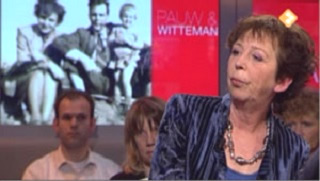
De Nederlandse schrijfster Renate Dorrestein werd geboren in Amsterdam op 25 januari 1954.Zie ook alle tags voor Renate Dorrestein op dit blog.

Uit:Weerwater

“Het rode lampje van de reservetank lichtte op toen ik mijn auto startte. Op goed geluk reed ik de wijk uit terwijl het zweet in mijn ogen droop. Ik had op de kaart moeten kijken, ik had geen idee hoe ik zonder navigatie op een van de stadsdreven kwam die naar de snelweg leidden. Knarsetandend van de spanning sloeg ik willekeurig linksaf, rechtsaf.
Doordat ik niets snapte van Almeres gescheiden verkeersstromen belandde ik plotseling op een vrije busbaan. Ik kon er niet meer af, het leek alsof ik kilometerslang over ­ y-overs en viaducten reed. Paniek sneed me de adem af totdat ik bij een overgang mijn kans schoonzag en ik mijn auto met een onmogelijk krappe draai weer op een gewone weg wist te krijgen. Ik zeilde over een rotonde en kon mijn geluk niet geloven: ik kwam uit op de Hogering, een van de grote doorgaanswegen. Maar daar sloeg de motor af. Vloekend, biddend en machteloos op mijn stuur slaand kon ik nog net de vluchtstrook bereiken. Ik greep mijn handtas en mijn laptop en sloeg het portier achter me dicht.
Hete lucht verplaatsend raasden volgepakte auto’s aan me voorbij. Niemand leek me te zien staan. Of niemand wilde tijd verspillen door te stoppen. Weg, weg, weg van hier!
De middagzon brandde op mijn blote armen. Ik werd dizzy van de warmte. Ik had iets moeten eten.
Net toen ik dacht dat ik in tranen zou uitbarsten, reed er een grote truck met een Belgisch nummerbord de vluchtstrook op. Ik was nog nooit in zo’n gevaarte geklauterd, ik kwam de treeplank amper op. Ik voelde ineens dat ik een vrouw van boven de zestig was, strammer en brozer dan onder deze omstandigheden wenselijk was.
De vrachtwagenchau‑ eur, een man met een goedig gezicht, begon meteen tegen me te kletsen. Hij zei dat hij Lammert heette, Lammert Verweghe, en dat hij zich niet liet gekmaken door die verhalen over een mistbank. ‘Mijn camion geraakt er wel doorheen. Ik ga niet nog een dag vermorsen.’
Ik herademde. Nog even en deze nachtmerrie zou voorbij zijn. In mijn tas vond ik Maartens zakdoek. Ik snoot mijn neus. Nooit van mijn levensdagen zette ik meer een stap in Almere.”


 2001529-d390c75c8667d8204eee5567f4de5189.jpg
Renate Dorrestein (Amsterdam, 25 januari 1954)


De Amerikaanse schrijver en regisseur Stephen Chbosky werd geboren op 25 januari 1970 in Pittsburgh, Pennsylvania. Zie ook alle tags voor Stephen Chbosky op dit blog.

Uit: The Perks of Being a Wallflower

“She took me to her room and stood me in front of her dresser, which was covered in a pillowcase with pretty colors. She lifted off the pillowcase, and there I was, standing in my old suit, looking at an old typewriter with a fresh ribbon. Inside the typewriter was a piece of white paper.
On that piece of white paper, Sam wrote, "Write about me sometime." And I typed something back to her, standing right there in her bedroom. I just typed.
"I will."
And I felt good that those were the first two words that I ever typed on my new old typewriter that Sam gave me. We just sat there quiet for a moment, and she smiled. And I moved to the typewriter again, and I wrote something.
"I love you, too."
And Sam looked at the paper, and she looked at me.
"Charlie . . . have you ever kissed a girl?"
I shook my head no.
It was so quiet.
"Not even when you were little?"
I shook my head no again. And she looked very sad.
She told me about the first time she was kissed. She told me that it was with one of her dad's friends. She was seven. And she told nobody about it except for Mary Elizabeth and then Patrick a year ago. And she started to cry. And she said something that I won't forget. Ever.
"I know that you know that I like Craig. And I know that I told you not to think of me that way. And I know that we can't be together like that. But I want to forget all those things for a minute. Okay?"
"Okay."
 2001529-7fe360bf3b9948655e3c955d32316ba8.jpg
Stephen Chbosky (Pittsburgh, 25 januari 1970)
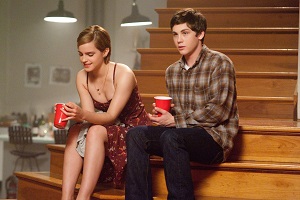
Scene uit de film uit 2012 met Emma Watson en Logan Lerman


De Engelse schrijver William Somerset Maugham werd geboren in Parijs op 25 januari 1874. Zie ook alle tags voorWilliam Somerset Maugham op dit blog.

Uit: The Making of a Saint

'Allow me to present to you my friend Filippo Brandolini, a gentleman of Città di Castello.'
Then, turning to me, Matteo added, 'This is my cousin, Checco d'Orsi.'
Checco d'Orsi smiled and bowed.
'Messer Brandolini,' he said, 'I am most pleased to make your acquaintance; you are more than welcome to my house.'
'You are very kind,' I replied; 'Matteo has told me much of your hospitality.'
Checco bowed courteously, and asked his cousin, 'You have just arrived, Matteo?'
'We arrived early this morning. I wished to come here directly, but Filippo, who suffers from a very insufferable vanity, insisted on going to an inn and spending a couple of hours in the adornment of his person.'
'How did you employ those hours, Matteo?' asked Checco, looking rather questioningly at his cousin's dress and smiling.
Matteo looked at his boots and his coat.
'I am not elegant! But I felt too sentimental to attend to my personal appearance, and I had to restore myself with wine. You know, we are very proud of our native Forli wine, Filippo.'
'I did not think you were in the habit of being sentimental, Matteo,' remarked Checco.
'It was quite terrifying this morning, when we arrived,' said I; 'he struck attitudes and called it his beloved country, and wanted to linger in the cold morning and tell me anecdotes about his childhood.'
'You professional sentimentalists will never let anyone sentimentalise but yourselves.'
'I was hungry,' said I, laughing, 'and it didn't become you. Even your horse had his doubts.'
'Brute!' said Matteo. 'Of course, I was too excited to attend to my horse, and he slipped over those confounded stones and nearly shot me off—and Filippo, instead of sympathising, burst out laughing.'
'Evidently you must abandon sentiment,' said Checco.
'I'm afraid you are right. Now, Filippo can be romantic for hours at a stretch, and, what is worse, he is—but nothing happens to him. But on coming back to my native town after four years, I think it was pardonable.'
 

 2001529-11a248127d024dbed6e9b9a7dd82db45.jpg
William Somerset Maugham (25 januari 1874 – 16 december 1965)
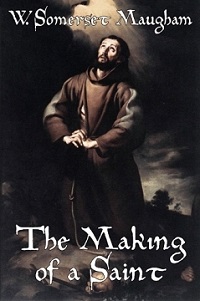
Cover 


De Engelse schrijfster Virginia Woolf werd geboren op 25 januari 1882 te Londen. Zie ook alle tags voor Virginia Woolf op dit blog.

Uit: A room of one's own

“That, more or less, is how the story would run, I think, if a woman in Shakespeare’s day had had Shakespeare’s genius. But for my part, I agree with the deceased bishop, if such he was—it is unthinkable that any woman in Shakespeare’s day should have had Shakespeare’s genius. For genius like Shakespeare’s is not born among labouring, uneducated, servile people. It was not born in England among the Saxons and the Britons. It is not born to–day among the working classes. How, then, could it have been born among women whose work began, according to Professor Trevelyan, almost before they were out of the nursery, who were forced to it by their parents and held to it by all the power of law and custom? Yet genius of a sort must have existed among women as it must have existed among the working classes. Now and again an Emily Brontë or a Robert Burns blazes out and proves its presence. But certainly it never got itself on to paper. When, however, one reads of a witch being ducked, of a woman possessed by devils, of a wise woman selling herbs, or even of a very remarkable man who had a mother, then I think we are on the track of a lost novelist, a suppressed poet, of some mute and inglorious Jane Austen, some Emily Brontë who dashed her brains out on the moor or mopped and mowed about the highways crazed with the torture that her gift had put her to. Indeed, I would venture to guess that Anon, who wrote so many poems without singing them, was often a woman. It was a woman Edward Fitzgerald, I think, suggested who made the ballads and the folk–songs, crooning them to her children, beguiling her spinning with them, or the length of the winter’s night.
This may be true or it may be false—who can say?—but what is true in it, so it seemed to me, reviewing the story of Shakespeare’s sister as I had made it, is that any woman born with a great gift in the sixteenth century would certainly have gone crazed, shot herself, or ended her days in some lonely cottage outside the village, half witch, half wizard, feared and mocked at. For it needs little skill in psychology to be sure that a highly gifted girl who had tried to use her gift for poetry would have been so thwarted and hindered by other people, so tortured and pulled asunder by her own contrary instincts, that she must have lost her health and sanity to a certainty. No girl could have walked to London and stood at a stage door and forced her way into the presence of actor–managers without doing herself a violence and suffering an anguish which may have been irrational—for chastity may be a fetish invented by certain societies for unknown reasons—but were none the less inevitable. Chastity had then, it has even now, a religious importance in a woman’s life, and has so wrapped itself round with nerves and instincts that to cut it free and bring it to the light of day demands courage of the rarest."
 

 2001529-1129b3780f08801a85f600af5af1b70c.jpg
Virginia Woolf (25 januari 1882 – 28 maart 1941) 
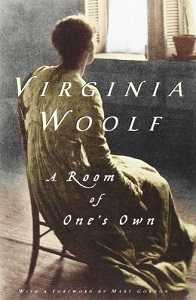
Cover


De Israëlische schrijver David Grossman werd geboren op 25 januari 1954 in Jeruzalem. Zie ook alle tags voor David Grossman op dit blog.

Uit: To the End of the Land (Vertaald door Jessica Cohen)

“Within the commotion Ora swiftly picks up the distant chatter of a baby somewhere in the large gathering ground, and the voice of his mother answers sweetly. She stands for a moment looking for them but cannot find them, and she imagines the mother changing the baby’s diaper, maybe on the hood of a car, bending over and tickling his tummy, and she stands slightly stooped, hugging her suede bag to her body, and laps up the soft double trickle of sounds until it vanishes.
It is all a huge, irredeemable mistake. It seems to her that as the moment of separation approaches, the families and the soldiers fill with arid merriment, as if they have all inhaled a drug meant to dull their comprehension. The air bustles with the hum of a school trip or a big family excursion. Men her age, exempt from reserve duty, meet their friends from the army, the fathers of the young soldiers, and exchange laughter and backslaps. “We’ve done our part,” two stout men tell each other, “now it’s their turn.” Television crews descend on families saying goodbye to their loved ones. Ora is thirsty, parched. Half running, she trails behind Ofer. Every time her gaze falls on the face of a soldier she unwittingly pulls back, afraid she will remember him: Ofer once told her that when they had their pictures taken sometimes, before they set off on a military campaign, the guys made sure to keep their heads a certain distance from each other, so there’d be room for the red circle that would mark them later, in the newspaper.
Screeching loudspeakers direct the soldiers to their battalions’ meeting points— a meetery, they call this, and she thinks in her mother’s voice: barbarians, language-rapists—and suddenly Ofer stops and she almost walks into him. He turns to her and she feels a deluge. “What’s the matter with you?” he whispers into her face. “What if they find an Arab here and think he’s come to commit suicide? And didn’t you think about how he feels having to drive me here? Do you even get what this means for him?”

2001529-08ebe5f7002fb6df04a3ed4bb1b951fe.jpg

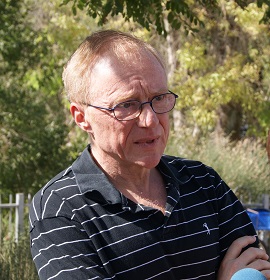
David Grossman (Jeruzalem, 25 januari 1954)


De Iers-Britrse schrijver James Gordon Farrell werd geboren op 25 januari 1935 in Liverpool. Zie ook alle tags voor J. G. Farrell op dit blog.

Uit:The Singapore Grip

“The city of Singapore was not built up gradually, the way most cities are, by a natural deposit of commerce on the banks of some river or at a traditional confluence of trade routes. It was simply invented one morning early in the nineteenth century by a man looking at a map. ‘Here,’ he said to himself, ‘is where we must have a city, half-way between India and China. This will be the great halting-place on the trade route to the Far East. Mind you, the Dutch will dislike it and Penang won’t be pleased, not to mention Malacca.’ This man’s name was Sir Thomas Stamford Raffles: before the war his bronze statue used to stand in Empress Place in a stone alcove like a scallop shell (he has been moved along now and, turned to stone, occupies a shady spot by the river). He was by no means the lantern-jawed individual you might have expected: indeed, a rather vague-looking man in a frock coat.
Although people had once lived there, the island of Singapore, when he arrived, was largely deserted except for a prodigious quantity of rats and centipedes. Rather ominously, Raffles also noticed a great many human skulls and bones, the droppings of local pirates. He wasted no time, however, in negotiating for the island with an alarmed native and then proceeded, his biographer tells us, to set up a flag-pole thirty-six feet high. ‘Our object,’ he wrote in a letter to a friend, ‘is not territory but trade: a great commercial emporium, and a fulcrum, whence we may extend our influence politically as circumstances may hereafter require.’ As he stood there on that lonely beach and gazed up at the flag with rats and centipedes seething and tumbling over his shoes did Raffles foresee the prosperity which lay ahead for Singapore? Undoubtedly he did.
When you think ofthe city as it was forty years ago you should not imagine an uncivilised frontier-town of the jungle. You had only to stroll around the centre of the city with its wide avenues and lawns and look at the monolithic government buildings, at the luxurious department stores and at the marmoreal dignity of the banks, to realise that Singapore was the work of a great and civilised nation. True, there were other parts of the city, the various native quarters where Tamils, Malays, and above all the Chinese lived, which were rather less imposing."
 

 2001529-a7ba92fc47035837f1f4e1f146c9e702.jpg
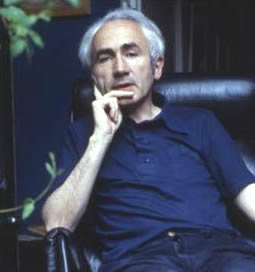
J. G. Farrell (25 januari 1935 – 11 augustus 1979)


De Italiaanse schrijver Alessandro Baricco werd geboren op 25 januari 1958 in Turijn. Zie ook alle tags voor Alessandro Baricco op dit blog.

Uit: De barbaren (Vertaald door Manon Smits)

“De barbaren, daar heb je ze.
Welnu: in mijn wereld is intellectuele eerlijkheid schaars, maar intelligentie niet. Niet iedereen is gek geworden. Ze zien iets wat er is.
Alleen krijg ik het niet voor elkaar om datgene wat er is te bekijken met diezelfde blik. Er zit me iets niet lekker.
Ik realiseer me terdege dat het ook gewoon het normale conflict tussen de generaties zou kunnen zijn, de ouderen die zich verzetten tegen de invasie van de jongeren, de gevestigde macht die zijn posities verdedigt door de opkomende krachten te beschuldigen van barbaarsheid, en al die dingen die altijd al hebben plaatsgevonden en die we al duizenden keren hebben gezien. Maar deze keer lijkt het anders.
Het conflict zit zo diep dat het anders lijkt. Gewoonlijk wordt er gevochten om zeggenschap over strategische punten op de landkaart. In dit geval lijkt het echter veel radicaler, alsof de aanvallers veel verder gaan: ze zijn de landkaart aan het veranderen. Misschien hebben ze hem zelfs al veranderd. Zoiets moet er gebeurd zijn in de gezegende jaren waarin bijvoorbeeld de Verlichting opkwam, of in de dagen waarin de hele wereld ineens romantisch bleek te zijn geworden. Er waren geen troepenverplaatsingen, en ook geen zonen die hun vaders vermoordden. Ze waren mutanten, die het ene landschap vervingen voor een ander, en daar hun eigen habitat vestigden.
Misschien is dit ook zo’n moment. En zijn degenen die wij barbaren noemen een nieuwe soort, met kieuwen achter de oren, die heeft besloten om onder water te leven. Nogal Wiedes dat wij, van buitenaf, met onze longetjes, dat bekijken als een dreigende apocalyps. Waar zij ademhalen, gaan wij dood.”
 

 2001529-9ff71d394819e1008927cb32759b27ba.jpg
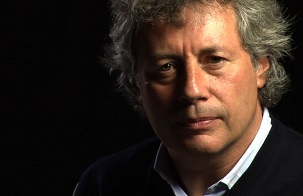
Alessandro Baricco (Turijn, 25 januari 1958)


De Schotse dichter Robert Burns werd geboren op 25 januari 1759 in Alloway, Ayrshire. Zie ook alle tags voor Robert Burns op dit blog.


A Winter Night

When biting Boreas, fell and doure,
Sharp shivers thro' the leafless bow'r;
When Phoebus gies a short-liv'd glow'r,
Far south the lift,
Dim-dark'ning thro' the flaky show'r,
Or whirling drift:

Ae night the storm the steeples rocked,
Poor Labour sweet in sleep was locked,
While burns, wi' snawy wreeths upchoked,
Wild-eddying swirl,
Or thro' the mining outlet bocked,
Down headlong hurl.

List'ning, the doors an' winnocks rattle,
I thought me on the ourie cattle,
Or silly sheep, wha bide this brattle
O' winter war,
And thro' the drift, deep-lairing, sprattle,
Beneath a scar.

Ilk happing bird, wee, helpless thing!
That, in the merry months o' spring,
Delighted me to hear thee sing,
What comes o' thee?
Whare wilt thou cow'r thy chittering wing
An' close thy e'e?

Ev'n you on murd'ring errands toil'd,
Lone from your savage homes exil'd,
The blood-stain'd roost, and sheep-cote spoil'd
My heart forgets,
While pityless the tempest wild
Sore on you beats.


Epitaph On A Noted Coxcomb

LIGHT lay the earth on Billy's breast,
His chicken heart so tender;
But build a castle on his head,
His scull will prop it under.
 

 2001529-7656f8076badb973445b494b971c9a05.jpg
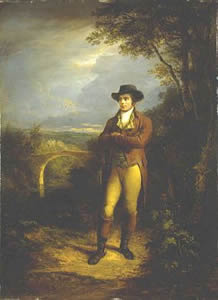
Robert Burns (25 januari 1759 – 21 juli 1796)
Portret door Alexander Nasmyth, 1828


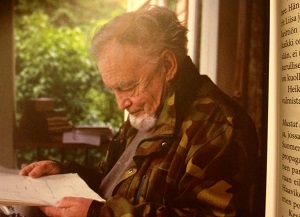
De Finse dichter, toneelschrijver en uitgever Paavo Juhani Haavikko werd geboren in Helsinki op 25 januari 1931. Zie ook alle tags voor Paavo Haavikko op dit blog.


Uit: No. That’s to say, yes


Anyone can be trained to become a president or a used car salesman.
But the sale of a used car requires a worldview and an understanding of the
client. Propaganda, on the other hand, requires dullness and repetition
when everything you are trying to say is used against you.
To listen to silence. It is the organ of propaganda, changing the mind
like a drop of water, as it keeps repeating over and over again.


When it is a question of Finland, the answer is Russia. There is no other
way to ask. You can answer whatever.
Only after the answer has been received, the question is clarified.
There is no question without an answer.
There is no answer without a question, and without knowing the
question you cannot understand the answer.
But it has always been our habit to ask the question ourselves,
then answer it ourselves.
That is the only way to gain scientifically valid answers.
Therefore, questions must be constructed with exactitude, to prevent
their turning into answers.


Vertaald door Anselm Hollo
 2001529-52a099e2ba49edbd5bbbdf31f823b642.jpg
Paavo Haavikko (25 januari 1931 – 6 oktober 2008)


Zie voor nog meer schrijvers van de 25e januari ook mijn blog van 25 januari 2015 deel 2 en eveneens deel 3.
Geschreven door Romenu om 19:00 Reageer op dit bericht

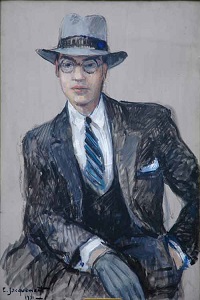
Robert Margerit

De Franse schrijver en journalist Robert Margerit werd geboren op 25 januari 1910 in Brive-la-Gaillarde. Nadat hij zijn middelbare schoolopleiding in Limoges had afgerond hield hij zich bezig met een opleiding tot notaris, maar ook met geschiedenis, literatuur, zwemmen, paardrijden en schilderen, om zich uiteindelijk te ontwikkelen tot een productief schrijver (romans, toneelstukken, kunst- en theaterkritiek, radio-uitzendingen), Vanaf 1931 werkte Margerit als journalist in Limoges en schreef hij vooral voor “La Vie limousine”. In 1937 trouwde hij met Suzanne Hugon, dochter van de historicus en dichter Henri Hugon Creuse en verliet hij Limoges voor Thias. Samen met Georges-Emmanuel Clancier en René Rougerie richtte hij in 1945 het literaire tijdschrift “Centres” op. Begin 1948 werd hij redacteur van “Centrum Populaire”, waarvoor hij na 1952 als columnist actief bleef. Georges-Emmanuel Clancier richtte in Brive in 1991 de vereniging Vrienden van Robert Margerit op.
De vereniging publiceert de “Cahiers Robert Margerit”. Voor zijn vierdelige roman “La Révolution”ontving hij de Grand Prix du roman de l'Académie française

Uit: La Révolution

« Ce mois de juin 93 était radieux. Fini, le printemps froid. Toutes les roses de Paris s'épanouissaient, tandis que, sur la place de la Révolution, tombaient à intervalles quelques têtes. Un soir — la lumière s'attardait aux clochers de Saint-Germain-des-Prés —, dans la rue des Anges, toute proche, étroite, déserte et déjà noyée de nuit, un homme en habit sang-de-boeuf vint frapper à la porte d'une maison. On ne répondit point. Il frappa plus fort. Enfin, il entendit un pas descendre avec prudence. L'huis s'entrebâilla, une figure de vieille femme apparut dans le halo d'une chandelle. « L'abbé est-il chez lui ? demanda l'homme en rouge. — Mais, citoyen, vous faites erreur ! Il n'y a pas de prêtre ici. » Haussant ses larges épaules, le visiteur poussa la porte, entra. « Il m'attend, je vous prie de me conduire. — Ah ! Monsieur me pardonnera. On est tenu à tant de précautions, voyez-vous ! » dit la vieille servante en prenant les devants. À sa suite, il monta quatre étages, suivit un couloir étroit, plein de détours, puis il fut introduit dans une soupente. Il y faisait très chaud, la tabatière levée ne laissait guère entrer de fraîcheur. Un prêtre ultramontain était là : l'abbé de Kéravenant, réfractaire rescapé du massacre de l'Abbaye. Posant son bréviaire, il s'avança vers le visiteur. À sa puissante carrure, à son négligé — la cravate relâchée, le jabot froissé —, à sa grosse tête rougeaude, pleine de grêlures, à sa chevelure blonde en crinière, la bouche sensuelle et bonne, l'oeil bleu éclatant, le prêtre reconnut Danton. Il l'attendait, en effet. Cette présence ne l'impressionnait pas moins. « Monsieur l'abbé, lui dit l'effrayant personnage, vous savez pourquoi je suis ici. Serez-vous assez bon pour m'entendre, pour m'absoudre ? — Mettez-vous à genoux, mon fils. » Gauchement, Danton s'agenouilla sur un mauvais prie-Dieu, devant un crucifix pendu au mur, et joignit les mains. Autour du confesseur et de son extraordinaire pénitent, l'ombre, le silence. Le fond de la pièce reculait dans la nuit. La grande voix de bronze se faisait murmure. « Mon père, je m'accuse... » En vérité, il n'était venu que pour pouvoir épouser une enfant de seize ans. Moins de quatre mois après avoir, dans la violence de sa douleur, passionnément étreint le cadavre de sa femme exhumée, il en voulait une autre, une que Gabrielle-Antoinette connaissait et aimait bien : la fille du citoyen Gély, commis aux bureaux de la Marine. Danton lui-même lui avait procuré cet emploi, l'année précédente. Les Gély étaient fort amis des Charpentier. Ils estimaient Danton et lui devaient de la gratitude, mais ils s'effrayaient de donner leur fille à un tel personnage. »


 2068244-4a1e555f6c4bbc728f2f6a3fa279842c.jpg
Robert Margerit (25 januari 1910 - 27 juni 1988)
Portret door Edmond Jacquement, 1931

Geschreven door Romenu om 00:00 Reageer op dit bericht

E. Th. A. Hoffmann, Edith Wharton, Ivan Ivanji, Eugen Roth, Ulrich Holbein, Charles Sackville, John Donne, Vicky Baum, Helen Darville

De Duitse dichter en schrijver Ernst Theodor Amadeus Hoffmann werd geboren in Koningsbergen op 24 januari 1776. Zie ook alle tags voor E. Th. A. Hoffmann op dit blog en ook deze overige tags op dit blog.

Uit: Das Majorat

„Dem Gestade der Ostsee unfern liegt das Stammschloß der Freiherrlich von R..schen Familie, R..sitten genannt. Die Gegend ist rauh und öde, kaum entsprießt hin und wieder ein Grashalm dem bodenlosen Triebsande, und statt des Gartens, wie er sonst das Herrenhaus zu zieren pflegt, schließt sich an die nackten Mauern nach der Landseite hin ein dürftiger Föhrenwald, dessen ewige, düstre Trauer den bunten Schmuck des Frühlings verschmäht, und in dem statt des fröhlichen Jauchzens der zu neuer Lust erwachten Vögelein nur das schaurige Gekrächze der Raben, das schwirrende Kreischen der sturmverkündenden Möwen widerhallt. Eine Viertelstunde davon ändert sich plötzlich die Natur. Wie durch einen Zauberschlag ist man in blühende Felder, üppige Äcker und Wiesen versetzt. Man erblickt das große, reiche Dorf mit dem geräumigen Wohnhause des Wirtschaftsinspektors. An der Spitze eines freundlichen Erlenbusches sind die Fundamente eines großen Schlosses sichtbar, das einer der vormaligen Besitzer aufzubauen im Sinne hatte. Die Nachfolger, auf ihren Gütern in Kurland hausend, ließen den Bau liegen, und auch der Freiherr Roderich von R., der wiederum seinen Wohnsitz auf dem Stammgute nahm, mochte nicht weiter bauen, da seinem finstern, menschenscheuen Wesen der Aufenthalt in dem alten, einsam liegenden Schlosse zusagte.
Er ließ das verfallene Gebäude, so gut es gehen wollte, herstellen und sperrte sich darin ein mit einem grämlichen Hausverwalter und geringer Dienerschaft. Nur selten sah man ihn im Dorfe, dagegen ging und ritt er oft am Meeresstrande hin und her, und man wollte aus der Ferne bemerkt haben, wie er in die Wellen hineinsprach und dem Brausen und Zischen der Brandung zuhorchte, als vernehme er die antwortende Stimme des Meergeistes.
Auf der höchsten Spitze des Wartturms hatte er ein Kabinett einrichten und mit Fernröhren – mit einem vollständigen astronomischen Apparat versehen lassen; da beobachtete er Tages, nach dem Meer hinausschauend, die Schiffe, die oft gleich weißbeschwingten Meervögeln am fernen Horizont vorüberflogen. Sternenhelle Nächte brachte er hin mit astronomischer oder, wie man wissen wollte, mit astrologischer Arbeit, worin ihm der alte Hausverwalter beistand. Überhaupt ging zu seinen Lebzeiten die Sage, daß er geheimer Wissenschaft, der sogenannten schwarzen Kunst, ergeben sei, und daß eine verfehlte Operation, durch die ein hohes Fürstenhaus auf das empfindlichste gekränkt wurde, ihn aus Kurland vertrieben habe. Die leiseste Erinnerung an seinen dortigen Aufenthalt erfüllte ihn mit Entsetzen, aber alles sein Leben Verstörende, was ihm dort geschehen, schrieb er lediglich der Schuld der Vorfahren zu, die die Ahnenburg böslich verließen.“


 2001121-9582edf8f0b881ac661f4c7314f9f77b.jpg
E. Th. A. Hoffmann (24 januari 1776 - 25 juni 1822)
Cover


De Amerikaanse schrijfster Edith Wharton werd geboren op 24 januari 1862 in New York. Zie ook alle tags voor Edith Wharton op dit blog.

Uit:The Age of Innocence

“It was Madame Nilsson's first appearance that winter, and what the daily press had already learned to describe as "an exceptionally brilliant audience" had gathered to hear her, transported through the slippery, snowy streets in private broughams, in the spacious family landau, or in the humbler but more convenient "Brown coupé." To come to the Opera in a Brown coupe was almost as honourable a way of arriving as in one's own carriage; and departure by the same means had the immense advantage of enabling one (with a playful allusion to democratic principles) to scramble into the first Brown conveyance in the line, instead of waiting till the cold-and-gin congested nose of one's own coachman gleamed under the portico of the Academy. It was one of the great livery-stableman's most masterly intuitions to have discovered that Americans want to get away from amusement even more quickly than they want to get to it.
When Newland Archer opened the door at the back of the club box the curtain had just gone up on the garden scene. There was no reason why the young man should not have come earlier, for he had dined at seven, alone with his mother and sister, and had lingered afterward over a cigar in the Gothic library with glazed black-walnut bookcases and finial-topped chairs which was the only room in the house where Mrs. Archer allowed smoking. But, in the first place, New York was a metropolis, and perfectly aware that in metropolises it was "not the thing" to arrive early at the opera; and what was or was not "the thing" played a part as important in Newland Archer's New York as the inscrutable totem terrors that had ruled the destinies of his forefathers thousands of years ago.”


 2001121-136ff54e8c9255c6a627a07b81e6e93b.jpg
Edith Wharton (24 januari 1862 – 11 augustus 1937)
Cover


De Joegoslavische schrijver, vertaler, diplomaat en journalist Ivan Ivanji werd geboren op 24 januari 1929 in Zrenjanin. Zie ook alle tags voor Ivan Ivanji op dit blog.

Uit: Buchenwald, ich kann dich nicht vergessen

„Leopoldis Frau war es gelungen, nach New York zu entkommen, den Liederkomponisten freizukaufen, er durfte über Hamburg in die Freiheit fahren, Reporter warteten am Kai, fotografierten, wie er in gelungener Geste den amerikanischen Boden küsste, das Bild ging um die Welt.
Löhner-Beda hatte auf Lehár gehofft, verfluchte den Operettenkomponisten, weil nichts geschah. Franz Lehár hatte mit zehn Textautoren zusammengearbeitet, alle waren Juden, er hatte in Wien in jüdischen Kreisen verkehrt, seine Frau, Sophie, war Jüdin, aber Hitler mochte ihn so sehr, dass er Goebbels den Befehl gab Lehárs Operetten im ganzen Reich mit den Originaltexten spielen zu lassen, nur die Namen der Librettisten wurden nicht genannt. Frau Sophie Lehár wurde durch Führererlass zur "Ehrenarierin" ernannt.
Fritz Löhner-Beda wurde 1942 nach Auschwitz transportiert. Über seinen Tod existiert die eidesstattliche Erklärung eines Mithäftlings, Raymond van den Stratens. Er sagt aus, fünf Direktoren der I. G. Farben, Walter Dürrfeld, Otto Ambros, Fritz ter Meer, Carl Krauch und Heinrich Bütefisch, hätten das Lager inspiziert: "Einer der Direktoren wies auf Dr. Löhner-Beda und sagte zu seinem SS-Begleiter: Diese Judensau könnte auch rascher arbeiten. Darauf bemerkte ein anderer I.G.-Direktor: Wenn die nicht mehr arbeiten können, sollen sie in der Gaskammer verrecken.
Nachdem die Inspektion vorbei war, wurde Dr. Löhner-Beda aus dem Arbeitskommando geholt, so geschlagen und mit den Füßen getreten, daß er als sterbender zu seinem Lagerfreunden zurückkam und sein Leben in der I.G.-Fabrik in Auschwitz beendete. Löhner-Bedas Frau Helene, der er den Text des Liedes Dein ist mein ganzes Herz in Lehárs Operette Das Land des Lächelns gewidmet hatte, das Hitler so gerne hörte, wurde mit ihren Töchtern Eva und Liselotte im Vernichtungslager Maly Trostinetz in Weißrussland umgebracht ..."


 2001121-b860ec3119a99b0aa0d9f7c0f8e315e8.jpg
Ivan Ivanji (Zrenjanin, 24 januari 1929)


De Duitse dichter Eugen Roth werd op 24 januari 1895 in München geboren. Zie ook alle tags voor Eugen Roth op dit blog.


Das Sprungbrett

Ein Mensch, den es nach Ruhm gelüstet,
Besteigt, mit großem Mut gerüstet,
Ein Sprungbrett - und man denkt, er liefe
Nun vor und spränge in die Tiefe,
Mit Doppelsalto und dergleichen
Der Menge Beifall zu erreichen.
Doch läßt er, angestaunt von vielen,
Zuerst einmal die Muskeln spielen,
Um dann erhaben vorzutreten,
Als gält's, die Sonne anzubeten.
Ergriffen schweigt das Publikum -
Doch er dreht sich gelassen um
Und steigt, fast möcht man sagen, heiter
Und vollbefriedigt von der Leiter.
Denn, wenn auch scheinbar nur entschlossen,
Hat er doch sehr viel Ruhm genossen,
Genau genommen schon den meisten -
Was sollt er da erst noch was leisten?


Einsicht

Der Kranke traut nur widerwillig
Dem Arzt, der's schmerzlos macht und billig.
Laßt nie den alten Grundsatz rosten:
Es muß a) wehtun, b) was kosten.


 2001121-e4da02f093c06c6e8d3ba9e6968cb3e2.jpg
Eugen Roth (24 januari 1895 – 28 april 1976)


De Duitse schrijver Ulrich Holbein werd op 24 januari 1953 in Erfurt geboren. Zie ook alle tags voor Ulrich Holbein op dit blog.

Uit: Unheilige Narren

„Kulturbringer à la Prometheus, notorische Gesetzgeber à la Hammurapi oder Mose, Gralshüter, Oberbonzen und Obermuftis können jederzeit, wenn sie nicht aufpassen und nicht von sich abweichen, unrühmlich herabsinken zu ihren eigenen Handtaschenformaten und Schwundformen und alsdann herumsitzen am Bürotisch ihrer Vorzimmer, als Ordnungshüter, als vorletzte Instanzen, Paragraphenreiter und Schergen, und vice versa: Reptilhirne bzw. geborene Kampfmaschinen können, sobald sie sich sublimieren und subtilisieren, erfreulich aufsteigen zu durchaus geistreichen Lästerzungen, Polemikern und Sarkastikern, oder ums schöner, netter und versöhnlicher zu sagen: sich profilieren und die lachlustige Menschheit erfreuen als Spottvögel, Satiriker, Humoristen und Entertainer, die für einen kleinen Witz sowohl ihre Seele wie ihre Großmutter verkaufen.
Der Typus des Spielverderbers tauchte bereits in prähistorischen Zeiten auf und griff gebieterisch ins Triebleben seiner Clangenossen ein. Als Legislative der Judikative und Exekutive vordenkerisch voranschreitend, regelte und überprüfte der ewige Spielverderber das lose, oft ungezügelte Hordentreiben. Als Priester und Asket beschnitt er sich und anderen die lustige Freiheit, nach Herzenslust allen Lüsten zu frönen. Als Regenzauberer machte er sich unbeliebt und galt, sobald sein Zaubern dauerhaft nicht half, zunehmend als unfähig, bis hin zu Verketzerung, Unheiligsprechung, Absetzung und Entsorgung.
Sobald Menschen abweichende Meinungen produzierten, also naheliegende und kühne Mythologeme, Philosopheme und Theoreme ausspendeten – in schriftlicher Form auf diversen Kontinenten so ab 600 v.Chr. –, übte und feilte der Typus des Spielverderbers seinen Widerspruchsgeist."


 2001121-8c229dcc5e9ddfca762b448852207be9.jpg
Ulrich Holbein (Erfurt, 24 januari 1953)


De Engelse dichter John Donne werd ergens tussen 24 januari en 19 juni 1572 geboren in Londen. Zie ook alle tags voor John Donne op dit blog.


No Man Is An Island

No man is an island,
Entire of itself,
Every man is a piece of the continent,
A part of the main.
If a clod be washed away by the sea,
Europe is the less.
As well as if a promontory were.
As well as if a manor of thy friend's
Or of thine own were:
Any man's death diminishes me,
Because I am involved in mankind,
And therefore never send to know for whom the bell tolls;
It tolls for thee.


Holy Sonnet XIV:

Batter my heart, three-personed God; for You
As yet but knock, breathe, shine, and seek to mend;
That I may rise and stand, o'erthrow me,'and bend
Your force to break, blow, burn, and make me new.
I, like an usurped town, to'another due,
Labor to'admit You, but O, to no end;
Reason, Your viceroy'in me, me should defend,
But is captived, and proves weak or untrue.
Yet dearly'I love You,'and would be loved fain,
But am betrothed unto Your enemy.
Divorce me,'untie or break that knot again;
Take me to You, imprison me, for I
Except You'enthrall me, never shall be free,
Nor ever chaste, except You ravish me.


 2001121-7084eb6bf8862d1186f84afa5f81bccc.jpg
John Donne (24 januari 1572 – 31 maart 1631)
John Donne op 49-jarige leeftijd.Anoniem, British School, 1622


De Engelse dichter en edelman Charles Sackville werd geboren op 24 januari 1638 in Buckhurst. Zie ook alle tags voor Charles Sackville op dit blog.


Song, Written At Sea (Fragment)

Should foggy Opdam chance to know
Our sad and dismal story,
The Dutch would scorn so weak a foe,
And quit their fort at Goree:
For what resistance can they find
From men who've left their hearts behind?--
With a fa, la, la, la, la.

Let wind and weather do its worst,
Be you to us but kind;
Let Dutchmen vapour, Spaniards curse,
No sorrow we shall find:
'Tis then no matter how things go,
Or who 's our friend, or who 's our foe--
With a fa, la, la, la, la.

To pass our tedious hours away
We throw a merry main,
Or else at serious ombre play;
But why should we in vain
Each other's ruin thus pursue?
We were undone when we left you--
With a fa, la, la, la, la.

But now our fears tempestuous grow
And cast our hopes away;
Whilst you, regardless of our woe,
Sit careless at a play:
Perhaps permit some happier man
To kiss your hand, or flirt your fan--
With a fa, la, la, la, la.


 2001121-85681a699eb831f4507c1c67005e1cda.jpg
Charles Sackville (24 januari 1638 – 29 januari 1706)
Portret door Sir Godfrey Kneller, 1694


De Oostenrijkse schrijfster Vicki Baum werd op 24 januari 1888 in Wenen geboren. Zie ook alle tags voor Vicki Baum op dit blog.

Uit:Menschen im Hotel

„Vom Neubau her hopste die Musik aus dem Tea-room in Synkopen an den Wandspiegeln entlang. Der butterige Bratenduft der Diner-Zeit fächelte diskret daher, aber hinter den Türen des großen Speisesaales war es noch leer und still. Im kleinen, weißen Saal richtete der grade manger Mattoni sein kaltes Büfett. Der Poritier, der wunderlich müde in den Knien einen Augenblick an der Tür stehenblieb, starrte benommen die bunten Glühlampen an, die hinter den Eisblöcken spielten. Im Korridor kniete ein Monteur auf dem Boden und reparierte etwas an den elektrischen Leitungen. Seit man die großen Scheinwerfer draußen an der Straßenfront hatte, war immer etwas mit der überlasteten Lichtanlage des Hotels los. Der Portier gab seinen wackligen Beinen ein kleines Kommando und strebte seinem Platz zu. Er hatte die Loge unter der Obhut des kleinen Volontärs Georgi zurückgelassen, Sohn des Besitzers eines großen Hotelkonzerns, der seinen Nachfolger im fremden Betrieb von der Pike auf dienen lassen wollte. Senf trabte etwas beengt quer durch die Halle, die voll und bewegt war. Hier traf die Jazzmusik des Tea-rooms mit dem Geigenschmachten des Wintergartens zusammen, dazwischen rieselte dünn der illuminierte Springbrunnen in ein unechtes venezianisches Becken, dazwischen klirrten Gläser auf Tischchen, knisterten Korbstühle, und als dünnstes Geräusch schmolz das zarte Sausen, mit dem Frauen in Pelzen und Seidenkleidern sich bewegen, in den Zusammenklang. Bei der Drehtür schraubte sich Märzkühle in kleinen Stößen herein, sooft der Page Gäste ein- und ausließ.
„All right!“ sagte der kleine Georgi, als Portier Senf mit einem Anschwung die Loge erreichte, wie einen Heimathafen. „Die Sieben-Uhr-Post. Achtundsechzig hat Krach gemacht, weil der Chauffeur nicht gleich zu finden war. Bißchen hysterische Dame, was?“


 2001121-3be27a95e246e93bf62eb0ea45ea8df2.jpg
Vicki Baum (24 januari 1888 - 29 augustus 1960)
Affiche voor de film uit 1959


De Australische schrijfster en journaliste Helen Darville werd geboren op 24 januari 1971 in Brisbane. Zie ook alle tags voor Helen Darville op dit blog.

Uit: Stories vs. Numbers (Column onder de naam Helen Dale)

“If Milton is hard for some modern readers, spare a thought for the person who has to tell an important story with numbers and graphs, and where words are often just a support act. I speak, of course, of politicians, who depend so often on social scientists and lawyers.
Scientists learnt long ago that elegant equations and mathematical proofs bought them nothing in the way of public approbation, so those scientists with a flair for language turned to the writer’s craft, to narrative. Richard Dawkins, Carl Sagan, Jane Goodall: all have written movingly about their disciplines, often in books that have sold hundreds of thousands or even millions of copies.
Social scientists and lawyers have been much slower to master narrative. People unaware of the ebb and flow of British intellectual history often think economics is called ‘The Dismal Science’ because economists are so boring, the civil service equivalent of accountants in the private sector. Lawyers have less excuse, as people with the best results in English and languages at school often head into the legal profession. Unfortunately, the ranks of writer-lawyers who address with beauty the discipline of law are thin: Cicero and Gaius among the Romans, Richard Posner and Lord Denning in modern times.
In short, as our ability to calculate has grown with technology, people who are members of that minority who like politics spend a great deal of time trying to persuade with numbers, in part because policy wonks find numbers impressive. Those numbers may measure indebtedness, or poverty rates, or welfare dependency, or immigrants.
And they will mean nothing to most people.”


 2001121-7d3318a62b196e4a22682a7d892b7857.jpg
Helen Darville (Brisbane, 24 januari 1971)


Zie voor nog meer schrijvers van de 24e januari ook mijn blog van 24 januari 2016 deel 2.

Geschreven door Romenu om 18:28 Reageer op dit bericht

Jiří Karásek ze Lvovic

De Tsjechische dichter, schrijver en literair criticus Jiří Karásek ze Lvovic werd geboren in Praag op 24 januari 1871. Hij studeerde theologie aan de Theologische faculteit in Praag, maar maakte deze studie niet af. Daarna verliet hij Bohemen voor een jaar en na zijn terugkeer begon hij te werken als bediende in een postkantoor. Kort daarna werd hij benoemd tot directeur van de bibliotheek van het Ministerie van Post, en directeur van het Postmuseum en het archief. In 1894 richtte hij, samen met Ernst Stroll, het bekende tijdschrift Modern Review, waarin hij voornamelijk Tsjechische en Franse decadente literatuur en kunst publiceerde. Later publiceerde hij twee tijdschriften, bedoeld voor seksuele hervorming - Hlas (Stem) en Nový Hlas (Nieuwe Stem). Tijdens zijn leven verzamelde hij samen een uitgebreide privé-bibliotheek (48.000 delen) en een verzameling Slavische kunst en grafiek (40.000 items). In 1922 schonk hij deze collectie aan de Tsjechoslowaakse Sokol Organisatie, die was ondergebracht in het Tyrš huis in Praag; met de voorwaarde dat deze door hem zou worden beheerd tot aan het einde van het leven. In 1954 werd de collectie deel van het Nationale Literatuur Archief. Karásek ze Lvovic schreef ook vele gedichten en prozawerken. Een aantal van zijn romans worden nu gerekend tot de science-fiction literatuur. Hij was een vertegenwoordiger van de impressionistische kritiek en wordt beschouwd als een belangrijke literaire criticus. In de meeste van zijn werken combineert hij neo-romantische fantasie met gecultiveerdheid. Zijn poëzie en proza zijn meesterwerken van de literaire stijl rond 1900. Een paar werken (De gotische ziel, 1900/1905), kunnen als gevolg van de bijna volledige abstractie van de stijl en de homogeniteit van de tekst tot de belangrijkste werken van de Europese decadentie worden geteld. Karásek ze Lvovic was ook geïnteresseerd in occultisme en was een lid van de Tsjechische vereniging van Hermetica "Hermetik universalia". Bovendien was hij een verzamelaar van schilderijen. Zijn collectie was een van de grootste collecties moderne kunst in heel Europa. Later werd deze genationaliseerd en tentoongesteld in Tsjechisch musea.


Hopeles Love

So oft by eve I dream in my room all alone
of the love that I know will pass me by, amain
to take me, with all force, to which I am all prone,
whose gale force winds would sweep across my meek stilled plain,

Of a love that into my dulled false hopes would tear,
like the gale ripping boughs of deadened grove, enraged…
Though I know she won’t come, I see her clearly there
above all loves I’ve had while still in life engaged.

I yearn for just one time that she should speak to me,
with words that to this day no one to me has said,
and in my soul pour fire, kisses incendiary,

And only after, as her lunar boat ascends
to heaven’s dream blue waves, would she lay out the dread
before my gaze, that Void, to which I shall descend.


Abyss

When in the town by night each sound’s dissembling,
another soul, arcane, wakes uncontested.
Your head’s a dormant citadel, sequestered,
in which a late night wandering thought is ambling.

Yet if you fear the tardy walker’s power
conniving to seize your imagination,
be more afraid of that thought’s desperation,
to ambush you at midnight, till you cower…

You are its prey. Feel that? Its talon sinking
into you, cold, on dark wings upward tearing.
Eyes phosphorescent green that burn unblinking.

You’ve briefly lost your mind. Your soul veers, vanished
into the evil, deep within its bearing…
Ah, ever the abyss, inside, unbanished!


Vertaald door Václav Z J Pinkava


 2017656-a1c744d274ee5dba911d8f23b9a8a13b.jpg
Jiří Karásek ze Lvovic (24 januari 1871 - 5 maart 1951)

Geschreven door Romenu om 00:00 Reageer op dit bericht

Meer van Romenu

↑ Terug naar de berichten