Naar de inhoud

Romenu

Over literatuur, gedichten, kunst en cultuur
akke.beakke.be

Berichten van 28 februari 2017 tot 1 maart 2017

Ash Wednesday (T. S. Eliot)


Bij Aswoensdag


 2013193-0da6a5d056762032a81f36a4e1dadb71.jpg
Aswoensdag door Julian Fałat, 1881


Ash Wednesday

I
Because I do not hope to turn again
Because I do not hope
Because I do not hope to turn
Desiring this man’s gift and that man’s scope
I no longer strive to strive towards such things
(Why should the agèd eagle stretch its wings?)
Why should I mourn
The vanished power of the usual reign?

Because I do not hope to know
The infirm glory of the positive hour
Because I do not think
Because I know I shall not know
The one veritable transitory power
Because I cannot drink
There, where trees flower, and springs flow, for there is
nothing again

Because I know that time is always time
And place is always and only place
And what is actual is actual only for one time
And only for one place
I rejoice that things are as they are and
I renounce the blessèd face
And renounce the voice
Because I cannot hope to turn again
Consequently I rejoice, having to construct something
Upon which to rejoice

And pray to God to have mercy upon us
And pray that I may forget
These matters that with myself I too much discuss
Too much explain
Because I do not hope to turn again
Let these words answer
For what is done, not to be done again
May the judgement not be too heavy upon us

Because these wings are no longer wings to fly
But merely vans to beat the air
The air which is now thoroughly small and dry
Smaller and dryer than the will
Teach us to care and not to care Teach us to sit still.

Pray for us sinners now and at the hour of our death
Pray for us now and at the hour of our death.


 2013193-0e74973fae56396b47b5a575990de444.jpg
T. S. Eliot (26 september 1888 – 4 januari 1965)
De kathedraal van St Louis, Missouri, de geboorteplaats van T. S. Eliot


Zie voor de schrijvers van de 1e maart ook mijn vorige blog van vanddaag.

Geschreven door Romenu om 11:06 Reageer op dit bericht

Jan Eijkelboom, Jim Crace, Delphine de Vigan, Franz Hohler, Lytton Strachey, Robert Lowell, Myrthe van der Meer, Franzobel, Steven Barnes

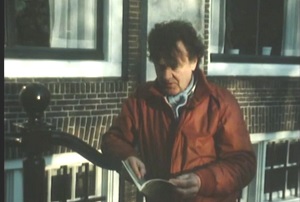
De Nederlandse dichter, vertaler en journalist Jan Eijkelboom werd op 1 maart 1926 in Ridderkerk geboren. Zie ook alle tags voor Jan Eijkelboom op dit blog.


Camping, Frankrijk

Voor het eerst dat ik sliep in een tent,
voor het eerst naar een ruisen geluisterd
dat voor het ruisen van regen,
het vallen van regen te zacht was
en ook voor de wind te gelijk, te gelijk aan zichzelf.

En 's ochtends gezien hoe water
bijna rechtstandig,
toch zonder te breken, naar lager
water kan gaan, onzichtbaar verschietend.

Hadden wij zo kunnen leven,
zo blijven leven als toen
in die tent, in dat gras

Geen woede, geen andere hartstocht,
geen weten wie zo stil overstroomt
in wie.


Ik liep in een straat

Ik liep in een straat
die doodliep,
op het spoor van iemand
die hier gelopen had
maar die nu dood was.
In kieren tussen de keien
groeide fris gras
want doodlopende straten
bieden meer levenskans
dan straten die doorlopen
naar mensen die
nog volop leven.


Een ijzersterke mist

Eerste najaarsnevel boven de sloot
tussen spoorbaan en snelweg
en heel dat doen alsof
wordt nu het zwijgen opgelegd.

Het lijkt blijvend door afwezigheid
van wind. Het is ijl en standvastig.
Waarom trekt dit versterven meer
dan bloesemtak of eerste sneeuw?

Alle begin verheldert, roept beelden op
van eerdere aanvang die te snel verliep
om dicht te slibben, tijdstippen
met de gedegen zwaarte van een eeuw.

Maar deze nevel laat geen modder na,
wekt geen verwachting, lost slechts op
en laat toch in 't voorbijgaan weten
dat wij nog niet, nog lange niet
zijn uitgekeken.


 2013189-61636a06deafd8eec168bbf62763e4ef.jpg
Jan Eijkelboom (1 maart 1926 – 28 februari 2008)


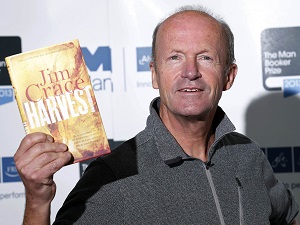
De Engelse schrijver Jim Crace werd geboren op 1 maart 1946 in St. Albans, Hertfordshire. Zie ook alle tags voor Jim Crace op dit blog.

Uit: Harvest

“Now that we have reached our master's paddocks and his garths, we can smell and taste the straw. The smoke and flames are coming not from his home but from his hay lofts and his stable roofs. His pretty, painted dovecote has already gone. We expect to spot his home- birds' snowy wings against the smoke- gray sky. But there are none.
I know at once whom we should blame. When Christopher and Thomas Derby, our only twins, and Brooker Higgs came back from wooding last evening, they seemed a little too well satisfied, but they weren't bringing with them any fowl or rabbit for the pot, or even any fuel.
Their only spoils, so far as I could tell, were a bulky, almost weightless sack and immodest fits of laughter. They'd been mushrooming. And by the looks of them they had already eaten raw some of the fairy caps they'd found. I did the same myself in my first summer of settlement here, a dozen or so years ago, when I was greener and less timid, though not young. I remember eating them. They are beyond forgetting. Just as yesterday, the last sheaf of that year's harvest had been cut and stood. And, just as today, we'd faced a break from labor, which meant that I could sleep my mischief off. So in the company of John Carr, my new neighbor then, my neighbor still, I went off that afternoon to Thank the Lord for His Munificence by hunting fairy caps in these same woods. I'll not forget the dancing lights, the rippling and the merriment, the halos and the melting trails that followed anything that moved, the enormous fearlessness I felt, the lasting fear (yes, even now), or how darkly blue the moon became that night, and then how red. I wish I'd had the courage since to try to find that moon again.
Last evening, when the twins and Brooker Higgs jaunted past our cottages and waved at us with gill stains on their fingertips, I asked these merry men, "Had any luck?" They bared their sack of spoils at once, because they were too foxed and stupefied to conceal them, even though they understood my ancient closeness to the manor house. I pulled aside the dampening of leaves and inspected their few remaining fairy caps, saved for later revels, I suppose, plus a good number of golden shawls, which, stewed in milk and placed inside a dead man's mouth, are meant to taste so good they'll jolt him back to life. Accounting for the bulk of their sack was a giant moonball, its soft, kid- leather skin already smoking spores, and far too yellowy and dry to cook. Why had they picked it, then? Why hadn't they just given it a satisfying kick? What kind of wayward lads were these?”


 2013189-a8bb976a6800c29d23106bba9b0660ee.jpg
Jim Crace (St. Albans, 1 maart 1946)


De Franse schrijfster en filmmaakster Delphine de Vigan werd geboren op 1 maart 1966 in Boulogne-Billancourt. Zie ook alle tags voor Delphine de Vigan op dit blog.

Uit:No et moi

“Je donnerais tout, mes livres, mes encyclopédies, mes vêtements, mon ordinateur, pour qu'elle ait une vraie vie, avec un lit, une maison et des parents pour l'attendre. Je pense à l'égalité, à la fraternité, à tous ces trucs qu'on apprend à l'école et qui n'existent pas. On ne devrait pas faire croire aux gens qu'ils peuvent être égaux ni ici ni ailleurs. Ma mère a raison. C'est la vie qui est injuste et il n'y a rien à ajouter. Ma mère sait quelque chose qu'on ne devrait pas savoir. C'est pour ça qu'elle est inapte pour son travail, c'est marqué sur ses papiers de sécurité sociale, elle sait quelque chose qui l'empêche de vivre, quelque chose qu'on devrait savoir seulement quand on est très vieux. On apprend à trouver des inconnues dans les équations, tracer des droites équidistantes et démontrer des théorèmes, mais dans la vraie vie, il n'y a rien à poser, à calculer, à deviner. C'est comme la mort des bébés. C'est du chagrin et puis c'est tout. Un grand chagrin qui ne se dissout pas dans l'eau, ni dans l'air, un genre de composant solide qui résiste à tout. »
(…)

" ... Il y a cette ville invisible, au coeur même de la ville. Cette femme qui dort chaque nuit au même endroit, avec son duvet et des sacs. À même le trottoir. Ces hommes sous les ponts, dans les gares, ces gens allongés sur des cartons ou recroquevillés sur un banc. Un jour, on commence à les voir. Dans la rue, dans le métro. Pas seulement ceux qui font la manche. Ceux qui se cachent. On repère leur démarche, leur veste déformée, leur pull troué. Un jour on s'attache à une silhouette, à une personne, on pose des questions, on essaie de trouver des raisons, des explications, et puis on compte. Les autres, des milliers. Comme le symptôme de notre monde de malade. Les choses sont ce qu'elle sont. Mais moi je crois qu'il faut garder les yeux grand ouverts. Pour commencer.”


 2013189-3985a34e77b3068551f2e6db56edc334.jpg
Delphine de Vigan (Boulogne-Billancourt, 1 maart 1966)


De Zwitserse dichter, schrijver, cabaretier en liedjesmaker Franz Hohler werd geboren op 1 maart 1943 in Biel. Zie ook alle tags voor Franz Hohler op dit blog.


Weiss noch jemand

Weiss noch jemand
wo das Denkmal stand
für die Prinzessin
aus dem Morgenland
die mit dem Sternenmantel
durch die Wälder ritt
bevor der grosse Krieg
darüber schritt?

Weiss noch jemand
wo der Garten war
mit den Sommergästen
und der Kinderschar
auf den der Mond
in verzauberten Nächten schien
und den die Eule besuchte
und der Hermelin?

Weiss noch jemand
wo der Geiger blieb
der uns zu ausgelassenen
Tänzen trieb
mit seinen kühnen Läufen
und der schmelzenden Terz?
Er weckte die Sehnsucht
und brach uns das Herz.

Weiss noch jemand
wo der Grabstein ist
auf dem der Todesengel
den König küsst
und ihn so fest
in seinen Armen hält
dass ihm die Krone
vor die Füsse fällt?

Weiss noch jemand
wo der Wildbach floss
im Bergwald mit dem
Raubritterschloss
aus dessen Wasser
die weisse Schlange trank
bevor sie im eisigen
Stausee versank?

Weiss noch jemand
wie die Inschrift hiess
die man fand
im dunklen Kellerverlies
in dem der Zar so schmählich
zu Tode kam
und man der ganzen Familie
das Leben nahm?

Weiss noch jemand
wie das Volkslied geht
in dem das Mädchen am Morgen
am Fenster steht
und die Fahne in der Ferne
flattern sieht
hinter der sein Liebster
zum Kampfe zieht?

Prinzessin und Geiger
König und Zar
Schloss und Schlange
und Kinderschar
die Gärten – was ist nur
mit ihnen geschehn
und dem Burschen und dem Mädchen
die sich nie wieder sehn?


 2013189-f5f98a8a77822c35121eeca7a5fb8f59.jpg
Franz Hohler (Biel, 1 maart 1943)


De Britse schrijver Giles Lytton Strachey werd geboren op 1 maart 1880 in Londen. Zie ook alle tags voor Lytton Strachey op dit blog. 

Uit: Queen Victoria

“Victoria understood very well the meaning and the attractions of power and property, and in such learning the English nation, too, had grown to be more and more proficient. During the last fifteen years of the reign — for the short Liberal Administration of 1892 was a mere interlude imperialism was the dominant creed of the country. It was Victoria's as well. In this direction, if in no other, she had allowed her mind to develop. Under Disraeli’s tutelage the British Dominions over the seas had come to mean much more to her than ever before, and, in particular, she had grown enamoured of the East. The thought of India fascinated her; she set to, and learnt a little Hindustani; she engaged some Indian servants, who became her inseparable attendants, and one of whom, Munshi Abdul Karim, eventually almost succeeded to the position which had once been John Brown's. At the same time, the imperialist temper of the nation invested her office with a new significance exactly harmonising with her own inmost proclivities. The English polity was in the main a common-sense structure, but there was always a corner in it where common-sense could not enter — where, somehow or other, the ordinary measurements were not applicable and the ordinary rules did not apply. So our ancestors had laid it down, giving scope, in their wisdom, to that mystical element which, as it seems, can never quite be eradicated from the affairs of men. Naturally it was in the Crown that the mysticism of the English polity was concentrated — the Crown,with its venerable antiquity, its sacred associations, its imposing spectacular array. But, for nearly two centuries, common-sense had been predominant in the great building, and the little, unexplored, inexplicable corner had attracted small attention. Then, with the rise of imperialism,there was a change. For imperialism is a faith as well as a business; as it grew, the mysticism in English public life grew with it; and simultaneously a new importance began to attach to the Crown. The need for a symbol — a symbol of England's might, of England's worth, of England's extraordinary and mysterious destiny — became felt more urgently than ever before. The Crown was that symbol: and the Crown rested upon the head of Victoria. Thus it happened that while by the end of the reign the power of the sovereign had appreciably diminished, the prestige of the sovereign had enormously grown.”


 2013189-757693795ac03fcc93028efc88516e52.png
Lytton Strachey (1 maart 1880 – 21 januari 1932)
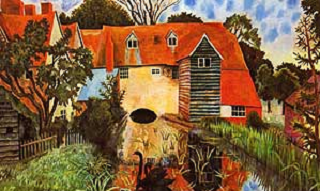
The Mill at Tidmarsh, 1918. Een schilderij van Dora Carrington van de "Mill House", Tidmarsh, Pangbourne, op de Upper Thames, waar veel van “Queen Victoria”werd geschreven.


De Amerikaanse dichter Robert Traill Spence Lowell werd geboren op 1 maart 1917 in Boston. Zie ook alle tags voor Robert Lowell op dit blog.


Water

It was a Maine lobster town—
each morning boatloads of hands
pushed off for granite
quarries on the islands,

and left dozens of bleak
white frame houses stuck
like oyster shells
on a hill of rock,

and below us, the sea lapped
the raw little match-stick
mazes of a weir,
where the fish for bait were trapped.

Remember? We sat on a slab of rock.
From this distance in time
it seems the color
of iris, rotting and turning purpler,

but it was only
the usual gray rock
turning the usual green
when drenched by the sea.

The sea drenched the rock
at our feet all day,
and kept tearing away
flake after flake.

One night you dreamed
you were a mermaid clinging to a wharf-pile,
and trying to pull
off the barnacles with your hands.

We wished our two souls
might return like gulls
to the rock. In the end,
the water was too cold for us.


 2013189-0ee9b587d97f9998afa35f2ba4c6ce96.jpg
Robert Lowell (1 maart 1917 - 12 September 1977) 


De Nederlandse schrijfster Myrthe van der Meer (pseudoniem) werd geboren op 1 maart 1983 in Den Bosch. Zie ook alle tags voor Myrthe van der Meer op dit blog.

Uit: PAAZ

“Ik staar naar de witte muur tegenover me en probeer mijn hoofd met dezelfde leegte te vullen, maar de gedachten beginnen door mijn hersens te krioelen en veranderen de wereld in een verontrustend grijs. Als ik mijn vingers op het toetsenbord leg, voelt het alsof iedere molecuul in mijn lichaam krijsend zo ver mogelijk bij de computer vandaan probeert te kruipen. Ik klem mijn kiezen op elkaar en mijn vingers kruipen over de toetsen, maar dan is de mail af.
Niet in staat om te werken, ha! Grimmig sluit ik het mailprogramma af. Warrige gedachten beginnen over elkaar heen te buitelen maar ik duw ze weer terug op hun plek. Niet nadenken – vooral niet nadenken! – gewoon doen. Iets doen. Naar het toilet. Als ik de gang in wil lopen, verandert die in een moeras waar ik steeds verder in wegzak. Ik weet met veel moeite langs de muur vooruit te waden, maar als de uitgeefster van het geschiedenisfonds de hoek om komt, spring ik weer in het gelid.
‘Hé, Emma, nog hier? Ik dacht dat je allang weg zou zijn.’
‘Nog drie uur, dan begint de vakantie!’ zeg ik met een schrille lach.
Is dit mijn stem?
‘Volgens mij kun je die wel gebruiken. Ga je nog iets leuks doen?’
‘Helemaal niets,’ antwoord ik met een bravoure die ik niet voel. ‘Slapen, luieren, in de zon liggen en alleen een boek lezen als ik dat zelf wil. Heel saai dus.’
‘Klinkt hemels. Als je maar niet aan de uitgeverij denkt, want het wordt weer een gekkenhuis met de nieuwe aanbiedingscatalogus. Ik zie je hier over vier weken weer – geen moment eerder!’


 2013189-c3bfa88358f1f2b06bd489fe09a3e453.jpg
Myrthe van der Meer (Den Bosch, 1 maart 1983)


De Oostenrijkse schrijver, dichter en schilder Franzobel werd geboren op 1 maart 1967 in Vöcklabruck. Zie ook alle tags voor Franznbel op dit blog

Uit:Groschens Grab

“Eines sage ich Ihnen gleich, schrie die Frau ins Telefon, mit der Polizei will ich nichts zu tun haben. Nichts! Nur damit das klar ist. Sie müssen dieses Gespräch auch nicht zurückverfolgen, weil ich stehe in einer öffentlichen Telefonzelle ... Ja, so etwas gibt es noch!
– Woher haben Sie meine Nummer? Warum rufen Sie nicht im Kommissariat an? Groschen sah auf die Uhr, es war sieben Uhr morgens. Die weibliche Stimme am anderen Ende der Leitung klang heiser und überdreht, so, als ob die Frau nachts nichts geschlafen und sich Mut für diesen Anruf angetrunken hätte.
– Um als Aktennotiz zu landen? Glauben Sie, ich weiß nicht,wie es bei Ihnen zugeht? Die kleinen Beamten würden das als lächerlich abtun. Aber Sie als Kommissar, Sie werden sich darum kümmern. Sie nehmen das ernst.
– Worum geht es denn?
– Entführung! Menschenraub! Am helllichten Tag, gestern um halb fünf in der Klagbaumgasse, sagte die verrauchte, leicht hysterisch klingende Stimme. Ich bin im Rubenspark gesessen ... Kennen Sie? Vierter Bezirk, Wirtschaftskammer, Mittersteig, Caritas ...
– Ist mir bekannt.
– Da sehe ich eine alte Dame, ich denke mir noch, die ist aber elegant, eine richtige Lady. Plötzlich kommt ein Auto, bremst, bleibt stehen, einer springt heraus und zerrt sie in den Wagen. Sie will schreien, aber der hält ihr den Mund zu.
Sie will sich wehren, aber der ist stärker. Während ich noch überlege, um Hilfe schreien will, rauscht das Auto schon davon. Und das in Wien, wo es immer heißt, hier passiert nichts,
Wien ist sicher. Pha! Da sieht man ja, wie sicher Wien ist.
Sie werden mich jetzt für verrückt halten, aber ich habe die Gewalt gespürt, die Verzweiflung. Das war Kidnapping!“


 2013189-dba51734884103970be03602356e8dbd.jpg
Franzobel (Vöcklabruck, 1 maart 1967)


De Amerikaanse schrijver Steven Barnes werd geboren op 1 maart 1952 in Los Angeles. Zie ook alle tags voor Steven Barnes op dit blog.

Uit: Lion's Blood

“This didn't happen. It was the work of moments to locate the source of the glittering he had glimpsed from above.
Aidan's heart quickened as his hands closed around his prize. For a moment he floated there, suspended like some strange river creature, the Lady's strong arms tugging at him, his bare feet clinging to a rock for ballast.
The object that had caught his attention was a knife. Not just any knife, though. Not some fisherman's blade tumbled overboard, but something wholly alien to his experience.
It was gold, wreathed with gems about its handle, its two-hand length of blade as gently curved as a shark's tooth.
Young Aidan found it so beautiful that he almost forgot the need for breath.
His aching lungs would no longer be denied. Gripping his prize tightly, Aidan released the rock and kicked back toward the sun. Sound and scent and taste inundated him as he held the blade high.
His father's strong arm clasped his, lifting Aidan from the river with effortless ease. "What have you, boy?"
Aidan panted. His breathlessness owed more to excitement than lack of air. "A knife, Da." He smoothed his fingers over its surface, tracing every knob and etching. "A golden knife!"
Shadows flitted over Mahon O'Dere's face. The expression was darker than mere curiosity, but before Aidan could put a name to the shade it was gone. His father stretched out his arm. Reluctantly, Aidan placed the blade in Mahon's calloused hand.”


 2013189-09e8f20215c75e4c9eb0b643f174653c.jpg
Steven Barnes (Los Angeles, 1 maart 1952)


Zie voor nog meer schrijvers van de 1e maart ook mijn blog van 1 maart 2015 deel 1 en ook deel 2 en eveneens deel 3.

Geschreven door Romenu om 11:04 Reageer op dit bericht

Chanson pour mourir d'amour au temps de carnaval (Louis Aragon)


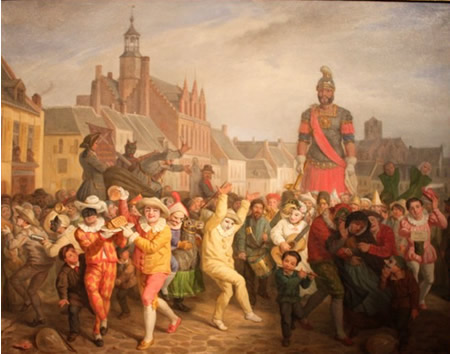
Bij Carnaval


2012888-778f69cf4ec83082a3b597d3b8a69e08.jpg
Le Carnaval de Cassel door Alexis Bafcop, 1876


Chanson pour mourir d'amour au temps de carnaval

Dimanche et
Lundi nettoyez
Paris
Dimanche pleurons que mardi je rie
Lundi domino sans poudre de riz
L'amour se perdra dans ta féerie
Mardi
Mardi gras tous les toits sont frits
Mardi
Mardi gras
Mardi
Mardi gris
Par où t'en viens-tu
Mercredi des
Cendres

Mardi
Mercredi
Mon cœur s'y perdit

Mercredi me fait un signe de croix
Mercredi menteur veux-tu que je croie
Qu'Amour est en terre et déjà tout froid
Il est mon
Seigneur et je suis sa proie
La nuit sera longue et le lit étroit
Le ciel est ouvert tout rouge à l'endroit
Par où tu t'en vas
Mercredi descendre

Mardi
Mercredi
Mon cœur s'y perdit


 2012888-6c64d2c78e8a8e364646a7ed1a6502d8.jpg
Louis Aragon (3 oktober 1897 – 24 december 1982)
Neuilly-sur-Seine, de geboorteplaats van Louis Aragon


Zie voor de schrijvers van de 28e februari ook mijn vorige blog van vandaag.

Geschreven door Romenu om 13:36 Reageer op dit bericht

Stephen Spender, Bart Koubaa, Luc Dellisse, John Montague, Marcel Pagnol, Bodo Morshäuser, Martin Suter, Yórgos Seféris, Howard Nemerov

De Engelse dichter, essayist en schrijver Stephen Spender werd geboren op 28 februari 1909 in Londen. Zie ook alle tags voor Stephen Spender op dit blog.


The Labourer In The Vineyard

Here are the ragged towers of vines
Stepped down the slope in terraces.

Through torn spaces between spearing leaves
The lake glows with waters combed sideways,
And climbing up to reach the vine-spire vanes
The mountain crests beyond the far shore
Paint their sky of glass with rocks and snow.

Lake below, mountains above, between
Turrets of leaves, grape-triangles, the labourer stands.

His tanned trousers form a pedestal,
Coarse tree-trunk rising from the earth with bark
Peeled away at the navel to show
Shining torso of sun-burnished god
Breast of lyre, mouth coining song.

My ghostly, passing-by thoughts gather
Around his hilly shoulders, like those clouds
Around those mountain peaks their transient scrolls.

He is the classic writing all this day,
Through his mere physical being focussing
All into nakedness. His hand
With outspread fingers is a star whose rays
Concentrate timeless inspiration
Onto the god descended in a vineyard
With hand unclenched against the lake's taut sail
Flesh filled with statue, as the grape with wine.


He Will Watch The Hawk

He will watch the hawk with an indifferent eye
Or pitifully;
Nor on those eagles that so feared him, now
Will strain his brow;
Weapons men use, stone, sling and strong-thewed bow
He will not know.

This aristocrat, superb of all instinct,
With death close linked,
Had paced the enormous cloud, almost had won
War on the sun;
Till now, like Icarus mid-ocean-frowned,
Hands, wings are found.


 2012882-1eac8c7d9a76c3d0ea48afeded4d92d3.jpg
Stephen Spender (28 februari 1909 – 16 juli 1995)


De Vlaamse schrijver Bart Koubaa (pseudoniem van Bart van den Bossche) werd geboren op 28 februari 1968 in Eeklo. Zie ook alle tags voor Bart Koubaa op dit blog.

Uit: Een goede vriend

“Ik zag een wit T-shirt met in het midden een Picasso-achtige sardien waaronder in stevige zwarte letters dream stond, daarna een zwart behaarde hand die uit het halfdonker tevoorschijn kwam. ‘Ivan,’ zei een man met een hartelijke glimlach op zijn bebaarde ronde gezicht en nadat hij me stevig de hand had geschud, stapte hij in het zuiderse zonlicht en omklemde het uittrekbare handvat van mijn koffer. Zo staken we de kalme straat over, hij voorop, mijn koffer achter zich meetrekkend, ik met mijn schoudertas om. Ik volgde hem over een lommerrijke strook op een breed voetpad vol drukke terrassen en statige winkels; links, op het zonovergoten plein dat als een oceaan van zwart-witte tegeltjes voor het theater golfde, herkende ik de Griekse zuil met de donkere koning erop. Nadat we dezelfde kalme straat rond het plein nog een keer hadden overgestoken, kwamen we in een brede winkelstraat met aan het einde de triomfboog waardoor ik een glimp van de Taag kon opvangen. Ivan wierp me af en toe een glimlach toe en stak ter hoogte van een krantenkiosk een hand naar links uit, als een fietser. Kort daarna stopte hij voor een souvenirwinkeltje. Hij deed de deur van het winkeltje dicht en toonde me hoe je die met een trucje kon openen. ‘Easy,’ zei hij en hij trok mijn koffer naar binnen, groette de winkeljuffrouw die een kruiswoordraadsel aan het invullen was en liep langs met prullaria volgestouwde rekken, vitrinekasten, bakken en draaibare kaartenrekken naar wat hij breed glimlachend de echte ingang van het appartement noemde. Voor hij die deur openmaakte, legde hij me nog uit dat ’s avonds in het winkeltje twee ijzeren rolluiken werden neergelaten, waardoor een gang van de straatdeur naar de tweede deur binnen ontstond. Het appartement dat ik voor een maand had gehuurd was helemaal boven op de vijfde verdieping, er was geen lift, en Ivan stond erop mijn koffer te dragen. ‘Sardienen,’ pufte hij toen hij op de tweede verdieping even stopte en zich met een draaiende handbeweging voor zijn snuivende neus de walm van geroosterde vis en knoflook toewaaide in de kille, rijk betegelde gang. Voor we het appartement in konden was er een poortje van traliewerk, dat je ook met een trucje kon openmaken. Na een paar trappen duwde hij een laatste deur voor me open en nodigde me met een breed handgebaar uit naar binnen te gaan. Daarna liep hij naar mijn koffer, die hij naast het poortje had laten staan en trok hem hortend en stotend over de trappen tot in de hal van het appartement.”


 2012882-e0574774904de9b6c4957e81adedc7b7.jpg
Bart Koubaa (Eeklo, 28 februari 1968)


De Ierse dichter John Montague werd geboren in New York op 28 februari 1929. Zie ook alle tags voor John Montague op dit blog.


Like dolmens round my childhood, the old people

Like dolmens round my childhood, the old people.
Jamie MacCrystal sang to himself,
A broken song without tune, without words;
He tipped me a penny every pension day,
Fed kindly crusts to winter birds.
When he died his cottage was robbed,
Mattress and money box torn and searched.
Only the corpse they didn't disturb.

Maggie Owens was surrounded by animals,
A mongrel bitch and shivering pups,
Even in her bedroom a she-goat cried.
She was a well of gossip defiled,
Fanged chronicler of a whole countryside:
Reputed a witch, all I could find
Was her lonely need to deride.

The Nialls lived along a mountain lane
Where heather bells bloomed, clumps of foxglove.
All were blind, with Blind Pension and Wireless,
Dead eyes serpent-flicked as one entered
To shelter from a downpour of mountain rain.
Crickets chirped under the rocking hearthstone
Until the muddy sun shone out again.

Mary Moore lived in a crumbling gatehouse,
Famous as Pisa for its leaning gable.
Bag-apron and boots, she tramped the fields
Driving lean cattle from a miry stable.
A by-word for fierceness, she fell asleep
Over love stories, Red Star and Red Circle,
Dreamed of gypsy love rites, by firelight sealed.

Wild Billy Eagleson married a Catholic servant girl
When all his Loyal family passed on:
We danced round him shouting "To Hell with King Billy,"
And dodged from the arc of his flailing blackthorn.
Forsaken by both creeds, he showed little concern
Until the Orange drums banged past in the summer
And bowler and sash aggressively shone.

Curate and doctor trudged to attend them,
Through knee-deep snow, through summer heat,
From main road to lane to broken path,
Gulping the mountain air with painful breath.
Sometimes they were found by neighbours,
Silent keepers of a smokeless hearth,
Suddenly cast in the mould of death.

Ancient Ireland, indeed! I was reared by her bedside,
The rune and the chant, evil eye and averted head,
Fomorian fierceness of family and local feud.
Gaunt figures of fear and of friendliness,
For years they trespassed on my dreams,
Until once, in a standing circle of stones,
I felt their shadows pass

Into that dark permanence of ancient forms.


 2012882-e16ae51dfbb0c0598c7f15dcf2289367.jpg
John Montague (28 februari 1929 – 10 december 2016)


De Belgische-Franse dichter, schrijver, essayist, dramaturg en scenarioschrijver Luc Dellisse werd geboren op 28 februari 1953 in Brussel. Zie ook alle tags voor Luc Delisse op dit blog.

Uit: L'Invention du scénario

"Dans le cas d’un scénario de long métrage, vous vous lancez dans une entreprise qui peut durer un an ou davantage. Vous y engagez votre temps, votre conscience, et la
maîtrise de votre projet.
Vous aurez à défendre, argumenter, modifier, sacrifier vos plus belles trouvailles.
Le but de ce livre n’esr pas de faire passer un te5t, ni de décourager les vocations : mais l’écriture eEecdve et efficace d’un scénario doit reposer sur une nécessité forte et
non sur un malentendu.
QU’EST-Œ QU’UN RÉCIT
Un récit n’est pas une simple histoire. Un récit esr une histoire organisée et menée à bien.
Dans un récit, il y a autre chose que les matériaux bruts et péle-méle d’une histoire : il y a en outre tous les élé- ments de consrrucfion, de direcdon, d’enchänemenr des faits et de résolution.
Il n’y a place ni pour le flou (tout doit être perceptible), ni pour les coïncidences (tout doit être cohérent ou préparé).
Le terme intrigue s’impose lorsque tous les éléments ont trouvé leur jusre place, sans séquences inutiles, sans aucme perte d’énergie ou de sens ; lorsque le récit esr parfaitement struœuré."


 2012882-aa0d1d250cb9244259b76c34e471e623.jpg
Luc Dellisse (Brussel, 28 februari 1953)
Cover 


De Franse dichter, schrijver, dramaturg en regisseur Marcel Pagnol werd geboren op 28 februari 1895 in Aubagne, Bouches-du-Rhône. Zie ook alle tags voor Marcel Pagnol op dit blog.

Uit: Eléments d’une thermodynamique nouvelle

"Les cours de Physique et Chimie étaient faits par M.Oneto.
Il avait une petite barbiche noire, il ressemblait à Méphistophélès, mais en beaucoup plus jeune ; il avait beaucoup d’autorité, et une grande bonté.
Comme M.Cros, il roulait les r ; comme M.Cros, il avait pour nous une sorte d’affectueux mépris.
Un programme parfaitement imbécile exigeait qu’il enseignât, en cent cinquante leçons, toute la Physique et toute la Chimie, à des gaillards qui ne savaient pas résoudre une équation du premier degré, et qui lui arrivaient en droite ligne du cours de Philosophie : c’est-à-dire complètement écrémés par Beckerley, Fichte-grain-de-sable, l’impératif catégorique, le Pragmatisme, Auguste Comte et Baralipton.
Alors, avec beaucoup de patience, et pour amuser les grands idiots que nous étions, il faisait des expériences. Lorsque je pense à ces classes de sciences je vois un morceau de fil de fer qui brûle dans un bocal d’oxygène ; une lampe à mercure qui verdit la barde, pourtant si noire, de M.Oneto ; une éprouvette qu’il secoue en disant : «
Vous allez voir : ça va tourner au bleu » (et ça tourne au rouge le plus vif) ; enfin, je vois –apothéose de mes classes de physique – un morceau de sodium affolé qui tire des bordées foudroyantes à la surface d’une sorte de pot de chambre, et qui jette des éclairs subits, avec des crachotements irrités, au sein d’un incendie sous-marin."


 2012882-2898360e2d2c680c05f1dc5b82ca44be.jpg
Marcel Pagnol (28 februari 1895 – 18 april 1974)
Op een afiche n.a.v. zijn 120e geboortedag in 2015 


De Duitse dichter en schrijver Bodo Morshäuser werd geboren op 28 februari 1953 in Berlijn. Zie ook alle tags voor Bodo Morshäuser op dit blog.

Uit: Und die Sonne scheint

„Zwei Verkäuferinnen, deren Geschäfte es nicht mehr gab, waren so langsam zu Fuß unterwegs, als sollten die zweihundert Meter, die sie noch hatten, bloß nicht enden, während ein Radfahrer nach dem anderen sie umkurvte, einer gar absteigen musste. Er hatte ein so langsames Gehen nicht erwartet und den Bremspunkt an einer Verengung falsch berechnet. Gegenüber stand ein alter Mann auf dieselbe Weise wie immer an seinem Fenster und schaute zu denselben Stellen wie immer schon. Neuerdings belegte ein Schuttcontainer eine der Parkbuchten, erst noch in tiefem Schatten, im nächsten Moment im Sonnenlicht, und gleich darauf wieder im Schatten. Eine Straßenseite war trocken, die andere nass.
Ich saß an der Scheibe eines Cafés und sah mich selbst vorübergehen. Als ich mich über eine bestimmte Gestalt, die ich seit Jahren oder Jahrzehnten vom Sehen kannte, innerlich lustig machen wollte, fiel mir ein, dass ich selbst einmal solch eine Erscheinung gewesen war. Sah ich nicht einsam aus, wie ich vor mir selbst vorüberging? Ja, ich sah einsam und verloren aus, aber nicht zurückgezogen vor anderen, sondern vor mir selbst. Sah aus wie einer, der sich für alles Mögliche interessierte, nur nicht für sich. In welch friedlicher Gegend ich doch gewohnt hatte.
Bis dorthin drangen die Kämpfe nicht vor. Was einen in meiner alten Straße umwehte, konnte man für den perfekten Frieden halten. Zwar wurde viel geklagt, doch waren Anlässe nicht zu erkennen. Man saß in Cafés, im Sommer davor, und hörte man von Sorgen, so schienen deren Schauplätze so fern zu sein wie die Nordatlantikströmung, wie brasilianische Regenwälder oder wie ein Waffentest im Südpazifik. Gleichzeitig wurden Sorgen um Globales als allerpersön.”


 2012882-8e2d35b3ebcf74e07aafd6a34ab4fe9a.jpg
Bodo Morshäuser (Berlijn, 28 februari 1953)
Cover


De Zwitserse schrijver Martin Suter werd geboren op 29 februari 1948 in Zürich. Zie ook alle tags voor Martin Suter op dit blog.

Uit: Ein perfekter Freund

„Weshalb?"
"Man hatte im Computertomogramm eine Hirnprellung festgestellt, und der Arzt entschied, Sie in Narkose zu behalten und den Hirndruck zu überwachen. Wenn er gestiegen wäre, hätte das geheissen, dass das Hirn anschwillt oder eine Blutung auftritt."
"Was passiert dann?"
"Es ist nicht angeschwollen."
"Ich war in einem künstlichen Koma?"
"In einer Langzeitnarkose. Zwei Tage."
Fabio fielen die Augen zu. "Wo ist meine Freundin?"
"Ich nehme an, zu Hause. Es ist kurz nach Mitternacht."
"Ist sie schon lange gegangen?"
"Ich weiss nicht. Ich bin die Nachtschwester", antwortete die Stimme. Jetzt wieder von jenseits des Flusses.
Norina wusch seinen Bauch mit einem weichen Lappen. Er spürte ihre leichte Hand und die Wärme des Lappens. Er lag mit leicht gespreizten Beinen da und stellte sich schlafend. Er hörte es plätschern, wenn sie den Lappen auswrang, und konnte es kaum erwarten, bis sie ihn wieder berührte.
Sie seifte Schamhaare und Leisten ein. Endlich spürte er ihre Finger an seinem Penis. Sie hob ihn an - und ein stechender Schmerz durchzuckte ihn. Fabio schrie auf.
"Pardon." Eine Männerstimme.
Er schlug die Augen auf. Ein Mann stand neben dem Bett. Er war etwa in seinem Alter und trug das weissblond gefärbte Haar millimeterkurz. Er hatte eine blaue Baumwollhose an und darüber eine blaue, lose, kurzärmelige Bluse mit einem Namensschild. Er hob die Hände bedauernd in die Höhe. "Der Blasenkatheter, sorry. Wissen Sie, wo Sie sind?" Fabio schaute sich um. Neben dem Bett ein Infusionsständer, an der Wand ein Tisch mit einem Blumenstrauss, darüber ein Kruzifix. "Sieht nach Krankenhaus aus."


 2012882-755d8a5410ed1fa20c26a647511f62ef.jpg
Martin Suter (Zürich, 29 februari 1948)


De Griekse dichter Yórgos Seféris werd geboren in Smyrna (nu Izmir, in Turkije) op 29 februari 1900. Zie ook alle tags voor Yórgos Seféris op dit blog.


Letter Of Mathios Paskalis

The skyscrapers of New York will never know the coolness that comes down on Kifisia
but when I see the two cypress trees above your familiar church
with the paintings of the damned being tortured in fire and brimstone
then I recall the two chimneys behind the cedars I used to like so much when I was abroad.

All through March rheumatism wracked your lovely loins and in summer you went to Aidipsos.
God! what a struggle it is for life to keep going, as though it were a swollen river passing through the eye of a needle.
Heavy heat till nightfall, the stars discharging midges, I myself drinking bitter lemonades and still remaining thirsty;
Moon and movies, phantoms and the suffocating pestiferous harbour.

Verina, life has ruined us, along with the Attic skies and the intellectuals clambering up their own heads
and the landscapes reduced by drought and hunger to posing
like young men selling their souls in order to wear a monocle
like young girls — sunflowers swallowing their heads so as to become lilies.

The days go by slowly; my own days circulate among the clocks dragging the second hand in tow.
Remember how we used to twist breathless through the alleys so as not to be gutted by the headlights of cars.
The idea of the world abroad enveloped us and closed us in like a net
and we left with a sharp knife hidden within us and you said ‘Harmodios and Aristogeiton'.

Verina, lower your head so that I can see you, though even if I were to see you I'd want to look beyond.
What's a man's value? What does he want and how will he justify his existence at the Second Coming?
Ah, to find myself on a derelict ship lost in the Pacific Ocean alone with the sea and the wind
alone and without a wireless or strength to fight the elements.


 2012882-fbd54042d84d910b5e3c79d811a0e778.jpg
Yórgos Seféris (29 februari 1900 - 20 september 1971)


De Amerikaanse dichter en literatuurdocent Howard Nemerov werd geboren op 29 februari 1920 in New York. Zie ook alle tags voor Howard Nemerov op dit blog.


Political Reflection
loquitur the sparrow in the Zoo

No bars are set too close, no mesh too fine
To keep me from the eagle and the lion,
Whom keepers feed that I may freely dine.
This goes to show that if you have the wit
To be small, common, cute, and live on shit,
Though the cage fret kings, you may make free with it


The Beautiful Lawn Sprinkler

What gives it power makes it change its mind
At each extreme, and lean its rising rain
Down low, first one and then the other way;
In which exchange humility and pride
Reverse, forgive, arise, and die again,
Wherefore it holds at both ends of the day
The rainbow in its scattering grains of spray.


 2012882-cf1bb10fe9297298e5599dcd4647fa82.jpg
Howard Nemerov (29 februari 1920 – 5 juli 1991) 


Zie voor nog meer schrijvers van de 28e februari ook mijn blog van 28 februari 2016 deel 1 en ook deel 2.en ook mijn blog van 29 februari 2016.


Geschreven door Romenu om 13:33 Reageer op dit bericht

Josef Svatopluk Machar

De Tsjechische dichter, schrijver, journalist en politicus Josef Svatopluk Machar wed geboren op 29 februari 1864 in Kolín als zoon van een molenaar. Machar bezocht het gymnasium in Praag, voltooide daarna de eenjarige militaire school en vond in 1891 een baan als bediende in een bank in Wenen, waarbij hij op hetzelfde moment voor diverse tijdschriften ging schrijven. Hier ontmoette hij T. G. Masaryk en werd hij een belangrijke vertegenwoordiger van de Realistische Partij. Al voor de Eerste Wereldoorlog trad hij op als tegenstander van het holle patriottisme. Na 1918 keerde hij op verzoek van Masaryk naar Tsjecho-Slowakije terug en werd hij benoemd tot inspecteur-generaal van het Tsjechoslowaakse leger. Deze functie legde hij in 1924 wegens openlijk meningsverschillen met Masaryk neer en hij sloot zich aan bij het kamp van radicaal rechts. In zijn werken schreef hij over de burgerlijke maatschappij. Hij bekritiseerde haar onverschilligheid, hypocrisie en valse patriottisme. Zijn kritiek raakte ook de kerk en de jonge Tsjechen. Hij schreef subjectieve en politieke poëzie en lyrische epen, vermengd met satire, ironie en sarcasme. Aldus trad hij in het voetspoor van Karel Havlicek Borovsky en Jan Neruda. Hij werd echter ook beschouwd als problematisch schrijver met fascistische opvattingen. Hij keerde zich in zijn “Satiricon” boek en in zijn essay “Amnestie” echter tegen het antisemitisme. In de strijd tussen de oudere en jongere literaire generatie richtte hij samen met andere jonge schrijvers de vereniging “Česká Moderna”op en schreef daartoe een bijbehorend manifest.

Uit: Dreißig Jahre

“Wir quartierten uns im Hotel Hammerand ein. [...] Und nun begannen wir in dieser fremden Stadt irgendwie die Scheu abzulegen.
Wie ein Mensch, der schwimmen lernt, von Tag zu Tag versucht, weiter in den Strom vorzudringen, gingen wir Morgen für Morgen aus dem Hotel, immer weiter und weiter weg, tauchten in die Gassen ein, in den Lärm und in das Menschengewimmel, schauten nach Häusern und Geschäften aus, suchten Punkte, an denen wir uns beim nächsten Mal orientieren würden, kurzum, wir waren bedacht, den Körper und die Seele der unbekannten Stadt kennenzulernen, die nun unsere Heimat sein sollte.
Auf die Ringstraße, den Graben, in die langen Straßen in den Bezirken, in die Kirchen, Museen, die Parks, zu den Monumenten gingen wir.
Eine große ausgedehnte Stadt – aber es ist nicht Prag. Das hier, das ist ein großes Camp von Häusern, die in manchmal geraden, manchmal krummen Reihen von Gassen Habtacht stehen, ein Haus wie das andere, ihre Uniform ist keineswegs etwas Besonderes, einmal sauberer, einmal schmutziger, hie und da steht neben und zwischen ihnen wie ein Korporal eine Kirche, hie und da, wie  ein Offizier, ein Palais, ein Bauwerk – die Universität, das Parlament, die kaiserlichen Museen, der Neubau der Hofburg, des Burgtheaters – aus allen Zeiten und Kulturen zusammengetragene Stile ohne Patina der Vergangenheit, ohne Charakter und Tradition, ein Leben ohne Geschichte und ohne inneren Sinn – das ist nicht Prag, das ist nicht unser Prag.
Dem Abend zu, wenn sich der Himmel rötete, kam die Traurigkeit. Die Seele dieser Stadt war mir fremd, sie sprach nicht zu mir, und wenn sie zu mir sprach, war sie mir zuwider. Es war die Seele eines Weibes, das sich aushalten ließ, das sich in seinem Luxus bemüht, den Eindruck einer vornehmen Dame zu erwecken. Und wieder erinnerte ich mich und verglich: Prag ... eine ausgeraubte und verarmte Adelige, sie lebt und kämpft armselig um jeden Tag ihres Lebens, aber sie ist eine Adelige, hat eine ehrenvolle Vergangenheit, und ehrenhaft ist auch die Armut ihres Heute. Mit jedem  Wölkchen, das gegen Norden schwamm, wäre ich gerne zurückgekehrt, ich beneidete die Vögel um ihre Flügel und um ihre Freiheit.“


 2017603-9daaa75bf64ea0362ff871be60e586da.jpg
Josef Svatopluk Machar (29 februari 1864 - 17 maart 1942)

Geschreven door Romenu om 00:00 Reageer op dit bericht

Meer van Romenu

↑ Terug naar de berichten