

Naar de inhoud

Romenu

Over literatuur, gedichten, kunst en cultuur
akke.beakke.be

Berichten van 2 maart 2017 tot 3 maart 2017

Manfred Flügge, Hans Verhagen, Tjitske Jansen, James Merrill, Kola Boof, Clifton Snider, Gudrun Pausewang, Josef Winkler, Chris Kraus
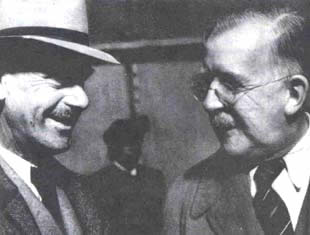
De Duitse schrijver Manfred Flügge werd geboren op 3 maart 1946 in Kolding, Denemarken. Zie ook alle tags voor Manfred Flügge op dit blog.

Uit: Das Jahrhundert der Manns

„Im Deutschen werden Personennamen ohne Artikel gebraucht. Für Vornamen gelten regional geprägte Eigenheiten, mal mit, mal ohne Artikel. Wer die Sippschaft meint, sollte also sagen: Bei Manns wurde Weihnachten seit Generationen groß gefeiert. Und doch heißt es längst überall Die Manns, als handle es sich um eine Firma, ein Unternehmen, ein Markenzeichen. Dabei schwingt etwas Abschätziges mit, im Sinne von »diese Manns«, mit denen es, wie man ja wisse, etwas Besonderes auf sich habe.
Auf ihrer Weltreise von 1927 traten Klaus und Erika Mann als »die literarischen Mann Zwillinge« auf, als Angehörige eines Kollektivs wie Kinder aus einer berühmten Zirkusfamilie. Vielleicht hatte sie Rudolf Grossmanns bebilderter Artikel »Die Romanzwillinge. Thomas und Heinrich Mann« auf diese Idee gebracht, der am 9. Februar 1926 im Berliner Tageblatt erschienen war. Die Pluralform bezog sich ursprünglich auf das schreibende Brüderpaar mit seinen Unterschieden in Schreib- und Lebensstil, im Denken und öffentlichen Auftreten. Im November 1918 wurden in München Postkarten mit den beiden Türmen der Frauenkirche gedruckt, deren Kuppeln jeweils die Köpfe der beiden Romanciers darstellten: »Feindliche Brüder?«
Links der schmunzelnde Heinrich über einer roten Fahne, rechts Thomas, missmutig hinüberschielend und von lästigen Krähen umschwärmt.
Schon als junger Autor war Klaus Mann Gegenstand von Karikaturen. Th. Th. Heine zeichnete ihn 1925 im Simplicissimus mit einem Manuskript in der Hand, hinter seinem Vater stehend: »Du weißt doch, Papa, Genies haben niemals geniale Söhne, also bist du kein Genie.« Egon Friedrich Maria Aders illustrierte seinen Artikel »Die Dichterdynastie Mann«, der 1927 in der Essener Wochenschauerschien, mit eigenen Zeichnungen: »Heinrich: Aristokrat und Grandseigneur in Gang und Haltung, Manieren und Kleidung, nicht aber im Zuschnitt der Lebensführung, der Behausung und der Repräsentation«. Thomas skizzierte er flau, glatt, konturlos; im Text hieß es, man würde ihn nie für einen Dichter halten, gleichwohl umgebe ihn ein besonderer Glanz im Gegensatz zu Heinrich. »Klaus Mann, der älteste Sohn von Thomas, auch bereits als Dichter bekannt, ist ein sehr begabter Junge, jedenfalls besser als seine allzu scharfen Kritiker.«


 2013989-833719cdde8ef1abb644bd7ff1d913b6.jpg
Manfred Flügge (Kolding, 3 maart 1946)
Thomas en Heinrich Mann in New York, 1940


De Nederlandse dichter, schilder en journalist Hans Verhagen werd geboren in Vlissingen op 3 maart 1939. Zie ook alle tags voor Hans Verhagen op dit blog.


Zinnen

Het onbereikbare geeft je reden van bestaan.
Jij hebt je zinnen op het onbestaanbare gezet,
jou spreekt het onuitsprekelijke aan.

Pijnig je geest tot gekwordens toe
tot je de ervaring van de dichter evenaart,
zich boven zich verheffend in de dreiging der ravijnen,
tot hij van extase vrijwel buiten westen raakt.

O de aanwakkerende vrees compleet te verdwijnen
nu je echt begonnen bent te worden als een kind -
beeld je daarbij het naadloze Vuurlandse duister eens in,
dat je omringt, je penetreert, tot overgave dwingt...


Die ochtend

Die ochtend was zij doodgewoon van huis gegaan
in een metallieke limousine met een rozenkrans van schedels
en trompetten stekend uit edele delen, om ze te bedekken tevens;
en ’s avonds was zij nog niet thuis

Ik heb die nacht in onze gemeenschappelijke stilte rondgewaard
maar ditmaal bleef zij zwijgen
Ze was er wel, ze was zelfs overal
maar ik ben niet meer met haar aan de praat geraakt

Ik kon haar zelfs niet aan het lachen krijgen


 2013989-06353e185c11571b8ebf034a5d293e24.jpg
Hans Verhagen (Vlissingen, 3 maart 1939)


De Nederlandse dichteres en schrijfster Tjitske Jansen werd geboren in Barneveld op 3 maart 1971.Zie ook alle tags voor Tjitske Jansen op dit blog.


Er was mijn moeder

Er was mijn moeder die vlees braadde voor een mevrouw verderop
omdat die mevrouw niet tegen braadlucht kon.

Er was het naast mijn moeder in de keuken staan. Ze prikte in het vlees
en ze keek naar de pan. We zeiden niets en ik keek naar het vlees, door
het raam en ook een beetje naar mijn moeder. Niet te veel, ze mocht het
niet merken.

Er was een vraag die ik haar graag wilde stellen. Er was het wachten op hét
moment. Als ze het vlees omdraait bijvoorbeeld. Dan zeg ik heel snel
wat ik zeggen wil, hoop dat ze het niet merkt, toch hoort en dat ze dan
per ongeluk antwoord geeft.

Er was mijn moeder die het vlees omdraaide. 'Mama, ziet God mij altijd?'
Mijn moeder bleef maar naar de pan kijken. 'Dacht je dat?', zei ze tegen de pan.

'Dacht je dat hij niets beters te doen heeft dan naar jou te kijken?'


Envelop met foto’s I

Dit zijn dus de foto's die ze
om ik weet niet welke reden
niet meer in een boek liet.

De meeste hebben de kwaliteit van industrieterrein -
niet bedoeld om er te zijn, als je er niet hoeft te zijn,
niet bedoeld om er te wandelen op zondag.

Juist daarom kom ik er zo graag.
Ik neem het kind dat ik niet heb
ermee naartoe.

Hier is de tijd die per ongeluk overbleef.
Hier is de onbedoelde ruimte.
Mijn broer leerde me er bochtjes achteruit.


 2013989-578ff36061773a8a7c33f391a631c304.jpg
Tjitske Jansen (Barneveld, 3 maart 1971)


De Amerikaanse dichter James Merrill werd geboren op 3 maart 1926 in New York. Zie ook alle tags voor James Merrill op dit blog.


Lost in Translation (Fragment)
For Richard Howard

The dog's tail thumping. Mademoiselle sketching
Costumes for a coming harem drama
To star the goosegirl. All too soon the swift
Dismantling. Lifted by two corners,
The puzzle hung together – and did not.
Irresistibly a populace
Unstitched of its attachments, rattled down.
Power went to pieces as the witch
Slithered easily from Virtue's gown.
The blue held out for time, but crumbled, too.
The city had long fallen, and the tent,
A separating sauce mousseline,
Been swept away. Remained the green
On which the grown-ups gambled. A green dusk.
First lightning bugs. Last glow of west
Green in the false eyes of (coincidence)
Our mangy tiger safe on his bared hearth.

Before the puzzle was boxed and readdressed
To the puzzle shop in the mid-Sixties,
Something tells me that one piece contrived
To stay in the boy's pocket. How do I know?
I know because so many later puzzles
Had missing pieces – Maggie Teyte's high notes
Gone at the war's end, end of the vogue for collies,
A house torn down; and hadn't Mademoiselle
Kept back her pitiful bit of truth as well?


 2013989-16c9bfd857008b852ae9832f2fda3b90.jpg
James Merrill (3 maart 1926 – 6 februari 1995) 


De Amerikaanse dichteres en schrijfster Kola Boof werd (naar eigen zeggen) geboren als Naima Bint Harith op 3 maart 1972 in Omdurman, Soedan. Zie ook alle tags voor Kola Boof op dit blog.

Uit: The Sexy Part of the Bible

« He ignores this information, but at last, he gets to the point. “I could help you, you know.”
I hadn’t expected it, but he jumps right in, his clouded eyes casting me as a stain. “The Michael Jackson Pill is difficult to purchase since they made the new anti-bleaching laws in West Cassavaland and Senegal, and not everyone can afford it. Unless you know someone with connections, you get over-charged and your usage gets interrupted. But I’ve got unlimited access to a regular supply straight from Europe. That’s where they make it you know. Kindis-Europa (magnificent Europe). I can get you Nadinola skin bleaching cream from Canada and Mexico and wigs and human hair from Korea, too. I could keep you supplied with all that.”
In his eyes I see young black schoolgirls and desperate housewives of DakCrete giving him sex in exchange for these products, but of course, I have no proof that what I see in his eyes is true. Still, you’d better believe it.
“What about Percy Commey?” I ask him, and as I say that name, it’s as if I’ve placed burning coals beneath his feet. Percy Obliteri Commey, of course, is the celebrated Ghanaian boxer who made international headlines in 2001 when the right side of his face literally fell apart during a boxing match because of his chronic use of skin bleaching agents. One small cut on Commey’s cheek, courtesy of his opponent, had progressed during the match into small skin-cracks around his nostrils and then another cut at his right ear until all the skin on his right side began peeling off before the whole world like a bleeding black mask. Not only did Commey lose his National Super Featherweight belt when it was discovered by the boxing league that he was a bleacher, but also the respect of the West African people, including those who were fellow bleachers and swallowers, because along with the shame of being a national figure caught bleaching, he had also brought his sexuality into question by entering the boxing ring wearing a Jheri-Curl (niggerlox). »


 2013989-526f93ee56db891ea37b0853e83774c1.jpg
Kola Boof (Omdurman, 3 maart 1972)
Cover


De Amerikaanse dichter, schrijver en criticus Clifton Mark Snider werd geboren op 3 maart 1947 in Duluth, Minnesota. Zie ook alle tags voor Clifton Snider op dit blog.


Safe Space

Yoga was a safe space
for an introvert like me.

The only man tonight,
I arrive late,
avoid the chatter,
content to yield
to instructor:
a new mother praises
our various amateur poses.

My favorites:
tadasana, mountain pose,
shavasana, corpse pose,
and final lotus pose,
hands folded, head bowed,
our teacher chants
in Sanskrit, and we finish
with namaste.

At the front desk
is a new woman, a temp.
She is missing when I return
from the men’s room,
as are all the other women,
and I am locked inside the
Wellness Center, with no cell phone,
no wallet, no modern convenience
but the dead computer and the phone
at the desk, which I use
to call 911.


 2013989-d4eb438d5fab79dc16314581819da7d0.jpg
Clifton Snider (Duluth, 3 maart 1947)


De Duitse schrijfster Gudrun Pausewang werd geboren op 3 maart 1928 in Wichstadt. Zie ook alle tags voor Gudrun Pausewang op dit blog.

Uit: Kinderbesuch

»Uns geht das jedenfalls nichts an.« Auf ihre künstlich geblondeten Locken fiel jetzt die Sonne. Sie hob ihr schmales Gesicht, auf dem sich schon Falten und Tränensäcke abzuzeichnen begannen. Von den Flügeln der scharfgeschnittenen Nase fielen tiefe Furchen durch die flaumige Haut zu den Mundwinkeln. Die braunen Augen blinzelten in den Himmel.
»Ist das nicht ein Aasgeier?« fragte sie überrascht.
»Aber wo ist das Aas?«
Er überhörte ihre Frage. Statt dessen sagte er: »Wir sollten dem Personal zu verstehen geben, daß das Haus auch ohne Ernesto nicht herrenlos ist. Hast du heute eigentlich den Gärtner schon gesehen?«
»Du meinst Victor, den Chauffeur? Ja, er hat schon vor Sonnenaufgang den Rasen gesprengt. Ich war früh wach.«
Sie blieben beim Schwimmbad stehen und betrachteten die Villa, deren Dach in der Morgensonne schimmerte. Herta Köberle fand die Gitter vor den Fenstern häßlich. Auch die Gartenmauer störte sie.
»Wenn schon eine Mauer«, meinte sie, »warum dann so hoch, und noch dazu mit Glassplittern gespickt? Bei uns daheim in Koblenz kann man sich über den Zaun hinweg sehen und unterhalten.«
»Ernesto wird sich schon was dabei gedacht haben«, sagte er. »Vielleicht soll sie ein Schutz gegen Straßenlärm und Hundegebell sein.«
»Aber Ernestos Hunde bellen am lautesten, und die sind innerhalb der Mauer. Und was gibt’s denn schon für Lärm auf so einer Villenstraße wie hier?«
Sie warfen zwei lange Schatten auf den Rasen. Meistens überdeckte der breite den schmalen: Kurt Köberle war einen Kopf größer als seine Frau und doppelt so schwer.“


 2013989-1e036769bd44464e53d302f7fafd3285.png
Gudrun Pausewang (Wichstadt, 3 maart 1928)
Bij een signeersessie op een school in Frankenberg/Eder, 2010


De Oostenrijkse schrijver Josef Winkler werd geboren op 3 maart 1953 in Kamering, Kärnten. Zie ook alle tags voor Josef Winkler op dit blog.

Uit: Mutter und der Bleistift

„Auf der Fahrt von Toulouse nach Lagrasse, mit den Aufzeichnungen "Gestern unterwegs", aus dem Fenster des Autos schauend, sehe ich in einem Dorf die modernen Stromerzeuger als rotierende, den Wind köpfende Heiligenscheine. Eine Elster pickt vom Straßenrand - zwischeneiner langen Reihe Holundersträuchern stehen unzählige Büsche gelber Ginster - einen Regenwurm auf und fliegt, auch angetrieben vom Fahrtwind des vorbeirauschenden Autos, über die noch grünen Getreidefelder. Das Auto überrollt einen bereits überfahrenen Igel mit seinem aus dem Stachelfell herausgequetschten Fleisch. Vor den Zypressen, die ringsum einen Friedhof einrahmen, stehen Warntafeln, auf denen schwarze Schafe und Hirsche aufgemalt sind. Angekommen im stillen mittelalterlichen Dorf Lagrasse, unweit von den Pyrenäen, höre ich als erstes beim Aussteigen aus dem Auto einen Hahnenschrei. In der Mitte des grünen, im Sekundenabstand immer wieder aufleuchtenden Apothekerkreuzes tauchen abwechselnd Uhrzeit und Außentemperatur auf. Auf der Vitrine eines kleinen, altmodischen Gemischtwarenladens steht als Zierde ein Hahn aus Keramik, nur ein paar Stücke Käse und eine einzige luftgetrocknete Wurst liegen in der Vitrine. Der kleine, aber laut plätschernde Bach, über den eine mittelalterliche Brücke führt, trägt den Namen "L'Orbien". Am Bachufer steht ein großer Feigenbaum mit breit ausladender Krone und großen, gezähnten Blättern. Im angrenzen den Feld, das voller Mohnblumen ist, liegen auf einem runden Plastiktisch mehrere umgekippte weiße Plastiksessel. Auf einem Plastiksessel klebt ein verwittertes Heiligenbild von Giovanni Bellini mit der Madonna und dem auf einem weißen Polster mit Kordel splitternackt sitzenden Jesukind, das seine Augen zum Himmel hinaufdreht, während die Madonna mit leicht verschobener Unterlippe zur linken Seite schielt.“


 2013989-ec9e2c7e31a1a2d93a7e8221453c2174.jpg
Josef Winkler (Kamering, 3 maart 1953)


Onafhankelijk van geboortedata

De Amerikaanse schrijfster en filmmaakster Chris Kraus werd geboren in 1955 in New York. Zie ook alle tags voor Chris Kraus op dit blog.

Uit: I Love Dick

“It was nearly dark when the bus arrived in Chetumal. Friday night —a shopping night in this five block city of appliance stores. A city founded so Belizeans and Guatemalans who weren’t rich enough to shop in Dallas or Miami could still buy duty-free TVs. The benefits of civil war? I took a taxi to the Guatemalan embassy but it was closed. Fittingly, there’s a huge new glass and steel Museum of the Mayan Indian with very little in it at the edge of Chetumal. On the bus all afternoon I’d been reading the autobiography of Guatemalan rebel leader Rigoberta Menchú and thinking about Jane Bowles. Two different kinds of misery, alertness. After that, I checked in to a twenty dollar a night hotel.The next morning I got up early to take a walk around Chetumal. According to the map it was a coastal town. The bus to Guatemala didn’t leave ’til later on that afternoon. I caught a local city bus and time slowed down. Suburban Chetumal looked kind of like Mar Vista—stucco bungalows and tiny yards—except there were no bus stops, the bus stopped for anyone who flagged it down. And then seven miles and 60 minutes later the bungalows thinned out and the bay leapt out of nowhere when the road curved round. Sleepy dullness opening up to startlingly blue water, every particle of air locked into a glistening frame. The coastal land was jungly. I got off and walked along a jungly path to a waterfront cafe at the end of a round peninsula but it was closed. I gasped when I saw a tree monkey tethered to a pole. Finally a man came out and said in English that he’d bought the cafe and the beachfront and the monkey after working in a car shop in America. The monkey didn’t seem to mind. I watched it, squatting, tracing circles on the ground. Its fur was dusty, cream smudged with cinders. It had ten perfectly articulated fingers, scrunched up toes.”


 2013989-4a29d0c976245288b6860bafc19143ee.jpg
Chris Kraus (New York, 1955)


Zie voor nog meer schrijvers van de 3e maart ook mijn blog van 3 maart 2015 en ook mijn blog van 3 maart 2013 deel 2.
Geschreven door Romenu om 18:25 Reageer op dit bericht

Godfried Bomans, Multatuli, Frank Albers, John Irving, Thom Wolfe, Michael Salinger, János Arany, Olivia Manning, Rinske Kegel

De Nederlandse schrijver Godfried Bomans werd geboren in Den Haag op 2 maart 1913. Zie ook alle tags voor Godfried Bomans op dit blog.

Uit: Pieter Bas

“Doch mijn moeder keek hem stralend aan en noemde hem een malle.

Ik heb later meermalen de gelegenheid gehad op te merken hoe gering de belangstelling van vrouwen is in zaken van politieke strekking. Zelfs mijn eigen lieve Catharina kende het verschil niet tussen de Eerste en Tweede Kamer, en wanneer het gesprek die kant opging werd zij onrustig en trachtte de aandacht te vestigen op de jampot of op andere voorwerpen welke in generlei verband stonden met het besprokene. Misschien is dit te verklaren uit een zekere vrees voor de ernst van het leven. In elk geval is het beter terug te keren tot de loop der gebeurtenissen, waarvan mijn geboorte het begin was.
Ik moet die eerste dag geweldig geschreeuwd hebben; doch daar het juist de verjaardag van koning Willem III was, stak hierin niets opvallends. Van dat eerste levensjaar kan ik mij, hetgeen te verontschuldigen is, niets herinneren. Het is het noodlot van memoires dat zij haperen op de twee belangrijkste punten: het einde en het begin, de dood en de geboorte. Omtrent het eerste kan de schrijver niets mededelen zonder met zichzelf in tegenspraak te geraken en omtrent het laatste is hij letterlijk genoodzaakt zich naar bakerpraatjes te richten. De bijzonderheden, die ik nochtans weet, zijn mij overgeleverd bij monde van Anna, een grote dikke vrouw, waarvan ik mij alleen haar twee blinkende zwarte ogen herinner. Ik moet dan een bijzonder groot hoofd gehad hebben, dat ik reeds toen gewoon was een weinig schuin te houden, een gewoonte waarvan, zoals ge weet, duur mijn politieke tegenstanders zulk een laaghartig gebruik is gemaakt.
Naar aanleiding hiervan schijnt mijn oom Jozef in scherts gezegd te hebben dat er nog een minister uit mij Zou groeien. Deze voorspelling kwam mij echter pas ter ore toen ik minister was, hetgeen de betrouwbaarheid aanzienlijk vermindert. Een neiging tot spelen schijn ik niet gehad te hebben; gewoonlijk lag ik stil op mijn rug naar boven te kijken ‘alsof ik over iets nadacht’. Ik groeide snel op en reeds in mijn eerste jaar kon ik lopen. Ook mijn bevattingsvermogen was al vroeg rijp; zo zal ik wel de enige in Holland zijn die zich de begrafenis van burgemeester Sanders weet te herinneren. Hij stierf toen ik drie jaar was en ik kan mij de stoet nog zeer goed voorstellen.”


 2013640-0bdbe21cf016f6c1fc66aeec3379ff24.jpg
Godfried Bomans (2 maart 1913 - 22 december 1971)
Ilustratie uit Pieter Bas door Harry Prenen


De Nederlandse schrijver Multatuli (pseudoniem van Eduard Douwes Dekker werd geboren in Amsterdam op 2 maart 1820. Zie ook alle tags voor Multatuli op dit blog.

Uit: Max Havelaar

“Een meisje wier vader bankroet maakte, werkt om de familie te onderhouden. Heel goed. Daar zit ze dan te naaien, te breien of te borduren. Maar tel nu eens de steken die ze doet gedurende het hele bedrijf. Ze praat, ze zucht, ze loopt naar 't venster, maar werken doet ze niet. De familie die van deze arbeid leven kan, heeft weinig nodig. Zo'n meisje is natuurlijk de heldin. Ze heeft enige verleiders de trappen afgeworpen, ze roept gedurig: `O mijne moeder, o, mijne moeder!' en stelt dus de deugd voor. Wat is dat voor een deugd, die een vol jaar nodig heeft voor een paar wollen kousen? Geeft dit alles niet valse denkbeelden van deugd, en `werken voor de kost'? Alles gekheid en leugens!
Dan komt haar eerste minnaar -- die vroeger klerk was aan 't kopieboek, maar nu schatrijk -- opeens terug, en trouwt haar. Ook weer leugens. Wie geld heeft, trouwt geen meisje uit een gefailleerd huis. En als ge meent, dat dit op het toneel er door kan als uitzondering, blijft toch mijn aanmerking bestaan, dat men de zin voor waarheid bederft bij het volk, dat de uitzondering als regel aanneemt, en dat men de publieke zedelijkheid ondermijnt, door het te gewennen iets toe te juichen op het toneel, wat door elk fatsoenlijk makelaar of koopman voor een bespottelijke krankzinnigheid wordt gehouden in de wereld Toen ik trouwde, waren wij op 't kantoor van mijn schoonvader -- Last & Co. -- met ons dertienen, en er ging wat om!
En nog meer leugens op het toneel. Als de held met zijn stijve komediestap weggaat om 't verdrukte vaderland te redden, waarom gaat dan de dubbele achterdeur altijd vanzelf open? En verder, hoe kan de persoon die in verzen spreekt, voorzien wat de ander te antwoorden heeft, om hem 't rijm gemakkelijk te maken? Als de veldheer tot de prinses zegt: `Mevrouw, het is te laat, de poorten zijn gesloten', hoe kan hij dan voor uit weten, dat zij zeggen wil: `Welaan dan, onversaagd, men doe het zwaard ontbloten'? Want als zij nu eens, horende dat de poort toe was, antwoordde dat ze dan wat wachten zou tot er geopend werd, of dat zij een andermaal eens terug zou komen, waar bleef dan maat en rijm Is het dus niet een pure leugen, als de veldheer de prinses vragend aanziet, om te weten wat ze doen wil na 't poortsluiten? Nogeens: als 't mens nu eens lust had gehad te gaan slapen, in plaats van iets te ontbloten? Alles leugens!”


 2013640-a457af9ca4114d401cb20f49d8202574.jpg
Multatuli (2 maart 1820 - 19 februari 1887)
Peter Faber als Max Havelaar in de film van Fons Rademakers uit 1976.


De Vlaamse schrijver Frank Albers werd geboren op 2 maart 1960 in Schoten. Zie ook alle tags voor Frank Albers op dit blog.

Uit:Caravantis

“Hi!
Noem mij Faust. Benjamin Faust. Ik ben briljant. Luister.
Gooi uw leven aan de kant. Uw uitgeteerde dromen, uw afgetrapte gedachten, uw voorspelbare verwachtingen, uw banale driften, uw brochureverlangens, uw mediameningen, uw huisdierengeluk. Dat hele miezerige bestaan van u: weg ermee. Wie niet leeg is kan niet lezen.
Neem koffie. Sluit de ramen. Zet uw televisie uit. ZET UW TELEVISIE UIT.
Daar zit u dan, nieuwsgierig en sterfelijk, in uw lkeastoel. Aan uw lkeatafel. Op uw Ikeabed. Tussen uw planten in uw wanstaltige veranda, tussen uw pockets en uw laptop, op uw trimfiets, in uw peperdure pergola. In uw overvolle forenzentrein. Op een bankje in het park, op een handdoek in de duinen. Tussen de andere zieken in de wachtkamer. Op een caféterras.
Huisvrouwen, onderwijzers, copywriters, moordenaars, autohandelaars, hartchirurgen, sopranen, senatoren, matrozen, nonnen, bloggers, priesters, joggers, narren, hardlopers, filosofen, astronomen, soldaten, straathoekwerkers, business development managers, vertalers, varkenskwekers, software engineers, polderboeren, piloten – gipsen tuinkabouters altegader, verenigd in uw ten hemel schreiende nietigheid: allemaal welkom! Wees ongerust: ik Wil niet vermaken. Ik wil verminken. In naam van de schepper, de wreker en het scheermesscherpe intellect: Halleluja! Welkom in Penulthima Thule.
Ik ben een Ámerican scholar. Ik moet er niet aan denken dat ik als Europeaan ter wereld was gekomen. Of als Afrikaan. Of als vrouw. Of als homoseksueel. Ik heb geluk gehad. Ik ben een blanke, onsentimentele man. Fate. La puta! (Gelezen, ergens.) Verwekt tussen glas en ijs op de bovenste verdieping van het Brigham and Women’s Hospital in Boston, Massachusetts, was ik vanaf mijn geboorte een fenomeen. Ofschoon de professoren die mij aan de Harvard Medical School hebben samengesteld nee, nee, lettere gretto, dit is niet wat u denkt - hun minder verlichte collega’s elders in het land wel vaker met genetische huzarenstukjes tot ontredderende bewondering dwongen, was mijn geboorte zelfs voor de wetenschappers die mijn bestaan hadden bedacht weinig minder dan een mirakel. Kloeke zin.
Of noem mij despoot.”


 2013640-fcb3e00aca34713bea34a0b778ac14b0.jpg
Frank Albers (Schoten, 2 maart 1960)


De Amerikaanse schrijver John Irving werd geboren op 2 maart 1942 in Exeter, New Hampshire. Zie ook alle tags voor John Irving op dit blog.

Uit: The World According to Garp

“If Vienna had been dying, or already dead, in his time there with his mother, Garp felt that something ew but common had grown in the old city's place.
At the same time, Carp liked showing Duncan and Helen around. He enjoyed his personal history tour, mixed with the guidebook history of Vienna. 'And this is where llitler stood when he first addressed the city. And this is where I used to shop on Saturday mornings.
“This is the fourth district, a Russian zone of occupation; the famous Karlskirche is here, and the Lower and Upper Belvedere. And between the Prinz-Eugen-Strasse, on your left, and the Argentinierstrasse is the little street where Mom and l…”
They rented some rooms in a nice pension in the fourth district. They discussed enrolling Duncan in an English-speaking school, but it was a long drive, or a long Strassenbahn ride every morning, and they didn’t really plan on staying even half the year. Vaguely, they imagined Christmas at Dog's Head Harbor with Jenny and Roberta and Ernie Holm.
John Wolf finally sent the book, complete book Jacket and all, and Carp’s sense of the Under Toad grew unbearably for a few days, then kicked deeper, beneath the surface. It appeared to be gone. Garp managed a restrained letter to his editor; he expressed his sense of personal hurt, his understanding that this had been done with the best, businesswise. But . . . and so forth. How angry could he really be - at Wolf? Carp had provided the package; Wolfhad only promoted it.
Carp heard from his mother that the first reviews were ‘not nice,’ but Jenny - on John Wolf’s advice - did not enclose any reviews with her letter. John Wolf clipped the first rave from among the important New York reviews: The women's movement has at last exhibited a significant influence on a significant male writer,’ wrote the reviewer, who was an associate professor of women’s studies somewhere. She went on to say that The World According to Bensenhaver was the first in-depth study, by a man, of the peculiarly male neurotic pressure many women are made to suffer.’ And soforth.“


 2013640-0b88e54663f8b0238374ca05012b1fd1.jpg
John Irving (Exeter, 2 maart 1942)
Robin Williams als Garp en John Lithgow als Roberta in de gelijknamige film uit 1982


De Amerikaanse schrijver en journalist Tom Wolfe werd geboren op 2 maart 1930 in Richmond, Virginia. Zie ook alle tags voor Thomas Wolfe op dit blog.

Uit: The Bonfire of the Vanities

“Sherman was startled, bowled over. Campbell was looking up at, him with a perfectly ordinary expression, as if she had just asked what those yellow flowers were called.
"Who said there isn't any God?"
"But what if there isn't?"
"What makes you think—did somebody tell you there wasn't any God?"
What insidious little troublemaker in her class bad been spreading this poison? So far as Sherman knew, Campbell still believed in Santa Claus, and here she was, beginning to question the existence of God! And yet . . . it was a precocious question for a six-year-old, wasn't it? No two ways about that. To think that such a speculation—
"But what if there isn't!" She was annoyed. Asking her about the history of the question was no answer.
"But there is a God, sweetie. So I can't tell you about if there isn't.' " Sherman tried never to lie to her. But this time he felt it the prudent course. He had hoped he would never have to discuss religion with her. They had begun sending her to Sunday school at St. James' Episcopal Church, at Madison and Seventy-first. That was the way you took care of religion. You enrolled them at St. James', and you avoided talking or thinking about religion again.
"Oh," said Campbell. She stared out into the distance. Sherman felt guilty. She had brought up a difficult question, and he had ducked it. And here she was, at the age of six, trying to piece together the greatest puzzle of life.
"Daddy?"
"Yes, darling?" He held his breath.
"You know Mrs. Winston's bicycle?"


 2013640-12ceef4ac468d4501e2347312dabadd4.jpg
Tom Wolfe (Richmond, 2 maart 1930)


De Amerikaanse dichter en performer Michael Salinger werd geboren op 2 maart 1962 in Cleveland, Ohio. Zie ook alle tags voor Michael Salinger op dit blog.


Stingray (Fragment)

rolling near the surface
like a king sized sheet
flashing by
in a washing machine
filled with dark green ink
the white underside
of a 150 lb. sting ray
slicing by for a fraction of etern
ity
then diving as if sucked down a drain
fiberglass composite rod
broomstick thick
arches downward
toward the moon’s reflected
static scribbled across the waves
twenty feet below the pier
a catapult
the instant before sword
slices rope
and
our guy is hanging tight
and time stops
and solidifies
like the briny residue of sea spray
crystallizing in the corner of one’s mouth
while we wait
seconds tick tick ticking away
each of us expecting
the line to snap

but he’s hanging tight
when most wou
ld have cut it loose by now
a sting ray is a garbage fish after all
not fit for food
too expensive for taxidermist’s bench
but it’s become a matter of principle
to the kid
and finally
the rod slowly unbends
like an arching dinosaur’s neck
the fish breaks
the surface
and surrenders


 2013640-fdc7c71987f5bfcf5fefc6d353dd899e.jpg
Michael Salinger (Cleveland, 2 maart 1962)
Portret door  Larry Zuzik, 2009


De Hongaarse dichter János Arany werd geboren op 2 maart 1817 in Nagyszalonta. Zie ook alle tags voor János Arany op dit blog.


The Bard Of Wales (Fragment)

"Though game and fish and ev'ry dish
 That lures the taste and sight
 Your hand supplies, your mood defies
 My person with a slight.

 
"You rascal lords, you dogs of Wales,
 Will none for Edward cheer?
 To serve my needs and chant my deeds
 Then let a bard appear!"

 The nobles gaze in fierce amaze,
 Their cheeks grow deadly pale;
 Not fear but rage their looks engage,
 They blanch but do not quail.

 All voices cease in soundless peace,
 All breathe in silent pain;
 Then at the door a harper hoar
 Comes in with grave disdain:

 "Lo, here I stand, at your command,
 To chant your deeds, O king!"
 And weapons clash and hauberks crash
 Responsive to his string.

 "Harsh weapons clash and hauberks crash,
 And sunset sees us bleed,
 The crow and wolf our dead engulf -
 This, Edward, is your deed!


 2013640-239c198bf2ee2caff299762e293cef05.jpg
János Arany (2 maart 1817 – 22 oktober 1882)
Standbeeld in Salonta


De Britse schrijfster Olivia Manning werd geboren op 2 maart 1908 in Portsmouth. Zie ook alle tags voor Olivia Manning op dit blog.

Uit: The Balkan Trilogy (The spoilt city)

« And, I can tell you, the Germans don’t want trouble on this front. They would not attempt to hold down an unwilling Rumania. As it is, the country has fallen to pieces, the Iron Guard is in power and the Germans have been invited to walk in at their convenience. In short, our policy has played straight into enemy hands.”
Sir Brian jerked up his head. He briskly asked: “So it’s now too late?”
“Too late,” David agreed.
The chairman gave Wheeler a glance, no longer mischievous. He had asked for facts but clearly felt the facts were getting out of hand. Wheeler, too, was losing patience. “I really think ...” he began.
“Dear me, yes.” Sir Brian shot out his hand to David, to Guy to Harriet, concluding the discussion. “It’s all been very interesting. Very interesting, indeed!” The charm was well sustained, but something had gone wrong with it. He led the way round the side of the house, the others followed. He was talking, affable again, but his affability was for Wheeler.
It was almost dark. There was no sign of light or life about the house, but the front door still stood open and through it Harriet glimpsed the white jacket of a servant whose keys clinked in his hand. He was waiting to lock up when they, the last of the British, had taken their departure.
While Wheeler opened his car-door, Sir Brian looked back at the three young people and lifted his umbrella-handle to his hatbrim before getting into the car. He did not smile. Wheeler said nothing at all but slammed the door furiously and made off. Watching the red tail-light draw away, Guy said: “We’re all in it together, are we? The bastard!”
David remained indulgent. “The duplicity of office! And Wheeler is a prize ass. He once said to me: ‘If diplomacy were as simple as it appears to the outsider, my dear Boyd, we’d never have wars at all.’”


 2013640-947cbaf5d87d486d9f8c20f56306215f.jpg
Olivia Manning (2 maart 1908 - 23 juli 1980)
Cover luisterboek


Onafhankelijk van geboortedata

De Nederlandse dichteres, schrijfster en illustratrice Rinske Kegel werd geboren in Haren in 1973. Zie ook alle tags voor Rinske Kegel op dit blog.


Decor

De flamingo's strekken potsierlijk
hun poten als meetinstrumenten

als ze vergeten suikerspinnen
te eten verliezen ze aan gratie
worden ze wit als een spatie in
een aangeklede zin

suikerspinnen vreten
het mooie plaatje niet vergeten
hun zoetige adem kleeft aan het decor
het spiegelende water de ogen
van de bezoekers

maar iedereen kijkt
naar de witte flamingo


 2013640-eee37dc800d34fd28f69bd65d20fc707.jpg
Rinske Kegel (Haren, 1973)


Zie voor nog meer schrijvers van de 2e maart ook mijn blog van 2 maart 2014 deel 2.

Geschreven door Romenu om 18:36 Reageer op dit bericht

John Taggart

Onafhankelijk van geboortedata

De Amerikaanse dichter en criticus John Taggart werd geboren in 1942 in Guthrie Center, Iowa. Hij studeerde cum laude af in 1965 aan het Earlham College in Indiana, met een B.A. in Engelse literatuur en filosofie. In 1966 ontving hij een M.A. in Engelse literatuur en creatief schrijven aan de Universiteit van Chicago, en in 1974 voltooide hij een Ph.D. In het Humanities Interdisciplinary Studies programma aan de Universiteit van Syracuse. Tijdens de late jaren 1960 en begin jaren 70 was Taggart de redacteur en uitgever van Maps, een bekend literaire tijdschrift. In 1978 redigeerde hij een aflevering van "Truck" gewijd aan het werk van Theodore Enslin. Zijn werk is wijd verspreid en gebloemleesd, en vanaf 1978 had zijn unieke stijl invloed op zijn collega's, en dichters zoals Rachel Blau DuPlessis en Gil Ott. Gedurende vele jaren was hij hoogleraar Engels en directeur van het Interdisciplinary Arts programma aan de universiteit van Shippensburg; In 2001 ging hij met pensioen. Taggart's benadering van het gedicht is sterk geworteld in de objectivistische poëzie, met name het werk van Louis Zukofsky en George Oppen.


Orange Berries Dark Green Leaves

Darkened not completely dark let us walk in the darkened field
trees in the field outlined against that which is less dark
under the trees are bushes with orange berries dark green leaves
not poetry’s mixing of yellow light blue sky darker than that
darkness of the leaves a modulation of the accumulated darkness
orange of the berries another modulation spreading out toward us
it is like the reverberation of a bell rung three times
like the call of a voice the call of a voice that is not there.

We will not look up how they got their name in a book of names
we will not trace the name’s root conjecture its first murmuring
the root of the berries their leaves is succoured by darkness
darkness like a large block of stone hauled on a wooden sled
like stone formed and reformed by a dark sea rolling in turmoil.


Precious Lord

1
Not sweet sixteen not even sweet sixteen and she’s moaning
not even sixteen years old and she’s moaning
not even sweet sixteen and she’s moaning the words
moaning out the words to “Precious Lord”
she says “ain’t no harm to moan” and she’s moaning
it’s Aretha in the New Bethel Baptist Church in Detroit in 1956
words moaned out so that she becomes denuded
no more little black dress she has nothing to hide
no more little black dress she has nothing left to hide.

Thomas Dorsey wrote the words wrote the words and the music
Thomas Dorsey wrote the words and the music for “Precious Lord”
Thomas Dorsey aka Georgia Tom wrote other songs
one of the other songs “Deep Moaning Blues”
Thomas Dorsey: “I like the long moaning groaning tone”
Georgia Tom moaned “Deep Moaning Blues” with Ma Rainey
Georgia Tom and Ma Rainey moan they moan and groan
their moaning and groaning make you see
moaning and groaning you’re made to see they have nothing.

 2046360-fd20580477f10a5035c18f86fca5a554.jpg
John Taggart (Guthrie Center, 1942)

Geschreven door Romenu om 00:00 Reageer op dit bericht

Meer van Romenu

↑ Terug naar de berichten