Naar de inhoud

Romenu

Over literatuur, gedichten, kunst en cultuur
akke.beakke.be

Berichten van 18 maart 2017 tot 19 maart 2017

Mano Bouzamour, Hans Mayer, Philip Roth, Kirsten Boie, Lynne Sharon Schwartz, Lina Kostenko, Petar Preradović

De Nederlandse schrijver Mano Bouzamour werd geboren op 19 maart 1991 in Amsterdam. Zie ook alle tags voor Mano Bouzamour op dit blog.

Uit: Samir, genannt Sam (Vertaald door Bettina Bach)

„Mann, Maria voller Gnade, ich darf aufs Gymnasium, verdammt noch mal. Mein Bruder und ich liefen gut gelaunt zwischen rauchenden Jugendlichen die Eingangstreppe der Schule hinunter, wo ich gerade mein Kennenlerngespräch geführt hatte. Weil meine bescheuerte Grundschullehrerin mir nur eine Hauptschulempfehlung gegeben hat, obwohl ich laut Abschlusstest fürs Gymnasium geeignet bin, sollte ich mit einem Elternteil zum Gespräch kommen. Dann wollten sie entscheiden, ob ich aufs Gymnasium durfte oder nicht. Wie immer bei Schulgesprächen war mein Bruder dabei.
Eine Niederländischlehrerin nahm mich ins Kreuzverhör. Hätte nur noch gefehlt, dass sie mich an den Stuhl fesselt. Eine Dreiviertelstunde später schloss sie mit der Frage: »Versprichst du mir, dir wirklich Mühe zu geben, wenn du hier bei uns einen Platz bekommst?«
»Aber selbstverständlich.«
Sie hatte zu meinem Bruder geschaut, der neben mir saß.
»Sie haben das auch gehört? Sehr schön. Dann habe ich ja einen Zeugen. Sorgen Sie dafür, dass er Wort hält?«
»Wie ein Gefängniswärter, da können Sie ganz beruhigt sein. Die nächsten sechs Jahre gehört er mir.«
Mein Bruder legte mir seine warme Hand in den Nacken. Wir überquerten die Straße und gingen zu Soussi, dem engsten Freund meines Bruders, der auf dem Bürgersteig auf uns wartete. Er saß auf seiner eigenen Vespa, die Füße aber hatte er auf den Roller meines Bruders gestellt. Mein Bruder flüsterte: »Tu so, als wärst du ganz geknickt«, und dann rief er Soussi zu: »Nimm die Flossen von meinem Roller!«
Soussi sprang auf, als er uns sah. Er sprach platteren Amsterdamer Dialekt als der Schlagersänger André Hazes. »Hier an der Schule laufen echt klasse Weiber rum, Alter. Und? Was hat se gesagt? Wie lief’s? Haste nen Platz gekriegt?«
Ich spielte mit dem Schirm meiner verkehrt herum aufgesetzten roten Lacoste-Kappe, aus der meine Tolle wie eine hohe Welle aufragte, seufzte tief und sagte: »Nee, Mann.«

 2019112-e33bfb73887630caad5223dc164657ad.jpg
Mano Bouzamour (Amsterdam, 19 maart 1991)


De Duitse literatuurwetenschapper, schrijver, criticus, jurist en socioloog Hans Mayer werd geboren op 19 maart 1907 in Keulen. Zie ook alle tags voor Hans Mayer op dit blog.

Uit: Du störst mich nicht (Über Thomas und Heinrich Mann: Briefwechsel 1900-1949)

„Allein, die Rechnung geht so einfach nicht auf. Bei dem Manuskript nämlich, dessen Schicksale so sentimental wie kokett referiert werden, handelt es sich um die "Buddenbrooks". Dadurch werden die Briefe des jungen Thomas Mann zwar nicht erfreulicher oder "seriöser". Der Kontrast zwischen dem Schriftsteller Thomas Mann und seinem Werk wird fast überdeutlich. Paradoxer· Zustand: Kaum ein Schriftsteller unseres Jahrhunderts hat sein Werk so stark mit allem gespeist, was ihn das Leben erfahren ließ, wie Thomas Mann. Die in jenem Brief vom Jahre 1901 angedeutete Krise wurde sogleich für den "Tonio Kröger" genutzt, mehr als vierzig Jahre später auch noch für die Geschichte des deutschen Tonsetzers Adrian Leverkühn.
Andererseits ist es nahezu unmöglich, eines der wichtigeren Werke Thomas Manns vom Biographischen her zu erschließen. Man ist immer wieder verwundert darüber, daß der reale Mensch, den man nach seinen Briefen und jeweiligen Selbstaussagen beurteilen muß, ein Oeuvre produziert hat, das weit über die privaten Dimensionen hinausragt,
Wer es nicht wüßte, aus diesen Jugendbriefen Thomas Manns könnte ein unkundiger Leser kaum erraten, daß er es mit dem Verfasser der "Buddenbrooks" zu tun hat.
Der Fall des jungen Thomas Mann wird immer sonderbarer. Da ist nicht bloß die Diskrepanz zwischen der privaten und der literarisch-öffentlichen Dimension. Ein junger Mann von 25 Jahren hat diesen enormen Roman zu Ende gebracht: ein in der Literaturgeschichte wohl vergleichsloser Vorgang. Geniale Partituren, geschrieben von Halbwüchsigen: das ist nicht ungewöhnlich. Auch nicht die inkommensurable Jugendlyrik eines Goethe, Keats oder Rimbaud.
Die frühen und bitter-süßen Erzählungen Thomas Manns in französischer und russischer Tradition: sie waren adäquat dem seelischen und literarischen Habitus dieses jugendlichen Briefschreibers. Aber ein Werk von der Erfahrungsfülle, epischen Architektur und kulturkritischen Reflexion dieses deutschen Bürgerromans? Die Briefe geben dafür keine Erklärung.”

 2019112-ea1d20940462635e1dba95f14e38a719.jpg
Hans Mayer (19 maart 1907 – 19 mei 2001)
Heinrich en Thomas Mann in de jaren 1930


De Amerikaanse schrijver Philip Roth werd geboren op 19 maart 1933 in Newark. Zie ook alle tags voor Philip Roth op dit blog.

Uit: American Pastoral

“It was a cheer that consisted of eight syllables, three of them his name, and it went, Bah bah-bah! Bah bah bah . . . bah-bah! and the tempo, at football games particularly, accelerated with each repetition until, at the peak of frenzied adoration, an explosion of skirt-billowing cartwheels was ecstatically discharged and the orange gym bloomers of ten sturdy little cheerleaders flickered like fireworks before our marveling eyes . . . and not for love of you or me but of the wonderful Swede. "Swede Levov! It rhymes with . . . 'The Love'! . . . Swede Levov! It rhymes with . . . 'The Love'! . . . Swede Levov! It rhymes with . . . 'The Love'!"
Yes, everywhere he looked, people were in love with him. The candy store owners we boys pestered called the rest of us "Hey-you-no!" or "Kid-cut-it-out!"; him they called, respectfully, "Swede. Parents smiled and benignly addressed him as "Seymour. The chattering girls he passed on the street would ostentatiously swoon, and the bravest would holler after him, "Come back, come back, Levov of my life!" And he let it happen, walked about the neighborhood in possession of all that love, looking as though he didn't feel a thing. Contrary to whatever daydreams the rest of us may have had about the enhancing effect on ourselves of total, uncritical, idolatrous adulation, the love thrust upon the Swede seemed actually to deprive him of feeling. In this boy embraced as a symbol of hope by so many-as the embodiment of the strength, the resolve, the emboldened valor that would prevail to return our high school's servicemen home unscathed from Midway, Salerno, Cherbourg, the Solomons, the Aleutians, Tarawa-there appeared to be not a drop of wit or irony to interfere with his golden gift for responsibility.”


2019112-c541269fda7bb5ab0865e238e7c4a949.jpg
Philip Roth (Newark, 19 maart 1933)


De Duitse schrijfster Kirsten Boie werd geboren op 19 maart 1950 in Hamburg. Zie ook alle tags voor Kirsten Boie op dit blog.

Uit: Nicht Chicago. Nicht hier

Sie haben den Garten abgesucht, gebeugt, mit kleinen Schritten. Svenja hat Taschenlampen aus dem Keller ge-holt. Inzwischen sind sie auf der Straße, laufen, rufen, leuch-ten ins Gebüsch, in jeden Schatten, hinter die geparkten Autos. »Rex!«, ruft Niklas. »Rexo!« Karin bringt ihnen lacken, hängt sie dem unwilligen Niklas über die Schultern. »Ihr müsst euch doch nicht auch noch erkälten!«, sagt sie. »Wenn Rex weg ist, ist das natürlich nicht schön, aber ihr müsst euch doch nicht auch noch ...« »Karin!«, sagt Svenja. »Sei jetzt endlich mal still!« Und Karin protestiert nicht. Sagt nicht, sie verbitte sich diesen Ton. Sie geht auf die andere Straßenseite, selber ohne Jacke, und sucht mit.
»Vielleicht finden wir ihn morgen noch«, sagt Thomas tröstend. Die Helligkeit im Wohnzimmer blendet sie fast. »Wir kleben überall Zettel an die Bäume. Rex ist doch zahm! Wenn den jemand findet, kann er ihn ganz leicht einfangen. Bestimmt kriegst du ihn doch noch zurück, Niklas.«
Niklas sitzt jetzt ganz still. Er hat aufgehört zu heulen und er hat aufgehört zu schluchzen. jetzt braucht er Zeit, sich an den Gedanken zu gewöhnen. »Das ist doch Mist, Thomas!«, sagt Svenja böse. »Und das weißt du auch ganz genau! Du willst Niklas nur trösten!« Thomas zuckt die Achseln. Alle vier da im hellen Wohn-zimmer sehen jetzt, jeder für sich, die Straßen, Autos, sehen ein kleines weißes Kaninchen, sehen weg; sehen Katzen, geduckt, die Augen zu Schlitzen verengt, lau-ernd, sehen ein kleines weißes Kaninchen. Sehen weg."


 2019112-a67a5473bc9667f4bd45dd969d3843f1.jpg
Kirsten Boie (Hamburg, 19 maart 1950)


De Amerikaanse schrijfster Lynne Sharon Schwartz werd geboren op 19 maart 1939 in New York. Zie ook alle tags voor Lynne Sharon Schwartz op dit blog.

Uit: Ruined By Reading: A Life in Books

“Among some tossed-out books of my daughter's which I rescued...was one too awful to live. I returned it to the trash, resisting the urge to say a few parting words. All day long the thought of its mingling with chicken bones and olive pits nagged at me. Half a dozen times I removed it and replaced it, like an executioner with scruples about capital punishment. Finally I put it on a high shelf where I wouldn't have to see it. Life imprisonment.”
(…)

“I have managed not to finish certain books. With barely a twinge of conscience, I hurl down what bores me or doesn't give what I crave: ecstasy, transcendence, a thrill of mysterious connection. For, more than anything else, readers are thrill-seekers, though I don't read thrillers, not the kind sold under that label, anyway. They don't thrill; only language thrills.”
(…)

“Reading was the stable backdrop against which my life was played. It was what I used to do through long evenings. Never mornings even to one so self-indulgent, it seems slightly sinful to wake up and immediately sit down with a book and afternoons only now and then. In daylight I would pay what I owed the world. Reading was the reward, a solitary, obscure, nocturnal reward. It was what I got everything else (living) out of the way in order to do. Now the lack was taking its toll. I was having withdrawal symptoms.”


 2019112-2d493d675e1900716ff559b82c26a5a3.jpg
Lynne Sharon Schwartz (New York, 19 maart 1939)


De Oekraïense schrijfster en dichteres Lina Kostenko werd op 19 maart 1930 geboren in Rzhyshchiv. Zie ook alle tags voor Lina Kostenko op dit blog.


Oh, stop me, come to senses…

Oh, stop me, come to senses, halt my dreams!
Such love descends from heaven once in never. 
Over my broken life like a typhoon it screams
And leaves behind horizons in its fervor.
 
It tears our serenity to bits,
Its fiery lips are scorching words to ashes! 
Oh, stop me, stop — and help me find my wits
Before my sanity forever crashes!
 
While reason holds… but no, the hope is lost. 
At last my hour has come to see the dawn:
For next to you my soul will turn to frost
Or next to you I will enflame and burn.


Vertaald door Slava Galperin en Alex Zeyliger


Beware the Censor in Yourself

Beware the censor that inside you dwells,
Look out for the unshaven, rustic being
That by his homely, tricky elfish spells
Your conscience seeks to strip of any meaning
Little by little, softly, day by day
Will rob you of your inner self attempt he
Your heirlooms nip and icons pick away
And leave behind a carcass heaving empty


Vertaald doorArtyom Timeyev


 2019112-c28779cc4d2ddecac9c23a24f2436c58.jpg
Lina Kostenko (Rzhyshchiv, 19 maart 1930)


De Kroatische dichter en schrijver Petar Preradović werd geboren op 19 maart 1818 in het dorp Grabrovnica bij Virovitica. Zie ook alle tags voor Petar Preradović op dit blog.


Traveller (Putnik, fragment)

My answer to her: “Look the dawn,
Is near, see how the rooster crows;
Until God heats the day for us,
Start up a little fire, no fuss,
So I can thaw these frozen veins!”

She thus replied: “The fire’s gone out,
Firewood here I don’t have any.
What little that there is inside
Is for my children who reside
So that tomorrow we can be”

I cry out: “So for me nothing?
Foreign mother I do beg you,
I know that I am not your own!”….
Suddenly the tears are flowing
Down my cheeks and falling …

She speaks: “Where are your mother’s palms,
Collecting up her sons tears?
Where are the knees on which to rest,
To unload burdens from your breast.
Where is your home – where is your country?”


Vertaald door Barry Hajdinjak en Gordon Biok


 2019112-6c3e9669643ed74d6a950774f89bd9f7.jpg
Petar Preradović (19 maart 1818 – 18 augustus 1872)
Standbeeld in Zagreb


Zie voor nog meer schrijvers van de 19e maart ook mijn vorige blog van vandaag.
Geschreven door Romenu om 11:58 Reageer op dit bericht

William Allingham, Ion Barbu, Rosalie Loveling, Tobias Smollett, Irving Wallace, Peter Abrahams

De Ierse dichter William Allingham werd geboren op 19 maart 1824 in Ballyshannon, Donegal. Zie ook alle tags voor William Allingham op dit blog.


Aeolian Harp

O pale green sea,
With long, pale, purple clouds above -
What lies in me like weight of love ?
What dies in me
With utter grief, because there comes no sign
Through the sun-raying West, or the dim sea-line ?

O salted air,
Blown round the rocky headland still,
What calls me there from cove and hill?
What calls me fair
From thee, the first-born of the youthful night,
Or in the waves is coming through the dusk twilight ?

O yellow Star,
Quivering upon the rippling tide -
Sendest so far to one that sigh'd?
Bendest thou, Star,
Above, where the shadows of the dead have rest
And constant silence, with a message from the blest?


Song. O Spirit Of The Summer-Time!

O spirit of the Summer-time!
Bring back the roses to the dells;
The swallow from her distant clime,
The honey-bee from drowsy cells.

Bring back the friendship of the sun;
The gilded evenings calm and late,
When weary children homeward run,
And peeping stars bid lovers wait.

Bring back the singing; and the scent
Of meadow-lands at dewy prime;
Oh, bring again my heart's content,
Thou Spirit of the Summer-time!


 2019108-db581804a0c4944c81ee90a456d45b2a.jpg
William Allingham (19 maart 1824 – 18 november 1889)


De Roemeense dichter en wiskundige Ion Barbu (eig. Dan Barbilian) werd geboren op 19 maart 1895 in Câmpulung. Zie ook alle tags voor Ion Barbu op dit blog.


The docmatic Egg (Fragment)
The Dogma: And the Spirit of GodMoved above the face of the waters

It's given to these gloomy folks
The sterile egg for daily meal,
But lively egg with seed on top
It's born in our sight as sunny seal!

As ancient world, in crystal time,
Is swimming in a thinly lime,
The new and pure egg – a gift
For wedding, a palace or a crypt.

Three sheets of silk coiled in a row,
The white sleeps in such bed of snow
So languid, and enclosed, serene,
Like loved-one tumbled in a dream.
The human seed?
From very high
From the plus pole of his own sky
Where lump of earth
Has never touched a bit.
He offers smoothly
His bursting kiss
So masculine
To the white
With its cold lips of hyaline.

Forgetful man, without return,
Behold the Holy Spirit how might turn
In forms cast just for you to see.
As in those times it's now – the same:
In every tiny world the dogma burns its flame.


Vertaald door Liviu Georgescu


 2019108-45783cab833e13eabceb9791b7e2ff07.jpg
Ion Barbu (19 maart 1895 – 11 augustus 1961)


De Vlaamse schrijfster en dichteres Rosalie Loveling werd geboren op 19 maart 1834 in Nevele. Zie ook alle tags voor Rosalie Hoveling op dit blog.


Het maantje

De maan loopt door de wolken,
Zo zachtjes en zo snel;
De kindren komen buiten,
« 0, knaapje, ziet ge 't wel? »

Toen stak het kleine knaapje
Naar haar zijn armkens uit,
En wou het maantje hebben,
En weende en schreide luid.

Ik kan het u niet geven:
0, zo ge later, kind,
Ook 't levensheil woudt hebben,
Dat men op aard niet vindt,

Denk dan aan 't zilvren maantje,
Dat door de wolken loopt,
En dat hij veel moet lijden,
Die op 't onmooglijk hoopt.


In de oogst

Zij stonden op het akkerland
Zij maaiden in de zonnebrand
En zongen bij het werk
De lastige arbeid wordt een feest
Voor hen die jong en licht van geest
En moedig zijn en sterk

Daar kwam de landheer langs de beek
De schouders hoog de wangen bleek:
Hij zocht de schaduw daar.
Hij groette licht en ging voorbij
Gezang en arbeid staakten zij
En wezen hem elkaar.

Die man gevoelde zich zo fier
Hij dacht „dat zijn mijn velden hier
En ginder rijst mijn slot.
Wis knaagt de nijd u in 't gemoed
Gij die op aarde zwoegen moet
Gij vloekt gewis uw lot."

Toen zei er een met stille stem
„Wie ruilde zegt van ons met hem?"
En allen lachten. Geen
Aan wie zo 'n leven zonder vreugd
Aan wie de rijkdom zonder jeugd
Benijdenswaardig scheen.


 2019108-b581b6bd0b1c99215db7ac6790f98b88.jpg
Rosalie Loveling (19 maart 1834 – 4 mei 1875)
Cover


De Schotse romanschrijver Tobias George Smollett werd geboren op 19 maart 1721 in Dalquhurn in het tegenwoordige West Dunbartonshire. Zie ook alle tags voor Tobias Smolett op dit blog.

Uit: The Expedition of Humphry Clinker            

“SIR, I RECEIVED yours in course of post, and shall be glad to treat with you for the MS. which I have delivered to your friend Mr. Behn; but can by no means comply with the terms proposed. Those things are so uncertain—Writing is all a lottery—I have been a loser by the works of the greatest men of the age—I could mention particulars, and name names; but don’t chuse it—The taste of the town is so changeable. Then there have been so many letters upon travels   lately   published—What   between   Smollett’s,   Sharp’s, Derrick’s, Thickness’s, Baltimore’s and Baretti’s, together with Shandy’s Sentimental Travels, the public seems to be cloyed with that kind of entertainment—Nevertheless, I will, if you please, run the risque of printing and publishing, and you shall have half the profits of the impression—You need not take the trouble to bring up your sermons on my account—No body reads sermons but Methodists and Dissenters—Besides, for my own part, I am quite a stranger to that sort of reading; and the two persons, whose judgment I depended upon in these matters, are out of the way; one is gone abroad, carpenter of a man of war; and the other has been silly enough to abscond, in order to avoid a prosecution for blasphemy—I’m a great loser by his going off—He has left a manual of devotion half finished on my hands, after having received money for the whole copy—He was the soundest divine, and had the most orthodox pen of all my people; and I never knew his judgment fail, but in flying from his bread and butter on this occasion.
By owning you was not put in bodily fear by Lismahago, you preclude yourself from the benefit of a good plea, over and above the advantage of binding him over. In the late war, I inserted in my evening paper, a paragraph that came by the post, reflecting upon the behaviour of a certain regiment in battle. An officer of said regiment came to my shop, and, in the presence of my wife and journeyman, threatened to cut off my ears—As I exhibite marks of bodily fear, more ways than one, to the conviction of the byestanders, I bound him over; my action lay, and I recovered.”


 2019108-f8bee6932d34510b70464afbb9de8518.jpg
Tobias Smollett (19 maart 1721  - 17 september 1771)
Cover


De Amerikaanse schrijver Irving Wallace werd geboren op 19 maart 1916 in Chicago, Illinois. Zie ook alle tags voor Irving Wallace op dit blog.

Uit: The Seven Minutes

“By eleven o'clock in the morning the sun had come out, and now thewomen of Oakwood, most of them housewives in summer attire andmost of them at the wheels of their own cars, were converging onthe business district to do their shopping.In the suddenly thickening traffic, the green two-door Ford coupewith a nasty dent in its front fender was at last forced to slowdown.Slumped in the seat beside the driver, Otto Kellog grunted hisdispleasure, then sat up impatiently to get his bearings. Heresented delays at a time like this, when he was anxious aboutwhat he must soon do. He wanted to get it over with as quickly aspossible.There was a jarring screech as Iverson, who was driving the car,slammed on the brake, muttering, 'Goddam women drivers.''Yeah,' said Keliog. 'Wish they'd get moving.'In the rear the third occupant of the coupe, Eubank, older, moretolerant, less often exposed to the outside world than hiscompanions, seemed to be enjoying the interval. He had broughthimself forward from the back seat to peer over Iverson's shoulderthrough the windshield. 'So this is Oakwood,' he said.'Attractive. I don't know how many times I've been out this way,but I guess I never paid much attention before.''Nothing so different,' said Iverson, easing his foot off thebrake. 'It's still Los Angeles County.''Well, it just looks more prosperous and settled down,' said Eubank.
'Maybe not for long,' said Iverson. 'We're going to shake them upa little today.' He glanced at Kellog, and grinned. 'What do yousay, Otto ? Ready for action ?''Yeah,' said Kellog, 'providing we ever get there.' He squintedthrough his sunglasses. 'Third Street's the next corner. You turnright the next corner.''I know,' said Iverson.The traffic was moving again, loosening, and the green coupe movedwith it along Center Boulevard, and then swung sharply onto Third Street.”
The vehicle and foot traffic was thinner here on the side street.The man at the wheel showed relief. 'There it is, middle of theblock,' he said. 'You can see the sign just after the AcmeJewelers. See it? Fremont's Book Emporium. How do you like thatfor a name? Emporium.''Looks like there's plenty of parking,' said Eubank. 'I wasworried there might not be any parking close by.''There's always enough room once you get off Center Boulevard,'said Iverson. He spun the wheels of the car toward the curb, andexpertly brought it to a halt before the jewelry shop. As hereached to turn off the ignition, he spotted a young blonde, intight sweater and shorts, stepping out in front of the car,preparing to cross the street."


 2019108-d8284a4891efb80272be1da6cc747f34.jpg
Irving Wallace (19 maart 1916 – 29 juni 1990)


De Zuid-Afrikaanse schrijver Peter Abrahams werd op 19 maart 1919 geboren in Vrededorp bij Johannesburg. Zie ook alle tags voor Peter Abrahams op dit blog.

Uit: Mine Boy

“When the whistle blew for them to stop for food, one of the men who had been filling the trucks called Xuma. 'I am Nana,' the man told him, 'you will eat with me.' They found a shaded spot and sat on the ground. Everywhere men found places for themselves and ate their food. All the men had the same kind of little tins. In each tin was a hunk of mealie meal porridge cooked into a hardened chunk, a piece of meat, and a piece of very coarse compound bread. Nana divided his food and gave Xuma half. Xuma wiped his brow and leaned against the corrugated wall of the smoky shack. To the left was a mine-dump, big and over-powering. To the right of it they had been dumping sand all morn-ing without seeing anything for it. Nana followed his eyes. 'It takes a long time,' Nana said. 'h it like this every day?' 'Every day.' 'It is a strange place.' 'It is hard when you are new, but it is not so bad. With a new one it is thus: First there is a great fear, for you work and you work and there is nothing to see for it. And you look and you look and the more you look the more there is nothing to see. This brings fear. But tomorrow you think, well, there will be nothing to look for and you do not look so much. The fear is less then. And the day after you look even less, and after that even less, and in the end you do not look at all. Then all the fear goes. It is so.' 'But the eyes of the men ...' Xuma protested. 'The eyes of the men?' 'Yes. I watched them, they are like the eyes of sheep.' Nana looked at Xuma and smiled. A smile that softened his face and made gentle creases round his mouth. 'Are we not all sheep that talk,' Nana said For a spell they ate in silence. When they had finished Nana stretched himself full-length on the ground and closed his eyes. One by one the other men did it too, till all were stretched full-length on the ground. 'Do it too,' Nana said, 'it gives your body rest.' Xuma obeyed. 'Better, hell?' 'Yes.'


 2019108-064b6475d5f2ce81596031860bf08dbf.jpg
Peter Abrahams (Vrededorp, 19 maart 1919)
Cover

Geschreven door Romenu om 11:55 Reageer op dit bericht

Noud Bles

De Nederlandse dichter en schrijver Noud Bles werd op 19 maart 1945 in Vinkeveen geboren. Bles begon in de jaren zestig te schrijven en ontving in 1964 de poëzieprijs van de Jong Nederlands-Belgische Literaire Dagen. Hij publiceerde vijf romans, twee verhalenbundels, drie gedichtenbundels en losse bijdragen in kranten en tijdschriften. Bles verzorgt cursussen verhalen schrijven, begeleidt leeskringen en maakt literaire programma’s, ook werkt hij aan literaire projecten zoals het culturele huisprogramma Radboud Reppen en Roeren van de Radboud Universiteit. In Nijmegen is hij medeoprichter van de Stichting Literaire Activiteiten Nijmegen en de werkgroep Literaire bakens Nijmegen.


Waalweemoed

Wat weet de rivier van de weg,
die ooit begon, onzichtbaar, hoog, en
na de langste afstand en de wijdste bochten
steeds naar de breedste breedte zoekt,
die vindt en oplost in zichzelf?

Ook ik weet niet waar ik begon,
wanneer en vooral niet: waarom.

Wij lijken op elkaar, de rivier en ik,
de rivier en jij en wij.
Eens kroop het leven naar het land.
Zie mij: ik sta rechtop.
Eens telden wij één cel,
Nu denk ik na, droom op mijn oever,
vaar mee met de stroom,
en eindig ooit in zee.

Bij elke bocht kijk ik vooruit zover ik kan en
weer terug, waar ik niets meer zie.
Waar is de Waal? Wanneer? Waarom?


Wie

Wie kindergeheimen lekt,
likt kleine wonden
aan kleine handen en
aan kleine vingers
een kleine snee.

Wie kind blijft,
bakt de kleine koekjes
in het lange leven
op het grote strand
de niet te meten zee.

Wie groot wordt,
door klein te blijven,
wie klein blijft
en toch groter wordt,
verklapt het geheim
van het lange, te korte leven.
Leef mee, leef mee.


 2077186-98e3caff402261d7df8088c142fa675a.jpg
Noud Bles (Vinkeveen, 19 maart 1945)

Geschreven door Romenu om 00:00 Reageer op dit bericht

Am dritten Sonntage in der Fasten (Annette von Droste-Hülshoff)


Bij de derde zondag van de vasten


 2019133-05c6aa627a0c2414762bb59f7f572277.jpg
“Jesus treibet Teufel aus” door Julius Schnorr von Carolsfeld, 1860


Am dritten Sonntage in der Fasten
Evang. : Jesus treibt den Teufel aus

»Mein Nam' ist Legion, denn unserer sind Viele!«
So spricht der finstre Geist.
Sein Nam' ist Legion, weh mir, daß ich es fühle!
Daß es mich zittern heißt!

Wo kindlich dem Gemüt in Einfalt und Vertrauen
Nichts als sein Jesu kund,
Da kann der Finstre nicht die wirren Höhlen bauen
Im einfach lichten Grund.

Doch du, mein schuldvoll Herz, in deinem eitlen Wissen,
In deinem irren Tun:
Wie sind dir tausend brand'ge Stellen aufgerissen,
Worin die Nacht kann ruhn!

Und raff' ich mich empor, und will ich mich erkühnen
Zu heil'gen Namens Schall,
O, könnte nicht vielleicht mein guter Wille dienen
Zu neuem schwerem Fall!

Denn daß die Welt mich nicht, die Menschen mich nicht kennen,
Die gleißend wie das Meer,
Daß sie mich oft sogar noch hell und freudig nennen,
Das senkt unendlich schwer!

Mich kennen muß die Welt, ich muß Verachtung tragen,
Wie ich sie stets verdient;
Ich Wurm, der den, den Engel kaum zu nennen wagen
Zu preisen mich erkühnt!

Laß in Zerknirschung mich, laß mich in Furcht dich singen,
Mein Heiland und mein Gott!
Daß nicht mein Lied entrauscht, ein kunstvoll sündlich Klingen,
Ein Frevel und ein Spott.

Ach, wer so leer wie ich in Worten und in Werken,
An Sinnen so verwirrt,
Dess Lied kann nur des Herrn barmherzig Wunder stärken,
Daß es zum Segen wird.

Ist nicht mein ganzer Tag nur eine Reihe Sünden?
Muß oft in Traumeswahn,
Oft wachend die Begier nicht zahllos Wege finden,
Nur nie die Himmelsbahn?

Tönt nicht der Kampfgesang der Lust von allen Seiten?
Und bringt er nicht den Sieg?
Ist nicht mein Leben nur ein flüchtig kraftlos Streiten,
Ein schmachbedeckter Krieg?

Und mein' ich eine Zeit, daß ich den Sieg errungen,
Weil die Begierde schwand:
Da bin ich ausgeschlürft wie von Empusenzungen,
Wie eine tote Hand!

Und ist mir's eine Zeit, als will das Leben ziehen
Ins Herze gar erstarrt:
Da muß mit ihm zugleich der Übermut entglühen,
Der eines Hauchs geharrt.

Und wird mir's endlich klar, umsprüht von Leidensfunken,
Wie klein, wie Nichts ich bin;
Da bin ich ausgebrannt, zu Asche eingesunken,
Verglüht an Geist und Sinn.

Das hast du selber dir, du schuldvoll Herz, zu danken;
Mein Jesu lieb und traut,
Wärst du nur irgend treu, er würde nimmer wanken
Von der geliebten Braut.

Doch daß du schlummernd läßt durch alle Tore ziehen
Den grausen Höllenbund,
Daß überall für ihn die Siegeskränze blühen
Aus deinem eignen Grund;

Daß du dich töricht wähnst in vollem hellem Laube,
Du armer dürrer Zweig!
Daß du, indes der Feind frohlockt in deinem Raube.
Dich herrlich wähnst und reich:

Das ist warum du stirbst, daß du in Wahnes Gluten
Nicht kennst den eignen Schmerz,
O, fühltest du dich selbst aus allen Adern bluten,
Du töricht frevelnd Herz!

So schaue deine Not! Noch fielen nicht die Schranken
Der dunklen Ewigkeit.
»Sein Nam' ist Legion«, o fasse den Gedanken!
Es ist die letzte Zeit!


 2019133-c6f809abba70bf32e156c5f8f5417fd5.jpg
Annette von Droste-Hülshoff (10 januari 1797 – 24 mei 1848)
Friedhofskapelle Mariä Himmelfahrt in Meersburg. Annette von Droste-Hülshoff werd in Meersburg begraven

Geschreven door Romenu om 00:00 Reageer op dit bericht

Christa Wolf, Charlotte Roche, John Updike, Wilfred Owen, Stéphane Mallarmé

De Duitse schrijfster Christa Wolf werd geboren op 18 maart 1929 in het huidige Poolse Gorzów Wielkopolski. Zie ook alle tags voor Christa Wolf op dit blog.

Uit: Kassandra

»Verräterisch« sagte Myrine, die zornig mit der Axt auf das kleine Gebüsch im Graben um die Zitadelle einschlug, mir nicht zuhörte, mich vielleicht gar nicht verstand, denn seit ich im Korb gefangen gesessen, sprech ich leise. Die Stimme ist es nicht, wie alle meinten, die hatte nicht gelitten. Es ist der Ton. Der Ton der Verkündigung ist dahin. Glücklicherweise dahin.
Myrine schrie. Seltsam, daß ich, selbst noch nicht alt, von beinahe jedem, den ich gekannt, in der Vergangenheitsform reden muß. Nicht von Aineias, nein. Aineias lebt.
Aber muß ein Mann, der lebt, wenn alle Männer sterben ein Feigling sein? War es mehr als Politik, daß er, anstatt die Letzten in den Tod zu führen, sich mit ihnen auf den Berg Ida, in heimatliches Gelände, zurückzog? Ein paar müssen doch übrigbleiben – Myrine bestritt es –: warum nicht zuallererst Aineias und seine Leute. Warum nicht ich, mit ihm? Die Frage stellte sich nicht. Er, der sie mir stellen wollte, hat sie zuletzt zurückgenommen.
Wie ich, leider, unterdrücken mußte, was ich ihm jetzt erst hätte sagen können. Wofür ich, um es wenigstens zu denken, am Leben blieb. Am Leben bleibe, die wenigen Stunden. Nicht nach dem Dolch verlange, den, wie ich weiß, Marpessa bei sich führt. Den sie mir vorhin, als wir die Frau, die Königin gesehen hatten, nur mit den Augen angeboten hat. Den ich, nur mit den Augen, abgelehnt. Wer kennt mich besser als Marpessa? Niemand mehr. Die Sonne hat den Mittag überschritten. Was ich begreifen werde, bis es Abend wird, das geht mit mir zugrund. Geht es zugrund?
Lebt der Gedanke, einmal in der Welt, in einem andern fort?
In unserm wackern Wagenlenker, dem wir lästig sind?
Sie lacht, hör ich die Weiber sagen, die nicht wissen, daß ich ihre Sprache sprech. Schaudernd ziehn sie sich von mir zurück, überall das gleiche. Myrine, die mich lächeln sah, als ich von Aineias sprach, schrie: Unbelehrbar, das sei ich. Ich legte meine Hand in ihren Nacken, bis sie schwieg und wir beide, von der Mauer neben dem Skäischen Tor, die Sonne ins Meer tauchen sahn. So standen wir zum letzten Mal beisammen, wir wußten es.“


 2018838-23196b3152cf024b999aeb0149c06c0e.jpg
Christa Wolf (18 maart 1929 – 1 december 2011) 
Cassandra door Evelyn de Morgan, 1898


De Duitse schrijfser, televisiepresentatrice, actrice en zangeres Charlotte Roche werd geboren in High Wycombe, Engeland, op 18 maart 1978. Zie ook alle tags voor Charlotte Roche op dit blog.

Uit: Wetlands (Vertaald door Tim Mohr)

“As far back as I can remember, I've had hemorrhoids. For many, many years I thought I couldn't tell anyone. After all, only grandfathers get hemorrhoids. I always thought they were very unladylike. I've been to Dr. Fiddel, my proctolo-gist, about them so many times. But he always said to leave them there as long as they didn't hurt. And they didn't. They just itched. And for that he gave me a zinc salve. For exterior itching, you squeeze a hazelnut-sized dol-lop from the tube onto your finger with the shortest nail and rub it onto your rosette. The tube's also got a pointed attach-ment with lots of holes in it that allows you to shove it up your ass and squeeze salve out to quell the itchiness inside. Before I had the salve I would scratch at my butthole in my sleep so much that I'd wake up in the morning with a brown stain in my underwear the size of the top of a cork. That's how much it itched, and that's how deep I'd stick my finger in. So yes, I'd say it's very unladylike. My hemorrhoids look strange. Over the years they've worked their way farther and farther out. All around the rosette now there almost look like the arms of a sea anemone. Dr. Fiddel calls it cauliflower. He says removing it would be strictly an aesthetic move. He'll only take it off if someone is really burdened by it. A good reason for removing it would be if my lover didn't like it, or if the cauliflower gave me anxiety during sex. But I'd never admit that. If somebody loves me or is even just hot for me, some-thing like the cauliflower shouldn't make a difference. And anyway, I've had very successful anal sex for many years—from the age of fifteen up to now, at eighteen—despite the ever-expanding cauliflower. By very successful I mean that I can come with just a cock up my ass, not being touched anywhere else. Yep, I'm proud of that. It's also a good way to test whether someone is serious about me.”


 2018838-3cc8ef3cd68ea34868eee8b6f5654639.jpg
Charlotte Roche (High Wycombe, 18 maart 1978)
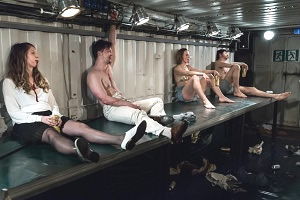
Scene uit een toneelbewerking in Halle in 2011


De Amerikaanse dichter en schrijver John Updike werd geboren in Shillington, Pennsylvania, op 18 maart 1932. Zie ook alle tags voor John Updike op dit blog.

Uit: Terrorist

“Relief at escaping their students unscathed for another day makes the teachers' chatter of farewell in the halls and on the parking lot too loud, like the rising excitement of drunks. The teachers revel when they are away from the school. Some have the pink lids and bad breaths and puffy bodies of those who habitually drink too much. Some get divorces; some live with others unmarried. Their lives away from the school are disorderly and wanton and self-indulgent. They are paid to instill virtue and democratic values by the state government down in Trenton, and that Satanic government farther down, in Washington, but the values they believe in are
Godless: biology and chemistry and physics. On the facts and formulas of these their false voices firmly rest, ringing out into the classroom. They say that all comes out of merciless blind atoms, which cause the cold weight of iron, the transparency of glass, the stillness of clay, the agitation of flesh. Electrons pour through copper threads and computer gates and the air itself when stirred to lightning by the interaction of water droplets. Only what we can measure and deduce from measurement is true. The rest is the passing dream that we call our selves.
Ahmad is eighteen. This is early April; again green sneaks, seed by seed, into the drab city's earthy crevices. He looks down from his new height and thinks that to the insects unseen in the grass he would be, if they had a consciousness like his, God. In the year past he has grown three inches, to six feet—more unseen materialist forces, working their will upon him. He will not grow any taller, he thinks, in this life or the next. If there is a next, an inner devil murmurs. What evidence beyond the Prophet's blazing and divinely inspired words proves that there is a next? Where would it be hidden? Who would forever stoke Hell's boilers? What infinite source of energy would maintain opulent Eden, feeding its dark-eyed houris, swelling its heavy-hanging fruits, renewing the streams and splashing fountains in which God, as described in the ninth sura of the Qur'an, takes eternal good pleasure? What of the second law of thermodynamics?”


 2018838-de698b1ee19d460d2af44ac38c3879bd.jpg
John Updike (18 maart 1932 – 27 januari 2009)
Portret door Scott Laumann, z.j.


De Engelse dichter en schrijver Wilfred Owen werd op 18 maart 1893 geboren in Oswestry in Shropshire. Zie ook alle tags voor Wilfred Owen op dit blog.


My Shy Hand

My shy hand shades a hermitage apart, -
O large enough for thee, and thy brief hours.
Life there is sweeter held than in God's heart,
Stiller than in the heavens of hollow flowers.

The wine is gladder there than in gold bowls.
And Time shall not drain thence, nor trouble spill.
Sources between my fingers feed all souls,
Where thou mayest cool thy lips, and draw thy fill.

Five cushions hath my hand, for reveries;
And one deep pillow for thy brow's fatigues;
Languor of June all winterlong, and ease
For ever from the vain untravelled leagues.

Thither your years may gather in from storm,
And Love, that sleepeth there, will keep thee warm.


Le Christianisme

So the church Christ was hit and buried
Under its rubbish and its rubble.
In cellars, packed-up saints long serried,
Well out of hearing of our trouble.

One Virgin still immaculate
Smiles on for war to flatter her.
She's halo'd with an old tin hat,
But a piece of hell will batter her.


 2018838-262a94f4ecf879dbe3190b3baf2e7b9d.jpg
Wilfred Owen (18 maart 1893 – 4 november 1918)
Cover biografie


De Franse dichter Stéphane Mallarmé werd geboren in Parijs op 18 maart 1842. Zie ook alle tags voor Stéphane Mallarmé op dit blog.


Dans le jardin

La jeune dame qui marche sur la pelouse
Devant l'été paré de pommes et d'appas,
Quand des heures Midi comblé jette les douze,
Dans cette plénitude arrêtant ses beaux pas,

A dit un jour, tragique abandonnée - épouse -
A la Mort séduisant son Poëte : "Trépas !
Tu mens. Ô vain climat nul ! je me sais jalouse
Du faux Éden que, triste, il n'habitera pas."

Voilà pourquoi les fleurs profondes de la terre
L'aiment avec silence et savoir et mystère,
Tandis que dans leur coeur songe le pur pollen :

Et lui, lorsque la brise, ivre de ces délices,
Suspend encore un nom qui ravit les calices,
A voix faible, parfois, appelle bas : Ellen !


Le tombeau de Charles Baudelaire

Le temple enseveli divulgue par la bouche
Sépulcrale d'égout bavant boue et rubis
Abominablement quelque idole Anubis
Tout le museau flambé comme un aboi farouche

Ou que le gaz récent torde la mèche louche
Essuyeuse on le sait des opprobres subis
Il allume hagard un immortel pubis
Dont le vol selon le réverbère découche

Quel feuillage séché dans les cités sans soir
Votif pourra bénir comme elle se rasseoir
Contre le marbre vainement de Baudelaire

Au voile qui la ceint absente avec frissons
Celle son Ombre même un poison tutélaire
Toujours à respirer si nous en périssons.


 2018838-8a8d772a161c44490da7a2613d0d78a2.jpg
Stéphane Mallarmé (18 maart 1842 - 9 september 1898)
Portret door Auguste Renoir, 1892


Zie voor nog meer schrijvers van de 18e maart ook mijn twee vorige blogs van vandaag.

Geschreven door Romenu om 13:20 Reageer op dit bericht

Héctor Bianciotti, Hellema, Friedrich Hebbel, Max Barry, Wolfgang Bauer, Richard Condon

De Argentijnse schrijver Héctor Bianciotti werd geboren op 18 maart 1930 in Córdoba. Zie ook alle tags voor Héctor Bianciotti op dit blog.

Uit:L'amour n'est pas aimé

« J'en vins à penser avec joie que la finalité secrète de ce monde était d'ordre purement esthétique et que les horreurs qui peuplent notre histoire sont un festin destiné au poète. […] … mais je pense néanmoins que cette foi pure en la magie d'un adjectif ou d'un adverbe – toujours si méprisés -, cette certitude qu'un adverbe ou un adjectif peuvent aller là où la raison ne parvient pas et peuvent laisser entrevoir l'impossible Vérité qui jusqu'alors s'était dérobé à toute recherche, fut en fin de compte un exercice utile qui allait me servir plus tard, quand j'aurais à décrire quelque chose d'immédiat avec une sorte de rhétorique de l'urgence. "
(…)

« C'est là – ce fut un bonheur et un éblouissement – qu'il découvrit un jour qu'il savait lire. C'est là qu'il connut la réclusion, dans une cave obscure à laquelle on le condamnait parce qu'il lisait avec plaisir et que tout plaisir est un pêché – mais dans l'obscurité il se prit pour Robinson et des ombres tapies dans les coins il se forgea des interlocuteurs avec lesquels il faisait commerce (la solitude du personnage ne l'attirait pas). C'est là qu'il trouva, en la personne de l'oncle Henry, vieux marin boiteux qui profitait de la présence de l'enfant pour continuer à s'émerveiller de ses anciennes prouesses, la première des innombrables figures de héros anonymes qu'il exalterait plus tard. C'est là qu'il sut – mais qui dira son désarroi ? - douter de ce qu'on tentait de lui inculquer : l’obsession de la faute, la notion d'un enfer toujours mérité que le moindre de ses gestes appelait, d'un Très-Haut omniscient qui tenait un livre de comptes – ce qui l'amena à découvrir les avantages de la méfiance, de la dissimulation, du mensonge, toutes choses qui sont peut-être finalement, dans ce monde provisoire, des vertus esthétiques."


 2018836-e0b4f70e53f1a042c24f2e8b94e3e718.jpg
Héctor Bianciotti (18 maart 1930 – 11 juni 2012)


De Nederlandse schrijver Hellema (pseudoniem voor Alexander Bernard (Lex) van Praag) werd geboren in Amsterdam op 18 maart 1921. Zie ook alle tags voor Hellema op dit blog.

Uit: Bestekken

“Het is zaak dat wij ons nog eenmaal met het verleden bezighouden. Voor de dood - die ons toentertijd na stond als ons eigen vlees en bloed, maar van wie wij sindsdien vervreemd zijn - terugkeert en al onze tijd in beslag neemt. Misschien is er iemand die ons wil voorhouden dat wij er goed aan zouden doen ons - voor het te laat is - juist af te wenden van dat verleden; maar voor hij zich vergaloppeert, bedenkt hij dat van ons moeilijk kan worden verwacht onze gedachten te richten op wat ons aan toekomst rest. Misschien ook is er iemand die ons wil tegenwerpen dat wij ons al een leven lang - te lang - met niets anders dan juist het verleden hebben beziggehouden; maar voor hij dat uitspreekt, bedenkt hij dat dit verleden ons bezighield, ondanks ons zelf. En wij van onze kant herinneren ons de dagen waarop wij wakker werden met het voornemen ons - eindelijk - van dit verleden te ontdoen. Het was talloze malen herbeleefd, het was geheel doordacht, wij hadden gerouwd en ondervonden hoe vruchteloos de opstandigheid tegen de dood is. Kalme windstille dagen tussen de seizoenen waren het, waarop alles in de natuur elkaar ademloos in evenwicht lijkt te houden. En de avonden, voor het inslapen - gevreesd moment - waarop wij moesten toegeven dat het niet gelukt was en dat er andermaal in de coulissen van ons bewustzijn onrustige taferelen werden voorbereid voor de nacht. Wij herinneren ons de paniek toen de vraag zich opdrong of wij er wel ooit in zouden slagen onbevangen te leven als weleer. En wij herinneren ons de berusting waarmee wij inzagen dat het beter was ons met dit verleden te verstaan - een onontkoombare dialoog, een eindeloze uiteenzetting.
Wij. Want hoe verschillend onze belevenissen, hoe uiteenlopend het getal van ons verlies of het aantal van onze slachtoffers, geen die - toen de geschiedenis van Europa doormidden brak - op het breukvlak van de tijd stond, is afgezonderd.”


 2018836-d97c24c55084966ea8463a6a2bcf1786.jpg
Hellema (18 maart 1921 – 19 maart 2005) 
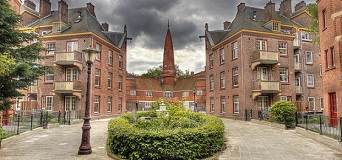
Amsterdam,  Spaarndammerbuurt


De Duitse schrijver Christian Friedrich Hebbel werd geboren in Wesselburen op 18 maart 1813. Zie ook alle tags voor Friedrich Hebbel op dit blog.


Die Lerche

Ich kam in Ungarn durch ein Tal gefahren,
Von leichten Rossen schnell dahingetragen,
Und hörte über mir die Lerche schlagen,
Die durch den Äther zog, den bläulich-klaren.

Bald aber mußte ich erstaunt gewahren,
Daß sie zu mir hinabschoß in den Wagen,
Doch schien mir dies Vertraun zugleich ein Zagen
Vor einem andern Feind zu offenbaren.

Ich schaute auf und sah den Habicht hangen,
Der nicht gewohnt ist, Schwache zu verschonen,
Sie hatte Schutz gesucht auf meinen Knieen;

Ich aber dachte: daß das kleinre Bangen
Der Mensch dir einflößt, soll sich dir belohnen,
Und ließ sie ungefangen wieder ziehen!


Ein Reiseabenteuer in Deutschland

Es flog in X. mein Hut mir ab,
Natürlich über die Grenze,
Und als ich, ihn wiederzuholen, lief
Da gab’s vertrackte Tänze.

Ich durfte den deutschen Nachbarstaat
Nicht ohne Paß betreten,
Und da ich bloß spazierenging,
So hatt ich mir keinen erbeten.

Das tat ich nun, auch wurde ich
In Gnaden damit versehen,
Doch war’s um meinen armen Hut
Trotz alledem geschehen.

Der war schon längst im dritten Staat
Und blieb auch dort nicht liegen,
Ihn ließ der schadenfrohe Wind
Ein Dutzend noch durchfliegen.

Was half mir nun der gute Paß,
Den ich in X. genommen?
Zehn neue braucht ich in einem Tag,
Da war nicht nachzukommen.

Ich kaufte mir einen andern Hut,
Der Meister aber erwählte
Den Wiener Kongreß zum Schutzpatron,
Als ich mein Schicksal erzählte.


Vers und Prosa

Leichter wäre auf einmal der Vers, als die Prosa, geworden?
Schwerer ist er, wofern ihr ihn vortrefflich verlangt,
Denn mit jeglichem Reiz der Prosa muß er sich schmücken
Und mit dem höheren noch, den man an ihr nicht vermißt.
Wenn ihr ihm einen erlaßt, so wird’s euch der Dichter nicht danken,
Denn ihr ebnet dadurch einzig dem Stümper die Bahn.
Aber, so seid ihr, ihr setzt, damit nur jeder ein Künstler
Heiße, ruhig die Kunst unter sich selbst erst herab,
Und da pfeifende Knaben das Nichts nun zu leisten vermögen,
Das ihr fordert, so denkt ihr sie euch selbst als ein Nichts!


 2018836-812a3275e6558b07f44884290d18ed84.jpg
Friedrich Hebbel (18 maart 1813 - 13 december 1863)
Portret door Karl Rahl, 1855


De Australische schrijver Max Barry werd geboren op 18 maart 1973 in Melbourne. Zie ook alle tags voor Max Barry op dit blog.

Uit: Company

“Perched at the top is the word ZEPHYR and the corporate logo, which is an orange and black polygon of foggy intent. Orange and black crops up a lot at Zephyr Holdings; you can’t walk down a corridor, visit the bathroom, or catch an elevator without being reminded whose turf you’re on. There’s a logo on each panel of the lobby’s sliding glass doors, and when you’re through them, logos adorn the walls at intervals of three feet. A water feature of dark stones and well-tended ferns is a small, logo-free oasis, but to make up for this, the reception desk is practically a logo with a sign-in sheet on top. Even under soft, recessed lighting, the reception desk delivers such a blast of orange to your retinas that long after you’ve left it behind, you can still see it when you blink.
On one side of the lobby is an arrangement of comfortable chairs and low-slung tables, where visitors browse Zephyr’s marketing literature while waiting for whomever they’re meeting. Sitting there with his hands in his lap is young, fresh-faced Stephen Jones. His eyes are bright. His suit glows. His sandy-brown hair contains so much styling mousse it’s a fire risk, and his shoes are black mirrors. This is his first day. So far he’s been shown a series of corporate induction videos, one of which contained glowing buzzwords like TEAMWORK and BEST PRACTICE rocketing at the screen, and another of which featured actors from the late 1980s talking about customer service. Now he is waiting for someone from the Training Sales department to come and collect him.
He accidentally catches the eye of the receptionist for about the fourteenth time and they both smile and look away. The receptionist is GRETEL MONADNOCK, according to her nameplate; she’s quite young, has long, lustrous brown hair, and sits on the right side of the desk. On the left a nameplate says EVE JANTISS, but Eve herself is absent. He is a little disappointed about this, because while Gretel is nice, when he was here for his job interview and first saw Eve, he almost dropped his new briefcase. It would be an exaggeration to say he took a job at Zephyr because of the beauty of its receptionist, but during his interview he was very enthusiastic.”


 2018836-8a22a7ec599c92ecca078777837b3ba2.jpg
Max Barry (Melbourne, 18 maart 1973)


De Oostenrijkse schrijver en dichter Wolfgang Bauer werd geboren op 18 maart 1941 in Graz. Zie ook alle tags voor Wolfgang Bauer op dit blog.

Uit:Magic afternoon

“BIRGIT: Was tun wir jetzt am Abend? (setzt sich neu frisiert aufs Bett und raucht eine neue an)
CHARLY: Wie spät wirds jetzt sein?
BIRGIT: Was weiß ich ...?
[...] Wir können ja abends gar net so viel machen
...
CHARLY: Gar nichts [...] Glaubst, kriegst du von deiner Mutter ein Geld?
[...] BIRGIT: Da komm ma net weit.
[...] CHARLY: Baden gehen zahlt sich auch net aus
...
[...] BIRGIT: Hast du noch was zum Essen?
CHARLY: Ja ... irgendwelche Brote.
BIRGIT: Wurst ist aber keine ...
CHARLY: Irgendetwas muß noch sein ...
[...] BIRGIT: Is was im Kino? [...] Is was im Theater?
[...] CHARLY: I bleib zuhaus und schreib was [...] dann schlaf halt ... oder geh vielleicht arbeiten ...
BIRGIT: Ich kann mir gar nicht mehr vorstellen, daß ich arbeite ... unmöglich ... i fühl mi recht wohl, obwohl i zu nix Lust hab ..."


 2018836-4029661e549d14239ed3c5b96a101f56.jpg
Wolfgang Bauer (18 maart 1941 – 26 augustus 2005)
Scene uit een opvoering in Keulen, 2016


De Amerikaanse romancier Richard Thomas Condon werd geboren op 18 maart 1915 in New York. Zie ook alle tags voor Richard Condon op dit blog.

Uit: The Manchurian Candidate

“He had snarled that maybe they would prefer it if he started out by asking what was the great man’s hobby and what astrology sign he had been born under. It was hard to believe but that man’s face had been as pocked and welted as a waffle, yet he was one of the biggest names in the business, which gives an idea what those swine will do to kid the jerky public. The actor had said, “Are you scared, kid?” Then, after that, everything seemed to go O.K. They got along like a bucket of chums. The point was, everybody had to start someplace.
Although he felt like a slob himself for doing it, he asked Mr. Mavole and the girl if they would have time to have a cup of coffee at the airport restaurant because he was a newspaperman himself and he knew that the little lady had a story to get. The little lady? That was overdoing it. He’d have to find a mirror and see if he had a wing collar on.
“You were?” the girl said. “Oh, Sergeant!” Mr. Mavole said a cup of coffee would be fine with him, so they went inside.
They sat down at a table in the coffee shop. The windows were steamy. Business was very quiet and unfortunately the waitress seemed to have nothing but time. They all ordered coffee and Raymond thought he’d like to have a piece of pie but he could not bring himself to decide what kind of pie. Did everybody have to look at him as though he were sick because he couldn’t set his taste buds in advance to be able to figure which flavor he would favor before he tasted it? Did the waitress just have to start out to recite “We have peach pie, and pumpk—” and they’d just yell out Peach, peach, peach? What was the sense of eating in a place where they gabbled the menu at you, anyway? If a man were intelligent and he sorted through the memories of past tastes he not only could get exactly what he wanted sensually and with a flavor sensation, but he would probably be choosing something so chemically exact that it would benefit his entire body. But how could anyone achieve such a considerate deliberate result as that unless one were permitted to pore over a written menu?”


 2018836-0e9c75fe0ef92536dbc02977780cfe70.jpg
Richard Condon (18 maart 1915 – 9 april 1996)
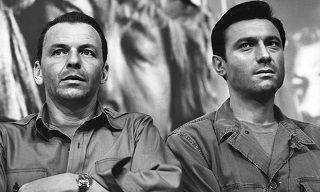
Frank Sinatra als Bennett Marco en Laurence Harvey als Raymond Shaw in de gelijknamige film uit 1962


Zie voor nog meer schrijvers van de 18e maart ook mijn vorige blog van vandaag.

Geschreven door Romenu om 13:19 Reageer op dit bericht

Walter Rheiner, Srečko Kosovel, Jean Anglade, George Plimpton, Cosmo Monkhouse, Friedrich Nicolai

De Duitse dichter en schrijver Walter Rheiner (eig. Walter Heinrich Schnorrenberg) werd geboren op 18 maart 1895 in Keulen. Zie ook alle tags voor Walter Rheiner op dit blog.


Toten-Messe

Nun liegen ihre Leiber halb verscharrt,
geborsten und verwittert tief im Sand.
Verworren züngelt Haar, hoch wächst die Hand,
greift in die Nacht, die auf den Zinnen harrt.

Verkohlte Städte schwelen lang vorbei,
und Brücken flattern schief und ausgezackt.
Die Sonne stürzt, schäumender Katarakt,
auf morsche Schädel, Augen fahl wie Blei.

Durch ihre Zähne pfeift ein süßer Wind,
der warm und rosig ist von frischem Blut.
(- In Abendröten weiden Lämmer gut. -)
Schon quellen sie verwesend aufwärts lind,

durchdringen, Freunde, sich mit ihrem Duft,
umarmen sich in lächelnder Spirale.
Die kühlen Sterne sind mit einem Male
ganz nah und kreisen singend durch die Luft.

Im Rauch verbrannter Zimmer nisten sie sich ein.
Sie fahren aufgelöst durch Ozeane.
Erkennen unten Schiffe, zitternd klein:
sie, des Planeten großgewölbte Fahne.


 2018834-f091d800062d559ccda9011e5a20b838.jpg
Walter Rheiner (18 maart 1895 – 12 juni 1925)


De Sloveense dichter en schrijver Srečko Kosove werd geboren in Sezana op 18 maart 1904. Zie ook alle tags voor Srečko Kosovel op dit blog.


In Silver Moonlight

A dark boat floats
in silver moonlight,
from the green harbour
a boatman set sail,
- from the green crystal
of a silent heart.
From the heart of midnight.

The leaves did not move
as if still in a dream,
alone by the shore
green they lean.

Each night on a silver ocean
the young boatman
dreams to and fro,
but back to the harbour
he'll never go.


The Marked

They walk with death in their hearts.
Death wakes in their eyes.
A car spattering mud.
Heads droop with no energy.
A light rain of evil falling into the eyes.
The lava of weariness.
Delirium tremens.
Hunger.
Starvation, starvation.
Oh, your white hands!
Like a rustling dream you pass by!


Vertaald door Nike Kocijancic Pokorn


 2018834-be7d744414410fa57ba28cb3486ba70c.jpg
Srečko Kosovel (18 maart 1904 - 27 mei 1926)
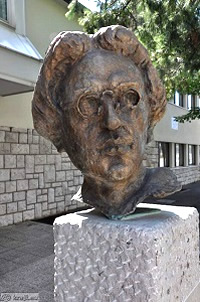
Borstbeeld in Sezana, Slovenië


De Franse schrijver  Jean Anglade werd geboren op 18 maart 1915 in Bonnets bij Thiers. Zie ook alle tags voor Jean Anglade op dit blog.

Uit: Confidences auvergnates 

« Dans les vieilles rues de Thiers la coutelière, devenues une casbah; au milieu de paysans sans vaches et de vaches sans paysans; près des grands barrages de la Dordogne et de la Truyère ; sur le puy de Dôme lui même, qui fut jadis un jardin, transformé de nos jours en place publique. Je lui faisais entendre les Vichyssois pleurant les fastes perdus de leur ville, reine détrônée des villes d'eau; les sacrifiés de Naussac ; les vignerons d'Issoire qui, le matin, binent leur vigne, et l'aprèsmidi manceuvrent un clavier électronique chez CEGEDUR.
Un tel ouvrage devrait être remis à jour au moins tous les dix ans. Il est certain qu'une région qui n'évolue pas dans le bon sens, entourée d'un monde en perpétuel grouillement, est un désert en perspective. Voyez de larges étendues ainsi condamnées en Afrique, en Asie, en Amérique du Sud.
Mais qu'est-ce au juste que le " bon sens " dans le changement ? Les polytechniciens, les énarques qui nous gouvernent pensent d'abord à la prospérité économique et quantitative. Leur programme : jeter sur le marché la plus grande masse possible d'un produit déterminé, blé, tomates, viande, pneus, automobiles. Reste la question du prix. Il doit posséder deux caractères contradictoires: être élevé pour le producteur et bas pour le consommateur. Because concurrence. Celle des japonais, des Hollandais, des Italiens. Pourquoi la concurrence étrangère est-elle insupportable ? Parce qu'elle est toujours déloyale. Toute concurrence est déloyale. Ses armes sont le dumping, les hormones, la main-d'oeuvre bon marché, les charges sociales inexistantes, l'activité souterraine, les pots de vin. »


 2018834-80bd78bb310244edcf9734285282199d.jpg
Jean Anglade (Bonnets, 18 maart 1915)


De Amerikaanse schrijver George Ames Plimpton werd geboren op 18 maart 1927 in New York. Zie ook alle tags voor George Plimpton op dit blog.

Uit: Paper Lion

“I decided finally to pack the football. It was a slightly used Spalding ball, an expensive one, with the information printed on it that it was "triple-lined and lock-stitched." Its sponsoring signature was that of Norman Van Brocklin, the ex–Philadelphia Eagle quarterback. It seemed a little deflated. I pressed it down hard against the shirts and was able to get the canvas suitcase cover zipped up around it. It was the bulkiest item in the suitcase, and the bulge of it was noticeable. I had two sweat suits in there, a pair of football shoes, some socks, a book on football formations written by a high-school coach, a sports coat and some trousers, and a few other things. I was not sure what I was going to need at the training camp. The Detroit Lion officials had not sent me the sort of list one remembered from boys' camp—that one should bring a pillowcase, a mattress cover, a flashlight, a laundry bag, etc. I assumed I could buy what I was lacking at the nearest town. I carried the suitcase down to the street and went out to Kennedy airport to catch an airplane to Detroit. From there I would go by car an hour north to Cranbrook, a boys' private school near Bloomfield Hills, whose athletic facilities were being used by the Detroit Lions for their preseason training. I was going there as the Lions' "last-string quarterback"—as my friends referred to it—to join the team as an amateur to undergo firsthand the life of the professional and, hopefully, to describe the experience in a book. I had written one such book—a recounting of my turbulent experiences pitching in Yankee Stadium in a postseason major-league All-Star game. Out of MI League the book was called, and it described what happened to someone with the temerity to climb the field-box railings to try the sport oneself, just to see how one got along and what happened. The notion behind the book was to play out the fantasies, the daydreams that so many people have—seeing themselves on the center court at Wimbledon, or sinking long putts in the U.S. Open, or ripping through the Green Bay secondary. I had been able to arrange with the baseball game's promoters to play. Ernest Hemingway had thought it an odd if interesting experiment and he described the difficulties of my participation as "the dark side of the moon of Walter Mitty."


 2018834-64b9b2d9001609c902aa2325bbd997b0.jpg
George Plimpton (18 maart 1927 – 25 septem 2003)


De Engelse dichter en kunstcriticus William Cosmo Monkhouse werd geboren op 18 maart 1840 in Londen. Zie ook alle tags voor Cosmo Monkhouse op dit blog.


A Song Of The Seasons

Sing a song of Spring-time,
The world is going round,
Blown by the south wind:
Listen to its sound.
'Gurgle' goes the mill-wheel,
'Cluck' clucks the hen;
And it's O for a pretty girl
To kiss in the glen.

Sing a song of Summer,
The world is nearly still,
The mill-pond has gone to sleep,
And so has the mill.
Shall we go a-sailing,
Or shall we take a ride,
Or dream the afternoon away
Here, side by side?

Sing a song of Autumn,
The world is going back;
They glean in the corn-field,
And stamp on the stack.
Our boy, Charlie,
Tall, strong, and light:
He shoots all the day
And dances all the night.

Sing a song of Winter,
The world stops dead;
Under snowy coverlid
Flowers lie abed.
There's hunting for the young ones
And wine for the old,
And a sexton in the churchyard
Digging in the cold.


 2018834-568aebdfcce3854ccd0cd7abf79b8454.jpg
Cosmo Monkhouse (18 maart 1840 – 20 juli 1901)
Portret doorWilliam Strang, 1892


De Duitse schrijver Friedrich Nicolai werd geboren op 18 maart 1733 in Berlijn. Zie ook alle tags voor Friedrich Nicolai op dit blog.

Uit: Geschichte eines dicken Mannes

„Die merkwürdigen sieben dicken Männer, mit welchen man unsern Helden etwa möchte vergleichen wollen, wären: Thersites im Altertume und in neuern Zeiten Sancho Pansa, Falstaff, der Kanonikus Gil Perez, Oheim des berühmten Gil Blas de Santillana, der dicke Mann auf Otaheiti, der so vornehm war, daß er sich mit gehöriger Gravität täglich von seinen Weibern das Essen in den Mund stopfen ließ, und zwei dicke kurze Personen im Tristram Shandy, nämlich Doktor Slop, der Geburtshelfer, und der kleine Trommelschläger mit säbelförmigen Beinen, der am Tore zu Straßburg auf der Wache war, als ein Fremder hereinritt, kommend vom Vorgebirge der Nasen, mit der größten Nase, von welcher Welt und Nachwelt keinen Begriff haben würden, wenn der berühmte Hafen Slawkenbergius nicht Sorge getragen hätte, sie ganz genau zu beschreiben.
Diesem Trommelschläger gleicht unser Held nun auf gar keine Weise; denn er hat keinesweges säbelförmige, sondern gesunde ganz gerade Beine, mit netten Waden, wohlgeformt gleich den Waden des Apoll von Belvedere. Weder wurstförmige Waden, welche zufolge der Bemerkung des Physiognomisten Johannes Baptista Porta eine Eigenschaft der hagedornschen Schnarcher voller Schulgeschwätze sind, die jedem Naemanns Krätze gönnen, der von ihrem Systeme abweicht, noch schlotterige, gleich den Waden weiland Johann Kaspar Kubachs, des Gebethelden, der mit seinem Gebete nie Wunder getan hat.
Dem Doktor Slop, mögt Ihr ihn Euch auch denken wie Ihr wollt, ist unser Held gleichfalls nicht im mindesten ähnlich. Seht den Doktor nur an, es sei wie ihn Hogarth [Fußnote] schlafen läßt, oder wie ihn Chodowiecki vom Pferde wirft; und Ihr müßt gleich merken, Anselm Redlich müsse ein ganz anderes Kerlchen sein. Ihr werdet weiter unten finden, er ist rundlich, niedlich, witzig, gelehrt, galant, dem Frauenzimmer ergeben und nebenher zuweilen ein wenig ein Hasenfuß, unbeschadet seiner Sittsamkeit, Gelehrsamkeit und besonders seiner Klugheit, auf die er wohl, wie auch weiter unter erhellen wird, selbst einigen Wert setzen mag. Ein solches Männchen schläft ganz anders und fällt ganz anders vom Pferde als eine so plumpe Masse wie Doktor Slop.“


 2018834-3d9d6d71a38b885edcc7ad2bbe12c4ab.jpg
Friedrich Nicolai (18 maart 1733  - 8 januari 1811)
Cover

Geschreven door Romenu om 13:18 Reageer op dit bericht

Meer van Romenu

↑ Terug naar de berichten