Naar de inhoud

Romenu

Over literatuur, gedichten, kunst en cultuur
akke.beakke.be

Berichten van 25 mei 2017 tot 26 mei 2017

Alan Hollinghurst, Radwa Ashour, Hugo Raes, Vítězslav Nezval, Ivan O. Godfroid, Maxwell Bodenheim, Isabella Nadolny, Edmond De Goncourt
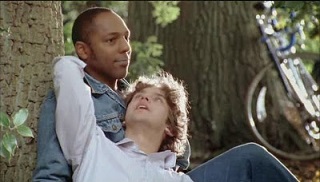
De Britse schrijver Alan Hollinghurst werd geboren op 26 mei 1954 in Stoud, Gloucestershire. Zie ook alle tags voor Alan Hollinghurst op dit blog.

Uit: The Line of Beauty

“At nineteen she already had a catalogue of failed boyfriends, each with a damning epithet, which was sometimes all Nick knew them by: 'Crabs' or 'Drip-Dry' or 'Quantity Surveyor'. A lot of them seemed almost consciously chosen for their unacceptability at Kensington Park Gardens: a tramplike Welshman in his forties whom she'd met in the Notting Hill Record Exchange; a beautiful punk with FUCK tattooed on his neck; a Rastafarian from round the corner who moaned prophetically about Babylon and the downfall of Thatcher. Others were public schoolboys and sleek young professionals on the make in the Thatcher slump. Catherine was slight but physically reckless; what drew boys to her often frightened them away. Nick, in his secret innocence, felt a certain respect for her experience with men: to have so many failures required a high rate of preliminary success. He could never judge how attractive she was. In her case the genetic mixture of two good-looking parents had produced something different from Toby's sleepy beauty: Gerald's large confidence-winning mouth had been awkwardly squashed into the slender ellipse of Rachel's face. Catherine's emotions always rushed to her mouth.
She loved anything satirical, and was a clever vocal mimic. When she and Nick got drunk she did funny imitations of her family, so that oddly they seemed not to have gone away. There was Gerald, with his facetious boom, his taste for the splendid, his favourite tags from the Alice books. 'Really, Catherine,' protested Catherine, 'you would try the patience of an oyster.' Or, 'You recall the branches of arithmetic, Nick? Ambition, Distraction, Uglification, and Derision . . . ?' Nick joined in, with a sense of treacherously bad manners. It was Rachel's style that attracted him more, as a code both aristocratic and distantly foreign. Her group sounded nearly Germanic, and the sort of thing she would never belong to; her philistine, pronounced as a French word, seemed to cover, by implication, anyone who said it differently. Nick tried this out on Catherine, who laughed but perhaps wasn't much impressed. Toby she couldn't be bothered to mimic; and it was true that he was hard to 'get'. She did a funny turn as her godmother, the Duchess of Flintshire, who as plain Sharon Feingold had been Rachel's best friend at Cranborne Chase school, and whose presence in their lives gave a special archness to their joke about Mr Duke the odd-job man. The Duke that Sharon had married had a twisted spine and a crumbling castle, and the Feingold vinegar fortune had come in very handy. Nick hadn't met the Duchess yet, but after Catherine's impression of a thoughtless social dynamo he felt he'd had the pleasure without the concomitant anxiety."


 2040808-0a9db8a1eb9beeecc97f0d6d1767b653.jpg
Alan Hollinghurst (Stoud, 26 mei 1954)
Don Gilet (Leo) en Dan Stevens (Nick) in de tv-serie „The Line of Beauty“ uit 2006.


De Egyptische schrijfster en literatuurwetenschapster Radwa Ashour werd geboren op 26 mei 1946 in Caïro. Zie ook alle tags voor Radwa Ashour op dit blog.

Uit: Blue Lorries

“CAIRO STATION. I lengthen my stride, all but running to catch up with my mother. I'm afraid to let her get even one step ahead of me. `Why are you holding on to my hand so tightly?' she hisses. `It hurts!' She tries to extricate her hand from my grasp, but I hold on even tighter. My mother is busy talking to the fat woman holding a baby, who is making the trip with us. There on the railway platform, where we wait for our train to pull in, an enormous man with thick moustaches and white hair smiles at me and asks my name. I turn my face away. When our eyes meet again he smiles and says, `You're a very pretty girl!' `Say "thank you" to Monsieur,' my mother tells me in French. I pretend to busy myself with tightening my shoe-laces, and my mother goes back to her conversation with the fat woman. I turn to the man and stick my tongue out at him. It wasn't just the crowds, or the noise, or the hubbub, but the persistent, ruthless destruction of everything I had built up in my imagination during the past few days. The trip had obsessed me. I thought about it, talked about it, prepared for it, and, in my imagination, assembled the details of it. I hovered over the great basket in which my mother was packing food, pointing out items she had left out, adjusting, suggesting, adding things. In secret I got my own special things ready — the ones I would share with him — stashing them in my small satchel: my portrait in my school uniform; the notebook, three of whose pages were adorned with gold stars; two chocolate bars. `Mama, will he recognise me?' `Of course!' tut I've got a lot bi er, haven't I?' 'Of course!' `How much?' 'What?' `How much bigger am I?' `Six inches, maybe more.' `Was my hair long or short when he left?' 'It was short.' `Do you think he'll like me better in plaits? Should I cut my hair or leave it long? Or maybe he'd like a ponytail better! I'll wear my red dress — it's so pretty!'
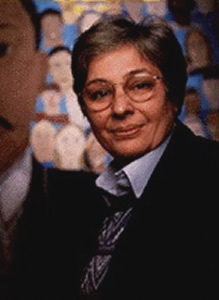
 

 2040808-5ab1d3a2ef544f76bb385cd69a3eab76.jpg
Radwa Ashour (26 mei 1946 – 30 november 2014)


De Belgische schrijver Hugo Raes werd geboren in Antwerpen op 26 mei 1929. Zie ook alle tags voor Hugo Raes op dit blog.

Uit: Ansichtkaart aan P.P. Rubens

“Uit de muziekwinkel die nu aan je huis paalt stuwt de geluidsinstallatie de laatste nieuwe Pink Floyd naar buiten.
Het is prachtig voorjaarsweer en de muziek galmt daarbijpassend, over de Wapper, die nu niet langer water is, maar een wandelpleintje. Aan de overzijde is een visrestaurantje gekomen. En je kan de binnenplaats zien van het Koninklijk Paleis waar ons huidig vorstenhuis afstand heeft van gedaan. Ze kwamen er nooit, en het kostte teveel aan onderhoud.
Nu is er het Internationaal Cultureel Centrum gevestigd, waar doorlopend tentoonstellingen worden gehouden. In de tuin staat ook een kunstwerk: vier groene neonbuizen (dit zijn lelijke buislampen) voor een spiegel...
Zon komt er 's morgens niet meer in je tuin: op een veertigtal meter afstand is de nieuwe Schouwburg opgetrokken, en vanuit je tuin zie je op de haast blinde zijgevel van deze mastodont.
In je buurt zou je wel gemakkelijk een of ander automodel kunnen uitkiezen, want er staan er duizenden ter vergelijking. Ook in de omgeving: veel banken, geldbanken. Dat zal je wel niet mishagen.
Nu horen we weer de sexy stem van een erotische soul-zangeres.
Veel seks, Rubens, veel meer dan in jouw tijd. Eigenlijk is je werk niet erotisch, zijn je naakten helemaal niet sensueel. Als knaap kreeg ik wel visioenen wanneer ik Griekse beelden zag. Praxiteles en zijn landgenoten spraken mij meer aan. Jouw naakten lieten me eigenlijk koud. Dat lijkblauw dat overal in het wakke, platte vlees zit. Je roze-witte dames zijn dringend aan een dr. Atkins-dieet toe, ze lijden aan vetzucht. Je was een estheet, en toch, die lodderogen van je meisjes, en die dikke konten, en die petieterige flepse tepeltjes. Een soort moedersen tanteserotiek.”
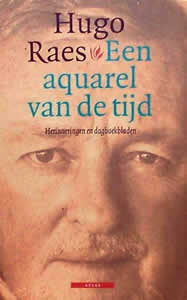
 

 2040808-ec58582529fa1c1dd5e0e2a0ff817eb2.jpg
Hugo Raes (26 mei 1929 – 23 september 2013)
Cover 


De Tsjechische dichter en vertaler Vítezslav Nezval werd geboren op 26 mei 1900 in Biskoupky. Zie ook alle tags voor Vítězslav Nezval op dit blog.


Bizarre Town

14

In the fountain
Amid the square
Floats
A diver
Searching
For yesterday’s sunset


25

A knight
In asbestos armor
Bent
Over a short oak log
Splits the wood
And throws it
Into a well
From which rises
Acrid
Flicker-tinged
Bluish smoke


Vertaald door Stephan Delbos en Tereza Novická
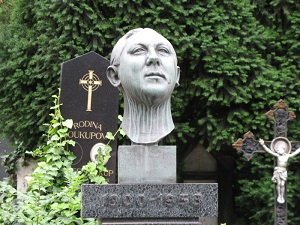
 

 2040808-2c7b8e05c1f9088a5f66ffb6056e505b.jpg
Vítězslav Nezval (26 mei 1900 – 6 april 1958)
Borstbeeld door Otakar Švec bij Nezvals graf op het kerrkhof van Vyšehrad in Praag


De Belgische, Franstalige, schrijver en essayist Ivan O. Godfroid werd geboren in Boussu op 26 mei 1971. Zie ook alle tags voor Ivan O. Godfroid op dit blog.

Uit: Pacte de contrition

« Le psychiatre n’est pas un sorcier moderne. Il n’est le détenteur d’aucune magie, et ne conna ît pas le miracle. La société, lorsqu’elle fait appel à ses connaissances, attend pourtant de lui qu’il en produise. S’il peut soigner la dépression, le psychiatre est incapable d’apaiser les préoccupations existentielles. Il est im-puissant face aux maux de la civilisation, et la nature profonde de l’homme est hors de son atteinte. Il est de surcroît la plupart du temps tributaire de la collaboration de son patient : il n’a pas non plus le pouvoir de faire changer les gens contre leur volonté. En outre, le lieu où il travaille parfois – l’hôpital – n’a d’autre prétention que d’écarter le malade de son milieu de vie habituel. L’hôpital psychiatrique, qui n’est jamais le lieu de la psychothérapie, n’est pas non plus celui de la transmutation des êtres. Aussi longtemps qu’il sera attendu du psychiatre des interventions magiques, il ne pourra que décevoir.
Le psychiatre n’est pas un régulateur social. Il n’est jamais l’arbitre des passions humaines: si l’usage de la brutalité en place du raisonnement est une très ancienne habitude de l’humanité, la folie n’est que rarement impliquée. En d’autres termes, si la violence existe en psychiatrie (l’Antiquité considérait déjà que les deux principales caractéristiques des malades mentaux étaient leur habitude d’errer sans but et leur propension à la brutalité), elle ne saurait pour autant être considérée comme une affection psychiatrique."


 2040808-5a37edd17f15d7d9e36b537e5d66bde3.JPG
Ivan O. Godfroid (Boussu, 26 mei 1971)
Boussu


De Amerikaanse dichter en schrijver Maxwell Bodenheim werd geboren op 26 mei 1892 in Hermanville, Mississippi. Zie ook alle tags voor Maxwell Bodenheim op dit blog


South State Street: Chicago (Fragment)

Rows of blankly box-like buildings
Raise their sodden architecture
Into the poised lyric of the sky.
At their feet, pawn-shops and burlesque theatres
Yawn beneath their livid confetti.
In the pawn-shop windows, violins,
cut-glass bowls and satchels mildly blink
Upon the mottled turbulence outside,
And sit with that detached assurance
Gripping things inanimate.
Near them, slyly shaded cabarets
Stand in bland and ornate sleep,
And the glassy luridness
Of penny-arcade flays the eyes.
The black crowd clatters like an idiot's wrath.

II
Wander with me down this street
Where the spectral night is caught
Like moon-paint on a colourless lane . . .
On this corner stands a woman
sleekly, sulkily complacent
Like a tigress nibbling bits of sugar.
At her side, a brawny, white-faced man
Whose fingers waltz upon his checkered suit,
Searches for one face amidst the crowd.
(His smile is like a rambling sword.)
His elbows almost touch a snowy girl
Whose body blooms with cool withdrawal.
From her little nook of peaceful scorn
She casts unseeing eyes upon the crowd.
Near her stands a weary newsboy
With a sullenly elfin face.
The night has leaned too intimately
On the frightened scampering of his soul.
But to this old, staidly patient woman
With her softly wintry eyes,
Night bends down in gentle revelation
Undisturbed by joy or hatred.
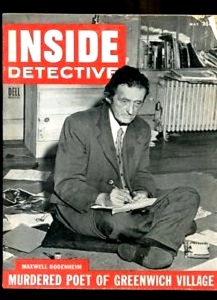


 2040808-e750e1161eda14e79a959e51bab78a96.jpg
Maxwell Bodenheim (26 mei 1892 – 6 februari 1954)
Cover 


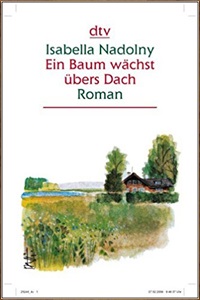
De Duitse schrijfster Isabella Nadolny (eig. Isabella Peltzer) werd geboren op 26 mei 1917 in München. Zie ook alle tags voor Isabella Nadolny op dit blog.

Uit: Ein Baum wächst übers Dach

»»Die Hundehütte muß windgeschützt stehen, die könnte zum Beispiel innerhalb der Veranda in einer Ecke untergebracht werden«, schlug Mama vor.
Leo sah auf und grinste. Ich glaubte die Haut seiner Wangen knistern zu hören.
»Je nachdem, was wir investieren«, sagte er, »wird vielleicht das ganze Projekt nur eine Hun-
dehütte. – Wir bauen sowieso aus Holz!«
»Natürlich«, bekräftigte Mama, »in Rußland baut man immer aus Holz, auch für den Winter.«
Ich entflocht die Sesselfransen und stand auf. »Holz?« fragte ich. »Da quellen doch immer die Türen und Fensterrahmen, und nachher geht nichts mehr auf und zu, oder?«
Bruder Leo sah mich mit jenem Ausdruck an, den man so oft in den Augen älterer Brüder findet. Er besagt, daß man als Kind nicht genügend verhauen worden ist, und schließt die Frage ein, ob vielleicht noch Zeit sei, dies nachzuholen.
Da meine Beiträge zur Diskussion nicht willkommen zu sein schienen, bat ich Mama um sechzig Pfennig, weil ich in die Vieruhrvorstellung im Capitol gehen wollte.
»Aber den Film hast du doch schon zweimal gesehen«, sagte Mama. »Das ist ja Unsinn. Du kommst überhaupt viel zuwenig an die Luft. Hol Inge ab, und geht in den Englischen Garten.«
Der Englische Garten war eine der üblichen Härten des Lebens, weil es dort außer der frischen Luft für einen Backfisch nicht das geringste Interessante gab. So blieb ich denn noch ein Weilchen und hörte weiter zu.
»Ein Keller wird zu teuer, ist ja auch unnötig.
Soll man ein Bad vorsehehen?“
»Ein Bad? Für die paar Wochen? Kinder – ihr habt ja den See vor der Tür.«
»Nun ja, aber doch wenigstens einen Kachelofen und Doppelfenster«, sagte Leo. »Womöglich heirate ich eines Tages, und von meinen sechs Kindern haben dann mindestens drei gleichzeitig Keuchhusten. Die brauchen Luftveränderung, und wenn es da gerade Winter ist . ..«
Mama lachte. »Meinetwegen, sieh einen Kachelofen vor, es gibt ja auch mal kühle Sommer. Das Holz holen wir uns vom Strand, da liegt genug«, meinte sie optimistisch.
 

 2040808-670880d6e1b06358e48ed3bd252e2b13.jpg
Isabella Nadolny (26 mei 1917 – 31 juli 2004)
Cover


De Franse schrijver Edmond de Goncourt werd geboren op 26 mei 1822. Zie ook alle tags voor Edmond de Goncourt op dit blog.

Uit:L'Italie d'hier/Domodossola

“L’Italie commence ici. — Ce sont des maisons énamourées de couleurs, des maisons bariolées de tons pistache, de tons lie de vin : des trompe-l’œil en détrempe de la pierre colorée, des mensonges du marbre. Il est même, à l’entrée de Domodossola, de fausses et ornementales maisons, peintes sur de pauvres bâtisses, ainsi que serait l’entrée trompeuse d’une ville qui n’existerait pas.
Et des maisons, de toutes parts, ouvertes au ciel bleu par de petits balcons aériens, offrant les plus charmants modèles de la serrurerie du dix-huitième siècle : cet art en faveur chez les jésuites. Et dans l’intérieur de ces maisons jouant au palazzo, des fonds de cours roux à la Decamps, et partout, sur les balcons et aux fenêtres, les nippes de la famille, étalées pour sécher, — car là, il n’y a pas la pudeur du linge.
Une place, qui a un pittoresque entour d’habitations, aux galeries cintrées des étages supérieurs, à l’arcature du rez-de-chaussée soutenue par des colonnes, dont quelques-unes sont anciennes. Au milieu de cette architecture baroque, vaguant et musant, des femmes, au foulard noue derrière la tête et leur mangeant les yeux, le torse pris dans une espèce de soutane de curé, à la taille trop courte, et qui leur donne l’air hommasse, — des femmes perpétuellement marmottantes, et comme mâchonnant des prières.
En ce petit monde de femmes, toutes coiffées de rouge ou de jaune orange, d’hommes habillés de couleur tabac d’Espagne, circulent, dans leurs souliers silencieux, des individus, au gigantesque tricorne, aux yeux perçants, une paire d’énormes lunettes sur leurs grands nez décharnés, un manteau à collet montant jusqu’aux lèvres blanches dune bouche sarcastique, descendant jusqu’aux genoux, et d’où parlent deux jambes maigres, enfermées en un bas noir : deux bâtons de fusain, emmanchés dans de lourdes chaussures aux boucles d’argent. Du manteau, une main s’échappant d’un pli, tient un gros parapluie de campagne : des individus étranges, et qui font un peu peur, et qu’un prendrait pour des caricatures ecclésiastiques, crayonnées sur les murs d’un cachot de l’Inquisition."
 

 2040808-d122e69c81e5b185c7bc3ef16916b4ee.png
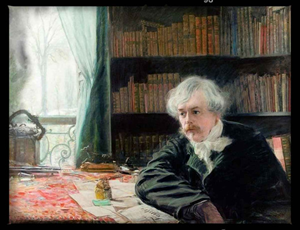
Edmond De Goncourt (26 mei 1822  -  16 juli 1896) 
Portret door Giuseppe De Nittis, 1881
Geschreven door Romenu om 18:26 Reageer op dit bericht

Hemelvaart (Gabriël Smit)


Bij Hemelvaartsdag


 2040075-5a2d69aa78d482d752aa5b1af7b014c2.png
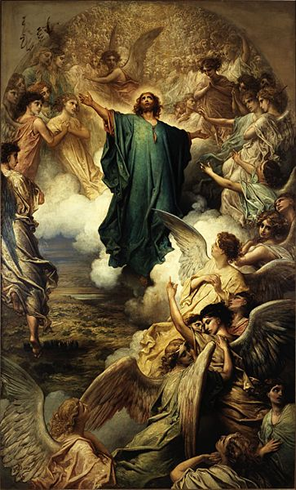
L'Ascension door Gustave Doré, 1879


Hemelvaart

Wat hebben zij gezien ? Er was
iets van u, een stem, een oogopslag,
een trillend licht in hun midden,
handen die andere wilden vinden,
een lichaam herinnering, doorzichtig
omringd binnen een landschap van
eindelijk vrede, iets van overkant,
nu nog hier, zwijgend, maar straks
overal opengebroken naar vruchtbare
dalen geluk : waar zij stonden
zagen zij het al allerwegen vervuld, over
het golvende land rondom stroomde
koren, oogsten te zwaar om te dragen,
psalmen van dank, want het zou eigen
zijn, hij had het beloofd, hij reikte
zelf de vlammende schoven aan,
de druiventrossen, de gouden raten
en het nieuwe lied.

Maar hij week,
alles scheen plotseling onzeker, hij
was er wel, maar toch ook niet,
hij scheen van het toegezegde rijk
niet te willen weten, hij beloofde wel
iets van kracht, maar wanneer ? Zij
stonden met lege handen, harten met
nauwelijks nog vermoeden van toekomst
en voor ze konden vragen om zekerheid, was
hij verdwenen, ergens omhoog, achter
een raadselachtige wolk.

Maar uit
het hulpeloos lege land rondom rezen
onverhoeds twee mannen op, gestalten
schitterwit, en klonken stemmen van
vaste belofte : hij komt terug zoals
hij is gegaan. En ook die mannen
verdwenen weer, maar nu had het
landschap een andere horizon, een
verdere verte, midden op de dag
iets van morgenlicht, en zwijgend
in geluk daalden zij samen
van de berg, naar de mensenstad.


 2040075-2dd4e25fc0c27b707e5de2aa8b3dcbaa.jpg
Gabriël Smit (25 februari 1910 – 23 mei 1981)
Utrecht, met in de verte de Dom. Gabriël Smit werd geboren in Utrecht.


Zie voor de schrijvers van de 25e mei ook mijn vorige blog van vandaag.

Geschreven door Romenu om 18:51 Reageer op dit bericht

Egyd Gstättner, Claire Castillon, Friedrich Dieckmann, Eve Ensler, Raymond Carver, Jamaica Kincaid, Robert Ludlum, Theodore Roethke, W. P. Kinsella

De Oostenrijkse schrijver en essayist Egyd Gstättner werd geboren op 25 mei 1962 in Klagenfurt. Zie ook alle tags voor Egyd Gstättner op dit blog.

Uit:Das Geisterschiff

„Der Bundeskanzler (oder dessen Büro) erklärte, Josef Maria Auchentaller habe als Künstler Generationen von Menschen Freude bereitet, im Inland und auch im Ausland. Er war mit seinem Talent und seiner Vielseitigkeit über alle Grenzen hinweg das Gesicht Österreichs. Viele, viele Leserbriefschreiber meldeten sich, bekundeten ihre Trauer, dankten Auchentaller für sein Leben und Wirken, nannten ihn den Größten seiner Zeit, stellten ihn als Helden und Vorbild dar, nicht nur als Künstler, sondern auch als Mensch, der keine Skandale gebraucht und geliefert und etwa nur eine einzige, ununterbrochene Ehe virtuos und existenziell geführt habe. Emmas Rolle sahen manche Journalisten kritischer. Sie sei nicht nur geliebte Frau, sondern auch gestrenge Managerin gewesen, der er sich in den besten Zeiten bis an die Grenze zur Entmündigung anvertraut habe, sodass sich auch die Journalisten widerwillig ihrem rigiden Diktat unterordnen mussten. Der kommerzielle Erfolg Auchentallers war wohl seiner Emma zu verdanken, die ihn genial vermarktete. Emma schaffte es, Auchentaller durch die auch damals schon turbulenten Fährnisse einer Branche zu geleiten, die schon manche Kollegen Auchentallers das Leben vor dem Tod gekostet hatte.
Eine Zeitung entblödete sich nicht, neben diesem Artikel einen weiteren Artikel zu bringen, in dem sie sich selber auf die Brust trommelte und erklärte, sie sei die schnellste Zeitung gewesen und habe als Allererste die Todesnachricht gebracht – fünf Minuten und dreiundzwanzig Sekunden vor der zweitschnellsten Zeitung! Absolute Todesbestzeit! Sieg! Triumph! Und das, obwohl gerade dieser Tod schwer herauszufinden gewesen war, weil Auchentaller ja nicht gegen einen Baum, einen Bus oder eine Wand gekracht und sich nicht überschlagen und erschlagen hatte, sondern einsam und allein in seinem Bett gestorben war, noch dazu an einem Samstag und Feiertag – redaktionell eigentlich eine tödliche Kombination. Die Zukunft, in der er nicht hätte leben wollen, die brutale, ordinäre, billige Zukunft, hatte begonnen. Nein, sie hatte nicht erst begonnen, sie war schon längst am Werk gewesen, aber er, Auchentaller, hatte sie jetzt endlich verlassen – nach einem seit Jahrzehnten schmerzverzerrten Leben, hartnäckig weggelächelt, weggeschwiegen, weggezwinkert.“


 2040073-ea32cec7b6f9da159c6f2457c32cc7a4.jpg
Egyd Gstättner (Klagenfurt, 25 mei 1962)


De Franse schrijfster Claire Castillon werd geboren op 25 mei 1975 in Neuilly-sur-Seine. Zie ook alle tags voor Claire Castillon op dit blog.

Uit: Giftspritzen: Rabenschwarze Erzählungen über Mütter und Töchter (Vertaald door Gaby Wurster)

„Einzig bei seinem Kinderwunsch bin ich meinem Mann nicht gefolgt, das gebe ich gern zu - jeder soll selbst darüber urteilen, aber ich gebe es zu. Mir ist der Himmel auf den Kopf gefallen, als er vorschlug, ein Kind zu machen; ich habe sogar gelacht, weil ich dachte, er scherzt. Eine Weile sprach er dann nicht mehr davon, aber es gärte in ihm. Vor Babyausstattungsgeschäften bummelte er herum wie ein Backfisch und lächelte den kleinen Wonneproppen in Vaters Armen dümmlich zu.
War es der Überlebensinstinkt? Jedenfalls bekam ich Angst, er könne anderweitig Kinder machen, und willigte schließlich ein, Mutter zu werden, aber ich habe hart verhandelt. Ich machte ihm klar, dass ich nur eine einzige Tochter wolle. Er war verwundert, aber so war es nun mal - aus Liebe zu ihm war ich einverstanden, aber nur unter der Bedingung, ein Mädchen zu haben. Ich würde es dann mit der Zeit schon liebgewinnen, wenn nicht, müsste es sich eben mit einer distanzierten Zuneigung begnügen. Ich wurde sehr schnell schwanger, mein Mann war im siebten Himmel und trug mich auf Händen, er wartete dabei nicht mal ab, dass mein Bauch wuchs. Ich wurde richtig verwöhnt, bekam sogar eine Kette. Sie wissen schon, diese... Wie heißen sie doch gleich? Rivière-Colliers, glaube ich. Natürlich mit unechten Steinen; echte Brillanten würde er mir nie schenken, aber sie sahen wirklich echt aus. Ich erinnere mich an eine Abendgesellschaft, während der die Frauen nach und nach an meinen Tisch kamen, um meinen tollen Schmuck zu bestaunen. Ich sagte nicht, dass die Steine unecht waren, das ging sie schließlich nichts an.
Also, wo war ich stehengeblieben? Ach ja, die Schwangerschaft. Was für eine Geschichte! Mein Bauch schwoll mit einem Mal an, es war zum Verzweifeln - hatte ich mich doch fast vierzig Jahre meines Lebens bemüht, schlank zu bleiben, um nicht auszusehen wie meine Geschlechtsgenossinnen! Ich ließ mich untersuchen, und es stellte sich heraus, dass ich Zwillinge bekam. Ich fragte gleich, ob es auch keine Siamesischen Zwillinge wären - mir widerstrebte der Gedanke, zwei Kinder zu haben, die an der Schulter, am Fuß oder an der Seite zusammengewachsen sind.“


 2040073-fdfb94461cf8ea2ae921a932c5085a0b.jpg
Claire Castillon (Neuilly-sur-Seine, 25 mei 1975)


De Amerikaanse schrijfster en feminste Eve Ensler werd op 25 mei 1953 in New York geboren. Zie ook alle tags voor Eve Ensler op dit blog.

Uit: Insecure at Last

“In the last ten years I have traveled to many places—more than forty countries. Looking back, I see that a pattern emerges. I see how I was consistently and compulsively drawn to that which I feared, to those situations that seemed utterly incomprehensible. I see how this search to understand brutality and violence began as a search for logic and security but became the journey that freed me of the false need for these protections, dissolving my moorings, undoing my falsely constructed notions of security.
I have spent time in refugee camps, war-torn countries, battered-women and homeless shelters, prisons, border towns, and postdisaster sites. I have lived through a near plane crash, an almost bombing. I have left a fifteen-year relationship. I have embraced a weeping fifty-year-old man in his burnt-out backyard in Kosova. I have held the hand of a woman whose face was melted off by acid in Islamabad, Pakistan. I have clung to the body of an Afghan woman in the middle of a seizure as she remembered the torture and murder that took place in a stadium in Kabul. I have stood face-to-face with a raging member of the Taliban, his whip in hand as he prepared to flog me. I have watched the World Trade Center towers fall in my beloved city. I have sat with thousands of women from Srebrenica in a stadium as they wailed in grief over their lost men. I have spent days in dusty Ciudad Juárez, Mexico searching for bodies of dead women, and in the hot sun of Crawford, Texas, as Cindy Sheehan stood up to President Bush.
I live alone today after cohabiting with partners for more than thirty years. Many of the vestiges that tied me to the ground, to one person, to one place, are gone. In fact, I have become a traveler, a woman who exists in motion, a nomadic being, a citizen of the world. I have been fortunate that the work I do has literally taken me around the planet. But travel is by no means a prerequisite to getting lost. We are able to cross and dissolve all kinds of borders if we are willing to go to the political, emotional, and spiritual places we most fear and resist.”


 2040073-28ea330ca80641676e3c95aa07c2e9b6.JPG
Eve Ensler (New York, 25 mei 1953)


De Duitse schrijver Friedrich Dieckmann werd geboren op 25 mei 1937 in Landsberg an der Warthe. Zie ook alle tags voor Friedrich Dieckmann op dit blog.

Uit:Freiheit ist nur in dem Reich der Träume (Schillers Jahrhundertwende)

„Nicht nur die Schauspieler hatten die Verse verstanden, man hatte auch die Schauspieler verstanden und besser denn je, was mit dieser neuen Saalarchitektur zusammenhing; jedes Wort konnte man hören, auch das leise. Thouret, der Stuttgarter Architekt, ein Landsmann, hatte sein Meisterstück geliefert, aber er war nicht allein am Werk gewesen. Goethe hatte von Anfang an mitgearbeitet, mitgezeichnet und zum Schluß sogar manchmal zum Pinsel gegriffen. Auch bei dem neuen Stück hatte er sich ins Zeug gelegt und sich als Regisseur geradezu selbst übertroffen; er stellte sich in den Dienst dieses Textes, als wäre es sein eigener. Wie merkwürdig, als Dichter war der andere im Theater viel weniger zu Hause denn als Regisseur. Aber war er überhaupt im Theater zu Hause?
Es gab eine junge Dame, die das bezweifelte, sie hieß Caroline und wußte Bescheid, in Berlin hatte man sie vom Fleck weg engagieren wollen, und doch war sie in Weimar geblieben, im nächsten Jahr würde sie seine Thekla spielen: die Tochter des Bibliothekars Jagemann.
Wie würde es morgen abend gehen, bei vollem Haus, vor dem der Premiere entgegenfiebernden Weimar? Würde Vohs, der strahlende junge Mann, der später den Max spielen würde, den Helden, auf den es ankam – würde er den Prolog bis dahin gelernt haben? Es hatte heute noch damit gehapert. Schiller setzte die Laterne auf einer Bank am Rande des Ilmparks ab und nahm, seinen Mantel um sich wickelnd, neben ihr Platz, den unten im Tal rauschenden Fluß im Rücken. Wie lange war es her, daß er die Premiere eines seiner Stücke erlebt hatte? In Mannheim war das gewesen, dessen Nationaltheater ihn als Dramaturg und Thea-terdichter angestellt hatte, und es lag mehr als vierzehn Jahre zurück. Der Kollege Iffland, Schauspieler und Stückeschreiber am gleichen Haus, hatte für das »bürgerliche Trauerspiel« – den Untertitel hatte er Diderot entlehnt – zwei Wochen vorher einen neuen Titel gefunden, der klang, als stamme das Stück von ihm selbst: »Kabale und Liebe«; eigentlich hatte es »Louise Millerin« heißen sollen. Denn das Stück hatte eine Heldin gehabt, die, um ihre Eltern zu retten, ihre Liebe preisgab und daran zugrunde ging.
»Kabale und Liebe«, was für ein alberner Titel! Aber er war nicht mehr wegzubekommen.
Schiller hatte sich gedehnt und gestreckt auf der Bank, ihm war schläfrig zumute. Er atmete tief in der sonderbar milden Herbstluft, unversehens hatte ihn der Schlaf übermannt.“


 2040073-1dfa3d2c37e32cbf1ae0758d58743ce3.jpg
Friedrich Dieckmann (Landsberg an der Warthe, 25 mei 1937)
Schiller auf der Flucht mit seinem Freund Andreas Streicher door Max Stieler, ca. 1850


De Amerikaanse dichter en schrijver Raymond Carver werd geboren op 25 mei 1938 in Port Angeles. Zie ook alle tags voor Raymond Carver op dit blog.


Another Mysterie

That time I tagged along with my dad to the dry cleaners—
What'd I know then about Death? Dad comes out carrying a black suit in a plastic bag.
Hangs it up behind the back seat of the old coupe
and says, "This is the suit your grandpa is going to leave
the world in." What on earth could he be talking about? I wondered.
I touched the plastic, the slippery lapel of that coat
that was going away, along with my grandpa. Those days it
was just another mystery.

Then there was a long interval, a time in which relatives departed this
way and that, left and right. Then it was my dad's turn.
I sat and watched him rise up in his own smoke. He didn't
own a suit. So they dressed him gruesomely
in a cheap sport coat and tie,
for the occasion. Wired his lips
into a smile as if he wanted to reassure us, Don't worry, it's
not as bad as it looks. But we knew better. He was dead,
wasn't he? What else could go wrong? (His eyelids
were sewn closed, too, so he wouldn't have to witness
the frightful exhibit.) I touched
his hand. Cold. The cheek where a little stubble had
broken through along the jaw. Cold.

Today I reeled this clutter up from the depths.
Just an hour or so ago when I picked up my own suit
from the dry cleaners and hung it carefully
behind the back seat. I drove it home, opened the car door
and lifted it out into the sunlight. I stood there a minute
in the road, my fingers crimped on the wire hanger. Then
tore a hole through the plastic to the other side. Took one of
the empty sleeves between my fingers and held it—
the rough, palpable fabric.
I reached through to the other side.


 2040073-0516769278aa0ac3c8dbb3399ef26b74.jpg
Raymond Carver (25 mei 1938 – 2 augustus 1988)


De Amerikaanse schrijfster Jamaica Kincaid (eig.Elaine Cynthia Potter Richardson) werd geboren in Saint John's, Antigua en Barbuda, op 25 mei 1949. Zie ook alle tags voor Jamaica Kincaid op dit blog.

Uit: Girl

« …this is how to behave in the presence of men who don’t know you very well, and this way they won’t recognize immediately the slut I have warned you against becoming; be sure to wash every day, even if it is with your own spit; don’t squat down to play marbles—you are not a boy, you know; don’t pick people’s flowers—you might catch something; don’t throw stones at blackbirds, because it might not be a blackbird at all; this is how to make a bread pudding; this is how to make doukona; this is how to make pepper pot; this is how to make a good medicine for a cold; this is how to make a good medicine to throw away a child before it even becomes a child; this is how to catch a fish; this is how to throw back a fish you don’t like, and that way something bad won’t fall on you; this is how to bully a man; this is how a man bullies you; this is how to love a man, and if this doesn’t work there are other ways, and if they don’t work don’t feel too bad about giving up; this is how to spit up in the air if you feel like it, and this is how to move quick so that it doesn’t fall on you; this is how to make ends meet; always squeeze bread to make sure it’s fresh; but what if the baker won’t let me feel the bread?; you mean to say that after all you are really going to be the kind of woman who the baker won’t let near the bread?”


 2040073-741ed84f3b4a448d31fe00233c4980d0.jpg
Jamaica Kincaid (Saint John's, 25 mei 1949)


De Amerikaanse schrijver Robert Ludlum werd geboren in New York op 25 mei 1927. Zie ook alle tags voor Robert Ludlum op dit blog.

Uit: The Bourne Sanction

“Moira shifted in her chair. "If you come work with me there's no baggage attached to it. Think about it. It's a chance to leave your past lives behind --- both David Webb's and Jason Bourne's. I'm flying to Munich shortly because a key element of the terminal is being manufactured there. I need an expert opinion on it when I check the specs."
"Moira, there are any number of experts you can use."
"But none whose opinion I trust as much as yours. This is crucial stuff, Jason. More than half the goods shipped into the United States come through the port at Long Beach, so our security measures have to be something special. The US government has already shown it has neither the time nor the inclination to secure commercial traffic, so we're forced to police it ourselves. The danger to this terminal is real and it's serious. I know how expert you are at bypassing even the most arcane security systems. You're the perfect candidate to put nonconventional measures into place."
Bourne stood. "Moira, listen to me. Marie was David Webb's biggest cheerleader. Since her death, I've let go of him completely. But he's not dead, he's not an invalid. He lives on inside me. When I fall asleep I dream of his life as if it was someone else's, and I wake up in a sweat. I feel as if a part of me has been sliced off. I don't want to feel that way anymore. It's time to give David Webb his due."
Veronica Hart's step was light and virtually carefree as she was admitted past checkpoint after checkpoint on her way into the bunker that was the West Wing of the White House. The job she was about to be handed --- director of Central Intelligence --- was a formidable one, especially in the aftermath of last year's twin debacles of murder and gross breach of security. Nevertheless, she had never been happier. Having a sense of purpose was vital to her; being singled out for daunting responsibility was the ultimate validation of all the arduous work, setbacks, and threats she'd had to endure because of her gender.”


 2040073-b30c688e579e947a1ba11d3488bd38cf.jpg
Robert Ludlum (25 mei 1927 – 12 maart 2001)
Matt Damon als Jason Bourne in de film « Jason Bourne », uit 2016


De Amerikaanse dichter Theodore Huebner Roethke werd geboren in Saginaw, Michigan op 25 mei 1908. Zie ook alle tags voor Theodore Roethke op dit blog.


The Shape Of The Fire

1
What’s this?
A dish for fat lips.
Who says? A nameless stranger.
Is he a bird or a tree? Not everyone can tell.

Water recedes to the crying of spiders.
An old scow bumps over black rocks.
A cracked pod calls.

Mother me out of here.
What more will the bones allow?
Will the sea give the wind suck? A toad folds into a stone.
These flowers are all fangs. Comfort me, fury.
Wake me, witch, we’ll do the dance of rotten sticks.

Shale loosens. Marl reaches into the field. Small birds pass over water.
Spirit, come near. This is only the edge of whiteness.
I can’t laugh at a procession of dogs.

In the hour of ripeness the tree is barren.
The she-bear mopes under the hill.
Mother, mother, stir from your cave of sorrow.

A low mouth laps water. Weeds, weeds, how I love you.
The arbor is cooler. Farewell, farewell, fond worm.
The warm comes without sound.


 2040073-ade900b06065382559db4220314b55a0.jpg
Theodore Roethke (25 mei 1908 - 1 augustus 1963)


De Canadese schrijver William Patrick Kinsella werd geboren op 25 mei 1935 in Edmonton, Alberta. Zie ook alle tags voor W. P. Kinsella op dit blog.

Uit:Shoeless Joe

“In April 1945, Ty Cobb picked Shoeless Joe as the best left fielder of all time. A famous sportswriter once called Joe's glove "the place where triples go to die." He never learned to read or write. He created legends with a bat and a glove.
Was it really a voice I heard? Or was it perhaps something inside me making a statement that I did not hear with my ears but with my heart? Why should I want to follow this command? But as I ask, I already know the answer.
I count the loves in my life: Annie, Karin, Iowa, Baseball. The great god Baseball.
My birthstone is a diamond. When asked, I say my astrological sign is hit and run, which draws a lot of blank stares here in Iowa where 50,000 people go to see the University of Iowa Hawkeyes football team while 500 regulars, including me, watch the baseball team perform.
My father, I've been told, talked baseball statistics to my mother's belly while waiting for me to be born.
My father: born, Glen Ullin, North Dakota, April 14, 1896. Another diamond birthstone. Never saw a professional baseball game until 1919 when he came back from World War I where he had been gassed at Passchendaele. He settled in Chicago, inhabited a room above a bar across from Comiskey Park, and quickly learned to live and die with the White Sox. Died a little when, as prohibitive favorites, they lost the 1919 World Series to Cincinnati, died a lot the next summer when eight members of the team were accused of throwing that World Series.“


 2040073-7842759877dc6d9ea531a2eedebf7c9b.jpg
W. P. Kinsella (Edmonton, 25 mei 1935)
Ray Liotta, links, en Kevin Costner in de film “Field of Dreams,” uit 1989, gebaseerd op W.P. Kinsella’s roman “Shoeless Joe.”


Zie voor nog meer schrijvers van de 25e mei ook mijn blog van 25 mei 2015 deel 2 en eveneens deel 3.

Geschreven door Romenu om 08:14 Reageer op dit bericht

Madeleine Thien

De Canadese schrijfster Madeleine Thien werd geboren op 25 mei 1974 in Vancouver, Brits Columbia, als kind van een Maleisisch-Chinese vader en een Chinese moeder. Zij studeerde hedendaagse dans aan de Simon Fraser University en behaalde een Masters in Fine Arts, mer een specialisatie in creatief schrijven aan de University of British Columbia. Thien nam de beslissing om over te stappen van dans naar creatief schrijvenom een ​​paar redenen, maar vooral vanwege het feit dat ze ondanks haar passie voor de danskunst tekortschoot in talent. Voordat ze als redacteur voor het Rice Paper Magazine werkte, had ze allerlei baantjes in winkels en restaurants Thien ontving in 2001 de Emerging Writers Award van de Asian Canadian Writers' Workshop voor haar korte verhalenbundel “Simple Recipes”. In hetzelfde jaar bewerkte Thien de korte film van Joe Chang “The Chinese Violin” (2001) tot een kinderboek. Het verhaal volgt de reis van een jong Chinees meisje terwijl zij en haar vader, muzikant, zich aanpassen aan het leven in Vancouver. In Thien’s debuutroman “Certainty” uit 2007 wordt een documentairemaakster gevolgd, terwijl ze de waarheid zoekt over de ervaringen van haar vader in het door Japan bezette Malysië. De roman werd internationaal gepubliceerd en vertaald in 16 talen. Haar tweede roman “Dogs at the Perimeter” verscheen in 2011. In 2016 verscheen haar derde roman “Do Not Say We Have Nothing”. In 2013 was Thien de Simon Fraser University Writer-in-Residence. Van 2010 tot 2015 maakte ze deel uit van de internationale faculteit in het MFA-programma Creative Writing aan de City University van Hong Kong. Ze schreef over de abrupte sluiting van het programma en de harde maatregelen in Hong Kong tegen de vrijheid van meningsuiting, in een essay voor The Guardian.

Uit: Do Not Say We Have Nothing

“In a single year, my father left us twice. The first time, to end his marriage, and the second, when he took his own life. That year, 1989, my mother flew to Hong Kong and laid my father to rest in a cemetery near the Chinese border. Afterwards, distraught, she rushed home to Vancouver where I had been alone. I was ten years old.
Here is what I remember:
My father has a handsome, ageless face; he is a kind but melancholy man. He wears glasses that have no frames and the lenses give the impression of hovering just before him, the thinnest of curtains. His eyes, dark brown, are guarded and unsure; he is only 39 years old. My father’s name was Jiang Kai and he was born in a small village outside of Changsha. Later on, when I learned my father had been a renowned concert pianist in China, I thought of the way his fingers tapped the kitchen table, how they pattered across countertops and along my mother’s soft arms all the way to her fingertips, driving her crazy and me into fits of glee. He gave me my Chinese name, Jiang Li-ling, and my English one, Marie Jiang. When he died, I was only a child, and the few memories I possessed, however fractional, however inaccurate, were all I had of him. I’ve never let them go.
In my twenties, in the difficult years after both my parents had passed away, I gave my life wholeheartedly to numbers—observation, conjecture, logic and proof, the tools we mathematicians have not only to interpret, but simply to describe the world. For the last decade I have been a professor at Simon Fraser University in Canada. Numbers have allowed me to move between the unimaginably large and the magnificently small; to live an existence away from my parents, their affairs and unrequited dreams and, I used to think, my own.
Some years ago, in 2010, while walking in Vancouver’s Chinatown, I passed a store selling DVDs. I remember that it was pouring rain and the sidewalks were empty. Concert music rang from two enormous speakers outside the shop. I knew the music, Bach’s Sonata for Piano and Violin No. 4, and I was drawn towards it as keenly as if someone were pulling me by the hand. The counterpoint, holding together composer, musicians and even silence, the music, with its spiralling waves of grief and rapture, was everything I remembered.”


 2107987-d4c788ce94924a51e764e791ed786f89.jpg
Madeleine Thien (Vancouver, Brits Columbia, 25 mei 1974)

Geschreven door Romenu om 00:00 Reageer op dit bericht

Meer van Romenu

↑ Terug naar de berichten