Naar de inhoud

Romenu

Over literatuur, gedichten, kunst en cultuur
akke.beakke.be

Berichten van 29 mei 2017 tot 30 mei 2017

Elizabeth Alexander, Countee Cullen, Emmanuel Hiel, Martin Jankowski, Alfred Austin, Michail Bakoenin, Eddy Bruma, Henri François Rikken, Jan Geerts

De Amerikaanse dichteres en schrijfster Elizabeth Alexander werd geboren op 30 mei 1962 in New York. Zie ook alle tags voor Elizabeth Alexander op dit blog.


Boston Year

My first week in Cambridge a car full of white boys
tried to run me off the road, and spit through the window,
open to ask directions. I was always asking directions
and always driving: to an Armenian market
in Watertown to buy figs and string cheese, apricots,
dark spices and olives from barrels, tubes of paste
with unreadable Arabic labels. I ate
stuffed grape leaves and watched my lips swell in the mirror.
The floors of my apartment would never come clean.
Whenever I saw other colored people
in bookshops, or museums, or cafeterias, I'd gasp,
smile shyly, but they'd disappear before I spoke.
What would I have said to them? Come with me? Take
me home? Are you my mother? No. I sat alone
in countless Chinese restaurants eating almond
cookies, sipping tea with spoons and spoons of sugar.
Popcorn and coffee was dinner. When I fainted
from migraine in the grocery store, a Portuguese
man above me mouthed: "No breakfast." He gave me
orange juice and chocolate bars. The color red
sprang into relief singing Wagner's Walküre.
Entire tribes gyrated and drummed in my head.
I learned the samba from a Brazilian man
so tiny, so festooned with glitter I was certain
that he slept inside a filigreed, Fabergé egg.
No one at the door: no salesmen, Mormons, meter
readers, exterminators, no Harriet Tubman,
no one. Red notes sounding in a grey trolley town.


Equinox

Now is the time of year when bees are wild
and eccentric. They fly fast and in cramped
loop-de-loops, dive-bomb clusters of conversants
in the bright, late-September out-of-doors.
I have found their dried husks in my clothes.

They are dervishes because they are dying,
one last sting, a warm place to squeeze
a drop of venom or of honey.
After the stroke we thought would be her last
my grandmother came back, reared back and slapped

a nurse across the face. Then she stood up,
walked outside, and lay down in the snow.
Two years later there is no other way
to say, we are waiting. She is silent, light
as an empty hive, and she is breathing.


 2042065-af575dc1bc05c4bd811b84b24bb57d81.jpg
Elizabeth Alexander (New York, 30 mei 1962)


De Afro-Amerikaanse dichter Countee Cullen werd geboren als Countee LeRoy Porter op 30 mei 1903 in Louisville, Kentucy, of Baltimore. Zie ook alle tags voor Countee Cullen op dit blog.


Karenge Ya Marenge

Wherein are words sublime or noble? What
Invests one speech with haloed eminence,
Makes it the sesame for all doors shut,
Yet in its like sees but impertinence?
Is it the hue? Is it the cast of eye,
The curve of lip or Asiatic breath,
Which mark a lesser place for Gandhi’s cry
Than “Give me liberty or give me death!”

Is Indian speech so quaint, so weak, so rude,
So like its land enslaved, denied, and crude,
That men who claim they fight for liberty
Can hear this battle-shout impassively,
Yet to their arms with high resolve have sprung
At those same words cried in the English tongue?


Thoughts In A Zoo

They in their cruel traps, and we in ours,
Survey each other’s rage, and pass the hours
Commiserating each the other’s woe,
To mitigate his own pain’s fiery glow.
Man could but little proffer in exchange
Save that his cages have a larger range.
That lion with his lordly, untamed heart
Has in some man his human counterpart,
Some lofty soul in dreams and visions wrapped,
But in the stifling flesh securely trapped.
Gaunt eagle whose raw pinions stain the bars
That prison you, so men cry for the stars!
Some delve down like the mole far underground,
(Their nature is to burrow, not to bound),
Some, like the snake, with changeless slothful eye,
Stir not, but sleep and smoulder where they lie.
Who is most wretched, these caged ones, or we,
Caught in a vastness beyond our sight to see?

 2042065-81ea54ee41975f4a11ba6b1c1affe851.jpg
Countee Cullen (30 mei 1903 – 9 januari 1946)
Monument in de  New York Public Library


De Vlaamse dichter en schrijver Emmanuel Hiel werd geboren in Sint-Gillis-bij-Dendermonde op 30 mei 1834. Zie ook alle tags voor Emmanuel Hiel op dit blog.


Vonkelt er een straal der zonne

Vonkelt er een straal der zonne,
lachend in het hart der bronne,
borr’lend zingt ze in heilige wonne:
liefde, liefde zoet!

Kom, terwijl die zielestralen
van het liefke in mij dalen,
zal ik moedig haar herhalen:
liefde, liefde zoet!

Hebt ge, kind, de straal der minne,
‘k voel in mijne ziel en zinnen,
d’eeuwige bronne voor u rinnen:
liefde, liefde zoet!


Van een lief vrouwenbeeld

Gij, fris on lieflijk vrouwenbeeld,
Geboren op de Vlaamse wei,
Gij, die gemoed en harte streelt,
Als de eerste schone dag van Mei,
Zo zoet!

De gele golven van de Scheld'
Gelijken uwer lokkenpracht;
Uw wang, een geurige roos uit 't veld,
Waarop de zielenvrede lacht
Vol gloed!

Uw gang is licht gelijk de wind,
Uw lichaam slank als ene slang,
Gij dartelt als een argloos kind,
Dat springt door haag en bloemenhang,
Vol glans!

Hoe klinkt uw stem, hoe rolt uw woord,
Een zuiver Vlaams en rein akkoord,
Dat meest nog mijne ziel bekoort,
Omdat uw hart niet werd vermoord
Door 't Frans.


 2042065-40e946d64d466b1ae1712e4d8cd72120.jpg
Emmanuel Hiel (30 mei 1834 - 27 augustus 1899)
Standbeeld in Schaarbeek


De Duitse dichter en schrijver Martin Jankowski werd op 29 mei 1965 in Greifswald geboren. Zie ook alle tags voor Martin Jankowski op dit blog.


lösen (schneeregen)

jenseits der schartigen knarrenden schwelle
streift mir das gierig zitternde gras
das plötzlich aus hölzernen dielen dringt
die feuchten stiefel von frierenden füßen

noch während die wand die türe verschlingt
überfällt mich in schwällen ein warmer geruch
von möbeln und tieren und bedrucktem papier
windkaskaden werfen den mantel
ins breite geäst neben dem ofen

ein schwarm wilder vögel
schreckt auf hinterm bett
malt silberne bögen
um die lampe ins blau
stößt hinein in die weite
zwischen schreibtisch und schrank

der klang deiner augen tanzt durch die steppe
von teppichbewohnern freundlich beäugt
das telefon wispert den magischen singsang
des wassers das fern von den bergen fällt

die kanten des bettes beginnen zu wuchern
verlieren sich schaukelnd am ufer des meeres
wir stürzen wie blind in den schaum der gedanken
verflechten verwachsen zerschreien den raum
der einst zwischen häuten gewesen sein könnte
wir jagen und tauchen und johlen im licht
die töne von wolken und steinen in uns
unmöglich den strömenden tanz zu beenden
planeten kreisen die jahre vergehen

einmal
als wir keuchend uns wieder erkennen
blüht lautlos der kaktus
auf dem fensterbrett


 2042065-3947393a1161b21ace945e989b3ed340.jpg
Martin Jankowski (Greifswald, 29 mei 1965)


De Engelse dichter Alfred Austin werd geboren in Headingley, Leeds, op 30 mei 1835. Zie ook alle tags voor Alfres Austin op dit blog.


A Last Request

Let not the roses lie
Too thickly tangled round my tomb,
Lest fleecy clouds that skim the summer sky,
Flinging their faint soft shadows, pass it by,
And know not over whom.

And let not footsteps come
Too frequent round that nook of rest;
Should I-who knoweth?-not be deaf, though dumb,
Bird's idle pipe, or bee's laborious hum,
Would suit me, listening, best.

And, pray you, do not hew
Words to provoke a smile or sneer;
But only carve-at least if they be true-
These simple words, or some such, and as few,
``He whom we loved lies here.''

And if you only could
Find out some quite sequestered slope
That, girt behind with undeciduous wood,
In front o'erlooks the ocean-then I should
Die with a calmer hope.

And if you will but so
This last request of mine fulfil,
I rest your debtor for the final throw
And if I can but help you where I go,
Be sure, fond friends, I will.


 2042065-30db3c14665f2973c7d1ba17dbdbffc8.jpg
Alfred Austin (30 mei 1835 – 2 juni 1913)
Karikatuur door Spy voor Vanity Fair, 1896


De Russische schrijver en anarchist Michail Alexandrowitsj Bakoenin werd geboren in Prjamuchino op 30 mei 1814. Zie ook alle tags voor Michail Bakoenin op dit blog.

Uit:What is Authority?

“The great misfortune is that a large number of natural laws, already established as such by science, remain unknown to the masses, thanks to the watchfulness of those tutelary governments that exist, as we know, only for the good of the people. There is another difficulty - namely, that the major portion of the natural laws connected with the development of human society, which are quite as necessary, invariable, fatal, as te laws that govern the physical world, have not been duly established and recognised by science itself.
Once they shall have been recognised by science, and then from science, by means of an extensive system of popular education and instruction, shall have passed into the consciousness of all, the question of liberty will be entirely solved. The most stubborn authorities must admit that then there will be no need either of political organisation or direction or legislation, three things which, whether they eminate from the will of the soverign or from the vote of a parliament elected by universal suffrage, and even should they conform to the system of natural laws - which has never been the case and never will be the case - are always equally fatal and hostile to the liberty of the masses from the very fact that they impose on them a system of external and therefore despotic laws.
The Liberty of man consists solely in this: that he obeys natural laws because he has himself recognised them as such, and not because they have been externally imposed upon him by any extrinsic will whatsoever, divine or human, collective or individual.”

 2042065-e0eff23c0f7545fa66e1b07b9be85dbe.jpg
Michail Bakoenin (30 mei 1814 – 13 juni 1876)
Zelfportret, mei 1838


De Surinaamse jurist, schrijver en politicus Eduard Johan (Eddy) Bruma werd in Paramaribo geboren op 30 mei 1925. Zie ook alle tags voor Eddy Bruma op dit blog.

Uit: De fuik

“Welke vloek, welke bezoeking komt over ons land?’

Een grote rookwolk stijgt uit zijn pijp op en verbergt zijn gezicht. De avond is gevallen. De duisternis is dichter geworden, maar ze konden elkaar nog altijd zien. Alhoewel ze niet meer konden onderscheiden wat uit zijn trekken sprak, voelden ze toch dat oom Safrie aangegrepen was. Ze wisten dat slechts een gebroken hart de oorzaak kon zijn, dat hij zich zo uitliet. Ze kenden oom Safrie. Zolang ze zich konden herinneren, had hij met zijn vrouw onder hen gewoond. Ze hadden geleerd naar hem op te zien en geen dam werd opgehoogd, geen varkenshok getimmerd, zonder dat ze hem vroegen hoe ze het best te werk konden gaan.
Vraag in Novar wie je wilt naar oom Safrie, aan kinderen en volwassenen, ze zullen je vertellen, dat ze van hem houden.
Velen van hen weten zelfs niet, dat Safrie zijn werkelijke naam niet is, maar dat de Coronianen hem die gegeven hebben, omdat oom Safrie niet van onbesuisdheid en bijgevolg niet van onbesuisde mensen houdt.
Oom Safrie was nooit overijld. Hij nam de tijd om na te denken, de tijd om te handelen en de tijd om iets te zeggen. Daarom bracht geen van de drie mensen, die met hem op de dam stonden, er iets tegen in, toen hij zijn hart uitstortte. Ze wisten hoe hij het nodig had om zijn mond open te doen, opdat alle gedachten die hem benauwden, een uitweg zouden kunnen vinden. Misschien besefte hij niet eens, dat zij ook op de dam stonden. Ze begrepen dat zijn weeklagen een bede om kracht was en dat zijn woorden tranen waren.
‘Oom Safrie, luister naar wat ik te vertellen heb!’
De vrouw zei het toen ze een poosje zonder een woord gezegd te hebben, bijeen hadden gestaan. Haar stem was zacht en lieflijk in de nacht en de mannen voelden hoe hun een soort blijdschap over de leden ging.
‘Oom Safrie! Hoor je me? Hoor je me, oom Safrie? Wij willen je wat vragen, ik en Lodie. Ik en Lodie willen je wat zeggen, oom Safrie...!’


 2042065-cce9e8dbabefa0d7d9417659aa605a8a.jpg
Eddy Bruma (30 mei 1925 – 6 november 2000)


De Surinaamse schrijver Henri François Rikken werd geboren in Paramaribo op 30 mei 1863. Zie ook alle tags voor Henri François Rikken op dit blog.

Uit: Codjo, de brandstichter

‘Maar wie ben je dan toch?’ vroeg hem Tiamba eenigszins verwonderd.
‘Ach, mijn vader en heer, ken je me niet? Ik ben Tom van misie Mary.’
‘O, ben jij het,’ riep Tiamba verrast uit, die weleens van hem gehoord had, doch juist niet als van een voorbeeld van ijver en werkzaamheid. ‘Ik had je niet zoo gauw herkend.’
Je kent mij dus? hernam Tom blijde in de hoop een gunstige beschikking op zijn verzoek te vernemen.
‘Jawel, ik ken je ten minste van naam,’ ging Tiamba voort. ‘Maar ik kan je geen hoop geven, wijl ik nog geen geld heb en ik reeds een ander beloofd heb te zullen vrijkoopen.’
‘O mi mama, mi dede!’ (o, mijn God, ik besterf het!), weeklaagde Tom, terwijl hij wanhopig de handen voor de oogen sloeg en weenende het hoofd schudde.
‘Ach, wat ben ik toch een ongeluksvogel! Groen alanja de komopo fadon na bom, ma lepiwan tan de,’(*) jammerde hij, daarmede bedoelende, dat de jongeren uit de slavernij geraakten, terwijl de ouderen er in bleven zuchten. ‘Wat moet ik nu toch gaan beginnen?’
‘Dat weet ik niet,’ hernam Tiamba eenigszins geroerd door zijn geklaag ‘maar helpen kan ik je niet, want ik heb geen geld.’.
‘Au! eeh!’ kreunde Tom, zijn stramme ledematen van den grond oprichtende om heen te gaan. ‘Maar Ta Tiamba,’ smeekte hij, ‘heb je niets voor mij, armen slaaf en ongelukkigen malinger (gebrekkige)? Het je niet 'n beetje tabak voor mij?’
Daar, zeide deze, terwijl hij hem wat tabak en een bigi karta, oud Surinaamsch kaartengeld ter waarde van f 2.40, in de hand stopte, ‘ziedaar ook alles, wat ik je geven kan.’
*De groene oranjeappelen vallen van den boom, doch de rijpe blijven er aan."

 2042065-c65845647de4fbacb4351234f5b7dc0c.jpg
Henri François Rikken (30 mei 1863 - 17 mei 1908)
Landingsplaats bij Fort Zeelandia, Paramaribo


Onafhankelijk van geboortedata:

De Vlaamse dichter Jan Geerts werd geboren in Hoogstraten in 1972. Zie ook alle tags voor Jan Geerts op dit blog.


Loenhout

vrijheid is de naam van mijn geboortestraat
huis heet mijn moeder, open staan haar muren
nog altijd stroom ik het leven in, de dood uit

mijn vader sneed mij van het wilgenhout
dat zich over de beek aa boog, taal begon
te stromen, adem, zei mijn vader en nog

elke dag bouwt adem een nest, in mijn borst
woont de lucht en keren de zwaluwen
jaar na jaar terug, geboren ben ik al lang

niet meer, de tuin die de lakens in de zomer
droog zong is oud geworden, het dorp
dat de wereld klein was is nog een vuist groot

wanneer ik van steeds verdere reizen terugkeer
is het winter en eet mijn vader als een schichtig
reeënjong uit mijn hand, ik vertel hem waar ik ben

geweest, de handen van mijn moeder zwijgen
en verdwijnen steeds meer in de schoot
waarin ook ik ooit zal verdwijnen


 2042065-31545bffda408fb53347b1ee1e726e4c.jpg
Jan Geerts (Hoogstraten, 1972)
De Sint-Katharinakerk in Hoogstraten


Zie voor nog meer schrijvers van de 30e mei ook mijn blog van 30 mei 2015 deel 1 en eveneens deel 2.
Geschreven door Romenu om 18:21 Reageer op dit bericht

Oscar van den Boogaard

De Nederlandse schrijver Oscar van den Boogaard werd geboren in Harderwijk op 30 mei 1964. Van den Boogaard groeide verder op in Suriname en in Nederland. Hij werkte korte tijd op een advocatenkantoor alvorens zich fulltime aan het schrijven te wijden. Onder zijn eigen naam publiceerde hij romans bij Querido, De Arbeiderspers, De Prom en De Bezige Bij. Onder het pseudoniem Emmanuel Lipp schreef hij, samen met zijn partner Steven Van Watermeulen, de roman “Chinchilla Song”. Met Van Watermeulen schreef hij tevens de roman “Zeeduivel voor Amalia”, onder het pseudoniem Pearl Sweetlife. Reeds vele jaren verschijnt er elke vrijdag een column van zijn hand in de Vlaamse krant De Standaard. Voorheen publiceerde hij deze column op maandag, onder de titel De man op maandag. Van den Boogaard was van 2011 tot 2016 artistiek directeur van het Hoger Instituut voor Schone Kunsten (HISK) te Gent.

Uit: Tropisch fruit

“Bakabana helde, Bakabana kantelde, Bakabana plofte naast de kolonel op het bed. Haar gezicht verdween onder de jurk die hij als een bananenschil omhoog trok. O heerlijke Bakabana, mompelde hij, kokkin der kokkinnen, en daarna kok-in, kok-uit, kok-in, kok-uit, kok-in, kok-uit, kok-in, kok-uit, kok-in, kok-uit...
Count your blessings, las de vrouw van de kolonel hardop om haar fantasieën te overstemmen. Ze leunde over haar bureau in haar kamer, in haar huis, trok aan haar sigaret, staarde naar de geborduurde spreuk. Aanmatigend was het. Ze telde de paperclips, de elastiekjes, de punaises, de zegeltjes van Albert Heijn. Later in de keuken telde ze de lege spuitwaterflessen in het krat. Nog even en Henny zou om de hoek van de schuur tevoorschijn komen. Met Four Roses en Victoria. Henny de drankman, de kwanselman. Een borrel om het af te leren. En nog een, de allerlaatste. Dag lieve Henny, schuif een beetje op, laat je eenzame vriendin haar armen om je heen slaan en je stevige nek kussen, ieder zijn pleziertje, de kolonel verschanst zich in zijn tropische santenkraam, fruitstal, snoepstal, vleesstal, kok-in, kok-uit, kok-in, kok-uit, Bakabana heeft jaren zijn mond gevoed, nu zal hij haar een wederdienst bewijzen en haar mond voeden, hij zal zijn kokossappen in haar storten, haar oerwoud overspoelen, als een zondvloed haar flora en fauna verzwelgen.
Count your blessings. De vrouw van de kolonel ontrukte zich aan haar waan, vestigde haar blik op de schuur. Lieve Henny, die mij iedere vrijdagmiddag komt bevoorraden, luister goed, deze klant is koningin, volg haar wenken, stroom mee in haar zinnen, eet straks gerust een hapje mee, maar leg eerst je hand even op mijn knie, op mijn dij, nee zoonlief laat zijn gezicht niet zien, zoonlief houdt zijn gezicht voor zichzelf, zoonlief verschuilt zich in de nok, als een bange vogel, een kolonel die jarenlang heldendaden heeft verricht in den vreemde komt pas morgen terug, hij denkt naar huis, maar dit is zijn huis niet meer, dat moet hij eerst maar eens goed begrijpen, of niet Henny Honey, eerst jarenlang wegblijven en dan opeens thuiskomen omdat een bosneger de macht heeft gegrepen.
Count your blessings. De kolonel zal met zijn koffers de trap oplopen en de slaapkamer binnengaan, maar wat hij ziet is niet wat hij verwacht, zijn matras is uit het tweepersoonsbed getild, waar hij eens zijn lichaam uitrekte, waar hij eens zijn rug.”


2124934-74664e4f3e84f75d07c104b0808b85e5.jpg           
Oscar van den Boogaard (Harderwijk, 30 mei 1964)

Geschreven door Romenu om 00:00 Reageer op dit bericht

Summer is coming (Dora Read Goodale)


Dolce far niente


 2041772-160885425214a86a9819d753027c9807.jpg
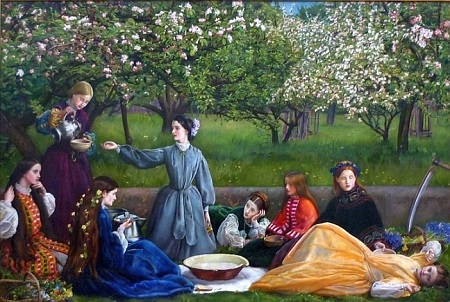
Spring (Apple Blossoms) door Sir John Everett Millais, 1859


Summer is coming

"Summer is coming!" the soft breezes whisper;
"Summer is coming!" the glad birdies sing,
Summer is coming - I hear her quick footsteps,
Take your last look at the beautiful Spring!

Lightly she steps from her throne in the woodlands,
"Summer is coming, and I cannot stay;
Two of my children have crept from my bosom,
April has left me but lingering May.

"What tho' bright Summer is crownèd with roses?
Deep in the forest Arbutus doth hide;
I am the herald of all the rejoicing,
Why must June always disown me?" she cried.

Down in the meadow she stoops to the daisies,
Plucks the first bloom from the apple tree's bough,
"Autumn will rob me of all the sweet apples;
I will take one from her store of them now."

Summer is coming! I hear the glad echo,
Clearly it rings o'er the mountain and plain,
Sorrowful Spring leaves the beautiful woodlands,
Bright, happy Summer begins her sweet reign.


 2041772-d0cd9deb23e2a193c3714890e5b9112e.JPG
Dora Read Goodale (29 oktober 1866 – 12 december 1953)
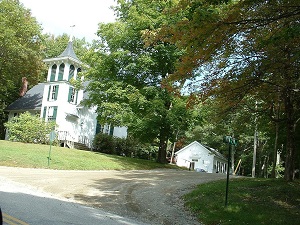
Mount Washington, Massachusetts, waar Dora Read Goodale werd geboren.


Zie voor de schrijvers van de 29e mei ook mijn vorige blog van vandaag.

Geschreven door Romenu om 18:38 Reageer op dit bericht

André Brink, Eduard Escoffet, G. K. Chesterton, Bernard Clavel, T. H. White, Hans Weigel, Alfonsina Storni

De Zuid-Afrikaanse schrijver André Brink werd geboren op 29 mei 1935 in Vrede. Zie ook alle tags voor André Brink op dit blog.

Uit: A dry white season

“I had never been so close to death before.
For a long time, as I lay there trying to clear my mind, I couldn't think coherently at all, conscious only of a terrible, blind bitterness. Why had they singled me out? Didn't they understand? Had everything I'd gone through on their behalf been utterly in vain? Did it really count for nothing? What had happened to logic, meaning and sense?
But I feel much calmer now. It helps to discipline oneself like this, writing it down to see it set out on paper, to try and weigh it and find some significance in it.
Prof Bruwer: There are only two kinds of madness one should guard against, Ben. One is the belief that we can do everything. The other is the belief that we can do nothing.
I wanted to help. Right. I meant it very sincerely. But I wanted to do it on my terms. And I am white, and they are black. I thought it was still possible to reach beyond our whiteness and blackness. I thought that to reach out and touch hands across the gulf would be sufficient in itself. But I grasped so little, really: as if good intentions from my side could solve it all. It was presumptuous of me. In an ordinary world, in a natural one, I might have succeeded. But not in this deranged, divided age. I can do all I can for Gordon or scores of others who have come to me; I can imagine myself in their shoes, I can project myself into their suffering.
But I cannot, ever, live their lives for them. So what else could come of it but failure?
Whether I like it or not, whether I feel like cursing my own condition or not -- and that would only serve to confirm my impotence -- I am white. This is the small, final, terrifying truth of my broken world.
I am white. And because I am white I am born into a state of privilege. Even if I fight the system that has reduced us to this I remain white, and favored by the very circumstances I abhor“.


 2041769-2965d25e8231060963981c6439ec3c22.jpg
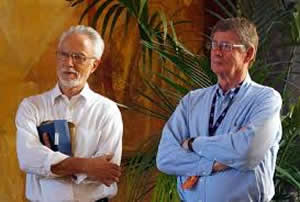
André Brink (29 mei 1935 - 6 februari 2015)
Hier met J.M. Coetzee (links)


De Catalaanse dichter, schrijver en vertaler Eduard Escoffet werd geboren op 29 mei 1979 in Barcelona. Zie ook alle tags voor Eduard Escoffet op dit blog.


angst

angst vor der mutter
angst vor der pfeife des vaters
angst vor dem onkel
angst vor der ehe des onkels
angst vor der cousine die mit großen brüsten herüberschaut
angst mutter zu werden
angst die cousine zu sein, der der cousin den schwanz reinsteckt
angst der cousin zu sein, der der cousine den schwanz reinstecken soll
angst ein treuer vater zu sein
angst ein elternteil zu sein und das zuckersüße kind grenzenlos zu lieben
angst eine sorgende mutter zu sein
die einen unbekannten nährt:
die einen terroristen nährt,
die ein sektenmitglied nährt,
die einen junkie nährt,
die einen kiezdealer nährt,
die einen künstler voller acid nährt,
die einen visionär nährt,
die einen dieb nährt,
die einen polizisten nährt.
angst mutter zu sein und die pistole nicht zu verkraften, wenn der sohn mit flecken in der
  uniform nach hause kommt
angst vor dem brot
angst vor dem wind
angst vor oliven mit anchovis
angst eine mit anchovi gefüllte olive zu sein oder noch schlimmer: eine garnele
angst vor denen die reden und angst vor denen die nicht reden
angst skater zu hassen
angst ikea zu hassen
angst gewerkschafter zu hassen
angst die heilige katholische kirche und jeden einzelnen ihrer anhänger zu hassen
angst dem vater zu schreiben
angst kafka zu sein
angst heterosexuell zu sein
angst homosexuell zu sein
angst nicht bisexuell zu sein
angst nicht multikulturell zu sein
angst kein demokrat zu sein
angst stalin zu sein
angst nichts zu verlieren zu haben
angst
angst nicht du zu sein


Vertaald door Roger Friedlein


 2041769-3e30b7bed481d1cb908f0e0925ede56f.jpg
Eduard Escoffet (Barcelona, 29 mei 1979)


De Engelse dichter, letterkundige, schrijver en journalist Gilbert Keith Chesterton werd geboren in Londen op 29 mei 1874. Zie ook alle tags voor G. K. Chesterton en alle tags voor Chesterton op dit blog.

Uit: The Man Who Was Thursday

“More especially this attractive unreality fell upon it about nightfall, when the extravagant roofs were dark against the afterglow and the whole insane village seemed as separate as a drifting cloud. This again was more strongly true of the many nights of local festivity, when the little gardens were often illuminated, and the big Chinese lanterns glowed in the dwarfish trees like some fierce and monstrous fruit. And this was strongest of all on one particular evening, still vaguely remembered in the locality, of which the auburn-haired poet was the hero. It was not by any means the only evening of which he was the hero. On many nights those passing by his little back garden might hear his high, didactic voice laying down the law to men and particularly to women. The attitude of women in such cases was indeed one of the paradoxes of the place. Most of the women were of the kind vaguely called emancipated, and professed some protest against male supremacy. Yet these new women would always pay to a man the extravagant compliment which no ordinary woman ever pays to him, that of listening while he is talking. And Mr. Lucian Gregory, the red-haired poet, was really (in some sense) a man worth listening to, even if one only laughed at the end of it. He put the old cant of the lawlessness of art and the art of lawlessness with a certain impudent freshness which gave at least a momentary pleasure. He was helped in some degree by the arresting oddity of his appearance, which he worked, as the phrase goes, for all it was worth. His dark red hair parted in the middle was literally like a woman’s, and curved into the slow curls of a virgin in a pre-Raphaelite picture. From within this almost saintly oval, however, his face projected suddenly broad and brutal, the chin carried forward with a look of cockney contempt. This combination at once tickled and terrified the nerves of a neurotic population. He seemed like a walking blasphemy, a blend of the angel and the ape.
This particular evening, if it is remembered for nothing else, will be remembered in that place for its strange sunset. It looked like the end of the world. All the heaven seemed covered with a quite vivid and palpable plumage; you could only say that the sky was full of feathers, and of feathers that almost brushed the face. Across the great part of the dome they were grey, with the strangest tints of violet and mauve and an unnatural pink or pale green; but towards the west the whole grew past description, transparent and passionate, and the last red-hot plumes of it covered up the sun like something too good to be seen. The whole was so close about the earth, as to express nothing but a violent secrecy. The very empyrean seemed to be a secret. It expressed that splendid smallness which is the soul of local patriotism. The very sky seemed small.”


 2041769-6d91a51d12e5cbc0ddf4b18fcf1ca0fe.jpg
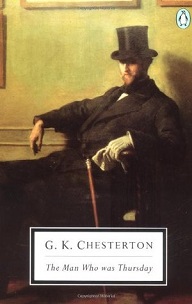
G. K. Chesterton (29 mei 1874 - 14 juli 1936)
Cover


De Franse schrijver Bernard Charles Henri Clavel werd geboren op 29 mei 1923 in Lons-le-Saunier. Zie ook alle tags voor Bernard Clavel op dit blog.

Uit:Les roses de Verdun

« Je me suis vite rendu compte que leur présence si obsédante devait tenir au fait que j'étais à Verdun, car je ne revoyais ni ceux qui étaient tombés avant notre arrivée ici, ni ceux qui devaient mourir plus tard, dans d'autres secteurs où ça n'était pas beaucoup moins dur. Je mettais des noms et des prénoms sur ces visages. Et des noms de villes ou de villages aussi. Ceux des endroits d'où ils venaient. Où on avait dû attendre leur retour. Où ils figuraient sans doute sur le marbre d'un monument. Je demeurais là, figé, sans plus rien voir de ce café pauvre, sans rien entendre de ce qui se disait autour de moi. Je contemplais des visages sans vie et qui fixaient pourtant sur moi des regards intenses. Et j'entendais ma propre voix répéter des noms. Je suis resté là longtemps. J'ai payé. Je suis sorti et me suis sans réfléchir rendu au cinéma. Le film était amusant, mais mes copains toujours là semblaient me reprocher mon rire. Quand je (j'allais dire nous et ce serait plus juste) suis sorti de cette salle, la bise faisait courir d'un bout à l'autre de la rue une petite neige dure et serrée qui pinçait la peau.
Le lendemain, j'étais sur pied bien avant l'aube. J'ai ouvert ma fenêtre. L'enseigne clignotante rouge ne fonctionnait plus. A la lueur fade qui montait de la rue j'ai vu filer la neige. En face, les toitures qui se devinaient à peine étaient blanches. En dépit de ce que les terribles hivers de guerre m'ont fait endurer, il me reste de mon enfance une passion très forte pour ces matins où tout s'emmitoufle dans un silence blanc. Ma fenêtre refermée, je suis resté longtemps le nez à la vitre glacée, à regarder ce torrent gris qui donnait presque le vertige. J'ai fait ma toilette, je me suis habillé chaudement et je suis descendu. J'aime la neige, mais là, elle ne me souriait vraiment pas. C'était le petit concierge qui se trouvait de service. Il m'a tout de suite averti : — Si vous prenez la route pour Aulnois, je vous souhaite bien du plaisir."


 2041769-e29386537c02ecf3e863253f2691837f.jpg
Bernard Clavel (29 mei 1923 – 5 oktober 2010)


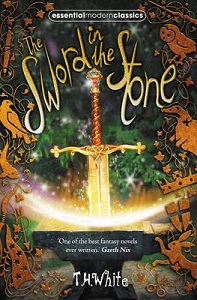
De Engelse dichter en schrijver Terence Hanbury White werd geboren op 29 mei 1906 in Bombay (Mombai). Zie ook alle tags voor T. H. White op dit blog.

Uit: The Sword in the Stone

“The boy slept well in the woodland nest where he had laid himself down, in that kind of thin but refreshing sleep which people have when they begin to lie out of doors. At first he only dipped below the surface of sleep, and skimmed along like a salmon in shallow water, so close to the surface that he fancied himself in air. He thought himself awake when he was already asleep. He saw the stars
above his face, whirling on their silent and sleepless axis, and the leaves of the trees rustling against them, and he heard small changes in the grass. These little noises of footsteps and soft-fringed wing-beats and stealthy bellies drawn over the grass blades or rattling against the bracken at first frightened or interested him, so that he moved to see what they were (but never saw), then soothed him, so that he no longer cared to see what they were but trusted them to be themselves, and finally left him altogether as he swam down deeper and deeper, nuzzling into the scented turf, into the warm ground, into the unending waters under the earth.”
(...)

“These marvels were great and comfortable ones, but in the old England there was a greater still. The weather behaved itself.
In the spring all the little flowers came out obediently in the meads, and the dew sparkled, and the birds sang; in the summer it was beautifully hot for no less than four months, and, if it did rain just enough for agricultural purposes, they managed to arrange it so that it rained while you were in bed; in the autumn the leaves flamed and rattled before the west winds, tempering their sad adieu with glory; and in the winter, which was confined by statute to two months, the snow lay evenly, three feet thick, but never turned into slush.”


 2041769-8f60effa6ee6d834066aa46a2a42db62.jpg

T. H. White (29 mei 1906 – 17 januari 1964)
Cover 


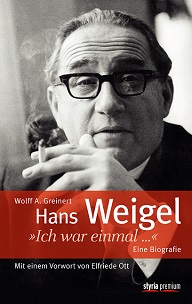
De Oostenrijkse schrijver en theatercriticus Hans Weigel werd geboren op 29 mei 1908 in Wenen. Zie ook alle tags voor Hans Weigel op dit blog.

Uit:Unvollendete Symphonie

Das ist Peter Taussig«, hat er gesagt. »Er ist wieder da.«
Ich weiß genau, daß mir sofort aufgefallen ist, wie er nicht gesagt hat: »Er ist zurückgekommen«, sondern: »Er ist wieder da.«
Dann habe ich gedacht: Das ist der Augenblick, auf den ich zu warten angefangen habe, als ich ein kleines Mädchen war. Und der erst, für mich, die neue Zeit einleitet. Ich sehe zum erstenmal einen Juden.
Ich habe gewußt, daß der Mann, der da gestanden ist, ein Jude sein muß und keiner, der anderswoher zurückgekommen war: aus dem Krieg, aus der gewaltigen Wanderung, die Europa überzogen hat, aus einer Gefangenschaft. Von überallher sonst ist man zurückgekommen. Als Jude ist man wieder da gewesen.
Es ist nicht dein Name gewesen, der für mich zwar ungewohnt geklungen hat, doch nicht so, wie ich mir die Judennamen gedacht habe: Blumental, Veilchenfeld, Löwenstein, Wolfsohn, poetisch, romantisch und fremdhaft gerade in ihrer extremen, etwas schamlosen nackten Beziehung zu der Sprache derer, denen zuzugehören den Trägern verwehrt gewesen ist.
Auch nicht, wie du ausgesehen hast; denn du siehst nicht deutlich oder ganz eindeutig jüdisch aus, du wärst mir nie als ungewöhnlicher, andersartiger, exotischer Anblick aufgefallen.
(...)

Der Hausherr ist ein alter Freund von dir gewesen. Außer seiner Frau hast du keinen von uns gekannt. Ihr habt sofort zu reden angefangen, das große Gespräch jener Tage: Wo ist der, was ist aus jenem geworden, hörst du etwas von dem und von jenem? »Ich muß dir soviel erzählen«, hast du gesagt wie dein Freund, aber ihr habt nichts von dem erzählt, was gewesen ist, als ihr getrennt gewesen seid; und wer das, was er zu erzählen hat, nicht am ersten Tag erzählt, der erzählt’s nie. Ihr habt nur von der Gegenwart gesprochen, von den Menschen, euch gegenseitig vergewissert, wer noch lebt und wo; und dann seid ihr bald in eure gemeinsame Vergangenheit geraten und habt sie lachend und gerührt wieder gegenwärtig gemacht."


 2041769-78f747d137d777c64a8b4e760234cb79.jpg
Hans Weigel (29 mei 1908 – 12 augustus 1991)
Cover biografie


De Argentijnse dichteres Alfonsina Storni werd geboren in Sala Capriasca, Zwitserland op 29 mei 1892. Zie ook alle tags voor Alfonsina Storni op dit blog.


The Moment

A city of gray bones
lies abandoned at my feet.

The piles of bones
are separated by black trenches,
the streets,
divided by them,
ordered, raised by them.
In the city, bristling with two million men,
I haven't a single one to love me.

The sky, even grayer
than the city,
descends over me,
takes over my life,
stops up my arteries,
turns off my voice...

However,
the world,
like a whirlwind
from which I can't escape,
turns rond a dead point:
my heart.


Vertaald door Marion Freeman and Mary Crow


 2041769-2ad4f73d7c2bc13e035182da9666e6e7.jpg
Alfonsina Storni (29 mei 1892 – 25 oktober 1938)


Zie voor nog meer schrijvers van de 29e mei ook mijn blog van 29 mei 2016 deel 2.

Geschreven door Romenu om 18:25 Reageer op dit bericht

Joel Benton

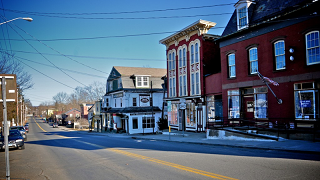
De Amerikaanse dichter, schrijver en publicist Joel Benton werd geboren op 29 mei 1832 in het kleine stadje Amenia, in county New York. Hij volgde tot 1851 een opleiding aan het Amenia Seminarium. Op 19-jarige leeftijd werd hij aangesteld als redacteur van de pas opgerichte “Amenia Times”. Hij heeft ook stukken bijgedragen aan de krant “The Mercure”. Benton was een grote fan van krantenuitgever Horace Greeley; In 1872 keerde hij terug naar de journalistiek om Greeley tijdens zijn presidentiële campagne te ondersteunen. Gedurende zijn hele literaire carrière bleef hij bijdragen naar Greeley's “New York Tribune” sturen. Achttien jaar van zijn leven werkte Benton als hoofd an een middelbare school. Vervolgens werd hij toezichthouder voor de stad waarin hij woonde. Volgens zijn overlijdensbericht in de Amenia Times was er gedurende de jaren 1850 en 1860 een literatuurbureau in zijn geboortestad, dat mensen zoals Horace Greeley, Margaret Fuller, Emerson, Thoreau en anderen aantrok ... en werden er veel van deze notabelen in het huis van Benton ontvangen. In 1883 vertrok Benton naar Minnesota en schreef daar twee jaar voor de kranten in Chicago en St. Paul. Hij verhuisde terug naar Poughkeepsie, New York, in 1885 en bracht zijn resterende jaren door met literaire bezigheden. Hij publiceerde diverse boeken, waaronder “Emerson as a Poet” (1883), “Greeley on Lincoln” (1893), “In the Poe Circle” (1899), “Life of P. T. Barnum” (1902) en “Memories of the Twilight Club” ( (1909).


At Chappaqua

His cherished woods are mute. The stream glides down
The hill as when I knew it years ago;
The dark, pine arbor with its priestly gown
Stands hushed, as if our grief it still would show;
The silver springs are cupless, and the flow
Of friendly feet no more bereaves the grass,
For he is absent who was wont to pass
Along this wooded path. His axe’s blow
No more disturbs the impertinent bole or bough;
Nor moves his pen our heedless nation now,
Which, sworn to justice, stirred the people so.
In some far world his much-loved face must glow
With rapture still. This breeze once fanned his brow.
This is the peaceful Mecca all men know!


Dahkota

Sea-like in billowy distance, far away
The half-broke prairies stretch on every hand;
How wide the circuit of their summer day--
What measureless acres of primeval land,
Treeless and birdless, by no eyesight spanned!
Looking along the horizon's endless line
Man seems a pigmy in these realms of space;
No segment of our planet--so divine--
Turns up such beauty to the moon's fair face!
Here are soft grasses, flowers of tender hue,
Palimpsests of the old and coming race,
Vistas most wonderful, and vast and new;
And see--above--where giant lightnings play,
From what an arch the sun pours forth the day!


 2087603-ba8239685fa7a59a8a519ab8e582f3d8.png
Joel Benton (29 mei 1832 – 15 september 1911)
Downtown Amenia (Geen portret beschikbaar)

Geschreven door Romenu om 00:00 Reageer op dit bericht

Meer van Romenu

↑ Terug naar de berichten