Naar de inhoud

Romenu

Over literatuur, gedichten, kunst en cultuur
akke.beakke.be

Berichten van 6 juni 2017 tot 7 juni 2017

Orhan Pamuk, Monika Mann, Nikki Giovanni, Harry Crews, Louise Erdrich, Mascha Kaléko, Jan Engelman, Gwendolyn Brooks, Elizabeth Bowen
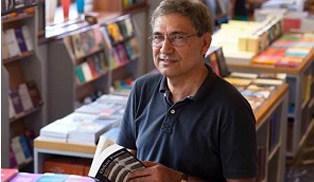
De Turkse schrijver Orhan Pamuk werd geboren op 7 juni 1952 in Istanbul. Zie ook alle tags voor Orhan Pamuk op dit blog.

Uit: The New Life (Vertaald door Guneli Gun)

“I read a book one day and my whole life was changed. Even on the first page I was so affected by the book's intensity I felt my body sever itself and pull away from the chair where I sat reading the book that lay before me on the table. But even though I felt my body dissociating, my entire being remained so concertedly at the table that the book worked its influence not only on my soul but on every aspect of my identity. It was such a powerful influence that the light surging from the pages illumined my face; its incandescence dazzled my intellect but also endowed it with brilliant lucidity. This was the kind of light within which I could recast myself; I could lose my way in this light; I already sensed in the light the shadows of an existence I had yet to know and embrace. I sat at the table, turning the pages, my mind barely aware that I was reading, and my whole life was changing as I read the new words on each new page. I felt so unprepared for everything that was to befall me, and so helpless, that after a while I moved my face away instinctively as if to protect myself from the power that surged from the pages. It was with dread that I became aware of the complete transformation of the world around me, and I was overtaken by a feeling of loneliness I had never before experienced—as if I had been stranded in a country where I knew neither the lay of the land nor the language and the customs.
I fastened onto the book even more intensely in the face of the helplessness brought on by that feeling of isolation. Nothing besides the book could reveal to me what was my necessary course of action, what it was that I might believe in, or observe, and what path my life was to take in the new country in which I found myself. I read on, turning the pages now as if I were reading a guidebook which would lead me through a strange and savage land. Help me, I felt like saying, help me find the new life, safe and unscathed by any mishap. Yet I knew the new life was built on words in the guidebook. I read it word for word, trying to find my path, but at the same time I was also imagining, to my own amazement, wonders upon wonders which would surely lead me astray.
The book lay on my table reflecting its light on my face, yet it seemed similar to the other familiar objects in the room. While I accepted with joy and wonder the possibility of a new life in the new world that lay before me, I was aware that the book which had changed my life so intensely was in fact something quite ordinary. My mind gradually opened its doors and windows to the wonders of the new world the words promised me, and yet I seemed to recall a chance encounter that had led me to the book. But the memory was no more than a superficial image, one that hadn't completely impressed itself on my consciousness. As I read on, a certain dread prompted me to reflect on the image: the new world the book revealed was so alien, so odd and astonishing that, in order to escape being totally immersed in this universe, I was anxious to sense anything related to the present ».


 2044362-e3f44d4144089f466f9fc57cfec3a83e.jpg
Orhan Pamuk (Istanbul, 7 juni 1952)


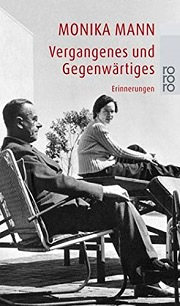
De Duitse schrijfster Monika Mann werd als vierde kind van Thomas Mann geboren op 7 juni 1910 in München. Zie ook alle tags voor Monika Mann op dit blog.

Uit:Das fahrende Haus

„Während wir schon bei der nächsten Frage waren, dachte ich blitzschnell – wenn einer übel von meinem Bruder redet, mag ich ihm einen Nasenstüber versetzen ; wenn einer übel von China, Norwegen, Rumänien oder Amerika redet, so ist mir’s einerlei. Denn das sind Begriffe, während mein Bruder ein Individuum, eine Tatsache ist. Ich mag nur für das Individuum den Nasenstüber austeilen ! – Ich zählte langsam, stockend, ich glaub’ ein wenig singend die Staaten auf, nebenher dachte ich wieder blitzschnell – und doch, jene Begriffe mögen Tatsache sein. Der Begriff eines Landes, einer Nation, eines Kontinents, der Begriff « Amerika » wird individuell, verteidigungswert in diesem Menschen, der da als Richter vor mir sitzt. – Kentucky, Tennessee, Georgia, Florida – summte ich, und ich stockte. – In diesem Menschen, der als Richter vor mir sitzt. – Alabama, Mississippi, Louisiana, Ohio, Indiana, Michigan, Wisconsin, Minnesota, Kansas, Nebraska, Colorado, New Mexico, seine Fahne hat 48 Sterne, aber Texas hat nur einen Stern (improvisierte ich), Idaho, Utah, Kalifornien, Oregon, Washington. – In diesem Menschen, der als Richter vor mir sitzt . . . Mir schwindelte.
[. . .]
Und was man sich erworben hat, kann man sich bewahren !
Ich bewahre es mir. Nicht äußerlich – ich bin dabei, das amerikanische Staatsbürgerrecht niederzulegen –, aber innerlich : Ich bewahre mir das Recht, Amerika zu lieben, ihm dankbar zu sein.“
 

 2044362-9d2bfeb4d285475955ae66f0e2caec96.jpg
Monika Mann (7 juni 1910 – 17 maart 1992) 
Cover 


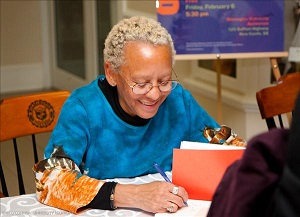
De Amerikaanse dichteres en schrijfster Nikki Giovanni werd geboren op 7 juni 1943 in Knoxville, Tennessee. Zie ook alle tags voor Nikki Giovanni op dit blog.


Always There Are The Children

and always there are the children

there will be children in the heat of day
there will be children in the cold of winter

children like a quilted blanket
are welcomed in our old age

children like a block of ice to a desert sheik
are signs of status in our youth

we feed the children with our culture
that they might understand our travail

we nourish the children on our gods
that they may understand respect

we urge the children on the tracks
that our race will not fall short

but our children are not ours
nor we theirs they are future we are past

how do we welcome the future
not with the colonialism of the past
for that is our problem
not with the racism of the past
for that is their problem
not with the fears of our own status
for history is lived not dictated

we welcome the young of all groups
as our own with the solid nourishment
of food and warmth

we prepare the way with the solid
nourishment of self-actualization

we implore all the young to prepare for the young
because always there will be children.
 

 2044362-272db56dfa2b6ad62d97d6647c128273.jpg
Nikki Giovanni (Knoxville, 7 juni 1943)


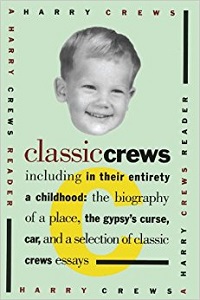
De Amerikaanse schrijver Harry Crews werd geboren op 7 juni 1935 in Bacon County, Georgia. Zie ook alle tags voor Harry Crews op dit blog.

Uit:Classic Crews: A Harry Crews Reader

“I picked up a magazine not long ago in which a man was writing about his children. In the very beginning of the piece, he said, “The storms of childhood and adolescence had faded into the past.” He would be the poorer for it if that were true. But it is not true, not for him or for any father. The storms don’t fade into the past, nor do all the moments that are beautiful and full of happiness, the moments that quicken our hearts with pride. In early July of the summer Byron would turn 12, we were sitting on the top of Springer Mountain in Georgia. It was raining and we were soaked and exhausted to the bone, having made the long steep climb of the approach to the Appalachian Trail, which winds its way across the Eastern united States and finally ends on Mount Katahdin in Maine. Between us, embedded in the boulder on which we were sitting, was the metal image of a young hiker.
Byron put his hand on the stone and said, “Well, we made it to the beginning.”
And so we had, but a hell of a beginning it had been. It hadn’t stopped raining all day as we’d climbed steadily over broken rock. He was carrying a 20-pound pack and mine weighed 45, both probably too heavy, but we’d decided to pack enough with us so that we could hike for as long as we wanted to without getting out of the mountains to restock our supplies. I had put him in the lead to set the pace.
“Remember, we’re not in a hurry,” I called after we’d been going awhile. “This is not a goddamn contest.”
I was forced to say it because he’d taken off over the brutally uneven trail like a young goat. He’d looked back at me for only an instant and kept climbing.
Then, as the mud and rock made the footing more and more unsure, I said, “You think we ought to find a place to wait out this rain.”
He stopped and turned for just an instant to look at me. “Did we come to by God hike or did we come to hike?”
 

 2044362-9bc12c4ac48b763f4a2e050571b28bf8.jpg
Harry Crews (7 juni 1935 – 28 maart 2012)
Cover


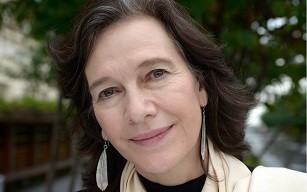
De Amerikaanse dichteres en schrijfster Louise Erdrich werd geboren op 7 juni 1954 in Little Falls, Minnesota. Zie ook alle tags voor Louise Erdrich op dit blog.


Indian Boarding School: The Runaways

Home's the place we head for in our sleep.
Boxcars stumbling north in dreams
don't wait for us. We catch them on the run.
The rails, old lacerations that we love,
shoot parallel across the face and break
just under Turtle Mountains. Riding scars
you can't get lost. Home is the place they cross.

The lame guard strikes a match and makes the dark
less tolerant. We watch through cracks in boards
as the land starts rolling, rolling till it hurts
to be here, cold in regulation clothes.
We know the sheriff's waiting at midrun
to take us back. His car is dumb and warm.
The highway doesn't rock, it only hums
like a wing of long insults. The worn-down welts
of ancient punishments lead back and forth.

All runaways wear dresses, long green ones,
the color you would think shame was. We scrub
the sidewalks down because it's shameful work.
Our brushes cut the stone in watered arcs
and in the soak frail outlines shiver clear
a moment, things us kids pressed on the dark
face before it hardened, pale, remembering
delicate old injuries, the spines of names and leaves.
 

 2044362-395f9de52cadd2be76687bfa758be038.jpg
Louise Erdrich (Little Falls, 7 juni 1954)


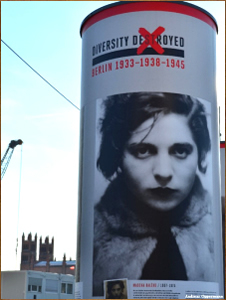
De Duitstalige dichteres Mascha Kaléko (eig. Golda Malka Aufen) werd geboren op 7 juni 1907 in Krenau of Schidlow in Galicië in het toenmalige Oostenrijk-Hongarije, nu Polen. Zie ook alle tags voor Mascha Kaléko op dit blog.


Die frühen Jahm

Ausgesetzt
In einer Barke von Nacht
Trieb ich
Und trieb an ein Ufer.
An Wolken lehnte ich gegen den Regen.
An Sandhügel gegen den wütenden Wind.
Auf nichts war Verlaß.
Nur auf Wunder.
Ich aß die grünenden Früchte der Sehnsucht,
Trank von dem Wasser das dürsten macht
Ein Fremdling, stumm vor unerschlossenen Zonen,
Fror ich mich durch die finsteren Jahre.
Zur Heimat erkor ich mir die Liebe.


Der kleine Unterschied

Es sprach zum Mister Goodwill
ein deutscher Emigrant
,,Gewiß, es bleibt dasselbe,
sag ich nun land statt Land,
sag ich für Heimat homeland
und poem für Gedicht
Gewiss, ich bin sehr happy:
Doch glücklich bin ich nicht'
 

 2044362-da62bfbf7d5aacaef1ab82ba159d1256.jpg
Mascha Kaléko (7 juni 1907 – 21 januari 1975)


De Nederlandse dichter Johannes Aloysius Antonius Engelman werd geboren in Utrecht op 7 juni 1900. Zie ook alle tags voor Jan Engelman op dit blog.


Annabel

Mijn kleine, kleine Annabel
zij zong zo zuiver en zo schel
als fluiten op een glansrivier,
zij was geluk en leefde hier

mijn kleine, kleine Annabel
ik wist uw prille leden wel,
de trilling van die bloemenmond
wanneer een hand uw haren vond

mijn kleine, kleine Annabel
de geest is lang, maar wij gaan snel:
op 't koude laken ligt uw lijf
en ik vind nergens meer verblijf

mijn kleine, kleine Annabel
als ik in hemel of in hel
moet varen met mijn lichte lied,
verloochen, maar vergeet mij niet


Orgelpunt

De man die uwe weelden mint
is weerloos als het kleine kind:
de wereld ging hem vreemd voorbij
als aan zijn borst uw hartslag lei.
Maar wat ons saamgedreven heeft
is wat in kleine bloemen beeft
en gonzend draagt het groot heelal:
't is twee-in-een, en dat is al.
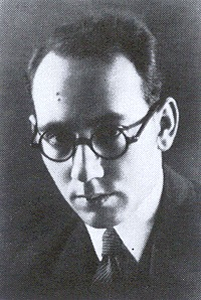
 

 2044362-59acc471ff7794b483e182b687e92d54.png
Jan Engelman (Utrecht 7 juni 1900 ;Amsterdam 20 maart 1972)
Begin jaren 1930 


De Amerikaanse dichteres Gwendolyn Brooks werd geboren op 7 juni 1917 in Topeka, Kansas. Zie ook alle tags voor Gwendolyn Brooks op dit blog.


The Children Of The Poor

1
People who have no children can be hard:
Attain a mail of ice and insolence:
Need not pause in the fire, and in no sense
Hesitate in the hurricane to guard.
And when wide world is bitten and bewarred
They perish purely, waving their spirits hence
Without a trace of grace or of offense
To laugh or fail, diffident, wonder-starred.
While through a throttling dark we others hear
The little lifting helplessness, the queer
Whimper-whine; whose unridiculous
Lost softness softly makes a trap for us.
And makes a curse. And makes a sugar of
The malocclusions, the inconditions of love.


2
What shall I give my children? who are poor,
Who are adjudged the leastwise of the land,
Who are my sweetest lepers, who demand
No velvet and no velvety velour;
But who have begged me for a brisk contour,
Crying that they are quasi, contraband
Because unfinished, graven by a hand
Less than angelic, admirable or sure.
My hand is stuffed with mode, design, device.
But I lack access to my proper stone.
And plenitude of plan shall not suffice
Nor grief nor love shall be enough alone
To ratify my little halves who bear
Across an autumn freezing everywhere.
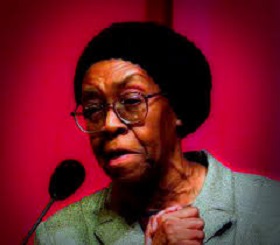
 

 2044362-059c7f6eeb1c8474aa2d570a6f23d9b3.jpg
Gwendolyn Brooks (7 juni 1917 – 3 december 2000)


De Ierse schrijfster Elizabeth Bowen werd geboren op 7 juni 1899 in Dublin. Zie ook alle tags voor Elizabeth Bowen op dit blog.

Uit: Friends and Relations

“The morning of the Tilney–Studdart wedding rain fell steadily from before daylight, veiling trees and garden and darkening the canvas of the marquee that should have caught the earliest sun in happy augury. The bride's relations frowned in sleep and were roused with a sense of doom by rain's inauspicious mutter on roofs and windowsills. Clouds with their reinforcements came rolling over the Malvern hills. Till quite late, the rooms at Corunna Lodge were dusky as though the morning had been delayed.
Laurel Studdart herself was not concerned with weather and gave the windows hardly a glance. She and Colonel Studdart, both embarrassed by idleness, frequently met throughout the morning as, straying from room to room, they attempted to efface themselves. Her father had the afternoon on his mind – he had not yet given away a daughter – for her, these hours before her wedding were like a too long wait on the platform of some familiar station from which, virtually, one has already departed, where the very associations become irksome. Her clothes were all packed; she was buttoned into an old blazer of Janet's and did not look like today's bride. From half-past ten till noon she and Colonel Studdart, shut into the morning-room, played demon patience. Her life here was over, his at a standstill; there was nothing for them to do. The morning-room flowers had been 'arranged'; freesia banked the fireplace; Colonel Studdart, from nervousness and a tendency to hay-fever, frequently sneezed. Pollen dashed Laurel's cheek where she had leant excitedly forward across a lily.
The rain stopped before lunch. Later, during the ceremony, the sun came out, parting the clouds widely; so that Laurel's married way down the aisle was gold from successive windows. When she uncertainly smiled in the porch, against strong blasts from the organ rolling out from behind, the umbrellas were finally down; the graves glittered. It was early-closing day, friends from the Cheltenham shops were among the onlookers. The sweet bride, trailing light in her veil, was nodded and smiled to the car where the chauffeur compromised with his impassivity”.
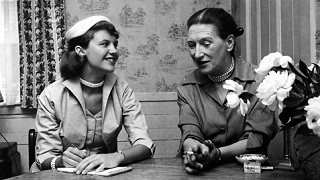
 

 2044362-3cfb64d1baa410dc409f639fcdb27cab.jpg
Elizabeth Bowen (7 juni 1899 – 22 februari 1973)
Hier met een jonge Sylvia Plath (links) tijdens een interview


Zie voor nog meer schrijvers van de 7e juni ook mijn blog van 7 juni 2015 deel 2.
Geschreven door Romenu om 18:27 Reageer op dit bericht

Thomas Mann, Aleksandr Poesjkin, Sarah Dessen, Frank Gericke, Jean Cayrol, Pierre Corneille, Hendrik van Teylingen, V. C. Andrews

De Duitse schrijver Thomas Mann werd geboren in Lübeck op 6 juni 1875. Zie ook mijn blog van 6 juni 2010 en eveneens alle tags voor Thomas Mann op dit blog.

Uit: Joseph und seine Brüder

„Tief ist der Brunnen der Vergangenheit. Sollte man ihn nicht unergründlich nennen? Dies nämlich dann sogar und vielleicht eben dann, wenn nur und allein das Menschenwesen es ist, dessen Vergangenheit in Rede und Frage steht: dies Rätselwesen, das unser eigenes natürlich-lusthaftes und übernatürlich-elendes Dasein in sich schließt und dessen Geheimnis sehr begreiflicherweise das A und das 0 all unseres Redens und Fragens bildet, allem Reden Gedrängtheit und Feuer, allem Fragen seine Inständigkeit verleiht. Da denn nun gerade geschieht es, daß, je tiefer man schürft, je weiter hinab in die Unterwelt des Vergangenen man dringt und tastet, die Anfangsgründe des Menschlichen, seiner Geschichte, seiner Gesittung. sich als gänzlich unerlotbar erweisen und vor unserem Senkblei, zu welcher abenteuerlichen Zeitenlänge wir seine Schnur auch abspulen, immer wieder und weiter ins Bodenlose zurückweichen. Zutreffend aber heißt es hier: wieder und weiter.; denn mit unserer Forscherangelegendichkeit treibt das Unerforschliche eine Art von foppendem Spiel: es bietet ihr Scheinhalte und Wegesziele, hinter denen, wenn sie erreicht sind, neue Vergangenheitsstrecken sich auftun, wie es dem Küstengänger ergeht, der des Wanderns kein Ende findet, weil hinter jeder lehmigen Dünenkulisse, die er erstrebte, neue Weiiten zu neuen Vorgebirgen vorwärtslocken. So gibt es Anfänge bedingter Art, welche den Ur-Beginn der besonderen Überlieferung einer bestimmten Gemeinschaft, Volkheit oder Glaubensfamilie praktisch-tatsächlich bilden, so daß die Erinnerung, wenn auch wohl belehrt darüber, daß die Brunnenteufe damit keineswegs ernstlich als ausgepeilt gelten kann, sich bei solchem Ur denn auch national beruhigen und zum persönlich-geschichtlichen Stillstande kommen mag.


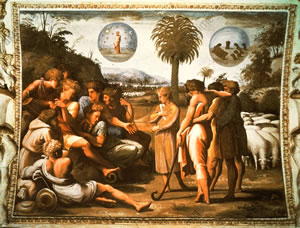
 2044085-cd3d490147e06d2751092180d29121a3.jpg
Jozef vertelt de droom aan zijn broers door Rafaël, fresco in het Vaticaan, ca. 1515/18.


Der junge Joseph zum Beispiel, Jaakobs Sohn und der lieblichen, zu früh gen Westen gegangenen Rahel, loseph zu seiner Zeit, als Kurigalzu, der Kossäer, zu Babel saß, Herr der vier Gegenden, König von Schumir und Akkad, höchst wohltuend dem Herzen Bel-Marudugs, ein zugleich strenger und üppiger Gebieter, dessen Bartlöckchen so künstlich gereiht erschienen, daß sie einer Abteilung gut ausgerichteter Schildträger glichen;— zu Theben aber, in dem Unterlande, das Joseph »Mizraime oder euch »Kerne, das Schwarze«, zu nennen gewohnt war, seine Heiligkeit der gute Gott, genannt .Antun ist zufrieden« und dieses Namens der dritte, der Sonne leiblicher Sohn, zum geblendeten Entzücken der Staubgeborenen im Horizont seines Palastes strahlte; als Assur zunahm durch die Kraft seiner Götter und auf der großen Straße am Meere, von Gaza hinauf zu den Pässen des Zederngebirges, königliche Karawanen Höflichkeitskontributionen in Lapislazuli und gestempeltem Golde zwischen den Höfen des Landes der Ströme und dem Pharaos hin und her führten; als man in den Städten der Amoriter zu Beth-San, AjaInn, Ta'anek, Urusalini der Aschtarti diente, zu Sichern und Beth-Lahama das siebentägige Klagen um den Kehrhaften Sohn, den Zerrissenen, erscholl und zu Gebal, der Buchstadt, El angebetet ward, der keines Tempels und Kultus bedurfte: Joseph also, wohnhaft im Distrikte Kenana des Landes, das ägyptisch das Obere Retenu hieß, in seines Vaters von Terebinthen und immergrünen Steineichen beschattetem Familienlager bei Hebron, ein berühmt angenehmer Jüngling, angenehm namentlich in erblicher Nachfolge seiner Mutter, die hübsch und schön gewesen war, wie der Mond. wenn er voll ist, und wie lschtars Stern, wenn er milde im Reinen schwimmt, außerdem aber, vom Vater her, ausgestattet mit Geistesgaben, durch welche er diesen wohl gar in gewissem Sinne noch übertraf, - Joseph denn schließlich (zum fünften- und sechstenmal nennen wir seinen Namen und mit Befriedigung; denn um den Namen steht es geheimnisvoll, und uns ist, als gäbe sein Besitz uns Beschwörerkraft über des Knaben zeitversunkene, doch einst so gesprächig-lebensvolle Person) - Joseph für sein Teil erblickte in einer südbabylonischen Stadt namens Uru, die er in seiner Mundart »Ur Kaschdim«, »Ur der Chaldäer« zu nennen pflegte, den Anfang aller, das heißt: seiner persönlichen Dinge.“


 2044085-e22bfd865aaab0983a785df8843ea221.jpg
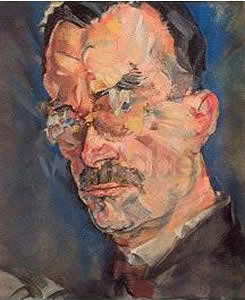
Thomas Mann (6 juni 1875 - 12 augustus 1955)
Portret door Max Oppenheimer, 1926


De Russische dichter en schrijver Aleksandr Poesjkin werd geboren in Moskou op 6 juni 1799. Zie ook alle tags voor Aleksandr Poesjkin op dit blog.


Ich liebte Dich ...

Ich liebte Dich: vielleicht ist dieses Feuer
In meinem Herzen noch nicht ganz verglüht;
Doch Deine Ruh ist mir vor Allem theuer,
Durch nichts betrüben will ich Dein Gemüth.
Ich liebte Dich, stumm, hoffnungslos und schmerzlich,
In aller Qual, die solche Liebe giebt —
Ich liebte Dich so wahrhaft und so herzlich,
Gott geb', daß Dich ein Andrer je so liebt!


Vertaald door Friedrich Martin Bodenstedt


Das Vöglein

Den alten Brauch, den gibt es ewig,
dem ich in Fremde folgen mag:
Ich lass ein Vöglein aus dem Käfig
an fröhlich heitrem Frühlingstag.

Nun meine Seele wird genesen;
Gibt's einen Grund zum Traurigsein,
wo ich nur einem Lebewesen
bescher' den freien Sonnenschein?


Vertaald door Alexander Besel


Die Blume

Im Buch seh ich ein Blümchen liegen,
Welk, duftlos, mutterseelenallein …
In wundersames Sinnen wiegen
Mein Geist und mein Gemüt sich ein.

Wie lange blühtest du? Was schmückte
Dein Reiz im Lenze hold und zart?
Kenn ich die Hand, die fromm dich pflückte?
Warum wardst hier du aufbewahrt?

Mahnst du an seliges Wiederfinden,
An namenloses Trennungsleid?
An Träumerein in Thalesgrüden
Und stummer Waldeseinsamkeit?

Und lebt er noch, lebt sie zur Stunde?
Errangen sie des Friedens Port?
Ging ihrer Jugend Glück zu Grunde,
Gleich dir, o Blume, früh verdorrt?


Vertaald door Friedrich Fiedler


 2044085-0840af17f33104837b125aa8256e1e5e.jpg
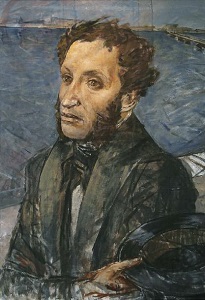
Aleksandr Poesjkin (6 juni 1799- 10 februari 1837) 
Portret door Koezma Petrov-Vodkin, 1934


De Amerikaanse schrijfster Sarah Dessen werd geboren op 6 juni 1970 in Evanston, Illinois. Zie ook alle tags voor Sarah Dessen nop dit blog.

Uit: Saint Anything

"I have to go to the ladies' room," I said.
My mom, her eyes red, just looked at me. As if this, after all that had happened, was the thing that she simply could not bear.
"It's okay," Ames said. "I'll take her."
My father nodded, clapping him on the shoulder as we passed. Out in the courthouse lobby, I could see people pushing the doors open, out into the light outside, and I wished more than anything that I was among them.
Ames put his arm around me as we walked. "I'll wait for you here," he said when we reached the ladies' room. "Okay?"
Inside, the light was bright, unforgiving, as I walked to the sinks and looked at myself in the mirror there. My face was pale, my eyes dark, flat, and empty.
A stall door behind me opened and a girl came out. She was about my height, but smaller, slighter. As she stepped up beside me, I saw she had blonde hair, plaited in a messy braid that hung over one shoulder, a few wisps framing her face, and she wore a summer dress, cowboy boots, and a denim jacket. I felt her look at me as I washed my hands once, then twice, before grabbing a towel and turning to the door.
I pushed it open, and there was Ames, directly across the hallway, leaning against the wall with his arms folded over his chest. When he saw me, he stood up taller, taking a step forward. I hesitated, stopping, and the girl, also leaving, bumped into my back.
"Oh! Sorry!" she said.
"No," I told her, turning around. "It was . . . my fault."
She looked at me for a second, then past my shoulder, at Ames. I watched her green eyes take him in, this stranger, for a long moment before turning her attention back to me. I had never seen her before.”


 2044085-9f552ce62fa65aec95605fc602acdcdb.jpg
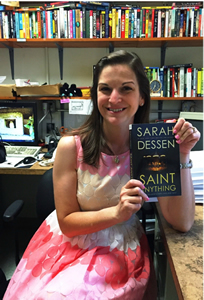
Sarah Dessen (Evanston, 6 juni 1970)


De Nederlandse dichter en publicist Frank Gericke (pseudoniem van Derk Gerhardus Hoek) werd geboren in Hoogvliet op 6 juni 1887. Zie ook alle tags voor Frank Gericke op dit blog.


De eik

De eikeboom, rijzig geplant
In het land,
Stuwde zijn bloeikracht in 't wijde,
Rondde zijn weemlend getak
Tot een dak,
Dekte met schaduw de weide.

Diep uit de voedende schacht
Van den nacht
Bracht hij de sappen aan 't streven,
Ademde uitbundige won
In de zon,
Glanzende jonkheid en leven.

Tvogeltjesvolkje ter woon
In zijn kroon
Teelde er zijn twinklende wereld,
Schoon als een bloeiende tuin
Was zijn kruin
Rondom met eikels bepereld:

Over de velden gespreid
Op hun tijd,
Sproot, door de wuivende jaren,
Tzwellende en bottende hout
Tot een woud
Waar hij als vorst zou gebaren.

Merk hoe de ruimte ter helft
Om hem welft,
Hoor hoe de winden hem streelen -
Willig staan wolken en weer
In hun keer
Onder zijn blinde bevelen.


 2044085-b38ef0f9c8f26d1817470161fc30fce6.jpg
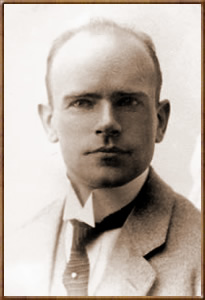
Frank Gericke (6 juni 1887 − 14 december 1976)


De Franse dichter en schrijver Jean Cayrol werd geboren op 6 juni 1911 in Bordeaux. Zie ook alle tags voor Jean Cayrol op dit blog.


Coquelicot

Coquelicot essoufflé
dans les mains tu crains
la chaleur des plaies.

Coquelicot toujours refusé,
toujours battu.
Ô qu’as-tu fait
du blé tout nu
du grain mangé,

ne rougis pas.

Coquelicot, je ne t’ai plus
quand brûle l’hiver
sur mes pas
coquelicot tout cru.

Fleur, mon écho,
vite, un verre de vin ;
finis les bécots,
sont froides mes mains.


Glissante glycine

Glissante glycine
tape à la fenêtre ;
l’enfant lui fait signe
quand ses murs vont naître.

Puis,
les grappes dissoutes,
le feuillage vient ;
le long de la route,
la glycine est bien.

Glycine rapide
adieu les beaux murs
les prisons se vident
à son vieux murmure.


 2044085-3ee23a435b98e3571497d29dd41bb88c.jpg
Jean Cayrol (6 juni 1911 – 10 februari 2005)


De Franse dichter en schrijver Pierre Corneille werd geboren in Rouen op 6 juni 1606. Zie ook alle tags voor Pierre Corneille op dit blog.

Uit: Le Cid

“Acte 1 , Scène 6
Don Rodrigue
...
Il vaut mieux courir au trépas.
Je dois à ma maitresse aussi bien qu'à mon père ;
J'attire en me vengeant sa haine et sa colère ;
J'attire ses mépris en ne me vengeant pas.
À mon plus doux espoir l'un me rend infidèle,
Et l'autre indigne d'elle.
Mon mal augmente à le vouloir guérir ;
Tout redouble ma peine.
Allons, mon âme ; et puisqu'il faut mourir,
Mourons du moins sans offenser Chimène.

Mourir sans tirer ma raison !
Rechercher un trépas si mortel à ma gloire !
Endurer que l'Espagne impute à ma mémoire
D'avoir mal soutenu l'honneur de ma maison !
Respecter un amour dont mon âme égarée
Voit la perte assurée !
N'écoutons plus ce penser suborneur,
Qui ne sert qu'à ma peine.
Allons, mon bras, sauvons du moins l'honneur,
Puisqu'après tout il faut perdre Chimène.

Oui, mon esprit s'était déçu.
Je dois tout à mon père avant qu'à ma maitresse :
Que je meure au combat, ou meure de tristesse,
Je rendrai mon sang pur comme je l'ai reçu.
Je m'accuse déjà de trop de négligence ;
Courons à la vengeance ;
Et tout honteux d'avoir tant balancé,
Ne soyons plus en peine,
Puisqu'aujourd'hui mon père est l'offensé,
Si l'offenseur est le père de Chimène.


 2044085-a3f6963bef3aa2ddd3656509a77f90a5.jpg
Pierre Corneille (6 juni 1606 – 1 oktober 1684)
William Nadylam als Rodrigue in een uitvoering tijdens het Festival d’Avignon, 1998


De Nederlandse dichter en vertaler Hendrik van Teylingen werd geboren op 6 juni 1938 in IJmuiden. Zie ook alle tags voor Hendrik van Teylingen op dit blog.


Vedergewicht

Het kind was, hoorde hij, weer druk
vandaag en moest voor straf naar bed.
Zijn vrouw kan, merkt hij, nog maar net
de last aan van haar zwaar geluk.

Er gaat vanavond een goed stuk,
leest hij, dat moest maar aangezet.
De stamppot kan dan in die tijd,
voelt hij, doorzakken naar de buik.

Het stuk is echter uitgesteld,
verneemt hij; niet direkt voorhanden
blijkt een reservestuk – volgt sport.

Een oude bokser, ziet hij, wordt
ontslagen van zijn laatste tanden.

Hij slaapt, van verre uitgeteld.


 2044085-03c3a89adb37c79c5ab1891e1bacec92.jpg
Hendrik van Teylingen (6 juni 1938 – 25 december 1998)


De Amerikaanse schrijfster V. C. Andrews (eig. Cleo Virginia Andrews) werd geboren in Portsmouth op 6 juni 1923. Zie ook alle tags voor VC Andres en eveneens alle tags voor V. C. Andrews op dit blog.

Uit: Christopher's Diary: Secrets of Foxworth

"Where are you going today, Dad'?" I asked.
It was Saturday, and he hadn't mentioned any new construction job. I had come out of the kitchen, where I had just finished the breakfast dishes, and I saw him in the entryway pulling on his reluctant knee-high rubber boots, the muscles in his neck and face looking like rubber bands ready to snap. He already had his khaki "aged like wine" leather coat and faded U.S. Navy cap on. His tool belt lay beside him on the oak wood bench he had built, its heavy leather belt curled on itself like some sleeping snake. It had been a birthday present from my mother nearly ten years ago, but with the tender loving care he gave it, it looked like it had been bought yesterday.
I wasn't surprised to see him dressing like this. It was October, and we were having weird weather. Some days were cooler than usual, and then suddenly, some days were much warmer, and we also had more rainy ones in Charlottesville for this time of the year. Whenever anyone complained about the unusual changes in the weather, Dad loved to resurrect an old '50s expression, "Blame it on the Russians," rather than just saying "Climate change." Most people had no idea what "Blame it on the Russians" meant, least of all any of my friends, and few had the patience to listen to any explanation he might have. Dad wasn't old enough to personally remember, of course, but he told me his father had said it so often that it became second nature for him, too.
"Oh. Didn't I say anything about it at breakfast?"
"You didn't say much about anything this morning, Dad. You had your nose in the newspaper most of the time, sniffing the words instead of reading them," I reminded him. He said that was something my mother would complain about, too. She used the exact same evression. She told him that eating breakfast with him was like sleepwalking through a meal.
My reliance on any of my mother's expressions, whether vaguely remembered or coming from my dad's descriptions, always brought a broad smile to his face. As if he had tiny dimmer switches behind them, his hazel eyes would brighten.”


 2044085-97e3e9491d7cf561df7f9dc1873c41dd.jpg
V. C. Andrews (6 juni 1923 - 19 december 1986)
Cover


 Zie voor nog meer schrijvers van de 6e juni ook mijn blog van 6 juni 2015 deel 2.

Geschreven door Romenu om 19:49 Reageer op dit bericht

Meer van Romenu

↑ Terug naar de berichten