Naar de inhoud

Romenu

Over literatuur, gedichten, kunst en cultuur
akke.beakke.be

Berichten van 7 juni 2017 tot 8 juni 2017

Marguerite Yourcenar, Lutz Seiler, Ulf Stolterfoht, Péter Gárdos, Gwen Harwood, H. J. Friedericy, Gerald Bisinger, Udo Kawasser, Michael Basse
De Belgisch-Amerikaanse, Franstalige schrijfster Marguerite Yourcenar werd geboren in Brussel op 8 juni 1903. Zie ook alle tags voor Marguerite Yourcenar op dit blog.

Uit:Memoirs of Hadrian (Vertaald door Grace Frick, in samenwerking met de schrijfster)

“When I consider my life, I am appalled to find it a shapeless mass. A hero’s existence, such as is described to us, is simple; it goes straight to the mark, like an arrow. Most men like to reduce their lives to a formula, whether in boast or lament, but almost always in recrimination; their memories oblingingly construct for them a clear and comprehensible past. My life has contours less firm. As is commonly the case, it is what I have not been which defines me, perhaps, most aptly: a good soldier, but not a great warrior; a lover of art, but not the artist which Nero thought himself to be at his death; capable of crime, but not laden with it. I have come to think that great men are characterized precisely by the extreme position which they take, and that their heroism consists in holding to that extremity throughout their lives. They are our poles, or our antipodes. I have occupied each of the extremes in turn, but have not kept to any one of them; life has always drawn me away. And nevertheless neither can I boast, like some plowman or worthy carter, of a middle-of-the-road existence.
The landscape of my days appears to be composed, like mountainous regions, of varied materials heaped up pell-mell. There I see my nature, itself composite, made up of equal parts of instinct and training. Here and there protrude the granite peaks of the inevitable, but all about is rubble from the landslips of chance. I strive to retrace my life to find in it some plan, following a vein of lead, or of gold, or the course of some subterranean stream, but such devices are only tricks of perspective in the memory. From time to time, in an encounter or an omen, or in a particular series of happenings, I think that I recognize the working of fate, but too many paths lead nowhere at all, and too many sums add up to nothing. To be sure, I perceive in this diversity and disorder the presence of a person; but his form seems nearly always to be shaped by the pressure of circumstances; his features are blurred, like a face reflected in water. I am not of those who say that their actions bear no resemblance to them. Indeed, actions must do so, since they alone give my measure, and are the sole means of engraving me upon the memory of men, or even upon my own memory (and since perhaps the very possibility of continuing to express and modify oneself by action may constitute the real difference between the state of the living and of the dead). But there is between me and these acts which compose me an indefinable hiatus, and the proof of this separation is that I feel constantly the necessity of weighing and explaining what I do, and of giving account of it to myself. In such an evaluation certain works of short duration are surely negligible; yet occupations which have extended over a whole lifetime signify just as little. For example, it seems to me as I write this hardly important to have been emperor.”


 2044641-cee9d1aaccb11f34e728827cbba2541e.JPG
Marguerite Yourcenar (8 juni 1903 – 17 december 1987)
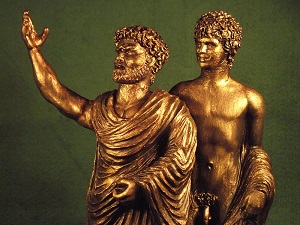
Hadrianus en Antinous, sculptuur van Malcolm Lidbury voor het LGBT History & Art Project Cornwall UK, 2016


De Duitse dichter en schrijver Lutz Seiler werd geboren op 8 juni 1963 in Gera. Zie ook alle tags voor Lutz Seiler op dit blog.

Uit: Turksib

„Trotz der hundert Rubel hatte ich nicht wirklich an sein Funktionieren geglaubt, und offensichtlich war, daß er auch nicht so funktionierte, wie er sollte, denn deutlich spürte ich, wie sein Verhalten in mich drang. Gern hätte ich mich ausgestreckt, flach auf dem Boden – ich war gebannt von einem außerordentlich wichtigen, tröstlichen Bild, welches das wispernde Kästchen mir in seiner wundersamen Melodie entgegenhob: Etwas, das ich nicht ganz erfassen konnte, ein Gesicht vielleicht, das noch schemenhaft blieb, eine Maske, unter der beharrlich oder auch nur abwartend geschwiegen wurde.
Ich selbst hatte in den Wochen vor meiner Abreise neben den bereits vorbestimmten Stationen Pawlodar und Karaganda jenen dritten Ort, nämlich Semey, Semey am Irtysch, ins Spiel gebracht. Der Konsul hatte länger als üblich nicht geantwortet. Nur von der Frau des Konsuls war eine kleine Liste eingetroffen, ein paar Dinge, die sie für sich und ihre Familie erbat: einen Adventskranz, Dominosteine und ein Medikament namens Uralyt. Schließlich hatte der Konsul meinem Vorschlag, wenn auch zurückhaltend, zugestimmt. In Semey, schrieb er, solle es dann aber unbedingt das Dostojewskihaus sein – ein idealer Ort für unser Thema; Städte im Nichts – der Titel war eine Idee der Übersetzerin gewesen.
Zu den Überraschungen des Konsuls gehörte, daß meine Auftritte von einem kasachischen Dombraspieler und seiner dreizehnjährigen Tochter begleitet wurden.
Die Sängerin, die aufgrund ihrer puppenhaften Erscheinung von der Übersetzerin bald unsere kleine, glänzende Mumie getauft wurde, zog die Töne von weit her und dehnte sie dann nach innen. Für diese umgekehrte, tief in den Rachen gedrehte Form des Gesangs stand sie wie angewurzelt, nur ihre Hände gingen durch die Luft, als striche sie vorsichtig über etwas, das sich unmittelbar vor ihr befinden mußte. Vollkommen unangebracht schien es mir, die betäubende Stille nach dem Lied mit meiner eigenen Stimme zu durchbrechen: Brasilia, Nairobi, und dann zum Wesentlichen hin, dem Wunder Astana, der „Hauptstadt der Steppe“.


 2044641-88dcbdf128db3aa2eac45a9ba28ccdd5.jpg
Lutz Seiler (Gera, 8 juni 1963)


De Duitse dichter, schrijver en vertaler Ulf Stolterfoht werd geboren op 8 juni 1963 in Stuttgart. Zie ook alle tags voor Ulf Stolterfoht op dit blog.


engelstrompete

engelstrompete: schon nach dem ersten zug setzt dumpfes brüten
ein, die arme hängen rechts und links herab, vor dem mund bunter
schaum. atmung beschleunigt, schenkel unschön verdreht. abwech-
selnd lauscht der berauschte oder geifert herzzerreißend. stöhnt,
ächzt und fällt in tiefen schlaf. nach dem erwachen erzählt er von
längeren reisen und seinen gesprächen mit bense. das klang nach

belang, doch gleichzeitig reichlich gefährlich. ecke witthoh-staffel /
wannenstraße hatte es eine grünanlage gegeben, mit truthahnge-
hege – und die hähne fraßen das zeug. gerieten völlig außer sich.
das hat uns schließlich bewogen. und nie, wirklich nie, hat uns die
pflanze um bilder betrogen. informationsästhetische bilder, bilder
der entropie, geschaute edv usw. wir haben dort eine kybernetische

hütte errichtet, von der aus flogen wir ab. keine ahnung, ob bense
das wußte. vielleicht hat ihm etwas geschwant. wie auch immer.
geraucht hatte sich die wirkung dann doch ein wenig verbraucht.
so wurde gekaut, schließlich gespritzt, und etwas seltsames ge-
schah: es genügten jetzt immer geringere mengen. die depots wa-
ren voll, quollen über, die nennung des namens ersetzte den stoff.

wir formten die klitsche zum sprachlabor um, setzten die kopf-
hörer auf und hauchten uns „engelstrompete“ ins ohr. beachtlicher
flash. manche begannen, im zustand zu dichten. vielleicht unsre
besten. mit echten karrieren. kurz vor dem olymp verleugnung der
wurzeln. die immer gleiche geschichte: bense – wer ist das? und:
die beste droge ist ein weißes blatt. ihr werk verwese ungelesen.


 2044641-83b48cc1dec32623a218be29fcf203f0.jpg
Ulf Stolterfoht (Stuttgart, 8 juni 1963)


De Hongaarse schrijver en film- en theaterregisseur Péter Gárdos werd geboren op 8 juni 1948 in Boedapest. Zie ook alle tags voor Péter Gárdos op dit blog.

Uit: Fever at Dawn (Vertaald doorElizabeth Szász)

“Pressed against the X-ray machine, Miklós had done his best not to move. Dr Lindholm shouted at him from the other room. The doctor was a gangling figure, at least six foot six tall, and he spoke a funny sort of Hungarian. All his long vowels sounded the same, as if he were blowing up a balloon. He had run the Lärbro hospital—now temporarily enlarged to accommodate the intake of camp survivors—for the last dozen years. His wife, Márta, a tiny woman whom Miklós reckoned couldn’t be more than four foot six, was a nurse and worked in the hospital too; she was Hungarian, which explained why the doctor tackled the language with such bravado.
‘You hold breath! No frisking!’ he bellowed.
A click and a hum—the X-ray was ready. Miklós relaxed his shoulders.
Dr Lindholm walked over and stood beside him, gazing with compassion at a point slightly above his head. Miklós was slumped, his sunken chest naked against the machine, as if he never wanted to get dressed again. His glasses had steamed up.
‘What you say you occupied with, Miklós?’ the doctor asked. ‘I was a journalist. And poet.’
‘Ah! Engineer of the soul. Very good.’
Miklós shifted from one foot to the other. He was cold.
‘Dress. Why you stand around?’
Miklós shuffled over to the corner of the room and pulled on his pyjama jacket. ‘Is there a problem?’ he asked the doctor.
Lindholm still didn’t look at him. He started walking towards his office, waving at Miklós to follow him. He was muttering, almost to himself, ‘Is a problem.’
Miklós sat in a leather armchair. Opposite him, on the other side of the desk, sat Dr Lindholm. He was flicking anxiously through Miklós’s medical reports.
‘How much you weigh now, Miklós?’
‘Forty-seven kilos.’
‘You see. It works like a clock.’

 2044641-92f529b3854febda841b3c8e4df0ef40.jpg
Péter Gárdos (Boedapest, 8 juni 1948)


De Australische dichteres en librettiste Gwen Harwood werd geboren op 8 juni 1920 in Taringa, Queensland. Zie ook alle tags voor Gwen Harwood op dit blog.


The Wound

The tenth day, and they give
my mirror back. Who knows
how to drink pain, and live?
I look, and the glass shows
the truth, fine as a hair,
of the scalpel's wounding care.

A round reproach to all
that's warped, uncertain, clouded,
the sun climbs. On the wall,
by the racked body shrouded
in pain, is a shadow thrown;
simple, unchanged, my own.

Body, on whom the claims
of spirit fall to inspire
and terrify, there flames
at your least breath a fire
of anguish, not for this pain,
but that scars will remain.

You will be loved no less.
Spirit can build, make shift
with what there is, and press
pain to its mould; will lift
from your crucible of night
a form dripping with light.

Felix culpa. The sun
lights in my flesh the great
wound of the world. What's done
is done. In man's estate
let my flawed wholeness prove
the art and scope of love.


 2044641-4a1e3a0477a41509831621c6d4cab925.jpg
Gwen Harwood (8 juni 1920 - 5 december 1995)
Cover brievenboek


De Nederlandse schrijver Herman Jan (Han) Friedericy werd op 8 juni 1900 geboren in Stadskanaal in de gemeente Onstwedde. Zie ook alle tags voor H. J. Friedericy op dit blog.

Uit: Bendeleider (Onder het pseudoniem H. J. Merlijn)

“Deze renden op de Chinezen af en staken de ene timmerman dadelijk dood. Hij heeft niet geweten wie hem vermoord hebben, want hij stond met zijn rug naar de weg te timmeren en had geen tijd om zich om te draaien. De andere timmerman probeerde weg te komen, maar de drie mannen kregen ook hem te pakken. Zij doorstaken hem met hun krissen en lieten hem voor dood achter. Later bleek hij nog te leven, maar ook hij zou wel dood gaan.
Daarna trokken de drie mannen schreeuwend verder het dorp in. Bij het grote huis van Aroe Peneki bleven zij staan en onder aan de trap riep een van hen, de aanvoerder, of iemand thuis was. De schrijver van de Aroe had, boven aan de trap, geantwoord, dat de Aroe naar een vergadering was met andere hoofden, in Sengkang. De aanvoerder, een grote kerel, had toen gezegd, dat hij een afgezant was van de koning van Bone en dat hij met alle eerbied ontvangen wenste te worden. De bevende schrijver had hem toen buigend binnen genodigd en de drie mannen waren statig de trap op gelopen en breeduit gaan zitten in het grote voorvertrek. Zij hadden zich laten bedienen, thee gedronken en gebak gegeten.
Inmiddels had de schrijver, die wel bang, maar niet dom was, een bediende op de fiets de Aroe tegemoet gestuurd met een jachtgeweer. Na een benauwd uur stapte de Aroe onder aan de trap van zijn fiets en met het jachtgeweer in de aanslag riep hij naar boven, wie er binnen waren. De drie mannen stonden op en toen zij boven aan de trap kwamen en de Aroe met het geweer zagen, trokken zij hun bebloede krissen weer en wilden zij de trap afstormen. De Aroe wachtte niet. Een schot klonk donderend onder de overkapping van de trap en de aanvoerder rolde dood van de treden tot voor de voeten van de Aroe. De twee anderen wierpen hun krissen weg en werden gebonden.”


 2044641-2ae849c7b80d7cf29b758c9dcc5d8907.jpg
H. J. Friedericy (8 juni 1900 – 23 november 1962)


De Oostenrijkse dichter en vertaler Gerald Bisinger werd geboren op 8 juni 1936 in Wenen. Zie ook alle tags voor Gerald Bisinger op dit blog.


Die Welt ist struppig

I
Das Wirtshaus ist die Mitte der Welt.
(Wirtshaus gehört grammatikalisch zu den Sammel-
namen; es sind das Wörter, deren Singular mehrere
Wesen oder Dinge umfaßt, sie in sich sammelt. Eine
Vielheit wird sprachlich durch eine Einheit ausgedrückt.
Die Mitte der Welt ist analog zu den Sammelnamen
ein Sammelbegriff).
Das Wirtshaus ist die Mitte der Welt.


II
«Diese Welt die ist ja wirklich sehr groß die
ist immer noch größer ein wenig immer ein we-
nig noch größer als diese und jene Wortwelt
und nicht mal De Gaulle war la France und die Wort-
welt ist anders und größer und ... »


III
Ich fahre jetzt jeden Tag mit der S-Bahn von Berlin-
Friedennu zum Wannsee. Dabei sehe ich ein schönes
Stück Welt. Häuser, manchmal weitet sich das Bahnge-
lände, Kohlenlager, Bäume, kahle Bäume und Kiefern,
ein Stück vom zugefrorenen Schlachtensee, Schnee liegt,
und es schneit.
So vermittelt sich mir jeden Tag ein Bild von der
Welt.
Im Frühjahr werden die Bäume wieder blühn wie im
Wiener Prater.


 2044641-fa085c501e971672b1faf52a2d067f99.JPG
Gerald Bisinger (8 juni 1936 – 22 februari 1999)
Wenen. Hoofgebouw van de universiteit aan de Ringstraße


Onafhankelijk van geboortedata:

De Oostenrijkse dichter, vertaler, danser en choreograaf Udo Kawasser werd geboren in 1965 in Vorarlberg. Zie ook alle tags voor Udo Kawasser op dit blog.

Uit: Einbruch der Landschaft

„hatte nicht glauben wollen, dass es wirklich Probleme geben könnte. wen geht es schon an, wen ich mit aufs Zimmer nehme. sie wolle keine Scherereien mit der Polizei haben, ¡imagínate tú! stell dir vor, es sei verboten und schließlich geschehe es auch zu meinem eigenen Schutz. hatte Vida nicht geglaubt, als sie mich davor warnte, mit ihr zusammen hoch zu gehen, tatsächlich war es schon vorher ein Fehler gewesen, ihre Hand zu nehmen, als wir von der Rampa Richtung Vedado gingen. hatte der Abend dadurch nicht sehr bald etwas Mechanisches, allzu Vorhersehbares bekommen? selbst als ich mich bemühte, den Weg zu meinem Zimmer zu verlängern, nach der BANCO POPULAR Vida auf eine der Bänke im Halbdunkel des anschließenden kleinen Parks zog? da saß dann einer, der wollte Gefühle, wollte überwältigt werden von der Anwesenheit des anderen, es war der Augen Untergang, die Hand der Frau in seiner begann zu wiegen, lag ihm wie ein lebloses Ding zwischen den Fingern, das Du floh aus den Berührungen, sickerte in die Schatten, die sie unter dem Ficus umgaben, mit immer forscheren Zärtlichkeiten haschte er nach den fliehenden Empfindungen, hielt ihr Fleisch unter dem Lycrahemd umfangen und sah über ihre Schulter hinweg in das gelbe Licht der Straßenlaterne. die 23. Straße lag ermattet in der Nacht und gähnte, ließ den Schweiß aus ihren Schenkelfalten verdunsten, sehe den dunklen, bizarr ausfransenden Umriss zweier mächtiger Gestalten aufragen, eine Schindmähre, die sich in zuckendem Irrsinn aufbäumt, auf ihrem Rücken die ausgezehrte Gestalt des Hidalgos mit spitzem Bart, der um sein Gleichgewicht kämpft und wie die Mambizes das Schwert schwingt gegen einen eingebildeten Feind. auf ihren Hinterläufen steigt Rocinante in den Nachthimmel Havannas, habe mich wieder auf das Bett gelegt, in den kühlenden Propellerstrom, wie können einen von einem Tag auf den anderen so die Lebensgeister fliehen, wie ist es möglich, dass mich in den letzten beiden Tagen das Herabsteigen von diesem Dachzimmer in Centro Habana so erschöpft und das alles nur um ein paar Malangas oder einen dieser aufgeschäumten weißen Brotwecken zu bekommen, die nicht schwerer wiegen als das Geld, das man für sie bezahlt.“


 2044641-cb9399f4a276476647445d32bdb8a3ae.jpg
Udo Kawasser (Vorarlberg, 1965)


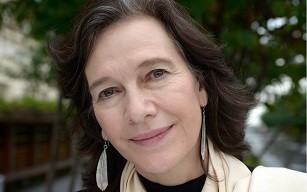
De Duitse dichter, schrijver en vertaler Michael Basse werd geboren in 1957 in Bad-Salzuflen / Nordrhein-Westfalen. Zie ook alle tags voor Michael Basse op dit blog.


Prachtmenschen
nach victor hugo

Verschärft gesichtet in diesen tagen
aliens von nebenan
wunschlose wiedergänger
transitgeschöpfe die nicht begehren
& so herrlich benommen sind
von den blaustufen des himmels
von den graustufen darunter
(falter käfer stahlgewitter)
von lymphatischen krümmungen
einer kleinen wirbelsäule
(formen alles nur formen)

seht nur der aldebaran geht auf
seht die wunderbare rosette
die eine scheibe tannenholz
unterm mikroskop offenbart
vergleicht mir das mit mechelner spitzen!

geduldige osmotiker
ohne ausdrückliches ego
kühle betrachter des schmerzes
die der enthauptung zusehn
und einen lichteffekt dabei suchen
agenten unverdächtiger pracht
die nero nicht bemerken
despektierliches wimmern kratzen
in der zelle nebenan
wünschelgänger des augenblicks
gebieter flüchtigen staunens
die sich die lider reiben
wenn der dornbusch in flammen steht
die sich gegenseitig erkennen
am zeichen auf ihrer stirn

wahrscheinlich muß es sie geben
wahrscheinlich wird es sie immer geben
götterlieblinge sternenmenschen
auf dem gipfel
im zenit


 2044641-863425c02b542b656872fb7145dcc933.jpg
Michael Basse (Bad-Salzuflen, 1957)
Geschreven door Romenu om 16:22 Reageer op dit bericht

Nino Haratischwili

De Georgische schrijfster en regisseuse Nino Haratischwili werd geboren op 8 juni 1983 in Tbilisi.
Als tiener richtte Nino Haratischwili het "Seringen Theater" op, een Duits-Georgische theatergroep waarvoor zij in de periode 1998-2003 regelmatig toneelstukken schreef en regisseerde. Na de studie filmregie aan de school voor film en theater in Tbilisi studeerde Haratischwili van 2000 tot 2007 theaterregie aan de Toneelacademie in Hamburg. Als regisseuse is Nino Haratischwili verantwoordelijk voor talloze wereldpremières, o.a. in het Duitse theater Göttingen, Kampnagel Hamburg en in het Thalia Theater. Haar dramatische teksten hebben verschillende prijzen gewonnen. In 2008 ontving ze een van de auteursprijzen van de Heidelberger Stückemarkt. In 2010 ontving zij de Adelbert von Chamisso-prijs. Met haar debuutroman “Juja” (2010) was Haratischwili op de lange lijst van de Duitse Buchpreis en was zij genomineerd voor de ZDF-aspekte-Literaturpreis en won zij in 2011 de debuutprijs van Buddenbrookhaus Lübeck. Haar tweede roman “ Mein sanfter Zwilling” verscheen ook in 2011. In 2014 werd Haratischwilis derde roman gepubliceerd: “Das achte Leben (Für Brilka)”, waarvoor zijvan de Robert Bosch Stiftung een beurs kreeg voot onderzoek in Rusland en Georgië.

Uit Juja

„Warum man sie Olga genannt hatte, hatte sie vergessen. Bis zu dem Tag, an dem Olgas Leben sich katastrophal ändern sollte, war nichts Gravierendes passiert.
Olga hatte ihre Vorlesungen besucht und war dann mit ihrem Hund spazieren gegangen, einem goldenen Spaniel, Lydia. Olga war 23 Jahre alt und ein nettes Mädchen, hatte russische Vorfahren, konnte aber kein Wort Russisch und hieß auch nicht Olga, hatte einen noch durchschnittlicheren Namen, einen westeuropäischen, doch das ist jetzt egal.
Sie war früh aufgestanden, hatte schlecht geschlafen und war zur Uni geradelt, wie immer. Hatte auch ihre Bekannten – richtige Freunde hatte sie kaum, wenn man von einer Freundin absah – nicht sehen können (sie besuchten andere Kurse) und war eher etwas gelangweilt mit Lydia spazieren gegangen. Dann hatte sie in ihrem Lieblingsimbiss gegessen, das hatte sie sich gegönnt, da ja sonst nichts Schönes geschehen war, und war ein bisschen durch die Straßen geschlendert. So kam es, dass sie das Buch fand.
Es war ein netter Nachmittag, und es gab nichts Besseres zu tun. Der Antiquar hatte neu eröffnet und sie ging aus purer Langeweile in seinen Laden hinein.
Zwei ältere Damen standen in der Ecke und plauderten miteinander; vor den Regalen stand ein junger Mann, vertieft in ein Buch. Er sah ganz gut aus und Olga ging instinktiv in seine Richtung, doch als sie sich neben ihn stellte und so tat, als suche sie etwas, legte er das Buch aus der Hand und rannte wie verrückt aus dem Laden.
An der Kasse saß keiner, und niemand schien sein abruptes Verschwinden bemerkt zu haben, niemand außer Olga. Aus irgendeinem Grund versetzte seine Handlung sie in großen Aufruhr, am liebsten wäre sie ihm nachgelaufen, doch fehlte ihr die Portion Mut, die sie dazu gebraucht hätte. So ergriff sie das Buch, das er so erschrocken zurückgestellt hatte, und begann darin zu blättern.
Klar, es hätte sein können, dass er nur zu einer Verabredung musste und deshalb so schnell aus dem Laden gestürmt war, doch Olga wollte an Abenteuer glauben. Noch lieber wollte sie sich eine unglückliche Liebesgeschichte zusammenreimen. Es hätte ja sein können, dass er unglücklich verliebt war, und nun hatte er das Buch aufgeschlagen und ihre Initialen darin entdeckt. Und so war er zu ihr gerannt, um ihr alles zu beichten, sein Leid, seine Liebe.
Olga nahm das Buch in die Hand. Die alten Damen schienen nichts bemerkt zu haben. Olga schlug das dünne, alte Buch auf und begutachtete die ersten Seiten, doch sie entdeckte keine Initialen. Absolut nichts. Keine getrockneten Rosenblätter, keine handschriftlichen Anmerkungen.“


 2131486-95a91a53d5cfd9a826029b36ab07b6a1.jpg
Nino Haratischwili (Tbilisi, 8 juni 1983)

Geschreven door Romenu om 00:00 Reageer op dit bericht

Orhan Pamuk, Monika Mann, Nikki Giovanni, Harry Crews, Louise Erdrich, Mascha Kaléko, Jan Engelman, Gwendolyn Brooks, Elizabeth Bowen

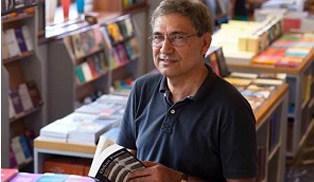
De Turkse schrijver Orhan Pamuk werd geboren op 7 juni 1952 in Istanbul. Zie ook alle tags voor Orhan Pamuk op dit blog.

Uit: The New Life (Vertaald door Guneli Gun)

“I read a book one day and my whole life was changed. Even on the first page I was so affected by the book's intensity I felt my body sever itself and pull away from the chair where I sat reading the book that lay before me on the table. But even though I felt my body dissociating, my entire being remained so concertedly at the table that the book worked its influence not only on my soul but on every aspect of my identity. It was such a powerful influence that the light surging from the pages illumined my face; its incandescence dazzled my intellect but also endowed it with brilliant lucidity. This was the kind of light within which I could recast myself; I could lose my way in this light; I already sensed in the light the shadows of an existence I had yet to know and embrace. I sat at the table, turning the pages, my mind barely aware that I was reading, and my whole life was changing as I read the new words on each new page. I felt so unprepared for everything that was to befall me, and so helpless, that after a while I moved my face away instinctively as if to protect myself from the power that surged from the pages. It was with dread that I became aware of the complete transformation of the world around me, and I was overtaken by a feeling of loneliness I had never before experienced—as if I had been stranded in a country where I knew neither the lay of the land nor the language and the customs.
I fastened onto the book even more intensely in the face of the helplessness brought on by that feeling of isolation. Nothing besides the book could reveal to me what was my necessary course of action, what it was that I might believe in, or observe, and what path my life was to take in the new country in which I found myself. I read on, turning the pages now as if I were reading a guidebook which would lead me through a strange and savage land. Help me, I felt like saying, help me find the new life, safe and unscathed by any mishap. Yet I knew the new life was built on words in the guidebook. I read it word for word, trying to find my path, but at the same time I was also imagining, to my own amazement, wonders upon wonders which would surely lead me astray.
The book lay on my table reflecting its light on my face, yet it seemed similar to the other familiar objects in the room. While I accepted with joy and wonder the possibility of a new life in the new world that lay before me, I was aware that the book which had changed my life so intensely was in fact something quite ordinary. My mind gradually opened its doors and windows to the wonders of the new world the words promised me, and yet I seemed to recall a chance encounter that had led me to the book. But the memory was no more than a superficial image, one that hadn't completely impressed itself on my consciousness. As I read on, a certain dread prompted me to reflect on the image: the new world the book revealed was so alien, so odd and astonishing that, in order to escape being totally immersed in this universe, I was anxious to sense anything related to the present ».


 2044362-e3f44d4144089f466f9fc57cfec3a83e.jpg
Orhan Pamuk (Istanbul, 7 juni 1952)


De Duitse schrijfster Monika Mann werd als vierde kind van Thomas Mann geboren op 7 juni 1910 in München. Zie ook alle tags voor Monika Mann op dit blog.

Uit:Das fahrende Haus

„Während wir schon bei der nächsten Frage waren, dachte ich blitzschnell – wenn einer übel von meinem Bruder redet, mag ich ihm einen Nasenstüber versetzen ; wenn einer übel von China, Norwegen, Rumänien oder Amerika redet, so ist mir’s einerlei. Denn das sind Begriffe, während mein Bruder ein Individuum, eine Tatsache ist. Ich mag nur für das Individuum den Nasenstüber austeilen ! – Ich zählte langsam, stockend, ich glaub’ ein wenig singend die Staaten auf, nebenher dachte ich wieder blitzschnell – und doch, jene Begriffe mögen Tatsache sein. Der Begriff eines Landes, einer Nation, eines Kontinents, der Begriff « Amerika » wird individuell, verteidigungswert in diesem Menschen, der da als Richter vor mir sitzt. – Kentucky, Tennessee, Georgia, Florida – summte ich, und ich stockte. – In diesem Menschen, der als Richter vor mir sitzt. – Alabama, Mississippi, Louisiana, Ohio, Indiana, Michigan, Wisconsin, Minnesota, Kansas, Nebraska, Colorado, New Mexico, seine Fahne hat 48 Sterne, aber Texas hat nur einen Stern (improvisierte ich), Idaho, Utah, Kalifornien, Oregon, Washington. – In diesem Menschen, der als Richter vor mir sitzt . . . Mir schwindelte.
[. . .]
Und was man sich erworben hat, kann man sich bewahren !
Ich bewahre es mir. Nicht äußerlich – ich bin dabei, das amerikanische Staatsbürgerrecht niederzulegen –, aber innerlich : Ich bewahre mir das Recht, Amerika zu lieben, ihm dankbar zu sein.“


 2044362-9d2bfeb4d285475955ae66f0e2caec96.jpg
Monika Mann (7 juni 1910 – 17 maart 1992) 
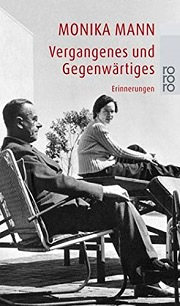
Cover 


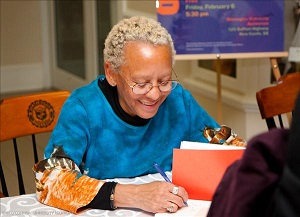
De Amerikaanse dichteres en schrijfster Nikki Giovanni werd geboren op 7 juni 1943 in Knoxville, Tennessee. Zie ook alle tags voor Nikki Giovanni op dit blog.


Always There Are The Children

and always there are the children

there will be children in the heat of day
there will be children in the cold of winter

children like a quilted blanket
are welcomed in our old age

children like a block of ice to a desert sheik
are signs of status in our youth

we feed the children with our culture
that they might understand our travail

we nourish the children on our gods
that they may understand respect

we urge the children on the tracks
that our race will not fall short

but our children are not ours
nor we theirs they are future we are past

how do we welcome the future
not with the colonialism of the past
for that is our problem
not with the racism of the past
for that is their problem
not with the fears of our own status
for history is lived not dictated

we welcome the young of all groups
as our own with the solid nourishment
of food and warmth

we prepare the way with the solid
nourishment of self-actualization

we implore all the young to prepare for the young
because always there will be children.


 2044362-272db56dfa2b6ad62d97d6647c128273.jpg
Nikki Giovanni (Knoxville, 7 juni 1943)


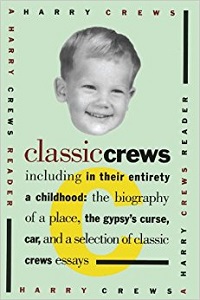
De Amerikaanse schrijver Harry Crews werd geboren op 7 juni 1935 in Bacon County, Georgia. Zie ook alle tags voor Harry Crews op dit blog.

Uit:Classic Crews: A Harry Crews Reader

“I picked up a magazine not long ago in which a man was writing about his children. In the very beginning of the piece, he said, “The storms of childhood and adolescence had faded into the past.” He would be the poorer for it if that were true. But it is not true, not for him or for any father. The storms don’t fade into the past, nor do all the moments that are beautiful and full of happiness, the moments that quicken our hearts with pride. In early July of the summer Byron would turn 12, we were sitting on the top of Springer Mountain in Georgia. It was raining and we were soaked and exhausted to the bone, having made the long steep climb of the approach to the Appalachian Trail, which winds its way across the Eastern united States and finally ends on Mount Katahdin in Maine. Between us, embedded in the boulder on which we were sitting, was the metal image of a young hiker.
Byron put his hand on the stone and said, “Well, we made it to the beginning.”
And so we had, but a hell of a beginning it had been. It hadn’t stopped raining all day as we’d climbed steadily over broken rock. He was carrying a 20-pound pack and mine weighed 45, both probably too heavy, but we’d decided to pack enough with us so that we could hike for as long as we wanted to without getting out of the mountains to restock our supplies. I had put him in the lead to set the pace.
“Remember, we’re not in a hurry,” I called after we’d been going awhile. “This is not a goddamn contest.”
I was forced to say it because he’d taken off over the brutally uneven trail like a young goat. He’d looked back at me for only an instant and kept climbing.
Then, as the mud and rock made the footing more and more unsure, I said, “You think we ought to find a place to wait out this rain.”
He stopped and turned for just an instant to look at me. “Did we come to by God hike or did we come to hike?”


 2044362-9bc12c4ac48b763f4a2e050571b28bf8.jpg
Harry Crews (7 juni 1935 – 28 maart 2012)
Cover


De Amerikaanse dichteres en schrijfster Louise Erdrich werd geboren op 7 juni 1954 in Little Falls, Minnesota. Zie ook alle tags voor Louise Erdrich op dit blog.


Indian Boarding School: The Runaways

Home's the place we head for in our sleep.
Boxcars stumbling north in dreams
don't wait for us. We catch them on the run.
The rails, old lacerations that we love,
shoot parallel across the face and break
just under Turtle Mountains. Riding scars
you can't get lost. Home is the place they cross.

The lame guard strikes a match and makes the dark
less tolerant. We watch through cracks in boards
as the land starts rolling, rolling till it hurts
to be here, cold in regulation clothes.
We know the sheriff's waiting at midrun
to take us back. His car is dumb and warm.
The highway doesn't rock, it only hums
like a wing of long insults. The worn-down welts
of ancient punishments lead back and forth.

All runaways wear dresses, long green ones,
the color you would think shame was. We scrub
the sidewalks down because it's shameful work.
Our brushes cut the stone in watered arcs
and in the soak frail outlines shiver clear
a moment, things us kids pressed on the dark
face before it hardened, pale, remembering
delicate old injuries, the spines of names and leaves.


 2044362-395f9de52cadd2be76687bfa758be038.jpg
Louise Erdrich (Little Falls, 7 juni 1954)


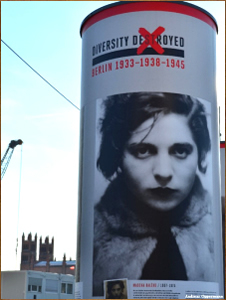
De Duitstalige dichteres Mascha Kaléko (eig. Golda Malka Aufen) werd geboren op 7 juni 1907 in Krenau of Schidlow in Galicië in het toenmalige Oostenrijk-Hongarije, nu Polen. Zie ook alle tags voor Mascha Kaléko op dit blog.


Die frühen Jahm

Ausgesetzt
In einer Barke von Nacht
Trieb ich
Und trieb an ein Ufer.
An Wolken lehnte ich gegen den Regen.
An Sandhügel gegen den wütenden Wind.
Auf nichts war Verlaß.
Nur auf Wunder.
Ich aß die grünenden Früchte der Sehnsucht,
Trank von dem Wasser das dürsten macht
Ein Fremdling, stumm vor unerschlossenen Zonen,
Fror ich mich durch die finsteren Jahre.
Zur Heimat erkor ich mir die Liebe.


Der kleine Unterschied

Es sprach zum Mister Goodwill
ein deutscher Emigrant
,,Gewiß, es bleibt dasselbe,
sag ich nun land statt Land,
sag ich für Heimat homeland
und poem für Gedicht
Gewiss, ich bin sehr happy:
Doch glücklich bin ich nicht'


 2044362-da62bfbf7d5aacaef1ab82ba159d1256.jpg
Mascha Kaléko (7 juni 1907 – 21 januari 1975)


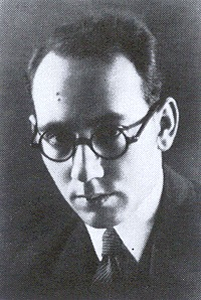
De Nederlandse dichter Johannes Aloysius Antonius Engelman werd geboren in Utrecht op 7 juni 1900. Zie ook alle tags voor Jan Engelman op dit blog.


Annabel

Mijn kleine, kleine Annabel
zij zong zo zuiver en zo schel
als fluiten op een glansrivier,
zij was geluk en leefde hier

mijn kleine, kleine Annabel
ik wist uw prille leden wel,
de trilling van die bloemenmond
wanneer een hand uw haren vond

mijn kleine, kleine Annabel
de geest is lang, maar wij gaan snel:
op 't koude laken ligt uw lijf
en ik vind nergens meer verblijf

mijn kleine, kleine Annabel
als ik in hemel of in hel
moet varen met mijn lichte lied,
verloochen, maar vergeet mij niet


Orgelpunt

De man die uwe weelden mint
is weerloos als het kleine kind:
de wereld ging hem vreemd voorbij
als aan zijn borst uw hartslag lei.
Maar wat ons saamgedreven heeft
is wat in kleine bloemen beeft
en gonzend draagt het groot heelal:
't is twee-in-een, en dat is al.


 2044362-59acc471ff7794b483e182b687e92d54.png
Jan Engelman (Utrecht 7 juni 1900 ;Amsterdam 20 maart 1972)
Begin jaren 1930 


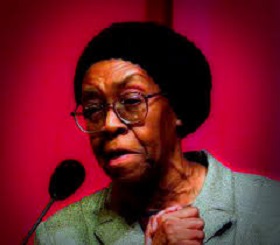
De Amerikaanse dichteres Gwendolyn Brooks werd geboren op 7 juni 1917 in Topeka, Kansas. Zie ook alle tags voor Gwendolyn Brooks op dit blog.


The Children Of The Poor

1
People who have no children can be hard:
Attain a mail of ice and insolence:
Need not pause in the fire, and in no sense
Hesitate in the hurricane to guard.
And when wide world is bitten and bewarred
They perish purely, waving their spirits hence
Without a trace of grace or of offense
To laugh or fail, diffident, wonder-starred.
While through a throttling dark we others hear
The little lifting helplessness, the queer
Whimper-whine; whose unridiculous
Lost softness softly makes a trap for us.
And makes a curse. And makes a sugar of
The malocclusions, the inconditions of love.


2
What shall I give my children? who are poor,
Who are adjudged the leastwise of the land,
Who are my sweetest lepers, who demand
No velvet and no velvety velour;
But who have begged me for a brisk contour,
Crying that they are quasi, contraband
Because unfinished, graven by a hand
Less than angelic, admirable or sure.
My hand is stuffed with mode, design, device.
But I lack access to my proper stone.
And plenitude of plan shall not suffice
Nor grief nor love shall be enough alone
To ratify my little halves who bear
Across an autumn freezing everywhere.


 2044362-059c7f6eeb1c8474aa2d570a6f23d9b3.jpg
Gwendolyn Brooks (7 juni 1917 – 3 december 2000)


De Ierse schrijfster Elizabeth Bowen werd geboren op 7 juni 1899 in Dublin. Zie ook alle tags voor Elizabeth Bowen op dit blog.

Uit: Friends and Relations

“The morning of the Tilney–Studdart wedding rain fell steadily from before daylight, veiling trees and garden and darkening the canvas of the marquee that should have caught the earliest sun in happy augury. The bride's relations frowned in sleep and were roused with a sense of doom by rain's inauspicious mutter on roofs and windowsills. Clouds with their reinforcements came rolling over the Malvern hills. Till quite late, the rooms at Corunna Lodge were dusky as though the morning had been delayed.
Laurel Studdart herself was not concerned with weather and gave the windows hardly a glance. She and Colonel Studdart, both embarrassed by idleness, frequently met throughout the morning as, straying from room to room, they attempted to efface themselves. Her father had the afternoon on his mind – he had not yet given away a daughter – for her, these hours before her wedding were like a too long wait on the platform of some familiar station from which, virtually, one has already departed, where the very associations become irksome. Her clothes were all packed; she was buttoned into an old blazer of Janet's and did not look like today's bride. From half-past ten till noon she and Colonel Studdart, shut into the morning-room, played demon patience. Her life here was over, his at a standstill; there was nothing for them to do. The morning-room flowers had been 'arranged'; freesia banked the fireplace; Colonel Studdart, from nervousness and a tendency to hay-fever, frequently sneezed. Pollen dashed Laurel's cheek where she had leant excitedly forward across a lily.
The rain stopped before lunch. Later, during the ceremony, the sun came out, parting the clouds widely; so that Laurel's married way down the aisle was gold from successive windows. When she uncertainly smiled in the porch, against strong blasts from the organ rolling out from behind, the umbrellas were finally down; the graves glittered. It was early-closing day, friends from the Cheltenham shops were among the onlookers. The sweet bride, trailing light in her veil, was nodded and smiled to the car where the chauffeur compromised with his impassivity”.


 2044362-3cfb64d1baa410dc409f639fcdb27cab.jpg
Elizabeth Bowen (7 juni 1899 – 22 februari 1973)
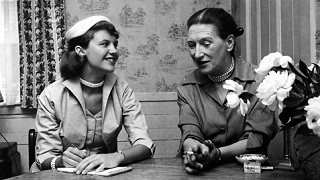
Hier met een jonge Sylvia Plath (links) tijdens een interview


Zie voor nog meer schrijvers van de 7e juni ook mijn blog van 7 juni 2015 deel 2.

Geschreven door Romenu om 18:27 Reageer op dit bericht

Meer van Romenu

↑ Terug naar de berichten