Naar de inhoud

Romenu

Over literatuur, gedichten, kunst en cultuur
akke.beakke.be

Berichten van 10 juni 2017 tot 11 juni 2017

William Styron, Sophie van der Stap, N. P. van Wyk Louw, Renée Vivien, Jean-Pierre Chabrol, Ben Jonson, Yasunari Kawabata
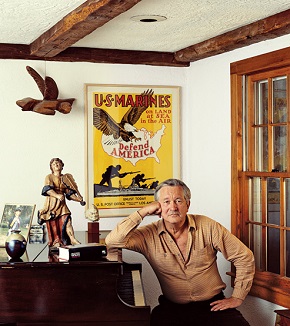
De Amerikaanse schrijver William Styron werd op 11 juni 1925 in Newport News in de staat Virginia geboren. Zie ook alle tags voor William Styron op dit blog.

Uit: Darkness Visible

“I felt a kind of numbness, an enervation, but more particularly an odd fragility—as if my body had actually become frail, hypersensitive and somehow disjointed and clumsy, lacking normal coordination. And soon I was in the throes of a pervasive hypochondria. Nothing felt quite right with my corporeal self there were twitches and pains, sometimes intermittent, often seemingly constant, that seemed to presage all sorts of dire infirmities. (Given these signs, one can understand how, as far back as the seventeenth century-in the notes of contemporary physicians, and in the perceptions of John Dryden and others—a connection is made between melancholia and hypochondria; the words are often interchangeable, and so were used until the nineteenth century by writers as various as Sir Walter Scott and the Brontes, who also linked melancholy to a preoccupation with bodily ills.) It is easy to see how this condition is part of the psyche’s apparatus of defense: unwilling to accept its own gathering deterioration, the mind announces to its indwelling consciousness that it is the body with its perhaps correctable defects—not the precious and irreplaceable mind—that is going haywire. In my case, the overall effect was immensely disturbing, augmenting the anxiety that was by now never quite absent from my waking hours and fueling still another strange behavior pattern—a fidgety recklessness that kept me on the move, somewhat to the perplexity of my family and friends.
…By now I had moved back to my house in Connecticut. It was October, and one of the unforgettable features of this stage of my disorder was the way in which my own farmhouse, my beloved home for thirty years, took on for me at that point when my spirits regularly sank to their nadir an almost palpable quality of ominousness. The fading evening light—akin to that famous “slant of light” of Emily Dickinson’s, which spoke to her of death, of chill extinction—had none of its familiar autumnal loveliness, but ensnared me in a suffocating gloom. I wondered how this friendly place, teeming with such memories of (again in her words) “Lads and Girls,” of “laughter and ability and Sighing,/ And frocks and Curls,” could almost perceptibly seem so hostile and forbidding. Physically, I was not alone. As always Rose was present and listened with unflagging patience to my complaints. But I felt an immense and aching solitude. I could no longer concentrate during those afternoon hours, which for years had been my working time, and the act of writing itself, becoming more and more difficult and exhausting, stalled, then finally ceased.”


 2045367-223d789a795ab12fff16d1ee44777ce2.jpg
William Styron (11 juni 1925 – 1 november 2006)


De Nederlandse schrijfster Sophie van der Stap werd geboren in Amsterdam op 11 juni 1983. Zie ook alle tags voor Sophie van der Stap op dit blog.

Uit: The Girl With Nine Wigs (Vertaald door Charlotte Caroline Jongejan)

« He calmly acknowledges me as I stand up. A teenager. I can practically see the thought forming in his mind as he looks at me. But to me he looks like a dream: handsome face, nice hands, fortysomething. Finally, my Grey's Anatomy fantasy is becoming a reality. Who knew that a hospital would turn out to be a great place for a single girl like me? I abandon my mom in the waiting room and follow him, gingerly, down the hall.
As my details are taken down for what feels like the hundredth time — amid all these technologically advanced supermachines, they still can't keep track of my records — I take advantage of this time and study Dr. McDreamy more closely. His nametag says DR. K, PULMONARY SPECIALIST. I'm guessing early forties. Charming, handsome, and smart: a playboy or happily married in the suburbs? Or maybe both? Better Google him later. A white coat can be misleading, but shoes never lie. Brogues, black leather. Hmm. ... Not bad, not great either. Not much to go on, but given his age I decide to give him the benefit of the doubt.
He tells me to take a seat and asks me to lift up my top. I'm allowed to keep on my bra. He places a cold metal stethoscope against my chest, and then on my back.
He listens, I sigh.
I sigh, he listens.
I listen, he sighs.
"Something isn't quite right," he says. His words don't scare me. In fact, I'm even a bit relieved. It's been blatantly clear for a long time that something's wrong; finally, someone else is catching on. Handsome and smart. Dr. K might be the answer to this Kafkaesque hospital. At last I'll get a diagnosis, some pills in a jar, and back to normal life.”


 2045367-87dee3b5d8f8d989dd03c7a31fee53d5.jpg
Sophie van der Stap (Amsterdam, 11 juni 1983)


De Zuid-Afrikaans schrijver en dichter Nicolaas Petrus van Wyk Louw werd geboren in Sutherland op 11 juni 1906. Zie ook alle tags voor N. P. van Wyk Louw op dit blog.


Ballade van die Nagtelike Ure

Ons liefde het uitgeblom
tussen elfuur en kwart oor twee -
hier sit ek onder die dagbreek
half-nugter en verlee

op koel stoeptreetjies êrens
waar ek 'n blink waterkraan sien
in die ure van die donker dors
tussen twaalfuur en smôrens om tien.

Om elfuur was jou liggaam
die honger en dors in my,
as jou skewe papier-kalot
ver deur die danssaal gly.

Om twaalfuur was jy 'n ligte brug,
'n hoë, gevaarlike gang
bo my klein verwildering
tussen pyn en sterwe gehang.

Om eenuur was jou hare
vir my vingers 'n bose strik,
en jou lyf soos swart still water
en jou asem soos 'n snik.

En nou het die môre my
oor die rand van sy glas gemors
op die stoep by die kraan wat blink
in die uur van die donker dors.


 2045367-e37efe49bb8cabaa7540f0f177bbbb1d.jpg
N. P. van Wyk Louw (11 juni 1906 – 18 juni 1970)


De Britse dichteres en schrijfster Renée Vivien (eig. Pauline Mary Tarn) werd geboren op 11 juni 1877 in Londen. Zie ook alle tags voor Renée Vivien op dit blog.


I have ruined my heart

I have ruined my heart, devastated my soul
And a beggar of love is what I am today:
The memories, like filthy vermin, take their toll,
Gnaw at me in the implacable face of day.
I have ruined my heart, devastated my soul
And of fate, I implore shamefully, without cease,
A reflection of your eyes: a divine caprice;
O fugitive form, perfumed pallor that hovers
So prodigal, so abundant among lovers!

I have looked endlessly for your gaze in strange eyes,
I have searched for your kiss on ephemeral lips;
Like a vine in the orchard, flushed by the sun's rise,
Floating on Bacchic laughter which rises and dips,
I have looked endlessly for your gaze in strange eyes
Without freeing my heart from your harsh caresses.
And thus, like the sighing of plaintive mistresses
Who weep at night for a summer without return,
In laments I hear echos of love-words which yearn.

O form so fugitive, O pallor so perfumed,
Inconstant sweetness which destiny sought to cease,
Abundant and prodigal lover who once bloomed,
I have lost your sweet smile to the divine caprice;
O form so fugitive, O pallor so perfumed,
You have turned me to a beggar of love today
Exposed in the implacable face of the day
The stark grief of wretched misery takes its toll...
I have ruined my heart, devastated my soul.


 2045367-4dc063ac4dee2545fdfddd379ce38f1f.jpg
Renée Vivien (11 juni 1877 – 10 november 1909)
Cover


De Franse schrijver Jean-Pierre Chabrol werd geboren op 11 juni 1925 in Chamborigaud. Zie ook alle tags voor Jean-Pierre Chabrol op dit blog.

Uit:Fleur d'épine

“— Quel âge ça lui fera maintenant, à l'Ours-Lion ? Ils se carrent, prennent leur souffle, prennent leur distance. La buire de terre garde le café à portée de flammes, au fond de l'âtre. Le velours des pantalons roucoule. Un genou craque. Sous la table, Flambeau aboie trois fois, drôlement : jappe-ments plaintifs, courts, suivis, chacun, d'un grondement étouffé. Flambeau rêve, les hommes sourient. Le sanglier est suspendu par les pattes do derrière dans la casetta 1, avec deux charges de chevrotines dans le corps. La première, dans le museau, l'a retourné. La deuxième, dans le coeur, l'a roulé sur la pente du maquis, de bruyères en rochers, jusqu'au buisson de lentisques où il a fini la course de sa vie. Il était trop tard quand les chasseurs l'ont remonté du fleuve. Ce sera demain, à l'aube, la fête du dépeçage, de la charcuterie, et les enfants pourront jouer au ballon avec les poumons. Dolinda lave les assiettes sur la pierre du coin noir et, parfois, son coude fait tinter les seaux. Dom Petru sort. La lune flatte la casetta. En salut, Dom Petru s'étire puis bâille, avec des variations. Les montagnes sont en étain. A leur pied, deux collines forment hausse. On peut viser la mer, la mer, jour et nuit couleur de ciel, la mer, coup de faux dans les étoiles. Demain il fera clair. On verra là-bas l'île d'Elbe, l'île Pianosa, l'île de Monte Cristo, on devinera la côte italienne. Dom Petru ramasse un moignon d'olivier et il entre : — Demain, il fera beau. Avant qu'il ait refermé la porte,”


 2045367-e9c9f90608cbbdc85add84fee61793a1.jpg
Jean-Pierre Chabrol (11 juni 1925 – 1 december 2001)
Cover


De Engelse dichter en schrijver Ben Jonson werd geboren rond 11 juni 1572 in Westminster, Londen. Zie ook alle tags voor Ben Jonson op dit blog.


An Ode To Himself

Where dost thou careless lie,
Buried in ease and sloth?
Knowledge that sleeps doth die;
And this security,
It is the common moth
That eats on wits and arts, and oft destroys them both.

Are all th' Aonian springs
Dried up? lies Thespia waste?
Doth Clarius' harp want strings,
That not a nymph now sings?
Or droop they as disgrac'd,
To see their seats and bowers by chatt'ring pies defac'd?

If hence thy silence be,
As 'tis too just a cause,
Let this thought quicken thee:
Minds that are great and free
Should not on fortune pause;
'Tis crown enough to virtue still, her own applause.

What though the greedy fry
Be taken with false baites
Of worded balladry,
And think it poesy?
They die with their conceits,
And only piteous scorn upon their folly waits.

Then take in hand thy lyre,
Strike in thy proper strain,
With Japhet's line aspire
Sol's chariot for new fire,
To give the world again;
Who aided him will thee, the issue of Jove's brain.

And since our dainty age
Cannot endure reproof,
Make not thyself a page
To that strumpet, the stage,
But sing high and aloof,
Safe from the wolf's black jaw and the dull ass's hoof.


 2045367-90b0e5d80e65b04fb36ee0879a0ce8a2.jpg
Ben Jonson (ca. 11 juni 1572 – 6 augustus 1637) 
Naar een portret van Abraham van Blijenberch, ca. 1617


De Japanse schrijver Yasunari Kawabata werd geboren op 11 juni 1899 in Osaka. Zie ook alle tags voor Yasunari Kawabata op dit blog.

Uit: Snow Country (Vertaald door Edward Seidensticker)

“In any case, he had revised his view of her, and he had found, surprisingly, that her being a geisha made it even more difficult for him to be free and open with her.
Dead-drunk that night, she had savagely bitten her half-paralyzed arm in a ɹt of irritation at its recalcitrance. “What’s the matter with you? Damn you, damn you. Lazy, worthless.
What’s the matter with you?”
And, unable to stand, she had rolled from side to side. “I’ll never have any regrets. But I’m not that sort of woman. I’m not that sort of woman.”
“The midnight for Tokyo.” The woman seemed to sense his hesitation, and she spoke as if to push iaway. At the sound of the train whistle she stood up. Roughly throwing open a paper-paneled door and the window behind it, she sat down on the sill with her body thrown back against the railing. The train moved oʃ into the distance, its echo fading into a sound as of the night wind. Cold air flooded the room.
“Have you lost your mind?” Shimamura too went over to the window. The air was still, without a suggestion of wind.
It was a stern night landscape. The sound of the freezing of snow over the land seemed to roar deep into the earth. There was no moon. The stars, almost too many of them to be true, came forward so brightly that it was as if they were falling with the swiftness of the void. As the stars came nearer, the sky retreated deeper and deeper into the night color. The layers of the Border Range, indistinguishable one from another, cast their heaviness at the skirt of the starry sky in a blackness grave and somber enough to communicate their mass. The whole of the night scene came together in a clear, tranquil harmony.
As she sensed Shimamura’s approach, the woman fell over with her breast against the railing. There was no hint of weakness in the pose. Rather, against the night, it was the strongest and most stubborn she could have taken. So we have to go through that again, thought Shimamura.
Black though the mountains were, they seemed at that moment brilliant with the color of the snow. They seemed to him somehow transparent, somehow lonely. The harmonybetween sky and mountains was lost.“

 2045367-0b3f3e0f99582d4c3c95b66d15ae9aaf.gif
Yasunari Kawabata (11 juni 1899 — 16 april 1972)
Filmposter


Zie voor nog meer schrijvers van de 11e juni ook mijn vorige blog van vandaag.
Geschreven door Romenu om 10:31 Reageer op dit bericht

Athol Fugard, Nnimmo Bassey, Jules Vallès, George Wither, Barnabe Googe

De Zuidafrikaanse schrijver Harold Athol Lannigan Fugard werd geboren op 11 juni 1932 in Middelburg, Kaapprovincie. Zie ook alle tags voor Athol Fugard op dit blog.

Uit: Hello And Goodbye

„HESTER. Ja, that's right.
JOHNNIE. YOU will?
HESTER [ignoring his question]. You were always daring me. You used to find it—the thing you were too scared to do, and dare me, and watch while I did it and got into trouble. That's what you want, hey? You and him. `Hester's in trouble again, Pa!'
JOHNNIE. You won't?
HESTER. No. [She goes back to the papers.]
JOHNNIE [to himself]. Too much to hope for.
HESTER. You won't get rid of me that easily.
JOHNNIE. But I tried. Whatever happens nobody can say I didn't try. Be brave.
HESTER [readingfrom one of the papers]. 'Johannes Albertus Smit.' That's you.
JOHNNIE. Yes, in full. What's it say?
HESTER [scanning the letter]. 'Your application. . . The Kroonstad Railway School. From the Principal. Saying they accept your application to be a learner-stoker. And a second-class voucher to get there. November, 1958.
JOHNNIE. Too late now.
HESTER. But you said you tore up your application.
JOHNNIE. That's right.
HESTER. Because you didn't want to go.
JOHNNIE. So?
HESTER. So here he says he got your application.
JOHNNIE. These things happen. [Pause. Hester thinks about this.]
HESTER. No. No, they don't. He wouldn't tell you to come if you didn't have asked him if you could come.
JOHNNIE. Where does that get us?
HESTER. You did post that application.
JOHNNIE. I see.
HESTER. But you told me you didn't."


 2045365-d41d7b307ac5c3650558883ad087db5d.jpg
Athol Fugard (Middelburg (ZA), 11 juni 1932)
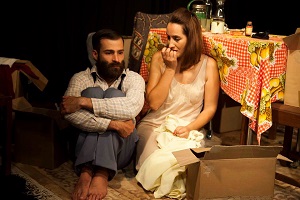
Scene uit een opvoering in Kaapstad, 2014


De Nigeriaanse dichter, schrijver, architect, en milieuactivist Nnimmo Bassey werd geboren in Akwa Ibom op 11 juni 1958. Zie ook alle tags voor Nnimmo Bassey op dit blog.


To Cook A Continent

First it was the Ogonis
Today it is the Ijaws
Who will be slain this next day?
We see open mouths
But hear no screams
Tears don't flow
When you are scarred
We stand in pools
Up to our knees

We thought it was oil
But it was blood

We thought it was oil
But it was blood

Dried tear bags
Polluted streams
Things are real
When found in dreams
We see their shells
Behind military shields
Evil, horrible, gallows called oilrigs
Drilling our souls

We thought it was oil
But it was blood

We thought it was oil
But it was blood

The heavens are open
Above our heads


 2045365-8d1b60f39b26e69a143c31c7f23be8d0.jpg
Nnimmo Bassey (Akwa Ibom, 11 juni 1958)


De Franse schrijver Jules Vallès werd geboren op 11 juni 1832 in Puy-en-Velay, Haute-Loire. Zie ook alle tags voor Jules Vallès op dit blog.

Uit: Les Victimes du Livre

"Pas une de nos émotions n’est franche.
Joies, douleurs, amours, vengeances, nos sanglots, nos rires, les passions, les crimes ; tout est copié, tout !
Le Livre est là.
L’encre surnage sur cette mer de sang et de larmes !
Cela est souvent gai, quelquefois triste. Mais à travers les débris, les fleurs, les vies ratées, les morts voulues, le Livre, toujours le Livre !
« Cherchez la femme, » disait un juge. C’est le volume que je cherche, moi : le chapitre, la page, le mot…
Combien j’en sais dont tel passage lu un matin a dominé, défait ou refait, perdu ou sauvé l’existence !
Une pensée traduite du chinois ou du grec, prise à Sénèque ou à saint Grégoire, a décidé d’un avenir, pesé sur un caractère, entraîné une destinée. Quelquefois le traducteur s’était trompé, et la vie d’un homme pivotait sur un contresens.
Souvent, presque toujours, la victime a vu de travers, choisi à faux, et le Livre la traîne après lui, vous faisant d’un poltron un crâneur, d’un bon jeune homme un mauvais garçon, d’un poitrinaire un coureur d’orgies, un buveur de sang d’un buveur de lait, une tête-pâle d’une queue rouge. Tyrannie comique de l’Imprimé !
D’où vient cela ?
Je ne sais ; mais l’influence est là ! Tous la subissent, jusqu’à nous, les corrompus, qui lisons mieux sur la mise en page que sur le manuscrit, et croyons plutôt que c’est arrivé.
Joignez à cette autorité de l’imprimé l’intérêt du roman. Que l’écrivain ou l’écrivailleur ait donné à ses personnages une physionomie saisissante, dans le mal ou le bien, sur une des routes que montre Hercule, moine ou bandit, ange ou démon ! et c’en est fait du simple ou du fanfaron sur qui le bouquin tombera."


 2045365-8e6fb26a617d0ee36c2550bee80aeb54.jpg
Jules Vallès (11 juni 1832 – 14 februari 1885)
Portret door Gustave Courbet, 1860


De Engelse dichter en satiricus George Wither werd geboren op 11 juni 1588 in Bentworth. Zie ook alle tags voor George Wither op dit blog.


The Lord is King

The Lord is King, and weareth
A robe of glory bright:
He clothed with strength appeareth,
And girt with powerful might.

The earth He hath so grounded
That moved it cannot be;
His throne long since was founded,
More old than time is He.

The waters highly flowed,
And raised their voice, O Lord;
The seas their fury showed,
And loud their billows roar'd.

But God in strength excelleth
Strong seas and powerful deeps;
With Him all pureness dwelleth,
And firm His truth He keeps.


 2045365-56a959dddd7535d9e3fca13a6c34e0e6.JPG
George Wither (11 juni 1588 – 2 mei 1667)
Ivall’s Farm, cottage in Bentworth


De Engelse dichter en vertaler Barnabe Googe werd geboren op 11 juni 1540 in Londen of Kent. Zie ook alle tags voor Barnabe Googe op dit blog.


Coming Homeward Out Of Spain

O raging seas, and Mighty Neptune's reign,
In monstrous hills that throwest thyself so high,
That with thy floods dost beat the shores of Spain,
And break the cliffs that dare the force envy;
Cedase now thy rage and lay thine ire aside.
And thou that hast the governance of all,
O mighty God! grant weather, wind and tide,
Till in my country coast our anchor fall.


 2045365-74e2763fa0ca7be28a5c5c430527183e.jpeg
Barnabe Googe (11 juni 1540 – 1594)
Cover

Geschreven door Romenu om 10:30 Reageer op dit bericht

Louis Couperus, Jacques Perk, James Salter, Mensje van Keulen, Jan Brokken, Saul Bellow

De Nederlandse schrijver Louis Couperus werd op 10 juni 1863 geboren in Den Haag. Zie ook alle tags voor Louis Couperus op dit blog.

Uit: Langs lijnen van geleidelijkheid.

“Het pension van de marchesa Belloni was gelegen in een van de gezondste, zoo niet dichterlijkste wijken van Rome: de helft van het huis was een gedeelte van een villino der oude Ludovisi-tuinen; de oude mooie tuinen, betreurd door een ieder, die ze gekend had, vóór de nieuwe kazernewijken verrezen waren, waar eerst het Romeinsche villa-park zich had uitgestrekt. Het pension stond in de Via Lombardia; het oude villino-gedeelte had voor de locataires van de marchesa zekere antieke bekoring gehouden, en het nieuw aangebouwde perceel bood aan: ruime kamers, moderne waterleiding en electrisch licht. Het pension had een zekere reputatie van goed en goedkoop en aangenaam gelegen te zijn; enkele minuten wandelens van den Pincio af, hoog gelegen, behoefde men er niet voor malaria te vreezen, en de prijs, dien men er voor een langer verblijf betaalde, en die acht lire nauw-lijks te boven ging was buitengewoon voor Rome, bekend als duurder dan iedere andere Italiaansche stad. Zoo was het pension dan ook meestal vol: de reizigers kwamen reeds in October - die het vroegst in den season kwamen, betaalden het minst; en behalve enkele haastige toeristen, bleven zij meest allen tot Paschen, om na de groote kerkfeesten naar Napels af te zakken.
Het pension was door Engelsche reiskennissen zeer aanbevolen aan Cornélie De Retz van Loo, die alleen in Italië reisde, en uit Florence geschreven had aan de marchesa Belloni. Het was de eerste keer, dat zij in Italië reisde; het was de eerste keer, dat zij uitstapte aan het groote holle station bij de Thermen van Diocletianus, en op het plein, in de gouden zonnelucht van Rome, terwijl de groote fontein van de Acqua Marcia ruischte, en de koetsiers klapperden met de zweepen en met de tong - om haar aandacht te trekken - kreeg zij hare ‘lieve Italiaansche sensatie’, zooals zij dacht, en was blij in Rome te zijn.
Zij zag een oud moeilijk loopend mannetje op haar toe komen, met het instinct van een oud-gedienden portier, die zijn reizigers dadelijk herkent, en zij zag op zijn pet: Hôtel Belloni, en wenkte hem, en glimlachte. Hij begroette haar als een oude kennis, met familiariteit en eerbied tegelijk, als was hij blij haar te zien - vroeg of zij prettig gereisd had, of zij niet moê was, geleidde haar naar de victoria, schikte haar plaid, haar valies, vroeg het biljet van hare koffers, en zeide, dat zij maar gaan moest: in tien minuten volgde hij met de bagage. Zij kreeg een gevoel van gezelligheid, van verzorgd te worden door het oude hinkende mannetje, en knikte hem vriendelijk toe, terwijl de koetsier wegreed. Zij gevoelde zich licht en luchtig, met even den weemoed van iets onbekends, dat haar gebeuren ging: en zij zag links en rechts, als om nu te zien de straten van Rome: zij zag alleen maar huizen en huizen, kazernehuizen; toen een groot wit paleis: het nieuwe Palazzo Piombino - waar zij wist, dat de Juno Ludovisi was - en toen hield hij stil, en een knoopenjongetje kwam naar haar toe.”


 2045115-938fc1c76a16add7401d13059627b468.jpg
Louis Couperus (10 juni 1863 – 16 juli 1923)
Hier met zijn hond Brinio


De Nederlandse dichter Jacques Fabrice Herman Perk werd geboren in Dordrecht op 10 juni 1859. Zie ook alle tags voor Jacques Perk op dit blog.


Sluimer

Stil! - Duizendogig spiegelt zich in 't meer
De nacht, en laat haar bleke luchter beven,
Die gloeiend witte glanzen heen doet zweven
Om 't, rond de diepte reiend, rotsenheer.

En Sluimer daalt op vlinderwieken neer,
Met wuivend rijs, waaraan de druppen beven,
Die dauwend droom en zoet vergeten geven,
En zweeft in schaduw peinzend heen en weer.

En in mijn dolend hulkje, dat er glijdt
Langs 't kabblend zilver, zet hij zich; ik zie
Hem tederblikkend over mij gebogen.

Hij lacht mij aan, ontplooit de wieken wijd...
Ik hoor een sluimerende melodie,
En weet niet wat mij loodzwaar viel op de ogen...


Sanctissima virgo

't Was bladstil, en een lauwe loomheid lag
En woog op beemd en dorre wei, die dorstten;
Zwaar zeeg en zonder licht een vale dag
Uit wolken, die gezwollen onweer torsten.

Toen is het zwijgend zwerk uit-een-geborsten,
En knetterende donders, slag op slag,
Verrommelden en gromden. Vol ontzag,
Look ik mijne ogen, die niet ogen dorsten:

Een schelle schicht schoot schichtig uit den hogen,
En sloeg mij. Ik bezwijmde... ontwaakte, en zag
De lucht geschraagd door duizend kleurenbogen.

Daarboven, in een kolk van licht te pralen,
Stond reuzengroot de Jonkvrouw, en een lach
Voelde ik van haar verengeld aanschijn stralen.


De schietbeek

(XVII)
In 't brede lommer van de lage bomen
Glipt, glipt het beekje langs de holle boorden:
Het streelt de blonde bloemen aan zijn zomen,
En zingt een lied vol murmelende akkoorden.

Toen kost gij, lieve, uw lust niet meer betomen
Maar waadde door de golfjes, die bekoorden:
Zij wijken, nu zij bij uw voetjes komen,
En kussend fluisteren zij liefdewoorden.

Hoe fronsen zich die gladde rozenvoeten
In 't rimpelend kristal.... O, laat mij beiden,
Om met een voetkus mijn vorstin te groeten!...

En 'k liet het linnen van haar voeten drinken
Het water, wenend om het wreed verscheiden,
En zag haar oog van frisse blijheid blinken. -


 2045115-16c5f5ac0eaefa688331050dfd992d3c.gif
Jacques Perk (10 juni 1859 - 1 november 1881)
Portret door Herman van der Voort in de Betouw, 1870


De Amerikaanse schrijver James Salter werd op 10 juni 1925 in New York geboren. Zie ook alle tags voor James Salter op dit blog.

Uit: There and Then

“A few summers ago, searching for dinosaur excavations, we stopped in a little town named DeBeque in western Colorado. There was a grocery store, an old garage, a post office, and a bar. No one seemed to know anything about dinosaurs although they had an alleged forty-million-year-old tortoise fossil, turned up during road construction, in the garage. "Why don't you go and talk to Armand DeBeque?" they said.
Armand DeBeque lived in a well-kept house at the edge of town but he wasn't there. We found him at the high school where he taught journalism. He was working on the yearbook. He was sixty-eight and the son of a man who had founded DeBeque as part of a land grant given out after the Civil War. His father had fought in that war. Your grandfather, I suggested. No, his father, he said. His father had been born in 1840 and was seventy-two years old at the birth of his son. In one leap the entire history of the state, almost of the West, was spanned.
Colorado lies in two parts. The eastern half is flat, part of the great, fertile heartland that feeds the nation. Denver is the last city of the plains. From its hotel windows, to the west, the mountains rise like a wall. These are the Rockies. Beneath the mountains lies the great reef of silver upon which the mining towns were built. Almost everything was done by hand in these remote locations—trees felled, tunnels dug, shafts and galleries timbered. Sometimes you find the remains of mines with weathered piles of tailings deep in the wilderness. On the way to Crested Butte from Aspen, over the mountains, there are several. It is difficult to imagine such backbreaking labors far from any road or town, but then one remembers the purity of the ore and the size of the nuggets that were sometimes found: in one celebrated case, almost twenty-one hundred pounds of pure silver.
Walking to Crested Butte takes a day. The path at the beginning, in the early morning, is narrow but defined. Gradually it begins to fade and finally, above timberline, to wander aimlessly through high meadows, though the final rocky trail over the pass is plain. The air is thin at this height. One's eyes feel dry; the skin itches. All around is wilderness and fever-blue sky. A friend of mine once encountered two women walking with difficulty toward him near the top of the pass. Jehovah's Witnesses, they were wearing high heels. They wanted to know if this was the way to town.”


 2045115-0bf2ac9174e67f1d54312a6479fe7a5b.jpg
James Salter (10 juni 1925 – 19 juni 2015)


De Nederlandse schrijfster Mensje van Keulen werd op 10 juni 1946 geboren in Den Haag. Zie ook alle tags voor Mensje van Keulen op dit blog.

Uit: In het donker

‘‘Benno is een fantastische kat. Als ik het huis binnenga, staat hij me op te wachten en begint meteen te spinnen. Het is jammer dat jij niet tegen katten kan, ik zou er graag een willen.’
‘Voor honden ben ik niet allergisch. We zouden een hondje kunnen overwegen, ik heb het je eerder gezegd.’
‘Weet je hoe heerlijk het voelt als je een kat aait?’
‘Die je vervolgens openhaalt.’
“Daar kon hij niks aan doen.’
Opnieuw het geluid van een naderende wagen.
‘Nog meer onschuldige schepsels naar de slachtbank,’ zegt ze. ‘Is het binnenkort soms weer offerfeest? Ooit hadden we een wet die bepaalde dat dieren niet moesten lijden als ze voor de slacht gedood werden. Maar ook op die school van jou krijgen ze voor het gemak tegenwoordig allemaal maar halal worst en kaas waarvoor kalveren zonder verdoving moeten leegbloeden. Arabieren schijnen eerst de pezen van de achterpoten van koeien door te snijden zodat de dieren niet kunnen wegrennen.’
‘Je moet oppassen met dat soort opmerkingen.’
‘En wees jij niet zo politiek correct. Dat zijn degenen die het meest liegen.’

 2045115-4df3564b851ca6bd9be373dcf5f5803a.JPG
Mensje van Keulen (Den Haag, 10 juni 1946)


De Nederlandse schrijver Jan Brokken werd geboren op 10 juni 1949 in Leiden. Zie ook alle tags voor Jan Brokken op dit blog.

Uit:De gloed van Sint-Petersburg

“Toen ik in 1975 voor het eerst van mijn leven in Leningrad verbleef, was het nog maar negen jaar geleden dat Anna Achmatova de laatste adem had uitgeblazen. Haar invloed was nog altijd merkbaar in de stad, maar om geen problemen met de autoriteiten te krijgen kon je haar naam beter niet uitspreken in het openbaar. Echt verboden was haar werk niet langer, een op de tien bewoners van Leningrad kon haar verzencyclus Requiem uit het hoofd declameren – schat ik – en toch riep haar naam nog altijd het vermoeden van protest en dissidentie op. De volledige, ongecensureerde versie van Requiem zou pas vele jaren later in de Sovjet-Unie verschijnen, in 1987; Anna Achmatova zat nog half in het verdomhoekje.
De laatste jaren voor haar dood had ze als een gevangene geleefd, afgeschermd en afgesloten van de wereld. De voornaamste reden dat haar volgeling Joseph Brodsky als persona non grata op een vliegtuig naar de Verenigde Staten werd gezet, was zijn veelvuldig contact met Achmatova geweest, tegen de wens van de autoriteiten in. Hij deed er alles aan om de poëzie van Achmatova onder een breed publiek te verspreiden en stak niet onder stoelen of banken dat hij haar vereerde als de grootste Russische dichter sinds Poesjkin. Dat streelde het ego van de dichteres. Achmatova had de jongeman als het even kon iedere dag ontvangen, mede omdat hij haar onophoudelijk aan de vermoorde Osip Mandelstam deed denken. Met Mandelstam had ze een band gehad die het begrip en de genegenheid verre oversteeg: zij leken een en dezelfde dichtersziel te delen.
Veertig jaren zijn voorbijgegaan sinds mijn eerste bezoek aan de stad. Op zondag 22 februari 2015 loop ik over de Voskresenskaja, de Opstandingskade die voorheen Robespierrekade heette, langs de Neva in de richting van de Smolnykathedraal.
De sneeuw knerpt onder mijn schoenzolen. Het is zo koud dat de lucht die ik inadem als een mes in mijn longen snijdt. Brede rijen auto’s denderen over de wit uitgeslagen weg langs de rivier; door het geratel van hun spijkerbanden lijken geweren af te gaan. Ik zet de capuchon van mijn anorak op, trek de sjaal rond mijn kraag strakker aan en sta bij het metrostation Tsjernysjevskaja plotseling voor het standbeeld van Anna Achmatova.”


 2045115-e69b65cbf236b3cd778506076c700b54.png
Jan Brokken (Leiden, 10 juni 1949)
Cover 


De joods-Amerikaanse schrijver Saul Bellow werd geboren op 10 juni 1915 te Lachine, een voorstad van Montreal. Zie ook alle tags voor Saul Bellow op dit blog.

Uit: The Adventures of Augie March

“Simon was a blond boy with big cheekbones and wide gray eyes and had the arms of a cricketer—I go by the illustrations; we never played anything but softball. Opposed to his British style was his patriotic anger at George III. The mayor was at that time ordering the schoolboard to get history books that dealt more harshly with the king, and Simon was very hot at Cornwallis. I admired this patriotic flash, his terrific personal wrath at the general, and his satisfaction over his surrender at Yorktown, which would often come over him at lunch while we ate our bologna sandwiches. Grandma had a piece of boiled chicken at noon, and sometimes there was the gizzard for bristleheaded little Georgie, who loved it and blew at the ridgy thing more to cherish than to cool it. But this martial true-blood pride of Simon’s disqualified him for the crafty task to be done at the dispensary; he was too disdainful to lie and might denounce everybody instead. I could be counted on to do the job, because I enjoyed it. I loved a piece of strategy. I had enthusiasms too; I had Simon’s, though there was never much meat in Cornwallis for me, and I had Grandma Lausch’s as well. As for the truth of these statements I was instructed to make—well, it was a fact that we had a boarder. Grandma Lausch was our boarder, not a relation at all. She was supported by two sons, one from Cincinnati and one from Racine, Wisconsin. The daughters-in-law did not want her, and she, the widow of a powerful Odessa businessman—a divinity over us, bald, whiskery, with a fat nose, greatly armored in a cutaway, a double-breasted vest, powerfully buttoned (his blue photo, enlarged and retouched by Mr. Lulov, hung in the parlor, doubled back between the portico columns of the full-length mirror, the dome of the stove beginning where his trunk ended)—she preferred to live with us, because for so many years she was used to direct a house, to command, to govern, to manage, scheme, devise, and intrigue in all her languages. She boasted French and German besides Russian, Polish, and Yiddish; and who but Mr. Lulov, the retouch artist from Division Street, could have tested her claim to French? And he was a serene bogus too, that triple-backboned gallant tea-drinker. Except that he had been a hackie in Paris, once, and if he told the truth about that might have known French among other things, like playing tunes on his teeth with a pencil or singing and keeping time with a handful of coins that he rattled by jigging his thumb along the table, and how to play chess.“


 2045115-91af0d5efc3bcfc5087af2af6e34b576.png
Saul Bellow (10 juni 1915 - 5 april 2005)


Zie voor nog meer schrijvers van de 10e juni ook mijn vorige blog van vandaag.

Geschreven door Romenu om 10:54 Reageer op dit bericht

Ion Creanga, Oktay Rifat, Peter Kurzeck, Antun Mihanović, Tijl Nuyts

De Roemeense schrijver Ion Creanga werd geboren op 10 juni 1839 in Humuleşti. Zie ook alle tags voor Ion Creanga op dit blog.

Uit: Memories of My Boyhood (Vertaald door Ana Cartianu en R.C. Johnston)

“One day what should come into the priest's head but to inspect our prayerbooks. Seeing them all bloodstained, he clutched his head in horror. As soon as he found out how they had got into this shocking state, he summoned each one of us in turn to Dapple-Grey's back and began to belabour us with St. Nicholas, bishop in partibus, as retribution for the pains the martyred flies and the holy bumble-bees had suffered at our hands.
Not long after this, one day in the month of May, close upon the Whitsun Moşi1 festival, the Evil One prompted Master Vasile, the blockhead, for I have no better word for him, to appoint a fellow called Nică, Costache's son, to test my knowledge. Nică, who was older than me and whose scholarship was a trifle more than non-existent, had quarrelled with me on account of little Smaranda, whom, one day, with every sign of regret, I had been forced to shove away because she would interfere with my catching flies. So Nică began to examine me, and just went on examining and examining and didn't he just score mistakes wholesale on a piece of shingle: one, two, three, and so on up to twenty-nine! "My word, this is past a joke," I said to myself. "He has not yet finished examining me, and think of all the mistakes to come!" All of a sudden, everything went black in front of me and I began to tremble with anger. "Well, well, I am in a hole! What's to be done about it?" I kept asking myself. Slyly I glanced at the door of salvation and kicked my heels impatiently, waiting for some loiterer outside to come in, for there was a school rule that two people should not walk out at the same time. My heart was fit to burst within me seeing that no one would come in and give me a chance of escaping mounting Dapple-Grey and receiving the blessing of St. Nicholas, that dispenser of black and blue.“


 2045110-b65f7204d12a8b0956a414120edbbd8e.jpeg
Ion Creanga (10 juni 1839 – 31 december 1889)
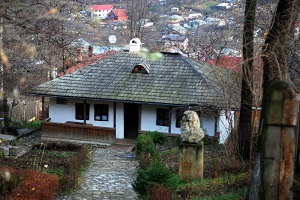
Het geboortehuis van Ion Creanga, nu museum


De Turkse dichter Oktay Rifat werd geboren op 10 juni 1914 in Trabzon. Zie ook alle tags voor Oktay Rifat op dit blog.


I Hoisted all my flags

I hoisted all my flags on the flagpoles,
I painted the city with my blood's hot colour.
I spread stones on the road that led to anger.
I levelled towers with the back of my hand.
I quartered love into east, west, north and south,
For the leaps from corner to corner.

My first grasshopper, key to my lock.

Fresh as spring sunshine, burgeoning hopes
That carry my joy on the branch.
Inside the light a different light,
Inside the fruit another seed
Empty all my taps, pour my rain
On darkness and fear and the old.

Hello to the torrents that flood down the hill to the plain!

I stand in the middle; days and nights,
Streets and houses, flow past me on both sides.
I am keener than a rust-free anchor, than the sky.
I spin tbe seasons like a top.
In one snap of the fingers I overturned loneliness, erased it.
Fed on my own milk I grow into immortality.

Grass on the earth, and trees, and wet tomorrows.


Vertaald door Ruth Christie


Freedom Has Hands

1
Our horses galloped foaming
to the calm sea.

2
What is this flight? Is it the dove's
joy of freedom?

3
It was forbidden to kiss, did you know
forbidden to think
forbidden to defend the work force.

4
They've picked the fruit from the tree
and they sell it in the market
for as much as they can get,
labor's broken branches on the ground.


Vertaald door Richard McKane


 2045110-db4afe7edca1269daf5d620f11efa6f6.jpg
Oktay Rifat (10 juni 1914 – 10 april 1988)


De Duitse schrijver Peter Kurzeck werd geboren op 10 juni 1943 in Tachau, Bohemen. Zie ook alle tags voor Peter Kurzeck op dit blog.

Uit: Ein Kirschkern im März

“Als Gast. Alle Abende mit meinem Leben unter dem Oberlichtfenster oder im leeren schweigenden Nebenzimmer. Am Anfang des Abends. Immer der gleiche Moment. Noch eben hell.
März, eine Amsel singt. Du bist müde und spürst, wie die Zeit an dir zieht. Wer bin ich? Und warum hier? Bevor du dich jedesmal wieder auf den Weg machst, deinem Kind gute Nacht sagen.
Carina ist viereinhalb. Ende November die Trennung. Vorher fristgerecht meine Arbeit verloren, eine unersetzliche Halbtagsstelle in einem Antiquariat. Kein Geld, keine Wohnung, kein Einkommen. Schriftsteller. Letzten Sommer mit meinem dritten Buch angefangen. Ende November die Trennung und von da an dann ganz zuletzt jede Nacht aus den überzähligen Matratzen ein Bett, ein Ersatzbett mir in unserem großen Zimmer. Mit Selbstgesprächen. Und immer noch fassungslos. In der Stille nach Mitternacht. Die Zeit, die mir bleibt. Dann spät im Januar für sechs Wochen in eine Abstellkammer in einer fremden Wohnung zwei Straßen weiter und als Spuk, als Gespenst, als Schatten vorerst in dieser Abstellkammer. Eine Trennung und noch keine Wörter dafür. Und hätte nicht gedacht, daß das zu mir und zu meinem Leben gehört. Das Jahr 1984. Frankfurt am Main.
Und als mir auch in der Abstellkammer nur noch drei letzte Tage blieben, sagte im Kinderladen ein anderer Vater zu mir: Du kannst bei uns wohnen. Auch länger. In der Eppsteiner Straße.
Du warst ja schon bei uns. Aber haben im gleichen Haus unterm Dach noch zwei Zimmer als Arbeitszimmer, sagt er, für Birgit und mich. Heizung. Bad dabei. Alles was du brauchst, sagt er. Platz genug. Er heißt Peter wie ich. Ende Februar. Ein heller Morgen. Wir stehen vor dem Kinderladen am Tor. Das besetzte Haus in der Siesmayerstraße. Dann am ersten März bei ihnen eingezogen. Und seither als Gast.“


 2045110-d7ba334027beb7d9b0dd8bb9958a971d.jpg
Peter Kurzeck (10 juni 1943 – 25 november 2013)


De Kroatische dichter en diplomaat Antun Mihanović werd geboren in Zagreb op 10 juni 1796. Zie ook alle tags voor Antun Mihanović op dit blog.


Notre belle patrie

Notre belle patrie,
Oh cher et héroïque pays,
Patrie à la gloire ancestrale,
Sois toujours heureuse !

Chère, autant que tu es glorieuse,
Toi seule nous est chère.
Chère, là où ton sol est plat,
Chère, là où il est montagneux.

Coule Drave, Save coule,
Toi non plus Danube, ne perd pas ta vigueur
Mer azur, va annoncer au monde
Qu'un Croate aime son peuple !

Tant que le soleil réchauffe sa terre labourée,
Tant que les tempêtes fouettent ses chênes,
Tant que les tombeaux cachent ses morts
Tant que bat son cœur vivant !


 2045110-fe0af5c517b21750eba2c49e7ac1281f.jpg
Antun Mihanović (10 juni 1798 – 14 november 1861)
Borstbeeld in Tuhelj


Onafhankelijk van geboortedata:

De Vlaamse dichter Tijl Nuyts werd geboren in 1993. Nuyts studeerde Engelse en Spaanse taal- en letterkunde en westerse literatuur. Momenteel werkt hij als assistent Spaanstalige literatuur aan de KU Leuven. Eerder verschenen korte verhalen, gedichten en essays van hem in onder meer Deus ex Machina, Kluger Hans, DW B, Streven, Oikos, Romaneske, Mvslim.com, Gierik & NVT. Bij uitgeverij Polis verschijnt in januari 2017 zijn eerste gedichtenbundel Anagrammen van een blote keizer.


aborg 2

het is bijna zoals italiaanse schilderijen
of flirten in een stomme film:
het gevaar de dingen te noemen

tussen handelspanden verzonken in
tijdloze kronkelstraten schrikt
een man op een stapel perzische tapijten wakker;
hij verontschuldigt zich voor zijn dutje:
‘hoofdpijn’, zegt hij

toen werd ik ziek, het was augustus
en terwijl zij beneden tevergeefs hun kleuren tonen
— paradijsvogels vol ‘origo ik ik ik!’ — plaats ik,
gebogen over scarabee en avondmaal,
een injectie in de bloedbaan van het denken

zij begrijpen niet dat wij niet
naar de woorden luisteren
maar naar hun eelt

daar staat hij, op het grasveld onder mijn raam: wilhelm kostrowicky;
als een kind dat vrienden zoekt om mee te fietsen

zijn snor stijf van de pommade, messen kwetterend in zijn handen
zijn stem een autoalarm in de stenen nachtlucht


 2045110-e0076d8ac5f04dbeb54452439bc4a252.jpg
Tijl Nuyts (1993)

Geschreven door Romenu om 10:53 Reageer op dit bericht

D. Hooijer

De Nederlands schrijfster D. Hooijer (pseudoniem van Catharina Antonetta (Kitty) Ruys-Krijgers Janzen) werd geboren in Hilversum op 10 juni 1939. D. Hooijer debuteerde in 2001 met de verhalenbundel “Kruik en Kling”. In 2004 verscheen haar tweede bundel “Zuidwester meningen”. De openingszinnen van het titelverhaal lijken programmatisch voor haar unieke stijl: 'Mensen die aan zee wonen hebben een bollere mening dan mensen in het binnenland. Dat komt door de zuidwester. Je moet ook harder praten in die wind en misschien korter.' Meer nog dan in haar debuut richtte Hooijer haar blik op de rafelranden van menselijk gedrag, op dat wat in alle onbeholpenheid aandoenlijk is. Haar stijl was pontificaal, laconiek, humoristisch en volstrekt persoonlijk. In 2008 werd Hooijer de Libris Literatuur Prijs toegekend voor haar derde bundel “Sleur is een roofdier”. De jury loofde de winnares aldus: "De auteur heeft alle registers van het vertellen opengetrokken. Dat leverde negen ongewone, fascinerende verhalen op, waarin niets vaststaat, afgerond of eenduidig is. In die verhalen heeft zij een delicaat evenwicht weten te vinden tussen vertelling en vertelwijze, tussen inhoud en vorm. Hooijer slaagt erin te verrassen, te ontroeren en te doen lachen". In 2009 verscheen Hooijers eerste roman “Catwalk”, waarover zij met een verwijzing naar een recensie in NRC Handelsblad over haar prijswinnende boek laconiek vaststelde 'Dat moest van Janet Luis'. Het bleek een on-Nederlandse 'sitcom' over gestorven echtgenoten, een stikwarme zomer in Nederland, modeshows, erfenissen, richtmicrofoons en seks op leeftijd. Haar tweede roman “De wanden van Oeverhorst” beschrijft het leven in 'een krap draaiende privé-inrichting met een wachtlijst' voor tijdelijk gestoorden. D. Hooijer staat ook bekend als illustrator van boeken. Voorheen schreef zij voornamelijk gedichten onder het pseudoniem “Milly Wiers” die werden gepubliceerd bij de kleine uitgeverij De Beuk en in De Revisor, maar die vonden weinig gehoor.

Uit: De zomer

“Op het Huis werden de tekenlessen ‘vrije expressie’ genoemd. Maar van zomaar expressie werden mijn leerlingen baldadig dus gaf ik ze algauw een straffe tekenles. Ik vroeg ze om hun ogen te gebruiken. Soms zong de hele klas met dichte ogen, ‘ik zie wat ik zie’, terwijl ze tastende gebaren maakten als van een blinde. Kleurenleer gaf ik ook omdat ze schrokken van geel over blauw of zwart over wit. Het waren heerlijke uren, iedereen schilderde mooi, iedereen hield van zijn eigen werk het allermeest en aan het eind van de les wilden ze pas weg als ik zei dat het papier nu moest drogen. We hingen de natte vellen in de tocht, in de wind eigenlijk want in die warme zomer stonden de ramen tegen elkaar open.
Het is niet mijn bedoeling om aan te tonen dat patiënten geniaal zijn of normaler dan hun arts, het gaat me om mevrouw Blakers die ons probeerde te belazeren, mij en de anderen, en die daarin geslaagd is.
Ik was labiel in die tijd en mijn eigen tekeningen waren een raadsel voor me maar ik maakte ze nu eenmaal: handen die op steunzolen voortliepen of omhooggestoken voeten met ringen en sigaretten tussen de tenen. Voeten en handen waren afzonderlijk te koop maar de mensen zochten altijd een voet en een hand bij elkaar op huidskleur of nagellak. Zo hadden ze nog net een beetje een persoon, zo werden ze naast elkaar in de kamer opgehangen.
Labiel dus, mijn leerlingen zagen het ook. Ze zeiden het niet hardop maar zodra er een ploeg studenten onze gang opkwam om te kijken hoe in deze goed bekendstaande inrichting therapie werd gegeven, riepen ze: ‘Jongens, allemaal zitten, u ook juffrouw Antoinette.’ En dan holden we naar onze tafeltjes en gingen zitten met de armen over elkaar. De studenten kwamen binnen, de leerlingen zaten te lachen en riepen dat het bezoek moest aanwijzen wíe hier de lessen gaf. En altijd werd mevrouw Blakers aangewezen. Ze was goed gekleed zonder aanstellerij. Haar manier van zitten gaf de doorslag, de armen voor zich op tafel en de handen losjes ineen. Lichaamstaal was nieuw in die tijd. De studenten zeiden dat ze aan mijn schouders zagen dat ik de juf niet was. Altijd wezen ze mevrouw Blakers aan. Een echte lerares maar géén tekenlerares. Wij tekenleraressen droegen vale truien met daaronder zichtbaar bij de wijde hals, zeker twee T-shirts in bestorven kleuren. Ons haar was dof van het terugkammen, maar de wimpers glommen olieachtig van de mascara. Zo worden we tegenwoordig niet aangenomen.
Mevrouw Blakers maakte van die eenvoudige, fleurige tekeningen. Maar toen er op een vergadering besloten werd dat ze naar huis kon, zei ik dat haar werk verontrustend was. Ik begon uit te leggen dat iets ook té fris kon zijn. We worden opgelicht, geen enkel hoofd is zo leeg en vrolijk tegelijk.”


 2144722-a3c69797f98bb64d1504d68c67fb3612.jpeg
D. Hooijer (10 juni 1939 – 25 september 2013)

Geschreven door Romenu om 00:00 Reageer op dit bericht

Meer van Romenu

↑ Terug naar de berichten