

Naar de inhoud

Romenu

Over literatuur, gedichten, kunst en cultuur
akke.beakke.be

Berichten van 3 juli 2017 tot 4 juli 2017

Neil Simon, Paul de Wispelaere, Christine Lavant, Sébastien Japrisot, Walter Wippersberg, Rob van Erkelens, Robert Desnos, Nathaniel Hawthorne, Lionel Trilling
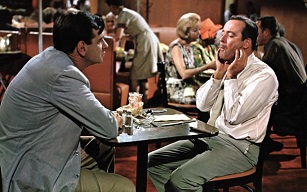
De Amerikaanse toneelschrijver Neil Simon werd in New York op 4 juli 1927 geboren. Zie ook alle tags voor Neil Simon op dit blog.

Uit: The Odd Couple

“ROY. She can do it, you know.
OSCAR. What?
ROY. Throw you in jail. For non-support of the kids.
OSCAR. Never. If she can't call me once a week to aggravate me, she's not happy. (Crosses to bar.) MURRAY. It doesn't bother you? That you can go to jail? Or that maybe your kids don't have enough clothe or enough to eat?
OSCAR. Murray . . . Poland could live for a year on what my kids leave over for lunch! . . . Can we play cards? (Refills drink.)
ROY. But that's the point. You shouldn't be in this kind of trouble. It's because you don't know how to man-age anything. I should know, I'm your accountant.
OSCAR. (Crossing to table.) If you're my accountant, how come I need money?
ROY. If you need money, how come you play poker?
OSCAR. Because I need money.
ROY. But you always lose.
OSCAR. That's why I need the money! . . . Listen, I'm not complaining. You're complaining. I get along all right. I'm living.
ROY. Alone? In eight dirty rooms?
OSCAR. If I win tonight, I'll buy a broom.
(MURRAY and SPEED buy chips from VINNIE, and Mtm-w begins to shuffle the deck for a game of draw.)
ROY. That's not what you need. What you need is a wife.
OSCAR. How can I afford a wife when I can't afford a broom?
ROY. Then don't play poker.
OSCAR. (Puts down drink, rushes to ROY and they struggle over the bag of potato chips, which rips showering EVERYONE, who ALt. begin to yell at one another.) Then don't come to my house and eat my potato chips?
MURRAY. What are you yelling about? We're playing a friendly game."


 2052602-f261bd767f9ed092759433314b570cb5.jpg
Neil Simon (New York, 4 juli 1927)
Jack Lemmon en Walter Matthau in de gelijknamige film uit 1968


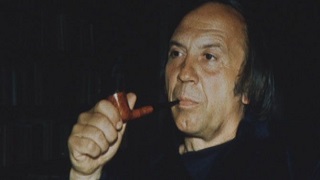
De Belgische schrijver, criticus en letterkundige Paul de Wispelaere werd geboren in Assebroek op 4 juli 1928. Zie ook alle tags voor Paul de Wispelaere op dit blog.

Uit:Romantiek en ironie bij Simon Vestdijk

“Vestdijks romantische aanleg en eklektische belangstelling gaat samen met een dialektisch en sterk kontrapunterend denken. Hoezeer dit ook in zijn essayistisch en kritisch werk het geval is, heeft J.J. Oversteegen overtuigend gedemonstreerd in de speciale aflevering van Raster. In de gesprekken met Nol Gregoor heeft Vestdijk zich zelf trouwens nadrukkelijk over zijn skeptische levenshouding uitgelaten: ‘Dat zal waarschijnlijk wel samenhangen met m'n sterke neiging tot relativisme, die dan door de schok, die ongeveer in 1925 Nietzsche bij mij teweegbracht, alleen maar in hoge mate versterkt kon worden, een breidelloos relativisme, dat tenslotte zo consequent kan worden dat het op zichzelf weer iets absolutistisch krijgt. Dat is wat Nietzsche perspectivisme noemt. Dat er wel misschien een waarheid bestaat, maar dat de waarheid voor het menselijke altijd vanuit een bepaald perspectief benaderd wordt zodat je eigenlijk niets met zekerheid kan weten. Zodat je eigenlijk alleen maar voor jezelf iets kan nastreven. En begrijpen en zien en opvatten.’ Ik blijf bij dit citaat even stilstaan omdat het zijn belang heeft meer bepaald voor Vestdijks opvatting van de historische roman. Het is bekend dat hij zich voor het schrijven van een historische roman zorgvuldig dokumenteert, maar het ophangen van een zgn. objektief beeld van een brok werkelijkheid uit het verleden (naar de wijze van Flaubert b.v.) is toch niet zijn hoofdbekommernis. Veeleer is hij als auteur geinteresseerd in de tegenstrijdige mogelijkheden die naast elkaar in hetzelfde wezen of dezelfde situatie verborgen liggen. Voor Vestdijk is het potentiële steeds belangrijker dan het werkelijke of verwezenlijkte. Van die aard is tenslotte ook het Proustiaanse Ina Damman-motief, dat in allerlei variaties overal in zijn werk te vinden is: voor Anton Wachter was de potentiële Ina Damman, de verbeeldingsmogelijkheden die van haar uitgingen, van meer waarde dan het werkelijke meisje dat hij op school ontmoette. Polyvalentie, in tema's en motieven zowel als in identiteit en gedragingen van de personages, kenmerkt vooral ook de meeste historische romans. Vandaar ongetwijfeld ook de keuze van hoofdpersonen over wie historisch weinig eksakte gegevens bestaan, zoals El Greco en Pilatus, of van tijdperken waar myte en geschiedschrijving nog door elkaar lopen, zoals het vóór-Homerische Griekenland.”
 

 2052602-07b8b2d835e3b3cda8dab4615dc7097c.jpg
Paul de Wispelaere (Assebroek, 4 juli 1928)


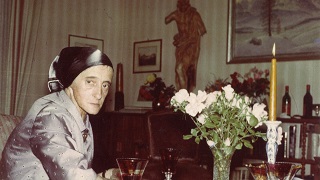
De Oostenrijkse dichteres, schrijfster en kunstenares Christine Lavant werd geboren op 4 juli 1915 in Groß-Edling als Christine Thonhauser. Zie ook mijn blog van 4 juli 2010 en eveneens alle tags voor Christine Lavant op dit blog.


Versuche den winzig gewordenen Mond

Versuche den winzig gewordenen Mond
aus dem Himmel zu blasen.
Dein Atem reicht nicht einmal dafür noch aus!
Wie willst du dann die aufgeloderte Sonne
über deinem Herzen kühler machen
oder gar sie verschieben?
Sage zu deinem Herzen, daß früher oder später
alle Hexen verbrennen müssen.
Auch die guten entgehen dem Feuer nicht,
weil Gott ihre magische Asche braucht,
um seine Erwählten damit zu salben.
Sage, er haßt diese Asche nicht,
weil sie trotz allem aus Unschuld kommt
und vielen gemeisterten Leiden.
Lehre, wenn du jetzt Atem holst,
dein Herz in die Mitte der Sonne treten
und tilge gänzlich aus deinem Blut
den Namen der Hölle.
Niemand glaubt dir das Wort –;
und das, was dich brennt,
weiß allein seinen eigenen großen Namen,
der erschütternder ist als alle Zeichen am Himmel.


Wieder brach er bei dem Nachbarn ein

Wieder brach er bei dem Nachbarn ein,
und ich hatte Tür und Fenster offen,
meine Augen waren vollgesoffen
wie zwei Schwämme vom Verlassensein.

Dumm verknäulte sich in meinem Mund
Schluchzen, Bitten und verbohrtes Drohen,
während drüben schon die Hühner flohen
samt der Katze und dem alten Hund.

Doch er kam nicht, nahm sich wieder nur
einen, der noch gerne leben wollte,
und die Monduhr, die verrückte, rollte
meine Stunde rasch aus seiner Spur

Bitter trocknen mir die Augen ein,
bitter rinnt der Schlaftrunk durch die Kehle,
bitter bet´ ich für die arme Seele
und zerkaue mein Verlassensein.
 

 2052602-ebcf7c7088b0509507c4f9a709da177b.jpeg
Christine Lavant (4 juli 1915 – 7 juni 1973)


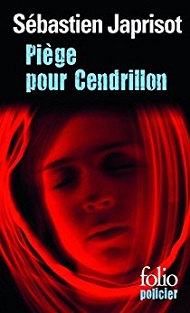
De Franse schrijver Sébastien Japrisot (pseudoniem van Jean-Baptiste Rossi) werd geboren op 4 juli 1931 in Marseille. Zie ook alle tags voor Sébastien Japrisot op dit blog.

Uit: Piège pour Cendrillon

“Ou bien encore, je retrouvais sur moi l'odeur écœurante de cette eau de Cologne bon marché dont il inondait ses cheveux. Micky, elle aussi, l'avait remarquée. Votre signature, m'avait-il dit, était très correcte, j'ai vérifié tout de suite à la lumière du tableau de bord. Même que vous m'avez demandé ce que je mettais sur les cheveux. C'est un truc spécial, ça vient d'Algérie j'ai fait mon service là-bas. Vous voyez, je n'inventerais pas ça !
Il avait peut-être dit la marque de cette eau de Cologne à Micky. Mais à moi, dans le garage, il ne l'avait pas dite - ça n'avait pas de nom. Plus que la pensée du mal qu'il pouvait nous faire, à Jeanne et à moi, cette odeur que je retrouvais ou croyais retrouver sur mes gants, sur mes bras, m'angoissait au point de devoir allumer ma lampe. Le maître chanteur devait rôder autour de la maison, autour de moi. Il me surveillait comme son bien : une mémoire, un esprit qui lui appartenait. »
(…)

« Les jours qui suivirent, je fus quelqu'un qu'on déplace, qu'on alimente, qu'on roule dans les couloirs qui répond oui en fermant les yeux une fois, non deux fois, qui ne veut pas crier, qui hurle quand on refait ses pansements, qui essaie de faire sortir par ses yeux les questions qui l'oppressent, qui ne peut ni parler, ni bouger, une bête dont on nettoie le corps avec des crèmes, l'esprit avec les piqûres, une chose sans mains, sans visage : personne. »
(…)

« Son visage, son attitude ne m'étaient pas réellement inconnus. Et une seconde, je crus que le passé allais resurgir, en une seule lourde vague qui m’assommerait. Ce devait être l'étourdissement d'avoir tourné, ou la présence inattendue, devant moi, d'une femme qui m'était familière comme un personnage rencontré dans un rêve."
 

 2052602-48390209e11f7514fb71ed95f7a536cc.jpg
Sébastien Japrisot (4 juli 1931 – 4 maart 2003)


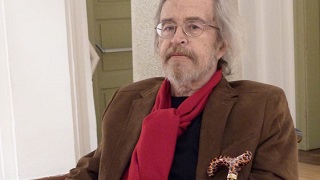
De Oostenrijkse schrijver, regisseur, filmmaker en fotograaf Walter Wippersberg werd geboren op 4 juli 1945 in Steyr. Zie ook alle tags voor Walter Wippersberg op dit blog.

Uit: 14 Monate, 14 Jahre

„Noch denke ich an Thomas W.s Drehbuch, mit dem er zum ersten Diplom antreten will, und ob das auch richtig ist, was ich ihm dazu geschrieben hab.
Noch denke ich an die Jurysitzung für den Landeskulturpreis, die am Donnerstag stattgefunden hat, wo der Preis einstimmig Thomas Baum zuerkannt wurde, der noch nichts weiß davon.
Am Mittwoch hab ich den neuen Roman an den Verlag geschickt, und mir drängt sich diese viel zu pathetische Formulierung auf: Die Wunden, die er gerissen hat, sind noch nicht geschlossen. So stimmt das natürlich nicht, aber irgendwas ist tatsächlich noch offen. Jener große Topf, darin das Unbewußte vor sich hin köchelt und blubbert und aus dem, wenn wir schreiben, all das kommt, worüber wir uns, wenn’s erst da ist, selber wundern. Zuerst läßt sich der Deckel gar nicht so heben, aber noch schwerer ist es, ihn wieder auf den Topf zu setzen, wenn man, was daraus aufsteigt, nicht mehr braucht, weil (wie in diesem Fall) der Roman fertiggeschrieben ist. So wird noch ein Weile ins Bewußtsein treten, was ich jetzt dort gar nicht mehr haben will, und ein paar Nächte mit höchst seltsamen Träumen stehen mir noch bevor.
Auch sonst läuft der Motor (das Hirn) immer noch auf hohen Touren, aber im Leerlauf. Stoppen kann man ihn nicht, er muß langsam auslaufen.
Das mit den Wunden, vorhin schnell hingeschrieben, stimmt wenigstens zum Teil. Zwei Jahre, genau zwei Romane und ein Drehbuch lang, hab ich mich jetzt mit Figuren von höchst unappetitlich rechtsextremer, wenigstens autoritärer Gesinnung schreibend abgegeben und insofern auch eingelassen, als man, wenn man sie beschreiben und glaubwürdig handeln lassen will, versuchen muß, in ihre (kranken?) Gehirne hineinzukriechen. Sowas hinterläßt tatsächlich Spuren, Wunden merkwürdiger Art, in der eigenen Psyche.“
 

 2052602-29505df375de40de1c626e3abdaa79ff.jpg
Walter Wippersberg (4 juli 1945 – 31 januari 2016)


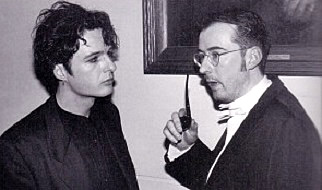
De Nederlandse schrijver Rob van Erkelens werd geboren in Den Haag op 4 juli 1963. Zie ook alle tags voor Rob van Erkelens op dit blog.

Uit:Megalofoob

“Oké. Genoeg over kleine dingen, genoeg gepield op de vierkante centimeter. Genoeg over nano, laten we het hebben over giga. Enough about you, let’s talk about me. (smiley) En ik zeg: grootte doet ertoe. Afmetingen. Omvang. Volume. Size matters, zeggen de Luxemburgers.
Het doet ertoe hoe groot iets is. Ik heb er lang over nagedacht, heb mezelf op de divan uitgestrekt en geluisterd naar de weerkaatsing van mijn stem tegen het plafond van de psychiater-spreekkamer.
Beste mevrouw P,
Soms denk ik dat ik krankzinnig word omdat er zo veel is – zo veel is van alles.
Je kijkt naar een voetbalwedstrijd, een eenvoudige poulewedstrijd in de Champions League, en je hoort: breedtepass van Sandro.
Niks aan de hand. Breedtepass van Sandro.
Chicharito wordt vastgehouden door Piqué, maar dat wordt niet gezien door de scheids.
Nog steeds niets aan de hand. We liggen daar niet wakker van.
Vastgehouden. Niet gezien. We kijken verder.
Dan het besef dat op dit moment, het moment dat Chicharito wordt vastgehouden door Piqué zonder dat het wordt gezien door de scheids, datzelfde wordt gezegd in 209 landen. Precies datzelfde wordt gezegd in meer dan tweehonderd landen op hetzelfde moment. In minstens 150 talen. En het wordt gehoord in 209 landen. Door zoveel miljard mensen.
Daar begin ik te krimpen. Ik voel mezelf kleiner worden en verschrompelen, terwijl alles buiten mij groter wordt en uitdijt.”
 

 2052602-e96dda8b71b91a4656e675925ccadc5a.jpg
Rob van Erkelens (Den Haag, 4 juli 1963)
Hier met Ronald Giphart (rechts) op het boekenbal in 1994


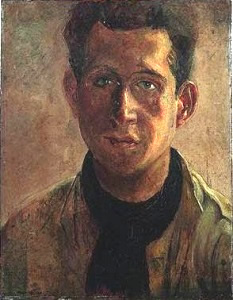
De Franse dichter, schrijver en journalist Robert Desnos werd geboren op 4 juli 1900 in Parijs. Zie ook alle tags voor Robert Desnos op dit blog.


The Voice of Robert Desnos

So like a flower and a current of air
the flow of water fleeting shadows
the smile glimpsed at midnight this excellent evening
so like every joy and every sadness
it is the midnight past lifting its naked body above belfries and poplars
I call to me those lost in the fields
old skeletons young oaks cut down
scraps of cloth rotting on the ground and linen drying in farm country
I call tornadoes and hurricanes
storms typhoons cyclones
tidal waves
earthquakes
I call the smoke of volcanoes and the smoke of cigarettes
the rings of smoke from expensive cigars
I call lovers and loved ones
I call the living and the dead
I call gravediggers I call assassins
I call hangmen pilots bricklayers architects
assassins
I call the flesh
I call the one I love
the jubilant midnight unfolds its satin wings and perches on my bed
the belfries and the poplars bend to my wish
the former collapse the latter bow down
those lost in the fields are found in finding me
the old skeletons are revived by my voice
the young oaks cut down are covered with foliage
the scraps of cloth rotting on the ground and in the earth
snap to at the sound of my voice like a flag of rebellion
the linen drying in farm country clothes adorable women
whom I do not adore
who come to me
obeying my voice, adoring
tornadoes revolve in my mouth
hurricanes if it is possible redden my lips
storms roar at my feet
typhoons if it is possible ruffle me
I get drunken kisses from the cyclones
the tidal waves come to die at my feet
the earthquakes do not shake me but fade completely
at my command
the smoke of volcanoes clothes me with its vapors
and the smoke of cigarettes perfumes me
and the rings of cigar smoke crown me
loves and love so long hunted find refuge in me
lovers listen to my voice
the living and the dead yield to me and salute me
the former coldly the latter warmly
the gravediggers abandon the hardly-dug graves
and declare that I alone may command their nightly work
the assassins greet me
the hangmen invoke the revolution
invoke my voice
invoke my name
the pilots are guided by my eyes
the bricklayers are dizzied listening to me
the architects leave for the desert
the assassins bless me
flesh trembles when I call

the one I love is not listening
the one I love does not hear
the one I love does not answer.


Vertaald door William Kulik
 

 2052602-6ccdf4b2616b54fc8cb2a195006a837b.jpg
Robert Desnos (4 juli 1900 – 8 juni 1945)
Portret door George Malkine, 1926


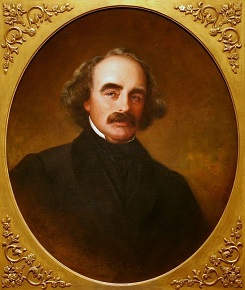
De Amerikaanse dichter en schrijver Nathaniel Hawthorne werd geboren op 4 juli 1804 in Salem, Massachusetts. Zie ook alle tags voor Nathaniel Hawthorne op dit blog.

Uit:The Snow-Image (The Canterbury Pilgrims)

“The summer moon, which shines in so many a tale, was beaming over a broad extent of uneven country. Some of its brightest rays were flung into a spring of water, where no traveller, toiling up the hilly road beside which it gushes, ever failed to quench his thirst. The work of neat hands and considerate art, was visible about this blessed fountain. An open cistern, hewn and hollowed out of solid stone, was placed above the waters, which filled it to the brim, but, by some invisible outlet, were conveyed away without dripping down its sides. Though the basin had not room for another drop, and the continual gush of water made a tremor on the surface, there was a secret charm that forbade it to overflow. I remember, that when I had slaked my summer thirst, and sat panting by the cistern, it was my fanciful theory, that Nature could not afford to lavish so pure a liquid, as she does the waters of all meaner fountains.
While the moon was hanging almost perpendicularly over this spot, two figures appeared on the summit of the hill, and came with noiseless footsteps down towards the spring. They were then in the first freshness of youth; nor is there a wrinkle now on either of their brows, and yet they wore a strange old fashioned garb. One, a young man with ruddy cheeks, walked beneath the canopy of a broad brimmed gray hat; he seemed to have inherited his great-grand-sire's square skirted coat, and a waistcoat that extended its immense flaps to his knees; his brown locks, also, hung down behind, in a mode unknown to our times. By his side was a sweet young damsel, her fair features sheltered by a prim little bonnet, within which appeared the vestal muslin of a cap; her close, long waisted gown, and indeed her whole attire, might have been worn by some rustic beauty who had faded half a century before. But that there was something too warm and life-like in them, I would here have compared this couple to the ghosts of two young lovers, who had died long since in the glow of passion, and now were straying out of their graves to renew the old vows, and shadow forth the unforgotten kiss of their earthly lips, beside the moonlit spring.”
 2052602-6cf587229d979df0647a6f253b085139.jpg
Nathaniel Hawthorne (4 juli 1804 - 19 mei 1864) 
Portret door Gottlieb Leutze, 1862


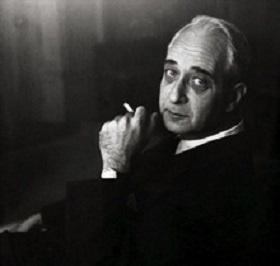
De Amerikaanse schrijver, literair criticus en hoogleraar Lionel Trilling werd geboren op 4 juli 1905 in New York. Zie ook alle tags voor Lionel Trilling op dit blog.

Uit: E.M. Forster

« Of Forster’s five novels, « The Longest Journey » is by conventional notions the least perfect—the least compact, the least precisely formed. Yet although Forster himself says that "it is a novel which most readers have dismissed as a failure," it is perhaps the most brilliant, the most dramatic and the most passionate of his works. In its arbitrary de-partures from the proprieties of the modern novel there is a genuine refreshment and even a special claim upon our affections. Those of us who respond to this claim will grant that the book is not a perfect whole, but we feel that it does not so much fall apart as fly apart: the respon-sive reader can be conscious not of an inadequate plan or of a defect in structure but rather of the too-much steam that blows up the boiler. The story opens with a metaphysical discussion. A group of Cambridge undergraduates are belaboring the problem which fascinates all young students of philosophy, whether a thing really exists, really is there, if no observer is pres ent to see it. One of the disputants, Stewart Ansell—he is not the hero but he is one of the heroic people in the story —insists that the cow ( they have chosen a cow as example, rather than the table consecrated to such discussions) is really there; others disagree. They are not especially expert in their argument and they proceed chiefly by the reiter-ation of their opinions. The scene, delightful but appar-ently trivial, is a statement of what the story is about: it is about reality—appearance and reality—and the word "real" recurs again and again in the novel. Few stories are metaphysical and few begin with meta-physical discussions, but many of the best stories deal with just this problem of appearance and reality. It is, indeed, one of the great themes of literature. It is what much of the Odyssey is about; Oedipus Rex and Don Quixote deal with it preeminently; it is Shakespeare's great subject in Hamlet, Othello and Lear, as well as in Troilus and Cres-sida, The Winter's Tale and The Tempest; it is the essen-tial matter of Faust; it is everlastingly teasing Tolstoy. It is not "truth" that these stories deal with; reality is a more exact concept than truth and simple people are more inter-ested in it than in truth; reality is the word we use for what can be relied on, felt, pushed against. It is what is thick, and lasts. The discussion of reality is interrupted by the arrival of a young woman. She is the guest of the undergraduate who is host to the others. Rickie Elliot, having invited Agnes Pembroke and her brother Herbert for a visit, has quite forgotten to meet them or provide for them.”
 

 2052602-242eec251942ad0b51cf0160def87686.jpg
Lionel Trilling (4 juli 1905 – 11 mei 1975)


Zie voor nog meer schrijvers van de 4e juli ook mijn blog van 4 juli 2014 en ook mijn blog van 4 juli 2011 deel 2.

Geschreven door Romenu om 18:42 Reageer op dit bericht

Ricardo Domeneck

De Braziliaanse dichter, beeldend kunstenaar en criticus Ricardo Domeneck werd geboren op 4 juli 1977 in São Paulo. Domeneck heeft tot nu toe vier dichtbundels en twee chapbooks uitgegeven. Zijn eerste bundel met gedichten, getiteld “Carta aos anfíbios” (“Brief aan amfibieën”), verscheen in 2005 in Rio de Janeiro, uitgegeven door een kleine uitgeverij. Zijn tweede bunde “a cadela sem Logos” (“de teef zonder Logos”), volgde in 2007, dit keer bij een grote Braziliaanse uitgever, Cosac Naify, die in 2009 ook zijn derde bundel “Sons: Arranjo: Garganta” (“Sounds: Compositie: Keel”) uitgaf. Zijn laatste bundel heet “Cigarros na cama” (Sigaretten in bed), gepubliceerd in 2011. Zijn gedichten zijn opgenomen in bloemlezingen van hedendaagse Braziliaanse poëzie en hij heeft ook gepubliceerd in poëzietijdschriften als Green Integer Review. Zijn teksten zijn vertaald in het Spaans, Catalaans, Frans, Duits, Sloveens en Arabisch. Ricardo Domeneck is een van de redacteuren van de online magazines Hilda en Modo de Usar & Co. en heeft video-interviews gemaakt voor andere online magazines met artiesten en muzikanten zoals Bat for Lashes, Ellen Allien, Heinz Peter Knes en Walter Pfeiffer. Momenteel woont en werkt Ricardo Domeneck in Berlijn.


In which the poet celebrates his twenty-five-year-old lover
for Jannis Birsner

Wars
have outlasted your
years.
Congratulations on your success
today
in exceeding the life
expectancy
of a giraffe or bat,
cow,
boa constrictor,
or owl.
Around the world, penguins
and pigs,
conceived at the same time as you, are dying.
Saturn
has not circled the sun even
once
since you were a fertilized egg.
Stalker
who guides me along the thousand trails
to the Zone,
another winter begins to crawl,
I bury
my face in your hairless chest.
If I could,
I'd sign a contract
with Lem
or the Strugatsky brothers,
screenwriters
for our days and future nights;
for the soundtrack,
Diamanda Galás bellows
and bleats,
caws and purrs, we fornicate.
I celebrate
the mind beneath your hair,
the penis,
attached to your body, erect.
Somewhere,
a pig, your contemporary,
reaches
the zenith of his rotund
existence,
I wonder, exhausted in sweat, if lovers,
eyelashes
at last united, count sheep
before
sleep, euphoric and pregnant.


Vertaald door Hilary Kaplan


 2113990-7e9fe578295a8ada5b00ff8e4e55b64e.jpg
Ricardo Domeneck (São Paulo, 4 juli 1977)

Geschreven door Romenu om 00:00 Reageer op dit bericht

Franz Kafka, Christopher Kloeble, Dorota Masłowska, Joanne Harris, Gerard den Brabander, Tom Stoppard, Andreas Burnier, David Barry, William Henry Davies

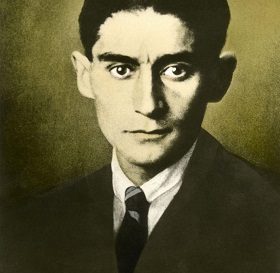
De Duitstalige schrijver Franz Kafka werd geboren op 3 juli 1883 in Praag, toen een stad gelegen in de dubbelmonarchie Oostenrijk-Hongarije. Zie ook alle tags voor Franz Kafka op dit blog.

Uit:Tagebücher 1910 - 1923

"Sonntag, den 19. Juli 1910
(…)

„Meine Unvollkommenheit ist, wie ich sagte, nicht angeboren, nicht verdient, trotzdem ertrage ich sie besser, als andere unter großer Arbeit der Einbildung mit ausgesuchten Hilfsmitteln viel kleineres Unglück ertragen, eine abscheuliche Ehefrau zum Beispiel, ärmliche Verhältnisse, elende Berufe, und bin dabei keineswegs schwarz vor Verzweiflung im Gesicht, sondern weiß und rot.
Ich wäre es nicht, wenn meine Erziehung so weit in mich gedrungen wäre, wie sie wollte. Vielleicht war meine Jugend zu kurz dazu, dann lobe ich ihre Kürze noch jetzt in meinen Vierzigerjahren aus voller Brust. Nur dadurch war es möglich, daß mir noch Kräfte bleiben, um mir der Verluste meiner Jugend bewußt zu werden, weiter, um diese Verluste zu verschmerzen, weiter, um Vorwürfe gegen die Vergangenheit nach allen Seiten zu erheben und endlich ein Rest von Kraft für mich selbst. Aber alle diese Kräfte sind wieder nur ein Rest jener, die ich als Kind besaß und die mich mehr als andere den Verderben der Jugend ausgesetzt haben, ja ein guter Rennwagen wird vor allen von Staub und Wind verfolgt und überholt, und seine Räder fliegen über die Hindernisse, daß man fast an Liebe glauben sollte.
Was ich jetzt noch bin, wird mir am deutlichsten in der Kraft, mit der die Vorwürfe aus mir herauswollen. Es gab Zeiten, wo ich in mir nichts anderes als vor Wut getriebene Vorwürfe hatte, daß ich bei körperlichem Wohlbefinden mich auf der Gasse an fremden Leuten festhielt, weil sich die Vorwürfe in mir von einer Seite auf die andere warfen, wie Wasser in einem Becken, das man rasch trägt.
Jene Zeiten sind vorüber. Die Vorwürfe liegen in mir herum wie fremde Werkzeuge, die zu fassen zu zu heben ich kaum den Mut mehr habe. Dabei scheint die Verderbnis meiner alten Erziehung mehr und mehr in mir von neuem zu wirken, die Sucht, sich zu erinnern, vielleicht eine allgemeine Eigenschaft der Junggesellen meines Alters, öffnet wieder mein Herz jenen Menschen, welche meine Vorwürfe schlagen sollten, und ein Ereignis wie das gestrige, früher so häufig wie das Essen, ist jetzt so selten, daß ich es notiere.“


 2052286-0537c475c65a384a88e76eb7e44b68ed.jpg
Franz Kafka (3 juli 1883 – 3 juni 1924)
In 1923/24


De Duitse schrijver Christopher Kloeble werd op 3 juli 1982 geboren in München. Zie ook alle tags voor Christopher Kloeble op dit blog.

Uit:Die unsterbliche Familie Salz

„Meine Großmutter starb zwei Mal. Nur war sie nach dem mien Mal mehr tot. Am 15. Juli 3990 Stieg Lob Rosa Salz. wenige Tage nachdem sie den Leipziger Fürstenhof in Besitz genommen hatte. aus unerfindlichen Gründen und trotz ihres Alters von fünfundachtzig Jahren auf das Dach des Grandhotels und stürzte. Sie stürzte so schlimm, dass ihr Herz aussetzte. Als es wieder zu schlagen begann. tat es das nicht kräftig genug, um sie zurück ins Leben zu bringen. Sie lag seitdem in einem tiefen Schlaf. den mein Vater (ihr Sohn) Koma nannte. Aber war es das wirklich? Selbst Tante Ava. ihre Tochter und Pflegerin. war darüber erstaunt. wie mühelos Lola gewöhnliche Nahrung zu sich nehmen konnte. (Am liebsten Eclairs mit extra viel Sahne.) Kauen, Schlucken, Verdauen, Aus.scheiden - alles, ein bisschen Hilfe vorausgesetzt, kein Problem. Mir offenen Augen lag sie in ihrem französischen Bett und redete vor sich hin. Die meisten Worte waren unverständlich, die wenigen verständlichen ohne klaren Zusammenhang. Als flüchteten sich kleine Reste ihrer Träume in die Welt. Abgesehen von ich will sie am häufigsten folgende vier Wer gerne von sich gegeben haben: Manra, Herr Salz und Maria. (Herr Salz war vermutlich ihr lange verstorben« Vater und Maria ihre noch langer verstorbene Großmutter.' Wollte sie etwas beichten? Wollte sie ihre Erfahrung weitergeben, um nicht zu schnell in Vergessenheit zu geraten? Oder brabbelte sie bloß Unsinn?“


 2052286-3660b23970c05e6b869be3955f980dec.jpg
Christopher Kloeble (München, 3 juli 1982)


De Poolse schrijfster en journaliste Dorota Masłowska werd op 3 juli 1983 in Wejherowo geboren. Zie ook alle tags voor Dorota Masłowska op dit blog.

Uit:Snow White and Russian Red (Vertaald door Benjamin Paloff)

“I tell him I don't have one. Though maybe I should have one. Kacper has speed, a whole car full of speed, the whole trunk of his Golf. He looks around everywhere, as though an army of Russkies were lying in wait on all sides. As if they wanted to come in here and stick all their Russki cigs between his clattering jaws. He takes out an LM Red. Asks why I'm sitting with my face to the wall. I say, Maybe I should sit facing forward, maybe that would change something, right? Maybe Magda would be here with me, only I'm facing forward, and she races up and squats down on my knees, her hair in my face, places my hand up between her thighs, her kisses, her love. I say no. Though I'd rather say yes. But I say no. No and no. I refuse. Even if she wanted to come here, I'd say: Don't come closer, don't touch me, you stink. You stink of those guys who touch you while you're not looking, and you think you don't know they're touching you. You stink of those cigs you bum off them, that they treat you to. Of fucking LM Menthols. Bought cheap from the Russkies. Of those drinks, that swill they buy you in a glass swimming with bacteria from their mouths like fish, like sea sluts. And if she wanted me to take her like that now, she'd have another thing coming. I wouldn't say a single word. She'd give me her drink, I'd say: No. First get rid of that gum you stuck under there, since it's just come from the mouth of one of those dirty guys, from their mouths, that gum, though you think I don't know about that. Then wash yourself off, and only then, maybe, you can sit with me, when you're cleansed of those bootleg cigs, of that bootleg speed you drink in your drinks. Only after you take off those rags, that plumage, which isn't for me. Of course, I'm still a bit resentful then. I turn around, I don't want to chat with her. I say that if she's going to be that way, I'll fuck up the whole bar, all the glasses will go to the floor, she'll walk on glass, she'll snap her heels, she'll bash her elbows, she'll tear her dress and all the laces that went into it. She asks me to come back to her. Says she'll be good like never before, more good, more giving. I say no to that. I say: If I have to explain it to you once, I have to explain it to you twice, that I never want to be with you again, and either you go away or I'll do it myself. She says that she loved me. I say that I loved her, too, that I always liked her, though first she was Lolo's girl before she was mine, and his car was better, everything Lolo had was better, better shoes, better pants, better money. I say that I wanted to kill him because he wasn't good for Magda, just harsher. But that later she was mine, I always stood up for her, I was always behind her.”


 2052286-084f4b2bfb92bc991e00cf89b7b7ca23.jpg
Dorota Masłowska (Wejherowo, 3 juli 1983)


De Britse schrijfster Joanne Harris werd geboren op 3 juli 1964 in Barnsley, Yorkshire. Zie ook alle tags voor Joanne Harris op dit blog.

Uit: Runemarks

“Besides, they said, why speak the word? That ruinmark surely spoke for itself.
Now Maddy considered the rust-colored mark. It looked like a letter or sigil of some kind, and sometimes it shone faintly in the dark or burned as if something hot had pressed there. It was burning now, she saw. It often did when the Good Folk were near, as if something inside her were restless and itched to be set free.
That summer, it had itched more often than ever, as the goblins swarmed in unheard-of numbers, and banishing them was one way of putting that itch to rest. Her other skills remained unused and, for the most part, untried, and though sometimes that was hard to bear-like having to pretend you're not hungry when your favorite meal is on the table-Maddy understood why it had to be so.
Cantrips and runecharms were bad enough. But glamours, true glamours, were perilous business, and if rumor of these were to reach World's End, where the servants of the Order worked day and night in study of the Word . . .
For Maddy's deepest secret-known only to her closest friend, the man folk knew as One-Eye-was that she enjoyed working magic, however shameful that might be. More than that, she thought she might be good at it too and, like anyone with a talent, longed to make use of it and to show it off to other people.
But that was impossible. At best it counted as giving herself airs.
And at worst? Folk had been Cleansed for less.”

2052286-f82a83a872f8071d15e6cb68474caa69.jpg
Joanne Harris (Barnsley, 3 juli 1964)
Cover


De Nederlandse dichter en vertaler Gerard den Brabander (eig. Jan Gerardus Jofriet) werd geboren in Den Haag op 3 juli 1900. Zie ook alle tags voor Gerard Den Brabander op dit blog.


Dame met kind

Eénmaal had zij de liefde niet weerstaan
en zich, gestrekt, haar fluistring gansch gegeven:
Bloeide de roos aan 't venster niet een leven?
Lachte de nacht wel ooit een milder maan?

Haar sluimring scheurde: ergens kreet een haan.
Zij huiverde en zag de loovers beven.
De maan viel kantlend over valer dreven.
Zij zag hem donker aan het venster staan.

Nòg meent zij vaak, dat hem haar haten wondt,
wanneer zij peinzend in den avondstond
haar kindje baadt en 't zacht een do-do neuriet;

maar weent, want vindt, van die haar stom ter deur stiet
en henengaan en eenzaam en verscheurd liet,
den glimlach, sluimrende op een kindermond.


Fata-morgana

En hij doceerde (en spande pink en duim
van Dover naar Calais): - Dit heet Kanaal .... -
Toen brak zijn blik de muren van het lokaal:
over zijn vingers streelde driest zeeschuim ....

de zon dreef in een porceleinen schaal ....
de zilte wind joeg lammren door het ruim ....
zeeruiters hieven zingend elk een pluim
en vielen stoeiend over het ovaal,

de weeke buik van de verzande bocht ....
daar wenkte wuft, half uit 't bewogen vocht,
de zeemeermin en rinkelde met schelpen ....

Nog vóór hij boog om 't wezen voort te helpen,
vluchtte de droom voor het gejoel der welpen ....
Er wiegelde éép of hij naar achter mocht.


 2052286-0ff550fcf8d09bb1dfe6a3e333b38761.jpg
Gerard den Brabander (3 juli 1900 – 4 februari 1968)


De Britse toneelschrijver Tom Stoppard (eig. Tomas Straussler) werd geboren inZlín op 3 juli 1937. Zie ook alle tags voor Tom Stoppard op dit blog.

Uit: Arcadia

«THOMASINA Is it a sin?
SEPTIMUS Not necessarily, my lady, but when carnal embrace is sinful it is a sin of the flesh, QED. We had cam in our Gallic Wars —"The Britons live on milk and meat"— 'lane et came vivant'. I am sorry that the seed fell on stony ground.
THOMASINA That was the sin of Onan, wasn't it, Septimus?
SEPTIMUS Yes. He was giving his brother's wife a Latin lesson and she was hardly the wiser after it than before. I thought you were finding a proof for Fermat's last theorem.
THOMASINA It is very difficult, Septimus. You will have to show me how.
SEPTIMUS If I knew how, there would be no need to ask you. Fennat's last theorem has kept people busy for a hundred and fifty years, and I hoped it would keep you busy long enough for me to read Mr Chater's poem in praise of love with only the distraction of its own absurdities.
THOMASINA Our Mr Chater has written a poem?
SEPTIMUS He believes he has written a poem, yes. I can see that them might be more carnality in your algebra than in Mr Chater's "Couch of Eros".
THOMASINA Oh, it was not my algebra. I heard Jellaby telling Cook that Mrs Chater was discovered in carnal embrace in the gazebo.
SEPTIMUS (after a pause) Really? With whom, did Jellaby happen to say?
Thomasina considers this with a puzzled frown
THOMASINA What do you mean, with whom?
SEPTIMUS With what? Exactly so. The idea is absurd. Where did this story come from? Thomasina Mr Noakes.
SEPTIMUS Mr Noakes!
THOMASINA Papa's landskip gardener. He was taking bearings in the garden when he saw— through his spyglass—Mrs Chater in the gazebo in carnal embrace.
SEPTIMUS And do you mean to tell me that Mr Noakes told the butler?
THOMASINA No. Mr Noakes told Mr Chairs. Jellaby was told by the groom. who overheard Mr Noakes telling Mr Chater, in the stable yard.
SEPTIMUS Mr Chater being engaged in closing the stable door.“


 2052286-c562fdbeb518e0baddc65606c6365b08.jpg
Tom Stoppard (Zlín, 3 juli 1937)
Scene uit een opvoering in Washington, 2009


De Nederlandse schrijfster Andreas Burnier werd op 3 juli 1931 in Den Haag geboren als Catharina Irma Dessaur. Zie ook alle tags voor Andreas Burnier op dit blog.

Uit:De literaire salon (De zeenevels van het verleden)

“Als ik geheimzinnige artiesten bezocht in de De Ruyterstraat of nog geheimzinniger religieuze freaks in verborgen hofjes achter de Anna Paulownastraat, dacht ik nooit aan het Panorama, behalve misschien als een heel verre, onbenoembare, voorgeboortelijke herinnering. En omgekeerd wist ik eenmaal boven in het Panorama van tijd noch duur en niets van de verwarrende, onrustige gevoelens daar beneden. Hier werden eeuwig dezelfde netten geboet, dezelfde vissen gevangen, dezelfde huizen bewoond. In de wereld daaronder was ik een ander, rusteloos mens.
De herinneringen zijn onscherp en wat scherp lijkt, wantrouw ik. Het gezin van schilder Frederik Frederik, Galein Frederik en Aluin Frederik, zijn twee zoons, en voorts hun stoet van steeds wisselende moeders, althans zo leek het mij, had ook iets met het Van Gogh-gevoel te maken, maar dan de woeste, tragische kant daarvan.
Het gezin Frederik was in alles het tegendeel van onze familie. Mijn vader, accountant bij de Shell (‘de Koninklijke’), een respectabel man. Mijn moeder een huisvorstin. Precieze regels, nut, reinheid, vlijt, orde, spaarzaamheid, voorspelbaarheid, stonden hoog genoteerd. Om zeven uur 's avonds las mijn vader de, toen nog deftige, krant Het Vaderland. Natuurlijk eerst de beurskoersen van de ‘olies’, daarna het weerbericht, het hoofdartikel, het internationale nieuws, het stadsnieuws, het landelijke nieuws, de advertenties. In die volgorde. Ik mocht als hij de krant uithad de culturele artikelen eruitknippen. Die las hij nooit, behalve als het over zeer gevestigde reputaties ging, zoals Rembrandt, Beethoven of Shakespeare.
Mijn moeder interesseerde zich niet voor dagelijks nieuws. Het belangrijkste las mijn vader haar voor, op een speciale toon die hij verder nooit gebruikte.
‘Ach, wist je dat ze nieuwe rioleringen moeten aanleggen in het Vredespaleis? Het zal minstens zes weken voor het publiek gesloten zijn.’
‘Ik zie hier dat Kakebeeke is overleden. Maar vierenzeventig jaar oud geworden. Nee, niet de procureur-generaal, de notaris.’
‘Ze willen de rozentuin in het Westbroekpark met uitheemse varianten gaan uitbreiden.’
Over de beurs en het politieke nieuws sprak hij niet met haar. Als de wereld was vergaan, zou zij het éen dag later hebben bemerkt.”


 2052286-3aa508eeb0fba0da1709d03e45502e5c.jpg
Andreas Burnier (3 juli 1931 - 18 september 2002)


De Amerikaanse humoristische schrijver, columnist en bestsellerauteur David Barry, Jr werd geboren op 3 juli 1947 in Armonk, New York. Zie ook alle tags voor David Barry op dit blog.

Uit: Best. State. Ever.A Florida Man Defends His Homeland

“For millions of years, Florida was uninhabited, because it was geographically remote, not to mention several hundred feet beneath the surface of the Atlantic, which meant insurance rates were very high. Gradually, however, Global Rising caused Florida to emerge from the ocean, and today the state is above sea level except during certain months.
The first humans arrived in Florida 20,000 years ago, having crossed the land bridge from Asia, and made the arduous trek across North America in search of Spring Break. These early inhabitants left primitive archaeological artifacts that can still be seen today, including the world’s oldest-known stone bong.
In time, the population of Florida started to grow — probably, scientists now believe, as a result of people having sex with each other. Eventually, these indigenous peoples spread out across Florida and formed Native American tribes, which established thriving, sophisticated societies based on hitting things with rocks until they became edible. Sometimes the tribes would fight wars, but after maybe 15 minutes they would stop because of the humidity.
Thus Florida was a prosperous and peaceful place until the early sixteenth century, when the first Europeans arrived in the form of Spanish explorers who had been lured by the legend of the Pájaro Temprano, which told of a mythical place where, if you were seated before 4:30 p.m., you got a steeply discounted entrée. The Spaniards named the new land La Pascua de la Florida (literally, “The Sunshine State”) and claimed it for Spain, seeing as how there was nobody there except for several hundred thousand natives. »


2052286-8a22a7ec599c92ecca078777837b3ba2.jpg
David Barry (Armonk, 3 juli 1947)


De Welshe dichter en schrijver William Henry Davies werd op 3 juli 1871 in Newport, Monmouthshire, geboren. Zie ook alle tags voor William Henry Davies op dit blog.


The Boy

Go, little boy,
Fill thee with joy;
For Time gives thee
Unlicensed hours,
To run in fields,
And roll in flowers.

A little boy
Can life enjoy;
If but to see
The horses pass,
When shut indoors
Behind the glass.

Go, little boy,
Fill thee with joy;
Fear not, like man,
The kick of wrath,
That you do lie
In some one's path.

Time is to thee
Eternity,
As to a bird
Or butterfly;
And in that faith
True joy doth lie.


The Rain

I hear leaves drinking rain;
I hear rich leaves on top
Giving the poor beneath
Drop after drop;
'Tis a sweet noise to hear
These green leaves drinking near.

And when the Sun comes out,
After this Rain shall stop,
A wondrous Light will fill
Each dark, round drop;
I hope the Sun shines bright;
'Twill be a lovely sight.


 2052286-9054bb1e732c71e2799e2abc8d08e168.jpg
William Henry Davies (3 juli 1871 - 26 september 1940)
In 1913


Zie voor nog meer schrijvers van de 3e juli ook mijn blog van 3 juli 2016 deel 1 en eveneens deel 2 en ook deel 3.

Geschreven door Romenu om 18:31 Reageer op dit bericht

Meer van Romenu

↑ Terug naar de berichten