Naar de inhoud

Romenu

Over literatuur, gedichten, kunst en cultuur
akke.beakke.be

Berichten van 27 juli 2017 tot 28 juli 2017

Remco Campert, Malcolm Lowry, Herman Stevens, Gerard Manley Hopkins, Stephan Sanders, Angélica Gorodischer, Shahyar Ghanbari, John Ashbery, Drew Karpyshyn
De Nederlandse dichter schrijver Remco Campert werd op 28 juli 1929 in Den Haag geboren. Zie ook alle tags voor Remco Campert op dit blog.


Den Haag

Overal bevuilde daken
groen koper van kerken
brakke lucht uitgebeten huizen
afgegraasd grasland verwaarloosde zee.
O en de trieste trage gele trams
en het kippevel van de verwaaide straten.
Heel Den Haag was één Panorama Mesdag
elke dag een verregende koninginnedag.

Mijn grootvader ongeschoren
dwaalde als Strindberg door het huis
gevangen in zijn eigen kamerjas.

En zo speelziek en verlegen als ik was
met mijn kleine rubberdolk
beheerste dolleman
pleegde ik sluipmoord op een schemerlamp
of op zolder het oude lila kussen.


Bandrecorder, eenvoudig

Je hoeft niet te praten
ook geknisper van kranten komt duidelijk over
of als je slikt keelschraapt
een schoen uitschopt

het suizen van het gas
de tik van het licht uit
de telefoon buiten de auto's
mijn korte adem

maar als je toch iets zegt
zeg dan liever iets aardigs
iets dat i nog eens af kan draaien
als je weg bent.


Zo lag ik wel

(Zo lag ik wel
en lig ik nog: liefde
vernieuwt en en verdiept zich.

Steeds meer huiden wierp ik af-
nu eindelijk in mijn eigen
laatste vel,

ben ik kwetsbaarder dan ooit)


 2059111-0c79b613daaa252a6f00cd18eef279a0.jpg
Remco Campert (Den Haag, 28 juli 1929)


De Engelse dichter, verhalen- en romanschrijver Malcolm Lowry werd geboren 28 juli 1909 in Birkenhead Merseyside. Zie ook alle tags voor Malcolm Lowry op dit blog.

Uit: Under the Volcano

“The sun poured molten glass on the fields. The volcanoes seemed terrifying in the wild sunset. M. Laruelle walked swiftly, in the good heavy tennis shoes he should have already packed, swinging his tennis racket. A sense of fear had possessed him again, a sense of being, after all these years, and on his last day here, still a stranger. Four years, almost five, and he still felt like a wanderer on another planet. Not that that made it any the less hard to be leaving, even though he would soon, God willing, see Paris again. Ah well! He had few emotions about the war, save that it was bad. One side or the other would win. And in either case life would be hard. Though if the Allies lost it would be harder. And in either case one's own battle would go on. How continually, how startlingly, the landscape changed! Now the fields were full of stones: there was a row of dead trees. An abandoned plough, silhouetted against the sky, raised its arms to heaven in mute supplication; another planet, he reflected again, a strange planet where, if you looked a little farther, beyond the Tres Marias, you would find every sort of landscape at once, the Cotswolds, Windermere, New Hampshire, the meadows of the Eure-et-Loire, even the grey dunes of Cheshire, even the Sahara, a planet upon which, in the twinkling of an eye, you could change climates, and, if you cared to think so, in the crossing of a highway, three civilizations; but beautiful, there was no denying its beauty, fatal or cleansing as it happened to be, the beauty of the Earthly Paradise itself. Yet in the Earthly Paradise, what had he done? He had made few friends. He had acquired a Mexican mistress with whom he quarrelled, and numerous beautiful Mayan idols he would be unable to take out of the country, and he had —M. Laruelle wondered if it was going to rain: it sometimes, though rarely, did at this time of year, as last year for instance, it rained when it should not. And those were storm clouds in the south. He imagined he could smell the rain, and it ran in his head he would enjoy nothing better than to get wet, soaked through to the skin, to walk on and on through this wild country in his clinging white flannels getting wetter and wetter and wetter. He watched the douds: dark swift horses surging up the sky. A black storm breaking out of its season! That was what love was like, he thought; love which came too late. Only no sane calm succeeded it, as when the evening fragrance or slow sunlight and warmth returned to the surprised land! M. Laruelle hastened his steps still farther. And let such love strike you dumb, blind, mad, dead — your fate would not be altered by your simile. Tonnerre de dieu ... It slaked no thirst to say what love was like which came too late.”


 2059111-1ff0822d7e3f551d53167deade17478b.jpg
Malcolm Lowry (28 juli 1909 - 26 juni 1957)
Een ode aan Lowwry op Twitter


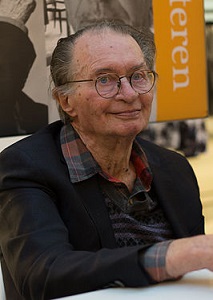
De Nederlandse schrijver, literair criticus en columnist Herman Stevens werd geboren in Rotterdam op 28 juli 1955. Zie ook alle tags voor Herman Stevens op dit blog.

Uit:Het paradijs herwonnen. Over ‘De dokter en het lichte meisje’ van S. Vestdijk

“De Sittardse politie heeft zich bij haar optreden laten leiden door de r.k. voorlichtingsdienst voor lectuur, de Idil.’ Deze afkorting, die klinkt als een gemoedelijke handelsnaam voor een hoofdpijnpoeder op opiumbasis, staat voor Inlichtingendienst inzake Lectuur, een bureau dat een periodiekje uitgaf waarin boeken werden geklasseerd met een cijfercode. De dokter en het lichte meisje, een roman waarin niet alleen een prostituée wordt bemind, maar waar ook een kruip door-sluip door katholiek in optreedt, werd met 1-2 gewaardeerd. Hetgeen inhield dat het boek ‘sterk voorbehouden voor geestelijk volwassenen’ moest blijven.
Vestdijk had het niet erg begrepen op de katholieke kerk. In bijna iedere roman wordt wel de draak gestoken met de klein-roomse vorm van schijnheiligheid, die de schrijver mede zal hebben geïntrigeerd omdat hij zelf zijn leven lang een hogere vorm van hypocrisie beoefende. In De dokter wordt daartoe een quasi Chinese levensleer ontwikkeld die in feite neerkomt op een carte blanche op het gebied van schuiven en draaien. Die leer heeft de held dan wel zelf opgezet, maar in veel romans worden de personages gefrustreerd door de geïnstitutionaliseerde bemoeizucht van de moederkerk ‘inzake’ het huwelijksleven. Zo blijft het in Else Böhler bij heilloze omhelzingen en bankjes in parken. Want Else heeft geleerd: echt trouwen doet men in de kerk en vervolgens krijgt men echte roomse kindertjes. Enzovoort.
Ik herinner me een interview van Bibeb met de schrijver. Het komt zo uit dat Bibeb een boterham blijft eten, wat haar in de gelegenheid stelt te noteren dat het zoontje Vestdijk driewerf de strijdkreet ‘Vuile paap, ik pis je onder!’ aanheft. Speelt dit tafereel zich af in Vestdijks nadagen, toen hij het betreurde als schrijver van vieze boeken te worden geafficheerd en toen zijn gezond kleinburgerlijke trekjes überhaupt wat meer naar voren traden, rond 1950 schuwt hij de controverse niet en de onverwachte publiciteit die hem vanwege Sittard ten deel viel zal niet werkelijk onwelkom zijn geweest. Binnen drie maanden was het boek aan een derde druk toe (ter vergelijking: zover was het alom hoog gewaardeerde De koperen tuin pas na zes jaar).”


 2059111-dabd8e17d59a2a70adc96d66207196c7.jpg
Herman Stevens (Rotterdam, 28 juli 1955)


De Engelse dichter en Jezuïet Gerard Manley Hopkins werd geboren op 28 juli 1844 in Stratford, Essex. Zie ook alle tags voor Gerard Manley Hopkins op dit blog.


On The Portrait Of Two Beautiful Young People
A Brother and Sister

O I admire and sorrow! The heart’s eye grieves
Discovering you, dark tramplers, tyrant years.
A juice rides rich through bluebells, in vine leaves,
And beauty’s dearest veriest vein is tears.

Happy the father, mother of these! Too fast:
Not that, but thus far, all with frailty, blest
In one fair fall; but, for time’s aftercast,
Creatures all heft, hope, hazard, interest.

And are they thus? The fine, the fingering beams
Their young delightful hour do feature down
That fleeted else like day-dissolvèd dreams
Or ringlet-race on burling Barrow brown.

She leans on him with such contentment fond
As well the sister sits, would well the wife;
His looks, the soul’s own letters, see beyond,
Gaze on, and fall directly forth on life.

But ah, bright forelock, cluster that you are
Of favoured make and mind and health and youth,
Where lies your landmark, seamark, or soul’s star?
There’s none but truth can stead you. Christ is truth.

There ’s none but good can bé good, both for you
And what sways with you, maybe this sweet maid;
None good but God—a warning wavèd to
One once that was found wanting when Good weighed.

Man lives that list, that leaning in the will
No wisdom can forecast by gauge or guess,
The selfless self of self, most strange, most still,
Fast furled and all foredrawn to No or Yes.

Your feast of; that most in you earnest eye
May but call on your banes to more carouse.
Worst will the best. What worm was here, we cry,
To have havoc-pocked so, see, the hung-heavenward boughs?

Enough: corruption was the world’s first woe.
What need I strain my heart beyond my ken?
O but I bear my burning witness though
Against the wild and wanton work of men.


 2059111-9d8ad52db3c7f608abc2a6d51d5758d1.JPG
Gerard Manley Hopkins (28 juli 1844 – 8 juni 1889) 
Het Gerard Manley Hopkins monument in Monasterevin, Kildare


De Nederlandse schrijver, columnist, presentator en essayist Stephan Sanders werd geboren in Haarlem op 28 juli 1961. Zie ook alle tags voor Stephan Sanders op dit blog.

Uit: Iets meer dan een seizoen

“Wat hadden we dan gedacht? Ik zeg het even alsof ik Anil ben.
Nou, dit: dat we ouder zouden worden en oud en dat we elkaar nog steeds zouden kennen. Het laatste deel van de zin vonden we feitelijk al onzin, want natuurlijk zouden we elkaar kennen, we kenden elkaar, het wonder was al geschied. De mogelijkheid dat we elkaar niet meer zouden kennen, in de verre toekomst, of vreemder nog: elkaar niet meer zouden willen kennen, was onvoorstelbaar. We waren juist broers geworden om ons bij voorbaat in te dekken tegen dat soort kinderachtige stemmingswisselingen. Inderdaad, broers geworden op volwassen leeftijd, zo had Anil besloten. Ik mee eens? Ik mee eens. Naast de gewone gegeven familie – de familie die hij gewoon vond – had Anil bedacht dat er ook één gekozen familielid zou bestaan – en dat was ik. Kwam dat even mooi uit, want ik was deskundig op het gebied van de niet-bio- logische verhoudingen, en getrouwd was ik niet, en dat zou er ook niet van komen. Anil mocht kiezen omdat hij daar in zijn vroegere leven zo weinig gebruik van had gemaakt; die kring van familie had al om hem heen gestaan toen hij geboren werd. Je kan dan zo moeilijk weigeren. Nu was het eens zíjn beurt. Zijn vrouw had hij gekozen, het mooie, maar ook wat afstandelijke buurmeisje dat hij eerst jarenlang vanuit zijn eigen huis had bespied als zij haar erf op liep; het erf dat naast zijn moederlijk huis lag. Buurmeisje werd echtgenote. Ideale vrouw gevonden op tien stappen van ouderlijk huis. Anil was in het kiezen niet zo’n dare devil. En mij dus, later, toch zo’n 7750 kilometer verwijderd van die twee belendende erven. Ik zou dan ook z’n lefmascotte worden, en als hij íets nodig had was het dat, vond ik. Lef. Mij.
Bij de eerste kennismaking, ergens midden jaren tachtig van de vorige eeuw, ontmoette ik een jongeman – want man was ie, en jong bleef hij veel langer dan zijn leeftijdsgenoten – die stuiterde van opwinding en enthousiasme. Dat was dus die Ramdas, die mij tot tweemaal toe zijn eigen boek had gestuurd: De strijd van de dansers. Biografische vertellingen uit Curaçao, over de verhoudingen tussen mannen en vrouwen, uitgegeven door de Socialistische Uitgeverij Amsterdam. Er was niets wat me naar dat werk deed grijpen. Er zat een uiterst dwingend briefje bij, waarin ik gesommeerd werd zo snel mogelijk contact met hem op te nemen. Zou het niet een geweldig idee zijn, als ik, redacteur van De Groene Amsterdammer, zijn boek ging recenseren."


 2059111-c386c225ba17f5ede6f9e6174e993e36.jpg
Stephan Sanders (Haarlem, 28 juli 1961)
Cover


De Argentijnse schrijfster Angélica Gorodischer werd geboren in Buenos Aires op 28 juli 1928. Zie ook alle tags voor Angélica Gorodischer op dit blog.

Uit: Kalpa Imperial (Vertaald door Ursula K. Le Guin)

“Ekkemantes I will probably smile, since he too loves plays, and fall to talking enthusiastically about the poetic tragedy by Orab'Maagg recently presented in the capital, until one of his counselors reminds him with a discreet cough that he can't spend an hour chattering with every one of his subjects because it would leave him no time to rule the Empire. And probably the good emperor, who seems born to smiles and good nature, though he wielded weapons like the black-winged angel of war when it was a matter of eradicating from the Empire the greed and cruelty of a damnable race, will reply to the coun-selor that chattering for an hour with each of his subjects is one way of ruling the Empire, and not the worst way, but that the lord counselor is right, and in order not to lose any more valu-able time, he'll dictate a decree to the lord counselor and sign it himself, ordering that a theater be constructed in the town of Sariaband. And very likely the counselor will stare and say: "My lord! Building a theater, even a theater for a very small town, is an expensive business!" "Oh, that's all right," the emperor may say, "let's not obsess about money. A theater's never expensive, because what goes on inside it teaches people to think and understand themselves. There's some jewel in the palace, some fortune down in the basement, to cover the cost. And if nothing turns up, we'll ask all the actors in the Empire to send the profits from one day, one evening, one show, to help build a theater in Sariaband, where some of them will act some day or where some day they'll see their son act, or their daughter, or a student who they've been trying to teach the hundred and eleven methods of expressing sorrow on the stage. And when the actors agree, we'll build a theater of the pink marble from the quarries of the province of Sariabb, and we'll ask the sculptors of the Imperial Academy to carve statues of Comedy and Tragedy to flank the doorways." And the play-lover will go off happy, whistling, his hands in his pockets, his heart light, and maybe before he reaches the doors of the great throne room he'll hear the emperor shout-ing after him, promising to come in person to the opening of the theater, and the lord counselor clicking his tongue in disap-proval of such a transgression of protocol. Well, well, I've let words run away with me, something a storyteller should take care to avoid; but I've known fear, and sometimes I need to reassure myself that there's nothing to fear any more, and the only way I have to do that is by the sound of my own words. Now, back to what I was getting at when I began, we all now have the right to use as if it were our own house, which it is—in that palace, in the south wing, in a salon that looks out on a very pretty hexagonal garden, there's a shapeless heap of dusty, dirty old stones.“


 2059111-4c7ca3b8ad7c70bc0e45198229a9d0c1.jpg
Angélica Gorodischer (Buenos Aires, 28 juli 1928)


De Iraanse dichter, songwriter en zanger Shahyar Ghanbari werd geboren op 28 juli 1950 in Tehera. Zie ook alle tags voor Shahyar Ghanbari op dit blog.


I've traveled around the world

I've traveled around the world.
I've been to the tired Taj Mahal.
I've been to the quite nights of the Shiva
with poetry as my dinner.

Nowhere could be as dear as my homeland,
no room could ever shelter me.

Venice was spectacular with all pirate ships.
A night in Rome with all bishops was a night of lonely springs.

The Madame Tussaud's was empty;
It was a place for chaffy faces.
The double checker red buses dancing in the fog
resembled a carpet being woven on a loom.

The morning in Champs-Elysee's was moonlit;
the Palace of Versailles was fully blue, like Dali's Sleep.
Paris was a sleepless city.

In front of me was the lady with a torch in her hand;
a little further, a black with no job was standing.
The City With No Angles was cold;
with loads of misery on blacks and Indians.

My pain was a nightmare to the painless.
I was next to me yet I felt lonely.
The night when the kites were lonely,
was the beginning and the end.


Vertaald door Mehdi Mehtari


 2059111-b135d6eca75a35ce4a755a5005ad0782.png
Shahyar Ghanbari (Teheran, 28 juli 1950)


De Amerikaanse dichter en schrijver John Ashbery werd geboren op 28 juli 1927 in Rochester. Zie ook alle tags voor John Ashberry op dit blog en ook mijn blog van 28 juli 2010


Into the Dusk-Charged Air (Fragment)

The Rhône slogs along through whitish banks
And the Rio Grande spins tales of the past.
The Loir bursts its frozen shackles
But the Moldau's wet mud ensnares it.
The East catches the light.
Near the Escaut the noise of factories echoes
And the sinuous Humboldt gurgles wildly.
The Po too flows, and the many-colored
Thames.
Into the Atlantic Ocean
Pours the Garonne. Few ships navigate
On the Housatonic, but quite a few can be seen
On the Elbe. For centuries
The Afton has flowed.
If the Rio Negro
Could abandon its song, and the Magdalena
The jungle flowers, the Tagus
Would still flow serenely, and the Ohio
Abrade its slate banks. The tan Euphrates would
Sidle silently across the world. The Yukon
Was choked with ice, but the Susquehanna still pushed
Bravely along. The Dee caught the day's last flares
Like the Pilcomayo's carrion rose.
The Peace offered eternal fragrance
Perhaps, but the Mackenzie churned livid mud
Like tan chalk-marks. Near where
The Brahmaputra slapped swollen dikes
And the Pechora? The São Francisco
Skulks amid gray, rubbery nettles. The Liard's
Reflexes are slow, and the Arkansas erodes
Anthracite hummocks. The Paraná stinks.
The Ottawa is light emerald green
Among grays. Better that the Indus fade
In steaming sands! Let the Brazos
Freeze solid! And the Wabash turn to a leaden
Cinder of ice! The Marañón is too tepid, we must
Find a way to freeze it hard. The Ural
Is freezing slowly in the blasts. The black Yonne
Congeals nicely.
And the Petit-Morin
Curls up on the solid earth.
The Inn
Does not remember better times, and the Merrimack's
Galvanized. The Ganges is liquid snow by now;
The Vyatka's ice-gray. The once-molten Tennessee s
Curdled. The Japurá is a pack of ice. Gelid
The Columbia's gray loam banks. The Don's merely
A giant icicle. The Niger freezes, slowly.


 2059111-dc582205b89f6eae3e8fd899e210f949.jpg
John Ashbery (Rochester, 28 juli 1927)


De Canadese schrijver Drew Karpyshyn werd geboren op 28 juli 1971 in Edmonton. Zie ook alle tags voor Drew Karpyshyn op dit blog en ook mijn blog van 28 juli 2010

Uit:Chaos Unleashed

“On the sandy shores of an island at the farthest edge of the sea that bounds the mortal world, four divine, glowing figures stand in a tight circle around an obelisk of black obsidian — the Keystone. It towers above them, fifty feet tall and ten feet across on each of its four sides. Carved into the smooth, dark rock are powerful runes, and shapes and shadows shift below the surface: the living, churning power of raw Chaos.
Hiding in his nether realm far across the Burning Sea, Daemron the Slayer watches the four glowing Immortals intently, images reflected in the still waters of a stone fountain stained with blood.
He is beaten but not bowed. The armies of the Old Gods defeated him on the field of battle, but their victory is hollow. He still lives, as do legions of his followers. Bound to the mortal world they created, the Old Gods cannot follow him here. And so he is content to wait, safe beyond their reach while he plans his counterattack; his armies resting and gathering strength while he uses his own powerful magic to spy on his enemies.
Peering across the infinite chasm of space and time, the four figures ap-pear as little more than blurred silhouettes of golden light. But even at this distance, he can sense that the power of the Old Gods has been dimin-ished. They are wounded, dying. He takes pride in knowing the cost of driving him into retreat is more than even an Immortal can afford to pay. His own wounds are far less grievous. Had he risked more, had he stayed on the front lines longer, perhaps the tide of battle could have been swayed back in his favor. But at what cost? His retreat ensured that he will endure long after the other Immortals are gone. Their end is inevitable, as is his triumphant return.


 2059111-0e0d7dda5c1a68aebae714968a73a0e0.jpg
Drew Karpyshyn (Edmonton, 28 juli 1971)
Cover


Zie voor nog meer schrijvers van de 28e juli ook mijn blog van 28 juli 2011 deel 2.

Geschreven door Romenu om 18:31 Reageer op dit bericht

Sarah Schulman

De Amerikaanse schrijfster, historica en activiste Sarah Miriam Schulman werd geboren op 28 juli 1958 in New York City. Zij bezocht de Hunter College High Schoolen studeerde aan de Universiteit van Chicago van 1976 tot 1978, maar studeerde niet af. Zij heeft een Bachelor of Arts graad van het Empire State College. Schulman's derde roman, “After Delores” uit 1988 kreeg een positieve recensie in de New York Times, en werd vertaald in acht talen, en werd in 1989 bekroond met een American Library Association Stonewall Book Award. Haar roman “Rat Bohemia” (1995) werd door Publishing Triangle uitgeroepen tot een van de 100 beste LGBT boeken. Voor “Stagestruck: Theatre, AIDS, en de Marketing of Gay America (1998) ontving Schulman de Stonewall Book Award. In 2009 publiceerde zij ”Ties That Bind: Familial Homophobia and Its Consequences”. In 2013 volgde “The Gentrification of the Mind: Witness to a Lost Imagination”, dat werd genomineerd voor een Lambda Literary Award. Schulman werd door Publisher Weekly uitgeroepen tot een van de 60 meest onderschatte schrijvers. Schulman was onder meer actief in de Women’s Union en The Committee for Abortion Rights and Against Sterilization Abuse (CARASA) In 1987 richtte Schulman en filmmaker Jim Hubbard het New York Lesbian en Gay Experimental Film Festival op, tegenwoordig MIX geheten. In 2001 richtten Schulman en Hubbard ook nog het ACT UP Oral History Project op. In de periode 1979-1994 werden 15 toneelstukken van haar geproduceerd in het kader van der avant garde "Downtown Arts Movement", gevestigd in de East Village van New York. In 2009 schreven Schulman en Cheryl Dunye het script voor Dunye's film “The Owls”. De film beleefde zijn wereldpremière op het internationale filmfestival van Berlijn in januari 2010. Daarna schreef het duo een X-rated film “Mommy Is Coming”, die in Duitsland werd geproduceerd door Jürgen Brüning en geselecteerd werd voor het Berlijnse Internationale Filmfestival van 2012. Schulman werkt tevens als Distinguished Professor of Humanities aan het College of Staten Island (CSI) en als Fellow aan het New York Institute for the Humanities.

Uit: The Gentrification of the Mind: Witness to a Lost Imagination

“The first gay book I ever saw was called Cylce Suck. It was on a shelf at The Oscar Wilde Bookstore on Christopher Street in 1975, next to some mimeographed pamphlets with titles like “The Woman-Identified Woman.”  From the beginning, I have always known that this is as it should be. Separating distinctions between the sexually explicit and the politically necessary would never made sense. Yet, as I am writing this in 2009, a scandal erupts- first on-line, and then in the mainstream print media.  Amazon.com, the mail order bookseller mega-monster, got caught in what they called a “glitch.”  In response to right-wing and Christian readers, they removed books with sexual content from their ranking system, thereby ensuring that erotic and pornographic books would not be able to get on best-seller lists. Either deliberately or inadvertently, gay and lesbian books were included in the ban, and so were automatically removed from the Amazon ranking system. This included some editions of all of my books.  The response of the gay community was tepid at best.  A number of spokespeople called upon by the mainstream media, or speaking out on Facebook and various blogs were “shocked” and “outraged” (see above responses to the passing of Proposition 8.) They couldn’t believe this was happening to them. The event was treated as an anomaly, irregular and extreme.  When it was made clear that these exclusions included James Baldwin novels, the outrage grew. How could “literature” be confused with pornography?
For me, Amazon’s actions were consistent with the way gay and lesbian literature has been contextualized in the United States. It is the surprise of some gay people, and the pretend “mistake” of a media/industry that consistently marginalizes our work as a matter of course, that constitutes the gentrified approach. As disenfranchised people often do the dirty work of the culture, we – gay, lesbian, bisexual (not yet transgendered- but that phenomena is inevitable) writers- gentrify ourselves. In the past, power brokers would not pretend that gay books were included when they are in fact excluded, and therefore susceptible gay people would not think that their work was included when it was in fact demeaned. The public explanation has changed, but the reality remains the same. The truth – that queer sexually truthful literature is seen as pornographic, and is systematically kept out of the hands and minds of most Americans, gay and straight- has been replaced with a false story of a non-existent integration and a fantasized equality, with no basis in lived fact."


 2081578-3b7cd05d16e81657cd676647cbb502f8.jpeg
Sarah Schulman (New York, 28 juli 1958)

Geschreven door Romenu om 00:00 Reageer op dit bericht

Michael Longley, Marijke Höweler, Theodore Dreiser, Hilde Domin, Julien Gracq, Hilaire Belloc, Vladimir Korolenko, Eimear McBride, Graeme C. Simsion

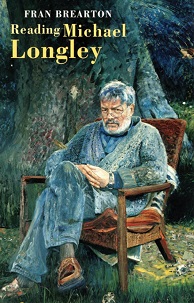
De Ierse dichter Michael Longley werd geboren op 27 juli 1939 in Belfast. Zie ook alle tags voor Michael Longley op dit blog en ook mijn blog van 27 juli 2010.


Saint Francis To The Birds

And, summing up, I think of when
With cloud and cloudburst you confer,
By God's sheer genius lifted there,
Lighthearted starling, nervous wren.
It is perfection you rehearse -
God placed the limpet on a rock,
He dressed the primrose in its frock
upside down with its leg showing
And closed the chestnut in its purse:
Creating one more precedent,
With no less forethought, no less care
He gave you feathers and the air
To migrate to his best intent.
To useful angles well aligned,
At proper heights compelled to tilt,
Across kind landscapes yearly spilt -
Birds, you are always on his mind.
Quick emblems of his long estate,
It's good to have you overhead
Who understand when all is said,
When all is done, and it is late.
May my sermon, like your customs,
Reach suddenly beyond dispute -
Oh, birds entire and absolute,
Last birds above our broken homes.


Cloudberries

You give me cloudberry jam from Lapland,
Bog amber, snow-line titbits, scrumptious
Cloudberries sweetened slowly by the cold,
And costly enough for cloudberry wars
(Diplomatic wars, my dear).
Imagine us
Among the harvesters, keeping our distance
In sphagnum fields on the longest day
When dawn and dusk like frustrated lovers
Can kiss, legend has it, once a year. Ah,
Kisses at our age, cloudberry kisses.


 2058882-6c6ed47774a297a6146196c0ab1db55b.jpg
Michael Longley (Belfast, 27 juli 1939)
Cover


De Nederlandse schrijfster en psychologe Marijke Höweler werd geboren in Koog aan de Zaan op 27 juli 1938. Zie ook alle tags voor Marijke Höweler op dit blog en ook mijn blog van 27 juli 2010.

Uit: Zum Wohl, Zum Glück!

“Het was een avontuurlijke nacht geweest. Eenzaam, dat wel, maar het kan toch niet gewoon genoemd worden dat men zichzelf in het aardedonker duwend tegen een wildvreemde kamerwand aantreft? Een muur die van geen wijken weet op de plaats waar zich de deur naar het toilet behoort te bevinden. Terwijl men panisch trappelend voortwoelt, één hand om het geslacht, de andere verliezend in een baaierd van gordijnen op de plaats waar de linnenkast behoort te staan. Het is toch niet gewoon te noemen dat een volwassene zich tenslotte genoodzaakt ziet om zich van anderhalve liter vloeistof te ontdoen tegen een slaapkamermuur van schoon metselwerk terwijl hij het beddekleedje onder de voeten langzaam doorweekt voelt worden en ietsje warmer dan voordien? Tenminste, zo stond Jasper daar de volgende morgen tegenover terwijl hij het zachtblauwe matje beschaamd in de vuilnisbak propte. En dat vond Jasper eens te meer toen hij een half uur later onwennig afdalend langs de houten spiltrap de garage in kwam en na een tijdje begreep dat het drup-drup-drup op het dak van zijn glanzende Citroen...
Enfin, dit soort confrontaties waren in staat om hem een hele dag een rusteloos gevoel van onbehagen en onzekerheid te verschaffen. Gelukkig maar dat hij vakantie had. Hoewel, als hij gewoon in z'n eigen flat had geslapen dan zou het hele vernederende incident achterwege zijn gebleven. Zo piekerde Jasper voort, terwijl hij zijn autodak afsponsde en merkte dat dat weinig zin had zolang de bron niet was opgedroogd. Hij leek waarachtig wel een olifant geweest te zijn of een paard. Bovendien strookte de plaats van de lekkage niet met de plek waarop hij zich een verdieping hoger zo vreemd gedragen had die nacht. Dus tòch, dacht Jasper. Dus toch een dubbele houten vloer en dat stemde weer enigszins tot tevredenheid. Teder spreidde hij een dweiltje op het dak van de auto uit en even later klonk een gestaag gedruppel in het plastic afwasteiltje dat voor het grijpen had gestaan. Het schuifdak had tenslotte ook nog open kunnen staan.”

 2058882-ebd5665d8942d9e56c6cd9034e16e486.jpg
Marijke Höweler (27 juli 1938 - 5 mei 2006)


De Amerikaanse schrijver Theodore Herman Albert Dreiser werd geboren op 27 juli 1871 in Sullivan, Indiana. Zie ook alle tags voor Theodore Dreiser op dit blog en ook mijn blog van 27 juli 2010.

Uit: The Titan

“When Frank Algernon Cowperwood emerged from the Eastern District Penitentiary in Philadelphia he realized that the old life he had lived in that city since boyhood was ended. His youth was gone, and with it had been lost the great business prospects of his earlier manhood. He must begin again.
It would be useless to repeat how a second panic following upon a tremendous failure--that of Jay Cooke & Co.--had placed a second fortune in his hands. This restored wealth softened him in some degree. Fate seemed to have his personal welfare in charge. He was sick of the stock-exchange, anyhow, as a means of livelihood, and now decided that he would leave it once and for all. He would get in something else--street-railways, land deals, some of the boundless opportunities of the far West. Philadelphia was no longer pleasing to him. Though now free and rich, he was still a scandal to the pretenders, and the financial and social world was not prepared to accept him. He must go his way alone, unaided, or only secretly so, while his quondam friends watched his career from afar. So, thinking of this, he took the train one day, his charming mistress, now only twenty-six, coming to the station to see him off. He looked at her quite tenderly, for she was the quintessence of a certain type of feminine beauty.
"By-by, dearie," he smiled, as the train-bell signaled the approaching departure. "You and I will get out of this shortly. Don't grieve. I'll be back in two or three weeks, or I'll send for you. I'd take you now, only I don't know how that country is out there. We'll fix on some place, and then you watch me settle this fortune question. We'll not live under a cloud always. I'll get a divorce, and we'll marry, and things will come right with a bang. Money will do that."
He looked at her with his large, cool, penetrating eyes, and she clasped his cheeks between her hands”.


 2058882-457a9c156ace7832b7304e2786b45085.png
Theodore Dreiser (27 juli 1871 – 28 december 1945)
Cover


De Duitse schrijfster, dichteres en vertaalster Hilde Domin werd geboren in Keulen als Hilde Löwenstein op 27 juli 1909. Zie ook mijn blog van 27 juli 2010 en eveneens alle tags voor Hilde Domin op dit blog.


Harte fremde Hände

Harte fremde Hände
sollen über mich fahren
wie Pflüge
und deine Wurzeln zerreißen.
Ich will meinen Körper einreiben
mit fremdem Schweiß
wie mit einer beizenden Salbe
daß alle Poren vergessen
wie du riechst.
Haare ohne Namen
sollen auf meiner Haut liegen
wie Tannennadeln auf dem Waldboden,
andere Lippen die Augen küssen
die für dich weinen.

Und meine Seele, die dich sucht
so natürlich
wie abends ein Vogel über das Meer fliegt,
verliert die Richtung
und kommt
nie wieder an Land.


Magere Kost

Ich lege mich hin,
ich esse nicht und ich schlafe nicht,
ich gebe meinen Blumen
kein Wasser.
Es lohnt nicht den Finger zu heben.
Ich erwarte nichts.

Deine Stimme, die mich umarmt hat,
es ist viele Tage her,
ich habe jeden Tag
ein kleines Stück von ihr gegessen,
ich habe viele Tage
von ihr gelebt.
Bescheiden wie die Tiere der Armen
die am Wegrand
die schütteren Halme zupfen
und denen nichts gestreut wird.

So wenig, so viel
wie die Stimme,
die mich in den Arm nimmt,
musst du mir lassen.
Ich atme nicht
ohne die Stimme.


 2058882-61b93aaade6273f1ba307f7e057c3e53.jpg
Hilde Domin (27 juli 1909 - 22 februari 2006)


De Franse schrijver Julien Gracq werd geboren op 27 juli 1910 als Louis Poirier in Saint-Florent-le-Vieil bij Angers. Zie ook alle tags voor Julien Gracq op dit blog en ook mijn blog van 27 juli 2010.

Uit: Lettrines 2

« Fin octobre. Il n’a pas plu depuis quatre mois. Au jardin, les feuilles des arbustes pendent toutes droites et languissent après la pluie ; tous les massifs sont en fleur comme au plein de l’été. Depuis la mi-septembre, l’automne a été un une magnifique succession de journées chaudes ou tièdes, transparentes, gorgées, infusées de soleil jaune.
Avant-hier, revenant de Paris en voiture, je déjeunais dans un petit « relais » en plein champ, proche d’Ouzouer-le-Marché : devant moi, par la fenêtre, je voyais se déployer jusqu’à l’horizon un vaste pas de Beauce verte et jaune, sans un arbre, sans une haie. A deux kilomètres, la lisière d’un village, sans doute un de ces hameaux beaucerons murés, revêches, désertés, plus sinistres encore quand on les traverse sous le soleil, mais qui, battu directement qu’il était par l’écume verte et fleurie, me paraissait dans le lointain de l’étendue plein de charme. Plus loin encore, à cinq ou six kilomètres, une lisière de forêt. Rien ne bougeait, que le grésillement doré de la légère brume ; l’œil se nourrissait de la seule succulence de la lumières ; il semblait qu’on entendait le soleil se déplacer.
De telles saisons, de pareilles journées, si tardivement aventurées et menacées, ensorcelantes et pourtant sereines, évoquent le climat éperdu et condamné de l’amour et donnent l’envie d’inverser le vers de Baudelaire : ô femme dangereuse, ô séduisants climats ! La terre apparaît touchée au front de quelque signe de majesté : ce sont bien les royaumes de la terre, tout poudroyants de la couleur de l’or, et l’homme les visite, les dénombre et les engrange, inépuisablement. »


 2058882-a01e1c0718ca5b99336ae4c5786f7968.jpg
Julien Gracq (27 juli 1910 – 22 december 2007)


De Britse dichter en schrijver Hilaire Belloc werd geboren te St-Cloud op 27 juli 1870. Zie ook alle tags voor Hilaire Belloc op dit blog en ook mijn blog van 27 juli 2010.


November

November is that historied Emperor,
Conquered in age, but foot to foot with fate,
Who from his refuge high has heard the roar
Of squadrons in pursuit, and now, too late,
Stirrups the storm and calls the winds to war,
And arms the garrison of his last heirloom,
And shakes the sky to its extremest shore
With battle against irrevocable doom.

Till, driven and hurled from his strong citadels,
He flies in hurrying cloud and spurs him on,
Empty of lingerings, empty of farewells
And final benedictions, and is gone.
But in my garden all the trees have shed
Their legacies of the light, and all the flowers are dead.


December

Hoar Time about the house betakes him slow,
Seeking an entry for his weariness.
And in that dreadful company distress
And the sad night with silent footsteps go.
On my poor fire the brands are scarce aglow,
And in the woods without what memories press
Where, waning in the trees from less to less,
Mysterious bangs the hom6d moon and low.

For now December, full of aged care,
Comes in upon the yea and weakly grieves;
Mumbling his lost desires and his despair; .
And with mad trembling hand still interweaves,
The dank sear flower-stalks tangled in his hair,
While round about him whirl the rotten leaves.


 2058882-c9ff901a882387b66022d50ce06e0e6e.jpg
Hilaire Belloc (27 juli 1870. – 16 juli 1953)
Conversation Piece (G.K. Chesterton; Maurice Baring; Hilaire Belloc) door Sir Herbert James Gunn, 1932


De Russische schrijver Vladimir Korolenko werd geboren op 27 juli 1853 in Zjitomir (Volynië). Zie ook alle tags voor Vladimir Korolenko op dit blog en ook mijn blog van 27 juli 2010.

Uit: De Laatste Straal. Herinnering uit Siberië (Vertaald door Annie de Graaff)

“Op een kleinen akker bij den oever der Lena ligt het gehuchtje Njoeskjoe. Enkele schamele hutten klampen zich tegen de steile rotsen, als terugdeinzend voor den woestbruisenden stroom. Op dit gedeelte is de Lena smal, maar donderend bulderen de golven. Het water klotst tegen de bergen van den tegenovergestelden oever, en - zoo ergens - dan verdient de Lena hier den naam van ‘Gevloekte spleet.’
Inderdaad stroomt ze hier als door een reusachtige rotskloof, waar het donkere water loeit en bruist tusschen hemelhooge rotsen, klippen en spleten. Langen tijd blijven nevels hier hangen; altijd heerschen hier vochtige koude en eeuwige schemering. De bewoners van deze streek der Lena kenmerken zich door traagheid, moeheid, en een hopelooze berusting. Het droeve suizen der laryx-boomen, die op den bergrug groeien, is de eeuwige begeleiding van hun eentonig voortbestaan...
Dit gehucht bereikte ik, moe en verkleumd, tegen den nacht; hier begaf ik me te rusten; den volgenden morgen werd ik heel vroeg wakker.
Stilte heerschte alom. Ik keek door het raam; buiten was het noch licht, noch donker - een wazige schemering hing overal. De wind joeg door de ‘gevloekte spleet’ als door een schoorsteen, de nachtelijke schaduwen voor zich uitdrijvend. Als ik omhoog zag, ontwaarde ik een kleine lichte wolk aan den hemel. Dit was een teeken dat de overige wereld door een heldere morgenzon beschenen werd. Maar boven het gehucht bleef een koude nevel hangen... Hier was het mistig, stil, koud en somber.”


 2058882-83911f3e6c1f5fde21e54ee2e09d21d8.jpg
Vladimir Korolenko (27 juli 1853 – 25 december 1921)
Borstbeeld in Poltava


Onafhankelijk van geboortedata

De Iers-Britse schrijfster Eimear McBride werd geboren in 1976 in Liverpool en groeide op in Tubbercurry, County Sligo en in Castlebar, County Mayo. Zie ook alle tags voor Eimear McBride op dit blog.

Uit:  The Lesser Bohemians

“River run running to a northern sea. Thames. Needle skin brisk and the eyefuls of concrete. Lead by the. Strip for the. National Theatre. Go on. Get a ticket. Go in.
Here the vault and not Hawk’s Well. Smacks of the hell-less or at least of the sensible. I’d be. What I’d be. Is this the Olivier? Yeah, on upstairs for you. Through and oh to its canyon. I never saw so many chairs.
On beyond uncurtained stage – You may take and have me, please. But Saturday matinee. Sole in my row. Where is everyone else?
In the dark comes spiders out of art and first I’m sleuthed away. Measuring up the vying worlds. Meandering into the emphasised words but under neat speeches are oceanous platitudes and so I slide and slide. Up. Don’t sleep. Don’t. You do not. Settle my head back on my neck but the veining of boring expands and contracts until I’m left to myself. And soon I’m judging a hupped toupee. Then predicting a spit trajectory. Right down, I’d say, to that redhead asleep. Too far from here though.   Over there would be   Over there   ov    is it?
With black specs on? Really?   such a dead cert knit, and for London. Him. Of course it is.
And the air makes whistles.
And my brain makes hay.
Guts to gorge. Look at him. Be sure? It is. oh god. But if I sit still. Live for the stage. Focus on the actors and glorious fake and. Look again is he looking at me? Read at the programme.
Then he definitely isn’t.
Then it’s the interval. Look again.
He gets up pray for poise. More as he excuses himself across. Yet more at my aisle. Please poise at my step. Hello, I thought it was you, he says and I remember and I remember and make some word like Hi. Enjoying it? Yes I. Really? he says I thought I saw you nodding off? I wasn’t   it’s just my first time   I mean   you know   I was looking around. He solemn nods but somewhere smiles So how have you been? I scaldcheek Fine   and you? Fine, he says Coming out for a smoke? an unlit in his fingers. No, I No thanks, and go at reading biogs. like War and Peace. He loiters further but I am shame sealed. Well, I’ll leave you to it, he says Nice to see you again. You too, I say and don’t look up. Do not watch him climb the steps. Nor think at all Why were you rude? Only Bladder, why have you forsaken me now? Just wait til he’s gone, then go.”

 2058882-cddacb98b07622c30be192d3ffbddec9.jpg
Eimear McBride (Liverpool, 1976)


De Nieuw-Zeelandse schrijver Graeme C. Simsion werd geboren in in Auckland, Australië, in 1956. Zie ook alle tags voor Graeme C. Simsion op dit blog.

Uit: The Rosie Project

“This was almost certainly an unsound generalisation, based on limited experience, and perhaps I should have recognised it as a warning sign. But it provided me with an opportunity for a creative suggestion.
‘We could get an ice-cream across the road.’
‘Great idea. As long as they’ve got apricot.’
I assessed that I was progressing well at this point, and did not think the apricot preference would be a problem. I was wrong. The ice-cream parlour had a vast selection of flavours, but they had exhausted their supply of apricot.
I ordered a chocolate chilli and liquorice double cone for myself and asked Elizabeth to nominate her second preference.
‘If they haven’t got apricot, I’ll pass.’
I couldn’t believe it. All ice-cream tastes essentially the same, due to chilling of the tastebuds. This is especially true of fruit flavours. I suggested mango.
‘No thanks, I’m fine.’
I explained the physiology of tastebud chilling in some detail. I predicted that if I purchased a mango and a peach ice-cream she would be incapable of differentiating. And, by extension, either would be equivalent to apricot.
‘They’re completely different,’ she said. ‘If you can’t tell mango from peach, that’s your problem.’
Now we had a simple objective disagreement that could
readily be resolved experimentally. I ordered a minimum-size ice-cream in each of the two flavours. But by the time the serving person had prepared them, and I turned to ask Elizabeth to close her eyes for the experiment, she had gone. So much for ‘evidence-based’. And for computer ‘scientist’.


 2058882-a77fa2c4c69c0ea21a7988b2c2007c50.jpg
Graeme C. Simsion (Auckland in 1956)


Zie voor nog meer schrijvers van de 27e juli ook mijn blog van 27 juli 2011 deel 2.

Geschreven door Romenu om 18:14 Reageer op dit bericht

Elizabeth Hardwick

De Amerikaanse schrijfster en literatuurcritica Elizabeth Hardwick werd geboren op 27 juli 1916 in Lexington, Kentucky, in een strikt protestantse familie. Ze studeerde af aan de Universiteit van Kentucky in 1939. In 1947 verwierf zij een Guggenheim Fellowship. In 1959 publiceerde Hardwick in Harper's, "The Decline of Book Reviewing", een over het algemeen harde en zelfs vernietigende kritiek op boekrecensies die in Amerikaanse tijdschriften van die tijd werden gepubliceerd. De krantenstaking uit 1962 in New York City heeft Hardwick, Robert Lowell, Jason Epstein, Barbara Epstein en Robert B. Silvers geïnspireerd om “The New York Review of Books” op te richten, een publicatie die voor veel lezers net zo gewoon werd als The New York Times Book Review die Hardwick in haar essay in 1959 aan flarden had gescheurd. In de jaren zeventig en het begin van de jaren tachtig gaf Hardwick lezingen aan het Barnard College en aan Columbia University's School of the Arts, Writing Division. Zij leverde openhartig kritiek op het schrijven van de studenten, maar was een mentor voor studenten die zij als veelbelovend beschouwde. Van 1949 tot 1972 was zij getrouwd met de dichter Robert Lowell, met wie zij een dochter kreeg. Zij werd gekozen tot Fellow van de Amerikaanse Academie van Kunsten en Wetenschappen in 1996. In 2008 selecteerde The Library of America het verhaal van Hardwick over de misdaden van Caryl Chessman voor opname in een retrospectief over twee eeuwen schrijven over American True Crime. Hardwick schreef drie romans: “The Ghostly Lover” (1945), “The Simple Truth” (1955) en “Sleepless Nights” (1979). Een bundel met korte verhalen, “The New York Stories van Elizabeth Hardwick”, werd in 2010 gepubliceerd. Ze publiceerde ook vier boeken met kritieken: “A View of My Own” (1962), “Seduction and Betrayal” (1974), “Bartleby in Manhattan” (1983) en “Sight-Readings” (1998). In 1961 stelde zij “The Selected Letters of William James” samen en in 2000 publiceerde ze een korte biografie, “Herman Melville”, in de Penguin Lives-serie van Viking Press

Uit: Seduction and Beayal

“For his own part the Reverend Brontë disowned claims to flamboyance and said: "I do not deny that I am somewhat eccentric.... Only don't set me on in my fury to burning hearthrugs, sawing the backs off chairs and tearing my wife's silk gowns." There were five daughters and one son in the Bronte fam-ily, and the father unluckily placed his hopes in his son, Branwell. It is only by accident that we know about people like Branwell who seemed destined for the arts, unable to work at anything else, and yet have not the talent, the tenac-ity, or the discipline to make any kind of sustained creative effort. With great hopes and at bitter financial sacrifice, Bran-well was sent up to London to study painting at the Academy Schools. The experience was wretched for him and he seemed to have sensed his lack of preparation, his uncertain dedi-cation, his faltering will. He never went to the school, did not present his letters of introduction, and spent his money in taverns drinking gin. It finally became necessary to return home in humiliation and to pretend that he had been robbed. One story has poor Branwell visiting the National Gallery and, in the presence of the great paintings there, despairing of his own talents. This is hard to credit, since the example of the great is seldom a deterrent to the mediocre. In any case, nothing leads us to think Branwell lacked vanity or expansive ideas of his own importance. Also, the deterrent of Branwell's own nature made any further impediments unnecessary. His nature was hysterical, addictive, self-indulgent. Very early he fell under the spell of alcohol and opium; his ravings and mis-eries destroyed the family peace, absorbed their energies, and depressed their spirits. He had to be talked to, watched over, soothed, and protected—and nothing really availed. Branwell destroyed his life with drugs and drink, and died of a bronchial infection at the age of thirty-one. Perhaps the true legacy Branwell left the world is to be found in the extraordinary violence of feeling, the elaborate language of bitterness and frustration in Wuthering Heights. It is not unreasonable to see the origin of some of Heathcliff's raging disappointment and disgust in Branwell's own excited sense of injury and betrayal. Emily Brontë took toward her brother an attitude of stoical pity and protectiveness. Char-lotte was, on the other hand, in despair at his deterioration, troubled by his weaknesses, and condemning of the pain he brought to the household. It is significant that Charlotte insisted Branwell did not know of the publication of his sisters' poems, nor of the composition of Wuthering Heights, Jane Eyre, and Agnes Grey.”


 2124690-0fedc82746b53671e576bc06dff2b7fd.jpeg
Elizabeth Hardwick (27 juli 1916 - 2 december 2007)

Geschreven door Romenu om 00:00 Reageer op dit bericht

Dan Coman

De Roemeense dichter en schrijver Dan Coman werd geboren op 27 juli 1975 in Gersa in de provincie Bistrita-Nasaud. Coman debuteerde in 1993 in het Minerva-magazine. Hij studeerde filosofie in Cluj (afgestudeerd in 1999). Hij publiceerde poëzie in de meeste van de belangrijke literaire tijdschriften in Roemenië. Voor zijn eerste bundel “Het jaar van de gele moedervlek” (Engels: “The Year of the Yellow Mole: , ontving hij de "Mihai Eminescu" Nationale Poëzieprijs en de Debuutprijs van de Roemeense Schrijversunie.In 2007 hield hij een gedichtenlezing, in het Frans vertaald door Linda Maria Baros, in Parijs, en in 2009 nam hij deel aan een poëzie- en vertaalworkshop in Zweden. In 2010 ontving hij een studiebeurs voor literatuur uitgereikt door Akademie Schloss Solitude. Coman heeft ook enkele goed ontvangen prozawerken gepubliceerd: “Irezistibil” (“Onweerstaanbaar”, 2010); “Parohia” (“De parochie”, 2012); en “Căsnicie” (“Huwelijk”, 2015). Zijn gedichten zijn vertaald en gepubliceerd in anthologieën en tijdschriften in Roemenië, Zweden, Frankrijk, de VS, Servië, Hongarije, Slovenië en Canada.


The New Mornings

several times a week there are new mornings
mornings that seem as good as any other
if they don’t quite reach a meter’s height

some educational cubes for children under one

coffee no longer fits in
tobacco no longer leaves the mouth and
our love sits close between us like a cow
shedding its hair

mara walks here
walks all sorts of small bodies
for whom the air is just a toy
to push quickly-quickly in the nose

these are new mornings
powdered milk rolls all over the length of them
a chicco sun ticks endlessy over their width

these are new mornings

a meter above them
our large bodies float already belly-up


Biscuits with apple sauce

i stay with mara at the window.
a beautiful winter’s day
it snows as we eat biscuits with apple sauce
not saying a thing.
each with the whole winter morning before us.
sometimes we stop eating and
press our noses to the glass
we stay that way without saying a thing
breath warms my face slowly
and slowly-slowly mara’s breath
spreads warmth throughout the park


Vertaald door Martin Woodside en Ioana Ieronim


 2113970-7b48f589ebf0ee7ed58247c2d33c18e5.jpg
Dan Coman (Gersa, 27 juli 1975)

Geschreven door Romenu om 00:00 Reageer op dit bericht

Meer van Romenu

↑ Terug naar de berichten