Naar de inhoud

Romenu

Over literatuur, gedichten, kunst en cultuur
akke.beakke.be

Berichten van 28 juli 2017 tot 29 juli 2017

Harry Mulisch, Chang-Rae Lee, Thomas Rosenlöcher, Guillermo Martínez, Marja Brouwers, Wolfgang Bittner

De Nederlandse schrijver Harry Mulisch werd geboren op 29 juli 1927 in Haarlem. Zie ook alle tags voor Harry Mulisch op dit blog.

Uit: De ontdekking van de hemel

“Nooit gaf Onno antwoord op belangstellende vragen naar zijn ontdekking. 'Lees dat maar na,' placht hij te zeggen, 'in de Journal of Near Eastern Studies. Ik maak geen overuren.' Maar nu, op Max' vraag hoe hij dat schrift ontcijferd had, legde hij geduldig uit dat er geen sprake was van ontcijferen, aangezien het sinds jaar en dag leesbaar was. Het bestond in grote trekken uit het griekse alfabet, maar het was geen grieks, het was onbegrijpelijk. Het was zoals wanneer iemand die geen grieks kende, het griekse alfabet leerde en dan zou proberen de Ilias te lezen. De etrusken waren een italisch volk, doceerde hij, dat in het huidige Toscane leefde: Tusci noemden de romeinse veroveraars hen. Het latijn zat vol etruskische leenwoorden, zoals persona voor 'masker', maar verder was alleen van een paar woorden de betekenis bekend, zoals van die voor 'god', 'vrouw', 'zoon'. Het probleem was, dat een lange bilingue ontbrak, zoals Champollions Steen van Rosette, met eenzelfde tekst in het etruskisch en in een bekende taal. Zij hadden dus iets met de grieken te maken, en tegelijk had hun taal niets te maken met het grieks. Zij schreven hun taal fonetisch met griekse letters, zoals gymnasiasten uit de eerste klas met hun naam deden, en zoals nederlanders deden met latijnse letters. Het volk kwam omstreeks de negende eeuw voor Christus dus ergens vandaan, waar ook grieken waren. Maar — en dat was de beslissende inval — het was natuurlijk ook mogelijk, dat de grieken ooit hun alfabet van de etrusken hadden overgenomen, om daarmee fonetisch hun eigen taal te schrijven: grieks dus. Dat was natuurlijk te gek om los te lopen; maar langs die weg, gesteund door allerlei archaeologische overwegingen, kwam hij terecht bij de kretische talen: lineair-B uit de vijftiende eeuw voor Christus, vijftien jaar geleden door wijlen zijn collega Michael Ventris ontcijferd, en lineair-A uit de achttiende eeuw, —waarachter weer semitische oorsprongen schuilgingen... 'Kortom, mijn beste Watson,' zei hij, toen zij Schiphol passeerden, 'door combineren en deduceren en een hoop geluk en wijsheid kwam ik er achter. De hooggeleerde Pellegrini beschouwt mij weliswaar nog steeds als een fantast en een charlatan, maar dat wijst voornamelijk op zijn autistische aard.' Wat heb je gestudeerd?' `Rechten.' `Rechten?' 'Dat is een familiekwaal.' 'Maar al die talen...' 'Liefhebberij. Ik ben een amateur, net als de grote Ventris, die was architect van huis uit. Als het moet, leer ik een taal in een maand. Ik kon al lezen toen ik drie was.' 'Hoeveel talen beheers je dan?' 'In tellen ben ik slecht. Dat lijkt mij meer iets voor jou. Hoeveel sterren zijn er?' 'We hebben ze nog niet allemaal geteld. Het aantal is trouwens niet constant.“


 2059219-0b1ce5c04535313e6c87cd94f3cfdd05.jpg
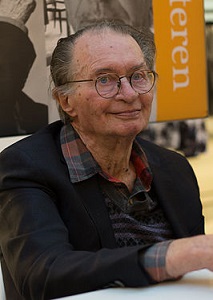
Harry Mulisch (29 juli 1927 – 30 oktober 2010)
Affiche voor de film


De Koreaans-Amerikaanse schrijver Chang-Rae Lee werd geboren op 29 juli 1965 in Seoel. Zie ook alle tags voor Chang-Rae Lee en alle tags voor Chang-Rae-Lee op dit blog.

Uit: Native Speaker

“Sometimes she would have kids over at our place. The children she saw had all kinds of articulation problems, some because of physiological defects like cleft palates or tied tongues. Others had had laryngectomies, or else defective hearing, or learning disabilities, or for an unknown reason had begun speaking much later than was normal. And then others—the ones I always paid close attention to—came to her because they had entered the first grade speaking a home language other than English. They were nonnative speakers. All day she helped these children manipulate their tongues and their lips and their exhaling breath, guiding them through the difficult language.
So I told her fine, she could take it easy with work, that I could handle the finances, we were solid that way. This is when she professed a desire to travel—she hadn’t yet said alone—and then in the next breath admitted she’d told the school people not to call for a while. She said she felt like maybe writing again, getting back to her essays and poems. She had published a few pieces in small, serious literary magazines early in our marriage, written some book reviews, articles, but nothing, she said harshly, that wasn’t half-embarrassing.
She handed the list to me at the Alitalia counter at Kennedy, before her flight to Rome and then on to Naples and, finally, Sicily and Corsica. This was the way she had worked it out. Her intention was to spend November and December shuttling between the Italian islands, in some off-season rental, completely alone.”


2059219-47d42fdb1e3f34589ef7aeefbcde29cc.jpg
Chang-Rae Lee (Seoel, 29 juli 1965)


De Duitse dichter en schrijver Thomas Rosenlöcher werd geboren op 29 juli 1947 in Dresden. Zie ook alle tags voor Thomas Rosenlöcher op dit blog en ook mijn blog van 29 juli 2010


Der Hauskauf

„Jetzt zeig ich Ihnen was Besondres“, sagte
der Makler und fuhr gleich durchs Hoftor, bis unter
den hoch übers eingesunkene Dach
blühenden Birnbaum. Hinterm Küchenfester
ein Teller, in dem der Löffel noch lag,
ein Bündel mit Briefen, die Brille, die jeder
einmal im Leben endgültig vergißt.
Im Schutt am Herd der Ahorn, der, im Tanz
ergrünend, seine durchscheinenden Blätter
zum Küchenschrank vorstreckte. „Wollten sie
nicht etwas Idyllisches?“ fragte der Makler
und gab mir den Schlüssel. Worauf ich prompt mit
der Tür ins Haus fiel. Jedoch je zaghafter
ich, ringsher von Kindheit und Plumpsklo umweht,
auftrat, desto existentieller das harsche
Ächzen der Stiege, nachkrachend quittiert
vom Rummsfuß des Maklers. Oben in der Kammer
Blümchentapete, Waschschüssel, Nachtschrank.
Im Bett lag ein Toter und schaute mich an.
Im kalkweißen Antlitz das imperiale
Kinn wackelte plötzlich, der schrumplige Mund
begann sich zu äußern: „Das wird aber Zeit,
daß ihr mich besucht, Jungs.“ Anhaltendes Rumpeln
als Treppensturz deutbar. Der hinter mir her
hinkende Makler halbierte den Preis.


Der Engel mit der Eisenbahnermütze

Er steht im Schnee, wo alle Züge enden.
Und zählt die Toten, die man, Stück für Stück,
an ihm vorüberträgt, von links nach rechts.

Doch schon bei sieben weiß er nicht mehr weiter.

Daß man die Toten, die von links nach rechts
an ihm vorbeigetragen worden waren,
erneut vorüberträgt, von rechts nach links.

Doch schon bei sieben weiß er nicht mehr weiter.

So zählt er immer noch am letzten Krieg,
obwohl der nächste schon gesichert ist
und wieder Tote angeliefert werden.


 2059219-3556106ffe4e53b0c4908290bda0fc41.jpg
Thomas Rosenlöcher (Dresden, 29 juli 1947)


De Argentijnse schrijver en wiskundige Guillermo Martínez werd geboren in Bahía Blanca op 29 juli 1962. Zie ook alle tags voor Guillermo Martinez op dit blog.

Uit:The Oxford Murders (Vertaald door Sonia Soto)

“We checked the house numbers along the road but, judging by the amount of the cheque I'd sent, I couldn't believe that the house I was looking for was one of these. At last, at the end of the road, we came to a row of identical little houses, much more modest but still pleasant, with rectangular wooden balconies and a summery look to them. Mrs Eagleton's was the first house. I unloaded my bags, climbed the small flight of steps at the entrance and rang the bell.
From the dates of her PhD thesis and early published work, I guessed that Emily Bronson must be about fifty-five, so I wondered how old the widow of her former professor might be. The door opened and I saw the angular face and dark-blue eyes of a tall, slim girl not much older than me. She held out her hand, smiling. We stared at each other in pleasant surprise, but then she seemed to draw back cautiously as she freed her hand, which I may have held a little too long. She told me her name, Beth, and tried to repeat mine, not entirely successfully, before showing me into a very cosy sitting room with a rug patterned with red and grey lozenges. Mrs Eagleton sat in a floral armchair and held out her hand, smiling welcomingly. The old lady had twinkling eyes and a lively manner, and her white hair was carefully arranged in a bun. As I crossed the room, I noticed that there was a wheelchair folded up and leaning against the back of her armchair. A tartan blanket was laid over her legs. We shook hands and I felt her frail, slightly tremulous fingers. She held my hand warmly for a moment, patting it with her other hand, and asked about my journey and whether this was my first visit to England. 'We weren't expecting someone so young, were we, Beth?' she said with surprise. Beth, standing by the door, smiled but said nothing. She took a key from a hook on the wall and, after I'd answered a few more questions, she suggested gently: 'Don't you think, grandmother, that we should show him to his room now? He must be terribly tired.' 'Of course,' said Mrs Eagleton. 'Beth will explain everything. And if you don't have anything else planned this evening, we'd be delighted if you'd join us for dinner."


 2059219-5c996c63d7937da8d87535496969aa44.jpg
Guillermo Martínez (Bahía Blanca, 29 juli 1962)


De Nederlandse schrijfster Marja Brouwers werd geboren op 29 juli 1948 in Bergen op Zoom. Zie ook alle tags voor Marka Brouwers op dit blog.

Uit: Absalom in Mississippi (Over William Faulkner)

“Al het werk van Faulkner staat met elkaar in verband. Dat is niet alleen een kwestie van visie, stijl of thema. Er is ook een onderlinge samenhang van een ander en minder gebruikelijk soort. Het ene verhaal kan een aanvulling, een uitbreiding of een reductie zijn van het andere. Soms wordt een incident elders voorzien van motieven of een oplossing. Vaak blijkt aan wat eerst een episode lijkt een gecompliceerde geschiedenis vast te zitten. Vermoedelijk kan elk afzonderlijk boek in de Yoknapatawphaserie wel los van de andere worden begrepen, maar het is nu juist de samenhang waarin de aard van Faulkners verhalende verbeelding zich prijsgeeft en waarin ook de hem zo dikwijls verweten ‘retoriek’ ten slotte haar rechtvaardiging vindt, niet als retoriek maar als een benadering van het om een of andere reden niet (meer) benoembare. Radeloos verkennen zijn vertellers alle categorieën van grammatica en logica. Ze klimmen op de nauwelijks begaanbare toppen van een schier onafzienbare woordenschat. Ze vallen in afgronden van machteloze herhaling en blijven bladzijden lang stilstaan in buitengewoon ingewikkelde abstracties. Maar we hoeven niet te snel aan te nemen dat zij iets vertegenwoordigen, het ‘moderne bewustzijn’ bijvoorbeeld, of iets anders dat klein genoeg is om er een cirkeltje omheen te trekken. Van de moderne mens onderscheiden ze zich alvast doordat ze, opgezweept door een epische kracht, de confrontatie met het onherstelbare regelrecht aangaan.
Al hun verhalen zijn op zichzelf weer de flarden of brokstukken van een grondpatroon, dat langzaam maar zeker zichtbaar wordt. Alhoewel Faulkner zich opwierp als de kroniekschrijver van dat ene denkbeeldige county in de staat Mississippi, kan het patroon moeiteloos worden doorgetrokken over de rest van Amerika's zuidelijke staten. In dat patroon schiep hij wat bekend is geworden als de mythe of legende van de Deep South.”


 2059219-c27b684e3debeffe9616ebdd9d61f22c.png
Marja Brouwers (Bergen op Zoom, 29 juli 1948)


De Duitse dichter en schrijver Wolfgang Bittner werd geboren op 29 juli 1941 in Gleiwitz, Oberschlesien (tegenwoordig Gliwice, Polen). Zie ook alle tags voor Wolfgang Bittner op dit blog en ook mijn blog van 29 juli 2010


Heimisch

Nun pflanzen wir
unseren Holler und den Rosmarin
in dem kleinen Gärtchen –
Seele vergiss nicht.
Schon frühmorgens besuchen uns
Amsel und Meisen –
Seele vergiss nicht,
während sich die Spitzmaus
nach der Inspektion ihres Reviers
im Loch unter dem Rosenstock –
Seele vergiss nicht,
zur Ruhe begibt.
Und wir und wir und wir
pfeifen uns eins,
eh wir verblühn.


Nocturne

Trifft mich die Traurigkeit
unversehens wie ein Stein,
zieht mich zusammen,
der Tag wie Watte, verfilzt.

Die Erde kalt,
der Himmel hängt,
lastend die Schwerkraft
und die Materie drückt.

Die Toten sprechen,
ja, ganz deutlich.
Wüsste ich doch noch,
was sie sagten.

Dann im Radio Frédéric Chopin,
Nocturne Nr. 19 e-Moll
und draußen
diese goldenen Rapsfelder.


 2059219-41b8ea89c13004788c6d0475e6bb7493.jpg
Wolfgang Bittner (Gliwice, 29 juli 1941)


Zie voor nog meer schrijvers van de 29e juli ook mijn vorige blog van vandaag.

Geschreven door Romenu om 09:24 Reageer op dit bericht

Stanley Kunitz, Sten Nadolny, Eyvind Johnson, August Stramm, Walter van den Berg

De Amerikaanse dichter en vertaler Stanley Jasspon Kunitz werd geboren in Worcester, Massachusetts, op 29 juli 1905. Zie ook alle tags voor Stanley Kunitz op dit blog en ook mijn blog van 29 juli 2010


The Layers

I have walked through many lives,
some of them my own,
and I am not who I was,
though some principle of being
abides, from which I struggle
not to stray.
When I look behind,
as I am compelled to look
before I can gather strength
to proceed on my journey,
I see the milestones dwindling
toward the horizon
and the slow fires trailing
from the abandoned camp-sites,
over which scavenger angels
wheel on heavy wings.
Oh, I have made myself a tribe
out of my true affections,
and my tribe is scattered!
How shall the heart be reconciled
to its feast of losses?
In a rising wind
the manic dust of my friends,
those who fell along the way,
bitterly stings my face.
Yet I turn, I turn,
exulting somewhat,
with my will intact to go
wherever I need to go,
and every stone on the road
precious to me.
In my darkest night,
when the moon was covered
and I roamed through wreckage,
a nimbus-clouded voice
directed me:
"Live in the layers,
not on the litter."
Though I lack the art
to decipher it,
no doubt the next chapter
in my book of transformations
is already written.
I am not done with my changes.


 2059216-f0bb4b04e68989c9cf325f99f61357a3.jpg
Stanley Kunitz (29 juli 1905 – 14 mei 2006)


De Duitse schrijver Sten Nadolny werd geboren op 29 juli 1942 in Zehdenick an der Havel. Zie ook alle tags voor Sten Nadolny op dit blog en ook mijn blog van 29 juli 2010

Uit: Weitlings Sommerfrische

“Sicher ist, dass ich im Leben ein paar grundlegende Dinge nie begriffen habe, und ich weiß nicht einmal, welche.. Nachts hatte Weitling diese Bemerkung auf einen Zettel geschrieben, noch halb im Schlaf, aber euphorisch, durchdrungen von einer grundlegenden Erkenntnis. Jetzt, auf der Terrasse am hellen Tage, las er die Zeilen wieder, sie kamen ihm etwas depressiv vor, allerdings nicht falsch. Es klang wie der Beginn von Selbsterkenntnis und Besserung. Nun liebte er am hellen Tage Sätze nicht, in denen zwar etwas steckte, aber nicht herauskam. Er war unschlüssig, wollte den Zettel weder aufheben noch wegwerfen. Neben seinem rechten Fuß war eine Bodenfliese locker. Er hob sie an, schob den Zettel darunter und murmelte: -Wiedervorlage!
Der Ostwind hatte aufgebrist. Sollte er das Boot klarmachen? Richter a.D. Wilhelm Weitling blinzelte in die Nachmittagssonne über dem Chiemsee: Ja, das war kein schlechter Tag dafür. In der Regel fand er das Segeln ein bisschen langweilig. Es diente hauptsächlich als Beweis dafür, dass ein Boot in Ordnung und dicht war, dass das Tuch richtig stand, die Blöcke nicht eingerostet waren und das Tauwerk hielt, was es sollte. Das ließ sich innerhalb einer Viertelstunde feststellen, und dann? Dann verging Zeit, viel Zeit.
Im übrigen verursachte die Segelei Rückenschmerzen, Schulterschmerzen, Sonnenbrand und so etwas wie Melancholie, wenn der Wind einschlief. Freude machte hingegen die Pflege eines Bootes all das Spachteln und Lackieren, Pnüfen und Schrauben, das Voraussehen von Schäden und Gefahren.“


 2059216-670880d6e1b06358e48ed3bd252e2b13.jpg
Sten Nadolny (Zehdenick an der Havel, 29 juli 1942)
Cover


De Zweedse schrijver Eyvind Olof Verner Johnson werd geboren in Svartbjörsbyn bij Boden op 29 juli 1900. Zie ook alle tags voor Eyvind Johnson op dit blogen ook mijn blog van 29 juli 2010

Uit:Ecartez le Soleil (Vertaald door Philippe Bouquet)

« — On pourrait parler de destins nus, n’est-ce pas, Henry ?
— Il n’y a pas de destins « nus » : il y a des destins, toutes les vies sont des destins. Le destin de chacun effleure le destin de tous. Nous ne sommes pas obligés de considérer cela comme une découverte tar­dive. On peut en faire une religion et bien d’autres choses, et c’est peut-être nécessaire.
— « Peut-être » est ton mot favori, Templeman ?
— L’un de mes mots favoris, dit-il alors. Et naturellement je pourrais parler de jeunes gens qui ne connaissent eux aussi la politique, c’est-à-dire ce jeu que nous jouons tous et qui nous concerne tous, que comme une maladie, une gêne, quelque chose de comparable au cancer, aux difficultés de respiration ou aux choses de ce genre. Mais je pourrais certainement aussi parler de bien des gens qui ont pensé et qui pensent que la politique joue un rôle extrêmement important. À peu près le rôle que la vie et son sous-produit, la mort, jouent pour le globe terrestre.
— Voulez-vous vous prononcer sur le mot désespoir, Mr. Brace ?
— Je veux y penser, dit-il. Je suppose – remarquez que je dis : suppose – qu’on en a abusé, comme de tant d’autres mots.
— Que veux-tu dire, Henry ?
— Que bien des gens ont été et sont désespérés sans l’être.
En une autre occasion, il dit :
— Après coup, comme cela, on pénètre bien plus profondément en eux si l’on peut dire, se remémorer et retenir l’image de la façon dont ils se sont conduits, déplacés, exprimés.
— Mais c’est évident !
— Je dis cela parce que, dit-il, je répète cela pour le rendre encore plus évident et intelligible."


 2059216-dbed215c574b4e1f0b15a1d804480720.jpg
Eyvind Johnson (29 juli 1900 - 25 augustus 1976)


De Duitse dichter en toneelschrijver August Stramm werd geboren op 29 juli 1874 in Münster, Westfalen. Zie ook alle tags voor August Stramm op dit blog en ook mijn blog van 29 juli 2010

Uit:Der Letzte

„He! da oben! lachen! ich lache! drei Tage stürzen! brüllen! drei Tage Jahre Ewigkeiten! und bist noch nicht zerstürzt! verfluchter Himmel! Blaubalg! pafft Zigarren und stiebt Asche. alles zusammen. den Graben. Schützengraben. Schutz. Grab. die Stellung wird gehalten bis zum letzten Mann! vorwärts Jungens. das Blaugespenst klimmt rote Augen auf. rot. feuerrot. verschlafen. der Tag hält nicht aus. so oder so! schießt! schießt! der Wald! ja. in den Wald! Schädel. Wolken. lustig! der beste Schütze darf. Ja. darf zuerst schlafen. Teufel! schlafen. Mord Müdigkeit Rasen Wut! He! Bursche! Bursche da vorn! willst du? willst du schießen?! du? ja? der Kopf zwischen die Beine geklatscht? Drückeberger! schießen! knallen! seht! sie kommen aus dem Wald. raus aus dem Lauf! die Backe gesetzt! brav! brav! Schnellfeuer! Blaue Bohnen! Bohnen! Blaue Augen! mein Schatz hat blaue Augen. haha! drauf! drauf! sie laufen. Korn nehmen. Zielscheiben. laufen. Mädchenbeine. ich beiße. beiße. verflucht. Küsse scharfe. drauf gehalten! Standvisier Aug in Auge! Wasser? was? die Läufe glühn? alle Schläuche glühn. letzte Nacht hat die Feldflasche zerschlagen. das trockne Glas geleckt. die Zunge blutet. schluckt. schluckt. schießt die Flinten kalt. euch selber kalt! kaltes Blut! da vorne pfützt Wasser. pfui Teufel! gierig! Dreck! Blut. blutiger Dreck. Blut modert zu schnell. Feuer! Schnellfeuer! raus! nicht einschlafen! wer? nehmt ihm die Patronen aus der Tasche. wir brauchen sie. der Kerl blutet! ein kleines Loch kann so bluten! schießen! Zielpunkt. Donner! Knacken! das Flattern! so müßt ihr auch schießen. zielen. zielen. gut. ruhig. die Hunde drüben. die arme Erde. Brief in der Tasche? natürlich. schlapp und gleich tot auf der Nase. »mein lieber Mann!« ja. Männer brauchen wir. aber keine toten hier. essen. Bröckel Schokolade. Mutter. schießt Kerle. ach Mütter weinen immer. schießt! ich war ein weicher Junge. Teufel! Kopf hoch! die Nasen aus dem Dreck! was?! keiner? alle? Faullenzer! Verstärkung. hört ihr? Verstärkung kommt. Feind nicht ranlassen! die Flinten vor! Teufel! totsein ist Schande! seht! ich schieße. schieße. Verstärkung. hört! Trommeln. Hörner. tata trrr! eilt da hinten! eilt! Muttertränen. Vaterbrünste. Dreck! drei Tage Dreck! Menschen! meine Mutter hat mich immer so sorgsam gewaschen. Grab. Hölle. Teufel. mein Arm schießt. Finger ladet. Auge trifft. hurrah! hurrah! die Beine in die Hand! hurrah! Tod und Leben! hurrah! Eisen! hurrah! drauf! Mein Kopf! Kopf! wo ist mein Kopf? voran. fliegt. kollert. brav. Bursche! in den Feind! beißen beißen! Säbel! ha! weich der Vaterbauch.“


 2059216-2e0cd42fa4b83fb6018980154315e053.jpg
August Stramm (29 juli 1874 – 1 september 1915)


Onafhankelijk van geboortedata

De Nederlandse schrijver Walter van den Berg werd geboren in Amstelveen in 1970. Zie ook alle tags voor Walter van den Berg op dit blog.

Uit: Sloterparkbad

“In het jaar dat Robbie ging trouwen, was het allemaal al afgelopen. Vroeger was het nog gezellig op het plein, maar de meeste jongens vonden het wel mooi geweest; we zagen bijna niemand meer.
De zomer van dat jaar zat ik in de ziektewet, met m'n linkerbeen net tot onder m'n knie in het gips, en ik deed helemaal niets - ik zat voor de deur in de schaduw en ik was te belazerd om de straat uit te lopen. Ik had er geen zin in. Ik zat alleen maar te wachten tot Cindy terug zou komen van de camping. Iedereen ging verder zwemmen in het Sloterparkbad of ze stapten in de auto naar Zandvoort, en ze vroegen wel of ik meeging, ga je mee nou Cor, het is toch niet erg dat je niet kan zwemmen, het is gezellig als je erbij bent; maar het was zo godvergeten heet en leuk was het allang niet meer met de jongens.
We deden nooit meer iets en we zagen niemand van het ouwe groepje meer. Vroeger stonden we altijd met z'n allen op het plein: Nico en Michael en Robbie en ik, Rooie Paultje en Dikke Marcel van het kamp, die ouwe Jimmie Bakker en de twee Appies: Abdelhafid en Abdelhamed, Witte Mo de heler die op kleine meisjes geilde en Erroll met z'n negerpraatjes en z'n blonde vriendinnen en er waren er nog veel meer, op goeie avonden stonden we op het plein met wel twintig, dertig man... Maar Dikke Marcel en Rooie Paultje van het kamp waren dood nu, die sukkels. Ouwe Jimmie Bakker had een vriendin gekregen van wie hij niet meer met ons om mocht gaan, en hij luisterde ook nog naar haar, terwijl hij vroeger altijd de grootste bek had gehad. Die Jimmie. En de twee Appies hadden geen tijd meer voor ons, die waren met z'n tweeën in de handel gegaan, en het waren geen nette zaken die ze deden. Iedereen gaat rustig z'n eigen kant op, en mooi wordt het nooit; niet bij ons. En de meeste jongens kwamen gewoon niet meer, zoals dat gaat; ze waren ermee opgehouden, dachten dat ze er te oud voor waren geworden, ze vonden het wel mooi geweest - en misschien hadden ze gelijk.
Rooie Paultje, die arme sukkel - als we op het plein stonden vroeger, had Rooie Paultje altijd een balletje bij zich; dat gooide hij dan door de open deuren van de c & a en die dobermann van 'm ging erachteraan. Al die wijven binnen gillen en wij lachen en zeggen kom Paul, nog een keer en die hond vond het prachtig, Paultjes wonderhond, en na twee of drie keer sloten ze de deuren.
Mooie tijden waren het. Maar Rooie Paultje was dood."


 2059216-2b319b2fb217e1274f9186b59bb1654f.jpg
Walter van den Berg (Amstelveen, 1970)
Het Sloterparkbad in Amsterdam

Geschreven door Romenu om 09:23 Reageer op dit bericht

Remco Campert, Malcolm Lowry, Herman Stevens, Gerard Manley Hopkins, Stephan Sanders, Angélica Gorodischer, Shahyar Ghanbari, John Ashbery, Drew Karpyshyn

De Nederlandse dichter schrijver Remco Campert werd op 28 juli 1929 in Den Haag geboren. Zie ook alle tags voor Remco Campert op dit blog.


Den Haag

Overal bevuilde daken
groen koper van kerken
brakke lucht uitgebeten huizen
afgegraasd grasland verwaarloosde zee.
O en de trieste trage gele trams
en het kippevel van de verwaaide straten.
Heel Den Haag was één Panorama Mesdag
elke dag een verregende koninginnedag.

Mijn grootvader ongeschoren
dwaalde als Strindberg door het huis
gevangen in zijn eigen kamerjas.

En zo speelziek en verlegen als ik was
met mijn kleine rubberdolk
beheerste dolleman
pleegde ik sluipmoord op een schemerlamp
of op zolder het oude lila kussen.


Bandrecorder, eenvoudig

Je hoeft niet te praten
ook geknisper van kranten komt duidelijk over
of als je slikt keelschraapt
een schoen uitschopt

het suizen van het gas
de tik van het licht uit
de telefoon buiten de auto's
mijn korte adem

maar als je toch iets zegt
zeg dan liever iets aardigs
iets dat i nog eens af kan draaien
als je weg bent.


Zo lag ik wel

(Zo lag ik wel
en lig ik nog: liefde
vernieuwt en en verdiept zich.

Steeds meer huiden wierp ik af-
nu eindelijk in mijn eigen
laatste vel,

ben ik kwetsbaarder dan ooit)


 2059111-0c79b613daaa252a6f00cd18eef279a0.jpg
Remco Campert (Den Haag, 28 juli 1929)


De Engelse dichter, verhalen- en romanschrijver Malcolm Lowry werd geboren 28 juli 1909 in Birkenhead Merseyside. Zie ook alle tags voor Malcolm Lowry op dit blog.

Uit: Under the Volcano

“The sun poured molten glass on the fields. The volcanoes seemed terrifying in the wild sunset. M. Laruelle walked swiftly, in the good heavy tennis shoes he should have already packed, swinging his tennis racket. A sense of fear had possessed him again, a sense of being, after all these years, and on his last day here, still a stranger. Four years, almost five, and he still felt like a wanderer on another planet. Not that that made it any the less hard to be leaving, even though he would soon, God willing, see Paris again. Ah well! He had few emotions about the war, save that it was bad. One side or the other would win. And in either case life would be hard. Though if the Allies lost it would be harder. And in either case one's own battle would go on. How continually, how startlingly, the landscape changed! Now the fields were full of stones: there was a row of dead trees. An abandoned plough, silhouetted against the sky, raised its arms to heaven in mute supplication; another planet, he reflected again, a strange planet where, if you looked a little farther, beyond the Tres Marias, you would find every sort of landscape at once, the Cotswolds, Windermere, New Hampshire, the meadows of the Eure-et-Loire, even the grey dunes of Cheshire, even the Sahara, a planet upon which, in the twinkling of an eye, you could change climates, and, if you cared to think so, in the crossing of a highway, three civilizations; but beautiful, there was no denying its beauty, fatal or cleansing as it happened to be, the beauty of the Earthly Paradise itself. Yet in the Earthly Paradise, what had he done? He had made few friends. He had acquired a Mexican mistress with whom he quarrelled, and numerous beautiful Mayan idols he would be unable to take out of the country, and he had —M. Laruelle wondered if it was going to rain: it sometimes, though rarely, did at this time of year, as last year for instance, it rained when it should not. And those were storm clouds in the south. He imagined he could smell the rain, and it ran in his head he would enjoy nothing better than to get wet, soaked through to the skin, to walk on and on through this wild country in his clinging white flannels getting wetter and wetter and wetter. He watched the douds: dark swift horses surging up the sky. A black storm breaking out of its season! That was what love was like, he thought; love which came too late. Only no sane calm succeeded it, as when the evening fragrance or slow sunlight and warmth returned to the surprised land! M. Laruelle hastened his steps still farther. And let such love strike you dumb, blind, mad, dead — your fate would not be altered by your simile. Tonnerre de dieu ... It slaked no thirst to say what love was like which came too late.”


 2059111-1ff0822d7e3f551d53167deade17478b.jpg
Malcolm Lowry (28 juli 1909 - 26 juni 1957)
Een ode aan Lowwry op Twitter


De Nederlandse schrijver, literair criticus en columnist Herman Stevens werd geboren in Rotterdam op 28 juli 1955. Zie ook alle tags voor Herman Stevens op dit blog.

Uit:Het paradijs herwonnen. Over ‘De dokter en het lichte meisje’ van S. Vestdijk

“De Sittardse politie heeft zich bij haar optreden laten leiden door de r.k. voorlichtingsdienst voor lectuur, de Idil.’ Deze afkorting, die klinkt als een gemoedelijke handelsnaam voor een hoofdpijnpoeder op opiumbasis, staat voor Inlichtingendienst inzake Lectuur, een bureau dat een periodiekje uitgaf waarin boeken werden geklasseerd met een cijfercode. De dokter en het lichte meisje, een roman waarin niet alleen een prostituée wordt bemind, maar waar ook een kruip door-sluip door katholiek in optreedt, werd met 1-2 gewaardeerd. Hetgeen inhield dat het boek ‘sterk voorbehouden voor geestelijk volwassenen’ moest blijven.
Vestdijk had het niet erg begrepen op de katholieke kerk. In bijna iedere roman wordt wel de draak gestoken met de klein-roomse vorm van schijnheiligheid, die de schrijver mede zal hebben geïntrigeerd omdat hij zelf zijn leven lang een hogere vorm van hypocrisie beoefende. In De dokter wordt daartoe een quasi Chinese levensleer ontwikkeld die in feite neerkomt op een carte blanche op het gebied van schuiven en draaien. Die leer heeft de held dan wel zelf opgezet, maar in veel romans worden de personages gefrustreerd door de geïnstitutionaliseerde bemoeizucht van de moederkerk ‘inzake’ het huwelijksleven. Zo blijft het in Else Böhler bij heilloze omhelzingen en bankjes in parken. Want Else heeft geleerd: echt trouwen doet men in de kerk en vervolgens krijgt men echte roomse kindertjes. Enzovoort.
Ik herinner me een interview van Bibeb met de schrijver. Het komt zo uit dat Bibeb een boterham blijft eten, wat haar in de gelegenheid stelt te noteren dat het zoontje Vestdijk driewerf de strijdkreet ‘Vuile paap, ik pis je onder!’ aanheft. Speelt dit tafereel zich af in Vestdijks nadagen, toen hij het betreurde als schrijver van vieze boeken te worden geafficheerd en toen zijn gezond kleinburgerlijke trekjes überhaupt wat meer naar voren traden, rond 1950 schuwt hij de controverse niet en de onverwachte publiciteit die hem vanwege Sittard ten deel viel zal niet werkelijk onwelkom zijn geweest. Binnen drie maanden was het boek aan een derde druk toe (ter vergelijking: zover was het alom hoog gewaardeerde De koperen tuin pas na zes jaar).”


 2059111-dabd8e17d59a2a70adc96d66207196c7.jpg
Herman Stevens (Rotterdam, 28 juli 1955)


De Engelse dichter en Jezuïet Gerard Manley Hopkins werd geboren op 28 juli 1844 in Stratford, Essex. Zie ook alle tags voor Gerard Manley Hopkins op dit blog.


On The Portrait Of Two Beautiful Young People
A Brother and Sister

O I admire and sorrow! The heart’s eye grieves
Discovering you, dark tramplers, tyrant years.
A juice rides rich through bluebells, in vine leaves,
And beauty’s dearest veriest vein is tears.

Happy the father, mother of these! Too fast:
Not that, but thus far, all with frailty, blest
In one fair fall; but, for time’s aftercast,
Creatures all heft, hope, hazard, interest.

And are they thus? The fine, the fingering beams
Their young delightful hour do feature down
That fleeted else like day-dissolvèd dreams
Or ringlet-race on burling Barrow brown.

She leans on him with such contentment fond
As well the sister sits, would well the wife;
His looks, the soul’s own letters, see beyond,
Gaze on, and fall directly forth on life.

But ah, bright forelock, cluster that you are
Of favoured make and mind and health and youth,
Where lies your landmark, seamark, or soul’s star?
There’s none but truth can stead you. Christ is truth.

There ’s none but good can bé good, both for you
And what sways with you, maybe this sweet maid;
None good but God—a warning wavèd to
One once that was found wanting when Good weighed.

Man lives that list, that leaning in the will
No wisdom can forecast by gauge or guess,
The selfless self of self, most strange, most still,
Fast furled and all foredrawn to No or Yes.

Your feast of; that most in you earnest eye
May but call on your banes to more carouse.
Worst will the best. What worm was here, we cry,
To have havoc-pocked so, see, the hung-heavenward boughs?

Enough: corruption was the world’s first woe.
What need I strain my heart beyond my ken?
O but I bear my burning witness though
Against the wild and wanton work of men.


 2059111-9d8ad52db3c7f608abc2a6d51d5758d1.JPG
Gerard Manley Hopkins (28 juli 1844 – 8 juni 1889) 
Het Gerard Manley Hopkins monument in Monasterevin, Kildare


De Nederlandse schrijver, columnist, presentator en essayist Stephan Sanders werd geboren in Haarlem op 28 juli 1961. Zie ook alle tags voor Stephan Sanders op dit blog.

Uit: Iets meer dan een seizoen

“Wat hadden we dan gedacht? Ik zeg het even alsof ik Anil ben.
Nou, dit: dat we ouder zouden worden en oud en dat we elkaar nog steeds zouden kennen. Het laatste deel van de zin vonden we feitelijk al onzin, want natuurlijk zouden we elkaar kennen, we kenden elkaar, het wonder was al geschied. De mogelijkheid dat we elkaar niet meer zouden kennen, in de verre toekomst, of vreemder nog: elkaar niet meer zouden willen kennen, was onvoorstelbaar. We waren juist broers geworden om ons bij voorbaat in te dekken tegen dat soort kinderachtige stemmingswisselingen. Inderdaad, broers geworden op volwassen leeftijd, zo had Anil besloten. Ik mee eens? Ik mee eens. Naast de gewone gegeven familie – de familie die hij gewoon vond – had Anil bedacht dat er ook één gekozen familielid zou bestaan – en dat was ik. Kwam dat even mooi uit, want ik was deskundig op het gebied van de niet-bio- logische verhoudingen, en getrouwd was ik niet, en dat zou er ook niet van komen. Anil mocht kiezen omdat hij daar in zijn vroegere leven zo weinig gebruik van had gemaakt; die kring van familie had al om hem heen gestaan toen hij geboren werd. Je kan dan zo moeilijk weigeren. Nu was het eens zíjn beurt. Zijn vrouw had hij gekozen, het mooie, maar ook wat afstandelijke buurmeisje dat hij eerst jarenlang vanuit zijn eigen huis had bespied als zij haar erf op liep; het erf dat naast zijn moederlijk huis lag. Buurmeisje werd echtgenote. Ideale vrouw gevonden op tien stappen van ouderlijk huis. Anil was in het kiezen niet zo’n dare devil. En mij dus, later, toch zo’n 7750 kilometer verwijderd van die twee belendende erven. Ik zou dan ook z’n lefmascotte worden, en als hij íets nodig had was het dat, vond ik. Lef. Mij.
Bij de eerste kennismaking, ergens midden jaren tachtig van de vorige eeuw, ontmoette ik een jongeman – want man was ie, en jong bleef hij veel langer dan zijn leeftijdsgenoten – die stuiterde van opwinding en enthousiasme. Dat was dus die Ramdas, die mij tot tweemaal toe zijn eigen boek had gestuurd: De strijd van de dansers. Biografische vertellingen uit Curaçao, over de verhoudingen tussen mannen en vrouwen, uitgegeven door de Socialistische Uitgeverij Amsterdam. Er was niets wat me naar dat werk deed grijpen. Er zat een uiterst dwingend briefje bij, waarin ik gesommeerd werd zo snel mogelijk contact met hem op te nemen. Zou het niet een geweldig idee zijn, als ik, redacteur van De Groene Amsterdammer, zijn boek ging recenseren."


 2059111-c386c225ba17f5ede6f9e6174e993e36.jpg
Stephan Sanders (Haarlem, 28 juli 1961)
Cover


De Argentijnse schrijfster Angélica Gorodischer werd geboren in Buenos Aires op 28 juli 1928. Zie ook alle tags voor Angélica Gorodischer op dit blog.

Uit: Kalpa Imperial (Vertaald door Ursula K. Le Guin)

“Ekkemantes I will probably smile, since he too loves plays, and fall to talking enthusiastically about the poetic tragedy by Orab'Maagg recently presented in the capital, until one of his counselors reminds him with a discreet cough that he can't spend an hour chattering with every one of his subjects because it would leave him no time to rule the Empire. And probably the good emperor, who seems born to smiles and good nature, though he wielded weapons like the black-winged angel of war when it was a matter of eradicating from the Empire the greed and cruelty of a damnable race, will reply to the coun-selor that chattering for an hour with each of his subjects is one way of ruling the Empire, and not the worst way, but that the lord counselor is right, and in order not to lose any more valu-able time, he'll dictate a decree to the lord counselor and sign it himself, ordering that a theater be constructed in the town of Sariaband. And very likely the counselor will stare and say: "My lord! Building a theater, even a theater for a very small town, is an expensive business!" "Oh, that's all right," the emperor may say, "let's not obsess about money. A theater's never expensive, because what goes on inside it teaches people to think and understand themselves. There's some jewel in the palace, some fortune down in the basement, to cover the cost. And if nothing turns up, we'll ask all the actors in the Empire to send the profits from one day, one evening, one show, to help build a theater in Sariaband, where some of them will act some day or where some day they'll see their son act, or their daughter, or a student who they've been trying to teach the hundred and eleven methods of expressing sorrow on the stage. And when the actors agree, we'll build a theater of the pink marble from the quarries of the province of Sariabb, and we'll ask the sculptors of the Imperial Academy to carve statues of Comedy and Tragedy to flank the doorways." And the play-lover will go off happy, whistling, his hands in his pockets, his heart light, and maybe before he reaches the doors of the great throne room he'll hear the emperor shout-ing after him, promising to come in person to the opening of the theater, and the lord counselor clicking his tongue in disap-proval of such a transgression of protocol. Well, well, I've let words run away with me, something a storyteller should take care to avoid; but I've known fear, and sometimes I need to reassure myself that there's nothing to fear any more, and the only way I have to do that is by the sound of my own words. Now, back to what I was getting at when I began, we all now have the right to use as if it were our own house, which it is—in that palace, in the south wing, in a salon that looks out on a very pretty hexagonal garden, there's a shapeless heap of dusty, dirty old stones.“


 2059111-4c7ca3b8ad7c70bc0e45198229a9d0c1.jpg
Angélica Gorodischer (Buenos Aires, 28 juli 1928)


De Iraanse dichter, songwriter en zanger Shahyar Ghanbari werd geboren op 28 juli 1950 in Tehera. Zie ook alle tags voor Shahyar Ghanbari op dit blog.


I've traveled around the world

I've traveled around the world.
I've been to the tired Taj Mahal.
I've been to the quite nights of the Shiva
with poetry as my dinner.

Nowhere could be as dear as my homeland,
no room could ever shelter me.

Venice was spectacular with all pirate ships.
A night in Rome with all bishops was a night of lonely springs.

The Madame Tussaud's was empty;
It was a place for chaffy faces.
The double checker red buses dancing in the fog
resembled a carpet being woven on a loom.

The morning in Champs-Elysee's was moonlit;
the Palace of Versailles was fully blue, like Dali's Sleep.
Paris was a sleepless city.

In front of me was the lady with a torch in her hand;
a little further, a black with no job was standing.
The City With No Angles was cold;
with loads of misery on blacks and Indians.

My pain was a nightmare to the painless.
I was next to me yet I felt lonely.
The night when the kites were lonely,
was the beginning and the end.


Vertaald door Mehdi Mehtari


 2059111-b135d6eca75a35ce4a755a5005ad0782.png
Shahyar Ghanbari (Teheran, 28 juli 1950)


De Amerikaanse dichter en schrijver John Ashbery werd geboren op 28 juli 1927 in Rochester. Zie ook alle tags voor John Ashberry op dit blog en ook mijn blog van 28 juli 2010


Into the Dusk-Charged Air (Fragment)

The Rhône slogs along through whitish banks
And the Rio Grande spins tales of the past.
The Loir bursts its frozen shackles
But the Moldau's wet mud ensnares it.
The East catches the light.
Near the Escaut the noise of factories echoes
And the sinuous Humboldt gurgles wildly.
The Po too flows, and the many-colored
Thames.
Into the Atlantic Ocean
Pours the Garonne. Few ships navigate
On the Housatonic, but quite a few can be seen
On the Elbe. For centuries
The Afton has flowed.
If the Rio Negro
Could abandon its song, and the Magdalena
The jungle flowers, the Tagus
Would still flow serenely, and the Ohio
Abrade its slate banks. The tan Euphrates would
Sidle silently across the world. The Yukon
Was choked with ice, but the Susquehanna still pushed
Bravely along. The Dee caught the day's last flares
Like the Pilcomayo's carrion rose.
The Peace offered eternal fragrance
Perhaps, but the Mackenzie churned livid mud
Like tan chalk-marks. Near where
The Brahmaputra slapped swollen dikes
And the Pechora? The São Francisco
Skulks amid gray, rubbery nettles. The Liard's
Reflexes are slow, and the Arkansas erodes
Anthracite hummocks. The Paraná stinks.
The Ottawa is light emerald green
Among grays. Better that the Indus fade
In steaming sands! Let the Brazos
Freeze solid! And the Wabash turn to a leaden
Cinder of ice! The Marañón is too tepid, we must
Find a way to freeze it hard. The Ural
Is freezing slowly in the blasts. The black Yonne
Congeals nicely.
And the Petit-Morin
Curls up on the solid earth.
The Inn
Does not remember better times, and the Merrimack's
Galvanized. The Ganges is liquid snow by now;
The Vyatka's ice-gray. The once-molten Tennessee s
Curdled. The Japurá is a pack of ice. Gelid
The Columbia's gray loam banks. The Don's merely
A giant icicle. The Niger freezes, slowly.


 2059111-dc582205b89f6eae3e8fd899e210f949.jpg
John Ashbery (Rochester, 28 juli 1927)


De Canadese schrijver Drew Karpyshyn werd geboren op 28 juli 1971 in Edmonton. Zie ook alle tags voor Drew Karpyshyn op dit blog en ook mijn blog van 28 juli 2010

Uit:Chaos Unleashed

“On the sandy shores of an island at the farthest edge of the sea that bounds the mortal world, four divine, glowing figures stand in a tight circle around an obelisk of black obsidian — the Keystone. It towers above them, fifty feet tall and ten feet across on each of its four sides. Carved into the smooth, dark rock are powerful runes, and shapes and shadows shift below the surface: the living, churning power of raw Chaos.
Hiding in his nether realm far across the Burning Sea, Daemron the Slayer watches the four glowing Immortals intently, images reflected in the still waters of a stone fountain stained with blood.
He is beaten but not bowed. The armies of the Old Gods defeated him on the field of battle, but their victory is hollow. He still lives, as do legions of his followers. Bound to the mortal world they created, the Old Gods cannot follow him here. And so he is content to wait, safe beyond their reach while he plans his counterattack; his armies resting and gathering strength while he uses his own powerful magic to spy on his enemies.
Peering across the infinite chasm of space and time, the four figures ap-pear as little more than blurred silhouettes of golden light. But even at this distance, he can sense that the power of the Old Gods has been dimin-ished. They are wounded, dying. He takes pride in knowing the cost of driving him into retreat is more than even an Immortal can afford to pay. His own wounds are far less grievous. Had he risked more, had he stayed on the front lines longer, perhaps the tide of battle could have been swayed back in his favor. But at what cost? His retreat ensured that he will endure long after the other Immortals are gone. Their end is inevitable, as is his triumphant return.


 2059111-0e0d7dda5c1a68aebae714968a73a0e0.jpg
Drew Karpyshyn (Edmonton, 28 juli 1971)
Cover


Zie voor nog meer schrijvers van de 28e juli ook mijn blog van 28 juli 2011 deel 2.

Geschreven door Romenu om 18:31 Reageer op dit bericht

Sarah Schulman

De Amerikaanse schrijfster, historica en activiste Sarah Miriam Schulman werd geboren op 28 juli 1958 in New York City. Zij bezocht de Hunter College High Schoolen studeerde aan de Universiteit van Chicago van 1976 tot 1978, maar studeerde niet af. Zij heeft een Bachelor of Arts graad van het Empire State College. Schulman's derde roman, “After Delores” uit 1988 kreeg een positieve recensie in de New York Times, en werd vertaald in acht talen, en werd in 1989 bekroond met een American Library Association Stonewall Book Award. Haar roman “Rat Bohemia” (1995) werd door Publishing Triangle uitgeroepen tot een van de 100 beste LGBT boeken. Voor “Stagestruck: Theatre, AIDS, en de Marketing of Gay America (1998) ontving Schulman de Stonewall Book Award. In 2009 publiceerde zij ”Ties That Bind: Familial Homophobia and Its Consequences”. In 2013 volgde “The Gentrification of the Mind: Witness to a Lost Imagination”, dat werd genomineerd voor een Lambda Literary Award. Schulman werd door Publisher Weekly uitgeroepen tot een van de 60 meest onderschatte schrijvers. Schulman was onder meer actief in de Women’s Union en The Committee for Abortion Rights and Against Sterilization Abuse (CARASA) In 1987 richtte Schulman en filmmaker Jim Hubbard het New York Lesbian en Gay Experimental Film Festival op, tegenwoordig MIX geheten. In 2001 richtten Schulman en Hubbard ook nog het ACT UP Oral History Project op. In de periode 1979-1994 werden 15 toneelstukken van haar geproduceerd in het kader van der avant garde "Downtown Arts Movement", gevestigd in de East Village van New York. In 2009 schreven Schulman en Cheryl Dunye het script voor Dunye's film “The Owls”. De film beleefde zijn wereldpremière op het internationale filmfestival van Berlijn in januari 2010. Daarna schreef het duo een X-rated film “Mommy Is Coming”, die in Duitsland werd geproduceerd door Jürgen Brüning en geselecteerd werd voor het Berlijnse Internationale Filmfestival van 2012. Schulman werkt tevens als Distinguished Professor of Humanities aan het College of Staten Island (CSI) en als Fellow aan het New York Institute for the Humanities.

Uit: The Gentrification of the Mind: Witness to a Lost Imagination

“The first gay book I ever saw was called Cylce Suck. It was on a shelf at The Oscar Wilde Bookstore on Christopher Street in 1975, next to some mimeographed pamphlets with titles like “The Woman-Identified Woman.”  From the beginning, I have always known that this is as it should be. Separating distinctions between the sexually explicit and the politically necessary would never made sense. Yet, as I am writing this in 2009, a scandal erupts- first on-line, and then in the mainstream print media.  Amazon.com, the mail order bookseller mega-monster, got caught in what they called a “glitch.”  In response to right-wing and Christian readers, they removed books with sexual content from their ranking system, thereby ensuring that erotic and pornographic books would not be able to get on best-seller lists. Either deliberately or inadvertently, gay and lesbian books were included in the ban, and so were automatically removed from the Amazon ranking system. This included some editions of all of my books.  The response of the gay community was tepid at best.  A number of spokespeople called upon by the mainstream media, or speaking out on Facebook and various blogs were “shocked” and “outraged” (see above responses to the passing of Proposition 8.) They couldn’t believe this was happening to them. The event was treated as an anomaly, irregular and extreme.  When it was made clear that these exclusions included James Baldwin novels, the outrage grew. How could “literature” be confused with pornography?
For me, Amazon’s actions were consistent with the way gay and lesbian literature has been contextualized in the United States. It is the surprise of some gay people, and the pretend “mistake” of a media/industry that consistently marginalizes our work as a matter of course, that constitutes the gentrified approach. As disenfranchised people often do the dirty work of the culture, we – gay, lesbian, bisexual (not yet transgendered- but that phenomena is inevitable) writers- gentrify ourselves. In the past, power brokers would not pretend that gay books were included when they are in fact excluded, and therefore susceptible gay people would not think that their work was included when it was in fact demeaned. The public explanation has changed, but the reality remains the same. The truth – that queer sexually truthful literature is seen as pornographic, and is systematically kept out of the hands and minds of most Americans, gay and straight- has been replaced with a false story of a non-existent integration and a fantasized equality, with no basis in lived fact."


 2081578-3b7cd05d16e81657cd676647cbb502f8.jpeg
Sarah Schulman (New York, 28 juli 1958)

Geschreven door Romenu om 00:00 Reageer op dit bericht

Meer van Romenu

↑ Terug naar de berichten