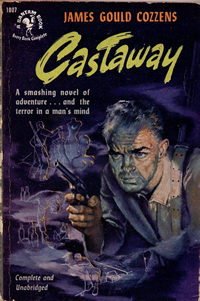
Naar de inhoud

Romenu

Over literatuur, gedichten, kunst en cultuur
akke.beakke.be

Berichten van 19 augustus 2017 tot 20 augustus 2017

Dolce far niente, Tom van Deel, Anneke Brassinga, Etgar Keret, James Rollins, Clemens Meyer, Arno Surminski


Dolce far niente


 2066037-44423900f230ffe028a4d0bd98f23605.jpg
Het Rijksmuseum in Amsterdam


Uit: De middelmoot is het smakelijkste van de vis. Over beeldgedichten van S. Vestdijk

“Een museum weet niet wat het teweeg brengt. Neem het museum waar we vandaag te gast zijn, het Rijksmuseum te Amsterdam. Het hangt boordevol met de allermooiste beelden en elke dag lopen daar honderden mensen langs. Wat ze erbij denken komen we niet te weten, een enkele keer vangen we wel eens een eenvoudige uitdrukking op, zoals ‘prachtig’ of ‘vreselijk’, maar in het algemeen geeft het museum alles en krijgt het bijna niets terug.
Een enkele keer loopt er tussen de bezoekers een dichter en dan kan het voorkomen dat de indruk die een of ander kunstwerk op hem maakt wordt uitgesproken in een gedicht. Zo was, naar eigen zeggen, de jonge Pierre Kemp niet weg te slaan bij ‘Het Joodse Bruidje’.
(...)

Kemp is niet de enige dichter die in het Rijksmuseum een indruk voor het leven onderging. Hans Faverey kwam geregeld even langs bij het kleine, transparante stilleven met asperges van Adriaan Coorte, waarin hem vooral de lichtval aantrok. J. Bernlef zag zichzelf weer zitten in de Haarlemse St. Bavo toen hij naar het schilderij van Pieter Saenredam keek en zelfs meende hij in de minuscule figuur achter de pilaar, boven op de gaanderij, de gebochelde schilder te herkennen. H.H. ter Balkt moet naar de Hercules Seghers-tentoonstelling in het Rijksprentenkabinet zijn geweest, in 1967, want uit zijn gedichten over leven en werk van Seghers blijkt dat hij de catalogus met vrucht heeft gelezen.
(...)

De schrijver S. Vestdijk, over wie ik het nu in het vervolg wil hebben, is door het Rijksmuseum gevormd. Op tienjarige leeftijd bezocht hij het, samen met zijn tante, geheel tegen de regels die bepaalden dat kinderen beneden de twaalf, zelfs onder geleide, geen toegang hadden.[...] Maar het meest en wel tot in het diepst van zijn ziel werd hij getroffen door een schilderij dat Sint Sebastiaan voorstelde, dat toen nog aan A. Cano werd toegeschreven, maar tegenwoordig aan de Spaanse schilder Juan Carreño de Miranda. Het schilderij had een zelfde ingrijpende werking als, ongeveer in diezelfde tijd, de Apollo-tors uit Milete in het Louvre op Rilke had. Het veranderde zijn leven."


 2066037-cf846dba3c3f8bf41e28c019f5d8450f.jpg
Tom van Deel (Apeldoorn, 21 februari 1945)
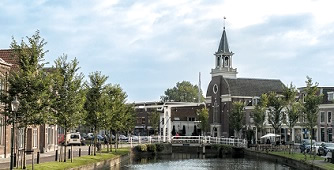
Apeldoorn Raadhuisplein


De Nederlandse dichteres, schrijfster en vertaalster Anneke Brassinga werd geboren in Schaarsbergen op 20 augustus 1948. Zie ook alle tags voor Anneke Brassinga op dit blog en ook mijn blog van 20 augustus 2010.


Roeping

Fluit er een merel, dan voel ik geluk.
Fluit er een merel ten hemel schreiend mooi
in China terwijl ik niet in China ben;

heeft naar verluidt men hier ter stede merels
ook gehoord in het blauwe schemeruur
van 3 Februarij 1603; zal, naar verwacht mag

over zes weken, in mijn tuin hun lied weer
klinken; stel dat ik al op weg zal zijn
gegaan, naar China, of het onbekende

voorbij de grens van mijn bestaan - hoe nu hier
leven zonder geluk? Op eigen kracht te horen
wat de merel zo vaak zong, het moet

volstaan. De oren toegestopt, in stilte,
denk ik dag in dag uit mij in dat ik
die ene ben en steeds een ander,

die urenlang of even maar en waar ook maar
door eeuwen heen geluk heeft en de merel hoort.
Dan vangt in mij misschien het zingen aan.


Merelloos

Achter de kastanje die krankzinnig is
geworden van de brullende merels, heel
mooi zoetgevooisd melodieus maar toch

als woedt er een uitslaande orgelbrand
in de kathedraal (komt allen nu samen
met blus dan wel spade, geen kelken Aärons

geen klokjesblommen! kwelen zij a capella)
- ten spoedigste, wat heet, ijlings wordt
onze stort van tranen ingewacht -; achter hem

die als een baltsende jezusboom van top tot
bijkans teen zijn mansdeelrijzige kaarsen
walmzoet en al lekkend heeft ontstoken,

staat goddank haveloos, volslagen kaal
het takkelijf van moeder esdoorn lief
te wenken: Kind, kop op! Al haast weer

winter! Schrale jij ontroost, mompel ik,
ontroostbaar nu eenmaal van heimwee
naar vroeger, toen voorjaar bestond

zonder mij. Maar van weeromstuit rollen
uit mijn knikkers weke parels en stralen
sterren in hun bloeddoorlopen breken.

Nabij, nabij o en voorgoed nabij o
koude klonterpap van modderdonker
merelloos het binnenste der aarde schoot.


Wadloper en meeuw

Vervloek me, vliespotige krijsende engel,
belaag me. Hoe walgelijk ook het slijk
de einder moet bereikt. Het wassen begint er,

het beter tij. Van kindsbeen, van huis uit
is mij ingefluisterd: op water lopen kan,
voor wie bereid is om de zee te drinken.


 2066037-2152de0ac1e7ffb08eb37b01b1786ea8.jpg
Anneke Brassinga (Schaarsbergen, 20 augustus 1948) 
Portret door Bert Megens, 2016


De Israëlische schrijver Etgar Keret werd geboren op 20 augustus 1967 in Ramat Gan. Zie ook alle tags voor Etgar Keret op dit blog en ook mijn blog van 20 augustus 2010.

Uit: The Seven Good Years: A Memoir

“My surprise at the miniature packages didn’t turn into genuine excitement until I opened them and discovered that the Coke tasted like the Coke in regular-size cans and the cornflakes were real, too. It’s hard to explain where that excitement actually came from. All we’re talking about is a soft drink and a breakfast cereal in much smaller packages, but when I was seven, I was sure I was witnessing a miracle.
Today, thirty years later, sitting in my living room in Tel Aviv and looking at my two-week-old son, I have exactly the same feeling: Here’s a man who weighs no more than ten pounds—but inside he’s angry, bored, frightened, and serene, just like any other man on this planet. Put a three-piece suit and a Rolex on him, stick a tiny attaché case in his hand, and send him out into the world, and he’ll negotiate, do battle, and close deals without even blinking. He doesn’t talk, that’s true. And he soils himself as if there were no tomorrow. I’m the first to admit he has a thing or two to learn before he can be shot into space or allowed to fly an F-16. But in principle, he’s a complete person wrapped in a nineteen-inch package, and not just any person, but one who’s very extreme, an eccentric, a character. The kind you respect but may not completely understand. Because, like all complex people, regardless of their height or weight, he has many sides.
My son, the enlightened one: As someone who has read a lot about Buddhism and has listened to two or three lectures given by gurus and even once had diarrhea in India, I have to say that my baby son is the first enlightened person I have ever met. He truly lives in the present: He never bears a grudge, never fears the future. He’s totally ego-free. He never tries to defend his honor or take credit. His grandparents, by the way, have already opened a savings account for him, and every time they rock him in his cradle, Grandpa tells him about the excellent interest rate he managed to get for him and how much money, at an anticipated single-digit average inflation rate, he’ll have in twenty-one years, when the account comes due. The little one makes no reply. But then Grandpa calculates the percentages against the prime interest rate, and I notice a few wrinkles appearing on my son’s forehead—the first cracks in the wall of his nirvana."


 2066037-e99d08b038711fc12b281cd16766ca71.jpg
Etgar Keret (Ramat Gan, 20 augustus 1967)


De Amerikaanse schrijver James Rollins (pseudoniem van James Paul Czajkowski) werd geboren in Chicago op 20 augustus 1961. Zie ook alle tags voor James Rollins op dit blog.

Uit:Crash and Burn

„April 17, 7:48 PM Airborne over the North Atlantic
You've got to be kidding me. A wolf whistle of appreciation drew Seichan's attention across the plush cabin of the Gulfstream G150. The configuration of the private jet allowed for four passengers, but at the moment she shared this flight from D.C. to Marrakesh with only one other traveler, but his size and bulk filled most of the plane's starboard side. Joe Kowalski stood well over six feet, most of it muscles and scars. His legs stretched from one chair to the other, his boots propped on the leather seat. He cradled a long case open on his lap. He rubbed a finger along his lower lip, his craggy brows pinched in concentration as he studied the contents cushioned in the box. His other hand traced the contours of the snub-nosed shotgun resting there. "Nice," he muttered. Seichan frowned at him. "How about not playing with a gun at thirty-five thousand feet." Talk about the wrong time, wrong place. He scowled at her concern and picked up the weapon, turning it one way, then the other. "It's not like it's loaded." He cracked the action open, exposing the double chambers—along with the two shells resting there. He quickly removed them and cleared his throat. "At least, not now." The case also held a belt of extra rounds. While the gun's side-by-side double barrels looked like something out of the Old West, Seichan knew there was nothing old-fashioned about the weapon. The label stamped inside the case confirmed this: PROPERTY OF HOMELAND SECURITY ADVANCED RESEARCH PROJECT The military prototype was called the Piezer. The stock of the weapon housed a powerful battery. Each 12-gauge shell—rather than being filled with buckshot or rock salt—was packed with piezoelectric crystals capable of holding an electric charge. Once powered up, the weapon would electrify the load, and with a pull of a trigger, the fired shell would explode in midair, blasting out a shower of shocking crystals, each carrying the voltage equivalent of a Taser. With no need to trail wires, the nonlethal weapon had a range of fifty yards, perfect for crowd control situations. "I thought we agreed to keep your new toy locked up until we landed," she said. Per mission protocol, their weapons—including her sheathed daggers—were stored in a camouflaged crate, one engineered to withstand most scrutiny. He shrugged sheepishly."


 2066037-de2895550f76209c725bf930b216adc8.jpg
James Rollins (Chicago, 20 augustus 1961)


De Duitse schrijver Clemens Meyer werd geboren op 20 augustus 1977 in Halle an der Saale. Zie ook alle tags voor Clemens Meyer op dit blog en ook mijn blog van 20 augustus 2010.

Uit:Die stillen Trabanten

„Wir arbeiteten auf den verwilderten Grünflächen neben einer Tankstelle, die direkt an der Schnellstraße lag. Es war heiß, und es gab nur wenige Bäume, die uns Schatten boten. Das Gras reichte uns bis über die Hüften, und wir mähten es mit Motorsensen, mit denen wir auch die kleinen Büsche dicht über dem Boden abtrennten. Wir hatten Eggen und anderes Werkzeug dabei, mit dem wir die Wurzeln herausreißen konnten. Auf dem Brachland wollte irgendjemand bauen, und wir fragten uns, wer wohl an der Schnellstraße wohnen wollte.
Gegen Mittag war es so heiß, dass wir eine längere Pause machten. Wir hatten früh am Morgen angefangen mit der Arbeit, als die Sonne noch rot hinter den feuchten Feldern und Wiesen lag. Wir gingen rüber zur Tankstelle, dort gab es einen Wasserhahn an der hinteren Wand, an dem wir uns oft erfrischten.
Drei Männer saßen auf dem Boden vor der Wand, die Beine angezogen, die Rücken an den Beton gelehnt. Vor ihnen standen Wasserflaschen, die sie wohl am Hahn gefüllt hatten. Sie sahen aus wie Indianer, wie sie da so saßen, halblange dunkle Haare, aber wer von uns hatte je einen Indianer gesehen, außer im Film.
Wir holten einen von unseren Türken, die in der Tankstelle Kaffee tranken und gar keine Türken waren, der radebrechte eine Weile mit den drei Männern, die immer wieder auf den kleinen Wald hinter der Tankstelle zeigten. Der Mittlere der drei war fast noch ein Kind, und er blickte uns nicht an und hatte seine Wasserflasche zu sich rangezogen.
Auch unser Türke zeigte nun auf den Wald, und wir marschierten los, um uns die Sache mal anzusehen.
Auf einer Lichtung hockten ein paar Frauen und Männer. Eine der Frauen hatte sich unter ihrem Kopftuch das Gesicht zerkratzt, und eine der anderen Frauen hielt ihre Arme fest. Sie hockten um einen kleinen Jungen, der auf dem Waldboden lag. Er hatte Blut erbrochen und um seinen Mund klebten Tannennadeln und Gras und etwas Erde. Wir beugten uns über ihn, aber er war tot.“


 2066037-bea3972b28af337281bc7ccc2d2f0b1c.jpg
Clemens Meyer (Halle an der Saale, 20 augustus 1977)


De Duitse schrijver Arno Surminski werd geboren op 20 augustus 1934 in Jäglack in Oostpruisen. Zie ook alle tags voor Arno Surminski op dit blog en ook mijn blog van 20 augustus 2010.

Uit:Von den Kriegen

“Der Tag fing gut an. Keine Wolke am Himmel, am Morgen schon eine Wärme, die für den Nachmittag große Hitze versprach. Baden wäre angebracht. Aber zuvor noch die letzte Vorlesung bei Professor Wiesener. Wieder wird es um die alte römische Geschichte gehen, vermutlich um die Punischen Kriege. Sie sind so fern, so unblutig. Ob die Karthager in Rom landeten oder die Römer in Karthago, was geht es uns heute noch an? Es ist erkaltete Geschichte, geronnenes Blut, an dem niemand mehr Anteil nimmt. Keine Schuld, keine Anklagen, keine Tränen.
Gero Warnecke studierte alte und neue Geschichte. Die alte Geschichte lag ihm mehr, weil sie abgestanden und emotionslos war; niemand weint heute über die toten Spartaner vom Thermopylenpass. Geboren wurde er im Jahr 1989, als die neue Geschichte kräftig Atem holte.
Das lag fast sechsundzwanzig Jahre zurück und war noch nicht erkaltet. Er kannte das Geschehen nur vom Hörensagen. Als seine Eltern mit einem Trabi von Ungarn nach Bayern fuhren, strampelte er in Mutters Bauch. Später erfuhrner, in seinem Geburtsjahr sei etwas Großes geschehen, vergleichbar mit der Entdeckung Amerikas. Die Eltern sagten, sie seien nur deshalb über die Grenze gefahren, weil sie ihrem ungeborenen Kind eine bessere Zukunft schenken wollten. Und so sah sie aus, die Zukunft: Student in einer weltoffenen Stadt mit der Aussicht, einmal Geschichtslehrer zu werden und den Schülern von fernen Kriegen zu erzählen. Er wusste zu wenig von dem Leben vor 1989, und wie es überhaupt dazu kommen konnte, dass damals eine große Geschichte geschrieben wurde. Deshalb blieb er bei den Punischen Kriegen. Sie regten niemand auf. Die Vorlesung war mäßig besucht, das Wetter zu gut für die alte Geschichte. Außerdem begannen die Semesterferien.
Gero neigte den Karthagern zu, Hannibal wäre sein Mann gewesen.
Wie wäre die Welt heute beschaffen, wenn wir kein Römisches, sondern ein Karthagisches Reich bekommen hätten?, fragte Wiesener und gab selbst die Antwort: Wohl auch nicht besser.“


 2066037-720ca8de1438ae395ec15553b00e6e1a.jpg
Arno Surminski (Jäglack, 20 augustus 1934)


Zie voor nog meer schrijvers van de 20e augustus ook mijn vorige twee blogs van vandaag.
Geschreven door Romenu om 18:37 Reageer op dit bericht

Maren Winter, Charles de Coster, Edgar Guest, Tarjei Vesaas, Salvatore Quasimodo, Colin MacInnes

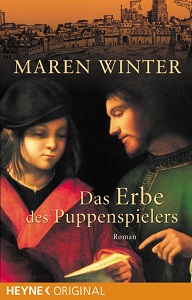
De Duitse schrijfster Maren Winter werd geboren op 20 augustus 1961 in Lübeck. Zie ook alle tags voor Maren Winter op dit blog.

Uit: Das Erbe des Puppenspielers

„Ihre Glieder waren von oben bis unten mit angetrocknetem Lehm bekleckst, man konnte die ursprüngliche Farbe ihrer Kleider nicht mehr erkennen, und aus der verfilzten Zottelmähne bröselte Staub. Das Gesicht war streifig verschmiert, aber ihre Augen glänzten wie polierte Kastanien. Ich stammelte etwas von "Küchenjunge", und sie brach in Gelächter aus.
"Du Mickerling willst Küchenjunge sein?", gluckste sie. "Ich heiße Gisela, und ich zeige dir lieber den Weg, sonst kommst du noch vor dem Essen unter die Hufe."
Schon rannte sie los, und ich hastete hinter ihr her zu einem steinernen Nebengebäude. "Warte nur, in ein paar Wochen bist du fett wie Bertha." Sie öffnete die Tür und schubste mich hinein.
Es duftete warm nach Suppe. Ein langer Tisch bestimmte das riesige Gewölbe. Hier wurden Fische geschuppt und Berge von Gemüse geschnitten.
An der Stirnseite stand der Koch, brummte Anweisungen und walkte kräftig den Teig. Seine Oberarme waberten dabei wie kalte Grütze. Ich überlegte, ob ich wohl zu ihm gehen und mich vorstellen musste. Doch da rollte aus dem dunstgeschwängerten Teil des Raumes eine Magd heran, ein mächtiges Weib, in dessen Busen man gewiss ersticken konnte. Das musste Bertha sein. Sie entdeckte mich und schob sich um den Tisch. "Wer ist das?"
"Mein Name ist Meginhard, der Meier hat gesagt, ich soll ... "
"He, Eigil!", rief sie gellend. "Du bekommst Unterstützung. Der Bastard hier will dir das Wasser tragen."

 2066028-736f5129fe90cf726767b76e36fef836.jpg
Maren Winter (Lübeck, 20 augustus 1961)
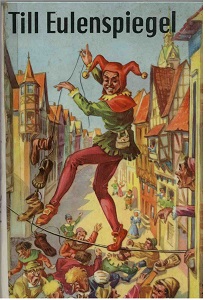
Cover


De Belgische schrijver Charles de Coster werd geboren in München op 20 augustus 1827. Zie ook alle tags voor Charles de Coster op dit blog.

Uit: De legende en de heldhaftige, vroolijke en roemrijke daden van Uilenspiegel en Lamme Goedzak in Vlaanderenland en elders

“Dien dag besloot Zijne Heilige Majesteit keizer Karel, groote feesten te geven om de geboorte van zijn zoon te vieren. Evenals Klaas, besloot hij te gaan visschen, niet in de vaart, doch in de beurzen en tasschen zijner onderdanen. Daaruit is het dat vorstelijke lijnen karolussen, zilveren daalders, gouden leeuwen en al die wonderbare visschen trekken die, naar willekeur van den visscher, veranderen in fluweelen kleederen en schitterende edelgesteenten, in lekkeren wijn en smakelijke gerechten. Want de rivieren die 't rijkst zijn aan visch, zijn die niet waar het meeste water is.
Nadat Zijne Heilige Majesteit die van zijn raad bijeengeroepen had, besloot hij dat de vangst volgenderwijze geschieden zou:
De genadige infant zou rond negen of tien uren ten doop gebracht worden; ten blijke van hunne groote vreugde, zouden de inwoners van Valladolid heel den nacht, op eigen kosten, feesten en kermissen. Verder zouden zij, ten bate der armen, hun geld op de Groote Markt strooien.
Op vijf plaatsen van de stad zou eene fontein, tot den dageraad, goeden wijn spruiten, die door de stad moest betaald worden. Op vijf andere plaatsen zouden, op houten kramen, allerhande worsten, ossetongen en andere vleeschspijzen staan, mede ten laste van de stad.
Mede op eigen kosten zouden die van Valladolid op den doortocht van den stoet, in grooten getale, zegebogen oprichten, verbeeldende den Vrede, het Geluk, den Overvloed, de Fortuin en allerhande zinnebeeldige toespelingen op de gaven des hemels, waarmede zij onder de regeering van Zijne Heilige Majesteit begunstigd waren.
Ten slotte en behalve deze teekens van pais, zouden er andere opgericht worden, waarop, in helle kleuren, minder goedertieren kenteekenen zouden prijken, zooals leeuwen, arenden, lansen, hellebaarden, vlammende spiesen, kanonnen, falkonetten, slangen met wijden mond, mitsgaders al ander oorlogsgetuig, om op zinnebeeldige wijze de macht en de kracht van Zijne Heilige Majesteit voor te stellen.”


 2066028-dddcf3d7334545e8cbff8816371ccc48.jpg
Charles de Coster (20 augustus 1827 - 7 mei 1879)
Cover


De Engelse dichter Edgar Albert Guest werd geboren op 20 augustus 1881 in Birmingham, Engeland. Zie ook alle tags voor Edgar Guest op dit blog.


The Temple - What Makes It Of Worth

You may delve down to rock for your foundation piers,
You may go with your steel to the sky
You may purchase the best of the thought of the years,
And the finest of workmanship buy.
You may line with the rarest of marble each hall,
And with gold you may tint it; but then
It is only a building if it, after all,
Isn't filled with the spirit of men.

You may put up a structure of brick and of stone,
Such as never was put up before;
Place there the costliest woods that are grown,
And carve every pillar and door.
You may fill it with splendors of quarry and mine,
With the glories of brush and of pen —
But it's only a building, though ever so fine,
If it hasn't the spirit of men.

You may build such structure that lightning can't harm,
Or one that an earthquake can't raze;
You may build it of granite, and boast that its charm
Shall last to the end of all days.
But you might as well never have builded at all,
Never cleared off the bog and the fen,
If, after it's finished, its sheltering wall
Doesn't stand for the spirit of men.

For it isn't the marble, nor is it the stone
Nor is it the columns of steel,
By which is the worth of an edifice known;
But it's something that's living and real.


 2066028-dd266533b77097aae1d77242d028cb91.jpg
Edgar Guest (20 augustus 1881 – 5 augustus 1959)
Birmingham, canal


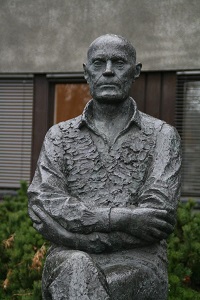
De Noorse dichter en schrijver Tarjei Vesaas werd geboren in in Vinje, Telemark op 20 augustus 1897. Zie ook alle tags voor Tarjei Vesaas op dit blog.

Uit: The Bridges (Vertaald door Elizabeth Rokkan)

“The wind filtering from the distance; and the old stone bridge over the river where the high road goes. The dark parapet of the bridge, its stones fretted over time by rain, sun and wind, tall and dominating in the landscape. The mountainside in the one direction does not detract from the bridge and its impressive appearance — daringly built, with wide arches.
A current that looks like still water.
A river that is too deep and powerful for its movements to be visible on this flat valley floor. No rippling of the current against the stones. Great masses of water glide away day and night, and no one thinks about it unless reminded of it. Gliding depths moving past without pause.
Out on the bridge the young boy Torvil came to a halt, stopped by some thought. It was a day in late summer. Idle holiday-time. Torvil looked absently down into the water. He was eighteen years old, lived beside this bridge, and had seen the bridge and the river for as long as he could remember.
Torvil stood thinking about his girl, his friend Aud.
Aud, too, he had seen every day for as long as he could remember, because she lived in the house next to his, and because she was the same age as himself. She had always been his playfellow. And she had been his only real friend.
Now they were eighteen years old.
They knew very well what their parents at home in the two houses were hoping for and counting on — and this alone acted as a brake on things that might otherwise have happened naturally. They felt they wanted to defy them. But they knew too that they liked one another, and had no need of any other company. Now and again they touched each other, but let go at once — because four wiseacres were sitting at home wanting this to happen. With a tingling in his body he thought about what would happen in the end all the same.
Torvil stood on the bridge and set a star on Aud. A star without a name."

 2066028-9a8bb99062c17c58fad29e43c0ef793f.jpg
Tarjei Vesaas (20 augustus 1897 – 15 maart 1970)
Standbeeld in Vinje 


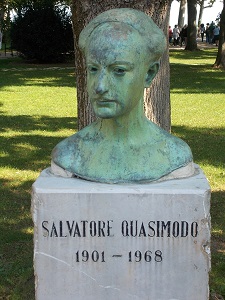
De Italiaanse dichter en criticus Salvatore Quasimodo werd geboren op 20 augustus 1901 in Modica op Sicilië. Zie ook alle tags voor Salvatore Quasimodo op dit blog.


Refuge of Nocturnal Birds

On the heights a twisted pine;
intent, listening to the void
with trunk arched in a bow?
Refuge of nocturnal birds,
it resounds at the ultimate hour,
with a beating of swift wings.
It even has its nest my heart
suspended in the darkness, a voice;
also listening, the night


The Sea Still Sounds

Even more so at night the sea still sounds,
Lightly, up and down, along the smooth sands.
Echo of an enclosed voice in the mind,
that returns in time; and also that
assiduous lament of the gulls; birds
perhaps of the summits that April
drives towards the plain; already
you are near to me in that voice;
and I wish there might yet come to you
from me, an echo of memory,
like this dark murmur of the sea.


Vertaald door A. S. Kline


 2066028-48e78803df41e9801b6a63c469d19742.JPG
Salvatore Quasimodo (20 augustus 1901 - 14 juni 1968)
Borstbeeld door Francesco Messina in Balatonfüred, Hongarije


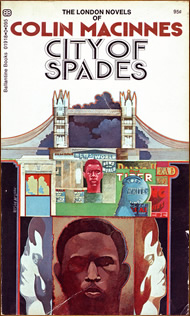
De Engelse schrijver en journalist Colin MacInnes werd geboren op 20 augustus 1914 in Londen. Zie ook alle tags voor Colin MacInnes op dit blog.

Uit:City of Spades

“He emitted a thin smile. ‘In that case, may I say I think you’re going to have quite a lot of fun?’
‘I sincerely hope so … I have certain vague impressions about Negroes, of course. I rather admire their sleek, loose-limbed appearance …’
‘Yes, yes. So very engaging.’
‘And their elegant, flamboyant style of dress is not without its charm …’
‘Ah, that far, personally, I cannot follow you.’
‘On the other hand, for their dismal spirituals and their idiotic calypso, I have the most marked distaste.’
‘I’m with you there, Pew, I’m glad to say. The European passion for these sad and silly songs has always baffled me. Though their jazz, in so far as it is theirs, is perhaps another matter.’
He had risen once again. I saw he had made up his mind I was beyond hope.
‘And what do I do with our coloured cousins?’ I asked him, rising too.
‘Yours is a wide assignment, limitless almost as the sea. You must be their unpaid lawyer, estate agent, wet-nurse and, in a word, their bloody guardian angel.’
The note of disdain, even though coming from a professional civil servant to an amateur, had become increasingly displeasing to me. I said with dignity: ‘Nothing, I suppose, could be more delightful and meritorious.’
He had now closed his eyes; and stood, at the door, a Whitehall Machiavelli.
‘Some might say,’ he told me softly, ‘that your duty is to help them to corrupt our country.’
Up went my brows.
‘So some might say … their irruption among us has not been an unmixed blessing. Thousands, you see, have come here in the last few years from Africa and the Caribbean, and given us what we never had before – a colour problem.’
His eyes opened slowly in a slit. ‘Could it not be,’ I said, ‘that we have given them just that in their own countries?’
‘My dear Pew! Could it be that I positively find myself in the presence of a liberal?’
‘My dear boy, of course you do! What else can one comfortably be in these monolithic days?’
He smiled with every tooth.”


 2066028-daaf97f9d16f67aa378c00ffc88c7694.jpg
Colin MacInnes (20 augustus 1914 - 22 april 1976)


Zie voor nog meer schrijvers van de 20e augustus ook mijn vorige blog van vandaag.
Geschreven door Romenu om 18:09 Reageer op dit bericht

Sylvie Richterová, Ernst-Jürgen Dreyer, Boleslaw Prus, Menno Lievers, Vasili Aksjonov, Jacqueline Susann

De Tsjechische schrijfster Sylvie Richterová werd geboren op 20 augustus 1945 in Brno. Zie ook mijn blog van 20 augustus 2007 en ook mijn blog van 20 augustus 2010.

Uit: Abc-Buch der Vatersprache

„Hinter ihr die beiden Mädchen, die Susanna beim Aussteigen nicht aus den Augen ließ, um zu sehen, wie sie die Emigration aufnahmen.
Markétka war sieben Jahre alt, Tereska fünf, sie sahen vor sich ihren Vater, ihre Tante, also mich, die Cousine Milena, die Freundin Ivana, deren Eltern, und eine Stadt, die sie nur am Rande wahrnahmen, die sich aber auf den ersten Blick keineswegs von Brünn unterschied, namentlich in Schwechat nicht, wohin alle gleich fuhren. Markétka bemerkte zwar, daß die Wohnung kleiner war, schmutziger und dunkler, aber Susanna begann gleich aufzuräumen und zu waschen, was ging und was nicht ging, und sie versicherte ihr auch, daß die Wohnung mit der Zeit besser und besser und vielleicht auch größer werden würde. Aleš war inzwischen mit der Toilette beschäftigt, die zum Empfang verstopft war oder gleich nach dem Empfang und mit einer Aufschrift in Tschechisch: /I/ Nichts, auch kein Papier hineinwerfen, versehen war, was die Kinder nicht durchgelesen hatten. Für die Kinder war es das beste, irgendwohin spielen zu gehen, bis die Wohnung wenigstens etwas wohnlich hergerichtet war, aber nicht auf die Straße, weil da außer dem Gehsteigrest nur der nicht abreißende Strom von mit Autobahngeschwindigkeit dahinrasenden Autos war. Und auch nicht in den Hof, denn dort bestand ein schriftliches Verbot, daß Kinder keinen Zutritt haben, auf einem Zettel, der am Eingang hing. Die Mama übersetzte es ihnen in einer Pause zwischen zwei Flugzeugen aus dem Deutschen ins Tschechische.
Mama, sagte darauf Tereska mit Hoffnung in der Stimme, wenn wir zur Großmutter gehen, kaufst du mir an der Ecke zur Palackýstraße ein Eis, ja! In diesem Moment begann Susanna zu begreifen, daß für Kinder das Emigrationsproblem äußerlich unsichtbar ist.
Und wahrscheinlich um so größer. Sie versprach Tereska ein österreichisches Eis, wenn sich auch das Kind unter diesem Eigenschaftswort nichts vorzustellen vermochte. Die Assoziation mit Eis verlieh Österreich immerhin doch etwas Verlockendes. Bevor es zu dem Eis kam, erhielten die Kinder noch ein Brot mit Marmelade, beides aus der Kiste aus Brünn ausgepackt, und aßen es im Park, der auch in Brünn hätte sein können, aber er war in Schwechat. Daß es auch das Eis in Brünn hätte sein können, merkte Tereska am Geschmack. Besser gesagt, sie erkannte keinen Unterschied.“


 2066025-44975e4ecb843e36b356df65ed4eeb90.jpg
Sylvie Richterová (Brno, 20 augustus 1945)


De Duitse schrijver, dichter, vertaler en muziekwetenschapper Ernst-Jürgen Dreyer werd geboren op 20 augustus 1934 in Oschatz in Saksen. Zie ook alle tags voor Ernst-Jürgen Drayer op dit blog en ook mijn blog van 20 augustus 2010.

Uit: Die Spaltung

„Zu der Zeit war er nun grade hinter Marion her, aber das hatte ich noch nicht spitzgekriegt, denn ich war, seit ich in Leipzig war, ja kaum mehr in Beul. Dieses dunkle Subjekt, ich kann dir nicht sagen ob es ein Grenzgänger war oder ein Spitzel oder ein verkrachter Philosoph, ein Abenteurer jedenfalls, wanderte jedenfalls auch durch unser undurchsichtiges Gespräch; und ich erinnere mich wie an einen leichten elektrischen Schlag an das Wort „gefährdet“, denn das hatte sie schon mal gesagt und jetzt fiel es zum zweiten Mal: Marion sei gefährdet. Marion sei neunzehn. Ich war, wie gesagt, innerlich überdreht vor Aufmerksamkeit und übrigens auch vor Unbehagen, denn es berührte den Nerv meiner eigenen Unkenntnis, daß mich diese erwachsene Frau so zum Mitwisser dessen machte, was in ihrer Tochter vorging. Denn es hatte doch irgendwas zu bedeuten, daß sie das gerade mir erzählte. Die Sorgen an und für sich, die begriff ich wohl, und ich verehrte die Frau auch wegen der ruhigen und klugen Art, in der sie sich sorgte, und daß eben keine Nervosität dabei war, sondern der Abstand, in dem diese Dinge ganz klar geworden sind, einmal, weil sie sie ja selbst erlebt hat, und zweitens, weil sie ihr nicht mehr über den Kopf wachsen. Aber warum sprach sie darüber mit mir, dem es ja auch nicht besser ging, und dem dieser Abstand ja auch fehlte. Und wenn sie es schon mir erzählen mußte, warum in dieser leisen, kreisenden unklaren Art, in diesem Zimmer hinter den Vorhängen. Verstehst du: ich hätte verstanden, wenn sie sich eben mal mit mir hätte unterhalten wollen, um mal zu sehen mit wem die Marion da so befreundet ist, und wenn sie gesagt hätte: also die Marion ist ein braves Mädchen, ich will hoffen, daß sies Abitur einigermaßen macht, usw. Vielleicht hatten wir auch zu Anfang einfach so bißchen über das und jenes und auch über Marions Leistungen in der Schule geredet, aber das Gespräch war in eine alarmierende Sphäre geraten, und ich wußte nicht, in welche Verpflichtung es wollte Vielleicht war diese Verwirrung auch viel kürzer als jetzt beim Wiedererzählen, und alles hing mit dem zweiten „gefährdet“ zusammen, denn das Gesprächsthema wechselte ja auch und sie sprach von dem Fest in Leipzig, zu dem ich Marion eingeladen hatte.“


 2066025-0060495697fbada9c19653a378103df6.jpg
Ernst-Jürgen Dreyer (Oschatz, 20 augustus 1934)
Oschatz 


De Poolse schrijver Bolesław Prus (eig. Aleksander Glowacki) werd geboren in Hrubieszów, Lublin, op 20 augustus 1847. Zie ook alle tags voor Boleslaw Prus op dit blog en ook mijn blog van 20 augustus 2009 en van 20 augustus 2010.

Uit: Fading Voices (Vertaald door Christopher Kasparek)

"In politics, my dear Captain," said the Colonel, "the prime virtue is caution. No doubt about it!..."
"I've always been of that opinion, my dear Colonel," replied the Captain. "And you may recall, I've often defended Bismarck..."
"Actually, you've more often said that he was a scoundrel..."
"Me, Colonel?... It was that late Kudelski, but mainly Domejko, God rest their souls!..."
Then he added:
"True, they were good officers, but—neither had a head for politics... even if they have both been called to God's judgment."
Finally—of a certain winter, the Captain died.
For the nonce, the Colonel showed no grief; he saw to the funeral and arranged for it to be worthy of an officer of two armies. He did not shed a single tear, but when at the graveside there rang out the infantry's salvos of farewell to his colleague, the old man suddenly reeled and fell, as though all the shots had been aimed at his chest.
They barely brought him back to his senses. For a few minutes he rested, then without anyone's help he got into a fiacre and rode home.
Next day an ad appeared in the local newspapers, announcing that the Colonel's house was for sale. A buyer was found quickly, and a week later the old man was preparing to take leave of hospitable France forever.
"Aren't you sorry to be leaving us, Colonel?" asked the notary who was drafting the papers for the sale.
"Yes, and no," replied the old man. "Yes, because you are a noble people whom it is worth shedding blood for. And no—because much has changed with you... You talk only of business, money, cuisine, partying... I'll do better, going back to my snows... There the people are different, they're my people. They'll understand me, and I'll understand them. Here things are terribly empty for me..."


2066025-5b3a55a24a808fc3b7742f2b1ad90683.png
Bolesław Prus (20 augustus 1847 – 19 mei 1912)
Prus als student in 1871


De Nederlandse schrijver Menno Lievers werd geboren op 20 augustus 1959 in Oosterwolde. Zie ook alle tags voor Menno Lievers op dit blog en ook mijn blog van 20 augustus 2010.

Uit: God bestaat en zijn naam is OSIRIS

“Dat was in 1992. Inmiddels is het lachen mij wel vergaan. Iedere docent, iedere student, iedere patience spelende portier, zit gekluisterd aan hun pc’tje. En wee je gebeente als ‘het systeem plat is’, dan kunnen we met z’n allen naar huis. Faculteiten worden samengevoegd enkel en alleen op budgettaire gronden, zodat Kants ‘Der Streit der Fakultäten’ na twee eeuwen de prullenbak in kan: obsoleet, want wat een faculteit tot een faculteit maakt, doet er helemaal niet meer toe.
Toen ik tentamen deed, sprak je, wanneer je dacht dat je daar klaar voor was, met een hoogleraar een pensum af, waar zijn colleges desgewenst deel van uit maakten, maar verplicht waren die niet, en ging je bij hem thuis op audiëntie voor een gesprek over de stof. Daar is een module met een door de beschikbare onderwijsruimte bepaalde maximumlimiet aan deelnemers voor in de plaats gekomen; cursussen met minder dan vijftien ingeschreven studenten worden binnenkort afgeschaft. Waneer je als docent begrip toont voor het feit dat een ambitieuze student haar essay wat later inlevert dan de deadline, wordt dat als insubordinerend gedrag beschouwd dat niet langer kan worden getolereerd.
De resultaten van essays moeten niet slechts binnen twee weken na inlevering aan de student bekend worden gemaakt, zoals Gispen het ooit had bedoeld. Nee, de resultaten moeten binnen tien werkdagen na afloop van de cursus op OSIRIS zijn ingevoerd, anders loopt de financiering, de studievoortgangreportage, het berekeningsmodel, de capaciteitstoetsing, de rendementsvaststelling en het evaluatiemodel spaak.”


 2066025-ea599f3d5cf3f326ccc18aa4bbd3f28b.jpg
Menno Lievers (Oosterwolde, 20 augustus 1959)


De Russische schrijver Vasili Pavlovitsj Aksjonov werd geboren in Kazan op 20 augustus 1932. Zie ook mijn blog van 20 augustus 2009 en ook mijn blog van 20 augustus 2010.

Uit:Der rosa Eisberg oder Auf der Suche nach der Gattung (Vertaald door Rosemarie Tietze)

„Künstler: Soll ich in eine Wolke mich verwandeln, in geistlosen Dunst?
Yogi: Kann ich nur empfehlen.
Künstler: Doch wo bleibt dann das Brodeln, der Moschusborn des Schöpfertums, Gebrüll, verwegner Angriff, wo die schweren Truhen der Retrospektiven? All dies verflüchtigt sich?
Yogi: Eben.
Künstler: Nein, nimmermehr geb ich das Feuer des Prometheus preis, den ew’gen Quell von Liebe, Verstauchung, Inspiration! Eher erschieß ich den Versucher. (Schießt auf ihn.)
Yogi: Ihre Kugel steckt mir unterm Schulterblatt.“
(…)

Yogi: Stehen sie auf. Sie sind schon keine Wolke mehr.
Künstler: Was dann? Wenn keine Wolke, wer bin ich dann?
Der Yogi schweigt."


 2066025-3a338c3401019a6daf21a1bf5c0b3c6a.jpg
Vasili Aksjonov (20 augustus 1932 - 6 juli 2009)


De Amerikaanse schrijfster Jacqueline Susann werd geboren op 20 augustus 1918 in Philadelphia, Pennsylvania. Zie ook alle tags voor Jacqueline Susann op dit blog en ook mijn blog van 20 augustus 2010 en ook mijn blog van 20 augustus 2009.

Uit: Shadow of the Dolls

“She had married Lyon Burke and moved into a ten-room apartment on Fifth Avenue with a glorious view of the park. The Bellamy, Bellows and Burke Agency represented some of the highest-paid movie talent, so there was no need for her to work. Her only daughter, Jennifer, went to the most exclusive girls' school in the city. Anne filled her days the way so many other women did on the Upper East Side: exercising, shopping, getting facials and manicures, redecorating her apartment, entertaining her husband's business friends. Anne and Lyon were one of the most sought-after couples in the city, and every day's mail brought at least half a dozen invitations: to dinner parties, to museum galas, to weekends in the country, to charity events, to gallery and film openings.
Anne Welles Burke had gotten everything she dreamed of. She had married the man of her dreams, the first man she had fallen in love with. She had the child she always wanted, a sweet girl with Lyon's blue eyes and Anne's fine Yankee bone structure. She lived in the apartment she had always fantasized about, surrounded by the best furniture, the best carpets, the best paintings. She had come to New York with nothing, and now the city belonged to her.
New York! New York! In the early spring evenings, after Jenn had gone to her room to do her homework and before Lyon came home from the office, she took a glass of Chardonnay onto the balcony. She looked down into Central Park, full of pink and white blossoms. She looked west across Manhattan, where another spectacular sunset streaked the sky. She looked south at the skyline, still as breathtaking as when she had first arrived fifteen years before. And she said to herself: Mine, mine, mine.
Sometimes she poured a second glass of wine. Music wafted in from the open windows of a neighboring apartment, a strand of Joni Mitchell, or early Van Morrison, or an old Dionne Warwick hit she had forgotten the name of.”


 2066025-6545e4d62f0d927ca9e6a3aa922a3264.png
Jacqueline Susann (20 augustus 1918 – 21 september 1974)

Geschreven door Romenu om 18:07 Reageer op dit bericht

Alfred Birney

De Nederlandse schrijver, essayist en columnist Alfred Alexander Birney werd geboren in Den Haag op 20 augustus 1951. Zie ook alle tags voor Alfred Birney op dit blog.

Uit:De tolk van Java

“Je was een grote man voor me, en een angstwekkende verschijning, toen je me dit lachend vertelde in een kille Holland-se huiskamer. De gitaar had jou en je kornuiten vergezeld, al schrijf je er nergens over, en zo lang het instrument leefde, leek de oorlog op een gezellig schoolreisje: beetje rondlopen, beetje keten, beetje kanen, lekker krontjongen* in de desa en gluren naar vrouwen die zich wassen in de rivier, al die schelmenverhalen die ik als kleine jongen avond na avond van jou moest aanhoren. Boven het voeteneinde van je bed in Soerabaja had het portret van de Koningin der Nederlanden gehangen, terwijl die makkers van je, met die groene baretten, pin-ups op hun tanks plakten. Jouw grote droom was voor hen een aardig betaalde klus, en voor de gekken onder hen een avontuur. Die mariniers van het eerste uur waren opgeleid in Amerika, en helden in jouw ogen. Hardleers als jij bent, zou je je hele leven naar die idiote Amerikaanse speelfilms blijven kijken waarin oorlog voor helden is en vrede voor lafaards. Je weigerde volwassen te worden, je bent altijd die jongen van twintig gebleven, niet?
Op een avond, ik was een jaar of achttien, nam je me plotseling mee uit, een zeldzaamheid. Nou ja, ik had vijf jaar lang niet bij je in huis gewoond, was op mijn dertiende door de Kinderbescherming bij jou weggehaald en, om met jou te spreken, naar een ‘internaat gedeporteerd’. Ik at er Hollandse kost en toch vond de Kinderbescherming het passend om na die jaren in het internaat broer Phil en mij in een Indisch kosthuis te plaatsen.
Onze hospita liep daar rond alsof ze nog in het koloniale Indië leefde. Wat een idiote manier van doen van die Kinderbescherming was dat. Je wordt eerst vijf jaar lang onder de Hollandse knoet opgevoed en vervolgens naar een tempo-doeloefamilie gestuurd. Tijdens jouw bezoekuren in het internaat had je aldoor gezegd dat je je kinderen terug wilde, je riep ons strijdvaardig toe dat je de ene na de andere rechtszaak voerde, dat wij bij jou hoorden, dat wij ‘jouw bloed’ waren en ga zo maar door.
Ondanks de waarschuwingen van broer Phil besloot ik dat benauwde Indische kosthuis te ontvluchten om te gaan naar waar ik volgens jou thuishoorde. Ik nam de tram naar Hollands Spoor, stapte op de bus en belde na een rit langs Voorburg en Leidschendam aan in een akelig schoon portiek in een nieuwbouwwijk in Voorschoten, op een kilometer afstand van mijn oude internaat.”


 2066386-4ca168fc8e41bdd0206a8a9e4b21833b.jpg
Alfred Birney (Den Haag, 20 augustus 1951)

Geschreven door Romenu om 00:00 Reageer op dit bericht

Mies Bouhuys, Jonathan Coe, Li-Young Lee, Frederik Lucien De Laere, Louis Th. Lehmann, Ogden Nash, Frank McCourt


Dolce far niente


 2065716-0c3ac7cba1cb18c272e4aec513c4c8e3.jpg
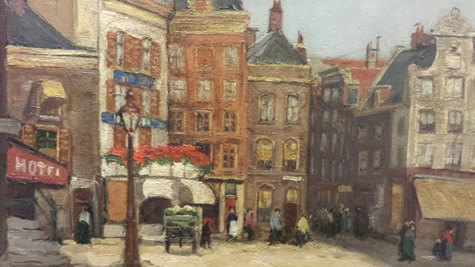
Rembrandtplein door Agatha Zethraeus, ca. 1911


Amsterdam

De gids zegt: kijk! De gids zegt: look!
De gids zegt: regardez!
Hier schreef Spinoza aan een boek,
daar stroomt het IJ naar zee.
Maar daarom niet, maar daarom niet,
om wat een ander erin ziet,
blijf ik in Amsterdam.
Maar om de gekke geveltjes,
om al die groene grachten,
om al die lichte venstertjes,
blijf ik hier overnachten.

De gids zegt: Hier! De gids zegt: There!
De gids zegt: Eh voilà!
Hier woonde 't laatste huisje rechts
Rembrandt met Saskia.
Maar daarom niet, nee, daarom niet,
om wat een ander ervan ziet,
blijf ik in Amsterdam.
Maar om de scheve kamertjes
waar anderen niets om geven,
vol vrouwtjes en vol mannetjes,
blijf ik hier heel mijn leven.

De gids zegt: Dam! De gids zegt: Munt!
De gids zegt: Rembrandtplein.
Wij staan hier op een historisch punt,
waar u geweest moet zijn.
De gids zegt dit, de gids zegt dat.
Ik zeg alleen maar: gekke stad.
Alleen maar: Amsterdam.


 2065716-d6ad0fe77100c663c9539d07065b5eb2.jpg
Mies Bouhuys (10 januari 1927 – 30 juni 2008)
Weesp, de geboorteplaats van Mies Bouhuys


De Engelse schrijver Jonathan Coe werd geboren op 19 augustus 1961 in Birmingham. Zie ook mijn blog van 19 augustus 2010 en eveneens alle tags voor Jonathan Coe op dit blog.

Uit: Number 11

“They sat for a few moments in silence: each of them, once again, trying to wrestle as best they could with the conundrum of why their parents should have chosen to go away for half-term without them. Then, as soon as the cold started to bite, Nicholas jumped to his feet.
'Come on,' he said. 'Are we going to look at this cathedral before it gets dark?'
'It's a minster, not a cathedral,' said Rachel.
'Same difference. It'll just be a big old church, whatever you call it.'
He set off quickly, with Rachel running up behind him in an effort to keep pace, but before they had got very far along the path back to the main road, they were halted in their tracks by the sight of two people approaching them in the distance. One of them was in a wheelchair: it appeared to be an old, old woman, swaddled against the afternoon chill by layer upon layer of thick woollen blankets. Her features were scarcely visible: her head was bowed, drooping tiredly, and she was wearing a silk headscarf which screened most of her face from view. In fact, the longer the children looked at her, the more likely it appeared that she was fast asleep. Her chair was being trundled roughly along the path, meanwhile, by a young-looking man wearing motorcycle leathers and balancing something on his left forearm as he pushed. The something could not, at first, be identified: but as the figures came closer, it looked as though it might – however implausible this seemed – be some sort of bird; a suspicion which was then suddenly and dramatically confirmed when the creature spread its wings to an amazing width, and flapped them languidly, in black silhouette against the grey sky – looking, at that moment, more like some fantastical hybrid creature from mythology than any real bird Rachel could remember having seen before.
Nicholas did not move, and as Rachel stood beside him she clasped his hand, relishing his weak responsive grip, sensing the coldness of his bare hand even through the prickly thickness of her woollen mittens. Unsure what to do next, they watched as the man in leathers settled the wheelchair in place and then spoke a few words to the bird, which reacted by hopping obediently from his arm to one of the chair's handles. With both arms free now, the man busied himself making sure the old lady in his charge was warm and comfortable, adjusting her blankets and tucking them in around her ever more snugly. Then he turned his attention to the bird.“


2065716-195ae01d08b6a950cc8ba8a46f9ca86f.jpg
Jonathan Coe (Birmingham, 19 augustus 1961)


De Amerikaanse dichter Li-Young Lee werd geboren op 19 augustus 1957 in Jakarta, Indonesië. Zie ook mijn blog van 19 augustus 2010 en eveneens alle tags voor Li-Young Lee op dit blog.


For A New Citizen Of These United States

Forgive me for thinking I saw
the irregular postage stamp of death;
a black moth the size of my left
thumbnail is all I've trapped in the damask.
There is no need for alarm. And

there is no need for sadness, if
the rain at the window now reminds you
of nothing; not even of that
parlor, long like a nave, where cloud-shadow,
wing-shadow, where father-shadow
continually confused the light. In flight,
leaf-throng and, later, soldiers and
flags deepened those windows to submarine.

But you don't remember, I know,
so I won't mention that house where Chung hid,
Lin wizened, you languished, and Ming-
Ming hush-hushed us with small song. And since you
don't recall the missionary
bells chiming the hour, or those words whose sounds
alone exhaust the heart--garden,
heaven, amen--I'll mention none of it.

After all, it was just our life,
merely years in a book of years. It was
1960, and we stood with
the other families on a crowded
railroad platform. The trains came, then
the rains, and then we got separated.

And in the interval between
familiar faces, events occurred, which
one of us faithfully pencilled
in a day-book bound by a rubber band.

But birds, as you say, fly forward.
So I won't show you letters and the shawl
I've so meaninglessly preserved.
And I won't hum along, if you don't, when
our mothers sing Nights in Shanghai.
I won't, each Spring, each time I smell lilac,
recall my mother, patiently
stitching money inside my coat lining,
if you don't remember your mother
preparing for your own escape.

After all, it was only our
life, our life and its forgetting.


 2065716-22436cccc02f189a122dd320860f26fa.jpg
Li-Young Lee (Jakarta, 19 augustus 1957)


De Vlaamse dichter Frederik Lucien De Laere werd geboren in Brugge op 19 augustus 1971. Zie ook mijn blog van 19 augustus 2010 en eveneens alle tags voor Frederik Lucien De Laere op dit blog.


Drang

Hoe zij in elkaar klikken
en hun harten gelijk kloppen,
de vingertoppen tintelen
en de slinger heen en weer gaat
van lijden naar genot.

Hun leven staat op het spel.
Binnen de lichamen
voltrekt zich een rel,
van het gerommel van genen
gaan zij zweten en zweven.

Wanneer zij oog in oog staan
groeien de pupillen en trillen
de benen, bestaan zij
op de speed van de liefde.
Al van bij de eerste kus
was er die focus
maar ook de waan
van de eeuwigheid.


Circe

De rook is een raadsel.
Zo goed en zo kwaad het kan
duizelen de mannen in het dal
op zoek naar een antwoord.
Rond het huis
door een soort leeuwen benaderd,
vleierig, aanlokkelijk, zonder moorddrang.
Circe spreekt, met haar tong neemt zij hen
in de tang en laat hen zwijnen zijn,
hun eigenlijke ik met stijgende vraatzucht.
Wie haar ontwijkt wint haar hart,
zo Odysseus
die met Hermes’ hulp
de klucht met een wonderplant bestreed
en een eind aan het leed
van zijn mannen smeedde,
een club vol jubel en tranen.


 2065716-3800e10df8ddd54f5bcdfca2b238760e.jpg
Frederik Lucien De Laere (Brugge, 19 augustus 1971)


De Nederlandse schrijver, dichter en vertaler Louis Th. Lehmann werd geboren op 19 augustus 1920 in Rotterdam. Zie ook mijn blog van 19 augustus 2010 en eveneens alle tags voor Louis Th. Lehmann op dit blog.


Paarden

I
Het paard slaapt in fluweel
en beweegt als hij droomt
van ruiters.
Door zijn grote ogen
kijkt de dag naar binnen
en ziet niets.

Ik groet in zijn stal
het donkere paard
en breng hem in 't licht
als mijn schaduw.
Waarom en waarheen?
vraagt het paard.

Ik zeg tot het paard:
Ik ben koud,
maak mij warm.

Het paard hoort mij niet
en verwarmt mij.


II
Tussen het gele zolderlicht
en het gele stro
kijkt de schimmel mij aan
met fluwelen ogen
in een hoofd van glas.


III
Niemand heeft ooit een paard geschilderd,
wel tafels met staart
die roodrokken dragen.
Of in veldslagen
een beest dat verwilderd
bijt met zijn lippen
en niet als een paard
met zijn neus en zijn tanden.


 2065716-eab6fdae194b9220abf986e35b643a75.png
Louis Th. Lehmann (19 augustus 1920 – 23 december 2012)
Hier met vriendin Alida Beekhuis 


De Amerikaanse dichter Frederic Ogden Nash werd geboren in Rye, New York, op 19 augustus 1902. Zie ook mijn blog van 19 augustus 2010 en eveneens alle tags voor Ogden Nash op dit blog.


Summer Serenade

When the thunder stalks the sky,
When tickle-footed walks the fly,
When shirt is wet and throat is dry,
Look, my darling, thats July.

Through the grassy lawn be leather,
And prickly temper tug the tether,
Shall we postpone our love for weather?
If we must melt, lets melt together!


Reprise

Geniuses of countless nations
Have told their love for generations
Till all their memorable phrases
Are common as goldenrod or daisies.
Their girls have glimmered like the moon,
Or shimmered like a summer moon,
Stood like a lily, fled like a fawn,
Now the sunset, now the dawn,
Here the princess in the tower
There the sweet forbidden flower.
Darling, when I look at you
Every aged phrase is new,
And there are moments when it seems
I've married one of Shakespeare's dreams.


The Grackle

The grackle's voice is less than mellow,
His heart is black, his eye is yellow,
He bullies more attractive birds
With hoodlum deeds and vulgar words,
And should a human interfere,
Attacks that human in the rear.
I cannot help but deem the grackle
An ornithological debacle.


 2065716-60c7a19829ce0fb484aff1e405d594bb.jpeg
Ogden Nash (19 augustus 1902 – 19 mei 1971)
Cover


De Iers-Amerikaanse schrijver Frank McCourt werd geboren op 19 augustus 1930 in New York. Zie ook mijn blog van 19 augustus 2010 en eveneens alle tags voor Frank McCourt op dit blog.

Uit: Tis

“I'd sit on that deck chair and look into my head to see myself cycling around Limerick City and out into the country delivering telegrams. I'd see myself early in the morning riding along country roads with the mist rising in the fields and cows giving me the odd moo and dogs coming at me till I drove them away with rocks. I'd hear babies in farmhouses crying for their mothers and farmers whacking cows back to the fields after the milking.
And I'd start crying to myself on that deck chair with the gorgeous Atlantic all around me, New York ahead, city of my dreams where I'd have the golden tan, the dazzling white teeth. I'd wonder what in God's name was wrong with me that I should be missing Limerick already, city of gray miseries, the place where I dreamed of escape to New York. I'd hear my mother's warning, The devil you know is better than the devil you don't know.
There were to be fourteen passengers on the ship but one canceled and we had to sail with an unlucky number. The first night out the captain stood up at dinner and welcomed us. He laughed and said he wasn't superstitious over the number of passengers but since there was a priest among us wouldn't it be lovely if His Reverence would say a prayer to come between us and all harm. The priest was a plump little man, born in Ireland, but so long in his Los Angeles parish he had no trace of an Irish accent. When he got up to say a prayer and blessed himself four passengers kept their hands in their laps and that told me they were Protestants. My mother used to say you could spot Protestants a mile away by their reserved manner. The priest asked Our Lord to look down on us with pity and love, that whatever happened on these stormy seas we were ready to be enfolded forever in His Divine Bosom. An old Protestant reached for his wife's hand. She smiled and shook her head back at him and he smiled, too, as if to say, Don't worry.”

 2065716-8a9c9ab27d52166f6d35d03a86dd4053.jpg
Frank McCourt (19 augustus 1930 – 19 juli 2009)


Zie voor nog meer schrijvers van de 19e augustus ook mijn vorige blog van vandaag.

Geschreven door Romenu om 11:33 Reageer op dit bericht

Marion Pauw, John Dryden, Samuel Richardson, Jerzy Andrzejewski, James Gould Cozzens, Claude Gauvreau, Inigo de Mendoza

De Nederlandse schrijfster Marion Pauw werd geboren in Tasmanië op 19 augustus 1973. Zie ook alle tags voor Marion Pauw op dit blog.

Uit: Grijs gebied

“Vanuit een raam ergens in het midden, op tweehoog, vulde de lucht zich met kleur. Groene, gele, blauwe en paarse vlekjes die samen een bonte mengeling vormden. Het duurde even voordat Albert doorhad wat hij zag: tientallen felgekleurde vogels die naar buiten kwamen gevlogen, als in een Alfred Hitchcock-film. Luid krijsend bleven ze ter hoogte van het raam rondfladderen, alsof ze er nog niet aan toe waren om afscheid te nemen. Opeens schoten ze met z’n allen in een schuine lijn naar boven. Gefixeerd bleef Albert naar de vogels staren, bevroren in het moment. Pas toen ze achter de volgende flat waren verdwenen, besefte hij dat hij al die tijd was vergeten te ademen.
(...)

‘Er komen hier zoveel klanten, weet u. Veel vogelliefhebbers. Vogels zijn mijn specialiteit. mensen komen hier van heinde en verre voor mijn sierduiven, kanaries, parkieten, dwergpapegaaien, fazantjes, vinken, kwarteltjes…’
‘Ja, stop maar,’ zei Albert. ‘Maar misschien kunt u even nadenken over een bepaalde klant die hier gisteren is geweest. Zelf nogal een vreemde vogel, als u woordgrappen kunt waarderen.’
‘U bent niet de eerste die die grap maakt,’ zei de man verveeld."


 2065706-5b692ab6273c3f151e88085bec570b93.jpg
Marion Pauw (Tasmanië, 19 augustus 1973)


De Engelse toneelschrijver, dichter en criticus John Dryden werd geboren op 19 augustus 1631 in Aldwinkle (Northamptonshire). Zie ook mijn blog van 19 augustus 2010 en eveneens alle tags voor John Dryden op dit blog.


Happy The Man

Happy the man, and happy he alone,
He who can call today his own:
He who, secure within, can say,
Tomorrow do thy worst, for I have lived today.
Be fair or foul or rain or shine
The joys I have possessed, in spite of fate, are mine.
Not Heaven itself upon the past has power,
But what has been, has been, and I have had my hour.


Mankind

Men are but children of a larger growth;
Our appetites are apt to change as theirs,
And full as craving too, and full as vain;
And yet the soul, shut up in her dark room,
Viewing so clear abroad, at home sees nothing;
But, like a mole in earth, busy and blind,
Works all her folly up, and casts it outward
To the world's open view.


Life A Cheat

When I consider life, 'tis all a cheat;
Yet, fooled with hope, men favour the deceit;
Trust on, and think to-morrow will repay:
To-morrow's falser than the former day;
Lies worse; and while it says, we shall be blessed
With some new joys, cuts off what we possessed.
Strange cozenage! none would live past years again,
Yet all hope pleasure in what yet remain;
And, from the dregs of life, think to receive
What the first sprightly running could not give.
I'm tired with waiting for this chemic gold,
Which fools us young, and beggars us when old.


 2065706-caa10156f6b8f49992dce47bebc7cef0.jpg
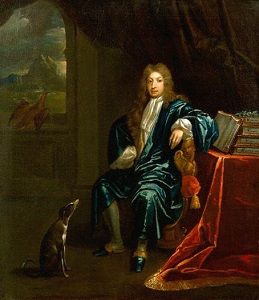
John Dryden (19 augustus 1631 – 12 mei 1700) 
Portret door James Maubert, na 1700


De Britse schrijver en drukker Samuel Richardson werd geboren op 19 augustus 1689 in Mackworth, Derbyshire. Zie ook alle tags voor Samuel Richardson op dit blog en ook mijn blog van 19 augustus 2009 en ook mijn blog van 19 augustus 2010

Uit: Pamela; or, Virtue Rewarded

„God bless him! and pray with me, my dear father and mother, for a blessing upon him, for he has given mourning and a year’s wages to all my lady’s servants; and I having no wages as yet, my lady having said she should do for me as I deserved, ordered the housekeeper to give me mourning with the rest; and gave me with his own hand four golden guineas, and some silver, which were in my old lady’s pocket when she died; and said, if I was a good girl, and faithful and diligent, he would be a friend to me, for his mother’s sake. And so I send you these four guineas for your comfort; for Providence will not let me want: And so you may pay some old debt with part, and keep the other part to comfort you both. If I get more, I am sure it is my duty, and it shall be my care, to love and cherish you both; for you have loved and cherished me, when I could do nothing for myself. I send them by John, our footman, who goes your way: but he does not know what he carries; because I seal them up in one of the little pill—boxes, which my lady had, wrapt close in paper, that they mayn’t chink; and be sure don’t open it before him.
I know, dear father and mother, I must give you both grief and pleasure; and so I will only say, Pray for your Pamela; who will ever be
Your most dutiful DAUGHTER.
I have been scared out of my senses; for just now, as I was folding up this letter in my late lady’s dressing—room, in comes my young master! Good sirs! how was I frightened! I went to hide the letter in my bosom; and he, seeing me tremble, said, smiling, To whom have you been writing, Pamela?–I said, in my confusion, Pray your honour forgive me!–Only to my father and mother. He said, Well then, let me see how you are come on in your writing! O how ashamed I was!–He took it, without saying more, and read it quite through, and then gave it me again;–and I said, Pray your honour forgive me!–Yet I know not for what: for he was always dutiful to his parents; and why should he be angry that I was so to mine? And indeed he was not angry; for he took me by the hand, and said, You are a good girl, Pamela, to be kind to your aged father and mother.”

 2065706-960c370a4576a99c12a2ae43f7d2c69e.jpg
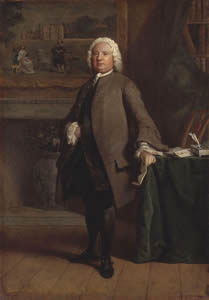
Samuel Richardson (19 augustus 1689 – 4 juli 1761)
Portret door Joseph Highmore, 1750


De Poolse schrijver Jerzy Andrzejewski werd geboren in Warschau op 19 augustus 1909. Zie ook alle tags voor Jerzy Andrzeiewski op dit blog en ook mijn blog van 19 augustus 2009.

Uit: Holy Week (Vertaald door Oscar E. Swan)

“Jan Malecki had not seen Irena Lilien for quite some time. As late as the summer of 1941, they still had seen a good deal of each other. By that time, the Liliens had been driven out of their home in Smug; but the German occupation authorities were not yet taking harsher measures against the Jews, so the Liliens, having paid off the necessary people, had avoided confinement in the Warsaw Ghetto. They had even managed to rescue some of their things, and with this remainder of their belongings, still quite sizable and valuable, the entire family moved closer to Warsaw. The Liliens, who before the war had been people of means—and for several generations, at that—were possessed of such a deeply developed sense of security that, even in the new and critical situation in which they now found themselves, it did not occur to them to move to a different suburb. Zalesinek, where they rented an apartment, was located about a quarter of the way to Smug, and many people along the commuter line knew the Liliens, whether personaly or by sight. They had become so much a part of Polish culture and customs that they had no idea they might arouse suspicion by their outward appearance.”
Fortunately, the oldest generation of Liliens, the banker and his wife,did not travel to Warsaw. She, an immense, fat Jewish woman, had been incapacitated for a number of years and never left her wheelchair. Her husband, long ago having withdrawn from affairs at the bank, contented himself by sitting in the sun or, on rainy or cold days, by watching people play bridge. But his son Professor Lilien, his wife, and their daughter, Irena, still traveled to Warsaw as often as before. Mrs. Lilien attracted relatively little attention. Small, slender, and quiet, with irregular but pleasant features, she could pass for Aryan. It was much worse for the professor and Irena.
Irena went into Warsaw several times a week. She visited friends and acquaintances—and a desire to see Malecki occasioned other trips as well. She loved her social life and an atmosphere of fun; she liked to arrange meetings in the bars and cafés that were so fashionable during the war. Irena Lilien was very pretty: tall, dark-haired, and dark-complexioned. Her coarse, thick hair and eastern eyes, however, were strikingly Jewish. When Malecki explained that she ought to be more careful, Irena just laughed and said that the Germans knew nothing of such things.“


 2065706-a4a3ef6eca86098d3a3b5d1ff12497b7.jpg
Jerzy Andrzejewski (19 augustus 1909 – 19 april 1983)
Cover


De Amerikaanse schrijver James Gould Cozzens werd geboren op 19 augustus 1903 in Chicago. Zie ook alle tags voor James Gould Cozzens op dit blog en ook mijn blog van 19 augustus 2009.

Uit: Castaway

“About his madmen Mr. Lecky was no more certain. He knew less than the little to be learned of the causes or even of the results of madness. Yet for practical purposes one can imagine all that is necessary. As long as maniacs walk like men, you must come close to them to penetrate so excellent a disguise. Once close, you have joined the true werewolf.
Pick for your companion a manic-depressive, afflicted by any of the various degrees of mania - chronic, acute, delirious. Usually more man than wolf, he will be instructive. His disorder lies in the very process of his thinking, rather than in the content of his thought.
He cannot wait a minute for the satisfaction of his fleeting desires or the fulfillment of his innumerable schemes. Nor can he, for two minutes, be certain of his intention or constant in any plan or agreement. Presently you may hear his failing made manifest in the crazy concatenation of his thinking aloud, which psychiatrists call "flight of ideas." Exhausted suddenly by this
riotous expense of speech and spirit, he may subside in an apathy dangerous and morose, which you will be well advised not to disturb.
Let the man you meet be, instead, a paretic. He has taken a secret departure from your world. He dwells amidst choicest, most dispendious superlatives. In his arm he has the strength to lift ten elephants. He is already two hundred years old. He is more than nine feet high; his chest is of iron, his right leg is silver, his incomparable head is one whole ruby. Husband of a thousand wives, he has begotten on them ten thousand children. Nothing is mean about him; his urine is white wine; his faeces are always soft gold. However, despite his splendor and his extraordinary attainments, he cannot successfully pronounce the words: electricity, Methodist Episcopal, organization, third cavalry brigade. Avoid them.
Infuriated by your demonstration of any accomplishment not his, he may suddenly kill you.”


 2065706-1f005bdc8493d534e4e13c9e2a4192f5.png
James Gould Cozzens (19 augustus 1903 – 9 augustus 1978)
Cover


De Canadese schrijver en dichter Claude Gauvreau werd geboren op 19 augustus 1925 in Montreal. Zie ook alle tags voor Claude Gauvreau op dit blog en ook mijn blog van 19 augustus 2009.


La censure

La censure? La censure! La censure, c'est la gargouille qui vomit
hideusement son plomb liquide sur la
chair vive de la poésie!

La censure, c'est l'hydre acéphale aux mille bras aveugles qui abat comme un
sacrifice sans défense
chaque érection de sensibilité délicate au moyen de ses moulinets vandales!

La censure, c'est le rasoir gigantesque rasant au niveau du médiocre toute
tête qui ose dépasser!

La censure, c'est la camisole de force imposée au vital!

La censure, c'est la défiguration imposée sur la grâce au moyen d'un sourcil
froncé saugrenu!

La censure, c'est le saccage du rythme!

La censure, c'est le crime à l'état pur!

La censure, c'est l'enfoncement du cerveau dans un moulin à viande dont il
surgit effilochement!

La censure, c'est la castration de tout ce qu'il y a de viril!

La censure, c'est la chasse obtuse à la fantaisie et à l'audace
illuminatrice!

La censure, c'est la ceinture de chasteté appliquée à tout con florissant!

La censure, c'est l'interdiction de la joie à poivre!

La censure, c'est le morose enlaidissant tout!

La censure, c'est l'abdication du rare et du fin!

La censure, c'est la maculation et le hachage en persil de l'unique toujours
gaillard!

La censure, c'est l'abdication de la liberté!

La censure, c'est le règne ignorantiste du totalitarisme intolérant envers
tout objet qui n'est pas
monstruosité rétractile!

La censure, c'est l'injure homicide à la loyauté des sens!

La censure, c'est le pet par dessus l'encens!

La censure, c'est la barbarie arrogante!

La censure, c'est le broiement du coeur palpitant dans un gros étau brutal!

Oui, mille fois oui, la censure c'est la négation de la pensée.


 2065706-f2aec717a85b078456f667170ff26d34.jpg
Claude Gauvreau (19 augustus 1925 – 7 juli 1971)


De Spaanse dichter en schrijver Iñigo López de Mendoza werd geboren op 19 augustus 1398 in Carrión de los Condes, Palencia. Zie ook alle tags voor Iñigo López de Mendoza. 

Uit: The prouerbes of the noble and woorthy souldier Sir Iames Lopez de Mendoza Marques of Santillana with the paraphrase of D. Peter Diaz of Toledo: wherin is contained whatsoeuer is necessarie to the leading of an honest and vertuous life. Translated out of Spanishe by Barnabe Googe.

“EVery wyse Oratour, as Tullie in his booke de Oratore teacheth, ought principally▪ in whatsoeuer matter he dealeth, to consider three things: That is, to make all those that shall eyther heare his speach, or reade his workes, to be well willing, vnderstanding, and mindefull. The speaker shall make his audience well willing, when he laboureth to obteyne their Page [unnumbered] fauour and good wil towardes him. For no man wil gladly geue eare to such a man, as he is afore euil perswaded of: he maketh his hearers to vnderstād, when he declareth the matter, that hee meaneth to entreate off, in shewing that it shal be profitable & com∣modious, he causeth them to be attentiue, or mindeful, when he mooueth or stirreth them vp by good meanes & inductions to be rea∣die to heare, not hauing their minds caried away with anie other matters. All these points hath this learned gentleman (folow∣ing this inscription) obserued in al his dis∣course. But especially in this first Prouerbe he hath obserued ye first, in making him that shal reade him, wel minded towardes him, procuring his fauour & goodwil, in calling him by ye name of his sōne & beloued. For as the Ciuil law sayth, we can name no man by a more sweet or better name, thē to call him our sonne. He maketh him to vnderstand, in shewing him howe to direct or order his life amōgst the people: he maketh him attētiue, in these wordes, where he saith, Geue eare. And the meaning and matter of this Pro∣uerbe, is the most sweet & gracious behaui∣our, that men of all degrees ought to vse in their conuersation.”


 2065706-a9def4f2e3fb0caf099865040dfaef09.jpg
Iñigo López de Mendoza (19 augustus 1398 – 25 maart 1458)
Gebaseerd op het potret door Jorge Inglés, 1455

Geschreven door Romenu om 11:31 Reageer op dit bericht

Meer van Romenu

↑ Terug naar de berichten