Naar de inhoud

Romenu

Over literatuur, gedichten, kunst en cultuur
akke.beakke.be

Berichten van 14 september 2017 tot 15 september 2017

Lucebert, Jan Slauerhoff, Sergio Esteban Vélez, Chimamanda Ngozi Adichie, Agatha Christie, Orhan Kemal, Gunnar Ekelöf, James Fenimore Cooper, Claude McKay
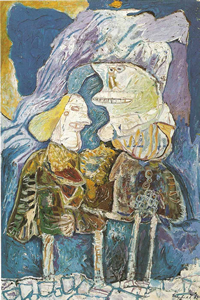
De Nederlandse dichter Lucebert werd in Amsterdam geboren op 15 september 1924 onder de naam Lubertus Swaanswijk. Zie ook mijn blog van 15 september 2010 en eveneens alle tags voor Lucebert op dit blog.


de rivier

uit al haar armen brandt de rivier onder de rotsen
en onder de kleine zon boven de bossen
spuwt naar tellurische wortels naar de staart van de wolk
en met gesperde muil dwars door deinende scherven zij zwermt
met grillige warmte over de wereld

de duisternis dicht bij haar buik buigen gulzige bloemen
en daar is een hol en een poel en het kraken en zoemen
van een paar draken in de avond niet veraf op een graf
staande een uil staart naar een glazen galg daar grof
gebouwde rotsen omringen de melodische afgrond

ach altijd en altijd hangen natte tongen aan de trieste bergen
gespleten tongen getande tongen en opgeblazen
ronkende tongen en in de dalen in de stenen en lemen cocons
academisch zingende mannen manmoedig wanhopig
zingende mannen en vrouwen vaag draperend de ruimte

maar een adder de lichtgeaderde rivier spartelt en
knaagt aan het wenende vlees van de wind
wat geeft dat klagen? sneeuw sneeuwt over vervaarlijke
en ook over bedaagde ogen en alles raakt los in de nacht
voort stromende argeloos tomeloos maar niet verlost
van de klagende nacht


lente-suite voor lilith

introductie:

als babies zijn de dichters niet genezen
van een eenzaam zoekend achterhoofd
velen hebben liefde uitgedoofd
om in duisternis haar licht te lezen

in duisternis is ieder even slecht
de buidel tederheid is spoedig leeg
alleen wat dichters brengen het te weeg
uit poelen worden lelies opgedregd

kappers slagers beterpraters
alles wat begraven is
godvergeten dovenetels laat es
aan uw zwarte vlekken merken dat het niet te laat is

wie wil stralen die moet branden
blijven branden als hij liefde meent
om in licht haar duisternis op handen
te dragen voor de hele goegemeent


1
o-o-oh
zo god van slanke lavendel te zien
en de beek koert naar de keel
en de keel is van de anemonen
is van de zee de monen zingende bovengekomen

kleine dokter jij drinkende huid van bezien
zie een mond met de torens luiden de tong
een wier van geluid de libbelen tillende klei

en jij
wassen jij klein en vingers in de la in de ven
lavendel in de lente love lied
laat zij geuren
pagodegeuren
lavendelgoden
geuren


 2073244-e44fa147c925a8047c0fe94039fe9dd4.png
Lucebert (15 september 1924 - 10 mei 1994)
Lucebert: Prinsenpaar, 1962


De Nederlandse dichter en schrijver Jan Jacob Slauerhoff werd geboren in Leeuwarden op 15 september 1898. Zie ook mijn blog van 15 september 2010 en eveneens alle tags voor Jan Slauerhoff op dit blog.


Eer de tuin 't vertrouwen vindt

Eer de tuin 't vertrouwen vindt
Zich de volle bloei te geven,
Staan de meisjes er in, beven,
Willen wel, neen nog niet leven
En uit enge angsten streven
Tengre handen tegen wind.

En zij gaan met schuwe voeten,
Als door zwaar gewaad gedrukt,
Traag, bevreesd en toch verrukt,
Houdingen zoekend die zij moeten
Vinden om hun droom te ontmoeten.


Uyemo Park, Tokio

De kindren lopen uit hun kleurig spel
En laten 't park schuw en verwaarloosd achter.
De vogels zwijgen om een oude wachter,
Alleen de krekels sjirpen snel en schel.

Het groene en rode loof wordt even vaal.
Een flakkerlicht ontwaakt in bronzen lampen.
De avond komt gedempt, gehuld in dampen
Nader, als een sluipmoordnaar in een zaal.

Maar plechtig aangetrokken klokken tampen
En langgerekte heilige tonen gonzen
Boven het dor en streng gebed der bonzen,
Beveiligd voor de nacht in 't heiligdom.


Klaaglijk roepen de alcyonen

KLAAGLIJK roepen de alcyonen,
Schichtig fladdren de alcyonen,
Boven 't woedend brandingklotsen
Tegen Akashiro's rotsen,
Waar wraakgierige demonen,
Boven Akashiro's rotsen,
Tussen gierennesten tronen.

Over Akashiro's rotsen
Zweeft een lieflijk avondrood;
Onder, blind in 't brandingklotsen,
Vindt de schepeling zijn dood.
Klaaglijk schreeuwen de alcyonen,
Laag en schichtig de alcyonen
Scheren over 't brandingklotsen.
Rood zijn Akashiro's rotsen.


 2073244-08961d97326a91fda0f4996e06256027.jpg
Jan Slauerhoff (15 september 1898 – 5 oktober 1936) 


De Colombiaanse dichter, schrijver, hoogleraar en journalist Sergio Esteban Vélez Peláez werd geboren op 15 september 1983 in Medellín. Zie ook alle tags voor Sergio Esteban Vélez op dit blog.


The soul weighs twenty-one grams

The soul weighs twenty-one grams,
say the esoteric
philosophers.
The supreme energy
chained to a body
and only two trembling
shutters
show you a
deserted
corner of the universe.

Pseudolife
subjected to time;
dreams,
a few bones,
and love,
a few atoms of smoke.

All in an ashtray.

They are only twenty-one
eternal grams.


 2073244-45722b8ac866114adeb08def821dc41a.jpg
Sergio Esteban Vélez (Medellín, 15 september 1983)


De Nigeriaanse schrijfster Chimamanda Ngozi Adichie werd geboren op 15 september 1977 in Enugu. Zie ook mijn blog van 15 september 2010 en eveneens alle tags voor Chimamanda Ngozi Adichie op dit blog.

Uit: Americanah

“Everyone she had told she was moving back seemed surprised, expecting an explanation, and when she said she was doing it because she wanted to, puzzled lines would appear on foreheads.“You are closing your blog and selling your condo to go back to Lagos and work for a magazine that doesn’t pay that well,” Aunty Uju had said and then repeated herself, as though to make Ifemelu see the gravity of her own foolishness. Only her old friend in Lagos, Ranyinudo, had made her return seem normal. “Lagos is now full of American returnees, so you better come back and join them. Every day you see them carrying a bottle of water as if they will die of heat if they are not drinking water every minute,” Ranyinudo said. They had kept in touch, she and Ranyinudo, throughout the years. At first, they wrote infrequent letters, but as cybercafés opened, cell phones spread, and Facebook flourished, they communicated more often. It was Ranyinudo who had told her, some years ago, that Obinze was getting married. “Meanwhile o, he has serious money now. See what you missed!” Ranyinudo had said. Ifemelu feigned indifference to this news. She had cut off contact with Obinze, after all, and so much time had passed, and she was newly in a relationship with Blaine, and hap-pily easing herself into a shared life. But after she hung up, she thought endlessly of Obinze. Imagining him at his wedding left her with a feeling like sorrow, a faded sorrow. But she was pleased for him, she told herself, and to prove to herself that she was pleased for him, she decided to write him. She was not sure if he still used his old address and she sent the e-mail half expecting that he would not reply, but he did. She did not write again, because she by then had acknowledged her own small, still-burning light. It was best to leave things alone. Last December, when Ranyinudo told her she had run into him at the Palms mall, with his baby daughter (and Ifemelu still could not picture this new sprawling, modern mall in Lagos; all that came to mind when she tried to was the cramped Mega Plaza she remembered)—“He was looking so clean, and his daughter is so fine,” Ranyinudo said—Ifemelu felt a pang at all the changes that had happened in his life.“Nigeria film very good now,” Aisha said again.“Yes,” Ifemelu said enthusiastically. This was what she had become, a seeker of signs. Nigerian films were good, therefore her move back home would be good.“You from Yoruba in Nigeria,” Aisha said.“No. I am Igbo.”“You Igbo?” For the first time, a smile appeared on Aisha’s face,a smile that showed as much of her small teeth as her dark gums.”


 2073244-2d6efb45417bb8e5b4ffe1ccaeaef51d.jpg
Chimamanda Ngozi Adichi (Enugu, 15 september 1977)
Cover 


De Britse schrijfster Agatha Christie werd geboren in Torquay (Devon) op 15 september 1890. Zie ook mijn blog van 15 september 2010 en eveneens alle tags voor Agatha Christie op dit blog.

Uit: The Murder at the Vicarage

“It is difficult to know quite where to begin this story, but I have fixed my choice on a certain Wednesday at luncheon at the Vicarage. The conversation, though in the main irrelevant to the matter in hand, yet contained one or two suggestive incidents which influenced later developments.
I had just finished carving some boiled beef (remarkably tough by the way) and on resuming my seat I remarked, in a spirit most unbecoming to my cloth, that any one who murdered Colonel Protheroe would be doing the world at large a service.
My young nephew, Dennis, said instantly:
"That'll be remembered against you when the old boy is found bathed in blood. Mary will give evidence, won't you, Mary? And describe how you brandished the carving knife in a vindictive manner."
Mary, who is in service at the Vicarage as a stepping-stone to better things and higher wages, merely said in a loud, businesslike voice, "Greens," and thrust a cracked dish at him in a truculent manner.
My wife said in a sympathetic voice: "Has he been very trying?"
I did not reply at once, for Mary, setting the greens on the table with a bang, proceeded to thrust a dish of singularly moist and unpleasant dumplings under my nose. I said, "No, thank you," and she deposited the dish with a clatter on the table and left the room.
"It is a pity that I am such a shocking housekeeper," said my wife, with a tinge of genuine regret in her voice.
I was inclined to agree with her. My wife's name is Griselda — a highly suitable name for a parson's wife. But there the suitability ends. She is not in the least meek.
I have always been of the opinion that a clergyman should be unmarried. Why I should have urged Griselda to marry me at the end of twentyfours hours' acquaintance is a mystery to me.”

 2073244-9b0ab6b9859392cf9ff79a1f0608bc41.jpg
Agatha Christie (15 september 1890 – 12 januari 1976)
Cover DVD van de film uit 1986 met Joan Hickson als Miss Marple


De Turkse schrijver Orhan Kemal (eig. Mehmet Raşit Öğütçü) werd geboren op 15 september 1914 in Ceyhan. Zie ook mijn blog van 15 september 2010 en eveneens alle tags voor Orhan Kemal op dit blog.

Uit: The Idle Years (Vertaald door Cengiz Lugal)

‘Obviously. We’ll also have to invite him out as well.’
‘We could do that, you know. Take him along to a restaurant with Nejip.    We ought to, really.’
‘We could order two full bottles of raki…’
‘If I get about a hundred and fifty or so, then it really won’t matter.’
‘I wouldn’t worry. Your aunt’s bound to send you at least that. Because she does know you have a friend with you as well….’
That evening Nevzat handed me the letter I had long been waiting for. I excitedly ripped open the envelope. Gazi and I leaned over and swiftly read the brief note.
I was to leave any so-called friend and come over straight away. There would be no need for me to pay the bus fare – I had only to give my uncle’s name. And when was I going to learn not to let every bum and scrounger tag along wherever I went!
Gazi had changed colour. I tore up the letter and threw it out of the window and into the smell of fried fish. First, we sold my clothes and then my suitcase.
‘Istanbul is one of a kind!’
You can hop off its trams, hop on to its taxis and entertain whom you want at the restaurant of your choice…. You can set up a factory, or stay unemployed or open a bank… Whatever you want!
‘Istanbul is one of a kind!’
Then what?
Well, then, it was first one bit of work, then another. We worked as waiters in cafés around Galata, shovelled coal, did a bit of street selling and occasionally played for some of the useless local football teams, all for no more than a square meal.
‘Istanbul is one of a kind!’
Finally one morning, half starving, we bade farewell to the bridge, to the trams, to the dirty sea, to Galata and to Beyoglu and boarded a ship back home, leaving all those beautiful women to the men of Istanbul.
Farewell, then, Istanbul!”


 2073244-4e66ce4837d1398deba5e0ecbd502f22.jpg
Orhan Kemal (15 september 1914 – 2 juni 1970)


De Zweedse dichter en schrijver Bengt Gunnar Ekelöf werd geboren op 15 september 1907 in Stockholm. Zie ook mijn blog van 15 september 2010 en eveneens alle tags voor Gunnar Ekelöf op dit blog.


The flowers doze in the window

The flowers doze in the window and the lamp gazes / light
the window gazes with thoughtless eyes out into the / dark
paintings exhibit without soul the thought confided / to then
and houseflies stand still on the walls and think

the flowers lean into the night and the lamp weaves / light
the cat in the corner weaves woolen yarn to sleep with
on the stove the coffeepot snores now and then with / pleasure
the children play quietly on the floor with words

the table set with white cloth is waiting for someone
whose feet never will come up the stairs

a train-whistle tunneling through the silence in the / distance
does not find out what the secret of things is
but fate counts the strokes of the pendulum by / decimals


Vertaald door Robert Bly


 2073244-bcf1dae5bfe1dc14ae1261e652e422b6.jpg
Gunnar Ekelöf (15 september 1907 – 16 maart 1968)


De Amerikaanse schrijver James Fenimore Cooper werd geboren in Burlington, New Jersey op 15 september 1789. Zie ook alle tags voor James Fenimore Cooper op dit blog.

Uit: The Last of the Mohicans

“While, in the pursuit of their daring plans of annoyance, the restless enterprise of the French even attempted the distant and difficult gorges of the Alleghany, it may easily be imagined that their proverbial acuteness would not overlook the natural advantages of the district we have just described. It became, emphatically, the bloody arena, in which most of the battles for the mastery of the colonies were contested. Forts were erected at the different points that commanded the facilities of the route, and were taken and retaken, razed and rebuilt, as victory alighted on the hostile banners. While the husbandman shrank back from the dangerous passes, within the safer boundaries of the more ancient settlements, armies larger than those that had often disposed of the scepters of the mother countries, were seen to bury themselves in these forests, whence they rarely returned but in skeleton bands, that were haggard with care or dejected by defeat. Though the arts of peace were unknown to this fatal region, its forests were alive with men; its shades and glens rang with the sounds of martial music, and the echoes of its mountains threw back the laugh, or repeated the wanton cry, of many a gallant and reckless youth, as he hurried by them, in the noontide of his spirits, to slumber in a long night of forgetfulness.
It was in this scene of strife and bloodshed that the incidents we shall attempt to relate occurred, during the third year of the war which England and France last waged for the possession of a country that neither was destined to retain.
The imbecility of her military leaders abroad, and the fatal want of energy in her councils at home, had lowered the character of Great Britain from the proud elevation on which it had been placed by the talents and enterprise of her former warriors and statesmen. No longer dreaded by her enemies, her servants were fast losing the confidence of self-respect. In this mortifying abasement, the colonists, though innocent of her imbecility, and too humble to be the agents of her blunders, were but the natural participators. They had recently seen a chosen army from that country, which, reverencing as a mother, they had blindly believed invincible--an army led by a chief who had been selected from a crowd of trained warriors, for his rare military endowments, disgracefully routed by a handful of French and Indians, and only saved from annihilation by the coolness and spirit of a Virginian boy, whose riper fame has since diffused itself, with the steady influence of moral truth, to the uttermost confines of Christendom.”


 2073244-1b9902757d0b5f62f88003eeb2160161.jpg
James Fenimore Cooper (15 september 1789 - 14 september 1851)
Standbeeld in New York


De Jamaicaanse dichter en schrijver Festus Claudius "Claude "McKay werd geboren op 15 september 1890 in Sunny Ville, Clarendon, Jamaica. Xie ook alle tags voor Claude McKay op dit blog.


After the Winter

Some day, when trees have shed their leaves
And against the morning’s white
The shivering birds beneath the eaves
Have sheltered for the night,
We’ll turn our faces southward, love,
Toward the summer isle
Where bamboos spire the shafted grove
And wide-mouthed orchids smile.

And we will seek the quiet hill
Where towers the cotton tree,
And leaps the laughing crystal rill,
And works the droning bee.
And we will build a cottage there
Beside an open glade,
With black-ribbed blue-bells blowing near,
And ferns that never fade.


Subway Wind

Far down, down through the city’s great gaunt gut
The gray train rushing bears the weary wind;
In the packed cars the fans the crowd’s breath cut,
Leaving the sick and heavy air behind.
And pale-cheeked children seek the upper door
To give their summer jackets to the breeze;
Their laugh is swallowed in the deafening roar
Of captive wind that moans for fields and seas;
Seas cooling warm where native schooners drift
Through sleepy waters, while gulls wheel and sweep,
Waiting for windy waves the keels to lift
Lightly among the islands of the deep;
Islands of lofy palm trees blooming white
That led their perfume to the tropic sea,
Where fields lie idle in the dew-drenched night,
And the Trades float above them fresh and free.


 2073244-f48116725b35cad4a315793bb8a22b72.jpg
Claude McKay (15 september 1890 - 22 mei 1948)


Zie voor nog meer schrijvers van de 15e september ook mijn blog van 15 september 2015 en ook mijn blog van 15 september 2013 deel 2.
Geschreven door Romenu om 18:15 Reageer op dit bericht

Dolce far niente, Eugen Roth, Hans Faverey, Theodor Storm, Leo Ferrier, Corly Verlooghen, Bernard MacLaverty, Ivan Klíma


Dolce far niente


 2072889-2f0061d1251fc86785146cec480b2dbf.jpg
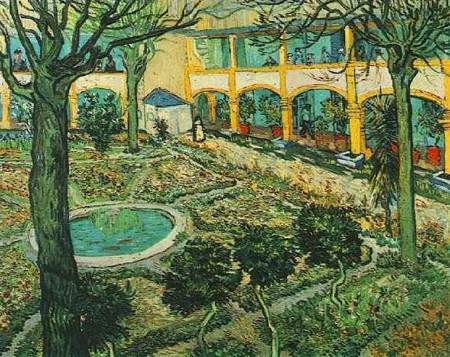
Binnenplaats van het ziekenhuis in Arles door Vincent van Gogh, 1889


Das ist der Krankenhäuser Sinn

Das ist der Krankenhäuser Sinn,
Dass man - wenn's geht - gesund wird drin.
Doch wenn man's ist: dann schnell heraus!
Ansteckend ist das Krankenhaus.


 2072889-c541269fda7bb5ab0865e238e7c4a949.jpg
Eugen Roth (24 januari 1895 – 28 april 1976)
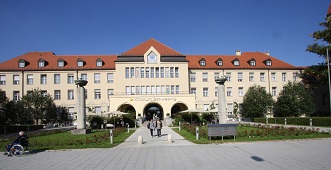
Städtisches Krankenhaus in München, de geboorteplaats van Eugen Roth


De Nederlandse dichter Hans Faverey werd op 14 september 1933 geboren in Paramaribo. Zie ook mijn blog van 14 september 2010 en eveneens alle tags voor Hans Faverey op dit blog.


Alsof zij daar ligt, nu

Alsof zij daar ligt, nu
hier is gaan liggen, en aanbiedt
wat zij onthult: een duin, blakend

op haar zij, een waarsprekende
waaier, de rilling die mij opricht;

en geur, ooit zo doorhuifd als alleen
verbeelding het wil, opdat zij uitmaakt
hoe het is. Niet hier immers, door mijn
ogen niet, is zij opgewekt om toen
daar te gaan liggen, zich te doen
zoals het wordt.


[In de flank getroffen]

In de flank getroffen;
in het eigenste vreemdgaande.
Die zich inscheepten: een golf

het gezicht ontsluit - de twijfel.

Het gepeuter aan windharpen.

De dode plek op de helling.
Wat ik niet kan vangen
draag ik bij me; schipbreuk
lijdt iedereen after all.


[Mir nix: dir nix]

Mir nix: dir nix.

Ergens niets aan hebben.
Van iemand niks moeten hebben.
Heb jij terug van de zee?
Heeft zij van zee terug?

Haast zijn de ogen die je mooi vindt
al van rookkwarts, gaat het kwarts
dat jou aardig vindt in rook op.

Ergens niets aan gehad hebben.

Nooit ergens heen hoeven.
Niets kunnen vergeten.
Niks maken van niets.

Dir nix: mir nix.


 2072889-1102efa469983959b622cae722ce3096.jpg
Hans Faverey (14 september 1933 – 8 juli 1990)


De Duitse dichter en schrijver Theodor Storm werd geboren in Husum op 14 september 1817. Zie ook mijn blog van 14 september 2010 en eveneens alle tags voor Theodor Storm op dit blog.

Uit: Der Schimmelreiter

"Mich wollte nachträglich ein Grauen überlaufen. "Verzeiht!" sprach ich, "was ist das mit dem Schimmelreiter?"
Abseits hinter dem Ofen, ein wenig gebückt, saß ein kleiner hagerer Mann in einem abgeschabten schwarzen Röcklein; die eine Schulter schien ein (Reclam, S. 8) wenig ausgewachsen. Er hatte mit keinem Worte an der Unterhaltung der andern teilgenommen, aber seine bei dem spärlichen grauen Haupthaar noch immer mit dunklen Wimpern besäumten Augen zeigten deutlich, daß er nicht zum Schlaf hier sitze.
Gegen diesen streckte der Deichgraf seine Hand. "Unser Schulmeister", sagte er mit erhobener Stimme, „wird von uns hier Ihnen das am besten erzählen können; freilich nur in seiner Weise und nicht so richtig, wie zu Haus meine alte Wirtschafterin Antje Vollmers es beschaffen würde."
"Ihr scherzet, Deichgraf!" kam die etwas kränkliche Stimme des Schulmeisters hinter dem Ofen hervor, „daß Ihr mir Euern dummen Drachen wollt zur Seite stellen!"
"Ja, ja, Schulmeister!" erwiderte der andere, "aber bei den Drachen sollen derlei Geschichten am besten in Verwahrung sein!"
"Freilich!" sagte der kleine Herr; "wir sind hierin nicht ganz derselben Meinung"; und ein überlegenes Lächeln glitt über das feine Gesicht.
"Sie sehen wohl", raunte der Deichgraf mir ins Ohr; "er ist immer noch ein wenig hochmütig; er hat in seiner Jugend einmal Theologie studiert und ist nur einer verfehlten Brautschaft wegen hier in seiner Heimat als Schulmeister behangen geblieben."

 2072889-90cd629cc66d6b593d8d2542b823d558.jpg
Theodor Storm (14 september 1817 - 4 juli 1888)
Cover luisterboek


De Surinaamse schrijver Leo Henri Ferrier werd geboren in Paramaribo op 14 september 1940. Zie ook mijn blog van 14 september 2010 en eveneens alle tags voor Leo Ferrier op dit blog.

Uit:Hoogtij overzee ( Notities van een vriend)

“Deze hard werkende mannen veranderen zichtbaar een zwaarkleizwamprivierbos dat het in het begin is, in een prachtig groen geëgaliseerd landschap met wit beschelpte straten en tussenpaden. Precies een jaar. Eerst een periode van zware regens, dan felle droogte met veel stof.
Afvoerkanaaltjes met helder water. Een wat breder en langer kanaal aan de noordzijde, geeft door een lichtgroene omzoming aan het hele landschap waarin de grote sierbomen gelukkig gespaard zijn gebleven, een heel apart karakter. Na de eerste ruk flink doorwerken, neem ik 's middags tegen vijven even een pauze voor een wandeling met Rasso op het project. Ik wandel altijd naar dezelfde plek. Waarom ik ook de eerste keer naar die plek gewandeld ben, weet ik niet. Ik neem een klein plankje mee om niet op de vochtige grond te zitten. Rasso rent vast vooruit.
Voor me de brede rivier. Bij eb, bruin troebelig aanrollende moddergolfjes. Na een uurtje kaatsen late, oranje zonnestralen er sombere nuances violet in. Van de groenig bruisende vloedgolven omrand met ragfijn schuim, geniet ik beter. Een stralend blauwe hemel. Koele wind. Een vlucht witte snippen scheert plotseling rakelings over het water. In formatie, een mathematisch haarscherp gelijkzijdige driehoek. Basis en top schijnen elkaar snel van plaats te verwisselen. Voor je ze kunt tellen, zijn ze alweer in het niet verdwenen, waar ze net uit vielen. Op de andere oever. Het eerste dat duidelijk te zien is, het huis uit Ātman, zwevend in een koepel van donkergroen bos. Buitenboordveerbootjes zie ik af en aan varen. Dezelfde namen. Daar op die plek, maakt mijn geweten me bewust van het conflict dat in feite mijn depressie, wanhoop en onzekerheid veroorzaakt. Een zekere onvrede tussen mezelf en mijn nieuwe werk.
Twee maanden zijn er nu weer om. Geen school. Toch heb ik niets en dan ook niets met het schrijven kunnen presteren. Al die ideeën van me. Ik wil toch wel. Meen ik nu de kern gevonden te hebben waar het in zit dat ik er niet goed toe kom? Iedere keer komt er weer te veel tussen. Zo kun je niet werkelijk geconcentreerd werken. Alles duurt zo kort. Die invallen, schetsen. Voor Brsk. Dan weer voor Blawoj of de Mandiënri. Eén dag. Meestal ben ik daarna niet meer in staat iets zo af te maken, dat ik het gaaf getikt voor me heb. Later blijkt het allemaal te vaag om er in de zin van uitwerken iets mee te doen. Toch blijf ik er steeds mee bezig. Weer zo'n prachtige middag.”


 2072889-559bb8899f4706a28aff084e86bf5c0c.jpg
Leo Ferrier (14 september 1940 - 30 juli 2006)
Paramaribo


De Surinaamse dichter, schrijver, journalist en muziekpedagoog Corly Verlooghen werd geboren op 14 september 1932 in Paramaribo. Zie ook mijn blog van 14 september 2010 en eveneens alle tags voor Corly Verlooghen op dit blog.


dit wankel huis

Hindostanen en Creolen
hebben het gezegd
de laatsten het bevolen
er is een avontuur te vondeling gelegd.

en wij staan onbehulpzaam toe te zien
hoe het bederf invreet
in de huid van 't jonge kind

God had ik maar de macht
een lied te zingen waarnaar men
luistert in dit wankel huis
dat zo gebarsten is en dreigt
omver te vallen in een onverhoedse nacht.


kruis en as

Niets verhevener is er dan
de morbide toon van je stem
onder de regennatte bladeren
bij het kruis:

een kind hing eens verborgen
aan de navelstreng
een vrouw kreet toen verlaten
in uiterste benauwenis

ik die de eerste kus mocht
drukken in je begeerlijke poriën
kroop in het zoete ritme
van je bedding rond

maar onder regennatte bladeren
bij de zerk in het gras
staan wij nu met de pijn
van kruis en as.


 2072889-42ab76652ec123b1a268bff7a8eecbdc.jpg
Corly Verlooghen (Paramaribo, 14 september 1932)


De Noord-Ierse schrijver Bernard MacLaverty werd geboren in Belfast op 14 september 1942. Zie ook alle tags voor Bernard MacLaverty op dit blog.

Uit: Midwinter Break

“In the bathroom Stella was getting ready for bed. Gerry had left the shaving mirror at the magnifying face and she was examining her eyebrows. She licked the tip of her index finger and smoothed both of them. Then turned to her eyelids. She was sick of it all – the circles of cotton wool, the boiled and sterilised water in the saucer, the ointments, the waste bin full of cotton buds.
She said goodnight to Gerry and, on her way to the bed- room, passed their luggage in the hall. She switched on the late night news on the small radio beside her bed and got into her pyjamas. Quickly, because the bedroom air was cold. She saw no point in paying good money to heat a room all day for a minute's comfort last thing at night.
Before getting into bed she turned off the electric blanket.
Now and again she'd fallen asleep with it still on. By the time Gerry came to bed she felt and looked awful. 'Like fried bacon,' was the way he described her.
She loved this hour to herself – this separation at the end of every day. Her hot-water bottle, the electric blanket, the radio voices. Gerry, out of action, in another room listening to music on his headphones. Having a nightcap, no doubt. Or two or three. The storm doors locked, the windows bolted.
The place safe. Sometimes after the news she read for a while n the silence. The sound of a page turning. The absence of talk. But of late she'd been too tired to read, even to hold a book. Hardbacks were out of the question. There was a tip- ping point when she knew she was going to 'get over'. Her head would go down on the pillow, her hand creep out from under the covers to get rid of the book or to switch off the radio. The duties and the menus and the lists melted away. Responsibilities were such that nothing could be done at this hour. They were hidden behind a curtain but would return with a swish first thing in the morning. And before she knew, she was sound asleep.”

 2072889-321985c9c5c4e54bbe9c712e2bdb169e.jpg
Bernard MacLaverty (Belfast, 14 september 1942)


De Tsjechische schrijver Ivan Klíma werd op 14 september 1931 geboren in Praag. Zie ook mijn blog van 14 september 2010 en ook alle tags voor Ivan Klima op dit blog.

Uit: Love and Garbage (Vertaald door Ewald Osers)

“The woman in the office told me to go to the locker room: I was to wait there. So I set out across the court to a door which bore the notice LOCKERS. The office was grey and dismal, and so was the courtyard, with a pile of broken bricks and rubble in one corner, several two-wheeled handcarts, a lot of dustbins, and not a touch of greenery anywhere. The locker room seemed to me even more depressing. I sat down on a seat by the window which looked out on that dismal yard, clutching a small leather case which contained three small sweet buns, a book, and a notebook in which I was in the habit of jotting down anything that occurred to me in connection with what I was writing. Currently I was finishing an essay on Kafka. There were two other men sitting in the locker room already. One, tall and greying, reminded me of the specialist who many years before had removed my tonsils; the other, a short, stocky man of uncertain age in very dishevelled and dirty trousers scarcely reaching halfway down his calves and with enormous sewn-on pockets rather like misshapen pistol holsters, wore on his head a sea-captain's cap with a peak and a gleaming golden anchor above it. From beneath the peak a pair of eyes the colour of shallow coastal waters were watching me curiously. Those eyes, or rather their glance, seemed somehow familiar. He obviously realised that I was new here and advised me to put my identity card on the table. I did as he said, and as he placed his next to mine I noticed that he did not have a right hand; a black hook protruded from his sleeve. By now my new workmates were beginning to arrive — the sweepers. A squat young idiot with a nervous facial tic sat down next to me, took out a pair of dirty shaft-boots from a locker, and turned them upside down. From one of them there ran out a quantity of liquid which might just have, but most probably did not, come from a tap. He immediately began to scream at us all in a language of which I was unable to make out a single word. I am not sure myself what made me decide to try this unattractive occupation. Most probably I thought that I would gain from it an unexpected view of the world. Every so often you feel that unless you look at the world and at people from a new angle your mind will get blunted. As I was waiting for what would happen next there suddenly came to my mind the scene, fifteen years ago, when I was about to return home from my stay in America and the dean there gave a dinner in my honour. The dean was a mathematician, and wealthy. He owned a stableful of horses and a house in the style of a hunting lodge. I had only met him once before and I didn't really want to go to the dinner: a crowd of strangers tends to depress me. But then, how could I have known anyone properly when I had been teaching at the university for a mere six months?”


 2072889-4ff39fdfff7406002ed6a0db6af84222.jpg
Ivan Klíma (Praag, 14 september 1931)
Cover


Zie voor nog meer schrijvers van de 14e september ook mijn blog van 14 september 2015.

Geschreven door Romenu om 18:13 Reageer op dit bericht

Alexander Schimmelbusch

De Oostenrijkse schrijver Alexander Schimmelbusch werd geboren op 14 september 1975 in Frankfurt am Main geboren en groeide op in Frankfurt am Main en New York. Na zijn studie economie en germanistiek aan de Georgetown University in Washington werkte hij vijf jaar als consultant voor fusies en overnames bij een investeringsbank in Londen. Tegenwoordig woont hij als auteur en journalist afwisselend in Berlijn en New York. Voor zijn roman “Blut im Wasser“ kreeg hij in de 2009 de Hotlist Award.

Uit:Blut im Wasser

„Als ich aufwache, habe ich einen trockenen Rieslinggeschmack im Mund. Ich liege reglos da, in einem leeren Raum, nackt unter einem dünnen Laken. Die gläsernen Wände, die mich umgeben, sind vereist, die kahlen Zweige hinter ihnen sind nur als graphische Strukturen sichtbar. Mein Haus ist nicht beheizt, aber mein Atem bildet keine Dampfwolken. Für einen Augenblick habe ich Angst, dass ich in der Nacht gestorben bin. Ich stehe auf und schleppe mich ins Badezimmer, wo ich den Spiegel mit einem Handtuch verhänge. Ich habe keine Pläne für den Tag, ich habe Nasenbluten und Sehstörungen und Schmerzen in meiner Brust, für die ich keine harmlose Erklärung habe. Ich drehe am Wasserhahn und beuge mich nach vorne, nehme behutsam drei tiefe Schlucke, bevor ich meinen Kopf unter den eiskalten Schwall strecke. Den Versuch, meine Zähne zu putzen, muss ich sofort wieder abbrechen, da die Vibrationen der elektrischen Bürste Kopfschmerzen wecken. Von meinem Schreibtisch aus habe ich einen unverbaubaren Blick über den Fluss hinweg auf die Bürostädte am gegenüberliegenden Ufer. Die Zimmer sind spärlich möbliert, einige stehen leer; die Böden sind mit Platten aus Travertin ausgelegt. Ich habe mir den Grundriss meines Hauses offenbar so gut eingeprägt, dass ich mich darin auch bei Finsternis in gewohnter Geschwindigkeit fortbewegen kann, ohne irgendwo anzustoßen. Diese Tatsache ist mir irgendwann einmal im Zuge eines Stromausfalls bewusst geworden, als ich, nachdem in derStadt die Lichter erloschen waren, meinen Ablauf fortsetzte, als wäre nichts geschehen. In der sprudelnden Hitze unter der Oberfläche wird mir schwarz vor Augen. In meinem Zustand schwimmen zu gehen ist zweifellos gefährlich, aber ich weiß: wenn ich nicht regelmäßig Sport treibe, vergreise ich. Stoisch beginne ich daher, meine Bahnen zu ziehen. Angst vor dem Ertrinken, denke ich mir, kann man mühelos verdrängen. Man kann in die Großstadt ziehen, sich eine Aufgabe suchen, sein Glück finden. Man kann, wie ich mir denke, während ich eine formvollendete Wende abschließe, sich ein Lächeln aufsetzen. Über die hintere Treppe gelange ich in meine aus Deutschland importierte Küche, die in ihrer Reduktion, wie es Amy formulierte, als sie vor Kurzem bei mir zum ersten Mal zu Gast war, an einen Obduktionssaal erinnert. Vor der offenen Tür des Kühlschranks beginne ich damit, eine Flasche fettarme Milch zu leeren. Ich konzentriere mich dabei auf die Schluckgeräusche, die in meinem Kopf zu hören sind, und spiele mit dem Gedanken, mir eine Zeitung auszudrucken, verwerfe diesen aber, da ich mich momentan noch nicht in der Lage fühle, mich für irgendetwas zu interessieren.“


 2171897-259bbfa26a8ab2e1b5c76eef070c0b0e.jpg
Alexander Schimmelbusch (Frankfurt am Main, 14 september 1975)

Geschreven door Romenu om 00:00 Reageer op dit bericht

Jenny Colgan

De Schotse schrijfster Jenny Colgan werd geboren op 14 september 1972 in Prestwick, Ayrshire. Zij studeerde aan de universiteit van Edinburgh en werkte zes jaar in de gezondheidsdienst, bijklussend als cartooniste en als stand-up-comedian. Zij schrijft zowel onder haar eigen naam als onder de pseudoniemen Jane Beaton en J. T. Colgan.. Zij woont afwisselend in Frankrijk en Londen. In 2000 publiceerde ze haar eerste roman, de romantische komedie “Amanda’s Wedding”. In 2013 ontving zij voor haar roman “Welcome to Rosie Hopkins' Sweetshop of Dreams” de Romantic Novel of the Year Award van de Romantic Novelists' Association. In 2012 verscheen haar Doctor Who tie-in roman “Dark Horizons” onder de naam J. T. Colgan.

Uit: Amanda's Wedding

“Most of the really messy things in life don't actually have a beginning-they kind of bear down on you over years, like the consequences of not cleaning your bathroom floor (stickiness, cholera, etc.).
This one did, though. It definitely did, and I remember it extremely clearly. Well, in a fuzzy kind of way.
Thank God-it was my bed. So, one, I was actually in a bed; and two, it was mine. I was beating the odds already. I prized open one very sticky eye and attempted to focus it, to try to work out where the smell was coming from. I appeared to be jammed between the wall and an extremely large and unidentifiable chunk of flesh.
The chunk of flesh was connected to lots of other chunks, all in the right order: But I didn't notice this until after I'd sat bolt upright in terror at a potential Godfather-type situation in my bed.
Everything seemed weirdly out of proportion. Maybe I was still drunk. I pawed at the sticky stuff at the corners of my eyes. No, something was still very wrong.
An inappropriate hand was slung across me. It appeared to be about the size of my stomach, and my stomach is not renowned for its tininess.... A thought began to worm its way into my head.
I knew that thought and tried to avoid it for as long as possible, but alongside my hangover voice that was howling, Fluid! Fluid! the thought whispered, Oh, my God ... it's Nicholas ... again! I grimaced like I'd just swallowed something nasty, which, let's face it, I probably had.
Slowly creeping my way off the end of the futon, and feeling worse and worse, I crawled into the kitchen in search of aspirin and Diet Coke. Fran, of course, was lying in wait. She didn't live here, but she made herself more at home than I did. Her own place was a three-foot-square studio that induced immediate Colditz fever, so I'd got used to her wandering in and out.
"Good morning!" trilled Fran, bright and breezy. She must have been putting it on. Through a strange fog-which I supposed was the alcohol in my system filling me right up to the eyes-she actually looked quite good. I couldn't focus on her mass of fuzzy hair, but I did notice that she was wearing one of my T-shirts, not quite covering thighs that didn't even meet in the middle. I hated that.
I summoned all my energy to pipe, "Hello!"
"Hung over?"
"No, no, absolutely fine. I've just suddenly developed a taste for a half bottle of warm flat Coke, okay?"


 2109707-c96ac620b994c91fe7f0cd5bfd8e9f7c.jpg
Jenny Colgan (Prestwick, 14 september 1972)

Geschreven door Romenu om 00:00 Reageer op dit bericht

Meer van Romenu

↑ Terug naar de berichten