

Naar de inhoud

Romenu

Over literatuur, gedichten, kunst en cultuur
akke.beakke.be

Berichten van 25 september 2017 tot 26 september 2017

Bart Chabot, T. S. Eliot, Thomas van Aalten, Luís Fernando Veríssimo, Mark Haddon, William Self, Jane Smiley, Vladimir Vojnovitsj
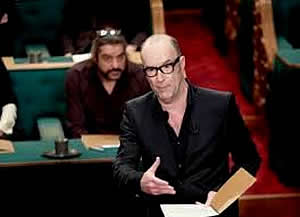
De Nederlandse dichter en schrijver Bart Chabot werd geboren in Den Haag op 26 september 1954. Zie ook mijn blog van 26 september 2010 en eveneens alle tags voor Bart Chabot op dit blog.


Bij de ondergrondse

aprilwarmte —dit markeerde het prille begin van de lente
en betekende voor de leden van de ondergrondse
dat het de hoogste tijd was
om tot actie over te gaan

op de kerkhoven en begraafplaatsen van het koninkrijk
krioelden de doden dooreen;
werkelijk overal waren zij gemobiliseerd
en van heinde en verre opgetrommeld —
vele handen maakten licht werk
en aan werk was geen gebrek

de sfeer onderling was opgeruimd
om niet te zeggen: levendig
wie goed naar het aardoppervlak keek
kon soms iets zien bewegen,
een signaal dat vlak onder de grond
met man en macht werd doorgewerkt

allerwegen werd het gras zonder pardon
uit de grond gedrukt
bloemen werden omhooggeduwd
en opgestoten in de vaart der volkeren
en stads- en parkbomen kregen het groene licht;
waarop zij hun takken lieten ontbotten

dat de doden zich zonder enige hinder
door materie konden verplaatsen
kwam bij de uitvoering van de werkzaamheden
goed van pas


Milky Way

ik keek omhoog
de nachthemel in
en zag de melkweg,
althans een flink stuk ervan
de melkweg, waar ik zelf
deel van uitmaakte —
een radertje; een van de vele
ik was doordrongen van
een besef van nietigheid
waar ik persoonlijk
heel wel mee uit de voeten kon

beter kijkend viel me op
dat nogal wat sterren me met enigszins
verwijtende blik aanstaarden
ik pijnigde mijn hoofd
wat de reden van hun ergernis
zou kunnen zijn
had ik hen iets misdaan?
bij mijn weten niet —
maar 100% zeker daarvan
was ik niet

tot ik me realiseerde
dat ik hen, tot op heden, niet
of nauwelijks aan bod had laten komen
in mijn gedichten
het was waar: de melkweg
c.q. de individuele sterren
hadden mijn poëzie
tot nog toe niet gehaald;
niets onoverkomelijks


 2076376-32075452cea7bff51564a66839dd928e.jpg
Bart Chabot (Den Haag, 26 september 1954)


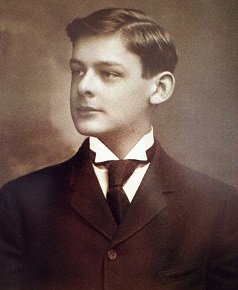
De Engels-Amerikaanse dichter en schrijver T. S. Eliot werd op 26 september 1888 geboren in St.Louis, Missouri. Zie ook mijn blog van 26 september 2010 en eveneens alle tags voor T. S. Eliot op dit blog.


Rhapsody On A Windy Night (Fragment)

Half-past three,
The lamp sputtered,
The lamp muttered in the dark.

The lamp hummed:
"Regard the moon,
La lune ne garde aucune rancune,
She winks a feeble eye,
She smiles into corners.
She smoothes the hair of the grass.
The moon has lost her memory.
A washed-out smallpox cracks her face,
Her hand twists a paper rose,
That smells of dust and old Cologne,
She is alone
With all the old nocturnal smells
That cross and cross across her brain."
The reminiscence comes
Of sunless dry geraniums
And dust in crevices,
Smells of chestnuts in the streets,
And female smells in shuttered rooms,
And cigarettes in corridors
And cocktail smells in bars."

The lamp said,
"Four o'clock,
Here is the number on the door.
Memory!
You have the key,
The little lamp spreads a ring on the stair,
Mount.
The bed is open; the tooth-brush hangs on the wall,
Put your shoes at the door, sleep, prepare for life."

The last twist of the knife.
 

 2076376-f2fb938038e74b9c29a433ceb57a3924.jpg
T. S. Eliot (26 september 1888 – 4 januari 1965)
T. S. Eliot op jeugdige leeftijd


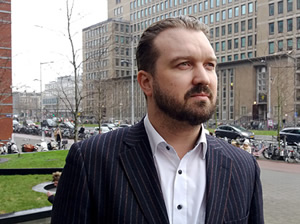
De Nederlandse schrijver Thomas van Aalten werd geboren in Huissen bij Arnhem op 26 september 1978. Zie ook alle tags voor Thomas van Aalten op dit blog.

Uit:Henry!

“In de coupé zat ik tegenover een jonge vrouw die gekleed was in een eigeelkleurig jurkje. Ze droeg haar haar als Audrey Hepburn op de recente cover van Harper’s Bazaar. Er stond een mintgroen koffertje op haar schoot, waar maar weinig bagage in zou passen. Aan het koffertje hing een label met een Frans klinkende naam: Coco Dolores.
‘Parlez-vous français, madame?’ vroeg ik.
‘Oui.’
‘Vous connaissez Harper’s Bazaar?’
Ze schudde haar hoofd en vroeg waarom ik dat wilde weten. Ik overhandigde haar het blad en zei dat ik het een paar dagen ervoor in Amsterdam gekocht had.
De jonge vrouw glimlachte terwijl ze het doorbladerde. Ze rook vagelijk naar ontsmettingsmiddel. ‘U komt dus uit Amsterdam? Ik ben een Vlaamse. Ik spreek Nederlands.’
‘Aha, waar komt u vandaan, als ik vragen mag?’ vroeg ik.
‘Antwerpen.’
‘En, wat vindt u van het blad? U zou volgens mij tot de doelgroep horen. Studeert u?’
‘Studeren? Ik ken maar weinig vrouwen die studeren. Ik ben getrouwd met een bankier.’
‘Ik wil eigenlijk weten: kan dit blad populair worden in Nederland of België, denkt u?’
‘Waarom wilt u dat weten?’
‘Gewoon, interesse.’
‘Bent u verkoper?’
‘Nee. Ik werk voor een stadskrant in Amsterdam. Journalist.’
‘En bent u op reis voor uw werk?’
‘Inderdaad, ik kom net terug van een interview. Er was iemand verongelukt in Zwitserland, een Nederlandse student. Ik heb zijn moeder gesproken. Ook stadskranten zijn op zoek naar originele verhalen…’
 

 2076376-718eb08317d61215dc73cadfd7f769d6.jpg
Thomas van Aalten (Huissen, 26 september 1978)


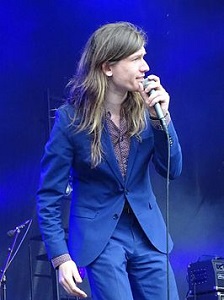
De Nederlandse schrijver en muzikant Jerry Hormone (pseudoniem van Jeroen Aalbers) werd geboren in Numansdorp op 26 september 1982. Zie ook alle tags voor Jerry Hormone op dit blog.

Uit: De spareribclub

“Zaterdag was onze vaste dag. Na het golfen bleven we altijd nog wat borrelen in het clubhuis. Ze hadden een aardige keuken, maar de spareribs waren er niet te vreten, vond Van Aalst. `Dat je dat binnen kan houden,' zei Van Aalst tegen Dirk. `Wat is er mis mee dan?' vroeg Dirk en hij zoog op een bot. `Het zijn voorgegrilde uit de vriezer die ze zonder ze te ontdooien in de frituurpan pleuren.' Van Aalst trok het bord spareribs onder Dirk z'n neus vandaan en smeet het in de prullenbak. `Wat doe jij nou?' `Ik zal jullie eens échte spareribs laten proeven. Ik weet een tentje in Zuid-Beijerland waar ze ongelooflijk lekker zijn. En onbeperkt voor maar twintig gulden.' We goten de vaasjes Heineken achterover. Gooiden de golftas over de schouder en liepen naar onze auto's. We hadden al aardig wat gedronken, maar dat had ons er nog nooit van weerhouden te rijden. 'Als je nog kan zitten, kan je nog rijden,' zei Arie altijd. We reden achter Van Aalst over de Molendijk naar Zuid-Beijerland, het dorp ten westen van Numansdorp. Parkeerden naast de kerk, staken de straat over. `Voilà,' zei Van Aalst. 'Eetcafé 't Zwaard.' Binnen was het meer bruine kroeg dan eetcafé. `Klaas!' riep Van Aalst naar de man die achter de bar wijnglazen stond te poleren. 'Vier vaasjes en vier keer onbeperkt spareribs met alles erop en eraan!' We gingen aan een tafel onder een door de motten aangevreten hertenkop zitten. Klaas kwam met de biertjes.
`Zeg tegen je vrouw dat ze flink opschept,' zei Van Aalst. IJ kan altijd bijbestellen,' zei Klaas met plat Hoeksche Waards accent. Hoeksche Waarders hadden een hekel aan import. Zeker aan dat volk uit de grote stad, met hun grote bekken en hun opgedofte wijven. Maar voor onze centen haalden ze hun boerenneuzen niet op. Daar zeiden ze zelfs `u' voor. `Die Klaas z'n vrouw is een partijtje lelijk,' zei Van Aalst zonder te kijken of Klaas al ver genoeg was om het niet te kunnen horen, 'maar d'r spareribs zijn waanzinnig.' `Waar ligt het 'm aan?' vroeg Arie. 'De kwaliteit van het vlees?' `Ook,' zei Van Aalst. 'Maar het is vooral de marinade. Zo pittig en zo zoet.' `Wat zit erin dan?' vroeg ik. `Geheim recept,' zei Van Aalst. `Ze steekt ze voor het bakken zeker eerst effe in d'r kut,' zei Arie.”
 

 2076376-5d368180b906afa6694530bc7eebcda1.jpg
Jerry Hormone (Numansdorp, 26 september 1982)


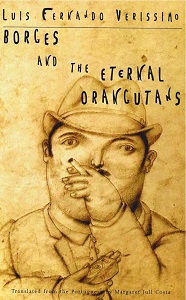
De Braziliaanse schrijver Luís Fernando Veríssimo werd geboren op 26 september 1936 in Porto Alegre, Rio Grande do Sul. Zie ook alle tags voor Luís Fernando Veríssimo op dit blog.

Uit:Borges and the Eternal Orangutans (Vertaald door Jull Costa)

“He rushes out, perhaps after stabbing Rotkopf a third time, and goes to his room, closing the door only seconds before I get out of the lift. He deans the murder weapon and throws it out of the bathroom window." "Before that," you continued, "Urquiza had given up knocking on Johnson's door and also returned to his own room. The following day, when he finds out about Rotkopf's murder, he decides, just in case, to throw his knife out of the bathroom window" "All right," said Cuervo, clutching his head. "We've explained two of the knives. What about the third?" Jorge and I were unanimous in our silence. "And how did Johnson manage to leave the room without unlocking the door?" insisted Cuervo. We continued in silence. Until you, trying, out of respect for Cuervo's distress, not to sound ironic, said: "Well, there are still a few details to be worked out . . ."
I asked what you meant about too much symmetry. You revealed that you also had some news. Taking advantage of your previous night's insomnia, you had been rummaging around in the depths of your memory for everything you knew about the Necronomicon, and about your researches into John Dee. You had remembered that the power of the magical beings, of the dead names, was shared out amongst the quadrants of the Earth, and that the most powerful beings were Azathoth andYog-Sothoth, from the Southern quadrant, the king and the prince of chaos, the only ones who could call up Hastur, he who walked in the wind, the destroyer. You had a vague idea that something linked Hastur to the case in hand and finally, as the night was ending, you remembered what it was: in the contents page of the translation of the Necronomicon that Lovecraft attrib-uted to John Dee, the chapter on Hastur was number ten. The X that Rotkopf had made in the mirror. The number to card that accompanied the prince and the king of the pack. And surely we remembered that sudden wind on the night of the crime.
If your intention had been to irritate Cuervo still further, you succeeded. He was standing up. "Do you mean to say that the murderer isn't Johnson now, but Hastur, a malign spirit?" "At least that solves the problem of the locked room. After all, spirits can walk through walls," I said provoca-tively. "Or perhaps Johnson was the embodiment of Hastur, since he had presumably deciphered all the spells in the Necronomicon," you added. "Can we be serious for a moment?"
 

 2076376-d0c0f2bb07638c681cfff950252578bc.jpg
Luís Fernando Veríssimo (Porto Alegre, 26 september 1936)
Cover


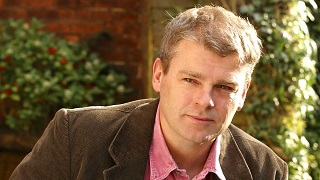
De Engelse schrijver Mark Haddon werd geboren op 26 september 1962 in Northampton. Zie ook alle tags voor Mark Haddon op dit blog.

Uit:A Spot of Bother

“It began when George was trying on a black suit in Allders the week before Bob Green's funeral.
It was not the prospect of the funeral that had unsettled him. Nor Bob dying. To be honest he had always found Bob's locker-room bonhomie slightly tiring and he was secretly relieved that they would not be playing squash again. Moreover, the manner in which Bob had died (a heart attack while watching the Boat Race on television) was oddly reassuring. Susan had come back from her sister's and found him lying on his back in the center of the room with one hand over his eyes, looking so peaceful she thought initially that he was taking a nap.
It would have been painful, obviously. But one could cope with pain. And the endorphins would have kicked in soon enough, followed by that sensation of one's life rushing before one's eyes which George himself had experienced several years ago when he had fallen from a stepladder, broken his elbow on the rockery and passed out, a sensation which he remembered as being not unpleasant (a view from the Tamar Bridge in Plymouth had figured prominently for some reason). The same probably went for that tunnel of bright light as the eyes died, given the number of people who heard the angels calling them home and woke to find a junior doctor standing over them with a defibrillator.
Then . . . nothing. It would have been over.
It was too early, of course. Bob was sixty-one. And it was going to be hard for Susan and the boys, even if Susan did blossom now that she was able to finish her own sentences. But all in all it seemed a good way to go.
No, it was the lesion which had thrown him.
He had removed his trousers and was putting on the bottom half of the suit when he noticed a small oval of puffed flesh on his hip, darker than the surrounding skin and flaking slightly. His stomach rose and he was forced to swallow a small amount of vomit which appeared at the back of his mouth.
He had not felt like this since John Zinewski's Fireball had capsized several years ago and he had found himself trapped underwater with his ankle knotted in a loop of rope. But that had lasted for three or four seconds at most. And this time there was no one to help him right the boat.”
 

 2076376-2e8c880a3ba8ce1d922a86e080506bc5.jpg
Mark Haddon (Northampton, 26 september 1962)


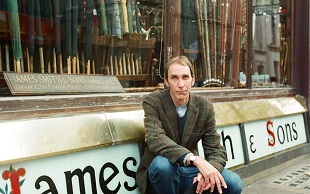
De Engelse schrijver, criticus en columnist William Self werd geboren in Londen op 26 september 1961. Zie ook alle tags voor William Self op dit blog en ook mijn blog van 26 september 2010.

Uit: Cock And Bull

“Carol had always felt at some level less of 3 woman when Dan was around. Not that she ever would have defined what she felt in these terms — and she certainly wouldn't have used this particular language. Carol had completed one third of the degree course in sociology at Llanstephan, a small.. dull Welsh college. Her tertiary education was brief. She was exposed to enough of the student radicalism that was then in fashion to have been able to attach to her feeling; of alienation from Dan neat tags of feminist jargon — but Carol was too insipid to shape her critique. So while men weren't necessarily stupid or chauvinistic, neither were they 'phallocentric' or 'empowered by the male phallic hegemony'. And women, on the other hand, they weren't depressed, oh no. And neither were they 'alie-nated'. Of them, never let it be said that their 'discourse was vitiated'. Carol had spent long. sapphic nights at Llanstephan under the influence of a rotund lesbian called Beverley, who hailed from Leeds. Beverley lectured her on the jargon, attempting to move her from the casting couch to a speaking part in the cod philosophy. They grew tense on instant coffee and eventually fiddled sweatily with the toggles of each other's regulation bib 'n' braces. But despite these relatively exotic experiences, Carol, the daughter of a desperately self-efllicing woman and a dissatisfied autodidactic electrical cnginccr from Poole, was not impelled into an original lifestyle, or even inclined to complete her degree in order to counter the masculine cultural hegemony. Beverley's sour-crcam flesh and probing digits failed to release whatever lode of sexual ecstasy Carol might have had locked within her narrow bosom — as did the blind-mole bumping of the seven or so penises that had trailed up her thin thighs since she started going in for that sort of thing. This was left to Dan to achieve — by a fluke, entirely. And it was this fluke, combined with Carol's tendency always, always to take the line of least resistance, in all that she ever said, or did, or even thought, that gives this story its peculiar combination of cock and bull. A pub-crawl down the snaking high street of a Warwickshire market town, this was the prelude to the chain of chance. In the manner of students the world over, Carol had departed from Uanstephan with two colleagues, one of whom she knew only vaguely. The vague one, in turn, had a still vaguer acquaintance with some design students at Stourbridge. A party was in the offing. The three lianstephanites, Carol, a girl called Bea, and the boy, Alun, set off at dusk in a borrowed car and burrowed across Wales and then through night-time England in the narrow tunnel carved by the headlights.”
 

 2076376-f72bd25f181cfb1bd3124d84f5ee3f09.jpg
William Self (Londen, 26 september 1961)


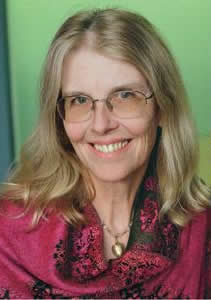
De Amerikaanse schrijfster Jane Smiley werd geboren op 26 september 1949 in Los Angeles. Zie ook alle tags voor Jane Smiley op dit blog en ook mijn blog van 26 september 2010

Uit: Some Luck

“Stella, who had been sleeping in her basket in the corner, leapt up barking and then slipped out the bedroom door. Margaret heard her race down the stairs. It was early; fog still pressed against the two bedroom windows.
Margaret sat up, but then she lay back on her pillow, dejected—she must have missed a telegram, and now her husband, Andrew, had returned. She woke up a bit more and listened for the opening of the front door. But, no, there hadn’t been a telegram—she remembered that she’d looked for one. Had she not locked the front door? She stilled her breathing and listened. With the war on, all sorts of characters crammed Vallejo these days. Suddenly a little frightened, she slid out of bed and stealthily pulled on her robe, then opened the door of her room a bit wider and crept out far enough to peer over the banister. There was the top of a head, dark, not Andrew’s, and by the dull light of the hall windows, a houndstooth jacket. A figure bent over to pet Stella, and Stella wagged her tail. This was reassuring. Margaret took a deep breath. Now the figure stood up, looked up, and smiled. He said, Put your clothes on, darling, we’re going for a ride.
She was speechless with pleasure at seeing Pete, though he seemed to have walked right in—did that mean she had left the door unlocked, because how would he get a key? But getting ready took her no time, she made sure of that. She only brushed out her hair and redid her bun so that some of the gray was hidden, then got out her best blue suit with the white piqué collar and her last pair of hose and her nicest shoes. She put on the black straw hat with a half-veil, and she looked neat, she thought, though no better than that—at her age, you could not hope to look pretty, and she had never been beautiful.”
 

 2076376-01f60985e80f1005bf0de7bc15ad56ae.jpg
Jane Smiley (Los Angeles, 26 september 1949)


De Russische schrijver en dissident Vladimir Nikolajevitsj Vojnovitsj werd geboren in Doesjanbe op 26 september 1932. Zie ook alle tags voor Vladimir Vojnovitsj op dit blogen ook mijn blog van 26 september 2010.

Uit: Monumental Propaganda (Vertaald door Andrew Bromfield)

“Of course, that was demagoguery. Livshits undoubtedly knew, as everyone knew-only one did not say it out loud-that the economic situation would only be easy under communism. Well then, were we supposed to just sit back and not build anything, neither saw nor sew nor plane nor forge nor sculpt until the advent of communism? Perhaps that was what the rootless and tribeless cosmopolitan Livshits was counting on? But he had miscalculated. Soon thereafter he had been exposed as involved with the international organization of Zionists and spies known as Joint and suffered the well-deserved penalty. In the quiet hour before dawn one of the automobiles popularly known as a "black raven" or "black Marusya" had pulled up at the Livshits' house and removed the self-appointed representative of the people to a place far distant from the city of Dolgov.
Livshits was not alone. Others may have expressed their opinions less openly, but they had also dropped hints.
Having overcome the resistance, Aglaya had her way and erected the monument-although it wasn't actually bronze, as had been anticipated at the beginning, but cast iron. Because the railway wagon with the bronze, having left the city of Yuzhnouralsk one fine day, never arrived at the city of Dolgov. (Where it did arrive remains a mystery even now.) This delighted certain spiteful faultfinders. Perhaps it also delighted Wilhelm Leopoldovich Livshits as he squatted on his prison toilet, but his delight was premature. Aglaya's enemies knew her well, but not well enough. They had underestimated her will to victory and failed to appreciate that she never retreated from her chosen goal. She went to Moscow, consulted the sculptor Max Ogorodov and commissioned him to forge the statue out of cast iron."
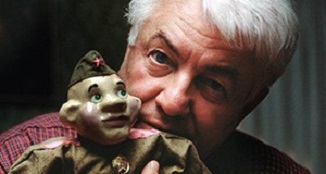
 

 2076376-03f070c9063c38a173a0fae9f00e1f46.jpg
Vladimir Vojnovitsj (Doesjanbe, 26 september 1932)


Zie voor nog meer schrijvers van de 26e september ook mijn blog van 26 september 2015 deel 2.

Geschreven door Romenu om 18:29 Reageer op dit bericht

Niccolò Ammaniti, David Benioff, Michael Reefs, Carlos Ruiz Zafón, Andrzej Stasiuk, William Faulkner, Patricia Lasoen, Rebecca Gablé, Lu Xun

De Italiaanse schrijver Niccolò Ammaniti werd geboren in Rome op 25 september 1966. Zie ook alle tags voor Niccolò Ammaniti op dit blog.

Uit: Jij en ik (Vertaald door Etta Maris)

“Met een arm stevig om de ski’s geslagen, de skischoenentas in mijn hand en de rugzak op mijn rug, zag ik hoe mijn moeder de auto keerde. Met mijn andere hand zwaaide ik naar haar en wachtte tot de BMW was verdwenen over de brug.
Ik liep door de Viale Mazzini. Ik passeerde het gebouw van de RAI. Op ongeveer honderd meter van het kruispunt met de Via Col di Lana ging ik langzamer lopen, terwijl mijn hart sneller ging bonken. Ik had een vieze smaak in mijn mond, alsof ik aan een stuk koperdraad had gelikt. Al die spullen die ik moest dragen hinderden me. Het leek wel een sauna in dat ski-jack.
Bij het kruispunt aangekomen, leunde ik tegen een muur en keek om de hoek. Verderop, voor een moderne kerk, stond een grote Mercedes SUV. Ik zag Alessia Roncato en haar moeder, de Soemeriër en Oscar Tommasi, die de koffers in de kofferbak zette. Een Volvo met een paar ski’s boven op het dak parkeerde naast de Mercedes en Riccardo Dobosz stapte uit en rende naar de anderen toe. Even later stapte de vader van Dobosz uit.
Ik trok me terug tegen de muur. Ik legde de ski’s neer, ritste mijn jack open en gluurde opnieuw om de hoek. Nu waren de moeder van Alessia en de vader van Dobosz bezig de ski’s boven op de Mercedes te bevestigen. De Soemeriër sprong in het rond en deed alsof hij bokste tegen Dobosz. Alessia en Oscar Tommasi praatten tegen hun mobieltjes. Het duurde behoorlijk lang voordat ze eindelijk klaar waren, Alessia’s moeder werd boos op haar dochter omdat die niet meehielp, de Soemeriër sprong op het dak van de auto om de ski’s te controleren. Maar uiteindelijk vertrokken ze.
Tijdens de tramrit voelde ik me een idioot. Met die ski’s en skischoenen, geplet tussen ambtenaren in jasje-dasje en moeders die hun kinderen naar school brachten. Als ik mijn ogen dichtdeed leek het of ik in een kabelbaantje zat, tussen Alessia, Oscar Tommasi, Dobosz en de Soemeriër in. Ik kon de geur van cacaoboter en zonnebrandcrème ruiken. En terwijl we uit de cabine stapten zouden we elkaar duwen en lachen en hard praten en lak hebben aan alle andere mensen. Net als die lui die door mijn moeder en vader pummels genoemd werden. Ik zou grappige dingen zeggen en ze aan het lachen maken terwijl ze hun ski’s vastklikten. Typetjes doen, moppen vertellen. Ik wist nooit grappige moppen. Je moet heel erg zeker van jezelf zijn om moppen te kunnen vertellen.”


 2076102-2c4f4db1a66f6a316f2e5b3673077734.jpg
Niccolò Ammaniti (Rome, 25 september 1966)


De Amerikaanse schrijver David Benioff (pseudoniem van David Friedman) werd geboren in New York City op 25 september 1970. Zie ook alle tags voor David Benioff op dit blog en ook mijn blog van 25 september 2010.

Uit: When the Nines Roll Over

„The singer had presence. She wasn't a beauty, and her pitch was imperfect, but she had presence. Tabachnik watched her. Lord, the girl could yell. From time to time he surveyed the young faces in the crowd. The way the kids stared at her—the ones in back jumping up and down to get a better look—confirmed his instinct. The girl was a piggy bank waiting to be busted open. Tabachnik and a foul-smelling Australian stood by the side of the stage, in front of a door marked REDRUM STAFF ONLY! Most of the kids in Redrum were there to see the headliners, Postfunk Jemimah, but the opening act, the Taints, was threatening to steal the show. There was no slam-dancing or crowd-surfing or stage-diving—everybody bobbed their heads in time with the drummer's beat and watched the singer. She prowled the stage in a bottle-green metallic mesh minidress so short that Tabachnik kept dipping his knees and tilting his head to see if he could spot her underwear. He could not spot her underwear. When the band finished the song Tabachnik turned to the Australian and asked, "What's that one called?" The Australian had recently started an independent label called Loving Cup Records. The Taints were the first band he signed. His head was shaved and his black tracksuit stank of sweat and cigarette smoke. "It's good, huh? 'Ballad of SadJoe.' SadJoe's the drummer. He started the band." "Who writes the songs?" "Molly," said the Australian, pointing at the lead singer. "Molly Minx." She didn't look like a Molly Minx. Tabachnik wasn't sure what a Molly Minx should look like, but not this. He guessed that she was Thai. Her hair was cropped close to the scalp and bleached blond. A tattooed black dragon curled around her wrist.
"The story is," continued the Australian, "she has a big crush on SadJoe, and she writes this song, and one night she sings it to him. Right on the street, a serenade. So, you know, love. Boom. And he asks her to join the band.”


 2076102-3f07fc061c6455c89cee4d7e00426d09.jpg
David Benioff (New York, 25 september 1970)


De Nederlandse schrijver Michael Reefs werd op 25 september 1986 geboren in Heerlen en groeide op in het Limburgse Vaals. Zie ook alle tags voor Michael Reefs op dit blog.

Uit: De tijdwachter

“Schaduwen kropen als sluwe monsters over het dash-board toen ze tientallen straatlampen passeerden. Va-lerie volgde een paar regendruppels met haar ogen en tikte met haar vingers tegen het zijraam van de auto. 'Laat dat,' snauwde haar moeder. 'Zo maak je vlekken op de ruit' 'Sorry.' Ze zakte onderuit in haar stoel en trok haar gordel iets losser. 'Is het nog ver, mevrouw van Hoven?' vroeg Melanie. Het gezicht van Valeries moeder veranderde op slag. Haar mondhoeken krulden omhoog en haar ogen straalden toen ze via de achteruitkijkspiegel naar Melanie keek. 'Wat ben jij toch altijd beleefd, Melanie.' Ze controleerde haar horloge. 'Het duurt nog ongeveer een kwartier, dan zijn we bij het museum.' 'Hoe laat komt jouw tante ons weer ophalen?' vroeg Luca aan Melanie. 'Om half negen, als het museum sluit.' Valerie draaide zich om in haar stoel en keek wat Sander aan het doen was. Hij zat weggedoken achter een geschiedenisboek. Zijn bril was naar het puntje van zijn neus geschoven. "Is het interessant?", vroeg ze.
Luca pakte het boek van zijn schoot en schoof het onder haar kont. 'Zo,' zei ze. 'Voorlopig heb je wel even genoeg gelezen. Je bent al de hele rit bezig met je boek.' Sander wierp haar een verontwaardigde blik toe. 'Ik wil goed voorbereid zijn.' 'Ik vind het al erg genoeg dat we hier in onze vrije tijd naar-toe moeten,' zei Roy verveeld. 'Ik bedoel, we hadden het toch ook onder schooltijd kunnen doen?' 'Dit hoort bij de cultuuropdracht,' zei Melanie. 'Dus nee, dit moeten we echt in onze eigen tijd doen. Bovendien zijn we niet de enigen; iedereen van groep zes en hoger is er vanavond.' Vijf minuten later stopte de auto in de stromende regen voor het enorme museum dat een paar kilometer buiten Zuidbaai lag. Donkere wolken hingen boven het gebouw en het zag ernaar uit dat het de rest van de avond zou blijven regenen. Het museum lag weliswaar langs een drukke hoofdweg, maar bevond zich toch ver weg van de bewoonde wereld en zover het oog reikte zag je alleen maar bos. 'Wisten jullie dat dit museum vroeger een gevangenis is ge-weest?' vroeg Sander, terwijl ze uitstapten en met hun jassen.”


 2076102-e2eded6b16c420c9bb48b77349d7b7db.jpg
Michael Reefs (Heerlen, 25 september 1986)
Cover


De Spaanse schrijver Carlos Ruiz Zafón werd geboren op 25 september 1964 in Barcelona. Zie ook mijn blog van 25 september 2010 en eveneens alle tags voor Carlos Ruiz Zafón op dit blog.

Uit: Septemberlichten (Vertaald door Nelleke Geel)

“Iedereen die zich de nacht herinnert dat Armand Sauvelle stierf, zweert dat een purperrode lichtstraal langs de hemel schoot en een spoor van gloeiende vonken trok dat aan de horizon verdween. Een lichtstraal die zijn dochter Irene niet kon zien, maar die nog vele jaren in haar dromen zou rondspoken.
Het was een koude winterochtend en de ramen van zaal nummer 14 van het Saint-Georgeziekenhuis waren met een dunne ijslaag bedekt, waardoor er in de gouden nevel van de ochtend onwerkelijke waterverfbeelden van de stad op het glas ontstonden.
Armand Sauvelles levenslicht doofde in stilte, bijna zonder een zuchtje. Zijn vrouw Simone en zijn dochter Irene keken op toen de eerste stralen de nacht doorbraken en ragfijne lijnen wierpen in de ziekenhuiszaal.
Dorian, Irenes jongere broertje, sliep opgekruld in een van de stoelen. Een angstaanjagende stilte viel over de zaal. Er waren geen woorden nodig om te begrijpen wat er was gebeurd. Na zes maanden lijden had het zwarte spook van een ziekte die hij nooit had kunnen uitspreken, Armand Sauvelle uit het leven gerukt. Zomaar.
Het was het begin van het ergste jaar dat de familie Sauvelle zich zou herinneren.
Armand Sauvelle nam zijn tover en zijn aanstekelijke lach met zich mee het graf in, maar zijn talrijke schulden vergezelden hem niet op zijn laatse reis. Spoedig viel een leger van schuldeisers en allerlei piekfijn geklede aasgieren met deftige titels aan op de woning van de Sauvelles aan de Boulevard Haussmann. Op onderkoelde condoleancebezoekjes volgden verkapte bedreigingen. En mettertijd beslagleggingen.
De gerenommeerde scholen en een vlekkeloze garderobe van Irene en Dorian werden verruild voor tijdelijke baantjes en bescheiden kleding. Het was het begin van de duizelingwekkende afdaling van de Sauvelles in de echte wereld. Maar Simone trof het het slechtst. Ze had weer een betrekking als lerares aangenomen, maar het salaris was niet voldoende om de schuldenvloed te stoppen die haar karige spaargeld opvrat. In alle hoeken en gaten doken nieuwe documenten op die Armand had getekend, een nieuwe schuldbekentenis, een nieuw zwart gat zonder bodem ...”


 2076102-492c0063b10ba79caa12bee112e74d6b.jpg
Carlos Ruiz Zafón (Barcelona, 25 september 1964)


De Poolse schrijver en letterkundige Andrzej Stasiuk werd geboren op 25 september 1960 in Warschau. Zie ook mijn blog van 25 september 2010 en eveneens alle tags voor Andrzei Stasiuk op dit blog.

Uit:On The Road To Babadag: Travels In The Other Europe(Vertaald door Michael Kandel)

“This sequence of images was not Poland, not a country; it was a pretext. Perhaps we become aware of our existence only when we feel on our skin the touch of a place that has no name, that connects us to the earliest time, to all the dead, to prehistory, when the mind first stood apart from the world, still unaware that it was orphaned. A hand stretches from the window of a truck, and through its fingers flows the earliest time. No, this was not Poland; it was the original loneliness. I could have been in Timbuktu or on Cape Cod. On my right, Baranów, "the pearl of the Renaissance," I must have passed it a dozen times in those days, but it never occurred to me to stop and have a look at it. Any place was good, because I could leave it without regret. It didn't even need a name. Constant expense, constant loss, waste such as the world has never seen, prodigality, shortage, no gain, no profit. The morning on the coast, Wybrzeze, the evening in a forest by the San River; men over their steins like ghosts in a village bar, apparitions frozen in mid-gesture as I watched. I remember them that way, but it could have been near Legnica, or forty kilometers northeast of Siedlec, and a year before or after in some village or other. We lit an evening fire, and in the flickering light, young guys from the village emerged; probably the first time in their lives they were seeing a stranger. We were not real to them, or they to us. They stood and stared, their enormous belt buckles gleaming in the dark: a bull's head, or crossed Colt revolvers. Finally they sat near, but the conversation smacked of hallucination. Even the wine they brought couldn't bring us down to earth. At dawn they got up and left. It's possible that a day or two later I stood for ten hours in Zloczów, Zolochiv, and no one gave me a lift. I remember a hedgerow and the stone balustrade of a little bridge, but I'm not sure about the hedgerow, it could have been elsewhere, like most of what lies in memory, things I pluck from their landscape, making my own map of them, my own fantastic geography. One day I went to Poznan in a pickup truck. The driver shouted, "Hop on. Just watch out for the fish!" I lay among enormous plastic bags filled with water.”


 2076102-71e0d2c7ee0ac09fd630ea7251599941.jpg
Andrzej Stasiuk (Warschau, 25 september 1960)


De Amerikaanse schrijver William Faulkner werd geboren op 25 september 1897 in New Albany, Mississippi. Zie ook mijn blog van 25 september 2010 en eveneens alle tags voor William Faulkner op dit blog.

Uit: Light in August

„The brother worked in the mill. All the men in the village worked in the mill or for it. It was cutting pine. It had been there seven years and in seven years more it would destroy all the timber within its reach. Then some of the machinery and most of the men who ran it and existed because of and for it would be loaded onto freight cars and moved away. But some of the machinery would be left, since new pieces could always be bought on the installment plan—gaunt, staring, motionless wheels rising from mounds of brick rubble and ragged weeds with a quality profoundly astonishing, and gutted boilers lifting their rusting and unsmoking stacks with an air stubborn, baffled and bemused upon a stumppocked scene of profound and peaceful desolation, unplowed, untilled, gutting slowly into red and choked ravines beneath the long quiet rains of autumn and the galloping fury of vernal equinoxes. Then the hamlet which at its best day had borne no name listed on Postoffice Department annals would not now even be remembered by the hookwormridden heirs- at-large who pulled the buildings down and buried them in cookstoves and winter grates.
There were perhaps five families there when Lena arrived. There was a track and a station, and once a day a mixed train fled shrieking through it.
The train could be stopped with a red flag, but by ordinary it appeared out of the devastated hills with apparitionlike suddenness and wailing like a banshee, athwart and past that little less-than-villagelike a forgotten bead from a broken string. The brother was twenty years her senior. She hardly remembered him at all when she came to live with him. He lived in a four room and unpainted house with his labor- and child-ridden wife. For almost half of every year the sister-in-law was either lying in or recovering. During this time Lena did all the housework and took care of the other children. Later she, told herself, ‘I reckon that’s why I got one so quick myself.’
She slept in a lean-to room at the back of the house. It had a window which she learned to open and close again in the dark without making a sound, even though there also slept in the lean-to room at first her oldest nephew and then the two oldest and then the three. She had lived there eight years before she opened the window for the first time.
She had not opened it a dozen times hardly before she discovered that she should not have opened it at all. She said to herself, ‘That’s just my luck.’


 2076102-8dac44275c36a12cabc6bb0ad98b4f18.jpg
William Faulkner (25 september 1897 - 6 juli 1962)


De Belgische dichteres en schrijfster Patricia Lasoen werd geboren op 25 september 1948 in Brugge. Zie ook mijn blog van 25 september 2010 en eveneens alle tags voor Patricia Lasoen op dit blog.


Weet je het nog het Nauw van Calais?

Toen ik hier nog niet zo lang woonde
en de eerste baby amper wat geluidjes
maakte in zijn witte wieg
vond ik het keukenraam te smal
om ver te kunnen kijken.
Vandaag scheen me de witte tuin
een wijds geval, met zoveel leegte
na het opruimen van blokken.
Een kwestie van gezichtsveld:
het lijkt soms of een vrouw na jaren
bovenaan steeds nauwer
onderaan steeds breder wordt.


Kleuren

Rood
Het terras lag soms blank van het water
en in mijn herinnering steeds
blinkend rood
maar in waarheid vaak bemost.


 2076102-e646b85b7de0e89a65d49b1a1fb7104d.jpg
Patricia Lasoen (Brugge, 25 september 1948) 
Brugge


De Duitse schrijfster Rebecca Gablé (pseudoniem van Ingrid Krane-Müschen) werd geboren op 25 september 1964 in Wickrath / Mönchengladbach. Zie ook mijn blog van 25 september 2010 en eveneens alle tags voor Rebecca Gablé op dit blog.

Uit:Das Haupt der Welt

“Gib deinen Sachsen heraus, Tugomir«, befahl Bolilut. »Heute ist er endlich fällig.« »Ich habe keine Ahnung, wo er ist«, erwiderte Tugomir und fuhr fort, Haselwurzblätter in einen Mörser zu zählen. Bei dieser Auf-gabe war äußerste Sorgfalt geboten, wenn er nicht die gesamte Priesterschaft vergiften wollte, und außerdem war es ihm lieber, seinen Bruder jetzt nicht anzuschauen. Bolilut kam einen Schritt näher in den Lichtkreis der bei-den Öllampen, die das Halbdunkel des Tempels zurückdrängten. »Jetzt hab dich nicht so. Was kann dir ein blinder Sklave schon be-deuten?« »Gar nichts«, log Tugomir. Sorgsam verschloss er die tönerne Vorratsschale mit ihrem dicht sitzenden Holzdeckel und stellte sie neben seinem Schemel auf den Boden. Dann griff er nach dem Pis-till und begann, die getrockneten Blätter im Mörser zu zerreiben. »Aber er darf diesen Tempel nicht betreten, wie du vermutlich weißt, darum wirst du ihn kaum hier finden.« Sein älterer Bruder stieß die Luft durch die Nase aus; es war ein Laut voller Hohn. »Wo du ihn auch versteckt haben magst, es wird dir nichts nützen. Er wurde für Jarovit ausgewählt, und auf die Art kann er sich endlich mal nützlich machen.« Tugomir arbeitete weiter. Die Blätter waren trocken, aber zäh und ledrig. Es war schwierig, sie zu dem feinen Pulver zu zersto-ßen, das nötig war. »Lass mich das hier eben erledigen«, sagte er scheinbar gleichmütig. »Dann mache ich mich auf die Suche. Er kann uns schwerlich davonlaufen, nicht wahr? Keine Maus kommt aus dieser Burg heraus.“
»Oder hinein«, fügte Bolilut hinzu. »Ich würde sagen, das bleibt abzuwarten«, entgegnete der Jüngere. »Was soll das heißen? Du willst doch nicht im Ernst behaup-ten, du hättest Angst vor diesen halb erfrorenen Strohköpfen da draußen?« Tugomir hob endlich den Kopf. »Geh hinaus auf den Wall und sieh sie dir an, Bolilut. Es sind Hunderte. Vor zwei Monaten sind sie hergekommen, und seit die Havel zugefroren ist, lagern sie auf dem verdammten Fluss. Sie schießen unsere Wachen vom Wehr-gang und stecken unsere Palisaden in Brand. Seit sie da draußen liegen, ist kein Bote mehr durchgekommen, geschweige denn Proviant.“


 2076102-20190e9206cb8c2097303fc14196014e.jpg
Rebecca Gablé (Wickrath, 25 september 1964)


De Chinese dichter en schrijver Lu Xun werd in 1881 in Shaoxing in de provincie Zhejiang geboren als Zhou Shuren. Zie ook alle tags voor Lu Xun op dit blog en ook mijn blog van 25 september 2009 en ook mijn blog van 25 september 2010


Three Verses On Parting From My Brothers

1
My soul takes wing so oft in dream
to fly home whence I came,
And hence I've learnt that in this life
parting is the bitt'rest pain.
As thoughts turn toward my brothers dear
I toss and turn well nigh midnight.
The lamp-wick's flame flickers bean-sized—
expiring soon, 'mid bright moonlight.

2
At sunset our boat moors
by an old planter's house.'
'Round his hut, a thorn fence—
above, intertwine boughs.
Crestfallen, I think back
on the old days at home,
Wondering when again I shall carry
a watering-crock my own.

3
Youth is seen-off easily
by spring breezes in their constant flight.
O'er the misty waves we row,
navigating our boat by night.
Wherefore doth the wagtail
flaunt himself at me,'
Sweeping for our mast-tip
'cross the sky so free?


Vertaald door J. E. Kowallis


 2076102-831f2e16c4541fae4a500d06c9969ec3.jpg
Lu Xun (25 september 1881 – 19 oktober 1936)


Zie voor nog meer schrijvers van de 25e september ook mijn blog van 25 september 2016 deel 2.


Geschreven door Romenu om 18:31 Reageer op dit bericht

Felipe García Quintero

De Colombiaanse dichter Felipe García Quintero werd geboren op 25 september 1973 in Popayán.Quintero studeerde Spaanse filologie in Spanje, culturele studies in Ecuador en literatuur en Spaans in Colombia. Hij publiceerde vier dichtbundels (“Monólogos del huésped” (Monologen van de gastheer), 1996; “Señales de tránsito” (Verkeersborden), 1997; “Vida de nadie”(Niemands leven), 1999; en “Piedra vacía” (Vacante steen), 2001) en een essay over de Colombiaanse dichter Rafael Maya. Hij heeft verschillende prijzen en beurzen ontvangen in Colombia, Chili en Spanje, waaronder de Premio de Poesía Pablo Neruda. Hij is redacteur van het poëzietijdschrift Ophelia en doceert journalistiek aan de Universidad del Cauca, in Popayán, zijn geboortestad.

Uit: Piedra vacía

IV.

   you bring a bit of bread and some wine to feed the vigil in
the night of your soul.

   In the depths of your eyes you look at the hands that offered
up their bones to build the house and fill it with words.

   Meanwhile, the writing in the darkness grows like the flickering of
the flames, your heart keeps quiet; its tremor stops beating.

   Suddenly nobody exists anymore.

   We are alone and you only think of her. You give yourself up to
the wine of laughter and the bread of silence, and to your memories:
those thoughts that inflame your tongue and burn like the words that
consume you.

   And you want to die, and for that you write:


V.

   one believes in writing. That writing is air, and that’s enough.

   But language inhabits the outdoors of the house, persists in human
gravity.

   Because writing is to be burdened with the procession of your life,
with the implements that do not fit into a different corner which are
not the days, that one after another are the void.

   Because death is to go and no more.

   And it is the will of love to die.

   Yes, the love of dying, the only writing:

Vertaald door Nicolás Suescún


 2114266-233119b0bc9673be3d2b20db623077b7.jpg
Felipe García Quintero (Popayán, 25 september 1973)

Geschreven door Romenu om 00:00 Reageer op dit bericht

Meer van Romenu

↑ Terug naar de berichten