Naar de inhoud

Romenu

Over literatuur, gedichten, kunst en cultuur
akke.beakke.be

Berichten van 27 september 2017 tot 28 september 2017

Philip Huff, Ellis Peters, Ben Greenman, Thijs Zonneveld, Albert Vigoleis Thelen, Robert Thomas, Prosper Mérimée, Francis Turner Palgrave, Rudolf Baumbach
De Nederlandse schrijver Philip Huff werd geboren op 28 september 1984 in Zwolle. Zie ook alle tags voor Philip Huff op dit blog.

Uit: Niemand in de stad

“Ik ben verhuisd. Heel de dag heb ik met Matt en Elisabeth op mijn oude kamer kartonnen dozen en lichtblauwe Albert Heijn-kratjes ingepakt en die omhoog gesjouwd, drie trappen op. Elisabeth liep rond in haar trainingsbroek, het lichtblonde haar opgestoken, voor het eerst een beetje op haar gemak.
Mijn moeder sopte de kozijnen en lapte de ramen. Later loeide de oude stofzuiger. Van tussen de planken van de houten vloer kwam samengeklit stof, met veel lange, witte en bruine haren erin: souvenirs van de meisjes die de afgelopen jaren bij Bart waren blijven slapen.
‘Het is maar goed dat je geen allergie hebt,’ zei mijn moeder, toen ze de volle stofzuigerzak in de vuilnisbak uitsloeg.
Elisabeth en ik tilden mijn bed en mijn bureau in delen naar boven. We zetten de nieuwe stalamp naast het bureau neer, een geschenk van Elisabeths ouders.
Nu kijk ik naar de schone, helverlichte ruimte en de ingelijste foto van Matt en mijzelf. Ik luister naar de serie van stiltes, opgedeeld door het tikken van de klok.
Mijn vorige kamer, vanwaar ik ook uitzicht op de Prinsengracht had, was de portiersloge, naast de voordeur. Ik heb er het grootste deel van mijn eerste jaar gewoond; een hok niet groter dan de meeste invaliden-wc’s, met chronische geluidsoverlast uit de keuken en van de toeristen buiten. Deze kamer is groter en stiller. Voordat Bart hier zat, was dit Jacobs kamer. De vensterbanken en kasten stonden vol gipsen en wassen modellen van het menselijk gebit. Aan de muren hingen gele plakplaatjes vol tekeningetjes van de menselijke anatomie en medische termen en steekwoorden uit zijn studieboeken. Er stond een ongeordende boekenkast die uitpuilde.
Boven mijn bed hangt nu de ingelijste prent van Joost van den Vondel uit de portiersloge. Met strenge blik, een ganzenveer en papier tussen zijn samengevouwen handen, kijkt Joost me aan. De witte boord van zijn hemd is hooggesloten. In mijn boekenkast staat zijn Gysbreght. Daarnaast een facsimile van De Vondeling, in 1851 hier vlakbij gedrukt bij G. van der Linden op de Egelantiersstraat. Gekregen van Elisabeth. Onderin staan de dikke banden van mijn studie, allemaal over historische onderwerpen, keurig op alfabet. Ik kijk naar de foto van mijn oude voetbalelft al en met een binnensmondse boer komt de daghap bij café De Prins naar boven: mosselen met worteltjes en frites.”


 2077025-b2e2c9885090b00f7fca68c22ce1dc9d.jpg
Philip Huff (Zwolle, 28 september 1984)


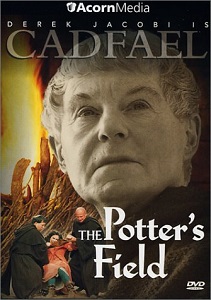
De Engelse schrijfster Ellis Peters werd op 28 september 1913 als Edith Pargeter geboren in Horsehay. Zie ook ook mijn blog van 28 september 2010 en eveneens alle tags voor Ellis Peters op dit blog.

Uit: The Potter's Field

"Father, I believe he thought it only fair. My home is here, but he did not say: Go home. He sent me where I may still be within the discipline I chose, and yet feel the strong pull of place and family. Why should it be made simple for me," said Sulien, suddenly raising his wide blue stare, unwaveringly gallant and deeply troubled, "so the answer at the end is the right one? But I cannot come to any decision, because the very act of looking back makes me ashamed." "There is no need," said Radulfus. "You are not the first, and will not be the last, to look back, nor the first nor the last to turn back, if that is what you choose. Every man has within him only one life and one nature to give to the service of God, and if there was but one way of doing that, celibate within the cloister, procreation and birth would cease, the world would be depeopled, and neither within nor without the Church would God receive worship. It behoves a man to look within himself, and turn to the best dedication possible those endowments he has from his Maker. You do no wrong in questioning what once you held to be right for you, if now it has come to seem wrong. Put away all thought of being bound. We do not want you bound. No one who is not free can give freely." The young man fronted him earnestly in silence for some moments, eyes as limpidly light as harebells, lips very firmly set, searching rather his mentor than himself. Then he said with deliberation: "Father, I am not sure even of my own acts, but I think it was not for the right reasons that I ever asked admission to the Order. I think that is why it shames me to think of abandoning it now." "That in itself, my son," said Radulfus, "may be good reason why the Order should abandon you. Many have entered for the wrong reasons, and later remained for the right ones, but to remain against the grain and against the truth, out of obstinancy and pride, that would be a sin."
 

 2077025-76e34e2a398f50d1f7bbe5dc0f8716ba.jpg
Ellis Peters (28 september 1913 – 14 oktober 1995)
Cover DVD


De Amerikaanse schrijver en uitgever Ben Greenman werd geboren op 28 september 1969 in Chicago. Zie ook mijn blog van 28 september 2010 en eveneens alle tags voor Ben Greenman op dit blog.

Uit:Dig If You Will the Picture: Funk, Sex, God and Genius in the Music of Prince

“Beginnings consume us. Or rather, we consume them. We gobble them up hungrily, certain that they will explain all that follows. We break time into segments so that it can be apprehended and, if not overtaken, at least undertaken. And, so, we start with the start of one par tic u lar segment: Prince was born on June 7, 1958. Prince was born. That’s important to remember. In a life fi lled with so many achievements— lyrics written, songs sung, instruments played, concerts performed—that they seem to require an army, or a mystical being, we should begin with a reminder that they belong to exactly one person, who arrived on the earth via normal channels rather than descending into our realm from the empyrean plane. Prince lived in music from the fi rst. His mother, Mattie Della Shaw, was a singer. His father, John Nelson, was a piano player
and composer. The two of them, African-Americans in mostly white Minneapolis, floated around the city’s jazz scene in the fifties, and for a time Mattie sang with John’s band, the Prince Rogers Trio. It’s unclear how or why John thought of his stage name, though royalty was a common theme in jazz nicknames.
Buddy Bolden was known as “King Bolden,” and there were others: King Oliver, King Watzke, King Kolax. Princes were rarer.
When he met Mattie, John Nelson had a long- term girlfriend named Vivian. Though he and Vivian never married, he had five children with her, beginning in the late forties and continuing through the late fi fties. Somewhere in there, John’s relationship with Vivian wilted, and his relationship with Mattie bloomed.
Mattie got pregnant. Their baby entered the world, and John transferred the name of his act to that baby: Prince Rogers Nelson.
The world that Prince entered was a fragile one, at least as far as American identity was concerned. Sputnik had launched the previous October, kicking off the space race with the Soviets. The United States was just emerging from the Eisenhower recession, the first major economic downturn since the Great Depression— unemployment had soared; steel and auto production had dropped. Minneapolis was at the tail end of a de cade of transformation. In 1950, the city reached the half-million mark in population — still an all- time peak— but legislation like the Housing Act of 1949 and the Federal- Aid Highway Act of 1956 were pushing population toward the near- ring suburbs and beyond. General Mills, one of the city’s industrial anchors, moved out to Golden Valley.”

 

 2077025-829e6a909c351f5f0955156ffd2cf193.jpg
Ben Greenman (Chicago, 28 september 1969)
Cover 


De Nederlandse schrijver, journalist en columnist Thijs Zonneveld werd geboren op 28 september 1980 in Sassenheim. Zie ook mijn blog van 28 september 2010 en eveneens alle tags voor Thijs Zonneveld op dit blog.

Uit:Alleen op de wereld (Column)

“Hij stond in een straat in een Spaans gehucht, honderd meter na de finishlijn van de etappe waarin hij de Ronde van Spanje had verloren. Zijn helm had hij afgezet. De rode leiderstrui zat nog om zijn schouders, als de stille getuige van de droom die een uur daarvoor was uiteengespat als een glas wijn op de keukenvloer.
Om hem heen stonden ploeggenoten, verzorgers, journalisten en toeschouwers, maar niemand durfde iets tegen hem te zeggen. Hij was alleen op de wereld.
Het hoort bij topsport: winnen doe je met z'n allen, verliezen in je eentje. En hoe groter het verlies, hoe eenzamer je bent. Dumoulin was zaterdag de allereenzaamste sporter die ik in tijden heb gezien. De manier waarop hij Fabio Aru moest laten gaan, meter voor meter, in zijn eentje strijdend tegen een overmacht van huurlingen van Russische en Kazachse ploegen: het was om een potje ongenadig hard bij te janken.
Dat beeld van Dumoulin die in de verte het groepje met Aru zag verdwijnen - het was als Bambi die zijn neus in de vacht van zijn doodgeschoten moeder verstopt. Het enige dat er bij ontbrak was een zielig vioolmuziekje.
Dumoulin was de afgelopen drie weken op ontdekkingsreis door Spanje, en wij mochten mee op de bagagedrager. Hoe dichter het einde naderde, hoe hoger de inzet werd. Het werd met de dag intenser, spannender, hectischer. Het kon op twee manieren eindigen: in dolle euforie of in doffe ellende. Het werd dat laatste.
Zijn nederlaag was niet zomaar een nederlaag: het was een nederlaag zo hard en zo zwart dat hij er over twintig jaar nog buikpijn van krijgt als iemand er over begint. Dat moet je kunnen, zo verliezen.”

 

 2077025-db2b149a25606163150418b14cd5a9e1.jpg
Thijs Zonneveld (Sassenheim, 28 september 1980)
Tom Dumoulin na het verlies in de Vuelta van 2015


De Duitse dichter, schrijver en criticus Albert Vigoleis Thelen werd geboren in Süchteln op 28 september 1903. Zie ook mijn blog van 28 september 2010 en eveneens alle tags voorAlbert Vigoleis Thelen op dit blog.


Samaritanisch

Dies hörte ich sagen:
wer gegen den Baum rennt
und hat kein Beil
ihn zu fällen
der straucht immer wieder
gegen den Baum.
Wer seine Kiefer
zahnlos bewegt
bricht auch am härtesten Elend
keinen Zahn sich mehr aus
und wer fällt unter die Räuber
und sie lassen ihn liegen
weil er nichts anhat
der tut mir leid.


Irrsinns-Strophe

Wohin mit der Wiese
auf der das Kriechtier
die Lende gelähmt hat
im Geilblick zum Uhu
der seinen Dreifuß verloren.
Niemand will sie
vor seinem Hause
noch hinter dem Hirn
der zerfurchten Verzweiflung –
Doch kurzes Holz ist
immer noch des Bauern Stolz.
 

 2077025-56d8c65b4359ca48a50e5461b4bd6fa8.jpg
Albert Vigoleis Thelen (28 september 1903 - 9 april 1989)
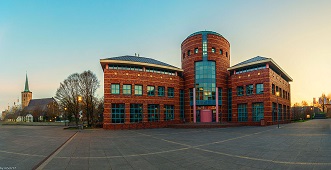
De Albert-Vigoleis-Thelen-Stadtbibliothek in Viersen


De Franse schrijver, regisseur en acteur Robert Thomas werd geboren op 28 september 1927 in Gap. Zie ook alle tags voor Robert Thomas op dit blog.

Uit: Huit femmes

"Madame CHANEL. — C'est un peu ma petite fille... Ah! l'arbre!
(Elle va à son gros paquet dont elle essaie de défaire la ficelle.)
LOUISE. — Vous rabâchez la même histoire depuis deux mois que je suis ici.
(Elle va débarrasser mollement la table encombrée de tasses.)
Madame CHANEL. — Quand on travaille dans une maison depuis quinze ans, on finit par croire qu'on est chez soi et que les enfants sont à vous!... Vous verres!..
LOUISE. — Si Vous croyez que je vais passer ma vie à faire la boniche!
Madame CHANEL. — C'est un métier qui ne vous plaît pas?
LOUISE. — Pas beaucoup.
Madame CHANEL. — Alors, pourquoi le faites vous?
LOUISE, interdite, puis. — Faut bien vivre...
Madame CHANEL. — Vous êtes tombée dans une bonne maison, ici...
LOUISE. — Vous trouvez?
Madame CHANEL. — Ah! de mon temps!... Je veux dire du temps où Mademoiselle Suzon était là, c'était plus gai!
LOUISE. — Evidemment! C'est bien ma chance.
Madame CHANEL. — Nous allons passer de merveilleuses fêtes de Noël!
(Elle fouille dans le bureau à la recherche de ciseaux.)
LOUISE, qui croque le sucre qui reste. — C'est ça! La veillée aux chandelles! Que voulez-vous qu'on fasse d'autre? On est à cinq kilomètres du village et avec toute la neige qui est tombée cette nuit, je ne pourrai même pas aller au bal. Quel dimanche! Et même pas la télévision!
Madame CHANEL. — La télévision? Bah! vous ne perdez rien, ça fait mal aux yeux!... (Louise hausse les épaules.) C'est le déjeuner de Monsieur que vous avez monté?
LOUISE. — Non, c'est celui de la petite."
 

 2077025-bc8cecb1036d9c156668058f560b0b8d.jpg
Robert Thomas (28 september 1927 - 3 januari 1989)
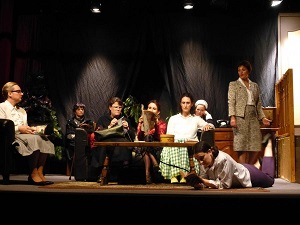
Scene uit een opvoering in Champigné, 2014


De Franse schrijver, historicus en archeoloog Prosper Mérimée werd geboren in Parijs op 28 september 1803. Zie ook mijn blog van 28 september 2010 en eveneens alle tags voor Prosper Mérimée op dit blog.

Uit: Carmen (Vertaald door Lady Mary Loyd)

“At the first blush, I confess, the blunderbuss, and the savage looks of the man who bore it, somewhat took me aback. But I had heard so much about robbers, that, never seeing any, I had ceased to believe in their existence. And further, I had seen so many honest farmers arm themselves to the teeth before they went out to market, that the sight of firearms gave me no warrant for doubting the character of any stranger. "And then," quoth I to myself, "what could he do with my shirts and my Elzevir edition of Caesar's Commentaries?" So I bestowed a friendly nod on the man with the blunderbuss, and inquired, with a smile, whether I had disturbed his nap. Without any answer, he looked me over from head to foot. Then, as if the scrutiny had satisfied him, he looked as closely at my guide, who was just coming up. I saw the guide turn pale, and pull up with an air of evident alarm. "An unlucky meeting!" thought I to myself. But prudence instantly counselled me not to let any symptom of anxiety escape me. So I dismounted. I told the guide to take off the horses' bridles, and kneeling down beside the spring, I laved my head and hands and then drank a long draught, lying flat on my belly, like Gideon's soldiers.
Meanwhile, I watched the stranger, and my own guide. This last seemed to come forward unwillingly. But the other did not appear to have any evil designs upon us. For he had turned his horse loose, and the blunderbuss, which he had been holding horizontally, was now dropped earthward.
Not thinking it necessary to take offence at the scant attention paid me, I stretched myself full length upon the grass, and calmly asked the owner of the blunderbuss whether he had a light about him. At the same time I pulled out my cigar-case. The stranger, still without opening his lips, took out his flint, and lost no time in getting me a light. He was evidently growing tamer, for he sat down opposite to me, though he still grasped his weapon. When I had lighted my cigar, I chose out the best I had left, and asked him whether he smoked.”
 

 2077025-8fc8302d4a71101db04d9c1efa7d10bc.jpg
Prosper Mérimée (28 september 1803 – 23 september 1870)
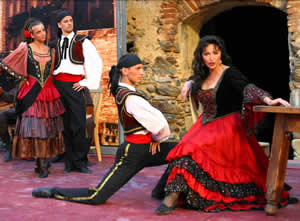
Scene uit een - opgenomen - opvoering in Parijs, 1964


De Britse criticus en dichter Francis Turner Palgrave werd geboren op 28 september 1824 in Great Yarmouth. Zie ook mijn blog van 28 september 2010 en eveneens alle tags voorFrancis Turner Palgrave op dit blog.


Sidney At Zutphen

3
--Sudden, the mist gathers up like a curtain, the theatre clear;
Stage of unequal conflict, and triumph purchased too dear!
Half our boot treasures of gallanthood there, with axe and with glaive,
One against ten,--what of that?--We are ready for glory or grave!
There, Spain and her thousands nearing, with lightning-tongued weapons of
war;--
Ebro's swarthy sons, and the bands from Epirus afar;
Crescia, Gonzaga, del Vasto,--world-famous names of affright,
Veterans of iron and blood, insatiate engines of fight:--
But ours were Norris and Essex and Stanley and Willoughby grim,
And the waning Dudley star, and the star that will never be dim,
Star of Philip the peerless,--and now at height of his noon,
Astrophel!--not for thyself but for England extinguish'd too soon!

4
Red walls of Zutphen behind; before them, Spain in her might:--
O! 'tis not war, but a game of heroic boyish delight!
For on, like a bolt-head of steel, go the fifty, dividing their way,
Through and over the brown mail-shirts,--Farnese's choicest array;
Over and through, and the curtel-axe flashes, the plumes in their pride
Sink like the larch to the hewer, a death-mown avenue wide:
While the foe in his stubbornness flanks them and bars them, with
merciless aim
Shooting from musket and saker a scornful death-tongue of flame.
As in an autumn afar, the Six Hundred in Chersonese hew'd
Their road through a host, for their England and honour's sake wasting
their blood,
Foolishness wiser than wisdom!--So these, since Azincourt morn,
First showing the world the calm open-eyed rashness of Englishmen born!
 

 2077025-5bc337b38e32d625daf574fc2d169625.jpg
Francis Turner Palgrave (28 september 1824 – 24 oktober 1897)
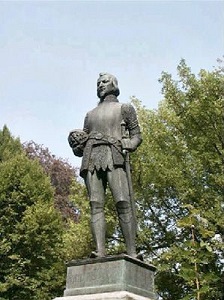
Standbeeld van Sir Philip Sidney in Zutphen door Gustaaf van Kalken


De Duitse dichter Rudolf Baumbach werd op 28 september 1840 geboren in Kranichfeld/Ilm. Baumbach groeide op in Meiningen. Zie ook mijn blog van 28 september 2010 en eveneens alle tags voor Rudolf Baumbach op dit blog.


In alten Zeiten

Meine alte, gute Muhme Lore wusste zu berichten
Mehr als tausend Sagen, Märchen, Schwanke, Mord- und Spukgeschichten,
Doch am Schlüsse sprach sie sorglich: Kleiner, schreib' dir's hinter's Ohr,
Also war's in alten Zeiten ; heute kommt das nicht mehr vor.

Droben in dem Burggemäuer, sprach im Flüsterton die Muhme,
Wächst zur Zeit der Sonnenwende eine gelbe Schlüsselblume.
Wer sie pflückt, der ist geborgen, denn dann rückt ein Schatz empor. —
Also war's in alten Zeiten; heute kommt das nicht mehr vor.

Hat' einmal ein armer Schäfer eine Dirne sich erkoren,
Und drei Monden vor der Hochzeit ging sein Augenlicht verloren.
Doch sie ließ nicht von dem Blinden, dem sie Lieb' und Treue schwor. —
Also war's in alten Zeiten; heute kommt das nicht mehr vor.

Träumend lag sie einst im Grase in dem Schlosshof auf dem Berge;
Sieh, da trat zu ihr ein kleines, silberbärtiges Gezwerge,
Und das Zwerglein neigte flüsternd seinen Mund zu ihrem Ohr. —
Also war's in alten Zeiten; heute kommt das nicht mehr vor.

Sieh die Schlüsselblume, sprach es. Willst du Geld und Gut erlangen.
Grab' sie aus; an ihrer Wurzel wird ein rost'ger Schlüssel hangen;
Und mit Blum' und Schlüssel findest du der Zauberhöhle Thor. —
Also war's in alten Zeiten; heute kommt das nicht mehr vor.

Wird die Blume abgebrochen, sinkt der Schlüssel tausend Klafter,
Doch der Schlüsselblume Stengel, ein noch größer Wunder schafft er.
Sehend macht er einen jeden, der sein Augenlicht verlor. —
Also war's in alten Zeiten; heute kommt das nicht mehr vor.

Grub die Dirne nach dem Schlüssel? Nein, des Schäfers Augenlider
Strich sie mit der Wunderblume, und das Augenlicht kam wieder.
Tausend Klafter sank der Schlüssel zu der Zauberhöhle Thor. —
Also war's in alten Zeiten; heute kommt das nicht mehr vor.
 

 2077025-620de0537bf857eed9958bcacf3aba27.jpg
Rudolf Baumbach (28 september 1840 – 21 september 1905)
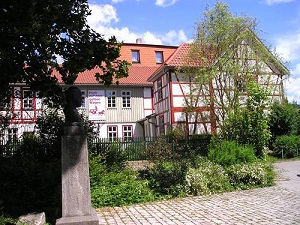
Het literatuurmuseum Baumbachhaus in Meiningen


Zie voor nog meer schrijvers van de 28e september ook mijn blog van 28 september 2014 deel 1 en eveneens deel 2.
Geschreven door Romenu om 18:22 Reageer op dit bericht

Altweibersommer (Klaus Ender), Dolce far niente


Dolce far niente


 2076659-fe12c6a2da51a5148363a27b73ee9a02.jpg
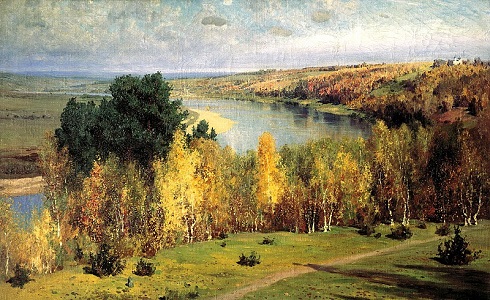
Indian Summer door Vasily Polenov, 1893


Altweibersommer

Der Abschied ist nun angesagt,
es trauert die Natur,
der Sommer ist zu sehr betagt,
es läuft jetzt seine Uhr.

Das Werden ist Vergangenheit,
es setzt das Scheiden ein,
es zeigt sich in Erhabenheit
als herbstlich schöner Schein.

Ein silberfarbnes Nachtgewand
ummantelt Berg und Tal,
die Welt – sie glänzt im Ruhestand,
die Sonne leuchtet fahl.

Es perlt der Tau von Halm und Blatt,
der Himmel zeigt sein Blau
und jeder Tropfen spiegelt matt,
verschönt des Abschieds Grau.

Vollzogen wird ein schwerer Gang
in stiller Harmonie,
es ist des Lebens Abgesang,
erlöschen wird es nie.


 2076659-b081d8269ba31c22a703040391be16e8.jpg
Klaus Ender (Berlijn, 2 april 1939)
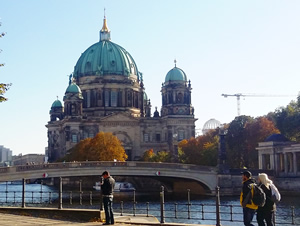
Berlijn, de geboorteplaats van Klaus Ender


Zie voor de schrijvers van de 27 september ook mijn vorige blog van vandaag.

Geschreven door Romenu om 18:28 Reageer op dit bericht

Irvine Welsh, Ko de Laat, Kay Ryan, Esther Verhoef, Ignace Schretlen, Josef ¦kvorecký, Christian Schloyer, Tanja Kinkel, Edvard Kocbek

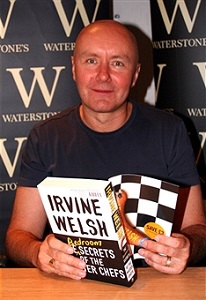
De Schotse schrijver Irvine Welsh werd geboren op 27 september 1958 in Leith, Edinburgh. Zie ook mijn blog van 27 september 2010 en eveneens alle tags voor Irvine Welsh op dit blog.

Uit:The Bedroom Secrets of the Master Chefs

“She Came to Dance, 20 January 1980
- THIS IS THE fuckin Clash! The green-haired girl had screamed into the face of the flinty-eyed bouncer, who'd shoved her back into her seat. — And this is a fuckin cinema, he'd told her. It was the Odeon cinema, and the security personnel seemed determined to stop any dancing. But after the local band, Joseph K, had finished their set, the main act had come out all guns blazing, blasting out 'Clash City Rockers', and the crowd immediately surged down to the front of the house. The girl with the green hair scanned around for the bouncer, who was preoccupied, then sprang back up. For a while the security staff tried to stem the tide, but finally capitulated about halfway through the set, between 'I Fought the Law' and '(White Man) in Hammersmith Palais'. The crowd was lost in the thrashing noise; at the front of the house they bounced along in rapture, while those at the back climbed on to their seats to dance. The girl with green hair, now right at the front centre of the stage, seemed to be rising higher than the rest, or perhaps it was just her hair, and the way the strobes hit it, making it appear as if a spectacular emerald flame was bursting from her head. A few, only a few, were gobbing at the band and she was screaming at them to cut it out as he – her hero – had only just recovered from hepatitis. She'd been to the Odeon only a few times before, most recently to see Apocalypse Now, but it wasn't like this and she could bet that it had never been. Her friend Trina was a few feet from her, the only other girl so near the front that she could almost smell the band. Taking a last gulp from the plastic Im Bru bottle she'd filled with snakebite, she killed it and let it fall to the sticky, carpeted floor. Her brain fizzed with the buzz of it working in tandem with the amphetamine sulphate she'd taken earlier. She roared the words of the songs as she leapt, working herself into a defiant frenzy, going to a place where she could almost forget what he had told her earlier that afternoon. Just after they'd made love when he'd gone so quiet and distant, his thin, wiry frame shivering on the mattress. — What's up, Donnie? What is it? she'd asked him. — It's all fucked, he'd said blankly. She told him not to be daft, everything was brilliant and the Clash gig was happening tonight, they'd been waiting for this for ages. Then he turned round and his eyes were moist and he looked like a child. It was then that her first and only lover had told her that he'd been fucking someone else earlier; right there on the mattress they shared every night, the place where they'd just made love. It had meant nothing; it was a mistake, he immediately claimed, panic rising in him as the extent of his transgression became apparent in her reaction.”


 2076657-fe6302659d11ca899cac485967dcf99d.jpg
Irvine Welsh (Edinburg, 27 september 1958)


De Nederlandse dichter, performer, journalist en toneelschrijver Ko de Laat werd geboren op 27 september 1969 in Goirle. Zie ook alle tags voor Ko de Laat op dit blog.


Veel te kort samengevat

Ach, hoe ik het vandaag ook formuleer
Het kerngevoel valt haast niet weer te geven
Al is dit schema nauw met mij verweven
Zes regels zijn te weinig deze keer

Ik zal niets af gaan zwakken of verheffen
Ik dank u en ik hoop u weer te treffen


Oh jee, m'n FB!

Een Facebook-loze avond. Tja, dat kan
Groot ongemak voor de account-bezitter
En voer voor quasi-lollig vals getwitter
Er kwam online weer heel wat deining van

Met achteraf de tijdlijn-commentaren
Die na wat likes alweer vergeten waren


Inkleuring begonnen

Twee Zwarte Pieten hebben ze geturfd
Maar ja, die zitten nu al opgesloten
Daarmee staat het journaalverhaal op poten
Voor wie hierom te speculeren durft

Wie schieten er te hulp? Dat blijft dus gissen
Al ogen ze vast weer als compromissen


 2076657-cc744d30054361f70860f1e0f61d348e.jpg
Ko de Laat (Goirle, 27 september 1969)


De Amerikaanse dichteres Kay Ryan werd geboren op 27september 1945 in San Jose, California. Zie ook mijn blog van 27 september 2010 en eveneens alle tags voor Kay Ryan op dit blog.


Hailstorm

Like a storm
of hornets, the
little white planets
layer and relayer
as they whip around
in their high orbits,
getting more and
more dense before
they crash against
our crust. A maelstrom
of ferocious little
fists and punches,
so hard to believe
once it's past.


All You Did

There doesn’t seem
to be a crack. A
higher pin cannot
be set. Nor can
you go back. You
hadn’t even known
the face was vertical.
All you did was
walk into a room.
The tipping up
from flat was
gradual, you
must assume.


 2076657-c7aec27fcc2456d02defdfb4157a9f38.jpg
Kay Ryan (San Jose, 27 september 1945)


De Nederlandse schrijfster Esther Verhoef-Verhallen werd geboren in ’s-Hertogenbosch op 27 september 1968. Zie ook mijn blog van 27 september 2010 en eveneens alle tags voor Esther Verhoef op dit blog.

Uit:Lieve mama

“Brian pakte Ralfs laptop af en nam hem op schoot. Hij leek het zwakke protest van zijn vriend niet op te merken – of hij trok zich er gewoon niets van aan.
Ralf was het gewend dat Brian hem negeerde. Het had trouwens ook geen zin om tegen he in te gaan als hij net gebruikt had. Hij nam een slok van zijn Red Bull en legde zijn hoofd tegen de versleten bankkussens. Keek naar het plafond van het schuurtje, waar het spinrag zich als flinterdun textiel om de tl-buis had gewikkeld. De geperste plafondplaten leken op kluwen wormen. Hij kneep zijn ogen dicht. Koppijn. Niet alleen van de lange nacht; het kwam vooral door het gezeur van zijn moeder. Ze had hem vannacht wel dertig keer gebeld en hem talloze berichtjes gestuurd. Stalkster. Hij had het vanochtend pas gezien – zijn telefoon had uitgestaan.
Rond zessen was hij doodmoe thuisgekomen. De weg aar zijn warme bed werd versperd door zijn moeder. Ze had in de keuken gezeten, met wallen onder haar bloeddoorlopen ogen. Een halflege fles wijn op tafel. Huisarrest had ze hem opgelegd – huisarrest! Alsof hij nog een baby was.
Hij was verdomme achttien.
Had een auto.
Waar bemoeide ze zich mee?
Hij kon maar beter snel op zichzelf gaan wonen. Ergens in Rotterdam of Den Haag met een paar vrienden een flat of een huis huren.
Als hij het geld er maar voor had.
Zijn moeder had aan één stuk door tegen he staan schreeuwen. Ze had amper de tijd genomen om adem te halen. Zijn vader was op het lawaai afgekomen, maar hij had zich er niet mee bemoeid. Dat deed hij nooit. ‘Je moeder kent je het beste,’ had hij gezegd, en daarna was hij naar zijn werk vertrokken.”


 2076657-184241da11610889de72b027a8de95a1.jpg
Esther Verhoef ('s-Hertogenbosch, 27 september 1968)
Cover


De Nederlandse dichter, schrijver, kunstenaar en huisarts Ignace Schretlen werd geboren in Tilburg op 27 september 1952. Zie eveneens alle tags voor Ignace Schretlen op dit blog.


Het verlaten van mijn huis

Het verlaten van mijn huis
valt mij steeds lastiger

het zware behang kleeft
aan de kleren die ik draag

de honden blijven janken
maar er zijn geen honden meer

mijn nagels zijn uitgeschoten
tot hanenpoten, duivelsklauwen

mijn tenen groeiden uit tot wortels
terwijl mijn armen zich vertakten

ik koester hier het kwetsbaar licht
en het getreuzel van seizoenen

luister naar de samenzang van stenen
steeds luider klinkt hun lome lied.


 2076657-b19a440ec8ddcceef20f3670bfdd3ea4.jpg
Ignace Schretlen (Tilburg, 27 september 1952)


De Tsjechische schrijver en uitgever Josef Škvorecký werd geboren op 27 september 1924 in Náchod. Zie ook mijn blog van 27 september 2010 en eveneens alle tags voor Josef Škvorecký op dit blog

Uit: When Eve Was Naked

“We met in a sight-seeing bus, touring Prague. She wore her brown hair in braids with red bows at the ends. That much I remember. I have no idea what we talked about. In general, I have no idea what children talk about among themselves. Their world is foreign to me, and so I don't concern myself with it.
They say it's a happy world. Undoubtedly it is. It knows neither optimism nor despair. It passes by in a sort of permanent state of eager interest. I would like to know, though, just when it ends.
And perhaps I do. I know she was wearing a white linen summer dress, red sandals and white socks, that she was from Velim or some such small town and that she won a promotional contest by collecting the most toothpaste caps. Since I was eight at the time and she was much younger, she was probably about six. In any case, I think she was going to start first grade after summer vacation. It was her first time in Prague. The man with the megaphone pointed out the sights. Her red beret with the word THYMOLIN created an almost coquettish contrast with her brown hair, parted in the middle.
On me it looked like the beret of a foreign legionnaire. But I had hardly caught sight of her before I lost interest in my beret. What was the beret next to her? Next to those braids with red bows? Next to those eyes the colour of chocolate? Next to those bare calves in white socks?
And so it was love at first sight, perhaps my first love ever.
Ahh! I think it's futile to try to describe it in words. We were put into a third-class coach, together with a group of charity children from the Prague Paupers, piled in ten to a compartment, boys and girls together, and we were on our way. Two days and two nights on the train, then sunny Italy.
When Wilson Station disappeared from sight she began to cry. Small tears rolled down her red cheeks and the white front of her dress, devoid of breasts. The tears rolled down that delicate chest of a child's small body. At night boards were laid between the benches and on them blankets, and on the blankets they put us. Five heads in one direction, tire heads in the other.”


 2076657-efd5554b98700d61908edcef7350105a.JPG
Josef Škvorecký (Náchod, 27 september 1924)


De Duitse dichter en schrijver Christian Schloyer werd geboren op 27 september 1976 in Erlangen. Zie ook mijn blog van 27 september 2010 en eveneens alle tags voor Christian Schloyer op dit blog.


experiment zur selbstüberwachung, spektralanalyse

polarlichter sind technisch gesehn verwirrungs
     erscheinungen · in magnetfeldern

zwischen voneinander nichts ahnenden
verwirrten & eignen sich ganz besonders

schlecht für metaphern, beachten sie den hellen
strahl in der mitte wir sprechen von

eruption aufgrund einer unsachgemäßen an
näherung zwischen zwei sich nicht

verwindenden sonnen im
unteren drittel der nacht gerade so

nicht mehr zu sehn


tetra-tête

auf spuren schwarzer schnecken
münder streich ich chromoplastik
stricher schleich ich
(unter zuckerzusatz) heimlich
meinen heimweg heim

unverdunkelt wie geschliffen tritt
aus dem geheimbund
schatten hinter der laterne mir
der antisept entgegen, starrt mich
aus der plastiktüte unverhohlen an das mehrweg
aug (schon grau) es stiert
gebrochen – doch ich bleibe
ungeniert (hab nicht einmal
daran gerochen)


 2076657-3af7bd09b6c5fd125391efcca6bd34be.jpg
Christian Schloyer (Erlangen, 27 september 1976)


De Duitse schrijfster Tanja Kinkel werd geboren op 27 september 1969 in Bamberg. Zie ook mijn blog van 27 september 2010 en eveneens alle tags voor Tanja Kinkel op dit blog.

Uit: Manduchai

„Am Tag, ehe sie zur Welt kam, half ihre Mutter Bribsun noch bei der Geburt eines Kamelfohlens. Das brachte Glück und im Obrigen war es bedeutungsvoll. Ihr Vater war einer der wichtigsten Männer der Chorus-Sippe und der Schwurbruder ihres Anführers. Niemand respektierte einen Mann, dessen Frau seine Herden vernachlässigte. Bribsun und ihre Dienerin gingen mit der Kamelstute auf und ab, streichelten ihr das Fell, murmelten beruhigende Laute und teilten ihre Wärme mit dem Tier. Die Nächte waren kalt in der Wüste, und Bribsun, in dicke Luchspelze gehüllt, die ihr als Frau eines bedeutenden Mannes zustanden, wünschte sich nur, sie hätte selbst ein Fell. „Bah“, sang sie der Kamelstute vor „bah“, und das Kind in ihrem Bauch, das sie gerade getreten hatte, wurde ruhiger. Die Kamelstute gebar schnell. Bribsun brauchte am nächsten Tag vier Stunden, in denen sie mit gespreizten Beinen in Hockstellung halb stand, halb saß, den Oberkörper über einen umgedrehten Korb gelegt. Aber es dauerte nicht so lange wie die Geburt ihres Sohnes im vorletzten Jahr und so war sie zufrieden, als das Kind aus ihr heraus und auf die Filzmatte glitt, die ihre Dienerin bereitgelegt hatte. Bribsun reinigte ihr Neugeborenes mit Schafswolle von Blut und Schleim, wie es der Brauch gebot, und sah, dass es ein Mädchen war. Nach einem lebenden Sohn würde das Geschlecht ihren Gatten nun nicht kümmern; auch Töchter waren wichtig für die Sippe. Das Kleine hatte den kleinen blauen Fleck am Steiß, den alle wahren Kinder des Ewigen Blauen Himmels besaßen, und so war es gut. »Das Land war dürr und wasserlos., sagte Bribsun zu dem Säugling, wie sie es auch ihrem Sohn erzählt hatte, wie alle Mütter es ihren Kindern erzählten, »und unser Urvater wurde von einer Wölfin gesäugt. Als das Wasser zurückkehrte, brachte sie ihn zurück zu den Menschen, aber sie biss ihn vorher damit sie ihn überall wieder erkennen würde. Deswegen hast du diesen blauen Fleck denn wir sind alle die Kinder der Wölfin.“


 2076657-7817c2aa271131c2cd5e8beab26c71a0.jpg
Tanja Kinkel (Bamberg, 27 september 1969)
Cover


De Sloveense dichter, schrijver en essayist Edvard Kocbek werd in Sloveens Stiermarken geboren op 27 september 1904. Zie ook mijn blog van 27 september 2010 en eveneens alle tags voor Edward Kocbek op dit blog.


The Lippizaner (Fragment)

A newspaper reports:
the Lippizaners collaborated
on a historical film.
A radio explains:
a millionaire had bought the Lippizaners,
the noble animals were quiet
throughout the journey over the Atlantic.
And a text book teaches:
the Lippizaners are graceful riding horses,
their origin is in the Karst, they are of supple hoof,
conceited trot, intelligent nature,
and obstinate fidelity.

But I have to add, my son,
that it isn't possible to fit these
restless animals into any set pattern:
it is good, when the day shines,
the Lippizaners are black foals.
And it is good, when the night reigns,
the Lippizaners are white mares,
but the best is,
when the day comes out of the night,
then the Lippizaners are the white and black buffoons,
the court fools of its Majesty,
Slovenian history.

Others have worshipped holy cows and dragons,
thousand-year-old turtles and winged lions,
unicorns, double-headed eagles and phoenixes,
but we've chosen the most beautiful animal,
which proved to be excellent on battlefields, in circuses,
harnessed to princesses and the Golden Monstrance,
therefore the emperors of Vienna spoke
French with skilful diplomats,
Italian with charming actresses,
Spanish with the infinite God,
and German with uneducated servants:
but with the horses they talked Slovene.

Remember, my child, how mysteriously
nature and history are bound together,
and how different are the driving forces of the spirit
of each of the world's peoples.
You know well that ours is the land of contests and races.
You, thus, understand why the white horses
from Noah's ark found a refuge on our pure ground,
why they became our holy animal,
why they entered into the legend of history,
and why they bring the life pulse to our future.
They incessantly search for our promised land
and are becoming our spirit's passionate saddle.


 2076657-196951af0c6c2f239caeeccbfe4bc82a.jpg
Edvard Kocbek (27 september 1904 – 3 november 1981)


Zie voor nog meer schrijvers van de 27e september ook mijn blog van 27 september 2015 deel 2 en eveneens deel 3.


Geschreven door Romenu om 18:20 Reageer op dit bericht

Nate Pritts

De Amerikaanse dichter en letterkundige Nate Pritts werd geboren in Syracuse, New York, op 27 september 1974. Pritts behaalde een PhD in schrijven met een specialisatie in de Britse romantiek aan de Universiteit van Louisiana, een Master of Fine Arts in Poetry aan het Warren Wilson College, en een bachelordiploma in Engels en film aan de State University of New York. Dr. Pritts heeft aan alle leeftijden les gegeven met behulp van verschillende methoden, waaronder Blackboard, Moodle en Desire2Learn, eCollege en Canvas. Hij vindt het leuk hoe online leren de kruising van creativiteit en technologie mogelijk maakt. Pritts is ook de auteur van acht poëziebundels, waaronder “The Wonderfull Yeare”, “Post Human” en “Decoherence”,waarvoor hij de 42 Miles Press Poetry Award ontving. Zijn creatieve werk en essays over creativiteit, onderwijs en leren zijn gepubliceerd in American Poetry Review, Poets & Writers, Writers Digest en op vele andere plaatsen.


We’re making mistakes together

Forget all your dreams since they're forgetting
about you. They pretend that you're capable,
or better than you are. You wake up much worse-

wrecked in the morning with birds in that light.
That light promises a whole new landscape but
don't believe it!
Hold tight to the failures that fill up

your outline like a cloud silhouette made out of anger.
Stacks of paper were shuffled & machine-mangled
while you slept through the mist. Find the lost page

that fits in, that helps it make sense: a signature
needed or else the parcel rejected. Let me sing
a few more of these ruins to you. The starting

is over & we're both living still. Stand up
if you can because I'm talking to you & the whispers
assail my affections again. Look: even things that evade me

still lodge in my cosmos & the stars that I'm thinking
shoot themselves out. Here's where I write another
line about galaxies because it'll sound like I've got science

to back me up. I'll use the word orbit but maybe mean
plunge then I'll talk about heaven & mean something less.
My circling degrades & leads me to you & we both

know better but seem not to care. Tell me when you hear
a reason to blare from my radio static.
My hope is a bare hope since it's naked & fleeting.


Intentional Noise

In the kitchen my gypsy stew
comes together, any leftover vegetables
mingling, as the glass back door
fogs with heat. I can’t see
what’s happening out there
in the kitchen—the bread rising
& spreading.
I obsess
about my decisions on certain days
but mostly act without worry.
I save the regret for later.
It’s probably only possible
to believe in something
the way I want to if you can’t see it.
The observable universe is full
of real but invisible force that helps
shunt light from source to destination,
to bang off something & into
something else. I roll over in the morning
to see Jenny so solidly sleeping
or sometimes only see her pillow
illuminated in actual absence
which is temporary.
Researchers point out
that you actually hear less
when the air is suffused with sound.


 2165090-d8328d13db4cb9128cae7239d36888c7.jpg
Nate Pritts (Syracuse, 27 september 1974)

Geschreven door Romenu om 00:00 Reageer op dit bericht

Meer van Romenu

↑ Terug naar de berichten