Naar de inhoud

Romenu

Over literatuur, gedichten, kunst en cultuur
akke.beakke.be

Berichten van 5 oktober 2017 tot 6 oktober 2017

Victor Vroomkoning, Ulrike Ulrich, Yaşar Kemal, Heinrich Federer, Ludwig Begley, Maria Dąbrowska, Horst Bingel, Peter Gosse, Lennart van Nieuwenhuijzen
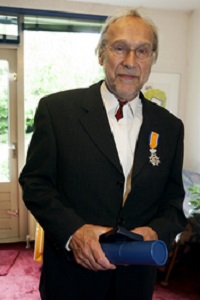
De Nederlandse dichter Victor Vroomkoning (pseudoniem van Walter van de Laar) werd geboren op 6 oktober 1938 in Boxtel. Zie ook mijn blog van 6 oktober 2010 en eveneens alle tags voor Victor Vroomkoning op dit blog.


Laatste bezoek

Tussen vreemden ligt hij
onder marmeren Latijn.
In dode taal spreekt hij
niet aan.

Na die foto stierf hij
vijftien jaar
tot hier.

Het paars van de azalea’s
herinnert aan
zijn laatste lippen.

Dag vader, zeg ik
tegen niemand meer.


Vrije val

Als giervalk hing ik in de ijle lucht aan
de vlerken van mijn vindingrijke vader.
Ontstegen aan zijn dwaaltuin raakte ik
buiten mijzelf. Al maar hoger vogel
kreeg ik weidser zicht. Naar de hemel
streefde ik, naar het zonneklare licht.
Godzucht bracht me in extase, lang-
zaamaan smolt alles wat ik was.

In mijn val doorzag ik het ijdele van
mijn vlucht, de draagwijdte van wat
vader me had meegegeven. Onderste-
boven viel ik naar het alledaagse

terug. Wie redt mijn gezicht, mijn daze
kop, wie brengt mij weer tot stand?


Zoiets

Er kwam sneeuw over de wereld,
spierwit en naakt begonnen we ons
hardop te herinneren wie we waren,
wie we hadden willen zijn.

‘Zoiets,’ antwoordde ik op al haar vragen
en ik ging er nog eens goed voor liggen
om me meer voor haar geest te halen
maar spreken was er niet meer bij.

Later dwarrelde ze blank en licht
van me vandaan en weer later hield ook
het sneeuwen op en dekte ik me toe
met het laken dat haar warmte nog had.

En nog later kwam er opnieuw sneeuw
over de wereld en over me heen.


 2079353-7fa8b355e884d6f286b1b0499d7b8005.jpg
Victor Vroomkoning (Boxtel, 6 oktober 1938)
Hier na zijn benoeming tot Ridder in de Orde van Oranje Nassau in 2014


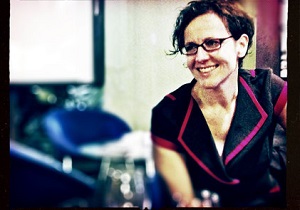
De Duitse dichteres en schrijfster Ulrike Ulrich werd geboren in op 6 oktober 1968 in Düsseldorf. Zie ook mijn blog van 6 oktober 2010 en eveneens alle tags voor Ulrike Ulrich op dit blog.


Aufbruch

sie bricht schon lange auf.
packt ihren mut zusammen und das nötigste.
macht listen, was sie nicht vergessen darf.
gibt ausgeliehene bücher zurück,
lässt am fahrkartenschalter
in der schlange einen nach dem anderen vor.
vergewissert sich, dass die gleise noch dortliegen.
beobachtet menschen, die wegfahren.
abends, wenn die fernzüge die nacht durchmachen,
schaut sie unverhohlen in die liegewagenabteile.
sie schaut sich die gesichter der alleinreisenden an, die viel gepäck haben.
sie geht auf den bahnhof und sucht nach verwandten zügen.
wenn sie zurückkommt, fragt er sie nicht, wo sie war. 


an ihrer stelle

an ihrer stelle
will sie nicht mehr bleiben.
an seiner stelle
sieht sie ungeheuer.
die hat sie selber angeheuert,
um nicht mit ihm allein zu sein.
an ihrer stelle bleibt ihr
nichts mehr übrig
von sich.
sie gibt sich aus
für eine andere,
sie gibt sich auf und ab,
verausgabt sich ins ungefähre.
sie schaut vorbei
und trifft sich nicht mehr an.
so reißt sie aus
und alles ein
und läuft ihm fort,
so weit so gut
er sehen kann.
sie findet sich nicht mehr zurecht
geliebt,
da kann er lieben, wie er will.
sie findet sich zurecht gewiesen
aus dem garten
und wartet also draußen vor dem tor,
dass er sie einlässt
und auch sich
auf sie
und ihre dünne haut,
in der an ihrer stelle sie nicht stecken will.
da sitzt sie, legt sich karten,
lehnt sich ab
und zu an eine hoffnung an
und hält es halt nicht aus an seiner seite
sie selbst zu sein.
an ihrer stelle.
 

 2079353-9556e6ba8adf52a4fa99c543adbc58e1.jpg
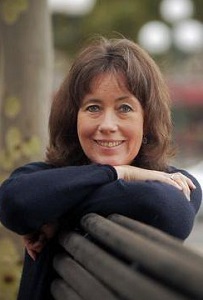
Ulrike Ulrich (Düsseldorf, 6 oktober 1968)


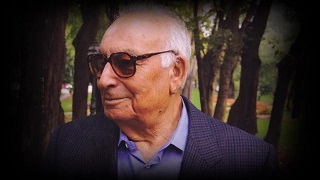
De Turkse schrijver Yaşar Kemal werd geboren op 6 oktober 1923 als Kemal Sadik Gökçeli in Hemite. Zie ook alle tags voor Yaşar Kemal op dit blog.


Das Gefängnis, die Schule der türkischen Literatur

Opposition ist eine türkische Tradition.Und wenn man die Geschichte der türkischen Literatur näher untersucht, dann findet man in ihrem Zentrum die Bauernliteratur, oder vielmehr die Volksliteratur. Anatolien war schon immer ein rebellisches Stück Land, seit dem 13. Jahrhundert ist hier die Kette der Revolten nicht abgebrochen. Aus diesen Aufständen sind immer auch Künstler herausgewachsen. Diese Traditionslinie beginnt bei Yunus Emre, dem großen mystischen Dichter des 13. Jahrhunderts und überhaupt dem bedeutendsten Dichter der türkischen Geschichte, sie geht über Dadaloğlu bis hin zum radikalen Erneuerer der türkischen Lyrik, Nâzim Hikmet. Schon Yunus Emre sagte:

»Der Herren Güte ist dahin
Sie reiten einher auf Araberpferden
Sie essen Menschenfleisch
Sie trinken Blut«

Welch ein Zorn gegen die Mächtigen! Die Schriftsteller meiner Generation stehen in dieser Traditionslinie. Sogar Hikmet, der aus einer Aristokratenfamilie des Osmanischen Reiches stammt, fand den Weg mitten ins Herz Anatoliens: Er saß siebzehn Jahre für seine Überzeugung im Gefängnis, und dort hat er seine Lyrik entwickelt, im Kontakt mit den Menschen Anatoliens, mit Dieben, Mördern, kleinen Gaunern, mit Unterdrückten aller Art, mitten im Volk und seinem riesigen Schatz an Erfahrungen.
Das ist wohl eines der überraschendsten Merkmale der Schriftsteller meiner Generation. Es gibt praktisch keinen, der nicht durchs Gefängnis gegangen ist. Sabahattin Ali, der als Erster Romane über die Bauern geschrieben hat, wurde ermordet. Hikmat war siebzehn Jahre im Gefängnis, Kemal Tahir fünfzehn Jahre, Aziz Nesin fünf Jahre, Ahmed Arif, unser bedeutendster Lyriker der Gegenwart, fünf Jahre, Ruhi Su auch fünf Jahre. Auch Orhan Kemal saß lange Zeit im Gefängnis. Ich selbst war dreimal im Gefängnis. Das erste Mal mit siebzehn Jahren, dann wieder 1950, als ich gefoltert wurde. 1971 wurde ich wieder festgenommen, aber nach vielen internationalen Protesten wieder freigelassen. Es gibt keinen Zweifel – das Gefängnis ist die Schule der türkischen Gegenwartsliteratur."
 

 2079353-4e66ce4837d1398deba5e0ecbd502f22.jpg
Yaşar Kemal (6 oktober 1923 - 28 februari 2015)


De Zwitserse dichter, schrijver en priester Heinrich Federer werd geboren op 6 oktober 1866 in Brienz. Zie ook mijn blog van 6 oktober 2009 en ook mijn blog van 6 oktober 2010 en eveneens alle tags voor Heinrich Federer op dit blog.


Abendandacht

Der Du auf der Wolken Rande
Hoch am Abendhimmel schreitest,
Über alle Meer' und Lande
Segnend Deine Hände breitest:

Einsamer! Gebete rauschen
Dir, wohin Dein Ohr sich neige,
Und ich senk' in leisem Lauschen
Demutsvoll das Haupt und schweige.


Vaterunser

O unser Vater, der Du wohnst da droben
Im hohen Himmelsraum! An allen Orten
Soll Deinen Namen man gebührend loben!

Lass offen Deiner Wohnung hohe Pforten!
Dein Wille herrsch! Im Himmel wie auf Erden
Gehorche alles willig Deinen Worten.

Lass Nahrung uns und Speise täglich werden;
Was wir gefehlt, vergib; auch wir vergeben
Von Feindeshand erduldete Beschwerden.

Ins Netz, das listig die Versucher weben,
Lass, Herr, uns Unachtsame nimmer fallen!
Bewahr uns vor der Sund' in diesem Leben


Zuletzt

Über sieben Bäche geht es,
Herz, mein Herz, zu Dir,
Und mit sieben Winden weht es
Rauh entgegen mir.
Doch dann wird an Deinem Pförtchen
Alles gut und still,
Wenn ich harre mit dem Wörtchen:
Herr, tu auf, ich will!
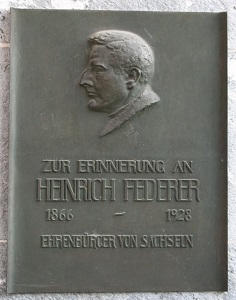
 

 2079353-3be1db69f095451311a57bbc1e6122f0.jpg
Heinrich Federer (6 oktober 1866 – 29 april 1928)
Gedenkplaat aan de parochiekerk in Sachseln


De Poolse schrijfster Maria Dąbrowska werd geboren op 6 oktober 1889 in Russów bij Kalisz. Zie ook mijn blog van 6 oktober 2009 en eveneens alle tags voor Maria Dąbrowska op dit blog.

Uit: Nights and Days (Vertaald door Christine A. Brown)

“During the first few years their sustenance depended almost exclusively on the sale of the grand remnants of the past: linen tablecloths, old furs, cambric undergarments and keepsake silver. When this stock ran out, the older daughter, Teresa, having reached the upper forms of the gymnasium, began to give lessons; they did not always suffice for dinner, but they kept them from starving.
The family situation got considerably better when Daniel and Julian completed their studies. Julian remained in St. Petersburg, and only announced by a letter that he had received a good position, but Daniel settled down with his mother and sisters and began to teach biology in the recently established private technical gymnasium in Kaliniec. The teaching profession was, at that time in Poland, one of the few open to the educated Poles. So that, shortly afterwards, the daughter Teresa also began to teach in the same gymnasium which she had previously attended and when the youngest one, Basia, completed her schooling, she, in turn, began to disseminate her freshly acquired knowledge in various private houses.
Gaiety, bustle and small talk began now to reign in the household of Adam Ostrzenski's widow. A suitable apartment was rented in the middle of the town and friends and acquaintances of Daniel and Teresa began to flock there afternoons and evenings to read books, sing and dance together. The budding Miss Basia's hemline was still very high, in spite of her respectable earnings reaching as much as a few rubles a month. She was still regarded as a little girl by the company which gathered in Lady Ostrzenski's home, but in a way which did not hurt her self-esteem. For she was not only admitted to all the amusements of the more adult assembly, but also enjoyed a number of privileges on various occasions. Daniel Ostrzenski's friends were young students or freshly baked lawyers, doctors and teachers, biologists, historians, mathematicians. All of them had great reserves of vigor and talent commensurate with great enterprises and, lacking a broader field of activity forbidden to all by the government, they expended their extra energy in long chats and in play."
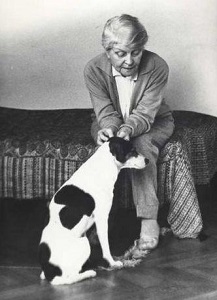
 

 2079353-e4de59cee5cf1ca185ca9fa2cc195b46.jpeg
Maria Dąbrowska (6 oktober 1889 – 19 mei 1965)


De Amerikaanse schrijver Louis Begley werd geboren als Ludwig Beglejter op 6 oktober 1933 in Stryj (toen Polen, tegenwoordig Oekraïne). Zie ook mijn blog van 6 oktober 2010 en eveneens alle tags voor Louis Begley op dit blog.

Uit: Venice for Lovers

"The voice is not mine; it is Henry James's, who famously and fortunately disregarded his own advice by writing again and again about la serenissima. As a novelist, I have obviously disregarded his counsel as well, and I am about to disregard it again now.
(...)

"I have been visiting Venice since 1954. In the 1980s, visits to Venice became an unquestioned annual event, one that my wife and I have come to regard as a fixed part of our lives. The rush of pleasure is just as intense when we first see from the water taxi we boarded at the airport the outline of the city glimmering in the morning haze; we still find that the way we live in Venice goes well with our work. Our painter son who has lived in Rome for many years, and whose knowledge of Venetian calli and rii and sottoporteghi, and of the contents of the sacristies of out-of-the-way churches, is almost as surprising as my wife's, has continued to spend harmonious days with us, organized around lunches and dinners, which we eat late to safeguard the working hours during which we are not to be disturbed. I had the great good luck to get to know the work of Marcel Proust and Thomas Mann long before I first went to Venice: Mann beginning in 1949, when I read Death in Venice, "Mario and the Magician", and "Disorder and Early Sorrow," and Proust's in the spring of 1951, when during one semester I made my way through all of À la recherche du temps perdu. It was also in the early 1950s, although I cannot pinpoint the year, that I began to read Henry James, at first probably some of the stories and perhaps The Turn of the Screw and Washington Square, and later, but while I was still at college, the longer works. Certainly, I had read The Wings of the Dove by the summer of 1954. I have a life-long unshakeable habit of peering at people, events and places through works of fiction I admire, as though they were so many different pairs of glasses, each of which in its own way adjusts my vision. Accordingly, I have no reason to doubt my memory of having looked at Venice from the start as Venice of James and Proust and Mann."
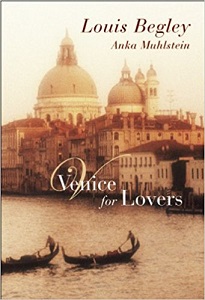
 

 2079353-73b4a14990fcfa2bc83d065ffa08f3c4.jpg
Louis Begley (Stryj, 6 oktober 1933)
Cover 


De Duitse dichter, schrijver, graficus en uitgever Horst Bingel werd geboren in Korbach op 6 oktober 1933. Zie ook mijn blog van 6 oktober 2010 en eveneens alle tags voor Horst Bingel op dit blog.


Geschichte

Wir saßen im Weidenbaum, ich und ich, 
der Wind und der Regen, die Beute, 
die Toten, im Sumpf, 
die Frösche 
schwiegen.

Wir saßen im Weidenbaum, ich und ich, 
Vaters Schlachten, Mutters Trophäen, 
Jägers Hochsitz, wir, 
die Eulen 
kamen.

Wir saßen im Weidenbaum, ich und ich, 
die Hexe siegte im Knusperhaus, 
Vögel, jubelten, 
Fingerlein 
gehenkt.


Thanatos

Du bleibst da unten auf dem Grund, das Wasser hält dich
jetzt,

nie gibst du auf, da rettet sich der Kerl, taucht
einfach auf, schenkt sich das Leben, nennt den
Preis,

du kannst es nicht, dein Wasser, der Sog in dir, sie
stürmen deine Brust, die Marter, all die Seelen,
der Nachbar, sie schnitten ihm die Haut vom Leib,
du hältst die Ohren zu,

er war es nicht, nichts konnt' er tun, die Augen fest
geschlossen,

nie warst du der Erde noch so nah, du bettelst, schnell,
das hält ja niemand aus, du hast das nicht
gewollt,

du gehst den Weg allein, sein Schweigen, deine Stimme, der
Tod, die Hoffnung bricht, keine Hand, die Gebete,
kalt, kein Tedeum, dein Helm, gewendet,

wir haben nichts gesehen, das Wasser nimmt die Toten auf,

du bleibst, du stirbst schon nicht, die Schranken, zu, hier
gibt es kein Gericht, die Rosen, schwarz,

wir, die Gräber, fest geschlossen.
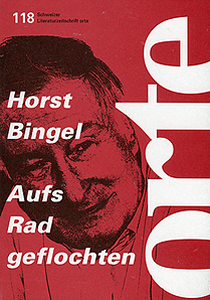
 

 2079353-5e85d65cc620a48980669485ab166a79.png
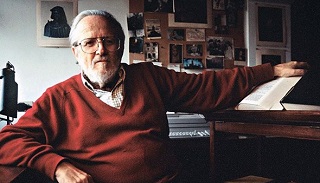
Horst Bingel (6 oktober 1933 – 14 april 2008)
Cover


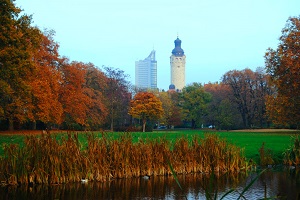
De Duitse dichter, schrijver en essayist Peter Gosse werd geboren in Leipzig op 6 oktober 1938. Zie ook mijn blog van 6 oktober 2010 en eveeneens alle tags voor Peter Gosse op dit blog.


Die Korrektur

Ich erwachte von einem Schluchzen, es war meines.
Ruckende Bewegungen des Brustkorbes bis in den Adamsapfel herauf.
Nämlich ich starb. Und die Enkelin, die tirilierend mich tätschelte,
Wußte nicht. Wie auch.
Sterben - an geht's, wohlan. Weggehen aber aus ihrem
Gewußtsein. Vielleicht daß beim Hören meines Namens
Ein Lichtstäubchen Heimelung dermaleinst, ein Lichts-Splitterchen
Ihr noch vorüberflög?
Ich entschloss mich zu weilen.


Wie seltsam fremd ich mir, als nun das Dasein
Ganz war. So ganz und so zugegen, dass ich
Mein Enden offen in das Auge fasste
Mit lässigem, fast teilnahmslosem Kaltsinn.

Ich spürte noch das trockne Atemziehen
Aufschroffen: Nicht aus Saumseligkeits-Taumel
Der einzeln gelinden Fingerspitzen, die sich
Die Härchen all entgegenfrösteln machten —
Der Beinglanz Deiner schntalheitlichen Hände,
Wo die sich in die Fessel dunkel jüngen,
Enttäubte messerklar das Lirumlarum
Der Lüste zu des Lebens-Muss Durdvöllern.

In fiebriger Entfernungsübergröße
Entkernte sich das Wirkliche zu Nahheit.
 

 2079353-d18ce128e0a015b396a70c2bb9e6ce7e.jpg
Peter Gosse (Leipzig, 6 oktober 1938)     
Leipzig


Onafhankelijk van geboortedata

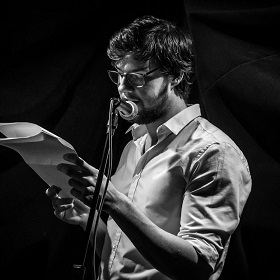
De Nederlandse dichter Lennart van Nieuwenhuijzen werd in 1991 geboren in Rotterdam. Hij schrijft iedere week poëzie op zondag op de website ThePostOnline.


Nachtkasttroffee

Je bent een boek dat ik geprezen heb
maar zelf niet meer wil lezen,
als ik ga slapen lig je steevast
op het kastje naast mijn bed,
ik heb ooit bijna in je kaft
elegant mijn naam gezet
maar wilde je toch liever lenen
en heb je niet aangeschaft.
 

 2079353-11f30c3baa6535a094be4be1d493ffab.jpg
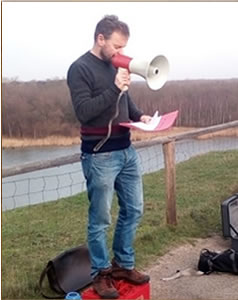
Lennart van Nieuwenhuijzen (Rotterdam, 1991)
Geschreven door Romenu om 15:27 Reageer op dit bericht

Václav Havel, Roberto Juarroz, Stig Dagerman, K.L. Poll, Flann O’Brien, Denis Diderot, Charlotte Link, José Donoso, Sven Cooremans

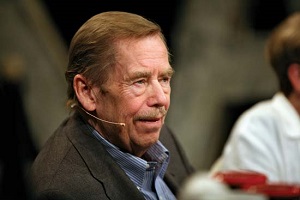
De Tsjechische schrijver en politicus Václav Havel werd op 5 oktober 1936 in Praag geboren. Zie ook mijn blog van 5 oktober 2009 en ook mijn blog van 5 oktober 2010 en eveneens alle tags voor Václav Havel op dit blog.

Uit:The Power of the Powerless (Vertaald door Paul Wilson)

“A specter is haunting Eastern Europe: the specter of what in the West is called "dissent." This specter has not appeared out of thin air. It is a natural and inevitable consequence of the present historical phase of the system it is haunting. It was born at a time when this system, for a thousand reasons, can no longer base itself on the unadulterated, brutal, and arbitrary application of power, eliminating all expressions of nonconformity. What is more, the system has become so ossified politically that there is practically no way for such nonconformity to be implemented within its official structures.
Who are these so-called dissidents? Where does their point of view come from, and what importance does it have? What is the significance of the "independent initiatives" in which "dissidents" collaborate, and what real chances do such initiatives have of success? Is it appropriate to refer to "dissidents" as an opposition? If so, what exactly is such an opposition within the framework of this system? What does it do? What role does it play in society? What are its hopes and on what are they based? Is it within the power of the "dissidents"—as a category of subcitizen outside the power establishment—to have any influence at all on society and the social system? Can they actually change anything?
I think that an examination of these questions—an examination of the potential of the "powerless"—can only begin with an examination of the nature of power in the circumstances in which these powerless people operate.
Our system is most frequently characterized as a dictatorship or, more precisely, as the dictatorship of a political bureaucracy over a society which has undergone economic and social leveling. I am afraid that the term "dictatorship," regardless of how intelligible it may otherwise be, tends to obscure rather than clarify the real nature of power in this system. We usually associate the term with the notion of a small group of people who take over the government of a given country by force; their power is wielded openly, using the direct instruments of power at their disposal, and they are easily distinguished socially from the majority over whom they rule. One of the essential aspects of this traditional or classical notion of dictatorship is the assumption that it is temporary, ephemeral, lacking historical roots. Its existence seems to be bound up with the lives of those who established it. It is usually local in extent and significance, and regardless of the ideology it utilizes to grant itself legitimacy, its power derives ultimately from the numbers and the armed might of its soldiers and police. The principal threat to its existence is felt to be the possibility that someone better equipped in this sense might appear and overthrow it.”


 2079039-e2c8e14ea8751f00905fd8d4ed7ecd30.jpg
Václav Havel (5 oktober 1936 – 18 december 2011)


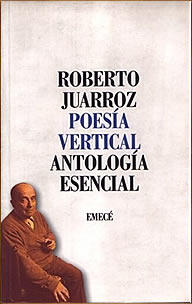
De Argentijnse dichter, essayist en literatuurwetenschapper Roberto Juarroz werd geboren in Coronel Dorrego op 5 oktober 1925. Zie ook mijn blog van 5 oktober 2009 en ook mijn blog van 5 oktober 2010 en eveneens alle tags voor Roberto Juarroz op dit blog.

Uit: Vertical Poetry: Last Poems


We die from being alive.
The more alive, the more we die.
No one dies from being dead.
Therefore, some people,
in order not to die,
prefer to be dead.

Thus two opposite stories are written:
some biographical chronicles,
innumerable necrographical notes
with a few jottings about what is alive.

The apparent monolithic relationship
between lives and deaths
becomes a patio of mosaics then
with many capricious drawings.

And in that patio a child is playing
who doesn’t even look at the drawings.

*

The answers have all been used up.
Perhaps they never existed
and were only mirrors
face to face with emptiness.

But now the questions have also been used up.
The mirrors have broken,
even those that reflected nothing.
And there’s no way to fix them.

Still,
perhaps a question remains somewhere.
Silence is also a question.

A mirror remains that can’t be broken
because it faces nothing,
because it’s inside everything.

We’ve found a question.
Can silence also be an answer?

Perhaps a certain heights
questions and answers are exactly the same.


Vertaald door Mary Crow


 2079039-a1143d8faa560b37abf2e55b3e62cd74.jpg
Roberto Juarroz (5 oktober 1925 – 31 maart 1995)
Cover 


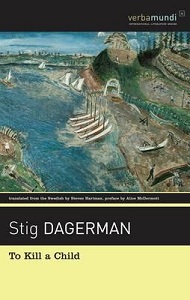
De Zweedse schrijver en journalist Stig Dagerman werd geboren op 5 oktober 1923 in Älvkarleby. Zie ook alle tags voor Stig Dagerman op dit blog en ook mijn blog van 5 oktober 2010.

Uit: To kill a child

« It’s a peaceful day as sunlight settles onto the fields of the plain. Soon bells will be ringing, because today is Sunday. Between fields of rye, two children have just come upon a footpath that they have never taken before, and in the three villages along the plain, window panes glisten in the sun. Men shave before mirrors propped on kitchen tables, women hum as they slice up cinnamon bread for the morning meal, and children sit on kitchen floors, buttoning the fronts of their shirts. This is the pleasant morning of an evil day, because on this day a child will be killed in the third village by a cheerful man. Yet the child still sits on the kitchen floor, buttoning his shirt. And the man who is still shaving talks of the day ahead, of their rowing trip down the creek. And still humming, the woman places the freshly cut bread on a blue plate.
No shadows pass over the kitchen, and yet even now the man who will kill the child stands near a red gas pump in the first village. He’s a cheerful man, looking through the view-finder of his camera, framing a shot of a small blue car and a young woman who stands beside it, laughing. As the woman laughs and the man snaps the charming picture, the attendant screws their gas cap on tightly. He tells them it looks like a good day for a drive. The woman gets into the car, and the man who will kill the child pulls out his wallet. He tells the attendant they’re driving to the sea. He says when they reach the sea they’ll rent a boat and row far, far out. Through her open window, the woman in the front seat hears his words. She settles back and closes her eyes. And with her eyes closed she sees the sea and the man sitting beside her in a boat. He’s not an evil man. He’s carefree and cheerful. Before he climbs into the car, he stands for a moment in front of the grille, which gleams in the sun, and he enjoys the mixed aroma of gasoline and lilacs. No shadows fall over the car, and its shiny bumper has no dents, nor is it red with blood.”


 2079039-386a6a7fe78e0290a0cb4473f0fcbfff.jpg
Stig Dagerman (5 oktober 1923 - 5 november 1954)
Cover


De Nederlandse dichter, schrijver en journalist K. L. Poll, (volledige naam Kornelis Lubbertus Poll) werd geboren in Dordrecht op 5 oktober 1927. Zie ook alle tags voor K. L. Poll op dit blog.

Uit: Het Meer van de Ondank. Een tijdgedicht


Oktober

2
De hemel slibt dicht,
de ruimte wordt kleiner.
De triomf van de kleuren
vermindert, verdunt.
Keer terug naar de winter.
De hand van de meester
vertekent de dingen
ook jou en ook mij.


3
Gedenk de witte stam van de berk
hoog tussen duizenden gele blaadjes,
dansmeester in de herfst,
stevig wit zonnig hout
dat straks ook de sneeuw zal leiden
op de maat van strenge, aanhoudende muziek.


 2079039-c22361bb4ae330162a888b338e1bdaaa.jpg
K.L. Poll (5 oktober 1927 - 14 november 1990)
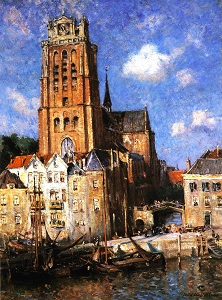
Dordrecht Harbor door Colin Campbell Cooper, ca.1898


De Ierse schrijver Flann O’Brien werd geboren op 5 oktober 1911 in Strabane, County Tyrone. Zie ook mijn blog van 5 oktober 2009 en ook mijn blog van 5 oktober 2010 en eveneens alle tags voor Flann O’Brien op dit blog en alle tags voor O’Brien op dit blog.


The Workman's Friend

When things go wrong and will not come right,
Though you do the best you can,
When life looks black as the hour of night -
A pint of plain is your only man.

When money's tight and hard to get
And your horse has also ran,
When all you have is a heap of debt -
A pint of plain is your only man.

When health is bad and your heart feels strange,
And your face is pale and wan,
When doctors say you need a change,
A pint of plain is your only man.

When food is scarce and your larder bare
And no rashers grease your pan,
When hunger grows as your meals are rare -
A pint of plain is your only man.

In time of trouble and lousey strife,
You have still got a darlint plan
You still can turn to a brighter life -
A pint of plain is your only man.


 2079039-bf3122982e085c37d905bfdce11f0d11.JPG
Flann O’Brien (5 oktober 1911 – 1 april 1966)
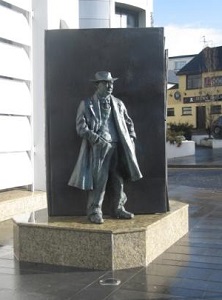
Standbeeld in Strabane


De Franse schrijver, filosoof en kunstcriticus Denis Diderot werd geboren in Langres op 5 oktober 1713. Zie ook alle tags voor Denis Diderot op dit blog en ook mijn blog van 5 oktober 2010.

Uit: Brieven aan Sophie (Vertaald door Anneke Brassinga)

“O, we misten hem deerlijk, onze vriend! Het heerlijkst moment aan tafel was toen we ons hart uitstortten, onze afwezige vrienden ten tonele voerden en hun lof zongen! Wat een warmte in onze bewoordingen, in onze gevoelens en ideeën! Wat een geestdrift! Wat een vreugde schonk het ons, over hen te praten! Hoe graag zouden zij ons hebben aangehoord! O, beste Grimm, wie zal u mijn woorden overbrengen?
We zaten lang aan tafel, maar de tijd vloog om. Daarna togen we naar het hogergelegen deel van de tuinen. Het viel me in dat waterpartijen altijd het mooist zijn als er een cascade bij is of een stroom, maar dat die ontbreken in deze tuinen. We spraken over kunst, poëzie, filosofie en liefde; over de glorie en nietigheid van onze ondernemingen, over het gevoel, de aaltjes van onsterfelijkheid, over mensen, goden en vorsten; over ruimte en tijd, leven en dood. Het was een koor van stemmen waarin de dissonanten van de baron steeds de boventoon voerden. Toen de wind opstak en de avond kil begon te worden keerden we naar het rijtuig terug.
Baron Von Gleichen heeft veel gereisd. Op de terugweg onderhield hij ons met verhalen, over de staatsinquisiteurs in Venetië, die altijd tussen de biechtvader en de beul in lopen, over de barbaarse ideeën aan het Siciliaanse hof, waar men een antieke zegekar met bas-reliëfs, paarden en al aan de monniken heeft gegeven, die het brons hebben gesmolten om er kerkklokken van te gieten. We kwamen erop doordat in Marly een cascade is afgebroken, waarvan het marmer nu de kapelmuren van de St.-Sulpice siert. Ik zei niet veel. Ik luisterde, of liet mijn gedachten dwalen.”


 2079039-252f2e82c12127dadbb5b489e62df482.jpg
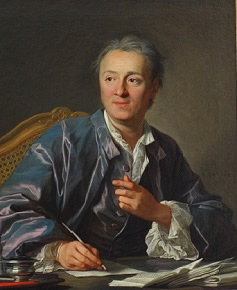
Denis Diderot (5 oktober 1713 - 31 juli 1784)
Portret door Louis-Michel van Loo, 1767


De Duitse schrijfster Charlotte Link werd geboren op 5 oktober 1963 in Frankfurt am Main. Zie ook alle tags voor Charlotte Link op dit blog.

Uit: Die Entscheidung

„Sie brauchte tatsächlich nur ein paar Sekunden, um das Türschloss zu öffnen. Mithilfe eines Drahtes, den sie geformt und gebogen hatte, genau so, wie es ihr Boris, ihr großer Bruder, vor vielen Jahren gezeigt hatte. Sie war noch ein kleines Mädchen gewesen, Boris hingegen schon erwachsen, und jeder, der seine speziellen Hobbys kannte, hätte vermutlich darauf gewettet, dass er eines Tages eine kriminelle Karriere hinlegen würde: Er übte beständig, Türschlösser zu knacken oder Fenster aufzuhebeln, und er hatte beachtliche Fähigkeiten darin entwickelt. Aber schließlich war er ein grundsolider Tischler geworden. Es hatte nie auch nur die geringste Gesetzesübertretung in seinem Leben gegeben.
Selina schob die Tür auf, huschte in das Zimmer, schloss die Tür hinter sich und lehnte sich kurz von innen dagegen. Bislang lief alles nach Plan, vor allem vollkommen lautlos. Trotzdem wusste sie, dass sie jeden Moment entdeckt werden konnte, und dass sie dann vermutlich am besten mit dem Leben abschloss. Wenn Sergej und Igor sie bei einem Fluchtversuch erwischten, war sie so gut wie tot.
Ihre Augen gewöhnten sich an die Dunkelheit, die in dem Zimmer herrschte. Eine Straßenlaterne, die unmittelbar hinter der Grundstücksgrenze stand, spendete ein wenig Licht, gedämpft von einem Baum, der sie zur Hälfte verdeckte. Nur schattenhaft konnte sie die Umrisse der Gegenstände im Raum wahrnehmen: Schreibtisch, Regale, ein Aktenschrank. Taisias Zimmer. Taisia war die Schlimmste.
Sergej und Igor waren brutale Schläger, aber Taisia war derkluge Kopf dahinter, vollkommen kalt, skrupellos und ohne den Anflug eines Gewissens. Hier im Haus war sie die Chefin. Und jeder tat, was sie sagte.“

 2079039-53ea1b0faeea6d392bd6116d231124f3.jpg
Charlotte Link (Frankfurt am Main, 5 oktober 1963)


De Chileense schrijver José Donoso (eigenlijk Jose Donoso Yáñez) werd geboren op 5 oktober 1924 in Santiago de Chile. Zie ook alle tags voor José Donoso op dit blog en ook mijn blog van 5 oktober 2010.

Uit:L'obscène oiseau de la nuit (Vertaald door Didier Coste)

“Mon père n'avait pas souvenir que de son propre père, le mécanicien de locomotive ; plus loin régnait exclusivement l'obscurité des gens de notre espèce, sans histoire propre à la famille, qui appartiennent à la masse où les identités et les faits s'estompent pour engendrer des légendes et des traditions populaires. Il n'avait pas mémoire de notre histoire, ce n'était qu'un Peñaloza, maître d'école de gosses têtus qui lui tapaient sur les nerfs. J'entends encore la voix de mon père sous notre fétide lampe de paraffine. Le soir, après avoir mangé n'importe quel fricot qui devait d'avantage à l'imagination de ma mère qu'aux matières grasses, mon père traçait des plans pour moi, pour que j'arrive d'une façon ou d'une autre à appartenir à quelque chose de différent du vide de notre triste famille sans histoire ni traditions, ni rites ni souvenirs, et la nuit nostalgique s'allongeait dans l'attente de sa voix insistante qui tombait du plafond dans une petite bassine le contredisait avec obstination. Mon père m'expliquait tout. Il exigeait sans exiger, avec la véhémence   de sa main tendre mais pudique qui voulait toucher la mienne sans oser le faire sur le tapis de table  brodé par ma sœur, lequel réussissait à dissimuler que la table était ordinaire mais non qu'elle boitait. Oui, papa, oui, c'est possible, pourquoi pas, je vous le promets, je vous le jure qu'au lieu de ce triste visage sans traits des Peñaloza, je vais acquérir un masque magnétique, un visage grand, lumineux, souriant, pleins de caractère, que personne ne manquera d'admirer. Et comme compatissant avec mon entreprise inutile, ma mère levait les yeux une seconde pour me regarder, et puis elle se concentrait à nouveau sur le jupon de quelque richard du quartier, qu'elle était en train de repriser. »


 2079039-5353ff3c7a539b1b000a28815a5eb9c8.jpg
José Donoso (5 oktober 1924 - 7 december 1996)


Onafhankelijk van geboortedata

De Vlaamse dichter en psycholoog Sven Cooremans werd geboren in Rumst 1970. Zie ook alle tags voor Sven Cooremans op dit blog.


De stilte als je weg bent. Ik koop bloemen

De stilte als je weg bent. Ik koop bloemen
om haar te overstemmen, hoor de stilte,
hoor de stilte van de man die de rozen schikt.

De stilte als je weg bent, ik mijn code
ingeef, kijk hoe handen van een ander mijn gebaar
wikkelen in de stilte van de banktransactie.

De stilte als je weg bent en ik thuis
een lege vaas, die doofstom staat, water geef,
en bloemen. De stilte van de bloemen

die niet zingen zolang je weg bent.


 2079039-370c30e0c1f091d6f83dc7055d47655e.jpg
Sven Cooremans (Rumst, 1970)


Zie voor nog meer schrijvers van de 5e oktober ook mijn blog van 5 oktober 2014 deel 2.

Geschreven door Romenu om 18:33 Reageer op dit bericht

Nobelprijs voor Literatuur 2017 voor Kazuo Ishiguro


Nobelprijs voor Literatuur 2017 voor Kazuo Ishiguro

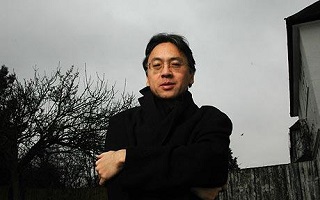
De Nobelprijs voor Literatuur 2017 is toegekend aan de Engels-Japanse schrijver Kazuo Ishiguro. Dat heeft de Zweedse Academie donderdag in Stockholm bekendgemaakt. Kazuo Ishiguro werd op 8 november 1954 geboren in Nagasaki. Zie ook mijn blog van 8 november 2009 en ook mijn blog van 8 november 2010 en eveneens alle tags voor Kazuo Ishiguro op dit blog.

Uit: The Remains of the Day

“Strange beds have rarely agreed with me, and after only a short spell of somewhat troubled slumber, I awoke an hour or so ago. It was then still dark, and knowing I had a full day’s motoring ahead of me, I made an attempt to return to sleep. This proved futile, and when I decided eventually to rise, it was still so dark that I was obliged to turn on the electric light in order to shave at the sink in the corner. But when having finished I switched it off again, I could see early daylight at the edges of the curtains.
When I parted them just a moment ago, the light outside was still very pale and something of a mist was affecting my view of the baker’s shop and chemist’s shop opposite. Indeed, following the street further along to where it runs over the little round-backed bridge, I could see the mist rising from the river, obscuring almost entirely one of the bridge-posts. There was not a soul to be seen, and apart from a hammering noise echoing from somewhere distant, and an occasional coughing in a room to the back of the house, there is still no sound to be heard. The landlady is clearly not yet up and about, suggesting there is little chance of her serving breakfast earlier than her declared time of seven thirty.
Now, in these quiet moments as I wait for the world about to awake, I find myself going over in my mind again passages from Miss Kenton’s letter. Incidentally, I should before now have explained myself as regards my referring to ‘Miss Kenton’. ‘Miss Kenton’ is properly speaking ‘Mrs Benn’ and has been for twenty years. However, because I knew her at close quarters only during her maiden years and have not seen her once since she went to the West Country to become ‘Mrs Benn’, you will perhaps excuse my impropriety in referring to her as I knew her, and in my mind have continued to call her throughout these years. Of course, her letter has given me extra cause to continue thinking of her as ‘Miss Kenton’, since it would seem, sadly, that her marriage is finally to come to an end. The letter does not make specific the details of the matter, as one would hardly expect it to do, but Miss Kenton states unambiguously that she has now, in fact, taken the step of moving out of Mr Benn’s house in Helston and is presently lodging with an acquaintance in the nearby village of Little Compton.
It is of course tragic that her marriage is now ending in failure. At this very moment, no doubt, she is pondering with regret decisions made in the far-off past that have now left her, deep in middle age, so alone and desolate. And it is easy to see how in such a frame of mind, the thought of returning to Darlington Hall would be a great comfort to her. Admittedly, she does not at any point in her letter state explicitly her desire to return; but that is the unmistakable message conveyed by the general nuance of many of the passages, imbued as they are with a deep nostalgia for her days at Darlington Hall. Of course, Miss Kenton cannot hope by returning at this stage ever to retrieve those lost years, and it will be my first duty to impress this upon her when we meet. I will have to point out how different things are now – that the days of working with a grand staff at one’s beck and call will probably never return within our lifetime. But then Miss Kenton is an intelligent woman and she will have already realized these things. Indeed, all in all, I cannot see why the option of her returning to Darlington Hall and seeing out her working years there should not offer a very genuine consolation to a life that has come to be so dominated by a sense of waste.“


 2079046-e375c4e7648ec9c810935ef46b253df7.jpg
Kazuo Ishiguro (Nagasaki, 8 november 1954)

Geschreven door Romenu om 17:19 Reageer op dit bericht

Meer van Romenu

↑ Terug naar de berichten