Naar de inhoud

Romenu

Over literatuur, gedichten, kunst en cultuur
akke.beakke.be

Berichten van 13 oktober 2017 tot 14 oktober 2017

Indian Summer (Wilfred Campbell), Dolce far niente


Dolce far niente


 2082411-bd697230230e83233b45719ad9833215.jpg
Spätsommer im Moor door Otto Modersohn, ca. 1922


Indian Summer

Along the line of smoky hills
The crimson forest stands,
And all the day the blue-jay calls
Throughout the autumn lands.

Now by the brook the maple leans
With all his glory spread,
And all the sumachs on the hills
Have turned their green to red.

Now by great marshes wrapt in mist,
Or past some river's mouth,
Throughout the long, still autumn day
Wild birds are flying south.


 2082411-1cda4e41e222f134a3c3a074375d773a.jpg
Wilfred Campbell (1 juni 1858 - 1 januari 1918)
Kitchner Lake, Victoria Park. Wilfred Campbell werd geboren in Kitchner (Berlin)


Zie voor de schrijvers van de 14e oktober ook mijn vorige blog van vandaag.

Geschreven door Romenu om 18:01 Reageer op dit bericht

E. E. Cummings, Maarten van der Graaff, Daniël Rovers, Péter Nádas, Katha Pollitt, Katherine Mansfield, Margarete Susman, Stefan Żeromski, Philip Winkler

De Amerikaanse dichter en schrijver Edward Estlin Cummings werd geboren in Cambridge, Massachusetts op 14 oktober 1894. Zie ook mijn blog van 14 oktober 2010 en eveneens alle tags voor E. E. Cummings op dit blog.


maggie and milly and molly and may

maggie and milly and molly and may
went down to the beach(to play one day)

and maggie discovered a shell that sang
so sweetly she couldn’t remember her troubles,and

milly befriended a stranded star
whose rays five languid fingers were;

and molly was chased by a horrible thing
which raced sideways while blowing bubbles:and

may came home with a smooth round stone
as small as a world and as large as alone.

For whatever we lose(like a you or a me)
it’s always ourselves we find in the sea


Spring is like a perhaps hand

Spring is like a perhaps hand
(which comes carefully
out of Nowhere)arranging
a window,into which people look(while
people stare
arranging and changing placing
carefully there a strange
thing and a known thing here)and

changing everything carefully

spring is like a perhaps
Hand in a window
(carefully to
and fro moving New and
Old things,while
people stare carefully
moving a perhaps
fraction of flower here placing
an inch of air there)and

without breaking anything.


9

there are so many tictoc
clocks everywhere telling people
what toctic time it is for
tictic instance five toc minutes toc
past six tic

Spring is not regulated and does
not get out of order nor do
its hands a little jerking move
over numbers slowly

we do not
wind it up it has no weights
springs wheels inside of
its slender self no indeed dear
nothing of the kind.

(So,when kiss Spring comes
we’ll kiss each kiss other on kiss the kiss
lips because tic clocks toc don’t make
a toctic difference
to kisskiss you and to
kiss me)


 2082255-d438fb9cc1bfb0a28bb7f65be5c7f53d.jpg
E. E. Cummings (14 oktober 1894 - 3 september 1962)
Cover


De Nederlandse dichter en schrijver Maarten van der Graaff werd geboren op 14 oktober 1987 in Dirksland. Zie ook alle tags voor Maarten van der Graaf op dit blog.


Lijst met rituelen
Voor CAConrad

Overgiet een grijze Kadett met cognac.
Ga in de grijze Kadett naar Umbrië.
Stap in Umbrië uit de Kadett.
Begraaf een gedicht van Pasolini
onder een kurkeik of een jeneverbes.

Er blijft iets ongezegd.
Vernietiging heeft ons gekozen,
vernietiging heeft zich geopend.

Overgiet de grijze Kadett met siroop.
Reis in de grijze Kadett naar een loofbos.
Voer daar de leer- of werkstraf uit
van een vreemde.
Begraaf een gedicht van Dickinson.

Vernietiging heeft ons gemaakt.
Kom klaar in een pretpark.

Teken een cirkel op de serre
van een politicus.
Ga naar het stadskantoor
en leg je onder een klok op de grond,
met je voeten naar Kaapstad.
Lees de gedrichten van Snoek.
Verbrand drie dagen later
een zijden voorwerp.

Vernietiging gaat in ons op.

Omklem Pascal en het Kussenboek,
wandel een kerk in.
Denk aan het boerenleven.
Schrijf iets over de geur van religie,
het middenklassegeloof van je ouders.

Vernietiging is onze mondigheid.

Wacht tot je psycholoog op vakantie is.
Zet een tent op in haar tuin.
Ga in een vaalgeel gewaad in de tent zitten.
Neem een vel papier en noteer de titel
Civiele liederen.
Schrijf drie dagen lang civiele liederen.
Gebruik deze regels:

Er is geen eenheid in de riten van mijn massacultuur.

De geschiedenis laat mij blind achter.

Kom zonder gewaad de tent uit.
Ruik de ochtendlucht.
Ontmenselijk jezelf: trek vulgair
en fluitend de stad in.


 2082255-08c76fcf23a4dcd296bba27252bd47b3.jpg
Maarten van der Graaff (Dirksland, 14 oktober 1987)


De Nederlandse schrijver Daniël Rovers werd geboren in Zelhem op 14 oktober 1975. Zie ook mijn blog van 14 oktober 2010 en eveneens alle tags voot Daniël Rovers op dit blog.

Uit: De zon is het probleem niet

“Het eerste wat je opvalt bij aankomst in Afrika is het licht, schrijft Ryszard Kapuscinski in Ebbenhout, al voegt hij daar meteen aan toe dat het continent zo groot en gevarieerd is dat je er niet in die ene simpele bewoording (‘Afrika’) over kunt spreken. Mij valt vooral de onwerkelijke hitte op, alsof iemand vergeten is de deur van een heel grote sauna dicht te doen. In haar reisboek Mali blues vertelt
Lieve Joris de anekdote van een koloniale legerofficier die ergens aan het eind van de negentiende eeuw, op zijn post in het verschroeiend hete noorden van Mali, een brede ton halfvol water met genoeg ruimte voor een bureau en een stoel in zijn werkruimte laat plaatsen. Alleen zo denkt de man de kantooruren te kunnen overleven. Het zou een oplossing zijn, want die hitte, hoe kun je daar nu in godsnaam over schrijven? Mijn schrijfhand plakt al aan het papier terwijl ik probeer te noteren hoe ontzettend warm ik het heb. Kapuscinski wijdt er in zijn boek schijnbaar zonder al te veel zweetdruppels een volledige pagina aan, maar hoe hij het hoofd koel genoeg hield om dat alles te kunnen noteren, daarover schrijft hij niet.
Het is al donker als ik aankom in Dakar, de hoofdstad van Senegal. Op het vliegveld, dat niet groter zal zijn dan de luchthaven van pak ’m beet Charleroi, vraagt een douanier naar het adres waar ik tijdens mijn vakantie zal verblijven. Het is de eerste en enige vraag die hij stelt, en toch moet ik hem het antwoord schuldig blijven. Ik heb voor vertrek alleen maar de naam van de wijk waar Rolf woont opgeschreven. Dat neem ik mezelf kwalijk: waarom ben ik niet voorbereid op deze vraag? En ook, inwendig vloekend: waarom heeft Rolf me er niet op voorbereid? De douanier wuift zich met mijn paspoort koelte toe.”


 2082255-058c7a1bd47669b4deff1289e591a8d9.jpg
Daniël Rovers (Zelhem, 14 oktober 1975)


De Hongaarse schrijver Péter Nádas werd geboren op 14 oktober 1942 in Boedapest. Zie ook mijn blog van 14 oktober 2010 en eveneens alle tags voor Péter Nádas op dit blog.

Uit: Parallel Stories (Vertaald door Imre Goldstein) 

“As he began his story for the third time, the young man noticed nervously that every clue had been numbered and the sight made him very anxious. He felt as if he had been not the one who discovered the corpse or reported it but, rather, the culprit instantly confronted with physical evidence of his crime.
He was like a blade, though he could not tell of what, perhaps of a razor or an icy thought, but of that he said nothing.
In fact, his first thought was that he had murdered his own father. He could not understand why he had such a thought, why he would wish the death of this man, but of that too he said nothing to the police officers.
Hardly anything remained of which he could speak aloud.
But they paid little attention to him; both uniformed and plainclothesmen were going about their business, and from time to time they mumbled to one another phrases the young man could not understand.
They would not delay him further. Twice he had given them his personal data, they had registered his willingness to give evidence later in court, and still he could not leave.
Some of the policemen were being relieved by others around him.
When he runs, he repeated excitedly in his report, he does not look at anything or in any specific direction, and he does not think. From a psychological viewpoint, that is the essence of running at an even pace. But when twenty minutes later he again ran past the body on the bench, it occurred to him that the snow could remain intact like that only on a cooled-off corpse.
He had read something like that somewhere. And that's when he stopped to take a closer look.
In Berlin's Tiergarten, or game preserve, many things have happened already, or, more correctly, hardly anything can happen here that hasn't occurred before. The police officers listened to the report impassively. One of them simply moved on with his plastic bags to continue his work. In a little while, another one stopped to listen, and the rest of them promptly left him there alone. However, the young man could not calm down. He told his story to this new man as if every detail had another hundred details and every sentence needed a further explanation, as if with every explanation he were revealing earthshaking secrets while keeping silent about his own.”


 2082255-08a275b376bf9c580bc5d334fa444859.jpg
Péter Nádas (Boedapest,14 oktober 1942)


De Amerikaanse dichteres, essayiste, critica en feministe Katha Pollitt werd geboren op 14 oktober 1949 in New York. Zie ook mijn blog van 14 oktober 2010 en eveneens alle tags voor Katha Pollit op dit blog.


Old

No one left to call me Penelope,
mourned the old countess, on being informed of the death
of her last childhood friend. Did she sit long

in the drafty hall, thinking, That's it then,
nobody left but hangers-on and flunkeys,
why go on? Death can't help but look friendly
when all your friends live there, while more and more

each day's like a smoky party
where the music hurts and strangers insist that they know you
till you blink and smile and fade into the wall
and stare at your drink and take a book off the shelf

and close your eyes for a minute and suddenly
everyone you came in with has gone
and people are doing strange things in the corners.
No wonder you look at your watch

and say to no one in particular
If you don't mind, I think I'll go home now.


November Fifth, Riverside Drive

The sky a shock, the ginkgoes yellow fever,
I wear the day out walking. November, and still
light stuns the big bay windows on West End
Avenue, the park brims over with light like a bowl
and on the river
a sailboat quivers like a white leaf in the wind.

How like an eighteenth-century painting, this
year 's decorous decline: the sun
still warms the aging marble porticos
and scrolled pavilions past which an old man,
black-coated apparition of Voltaire,
flaps on his constitutional. 'Clear air,
clear mind' -as if he could outpace
darkness scything home like a flock of crows.


 2082255-a817b3eac9aff8d9d71348434b3f3f4a.jpg
Katha Pollitt (New York,14 oktober 1949)


De Nieuw-Zeelandse schrijfster Katherine Mansfield werd geboren op 14 oktober 1888 in Wellington. Zie ook mijn blog van 14 oktober 2010 en eveneens alle tags voor Katherine Mansfield op dit blog.

Uit: The Journey To Bruges

“They all went to sleep except the young Frenchman, who took a little pocket edition out of his coat and nursed it on his knee while he gazed at the warm, dusty country. At Shorncliffe the train stopped. Dead silence. There was nothing to be seen but a large white cemetery. Fantastic it looked in the late afternoon sun, its full-length marble angels appearing to preside over a cheerless picnic of the Shorncliffe departed on the brown field. One white butterfly flew over the railway lines. As we crept out of the station I saw a poster advertising the Athenaeum. The Enthusiast grunted and yawned, shook himself into existence by rattling the money in his trouser pockets. He jabbed the Mole in the ribs. “I say, we’re nearly there! Can you get down those beastly golf-clubs of mine from the rack?” My heart yearned over the Mole’s immediate future, but he was cheerful and offered to find me a porter at Dover, and strapped my parasol in with my rugs. We saw the sea. “It’s going to be beastly rough,” said the Enthusiast, “Gives you a head, doesn’t it? Look here, I know a tip for sea-sickness, and it’s this: You lie on your back — flat — you know, cover your face, and eat nothing but biscuits.”
“Dover!” shouted a guard.
In the act of crossing the gangway we renounced England. The most blatant British female produced her mite of French: we “S’il vous plaît’d” one another on the deck, “Merci’d” one another on the stairs, and “Pardon’d” to our heart’s content in the saloon. The stewardess stood at the foot of the stairs, a stout, forbidding female, pockmarked, her hands hidden under a businesslike-looking apron. She replied to our salutations with studied indifference, mentally ticking off her prey. I descended to the cabin to remove my hat. One old lady was already established there.
She lay on a rose and white couch, a black shawl tucked round her, fanning herself with a black feather fan. Her grey hair was half covered with a lace cap and her face gleamed from the black drapings and rose pillows with charming old-world dignity. There was about her a faint rustling and the scents of camphor and lavender. As I watched her, thinking of Rembrandt and, for some reason, Anatole France, the stewardess bustled up, placed a canvas stool at her elbow, spread a newspaper upon it, and banged down a receptacle rather like a baking tin. I went up on deck. The sea was bright green, with rolling waves.”


 2082255-665f6fe34619c2f06c91aca2ddd6984d.jpg
Katherine Mansfield (14 oktober 1888 – 9 januari 1923)
Cover


De Duitse dichteres, schrijfster en filosofe Margarete Susman werd geboren op 14 oktober 1872 in Hamburg. Zie ook mijn blog van 14 oktober 2010 en eveneens alle tags voor Margarete Susman op dit blog.


Die gelben Blätter ...

Die gelben Blätter wirbeln von den Bäumen,
Der Sturm schlägt mir den Regen ins Gesicht,
In schwarzen Wolken stirbt das letzte Licht.
Ich geh voran – jetzt ist nicht Zeit, zu träumen.

Ich geh voran. Des Sommers Blumen starben,
Viel süße Träume starben matt und schwer.
Nach keiner Hand greift heut die meine mehr.
Ich geh allein. Ich hab gelernt, zu darben.

Die Hände, die nach meinen greifen wollen,
Mit sanftem Druck geb ich sie wieder frei.
Nicht glaub ich mehr, daß jede würdig sei.
Doch ward ich still. Ich hab verlernt, zu grollen.

Nun bahn ich durch des Herbstessturmes Tosen
Mir einen Weg, den nichts mehr hemmen soll,
Zu einem Land von neuen Träumen voll,
Zu einem neuen Sommer schwer von Rosen.


So in die still verschneite Nacht ...

So in die still verschneite Nacht
Blick' ich hinaus;
Die alte Sehnsucht ist erwacht
Und singt und flüstert, weint und lacht
Und lacht mich aus.

Sie zieht um mich den Zauberkreis
Von Wunsch und Wahn;
Sie spricht wie du so scheu und leis;
Sie starrt mich an so traurig heiß,
Wie du getan.


 2082255-6cf2f152fe6e23cb98ec80e97ae70490.jpg
Margarete Susman (14 oktober 1872 - 16 januari 1966)


De Poolse schrijver Stefan Żeromski werd geboren op 14 oktober 1864 in Strawczyn in de buurt van Kielce. Zie ook mijn blog van 14 oktober 2010 en eveneens alle tags voor Stefan Żeromski op dit blog.

Uit: The Coming Spring (Vertaald door Bill Johnston)

“Czaruś had just turned fourteen and graduated from the fourth class to the fifth when Seweryn Baryka was called up to serve as an officer in the reserve. War had broken out. Rapidly, in the space of a few days, the family idyll was shattered. Cezary found himself alone with his mother in a fatherless apartment . Accompanying his father to the troop ship leaving for Astrakhan, he had felt no sorrow whatsoever. It was a novelty! He was occupied by a thousand trifling details—dates, names, and figures, in connection with his father’s donning the uniform of an officer. He packed his father’s magnificent yellow leather suitcase with its metal fittings, stamped monogram, and abundance of mysterious compartments within. He neither shared nor understood his mother’s desperate tears and sobbing, which lasted from morning till night. It was only when his father was on board in the company of other officers, and he was left alone on shore with his mother, and the gangway was pulled away with a clatter —only then was Czaruś overcome by a terror he had never in his life known before. Under the influence of this feeling he stretched out his arms and started shouting like a true child. But the reassuring gestures C The Coming Spring 14 that his father’s white hands formed in the air calmed him as instantly as that youthful blind pain had struck. It would only be for a short time! Just for maneuvers! The war would be over soon. Just a few weeks. Maybe a month. Two at the most. The Russian steamroller would flatten the enemies’ fields, crushing obstacles as if they were carrots or corn, and all would return to normal. That was what everyone was saying, and such an opinion Cezary too had inherited from his departing father. Returning home from the port with his mother, who was truly as silent as the grave, Cezary was already in a cheerful mood. He was happy about various things, above all the prospect of freedom. His father never ever punished him nor even scolded him; he would tell him off half-jokingly, gently making fun of him. Yet he possessed an unbreakable iron power over his son. Despite his father’s mild-mannered smile, despite his polite suggestions and respectful advice, and his good-natured requests made during blandishments and games—no resistance was possible.”


2082255-ac4634c315e3c365cbf17cb931a483e8.jpg
Stefan Żeromski (14 oktober 1864 - 20 november 1925)
Cover Poolse uitgave


Onafhankelijk van geboortedata

De Duitse schrijver Philip Winkler werd in 1986 geboren in Neustadt am Rübenberge. Zie ook alle tags voor Philip Winkler op dit blog.

Uit: Hool

“Also?«, fragt Axel, ohne sich umzudrehen. Er beobachtet mich immer noch im Seitenspiegel. Trotz der Sonnenreflexion kann ich seinen stechenden Blick erkennen. Wie er mich prüft. Ich gebe die Wegbeschreibung weiter und betone noch mal, dass ich den Typen an die Abmachung erinnert habe.
»Hab ich gehört«, sagt er und dreht sich zu Hinkel, der wie immer am Steuer sitzt. Axel wiederholt die Wegbeschreibung. So als ob Hinkel mich nicht gehört hätte oder er den Weg nur fahren könnte, wenn die Anweisung von ihm kommt. Ich bemerke, wie Kai mich von der Seite ansieht, den Mundwinkel verzieht. Nett gemeint. Wenn ich ihn jetzt angucke, wird er bestimmt noch mit den Augen
rollen. Mir damit sagen, Scheiße noch mal, was fürn Kontrollfreak. So in der Art. Aber ich reagiere nicht, sondern achte drauf, ob Hinkel den richtigen Weg nimmt. Er grunzt, was wohl heißen soll, dass er verstanden hat. Mit seiner bulettenartigen Hand umgreift Hinkel das Lenkrad auf zwölf Uhr. Schweißperlen haben sich in seinen langen Handrückenhaaren verfangen und funkeln in der Sonne.
Sehen aus wie quer rübergekämmt. Die andere Hand lässt er aus dem Fenster baumeln.
Tomek, der links von Kai sitzt, scrollt mit unbeteiligtem Gesichtsausdruck über sein Handy. Das ist so ein Ostblockding. Diese immer gleiche slawische Fresse. Gut oder scheiße gelaunt. Kann man nicht erkennen. Mit dem Ausdruck würde er wohl selbst einen Lottogewinn entgegennehmen. Die Kippe in seiner linken Hand ignoriert er. Der Fahrtwind brennt sie wie in Zeitraffer runter. Wär auch kein Wunder, wenn er kacke drauf ist. Schließlich hat er vor dem Losfahren das Shotgun-Spiel um den besseren Platz gegen Kai verloren. Kennt das wahrscheinlich nicht mal.
Jetzt muss er da sitzen, wo Jojo letztes Mal mit seiner zerstörten Nase alles vollgeblutet hat. Jojos Gummel hat da richtig gelitten. Und das Sitzpolster erst. Außerdem ist das von vornherein der Platz, auf dem man an heißen Tagen auf keinen Fall sitzen will. Hinter Hinkel. Selbst bei offenem Fenster.“


 2082255-ec9e2c7e31a1a2d93a7e8221453c2174.jpg
Philip Winkler (Neustadt am Rübenberge, 1986)

Geschreven door Romenu om 11:28 Reageer op dit bericht

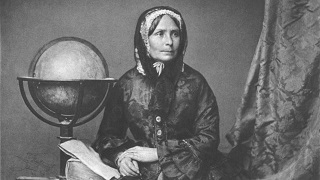
Ida Pfeiffer

De Oostenrijkse schrijfster wereldreizigster Ida Laura Pfeiffer werd geboren in Wenen op 14 oktober 1797. Haar vader, de rijke koopman Reyer moedigde haar interesses in sport en avontuur aan, in weerwil van haar meer conservatieve moeder. Op vijfjarige leeftijd reisde Pfeiffer naar Palestina en Egypte, een ervaring die haar bij zou blijven en van invloed zou zijn op haar verdere leven. Op 1 mei 1820 trouwde Ida met Dr. Mark Anton Pfeiffer, een advocaat die 24 jaar ouder was dan Ida en bovendien een zoon had van zijn overleden vrouw. In 1838 stierf Dr. Pfeiffer en liet Ida twee zonen na. Nadat haar twee zonen het huis uit waren maakte Ida Pfeiffer plannen om haar oude droom te vervullen: het maken van wereldreizen. In 1842 reisde ze langs de Donau naar de Zwarte Zee en Istanboel en keerde terug naar Oostenrijk via Italië. Haar reiservaringen publiceerde Pfeiffer in 1843 in haar boek “Reise einer Wienerin in das Heilige Land”. Dankzij de opbrengsten van dit boek kon Pfeiffer nieuwe reizen ondernemen en in 1845 reisde ze naar Scandinavië en IJsland. Verslagen van deze reis bracht ze uit in haar tweedelig boek “Reise nach dem skandinavischen Norden und der Insel Island”. Tijdens haar reizen verzamelde Ida Pfeiffer planten, insecten, weekdieren, dieren uit de zee en mineralen, die ze verkocht aan het Naturhistorisches Museum in Wenen en het Museum für Naturkunde in Berlijn. Haar eerste wereldreis maakte Ida Pfeiffer in 1846, waarbij ze Zuid-Amerikaanse landen als Brazilië en Chili bezocht, alsook Tahiti, China, India, Perzië, Klein-Azië en Griekenland. Ze keerde terug in 1848 en beschreef haar ervaringen in haar boek “Eine Frau fährt um die Welt”. Haar tweede wereldreis duurde van 1851 tot 1854, waarbij ze van Groot-Brittannië naar Zuid-Afrika reisde, om vervolgens naar de Indische Archipel te varen. In 1856 publiceerde ze haar bevindingen in het boek “Meine zweite Weltreise”. In mei 1857 ondernam Ida Pfeiffer haar reis naar Madagaskar, in gezelschap van de Franse avonturier Joseph-François Lambert. Zij wist echter niet dat Lambert een staatsgreep op de Malagassische koningin Ranavalona I had voorbereid. Op 20 juni mislukte deze staatsgreep en Koningin Ranavalona liet alle betrokken Malagassiërs executeren. De betrokken Europeanen, waaronder ook Pfeiffer, werden gevangengezet. In juli werden zij weer vrijgelaten en uit Madagaskar gezet. Op de reis van de hoofdstad Antananarivo en de kust liep Pfeiffer een ziekte op waarvan ze niet meer zou herstellen, vermoedelijk kanker of malaria.

Uit:Reise einer Wienerin in das Heilige Land

„Seit Jahren lebte der Wunsch in mir, eine Reise in das Heilige Land zu machen. Jahre gehören dazu, um mit dem Gedanken eines so gewagten Unternehmens vertraut zu werden. Als daher meine häuslichen Verhältnisse sich so gestaltet hatten, daß ich mich wenigstens auf ein Jahr entfernen konnte, hatte ich nichts eifriger zu tun, als mich auf diese Reise vorzubereiten. Ich las manche Werke darüber und war auch so glücklich, mit einem Herrn bekannt zu werden, der einige Jahre früher jene Länder bereist hatte. Ich konnte mündlich manche Belehrung und manchen Rat über das Fortkommen und Verhalten auf dieser gefahrvollen Wanderung erhalten.
Vergebens suchten meine Verwandten und Freunde, mich von diesem Vorsatz abzubringen. Höchst lebhaft stellte man mir all die Gefahren und Beschwerden vor, die den Reisenden dort erwarten. Männer hätten Ursache zu bedenken, ob ihr Körper die Mühen aushalten könne und ob ihr Geist den Mut habe, dem Klima, der Pest, den Plagen der Insekten, der schlechten Nahrung usw. kühn die Stirn zu bieten. Und dann erst eine Frau! So ganz allein, ohne alle Stütze hinauszuwandern in die weite Welt, über Berg und Tal und Meer, ach, das wäre unmöglich. Dies war die Meinung meiner Freunde.
Ich konnte nichts als meinen festen unabänderlichen Willen entgegensetzen. Mein inneres Vertrauen auf Gott gab mir Ruhe und Kraft, meine irdischen Angelegenheiten mit voller Besonnenheit zu ordnen. Ich machte mein Testament, bestellte alles derart, daß im Fall des Todes, worauf ich mehr gefaßt sein mußte als auf eine glückliche Rückkehr, die Meinigen alles in bester Ordnung fänden.
Und somit trat ich am 22. März 1842 meine Wanderung von Wien aus an.
Ich fuhr um ein Uhr mittags zu den Kaisermühlen, dem Platz, von welchem die Dampfschiffe nach Pest usw. abgehen. Freudig überraschte mich am Ufer die Anwesenheit einiger Verwandter und Freunde, die mir nochmals Lebewohl sagen wollten. Die Trennung war freilich recht hart, denn unwillkürlich erfaßte uns der Gedanke, ob wir uns in dieser Welt wohl noch einmal sehen würden.
Ein lebhafter Streit an Bord des Schiffes zerstreute ein bißchen unsern trüben Sinn. Ein Reisender mußte auf Ansuchen eines Herrn, statt mit Sack und Pack nach Ungarn zu flüchten, mit der Polizei in die Stadt zurückkehren. Ersterer schuldete letzterem tausenddreihundert Gulden, und glücklicherweise wurde er noch vor der Abfahrt des Schiffes eingeholt. Kaum war dies geordnet, so gab die Glocke das Zeichen der Abfahrt, die Räder begannen ihre Bewegung und entzogen mich für diesmal meinen Lieben nur zu schnell.
Reisende gab es noch wenige. Die Witterung war zwar schön und mild, aber die Jahreszeit noch zu früh, um andere Reisende als Geschäftsleute oder solche mit so umfassenden Plänen, wie ich sie im Kopfe hatte, in die Welt zu führen. Die meisten gingen nach Preßburg oder höchstens nach Pest. Bald hörte man vom Schiffskapitän, daß eine Frau auf dem Schiff sei, die bis Konstantinopel zu reisen gedenke, und nun betrachtete man mich von allen Seiten. Einer der Herren, der dieselbe Reise machte, sprach mich an und bot mir seine Dienste an, wenn ich deren benötigen sollte, und wirklich stand er mir überall schützend zur Seite.“


 2141776-0d771e66757e60ffdc8979c2093918c1.jpg
Ida Pfeiffer (14 oktober 1797 - 27 oktober 1858)

Geschreven door Romenu om 00:00 Reageer op dit bericht

Colin Channer, Herman Franke, Jeet Thayil, Sebastian Fitzek, Richard Howard, Migjeni, Arna Wendell Bontemps, Conrad Richter, Edwina Currie

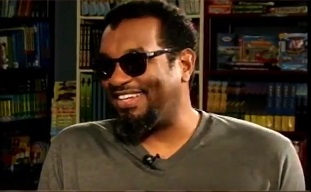
De Jamaicaanse schrijver Colin Channer werd geboren op 13 oktober 1963 in Kingston. Zie ook mijn blog van 13 oktober 2010 en eveneens alle tags voor Colin Channer op dit blog.


Mimic

I.
From the chopper shot
the beach is a golden border
on a brown-gray shack town,
a jumble on a point,
sweet flourish of Liberia
sweeping into waves.

My son and I are watching
this in lamplight from our low
brown armless couch,
iced roibos on the low wood table
where I keep a bowl of beat-up cricket balls,
a wink to where he indirectly comes from,
Makonnen, Brooklyn teenager
with Antillean roots
replanted in Rhode Island,
a state petiter than the country
where my navel string was cut.

He’s a boy who loves sketching,
drawing cartoons, eating fish and pasta,
swimming, but most of all
performing accents, likes how
they jokify the mouth.

He was born with the ears of a mimic,
a tight connect between what makes a sound
and how to counterfeit it, make it feel
authentic near its place of birth.

On screen, the camera jerks
behind an ex-warlord
up chipped-up stairs
to a big slab roof.
Here, he’s questioned by
a pink and meaty hipster,
dude keen to talk to men
who say they ate their foes in war.

This one here refers
to chopping wide the backs of children,
mimes reaching in the crack
to pluck a heart,
and munching it before a fight
for blood and courage,
naked at times, or done drag,
boots with wigs and dresses,
amulets and other charms,
the more bizarre
the better hidden.
Spirits can evade
the human eye.

Maki echoes all the interviewer’s
LA nasals. I laugh hard.
But when he takes on
a Liberian accent
I do not take it well
although I’m twisted
by the sketch, a poly-vocal
back-and-forth involving riots.
It’s peacetime and we’re at
Monrovia’s first McDonald’s.
Folks are vexed.
The burgers aren’t made
from human flesh.

I gently tell him he,
well, we shouldn’t joke too much
about this awful war,
and blah blah on about this country
founded on the coast of Guinea
by ex-chattel,
guide him through the marsh
of history to the present,
leading as a father should a son.
 

 2082024-27fc32b37f965c121fea8f1ac0c75260.jpg
Colin Channer (Kingston, 13 oktober 1963)


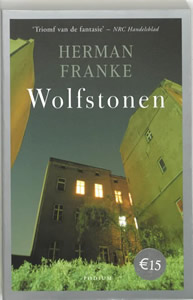
De Nederlandse schrijver Herman Franke werd geboren op 13 oktober 1948 in Groningen. Zie ook mijn blog van 13 oktober 2010 en eveneens alle tags voor Herman Franke op dit blog.

Uit: Wolfstonen

“Ik ben een grote jongen, zei hij zomaar, toen hij nog heel klein was. De kamer zat vol mensen; er kwam rook uit hun monden want ze stonden van binnen in brand. Daarom dronken ze zoveel, met blusschuim en zo. Zijn vader lachte, zijn moeder lachte, iedereen lachte, zelfs de oom met gouden tanden die altijd alleen maar zichzelf grappig vond. Hij bleef het zeggen, ook toen niemand meer lachte. Als hij bang was of voor de gek gehouden werd, zei hij het, of als de zon op zijn gezicht scheen en een lauw windje zijn nek streelde. Ik ben een grote jongen. Dat moet je niet steeds zeggen, zei zijn moeder, gehurkt, zodat haar gezicht bijna het zijne raakte, met een stem die ze tevergeefs dwong kwaad te laten klinken. De rode vlekken in haar hals veranderden voor zijn ogen in veelkoppige monsters die elkaar op leven en dood bevochten. Uiteindelijk sloeg zijn vader hem voor zijn kop. Maar hij huilde niet. Ik ben een grote jongen, zei hij. Ze gaven het op. Iedereen noemde hem toen allang, klein als hij was, Grotejonge. En tegen beter weten in geloofde men dat het daardoor kwam, of doordat zijn openlijk uitgedragen zelfbeeld fysieke bevestiging zocht, dat hij al op zijn veertiende zijn vader boven het hoofd groeide en zijn bijnaam op spectaculaire wijze waarmaakte. Op zijn zestiende kon iedereen zien dat hij wis en waarachtig een grote jongen was, met machtige schouders en reuzenhanden. Zware leren voetballen kon hij met een hand oppakken, zelfs als ze nat en glibberig waren. Waar hij binnenkwam, verdween licht. Niemand wist meer hoe hij echt heette, Grotejonge zelf ook niet. Hij zei nog maar heel soms, en alleen als niemand hem kon horen, dat hij een grote jongen was. Maar hij dacht het wel vaak, vaker dan hij het ooit gezegd had toen hij nog klein was.
Hij ging naar een bijzondere school want gewoon rekenen kon hij niet, hij kon alleen vrij rekenen wat inhield dat de uitkomst van drie plus vijf elk getal kon zijn dat hem het juiste toescheen omdat het regende of heel warm was, of omdat het eerste meisje dat hij die dag was tegengekomen naar hem had geglimlacht. Lezen leerde hij snel, maar als hij iets moest opschrijven, dacht hij wel aan de goede letters maar hij schreef de verkeerde op. Hij kon het dezelfde dag nog teruglezen, maar de volgende dag niet meer. Zijn leerproblemen hadden iets geniaals, dat voelden de leraren wel aan, maar ze wisten niet wat ze met hem aanmoesten.”
 

 2082024-3754d556d77584ba192d275672d42ee3.jpg
Herman Franke (13 oktober 1946 – 14 augustus 2010)
Cover


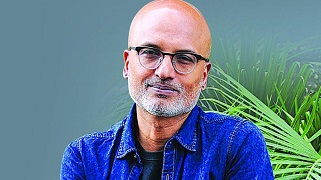
De Indiase dichter, schrijver, librettist en muzikant Jeet Thayil werd geboren op 13 oktober 1959 in Kerala. Zie ook alle tags voor Jeet Thavil op dit blog.


Cut To Bits By The Sickle Moon

Who has done this?
Schoolboys, drained of
all emotion but the one
that'll outlast them,
kneeling on the sands in
waves through the two
thousands, learning the
fundaments of blood
sacrifice as the correct
response to figurative art.


Superpower

Leap tall buildings in a single bound? Forget
you, buddy, I
leap years, avenues,
financial/fashion/meatpacking districts, 23
MTA buses parked end to
end. I leap Broadway,
yoyo to
traffic light, to
bus top, to Chrysler, to jet.
You need a mind of sky, of rubber,
to understand I. You need
silence, cunning. Exhale!
You need to know that everything is metaphor,
that poems sprout
in my hands
like mystic confetti, like
neural string theory.
My brother, Mycroft, is tiny, but a genius,
oh a tiny genius, whose
"art is subtle, a precision of hallucinatory brilliance,"
—that's serious talk, boy—
he's ‘furthermore' and ‘however,' I'm
"know what I'm saying?" and ‘whatever.'
He is the ghost ant, the one who is not
there, unseen until he stops
moving. I am
companion to owl and peregrine,
emperor of air, and I'm loyal
to you my loyal subject, whose hard-won
pleasure I perform,
and though I'm not rich it takes a lot
of cash to keep me
in the poverty to which I'm accustomed.
 

 2082024-df2efb03e69c859c74dfe88b1d70bd80.jpeg
Jeet Thayil (Kerala, 13 oktober 1959)


De Duitse schrijver en journalist Sebastian David Fitzek werd geboren op 13 oktober 1971 in Berlijn. Zie ook alle tags voor Sebastian Fitzek op dit blog.

Uit: Das Joshua Profil

„Dreizehn Leichen, elf vergewaltigte Frauen, sieben Verstümmelungen, ebenso viele Entführungen und zwei an ein Heizungsrohr angekettete Schwestern, die qualvoll verhungern würden, sollte man sie nicht rechtzeitig inden. Ich war zufrieden mit meiner bisherigen Bilanz, und eigentlich hätte ich ihr heute Nachmittag noch einen weiteren Mord hinzugefügt, wenn ich nicht um 15.32 Uhr gestört worden wäre, als ich gerade mit einem wehrlosen Opfer auf dem Weg in die Berliner Kanalisation war.
Zuerst hatte ich versucht, das Klingeln zu ignorieren; normalerweise schaltete ich mein Handy während der Arbeit ab, aber heute war Montag, und montags war ich mit dem Fahrdienst für unsere zehnjährige Tochter an der Reihe, selbst wenn meine Frau ausnahmsweise mal im Lande war, was wegen ihres Jobs als Langstrecken-Pilotin leider nur sehr unregelmäßig vorkam.
Zwar kannte ich die Nummer im Display nicht, doch es war ungefähr die richtige Uhrzeit. Jolas Schwimmtraining musste gerade vorbei sein, und vielleicht rief sie ja mit dem Telefon einer Freundin an. Ich entschied mich, den Anruf besser nicht auf die Mailbox laufen zu lassen, auch auf die Gefahr hin, gleich einen Callcenter-Agenten am Ohr zu haben, der mir eine Zahnzusatzversicherung oder ein Pay-TV-Abo aufschwatzen wollte und den es nicht im Geringsten kümmerte, dass ich seit Monaten mit dem Dispo im Minus hing.
Und so hatte ich entnervt mit der Zunge geschnalzt, das Kapitel des Thrillers, an dem ich gerade arbeitete, mitten im Satz zwischengespeichert und nach dem surrenden Handy auf meinem Schreibtisch gegriffen. Was, um es kurz zu machen, der Grund dafür war, weshalb ich jetzt im Stau auf der Avus Höhe Hüttenweg stand und von meiner Tochter fünf Euro verlangte.
»Die zahl ich nicht.« Jola schüttelte den Kopf und schaute trotzig aus dem heruntergekurbelten Seitenfenster in Richtung der S-Bahn-Gleise, die hier parallel zur Stadtautobahn verliefen.
Es war Mitte August, wir standen in der prallen Sonne, vor uns limmerte die Luft über den Dächern der Blechlawine, und ich hatte das Gefühl, in einem Schnellkochtopf und nicht in meinem alten VW Käfer zu sitzen.
»Wir haben eine Abmachung«, erinnerte ich sie. Fünf Euro für jedes Mal, wenn ich zu einem »Elterngespräch« gebeten wurde, weil sie wieder etwas angestellt hatte.
»Ich dachte, das gilt nur für die Schule. Nicht für die Freizeit.«»Du vergisst, dass Herr Steiner nicht nur dein privater Schwimm-, sondern auch dein ofizieller Sportlehrer ist. Also her mit dem Geld!«

 

 2082024-7c75e5ecdf61c22a13f54f9f8e66cbfa.jpg
Sebastian Fitzek (Berlijn, 13 oktober 1971)


De Amerikaanse dichter, literair criticus, essayist en vertaler Richard Joseph Howard werd geboren op 13 oktober 1929 in Cleveland, Ohio. Zie ook alle tags voor Richard Howard op dit blog.


Crepuscular

Late in the afternoon the light
at this tapering end
of Long Island not so much fails
as filters out the sun,
and in a month amid stances
restores the word twilight
to its original senses:
the day between, or half
itself, as when Locke alluded
to "the twilight of probability."

But if at this moment I see
its application, still
the word comes hard, appalling me
in poetry it sounds
too much like toilet, and Verlaine
becomes impossible
to translate, for instance, even
when the real thing happens
around me, as at this moment.
Should reality sound poetical?

I sit at the French window (why
else worry about Verlaine?)
worrying too about Robert Frost
who said either we write
out of a strong weakness (poets
love oxymoronic forms)
for the Muse, or we write because
it seems like a good idea
to write. As the day tapers off
like the island, I wonder at my choice.
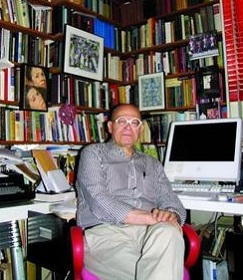
 

 2082024-11a078adeb5bca5a4aedb54964c0941e.jpg
Richard Howard (Cleveland, 13 oktober 1929)


De Albanese dichter Migjeni (eigen. Millosh Gjergj Nikolla) werd geboren op 13 oktober 1911 in Shkodra. Zie ook mijn blog van 13 oktober 2010 en eveneens alle tags voor Migjeni op dit blog.


Poem Of Poverty (Fragment)

Poverty shines in the eyes of the newborn,
Flickers like the pale flame of a candle
Under a ceiling blackened with smoke and spider webs,
Where human shadows tremble on damp stained walls,
Where the ailing infant wails like a banshee
To suck the dry breasts of its wretched mother
Who, pregnant again, curses god and the devil,
Curses the heavy burden of her unborn child.
Her baby does not laugh, it only wastes away,
Unwanted by its mother, who curses it, too.
How sorrowful is the cradle of the poor
Where a child is rocked with tears and sighs.

Poverty's child is raised in the shadows
Of great mansions, too high for imploring voices to reach
To disturb the peace and quiet of the lords
Sleeping in blissful beds beside their ladies.

Poverty matures a child before its time,
Teaches it to dodge the threatening fist,
The hand which clutches its throat in dreams,
When the delirium of starvation begins
And when death casts its shadow on childish faces,
Instead of a smile a hideous grimace.
While the fate of a fruit is to ripen and fall,
The child is interred not maturing at all.
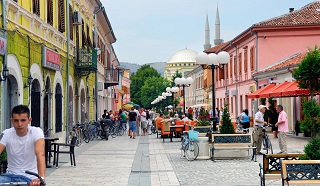
 

 2082024-2e5d4db98ad5534d0306852a361bf875.jpg
Migjeni (13 oktober 1911 – 26 augustus 1938)
Shkodra


De Amerikaanse dichter en schrijver Arna Wendell Bontemps werd geboren op 13 oktober 1902 in Alexandria in Louisiana. Zie ook mijn blog van 13 oktober 2010 en eveneens alle tags voor Arna Wendell Bontemps op dit blog.

Uit: A Summer Tragedy

„Old Jeff Patton, the black share farmer, fumbled with his bow tie. His fingers trembled and the high, stiff collar pinched his throat. A fellow loses his hand for such vanities after thirty or forty years of simple life. Once a year, or maybe twice if there's a wedding among his kinfolks, he may spruce up, but generally fancy clothes do nothing but adorn the wall of the big room and feed the moths. That had been Jeff Patton's experience. He had not worn his stiff-bosomed shirt more than a dozen times in all his married life. His
swallow-tailed coat lay on the bed beside him, freshly brushed and pressed, but it was as full of holes as the overalls in which he worked on weekdays. The moths had used it badly.
Jeff twisted his mouth into a hideous toothless grimace as he contended with the obstinate bow. He stamped his good foot and decided to give up the struggle.
“Jennie,” he called.
“What's that, Jeff?” His wife's shrunken voice came out of the adjoining room like an echo. It was hardly bigger than a whisper.
“I reckon you'll have to he'p me wid this heah bow tie, baby,” he said meekly.
“Dog if I can hitch it up.”
Her answer was not strong enough to reach him, but presently the old woman came to the door, feeling her way with a stick. She had a wasted, dead-life appearance. Her body, as scrawny and gnarled as a string bean, seemed less than nothing in the ocean
of frayed and faded petticoats that surrounded her. These hung an inch or two above the tops of her heavy unlaced shoes and showed little grotesque piles where the stockings had fallen down from her negligible legs.
“You oughta could do a heap mo' wid a thing like that'n me—beingst as you got yo' good sight.”looks like I oughta could,” he admitted. “But my fingers is gone democrat on me. I get all mixed up in the looking glass an' can't tell wicha way to twist the devilish thing.”
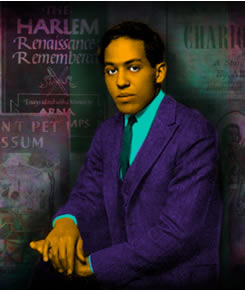
 

 2082024-1e4be0d2d7b0a40dd8af2921659a47aa.jpg
Arna Wendell Bontemps (13 oktober 1902 – 4 juni 1973)
In 1923


De Amerikaanse schrijver Conrad Richter werd geboren op 13 oktober 1890 in Pine Grove, Pennsylvania. Zie ook mijn blog van 13 oktober 2010 en eveneens alle tags voor Conrad Richter op dit blog.

Uit: The Awakening Land

“A strange, uneasy feeling ran over him. If he had been wrong about his mother in this, might he by any chance have been wrong in other things about her also? Could it be even faintly possible that the children of pioneers like himself, born under more benign conditions than their parents, hated them because they themselves were weaker, resented it when their parents expected them to be strong, and so invented all kinds of intricate reasoning to prove that their parents were tyrannical and cruel, their beliefs false and obsolete, and their accomplishments trifling? Never had his mother said that. But once long ago he had heard her mention, not in as many words, that the people were too weak to follow God today, that in the Bible God made strong demands on them for perfection, so the younger generation watered God down, made Him impotent and got up all kinds of reasons why they didn't have to follow Him but could go along their own way.”
(...)

“Hardship and work, that's what his mother always harped on. Once when he had refused to work on the lot, she had said, "You're going to live longer than I do, Chancey. Watch for all kinds of new-fangled notions to take away folks' troubles without their having to work. That's what folks today want and that's what will ruin them more than anything else." Could there be something after all in this hardship-and-work business, he pondered. He had thought hardship and work the symptoms of a pioneer era, things of the past. He believed that his generation had outlived and outlawed them, was creating a new life of comfort, ease and peace. And yet war, the cruelest hardship of all, war between brothers, was on them today like a madness. Did it mean that the need for strength and toughness was to be always with them; that the farther they advanced, the more brilliant and intelligent they became, the more terrible would be the hardship that descended upon them, and the more crying the need of hardihood to be saved.”
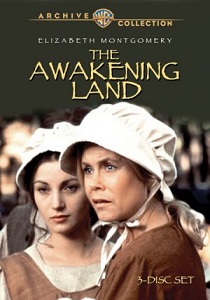
 

 2082024-0e00eaeb225890c809f31d6392e82a47.jpg
Conrad Richter (13 oktober 1890 – 30 oktober 1968) 
Cover DVD


De Britse romanschrijfster en gewezen politica Edwina Currie werd geboren in Liverpool op 13 oktober 1946.Zie ook alle tags voor Edwina Currie op dit blog en ook mijn blog van 13 oktober 2010.

Uit: Diaries

“2 October:
"I saw B again on Friday: I was in the area where he lives, and he and his wife offered their home for a rest, which I appreciated ...
"To my horror, the magic started to work again and in a very big way. When we parted he held my hand a long time and squeezed it, even though other people were there...
"I sat on the bed while he sat on the stool near the mirror - what did he think I was going to do while his wife was in the kitchen?
"He offered me hospitality for the night, but I said no; when he pressed me I whispered, I couldn't take it, couldn't cope ...
“Sounds like a schoolgirl escapade or a Mills & Boon book, doesn't it? But this man is very special, and I think he finds himself equally surprised and pleased that I'm his, as I do that he cares for me.
"It's not just sex, it's a very high regard too...
"When I needed a lover, again I chose too well, for I didn't expect to love this man - and I do, very much indeed.
"All weekend I've been feeling his hand on mine and it turns my heart over.
"I weep for what I don't have, with the increasing certainty that I want it very much and somehow will have it again."

 

 2082024-023f25ce0251e7e8684cf612ac7466d3.jpg
Edwina Currie (Liverpool, 13 oktober 1946)

Geschreven door Romenu om 19:21 Reageer op dit bericht

Meer van Romenu

↑ Terug naar de berichten