Naar de inhoud

Romenu

Over literatuur, gedichten, kunst en cultuur
akke.beakke.be

Berichten van 18 oktober 2017 tot 19 oktober 2017

David Vann, Philip Pullman, Miguel Ángel Asturias, Fannie Hurst, Leigh Hunt, Nardo Aluman, Andrew Vachss, John le Carré, Adam Lindsay Gordon

De Amerikaanse schrijver David Vann werd geboren op 19 oktober 1966 op Adak Island, Alaska. Zie ook alle tags voor David Vann op dit blog.

Uit: Klare lucht zwart (Vertaald door Arjaan en Thijs van Nimwegen)

“Haar vader een gouden gelaat in duister. In fakkellicht verschenen boven het water en weer vervaagd. Gelaat van de zon, afstammeling van de zon. Verraad en woede. Vier pluimen langs zijn masker, uiteenspattend licht, als manen.
Zijn schild van vele huiden een uitgeholde duisternis. Essenhouten speer een dunne lijn en dan verdwenen. Het zeil boven hem opgebold als een ossenbuik, gezwollen als een god, hoeven geluidloos in het water beneden.
Niets zal hem weerhouden, zo weet Medea. Hij heeft te veel verloren. Ze kan hem alleen ophouden. Ze bukt zich om een stuk van haar broer te grijpen, een onderarm, sterk en nu vreemd zacht, al afkoelend, en werpt die in zee, bijna zonder geluid, gedempt door het plassen van de roeiriemen.
Ze heeft dit voor Jason gedaan, en ze zal meer doen, dat weet ze. Haar broer uiteengereten aan haar voeten. Zo begint de wereld.
Donker hout in donkerder water, een zee van inkt, een gevoelde maar ongeziene regelmaat, enkel glimpen van brekende golven. Dik hout onder hen, krakend touwwerk.
Dikke touwen van de roerstanders achter haar rug, kreunend onder de druk van de roeren. Ze stijgt en daalt en wentelt bij elke lichte golf, en een ogenblik later herhalen Jason en zijn mannen elke beweging. Allemaal als één samengesmeed, barbaren en haar Minyers. Elke scheepsromp een thuis.
Vlees dat zou moeten zinken maar niet zinkt, een onderarm te klein om op te vallen in fakkellicht in dat duister, maar niettemin gezien. Haar vader die beveelt het zeil te strijken, de riemen in te halen. De grote ossenbuik loopt leeg, houdt geen licht meer vast, verduistert en verschrompelt, de bovenra zakt. Riembladen in een rij hoog boven het water, vangen licht en wijken weer uit, het schip keert.
De romp donker, ongezien, en haar vader daarboven. Nu gebukt, reikend naar zijn zoon.”


 2083880-6797afa81422e924d9cabb5ea43b3cba.jpg
David Vann (Adak Island, 19 oktober 1966)


De Britse schrijver Philip Pullman werd geboren op 19 oktober 1946 in Norwich als zoon van een luchtmachtofficier. Zie ook mijn blog van 19 oktober 2010 en eveneens alle tags voor Philip Pullman op dit blog.

Uit:The Book of Dust, La Belle Sauvage

“Malcolm let the canoe drift to a halt and then silently slipped in among the stiff stems and watched as a great crested grebe scrambled up onto the towpath, waddled ungracefully across, and then dropped into the little backwater on the other side.
The reeds were taller than Malcolm was as he sat in the canoe, and if he kept very still, he thought he probably couldn't be seen. He heard voices behind him, a man's and a woman's, and sat like a statue as they walked past, absorbed in each other. He'd passed them further back: two lovers strolling hand in hand, their dæmons, two small birds, flying ahead a little way, pausing to whisper together, and flying on again.
Malcolm's dæmon, Asta, was a kingfisher just then, perching on the gunwale of the canoe. When the lovers had passed, she flew up to his shoulder and whispered, "The man just along there — watch ..."
Malcolm hadn't seen him. A few yards ahead on the towpath, just visible through the reed stems, a man in a gray raincoat and trilby hat was standing under an oak tree. He looked as if he was sheltering from the rain, except that it wasn't raining. His coat and hat were almost exactly the color of the late afternoon: he was almost as hard to see as the grebes — harder, in fact, thought Malcolm, because he didn't have a crest of feathers.
"What's he doing?" whispered Malcolm.
Asta became a fly and flew as far as she could from Malcolm, stopping when it began to hurt, and settled at the very top of a bulrush so she could watch the man clearly. He was trying to remain inconspicuous, but being so awkward and unhappy about it that he might as well have been waving a flag.”

 

 2083880-f8c4556a80f32b47eb0aba440c91a9f3.jpg
Philip Pullman (Norwich, 19 oktober 1946)


De Guatemalteekse schrijver Miguel Ángel Asturias werd geboren op 19 oktober 1899 in Guatemala-Stad. Zie ook mijn blog van 19 oktober 2010 en eveneens alle tags voor Miguel Ángel Asturias op dit blog.

Uit: Der Herr President (Vertaald door Jacob Bachmann)

„Pelele riss sogleich die Augen auf, wie einer, der träumt, er falle ins Leere; seine Pupillen öffneten sich weit; im Tiefsten verwundet, begannen seine Tränen zu fließen. Dann schlief er, von der Müdigkeit übermannt, wieder ein. Sein Körper war zusammengefallen, und ein Anflug von Ekel bewegte sein gebrochenes Bewusstsein. Doch kaum eingeschlafen, weckte ihn schon eine andere Stimme. »Mutter ...!«
Es war die Stimme Viudas, eines heruntergekommenen Mulatten, der mit dem verzerrten Gesicht einer Alten unter Lachen fortfuhr: »... Mutter des Erbarmens, unsere Hoffnung, Gott möge dich retten, zu dir flehen wir, wir, die Ausgestoßenen, die wir fallen ...«
Der Idiot erwachte lachend, es schien, auch ihn mache sein Leid, sein Hunger lachen, und dennoch stach ihn schmerzlich der Spott des Geläch-äch-ächters der Bettler, das die Luſt, die Luſt erfüllte, des Geläch-äch-ächters. Ein Dickbäuchiger mit einem Schnurrbart voller Straßenstaub schnappte nach Luſt; ein Einäugiger pisste sich an vor Lachen und schlug mit dem Kopf gegen die Mauer wie eine junge Ziege. Die Blinden wehrten sich, man könne nicht schlafen bei einem solchen Aufruhr, und Mosco, ein Blinder, dem beide Beine fehlten, rief, diese Art sich zu vergnügen sei weibisch.
Die Blinden hörte man, wie man das Geräusch eines Besens hört, Mosco aber hörte man überhaupt nicht. Wer würde schon auf sein Geplapper achten! »Ich, der die Kindheit in einer Artilleriekaserne verbrachte, wo mich die Hufschläge der Maultiere und die Schritte der Offiziere zum Manne machten, der etwas von Pferden versteht, was mir als junger Mann ermöglichte, meine Drehorgel durch die Straßen zu schleppen! Ich, der, ohne zu wissen wie, die Augen in einer Sauferei verlor, das rechte Bein in einer andern Sauferei, ohne zu wissen wann, und das linke Bein in einer dritten Sauferei, ohne zu wissen wo, bei enem Autounfall...!«
Über die Bettler wurde im ganzen Ort bekannt, dass Pelele beim Hören des Wortes Mutter beinahe den Verstand verlor.“
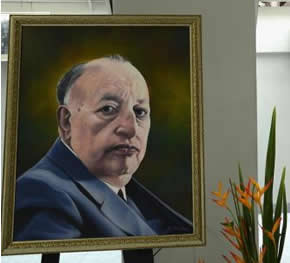
 

 2083880-614928e35ec8e88b28b10625b44d50b7.jpg
Miguel Ángel Asturias (19 oktober 1899 – 9 juni 1974)
Portret door Maugdo Vásquez, 2014


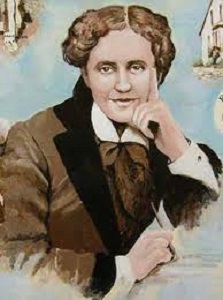
De Amerikaanse schrijfster Fannie Hurst werd geboren op 19 oktober 1889 in Hamilton, Ohio. Zie ook mijn blog van 19 oktober 2010 en eveneens alle tags voor Fanny Hurst op dit blog.

Uit: The Sturdy Oak

“Genevieve Remington had been called beautiful. She was tall, with brown eyes and a fine spun mass of golden-brown hair. She had a gentle smile, that disclosed white, even teeth. Her voice was not unmusical. She was twenty-three years old and possessed a husband who, though only twenty-six, had already shown such strength of character and such aptitude at the criminal branch of the law that he was now a candidate for the post of district attorney on the regular Republican ticket.
The popular impression was that he would be elected hands down. His address on Alexander Hamilton at the Union League Club banquet at Hamilton City, twenty-five miles from Whitewater (with which smaller city we are concerned in this narrative), had been reprinted in full in the Hamilton City _Tribune_; and Mrs. Brewster-Smith reported that former Congressman Hancock had compared it, not unfavorably, with certain public utterances of the Honorable Elihu Root.
George Remington was an inch more than six feet tall, with sturdy shoulders, a chin that gave every indication of stubborn strength, a frank smile, and a warm, strong handclasp. He was connected by blood (as well as by marriage) with five of the eight best families in Whitewater. Mr. Martin Jaffry, George's uncle and sole inheritor of the great Jaffry estate (and a bachelor), was known to favor his candidacy; was supposed, indeed, to be a large contributor to the Remington campaign fund. In fact, George Remington was a lucky young man, a coming young man.
George and Genevieve had been married five weeks; this was their first day as master and mistress of the old Remington place on Sheridan Road."

 

 2083880-fc83d45ca2ef5e2fffb3b668d522ec93.jpg
Fannie Hurst (19 oktober 1889 – 23 februari 1968)
Hamilton, Ohio.


De Engelse dichter, schrijver en essayist James Leigh Hunt werd geboren op 19 oktober 1784 in Southgate, Middlesex. Zie ook mijn blog van 19 oktober 2010 en eveneens alle tags voor Leigh Hunt op dit blog.


To A Child During Sickness

Sleep breathes at last from out thee,
My little patient boy;
And balmy rest about thee
Smooths off the day's annoy.
I sit me down, and think
Of all thy winning ways;
Yet almost wish, with sudden shrink,
That I had less to praise.

Thy sidelong pillowed meekness;
Thy thanks to all that aid;
Thy heart, in pain and weakness,
Of fancied faults afraid;
The little trembling hand
That wipes thy quiet tears,—
These, these are things that may demand
Dread memories for years.

Sorrows I 've had, severe ones,
I will not think of now;
And calmly, midst my dear ones,
Have wasted with dry brow;
But when thy fingers press
And pat my stooping head,
I cannot bear the gentleness,—
The tears are in their bed.

Ah, first-born of thy mother,
When life and hope were new;
Kind playmate of thy brother,
Thy sister, father too;
My light, where'er I go;
My bird, when prison-bound;
My hand-in-hand companion—No,
My prayers shall hold thee round.

To say, "He has departed"—
"His voice"—"his face"—is gone,
To feel impatient-hearted,
Yet feel we must bear on,—
Ah, I could not endure
To whisper of such woe,
Unless I felt this sleep insure
That it will not be so.

Yes, still he 's fixed, and sleeping!
This silence too the while,—
Its very hush and creeping
Seem whispering us a smile;
Something divine and dim
Seems going by one's ear,
Like parting wings of cherubim,
Who say, "We 've finished here."
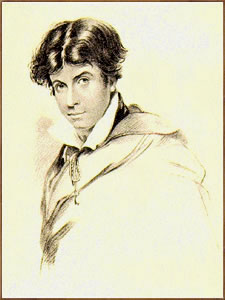
 

 2083880-cccea3792f1451c43db4102e5aa4c358.jpg
Leigh Hunt (19 oktober 1784 – 28 augustus 1859)
Gravure door H. Meyer naar een tekening van J. Hayter, 1822


De Surinaamse schrijver Nardo Aluman (eig. Ronald Renardo Aloema) werd geboren in Christiaankondre op 19 oktober 1946. Zie ook alle tags voor Nardo Aluman op dit blog en eveneens mijn blog van 19 oktober 2010

Uit: Julawai / De strijd tussen goed en kwaad

“Elke keer als een zieke met succes was behandeld, was er een feestje in het dorp. Volgens de regels van de pyjai mag geen betaling voor verleende hulp aangenomen worden. In plaats daarvan werd er een dankfeest gehouden, waarbij gegeten en gedronken werd. Op zo'n feest werd tot de Allerhoogste, Tamusi, gebeden en dank uitgebracht voor het welzijn van de bevolking.
Op het moment dat zo'n feest zijn hoogtepunt bereikte, kwam Julawai met zijn gezin aanvaren. Al van ver hoorden ze dat de bevolking in een prettige stemming verkeerde.
Het liep tegen de avond toen ze hartelijk door de Byjai van het dorp werden ontvangen. Enkele vrouwen brachten direct zoet-zure kasiri (cassavedrank) voor de gasten. Hierna werden ze vergast op een heerlijke tuma-atjupo (vissoep).
Na deze welkome maaltijd had Julawai een uitgebreid gesprek met de Byjai, onder het genot van kasiri en een ulemari (sigaar uit boombast). De nacht was al ver gevorderd, toen Julawai zich realiseerde dat zijn vrouw en kinderen allang waren gaan rusten. Hij besloot toen ook zijn hangmat op te zoeken.
Julawai stond op. Hij was misschien wel de mooiste man van het gebied. Hij was licht van kleur, groot gebouwd en sterk. Vier stuks pingo (bosvarken) op zijn schouders was niets voor hem. Hiermee kon hij zonder moeite kilometers onafgebroken doorlopen. Iedereen had dan ook respect voor hem. En de mensen hielden van hem omdat hij nooit ruzie maakte.
Toen Julawai in zijn logeerkamp aankwam, was zijn gezin al in diepe rust. Hij voelde zich een beetje moe en dronken, maar besloot om toch een koud bad te nemen in de kreek. Natuurlijk moest hij dit eerst aan zijn vrouw zeggen. Ze vond het een goed idee, maar zei dat hij wel direct terug moest komen. Ook vond ze dat hij beter een olielampje mee kon nemen, maar Julawai antwoordde dat het maar een korte afstand was.”

 

 2083880-6c1b2570d0cd008ff9f82671c5ac8507.jpg
Nardo Aluman (Christiaankondre, 19 oktober 1946)


De Amerikaanse schrijver Andrew Vachss werd geboren op 19 oktober 1942 in New York. Zie ook alle tags voor Andrew Vachss op dit blog en eveneens mijn blog van 19 oktober 2010

Uit: Haiku

“The priests had taught us that each man has a personal haiku, a haiku that must emerge from within. A master of haiku might be commissioned to produce thousands in his lifetime. But only one could truly express his own spirit.
The priest who told me this later showed me his own haiku. When I attempted to show my respect for his achievement, he gently explained that the haiku was not finished. He would continue to refine it, forever seeking perfection.
"When will it be finished, master?" I asked.
"Perfection cannot be achieved by men," he told me. "Our highest calling is the pursuit of perfection.
My haiku will be finished when I die, but never will it be perfect."
When Chica died—no, when my departure from The Path forfeited her life—I shredded the haiku I had been composing for dozens of years.
Now I have begun another. One of truth. I have rewritten it endlessly since.
It is inadequate. I continue to struggle. Perhaps I will never be able to express what is in me. I cannot know how much time is left for me to do this. I know only that I must atone before I leave, or I shall enter the other plane carrying the haiku of a man without honor.
I understand that renunciation of worldly goods is not true atonement. Many do this, each for his own reasons. Mine is that I must return to the man I was, and so I must focus all my being on that task alone.
I have started my walk. May it become the walk of the warrior I had once imagined myself to be.
I must walk until my haiku reflects the spirit of a man who honors his mother's love, for only then may I call Chica "daughter" when I see her again.”

 

 2083880-f52ac532e80709998d3846cdb75c3598.jpg
Andrew Vachss (New York, 19 oktober 1942)


De Britse schrijver John le Carré werd geboren op 19 oktober 1931 in Poole, Dorset, Engeland. Zie ook alle tags voor John le Carré op dit blog en eveneens mijn blog van 19 oktober 2010

Uit:A Legacy of Spies

“What follows is a truthful account, as best I am able to provide it, of my role in the British deception operation, code-named Windfall, that was mounted against the East German Intelligence Service (Stasi) in the late 1950s and early '60s, and resulted in the death of the best British secret agent I ever worked with, and of the innocent woman for whom he gave his life.
A professional intelligence officer is no more immune to human feelings than the rest of mankind. What matters to him is the extent to which he is able to suppress them, whether in real time or, in my case, 50 years on. Until a couple of months ago, lying in bed at night in the remote farmstead in Brittany that is my home, listening to the honk of cattle and the bickering of hens, I resolutely fought off the accusing voices that from time to time attempted to disrupt my sleep. I was too young, I protested, I was too innocent, too naïve, too junior. If you’re looking for scalps, I told them, go to those grandmasters of deception, George Smiley and his master, Control. It was their refined cunning, I insisted, their devious, scholarly intellects, not mine, that delivered the triumph and the anguish that was Windfall. It is only now, having been held to account by the Service to which I devoted the best years of my life, that I am driven in age and bewilderment to set down, at whatever cost, the light and dark sides of my involvement in the affair.
How I came to be recruited to the Secret Intelligence Service in the first place — the “Circus” as we Young Turks called it in those supposedly halcyon days when we were quartered, not in a grotesque fortress beside the River Thames, but in a fustian Victorian pile of red brick, built on the curve of Cambridge Circus — remains as much of a mystery to me as do the circumstances of my birth; and the more so since the two events are inseparable.”
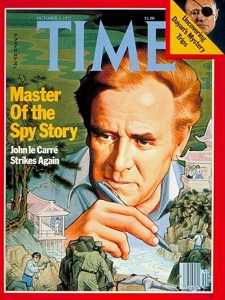
 

 2083880-6962e9d8411d119ba9f883835d2a7856.jpg
John le Carré (Poole, 19 oktober 1931)
Op de cover van Time in 1977


De Australische dichter Adam Lindsay Gordon werd geboren op 19 oktober 1833 op de Azoren. Zie ook alle tags voor Adam Lindsay Gordon op dit blog en eveneens mijn blog van 19 oktober 2010


An Exile's Farewell

The ocean heaves around us still
With long and measured swell,
The autumn gales our canvas fill,
Our ship rides smooth and well.
The broad Atlantic's bed of foam
Still breaks against our prow;
I shed no tears at quitting home,
Nor will I shed them now!

Against the bulwarks on the poop
I lean, and watch the sun
Behind the red horizon stoop —
His race is nearly run.
Those waves will never quench his light,
O'er which they seem to close,
To-morrow he will rise as bright
As he this morning rose.

How brightly gleams the orb of day
Across the trackless sea!
How lightly dance the waves that play
Like dolphins in our lee!
The restless waters seem to say,
In smothered tones to me,
How many thousand miles away
My native land must be!

Speak, Ocean! is my Home the same
Now all is new to me? —
The tropic sky's resplendent flame,
The vast expanse of sea?
Does all around her, yet unchanged,
The well-known aspect wear?
Oh! can the leagues that I have ranged
Have made no difference there?

How vivid Recollection's hand
Recalls the scene once more!
I see the same tall poplars stand
Beside the garden door;
I see the bird-cage hanging still;
And where my sister set
The flowers in the window-sill —
Can they be living yet?

Let woman's nature cherish grief,
I rarely heave a sigh
Before emotion takes relief
In listless apathy;
While from my pipe the vapours curl
Towards the evening sky,
And 'neath my feet the billows whirl
In dull monotony!

The sky still wears the crimson streak
Of Sol's departing ray,
Some briny drops are on my cheek,
'Tis but the salt sea spray!
Then let our barque the ocean roam,
Our keel the billows plough;
I shed no tears at quitting home,
Nor will I shed them now!
 

 2083880-64ff20c50d00e22b830e951af8759674.jpg
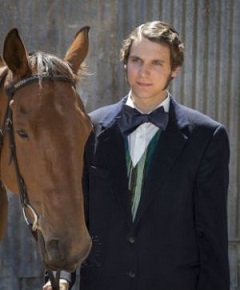
Adam Lindsay Gordon (19 oktober 1833 – 24 juni 1870)
Jakin Manser als Adam Lindsay Gordon in het docudrama “Rider and Writer” uit 2014
Geschreven door Romenu om 18:31 Reageer op dit bericht

Kees Fens, Nic Pizzolatto, Jan Wagner, Isabelle Autissier, Ntozake Shange, Terry McMillan, Heinrich von Kleist, Raymond Brulez, Jan Erik Vold

De Nederlandse literatuurcriticus, essayist en letterkundige Kees Fens werd geboren in Amsterdam op 18 oktober 1929. Zie ook mijn blog van 18 oktober 2010 en eveneens alle tags voor Kees Fens op dit blog.

Uit: Het beslissende boek

“Ik sprak zojuist over een tweede helft van de cirkel. Daarmee wil ik ook aangeven dat wie leest zichzelf uitbreidt, en wel met een gebied dat ineens ook zijn eigen gebied blijkt te zijn. Dat echt mooie, wat is dat? Ik geloof dat je dat kunt omschrijven als het passende, datgene wat voor jou is, het eigene. Op datzelfde moment wordt het boekenbestand opgedeeld in drie soorten, t.w. mijn boeken, jouw boeken en zijn of haar boeken; die drie zullen elkaar nooit ontmoeten, en dat is ook het fijne ervan. Nog een precisering van het beeld van die halve cirkel: die bestaat overigens natuurlijk wel uit heel veel kleine segmenten: want eenzijdig is de tweede helft vaak allerminst, al hebben de onderdelen ervan vaak wel veel met elkaar te maken.
Om te verduidelijken wat zich bij zo'n lezer afspeelt, wil ik hier nog enkele andere omschrijvingen aanvoeren, zoals: ‘Weggaan en toch thuiskomen’. Weggaan, naar plaats, tijd, en naar mensen en thuiskomen in andere tijden, op andere plaatsen, bij andere mensen. Ook heb ik het wel, vanuit het boek zelf denkend, als volgt voorgesteld: daar, ginds naar plaats of tijd genomen - vroeger dus - is met mij als lezer rekening gehouden. Het meest fascinerende is wel dat je als kind nog altijd - en hoe dat komt, wil ik straks proberen te verklaren - meer gestalten hebt en in meer tijden kunt bestaan.
Eindelijk vind je, zo is althans mijn ervaring, alles beschreven waarvan je altijd al gedacht hebt dat het bestond. Er ontstaat een soort bewustwording van bi-locatie en pluri-locatie. Soms lijkt het erop dat je - en dat is een heel sterke sensatie - uit die wereld van het boek hier en nu te vondeling bent gelegd. Daarmee wordt lezen de meest persoonlijke bezigheid; en daar komt geen opvoeder aan te pas, want jij bepaalt zelf welke jouw boeken zijn.
Waaruit bestaat dan de taak van de opvoeder? Vooral uit het niet opvoeden. Hoogstens levert de opvoeder de mogelijkheden tot keuze van die boeken. Dat hij dan ook de lezer beïnvloedt is niet juist, maar die eer moeten wij hem gunnen, want deze periode is zijn schijnbare glorietijd. Hij is de leverancier, de aanbrenger van de boeken die beslissend kunnen worden; met opzet druk ik mij hier erg voorzichtig uit. Die opvoeder werkt mee - of hij werkt niet mee: het kan natuurlijk ook dat de boeken er niet bij zijn - aan het mogelijk vóórkomen van het toeval; en het is helaas waar: van het toeval hangt alles af. Wie het treft, is dan zeer gelukkig.”


 2083490-df9aa4d0b9af8f0e9eab37e55a2edec8.jpg
Kees Fens (18 oktober 1929 - 14 juni 2008)


De Amerikaanse schrijver Nic Pizzolatto werd geboren op 18 oktober 1975 in New Orleans, Louisiana. Zie ook alle tags voor Nic Pizzolatto op dit blog.

Uit: Galveston

“Fingerprints smudged the cab's window, and uptown approached outside of it. Some places open themselves for you, but there was nothing gatelike about New Orleans. The city was a sunken anvil that sustained its own atmosphere. The sun flared between buildings and oak trees and I felt the light on my face and then the shade, like a strobe. I thought about Carmen's ass, and the way she smiled at me over her shoulder. I still thought about Carmen, and it didn't make sense because I knew she was a whore and totally heartless. She'd been with Angelo Medeiras when we started up. I guess I took her from him, more or less. Now she was with Stan. Angelo worked for him, too. It cooled my sense of insult to assume she was balling a few guys behind Stan's back. I was trying to think of who I could tell about my lungs, because I wanted to tell someone. You have to admit that's a bullshit piece of news to get when you've got business to attend. The bar was called Stan's Place, brick and tin-roofed, with barred windows and a dented metal door. Lou Theriot, Jay Meires, and a couple people I didn't know sat inside, old guys. The bartender's name was George. His left ear was packed with white gauze. I asked him where Stan was and he nodded toward a set of stairs running up the wall to the office. The door was closed, so I sat on a stool and ordered a beer. Then I remembered that I was dying and changed the order to a Johnnie Walker Blue. Lou and Jay were talking about a problem with one of the bookmaking franchises. I could tell because I'd run book for a few years in my early twenties and knew the language. They stopped talking and looked up at me because I was listening. I didn't smile or anything and they went back to talking, but much softer now, with their heads turned down so I couldn't hear. They never cared much for me. They knew Carmen as a waitress here, before she hooked up with Stan, and I think they had some ill will toward me on her behalf. They also didn't like me because I never really fit in around this crew.”


 2083490-207483d2b59e96b40f2f828e1f9f70de.jpg
Nic Pizzolatto (New Orleans, 18 oktober 1975)


De Duitse dichter, schrijver en vertaler Jan Wagner werd geboren op 18 oktober 1971 in Hamburg. Zie ook alle tags voor Jan Wagner op dit blog.


giersch

nicht zu unterschätzen: der giersch
mit dem begehren schon im namen – darum
die blüten, die so schwebend weiß sind, keusch
wie ein tyrannentraum.

kehrt stets zurück wie eine alte schuld,
schickt seine kassiber
durchs dunkel unterm rasen, unterm feld,
bis irgendwo erneut ein weißes wider-

standsnest emporschießt. hinter der garage,
beim knirschenden kies, der kirsche: giersch
als schäumen, als gischt, der ohne ein geräusch
geschieht, bis hoch zum giebel kriecht, bis giersch

schier überall sprießt, im ganzen garten giersch
sich über giersch schiebt, ihn verschlingt mit nichts als giersch


die tümmler

genau in dem moment, als man den motor
drosselte, die scheppernde, gebellte
meldung aufging in der schwarzen blüte
des bordlautsprechers, waren die mütter

vergessen, ihre kinder, die zu brüllen
vergessen hatten, und sogar der rohling
mit sommerhut, wir selbst vor dieser reling
in bunten regenjacken wie pralinen

in einer schachtel, hingen wir im fjord
zwischen dem grund des himmels und dem grund der meere,
bevor unter dem frisch geflaggten

diesel das schiff wieder an fahrt
gewann und all die sprachen wiederkehrten,
wir unseren, sie ihren schwärmen folgten


 2083490-52bd75ef36d94f0a1f81af5be0ffc346.jpg
Jan Wagner (Hamburg, 18 oktober 1971)


De Franse schrijfster en zeilster Isabelle Autissier werd geboren op 18 oktober 1956 in Parijs. Zie ook alle tags voor Isabelle Autissier op dit blog.

Uit: Seule la mer s'en souviendra

“Les événements qui se sont produits à cette époque étaient si inattendus et déchirants, que je ne les ai longtemps pas regardés en face. Ils me réveillaient certaines nuits comme on l'est par un robinet mal fermé dont le discret ploc-ploc s'insinue au fond du cerveau. Je les chassais ensuite de mon quotidien. Quinze ans ont passé depuis les faits. Je suis enceinte. Ce n'est pas seulement le répit que me procure une grossesse paisible qui me pousse à exhumer ces souvenirs. Je crois que j'ai besoin de faire place nette avant que n'arrive la génération suivante. Je me sens aussi mieux armée, adulte à mon tour, pour essayer de comprendre. Je connais depuis longtemps la manière d'effectuer ce travail de mémoire. Nous avons partagé avec papa le goût d'écrire. Son aventure tient en trois gros cahiers à spirale, tachés d'humidité, que j'ai été, tour à tour, trop jeune puis trop en colère pour ouvrir. De mon côté, j'en ai une vingtaine, mais seul le premier est contemporain des faits. Il y a à la maison une pièce à moi, toute petite et mal chauffée, attenante au salon, que j'aime appeler mon boudoir et qui est l'ancienne chante de mes parents. J'y entasse mes passions et mes passe-temps : gouaches, livres toujours relus, rameur d'appartement, petits meubles à retaper, outils, fouillis. C'est là, sur la table à toile cirée jaune, que j'ai disposé les quatre cahiers dont les récits s'entrecroisent. Sur la couverture du mien, j'avais dessiné un bateau sur un océan de fleurs et, en lettres inégales, tracé : « EVA : mon journal ». Ceux de papa sont de grands formats, avec sobrement dans le coin supérieur gauche : « A bord de Sailahead ; Peter March : 31 octobre 1968 au 15 mars 1969 », puis sur le suivant, la même mention reprenant au 16 mars 1969, mais sans date de fin et un dernier à la couverture encore plus maculée, qui ne porte aucun titre.
Je caresse les trois reliures, j'ai envie de pleurer, ce doit être la grossesse qui me rend émotive.
J'avais quatorze ans quand il est parti. Papa nous a toujours fait rire. Je ne me souviens pas d'un jour où l'éclat de sa voix n'ait enchanté la maison. Il commençait par pouffer trois ou quatre fois, comme une quinte de toux, puis les gloussements se rejoignaient, formaient un fleuve de rire qui se déployait en balayant tout sur son passage. Il n'y avait pas moyen d'échapper à cette crue. On riait de le voir rire et la vie paraissait facile et joyeuse. Je suis sûre qu'il s'en servait pour arriver à ses fins Quand il voulait quelque chose, il n'argumentait pas longtemps, subrepticement il casait une blague, puis une autre, laissant sciemment éclater sa jubilation."

 2083490-39171602cd372baa95fad87d684ca8a5.jpg
Isabelle Autissier (Parijs, 18 oktober 1956)


De Amerikaanse dichteres en schrijfster Ntozake Shange werd geboren als Paulette Williams op 18 oktober 1948 in Trenton, New Jersey. Zie ook alle tags voor Ntozake Shange op dit blog.


Enuf

at 4:30 AM
she rose
movin the arms & legs that trapped her
she sighed affirmin the sculptured man
& made herself a bath
of dark musk oil egyptian crystals
& florida water to remove his smell
to wash away the glitter
to watch the butterflies melt into
suds & the rhinestones fall beneath
her buttocks like smooth pebbles
in a missouri creek
layin in water
she became herself
ordinary
brown braided woman
with big legs & full hips
reglar
seriously intendin to finish her
night's work
she quickly walked to her guest
straddled on her pillows & began
æyou'll have to go now /
i've
a lot of work to do / & i
cant
with a man around / here
are yr pants /
there's coffee on the
stove / it's been
very nice / but i cant see
you again /
you got what you came
for / didnt you'
& she smiled
he wd either mumble curses bout crazy bitches
or sit dumbfounded
while she repeated
æi cdnt possibly wake up / with
a strange man in my bed / why
dont you go home'
she cda been slapped upside the head
or verbally challenged
but she never waz
& the ones who fell prey to the
dazzle of hips painted with
orange blossoms & magnolia scented wrists
had wanted no more
than to lay between her sparklin thighs
& had planned on leaving before dawn
& she had been so divine
devastatingly bizarre the way
her mouth fit round
& now she stood a
reglar colored girl
fulla the same malice
livid indifference as a sistah
worn from supportin a wd be hornplayer
or waiting by the window
& they knew
& left in a hurry
she wd gather her tinsel &
jewels from the tub
& laugh gayly or vengeful
she stored her silk roses by her bed
& when she finished writin
the account of her exploit in a diary
embroidered with lilies & moonstones
she placed the rose behind her ear
& cried herself to sleep.


 2083490-856a880f7de77bcae1d54ce706046e27.jpg
Ntozake Shange (Trenton, 18 oktober 1948)


De Afrikaans - Amerikaanse schrijfster Terry McMillan werd geboren op 18 oktober 1951 in Port Huron, Michigan. Zie ook alle tags voor TerryMcMillan op dit blog en ook mijn blog van 18 oktober 2009 en ook mijn blog van 18 oktober 2010.

Uit: Getting to Happy

“As Isaac passes behind me, he smells like green apples and fresh-squeezed lemons. For a split second it reminds me of when we used to linger in the bathtub surrounded by sage and lemongrass candles, my back snug against his chest, his arms wrapped around me and our toes making love. Those were the good old days. I snap out of it.
Now he's pushing my favorite mustard-colored duffel across these terra-cotta tiles with those size-fourteen boots, leaving black scuff-marks behind him as he simultaneously pulls a white sweatshirt over a white undershirt. It's a V-neck and shows the top of a black forest on his chest. "If I could, you know I would," I say while checking my e-mail. Of course there are back-to-back messages from Robin: a joke I don't bother to read and an attachment about a new motionless exercise she told me and Gloria about last week that almost had us choking from laughter. She believes almost everything she sees on TV.
"You just don't want to go," he says, and starts looking through his pockets to make sure he has everything. He doesn't. I know just about all his patterns. "Why don't you just come out and say it?"
"Because it wouldn't be true." I rarely lie, although I'm not always a hundred percent honest. This is one of those times.
"Then I guess I'll see you on Tuesday. After rush hour." He walks over, presses his palms against my shoulder blades, gives them a little squeeze, bends over and gives me a peck on the cheek. I don't feel a thing except the scratchy new growth on his face.
"You have everything?" I ask.
"What if I don't? Would it matter to you?"


 2083490-c6e69be5dad4ac3865e07cfc0eb652b0.jpg
Terry McMillan (Port Huron, 18 oktober 1951)


De Duitse dichter en schrijver Heinrich von Kleist werd geboren op 18 oktober 1777 in Frankfurt an der Oder. Zie ook mijn blog van 18 oktober 2010 en eveneens alle tags voor Heinrich von Kleist op dit blog.

Uit: Der zerbrochene Krug

„LICHT
So wahr ich lebe.
Er war in Holla, auf dem Grenzdorf, gestern,
Hat das Justizamt dort schon revidiert.
Ein Bauer sah zur Fahrt nach Huisum schon
Die Vorspannpferde vor den Wagen schirren.
ADAM
Heut noch, er, der Gerichtsrat, her, aus Utrecht!
Zur Revision, der wackre Mann, der selbst
Sein Schäfchen schiert, dergleichen Fratzen haßt.
Nach Huisum kommen und uns kujonieren!
LICHT
Kam er bis Holla, kommt er auch bis Huisum.
Nehmt Euch in acht.
ADAM
Ach, geht!
LICHT
Ich sag es Euch.
ADAM
Geht mir mit Eurem Märchen, sag ich Euch.
LICHT
Der Bauer hat ihn selbst gesehn, zum Henker.
ADAM
Wer weiß, wen der triefäugige Schuft gesehn.
Die Kerle unterscheiden ein Gesicht
Von einem Hinterkopf nicht, wenn er kahl ist.
Setzt einen Hut dreieckig auf mein Rohr,
Hängt ihm den Mantel um, zwei Stiefeln drunter,
So hält so'n Schubjak ihn, für wen Ihr wollt.
LICHT
Wohlan, so zweifelt fort, ins Teufels Namen,
Bis er zur Tür hier eintritt.
ADAM
Er, eintreten! –
Ohn uns ein Wort vorher gesteckt zu haben.
LICHT
Der Unverstand! Als obs der vorige
Revisor noch, der Rat Wacholder, wäre!
Es ist Rat Walter jetzt, der revidiert.
ADAM
Wenn gleich Rat Walter! Geht, laßt mich zufrieden.
Der Mann hat seinen Amtseid ja geschworen,
Und praktisiert, wie wir, nach den
Bestehenden Edikten und Gebräuchen“.


 2083490-d05a9d5d046f79a09d6f1d06881d20c5.jpg
Heinrich von Kleist (18 oktober 1777 - 21 november 1811)
Scene uit een opvoering in Wilhelmshaven, 2004


De Belgische schrijver Raymond Brulez werd geboren te Blankenberge op 18 oktober 1895. Zie ook mijn blog van 18 oktober 2010 en eveneens alle tags voor Raymond Brulez op dit blog

Uit: Mémoires van een Borgenaar

“Liever was mij “Margareta de Bavière, comitissa Flandriae”, zooals in Franco-Latijnsche tweetaligheid haar noemde de banderol die kronkelde omheen een blazoen van witte en blauwe ruitjes, leliën en luipaarden.
De lachende oogen zegen schuin neerslachtig; de smalle lippen plooiden een monkel als voor een vriendelijke verwelkoming; maar de eene hand met uitgespreide vingeren plooide rechthoekig op den pols als tot een verweer. De andere beurde den bebloemden mantel, die maar half het blauwe keurs verdook dat zich zoo innig aanvlijde aan den welvenden boezem. Welke mysterieuze beteekenis verbeeldde deze slanke en statige gestalte? Ik was gelukkig en onbevredigd. Gelukkig om de kleurenweelde die van het raam daalde en als een tuil in mijn handen rustte; onbevredigd om het raadsel der geraffineerde houding, die ik nooit een dame in de werkelijkheid zag aannemen, niet eens de levende hertogin van Beieren, die 's zomers in Borgen verbleef en zich geenszins onderscheidde van de andere rijke dames welke log en nonchalant in strandzetels luierden. Ik staarde en staarde... De schoone verbeelding hield hermetisch in zich verborgen zijn liefelijken, tergenden zin. De verklaring dezer verschijning leek mij soms een waardig levensdoel. Zoo edel van aard was aanvankelijk mijn speurzin die zich later op minder verkwikkelijke taken zou toeleggen. Ik ondervroeg de plaatselijke deskundigen: den stadsarchivaris en den opperpastor. Zij wisten enkel banale algemeenheden te vertellen: ‘gothische stylisatie’, ‘mystische incarnatie’. Maar ik voelde het instinctief: de verklaring moest ànders, en wel een zeer preciese, buitengewone zielstoestand zijn...
's Zomers deed moeder mij post vatten op de bank van onzen binnenkoer om de gang, die als een duistere tunnel van de voordeur naar den trap leidde in het oog te houden. Het gebeurde inderdaad dat frivole juffers bij onze logés naar boven fladderden. Nu moest ik als een moreele vogelschrik fungeeren. Moeder hoopte dat, 't zij uit eerbied voor mijn argelooze jeugd, 't zij uit vrees voor verklikking, onze portier dergelijke ‘bezoeken’, die de goed faam van ons ‘family hotel’ in het gedrang konden brengen, niet meer door de gesmeerde vingeren zou zien...”


 2083490-534b8a5aa45474065e401cf4a05c8844.jpg
Raymond Brulez (18 oktober 1895 – 17 augustus 1972)


De Noorse dichter, vertaler en musicus Jan Erik Vold werd geboren op 18 oktober 1939 in Oslo. Zie ook mijn blog van 18 oktober 2010 en eveneens alle tags voor Jan Erik Vold op dit blog.


Mirror Doesn’t Know. Ocean Knows (Fragment)


Cloud.
Sea.
Glacier. What did I
care? Water

rising. Water
sinking. Water will polish
every
thing

round. What's jagged
becomes
round. What's jagged becomes round. Then
the light went out.

*

He was shooting
in order
to kill. He fastened
his bomb belt

in order to
kill. His thought
is on
the trigger, on the

release. That is no
thought.
That is
compulsion.


 2083490-f1f00e067aa57ad0b1a8e222f31e8f66.jpg
Jan Erik Vold (Oslo, 18 oktober 1939)


Zie voor nog meer schrijvers van de 18e oktober ook mijn blog van 18 oktober 2015 deel 2.

Geschreven door Romenu om 18:08 Reageer op dit bericht

Man Booker Prize 2017 voor George Saunders


Man Booker Prize 2017 voor George Saunders

De Man Booker Prize voor de beste Engelstalige roman is dit jaar toegekend George Saunders voor zijn roman "Lincoln in the Bardo". George Saunders werd geboren op 2 december 1958 in Chicago. Zie ook alle tags voor George Saunders op dit blog en ook mijn blog van 2 december 2009.

Uit: Lincoln in the Bardo

“Mouth at the worm’s ear, Father said:
We have loved each other well, dear Willie, but now, for reasons we cannot understand, that bond has been broken.
But our bond can never be broken. As long as I live, you will always be with me, child.
Then let out a sob
Dear Father crying    That was hard to see    And no matter how I patted & kissed & made to console, it did no
You were a joy, he said. Please know that. Know that you were a joy. To us. Every minute, every season, you were a—you did a good job. A good job of being a pleasure to know.
Saying all this to the worm!    How I wished him to say it to me    And to feel his eyes on me    So I thought, all right, by Jim, I will get him to see me And in I went It was no bother at all    Say, it felt all right   Like I somewhat belonged in
In there, held so tight, I was now partly also in Father
And could know exactly what he was
Could feel the way his long legs lay     How it is to have a beard      Taste coffee in the mouth and, though not thinking in words exactly, knew that
the feel of him in my arms has done me good. It has. Is this wrong? Unholy? No, no, he is mine, he is ours, and therefore I must be, in that sense, a god in this; where he is concerned I may decide what is best. And I believe this has done me good. I remember him. Again. Who he was. I had forgotten some- what already. But here: his exact proportions, his suit smelling of him still, his forelock between my fingers, the heft of him familiar from when he would fall asleep in the parlor and I would carry him up to—

It has done me good.
I believe it has.
It is secret. A bit of secret weakness, that shores me up; in shoring me up, it makes it more likely that I shall do my duty in other matters; it hastens the end of this period of weakness; it harms no one; therefore, it is not wrong, and I shall take away from here this resolve: I may return as often as I like, telling no one, accepting whatever help it may bring me, until it helps me no more.
Then Father touched his head to mine.
Dear boy, he said, I will come again. That is a promise.”


 2083408-1d946fbd3c017e0dac02c77872a64c46.jpg
George Saunders (Chicago, 2 december 1958)

Geschreven door Romenu om 10:48 Reageer op dit bericht

Helen Maria Hunt Jackson

De Amerikaanse dichteres, schrijfster en activiste Helen Maria Hunt Jackson werd geboren als Helen Fiske in Amherst op 18 oktober 1830. Jackson beschreef de kwalijke gevolgen van het beleid ten opzichte van de indianen in “A Century of Dishonor” (1881). In haar roman “Ramona” (1884) schetste Jackson het zware leven van een meisje van gemengde Schots-indiaanse origine in Zuid-Californië in de periode na de Mexicaans-Amerikaanse Oorlog. Hoewel de roman erin slaagde om voldoende aandacht te vestigen op de indiaanse zaak, werd “Ramona” vooral immens populair door de sterk geromantiseerde beschrijvingen van Zuid-Californië en niet door z'n politieke inhoud. “Ramon: a is naar schatting 300 keer herdrukt en heeft bijgedragen aan de groei in het toerisme in de regio.

Uit: Ramona

“It was sheep-shearing time in Southern California, but sheep-shearing was late at the Senora Moreno's. The Fates had seemed to combine to put it off. In the first place, Felipe Moreno had been ill. He was the Senora's eldest son, and since his father's death had been at the head of his mother's house. Without him, nothing could be done on the ranch, the Senora thought. It had been always, “Ask Senor Felipe,” “Go to Senor Felipe,” “Senor Felipe will attend to it,” ever since Felipe had had the dawning of a beard on his handsome face.
In truth, it was not Felipe, but the Senora, who really decided all questions from greatest to least, and managed everything on the place, from the sheep-pastures to the artichoke-patch; but nobody except the Senora herself knew this. An exceedingly clever woman for her day and generation was Senora Gonzaga Moreno,—as for that matter, exceedingly clever for any day and generation; but exceptionally clever for the day and generation to which she belonged. Her life, the mere surface of it, if it had been written, would have made a romance, to grow hot and cold over: sixty years of the best of old Spain, and the wildest of New Spain, Bay of Biscay, Gulf of Mexico, Pacific Ocean,—the waves of them all had tossed destinies for the Senora. The Holy Catholic Church had had its arms round her from first to last; and that was what had brought her safe through, she would have said, if she had ever said anything about herself, which she never did,—one of her many wisdoms. So quiet, so reserved, so gentle an exterior never was known to veil such an imperious and passionate nature, brimful of storm, always passing through stress; never thwarted, except at peril of those who did it; adored and hated by turns, and each at the hottest. A tremendous force, wherever she appeared, was Senora Moreno; but no stranger would suspect it, to see her gliding about, in her scanty black gown, with her rosary hanging at her side, her soft dark eyes cast down, and an expression of mingled melancholy and devotion on her face. She looked simply like a sad, spiritual-minded old lady, amiable and indolent, like her race, but sweeter and more thoughtful than their wont. Her voice heightened this mistaken impression. She was never heard to speak either loud or fast. There was at times even a curious hesitancy in her speech, which came near being a stammer, or suggested the measured care with which people speak who have been cured of stammering. It made her often appear as if she did not known her own mind; at which people sometimes took heart; when, if they had only known the truth, they would have known that the speech hesitated solely because the Senora knew her mind so exactly that she was finding it hard to make the words convey it as she desired, or in a way to best attain her ends.”


2161965-96a2bee8ea2fb575358de582024e3d4f.jpg
Helen Maria Hunt Jackson (18 oktober 1830 - 12 augustus 1885)


Geschreven door Romenu om 00:00 Reageer op dit bericht

Meer van Romenu

↑ Terug naar de berichten