Naar de inhoud

Romenu

Over literatuur, gedichten, kunst en cultuur
akke.beakke.be

Berichten van 21 oktober 2017 tot 22 oktober 2017

Arjen Lubach, Lévi Weemoedt, Jonas Lüscher, Doris Lessing, Alfred Douglas, A. L. Kennedy, Charles Leconte de Lisle, Ivan Boenin, Timur Vermes

De Nederlandse schrijver, cabaretier en televisiepresentator Arjen Lubach werd geboren in Lutjegast op 22 oktober 1979. Zie ook mijn blog van 22 oktober 2010 en eveneens alle tags voor Arjen Lubach op dit blog.

Uit: IV

“7:00 uur Maison Taciturne Le Muy, Provence, Frankrijk
Joost Doorman is als eerste wakker. Zonlicht stroomt door de kier tussen de gordijnen de slaapkamer binnen. Ze zijn in Frankrijk, in het vakantiehuis van de familie van Elsa. Ze ligt naast hem en slaapt nog. Zo stil mogelijk stapt hij uit bed, kijkt in het campingbedje van Lars, hun zoontje van acht maanden, en is zoals elke dag weer opgelucht als hij hem ziet ademhalen. Lars ligt op zijn rug, zijn armpjes langs zijn oren uitgestrekt. Hij lijkt nog dieper in slaap dan zijn moeder. Joost sluipt naar de woonkamer. Hij opent de terrasdeuren en stapt naar buiten. Het is nu al warm. Rijen wijnranken werpen lange ochtendschaduwen op het gras, naar beneden, de heuvels af. Hij sluit kort zijn ogen en haalt diep adem. In de struiken naast het huis klinken nog een paar krekels. 's Nachts brengen ze een inmiddels vertrouwde ruis voort die hem geruststelt: ik ben niet thuis. Als ik morgen wakker word, hoef ik niets. Hij houdt van dit tijdstip. Joost wrijft in zijn ogen, de nacht eruit, de dag erin. In de verte ligt de Middellandse Zee. Het lijkt zo vlakbij, denkt hij, de zee. Het is alsof je er zo naartoe kunt lopen, terwijl je er met de auto bijna anderhalf uur over doet. Een hagedis schrikt van zijn aanwezigheid en vlucht via de klimop het dak op. Het is hun eerste vakantie sinds de geboorte van Lars en de eerste keer dat Elsa hem heeft meegenomen naar het familiehuis in de Provence. Bij aankomst was zijn verbazing over het feit dat ze dat nog niet eerder had gedaan nog groter geworden. Het is een prachtig huis op een groot stuk grond. Het terras op het zuiden heeft een weids uitzicht met wijngaarden. In de afgelopen jaren zijn de aangrenzende stukken grond opgekocht door rijke Russen die hun tuinen hebben afgeschermd met hoge witte muren en bevei I i gingscamera's. `Het is niet meer zoals vroeger,' had Elsa gezegd. 'Vroeger was het hier leeg.' Joost heeft er geen last van. Dit huis kost ze niets en ze zijn eindelijk weg. Weg uit Amsterdam en weg van zijn humorloze collega's bij het ontwerpbureau. Elsa heeft tot zijn tevredenheid haar laptop thuisgelaten. Zo moet ze zich wel overgeven aan de vakantie. Geen lange mails beantwoorden, geen lastminuteresearch doen voor de definitieve versie van haar proefschrift. Deze weken zijn perfect: alleen zij, hij, Lars en het vakantiehuis in het zuiden van Frankrijk. Het had hem wel wat moeite gekost haar te overtuigen. `Het moet nu,' had hij gezegd. Elsa was net thuisgekomen. Ze was doorweekt van de regen en stroopte haar broek af in het halletje van hun huis in de Watergraafsmeer. Lars huilde. 'Het moet echt nu. Het duurt anders weer maanden voor we tegelijk vrij kunnen krijgen.' Joost had zo sneu geklonken dat Elsa erom had moeten lachen. `Hoeveel maanden?' had ze gevraagd, terwijl ze haar haar afdroogde. `Zestig miljoen,' was zijn antwoord.”


 2084750-42c5c3cb964bd4defd025058bf33fa23.jpg
Arjen Lubach (Lutjegast, 22 oktober 1979)


De Nederlandse dichter en schrijver Lévi Weemoedt werd geboren in Geldrop op 22 oktober 1948. Zie ook mijn blog van 22 oktober 2010 en eveneens alle tags voor Lévi Weemoedt op dit blog.


Tips voor Alleenstaanden

2. Isolement
Hang om uw nek een houten bord
met daarop duidelijk en kort
uw eigen naam, dus: 'Ik heet Fred,
ik woon al acht jaar in uw flat!'
Zó zorgt u dat u vrienden wint
want onbekend maakt onbemind.
Groet steeds voorkomend, zing een lied:
het leven is zo eenzaam niet.
Denk toch eens meer aan hen die varen
of bung'len aan een straatlantaren.


Een loden hart

Een menigte wacht aan de gracht
op wat druipend omhooggebracht,
gezwollen uit het stinkend drab,
kil huiveren doet de hele hap:

Het lijk van Blaauw, bleek, ogenpuilend,
verdronken nóg om Sietske huilend.
Want gisternacht bij volle maan
kon hij zijn lot niet langer aan.

Zijn buik vol pils, zijn hart vol droefheid
nam hij van 't leven vochtig afscheid.
Zit nu als Cherubijn op wolk.
triest glimlachend om 't ijzend volk.


Pierrot-in-blik

'K ben al met al een treurig mechaniekje
dat alleen maar één dansje kent, één trieste melodie
'K draai zinloos in 't rond tot het muziekje
stopt. Zak reut'lend door de knie.

Waar is 't meisje dat mij opwond? Ach, de veer
verroestte. En het meisje speelt niet meer.


 2084750-98fc3b0f38fcb8eb6b572f56b11ba5a7.jpg
Lévi Weemoedt (Geldrop, 22 oktober 1948)


De Zwitsers-Duitse schrijver en essayist Jonas Lüscher werd geboren op 22 oktober 1976 in Zürich. Zie ook alle tags voor Jonas Lüscher op dit blog.

Uit: Kraft

“Das Rumsfeldporträt hängt direkt in Krafts Blickachse.
Wenn er wieder nicht weiterweiß und sein Blick über den Rand eines Notebooks hinweg in der Leere schwimmt, erscheint es als verwaschener Fleck in Rot, Blau und Grau vor der eichengetäfelten Wand. Es dauert immer nur wenige Atemzüge, bis sich die kalten Augen des Verteidigungsministers hinter der randlosen Brille ihr Recht verschaffen und eine Art Leitstrahl aussendend, sich Krafts Bewusstsein bemächtigen, ihn unwillkürlich zum Fokussieren zwingen, sodass sich die Farbflecken in einer einzigen schnellen, fließenden Bewegung zu einem konkreten Bild verdichten, die tiefen Nasolabialfalten hervortreten, der lippenlose Mundstrich, die etwas kurz geratene Nase – die so gar nicht zu der scharfen Ausdrucksweise, für die der alt­ und ausgediente Falke berüchtigt war, zu passen scheint –, das akkurat gekämmte silberne Haar, der straffe Krawattenknoten, der den Hühnerhals fest umklammert hält und unter Zuhilfenahme des gestärkten Hemdkragens die selbstsichere, spöttische Visage daran hindert, dem nadelgestreiften Tuch zu entkommen, um auf den Adlerschwingen, die sich aus den Falten einer himmelblauen Fahne hinter dem rechten Ohr des berüchtigten Aphoristikers ausbreiten, in höhere Gefilde zu entschwinden.
Warte nur, denkt sich Kraft am siebten Tag, an dem er, tatenlos unter solcher Beobachtung stehend, sich wieder einmal durch diese Aufmerksamkeit verlangenden Augen aus seinen leeren Gedanken gerissen sieht, dir zum Trotz werde ich nach einem europäischen Ton suchen.“


 2084750-4e90a3d186d6a68eb9dbd2529081a258.jpg
Jonas Lüscher (Zürich, 22 oktober 1976)


De Britse schrijster Doris Lessing werd geboren in Kermanshah, Perzië op 22 oktober 1919. Zie ook mijn blog van 22 oktober 2010 en eveneens alle tags voor Doris Lessing op dit blog.

Uit: Alfred And Emily

“Not far from the cricket pitch there were, sitting on the grass with cushions, a large, fair woman, whose reddened face said she did not enjoy the heat, a tiny shred of a girl, her daughter, and a girl who had just leaned forward, her eyes on Mrs Lane's face to hear what she was saying. 'It is a very serious thing, my dear, quarrelling with your father.'
At this moment, a youth was coming forward to stand with his bat at the stumps, and the fair woman leaned to send him a wave, which he acknowledged with a smile and a nod. He was strik-ingly good-looking, dark and well built, and that there was something especial about his standing there was shown by a sudden silence. The bowler sent down a ball and the batsman easily knocked it well away.
'Sssh,' said Mary Lane. 'Just a minute, I want to see ...' Daisy, the little girl, was already leaning forward to watch, and now Emily McVeagh, the other girl, watched too, though she was certainly not seeing much. She was flushed with excitement and determination, and kept glancing sideways at the older woman, hoping for her attention.
Another ball sped down towards the handsome youth, another prompt rebuff, and now there was a ripple of applause.
'Well done,' said Mrs Lane, and was ready to clap, but the bowler had begun his run forward.
Again ... again ... a ball came close to where they sat and the fieldsman ran to retrieve it. The innings went on, there were several scatters of applause, and then a burst of clapping when the youth sent a ball almost as far as the children's games.
It was time for tea. The long trestle table was besieged, while a woman stood by the urn and handed out cups. 'I could do with one, Daisy,' said her mother, and the girl ran to join the queue.
Now Mrs Lane remembered that very much more was being expected of her by the girl Emily, so she turned her attention to her and said, 'I don't really think you know yet what you are in for.'
Mrs Lane was a woman with influence, friends in useful places, and she had been finding out from a dozen different sources just what Emily McVeagh was in for.
The girl had defied her father, and said to him that, no, she would not go to university, she would be a nurse. 'She'll be a skivvy among skivvies,' Mrs Lane had said to herself, shocked at the girl's decision“.


 2084750-2774341d7ec18e8c8ddf264c3d2a88ef.jpg
Doris Lessing (22 oktober 1919 - 17 november 2013)


De Engelse dichter en schrijver Alfred Douglas werd geboren in Ham Hill in Worcestershire op 22 oktober 1870. Zie ook mijn blog van 22 oktober 2010 en eveneens alle tags voor Alfred Douglas op dit blog.


Rejected (Fragment)

Alas ! I have lost my God,
My beautiful God Apollo.
Wherever his footsteps trod
My feet were wont to follow.

But Oh ! it fell out one day
My soul was so heavy with weeping,
That I laid me down by the way ;
And he left me while I was sleeping.

And my soul awoke in the night,
And I bowed my ear for his fluting,
And I heard but the breath of the flight
Of wings and the night-birds hooting.

And night drank all her cup,
And I went to the shrine in the hollow,
And the voice of my cry went up :
' Apollo ! Apollo ! Apollo ! '

But he never came to the gate,
And the sun was hid in a mist,
And there came one walking late,
And I knew it was Christ,

He took my soul and bound it
With cords of iron wire,
Seven times round He wound it
With the cords of my desire.

The cords of my desire,
While my desire slept, ,
Were seven bands of wire
To bind my soul that wept.


 2084750-7aa407eaa455b3946daa710ec1cefe4e.jpg
Alfred Douglas (22 oktober 1870 – 20 maart 1945)


De Schotse schrijfster Alison Louise Kennedy werd geboren op 22 oktober 1965 in Dundee. Zie ook alle tags voor A. L. Kennedy op dit blog en ook mijn blog van 22 oktober 2010

Uit: Serious Sweet

“Because lying in bed when awake was inadvisable, she’d come up here to see the dawn arriving. The council left the Top Park open, even at night. The qualities of the view it offered made constant access a must. People felt they might have to nip round any time and check on the metropolis where it lay uncharacteristically prostrate at their feet. And wasn’t it flat – the city – when you saw it like this, so plainly founded on a tidal basin, rooted in mud? Strangers would remark to strangers about that. Inhabitants of the Hill didn’t need to, they were used to it. They could stroll along, perhaps through music – the Hill is a musical place, people practise instruments – and they could hope for the startle of a good London sunset, the blood and the glitter of that splashing on banks of distant windows, making dreams in the sky. Or else they might get the brawling roll of storms, or firework displays, or the tall afternoons when the blues of summer boiled and glared like the flag of some extraordinary, flawless nation. Even on an average day, the city needed watching. You shouldn’t turn your back on it, because it was a sly old thing.
She’d wanted a sunrise. Or rather, she’d wanted to be out and it had been very early and she’d had no choice about what she would get – at dawn the sunrise is reliably what will arrive, you can be calm about that, no fear of disappointments. You’re all right. She’d cut in and taken the broad path, safe between distantly dozing trees, no shadows to hide any bother. A woman by your – self – you didn’t want to feel constantly threatened, but you’d no call to be daft about things, either. You don’t like to put yourself at risk. Well, do you? No, you don’t. You shouldn’t. At risk is no way to be.
Then she’d gone round past the silent tennis court and headed – with fair confidence, even in the dimness, because she was here a lot – headed over the oily-feeling grass to the absolute highest point on the slope. Foxes had been singing, screaming, somewhere close.”


2084750-ea1344412a7f4779f6e29939e2c9ac05.jpg
A. L. Kennedy (Dundee, 22 oktober 1965)


De Franse dichter en schrijver Charles Marie René Leconte de Lisle werd geboren op 22 oktober 1818 op het eiland Réunion. Zie voor ook alle tags voorCharles Leconte de Lisle op dit blog en ook mijn blog van 22 oktober 2010


Juin

Les prés ont une odeur d'herbe verte et mouillée,
Un frais soleil pénètre en l'épaisseur des bois,
Toute chose étincelle, et la jeune feuillée
Et les nids palpitants s'éveillent à la fois.

Les cours d'eau diligents aux pentes des collines
Ruissellent, clairs et gais, sur la mousse et le thym ;
Ils chantent au milieu des buissons d'aubépines
Avec le vent rieur et l'oiseau du matin.

Les gazons sont tout pleins de voix harmonieuses,
L'aube fait un tapis de perles aux sentiers,
Et l'abeille, quittant les prochaines yeuses,
Suspend son aile d'or aux pâles églantiers.

Sous les saules ployants la vache lente et belle
Paît dans l'herbe abondante au bord des tièdes eaux ;
La joug n'a point encor courbé son cou rebelle,
Une rose vapeur emplit ses blonds naseaux.

Et par delà le fleuve aux deux rives fleuries
Qui vers l'horizon bleu coule à travers les prés,
Le taureau mugissant, roi fougueux des prairies,
Hume l'air qui l'enivre, et bat ses flancs pourprés.

La Terre rit, confuse, à la vierge pareille
Qui d'un premier baiser frémit languissamment,
Et son oeil est humide et sa joue est vermeille,
Et son âme a senti les lèvres de l'amant.

O rougeur, volupté de la Terre ravie !
Frissonnements des bois, souffles mystérieux !
Parfumez bien le coeur qui va goûter la vie,
Trempez-le dans la paix et la fraîcheur des cieux !

Assez tôt, tout baignés de larmes printanières,
Par essaims éperdus ses songes envolés
Iront brûler leur aile aux ardentes lumières
Des étés sans ombrage et des désirs troublés.

Alors inclinez-lui vos coupes de rosée,
O fleurs de son Printemps, Aube de ses beaux jours !
Et verse un flot de pourpre en son âme épuisée,
Soleil, divin Soleil de ses jeunes amours !


 2084750-7a1926f6e5c09923b8637e53c7395ff3.JPG
Charles Leconte de Lisle (22 oktober 1818 – 18 juli 1894) 
Het graf van Leconte de Lisle op de cimetière marin de Saint-Paul (La Réunion)


De Russische schrijver en dichter Ivan Aleksejevitsj Boenin werd geboren in Voronezj op 22 oktober 1870. Zie ook mijn blog van 22 oktober 2008 en ook mijn blog van 22 oktober 2009 en ook mijn blog van 22 oktober 2010


Midnight

November. Midnight damp. Chalk-white beneath
The moon the village lies, by the oppressive
Hush overcome. The tide sweeps in, impassive,
Its voice all deep solemnity and breadth.

The port flag, soaked, droops on its slender mast.
Just o'er the mast, above the mass of hazy
Clouds torn in parts and running swiftly east,
The disc of moon glides, strangely white and glassy.

I reach the steps. Mysterious the light
And duller here, the tide's voice fiercer, louder.
The bathhouse piles, defenseless, heave and shudder.

Far out - a grey abyss. No sea in sight.
Below, amid the foam that seethes and hisses,
Like seals wet by the surf the boulders glisten.


The Bedouin

The Dead Sea, and, beyond, the greyish, broken
Line of the hills. Noon. Mealtime. Deft of hand,
He bathes his mare, then sits a hookah smoking
On Jordan's shore. Like molten bronze the sand.

The Dead Sea, and, beyond, in space suspended,
Mirages swimming in a golden haze.
Light. Warmth. A wild dove coos. The oleander
And storksbill with the reds of springtime blaze.

He sits, a hooded hawk, and smokes, and raises
His voice in song, and, droning sleepily,
The tamarisk and oleander praises.

Bard, robber, nomad tribesman, glad is he
To coils of smoke in simple verse and flowing
The peaks to liken beyond Siddim showing!


 2084750-23d03fa4cecb8aab00498a33626357f1.jpg
Ivan Boenin (22 oktober 1870 - 8 november 1953)
Monument in Voronezh


Onafhankelijk van geboortedata

De Duitse schrijver en journalist Timur Vermes werd geboren in 1967 in Neurenberg. Zie ook alle tags voor Timur Vermes op dit blog.

Uit: Er ist wieder da

„Zuerst überlegte ich: Was hatte ich am Vorabend getan? Über unmäßigen Alkoholkonsum brauchte ich mir keine Gedanken machen, ich trinke ja nicht. Ich erinnerte mich, zuletzt mit Eva auf einem Sofa gesessen zu haben, auf einem Plumeau. Ich erinnerte mich auch, dass ich oder wir dort in einer gewissen Sorglosigkeit saßen, ich hatte meines Wissens beschlossen, die Staatsgeschäfte einmal ein wenig ruhen zu lassen, wir hatten keine weiteren Pläne für den Abend, Essen gehen oder Kino oder dergleichen kam selbstverständlich nicht infrage, das Unterhaltungsangebot der Reichshauptstadt war zu diesem Zeitpunkt, nicht zuletzt auch meinem Befehl gemäß, bereits erfreulich ausgedünnt. Ich konnte nicht mit Sicherheit sagen, ob in den folgenden Tagen Stalin in die Stadt kommen würde, es war zu diesem Zeitpunkt des Kriegsverlaufs nicht vollständig auszuschließen. Was ich aber mit Sicherheit sagen konnte, war, dass er hier so vergeblich nach einem Lichtspieltheater gesucht haben dürfte wie in Stalingrad. Ich glaube, wir hatten dann noch ein wenig geplaudert, Eva und ich, und ich hatte ihr meine alte Pistole gezeigt, weitere Details waren mir bei meinem Erwachen nicht geläufig. Auch weil ich unter Kopfschmerzen litt. Nein, die Erinnerung an den Vorabend brachte mich hier nicht weiter.
Ich entschloss mich also, das Heft des Handelns zu ergreifen und mich mit meiner Situation näher auseinanderzusetzen. In meinem Leben habe ich gelernt, zu beobachten, zu betrachten, auch oft kleinste Dinge wahrzunehmen, die mancher Studierte gering schätzt, ja ignoriert. Ich hingegen kann dank jahrelanger eiserner Disziplin von mir ruhigen Gewissens sagen, ich werde in der Krise kaltblütiger, noch überlegter, die Sinne werden schärfer. Ich arbeite präzise, ruhig, wie eine Maschine. Ich fasse methodisch zusammen, was ich an Informationen habe: Ich liege auf dem Boden. Ich sehe mich um. Neben mir lagert Unrat, es wächst Unkraut, Halme, hier und da ein Busch, auch ein Gänseblümchen ist dabei, Löwenzahn. Ich höre Stimmen, sie sind nicht zu weit entfernt, Schreie, das Geräusch fortgesetzten Aufprallens, ich sehe in die Richtung der Geräusche, sie rühren von einigen Buben her, die dort Fußball spielen.“


2084750-07292e042fba54863ab3471b84e8c4f7.jpg
Timur Vermes (Neurenberg, 1967)
Scene uit de gelijknamige film uit 2015

Geschreven door Romenu om 10:51 Reageer op dit bericht

Martin Bril, Doeschka Meijsing, Daan Doesborgh, Alphonse de Lamartine, Samuel T. Coleridge

De Nederlandse dichter, columnist en schrijver Martin Bril werd geboren in Utrecht op 21 oktober 1959. Zie ook mijn blog van 21 oktober 2010 en eveneens alle tags voor Martin Bril op dit blog.

Uit: Blues (Donkere dagen)

“Het is 4 uur en 47 minuten. Op de radio: Wakker op de Weg. Ik ben nergens naar op weg. Het hammondorgel van Hans Vermeulen klinkt, daarna de stem van de presentator. `Dat was The Sandy Coast, een van oorsprong Haags shufflebandje dat later grote hits zou scoren.' Inderdaad. Vijf uur, nieuws. Maar eerst nog even de Rabo Welkomstassistent, whatever that may be. Reclame. Buiten is het daglicht al voorzichtig bezig de duisternis te verdrijven. Daar kan eigenlijk geen nieuws tegenop, maar toch doet het ANP z'n best. Aan het einde van deze eeuw zal het in Nederland gemiddeld veertig graden Celsius zijn. Als dát geen nieuws is, wat is dan wél nieuws? We leven nu in 2008 en volgens het KNMI wordt het vandaag 19 graden en een natte dag. Nog 92 jaar wachten, of laten we het korter houden: nog 51 jaartjes wachten; dan is het in Nederland gemiddeld een graadje of 28, schat ik zo, toch? Lekker. Kan niet beter. Bovendien; over 52 jaar word ik 100 en voor geen goud wil ik dat moment missen dat de stadsdeelvoorzitter, de directrice van het zorgcentrum (zo'n vrouw met een rode, gefiguurzaagde bril) en de fotograaf van het huis-aan-huisblad zich met een enorme slagroomtaart in mijn kamertje vervoegen. Hopelijk kan er ook nog een lintje vanaf. Na het nieuws: de Shaffy-Cantate', 'door twee unieke artiesten, twee unieke Nederlandse sterren, die nog steeds van zich doen spreken, Ramses Shaffy en Liesbeth List'. Ik was het vergeten, maar nu het voorbijkomt, weet ik het weer: erger muziekstuk dan dit is er niet. `Lalalalalalalalala.' Je zou van de weeromstuit `Aus der Tiefe ruf Ich Herr zu Dir' opzetten, een echte cantate, en nog mijn favoriete ook. Dat zal ze leren, die stumpers van de radio; ze draaien nu nota bene een 'stukje goed in het gehoor liggende jazz' van de technicus van dienst, ene Jochem. Zulke mannen heten altijd Jochem: lekker thuis op zolder klooien met GarageBand, en voor je het weet voelen ze zich de nieuwe Herbie Hancock. Het is dat de vogels buiten nu ook op gang komen, en hier en daar in het ochtendgrauw een snippertje blauw valt te ontwaren, anders zou je alle moed laten varen; eens kijken wat er dan gebeurt. `We hebben allemaal,' zo klinkt het uit de radio, 'een lichtje in onze ziel. Bij sommigen brandt het zwak, bij anderen...' Ik heb de tegenwoordigheid van geest de radio onmiddellijk tot zwijgen te brengen. Als de Here Jezus om de hoek komt kijken, en dat doet hij steeds vaker, kun je niet alert genoeg zijn. Geen woord van die knakker komt hier binnen. Overigens: als bij sommigen van ons het lampje een beetje brandt, wat doet het dan bij anderen? Loeien? Overuren maken? De ziel verteren? Rondzwaaien als de bundel van een vuurtoren? Zoeken naar een zondige die tot bekering kan worden gebracht? Met die vraag (een antwoord zal niet volgen) sta ik enkele minuten later op straat. Het loopt tegen halfzes. Ik rek mij omstandig uit, als een kampeerder in eigen land die zojuist uit zijn tent is gekropen en nu de gang naar de toiletten begint. Ik kijk naar de lucht die weinig goeds belooft. In de verte hoor ik de brommer van de krantenbezorger. Een voorzichtige blues welt in mij op, de herfst ligt om de hoek. Nog een paar dagen, misschien een week, en dan zullen de kastanjes oranje gaan kleuren. Dat is mooi, maar daarna gaan de bladeren vallen, en voor je het weet steken er novemberstormen op en zijn de donkere dagen een feit.”


 2084473-91e0b8290fd641229f1cb7175486381a.jpg
Martin Bril (21 oktober 1959 - 22 april 2009)


De Nederlandse schrijfster Doeschka Meijsing werd geboren in Eindhoven op 21 oktober 1947. Zie ook mijn blog van 21 oktober 2010 en eveneens alle tags voor Doeschka Meijsing op dit blog.

Uit: Treurige vrouwen

“De manieren waaop mensen hun ondergang tegemoet kunnen gaan is van een duivels geïnspireerde variëteit. Ieder die deze zin leest kan in gedachten de literatuur eens nagaan, te beginnen bij Hamlet en eindigend bij Koolhaas' Geluiden van de eerste dag (bijvoorbeeld). De ondergang is een onuitputtelijke bron voor de literatuur.
De heldinnen uit de vier romans van Jean Rhys (Kwartet 1928; Reis door het duister 1934; Goedemorgen, middernacht 1939; Sargasso Zee 1966) zijn op het einde van elk boek diep weggezakt in een tragisch duister waar ze niet meer uit zullen komen. Tenzij de nu 80-jarige schrijfster nóg een roman zou schrijven. Dan zouden ze opnieuw belicht worden in hun leven dat opnieuw een tragische afloop zou hebben. Want alle vier de heldinnen hebben weliswaar verschillende namen meegekregen en verschillende levensomstandigheden, maar geen ander lot. Hun levensloop wordt bepaald door drie externe factoren: mannen, drank en gebrek aan geld. Drie van de vier romans, Kwartet, Reis door het duister en Goedemorgen, middernacht zijn geschreven in de jaren dertig. De plaatsen van handeling zijn de steden Londen en Parijs. In Kwartet komt de niet-franse Maya Zelli, nadat haar echtgenoot in de Parijse gevangenis terecht is gekomen, in een liefdesverhouding met een getrouwde kunsthandelaar terecht, welke ‘liaison’ tragisch eindigt. In Reis door het duister verzeilt Anna Morgan, een uit West-Indië komend revuemeisje, in de prostitutie. Sasha Jansen, een veertigjarige vrouw, maken we in Goedemorgen, middernacht mee te Parijs, waar ze bezig is zich stevig in de goot te drinken. Deze drie vrouwen hebben dingen gemeen: ze zijn min of meer terecht gekomen in een stad, waarvan ze het gevoel hebben dat die hun vijandig gezind is. Ze worden alle drie het slachtoffer van een liefdesaffaire met een man. Ze hebben weinig of geen geld terwijl ze alle drie haken naar dingen die met geld te koop zijn: dure kleren en drank.”


 2084473-29890eb1d2377c6f9428102a31a045b0.jpg
Doeschka Meijsing (21 oktober 1947 – 30 januari 2012)


De Nederlandse dichter Daan Doesborgh werd geboren op 21 oktober 1988 in Steyl. Zie ook alle tags voor Daan Doesborgh op dit blog.


Hoogstamboom

kijk, ik leid je door een veld
en beveel de pioenrozen
bloei!
hun bladen gaan open als kool
traag gapen bloemknoppen

kijk
ik aai over je arm
en laat hedera bloeien
klokwinde, wingerd, wisteria
klimroos en wikke

kijk want ik brand
wierookstruiken
nardus en kalmus
ze branden saffraanrood
kaneelzacht maar

wacht, neem deze tak
van een paardenkastanje
jij had een wiegje uit bloesem
hier is een kerselaren kroon
een mantel van appelbloembladen
dan plant ik voor jou
een geurige treurperenboom
of janbaas, of juttepeer, Notaire Lepin
die nooit zal roesten


Noli me tangere

ik droom:
in de tuin van geheimen ben ik
plotseling: jij
je draagt een jampot in je hand
half vol met ik weet niet wat
en zegt: pardon meneer

herkent me dan
de schoffel in mijn hand verkrampt
mijn ogen star
val je voor mijn voeten neer
smeekt me je terug te nemen

noli me tangere zeg ik


 2084473-fa2e7598c96fb33ae09a12c81a0a2b2c.jpg
Daan Doesborgh (Steyl, 21 oktober 1988)


De Franse dichter en schrijver Alphonse de Lamartine werd geboren op 21 oktober 1790 in Mâcon. Zie ook mijn blog van 21 oktober 2010 en eveneens alle tags voor Alphonse de Lamartine op dit blog.


Le lac (Fragment)

Ainsi, toujours poussés vers de nouveaux rivages,
Dans la nuit éternelle emportés sans retour,
Ne pourrons-nous jamais sur l'océan des âges
Jeter l'ancre un seul jour ?

Ô lac ! l'année à peine a fini sa carrière,
Et près des flots chéris qu'elle devait revoir,
Regarde ! je viens seul m'asseoir sur cette pierre
Où tu la vis s'asseoir !

Tu mugissais ainsi sous ces roches profondes,
Ainsi tu te brisais sur leurs flancs déchirés,
Ainsi le vent jetait l'écume de tes ondes
Sur ses pieds adorés.

Un soir, t'en souvient-il ? nous voguions en silence ;
On n'entendait au loin, sur l'onde et sous les cieux,
Que le bruit des rameurs qui frappaient en cadence
Tes flots harmonieux.

Tout à coup des accents inconnus à la terre
Du rivage charmé frappèrent les échos ;
Le flot fut attentif, et la voix qui m'est chère
Laissa tomber ces mots :

" Ô temps ! suspends ton vol, et vous, heures propices !
Suspendez votre cours :
Laissez-nous savourer les rapides délices
Des plus beaux de nos jours !

" Assez de malheureux ici-bas vous implorent,
Coulez, coulez pour eux ;
Prenez avec leurs jours les soins qui les dévorent ;
Oubliez les heureux.

" Mais je demande en vain quelques moments encore,
Le temps m'échappe et fuit ;
Je dis à cette nuit : Sois plus lente ; et l'aurore
Va dissiper la nuit.


 2084473-4b3f5ada3ed6bcbb9c225afd303b25c3.jpg
Alphonse de Lamartine (21 oktober 1790 – 28 februari 1869)  
Cover biografie


De Engels dichter en criticus Samuel Taylor Coleridge werd geboren op 21 oktober 1772 in Ottery St. Mary, Devonshire. Zie ook mijn blog van 21 oktober 2010 en eveneens alle tags voor Samuel T. Coleridge op dit blog.


A Broken Friendship

Alas! they had been friends in youth;
But whispering tongues can poison truth;
And constancy lives in realms above;
And life is thorny; and youth is vain;
And to be wroth with one we love,
Doth work like madness in the brain.
And thus is chanced, as I divine,
With Roland and Sir Leoline.
Each spake words of high disdain
And insult to his heart's best brother:
They parted - ne'er to meet again!
But never either found another
To free the hollow heart from painting -
They stood aloof, the scars remaining,
Like cliffs which had been rent asunder;
A dreary see now flows between; -
But neither heat, nor frost, nor thunder
Shall wholly do away, I ween,
The marks of that which once hath been.


Sonnet XXI

Pensive, at eve, on the hard world I mused,
And my poor heart was sad: so at the Moon
I gazed--and sighed, and sighed--for, ah! how soon
Eve saddens into night! Mine eyes perused,
With tearful vacancy, the dampy grass,
That wept and glitter'd in the paly ray,
And I did pause me on my lonely way,
And mused me on the wretched ones, who pass
O'er the black heath of Sorrow. But, alas!
Most of myself I thought: when it befell,
That the sooth Spirit of the breezy wood
Breath'd in mine ear--'All this is very well;
But much of one thing is for no thing good.'
Ah! my poor heart's inexplicable swell!


Sonnet LII

Thou gentle Look, that didst my soul beguile,
Why hast thou left me? Still in some fond dream
Revisit my sad heart, auspicious Smile!
As falls on closing flowers the lunar beam:
What time, in sickly mood, at parting day
I lay me down and think of happier years;
Of joys, that glimmered in Hope's twilight ray,
Then left me darkling in a vale of tears.
O pleasant days of Hope -- forever flown!
Could I recall you!-- But that thought is vain.
Availeth not Persuasion's sweetest tone
To lure the fleet-winged travellers back again:
Yet fair, tho' faint, their images shall gleam
Like the bright Rainbow on an evening stream.


 2084473-91c07d9b2c5f2ed93c1f89a4d8857c85.jpg
Samuel T. Coleridge (21 oktober 1772 – 25 juli 1834)
Portret door Washington Allston, 1814


Zie voor nog meer schrijvers van de 21e oktober ook mijn vorige blog van vandaag.

Geschreven door Romenu om 11:43 Reageer op dit bericht

Patrick Kavanagh, Tariq Ali, Nikos Engonopoulos, Mehdi Charef, Allen Hoey, Martin Roda Becher

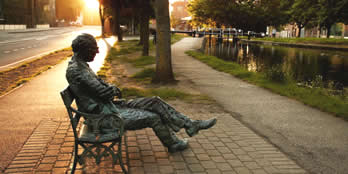
De Ierse dichter Patrick Kavanagh werd geboren op 21 oktober 1904 in County Monaghan. Zie ook mijn blog van 21 oktober 2010 en eveneens alle tags voor Patrick Kavanagh op dit blog.


Stony Grey Soil

O stony grey soil of Monaghan
The laugh from my love you thieved;
You took the gay child of my passion
And gave me your clod-conceived.

You clogged the feet of my boyhood
And I believed that my stumble
Had the poise and stride of Apollo
And his voice my thick tongued mumble.

You told me the plough was immortal!
O green-life conquering plough!
The mandril stained, your coulter blunted
In the smooth lea-field of my brow.

You sang on steaming dunghills
A song of cowards' brood,
You perfumed my clothes with weasel itch,
You fed me on swinish food

You flung a ditch on my vision
Of beauty, love and truth.
O stony grey soil of Monaghan
You burgled my bank of youth!

Lost the long hours of pleasure
All the women that love young men.
O can I stilll stroke the monster's back
Or write with unpoisoned pen.

His name in these lonely verses
Or mention the dark fields where
The first gay flight of my lyric
Got caught in a peasant's prayer.

Mullahinsa, Drummeril, Black Shanco-
Wherever I turn I see
In the stony grey soil of Monaghan
Dead loves that were born for me.


 2084462-e80fd97030a20a687be2b3528889f4c0.jpg
Patrick Kavanagh (21 oktober 1904 – 30 november 1967)
Standbeeld langs het Grand Canal, Dublin


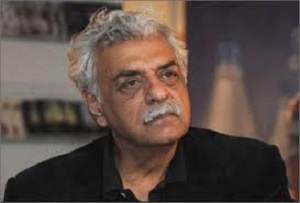
De Pakistaanse auteur, journalist en filmmaker Tariq Ali werd geboren in Lahore op 21 oktober 1943. . Zie ook alle tags voor Tariq Ali op dit blog en ook mijn blog van 21 oktober 2009 en ook mijn blog van 21 oktober 2010

Uit: Shadows of the Pomegranate Tree

“This was the ancient space where once Moorish knights used to ride and joust to catch the eye of their ladies; where the populace would assemble in large numbers, children riding on the shoulders of fathers, uncles and elder brothers as they cheered their favourites; where catcalls greeted the appearance of those who paraded in the armour of knights simply because they were creatures of the Sultan. When it was clear that a brave man had allowed one of the courtiers to win out of deference to the King or, just as likely, because he had been promised a purse full of gold dinars, the citizens of Gharnata jeered loudly. It was a citizenry well known for its independence of mind, rapier wit, and reluctance to recognize superiors. This was the city and this the place chosen by Cisneros for his demonstration of fireworks that night. The sumptuously bound and decorated volumes were a testament to the arts of the Peninsulan Arabs, surpassing the standards of the monasteries of Christendom. The compositions they contained had been the envy of scholars throughout Europe. What a splendid pile was laid before the population of the town. The soldiers who, since the early hours of the morning, had been building the wall of books had avoided the eyes of the Gharnatinos. Some onlookers were sorrowful, others tempestuous, eyes flashing, faces full of anger and defiance. Others still, their bodies swaying gently from side to side, wore vacant expressions. One of them, an old man, kept repeating the only sentence he could utter in the face of the calamity. `We are being drowned in a sea of helplessness.' Some of the soldiers, perhaps because they never had been taught to read or write, understood the enormity of the crime they were helping to perpetrate. Their own role troubled them. Sons of peasants, they recalled the stories they used to hear from their grandparents, whose tales of Moorish cruelty contrasted with accounts of their culture and learning. There were not many of these soldiers, but enough to make a difference.”


 2084462-2616a929c228e89ac322f09ae556bfa5.jpg
Tariq Ali (Lahore, 21 oktober 1943)


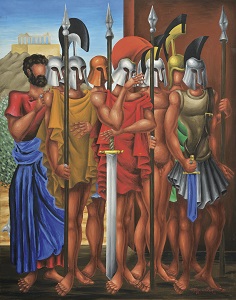
De Griekse dichter en schilder Nikos Engonopoulos werd geboren op 21 oktober 1907 in Athene. Zie ook alle tags voor Nikos Engonopoulos op dit blog en ook mijn blog van 21 oktober 2009 en ook mijn blog van 21 oktober 2010


BOLIVÁR (Fragment)

 A Greek Poem

 Boyaca, Ayacucho. Ideas both illustrious and eternal. I was
    there.
We’d already left the old frontiers far behind:
Back in the distance, fires were burning in Leskovik.
And in the night, the army moved up towards the battle, its
    familiar sounds could already be heard.
Opposite, a grim Convoy of endless trucks returned with the
    wounded.

Don’t anyone be alarmed. Down there, see, the lake.
This is the way they'll come, beyond the rushes.
The roads have been mined: the work and repute of that
    Hormovo man, renowned, unrivalled in such matters.
   
Everyone to their stations. The whistle’s sounding!
Come on, come on. Get the cannons uncoupled and set up,
    clean the barrels with the swabs, fuses lit and held
    ready,
Cannon-balls to the right. Vrass!
Vrass, Albanian for fire: Bolivár!

Every pineapple that was hurled and exploded,
Was a rose to the glory of the great general,
As he stood, stern and unshaken, amid the dust and tumult,
Gazing on high, his forehead in the clouds,
And the sight of him caused dread: fount of awe, path of
    justice, gate of salvation.


 2084462-0caf4c904d4a71010b1ba6b4226bf5cf.jpg
Nikos Engonopoulos (21 oktober 1907 – 31 oktober 1985)
Alexander, son of Philip, and the Greeks apart from the Spartans door Nikos Engonopoulos, 1963


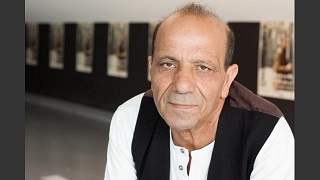
De Frans-Algerijnse schrijver en regisseur Mehdi Charef werd geboren op 21 oktober 1952 in Maghnia in Algerije. Zie ook mijn blog van 21 oktober 2008 en ook mijn blog van 21 oktober 2009 en ook mijn blog van 21 oktober 2010

Uit: A bras le coeur

« Les deux donzelles sont au bord de l'asphyxie, elles chancellent, s'agrippent à leur voile. Elles se mettent à tousser et vlan ! La première tombe à la renverse et vomit abondamment. Farida ne tarde pas à l'imiter. Elle rejette tout ce qu'elle a dans l'estomac... Elles rendent leur poignante histoire d'amour, les larmes coulent sur leurs joues écarlates. Mbami lève les bras, triomphant, et remercie les esprits. Puis il dit aux mères :
    – Le démon sort même par le nez ; je fais en sorte de l'évacuer de tous les orifices par lesquels il s'est ingénieusement immiscé pour propager son pouvoir maléfique, et pour régner à la place de la Loi. Écoutez-le gémir, pleurer, contraint de quitter vos filles par la force de l'esprit. Il ne revient jamais sur les lieux de ses défaites. Vos filles sont libérées.
    Les mères prient, remercient, glissent des sous sur la natte. Soutenues par leurs mères, les deux amies se redressent, vaincues, un mouchoir sur la bouche, le foulard trempé de larmes. Farida refuse de boire le liquide sirupeux et verdâtre, mélangé à des herbes, que le marabout a versé dans une petite tasse. L'autre boit et crache aussitôt la mixture gluante, dans son mouchoir, avec une grimace diabolique. Le sorcier se lève. Il faut laisser la place. Soulagées, les mères m'enjambent pour sortir. Les deux amoureuses, humiliées et le front bas, suivent l'une derrière l'autre. Elles me frôlent. Au moment où elles passent devant moi, je surprends une belle image : la main de Farida effleure celle de son amie qui s'ouvre alors pour recevoir un billet froissé, un mince message roulé en boule. Je ris. Puis, je me lève et je me présente devant le marabout. »


 2084462-b8a17b59ec663af91f6e75a4d44f232b.jpg
Mehdi Charef (Maghnia, 21 oktober 1952)


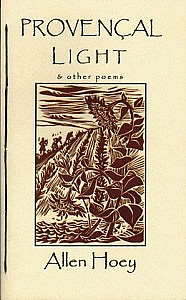
De Amerikaanse dichter, schrijver en criticus Allen Hoey werd geboren op 21 oktober 1952 in Kingston, New York. Zie ook mijn blog van 21 oktober 2008 en ook mijn blog van 21 oktober 2009 en ook mijn blog van 21 oktober 2010

Uit: Provençal Light, a long poem

After the Orchard: "Souvenir de Mauve" (fragment)

We must
seize the instant. Learn our craft, yes. Hours with pencil or reed
whittled down to a point fine or thick as the study demands; they give
the fluid stroke of a brush where needed and the line sharp when held firm.
And perspective--here the light creates depth the eye captures best
from the planes of juxtaposed color, a Japanese print brought to life.
But learn, as Mauve taught me, the palette's arrangement, change it
as the light demands--I owe the man that.
How sad, how it robs
some of the luster from a glorious day, to find my sister's notice.
Mauve is dead. And not that old--still years of canvas to go.
What I bring to this peach tree, bright where his palette was dim,
I owe him. He had faith, he counseled my father when all
thought this drawing another delusion. I never let on that I knew--
they were set when I traded the Bible for Ingres and pencil
to have me committed. For my own good. Of course. To prevent
more scandal. How I pained them, my trackless life, my mad
veering from calling to calling--why should he believe this path
was different, this calling that called me from his
would lead anywhere better? Poor man. How little he understood,
even persuaded my sketches showed promise. Ill-fitting
trousers and jackets he bought me when desperate for paper.
A father's love grows less and less each year
like feasting on strawberries in spring until finally
he's dead.


 2084462-1f50fd188436676afed9cd460fed67b4.jpg
Allen Hoey (21 oktober 1952 – 16 juni 2010)
Cover


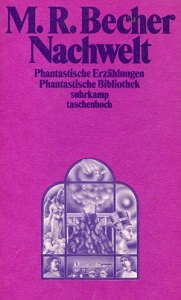
De Zwitserse schrijver en criticus Martin Roda Becher werd geboren in New York op 21 oktober 1944. Zie ook mijn blog van 21 oktober 2008 en ook mijn blog van 21 oktober 2010

Uit: Tod im Stadion

„Vor ein paar Tagen bin ich dem Tod begegnet.
Es war auf einer verlassenen Aschenbahn im Spätherbst. In dieser Zeit wird sie nur noch selten benutzt. Gelbe Blätter bedeckten den Boden, die Kälte verlockte nicht zur Leichtathletik. Vielleicht zieht ein Unentwegter einmal seine Bahn, doch auch dieser ist froh, wenn er seine Runde hinter sich hat und den Ort verlassen kann, voll Genugtuung darüber, dasser zu den Untentwegten zählt. Es ist etwas Düsteres, Unheimliches an diesen verlassenen Sportstätten. Schwimmbäder, Aschenbahnen sind so tot im Winter wie eine Eisbahn im Sommer.
Sie erinnern mich seltsamerweise an Friedhöfe- und die Gewissheit, dass im nächsten Sommer wieder Hochbetrieb sein wird, spendet wenig Trost.
Ich weiss heute noch nicht, warum ich mich eingelassen hatte, laufen zu gehen. Ein nicht sehr guter Bekannter, ein Student der Rechte namens Ellenberger, hatte mich eines Tages aufgefordert, mit ihm etwas Freiluftsport zu treiben. Allein sei es öde, zu zweit mache es Spass. Und da mir, dem seit letztem Sommer schon eingerosteten Tennisspieler, etwas Bewegung nicht schaden konnte, sagte ich zu.
Am Morgen trafen wir uns dann. Gemeinsam machten wir uns zum Stadion auf.
Er war ein etwas zum Fettansatz neigender Mensch mit schwarzem Kraushaar auf dem Kopf. Ein manischer Witzbold, der für jede Lebenslage einen Scherz wusste und auch stets die “Neuesten” kannte. Sehr beliebt – er fehlte auf keinem Fest, da unterhaltsam (allein schon durch sein Aussehen) und bemerkenswert trinkfest. Als glatter Kerl wurde er bezeichnet, was im Alemannischen soviel wie lustig, nett, heissen will.
Dass er und ich, der im Gegensatz zu ihm ziemlich unbleibt und unglatt ist, nicht prächtig miteinander auskamen, war klar. Wahrscheinlich hatte er keinen anderen Kumpan für spätherbstliche Leichtathletik gefunden. Und so verfiel er dann eben auf mich.“


 2084462-49b33939fed68a4e9545138a4cffbc20.jpg
Martin Roda Becher (New York, 21 oktober 1944)
Cover

Geschreven door Romenu om 11:42 Reageer op dit bericht

Ursula Le Guin

De Amerikaanse schrijfster Ursula Kroeber Le Guin werd geboren als Ursula Kroeber in Berkeley, Californië op 21 oktober 1929. Haar vader, Alfred L. Kroeber, was antropoloog, haar moeder, Theodora Kroeber, schrijfster. Ze was gehuwd met Charles A. Le Guin, een historicus. Ze studeerde aan Radcliffe College en Columbia University, waar ze in 1952 haar MA haalde. Negen andere universiteiten hebben haar eredoctoraten toegekend. Ze heeft Frans en Schrijven gedoceerd aan vele universiteiten. Haar oeuvre omvat verder 28 romans en 11 collecties korte verhalen. Thema's die in haar werk een rol spelen zijn vaak feministisch, psychologisch, sociologisch of anarchistisch van aard. Bekende boeken van haar hand zijn onder andere de Aardzee-serie, “Duisters linkerhand” (The Left Hand of Darkness) en “De ontheemde” (The Dispossessed). Ze heeft een groot aantal prijzen gewonnen, waaronder vijf Hugo Awards en zes Nebula Awards, de twee bekendste onderscheidingen voor sciencefiction.

Uit: The dispossessed

“There was a wall. It did not look important. It was built of uncut rocks roughly mortared. An adult could look right over it, and even a child could climb it. Where it crossed the roadway, instead of having a gate it degenerated into mere geometry, a line, an idea of boundary. But the idea was real. It was important. For seven generations there had been nothing in the world more important than that wall.
Like all walls it was ambiguous, two-faced. What was inside it and what was outside it depended upon which side of it you were on.
Looked at from one side, the wall enclosed a barren sixty-acre field called the Port of Anarres. On the field there were a couple of large gantry cranes, a rocket pad, three warehouses, a truck garage, and a dormitory. The dormitory looked durable, grimy, and mournful; it had no gardens, no children; plainly nobody lived there or was even meant to stay there long. It was in fact a quarantine. The wall shut in not only the landing field but also the ships that came down out of space, and the men that came on the ships, and the worlds they came from, and the rest of the universe. It enclosed the universe, leaving Anarres outside, free.
Looked at from the other side, the wall enclosed Anarres: the whole planet was inside it, a great prison camp, cut off from other worlds and other men, in quarantine.
A number of people were coming along the road towards the landing field, or standing around where the road cut through the wall.
People often came out from the nearby city of Abbenay in hopes of seeing a spaceship, or simply to see the wall. After all, it was the only boundary wall on their world. Nowhere else could they see a sign that said No Trespassing. Adolescents, particularly, were drawn to it. They came up to the wall; they sat on it. There might be a gang to watch, offloading crates from track trucks at the warehouses. There might even be a freighter on the pad. Freighters came down only eight times a year, unannounced except to syndics actually working at the Port, so when the spectators were lucky enough to see one they were excited, at first. But there they sat, and there it sat, a squat black tower in a mess of movable cranes, away off across the field. And then a woman came over from one of the warehouse crews and said, “We're shutting down for today, brothers.” She was wearing the Defense armband, a sight almost as rare as a spaceship. That was a bit of a thrill. But though her tone was mild, it was final. She was the foreman of this gang, and if provoked would be backed up by her syndics. And anyhow there wasn't anything to see. The aliens, the off-worlders, stayed hiding in their ship. No show.”


 2147167-0f87f870d0a30175588f30ffb3076fee.jpg
Ursula Le Guin (Berkeley, 21 oktober 1929)

Geschreven door Romenu om 00:00 Reageer op dit bericht

Pankaj Mishra


Onafhankelijk van geboortedata

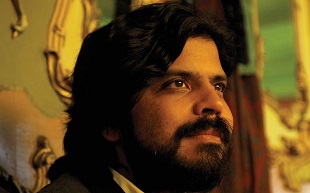
De Indiase schrijver, journalist en essayist Pankaj Mishra werd geboren in 1968 in Jhansi, India. Mishra studeerde handelswetenschappen aan de Universiteit van Allahabad en Engelse Letterkunde aan de Nehru-universiteit in New Delhi. In 1992 verhuisde hij naar Mashobra, een dorp in de Himalaya, waar hij begon met het publiceren van literaire essays en boekbesprekingen in “The Indian Review of Books”, The India Magazine, en de krant The Pioneer. Zijn eerste boek was “Butter Chicken in Ludhiana: Travels in Small Town India” (1995), een reisverhaal dat de sociale en culturele veranderingen in India in de nieuwe context van globalisering beschreef. Zijn roman “The Romantics” (2000), een ironische vertelling over mensen die verlangen naar vervulling in culturen die niet de hunne zijn, werd gepubliceerd in elf Europese talen en won de Los Angeles Times Art Seidenbaum prijs voor eerste fictie. Zijn recente boek “An End to Suffering: The Buddha in the World” (2004) vermengt memoires, geschiedenis en filosofie in een poging om de relevantie van de Boeddha voor de huidige tijd te onderzoeken. In “Temptations of the West: How to be Modern in India, Pakistan and Beyond” (2006) beschrijft Mishra's reizen door Kasjmir, Bollywood, Afghanistan, Tibet, Nepal, en andere delen van Zuid- en Centraal Azië, over de veranderingen onder druk van de Westerse moderniteit, en over de paradoxen van globalisering. “Tijd van woede” (2017) behandelt eveneens de globalisering en de wereldwijde opkomst van ressentiment als krachtige politieke emotie. Mishra verklaart dit ressentiment vanuit de niet-ingeloste en tegenstrijdige beloften van kapitalisme (rijkdom, vooruitgang) en democratie (gelijkheid). Pankaj Mishra verdeelt zijn tijd tussen Londen, New Delhi, een dorpje in de Himalaya en het Wellesley College in de Verenigde Staten, waar hij elk jaar een aantal weken lesgeeft. In 2014 ontving Pankaj Mishra in Leipzig de Leipziger Buchpreis zur Europäischen Verständigung.

Uit: Tijd van woede (Vertaald door Nico Groen)

“In september 1919 bezette de Italiaanse dichter Gabriele D’Annunzio, vergezeld door tweeduizend Italiaanse opstandelingen, de stad Fiume aan de Adriatische Zee. De schrijver en oorlogsheld, een van de beroemdste Europeanen van zijn tijd, wilde al heel lang alle gebieden annexeren die volgens hem altijd al tot “moedertje Italie” hadden behoord.
In 1911 was hij fel voorstander geweest van de Italiaanse inval in Libie, een zo wrede expeditie dat die in de hele islamitische wereld tot grote woede leidde. Gebruikmakend van de chaos aan het einde
van de Eerste Wereldoorlog en doordat de vorige heerser over de regio ten val was gekomen, zag D’Annunzio zijn kans schoon om Italiaanse mannen zich door middel van geweld weer jong te laten voelen.
Geinstalleerd als ‘Duce’ van de ‘Vrijstaat Fiume’ bedreef D’ Annunzio een politiek vol holle retoriek en gebaren, een politiek in grootse stijl. Hij bedacht de groet met gestrekte arm, die de nazi’s later zouden overnemen, en ontwierp onder andere een zwart uniform met doodskop met gekruiste botten; hij sprak obsessief over martelaarschap, opofferingsgezindheid en dood. Benito Mussolini en Adolf Hitler, in die tijd nog onbekend, luisterden gretig naar de pseudoreligieuze toespraken die deze kaalgeschoren man dagelijks vanaf zijn balkon hield voor zijn zwarthemd-‘legionairs’ (voordat hij zich terugtrok met zijn sekspartners van die dag).
Enthousiaste vrijwilligers – door testosteron opgejutte tieners en doctrinaire socialisten – kwamen helemaal uit landen als Ierland, India en Egypte om zich in Fiumes carnaval van erotisch militarisme
te storten. Voor hen leek het leven, ontdaan van alle oude regels, helemaal opnieuw te beginnen: een zuiverder, mooier en oprechter bestaan.
Naarmate de maanden verstreken en zijn seksuele honger en megalomanie toenamen, begon D’ Annunzio zichzelf te beschouwen als leider van een internationale opstand van alle verdrukte volken. In de praktijk bleek deze gedrongen, eenvoudige provinciaal, een parvenu die voor aristocraat wilde doorgaan, niet meer dan een opportunistische profeet voor boze buitenbeentjes uit heel Europa, voor hen die zich volledig overbodig voelden in een samenleving waarin slechts een minderheid profiteerde van economische groei en waarin democratie een spel bleek waar door machthebbers mee werd gesjoemeld.”


 2112593-1b17331cff820dc9192ae8429ab0f560.jpg
Pankaj Mishra (Jhansi, 1968)

Geschreven door Romenu om 00:00 Reageer op dit bericht

Meer van Romenu

↑ Terug naar de berichten