Naar de inhoud

Romenu

Over literatuur, gedichten, kunst en cultuur
akke.beakke.be

Berichten van 22 oktober 2017 tot 23 oktober 2017

Michel van der Plas, Masiela Lusha, Augusten Burroughs, Robert Bridges, Adalbert Stifter, Nick Tosches, Rodja Weigand, Gjergj Fishta, Restif de la Bretonne
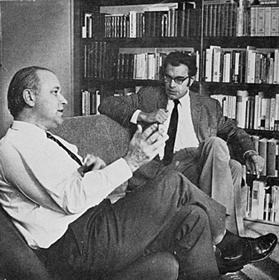
De Nederlandse dichter en schrijver Michel van der Plas werd geboren op 23 oktober 1927 in Den Haag. Zie ook mijn blog van 23 oktober 2010 en eveneens alle tags voor Michel van der Plas op dit blog.


Bezoekje

Al is het wel wat lang geleden
dat 'k op een doordeweekse dag
hier neergeknield heb en gebeden,
toch weet ik, Heer, gij zijt tevreden
met mijn doorgaans gevolgd gedrag.

Ik heb geen kwaad op mijn geweten,
want 'k bleef mijn man in kuisheid trouw;
en had ik Vrijdags vlees gegeten
of de collecte weer vergeten,
dan had ik steeds oprecht berouw.

Ik ben niet als dat mens van Poole,
dat weet u: ik deed Kees en Jeanne
op goede katholieke scholen
en van jongsaf heb 'k ze bevolen
om Zondags naar de mis te gaan.

Ik mag u rustig alles vragen;
dat heeft de kapelaan gezegd,
toen 't na de Quatertemperdagen
de derde roep was van Jan Hagen
met dat mooi nummer van Van Echt.

Ik bid u, Heer, voor Zuid-Korea,
dat het niet overslaat naar hier,
en dan, voor Zondag als 'k met Thea,
de zuster van mijn man, naar zee ga
om prachtig weer en veel plezier.

Verhoed toch dat u ook de Russen
de atoombom produceren laat,
en u moet ook dat kind eens sussen
van de overkant, dat 's nachts steeds tussen
half drie en drie zo schreeuwen gaat.

Berisp ook eindelijk eens mijn zwager,
die fout was, om zijn grote mond,
en help me onthouden dat 'k de slager
straks nog moet bellen om een mager
kalfslapje van een hallef pond.

Ik bid u voor de negerkindren,
die nog niet weten wie gij zijt,
maar als ze ooit de Shell gaan hindren
moet gij hun aantal maar vermindren,
O Heer, in uw voorzienigheid.

Bescherm ons kleine, dappre landje,
vooral de Roomse minderheid,
en geef Verheul, dat protestantje,
nu eindlijk eens een ernstig standje
als hij mijn man zijn zaak vermijdt.

En houd, wanneer de Russen komen,
vooral toch Hoogstraat 6 in 't oog,
want gij zijt altijd met de vromen
die vredig van de hemel dromen
en naarstig streven naar omhoog.

En laat Kees slagen voor 't examen,
en geef Jeanne's jongen beter werk,
en houd ons allemaal lang samen,
tot later in de hemel, amen.

Wat doet die Dijkstra in de kerk?


 2085212-6d57fbab993a72842b13ce595ceb3178.jpg
Michel van der Plas (23 oktober 1927 -21 juli 2013)
Hier links in gesprek met Godfried Bomans in 1969


De Albanees-Amerikaanse schrijfster en actrice Masiela Lusha werd geboren op 23 oktober 1985 in Tirana. Zie ook mijn blog van 23 oktober 2010 en eveneens alle tags voor Masiela Lusha op dit blog.


Eternity

A carved stone can reign like a mountain,
Only to be meat in natures jaw.
But no wind or snow can tumble
Into the steel minds of humanity and memory-
Of books and history.


Fire

Near. So near that you can kiss me.
I can see the gods dancing
Inside your belly,
And they break away star by star
From the tips of your curling
Fingers pointing up to their bed of waiting
Companions.

You release them, and you send them away.
And I watch, your color tied to me
Like a glowing sigh. And the illusion
Of a kiss. You don't need to touch me
For us to dance to the songs of my heart;
You are a belly dancer who never leaves
Your stage of broken nature.
But others will leave their silly stage of comfort
For you. And your price? Their lives.

You seduce the wind, and you seduce my cleverness,
And like the wind, my airy thoughts
Tumble and curve to you,
Hidden and lost to the dark bends of your nature.

And I drift, like a plucked leaf, to your imploding swells of heat-
Drawing me near, so near that you can kiss me.

 

 2085212-b6686fe0d99a7e2a890e3d18b40dcd66.jpg
Masiela Lusha (Tirana, 23 oktober 1985)


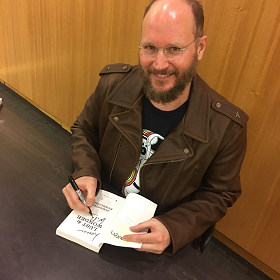
De Amerikaanse schrijver Augusten Xon Burroughs werd geboren op 23 oktober 1965 in Pittsburgh, Pennsylvania. Zie ook mijn blog van 23 oktober 2010 en eveneens alle tags voor Augusten Burroughs op dit blog.

Uit: A Wolf at the Table. A Memoir of My Father

“I am wet-faced and shrieking. I am alone in the awake-pit with the terrible bright above my head. I need: my mother, my silky yellow blanket, to be lifted, to be placed back in my box. I am crying but my mother doesn’t come to pick me up and this makes me mad and afraid and mad again, so I cry harder.
On the other side of the door, he is laughing. He is my brother. He’s like me but he’s not me. We’re linked somehow and he’s home but he’s not home, like my mother and her voice.
Opposite this door against the wall, there is a dresser with drawers that my mother can open but I cannot, no matter how hard I pull. The scent of baby powder and Desitin stains the air near the dresser. These smells make me want to pee. I don’t want to be wet so I stand far away from the dresser.
This is my first whole memory --- locked alone in my room with my brother on the other side of the door, laughing.
There is another memory, later. I am in the basement sitting on a mountain of clothing. The washer and dryer are living pets; friendly with rumbling bellies. My mother feeds them clothing. She is lifting away pieces of my mountain, placing them into the mouth of the washer. Gradually, my mountain becomes smaller until I can feel the cool of the cellar floor beneath me.
A form on the wooden stairs. The steps themselves smell sweet and I like to lick them but they are coarse and salty; they don’t taste as they smell and this always puzzles me and I lick again, to make sure. The thing on the stairs has no face, no voice. It descends, passes before me. I am silent, curious. I don’t know what it is but it lives here, too. It is like a shadow, but thick, somehow important. Sometimes it makes a loud noise and I cover my ears. And sometimes it goes away.
“Did my father live with us at the farmhouse in Hadley?”
I was in my twenties when I called my mother and asked this question. The farmhouse --- white clapboard with black shutters and a slate roof --- sat in a brief grassy pasture at the foot of a low mountain range. I could remember looking at it from the car, reaching my fingers out the window to pluck it from the field because it appeared so tiny. I didn’t understand why I couldn’t grab it, because it was just right there.“
 

 2085212-23ed86d085f3eee3da59e079a705d2f4.png
Augusten Burroughs (Pittsburgh, 23 oktober 1965)


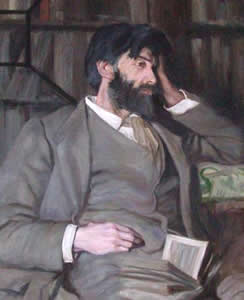
De Engelse dichter, toneel- en prozaschrijver Robert Seymour Bridges werd geboren in Walmer, Kent, op 23 oktober 1844. Zie ook alle tags voor Robert Bridges op dit blog en ook mijn blog van 23 oktober 2009 en ook mijn blog van 23 oktober 2010


I Have Loved Flowers That Fade

I have loved flowers that fade,
Within whose magic tents
Rich hues have marriage made
With sweet unmemoried scents:
A honeymoon delight-
A joy of love at sight,
That ages in an hour-
My song be like a flower!

I have loved airs that die
Before their charm is writ
Along a liquid sky
Trembling to welcome it.
Notes, that with pulse of fire
Proclaim the spirit's desire,
Then die, and are nowhere-
My song be like an air!

Die, song, die like a breath,
And wither as a bloom;
Fear not a flowery death,
Dread not an airy tomb!
Fly with delight, fly hence!
'Twas thine love's tender sense
To feast; now on thy bier
Beauty shall shed a tear.


The evening darkens over

The evening darkens over
After a day so bright
The windcapt waves discover
That wild will be the night.
There’s sound of distant thunder.

The latest sea-birds hover
Along the cliff’s sheer height;
As in the memory wander
Last flutterings of delight,
White wings lost on the white.

There’s not a ship in sight;
And as the sun goes under
Thick clouds conspire to cover
The moon that should rise yonder.
Thou art alone, fond lover.
 

 2085212-645dcf22b4dfb89228733481361dd4f7.jpg
Robert Bridges (23 oktober 1844 - 21 april 1930)
Portret door Charles Furse, 1894


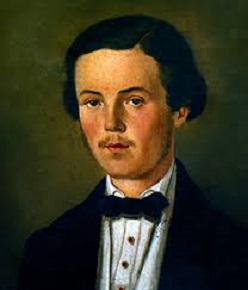
De Oostenrijkse schrijver Adalbert Stifter werd geboren in Oberplan op 23 oktober 1805. Zie ook mijn blog van 23 oktober 2010 en eveneens alle tags voor Adalbert Stifter dit blog.

Uit: Der Nachsommer

„Der Vater hatte auch einen Kasten, in welchem Münzen waren, von denen er uns zuweilen einige zeigte. Da befanden sich vorzüglich schöne Taler, auf welchen geharnischte Männer standen oder die Angesichter mit unendlich vielen Locken zeigten, dann waren einige aus sehr alten Zeiten mit wunderschönen Köpfen von Jünglingen oder Frauen, und eine mit einem Manne, der Flügel an den Füßen hatte. Er besaß auch Steine, in welche Dinge geschnitten waren. Er hielt diese Steine sehr hoch und sagte, sie stammen aus dem kunstgeübtesten Volke alter Zeiten, nehmlich aus dem alten Griechenlande her. Manchmal zeigte er sie Freunden; diese standen lange an dem Kästchen derselben, hielten den einen oder den andern in ihren Händen und sprachen darüber.
Zuweilen kamen Menschen zu uns, aber nicht oft. Manches Mal wurden Kinder zu uns eingeladen, mit denen wir spielen durften, und öfter gingen wir auch mit den Eltern zu Leuten, welche Kinder hatten, und uns Spiele veranstalteten. Den Unterricht erhielten wir in dem Hause von Lehrern, und dieser Unterricht und die sogenannten Arbeitsstunden, in denen von uns Kindern das verrichtet werden mußte, was uns als Geschäft aufgetragen war, bildeten den regelmäßigen Verlauf der Zeit, von welchem nicht abgewichen werden durfte.
Die Mutter war eine freundliche Frau, die uns Kinder ungemein liebte, und die weit eher ein Abweichen von dem angegebenen Zeitenlaufe zugunsten einer Lust gestattet hätte, wenn sie nicht von der Furcht vor dem Vater davon abgehalten worden wäre. Sie ging in dem Hause emsig herum, besorgte alles, ordnete alles, ließ aus der obgenannten Furcht keine Ausnahme zu und war uns ein ebenso ehrwürdiges Bildnis des Guten wie der Vater, von welchem Bildnisse gar nichts abgeändert werden konnte. Zu Hause hatte sie gewöhnlich sehr einfache Kleider an. Nur zuweilen, wenn sie mit dem Vater irgend wohin gehen mußte, tat sie ihre stattlichen seidenen Kleider an und nahm ihren Schmuck, daß wir meinten, sie sei wie eine Fee, welche in unsern Bilderbüchern abgebildet war. Dabei fiel uns auf, daß sie immer ganz einfache, obwohl sehr glänzende Steine hatte, und daß ihr der Vater nie die geschnittenen umhing, von denen er doch sagte, daß sie so schöne Gestalten in sich hätten.
Da wir Kinder noch sehr jung waren, brachte die Mutter den Sommer immer mit uns auf dem Lande zu. Der Vater konnte uns nicht Gesellschaft leisten, weil ihn seine Geschäfte in der Stadt festhielten; aber an jedem Sonntage und an jedem Festtage kam er, blieb den ganzen Tag bei uns und ließ sich von uns beherbergen. Im Laufe der Woche besuchten wir ihn einmal, bisweilen auch zweimal in der Stadt, in welchem Falle er uns dann bewirtete und beherbergte.“
 

 2085212-a87e79e5593970a970886f910a479b35.jpg
Adalbert Stifter (23 oktober 1805 - 28 januari 1868)
In 1820. Portret in zijn geboortehuis in Horní Planá (Oberplan)


De Amerikaanse dichter, schrijver en journalist Nick Tosches werd geboren op 23 oktober 1949 in Newark, New Jersey. Zie ook alle tags voor Nick Tosches op dit blog en ook mijn blog van 23 oktober 2009 en ook mijn blog van 23 oktober 2010

Uit: Dino: Living High in the Dirty Business of Dreams

“His schoolmates had never really known him. Even his loving familiy could not tell for sure what lay within this kid who moseyed around among them with a hat on, singing. There was a pin-tumbler sidebar lock on his guts that no one could pick. That was just the way he was, and it was just the way he always would be.
Unlettered and rough-cut, Dino possessed both wiles and wisdom beyond his years – anyone trying to fuck with his mind or his body or his soul found this out forthwith. But the wisdom served by those wiles was an annihilating wisdom. It was the wisdom of the old ways, a wisdom through which the seductions of reason and love and truth and all such frail and flimsy lepidoptera would in their seasons emerge and thrive, wither and die. The sum of Dino’s instincts had to do with the old ways, those ways that were like a wall, ways that kept the world lontano, as the mafiosi would say: distant, safely and wisely at bay. That was how he liked it: lontano, like the flickering images on the theater screen that gave him pleasure as he sat alone, apart from them and unknown to them, in the dark.
Those close to him could sense it: He was there, but he was not really there; a part of them, but apart from them as well. The glint in his eye was disarming, so captivating and so chilling at once, like lantern-light gleaming on nighttime sea: the tiny soft twinkling so gaily inviting, belying for an instant, then illuminating, a vast unseen cold blackness beneath and beyond. The secret in its depth seemed to be the most horrible secret of all: that there was no secret, no mystery other than that which resides, not as a puzzle to be solved or a revelation to be discovered, but as blank immanence, in emptiness itself.“
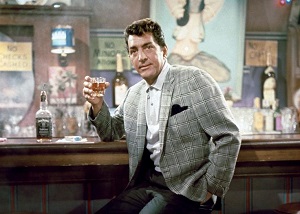
 2085212-9d2b010eef1bc80e67b5b8482a16c3b2.jpg
Nick Tosches (Newark, 23 oktober 1949)
Dean Martin in 1964


De Duitse dichter, schrijver en uitgever Rodja Weigand werd geboren op 23 oktober 1945 in München. Zie ook alle tags voor Rodja Weigand op dit blog en ook mijn blog van 23 oktober 2010


das lied des victor jara

netze werfen sie
über die schwingen
des condors und
binden ihn fest
mit eisenschellen
am andenfels.

lautlos klingt
das lied victor jaras
unter dem orkan in
abgehackten kadenzen
sanft
wie die stimme
der frau.
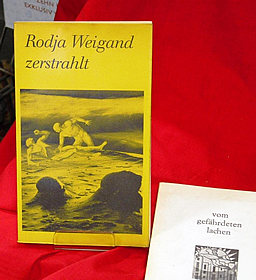
 

 2085212-64a58dd73a6c5321f4443cc047826ab1.png
Rodja Weigand (München, 23 oktober 1945)


De Albanese dichter, vertaler en pater Franciscaan Gjergj Fishta werd geboren op 23 oktober 1871 in Fishta të Zadrimes. Zie ook alle tags voor Gjergj Fishta op dit blog en ook mijn blog van 23 oktober 2008.


THE HIGHLAND LUTE(fragment)

When the Turk had read the message
He was filled with rage and anger.
How he set upon the land to
Eat them up alive, those tribesmen.
But the Albanians were resolved
He'd not devour or invade them.
They had come to a decision,
For their land they'd muster courage,
If attacked by king or sultan.
Thus the Turk and the Albanian
Seized each others' throats and strangled,
Smashed each others' skulls to pieces,
Crushed them like so many pumpkins!
Fire broke out then in the Balkans.
The shkja, in anguish that Albania,
Freed now of the sultan's power,
Might not fall into his clutches
As he had foreseen the matter,
Set upon the Turk like lightning,
Like the wild boar with the jackal.
They did haggle and did grapple,
Scuffled, wrestled, bit and murdered,
Rifles volleyed, cannons battered,
Blood in torrents swashed the clearings,
Over fields and through the thickets,
'Til at last, midst din and clamour,
Of the Turkish yoke released,
As she'd wanted, was Albania,
Free at last, as God had promised,
But no, brothers, do believe me,
Not as Turk or shkja would have it.
That the Turk begrudged our freedom
I can understand, but don't know
What got into Prince Nikolla,
Forcing to submit Albanians,
Crush them under heel, enslave them,
And to seize that land where once
In ancient times Gjergj Castriota
Brandished in a flash his sabre.
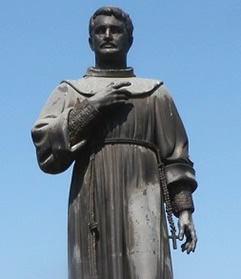
 

 2085212-88750e5475d30553b48e2b5801959a42.jpg
Gjergj Fishta ( 23 oktober 1871 – 30 december 1940)
Monument in Lezhë


De Franse schrijver Nicolas Edmonde Restif de La Bretonne werd geboren op 23 oktober 1734 in Sacy bij Auxerre. Zie ook alle tags voor Réstif de la Bretonne op mijn blog en ook mijn blog van 23 oktober 2008.

Uit: La vie de mon père

« Je ne veux peindre le vénérable Berthier que par ses actions : je les ai déja consi-gnées dans l'école des pères, ouvrage que j'ai rédigé de plénitude de cœur; oit j'ai rapportai ce que j'ai vu, & ce que j'ai en-tendu : Voici le passage; il est la suite d'un autre qu'on doit trouver à la fin de cet ouvrage, & qui offre de même le portrait du vénérable Curé. C'est mon Père qui parle.
—Notre Maître d'école ébauchait l'ou-vrage du Pasteur, & l'achevait. Je m'explique. Il commençait â donner les premiers élémens aux Enfans , & faisait aux grands Garsons & aux grandes Filles des leçons familières sur la conduite ordinaire de la vie , entre Mari & Femme, Frères & Soeurs, &c. Comme il était marié, & père d'une nombreuse Famille, ses conseils ne paraissaient que le fruit de son expérience : cependant on a su depuis , que tout était prémédité avec le Pasteur. Deux fois l'an, on avait des vacances, pour la récolte des grains, & pour les vendanges: il ne rentrait même que peu d'Écoliers après les moissons; le grand nombre attendaient la fin des gros ouvrages. Les jours fixés étaient le dernier juin pour la clôture, & le 20 octobre pour la rentrée : il n'y avait point de leçons ces deux jours-la le bon Vieillard consacrait le temps de la classe â des discours, que je ne puis me rappeler fans attendrissement.
Celui de juin roulait sur les torts qu'on pouvait faire au Prochain dans la campagne, durant les récoltes, & sur l'emploi des heures de relâche que les travaux pouvaient laisser."
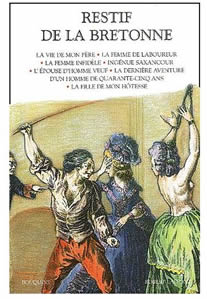
 

 2085212-4d61a9d29173e0821aa0e2f91f2b43f1.jpg
Réstif de la Bretonne (23 oktober 1734 – 3 februari 1806)
Cover

Geschreven door Romenu om 18:36 Reageer op dit bericht

Antjie Krog

De Zuid-Afrikaanse dichteres en schrijfster Antjie Krog werd geboren in Kroonstad op 23 oktober 1952. Krog debuteerde in 1970 op 17-jarige leeftijd met de dichtbundel Dogter van Jefta. Haar tweede publicatie januari-suite (1972) werd onderscheiden met de Eugène Maraisprys. Andere werken van Krog zijn de bundels Otters in bronslaai, Jerusalemgangers en Kleur kom nie alleen nie. In Nederland is Antjie Krog onder meer bekend door haar optreden bij Poetry International, de Nacht van de Poëzie en het festival Winternachten. In 1999 verscheen bij uitgeverij Atlas een bloemlezing uit haar werk onder de titel Om te kan asemhaal. Daarna zijn haar dichtbundels bij Uitgeverij Podium verschenen. Zij schreef ook proza, bijvoorbeeld Country of my Skull - in het Nederlands: De kleur van je hart (1998/2000), toneelstukken en non-fictie, bekroond met onder meer de Pringle Award, de Foreign Correspondent Award en de Alan Paton Award. Krog is getrouwd, moeder van vier kinderen en woont in Kaapstad. Ze is hoogleraar aan de Universiteit van de Westkaap.


Land van genade en verdriet -1

tussen jou en mij
hoe verschrikkelijk
hoe wanhopig
hoe vernietigend breekt het tussen jou en mij

zoveel verwonding in ruil voor waarheid
zoveel verwoesting
zo weinig is overgebleven om voor te overleven

waar gaan we heen van hier?

je stem slingert
woedend
langs de kil snerpende zweep van mijn verleden

hoe lang duurt het?
hoe lang voor een stem
de ander bereikt

in dit land dat zo bloedend tussen ons ligt.


Vertaald door Robert Dorsman en Jan van der Haar


Nadat haar man begraven was

nadat haar man begraven was
liet overgrootmoeder Betjie van Middenspruit
hem opgraven
en trok hem een ander zondags pak aan

‘ineens begrijp ik het’ zegt mijn moeder
‘ik zou niets liever willen dan
daar bij die hoop grond te gaan graven
net zolang totdat ik bij je vader ben

tot bij waar hij is en hem
aan zijn schouders optil
die onontkoombare daarheid van ’m’


Dichter wordende

op een ochtend word je wakker midden in klank
met vocaal en klinker en diftong als voelspriet
met aarzelende zorg stem je de geringste beroering
van licht en verlies in klank af

onmiddellijk zie je jezelf geknield
aan de hoorbaar kloppende wand
van een woord – zoekend naar het precieze
moment waarop een versregel volloopt in klank

wanneer de betekenis van een woord zwicht,
begint te verschuiven en zich ten slotte overlevert aan geluid
vanaf dat moment smacht het bloed naar de betovering
van taal – de enige waarheid krijgt een huid van klank

de dichter dicht met haar tong
zij haalt adem – ja, diep uit haar oor


 2111195-4d84e4cc0218b825a8b7eb61c4469bf8.jpg
Antjie Krog (Kroonstad, 23 oktober 1952)

Geschreven door Romenu om 00:00 Reageer op dit bericht

Arjen Lubach, Lévi Weemoedt, Jonas Lüscher, Doris Lessing, Alfred Douglas, A. L. Kennedy, Charles Leconte de Lisle, Ivan Boenin, Timur Vermes

De Nederlandse schrijver, cabaretier en televisiepresentator Arjen Lubach werd geboren in Lutjegast op 22 oktober 1979. Zie ook mijn blog van 22 oktober 2010 en eveneens alle tags voor Arjen Lubach op dit blog.

Uit: IV

“7:00 uur Maison Taciturne Le Muy, Provence, Frankrijk
Joost Doorman is als eerste wakker. Zonlicht stroomt door de kier tussen de gordijnen de slaapkamer binnen. Ze zijn in Frankrijk, in het vakantiehuis van de familie van Elsa. Ze ligt naast hem en slaapt nog. Zo stil mogelijk stapt hij uit bed, kijkt in het campingbedje van Lars, hun zoontje van acht maanden, en is zoals elke dag weer opgelucht als hij hem ziet ademhalen. Lars ligt op zijn rug, zijn armpjes langs zijn oren uitgestrekt. Hij lijkt nog dieper in slaap dan zijn moeder. Joost sluipt naar de woonkamer. Hij opent de terrasdeuren en stapt naar buiten. Het is nu al warm. Rijen wijnranken werpen lange ochtendschaduwen op het gras, naar beneden, de heuvels af. Hij sluit kort zijn ogen en haalt diep adem. In de struiken naast het huis klinken nog een paar krekels. 's Nachts brengen ze een inmiddels vertrouwde ruis voort die hem geruststelt: ik ben niet thuis. Als ik morgen wakker word, hoef ik niets. Hij houdt van dit tijdstip. Joost wrijft in zijn ogen, de nacht eruit, de dag erin. In de verte ligt de Middellandse Zee. Het lijkt zo vlakbij, denkt hij, de zee. Het is alsof je er zo naartoe kunt lopen, terwijl je er met de auto bijna anderhalf uur over doet. Een hagedis schrikt van zijn aanwezigheid en vlucht via de klimop het dak op. Het is hun eerste vakantie sinds de geboorte van Lars en de eerste keer dat Elsa hem heeft meegenomen naar het familiehuis in de Provence. Bij aankomst was zijn verbazing over het feit dat ze dat nog niet eerder had gedaan nog groter geworden. Het is een prachtig huis op een groot stuk grond. Het terras op het zuiden heeft een weids uitzicht met wijngaarden. In de afgelopen jaren zijn de aangrenzende stukken grond opgekocht door rijke Russen die hun tuinen hebben afgeschermd met hoge witte muren en bevei I i gingscamera's. `Het is niet meer zoals vroeger,' had Elsa gezegd. 'Vroeger was het hier leeg.' Joost heeft er geen last van. Dit huis kost ze niets en ze zijn eindelijk weg. Weg uit Amsterdam en weg van zijn humorloze collega's bij het ontwerpbureau. Elsa heeft tot zijn tevredenheid haar laptop thuisgelaten. Zo moet ze zich wel overgeven aan de vakantie. Geen lange mails beantwoorden, geen lastminuteresearch doen voor de definitieve versie van haar proefschrift. Deze weken zijn perfect: alleen zij, hij, Lars en het vakantiehuis in het zuiden van Frankrijk. Het had hem wel wat moeite gekost haar te overtuigen. `Het moet nu,' had hij gezegd. Elsa was net thuisgekomen. Ze was doorweekt van de regen en stroopte haar broek af in het halletje van hun huis in de Watergraafsmeer. Lars huilde. 'Het moet echt nu. Het duurt anders weer maanden voor we tegelijk vrij kunnen krijgen.' Joost had zo sneu geklonken dat Elsa erom had moeten lachen. `Hoeveel maanden?' had ze gevraagd, terwijl ze haar haar afdroogde. `Zestig miljoen,' was zijn antwoord.”


 2084750-42c5c3cb964bd4defd025058bf33fa23.jpg
Arjen Lubach (Lutjegast, 22 oktober 1979)


De Nederlandse dichter en schrijver Lévi Weemoedt werd geboren in Geldrop op 22 oktober 1948. Zie ook mijn blog van 22 oktober 2010 en eveneens alle tags voor Lévi Weemoedt op dit blog.


Tips voor Alleenstaanden

2. Isolement
Hang om uw nek een houten bord
met daarop duidelijk en kort
uw eigen naam, dus: 'Ik heet Fred,
ik woon al acht jaar in uw flat!'
Zó zorgt u dat u vrienden wint
want onbekend maakt onbemind.
Groet steeds voorkomend, zing een lied:
het leven is zo eenzaam niet.
Denk toch eens meer aan hen die varen
of bung'len aan een straatlantaren.


Een loden hart

Een menigte wacht aan de gracht
op wat druipend omhooggebracht,
gezwollen uit het stinkend drab,
kil huiveren doet de hele hap:

Het lijk van Blaauw, bleek, ogenpuilend,
verdronken nóg om Sietske huilend.
Want gisternacht bij volle maan
kon hij zijn lot niet langer aan.

Zijn buik vol pils, zijn hart vol droefheid
nam hij van 't leven vochtig afscheid.
Zit nu als Cherubijn op wolk.
triest glimlachend om 't ijzend volk.


Pierrot-in-blik

'K ben al met al een treurig mechaniekje
dat alleen maar één dansje kent, één trieste melodie
'K draai zinloos in 't rond tot het muziekje
stopt. Zak reut'lend door de knie.

Waar is 't meisje dat mij opwond? Ach, de veer
verroestte. En het meisje speelt niet meer.


 2084750-98fc3b0f38fcb8eb6b572f56b11ba5a7.jpg
Lévi Weemoedt (Geldrop, 22 oktober 1948)


De Zwitsers-Duitse schrijver en essayist Jonas Lüscher werd geboren op 22 oktober 1976 in Zürich. Zie ook alle tags voor Jonas Lüscher op dit blog.

Uit: Kraft

“Das Rumsfeldporträt hängt direkt in Krafts Blickachse.
Wenn er wieder nicht weiterweiß und sein Blick über den Rand eines Notebooks hinweg in der Leere schwimmt, erscheint es als verwaschener Fleck in Rot, Blau und Grau vor der eichengetäfelten Wand. Es dauert immer nur wenige Atemzüge, bis sich die kalten Augen des Verteidigungsministers hinter der randlosen Brille ihr Recht verschaffen und eine Art Leitstrahl aussendend, sich Krafts Bewusstsein bemächtigen, ihn unwillkürlich zum Fokussieren zwingen, sodass sich die Farbflecken in einer einzigen schnellen, fließenden Bewegung zu einem konkreten Bild verdichten, die tiefen Nasolabialfalten hervortreten, der lippenlose Mundstrich, die etwas kurz geratene Nase – die so gar nicht zu der scharfen Ausdrucksweise, für die der alt­ und ausgediente Falke berüchtigt war, zu passen scheint –, das akkurat gekämmte silberne Haar, der straffe Krawattenknoten, der den Hühnerhals fest umklammert hält und unter Zuhilfenahme des gestärkten Hemdkragens die selbstsichere, spöttische Visage daran hindert, dem nadelgestreiften Tuch zu entkommen, um auf den Adlerschwingen, die sich aus den Falten einer himmelblauen Fahne hinter dem rechten Ohr des berüchtigten Aphoristikers ausbreiten, in höhere Gefilde zu entschwinden.
Warte nur, denkt sich Kraft am siebten Tag, an dem er, tatenlos unter solcher Beobachtung stehend, sich wieder einmal durch diese Aufmerksamkeit verlangenden Augen aus seinen leeren Gedanken gerissen sieht, dir zum Trotz werde ich nach einem europäischen Ton suchen.“


 2084750-4e90a3d186d6a68eb9dbd2529081a258.jpg
Jonas Lüscher (Zürich, 22 oktober 1976)


De Britse schrijster Doris Lessing werd geboren in Kermanshah, Perzië op 22 oktober 1919. Zie ook mijn blog van 22 oktober 2010 en eveneens alle tags voor Doris Lessing op dit blog.

Uit: Alfred And Emily

“Not far from the cricket pitch there were, sitting on the grass with cushions, a large, fair woman, whose reddened face said she did not enjoy the heat, a tiny shred of a girl, her daughter, and a girl who had just leaned forward, her eyes on Mrs Lane's face to hear what she was saying. 'It is a very serious thing, my dear, quarrelling with your father.'
At this moment, a youth was coming forward to stand with his bat at the stumps, and the fair woman leaned to send him a wave, which he acknowledged with a smile and a nod. He was strik-ingly good-looking, dark and well built, and that there was something especial about his standing there was shown by a sudden silence. The bowler sent down a ball and the batsman easily knocked it well away.
'Sssh,' said Mary Lane. 'Just a minute, I want to see ...' Daisy, the little girl, was already leaning forward to watch, and now Emily McVeagh, the other girl, watched too, though she was certainly not seeing much. She was flushed with excitement and determination, and kept glancing sideways at the older woman, hoping for her attention.
Another ball sped down towards the handsome youth, another prompt rebuff, and now there was a ripple of applause.
'Well done,' said Mrs Lane, and was ready to clap, but the bowler had begun his run forward.
Again ... again ... a ball came close to where they sat and the fieldsman ran to retrieve it. The innings went on, there were several scatters of applause, and then a burst of clapping when the youth sent a ball almost as far as the children's games.
It was time for tea. The long trestle table was besieged, while a woman stood by the urn and handed out cups. 'I could do with one, Daisy,' said her mother, and the girl ran to join the queue.
Now Mrs Lane remembered that very much more was being expected of her by the girl Emily, so she turned her attention to her and said, 'I don't really think you know yet what you are in for.'
Mrs Lane was a woman with influence, friends in useful places, and she had been finding out from a dozen different sources just what Emily McVeagh was in for.
The girl had defied her father, and said to him that, no, she would not go to university, she would be a nurse. 'She'll be a skivvy among skivvies,' Mrs Lane had said to herself, shocked at the girl's decision“.


 2084750-2774341d7ec18e8c8ddf264c3d2a88ef.jpg
Doris Lessing (22 oktober 1919 - 17 november 2013)


De Engelse dichter en schrijver Alfred Douglas werd geboren in Ham Hill in Worcestershire op 22 oktober 1870. Zie ook mijn blog van 22 oktober 2010 en eveneens alle tags voor Alfred Douglas op dit blog.


Rejected (Fragment)

Alas ! I have lost my God,
My beautiful God Apollo.
Wherever his footsteps trod
My feet were wont to follow.

But Oh ! it fell out one day
My soul was so heavy with weeping,
That I laid me down by the way ;
And he left me while I was sleeping.

And my soul awoke in the night,
And I bowed my ear for his fluting,
And I heard but the breath of the flight
Of wings and the night-birds hooting.

And night drank all her cup,
And I went to the shrine in the hollow,
And the voice of my cry went up :
' Apollo ! Apollo ! Apollo ! '

But he never came to the gate,
And the sun was hid in a mist,
And there came one walking late,
And I knew it was Christ,

He took my soul and bound it
With cords of iron wire,
Seven times round He wound it
With the cords of my desire.

The cords of my desire,
While my desire slept, ,
Were seven bands of wire
To bind my soul that wept.


 2084750-7aa407eaa455b3946daa710ec1cefe4e.jpg
Alfred Douglas (22 oktober 1870 – 20 maart 1945)


De Schotse schrijfster Alison Louise Kennedy werd geboren op 22 oktober 1965 in Dundee. Zie ook alle tags voor A. L. Kennedy op dit blog en ook mijn blog van 22 oktober 2010

Uit: Serious Sweet

“Because lying in bed when awake was inadvisable, she’d come up here to see the dawn arriving. The council left the Top Park open, even at night. The qualities of the view it offered made constant access a must. People felt they might have to nip round any time and check on the metropolis where it lay uncharacteristically prostrate at their feet. And wasn’t it flat – the city – when you saw it like this, so plainly founded on a tidal basin, rooted in mud? Strangers would remark to strangers about that. Inhabitants of the Hill didn’t need to, they were used to it. They could stroll along, perhaps through music – the Hill is a musical place, people practise instruments – and they could hope for the startle of a good London sunset, the blood and the glitter of that splashing on banks of distant windows, making dreams in the sky. Or else they might get the brawling roll of storms, or firework displays, or the tall afternoons when the blues of summer boiled and glared like the flag of some extraordinary, flawless nation. Even on an average day, the city needed watching. You shouldn’t turn your back on it, because it was a sly old thing.
She’d wanted a sunrise. Or rather, she’d wanted to be out and it had been very early and she’d had no choice about what she would get – at dawn the sunrise is reliably what will arrive, you can be calm about that, no fear of disappointments. You’re all right. She’d cut in and taken the broad path, safe between distantly dozing trees, no shadows to hide any bother. A woman by your – self – you didn’t want to feel constantly threatened, but you’d no call to be daft about things, either. You don’t like to put yourself at risk. Well, do you? No, you don’t. You shouldn’t. At risk is no way to be.
Then she’d gone round past the silent tennis court and headed – with fair confidence, even in the dimness, because she was here a lot – headed over the oily-feeling grass to the absolute highest point on the slope. Foxes had been singing, screaming, somewhere close.”


2084750-ea1344412a7f4779f6e29939e2c9ac05.jpg
A. L. Kennedy (Dundee, 22 oktober 1965)


De Franse dichter en schrijver Charles Marie René Leconte de Lisle werd geboren op 22 oktober 1818 op het eiland Réunion. Zie voor ook alle tags voorCharles Leconte de Lisle op dit blog en ook mijn blog van 22 oktober 2010


Juin

Les prés ont une odeur d'herbe verte et mouillée,
Un frais soleil pénètre en l'épaisseur des bois,
Toute chose étincelle, et la jeune feuillée
Et les nids palpitants s'éveillent à la fois.

Les cours d'eau diligents aux pentes des collines
Ruissellent, clairs et gais, sur la mousse et le thym ;
Ils chantent au milieu des buissons d'aubépines
Avec le vent rieur et l'oiseau du matin.

Les gazons sont tout pleins de voix harmonieuses,
L'aube fait un tapis de perles aux sentiers,
Et l'abeille, quittant les prochaines yeuses,
Suspend son aile d'or aux pâles églantiers.

Sous les saules ployants la vache lente et belle
Paît dans l'herbe abondante au bord des tièdes eaux ;
La joug n'a point encor courbé son cou rebelle,
Une rose vapeur emplit ses blonds naseaux.

Et par delà le fleuve aux deux rives fleuries
Qui vers l'horizon bleu coule à travers les prés,
Le taureau mugissant, roi fougueux des prairies,
Hume l'air qui l'enivre, et bat ses flancs pourprés.

La Terre rit, confuse, à la vierge pareille
Qui d'un premier baiser frémit languissamment,
Et son oeil est humide et sa joue est vermeille,
Et son âme a senti les lèvres de l'amant.

O rougeur, volupté de la Terre ravie !
Frissonnements des bois, souffles mystérieux !
Parfumez bien le coeur qui va goûter la vie,
Trempez-le dans la paix et la fraîcheur des cieux !

Assez tôt, tout baignés de larmes printanières,
Par essaims éperdus ses songes envolés
Iront brûler leur aile aux ardentes lumières
Des étés sans ombrage et des désirs troublés.

Alors inclinez-lui vos coupes de rosée,
O fleurs de son Printemps, Aube de ses beaux jours !
Et verse un flot de pourpre en son âme épuisée,
Soleil, divin Soleil de ses jeunes amours !


 2084750-7a1926f6e5c09923b8637e53c7395ff3.JPG
Charles Leconte de Lisle (22 oktober 1818 – 18 juli 1894) 
Het graf van Leconte de Lisle op de cimetière marin de Saint-Paul (La Réunion)


De Russische schrijver en dichter Ivan Aleksejevitsj Boenin werd geboren in Voronezj op 22 oktober 1870. Zie ook mijn blog van 22 oktober 2008 en ook mijn blog van 22 oktober 2009 en ook mijn blog van 22 oktober 2010


Midnight

November. Midnight damp. Chalk-white beneath
The moon the village lies, by the oppressive
Hush overcome. The tide sweeps in, impassive,
Its voice all deep solemnity and breadth.

The port flag, soaked, droops on its slender mast.
Just o'er the mast, above the mass of hazy
Clouds torn in parts and running swiftly east,
The disc of moon glides, strangely white and glassy.

I reach the steps. Mysterious the light
And duller here, the tide's voice fiercer, louder.
The bathhouse piles, defenseless, heave and shudder.

Far out - a grey abyss. No sea in sight.
Below, amid the foam that seethes and hisses,
Like seals wet by the surf the boulders glisten.


The Bedouin

The Dead Sea, and, beyond, the greyish, broken
Line of the hills. Noon. Mealtime. Deft of hand,
He bathes his mare, then sits a hookah smoking
On Jordan's shore. Like molten bronze the sand.

The Dead Sea, and, beyond, in space suspended,
Mirages swimming in a golden haze.
Light. Warmth. A wild dove coos. The oleander
And storksbill with the reds of springtime blaze.

He sits, a hooded hawk, and smokes, and raises
His voice in song, and, droning sleepily,
The tamarisk and oleander praises.

Bard, robber, nomad tribesman, glad is he
To coils of smoke in simple verse and flowing
The peaks to liken beyond Siddim showing!


 2084750-23d03fa4cecb8aab00498a33626357f1.jpg
Ivan Boenin (22 oktober 1870 - 8 november 1953)
Monument in Voronezh


Onafhankelijk van geboortedata

De Duitse schrijver en journalist Timur Vermes werd geboren in 1967 in Neurenberg. Zie ook alle tags voor Timur Vermes op dit blog.

Uit: Er ist wieder da

„Zuerst überlegte ich: Was hatte ich am Vorabend getan? Über unmäßigen Alkoholkonsum brauchte ich mir keine Gedanken machen, ich trinke ja nicht. Ich erinnerte mich, zuletzt mit Eva auf einem Sofa gesessen zu haben, auf einem Plumeau. Ich erinnerte mich auch, dass ich oder wir dort in einer gewissen Sorglosigkeit saßen, ich hatte meines Wissens beschlossen, die Staatsgeschäfte einmal ein wenig ruhen zu lassen, wir hatten keine weiteren Pläne für den Abend, Essen gehen oder Kino oder dergleichen kam selbstverständlich nicht infrage, das Unterhaltungsangebot der Reichshauptstadt war zu diesem Zeitpunkt, nicht zuletzt auch meinem Befehl gemäß, bereits erfreulich ausgedünnt. Ich konnte nicht mit Sicherheit sagen, ob in den folgenden Tagen Stalin in die Stadt kommen würde, es war zu diesem Zeitpunkt des Kriegsverlaufs nicht vollständig auszuschließen. Was ich aber mit Sicherheit sagen konnte, war, dass er hier so vergeblich nach einem Lichtspieltheater gesucht haben dürfte wie in Stalingrad. Ich glaube, wir hatten dann noch ein wenig geplaudert, Eva und ich, und ich hatte ihr meine alte Pistole gezeigt, weitere Details waren mir bei meinem Erwachen nicht geläufig. Auch weil ich unter Kopfschmerzen litt. Nein, die Erinnerung an den Vorabend brachte mich hier nicht weiter.
Ich entschloss mich also, das Heft des Handelns zu ergreifen und mich mit meiner Situation näher auseinanderzusetzen. In meinem Leben habe ich gelernt, zu beobachten, zu betrachten, auch oft kleinste Dinge wahrzunehmen, die mancher Studierte gering schätzt, ja ignoriert. Ich hingegen kann dank jahrelanger eiserner Disziplin von mir ruhigen Gewissens sagen, ich werde in der Krise kaltblütiger, noch überlegter, die Sinne werden schärfer. Ich arbeite präzise, ruhig, wie eine Maschine. Ich fasse methodisch zusammen, was ich an Informationen habe: Ich liege auf dem Boden. Ich sehe mich um. Neben mir lagert Unrat, es wächst Unkraut, Halme, hier und da ein Busch, auch ein Gänseblümchen ist dabei, Löwenzahn. Ich höre Stimmen, sie sind nicht zu weit entfernt, Schreie, das Geräusch fortgesetzten Aufprallens, ich sehe in die Richtung der Geräusche, sie rühren von einigen Buben her, die dort Fußball spielen.“


2084750-07292e042fba54863ab3471b84e8c4f7.jpg
Timur Vermes (Neurenberg, 1967)
Scene uit de gelijknamige film uit 2015

Geschreven door Romenu om 10:51 Reageer op dit bericht

Meer van Romenu

↑ Terug naar de berichten