

Naar de inhoud

Romenu

Over literatuur, gedichten, kunst en cultuur
akke.beakke.be

Berichten van 6 maart 2018 tot 7 maart 2018

Bret Easton Ellis, Robert Harris, Jürgen Theobaldy, Georges Perec, Abe Kōbō, Reinhard Kaiser, Manfred Gregor, Jan Frederik Helmers, Alessandro Manzoni
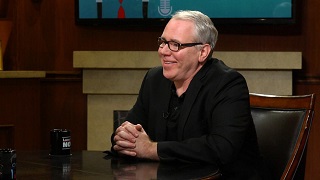
De Amerikaanse schrijver Bret Easton Ellis werd geboren op 7 maart 1964 in Los Angeles. Zie ook alle tags voor Bret Easton Ellis op dit blog.

Uit: Lunar Park

“As a writer you slant all evidence in favor of the conclusions you want to produce and you rarely tilt in favor of the truth. ...This is what a writer does: his life is a maelstrom of lying. Embellishment is his focal point. This is what we do to please others. This is what we do in order to flee ourselves. A writer's physical life is basically one of stasis, and to combat this constraint, an opposite world and another self have to be constructed daily. ...the half world of a writer's life encourages pain and drama, and defeat is good for art: if it was day we made it night, if it was love we made it hate, serenity becomes chaos, kindness became viciousness, God became the devil, a daugher became a whore. I had been inordinately rewarded for participating in this process, and lying often leaked from my writing life--an enclosed sphere of consciousness, a place suspended outside of time, where the untruths flowed onto the whiteness of a blank screen--into the part of me that was tactile and alive.”
(...)

“The heroin flowing through me, I thought about the last time I saw my father alive. He was drunk and overweight in a restaurant in Beverly Hills, and curling into myself on the bed I thought: What if I had done something that day? I had just sat passively in a restaurant booth as the midday light filled the half-empty dining room, pondering a decision. The decision was: should you disarm him? That was the word I remember: disarm. Should you tell him something that might not be the truth but would get the desired reaction? And what was I going to convince him of, even though it was a lie? Did it matter? Whatever it was, it would constitute a new beginning. The immediate line: You’re my father and I love you. I remember staring at the white tablecloth as I contemplated saying this. Could I actually do it? I didn’t believe it, and it wasn’t true, but I wanted it to be. For one moment, as my father ordered another vodka (it was two in the afternoon; this was his fourth) and started ranting about my mother and the slump in California real estate and how “your sisters” never called him, I realized it could actually happen, and that by saying this I would save him. I suddenly saw a future with my father. But the check came along with the drink and I was knocked out of my reverie by an argument he wanted to start and I simply stood up and walked away from the booth without looking back at him or saying goodbye and then I was standing in sunlight. Loosening my tie as a parking valet pulled up to the curb in the cream-colored 450 SL. I half smiled at the memory, for thinking that I could just let go of the damage that a father can do to a son. I never spoke to him again.”


 2126669-00ebc67475f66357b38357658f4cf157.jpg
Bret Easton Ellis (Los Angeles, 7 maart 1964)


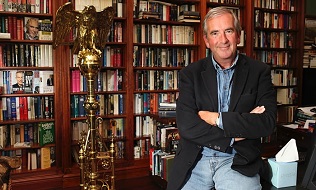
De Britse schrijver en journalist Robert Dennis Harris werd geboren op 7 maart 1957 in Nottingham. Zie ook alle tags voor Robert Harris op dit blog.

Uit: Munich

“Occasionally Legat glanced across the dining room to check the entrance. Perhaps it was his imagination but it seemed that the guests and even the waiters moving back and forth across the carpet between the dusky pink upholstered chairs were unusually subdued. There was no laughter. Soundlessly beyond the thick plate glass, forty or fifty workmen, some stripped to the waist in the humid weather, were digging slit trenches in Green Park.
There should remain no doubt for the whole world at this time that it is not one man, or one leader, who speaks but the whole German people. I know that in this hour the whole people—millions strong—agree with every one of my words (Heil).
He had listened to it on the BBC as it was delivered. Metallic, remorseless, threatening, self-pitying, boastful—impressive in its horrible way—it had been punctuated by the thumps of Hitler’s hand pounding the podium and by the roar of fifteen thousand voices shouting their approval. The noise was inhuman, unearthly. It had seemed to well up from some black subterranean river and pour out of the loudspeaker.
I am grateful to Mr. Chamberlain for all his efforts, and I have assured him that the German people want nothing but peace. I have further assured him, and I emphasise it now, that when this problem is solved, Germany has no more territorial problems in Europe.
Legat took out his fountain pen and underlined the passage, and then did the same with another, earlier reference to the Anglo–German Naval Agreement:”
 

 2126669-bbe1037934b81286b436dd5a976bdc9b.jpg
Robert Harris (Nottingham, 7 maart 1957)


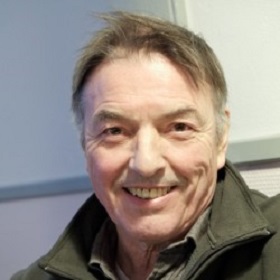
De Duitse dichter en schrijver Jürgen Theobaldy werd geboren op 7 maart 1944 in Straatsburg. Zie ook alle tags voor Jürgen Theobaldy op dit blog


Schnitte

Die Brombeerhecken dunkeln ein,
die Schlote der Verbrennungsöfen qualmen.
Öde nenne ich die Sterne über öden Fußballplätzen
und habe vermutlich recht damit.
Wir drehen in die Nacht hinaus, denk es, o Seele,
du bist wach, wie ich, du denkst es.
Und du wirst fleißig sein, dort draußen,
auf dir den morschen Schatten des Erdballs,
der nicht schwerer wiegt
als der Schatten hier auf meinem Kissen.
Schlaf ist Opium für die Seher!
Wir treffen uns im Innern des Dschungels,
den meine Schädeldecke überwölbt:
Wieder bin ich der Himmel in der großen Faust
unsrer funkelnden Verlassenheit.
Im Zwielicht treten wir hinaus ans Meer.
Aus den Spiegeln in der Neonbar
betrachten uns Ertrunkene : Gesichter blau,
die Fischer blau, Nachtvögel blau;
um die ich weinte, weint hier keiner.
In Leipzig finden wir uns vor dem Kino ein,
ohne Rücksicht darauf, was in Leipzig so
gerade läuft. Und in China tragen wir
ein Kind auf meinen Schultern,
das von Chinas Wundern plappert,
von Feuerwerk, Teerosen, roten Drachen.
Wir verstehen jedes Wort.
Tote Fische schwimmen mit dem Strom.
Zerschossene Panzer stehen im Wasser.
Die Vorstellung schließt mit dem Nachspann,
aus der schier endlos viele Namen getilgt sind.
Mit einem Schrei fährt meine Tocher hoch
aus ihrem Dschungel: Dämonen in Kinderkleidern,
modisch rostrot, stieben auseinander.
Dämmerlicht sickert in die Büschel Gras,
die Schlote qualmen. Du Seele, ich Jane.
Die Welt dreht bei. Wir steigen aus.
 

 2126669-ed23b666e331394ee90fb3947516b719.jpg
Jürgen Theobaldy (Straatsburg, 7 maart 1944)


De Franse schrijver Georges Perec werd geboren op 7 maart 1936 in Parijs. Zie ook alle tags voor Georges Perec op dit blog.

Uit: Les choses

« Leurs résultats furent honorables. Ils continuèrent sur leur lancée. Ils ramassèrent un peu partout des bribes de sociologie, de psychologie, de statistiques; ils assimilèrent le vocabulaire et les signes, les trucs qui faisaient bien: une certaine manière, pour Sylvie, de mettre ou d'enlever ses lunettes, une certaine manière de prendre des notes, de feuilleter un rapport, une certaine manière de parler, d'intercaler dans leurs conversations avec les patrons, sur un ton à peine interrogateur, des locutions du genre de: "... n'est-ce pas...", "... je pense peut-être...", "... dans une certaine mesure...", "... c'est une question que je pose...", une certaine manière de citer, aux moments opportuns, Wright Mills, William Whyte, ou, mieux encore, Lazarsfeld, Cantril ou Herbert Hyman, dont ils n'avaient pas lu trois pages.
Ils montrèrent pour ces acquisitions strictement nécessaires, qui étaient l'a b c du métier, d'excellentes dispositions et, un an à peine après leurs premiers contacts avec les études de motivation, on leur confia la lourde responsabilité d'une "analyse de contenu": c'était immédiatement au-dessous de la direction générale d'une étude, obligatoirement réservée à un cadre sédentaire, le poste le plus élevé, donc le plus cher, et partant le plus noble, de toute la hiérarchie. Au cours des années qui suivirent, ils ne descendirent plus guère de ces hauteurs.
Et pendant quatre ans, peut-être plus, ils explorèrent, interviewèrent, analysèrent. Pourquoi les aspirateurs-traîneaux se vendent-ils si mal? Que pense-t-on, dans les milieux de modeste extraction, de la chicorée? Aime-t-on la purée toute faite, et pourquoi? Parce qu'elle est légère? Parce qu'elle est onctueuse? Parce qu'elle est si facile à faire: un geste et hop? Trouve-t-on vraiment que les voitures d'enfant sont chères? N'est-on pas toujours prêt à faire un sacrifice pour le confort des petits? Comment votera la Française? Aime-t-on le fromage en tube? Est-on pour ou contre les transports en commun? A quoi fait-on d'abord attention en mangeant un yaourt: à la couleur? à la consistance? au goût? au parfum naturel? Lisez-vous beaucoup, un peu, pas du tout? Allez-vous au restaurant? Aimeriez-vous, madame, donner en location votre chambre à un Noir? Que pense-t-on, franchement, de la retraite des vieux? Que pense la jeunesse? Que pensent les cadres? Que pense la femme de trente ans? Que pensez-vous des vacances? Où passez-vous vos vacances? Aimez-vous les plats surgelés? Combien pensez-vous que ça coûte, un briquet comme ça? Quelles qualités demandez-vous à votre matelas?”

 2126669-108b1c5cbf8b776f3f2a071c12547e5e.jpg
Georges Perec (7 maart 1936 – 3 maart 1982)
Cover


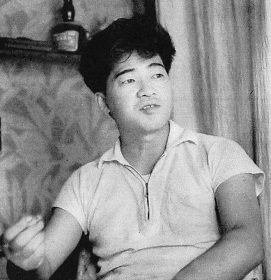
De Japanse schrijver Abe Kōbō werd geboren op 7 maart 1924 in Tokyo. Zie ook alle tags voor Abe Kōbō op dit blog.

Uit: The Box Man (Vertaald door E. Dale Saunders)

« Any empty box a yard long by a yard wide and about four feet deep will do. However, in practice, one of the standard forms commonly called a "quarto" is desirable. Standard items are easy to find, and most commercial articles that use standard-sized boxes are generally of irregular shape—various types of foodstuffs precisely adaptable to the container—so that the construction is sturdier than others. The most im-portant reason to use the standardized form is that it is hard to distinguish one box from another. As far as I know, most box men utilize this quarto box. For if the box has any strik-ing features to it, its special anonymity will suffer. Even the common variety of corrugated cardboard has recently been strengthened, and since it is semiwaterproof there is no need to select any special kind unless you are go-ing through the rainy season. Ordinary cardboard has better ventilation and is lighter and easier to use. For those who wish to occupy one box over a period of time, regardless of the season, I recommend the Frog Box, especially good in wet weather. This box has a vinyl finish, and as the name sug-gests, it is exceedingly strong in water. When new it has a sheen as if oiled, but apparently it produces static electricity easily, quickly absorbs dirt, and gets covered with dust; then the edge is thicker than the ordinary one and looks wavy. You can tell it at once from the common box. To construct your box there is no particular procedure to follow. First decide what is to be the bottom and the top of the box—decide according to whatever design there may be or make the top the side with the least wear or just decide ar-bitrarily—and cut out the bottom part. In cases where one has numerous personal effects to carry, the bottom part can be folded inward without cutting, and, with wire and tape, the two ends can be made into a baggage rack. Tape the ex-posed part of the edges at the three points on the ceiling and at the one on the side where they come together. The greatest care must be taken when making the ob-servation window. First decide on its size and location; since there will be individual variations, the following figures are purely for the sake of reference. Ideally, the upper edge of the window will be six inches from the top of the box, and the lower edge eleven inches below that; the width will be seventeen inches. After you have subtracted the thickness of the base to stabilize the box when in place (I put a magazine on my head), the upper edge of the window comes to the eyebrows.“
 

 2126669-dbc198b9dd732582f40605e2b74ae53a.jpg
Abe Kōbō (7 maart 1924 – 22 januari 1993)
In 1954


De Duitse schrijver Reinhard Kaiser werd geboren op 7 maart 1950 in Viersen. Zie ook alle tags voor Reinhard Kaiser op dit blog.

Uit: Der kalte Sommer des Doktor Polidori

„Polidori blickte wieder auf und sah nach der Öffnung zwischen den Regalwänden. Aber da er mit dem Buch ein paar Schritte näher an das Schaufenster getreten war, durch das graues Licht in den Laden fiel, konnte er das Pult nicht mehr sehen, sondern nur einen halbhohen schwarzen Schrank voller Bücher und Papiere. Auf dem Schrank stand ein leeres Glas, darin ein silberner Löffel. Die drei Schritte, die notwendig gewesen wären, um das Pult und das Mädchen auf dem Hocker noch einmal ins Blickfeld zu bekommen, konnte Polidori nicht tun. Der Buchhändler stand ihm im Weg. Polidori klappte das Buch zu, knöpfte seinen Mantel auf und schob es in eine Außentasche seines Jacketts.
»Was bin ich Ihnen schuldig, Monsieur?«
Der Buchhändler schien von Polidoris schnellem Entschluß überrascht. Er suchte noch nach dem Preis, den sein Kunde ohne Murren akzeptieren würde.
»Fünfundvierzig Francs, Monsieur. In Anbetracht der Seltenheit dieses Werkes muß ich das verlangen.«
Für fünfundvierzig Francs bekam man hierzulande auch sechs Flaschen guten Rheinwein. Polidori bezahlte und ging rasch hinaus.
Einen Fuß vor den anderen setzen, manchmal half das. Es gab Blicke, die die fernste Ferne zwischen Menschen einfach übersprangen. Im Gehen tastete Polidori durch das Tuch seines Mantels nach dem Buch. Steif schob es sich in der Tasche hin und her, ein totes Andenken an etwas, das aufgeblitzt, aber nicht Möglichkeit geworden war und erst recht nicht Gelegenheit. Schon der zweite Blick in den hinteren Raum des Ladens hatte sich nicht ergeben wollen.
Polidori sah jetzt häufiger zurück in die Richtung, aus der er gekommen war. Vergebens. Sogar den wenigen in faltenreiche Tücher gehüllten Frauengestalten, die ihm entgegenkamen, sah er aufmerksam ins Gesicht. Polidori verlangsamte seine Schritte.“

 

 2126669-bbda17fc19cff5598a3ab10258560447.jpg
Reinhard Kaiser (Viersen, 7 maart 1950)
Cover


De Duitse schrijver Manfred Gregor (pseudoniem van Gregor Dorfmeister) werd geboren op 7 maart 1929 in Tailfingen. Zie ook alle tags voor Manfred Gregor op dit blog.

Uit: Die Brücke

»Jawohl, Herr Unteroffi zier!«

»Los, Mann, gehn Sie, lassen Sie den Urwald roden! Möglichst Kahlschlag. Wegtreten!«
Zugegeben, Ernst Scholten hatte eine Frisur, die von einem militärischen Haarschnitt ziemlich weit entfernt war. Aber bisher hatte kein Mensch Ernst Scholten gesagt, wann er zum Haarschneiden gehen müsste. Und als er, eine Stunde nachdem er das Kasernentor passiert hatte, beim Friseur im Kasernenkeller saß, empfand er jeden Schnitt der Schere, jedes Rucken der Schneidemaschine als Schmach. Das und viele andere Kleinigkeiten, die sich im Lauf der vierzehn Tage in Ernst Scholten zusammengeballt hatten, standen jetzt im Duschraum drohend wie eine Ladung Dynamit hinter jedem Satz, den Ernst Scholten aus sicherer Deckung seinem Unteroffizier entgegenschleuderte.
Eine seltsame, spannungsgeladene Atmosphäre: zitternd, splitternackt unter der immer noch laufenden Brause, die Hände an die Oberschenkel gepresst und gar nicht mehr fröhlich, Karl Horber. Mit dem Rücken zu ihm gewandt, das Gesicht auf die sechs in der Ecke gerichtet, kalte Wut im Herzen und lauernd, Unteroffi zier Schaubeck. In der Ecke der Verein: Walter Forst, Siegi Bernhard, Albert Mutz, Jürgen Borchart, Klaus Hager und Scholten.
Die fünf um Scholten kamen immer noch nicht recht mit. Aber sie begannen zu spüren, dass hinter dieser Auseinandersetzung mehr steckte als einer der bekannten Streiche von
»Winnetou«.
Scholten hatte diesen Spitznamen schon seit Langem. Sein pechschwarzes Haar, das hagere, gelbliche Gesicht mit der jäh vorspringenden Nase und dem spitzen Kinn hatten etwas
Kämpferisches an sich. Es gab Leute, denen war Scholten vom ersten Augenblick an widerlich. Schaubeck gehörte zu ihnen.
Wie würde diese Auseinandersetzung enden? Wie überhaupt konnte sie nur enden?”
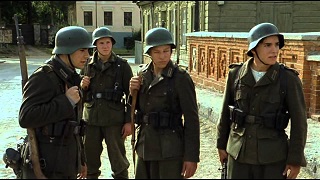
 

 2126669-4a37669ff0c7225a9b1ceb7144ee5620.jpg
Manfred Gregor (Tailfingen, 7 maart 1929)
Scene uit de remake van “Die Brücke”, 2008


De Nederlandse dichter en schrijver Jan Frederik Helmers werd geboren op 7 maart 1767 in Amsterdam. Zie ook alle tags voor Jan Frederik Helmers op dit blog.


De Dichter (Fragment)

Zie 't ruwe menschdom: wat vertoning!
Verlaagd, verbasterd zwerft het rond,
Heeft hol of boom of klip tot woning,
En voedt met de eikels zich op d'adderrijken grond.
In woeste beestlijkheid verzonken.

Kent, voelt zijn ziel geenszins de vonken
Van 't schoon, dat ons het hart doordringt.
Beroofd van taal , kan 't slechts een rauwe noodkreet slaken ,
Als 't hongrig boschgedrocht, met opgesperde kaken,
Het als een wissen prooi bespringt.

De straal der Godheid , 's menschen reden ,
Is niets in dien gevloekten nacht;
De schrik, 't verraad sluipt om zijn schreden:
Deugd, orde en wet zijn niets; 't is al geweld en kracht.
Hebt gij , ó God van wet en orden !

Het menschdom tot dien stand doen worden?
Leeft, sterft hij als een dier en plant?
Waar toe zijn Reden dan, schoon nu nog in hem slapend',
Waarom hem niet veel eer met 's Tijgers klaauw gewapend ,
Of met de kracht van d'Elefant.
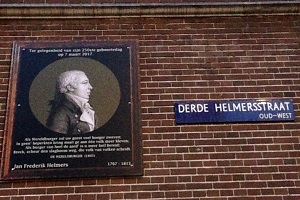
 

 2126669-466370f4185ba4c7434f05ede889acf3.jpg
Jan Frederik Helmers (7 maart 1767 – 26 februari 1813)
Gedenkplaat in Amsterdam aan het begin van de Derde Helmersstraat


De Italiaanse dichter en schrijver Alessandro Francesco Tommaso Manzoni werd geboren op 7 maart 1785 in Milaan.Zie ook alle tags voor Alessandro Manzoni op dit blog.


The fifth of May (Fragment)

From Pyramids to heights alpine
Flashed that god's swift lightning-stroke;
From Manzares to the Rhine
Rapid, crashing thunders broke,
Rolling on from Scylla’s sea
Shaking farthest Muscovy.

Was this, glory just and true?
Sentence waits posterity.
Bow we to the Highest’s view,
Willing us in him to see
Stamped a trace more vast and grand
Of His own resistless hand.

With hurricanes of anxious joy,
Earthquake exploits of wild renown,
A heart in unsubdued annoy
In slavery gloats upon the crown;
And gains the goal and grasps a prize
'T was madness there to set his eyes.

All he tasted; glory growing
Greater after great embroil;
Flight; and victory bestowing
Palace; and the sad exile;
Twice in the dust a victim razed,
Twice on the altar victim blazed.


Vertaald door J. F. Bingham
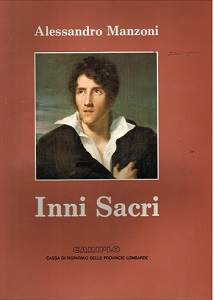
 

 2126669-b7bfea2c8a49d01398035fb2b6b44a6f.jpg
Alessandro Manzoni (7 maart 1785 – 22 mei 1873)
Cover


Zie voor nog meer schrijvers van de 7e maart ook mijn blog van 7 maart 2016 en ook mijn blog van 7 maart 2015 deel 2.

Zie voor bovenstaande schrijvers ook mijn blog van 7 maart 2007 en ook mijn blog van 7 maart 2008 en eveneens mijn blog van 7 maart 2009.
Geschreven door Romenu om 18:15 Reageer op dit bericht

Patrick deWitt, Gabriel García Márquez, Jeremy Reed, Marijke Hanegraaf, Thomas Acda, Günter Kunert, Clark Accord, Elizabeth Barrett Browning, Michelangelo

De Canadese schrijver en scenarist Patrick deWitt werd geboren op 6 maart 1975 op Vancouver Island. Zie ook alle tags voor Patrick deWitt op dit blog.

Uit: Ablutions

“You are sitting in the magical Ford outside the bar when Junior the crack addict walks up and steps into the car and you both sit there watching the building. His smell is otherworldly, like a demon from deep in the earth’s crust, and he repeatedly passes the fiercest gas; he has been too long without his drugs and his body is causing a fuss. He does not greet you and you do not greet him; a rift has grown between you recently, or rather a rift has grown between Junior and everyone—he is in the worst way and the doormen say he has been robbing people with his machete blade after hours. You are not afraid of him and you do not believe he would ever do you any harm but you wish he were somewhere other than sitting at your side, wondering about the contents of your pockets.
He is fidgeting with a lighter and finally he says to you, “I need twenty dollars, man. I need it bad.” When you tell him you haven’t got any money he punches your dashboard and pouts, asking himself how long this torture might go on. You tell him to wait a minute and you enter the empty bar, retrieving twenty dollars from the safe. You walk it out to him and he is relieved to see this money but wants to know where it came from. When you tell him you stole it he looks worried and asks if you won’t get into trouble, which is insulting because you know he does not actually care one way or the other. “Do your drugs or don’t do your drugs,” you say. “Don’t stand around sobbing and bitching about it.” He straightens himself up and nods and hustles off to find his dealer. All through the night you are bothered by guilt and self-loathing for speaking with him so harshly and angered that such a man could conjure these emotions in you.
Discuss your feeling of wonder when the pilfered twenty dollars is not reported missing at the end of the night. Discuss your routine of thieving that stems from this incident, and the criminal spree you quickly embark upon.
Your plan is to keep an at-home stolen-monies pile, separate from your life-monies pile, and to cultivate it to a respectable size and then, at some key point, utilize it dramatically. Within a month you have three hundred dollars and you feel great relief and satisfaction, as if justice has been served, and you wonder why you waited until this late date to begin stealing from the owner, who you (on a whim) decide is a bad man who expects you to gladly damage your mind and body with this potentially deadly work of washing dishes in a bar, and who has never asked you how your feelings were doing even though it is fairly obvious that they, your feelings, have been hurt and are still hurting yet.”


 2126391-388a061b87b873a24e6c9d0d849b65ad.jpg
Patrick deWitt (Vancouver Island, 6 maart 1975)


De Colombiaanse schrijver Gabriel García Márquez werd op 6 maart 1928 in de kustplaats Aracataca geboren. Zie ook alle tags voor Gabriel García Márquez op dit blog.

Uit: Honderd jaar eenzaamheid (Vertaald door MarioleinSabarte Belacortu)

“Vele jaren later, toen hij Voor het vuurpeloton stond, moest kolonel Aureliano Buendía vast aan die verre middag denken waarop zijn vader hem had meegenomen om het ijs te leren ken-nen. Macondo was in die tijd nog een gehucht van twintig huis-jes van leem en riet op de oever van een snelstromende rivier die zich met haar doorschijnende wateren over een bedding spoedde van gladde stenen, wit en enorm als prehistorische eieren. De we-reld was nog zo jong dar veel dingen geen naam hadden, en als je het over ze wilde hebben, moest je ze met je vinger aanwijzen. Elk jaar verscheen er in de maand maan een haveloze zigeuner-familie die haar tent vlak bij het gehucht opsloeg en met veel mis-baar van fluiten en trommels de nieuwe uitvindingen bekend-maakte. Als eerste brachten ze de magneet mee. Een grote dikke zigeuner met een woeste baard en handen als mussenpootjes, die zich voorstelde als Melquíades, hield een gruwelijke openbare demonstratie van wat hij zelf het achtste wonder van de wijze al-chemisten uit Macedonië noemde. Hij ging van huis tot huis met twee metalen staven die hij achter zich aan sleepte, en alle men-sen schrokken zich wild toen ze zagen dat de grote en de kleine pannen, de nijptangen en de kookkomforen van de muur vielen, toen ze de planken hoorden kraken door de verwoede pogingen van spijkers en schroeven zich los te wrikken, en voorwerpen die ze al tijden kwijt waren, tevoorschijn kwamen op plekken waar ze er het vaakst naar hadden gezocht en zich in ordeloze vlucht achter de magische ijzers van Melquiades aan sleepten. 'De din-gen hebben een eigen leven,' verkondigde de zigeuner, die een sterk accent had, 'je moet hun ziel wakker schudden, dat is alles.' José Arcadio Buendfa, wiens mateloze verbeeldingskracht altijd verder ging dan het vernuft van de natuur en nog veel verder dan de wonderen en de magie, bedacht dat hij van die nutteloze uit-vinding gebruik kon maken om goud uit de grond te halen.”


 2126391-e8973a1133adb43cc4225a1fff188266.jpg
Gabriel García Márquez (6 maart 1928 - 17 april 2014)
Cover


De Nederlandse dichteres Marijke Hanegraaf werd op 6 maart 1946 geboren in Tilburg. Zie ook alle tags voor Marijke Hanegraaf op dit blog.


Het oog van de duif

Zijn kop opzij ligt op de drempel
van mijn huis een duif te sterven.
In zijn oog zie ik dat hij het weet.

Een paar veertjes ginds op het pad
een drupje bloed op een tegel
zo eenvoudig laat de duif het leven

precies in mijn portiek, met zon erop.
Ik leg hem behoedzaam in een doosje.
Dat mijn tuin voor hem de wereld was.

En nu vertrouwt de duif de dood.
Hij vouwt zijn vleugels om zich heen
doet zichzelf een rouwjas om.


Iets niet vinden

Bij het opruimen van de werkkast vind ik
een stukje metaal van twee bij drie

met een bizar buisje. Ik wist niet
dat zoiets bestond en dat ik het had.

Het ziet er vreemd uit
maar nuttig en doelgericht.

Zo onbuigzaam aanwezig
en onweerlegbaar de moeite waard.

Ik draai het tussen mijn vingers alsof
een gebaar het gebruik kan onthullen.

Iemand kan zeggen waar het voor dient
kan zeggen gooi het niet weg

iemand die in de wereld de verbindingen kent.


2126391-fd2ae050badefaacd581acc96f9481f6.jpg 
Marijke Hanegraaf (Tilburg, 6 maart 1946)


De Engelse dichter en schrijver Jeremy Reed werd geboren op 6 maart 1951 op Jersey. Zie ook alle tags voor Jeremy Reed op dit blog.

Uit: Boy Caesar

“Alone and waiting for his tutor to return him to the world of Ovid's Metamorphoses, he busied himself regrouping a vase of candy-pink peonies. The cerise, fist-sized flowers were the colour of sunsets he had known while out riding, the sweat stinging his eyes as he pushed a strawberry roan to overkill in the foothills. His mother had taught him always to be alert to his destiny. For years he had devoted himself exclusively to the cult of the sun-god Elagabal, worshipped at Emesa in the form of a black phallic stone, universally believed to have dropped there out of the sky. He was, as he reminded himself, blood of the Emesan dynasty as well as an emperor in the making. But he was, above all, impatient. The overbite he brought to life was a response to the feeling that he would die young. He could get no purchase on the idea of growing old and of his biological arc peaking.
When his tutor came into the room it was to complain of the violent rainstorms. Despite the use of a saucer-shaped orange umbrella, he was wet through. Heliogabalus had a lot of time for the unorthodox Serge, a man who pointed up the aesthetic aspect of every study. Serge reminded him at times of the little incidental detail used to decorate an almond cake: the cherry dipped in alcohol.
'We'll look at what Ovid has to say of Tiresias' encounter with the snakes today,' Serge said. 'But there's important news awaiting you, and the lesson may be cut short. Something to do with war and the necessity to act fast.'
'How I wish they could get it over quickly,' Heliogabalus said. 'I've no interest in politics.'
'We live or die by affairs of state. You must learn at all times to be diplomatic.'
'But I won't be manipulated,' Heliogabalus fired off, feeling his individuality come up in a rush of confused emotions.
'These are dangerous things for a young man to say,' Serge cautioned, the tone of his voice implying a shared complicity of ideas.
Heliogabalus could hear the big rains washing the glass conservatory. His mind jumped to Ovid's story of Tiresias and how the latter had undergone a sex-change after disturbing two snakes mating in the forest. The way he interpreted it was to read the encounter as a metaphor for the subject's initiation into the underworld mysteries. Tiresias in being changed into his opposite was also engaged in the process of becoming himself. Serge had encouraged him in his particular take on the theme of transformation, a subject so dear to Heliogabalus that he could place himself in the story and imagine the powerful hormonal switch triggered in his endocrine glands. He had wanted to call musicians in and make a performance of the scene, but Serge had advised against it, saying that the intentions could be misinterpreted.”


 2126391-0bd40c114be35239d36677435d299384.jpg
Jeremy Reed (Jersey, 6 maart 1951)
Cover


De Nederlandse cabaretier, acteur, schrijver en zanger Thomas Acda werd geboren in Amsterdam op 6 maart 1967. Zie ook alle tags voor Thomas Acda op dit blog.

Uit: Onderweg met Roadie

“Vier mensen voor me in de rij, en de vrouw bij de kassa die net zo hoog is als breed slaat weer verkeerd aan. Ik zal in de tussentijd uitleggen wat Powers of Ten is. Fantastische dvd, die steeds keer tien vergroot en verkleint. Een man en een vrouw liggen aan het meer bij Chicago te picknicken. Er wordt uitgezoomd, we gaan steeds hoger, verliezen die twee mensen uit het oog en komen in de dampkring, het heelal en verder en verder tussen de sterren. En dan gaan we terug. Naar beneden weer. Naar dat stel. En beyond, want we gaan de arm van die vrouw in. Het bloedstelsel, tot en met het kleinste atoom. Als ik die dvd tegenkom, koop ik hem. Aanvankelijk omdat ik bang was dat die eerste dvd ermee op zou houden — wat onzin is, want ik kijk hem nooit. Door slijtage zal-ie niet ten onder gaan. Later kocht ik hem steeds omdat ik vond dat ik een tik moest hebben. Een mens moet toch iets geks hebben, iets waaraan je herkend wordt. Je signatuur. Ik reken af en loop over het parkeerterrein terug naar de auto, een Land Rover D110 cabriolet. Jawel, die bestaat, al is het de enige ter wereld en is hij niet geheel vrijwillig cabriolet geworden. Maakt niet uit, dat dak rammelde als een gek. Dat is allemaal allang gebeurd, daar kom ik op terug. Dat beest daar is Roadie, in die auto zonder dak, achter het stuurwiel. Lach maar, die hond gaat een medaille krijgen. Dezelfde als Elvis ooit kreeg. Van Nixon. Alleen krijgt Roadie hem niet van een liegende president die de medaille voor de war on drugs aan de meest charismatische junk ooit uitreikte. Het hondje is een dingo, zegt zijn eigenaresse. Gevonden langs de kant van de weg, net buiten Los Angeles. Op Highway 10, San Bernardino. Enfin, ik vertel het allemaal nog wel, maar laat ik eerst instappen en het laatste stuk afleggen. Deze dingo moet in Los Angeles worden afgeleverd en dan is mijn loutering een feit. Start van een nieuw leven en daar heb ik heel veel zin in. Ik gooi de dvd op de achterbank en zeg tegen Roadie dat hij achter het stuur vandaan moet komen. Niet alles hoeft te veranderen. En dan is het idee al geboren. Ik ken het stuk weg dat we straks gaan rij den. Jaren geleden hebben Ex en ik op onze huwelijksreis onze auto midden op de weg stilgezet en zijn op het asfalt gaan liggen — we lagen er zo onbeweeglijk dat de gieren kwamen cirkelen. Tenminste, dat was de bedoeling. Ik weet niet of ze ook echt gekomen zijn. Normaliter zou ik die gieren moeiteloos in het verhaal verweven hebben. Het is veel beter voor het verhaal, toch? Paar gieren. En bovendien, wat ga jij doen, het controleren? We rijden over een klein woestijnweggetje richting Las Cruces. 70 mijl per uur, zon brandend boven ons, maar wij zijn allang niet meer onder de indruk.”


 2126391-92dacbe7bd10fd58cbd544f70ce0f1ed.jpg
Thomas Acda (Amsterdam, 6 maart 1967)


De Duitse dichter en schrijver Günter Kunert werd geboren op 6 maart 1929 in Berlijn. Zie ook alle tags voor Günter Kunert op dit blog.


Für mehr als mich

Ich bin ein Sucher
Eines Weges
Der breiter ist
Als ich.

Nicht zu schmal.
Kein Ein-Mann-Weg.
Aber auch keine
Staubige, tausendmal
überlaufene Bahn.

Ich bin ein Sucher
Eines Weges.
Sucher eines Weges
Für mehr
Als mich.


Leute

Kleine Leute, große Leute
gab es gestern, gibt es heute
wird es sicher immer geben,
über, unter, hinter, neben

dir und mir und ihm und ihr:
Kleine, Große sind wie wir.
Größer als ein Großer kann
aber sein ein kleiner Mann

Klein und groß sagt gar nichts aus,
sondern nur, was einer daraus
für sich selbst und alle macht
Darum habe darauf acht:

Wer den andren hilft und stützt
und sich nicht nur selber nützt,
hat das richtige Format –
ob ein Zwerg er oder grad

lang wie eine Latte ist
oder einen Meter mißt
Kleine Leute, große Leute
gab es gestern, gibt es heute.


 2126391-298ca62190ebb2f52a8b01c440da2351.jpg
Günter Kunert (Berlijn, 6 maart 1929)


De Surinaamse schrijver Clark Accord werd op 6 maart 1961 geboren in de Surinaamse hoofdstad Paramaribo. Zie ook alle tags voor Clark Accord op dit blog.

Uit: The Queen From Paramaribo (Vertaald door Susan Massotty)

“She took a snowy white handkerchief from her bag and sprinkled it with Boldoot.
Gently, she dabbed the cologne on her neck and cleavage and sank back into the soft cushions, enjoying the perfume’s refreshing coolness. She checked her make-up in the rear-view mirror. The black stripe of kohl showed her eyes to great advantage – it made them look mysterious, an effect that had been accentuated by the use of taupe eye shadow. Bloodred lipstick had been carefully applied to her full lips, just inside the lip line. She had added a little blush just under the cheekbones to soften the angular shape of her face. Satisfied with what she saw in the mirror, she patted her face here and there to eliminate the shiny spots.
With a slight jolt, the car came to a stop outside the Halikibe. The driver drummed his fingers impatiently on the walnut dashboard while he waited for someone to open the car door for her. The path to the en trance had been cordoned off, and a row of burly young men had been stationed at intervals to hold back the overly eager public.
Like vultures, the crowd descended on the car, and people bent over to stare in the window.
“She looks like a princess!” cried a woman in an awestruck voice.
Betsy’s evening was complete. She was in seventh heaven. A compliment from another woman, no less.
Gallantly, one of the bodyguards opened the door for her. She thanked him with a majestic nod. The crowd held its breath.
For one second you could have heard a pin drop. Then the silence was broken.
“Wow, what a dress! She sure is beautiful!”
“I’ve never seen a dress like that. There must be at least a thousand beads...!”

 2126391-718c838e4798b6a15c14599f4c3651e3.jpg
Clark Accord (6 maart 1961 – 11 mei 2011)
Cover


De Engelse dichteres Elizabeth Barrett Browning werd op 6 maart 1806 geboren in Durham, Engeland. Zie ook alle tags voor Elizabeth Barrett Browning op dit blog.


Sonnet VI

Go from me. Yet I feel that I shall stand
Henceforward in thy shadow. Nevermore
Alone upon the threshold of my door
Of individual life, I shall command
The uses of my soul, nor lift my hand
Serenely in the sunshine as before,
Without the sense of that which I forbore--
Thy touch upon the palm. The widest land
Doom takes to part us, leaves thy heart in mine
With pulses that beat double. What I do
And what I dream include thee, as the wine
Must taste of its own grapes. And when I sue
God for myself, He hears that name of thine,
And sees within my eyes the tears of two.


Sonnet VII

The face of all the world is changed, I think,
Since first I heard the footsteps of thy soul
Move still, oh, still, beside me, as they stole
Betwixt me and the dreadful outer brink
Of obvious death, where I, who thought to sink,
Was caught up into love, and taught the whole
Of life in a new rhythm. The cup of dole
God gave for baptism, I am fain to drink,
And praise its sweetness, Sweet, with thee anear.
The names of country, heaven, are changed away
For where thou art or shalt be, there or here;
And this . . . this lute and song . . . loved yesterday,
(The singing angels know) are only dear
Because thy name moves right in what they say.


 2126391-9b67a3584ec7ddcfb794e73bf2b9b3a1.jpg
Elizabeth Barrett Browning (6 maart 1806 – 29 juni 1861) 
Boekenkast met borstbeelden van Robert en Elizabeth Barrett Browning in Casa Guidi, Florence. Het huis werd door het echtpaar bewoond tussen 1847 en Browning's dood in 1861 


De Italiaanse beeldhouwer, schilder, architect en dichter Michelangelo werd geboren op 6 maart 1475 in Caprese. Zie ook alle tags voor Michelangelo op dit blog.


Love Feeds The Flame Of Age

When masters bind a slave with cruel chain,
And keep him hope-forlorn in bondage pent,
Use tames his temper to imprisonment,
And hardly would he fain be free again.
Use curbs the snake and tiger, and doth train
Fierce woodland lions to bear chastisement;
And the young artist, all with toil forspent,
By constant use a giant's strength doth gain
But with the force of flame it is not so:
For while fire sucks the sap of the green wood,
It warms a frore old man and makes him grow;
With such fine heat of youth and lustihood
Filling his heart and teaching it to glow,
That love enfolds him with beatitude.
If then in playful mood
He sport and jest, old age need no man blame;
For loving things divine implies no shame.
The soul that knows her aim,
Sins not by loving God's own counterfeit-
Due measure kept, and bounds, and order meet.


Vertaald door John Addington Symonds


 2126391-f91baa993cf94903ae301cf8fb1bac85.jpg
Michelangelo (6 maart 1475 – 18 februari 1564) 
Portret door Daniele da Volterra, ca. 1544


Zie voor nog meer schrijvers van de 6e maart ook mijn blog van 6 maart 2016 deel 2 en eveneens deel 3.

Zie voor bovenstaande schrijvers ook mijn blog van 6 maart 2007 en ook mijn blog van 6 maart 2008 en eveneens mijn blog van 6 maart 2009.

Geschreven door Romenu om 18:39 Reageer op dit bericht

Ada Christen

De Oostenrijkse dichteres en schrijfster Ada Christen werd geboren op 6 maart 1839 in Wenen. Zij groeide in eerste instantie op in welvaart en financiële zekerheid. Vanwege zijn betrokkenheid bij de revolutie van 1848 werd haar vader veroordeeld tot meerdere jaren gevangenisstraf, aan de gevolgen waarvan hij jong zou sterven. Het gezin raakte daardoor verarmd. Christen werd op 15-jarige leeftijd actrice en trad toe tot een groep rondreizende acteurs. Ze trouwde met de Hongaarse edelman Sigmund von Neupar en keerde terug naar Wenen. Haar enige kind stierf in 1866, en haar eerste echtgenoot, geestelijk ziek, stierf in 1868. Haar eerste gedicht, “Lieder einer Verlorenen”, werd geschreven bij het sterfbed van haar man en gepubliceerd met de hulp van de schrijver Friedrich von Saarland. Aangemoedigd door vrienden begon ze rond deze tijd onder pseudoniemen te publiceren in tijdschriften. “Lieder einer Verlorenen” was erg populair en werd het jaar daarop opnieuw uitgegeven. In totaal publiceerde Christen vier poëziebundels. Ze schreef ook korte verhalen en schetsen over het overleven in de marge. In 1873 trouwde zij met de edelman Adalmar von Breden en Dit huwelijk stelde haar in staat om zich bij de Weense elite aan te sluiten en zo haar weg te vinden in de literaire cirkel waartoe ook Ferdinand von Saar, Friedrich Hebbel en Ludwig Anzengruber behoorden. De verergering van een eerder opgetreden zenuwziekte dwong haar om zich volledig uit het publieke leven terug te trekken. Kuuroorden en reizen naar Venetië, Menton en Berchtesgaden brachten geen verbetering. Christen leefde daarna een teruggerokken bestaan op het landgoed Einsamhof in Inzersdorf, waar zij op 19 mei 1901 stierf.


Elend

Hab oft nicht zurecht mich gefunden
Da draußen im Gedränge,
Und oft auch wieder wurde
Die Welt mir fast zu enge.

Dann liebt' ich schnell und lebte schnell
Und schürte mein Verderben
Der Pöbel johlte – ich lachte
Zu meinem lustigen Sterben.


Im Concert

Die traurige Kindheit,
Des Vaters Tod.
Der Jugend Blindheit,
Die herbe Noth,
Die Wintertage,
Das dünne Kleid,
Die Sorg' und Plage,
Das Seelenleid …
Die Gleichgiltigkeit,
Die schwer wie Erz,
Die schmerzlose Zeit –
Die mehr als Schmerz …
Das alles wogte,
Wieder vorbei,
Mit leisem Schluchzen
Und dumpfem Schrei,
Als deine Hand
Durch die Saiten glitt –
— — —
O, wie ich litt! –


 2199143-9633b32fac81cb067f100ec1baa8e4e1.jpg
Ada Christen (6 maart 1839- 19 mei 1901)

Geschreven door Romenu om 00:00 Reageer op dit bericht

Akwasi

De Nederlandse rapper, columnist, schrijver en acteur van Ghanese afkomst Akwasi Owusu Ansah (artiestennaam Akwasi) werd geboren in Amsterdam op 6 maart 1988. In 2007 richtte Akwasi het rapduo Zwart Licht op met Hayzee, die hij vijf jaar eerder op de middelbare school had leren kennen. Tijdens liveshows nam ook de rapper Leeroy deel. Ze brachten hun muziek uit via het label Top Notch. Verschillende albums bereikten de hitlijsten, en ze werden onderscheiden met drie State Awards. Ondertussen volgde Akwasi een theateropleiding in Maastricht die hij afrondde in 2012. Naast zijn opleiding sloot hij zich aan bij theatergroep Likeminds. Via Likeminds kon hij stage lopen bij het Zuid-Afrikaanse muziek- en theatercollectief Afrikaaps. Hij was te zien in “Hate”, de Britse theaterbewerking van de Franse film La haine. Verder had hij bijrollen in de televisieseries Feuten, Toren C en De Vluchtkerk en de korte films Zorn en Always hardcore. Ook was hij presentator bij De slavernij voorbij van de NTR. Ondertussen zette Akwasi in 2012 zijn eerste stappen als solorapper, al verliet hij Zwart Licht niet. Met het minialbum “Daar ergens” (2014) bracht hij een ode aan het oeuvre van zanger/theatermaker Bram Vermeulen. Het volledige album Daar ergens volgde erna. Hierop zijn tweeëntwintig nummers te horen, sommige in samenwerking met andere artiesten onder wie Typhoon, Lange Frans, Giovanca, Charly Luske en Vermeulen zelf (oude opnames). Het hiphopalbum stond een week in de Album Top 100. Het nummer Dorst werd bekroond met goud. Daarnaast richtte hij het label Neerlands Dope op dat zich in brede zin richt op cultuur en daarnaast op het geven van een podium aan opkomend talent. Sinds 2015 is hij geregeld te zien bij De Wereld Draait Door, als tafelheer en spoken word-artiest. Als lid van Zwart Licht is hij een van de presentatoren van het SoundCloud-radioprogramma Grimeyard dat zich richt op de muziekstroming grime. In oktober 2018 verschijnt zijn debuutbundel "Laten we het er maar niet over hebben', een cocktail van poëzie, levenswijsheden en fascinerende uitspraken verpakt in een plastisch, vaak confronterend taalgebruik.


mug

het is stil
donker
de kaars brandt

ik sleur pigmentvlekken met me mee
op mijn linkerarm

heb een litteken dat bijna niet te zien is
op mijn rechterhand

maar ik zie 't

de mug vliegt net zo lang
om de kaars
totdat hij zijn vleugels brandt

vroeger schaamde ik mij
om mijn onderlip
een groot probleem

mijn
met roze bevlekte lip
leek namelijk niet
op die van de mensen
om me heen

wist niet wat voor kracht ik in mij had
toen ik me schaamde voor mijn huidskleur
en me schaamde voor mijn haar

ik ben niet met de grote massa
geen lid van de grote kudde daar

nu ben ik trotser dan ooit
en geloof ik in mijn inzet
de mug had een impact

ik dompel wat kaarsvet
op de zojuist gevallen
icarus

laten we het over iets anders hebben


 2195473-8540b59dbd17e3df5051e868d748f819.jpg
Akwasi (Amsterdam, 6 maart 1988)

Geschreven door Romenu om 00:00 Reageer op dit bericht

Meer van Romenu

↑ Terug naar de berichten