Naar de inhoud

Romenu

Over literatuur, gedichten, kunst en cultuur
akke.beakke.be

Berichten van 10 april 2018 tot 11 april 2018

Leonard Nolens, Mark Strand, Silvia Avallone, Walid Soliman, Dorothy Allison, Hubert Nyssen, Rolf Schilling, Glenway Wescott, Claude Tillier
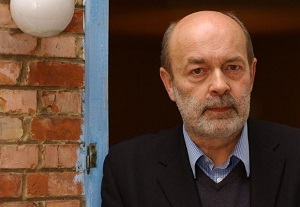
De Belgische dichter en schrijver Leonard Nolens werd geboren in Bree op 11 april 1947. Zie ook alle tags voor Leonard Nolens op dit blog.


Bed

Ik ben niet gemaakt om 's avonds de trap op te gaan
Naar het smalste bed van de wereld.
Ik krijg het aan niemand verkocht.

Ik ben niet gemaakt om 's nachts het licht uit te doen
En mijn ogen te sluiten alleen.
Kon iemand dat maar in mijn plaats.

Ik ben niet gemaakt om wakker te worden 's ochtends
Met een opgeschoonde kop.
Ik doe alles verkeerd in mijn slaap.

Ik ben niet gemaakt om het huis uit te gaan,
Om boven de hondenweide de blaffende zee te zien
Van licht waaraan geen touw valt vast te knopen.

Ik ben niet gemaakt om in het vergezicht
Van een kantoorlandschap te zitten zweten
Onder de zon van een baas.
Voor bredere bedden heeft hij geen geld.

Ik ben niet gemaakt.


Meeuwen voeren

1
Als herten in de verte dorstend naar land
Burlen de schepen 's nachts en wekken mijn vriendin.
Wij zijn ook nog maar pas naar hier gekomen
Om nieuw leven. Oude liefde wou dat zo.

's Ochtends tilt het noorderlicht de slaapvertrekken
Uit hun voegen, hemelt ons hier langzaam op
In een machtig geheel, een helende verblinding.
Daar kunnen wij in schuilen voor elkaar.


2
Wij staan op het terras te praten met een wolk
Van af- en aanvliegende meeuwen, geven namen
Aan kiftende snavels die ons brood betwisten,
Ons vlees vliegen naar de stampende haven.

Zij houdt zo van hun magnifieke wreedheid, de zwevende
Obsceniteit van al die malse zatgevreten lijven,
Hun opvliegende natuur, hun vleesgeworden honger.
Zo aards en zo gehemeld zijn ze zeer waarschijnlijk
De krijsende gedachten van haar dode God.

Ze komen gulzig eten uit mijn lege handen
Op het Zuid, het nieuwe huis dat zij me leert,
Waar wij vanouds de werkelijkheid ten einde dromen
Van liefde die dat burlen hoort en niet kan slapen.


 2137367-a50d4cd4916cec1cb73ab74cf827dea5.jpg
Leonard Nolens (Bree, 11 april 1947)


De Amerikaanse dichter en schrijver Mark Strand werd geboren op 11 april 1934 in Summerside, Prince Edward Island, Canada. Zie ook alle tags voor Mark Strand op dit blog.


The View

For Derek Walcott

This is the place.
The chairs are white. The table shines.
The person sitting there stares at the waxen glow.
The wind moves the air around, repeatedly,
As if to clear a space. ‘A space for me,' he thinks.
He's always been drawn to the weather of leavetaking,
Arranging itself so that grief - even the most intimate -
Might be read from a distance. A long shelf of cloud
Hangs above the open sea with the sun, the sun
Of no distinction, sinking behind it - a mild version
Of the story that is told just once if true, and always too late.
The waitress brings his drink, which he holds
Against the waning light, but just for a moment.
Its red reflection tints his shirt. Slowly the sky becomes darker,
The wind relents, the view sublimes. The violet sweep of it
Seems, in this effortless nightfall, more than a reason
For being there, for seeing it, seems itself a kind
Of happiness, as if that plain fact were enough and would last.


XVI

It is true, as someone has said, that in
A world without heaven all is farewell.
Whether you wave your hand or not,

It is farewell, and if no tears come to your eyes
It is still farewell, and if you pretend not to notice,
Hating what passes, it is still farewell.

Farewell no matter what. And the palms as they lean
Over the green, bright lagoon, and the pelicans
Diving, and the glistening bodies of bathers resting,

Are stages in an ultimate stillness, and the movement
Of sand, and of wind, and the secret moves of the body
Are part of the same, a simplicity that turns being

Into an occasion for mourning, or into an occasion
Worth celebrating, for what else does one do,
Feeling the weight of the pelicans' wings,

The density of the palms' shadows, the cells that darken
The backs of bathers? These are beyond the distortions
Of change, beyond the evasions of music. The end

Is enacted again and again. And we feel it
In the temptations of sleep, in the moon's ripening,
In the wine as it waits in the glass.
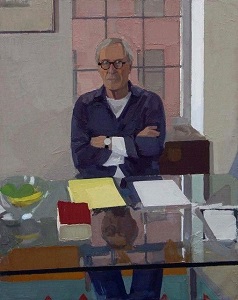
 

 2137367-71cd229be80f17643a1fbb9c4d549a9f.jpg
Mark Strand (11 april 1934 – 29 november 2014)
Portret door John Dubrow, 2010 - 2015


De Italiaanse schrijfster Silvia Avallone werd geboren in Biella op 11 april 1984. Zie ook alle tags voor Silvia Avallone op dit blog.

Uit: Swimming to Elba (Vertaald door Antony Shugaar)

“It’s an entire zoo in here: pig iron everywhere, cranes of every species and variety. Rusted animals with horned heads… The dense black sludge of molten metal was bubbling in the crucibles, potbellied swiveling barrels running along on the mill trains. Giant tanks on wheels that looked like primordial creatures… Metal was everywhere, in the process of birth. Unceasing cascades of steel and glistening cast iron and viscous light. Torrents, rapids, estuaries of molten metal coursing through the flow lines, into the ampules of the ladles and pouring out into the tundishes to drain into the molds for furnaces and trains... Raw materials were being transformed at every hour of the day and night… You could feel the blood rushing through your arteries at a fantastic velocity in there, and from the arteries to the capillaries, while your muscles built up in tiny fractures: You were regressing to the animal state. Alessio was small and alive in this vast burgeoning organism.
(...)

He could feel the pressure of it at the nape of his neck, the black tower of the A-Fo 4, a giant spider that digests, ruminates, and belches out... Bluish fluorescences, toxic clouds in volumes sufficient to poison not only the Val di Cornia, but all of Tuscany... tons of metal whirling like birds, yellow clouds of carbon smoke, black at the mouths of the smokestacks. It’s called continuous integrated steel production. As Alessio walked he crushed nettles and chunks of refractory brick underfoot. Metal saturated the ground and his skin... the elementary motion of machinery that is no different from life.”

 

 2137367-e43c7917b38c328851ac5728e25fa3b4.jpg
Silvia Avallone (Biella, 11 april 1984)


De Tunesische dichter, schrijver, essayist en vertaler Walid Soliman werd geboren op 11 april 1975 in Tunis. Zie ook alle tags voor Walid Soliman op dit blog.

Uit: Three hours in Fiumicino (Vertaald door Jason Casper)

“But before I could finish, it was announced over the loudspeaker that all travelers to Montreal were to get ready for boarding. And at that she said to me, “Too bad… this was a nice conversation.” But before rising to leave and say goodbye, she searched a moment in her handbag before taking out a small crystal souvenir in the shape of a dolphin, and presented it to me. “I’m sorry also… I don’t have anything else either to give you but this dolphin. It can serve as your reminder about Bella…” But before I took the souvenir from her hand she used it to take out a notebook from her coat pocket and quickly wrote her full name, address, and phone number. “I’m really happy to meet you… it’s too bad it’s gotten late... I’ll await your letter and respond without delay… there wasn’t enough time to take your address…”
The designated gate for flights to Canada was quite a distance away, so Bella had to hurry. When she disappeared after leaving the cafeteria, I took time to admire the crystal dolphin she had given me. It seemed quite charming. Only a few moments passed until I heard the call over the loudspeaker for all passengers to Brussels to return to the airplane. I put the dolphin in my coat pocket, and held it as one might hold on to a precious piece of art.”
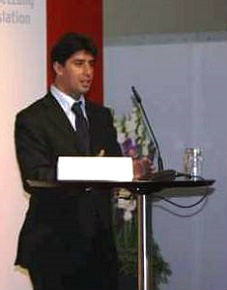

 2137367-2760854ebea752ff31a57dd231541f9f.jpg
Walid Soliman (Tunis, 11 april 1975)


De Franse schrijver, essayist en uitgever Hubert Nyssen werd geboren in Boendael aan de rand van Brussel op 11 april 1925. Zie ook Zie ook alle tags voor Hubert Nyssen op dit blog.

Uit: Le Miroir Invisible

« Une fantasmagorie d’une troublante vraisemblance, un beau travail d’illusionniste. Mais cela suffisait-il pour expliquer le succès ? Non, il ne fallait pas l’oublier, pensait Rondier, il y avait aussi le talent et la réputation de Solange Vattier. Elle avait une carrière au cinéma, elle avait tourné pour Truffaut et Rohmer, elle avait des admirateurs, et la subtile essence venue de sa voix avait pu exercer une sorte de fascination contagieuse...
Oui, certes, mais l'idée même de la pièce devait avoir sa part dans l'engouement. Cette idée, Serge Rondier l’avait eue un jour où il déjeunait seul dans une brasserie de la rue Racine. Il s'était pris à observer une inconnue dans un des miroirs de la salle, avec une insistance d'autant plus tranquille que, placée comme elle l'était, elle ne pouvait, pensait-il, surprendre son regard. C'était une femme de la quarantaine, d'une simple beauté, celle qui vient du fond de l'être et non de ses apprêts, visage magnifique en tout cas, mais le reste, d'où il était, Rondier ne le voyait pas. Cette femme était là, dans le miroir, plus inquiétante que désirable. L’imagination du dramaturge était partie à l'aventure avec la vieille idée que tout est dans tout car il avait repéré sur la joue de cette inconnue un grain de beauté d'une dimension inaccoutumée qui était pourtant posé là comme la chose la plus naturelle du monde, et il s'était dit que, disparue du miroir qui lui offrait son image, la femme resterait dans sa mémoire par cette apostille. Il n'en avait pas fallu davantage pour que son imagination vînt à lui suggérer que le grain de beauté contenait cette femme comme elle-même contenait le monde.
Tout était bien dans tout... Et par une de ces petites illuminations que connaissent les créateurs, il avait eu l'idée puis le désir soudain d'écrire une pièce en forme de monologue où une telle femme, oui, celle-là précisément, serait aux prises avec un amant qui s'obstinerait à la convaincre qu’il voyait en elle la totalité du monde sensible. Une monade, quoi, une vraie monade ! Oui, mais cette femme ne comprendrait pas un amour qui la dépassait et dont les mots lui paraitraient destinés à une autre. Le malentendu engendrerait l'inquiétude puis la discorde et avec elle la désunion. Son amant parti, peut-être mort (mort ou parti, on verrait bien... mais c'était tout vu, et Rondier avait déjà décidé de flinguer le personnage), la femme aurait la révélation de la passion peu ordinaire dont elle avait été l'objet. Alors, Eurydice à contre rôle, elle repartirait à rebours dans sa vie pour tenter de dire à l’amant disparu ce qu'elle n'avait su lui dire quand, par ses illuminations, il l'effrayait. »
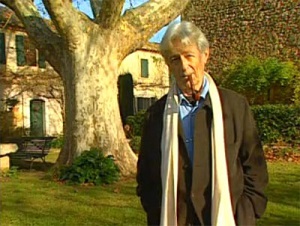
 

 2137367-ae3fe72ba400309add400f01097e104b.jpg
Hubert Nyssen (11 april 1925 – 12 november 2011)


De Amerikaanse dichteres en schrijfster Dorothy Allison werd geboren op 11 april 1949 in Greenville, South Carolina. Zie ook Zie ook alle tags voor Dorothy Allison op dit blog.


The Women Who Hate Me

1.
The women who do not know me.

The women who, not knowing me, hate me
mark my life, rise in my dreams and shake their loose hair
throw out their thin wrists, narrow their already sharp eyes
say Who do you think you are?

Lazy, useless, cuntsucking, scared, stupid
What you scared of anyway?
Their eyes, their hands, their voices.
Terrifying.The women who hate me cut me
as men can’t. Men don’t count.
I can handle men. Never expected better
of any man anyway.
But the women,
shallow-cheeked young girls the world was made for
safe little girls who think nothing of bravado
who never got over by playing it tough.

What do they know of my fear

What do they know of the women in my body?
My weakening hips, sharp good teeth,
angry nightmares, scarred cheeks,
fat thighs, fat everything.

Don’t smile too wide. You look like a fool.
Don’t want too much. You ain’t gonna get it.

Ain’t gonna get it.
Goddamn.

Say goddamn and kick somebody’s ass
that I am not even half what I should be
full of terrified angry bravado.

BRAVADO.
The women who hate me
don’t know
can’t imagine
life-saving, precious bravado.
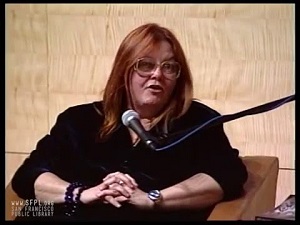
 

 2137367-3357d156513b4c954f98b3085fa624ca.jpg
Dorothy Allison (Greenville, 11 april 1949)


De Duitse dichter Rolf Schilling werd geboren in Nordhausen in de Harz op 11 april 1950. Zie ook alle tags voor Rolf Schilling op dit blog.


Traumgänger

Ein dunkler Strom, der über Stufen rann,
Und wie ein Wiegen hob es langsam an,
Und wie ein Schatten aus dem Paradies
Trat einer ein aus Nacht und Schlafes Bann.

Es war ein Knabe, der die Flöte blies,
Er trug auf Schultern schmal das Purpur-Vlies,
Und was er wirkte, was sein Wink beschwor,
War Stolz und Traurigkeit und nichts als dies.

Wie Schlangen stand sein Sang vor deinem Ohr,
Doch als die Lippe dann das Lied verlor,
War Sanftheit bald in Wagemut verkehrt,
Und Speere blitzten aus dem Rosenflor.

Ein Schein von Blut auf seinem Bronze-Schwert
War dir Befehl zu folgen, und er lehrt:
Wer so wie du den Wurf Apolls nicht scheut,
Ist edlen Stamms und aller Weihen wert.

Sein Finger - war es gestern? War es heut? -
Band Flechten aus Orakeln und Gekräut,
So setz die Zeichen, Blut und Banner gib
Dem Drifter, daß er deine Träume deut.

Ob er die Antwort in den Sand dir schrieb?
Ob er dein Floß zu dunklen Ufern trieb?
Und steht sein Licht noch über Tal und Teich,
Wenn vom Gesagten kaum ein Hauch verblieb?

Hier sieh das Tor, hier endet sein Bereich,
Und Flocken lösen sich und fallen weich
Auf deine Stirn, verstoßen ins Gewog
Von seinem Stab, dem deinen nicht mehr gleich.

Du weißt nicht, ob er lachte, ob er log,
Ob er den Lorbeer dir zu Kronen bog,
Nicht wer ihn ausgesandt noch wer er war,
Nur daß er weilte und dann weiterzog.

Doch lag ein dunkler Glanz auf seinem Haar,
Ein Widerschein von Größe und Gefahr,
Und all dein Ruhm, novemberlich im Mai,
Verweht vor ihm wie Asche vom Altar.

So schritt er leicht im Wind und ging vorbei,
Du weißt, er liebt dich nicht, was immer sei,
Und was auch wiederkehrt und was begann,
Trägt ihn nicht her und gibt sein Bild nicht frei.

Nur dunkles Blut, das über Stufen rann,
Und wie ein Wiegen hebt es manchmal an
Und wird als Weinen laut und wächst zum Schrei
Und stirbt in Schlafes Haft und Traumes Bann.
 

 2137367-5b8aa6e3bdee3f4694aeed50b1c7a821.jpg
Rolf Schilling (Nordhausen, 11 april 1950)
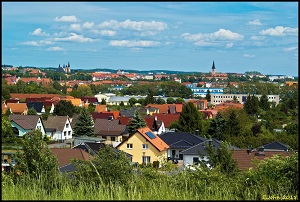
Nordhausen am Harz


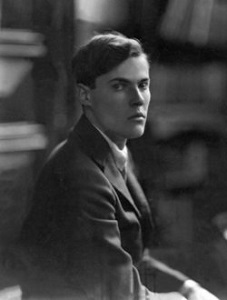
De Amerikaanse schrijver Glenway Wescott werd geboren op 11 april 1901 in Kewaskum, Wisconsin. Zie ook alle tags voor Glenway Wescott op dit blog.

Uit: The Grandmothers

“Until Alwyn Tower grew to manhood he never forgot that everyone was older than he. People remembered things not in existence now, and many of them had been born in houses which had vanished long ago.
A cabin which had stood in the melon patch had been his father’s birthplace; and as a child, jumping over the heavy, downy vines, he tried in vain to find a trace of its foundations.
His uncle Jim, the minister, on the other hand, had not been born in the garden, but in a building which was now the woodshed. Alwyn asked himself how anyone could have slept in that poor shack, whose floor was the ground, trodden and scattered with chips, where the snow sifted in winter on the woodpiles. Of course when his grandmother had lain there with a baby in her arms, it must have been warm, safe, and pink, in the firelight. Now she was a strong old woman with sandy-gray hair ; and only with difficulty, by calling to mind the family daguerreotypes, W'as he able to' imagine a young mother in that vanished bed.
Alwyn’s father and mother shared with his grandparents the third house on the farm which his grandfather had bought from the government when Wisconsin was a wilderness. In that house his young aunt Flora had been born, in what was now his mother’s parlor, exactly below the spare bedroom papered with forget-me-nots where Alwyn himself had slept when he was a baby. The house had been rearranged frequently, and augmented by new rooms, porches, doors, and windows, as the family grew. Now the old people and Flora kept house by themselves in the south wing.
In their sitting room the sunlight burned brightly on stiff patterns of wallpaper, on the red garlands of the carpet, the ripples painted on the woodwork in imitation of quarter-sawed oak, and the false-Nottinghara curtains looped up in the windows. A rack on the wall held a row of hand-painted plates, the work of his aunt and his great-aunt Nancy, decorated with birds, wild roses, and rosebuds.
Beneath the plate rack stood a couch, upholstered in rows of yellow tapestry biscuits, with a green button at each intersection of the crevices. It had the proportions of a lion’s body — the legs carved in claws, the sloping back, the head uplifted under a mass of fringed pillows. In spite of its discomfort, Alwyn’s grandfather took his nap there every afternoon, his spectacles in his hand, an open newspaper over his face.”
 

 2137367-cc4f294ba21031a6353b85dbe5e2f186.jpg
Glenway Wescott (11 april 1901 - 22 februari 1987)


De Franse schrijver Claude Tillier werd geboren in Clamecy, Nièvre, op 11 april 1801, Zie ook alle tags voor Claude Tillier op dit blog.

Uit: Mon oncle Benjamin

« Quand nous avons tous les appétits de la jeunesse, que notre sang est plein de fer et d’alcool, nous n’avons pas un écu ; quand nous n’avons plus ni dents, ni estomac, nous sommes millionnaires. Nous avons à peine le temps de dire à une femme : « Je t’aime ! » qu’à notre second baiser, c’est une vieille décrépite. Les empires sont à peine consolidés, qu’ils s’écroulent ; ils ressemblent à ces fourmilières qu’élèvent, avec de grands efforts, de pauvres insectes ; quand il ne faut plus qu’un fétu pour les achever, un bœuf les effondre sous son large pied, ou une charrette sous sa roue. Ce que vous appelez la couche végétale de ce globe, c’est mille et mille linceuls superposés l’un sur l’autre par les générations. Ces grands noms qui retentissent dans la bouche des hommes, noms de capitales, de monarques, de généraux, ce sont des tessons de vieux empires qui résonnent. Vous ne sauriez faire un pas que vous ne souleviez autour de vous la poussière de mille choses détruites avant d’être achevées.
J’ai quarante ans ; j’ai déjà passé par quatre professions ; j’ai été maître d’études, soldat, maître d’école, et me voilà journaliste. J’ai été sur la terre et sur l’Océan, sous la tente et au coin de l’âtre, entre les barreaux d’une prison et au milieu des espaces libres de ce monde ; j’ai obéi et j’ai commandé ; j’ai eu des moments d’opulence et des années de misère. On m’a aimé et on m’a haï ; on m’a applaudi et on m’a tourné en dérision. J’ai été fils et père, amant et époux ; j’ai passé par la saison des fleurs et par celle des fruits, comme disent les poètes. Je n’ai trouvé dans aucun de ces états que j’eusse beaucoup à me féliciter d’être enfermé dans la peau d’un homme, plutôt que dans celle d’un loup ou d’un renard, plutôt que dans la coquille d’une huître, dans l’écorce d’un arbre ou dans la pellicule d’une pomme de terre. Peut-être si j’étais rentier, rentier à cinquante mille francs surtout, je penserais différemment."
 

 2137367-0b6fad48f86070890142a4415d27597d.jpg
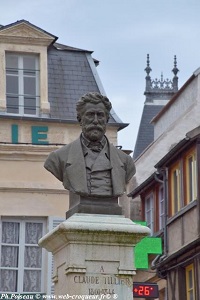
Claude Tillier (11 april 1801 - 12 oktober 1844)
Borstbeeld in Clamecy


Zie voor nog meer schrijvers van de 11e april ook mijn blog van 11 april 2017 en ook mijn blog van 11 april 2015 deel 1 en eveneens deel 2 en ook deel 3.

Zie voor bovenstaande schrijvers ook mijn blog van 11 april 2007 en ook mijn blog van 11 april 2008 en eveneens mijn blog van 11 april 2009.
Geschreven door Romenu om 18:48 Reageer op dit bericht

Stefan Chwin

De Poolse schrijver en literair historicus Stefan Chwin werd geboren op 11 april 1949 in Gdansk. Chwin is een afstammeling van Litouwse Polen, die na de Tweede Wereldoorlog uit Litouwen werden verdreven. Zijn vader werd geboren in Vilnius en kwam in 1945 in een volledig verwoest Gdańsk terecht. Chwin volgde een opleiding aan de kunstacademie in Gdynia en studeerde Poolse taal- en letterkunde aan de universiteit van Gdańsk. Later promoveerde hij in de Poolse taal en letterkunde en sinds 1998 is hij hoogleraar in dit vak. Zijn voornaamste interesse als literatuuronderzoeker is de Poolse romantiek en de invloed ervan op moderne schrijvers. Hij heeft verschillende boeken gepubliceerd met literaire studies over auteurschap en tendensen in de Poolse literatuur. Chwin zat ook in de redactie van verschillende Poolse literaire tijdschriften. Chvin's werken zijn vertaald in twaalf verschillende talen. In de jaren tachtig deed Stefan Chwin zijn eerste poging als schrijver van fictie. Hij debuteerde met twee avonturenboeken voor kinderen onder het pseudoniem Max Lars.Zijn doorbraak als schrijver voor volwassenen was de verschijning van de roman “Hanemann” in 1995, waarvoor hij de Paszport Polityki, een Poolse cultuurprijs, ontving.In 1999 verscheen de roman “Esther”, gevolgd in 2003 door “Złoty pelikan“ (De gouden pelikaan). Verschillende romans spelen in de geboorteplaats van de auteur, Gdańsk, en thematiseren op verschillende manieren de multiculturele geschiedenis van die stad. Gdańsk was tot 1945 vooral Duitstalig onder de naam Danzig, toen de Duitse bevolking werd verdreven en vervangen door Polen, die werden verdreven uit de oostelijke grensregio's van Polen. De belangstelling voor de Duits-Poolse geschiedenis van de stad deelt hij met een andere vooraanstaande schrijver uit Gdańsk, Paweł Huelle.

Uit: Death in Danzig (Hanenemann, Vertaald door Philip Boehm)

“When Hanemann reached the gate in front of his house, he thought he saw a light flickering at Lessingstrasse 14, the house owned by the Bierensteins. He walked past the arborvitae and turned and crossed the street. He pushed open the heavy doors and stepped into the entrance hall, automatically scraping the snow off his feet on the iron grate. He struck a match and held it up until it singed his fingers. The little yellow flame wavered in the chilly darkness and went out. Hanemann wondered why he had come, if he was merely trying to assuage his heart—but what difference did it make now? Still, he had seen that light ... He wanted to go back to Number 17, through the double row of arborvitae to his own door, and he would have done so if he could have stopped thinking about the landing in Neufahrwasser, that white space between the warehouse and the brick wall round the yard. The scraps of paper, the black smudges in the snow, the landing, the suitcases, the crowd, the piles of clothing, the shouts, the gentle voice of Mrs Walmann. That was what kept him from leaving, what stopped him there, on the stairs, in the dark entry hall under the oval window, where the coloured panes muted the glare over Langfuhr into a feeble glow. Here, on the right—the Schultzes' apartment. He dragged another damp match across the edge of the box, there was a sulphurous flash, and he held the match high against the brown panelling, his palm cupped pink around the tiny flame. The darkly varnished door, with the floral ornamentation on its oak frame, glinted and glistened in the flickering light. Above it, a stucco relief emerged from the shadows that slanted across the wall—a Madonna and Child, nestled within a wreath of olive branches. But what he saw next ... deep gashes and gouges on the Schultzes' door, right along the jamb. Flashing bits of broken metal round the latch housing.
Fresh yellow scratches, black dents and bruises, as if someone had tried to pierce the brass with a knife. So they're already here, they've already been here; while he waited by the waterfront at Neufahrwasser, they had been breaking into an apartment on Lessingstrassc, cursing under their breath as they grappled with the brass reinforcement, as they pried at the metal escutcheon beneath the latch before finally ramming the door with their shoulders and bursting inside, struggling to keep their balance on the slick linoleum with the white and yellow checkerboard pattern. He wanted to go back home, to avoid the sight of the ransacked wardrobes, the huge heaps of linens dragged off the shelves, the drawers ripped out of the chest and tossed into the middle of the room, the rug trampled by muddy boots and stained with clods of melting snow. But the thought of the Schultzes ... They had left at noon; he'd watched them turning onto Kronprinzenallee, just beyond the chestnut trees. Otthter with a little rucksack. A stroller. A wooden suitcase. Mrs Schultz's red hat. She had turned round. A brief glance at the building.... Hanemann grabbed the handle; the door yielded softly to his hand. Dark-red door curtains in the entry room. Tea-coloured wallpaper. Shadows. The match went out, he groped his way towards the kitchen, something crunched beneath his soles. When he could see the window—its rectangle glowing dimly in the dark, the thin cross of its frame—he again reached for a match.”


 2209383-325ac3c56c6cdc20d73087cac857e470.jpg
Stefan Chwin (Gdansk, 11 april 1949)

Geschreven door Romenu om 00:00 Reageer op dit bericht

Marc Tritsmans

De Vlaamse dichter Marc Tritsmans werd geboren in Antwerpen op 11 april 1959. Hij studeerde tandheelkunde en werkt als milieuambtenaar. Na publicatie van een aantal losse gedichten in diverse literaire tijdschriften debuteerde hij in 1992 met de bundel 'De wetten van de zwaartekracht'. Er volgden nog 10 dichtbundels, waaronder “Onder bomen” (1994), “Oog van de tijd” (1997), “Van aarde” (1999) en “Sterk water” (2000). In 1991 won hij de P.-G. Buckinxprijs met ‘Cyclus Alpen’, en in 1995 opnieuw met het gedicht ‘Blad’. In 2010 werd hij bekroond met de poëzieprijs Melopee van de gemeente Laarne voor het gedicht ‘Geen aanleg’. In 2011 kreeg hij de Herman de Coninckprijs voor 'Studie van de schaduw', en tevens de publieksprijs voor het beste gedicht met ‘Uitgesproken’. Tritsmans publiceert regelmatig in De Gids , Hollands Maandblad , Het Liegend Konijn en Poëziekrant .


Zeezicht

Dit uitzicht heeft zich dus honderd jaar eerder
ook voor mijn overgrootvaders ogen ontvouwd.
Toen hij in zijn zondagse pak met strohoed,
vrouw in zwierige jurk aan de arm, op net
zo'n warme julidag de dijk beklom en

haar daar zag liggen. Bij deze zee van
millennia kan ik even weer naast hem op die
bruinige foto. Hij knikt verstrooid als ik me
voorstel en neuriet verder een liedje dat ik
later nog wel van zijn kleindochter leer.


Rechtzetting

Die me naar school bracht
onder de kastanjebomen, die
me nog als laatste bloedstollend

kon vertellen over Duitsers en
onder kleren gesmokkelde
boter. Die me steevast redde

als de wereld te groot werd.
Haar nu, ondanks het late
uur, nog even bellen en

zeggen dat het me spijt. Dat
ik er had moeten zijn die nacht
toen ze voorgoed vertrok.


Koeien

Het lijkt wel of ze staan te wachten
maar ze wachten helemaal op niets. Voor
hen volstaat het om te blijven waar ze
grazen hun wereld moet niet groter dan

tot waar de ogen reiken: dit weiland
dat gewoonweg ophoudt bij de bosrand
het huis daar in de verte met de man
die hen komt melken of hen meevoert

als het koud wordt ze kreunen snuiven
het regent zon schijnt op hun vachten
het wordt donker alles laat hen onbewogen
nergens zit een einde aan de tijd


 2180725-67bd297f36436576b46acdfcf09a0ac8.jpg
Marc Tritsmans (Antwerpen, 11 april 1959)

Geschreven door Romenu om 00:00 Reageer op dit bericht

Patrick Cornillie

De Vlaamse dichter en schrijver Patrick Cornillie werd geboren in Roeselare op 11 april 1961. Cornillie was leraar in het buitengewoon secundair onderwijs, daarna redacteur bij de Krant van West-Vlaanderen. In 1995 schreef hij over zijn ervaringen in het buitengewoon onderwijs een jeugdroman met de titel 'Buitengewoon'. In Lichtervelde staat aan de bibliotheek een bronzen beeld van een accordeonspeler, gegoten door Ron Deblaere met daaronder het gedicht "De Liedjeszanger" van Cornillie. Sedert 1998 is hij freelance journalist en auteur en leverde bijdragen aan diverse kranten en (wieler)tijdschriften.Van Cornillie verschenen gedichten en verhalen in 'De Muur', 'Deus Ex Machina', 'Dietsche Warande & Belfort', 'Dighter', 'Kreatief', 'Van Mensen en Dingen', 'Poëziekrant' en 'Vlaanderen'. Samen met Frank Pollet stond hij aan de wieg van de drukbezochte Tourblog GeelZucht (2010-2014). Eind 2016 verbleef Cornillie als writer in residence in het Streuvelshuis in Ingooigem. Het resulteerde in 'De zeer schone uren van Stijn Streuvels, cyclotoerist'. In 2017 verscheen zijn gedicht 'Ode aan de jonge flandriens' op 40.000 flesjes Kwaremont-bier. Ook leverde hij het script voor virtual reality-projecten in het Centrum Ronde van Vlaanderen in Oudenaarde en het Abdijmuseum Ter Duinen in Koksijde. Cornillie won diverse prijzen, waaronder de poëzieprijs van de stad Harelbeke in 1988, de Yang Poëzieprijs (1989), de Guido Wulmsprijs voor Poëzie in Sint-Truiden (2003), de poëzieprijs van de stad Halle (2006), de prozaprijs van de Universitaire Werkgroep Literatuur, WeL, Leuven in 2008, de poëzieprijs van de gemeente Keerbergen (2010) en de driejaarlijkse Hilarion Thans Poëzieprijs (Lanaken, 2014).


Een boom

Een boom heeft het recht te dromen.
In de takken van zijn verleden
laat hij onverstoord de seizoenen komen.
En de draagwijdte van het heden

slaat hij op onder zijn huid.
In zijn kruin plooit het licht
met een zacht ruisend geluid.
Van de aarde kent hij het evenwicht.

Geworteld, in handel
en wandel
- hoe een landschap zich naar hem richt

bepaalt hij elk vergezicht.
Bewaart hij de tijd
door zijn aanwezigheid.


Een huis

Muren met een teken aan de wand.
Binnen de huid van deze ruimte gehuld
en een raam dat verten verbant.
Hoe aanwezigheid daar zichzelve invult.

Een huis lijkt eeuwig in evenwicht.
Zoals de tijd binnenskamers blijft, opgehangen
in een foto, een stilleven, een ansicht.
Gezichten in een kader gevangen.

Een huis waakt in zijn voegen.
Over het heden
en het verleden

dat als een walm sigaretterook beslaat
en vlekken op het behang achterlaat.
Blanke foto's op vergeeld ongenoegen.


 2162661-7cd7169e2d304ad7a80688b5f83510eb.jpg
Patrick Cornillie (Roeselare, 11 april 1961)

Geschreven door Romenu om 00:00 Reageer op dit bericht

Leo Vroman, Jan van Mersbergen, Paul Theroux, Claudio Magris, Bella Akhmadulina, Stefan Heym, Richard Wagner, Marcel van Maele, Eric Knight

De Nederlandse dichter Leo Vroman werd op 10 april 1915 in Gouda geboren. Zie ook alle tags voor Leo Vroman op dit blog.


Veelheden hoe

Een half petje kip,
een popotamus hip,
twee muisjes vleer
vier hanen weer,
acht beelden voor,
zestien kijkjes door,
tweeëndertig vliegjes vuur,
vierenzestig kastjes muur,
honderd achtentwintig fouten druk,
een kippetje tuk?
tweehonderd zesenvijftig stokken tover,
vijfhonderd twaalf tochten over,
en ongeveer,
duizend minnen meer.


Nacht

Dieper naar voren kan ik mij niet buigen
over de wereldrand, spaarzaam verlicht.
Met het gelaat op blinde duisternis gericht
kan ik mij van Gods glans niet overtuigen.

De verste nadering betracht ik in de vele
gedachten die ik naar dat hol gebied
uitzend; talrijke keren niet,
doch ik verlies mij in dit koppig spelen

en in de pijn die tot een lust verdooft
om hun verminkte wederkomst waaraan
'k een wreed en zeker teken hecht van Gods bestaan:
dat ginds een wand is waar wat in hem gelooft
en tot zijn licht vliegt blindelings op stuit.

Doch wellicht hoort hij in de stilste nachten
het zieke ritselen van mijn gedachten
die zich te pletter fladderen buiten op zijn ruit.


Een psalm voor het smelten

Nu ik weet dat ijs-hoge
torens die het menselijk woelen
in al die kantoren
van bazen en bazinnen
liefde en onvermogen
van binnen niet voelen of horen,
dat die kunnen smelten
in luttele seconden
de pratende omzetten
in pruttelend vlees
en de haatvolle hitte
die hele lieve bevolking
om kan zetten tot een
dikke witte wolk
die na dagen zout en zacht
vredig neerzinkt als een grijze vacht
zodat de nu overtollige
tafels en stoelen, kopjes en borden
binnen verre huizen
mollige wezentjes worden,
en ver buiten de stad
op het gras, het verlaten speelgoed,
het poeder blijft praten
over wie het zopas nog,
al pratende, was,
nu ik dat weet, Systeem,
nu weet ik niets meer


 2136984-919ea24ceea78fc9ee5ff276ca16d940.jpg
Leo Vroman (10 april 1915 - 22 februari 2014)
Beeld van Leo Vroman op het dak van de stadsbibliotheek Gouda.


De Nederlandse schrijver Jan van Mersbergen werd geboren in Gorinchem 10 april 1971. Zie ook alle tags voor Jan van Mersbergen op dit blog.

Uit: Uiterwaarden

“Ik moet nog heel vaak denken aan het eendenkuiken dat door een snoek gegrepen werd, en opgegeten. Ik zag het vanaf de kant, en in het water dreef een kano, dat kwam in die tijd net op, kanovaren. Nu had je bij ons een klein riviertje, en verder wat kanalen, en niemand van ons kwam op het idee om daar met een kano doorheen te gaan. We kenden de omgeving, die zag er vanaf het water net zo uit. En voor de ontspanning hoefden we het ook niet te doen. Dat bestond daar niet, ontspanning. Bijna alles wat we deden was erop gericht de spanning te verhogen: met buksen schieten, appels jatten, ’s nachts over de dijk scheuren, ruzie zoeken in een van de boerendisco’s in andere dorpen, behalve misschien vissen, maar ook daar vonden we wel iets van spanning in, zeker toen die snoek dat eendje greep. De mensen in de kano waren verbijsterd. Dat waren een man en een vrouw, een gillende vrouw. Ik zat daar met een vriend langs de kant en die jongen zei tegen die vrouw dat ze niet zo moest schreeuwen, daar hielden wij niet van en de vissen ook niet. En de man stampte met zijn gehuurde pedel in het water om de snoek te verdrijven – die natuurlijk al lang en breed vertrokken was – en met dat gestamp verjoeg hij nu de rest van de vissen, dus dat we nog iets vingen konden we hier wel vergeten, en dus gooiden we kluiten losse aarde naar de kano, of beter nog, vlak ervoor.
Ik doorkruiste de uiterwaarden in de richting van de rivier die daar achter de wilgen lag, het was warm, er waren veel vliegen en een enkele vlinder, en de koeien stonden in de verte, in de schaduw. Ze zagen me. De eerste zette zich in beweging, liep op me af, en de andere koeien volgden, heel rustig. Ik wachtte tot ze bij me waren. Ze begroetten me met hun staarten en de voorste snuffelde aan mijn hand. Ze waren heel zachtmoedig. Drie keer per dag werden ze gemolken. Ik zag ze nooit naar de boerderij lopen en ik zag ook nooit een mobiele melkwagen die ik bij andere boeren wel eens gezien had, handig als de koeien ver weg grazen. Deze koeien leken bejaarden. Ze waren er, ze stonden hier en dat was het. Ik kende ze al lang, ze stonden al jaren in deze uiterwaarden. Je kon zwemmen bij de rivier, op de strandjes tussen de golfbrekers, er was haast nooit iemand. Als je er ’s avonds kwam dan stonden de koeien dicht tegen elkaar aan of lagen ze te slapen. Er werd verteld dat je ze om kon duwen als ze stonden te slapen, maar dat heb ik nooit geprobeerd. Een koe omduwen, daar zag ik niks in.”


 2136984-bc67cce475872727e5ec2b3cfc3f0c02.jpg
Jan van Mersbergen (Gorinchem, 10 april 1971)


De Amerikaanse schrijver Paul Edward Theroux werd geboren op 10 april 1941 in Medford, Massachusetts. Zie ook alle tags voor Paul Theroux op dit blog.

Uit: The Pillars of Hercules, A Grand Tour of The Mediterranean

"The Greeks had not taken very much interest in their past until Europeans became enthusiastic discoverers and diggers of their ruins. And why should they have cared? The Greeks were not Greek, but rather the illiterate descendants of Slavs and Albanian fishermen, who spoke a debased Greek dialect and had little interest in the broken columns and temples except as places to graze their sheep.
(...)

The Turks had brought their whole culture, their language, the Muslim religion, and their distinctive cuisine not only here but throughout the Middle East and into Europe, as far as Budapest. The contradiction persists, even today: Greek food is actually Turkish food, and many words we think of as distinctively Greek, are in reality Turkish kebab, doner, kofta, meze, taramasalata, dolma, yogurt, moussaka, and so forth; all Turkish.
(...)

"Signs at the entrance to Delphi said, Show proper respect ... I saw a pair of rambunctious Greek youths being reprimanded by an officious little man, for flinging their arms out and posing for pictures. The man twitched a stick at them and sent them away. Why was this? It was just what you would expect to happen if you put a pack of ignoramuses in charge of a jumble of marble artifacts they had no way of comprehending. They would in their impressionable stupidity begin to venerate the mute stones and make up a lot of silly rules. This Show proper respect business and No posing [in front of the ancient stones] was an absurd and desperate transfer of the orthodoxies of the Greeks' tenacious Christianity, as they applied the severe prohibitions of their church to the ruins. Understanding little of the meaning of the stones, they could only see them in terms of their present religious belief; and so they imposed a sort of sanctity on the ruins. This ludicrous solemnity was universal in Greece. Women whose shorts were too tight and men wearing bathing suits were not allowed to enter the stadium above Delphi, where the ancients had run races stark ballocky naked."


 2136984-9d0fe14016f15e1b9ff2a0a4f45024ff.jpg
Paul Theroux (Medford, 10 april 1941)
Cover


De Italiaanse schrijver en vertaler Claudio Magris werd geboren op 10 april 1939 in Triëst. Zie ook alle tags voor Claudio Magris op dit blog.

Uit: Danube (Vertaald door Patrick Creagh)

“In a little town between Ivanovo and Ruse there was once a stork which always built its nest on the lamp-post, unaware of the danger or the damage that might ensue. Having several times chased it away in vain, the Council, by official decree, erected another lamp-post, power the delirium of the age, which dazzles and distorts the vision of the world. Amongst all these odds and ends, in the mystery that is always present in every space hewn out of the formless universe, something irrecoverable has been lost. Even Canetti's childhood has vanished, and his derailed autobiography dots not succeed in grasping. it. We send a postcard to Canetti in Zurich, but I know that he will not appreciate this intrusion into his dominions, this attempt to seek out his hiding place and identify it. In his autobiography, which was probably the determining factor in his winning of the Nobel Prize, Canetti goes hunting for himself, for the author of Auto-da-fi . The Nobel committee awarded prizes to two writers, the one of the past, who is in hiding, and the one of the present, who is reappearing. The first is a mysterious and anomalous genius, maybe vanished beyond recall; he it was who in 1935, at the age of thirty, published one of the great books of the century, his only truly great book, Auto-daft, which almost at once disappeared from the literary scene and remained forgotten for some thirty years. This impossible, unmanageable book makes no concessions and refuses to be assimilated by the cultural establishment; it is a grotesque parable of the delirium of the intelli-gence which destroys life, a terrible picture of the lack of love and of bewilderment. The republic of letters, with its benign historical approach, was the book's ideal mediator, but it rejected the work for the most obvious reason — the absolute and radical greatness was more than it could take:This book, which sheds light on our life as very few others do, was for a long rime virtually ignored, and Canetti bore this neglect with a firmness of character which perhaps concealed, in its courteous modesty, a stubborn awareness of his own genius. “


 2136984-1e9a3a918c304b5bb67b9750772e3c47.png
Claudio Magris (Triëst, 10 april 1939)
Cover


De Russische dichteres Bella Akhmadulina werd geboren op 10 April 1937 in Moskou. Zie ook alle tags voor Bella Akhmadulina op dit blog.


The Saint Bartholomew's Night (Fragment)

Used to abundance of the death and blood,
you, worthy people, always fight and swear,
you so boldly nurse your own child,
as if he doesn’t raise your sense of fear.

If from his sleep, he cries and wakes, alarmed,
don’t be in trouble – it’s his fault, entire:
a gentle gum is, maybe, slightly harmed
by milk-eye-teeth of your sinless vampire.

And if, through branches, once, would something gaze
at you in ways, which make you twitch and shiver,
don’t be afraid! – this is a little face
of any child, bred in the evil sphere.

But maybe, midst deep fits or Heaven plains,
this cry’s high honour to the other choices,
and this little throat fiercely complains
about its frugality and losses

with all its tunes, too deep for world of strings,
with all its awe, too great for lines’ discretion.
But yet, in whole, what a trifling thing!
Just thirty thousand killed Huguenots, in question.


Vertaald door Yevgeny Bonver


 2136984-d53ed4e6587adaf8eb4cf02ccbecd0e8.jpg
Bella Akhmadulina (Moskou, 10 April 1937)


De Duitse dichter en schrijver Stefan Heym (eig. Hellmuth Flieg) werd geboren op 10 april 1913 in Chemnitz. Zie ook alle tags voor Stefan Heym op dit blog.

Uit: 5 Tage im Juni

„Sonnabend, 13. Juni 1953 19.00 Uhr lag Witte auf seinem Bett, halbnackt, das Kissen zerknüllt von sei-nen ruhelosen Kopfbewegungen. Der Wind, der gegen Abend auf-gekommen war, hatte keine Abkühlung gebracht. Der Wind trug den Staub von den Ruinen an der Straße durch das offene Fenster herein, dazu die Straßengeräusche — ein Wochenendsäufer, der aus einer Kneipe grölte, ein paar Weiber, die von Balkon zu Balkon schnatterten. Möglich, daß er ein Verfahren bekam. Aus Bangganz' Andeutun-gen sprach schon die Anklage: Mißachtung von Parteibeschlüssen, Verstoß gegen die Parteidisziplin, Mangel an Vertrauen zur Partei-führung. Und dann würde alles wieder aufgebrüht werden — der lei-dige Fall Kasischke, der zu einem Fall Witte hochgespielt worden war; seine Bekanntschaft mit Genossen, die aus schwer ersichtli-chen Gründen in Verruf geraten waren; bis zurück in die Zeit noch vor Hitler, ins Jahr 1932, wo er sich, seine Jugendsünde, geweigert hatte, Seite an Seite mit den Faschisten Streikposten zu beziehen ge-gen die sozialdemokratischen Verkehrsarbeiter. Nein, das würden sie wohl doch übergehen; der Verkehrsstreik war inzwischen still-schweigend als Fehler anerkannt worden. Er entschloß sich aufzustehen. Ein sehr müdes Gesicht, Schatten unter den Augen, starrte ihm aus dem Spiegel entgegen. Die Stun-den, die er wach gelegen, hatten einen stumpfen Schmerz im Kopf hinterlassen; er preßte die Fingerspitzen gegen den Schädel; dann strich er sich durch das Haar, das an den Schläfen schon grau wurde. Einundvierzig erst, dachte er; aber da waren Jahre gewesen, die für zehn zählten. Er rasierte sich, obwohl er keine Pläne für den Abend hatte. Die Wand zum Nebenzimmer war dünn; dort wurde ein Kommoden- fach aufgezogen und wieder zugeschoben. Er hörte die Schritte der jungen Frau. Anna hieß sie und war die Schwiegertochter der Frau Hofer, bei der er zur Untermiete wohnte. Manchmal, heute zum Beispiel, war es ihm tröstlich, daß ein anderes menschliches Wesen in der Nähe existierte — hustete oder gähnte oder einen Pantoffel zu Boden fallen ließ. Natürlich konnte er sich aufmachen und zu Greta gehen. Greta würde überrascht sein, sehr zurückhaltend, würde ihn aber auffor-dern einzutreten, in die Wohnung, wo es nach Essen roch und nach frischer Wäsche. Die Kinder würden sich freuen, besonders die Kleine, Claudia, die so nach Zärtlichkeit hungerte; der Junge zeigte seine Gefühle weniger, aber auch der hing schon, mehr als gut war, an ihm; arme Kerlchen, beide, der Vater vermißt irgendwo bei Wi-tebsk und die Mutter auf Arbeit bei VEB Merkur.“


 2136984-717e3b2cd980df46ac78c5755fb92a78.jpg
Stefan Heym (10 april 1913 – 16 december 2001)
Cover


De Duitse schrijver Richard Wagner werd geboren op 10 april 1952 in Lovrin, in Roemenië. Zie ook alle tags voor Richard Wagner op dit blog.

Uit: Miss Bukarest

„Razvan hielt sich bedeckt. Wenn Erika was auffiele, solle sie sich doch kurz melden. Unter dieser Telefonnummer. Und er diktierte ihr eine unserer Informanten-Nummern.
Erika erzählte mir die Sache sofort. Sie fragte mich, was ich davon halte. »Schwer zu sagen«, meinte ich. »Mal sehen. Erzähl es noch nicht weiter. Vielleicht war es Zufall, Routine. Wenn er tatsächlich was will, hörst du bestimmt noch von ihm.«
Mit diesem letzten Satz hatte ich wirklich die Wahrheit gesagt. Ich berichtete Saracu von Erikas Reaktion auf die Begegnung mit Razvan, und Saracu verfügte, daß Razvan und ich nun in der Sache Erika Binder, Deckname »Parfum«, zusammenarbeiten sollten. Ich arbeitete ungern mit Razvan zusammen. Aber was sein mußte, mußte sein. Befehl ist Befehl, wie die Deutschen sagen.
Zwischen mir und Razvan war es mehrmals zu unangenehmen Vorfällen gekommen. Es ging nicht bloß um Meinungsverschiedenheiten. Zum Beispiel in der Benjamin-Sache. Razvans große Blamage. Er führte sie auf mich zurück. Und das kam so:Razvan hatte einen Schreibmaschinentext aus der Szene bekommen. Der Titel lautete: »Der Engel der Geschichte«. Verfasser war keiner angegeben. Razvan tippte auf Martin oder Richartz. Eher auf Richartz. Razvan hatte den Text übersetzen und interpretieren lassen. Von einem unserer Möchtegern-Literaturwissenschaftler, der bei der Securitate gelandet war, weil ihn sonst keiner wollte.
Im Text stand der Satz: »›Es gibt ein Bild von Klee, das Angelus Novus heißt.‹«
»Wer ist Klee«, fragte Saracu.
»Irgendein Maler«, sagte Razvan und las weiter: »›Ein Engel ist darauf dargestellt, der aussieht, als wäre er im Begriff, sich von etwas zu entfernen, worauf er starrt.‹«
»Ein Engel«, sagte Razvan. »Angelus Novus. Das ist Latein. Muß also mit den Katholiken zu tun haben.«
»Seit wann ist denn Richartz religiös?«
»Der und religiös«, sagte Razvan, »der will uns damit ärgern. Vielleicht ist es auch eine Anspielung auf die verbotenen Unierten, die Griechisch-Katholischen. Vielleicht will er sagen, daß bei uns Kirchen verboten sind.«


 2136984-52bd75ef36d94f0a1f81af5be0ffc346.jpg
Richard Wagner (Lowrin, 10 april 1952)


De Vlaamse dichter en beeldhouwer Marcel van Maele werd geboren in Brugge op 10 april 1931. Zie ook alle tags voor Marcel van Maele op dit blog.


En zo dromen zij...

Schuifelend over de binnenwand,
luisterend naar de geluiden van buiten,
trekken zij de wereld rond en krom.
In deze rimpelloze duisternis,
geen wind, geen regen. Weer-loos.

Zo hadden zij reeds,
hun tellen kwijt, het noorden zoek,
in ruil voor een liever weten
hun duimen gelegd.
Dat verre verleden, die kommerloze ogenblikken.
En ook de buitenkant der dingen.
Hoe in een grijnzend heelal
de zon in de zee verzinkt,
hoe dorre handen in onvruchtbare aarde
wroeten. Regen en wind. Weer-zin.

Zo richt hij zijn revolver
vanuit het holst van de nacht
naar de smachtende maan
en blaffen blaffen maar.


 2136984-f8d300c78b5fe9ca41312cc7df3c27c2.jpg
Marcel van Maele (10 april 1931 - 24 juli 2009)
Marcel Van Maele: Gebottelde gedichten


De Amerikaanse schrijver Eric Knight werd geboren op 10 april 1897 in Menston in Yorkshire, Engeland. Zie ook alle tags voor Eric Knight op dit blog.

Uit: Lassie Come-Home

“Lassie whirled to look for him, but her senses were drawn to something else—the warm, blood smell of the rabbit that lay on the path. For a long time she regarded it. She came nearer, bending her head warily, as if ready to spring away. For, though the blood smell of food was there, the scent of the weasel still lingered, too. Carefully her nose came nearer and nearer until it touched the freshly killed quarry. She drew back and walked around it. Then she came near, bent her head, and picked up the game. She lifted her head again and waited.
It was as if, in the wild land, far from all human beings, she was expecting the sudden call of the master: "No, Lassie! Drop it! Drop it!" But no sound came. She stood indecisively for almost a half minute, and then it was over. Carrying the rabbit, she trotted along. She quested to right and left as she went. Then she saw what she wanted—a thick tangle of gorse that made a sort of den. She walked to it, coiled herself close so that she was protected on three sides. She dropped to the ground, letting the rabbit fall before her. She smelled it again. It smelled good. It was food. After that she had a newly acquired sense. She had learned the smell of rabbit. Instinct told her the rest. As she traveled along, whenever her keen nose told her of the nearness of game, she became a hunter. She scouted and ran and caught it, and she ate. It was the sensible law of nature. She did not kill wantonly as man often does. She killed to live, and no more. Such food was just sufficient to sustain life, but that was all. Now there were no keen eyes to watch Lassie, to note her weight, to look at the color of her gums, to eye the quality of her coat. There was no one to say: "She's off a couple of pounds—give her a little more beef liver in her dinner!" "She doesn't seem quite up to snuff—better start giving her a bowl of milk in the morning. You might just drop a raw egg in it if she'll take it!"


 2136984-e450fac56e1cbc74e039f8f84d9589b9.jpg
Eric Knight (10 april 1897 – 14 januari 1943)
Lassie en Timmy (Jon Provost), Lassies tweede baasje in de tv-serie (1957-1965)


Zie voor nog meer schrijvers van de 10e april ook mijn blog van 10 april 2016 deel 2.

Zie voor bovenstaande schrijvers ook mijn blog van 10 april 2007 en ook mijn blog van 10 april 2008 en eveneens mijn blog van 10 april 2009.

Geschreven door Romenu om 18:27 Reageer op dit bericht

Meer van Romenu

↑ Terug naar de berichten