Naar de inhoud

Romenu

Over literatuur, gedichten, kunst en cultuur
akke.beakke.be

Berichten van 12 april 2018 tot 13 april 2018

Nachoem Wijnberg, K. Michel, Alexander Münninghoff, Michel Faber, Jean-Marie Gustave Le Clézio, Samuel Beckett, Seamus Heaney, Tim Krabbé, Eudora Welty
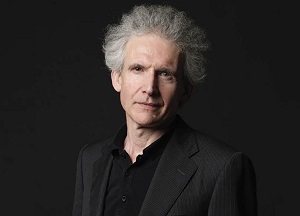
De Nederlandse dichter en schrijver Nachoem Mesoelam Wijnberg werd geboren in Amsterdam op 13 april 1961. Zie ook alle tags voor Nachoem Wijnberg op dit blog.


De eerste keer dat je je herinnert dat je dat deed

Je bent hier lang niet geweest
en kwam terug
om nog een keer te kijken.

Had het niet meer
veranderd moeten zijn?

Maar het is enkel voor een deel
zoals je je kan herinneren,
een groter deel
zoals je denkt dat het was.

Je schuift dat wat je je herinnert
verder uit elkaar,
om nog een keer te zoeken.

Om daar met je heer herinnering
rond te lopen,
jij wijst hem iets aan
alsof het van jou is
en daarna wijst hij jou iets aan, maar waar is hij nu?

Een lege straat,
einde van de middag.

Je weet niet meer
welke maand het was,
maar het was een lege, niet-koude middag.

Je zat in de bus van school naar huis
en je stapte eerder uit
om te lopen waar je liep
toen je op een vorige school zat
en je kon wat je je niet en wat je je wel herinnerde niet even zwaar maken.


Politiek als beroep, zegt Max Weber

Gedichten zijn nutteloos om de wereld te besturen,
zegt Huang Tingjian, wiens gedichten wonderlijk zijn als ze lukken.
Als het een doen beter is dan het ander, als ze allebei goed gedaan worden,
is iets doen wat op het een lijkt beter dan iets wat op het ander lijkt?
Kan ik dat niet korter zeggen?
Een gedicht verspilt toch niet.
Nu kom ik pas bij het belangrijkere probleem:
genoegen nemen met wat op het betere lijkt omdat het op het betere lijkt?

Af en toe doe ik alsof ik iets goed kan, zegt Su Dongpo,
zoals iets waaraan ik dan meteen daarna opnieuw moet beginnen


 2137880-0a1c71b7115d2c6163086d8393ab92d8.jpg
Nachoem Wijnberg (Amsterdam, 13 april 1961)


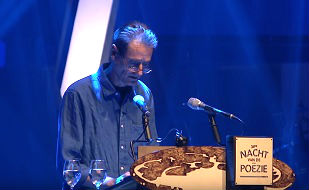
De Nederlandse dichter K. Michel werd geboren op 13 april 1958 in Tilburg. Zie ook alle tags voor K. Michel op dit blog.


Paris / Charlie 7 – 1 – 15

Na al het nieuws
haal ik de heilige boeken
uit de kast
en schud daar de leeswijzers
en de vrome praatjes uit

Van deze zuiverheid
nastrevende stof
kneed ik een sneeuwbal
– haren en kruimels geen probleem –
en steek daar een vulpen in
tot de sneeuwbal zwart kleurt

Dan zet ik het machteloos
mooie ‘vogels in bos en duin’ op
schenk jou een glas rood in
en wachten wij op het onbedaarlijke smelten


Domino

Er zwemt een barst door het huis
Niemand die luistert

Uit de schaduw groeien schaduwen
in het onderwaterlicht
dat passerende auto's werpen
op de muren rondom het bed

In de diepblauwe stilte
herhaalt een jongetje lipzacht
al wat gezegd is die dag
en stopt woord voor woord
de gaten in het geluid
dat huwelijk heet

De vloer golft
De deurklink is ver

En het jongetje houdt zijn handpalmen
als een boek in zijn handen
en ik lees 'kom terug, ga weg'

Een spreuk, een dominosteen
die een ster slaat
in het glas van mijn huis

Dan begint het buiten
bruidsjurken te sneeuwen
 

 2137880-b82afb5477ecc49a32dd61199f150996.jpg
K. Michel (Tilburg, 13 april 1958)


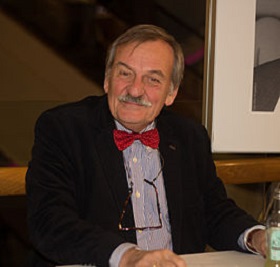
De Nederlands schrijver en journalist Alexander Münninghoff werd geboren in Posen op 13 april 1944. Zie ook alle tags voor Alexander Münninghoff op dit blog.

Uit: De stamhouder

“De Oude Heer geloofde het pas toen hij het van zijn zwager, Onkel Walter, nog eens bevestigd kreeg. Met een ernstig gezicht had deze de vellen met medische rapporten, die hij als Duits oncoloog van het Antoni van Leeuwenhoek-ziekenhuis ter inzage had gekregen, bestudeerd, en zijn conclusie was hard en duidelijk: 'Je hebt hooguit twee maanden, Joan. Je moet nu echt dingen gaan regelen.' Het was december 1953. Ik was negen en had zojuist van Mimousse gehoord wat ik al een tijdje bevroedde: Sinterklaas bestond niet. Ze vond het gek dat ik daar niet zelf al achter was gekomen. Dat Opa op sterven lag, hoorde ik pas aan de vooravond van 23januari1954, de dag dat hij definitief de ogen sloot, omringd door vrouw, kinderen, Onkel Walter en een geestelijke, pater Kolfschoten, die elke dag langskwam en hem vlak voor zijn dood de biecht afnam en het Heilig Oliesel toediende. 'Vaarwel, lieve broeder, grote vriend, tot ziens. In coelo quies,' hoorde ik de jezuïtische huisvriend, die hem nog uit Riga kende en die in de herenkamer meer dan wie ook instrumenteel was geweest in de besluitvorming in talloze zaken, met gesmoorde stem zeggen. Ikzelf stond, samen met Mimousse en Trees, in de deuropening van Opa's slaapkamer, die zijn sterfkamer was geworden: hij had me bij zich laten roepen, me over mijn hoofd geaaid en niets gezegd. En ook ik had zwijgend de laatste impressie van hem in me opgenomen: bleek, met tinten lichtgeel en lichtpaars, was zijn gezicht geweest. Geen zichtbare emotie viel er te bespeuren. Mijn grootvader was verstijfd tot een keurige man met voorname gelaatstrekken, en toen zijn hand krachteloos op het laken was teruggevallen, leefde hij alleen nog maar door zijn donkere ogen, die merkwaardig strak op mij gericht waren geweest terwijl ik achteruitschuifelde, totdat hij langzaam en eventjes knipperend, alsof hij opeens bedacht dat hij toch nog iets moest zeggen, zijn oogleden sloot. Toen dokter Van Tilburg het onomstotelijke eindvonnis geveld had — 'Hij is dood, lieve mensen' —, zeeg mijn grootmoeder, zoals dat hoort bij Russische vrouwen, krampachtig snikkend bij de Oude Heer neer. Dat had ik wel min of meer verwacht; wat me echter verbaasde was dat mijn vader meteen naar het raam liep dat op de achtertuin uitkeek en de gordijnen, die de hele week dag en nacht gesloten waren geweest, opende, waarna Xeno, die achter hem aan was gekomen, ze in een vloeiende, naadloos aansluitende beweging weer sloot.”
 

 2137880-ee25904afee8990d9064d8fe5e3b70db.jpg
Alexander Münninghoff (Posen, 13 april 1944)


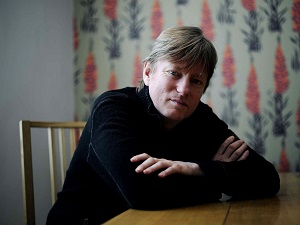
De Schotse, Engelstalige schrijver van Nederlandse herkomst, Michel Faber werd geboren in Den Haag op 13 april 1960. Zie ook alle tags voor Michel Faber op dit blog.

Uit: The Crimson Petal and The White

“Watch your step. Keep your wits about you; you will need them. This city I am bringing you to is vast and intricate, and you have not been here before. You may imagine, from other stories you've read, that you know it well, but those stories flattered you, welcoming you as a friend, treating you as if you belonged. The truth is that you are an alien from another time and place altogether.
When I first caught your eye and you decided to come with me, you were probably thinking you would simply arrive and make yourself at home. Now that you're actually here, the air is bitterly cold, and you find yourself being led along in complete darkness, stumbling on uneven ground, recognising nothing. Looking left and right, blinking against an icy wind, you realise you have entered an unknown street of unlit houses full of unknown people.
And yet you did not choose me blindly. Certain expectations were aroused. Let's not be coy: you were hoping I would satisfy all the desires you're too shy to name, or at least show you a good time. Now you hesitate, still holding on to me, but tempted to let me go. When you first picked me up, you didn't fully appreciate the size of me, nor did you expect I would grip you so tightly, so fast. Sleet stings your cheeks, sharp little spits of it so cold they feel hot, like fiery cinders in the wind. Your ears begin to hurt. But you've allowed yourself to be led astray, and it's too late to turn back now.
It's an ashen hour of night, blackish-grey and almost readable like undisturbed pages of burnt manuscript. You blunder forward into the haze of your own spent breath, still following me. The cobblestones beneath your feet are wet and mucky, the air is frigid and smells of sour spirits and slowly dissolving dung. You hear muffled drunken voices from somewhere nearby, but what little you can understand doesn't sound like the carefully chosen opening speeches of a grand romantic drama; instead, you find yourself hoping to God that the voices come no closer.”

 2137880-1a43f14c86faa6b8abf527386b3d5d1c.jpg
Michel Faber (Den Haag, 13 april 1960)


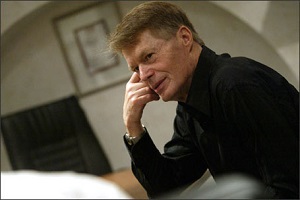
De Franse schrijver Jean-Marie Gustave Le Clézio werd geboren op 13 april 1940 in Nice. Zie ook alle tags voor Jean-Marie Gustave Le Clézio op dit blog.

Uit: Onitsha

« L'Afrique brûle comme un secret, comme une fièvre. Geoffroy Allen ne peut pas détacher son regard, un seul instant, il ne peut pas rêver d'autre rêve. C'est le visage sculpté des marques itsi, le visage masqué des Umundri. Sur les quais d'Onitsha, le matin, ils attendent, immobiles, en équilibre sur une jambe, pareils à des statues brûlées, les envoyés de Chuku sur la terre.
C'est pour eux que Geoffroy est resté dans cette ville, malgré l'horreur que lui ins­pirent les bureaux de la United Africa, mal­gré le Club, malgré le Résident Rally et sa femme, leurs chiens qui ne mangent que du filet de bœuf et qui dorment sous des moustiquaires. Malgré le climat, malgré la routine du Wharf. Malgré la séparation d'avec Maou, et ce fils né au loin, qu'il n'a pas vu grandir, pour qui il n'est qu'un étranger.
Eux, chaque jour, sur le quai, dès l'aube, attendent on ne sait quoi, une pirogue qui les emmènerait en amont, qui leur apporterait un message mystérieux. Puis ils s'en vont, ils disparaissent, en marchant à tra­vers les hautes herbes, vers l'est, sur les chemins d'Awgu, d'Owerri. Geoffroy essaye de leur parler, quelques mots d'ibo, des phrases en yoruba, en pidgin, et eux, tou­jours silencieux, non pas hautains, mais absents, disparaissant vite à la file indienne le long du fleuve, se perdant dans les hautes herbes jaunies par la sécheresse. Eux, les Umundri, les Ndinze, les « ancêtres », les « initiés ». Le peuple de Chuku, le soleil, entouré de son halo comme un père est entouré de ses enfants.
C'est le signe itsi. C'est lui que Geoffroy a vu, sur les visages, la première fois qu'il est arrivé à Onitsha. Le signe gravé dans la peau des visages des hommes, comme une écriture sur la pierre. C'est le signe qui est entré en lui, l'a touché au cœur, l'a marqué, lui aussi, sur son visage trop blanc, sur sa peau où manque depuis sa naissance là trace de la brûlure. Mais à présent il ressent cette brûlure, ce secret. Hommes et femmes du peuple Umundri, dans les rues d'Onitsha, ombres absurdes errant dans les allées de poussière rouge, entre les bosquets d'acacia, avec leurs troupeaux de chèvres, leurs chiens. Seuls certains d'entre eux por­tent sur le visage le signe de leur ancêtre Ndri, le signe du soleil."
 

 2137880-e235eabaec0d5ba8ada9120b55157a78.jpg
Jean-Marie Gustave Le Clézio (Nice, 13 april 1940)


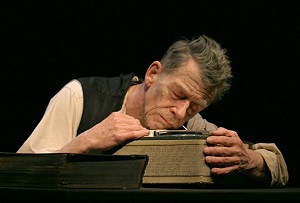
De Ierse (toneel)schrijver en dichter Samuel Barclay Beckett werd geboren in Foxrock, Dublin op 13 april 1906. Zie ook alle tags voor Samuel Beckett op dit blog.

Uit: Krapp's Last Tape

“Krapp remains a moment motionless, heaves a great sigh, looks at his watch, fumbles in his pockets, takes out an evelope, puts it back, fumbles, takes out a small bunch of keys, raises it to his eyes, chooses a key, gets up and moves to front of table. He stoops, unlocks first drawer, peers into it, feels about inside it, takes out a reel of tape, peers at it, puts it back, locks drawer, unlocks second drawer peers into it, feels about inside it, takes out a large banana, peers at it, locks drawer, puts keys back in his pocket. He turns, advances to edge of stage, halts, strokes banana, peels it, drops skin at his feet, puts end of banana in his mouth and remains motionless, staring vacuously before him. Finally he bites off the end, turns aside and begins pacing to and fro at edge of stage, in the light, i.e. not more than four or five paces either way, meditatively eating banana. He treads on skin, slips, nearly falls, recovers himself, stoops and peers at skin and finally pushes it, still stooping, with his foot over the edge of the stage into pit. He resumes his pacing, finishes banana, returns to table, sits down, remains a moment motionless, heaves a great sigh, takes keys from his pockets, raises them to his eyes, chooses key, gets up and moves to front of table, unlocks second drawer, takes out a second large banana, peers at it, locks drawer, puts back his keys in his pocket, turns, advances to the edge of stage, halts, strokes banana, peels it, tosses skin into pit, puts an end of banana in his mouth and remains motionless, staring vacuously before him. Finally he has an idea, puts banana in his waistcoat pocket, the end emerging, and goes with all the speed he can muster backstage into darkness. Ten seconds. Loud pop of cork. Fifteen seconds. He comes back into light carrying an old ledger and sits down at table. He lays ledger on table, wipes his mouth, wipes his hands on the front of his waistcoat, brings them smartly together and rubs them.“
 

 2137880-8ed308045039bcdae8f29b9c9fa8827a.jpg
Samuel Beckett (13 april 1906 - 22 december 1989)
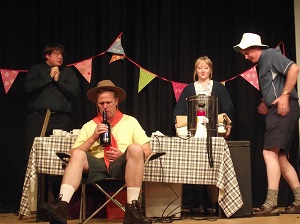
John Hurt in de titelrol tijdens een uitvoering in New York, 2011


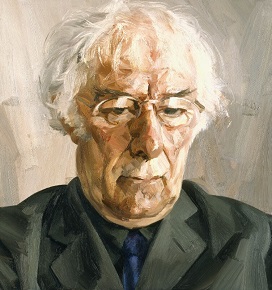
De Ierse dichter Seamus Heaney werd op 13 april 1939 te County Derry, Noord-Ierland, geboren. Zie ook alle tags voor Seamus Heaney op dit blog.


Tankas For Toraiwa

I loved to carry
Her violin case, its nose
In air, its back end
Nice and heavy, the balance
Factored in and factored out.

Every time she placed
Her two thumbs to the two snibs
And opened the lid
She couldn’t help a quick frown
(Disguised pleasure?) as she checked.

Then her brow would clear
And the sun disc of her face
Tilt up and brighten
At the tap of a baton,
At the tip of a baton…

In the baize-lined case
Emptied of the ingrown jut
Of the fiddlehead,
A lump of ancient resin
And a dirty chamois cloth.

The conductor’s hands –
Big and out of proportion
To his skinny wee
Professor’s body–always,
she said, “interested” her.

Fiddlehead ferns: why
do I think of them do I
Think: Toraiwa?
Because–surprise–he quizzed me
about the erotic life.
 

 2137880-cd06b805ed495921f0e847ee44b46a40.jpg
Seamus Heaney (13 april 1939 – 30 augustus 2013)
Portret door  Tai-Shan Schierenberg, 2004


De Nederlands schrijver en schaker Tim Krabbé werd geboren in Amsterdam op 13 april 1943. Zie ook alle tags voor Tim Krabbé op dit blog.

Uit: De veertiende etappe (De man die bijna)

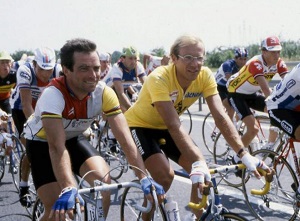
“Ineens was dat tafeltje leeg en kwam er een jongen in korte broek naast me zitten. Hij knikte me vriendelijk toe, sloeg een krantje open en begon te lezen. Ik herkende hem meteen, maar het duurde seconden voor ik kon geloven dat het echt Fignon was. Het zijn altijd vreemde confrontaties tussen twee mensen die allebei weten dat ze geen fabeldier zijn, maar waarvan er één dat voor de ander toch is. Ik voelde ook een lichte teleurstelling: Tourwinnaars horen zich niet op te houden met zaken als aan jou vragen of die stoel vrij is. Daar zaten we, hij met L 'Equipe, ik zonder vragen. Ach, had De Renner in het Frans vertaald mogen zijn, had hij het gelezen mogen hebben, wat zou ik graag zijn vragen over de Ronde van de Mont Aigoual hebben beantwoord. Waarschijnlijk heb ik gezegd dat ik Nederlander was, want ik zie hem nog grinniken, met glinsterende ogen, over een brief die een Nederlands meisje hem had geschreven. Ik vroeg of hij nog iets had gemerkt van de aanwezigheid van Dustin Hoffman in de Tour. Ja, hij was aan hem voorgesteld, dat was toch voor een film die misschien gemaakt zou worden, The Yellow Jersey? Fignon was vriendelijk en zachtbespraakt, en totaal onaanmatigend, maar het heeft toch geduurd tot hij fotografen die hem lastigvielen tegen de kloten begon te schoppen dat ik hem ben gaan noemen als de renner die ik misschien wel het meest bewonder. Grote kampioenen winnen soms grote wedstrijden vóór ze daar echt recht op hebben. De drieëntwintigjarige Hinault van de Tour van 1978 die eigenlijk voor Pollentier was, en de tweeëntwintigjarige Fignon die in 1983 won toen Pascal Simon in het geel met een schouderblessure moest uitvallen, zijn daar voorbeelden van. Maar ook grote kampioenen die eigenlijk al over hun hoogtepunt heen zijn, winnen soms ten onrechte. Zoetemelk 1980 (Hinault!) en Hinault 1985 (LeMond!) zijn dáár voorbeelden van. Fignon 1989 wordt een nieuw geval.”
 

 2137880-24acb5375a15bc83a7a0821d912f6c86.jpg
Tim Krabbé (Amsterdam, 13 april 1943)
Bernard Hinault en Laurent Fignon in 1984


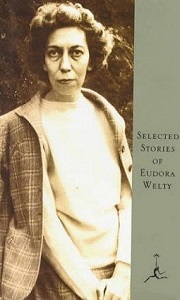
De Amerikaanse schrijfster Eudora Alice Welty werd geboren in Jackson, Mississippi, op 13 april 1909. Zie ook alle tags voor Eudora Welty op dit blog.

Uit: A Curtain of Green (Petrified Man)

"Lord, yes, she's from New Orleans. Ever'body in New Orleans believes ever'thing spooky. One of 'em in New Orleans before it was raided says to Mrs. Pike one summer she was goin' to go from State to State and meet some grey-headed men, and, sure enough, she says she went on a beautician convention up to Chicago. . . . "
"Oh!" said Mrs. Fletcher. "Oh, is Mrs. Pike a beautician too?"
"Sure she is," protested Leota. "She's a beautician. I'm goin' to git her in here if I can. Before she married. But it don't leave you. She says sure enough, there was three men who was a very large part of making her trip what it was, and they all three had grey in their hair and they went in six States. Got Christmas cards from 'em. Billy Boy, go see if Thelma's got any dry cotton. Look how Mrs. Fletcher's a-drippin'."
"Where did Mrs. Pike meet Mr. Pike?" asked Mrs. Fletcher primly.
"On another train," said Leota.
"I met Mr. Fletcher, or rather he met me, in a rental library," said Mrs. Fletcher with dignity, as she watched the net come down over her head.
"Honey, me an' Fred, we met in a rumble seat eight months ago and we was practically on what you might call the way to the altar inside of half an hour," said Leota in a guttural voice, and bit a bobby pin open.
"Course it don't last. Mrs. Pike says nothin' like that ever lasts."
"Mr. Fletcher and myself are as much in love as the day we married," said Mrs. Fletcher belligerently as Leota stuffed cotton into her ears.
"Mrs. Pike says it don't last," repeated Leota in a louder voice. "Now go git under the dryer. You can turn yourself on, can't you? I'll be back to comb you out. Durin' lunch I promised to give Mrs. Pike a facial. You know—free. Her bein' in the business, so to speak."
"I bet she needs one," said Mrs. Fletcher, letting the swing-door fly back against Leota. "Oh, pardon me."
 2137880-c16d4e0257268b4f022f32e050437411.jpg
Eudora Welty (13 april 1909 – 23 juli 2001)
Cover


Zie voor nog meer schrijvers van vandaag ook mijn blog van 13 april 2014.

Zie voor bovenstaande schrijvers ook mijn blog van 13 april 2007 en ook mijn blog van 13 april 2008 en eveneens mijn blog van 13 april 2009.
Geschreven door Romenu om 09:03 Reageer op dit bericht

Antje Rávic Strubel, Alan Ayckbourn, Scott Turow, Tom Clancy, Agnes Sapper, Edward de Vere, José Gautier Benítez, Alexander Ostrovski, Guillaume-Thomas Raynal

De Duitse schrijfster Antje Rávic Strubel werd geboren op 12 april 1974 in Potsdam. Zie ook alle tags voor Antje Rávic Strubel op dit blog.

Uit: Snowed Under (Vertaald door Zaia Alexander)

“Postal clerk Erik M. Broda, retired for three weeks, though still working part-time, eagerly awaits his female superior Simona’s arrival, so he can give her a special wink as he slams his cancellation stamp on the wrong side of a postcard to Mainz. He doesn't like the card. He has read hundreds of postcards like it in his career.
Whenever he doesn’t like a postcard, he stamps the postmark wrong side up. Bad postcards are like female superiors. They gab a lot and then forget the most important things. The most important things for a postcard are: first, the stamp, second, the postal code, and third, the signature. The signature is missing on this one.
He covers the card with his left palm, sohe’s just able to read the message, and pulls over a stack of thick envelopes in need of postmarking. The stamp hovers in his fist halfway above the desk. That way he can slam it down if Simona came in by surprise.
Ever since she started working here, everything has changed. Back then, he could be sure nobody
would disturb him.

Dear Haschi,
Unfortunately, I couldn’t find a funny postcard for you. All they’ve got are ones with sunsets or with Rübezahl, the mountain spirit, on the front. At least they’ve got super yummy dumplings and pancakes and gorgeous wild icicles. I’m drinking lots of mulled wine with Evy. I’d love to know what’s going on in her head, like you always knew with me. Bet she’d like that. But I don’t. Say hi to C., whoever he is. You’re a lot happier, since you’ve been together with him. Laughed more last time. Would love to be with you again, but could it work after all these years?

The card makes him angry. There was enough space for a signature. What angers him most, though, is that the card had obviously been written by a man. He admires women. They are completely perfect beings, right from the start, they help him differentiate one day from the next; they give him a rhythm, like Simona with her irregular visits to his office. But he doesn’t expect precision from women. They’ve
overtaken us, he thinks, but they’ll never take over. He imaginesthey’ll just keep climbing higher than him in the future.”


 2137715-380ea603ec5e6fcb92c593c42ad21add.jpg
Antje Rávic Strubel (Potsdam, 12 april 1974)


De Britse blijspelauteur Alan Ayckbourn werd geboren op 12 april 1939 in Londen. Zie ook alle tags voor Alan Ayckbourn op dit blog.

Uit: Confusions

„Lucy (as she goes) Sit still. Don't run around. I won't be a minute.
(Lucy goes out into the kitchen. Rosemary sits nervously. She rises after a second, looks guiltily towards the kitchen and sits again. The door chimes sound. Rosemary looks towards the kitchen. There is no sign of Lucy. The door chimes sound again. Rosemary gets up hesitantly)
Rosemary (calling) Mrs—er
Lucy (off in the kitchen) Wait, wait, wait! I'm coming ...
(The door chimes sound again Rosemary runs off to the front door. Lucy returns from the kitchen with a glass of orange juice)
Here we are, Rosemary, I . (She looks round the empty room, annoyed. Calling) Rosemary! It's on the table.
(Lucy puts the orange juice on the coffee-table and goes out to the kitchen again. Rosemary returns from the hall with Terry, a rather pudgy man in shirt sleeves)
Rosemary (sotto voce) Come in a minute.
Terry I'm watching the telly.
Rosemary Just for a minute.
Terry I wondered where you'd got to. I mean, all you had to do was give her the number ...
Rosemary I want you to meet her. See what you think. I don't think she's well.
Terry How do you mean?
Rosemary She just seems ...
Terry Is she ill?
Rosemary I don't know ...
Terry Well, either she's ill or she isn't.“


 2137715-1fa9abb2559b5c4c2c351d16b288e5d0.jpg
Alan Ayckbourn (Londen, 12 april 1939)
Scene uit een opvoering in Shifnal, Shropshire, 2011


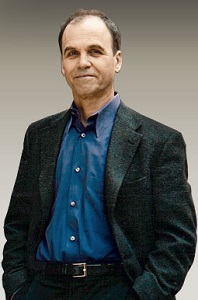
De Amerikaanse schrijver en jurist Scott Turow werd geboren op 12 april 1949 in Chicago. Zie ook alle tags voor Scott Turow op dit blog.

Uit: Ordinary Heroes

“All parents keep secrets from their children. My father, it seemed, kept more than most.
The first clue came when Dad passed away in February 2003 at the age of eighty-eight, after sailing into a Bermuda Triangle of illness—heart disease, lung cancer, and emphysema—all more or less attributable to sixty years of cigarettes. Characteristically, my mother refused to leave the burial details to my sister and me and met the funeral director with us. She chose a casket big enough to require a hood ornament, then pondered each word as the mortician read out the proposed death announcement.
"Was David a veteran?" he asked. The undertaker was the cleanest-looking man I'd ever seen, with lacquered nails, shaped eyebrows, and a face so smooth I suspected electrolysis.
"World War II," barked Sarah, who at the age of fifty-two still raced to answer before me.
The funeral director showed us the tiny black rendering of the Stars and Stripes that would appear in the paper beside Dad's name, but my mother was already agitating her thinning gray curls.
"No," she said. "No war. Not for this David Dubin." When she was upset, Mom's English tended to fail her. And my sister and I both knew enough to keep quiet when she was in those moods. The war, except for the bare details of how my father, an American officer, and my mother, an inmate in a German concentration camp, had fallen in love, virtually at first sight, had been an unpleasantness too great for discussion throughout our lives. But I had always assumed the silence was for her sake, not his.
By the end of the mourning visitation, Mom was ready to face sorting through Dad's belongings. Sarah announced she was too pressed to lend a hand and headed back to her accounting practice in Oakland, no doubt relishing the contrast with my unemployment. Mom assigned me to my father's closet on Monday morning, insisting that I consider taking much of his clothing. It was nearly all disastrously out of fashion, and only my mother could envision me, a longtime fatso, ever shrinking enough to squeeze into any of it. I selected a few ties to make her happy and began boxing the rest of his old shirts and suits for donation to the Haven, the Jewish relief agency my mother had helped found decades ago and which she almost single-handedly propelled for nearly twenty years as its Executive Director.“


 2137715-c81d60c2c65b4a78d6ef402229548976.jpg
Scott Turow (Chicago, 12 april 1949)


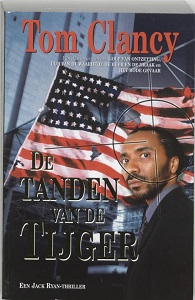
De Amerikaanse schrijver Tom Clancy werd geboren op 12 april 1947 in Baltimore County, Maryland. Zie ook alle tags voor Tom Clancy op dit blog.

Uit: De tanden van de tijger (Vertaald door Hugo Kuipers)

“David Greengold was geboren in de meest Amerikaanse gemeenschap die er was, Brooklyn, maar op zijn bar mitswa was er iets belangrijks veranderd in zijn leven. Nadat hij had uitgeroepen: ‘Vandaag ben ik een man’, was hij naar het feest gegaan en had daar een paar familieleden ontmoet die uit Israel waren overgekomen. Zijn oom Moses had daar veel succes als diamanthandelaar. Davids eigen vader had zeven juwelierszaken, waarvan het vlaggenschip zich in 40th Street in Manhattan bevond.
Terwijl zijn vader en zijn oom het bij een glas Californische wijn over zaken hadden, was David aan de praat geraakt met zijn neef Daniel. Daniel, tien jaar ouder dan hij, werkte sinds kort voor de Mossad, de belangrijkste inlichtingendienst van Israel, en als een echte nieuweling vond hij het prachtig om zijn neef verhalen te vertellen. Daniel had zijn dienstplicht vervuld bij de Israelische para’s; hij had elf sprongen op zijn naam staan en ook enige actie meegemaakt in de Zesdaagse Oorlog van 1967.
Voor hem was het een mooie oorlog geweest. In zijn compagnie had niemand ernstig letsel opgelopen en ze hadden genoeg treffers gescoord om het op een jachtpartij te laten lijken – jagers die achter gevaarlijk, maar niet te gevaarlijk, wild aan zaten, met een afloop die heel goed paste bij de ideeen en verwachtingen die hij voor de oorlog had gekoesterd.
De verhalen hadden in sterk contrast gestaan met de sombere televisiebeelden van Vietnam waarmee in Amerika het journaal elke avond begon. Met het enthousiasme van zijn op die dag bevestigde religieuze identiteit had David onmiddellijk besloten meteen na zijn eindexamen naar zijn joodse thuisland te emigreren. Zijn vader, die in de Tweede Wereldoorlog in de Tweede Pantserdivisie van het Amerikaanse leger had gediend en over het geheel genomen weinig plezier aan dat avontuur had beleefd, had het helemaal geen prettig vooruitzicht gevonden dat zijn zoon naar een Aziatische jungle zou gaan om in een oorlog te vechten waarvoor zijn kennissen en hij geen enkel enthousiasme konden opbrengen, en dus vloog de jonge David na zijn eindexamen met El Al naar Israel om daar voorgoed te blijven. Hij spijkerde zijn Hebreeuws bij, vervulde zijn Israelische dienstplicht en werd toen net als zijn neef door de Mossad gerekruteerd.”


 2137715-10166b08adeb75780f408bae587abbe0.jpg
Tom Clancy (12 april 1947- 1 oktober 2013)
Cover


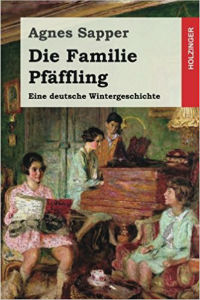
De Duitse schrijfster Agnes Sapper werd geboren op 12 april 1852 in München. Zie ook alle tags voor Agnes Sapper op dit blog.

Uit: Die Familie Pfäffling. Eine deutsche Wintergeschichte

„Im Hause Pfäffling war nach dem lauten Abgang der sieben Familienmitglieder eine ungewohnte Stille eingetreten. Es blieb nur noch die Mutter zurück, und Elschen, das jüngste niedliche Töchterchen, sowie die treue Walburg, die in der Küche wirtschaftete. Frau Pfäffling atmete auf, die Stille tat ihr wohl. Was war das für ein Sturm gewesen, bis der letzte die Türe hinter sich zugemacht hatte, und was für eine Unruhe all die Ferienwochen hindurch! Während sie ordnend und räumend von einem Zimmer ins andere ging, war ihr ganz festtäglich zu Mute. Sie war von Natur eine stille, nachdenkliche Frau und gern in Gedanken versunken, aber das Leben hatte sie als Mittelpunkt in einen großen Familienkreis gestellt, und es drehten sich lauter lebhafte, plaudernde, fragende, musizierende Menschen um sie herum. Während nun die Mutter sich der Ruhe freute, wußte Elschen gar nicht, wo es ihr fehlte. Allein zu spielen hatte sie ganz verlernt. So ging sie hinunter in den Hof, wo die großen Balken lagen. Oft hatte sie sich in den letzten Wochen geärgert, wenn sie ängstlich auf den glatten Balken kleine Schrittchen machte, daß die Brüder das so flink konnten und sie ihnen immer Platz machen sollte. Jetzt hatte sie alle die Baumstämme allein zu ihrer Verfügung, aber nun machten sie ihr keine Freude. Sie ging weiter zu den Brettern, die übereinander aufgestapelt lagen. Dort oben, wo ein kleines dickes Brett querüberlag, war Frieders Lieblingsplatz, auf dem er immer mit der Ziehharmonika saß. Wenn er gar zu lang spielte und sie nicht beachtete, war sie manchmal ungeduldig geworden und hatte sogar einmal gesagt, die Harmonika sei eine alte Kröte. Aber jetzt, dachte an ihn. Es war so langweilig heute morgen – fast zum weinen!
Da tat sich oben im Haus ein Fenster auf und der Mutter Stimme rief: »Elschen, flink, Essig holen!«
Einen Augenblick später wanderte auch Else die Frühlingsstraße hinunter, zwar nicht mit den Büchern in die Schule, aber mit dem Essigkrug zum nächsten Kaufmann.“
wo es überall ganz still war, hätte sie auch die Harmonika gern gehört. Sie setzte sich auf Frieders Platz und


 2137715-898b0e92eb8d501601d30745633c8494.jpg
Agnes Sapper (12 april 1852 – 19 maart 1929)
Cover


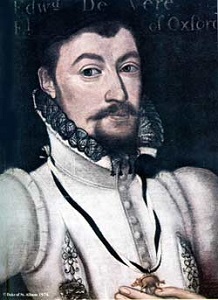
De Engelse hoveling, dichter en toneelschrijver Edward de Vere, 17e graaf van Oxford, werd geboren op 12 april 1550 in Castle Hedingham. Zie ook alle tags voor Edward de Vere op dit blog.


When I was fair and young

When I was fair and young then favour graced me;
Of many was I sought their mistress for to be.
But I did scorn them all, and answered them therefore,
Go, go, go, seek some otherwhere,
Importune me no more.

How many weeping eyes I made to pine in woe;
How many sighing hearts I have no skill to show;
Yet I the prouder grew, and answered them therefore,
Go, go, go, seek some otherwhere,
Importune me no more.

Then spake fair Venus' son, that proud victorious boy,
And said, you dainty dame, since that you be so coy,
I will so pluck your plumes that you shall say no more
Go, go, go, seek some otherwhere,
Importune me no more.

When he had spake these words such change grew in my breast,
That neither night nor day I could take any rest.
Then, lo ! I did repent, that I had said before
Go, go, go, seek some otherwhere,
Importune me no more.


 2137715-caaf81d18c5b007cf3a5547659aa9fc8.jpg
Edward de Vere (12 april 1550 – 24 juni 1604)
Portret door Marcus Gheeraedts, ca. 1590


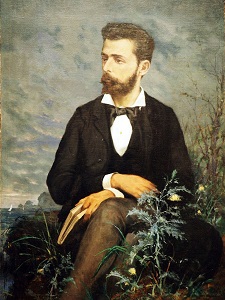
De Puertoricaanse dichter José Gautier Benítez werd geboren op 12 april 1848 in Caguas. Zie ook alle tags voorJosé Gautier Benítez op dit blog.


Pueto Rico (Fragment)

A garden of enchantment, fountains playing
Above the azure sea that round you swirls,
A vase of many-colored flowers swaying
Amid the foam and coral, scents and pearls.

You who at dusk, spilling your colors, came
In all the hues of brilliant sunset dressed,
Filling the ocean full of floating flame
Till the last rays of sun died in the West.
You who supply the air I breathe each day
Inspiring my spontaneous song of praise,
Accept the adoring tribute of my lay
That as your inspired poet to you I raise!
The sacred love that lies within my breast
Would play for you its rustic harmony;
For you I cast it to the wind's unrest:
Your love compels the poet's heart to sing,
And in his song his heart he sends to thee.

My island, hark! This possibly could be
]My lyre's last note; for soon I will depart
For those far regions without memory.

My fleeing youth is weakening, wastes away,
An aching, sad, a melancholy soul
No longer in its jail content to stay.

Before I see that last day given me
And my song is extinguished with my breath,
Take, Homeland, my last lines of poetry:
They're testament and sign of my love's depth!
They're fond FAREWELL your singer sends to thee!


Vertaald door W. K. Jones en Roberto Màrquez


 2137715-1dca2bbb6cece60e0b7f961bd5d6ddbe.jpg
José Gautier Benítez (12 april 1848 – 24 januari 1880)
Portret door Francisco Oller, 1886


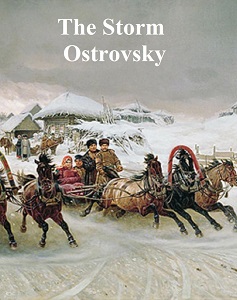
De Russische toneelschrijver Alexander Nikolajewitsj Ostrovski werd geboren op 12 april 1823 in Moskou. Zie ook alle tags voorAlexander Ostrovski op dit blog.

Uit:The Storm (Vertaald door Constance Garnett)

“KUDRIASH. Who could please him, when his whole life's spent in bullying people? Especially where money's at stake; no accounts are ever settled without storms of abuse. Often people are glad to go short of their due, if only he'll let them off quietly. Woe to us if anyone vexes him in the morning! He falls foul of everyone all day long.
BORIS. Every morning my aunt entreats us with tears in her eyes: "Don't anger him, friends! Dear boys, don't anger him!"
KUDRIASH. But you can never avoid it! If he goes to the bazaar, it's all up! He scolds all the peasants. Even if they ask him less than cost price they never get off without abuse. And then he's upset for the whole day.
SHAPKIN. He's a bully—there's no other word for him.
KUDRIASH. A bully? I should think he is!
BORIS. And what's fatal is if some man offends him, whom he daren't be rude to. Then all his household have to look out for themselves!
KUDRIASH. Bless my soul! That was a joke though. Didn't that hussar let him have it on the Volga, at the ferry! Oh, a lovely shindy he kicked up afterwards, too.
BORIS. Ah, and didn't his family suffer for it! Why, for a fortnight after we were all hiding away in the attics and cupboards.
KULIGIN. Surely that's not the folk coming back from vespers?
[Several persons pass in the background.
KUDRIASH. Come on, Shapkin, let's get a drink! It's no good stopping here.
[They bow and exeunt.”


 2137715-f19655e5c885b6526c353384c26b20ca.jpg
Alexander Ostrovski (12 april 1823 – 14 juni 1886)
Cover


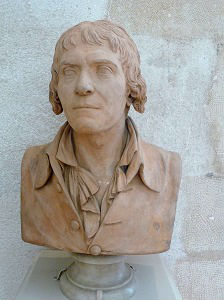
De Franse schrijver Guillaume-Thomas Raynal (Abbé Raynal ) werd geboren op 12 april 1713 in Lapanouse de Séverac. Zie ook alle tags voor Guillaume-Thomas Raynal op dit blog.

Uit: L'Histoire des deux Indes

« Estimons-nous beaucoup les productions des colonies ?Je crois qu'on n'en fauroit douter. Pourquoi donc prenons -nous si peu d'intérêt à leur prospérité & à la conservation des colons? Que la fureur d'un ouragan ait enseveli des milliers de ces malheureux sous la ruine de leurs habitations , & le dégât de leurs possessions, nous nous en occupons moins que d'un duel ou d'un assassinat commis à notre porte. Qu'une vaste contrée de ce continent éloigné continue d'être dévastée par quelque épidémie, on s'en entretient ici plus froidement que du retour incertain d'une petite - vérole inoculée. Que les horreurs de la disette réduifent les habitant de Saint-Domingue ou de la Martinique à chercher leur nourriture dans la campagne, ou à se dévorer les uns les autres, nous y pren-drons moins de part qu'au fléau d'une grêle qui auroit haché les moissons de quelques-uns de nos villages. Il el assez naturel de penser que cette indifférence est un effet de l'éloignement , & que les colons ne font pas plus sensibles à nos malheurs que noix aux leurs. Mais, réplique-t-on, nos villes font contiguës à nos campagnes. Nous avons sans celle sous les yeux la misère de leurs habitans. Nous n'en desirons pas moins d'abondantes récoltes en tout genre, & l'on ne peut guère pousser plus loin le mépris pour l'encouragement , la multiplication & la conservation du cultivateur. »


 2137715-5d61605a50ec411691b9b37f40a43e56.JPG
Guillaume-Thomas Raynal (12 april 1713 – 6 maart 1796)
Borstbeeld in het Musée des Beaux Arts, Dijon


Zie voor bovenstaande schrijvers ook mijn blog van 12 april 2007 en ook mijn blog van 12 april 2008 en eveneens mijn blog van 12 april 2009.


Geschreven door Romenu om 18:56 Reageer op dit bericht

Meer van Romenu

↑ Terug naar de berichten